


537 Results
Form:
books
books
Actions:
Price:
$61.00
(available to order)
Summary:
Moments spent in elevators, check-ins at airports, subway rides-these are all examples of the kind of "in-between" time that fascinates Walead Beshty and supplies material for his photographs. "In-between time" applies to civic space, too-depopulated modernist housing developments that sit precariously between evacuation and demolition, plants, weeds and vegetation on(...)
$61.00
(available to order)
Summary:
Moments spent in elevators, check-ins at airports, subway rides-these are all examples of the kind of "in-between" time that fascinates Walead Beshty and supplies material for his photographs. "In-between time" applies to civic space, too-depopulated modernist housing developments that sit precariously between evacuation and demolition, plants, weeds and vegetation on(...)
Title:
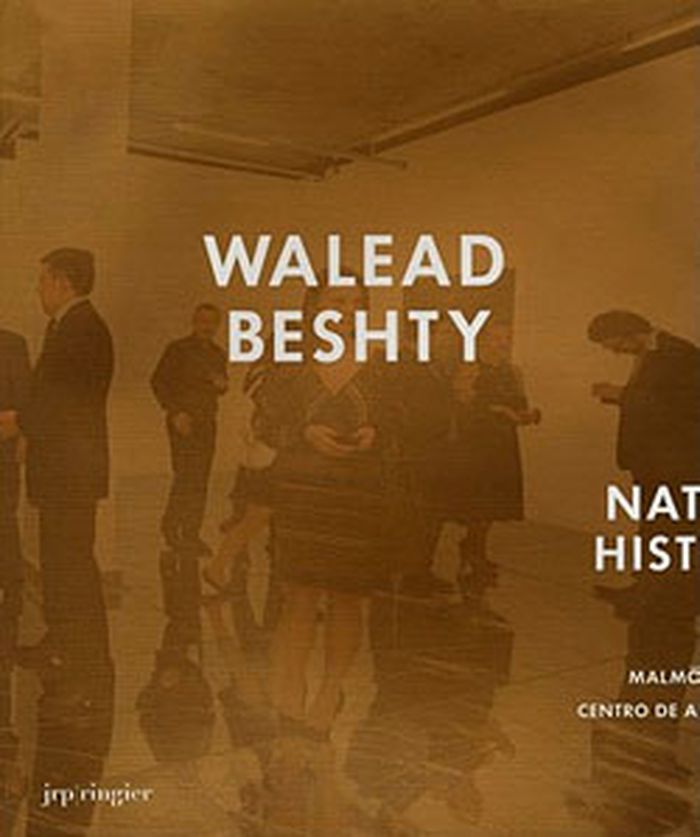
Walead Beshty: natural histories
Actions:
Price:
$61.00
(available to order)
Summary:
Moments spent in elevators, check-ins at airports, subway rides-these are all examples of the kind of "in-between" time that fascinates Walead Beshty and supplies material for his photographs. "In-between time" applies to civic space, too-depopulated modernist housing developments that sit precariously between evacuation and demolition, plants, weeds and vegetation on isolated highway medians, or abandoned shopping malls. More recently, Beshty's adventures in "the in-between" have become a means of production, as he makes creative use of such mundane procedures as air travel or sending a package. This monograph presents a ten-year overview of Walead Beshty's approach to photographic and sculptural representation, and contains newly commissioned essays by Suzanne Hudson and Nicolas Bourriaud, as well as a conversation between Bob Nickas and Beshty.
Walead Beshty: natural histories
Actions:
Price:
$61.00
(available to order)
Summary:
Moments spent in elevators, check-ins at airports, subway rides-these are all examples of the kind of "in-between" time that fascinates Walead Beshty and supplies material for his photographs. "In-between time" applies to civic space, too-depopulated modernist housing developments that sit precariously between evacuation and demolition, plants, weeds and vegetation on isolated highway medians, or abandoned shopping malls. More recently, Beshty's adventures in "the in-between" have become a means of production, as he makes creative use of such mundane procedures as air travel or sending a package. This monograph presents a ten-year overview of Walead Beshty's approach to photographic and sculptural representation, and contains newly commissioned essays by Suzanne Hudson and Nicolas Bourriaud, as well as a conversation between Bob Nickas and Beshty.
Form:
books
books
Publication:
June 2011
June 2011
Subject:
Photography monographs
Photography monographs
Form:
books
books
Price:
$149.99
(available to order)
Summary:
"There is a sense, in which the demolition that is taking place through the war has not yet gone far enough." This statement was made in the thick of the Second World War (1942) by the influential American social and cultural critic Lewis Mumford. In most of the cities hit hardest by the air-raids,something akin to planning euphoria did in fact break out at that time. In(...)
$149.99
(available to order)
Summary:
"There is a sense, in which the demolition that is taking place through the war has not yet gone far enough." This statement was made in the thick of the Second World War (1942) by the influential American social and cultural critic Lewis Mumford. In most of the cities hit hardest by the air-raids,something akin to planning euphoria did in fact break out at that time. In(...)
Title:
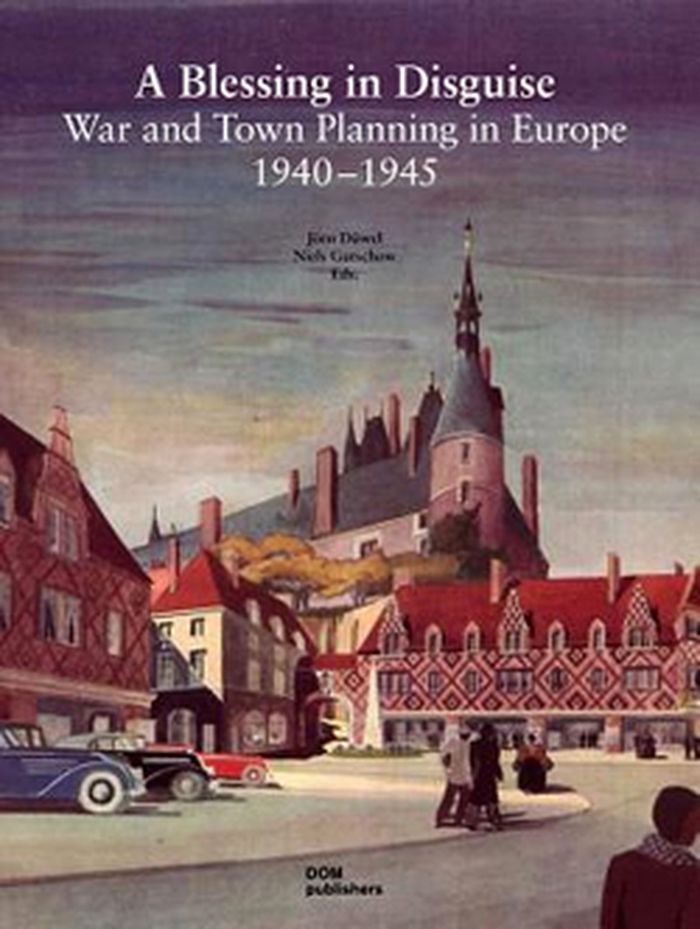
A blessing in disguise: war and town planning in europe 1940-1945
Actions:
Price:
$149.99
(available to order)
Summary:
"There is a sense, in which the demolition that is taking place through the war has not yet gone far enough." This statement was made in the thick of the Second World War (1942) by the influential American social and cultural critic Lewis Mumford. In most of the cities hit hardest by the air-raids,something akin to planning euphoria did in fact break out at that time. In all the countries of Europe, the devastation of the cities was acclaimed as a liberating factor. In this volume, historians and architects from various cultures analyse the ideas and convictions on which post-war urban planning was modelled. To illustrate the points, a number of towns and cities in different countries are discussed with reference to the planning schemes proposed for them and other documents.
A blessing in disguise: war and town planning in europe 1940-1945
Actions:
Price:
$149.99
(available to order)
Summary:
"There is a sense, in which the demolition that is taking place through the war has not yet gone far enough." This statement was made in the thick of the Second World War (1942) by the influential American social and cultural critic Lewis Mumford. In most of the cities hit hardest by the air-raids,something akin to planning euphoria did in fact break out at that time. In all the countries of Europe, the devastation of the cities was acclaimed as a liberating factor. In this volume, historians and architects from various cultures analyse the ideas and convictions on which post-war urban planning was modelled. To illustrate the points, a number of towns and cities in different countries are discussed with reference to the planning schemes proposed for them and other documents.
Form:
books
books
Publication:
July 2014
July 2014
Subject:
Urban Theory
Urban Theory
Form:
books
books

Title:
Nick Waplington: settlement
Nick Waplington: settlement
Actions:
Price:
$92.00
(available to order)
Summary:
The book investigates the topography of Jewish identity in the West Bank, which is in conflict not only with the Palestinian majority but also with mainstream Israeli society: While all the settlers are Jewish, and almost all are Israeli citizens, many are not natives of Israel. Most of the men and women photographed by Waplington are immigrants who arrived in the West(...)
$92.00
(available to order)
Summary:
The book investigates the topography of Jewish identity in the West Bank, which is in conflict not only with the Palestinian majority but also with mainstream Israeli society: While all the settlers are Jewish, and almost all are Israeli citizens, many are not natives of Israel. Most of the men and women photographed by Waplington are immigrants who arrived in the West(...)
Title:
Nick Waplington: settlement
Actions:
Price:
$92.00
(available to order)
Summary:
The book investigates the topography of Jewish identity in the West Bank, which is in conflict not only with the Palestinian majority but also with mainstream Israeli society: While all the settlers are Jewish, and almost all are Israeli citizens, many are not natives of Israel. Most of the men and women photographed by Waplington are immigrants who arrived in the West Bank from the United States, South Africa, Australia, the UK, the former Soviet Union, and other parts of the wider Jewish diaspora. The exact number of settlements cannot be determined with accuracy, as both construction and demolition take place regularly throughout the region. In general, however, the presence of Jewish settlers in the West Bank is entrenched, and their building projects continue with the support of the state of Israel.
Nick Waplington: settlement
Actions:
Price:
$92.00
(available to order)
Summary:
The book investigates the topography of Jewish identity in the West Bank, which is in conflict not only with the Palestinian majority but also with mainstream Israeli society: While all the settlers are Jewish, and almost all are Israeli citizens, many are not natives of Israel. Most of the men and women photographed by Waplington are immigrants who arrived in the West Bank from the United States, South Africa, Australia, the UK, the former Soviet Union, and other parts of the wider Jewish diaspora. The exact number of settlements cannot be determined with accuracy, as both construction and demolition take place regularly throughout the region. In general, however, the presence of Jewish settlers in the West Bank is entrenched, and their building projects continue with the support of the state of Israel.
Form:
books
books
Publication:
November 2014
November 2014
Subject:
Photography monographs
Photography monographs
Form:
books
books
Price:
$219.95
(available in store)
Summary:
Concerned with the connection between the built environment and the passage of time, ''Reframing Berlin'' uses film locations in the city to reveal the influence that urban transformation has on memory-making. Covering the city’s history since the beginning of cinema, the book proposes the term urban strategy to understand the range of consequential actions taken by(...)
$219.95
(available in store)
Summary:
Concerned with the connection between the built environment and the passage of time, ''Reframing Berlin'' uses film locations in the city to reveal the influence that urban transformation has on memory-making. Covering the city’s history since the beginning of cinema, the book proposes the term urban strategy to understand the range of consequential actions taken by(...)
Subject:
Architecture and Film, Set Design
Architecture and Film, Set Design
Publication:
March 2023
March 2023
Title:
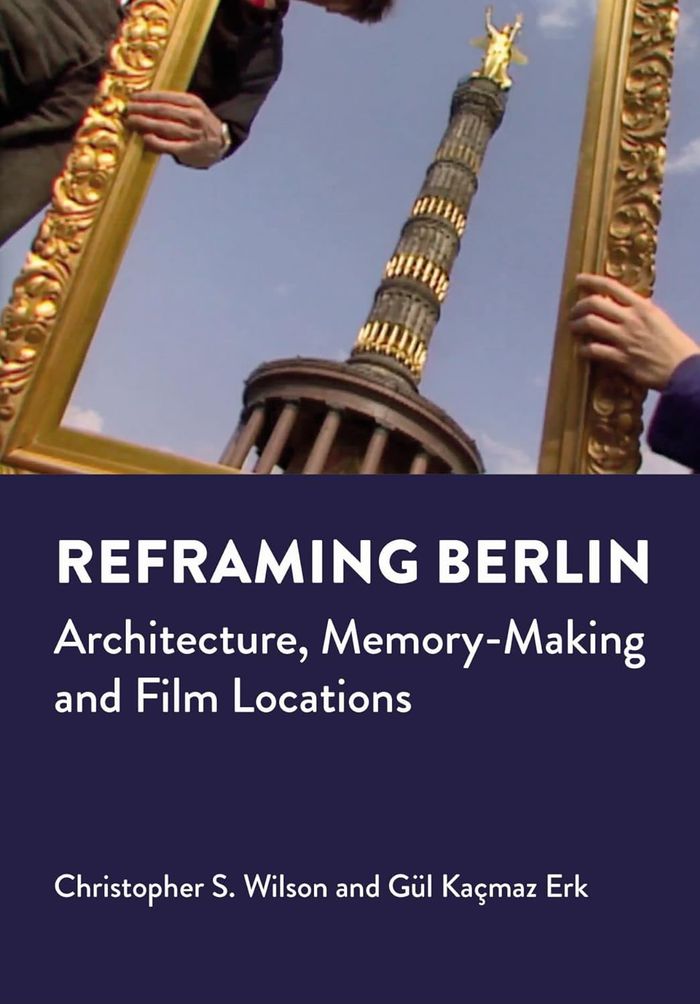
Reframing Berlin: Architecture, Memory-Making and Film Locations
Actions:
Price:
$219.95
(available in store)
Summary:
Concerned with the connection between the built environment and the passage of time, ''Reframing Berlin'' uses film locations in the city to reveal the influence that urban transformation has on memory-making. Covering the city’s history since the beginning of cinema, the book proposes the term urban strategy to understand the range of consequential actions taken by politicians, developers, and other powerful figures to shape the nature and future of buildings, streets, and districts. Organizing these strategies from demolition to memorialization, the authors study the ways these actions forget or recall aspects of place. Using cinematic representations of Berlin as an audiovisual archive, the study details how the city has adjusted to its traumatic twentieth-century history through architectural transformations. Two dissimilar case studies frame each strategy, indicating that an approach that works for one building may not be sufficient for another.
Reframing Berlin: Architecture, Memory-Making and Film Locations
Actions:
Price:
$219.95
(available in store)
Summary:
Concerned with the connection between the built environment and the passage of time, ''Reframing Berlin'' uses film locations in the city to reveal the influence that urban transformation has on memory-making. Covering the city’s history since the beginning of cinema, the book proposes the term urban strategy to understand the range of consequential actions taken by politicians, developers, and other powerful figures to shape the nature and future of buildings, streets, and districts. Organizing these strategies from demolition to memorialization, the authors study the ways these actions forget or recall aspects of place. Using cinematic representations of Berlin as an audiovisual archive, the study details how the city has adjusted to its traumatic twentieth-century history through architectural transformations. Two dissimilar case studies frame each strategy, indicating that an approach that works for one building may not be sufficient for another.
Form:
books
books
Publication:
March 2023
March 2023
Subject:
Architecture and Film, Set Design
Architecture and Film, Set Design
Form:
books
books
Actions:
Price:
$56.95
(available to order)
Summary:
From humble prefabs to the colossal Park Hill in Sheffield, the number of English buildings listed for their special architectural and historical interest is truly staggering; since 1987 alone, more than 300 have received the honor. Every one of them appears here, with 350 color photos, right from the very first post-war residence listed: Sir Albert Richardson's Bracken(...)
$56.95
(available to order)
Summary:
From humble prefabs to the colossal Park Hill in Sheffield, the number of English buildings listed for their special architectural and historical interest is truly staggering; since 1987 alone, more than 300 have received the honor. Every one of them appears here, with 350 color photos, right from the very first post-war residence listed: Sir Albert Richardson's Bracken(...)
Title:
England : a guide to post-war listed buildings
Actions:
Price:
$56.95
(available to order)
Summary:
From humble prefabs to the colossal Park Hill in Sheffield, the number of English buildings listed for their special architectural and historical interest is truly staggering; since 1987 alone, more than 300 have received the honor. Every one of them appears here, with 350 color photos, right from the very first post-war residence listed: Sir Albert Richardson's Bracken House, built for the Financial Times in 1955-59 and originally threatened with demolition. Students, architects, tourists, and historians will all find it fascinating to learn about how the process works, its controversial extension to recent architecture, and how the choices are made. Every region in England is covered, with London divided into three areas. The buildings range from traditional works to internationally outstanding modern structures, and include Gibberd's Liverpool and Spence's Coventry Cathedral, the Smithson's Hunstanton School, and Taylor & Green's Norfolk housing.
England : a guide to post-war listed buildings
Actions:
Price:
$56.95
(available to order)
Summary:
From humble prefabs to the colossal Park Hill in Sheffield, the number of English buildings listed for their special architectural and historical interest is truly staggering; since 1987 alone, more than 300 have received the honor. Every one of them appears here, with 350 color photos, right from the very first post-war residence listed: Sir Albert Richardson's Bracken House, built for the Financial Times in 1955-59 and originally threatened with demolition. Students, architects, tourists, and historians will all find it fascinating to learn about how the process works, its controversial extension to recent architecture, and how the choices are made. Every region in England is covered, with London divided into three areas. The buildings range from traditional works to internationally outstanding modern structures, and include Gibberd's Liverpool and Spence's Coventry Cathedral, the Smithson's Hunstanton School, and Taylor & Green's Norfolk housing.
Form:
books
books
Publication:
January 1900, London
January 1900, London
Subject:
City Guides
City Guides
Form:
books
books
Actions:
Price:
$56.95
(available to order)
Summary:
London has been rebuilt and reshaped perhaps more than any other city over its two-millennia history. From the construction of the Underground to slum clearance and the Blitz, buildings have long been damaged or demolished to pave way for the new. Today, demolition is big business, and around 3500 buildings are destroyed each year, most of which are social housing. Paul(...)
$56.95
(available to order)
Summary:
London has been rebuilt and reshaped perhaps more than any other city over its two-millennia history. From the construction of the Underground to slum clearance and the Blitz, buildings have long been damaged or demolished to pave way for the new. Today, demolition is big business, and around 3500 buildings are destroyed each year, most of which are social housing. Paul(...)
Title:
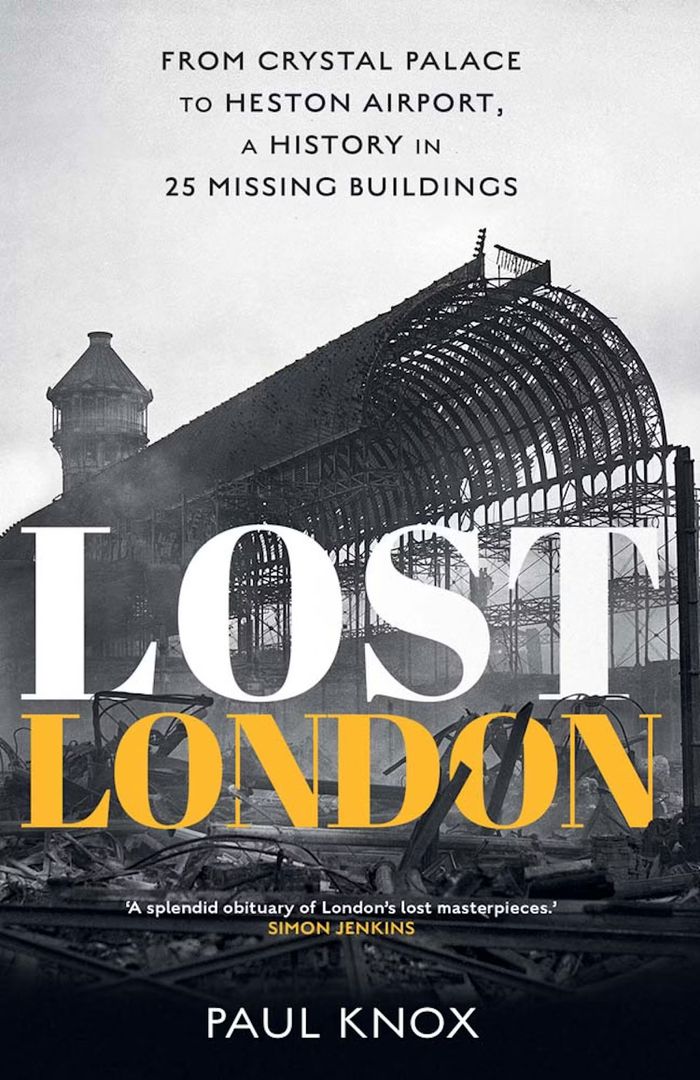
Lost London: From Crystal Palace to Heston Airport, a history in 25 missing buildings
Actions:
Price:
$56.95
(available to order)
Summary:
London has been rebuilt and reshaped perhaps more than any other city over its two-millennia history. From the construction of the Underground to slum clearance and the Blitz, buildings have long been damaged or demolished to pave way for the new. Today, demolition is big business, and around 3500 buildings are destroyed each year, most of which are social housing. Paul Knox traces the history of London from the Great Fire to the present day through twenty-five lost buildings. Knox explores surprising and unusual locations in the city’s history, like the Necropolis Station in Waterloo used by funeral parties traveling to a burial ground in Surrey. We see historic landmarks, like Christ Church Greyfriars and the Crystal Palace, as well as everyday places like the White Horse pub in Poplar and a housing estate in Hackney.
Lost London: From Crystal Palace to Heston Airport, a history in 25 missing buildings
Actions:
Price:
$56.95
(available to order)
Summary:
London has been rebuilt and reshaped perhaps more than any other city over its two-millennia history. From the construction of the Underground to slum clearance and the Blitz, buildings have long been damaged or demolished to pave way for the new. Today, demolition is big business, and around 3500 buildings are destroyed each year, most of which are social housing. Paul Knox traces the history of London from the Great Fire to the present day through twenty-five lost buildings. Knox explores surprising and unusual locations in the city’s history, like the Necropolis Station in Waterloo used by funeral parties traveling to a burial ground in Surrey. We see historic landmarks, like Christ Church Greyfriars and the Crystal Palace, as well as everyday places like the White Horse pub in Poplar and a housing estate in Hackney.
Form:
books
books
Publication:
May 2026
May 2026
Subject:
Architecture since 1900, Europe
Architecture since 1900, Europe
Form:
books
books
Title:
The battle for Gotham
The battle for Gotham
Actions:
Price:
$35.50
(available to order)
Summary:
In the 1970s, New York City hit rock bottom. Crime was at its highest, the middle class exodus was in high gear, and bankruptcy loomed. Many people credit New York's master builder Robert Moses with turning Gotham around, despite his brutal, undemocratic and demolition-heavy ways. Urban critic and journalist Roberta Brandes Gratz contradicts this conventional view. New(...)
$35.50
(available to order)
Summary:
In the 1970s, New York City hit rock bottom. Crime was at its highest, the middle class exodus was in high gear, and bankruptcy loomed. Many people credit New York's master builder Robert Moses with turning Gotham around, despite his brutal, undemocratic and demolition-heavy ways. Urban critic and journalist Roberta Brandes Gratz contradicts this conventional view. New(...)
Title:
The battle for Gotham
Actions:
Price:
$35.50
(available to order)
Summary:
In the 1970s, New York City hit rock bottom. Crime was at its highest, the middle class exodus was in high gear, and bankruptcy loomed. Many people credit New York's master builder Robert Moses with turning Gotham around, despite his brutal, undemocratic and demolition-heavy ways. Urban critic and journalist Roberta Brandes Gratz contradicts this conventional view. New York City, Gratz argues, recovered precisely because of the waning power of Moses. His decline in the late 1960s and the drying up of big government funding for urban renewal projects allowed New York to organically regenerate according to the precepts defined by Jane Jacobs in her classic, The Death and Life of Great American Cities, and in contradiction to Moses's urban philosophy. As American cities face a devastating economic crisis, Jacobs's philosophy is again vital for the redevelopment of metropolitan life.
The battle for Gotham
Actions:
Price:
$35.50
(available to order)
Summary:
In the 1970s, New York City hit rock bottom. Crime was at its highest, the middle class exodus was in high gear, and bankruptcy loomed. Many people credit New York's master builder Robert Moses with turning Gotham around, despite his brutal, undemocratic and demolition-heavy ways. Urban critic and journalist Roberta Brandes Gratz contradicts this conventional view. New York City, Gratz argues, recovered precisely because of the waning power of Moses. His decline in the late 1960s and the drying up of big government funding for urban renewal projects allowed New York to organically regenerate according to the precepts defined by Jane Jacobs in her classic, The Death and Life of Great American Cities, and in contradiction to Moses's urban philosophy. As American cities face a devastating economic crisis, Jacobs's philosophy is again vital for the redevelopment of metropolitan life.
Form:
books
books
Publication:
April 2010
April 2010
Subject:
Urban Theory
Urban Theory
Form:
books
books
Actions:
Price:
$36.00
(available to order)
Summary:
Robin Hood Gardens in Tower Hamlets, East London, was designed by Alison + Peter Smithson and completed in 1972. In 2008, this large social housing scheme was threatened with demolition and became a controversial conservation case. The government refused to give it protection as a historic building despite widespread public support for its retention. This book uncovers(...)
$36.00
(available to order)
Summary:
Robin Hood Gardens in Tower Hamlets, East London, was designed by Alison + Peter Smithson and completed in 1972. In 2008, this large social housing scheme was threatened with demolition and became a controversial conservation case. The government refused to give it protection as a historic building despite widespread public support for its retention. This book uncovers(...)
Title:
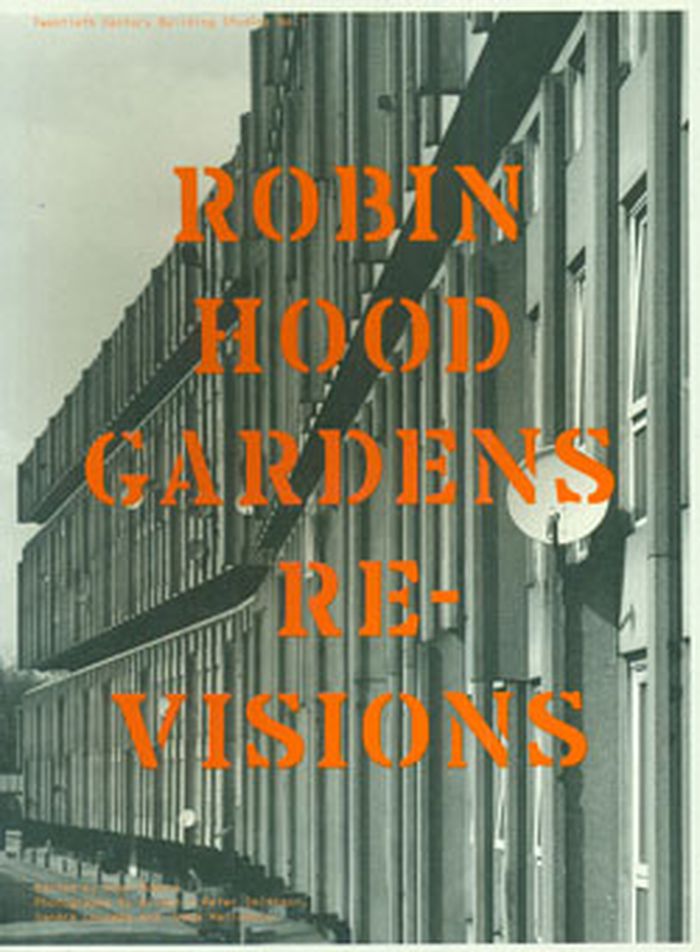
Robin Hood Gardens re-visions: Alison and Peter Smithson
Actions:
Price:
$36.00
(available to order)
Summary:
Robin Hood Gardens in Tower Hamlets, East London, was designed by Alison + Peter Smithson and completed in 1972. In 2008, this large social housing scheme was threatened with demolition and became a controversial conservation case. The government refused to give it protection as a historic building despite widespread public support for its retention. This book uncovers the history of the project, arguing for its historical and architectural significance and for its future role in local housing provision. It includes support from architects Richard Rogers and Zaha Hadid, with previously unpublished text and pictures by Alison + Peter Smithson and photographs by Sandra Lousada and Ioana Marinescu. With contributions by: Catherine Croft, Alan Powers, Dirk van den Heuvel, Ken Baker, Simon Smithson, Amanda Baillieu, Zaha Hadid, Sir Stuart Lipton, Peter St John, Neil Jackson, Deborah Saunt, Richard Rogers, Ann Power, Dan Cruickshank
Robin Hood Gardens re-visions: Alison and Peter Smithson
Actions:
Price:
$36.00
(available to order)
Summary:
Robin Hood Gardens in Tower Hamlets, East London, was designed by Alison + Peter Smithson and completed in 1972. In 2008, this large social housing scheme was threatened with demolition and became a controversial conservation case. The government refused to give it protection as a historic building despite widespread public support for its retention. This book uncovers the history of the project, arguing for its historical and architectural significance and for its future role in local housing provision. It includes support from architects Richard Rogers and Zaha Hadid, with previously unpublished text and pictures by Alison + Peter Smithson and photographs by Sandra Lousada and Ioana Marinescu. With contributions by: Catherine Croft, Alan Powers, Dirk van den Heuvel, Ken Baker, Simon Smithson, Amanda Baillieu, Zaha Hadid, Sir Stuart Lipton, Peter St John, Neil Jackson, Deborah Saunt, Richard Rogers, Ann Power, Dan Cruickshank
Form:
books
books
Publication:
October 2010
October 2010
Subject:
Architecture Monographs
Architecture Monographs
Form:
books
books
Actions:
Price:
$58.00
(available to order)
Summary:
The period from the 1960 arrival of Edward J. Logue as the powerful and often controversial director of the Boston Redevelopment Authority to the reopening of Quincy Market in 1976 saw Boston as an urban laboratory for the exploration of concrete’s structural and sculptural qualities. What emerged was a vision for the city’s widespread revitalization often referred to as(...)
$58.00
(available to order)
Summary:
The period from the 1960 arrival of Edward J. Logue as the powerful and often controversial director of the Boston Redevelopment Authority to the reopening of Quincy Market in 1976 saw Boston as an urban laboratory for the exploration of concrete’s structural and sculptural qualities. What emerged was a vision for the city’s widespread revitalization often referred to as(...)
Subject:
Architecture since 1900, Europe
Architecture since 1900, Europe
Publication:
October 2015
October 2015
Title:
Heroic: concrete architecture and the new Boston
Actions:
Price:
$58.00
(available to order)
Summary:
The period from the 1960 arrival of Edward J. Logue as the powerful and often controversial director of the Boston Redevelopment Authority to the reopening of Quincy Market in 1976 saw Boston as an urban laboratory for the exploration of concrete’s structural and sculptural qualities. What emerged was a vision for the city’s widespread revitalization often referred to as the “New Boston.” Today, when concrete buildings across the nation are in danger of insensitive renovation or demolition, Heroic presents the concrete structures that defined Boston during this remarkable period—from the well-known (Boston City Hall, New England Aquarium, and cornerstones of the Massachusetts Institute of Technology and Harvard University) to the already lost — with hundreds of images; essays by architectural historians Joan Ockman, Lizabeth Cohen, Keith N. Morgan, and Douglass Shand-Tucci; and interviews with a number of the architects themselves.
Heroic: concrete architecture and the new Boston
Actions:
Price:
$58.00
(available to order)
Summary:
The period from the 1960 arrival of Edward J. Logue as the powerful and often controversial director of the Boston Redevelopment Authority to the reopening of Quincy Market in 1976 saw Boston as an urban laboratory for the exploration of concrete’s structural and sculptural qualities. What emerged was a vision for the city’s widespread revitalization often referred to as the “New Boston.” Today, when concrete buildings across the nation are in danger of insensitive renovation or demolition, Heroic presents the concrete structures that defined Boston during this remarkable period—from the well-known (Boston City Hall, New England Aquarium, and cornerstones of the Massachusetts Institute of Technology and Harvard University) to the already lost — with hundreds of images; essays by architectural historians Joan Ockman, Lizabeth Cohen, Keith N. Morgan, and Douglass Shand-Tucci; and interviews with a number of the architects themselves.
Form:
books
books
Publication:
October 2015
October 2015
Subject:
Architecture since 1900, Europe
Architecture since 1900, Europe
Form:
books
books
Actions:
Price:
$23.95
(available to order)
Summary:
"Lots of parking" examines a neglected aspect of this rise of the automobile: the impact on America not of cars in motion but of cars at rest. While most studies have tended to focus on highway construction and engineering improvements to accommodate increasing flow and the desire for speed, John A. Jakle and Keith A. Sculle examine a fundamental feature of the urban,(...)
$23.95
(available to order)
Summary:
"Lots of parking" examines a neglected aspect of this rise of the automobile: the impact on America not of cars in motion but of cars at rest. While most studies have tended to focus on highway construction and engineering improvements to accommodate increasing flow and the desire for speed, John A. Jakle and Keith A. Sculle examine a fundamental feature of the urban,(...)
Subject:
Urban Theory
Urban Theory
Publication:
July 2005, Charlottesville / London
July 2005, Charlottesville / London
Title:
Lots of parking : land use in a car culture
Actions:
Price:
$23.95
(available to order)
Summary:
"Lots of parking" examines a neglected aspect of this rise of the automobile: the impact on America not of cars in motion but of cars at rest. While most studies have tended to focus on highway construction and engineering improvements to accommodate increasing flow and the desire for speed, John A. Jakle and Keith A. Sculle examine a fundamental feature of the urban, and suburban, scene—the parking lot. Their lively and exhaustive exploration traces the history of parking from the curbside to the rise of public and commercial parking lots and garages and the concomitant demolition of the old pedestrian-oriented urban infrastructure. In an accessible style enhanced by a range of interesting and unusual illustrations, Jakle and Sculle discuss the role of parking in downtown revitalization efforts and, by contrast, its role in the promotion of outlying suburban shopping districts and its incorporation into our neighborhoods and residences.
Lots of parking : land use in a car culture
Actions:
Price:
$23.95
(available to order)
Summary:
"Lots of parking" examines a neglected aspect of this rise of the automobile: the impact on America not of cars in motion but of cars at rest. While most studies have tended to focus on highway construction and engineering improvements to accommodate increasing flow and the desire for speed, John A. Jakle and Keith A. Sculle examine a fundamental feature of the urban, and suburban, scene—the parking lot. Their lively and exhaustive exploration traces the history of parking from the curbside to the rise of public and commercial parking lots and garages and the concomitant demolition of the old pedestrian-oriented urban infrastructure. In an accessible style enhanced by a range of interesting and unusual illustrations, Jakle and Sculle discuss the role of parking in downtown revitalization efforts and, by contrast, its role in the promotion of outlying suburban shopping districts and its incorporation into our neighborhoods and residences.
Form:
books
books
Publication:
July 2005, Charlottesville / London
July 2005, Charlottesville / London
Subject:
Urban Theory
Urban Theory


