


4761 Results
Form:
books
books
Actions:
Holdings:
Description:
142 pages, 88 pages of plates in various pagings : illustrations, portraits, plans ; 26 cm
Description:
142 pages, 88 pages of plates in various pagings : illustrations, portraits, plans ; 26 cm
Author:
Subject:
Publication:
Washington, District of Columbia : Dumbarton Oaks Trustees for Harvard University, 1982., ©1982
Washington, District of Columbia : Dumbarton Oaks Trustees for Harvard University, 1982., ©1982
Title:
Beatrix Jones Farrand (1872-1959) : fifty years of American landscape architecture.
Actions:
Holdings:
Description:
142 pages, 88 pages of plates in various pagings : illustrations, portraits, plans ; 26 cm
Beatrix Jones Farrand (1872-1959) : fifty years of American landscape architecture.
Actions:
Holdings:
Description:
142 pages, 88 pages of plates in various pagings : illustrations, portraits, plans ; 26 cm
Form:
books
books
Publication:
Washington, District of Columbia : Dumbarton Oaks Trustees for Harvard University, 1982., ©1982
Washington, District of Columbia : Dumbarton Oaks Trustees for Harvard University, 1982., ©1982
Author:
Subject:
Form:
books
books
Price:
$41.50
(available to order)
Summary:
What would it mean today to think or to imagine, to design or to construct, in relation not to "things made" but to "things in the making"? This question, first posed by the philosopher William James, was the point of departure for "The Pragmatist Imagination". The volume brings together position statements, theoretical speculations, and critical commentary by 33 leading(...)
$41.50
(available to order)
Summary:
What would it mean today to think or to imagine, to design or to construct, in relation not to "things made" but to "things in the making"? This question, first posed by the philosopher William James, was the point of departure for "The Pragmatist Imagination". The volume brings together position statements, theoretical speculations, and critical commentary by 33 leading(...)
Subject:
Contemporary Art Monographs
Contemporary Art Monographs
Publication:
November 2001, New York
November 2001, New York
Title:
The pragmatist imagination : thinking about things in the making
Actions:
Price:
$41.50
(available to order)
Summary:
What would it mean today to think or to imagine, to design or to construct, in relation not to "things made" but to "things in the making"? This question, first posed by the philosopher William James, was the point of departure for "The Pragmatist Imagination". The volume brings together position statements, theoretical speculations, and critical commentary by 33 leading thinkers and makers from over a dozen disciplines. Based on the proceedings of an international workshop held at Columbia University under the auspices of the Buell Center for the Study of American Architecture in spring 2000, a preamble to the much-ballyhooed conference at the Museum of Modern Art in November, 2000, the contributions traverse a set of burning questions about the future, ranging from the relationship between art and experience to the impact of new technologies on human consciousness, from transformations in everyday life to problems of public space, and from the destiny of the nation-state to emergent forms of transnationalism. The authors include Stanley Aronowitz, Marshall Berman, Casey Nelson Blake, Sandra Buckley, Teresa Caldeira, Jean-Louis Cohen, Jonathan Crary, Rosalyn Deutsche, Kenneth Frampton, Gerald E. Frug, Peter Galison, Elizabeth Grosz, Andreas Huyssen, Isaac Joseph, David Lapoujade, Reinhold Martin, Brian Massumi, Mary McLeod, Paul Miller a.k.a. DJ Spooky, Chantal Mouffe, Joan Ockman, John Rajchman, Martha Rosler, Hashim Sarkis, Saskia Sassen, Sandhya Shukla, Richard Shusterman, Abdoumaliq Simone, Anders Stephanson, Bernard Tschumi, Nadia Urbinati, Mabel Wilson, and Gwendolyn Wright. The book includes an introduction by John Rajchman and an afterword by Casey Nelson Blake.
The pragmatist imagination : thinking about things in the making
Actions:
Price:
$41.50
(available to order)
Summary:
What would it mean today to think or to imagine, to design or to construct, in relation not to "things made" but to "things in the making"? This question, first posed by the philosopher William James, was the point of departure for "The Pragmatist Imagination". The volume brings together position statements, theoretical speculations, and critical commentary by 33 leading thinkers and makers from over a dozen disciplines. Based on the proceedings of an international workshop held at Columbia University under the auspices of the Buell Center for the Study of American Architecture in spring 2000, a preamble to the much-ballyhooed conference at the Museum of Modern Art in November, 2000, the contributions traverse a set of burning questions about the future, ranging from the relationship between art and experience to the impact of new technologies on human consciousness, from transformations in everyday life to problems of public space, and from the destiny of the nation-state to emergent forms of transnationalism. The authors include Stanley Aronowitz, Marshall Berman, Casey Nelson Blake, Sandra Buckley, Teresa Caldeira, Jean-Louis Cohen, Jonathan Crary, Rosalyn Deutsche, Kenneth Frampton, Gerald E. Frug, Peter Galison, Elizabeth Grosz, Andreas Huyssen, Isaac Joseph, David Lapoujade, Reinhold Martin, Brian Massumi, Mary McLeod, Paul Miller a.k.a. DJ Spooky, Chantal Mouffe, Joan Ockman, John Rajchman, Martha Rosler, Hashim Sarkis, Saskia Sassen, Sandhya Shukla, Richard Shusterman, Abdoumaliq Simone, Anders Stephanson, Bernard Tschumi, Nadia Urbinati, Mabel Wilson, and Gwendolyn Wright. The book includes an introduction by John Rajchman and an afterword by Casey Nelson Blake.
Form:
books
books
Publication:
November 2001, New York
November 2001, New York
Subject:
Contemporary Art Monographs
Contemporary Art Monographs
Form:
books
books
Actions:
Price:
$85.00
(available in store)
Summary:
Published for a major exhibition at The Museum of Modern Art, this catalog reveals new perspectives on the work of Frank Lloyd Wright, a designer so prolific and familiar as to nearly preclude critical reexamination. Structured as a series of inquiries into the Frank Lloyd Wright Foundation Archives at Taliesin West, Arizona (recently acquired by MoMA and Avery(...)
$85.00
(available in store)
Summary:
Published for a major exhibition at The Museum of Modern Art, this catalog reveals new perspectives on the work of Frank Lloyd Wright, a designer so prolific and familiar as to nearly preclude critical reexamination. Structured as a series of inquiries into the Frank Lloyd Wright Foundation Archives at Taliesin West, Arizona (recently acquired by MoMA and Avery(...)
Title:
Frank Lloyd Wright: unpacking the archive
Actions:
Price:
$85.00
(available in store)
Summary:
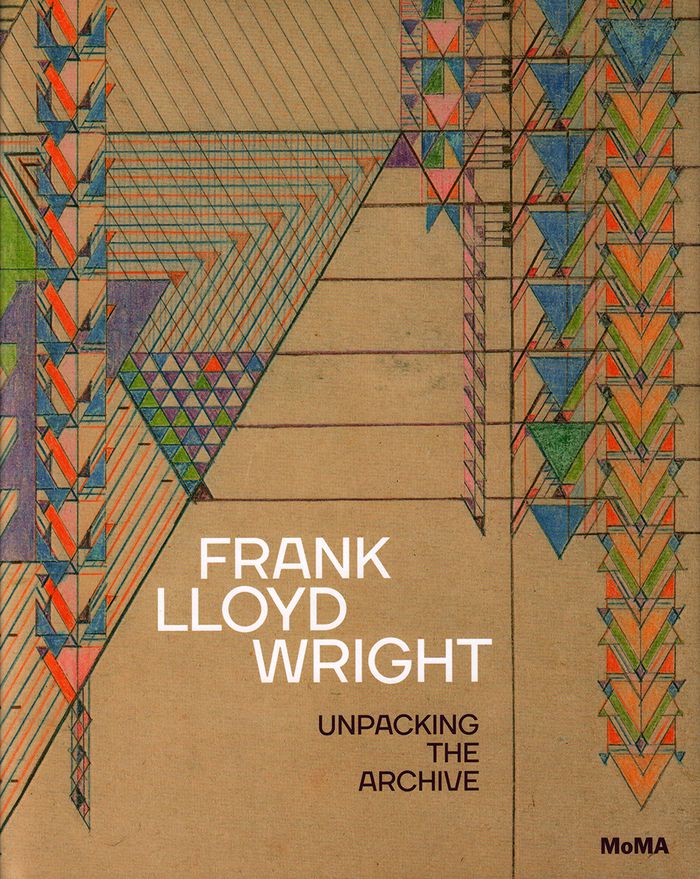
Published for a major exhibition at The Museum of Modern Art, this catalog reveals new perspectives on the work of Frank Lloyd Wright, a designer so prolific and familiar as to nearly preclude critical reexamination. Structured as a series of inquiries into the Frank Lloyd Wright Foundation Archives at Taliesin West, Arizona (recently acquired by MoMA and Avery Architectural & Fine Arts Library, Columbia University), the book is a collection of scholarly explorations rather than an attempt to construct a master narrative. Each chapter centers on a key object from the archive that an invited author has “unpacked”— tracing its meanings and connections, and juxtaposing it with other works from the archive, from MoMA, or from outside collections. Wright’s quest to build a mile-high skyscraper reveals him to be one of the earliest celebrity architects, using television, press relations and other forms of mass media to advance his own self-crafted image. A little-known project for a Rosenwald School for African-American children, together with other projects that engage Japanese and Native American culture, ask provocative questions about Wright’s positions on race and cultural identity. Still other investigations engage the architect’s lifelong dedication to affordable and do-it-yourself housing, as well as the ecological systems, both social and environmental, that informed his approach to cities, landscapes and even ornament. The publication aims to open up Wright’s work to questions, interrogations and debates, and to highlight interpretations by contemporary scholars, both established Wright experts and others considering this iconic figure from new and illuminating perspectives.
Frank Lloyd Wright: unpacking the archive
Actions:
Price:
$85.00
(available in store)
Summary:
Published for a major exhibition at The Museum of Modern Art, this catalog reveals new perspectives on the work of Frank Lloyd Wright, a designer so prolific and familiar as to nearly preclude critical reexamination. Structured as a series of inquiries into the Frank Lloyd Wright Foundation Archives at Taliesin West, Arizona (recently acquired by MoMA and Avery Architectural & Fine Arts Library, Columbia University), the book is a collection of scholarly explorations rather than an attempt to construct a master narrative. Each chapter centers on a key object from the archive that an invited author has “unpacked”— tracing its meanings and connections, and juxtaposing it with other works from the archive, from MoMA, or from outside collections. Wright’s quest to build a mile-high skyscraper reveals him to be one of the earliest celebrity architects, using television, press relations and other forms of mass media to advance his own self-crafted image. A little-known project for a Rosenwald School for African-American children, together with other projects that engage Japanese and Native American culture, ask provocative questions about Wright’s positions on race and cultural identity. Still other investigations engage the architect’s lifelong dedication to affordable and do-it-yourself housing, as well as the ecological systems, both social and environmental, that informed his approach to cities, landscapes and even ornament. The publication aims to open up Wright’s work to questions, interrogations and debates, and to highlight interpretations by contemporary scholars, both established Wright experts and others considering this iconic figure from new and illuminating perspectives.
Form:
books
books
Publication:
June 2017
June 2017
Subject:
Architecture Monographs
Architecture Monographs
Form:
books
books
Title:
The language of ornament
The language of ornament
Actions:
Price:
$22.99
(available to order)
Summary:
Ornament, the art of decorative patterning, includes some of the most spectacular creations of human imagination and skill. Although the fashion for unadorned form pushed ornament to the(...)
$22.99
(available to order)
Summary:
Ornament, the art of decorative patterning, includes some of the most spectacular creations of human imagination and skill. Although the fashion for unadorned form pushed ornament to the(...)
Title:
The language of ornament
Actions:
Price:
$22.99
(available to order)
Summary:
Ornament, the art of decorative patterning, includes some of the most spectacular creations of human imagination and skill. Although the fashion for unadorned form pushed ornament to the margins of Western taste in the twentieth century, an ornamental revival is now under way. This book introduces the global panorama of ornament and will be of value to crafts people, collectors, and students of art history. Trilling's approach is both visual and historical. With over 200 illustrations, he presents the dazzling variety of ornament so that the reader can appreciate both its inherent form and the role it has played in everything from the monumental architecture of Mycenaean Greece to the inlaid vessels of Zhou Dynasty China, from the bronze mirrors of Early Celtic Britain to the carved and woven ornament of the Indians of Alaska and British Columbia. The characteristics of individual styles are balanced against their evolution and interaction from the Paleolithic Age to the present day. Special attention is paid to patterns that migrate across large stretches of space and time, showing how ornament becomes a record of cultural interaction through trade, conquest, and the spread of religions. Finally, Trilling explores the fate of ornament since the beginning of modernism in the early twentieth century. Modernism actually nurtured a vibrant and original ornamental style of its own, one so different from traditional ornament that its true nature went virtually unrecognized. Ornament in the postmodern era is open to any number of possible innovations, combining the modernist legacy with forms and principles from the world of traditional ornament.
The language of ornament
Actions:
Price:
$22.99
(available to order)
Summary:
Ornament, the art of decorative patterning, includes some of the most spectacular creations of human imagination and skill. Although the fashion for unadorned form pushed ornament to the margins of Western taste in the twentieth century, an ornamental revival is now under way. This book introduces the global panorama of ornament and will be of value to crafts people, collectors, and students of art history. Trilling's approach is both visual and historical. With over 200 illustrations, he presents the dazzling variety of ornament so that the reader can appreciate both its inherent form and the role it has played in everything from the monumental architecture of Mycenaean Greece to the inlaid vessels of Zhou Dynasty China, from the bronze mirrors of Early Celtic Britain to the carved and woven ornament of the Indians of Alaska and British Columbia. The characteristics of individual styles are balanced against their evolution and interaction from the Paleolithic Age to the present day. Special attention is paid to patterns that migrate across large stretches of space and time, showing how ornament becomes a record of cultural interaction through trade, conquest, and the spread of religions. Finally, Trilling explores the fate of ornament since the beginning of modernism in the early twentieth century. Modernism actually nurtured a vibrant and original ornamental style of its own, one so different from traditional ornament that its true nature went virtually unrecognized. Ornament in the postmodern era is open to any number of possible innovations, combining the modernist legacy with forms and principles from the world of traditional ornament.
Form:
books
books
Publication:
June 2001, London
June 2001, London
Subject:
Ornementation
Ornementation
Form:
books
books
Actions:
Holdings:
Description:
680 pages : illustrations (some color) ; 28 cm
Description:
680 pages : illustrations (some color) ; 28 cm
Author:
Subject:
Publication:
Washington [District of Columbia] : National Gallery of Art ; New Haven : Yale University Press, 1985.
Washington [District of Columbia] : National Gallery of Art ; New Haven : Yale University Press, 1985.
Title:
The Treasure houses of Britain : five hundred years of private patronage and art collecting / edited by Gervase Jackson-Stops.
Actions:
Holdings:
Description:
680 pages : illustrations (some color) ; 28 cm
The Treasure houses of Britain : five hundred years of private patronage and art collecting / edited by Gervase Jackson-Stops.
Actions:
Holdings:
Description:
680 pages : illustrations (some color) ; 28 cm
Form:
books
books
Publication:
Washington [District of Columbia] : National Gallery of Art ; New Haven : Yale University Press, 1985.
Washington [District of Columbia] : National Gallery of Art ; New Haven : Yale University Press, 1985.
Author:
Subject:
Form:
books
books

Price:
$34.95
(available to order)
Summary:
A world-leading expert shares her amazing story of discovering the communication that exists between trees, and shares her own story of family and grief. Now, in her first book, Suzanne Simard brings us into her world, the intimate world of the trees, in which she brilliantly illuminates the fascinating and vital truths—that trees are not simply the source of timber(...)
$34.95
(available to order)
Summary:
A world-leading expert shares her amazing story of discovering the communication that exists between trees, and shares her own story of family and grief. Now, in her first book, Suzanne Simard brings us into her world, the intimate world of the trees, in which she brilliantly illuminates the fascinating and vital truths—that trees are not simply the source of timber(...)
Title:
Finding the mother-tree: discovering the wisdom of the forest
Actions:
Price:
$34.95
(available to order)
Summary:
A world-leading expert shares her amazing story of discovering the communication that exists between trees, and shares her own story of family and grief. Now, in her first book, Suzanne Simard brings us into her world, the intimate world of the trees, in which she brilliantly illuminates the fascinating and vital truths—that trees are not simply the source of timber or pulp but are a complicated, interdependent circle of life; that forests are social, cooperative creatures connected through underground networks by which trees communicate their vitality and vulnerabilities with communal lives not that different from our own. Simard describes up close—in revealing and accessible ways—how trees, living side by side for hundreds of years, have evolved; how they perceive one another, learn and adapt their behaviors, recognize neighbors, and remember the past; how they have agency about their future; how they elicit warnings and mount defenses, compete and cooperate with one another with sophistication: characteristics previously ascribed to human intelligence, traits that are the essence of civil societies. And, at the center of it all, the Mother Trees: the mysterious, powerful forces that connect and sustain the others that surround them.Simard, born and raised in the rain forests of British Columbia, spent her days as a child cataloging the trees from the forest; she came to love and respect them and embarked on a journey of discovery and struggle. Her powerful story is one of love and loss, of observation and change, of risk and reward. And it is a testament to how deeply human scientific inquiry exists beyond data and technology: it’s about understanding who we are and our place in the world.
Finding the mother-tree: discovering the wisdom of the forest
Actions:
Price:
$34.95
(available to order)
Summary:
A world-leading expert shares her amazing story of discovering the communication that exists between trees, and shares her own story of family and grief. Now, in her first book, Suzanne Simard brings us into her world, the intimate world of the trees, in which she brilliantly illuminates the fascinating and vital truths—that trees are not simply the source of timber or pulp but are a complicated, interdependent circle of life; that forests are social, cooperative creatures connected through underground networks by which trees communicate their vitality and vulnerabilities with communal lives not that different from our own. Simard describes up close—in revealing and accessible ways—how trees, living side by side for hundreds of years, have evolved; how they perceive one another, learn and adapt their behaviors, recognize neighbors, and remember the past; how they have agency about their future; how they elicit warnings and mount defenses, compete and cooperate with one another with sophistication: characteristics previously ascribed to human intelligence, traits that are the essence of civil societies. And, at the center of it all, the Mother Trees: the mysterious, powerful forces that connect and sustain the others that surround them.Simard, born and raised in the rain forests of British Columbia, spent her days as a child cataloging the trees from the forest; she came to love and respect them and embarked on a journey of discovery and struggle. Her powerful story is one of love and loss, of observation and change, of risk and reward. And it is a testament to how deeply human scientific inquiry exists beyond data and technology: it’s about understanding who we are and our place in the world.
Form:
books
books
Publication:
May 2021
May 2021
Subject:
Landscape Theory
Landscape Theory
Form:
journals and magazines
journals and magazines
Title:
Future anterior
Future anterior
Actions:
Price:
$14.95
(available to order)
Summary:
Historic preservation is at an important moment of rethinking. The field has grown exponentially in America since its first academic program was founded at Columbia University in 1965. Although initially concerned only with buildings, preservation has recently expanded to include the protection and creative interpretation of entire urban environments, landscapes,(...)
$14.95
(available to order)
Summary:
Historic preservation is at an important moment of rethinking. The field has grown exponentially in America since its first academic program was founded at Columbia University in 1965. Although initially concerned only with buildings, preservation has recently expanded to include the protection and creative interpretation of entire urban environments, landscapes,(...)
Title:
Future anterior
Actions:
Price:
$14.95
(available to order)
Summary:
Historic preservation is at an important moment of rethinking. The field has grown exponentially in America since its first academic program was founded at Columbia University in 1965. Although initially concerned only with buildings, preservation has recently expanded to include the protection and creative interpretation of entire urban environments, landscapes, highways, cultural traditions, artistic practices, and even specific “experiences” such as historic view sheds. Most importantly, historic preservation is beginning a significant re-clarification of its purposes, sharpening and deepening its focus on the contributions old architecture and artifacts make to our understanding of the human condition and how we should address and live in it. Future Anterior is the first and only journal in American academia to be devoted to the study and advancement of preservation, which brings together the interests of scholars and professionals in multiple disciplines such as architecture, art, history, philosophy, law, planning, materials science, cultural anthropology, conservation, and others. Future Anterior establishes an important and much needed forum for the critical examination of this expanding discipline, to spur challenges of its motives, goals, forms of practice and results. The appearance of Future Anterior signals the maturation of the field of preservation and a shift away from nostalgic antiquarianism towards an active involvement in the understanding and creative transformation of human environments. This turn in preservation is reflected in an increased interest in historic architecture and artifacts as expressive resources of great public importance. The destruction of patrimony, from the colossal Buddhas in Afghanistan to New York’s World Trade Center, is seen not just as barbarism but as sources of understanding about where we are going wrong and what we need to do next. In response, architects, planners, urban designers, and artists have been producing works which engage the public in new ways of reflecting and taking on the past not as constraint but as provocation.
Future anterior
Actions:
Price:
$14.95
(available to order)
Summary:
Historic preservation is at an important moment of rethinking. The field has grown exponentially in America since its first academic program was founded at Columbia University in 1965. Although initially concerned only with buildings, preservation has recently expanded to include the protection and creative interpretation of entire urban environments, landscapes, highways, cultural traditions, artistic practices, and even specific “experiences” such as historic view sheds. Most importantly, historic preservation is beginning a significant re-clarification of its purposes, sharpening and deepening its focus on the contributions old architecture and artifacts make to our understanding of the human condition and how we should address and live in it. Future Anterior is the first and only journal in American academia to be devoted to the study and advancement of preservation, which brings together the interests of scholars and professionals in multiple disciplines such as architecture, art, history, philosophy, law, planning, materials science, cultural anthropology, conservation, and others. Future Anterior establishes an important and much needed forum for the critical examination of this expanding discipline, to spur challenges of its motives, goals, forms of practice and results. The appearance of Future Anterior signals the maturation of the field of preservation and a shift away from nostalgic antiquarianism towards an active involvement in the understanding and creative transformation of human environments. This turn in preservation is reflected in an increased interest in historic architecture and artifacts as expressive resources of great public importance. The destruction of patrimony, from the colossal Buddhas in Afghanistan to New York’s World Trade Center, is seen not just as barbarism but as sources of understanding about where we are going wrong and what we need to do next. In response, architects, planners, urban designers, and artists have been producing works which engage the public in new ways of reflecting and taking on the past not as constraint but as provocation.
Form:
journals and magazines
journals and magazines
Publication:
October 2004, New York
October 2004, New York
Subject:
Magazines
Magazines
Form:
books
books
Actions:
Price:
$37.50
(available to order)
Summary:
Drivers in the nation's capital face a host of hazards: high-speed traffic circles, presidential motorcades, jaywalking tourists, and bewildering signs that send unsuspecting motorists from the Lincoln Memorial into suburban Virginia in less than two minutes. And parking? Don't bet on it unless you're in the fast lane of the Capital Beltway during rush hour. Little(...)
$37.50
(available to order)
Summary:
Drivers in the nation's capital face a host of hazards: high-speed traffic circles, presidential motorcades, jaywalking tourists, and bewildering signs that send unsuspecting motorists from the Lincoln Memorial into suburban Virginia in less than two minutes. And parking? Don't bet on it unless you're in the fast lane of the Capital Beltway during rush hour. Little(...)
Title:
The Great Society subway : a history of the Washington Metro
Actions:
Price:
$37.50
(available to order)
Summary:
Drivers in the nation's capital face a host of hazards: high-speed traffic circles, presidential motorcades, jaywalking tourists, and bewildering signs that send unsuspecting motorists from the Lincoln Memorial into suburban Virginia in less than two minutes. And parking? Don't bet on it unless you're in the fast lane of the Capital Beltway during rush hour. Little wonder, then, that so many residents and visitors rely on the Washington Metro, the 106-mile rapid transit system that serves the District of Columbia and its inner suburbs. In the first comprehensive history of the Metro, Zachary M. Schrag tells the story of the Great Society subway from its earliest rumblings to the present day, from Arlington to College Park, Eisenhower to Marion Barry. Unlike the pre–World War II rail systems of New York, Chicago, and Philadelphia, the Metro was built at a time when most American families already owned cars, and when most American cities had dedicated themselves to freeways, not subways. Why did the nation's capital take a different path? What were the consequences of that decision? Using extensive archival research as well as oral history, Schrag argues that the Metro can be understood only in the political context from which it was born: the Great Society liberalism of the Kennedy, Johnson, and Nixon administrations. The Metro emerged from a period when Americans believed in public investments suited to the grandeur and dignity of the world's richest nation. The Metro was built not merely to move commuters, but in the words of Lyndon Johnson, to create "a place where the city of man serves not only the needs of the body and the demands of commerce but the desire for beauty and the hunger for community." Schrag scrutinizes the project from its earliest days, including general planning, routes, station architecture, funding decisions, land-use impacts, and the behavior of Metro riders. The story of the Great society subway sheds light on the development of metropolitan Washington, postwar urban policy, and the promises and limits of rail transit in American cities.
The Great Society subway : a history of the Washington Metro
Actions:
Price:
$37.50
(available to order)
Summary:
Drivers in the nation's capital face a host of hazards: high-speed traffic circles, presidential motorcades, jaywalking tourists, and bewildering signs that send unsuspecting motorists from the Lincoln Memorial into suburban Virginia in less than two minutes. And parking? Don't bet on it unless you're in the fast lane of the Capital Beltway during rush hour. Little wonder, then, that so many residents and visitors rely on the Washington Metro, the 106-mile rapid transit system that serves the District of Columbia and its inner suburbs. In the first comprehensive history of the Metro, Zachary M. Schrag tells the story of the Great Society subway from its earliest rumblings to the present day, from Arlington to College Park, Eisenhower to Marion Barry. Unlike the pre–World War II rail systems of New York, Chicago, and Philadelphia, the Metro was built at a time when most American families already owned cars, and when most American cities had dedicated themselves to freeways, not subways. Why did the nation's capital take a different path? What were the consequences of that decision? Using extensive archival research as well as oral history, Schrag argues that the Metro can be understood only in the political context from which it was born: the Great Society liberalism of the Kennedy, Johnson, and Nixon administrations. The Metro emerged from a period when Americans believed in public investments suited to the grandeur and dignity of the world's richest nation. The Metro was built not merely to move commuters, but in the words of Lyndon Johnson, to create "a place where the city of man serves not only the needs of the body and the demands of commerce but the desire for beauty and the hunger for community." Schrag scrutinizes the project from its earliest days, including general planning, routes, station architecture, funding decisions, land-use impacts, and the behavior of Metro riders. The story of the Great society subway sheds light on the development of metropolitan Washington, postwar urban policy, and the promises and limits of rail transit in American cities.
Form:
books
books
Publication:
February 2006, Baltimore
February 2006, Baltimore
Subject:
Engineering Structures
Engineering Structures
Form:
books
books
Title:
Judging architectural value
Judging architectural value
Actions:
Price:
$24.95
(available to order)
Summary:
When it comes to determining the relative quality of architecture, who is best equipped to make the distinctions? Is it the public who lives in and among the buildings? The people who commission and pay for the buildings? Art historians? Or architects themselves? These provocative essays take up the questions of what people value in architecture and how changing(...)
$24.95
(available to order)
Summary:
When it comes to determining the relative quality of architecture, who is best equipped to make the distinctions? Is it the public who lives in and among the buildings? The people who commission and pay for the buildings? Art historians? Or architects themselves? These provocative essays take up the questions of what people value in architecture and how changing(...)
Subject:
Architectural Theory
Architectural Theory
Publication:
April 2007, Mineapolis London
April 2007, Mineapolis London
Title:
Judging architectural value
Actions:
Price:
$24.95
(available to order)
Summary:
When it comes to determining the relative quality of architecture, who is best equipped to make the distinctions? Is it the public who lives in and among the buildings? The people who commission and pay for the buildings? Art historians? Or architects themselves? These provocative essays take up the questions of what people value in architecture and how changing values influence opinions about it. In the intriguing opening essay, Michael Benedikt makes an argument for the role of architects in the delineation of value in architecture. He discusses the differences between icon and canon, a theme threaded through many of the essays. In addition to unexpected analyses of buildings such as Eero Saarinen’s Gateway Arch in St. Louis, Paul Rudolph’s Art and Architecture Building at Yale University, and the work of Antoni Gaudí and Frank Gehry, the collection includes a clear-eyed look at the role of architecture in addressing social problems. Ultimately, these essays assert that judging architecture requires more than a refined sensibility. Buildings also need to be evaluated by their impact on the people living within and around them. Contributors: John Beardsley, Harvard Design School; Michael Benedikt, U of Texas, Austin; Tim Culvahouse, California College of the Arts; Lisa Finley, California College of the Arts; Kurt W. Forster, Bauhaus-Universität, Weimar, Germany; Kenneth Frampton, Columbia U; Diane Ghirardo, U of Southern California; Charles Jencks; David Leatherbarrow, U of Pennsylvania; Nancy Levinson; Hélène Lipstadt; Juhani Pallasmaa, Helsinki U of Technology; Timothy M. Rohan, U of Massachusetts, Amherst; Roger Scruton; Daniel Willis, Pennsylvania State U. William S. Saunders is editor of Harvard Design Magazine and assistant dean for external relations at Harvard University’s Graduate School of Design. He is the author of Modern Architecture: Photographs by Ezra Stoller and editor of three other Harvard Design Magazine Readers. Michael Benedikt is Hal Box Chair in Urbanism and director of the Center for American Architecture and Design at the School of Architecture at the University of Texas at Austin.
Judging architectural value
Actions:
Price:
$24.95
(available to order)
Summary:
When it comes to determining the relative quality of architecture, who is best equipped to make the distinctions? Is it the public who lives in and among the buildings? The people who commission and pay for the buildings? Art historians? Or architects themselves? These provocative essays take up the questions of what people value in architecture and how changing values influence opinions about it. In the intriguing opening essay, Michael Benedikt makes an argument for the role of architects in the delineation of value in architecture. He discusses the differences between icon and canon, a theme threaded through many of the essays. In addition to unexpected analyses of buildings such as Eero Saarinen’s Gateway Arch in St. Louis, Paul Rudolph’s Art and Architecture Building at Yale University, and the work of Antoni Gaudí and Frank Gehry, the collection includes a clear-eyed look at the role of architecture in addressing social problems. Ultimately, these essays assert that judging architecture requires more than a refined sensibility. Buildings also need to be evaluated by their impact on the people living within and around them. Contributors: John Beardsley, Harvard Design School; Michael Benedikt, U of Texas, Austin; Tim Culvahouse, California College of the Arts; Lisa Finley, California College of the Arts; Kurt W. Forster, Bauhaus-Universität, Weimar, Germany; Kenneth Frampton, Columbia U; Diane Ghirardo, U of Southern California; Charles Jencks; David Leatherbarrow, U of Pennsylvania; Nancy Levinson; Hélène Lipstadt; Juhani Pallasmaa, Helsinki U of Technology; Timothy M. Rohan, U of Massachusetts, Amherst; Roger Scruton; Daniel Willis, Pennsylvania State U. William S. Saunders is editor of Harvard Design Magazine and assistant dean for external relations at Harvard University’s Graduate School of Design. He is the author of Modern Architecture: Photographs by Ezra Stoller and editor of three other Harvard Design Magazine Readers. Michael Benedikt is Hal Box Chair in Urbanism and director of the Center for American Architecture and Design at the School of Architecture at the University of Texas at Austin.
Form:
books
books
Publication:
April 2007, Mineapolis London
April 2007, Mineapolis London
Subject:
Architectural Theory
Architectural Theory
Form:
books
books
Title:
Inventing American modernism : Joseph Hudnut, Walter Gropius, and the Bauhaus legacy at Harvard
Inventing American modernism : Joseph Hudnut, Walter Gropius, and the Bauhaus legacy at Harvard
Actions:
Price:
$50.00
(available to order)
Summary:
From the late 1930s to the early 1950s, the Harvard Graduate School of Design played a crucial role in shaping a new modern architecture and the modern city. Architects, planners, teachers, and students from all over the world looked to the new GSD, with its celebrated faculty and curriculum, for the path to modern design. While the school’s significance is widely(...)
$50.00
(available to order)
Summary:
From the late 1930s to the early 1950s, the Harvard Graduate School of Design played a crucial role in shaping a new modern architecture and the modern city. Architects, planners, teachers, and students from all over the world looked to the new GSD, with its celebrated faculty and curriculum, for the path to modern design. While the school’s significance is widely(...)
Subject:
Architecture since 1900, Europe
Architecture since 1900, Europe
Publication:
April 2007, Charlottesville, London
April 2007, Charlottesville, London
Title:
Inventing American modernism : Joseph Hudnut, Walter Gropius, and the Bauhaus legacy at Harvard
Actions:
Price:
$50.00
(available to order)
Summary:
From the late 1930s to the early 1950s, the Harvard Graduate School of Design played a crucial role in shaping a new modern architecture and the modern city. Architects, planners, teachers, and students from all over the world looked to the new GSD, with its celebrated faculty and curriculum, for the path to modern design. While the school’s significance is widely recognized by architectural historians, most studies have concentrated on the Bauhaus founder Walter Gropius and his transformation of Harvard's old Beaux-Arts School of Architecture into a "Harvard-Bauhaus," a radically new school with a single outlook. In "Inventing American modernism", Jill Pearlman argues that Gropius did not effect these changes alone and, further, that the GSD was not merely an offshoot of the Bauhaus. She offers a crucial missing piece to the story — and to the history of modern architecture — by focusing on Joseph Hudnut, the school’s dean and founder. After heading the architecture school at the University of Virginia, and then at Columbia University, Hudnut created the GSD at Harvard in 1936, before Gropius was appointed, and he headed the school until 1953, the year after Gropius resigned. From the beginning, Hudnut gave the GSD its modern pedagogical direction, and he continued to oversee its curriculum and staffing for the next seventeen years. Although originally an admirer of Gropius's work and theories, Hudnut came to clash with him over the control of the direction of modern architecture and planning in the United States Gropius won the battle, but Pearlman shows that, had the GSD followed the path Hudnut wanted, modern architecture and the modern city might well have been different. In his role as public intellectual, Hudnut wielded an influence that reached outside the university, distinguished by his encouraging people to participate in the architectural and urbanistic matters that affected their lives. A story involving European modernists such as Marcel Breuer, Martin Wagner, and Christopher Tunnard, as well as a number of other architects, city planners, and landscape architects, this book is more than the study of a single school; it is a look at the origins of modernism at a defining moment in the history of twentieth-century architecture.
Inventing American modernism : Joseph Hudnut, Walter Gropius, and the Bauhaus legacy at Harvard
Actions:
Price:
$50.00
(available to order)
Summary:
From the late 1930s to the early 1950s, the Harvard Graduate School of Design played a crucial role in shaping a new modern architecture and the modern city. Architects, planners, teachers, and students from all over the world looked to the new GSD, with its celebrated faculty and curriculum, for the path to modern design. While the school’s significance is widely recognized by architectural historians, most studies have concentrated on the Bauhaus founder Walter Gropius and his transformation of Harvard's old Beaux-Arts School of Architecture into a "Harvard-Bauhaus," a radically new school with a single outlook. In "Inventing American modernism", Jill Pearlman argues that Gropius did not effect these changes alone and, further, that the GSD was not merely an offshoot of the Bauhaus. She offers a crucial missing piece to the story — and to the history of modern architecture — by focusing on Joseph Hudnut, the school’s dean and founder. After heading the architecture school at the University of Virginia, and then at Columbia University, Hudnut created the GSD at Harvard in 1936, before Gropius was appointed, and he headed the school until 1953, the year after Gropius resigned. From the beginning, Hudnut gave the GSD its modern pedagogical direction, and he continued to oversee its curriculum and staffing for the next seventeen years. Although originally an admirer of Gropius's work and theories, Hudnut came to clash with him over the control of the direction of modern architecture and planning in the United States Gropius won the battle, but Pearlman shows that, had the GSD followed the path Hudnut wanted, modern architecture and the modern city might well have been different. In his role as public intellectual, Hudnut wielded an influence that reached outside the university, distinguished by his encouraging people to participate in the architectural and urbanistic matters that affected their lives. A story involving European modernists such as Marcel Breuer, Martin Wagner, and Christopher Tunnard, as well as a number of other architects, city planners, and landscape architects, this book is more than the study of a single school; it is a look at the origins of modernism at a defining moment in the history of twentieth-century architecture.
Form:
books
books
Publication:
April 2007, Charlottesville, London
April 2007, Charlottesville, London
Subject:
Architecture since 1900, Europe
Architecture since 1900, Europe


