


4813 Results
Form:
books
books
Title:
Pro Eto: That's What
Pro Eto: That's What
Actions:
Price:
$26.95
(available in store)
Summary:
Vladimir Mayakovsky was one of the towering literary figures of pre- and post-revolutionary Russia, speaking as much to the working man (he often employed the rough talk of the streets and revolutionary rhetoric in his poetry) as to other poets (his creative fascination with sound and form, linguistic metamorphosis and variation made him a sort of 'poet's poet', the(...)
$26.95
(available in store)
Summary:
Vladimir Mayakovsky was one of the towering literary figures of pre- and post-revolutionary Russia, speaking as much to the working man (he often employed the rough talk of the streets and revolutionary rhetoric in his poetry) as to other poets (his creative fascination with sound and form, linguistic metamorphosis and variation made him a sort of 'poet's poet', the(...)
Title:
Pro Eto: That's What
Actions:
Price:
$26.95
(available in store)
Summary:
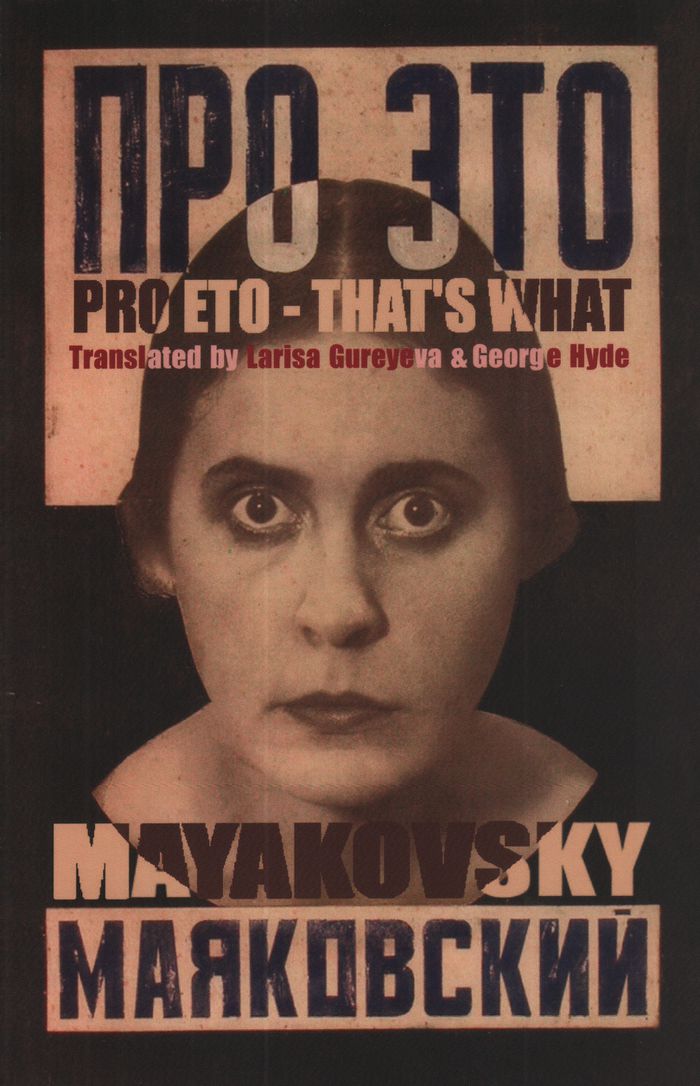
Vladimir Mayakovsky was one of the towering literary figures of pre- and post-revolutionary Russia, speaking as much to the working man (he often employed the rough talk of the streets and revolutionary rhetoric in his poetry) as to other poets (his creative fascination with sound and form, linguistic metamorphosis and variation made him a sort of 'poet's poet', the doyen, if not the envy, of his contemporaries, Pasternak among them). His poetry, influenced by Whitman and Verhaeren and strangely akin to modern rock poetry in its erotic thrust, bluesy complaints and cries of pain, not to mention its sardonic humour, is at once aggressive, mocking and tender, and often fantastic or grotesque. "Pro Eto - That's What" is a long love poem detailing the pain and suffering inflicted on the poet by his lover and her final rejection of him. But as well as being an agonising parable of separation and betrayal, it is also a political work, highly critical of Lenin's reforms of Soviet Socialism.
Pro Eto: That's What
Actions:
Price:
$26.95
(available in store)
Summary:
Vladimir Mayakovsky was one of the towering literary figures of pre- and post-revolutionary Russia, speaking as much to the working man (he often employed the rough talk of the streets and revolutionary rhetoric in his poetry) as to other poets (his creative fascination with sound and form, linguistic metamorphosis and variation made him a sort of 'poet's poet', the doyen, if not the envy, of his contemporaries, Pasternak among them). His poetry, influenced by Whitman and Verhaeren and strangely akin to modern rock poetry in its erotic thrust, bluesy complaints and cries of pain, not to mention its sardonic humour, is at once aggressive, mocking and tender, and often fantastic or grotesque. "Pro Eto - That's What" is a long love poem detailing the pain and suffering inflicted on the poet by his lover and her final rejection of him. But as well as being an agonising parable of separation and betrayal, it is also a political work, highly critical of Lenin's reforms of Soviet Socialism.
Form:
books
books
Publication:
May 2009
May 2009
Subject:
Literature and poetry
Literature and poetry
Form:
books
books

Title:
Love of worker bees
Love of worker bees
Actions:
Price:
$18.95
(available to order)
Summary:
'' Love of worker bees,'' written by one of the most famous and gifted Russian authors of the twentieth century, was greeted on publication in 1923 as too sexually explicit. The book collects three works of fiction, ''Vasilisa Malygina,'' ''Three Generations,'' and ''Sisters,'' creating a powerful love story with a graphic and a rare portrayal of Russian life in the(...)
$18.95
(available to order)
Summary:
'' Love of worker bees,'' written by one of the most famous and gifted Russian authors of the twentieth century, was greeted on publication in 1923 as too sexually explicit. The book collects three works of fiction, ''Vasilisa Malygina,'' ''Three Generations,'' and ''Sisters,'' creating a powerful love story with a graphic and a rare portrayal of Russian life in the(...)
Title:
Love of worker bees
Actions:
Price:
$18.95
(available to order)
Summary:
'' Love of worker bees,'' written by one of the most famous and gifted Russian authors of the twentieth century, was greeted on publication in 1923 as too sexually explicit. The book collects three works of fiction, ''Vasilisa Malygina,'' ''Three Generations,'' and ''Sisters,'' creating a powerful love story with a graphic and a rare portrayal of Russian life in the 1920s. The first piece is set in Russia after the October Revolution and the Civil War, The heroine Vasya struggles to come to terms with her husband and the demands of the new world in which she lives. The second story depicts the way in which three generations of women differ in their attitudes and expectations; and ''Sisters'' is a story of a deserted wife and a prostitute who find a common bond. Each story unfolds against a backdrop populated by the ''ordinary'' Russian people of the time- Party workers, entrepreneurs, prostitutes, manipulators, and idealists.
Love of worker bees
Actions:
Price:
$18.95
(available to order)
Summary:
'' Love of worker bees,'' written by one of the most famous and gifted Russian authors of the twentieth century, was greeted on publication in 1923 as too sexually explicit. The book collects three works of fiction, ''Vasilisa Malygina,'' ''Three Generations,'' and ''Sisters,'' creating a powerful love story with a graphic and a rare portrayal of Russian life in the 1920s. The first piece is set in Russia after the October Revolution and the Civil War, The heroine Vasya struggles to come to terms with her husband and the demands of the new world in which she lives. The second story depicts the way in which three generations of women differ in their attitudes and expectations; and ''Sisters'' is a story of a deserted wife and a prostitute who find a common bond. Each story unfolds against a backdrop populated by the ''ordinary'' Russian people of the time- Party workers, entrepreneurs, prostitutes, manipulators, and idealists.
Form:
books
books
Publication:
October 2005
October 2005
Subject:
Current Exhibitions
Current Exhibitions
Form:
books
books
Price:
$89.95
(available in store)
Summary:
The Viipuri Library has international reputation as a seminal early work of Alvar Aalto, and is a key example of modern architecture. Simultaneously, the meanings associated with it stem from its geopolitical location: the library was originally opened to the Finnish city of Viipuri, but at the end of the World War II the city was annexed to the Soviet Union. Since 1991(...)
$89.95
(available in store)
Summary:
The Viipuri Library has international reputation as a seminal early work of Alvar Aalto, and is a key example of modern architecture. Simultaneously, the meanings associated with it stem from its geopolitical location: the library was originally opened to the Finnish city of Viipuri, but at the end of the World War II the city was annexed to the Soviet Union. Since 1991(...)
Title:
The building that disappeared: the Viipuri library by Alvar Aalto
Actions:
Price:
$89.95
(available in store)
Summary:
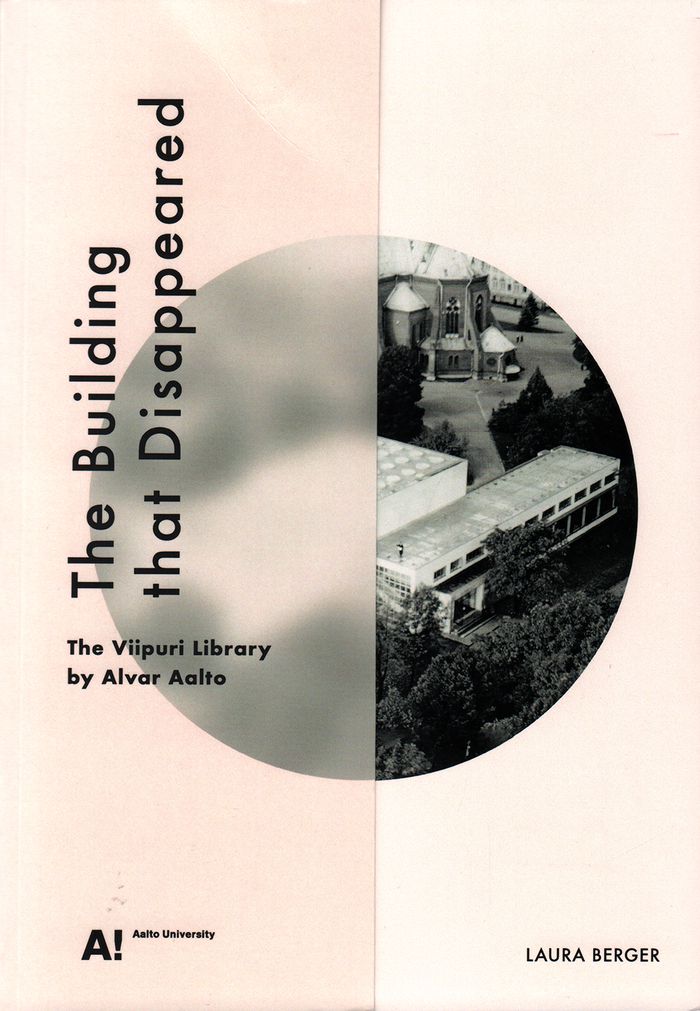
The Viipuri Library has international reputation as a seminal early work of Alvar Aalto, and is a key example of modern architecture. Simultaneously, the meanings associated with it stem from its geopolitical location: the library was originally opened to the Finnish city of Viipuri, but at the end of the World War II the city was annexed to the Soviet Union. Since 1991 the building has been located in modern day Russia. The title of the book reflects the widely spread misunderstanding that the Library has been lost at war, and future generations can learn about it only from drawings and images. This work unfolds its 'life’ in four thematic chapters, each presenting a totally different perspective to what this building is all about: First, the context of the city of Viipuri, second, the Library as a work of Aalto, third, the time period of the Second World War and the Soviet Union, and last, the international restoration project.
The building that disappeared: the Viipuri library by Alvar Aalto
Actions:
Price:
$89.95
(available in store)
Summary:
The Viipuri Library has international reputation as a seminal early work of Alvar Aalto, and is a key example of modern architecture. Simultaneously, the meanings associated with it stem from its geopolitical location: the library was originally opened to the Finnish city of Viipuri, but at the end of the World War II the city was annexed to the Soviet Union. Since 1991 the building has been located in modern day Russia. The title of the book reflects the widely spread misunderstanding that the Library has been lost at war, and future generations can learn about it only from drawings and images. This work unfolds its 'life’ in four thematic chapters, each presenting a totally different perspective to what this building is all about: First, the context of the city of Viipuri, second, the Library as a work of Aalto, third, the time period of the Second World War and the Soviet Union, and last, the international restoration project.
Form:
books
books
Publication:
January 2019
January 2019
Subject:
Architecture Monographs
Architecture Monographs
Form:
books
books
Actions:
Price:
$59.95
(available to order)
Summary:
The book reproduces a series of the collages made by David Wild. Their subject is modern architecture in the first half of the twentieth century: in the Netherlands, in Russia, and in the work of Le Corbusier. The method of the book is to show a collage on a right-hand page; then on the facing page is a (...)
$59.95
(available to order)
Summary:
The book reproduces a series of the collages made by David Wild. Their subject is modern architecture in the first half of the twentieth century: in the Netherlands, in Russia, and in the work of Le Corbusier. The method of the book is to show a collage on a right-hand page; then on the facing page is a (...)
Title:
Fragments of utopia: collage reflections of heroic modernism
Actions:
Price:
$59.95
(available to order)
Summary:
The book reproduces a series of the collages made by David Wild. Their subject is modern architecture in the first half of the twentieth century: in the Netherlands, in Russia, and in the work of Le Corbusier. The method of the book is to show a collage on a right-hand page; then on the facing page is a prose commentary by Wild and supporting smaller images. Introducing the book, David Wild explains that the impulse for this work lies in the aftermath of a fire in his house: his scorched books lent themselves to collage. He goes on to sketch the cultural-political climate in Britain over the last 40 years: the backdrop to his work as an architect and (less directly) to this book. In the opening section on the Netherlands, the leading theme is an architecture of social equity and continuity. Rooted in old cultural traditions, and in the particular ‘football-pitch’ landscape of the country, modern architecture could realise some of its dreams in everyday buildings. Postage stamps play an active part in many of the book’s collages, and especially in this section: the design of stamps flourished in the Netherlands, through the enlightened patronage of the Dutch post office — with several architects designing stamps too. Politics and history come to prominence in the Russian section, as a motivating force in the work of the early 1920s, and then as a heavy burden — with the onset of totalitarian control and repression. At the centre of the discussion here is the architecture of constructivism: formally brilliant, but with a clear social programme. Flight and the exploration of space are recurring topics in this section, as another and particularly Russian dimension of utopian striving The work of Le Corbusier, in Europe, North and South America, Russia and India, is treated in the third section. Le Corbusier is presented as a brilliant artist, a master architect of the greatest skill and the greatest ambition — and without scruple in pursuing commissions. The images and text follow him into the years after the Second World War, culminating in the work in India. Here there is a vision of another kind of politics, of co-operation and non-violence.
Fragments of utopia: collage reflections of heroic modernism
Actions:
Price:
$59.95
(available to order)
Summary:
The book reproduces a series of the collages made by David Wild. Their subject is modern architecture in the first half of the twentieth century: in the Netherlands, in Russia, and in the work of Le Corbusier. The method of the book is to show a collage on a right-hand page; then on the facing page is a prose commentary by Wild and supporting smaller images. Introducing the book, David Wild explains that the impulse for this work lies in the aftermath of a fire in his house: his scorched books lent themselves to collage. He goes on to sketch the cultural-political climate in Britain over the last 40 years: the backdrop to his work as an architect and (less directly) to this book. In the opening section on the Netherlands, the leading theme is an architecture of social equity and continuity. Rooted in old cultural traditions, and in the particular ‘football-pitch’ landscape of the country, modern architecture could realise some of its dreams in everyday buildings. Postage stamps play an active part in many of the book’s collages, and especially in this section: the design of stamps flourished in the Netherlands, through the enlightened patronage of the Dutch post office — with several architects designing stamps too. Politics and history come to prominence in the Russian section, as a motivating force in the work of the early 1920s, and then as a heavy burden — with the onset of totalitarian control and repression. At the centre of the discussion here is the architecture of constructivism: formally brilliant, but with a clear social programme. Flight and the exploration of space are recurring topics in this section, as another and particularly Russian dimension of utopian striving The work of Le Corbusier, in Europe, North and South America, Russia and India, is treated in the third section. Le Corbusier is presented as a brilliant artist, a master architect of the greatest skill and the greatest ambition — and without scruple in pursuing commissions. The images and text follow him into the years after the Second World War, culminating in the work in India. Here there is a vision of another kind of politics, of co-operation and non-violence.
Form:
books
books
Publication:
January 1900, London
January 1900, London
Subject:
Graphic Designers, Monographs
Graphic Designers, Monographs
Form:
books
books
Actions:
Holdings:
Description:
xii, 377 pages : illustrations ; 24 cm
Description:
xii, 377 pages : illustrations ; 24 cm
Author:
Subject:
Publication:
New York City : Granary Books, 1995.
New York City : Granary Books, 1995.
Title:
The century of artists' books / Johanna Drucker.
Actions:
Holdings:
Description:
xii, 377 pages : illustrations ; 24 cm
The century of artists' books / Johanna Drucker.
Actions:
Holdings:
Description:
xii, 377 pages : illustrations ; 24 cm
Form:
books
books
Publication:
New York City : Granary Books, 1995.
New York City : Granary Books, 1995.
Author:
Subject:
Form:
books
books
Actions:
Holdings:
Description:
46, [11] p., [116] p. of plates : ill. (some col.) ; 30 cm.
Description:
46, [11] p., [116] p. of plates : ill. (some col.) ; 30 cm.
Author:
Subject:
Publication:
Leningrad : Aurora Art, c1980.
Leningrad : Aurora Art, c1980.
Title:
The Dom Cathedral architectural ensemble in Riga / [compiled by Tatjana Pavele, Lidija Rendele and Karina Vitola ; edited by Yuri Vasilyev ; photos. by Ferdinand Kuziumov ; translated from the Russian by Stephen Whitehead and Alla Pegulevskaya].
Actions:
Holdings:
Description:
46, [11] p., [116] p. of plates : ill. (some col.) ; 30 cm.
The Dom Cathedral architectural ensemble in Riga / [compiled by Tatjana Pavele, Lidija Rendele and Karina Vitola ; edited by Yuri Vasilyev ; photos. by Ferdinand Kuziumov ; translated from the Russian by Stephen Whitehead and Alla Pegulevskaya].
Actions:
Holdings:
Description:
46, [11] p., [116] p. of plates : ill. (some col.) ; 30 cm.
Form:
books
books
Publication:
Leningrad : Aurora Art, c1980.
Leningrad : Aurora Art, c1980.
Author:
Subject:
Form:
books
books
Actions:
Holdings:
Description:
247 pages, 2 unnumbered leaves of plates (1 folded) : illustrations (some color) ; 17 cm.
Description:
247 pages, 2 unnumbered leaves of plates (1 folded) : illustrations (some color) ; 17 cm.
Author:
Subject:
Publication:
Moscow : Raduga Publishers, ©1984.
Moscow : Raduga Publishers, ©1984.
Title:
Museums of Kiev : a guide / [Irina Veremeeva ... et al. ; translated from the Russian by Anatoly Belenko ; editor of the English text, Alexandra Bouianovskaya ; photos by R. Beniaminson, B. Mindel, N. Rakhmanov].
Actions:
Holdings:
Description:
247 pages, 2 unnumbered leaves of plates (1 folded) : illustrations (some color) ; 17 cm.
Museums of Kiev : a guide / [Irina Veremeeva ... et al. ; translated from the Russian by Anatoly Belenko ; editor of the English text, Alexandra Bouianovskaya ; photos by R. Beniaminson, B. Mindel, N. Rakhmanov].
Actions:
Holdings:
Description:
247 pages, 2 unnumbered leaves of plates (1 folded) : illustrations (some color) ; 17 cm.
Form:
books
books
Publication:
Moscow : Raduga Publishers, ©1984.
Moscow : Raduga Publishers, ©1984.
Author:
Subject:
Form:
books
books
Actions:
Holdings:
Description:
8 pages, folded plate ; 24 cm
Description:
8 pages, folded plate ; 24 cm
Author:
Subject:
Publication:
Chicago : World's Columbian Exposition, 1893.
Chicago : World's Columbian Exposition, 1893.
Title:
The sanitation of the world / by Benjamin J. Portugaloff ; translated from the Russian.
Actions:
Holdings:
Description:
8 pages, folded plate ; 24 cm
The sanitation of the world / by Benjamin J. Portugaloff ; translated from the Russian.
Actions:
Holdings:
Description:
8 pages, folded plate ; 24 cm
Form:
books
books
Publication:
Chicago : World's Columbian Exposition, 1893.
Chicago : World's Columbian Exposition, 1893.
Author:
Subject:
Form:
books
books
Actions:
Holdings:
Description:
190 pages : illustrations (chiefly color), portraits ; 28 cm
Description:
190 pages : illustrations (chiefly color), portraits ; 28 cm
Author:
Subject:
Publication:
London : Tate Pub. ; New York : Distributed in the United States and Canada by Harry N. Abrams, 2009.
London : Tate Pub. ; New York : Distributed in the United States and Canada by Harry N. Abrams, 2009.
Title:
Rodchenko & Popova : defining constructivism / edited by Margarita Tupitsyn.
Actions:
Holdings:
Description:
190 pages : illustrations (chiefly color), portraits ; 28 cm
Rodchenko & Popova : defining constructivism / edited by Margarita Tupitsyn.
Actions:
Holdings:
Description:
190 pages : illustrations (chiefly color), portraits ; 28 cm
Form:
books
books
Publication:
London : Tate Pub. ; New York : Distributed in the United States and Canada by Harry N. Abrams, 2009.
London : Tate Pub. ; New York : Distributed in the United States and Canada by Harry N. Abrams, 2009.
Author:
Subject:
Form:
books
books
Actions:
Price:
$36.95
(available to order)
Summary:
In ''The sovereign self', Grant H. Kester examines the evolving discourse of aesthetic autonomy from its origins in the Enlightenment through avant-garde projects and movements in the nineteenth and twentieth centuries. Kester traces the idea of aesthetic autonomy-the sense that art should be autonomous from social forces while retaining the ability to reflect back(...)
$36.95
(available to order)
Summary:
In ''The sovereign self', Grant H. Kester examines the evolving discourse of aesthetic autonomy from its origins in the Enlightenment through avant-garde projects and movements in the nineteenth and twentieth centuries. Kester traces the idea of aesthetic autonomy-the sense that art should be autonomous from social forces while retaining the ability to reflect back(...)
Title:
The sovereign self: Aesthetic autonomy from the Enlightenment to the Avant-Garde
Actions:
Price:
$36.95
(available to order)
Summary:
In ''The sovereign self', Grant H. Kester examines the evolving discourse of aesthetic autonomy from its origins in the Enlightenment through avant-garde projects and movements in the nineteenth and twentieth centuries. Kester traces the idea of aesthetic autonomy-the sense that art should be autonomous from social forces while retaining the ability to reflect back critically on society-through Kant, Schiller, Hegel, Marx, and Adorno. Kester critiques the use of aesthetic autonomy as the basis for understanding the nature of art and the shifting relationship between art and revolutionary praxis. He shows that dominant discourses of aesthetic autonomy reproduce the very forms of bourgeois liberalism that autonomy discourse itself claims to challenge. Analyzing avant-garde art and political movements in Russia, India, Latin America, and elsewhere, Kester retheorizes the aesthetic beyond autonomy. Ultimately, Kester demonstrates that the question of aesthetic autonomy has ramifications that extend beyond art to encompass the nature of political transformation and forms of anticolonial resistance that challenge the Eurocentric concept of ''Man,'' upon which the aesthetic itself often depends.
The sovereign self: Aesthetic autonomy from the Enlightenment to the Avant-Garde
Actions:
Price:
$36.95
(available to order)
Summary:
In ''The sovereign self', Grant H. Kester examines the evolving discourse of aesthetic autonomy from its origins in the Enlightenment through avant-garde projects and movements in the nineteenth and twentieth centuries. Kester traces the idea of aesthetic autonomy-the sense that art should be autonomous from social forces while retaining the ability to reflect back critically on society-through Kant, Schiller, Hegel, Marx, and Adorno. Kester critiques the use of aesthetic autonomy as the basis for understanding the nature of art and the shifting relationship between art and revolutionary praxis. He shows that dominant discourses of aesthetic autonomy reproduce the very forms of bourgeois liberalism that autonomy discourse itself claims to challenge. Analyzing avant-garde art and political movements in Russia, India, Latin America, and elsewhere, Kester retheorizes the aesthetic beyond autonomy. Ultimately, Kester demonstrates that the question of aesthetic autonomy has ramifications that extend beyond art to encompass the nature of political transformation and forms of anticolonial resistance that challenge the Eurocentric concept of ''Man,'' upon which the aesthetic itself often depends.
Form:
books
books
Publication:
August 2023
August 2023
Subject:
Art Theory
Art Theory


