


5813 Results
Form:
books
books
Actions:
Holdings:
Description:
228 pages : color illustrations, color maps ; 29 cm
Description:
228 pages : color illustrations, color maps ; 29 cm
Author:
Subject:
Publication:
New York : Penguin Press, 2005.
New York : Penguin Press, 2005.
Title:
The works : anatomy of a city / Kate Ascher ; researched by Wendy Marech.
Actions:
Holdings:
Description:
228 pages : color illustrations, color maps ; 29 cm
The works : anatomy of a city / Kate Ascher ; researched by Wendy Marech.
Actions:
Holdings:
Description:
228 pages : color illustrations, color maps ; 29 cm
Form:
books
books
Publication:
New York : Penguin Press, 2005.
New York : Penguin Press, 2005.
Author:
Subject:
Form:
books
books
Actions:
Holdings:
Description:
352 pages : illustrations (some color) ; 28 cm
Description:
352 pages : illustrations (some color) ; 28 cm
Author:
Subject:
Publication:
New York : Knopf, 2000.
New York : Knopf, 2000.
Title:
Life in the French country house / Mark Girouard.
Actions:
Holdings:
Description:
352 pages : illustrations (some color) ; 28 cm
Life in the French country house / Mark Girouard.
Actions:
Holdings:
Description:
352 pages : illustrations (some color) ; 28 cm
Form:
books
books
Publication:
New York : Knopf, 2000.
New York : Knopf, 2000.
Author:
Subject:
Form:
books
books
Actions:
Holdings:
Description:
255, [1] pages illustrations (including plans) 17 cm.
Description:
255, [1] pages illustrations (including plans) 17 cm.
Author:
Subject:
Publication:
London, T. Butterworth Ltd. [1933]
London, T. Butterworth Ltd. [1933]
Title:
Town & country planning, by Patrick Abercrombie ...
Actions:
Holdings:
Description:
255, [1] pages illustrations (including plans) 17 cm.
Town & country planning, by Patrick Abercrombie ...
Actions:
Holdings:
Description:
255, [1] pages illustrations (including plans) 17 cm.
Form:
books
books
Publication:
London, T. Butterworth Ltd. [1933]
London, T. Butterworth Ltd. [1933]
Author:
Subject:
Form:
books
books
Actions:
Holdings:
Description:
73 pages : illustrations ; 29 cm
Description:
73 pages : illustrations ; 29 cm
Author:
Subject:
Publication:
Washington : Dept. of Housing and Urban Development : For sale by the Supt. of Docs., U.S. Govt. Print. Off., 1977.
Washington : Dept. of Housing and Urban Development : For sale by the Supt. of Docs., U.S. Govt. Print. Off., 1977.
Title:
In the bank ... or up the chimney? : a dollars and cents guide to energy-saving home improvements / prepared for the Office of Policy Development and Research, Division of Energy, Building Technology, and Standards, U.S. Department of Housing and Urban Development, under contract H. 2179 by Abt Associates, inc. ; rev. under contract H-2681 by Technology Economics, inc.
Actions:
Holdings:
Description:
73 pages : illustrations ; 29 cm
In the bank ... or up the chimney? : a dollars and cents guide to energy-saving home improvements / prepared for the Office of Policy Development and Research, Division of Energy, Building Technology, and Standards, U.S. Department of Housing and Urban Development, under contract H. 2179 by Abt Associates, inc. ; rev. under contract H-2681 by Technology Economics, inc.
Actions:
Holdings:
Description:
73 pages : illustrations ; 29 cm
Form:
books
books
Publication:
Washington : Dept. of Housing and Urban Development : For sale by the Supt. of Docs., U.S. Govt. Print. Off., 1977.
Washington : Dept. of Housing and Urban Development : For sale by the Supt. of Docs., U.S. Govt. Print. Off., 1977.
Author:
Subject:
Form:
books
books
Title:
Building Skills: A Material Strategy for Birmingham and the West Midlands [electronic resource].
Building Skills: A Material Strategy for Birmingham and the West Midlands [electronic resource].
Actions:
Subject:
Publication:
Material Cultures CIVIC SQUARE 2024
Material Cultures CIVIC SQUARE 2024
Form:
books
books
Publication:
Material Cultures CIVIC SQUARE 2024
Material Cultures CIVIC SQUARE 2024
Subject:
Form:
books
books
Price:
$51.95
(available to order)
Summary:
The Prudential Center anchors the Boston skyline with its tall, gray tower. Though unassuming architecturally, it is a historical beacon, representing a midcentury moment when insurance companies such as Prudential were particularly aware of how their physical presence and civic engagement reflected upon their intangible product: financial security. Looking to New York's(...)
$51.95
(available to order)
Summary:
The Prudential Center anchors the Boston skyline with its tall, gray tower. Though unassuming architecturally, it is a historical beacon, representing a midcentury moment when insurance companies such as Prudential were particularly aware of how their physical presence and civic engagement reflected upon their intangible product: financial security. Looking to New York's(...)
Title:
Insuring the city: the Prudential Center and the Postwar urban landscape
Actions:
Price:
$51.95
(available to order)
Summary:
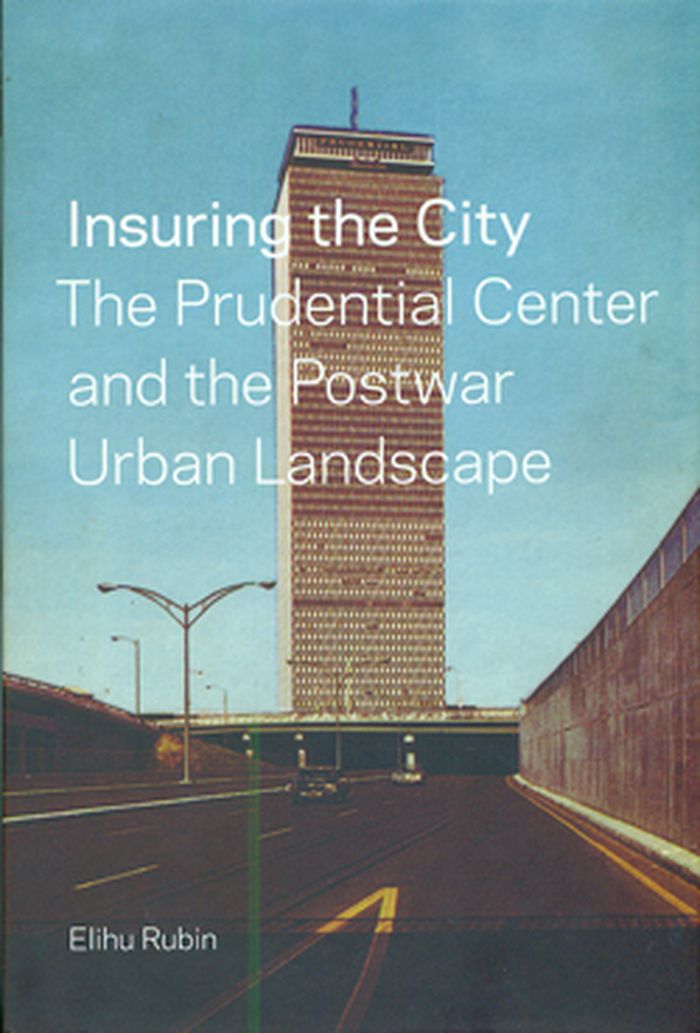
The Prudential Center anchors the Boston skyline with its tall, gray tower. Though unassuming architecturally, it is a historical beacon, representing a midcentury moment when insurance companies such as Prudential were particularly aware of how their physical presence and civic engagement reflected upon their intangible product: financial security. Looking to New York's Rockefeller Center, the creators of the Prudential Center aspired to use real estate development as a tool toward civic achievement, reinvigorating central Boston and integrating a large complex of buildings with new infrastructure for the automobile. Architectural historian Elihu Rubin tells the full story of "The Pru", placing it within the political, economic, and architectural contexts of the period. The Prudential Center played a pivotal role in the economic redevelopment of Boston and was arguably one of the most significant urban developments of the 1950s and '60s. It is an important story, and one that provides great insight into the evolution of the modern city in postwar America.
Insuring the city: the Prudential Center and the Postwar urban landscape
Actions:
Price:
$51.95
(available to order)
Summary:
The Prudential Center anchors the Boston skyline with its tall, gray tower. Though unassuming architecturally, it is a historical beacon, representing a midcentury moment when insurance companies such as Prudential were particularly aware of how their physical presence and civic engagement reflected upon their intangible product: financial security. Looking to New York's Rockefeller Center, the creators of the Prudential Center aspired to use real estate development as a tool toward civic achievement, reinvigorating central Boston and integrating a large complex of buildings with new infrastructure for the automobile. Architectural historian Elihu Rubin tells the full story of "The Pru", placing it within the political, economic, and architectural contexts of the period. The Prudential Center played a pivotal role in the economic redevelopment of Boston and was arguably one of the most significant urban developments of the 1950s and '60s. It is an important story, and one that provides great insight into the evolution of the modern city in postwar America.
Form:
books
books
Publication:
May 2012
May 2012
Subject:
Urban Theory
Urban Theory
Form:
books
books

Actions:
Price:
$44.95
(available to order)
Summary:
Today, one in five homeowners in American cities and suburbs lives in a multifamily home rather than a single-family dwelling. As the American dream evolves, precipitated by declining real estate prices and a renewed interest in city living, many predict that condos will become the predominant form of housing in the 21st century. In this unprecedented study Matthew Gordon(...)
$44.95
(available to order)
Summary:
Today, one in five homeowners in American cities and suburbs lives in a multifamily home rather than a single-family dwelling. As the American dream evolves, precipitated by declining real estate prices and a renewed interest in city living, many predict that condos will become the predominant form of housing in the 21st century. In this unprecedented study Matthew Gordon(...)
Title:
High life : condo living in the suburban century
Actions:
Price:
$44.95
(available to order)
Summary:
Today, one in five homeowners in American cities and suburbs lives in a multifamily home rather than a single-family dwelling. As the American dream evolves, precipitated by declining real estate prices and a renewed interest in city living, many predict that condos will become the predominant form of housing in the 21st century. In this unprecedented study Matthew Gordon Lasner explores the history of co-owned multifamily housing in the United States, from New York City's first co-op, in 1881, to contemporary condo and townhouse complexes coast to coast. Lasner explains the complicated social, economic, and political factors that have increased demand for this way of living, situating the trend within the larger housing market and broad shifts in residential architecture. He contrasts the prevalence and popularity of condos, townhouses, and other privately governed communities with their ambiguous economic, legal, and social standing, as well as their striking absence from urban and architectural history.
High life : condo living in the suburban century
Actions:
Price:
$44.95
(available to order)
Summary:
Today, one in five homeowners in American cities and suburbs lives in a multifamily home rather than a single-family dwelling. As the American dream evolves, precipitated by declining real estate prices and a renewed interest in city living, many predict that condos will become the predominant form of housing in the 21st century. In this unprecedented study Matthew Gordon Lasner explores the history of co-owned multifamily housing in the United States, from New York City's first co-op, in 1881, to contemporary condo and townhouse complexes coast to coast. Lasner explains the complicated social, economic, and political factors that have increased demand for this way of living, situating the trend within the larger housing market and broad shifts in residential architecture. He contrasts the prevalence and popularity of condos, townhouses, and other privately governed communities with their ambiguous economic, legal, and social standing, as well as their striking absence from urban and architectural history.
Form:
books
books
Publication:
October 2012
October 2012
Subject:
Architectural Theory
Architectural Theory
Form:
books
books
Price:
$31.95
(available to order)
Summary:
Under capitalism, economic growth is seen as the key to collective well-being. In "Self-Devouring Growth" Julie Livingston upends this notion, showing that while consumption-driven growth may seem to benefit a particular locale, it produces a number of unacknowledged, negative consequences that ripple throughout the wider world. Structuring the book as a parable in which(...)
$31.95
(available to order)
Summary:
Under capitalism, economic growth is seen as the key to collective well-being. In "Self-Devouring Growth" Julie Livingston upends this notion, showing that while consumption-driven growth may seem to benefit a particular locale, it produces a number of unacknowledged, negative consequences that ripple throughout the wider world. Structuring the book as a parable in which(...)
Title:
Self-devouring growth: a planetary fable as told from southern Africa
Actions:
Price:
$31.95
(available to order)
Summary:
Under capitalism, economic growth is seen as the key to collective well-being. In "Self-Devouring Growth" Julie Livingston upends this notion, showing that while consumption-driven growth may seem to benefit a particular locale, it produces a number of unacknowledged, negative consequences that ripple throughout the wider world. Structuring the book as a parable in which the example of Botswana has lessons for the rest of the globe, Livingston shows how fundamental needs for water, food, and transportation become harnessed to what she calls self-devouring growth: an unchecked and unsustainable global pursuit of economic growth that threatens catastrophic environmental destruction. As Livingston notes, improved technology alone cannot stave off such destruction; what is required is a greater accounting of the web of relationships between humans, nonhuman beings, plants, and minerals that growth entails. Livingston contends that by failing to understand these relationships and the consequences of self-devouring growth, we may be unknowingly consuming our future.
Self-devouring growth: a planetary fable as told from southern Africa
Actions:
Price:
$31.95
(available to order)
Summary:
Under capitalism, economic growth is seen as the key to collective well-being. In "Self-Devouring Growth" Julie Livingston upends this notion, showing that while consumption-driven growth may seem to benefit a particular locale, it produces a number of unacknowledged, negative consequences that ripple throughout the wider world. Structuring the book as a parable in which the example of Botswana has lessons for the rest of the globe, Livingston shows how fundamental needs for water, food, and transportation become harnessed to what she calls self-devouring growth: an unchecked and unsustainable global pursuit of economic growth that threatens catastrophic environmental destruction. As Livingston notes, improved technology alone cannot stave off such destruction; what is required is a greater accounting of the web of relationships between humans, nonhuman beings, plants, and minerals that growth entails. Livingston contends that by failing to understand these relationships and the consequences of self-devouring growth, we may be unknowingly consuming our future.
Form:
books
books
Publication:
September 2019
September 2019
Subject:
Environment and environmental theory
Environment and environmental theory
Form:
books
books

Actions:
Price:
$59.95
(available to order)
Summary:
Invisible strings bind two countries as di- verse and as far away as Italy and Japan. Those strings are made of creativity, innovation, respect and sometimes criticism of history and tradition. One of these invisible strings is represented by architecture. Both countries have been able to be at the center of great revolutions and at the same time decided to ignore this(...)
$59.95
(available to order)
Summary:
Invisible strings bind two countries as di- verse and as far away as Italy and Japan. Those strings are made of creativity, innovation, respect and sometimes criticism of history and tradition. One of these invisible strings is represented by architecture. Both countries have been able to be at the center of great revolutions and at the same time decided to ignore this(...)
Title:
Invisible architecture: Italian and Japanese architectural movements in the 1960s and 1970s
Actions:
Price:
$59.95
(available to order)
Summary:
Invisible strings bind two countries as di- verse and as far away as Italy and Japan. Those strings are made of creativity, innovation, respect and sometimes criticism of history and tradition. One of these invisible strings is represented by architecture. Both countries have been able to be at the center of great revolutions and at the same time decided to ignore this capacity to create and innovate. 150 years have passed since the two countries started their relationships and just more than 50 since they were among the leaders of what has been the last global avant-garde movement in architecture with the Japanese Metabolists and the Italian Radicals. 50 years ago the two countries were in full demographic, economic and cultural expansion, and those avant-gardes well-represented the vibrant seeds of their architectural proposals. In a curious parallel, 50 years after Italy and Japan live similar cultural and economic conditions and a new generation of architects deals with the timeless themes of living and design.
Invisible architecture: Italian and Japanese architectural movements in the 1960s and 1970s
Actions:
Price:
$59.95
(available to order)
Summary:
Invisible strings bind two countries as di- verse and as far away as Italy and Japan. Those strings are made of creativity, innovation, respect and sometimes criticism of history and tradition. One of these invisible strings is represented by architecture. Both countries have been able to be at the center of great revolutions and at the same time decided to ignore this capacity to create and innovate. 150 years have passed since the two countries started their relationships and just more than 50 since they were among the leaders of what has been the last global avant-garde movement in architecture with the Japanese Metabolists and the Italian Radicals. 50 years ago the two countries were in full demographic, economic and cultural expansion, and those avant-gardes well-represented the vibrant seeds of their architectural proposals. In a curious parallel, 50 years after Italy and Japan live similar cultural and economic conditions and a new generation of architects deals with the timeless themes of living and design.
Form:
books
books
Publication:
May 2017
May 2017
Subject:
Experimentale architecture
Experimentale architecture
Form:
books
books
Actions:
Price:
$32.95
(available to order)
Summary:
Rational self-interest is often seen as being at the heart of liberal economic theory. In The Power at the End of the Economy Brian Massumi provides an alternative explanation, arguing that neoliberalism is grounded in complex interactions between the rational and the emotional. Offering a new theory of political economy that refuses the liberal prioritization of(...)
$32.95
(available to order)
Summary:
Rational self-interest is often seen as being at the heart of liberal economic theory. In The Power at the End of the Economy Brian Massumi provides an alternative explanation, arguing that neoliberalism is grounded in complex interactions between the rational and the emotional. Offering a new theory of political economy that refuses the liberal prioritization of(...)
Title:
The power at the end of the economy
Actions:
Price:
$32.95
(available to order)
Summary:
Rational self-interest is often seen as being at the heart of liberal economic theory. In The Power at the End of the Economy Brian Massumi provides an alternative explanation, arguing that neoliberalism is grounded in complex interactions between the rational and the emotional. Offering a new theory of political economy that refuses the liberal prioritization of individual choice, Massumi emphasizes the means through which an individual’s affective tendencies resonate with those of others on infra-individual and transindividual levels. This nonconscious dimension of social and political events plays out in ways that defy the traditional equation between affect and the irrational. Massumi uses the Arab Spring and the Occupy Movement as examples to show how transformative action that exceeds self-interest takes place. Drawing from David Hume, Michel Foucault, Gilles Deleuze, Niklas Luhmann and the field of nonconsciousness studies, Massumi urges a rethinking of the relationship between rational choice and affect, arguing for a reassessment of the role of sympathy in political and economic affairs.
The power at the end of the economy
Actions:
Price:
$32.95
(available to order)
Summary:
Rational self-interest is often seen as being at the heart of liberal economic theory. In The Power at the End of the Economy Brian Massumi provides an alternative explanation, arguing that neoliberalism is grounded in complex interactions between the rational and the emotional. Offering a new theory of political economy that refuses the liberal prioritization of individual choice, Massumi emphasizes the means through which an individual’s affective tendencies resonate with those of others on infra-individual and transindividual levels. This nonconscious dimension of social and political events plays out in ways that defy the traditional equation between affect and the irrational. Massumi uses the Arab Spring and the Occupy Movement as examples to show how transformative action that exceeds self-interest takes place. Drawing from David Hume, Michel Foucault, Gilles Deleuze, Niklas Luhmann and the field of nonconsciousness studies, Massumi urges a rethinking of the relationship between rational choice and affect, arguing for a reassessment of the role of sympathy in political and economic affairs.
Form:
books
books
Publication:
December 2014
December 2014
Subject:
Critical Theory
Critical Theory


