


4907 Results
Form:
books
books
Title:
Surfaces américaines
Surfaces américaines
Actions:
Price:
$69.95
(available to order)
Summary:
Constitué en majorité de clichés inédits datant de 1972 et 1973, Surfaces américaines donna une nouvelle dimension à la photographie documentaire. Présenté pour la première fois à la Light Gallery de New York, ce journal visuel de Stephen Shore à travers les Etats-Unis déconcerta la critique. Ses centaines d'images en couleur, traitées en toute simplicité au laboratoire(...)
$69.95
(available to order)
Summary:
Constitué en majorité de clichés inédits datant de 1972 et 1973, Surfaces américaines donna une nouvelle dimension à la photographie documentaire. Présenté pour la première fois à la Light Gallery de New York, ce journal visuel de Stephen Shore à travers les Etats-Unis déconcerta la critique. Ses centaines d'images en couleur, traitées en toute simplicité au laboratoire(...)
Title:
Surfaces américaines
Actions:
Price:
$69.95
(available to order)
Summary:
Constitué en majorité de clichés inédits datant de 1972 et 1973, Surfaces américaines donna une nouvelle dimension à la photographie documentaire. Présenté pour la première fois à la Light Gallery de New York, ce journal visuel de Stephen Shore à travers les Etats-Unis déconcerta la critique. Ses centaines d'images en couleur, traitées en toute simplicité au laboratoire Kodak du New Jersey, contrastaient vivement avec les tirages noir et blanc formels représentatifs de la photographie artistique de l'époque. En dépit d'un accueil peu favorable, l'exposition fut reprise dans son intégralité par Weston Naef, conservateur de la photographie au Metropolitan Museum de New York qui accueille aujourd'hui 220 de ses photographies. Surfaces américaines est depuis ce jour une référence incontournable en matière de description de notre univers consumériste. Marchant sur les traces de Walker Evans et de Robert Frank lorsqu'ils traversèrent eux-mêmes les Etats-Unis, ce corpus artistique ne cesse d'influence de jeunes photographes. Ce livre réuni la plus grande collection d'images de cette série et les présente pour la première fois dans l'ordre chronologique. Surfaces américaines retrace l'extraordinaire périple de Stephen Shore, qui se rendit d'abord dans le Sud profond des Etats-Unis avant de suivre la Route 66 de Flagstaff à Chicago et de revenir à New York afin de poursuivre son journal visuel dans sa ville natale.
Surfaces américaines
Actions:
Price:
$69.95
(available to order)
Summary:
Constitué en majorité de clichés inédits datant de 1972 et 1973, Surfaces américaines donna une nouvelle dimension à la photographie documentaire. Présenté pour la première fois à la Light Gallery de New York, ce journal visuel de Stephen Shore à travers les Etats-Unis déconcerta la critique. Ses centaines d'images en couleur, traitées en toute simplicité au laboratoire Kodak du New Jersey, contrastaient vivement avec les tirages noir et blanc formels représentatifs de la photographie artistique de l'époque. En dépit d'un accueil peu favorable, l'exposition fut reprise dans son intégralité par Weston Naef, conservateur de la photographie au Metropolitan Museum de New York qui accueille aujourd'hui 220 de ses photographies. Surfaces américaines est depuis ce jour une référence incontournable en matière de description de notre univers consumériste. Marchant sur les traces de Walker Evans et de Robert Frank lorsqu'ils traversèrent eux-mêmes les Etats-Unis, ce corpus artistique ne cesse d'influence de jeunes photographes. Ce livre réuni la plus grande collection d'images de cette série et les présente pour la première fois dans l'ordre chronologique. Surfaces américaines retrace l'extraordinaire périple de Stephen Shore, qui se rendit d'abord dans le Sud profond des Etats-Unis avant de suivre la Route 66 de Flagstaff à Chicago et de revenir à New York afin de poursuivre son journal visuel dans sa ville natale.
Form:
books
books
Publication:
January 2006, Paris
January 2006, Paris
Subject:
Photography monographs
Photography monographs
Form:
books
books
Title:
e-flux Index #2
e-flux Index #2
Actions:
Price:
$65.00
(available in store)
Summary:
"It’s always too late, whenever you take a photograph." This laconic remark, which I heard during a recent artist’s talk in Berlin, bubbled up from a discussion upon the often-tragic indexicality or nonindexicality of contemporary photographic practice. JPEGs taken for wonders. Smoke plumes without embers. Footprints crossing the beaches of abandoned resorts. Hands that(...)
$65.00
(available in store)
Summary:
"It’s always too late, whenever you take a photograph." This laconic remark, which I heard during a recent artist’s talk in Berlin, bubbled up from a discussion upon the often-tragic indexicality or nonindexicality of contemporary photographic practice. JPEGs taken for wonders. Smoke plumes without embers. Footprints crossing the beaches of abandoned resorts. Hands that(...)
Title:
e-flux Index #2
Actions:
Price:
$65.00
(available in store)
Summary:
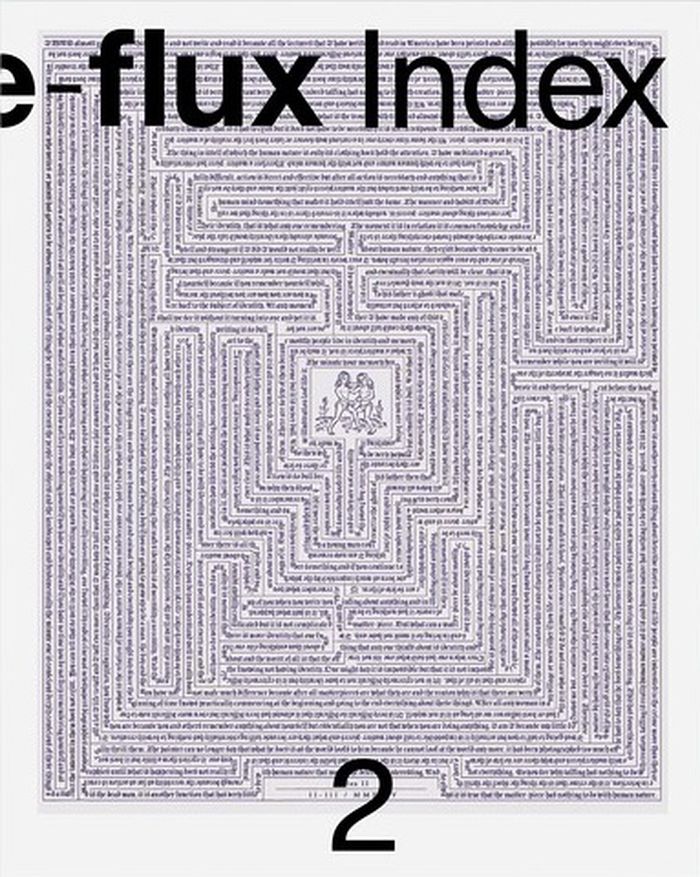
"It’s always too late, whenever you take a photograph." This laconic remark, which I heard during a recent artist’s talk in Berlin, bubbled up from a discussion upon the often-tragic indexicality or nonindexicality of contemporary photographic practice. JPEGs taken for wonders. Smoke plumes without embers. Footprints crossing the beaches of abandoned resorts. Hands that point at nothing in particular, and the gullible eyes that follow the lead of pointing index fingers. There is indeed something awkward to the snapshot’s belatedness. Its untimeliness. The ways in which, the second the shutter clicks—or that our thumb melds with the appropriate region of our phone’s liquid plasma displays and the resultant file is uploaded to a distant server—the instant we sought to "capture" has passed by and something else enters the frame. Someone blinks, the rubble dust envelopes the scene, the light changes, the hoodie we saw underground bearing the phrase "THEIR DESTINIES WOULD INTERTWINE" disappears behind an arriving subway’s blur, the wind cajoles a neighboring branch we hadn’t before noticed into the family portrait. Photography then remains, contrary to the terms in which it is sold to us by Silicon Valley manufacturers who stress its total immediacy as an instrument for perceiving the world, a stubbornly untimely pursuit. Can we not also say, "It’s always too late, whenever you start to index"?
e-flux Index #2
Actions:
Price:
$65.00
(available in store)
Summary:
"It’s always too late, whenever you take a photograph." This laconic remark, which I heard during a recent artist’s talk in Berlin, bubbled up from a discussion upon the often-tragic indexicality or nonindexicality of contemporary photographic practice. JPEGs taken for wonders. Smoke plumes without embers. Footprints crossing the beaches of abandoned resorts. Hands that point at nothing in particular, and the gullible eyes that follow the lead of pointing index fingers. There is indeed something awkward to the snapshot’s belatedness. Its untimeliness. The ways in which, the second the shutter clicks—or that our thumb melds with the appropriate region of our phone’s liquid plasma displays and the resultant file is uploaded to a distant server—the instant we sought to "capture" has passed by and something else enters the frame. Someone blinks, the rubble dust envelopes the scene, the light changes, the hoodie we saw underground bearing the phrase "THEIR DESTINIES WOULD INTERTWINE" disappears behind an arriving subway’s blur, the wind cajoles a neighboring branch we hadn’t before noticed into the family portrait. Photography then remains, contrary to the terms in which it is sold to us by Silicon Valley manufacturers who stress its total immediacy as an instrument for perceiving the world, a stubbornly untimely pursuit. Can we not also say, "It’s always too late, whenever you start to index"?
Form:
books
books
Publication:
July 2024
July 2024
Subject:
Magazines
Magazines
Form:
books
books

Price:
$39.95
(available to order)
Summary:
Bamboo has an unparalleled history; it is very old, and at the same time very new. Bamboo extends far beyond the boundaries of most plants – it is distributed widely throughout the world, and is utilized by hundreds of millions of people in a great number of ways. Through its myriad uses as food, clothing, paper and shelter, bamboo has met the physical and spiritual(...)
$39.95
(available to order)
Summary:
Bamboo has an unparalleled history; it is very old, and at the same time very new. Bamboo extends far beyond the boundaries of most plants – it is distributed widely throughout the world, and is utilized by hundreds of millions of people in a great number of ways. Through its myriad uses as food, clothing, paper and shelter, bamboo has met the physical and spiritual(...)
Title:
Bamboo
Actions:
Price:
$39.95
(available to order)
Summary:
Bamboo has an unparalleled history; it is very old, and at the same time very new. Bamboo extends far beyond the boundaries of most plants – it is distributed widely throughout the world, and is utilized by hundreds of millions of people in a great number of ways. Through its myriad uses as food, clothing, paper and shelter, bamboo has met the physical and spiritual requirements of humanity since the earliest times. It is believed that the first books were written on bamboo, and there is evidence that it was used by humans more than 5,000 years ago for the framework of housing as well as musical instruments. It also occurs in the creation beliefs of cultures across the globe. Bamboo plays a vital role in the survival of many animals and ecosystems as well as having unique characteristics, offering potential solutions to modern ecological dilemmas – it grows extremely quickly, for example, making it an easily renewable resource. With the advent of modern research and technologies, the use of bamboo has increased dramatically, elevating its importance to human society – it can now be found in the filaments of light bulbs, the skins of airplanes and the reinforcements of concrete. Bamboo is even a new material for today's modern bicycles. Bamboo draws on a vast array of sources to build a complete picture of bamboo in both history and our modern world.
Bamboo
Actions:
Price:
$39.95
(available to order)
Summary:
Bamboo has an unparalleled history; it is very old, and at the same time very new. Bamboo extends far beyond the boundaries of most plants – it is distributed widely throughout the world, and is utilized by hundreds of millions of people in a great number of ways. Through its myriad uses as food, clothing, paper and shelter, bamboo has met the physical and spiritual requirements of humanity since the earliest times. It is believed that the first books were written on bamboo, and there is evidence that it was used by humans more than 5,000 years ago for the framework of housing as well as musical instruments. It also occurs in the creation beliefs of cultures across the globe. Bamboo plays a vital role in the survival of many animals and ecosystems as well as having unique characteristics, offering potential solutions to modern ecological dilemmas – it grows extremely quickly, for example, making it an easily renewable resource. With the advent of modern research and technologies, the use of bamboo has increased dramatically, elevating its importance to human society – it can now be found in the filaments of light bulbs, the skins of airplanes and the reinforcements of concrete. Bamboo is even a new material for today's modern bicycles. Bamboo draws on a vast array of sources to build a complete picture of bamboo in both history and our modern world.
Form:
books
books
Publication:
March 2025
March 2025
Subject:
Fauna and flora
Fauna and flora
Form:
books
books
Actions:
Price:
$37.50
(available to order)
Summary:
"Maps of the imagination" takes us on a magic carpet ride over terrain both familiar and exotic. Using the map as metaphor, Peter Turchi considers writing as a combination of exploration and presentation. He compares the way a writer leads a reader through the imaginary world of a story, novel, or poem to the way a mapmaker charts the physical world. "To ask for a map,"(...)
$37.50
(available to order)
Summary:
"Maps of the imagination" takes us on a magic carpet ride over terrain both familiar and exotic. Using the map as metaphor, Peter Turchi considers writing as a combination of exploration and presentation. He compares the way a writer leads a reader through the imaginary world of a story, novel, or poem to the way a mapmaker charts the physical world. "To ask for a map,"(...)
Title:
Maps of the imagination : the writer as cartographer
Actions:
Price:
$37.50
(available to order)
Summary:
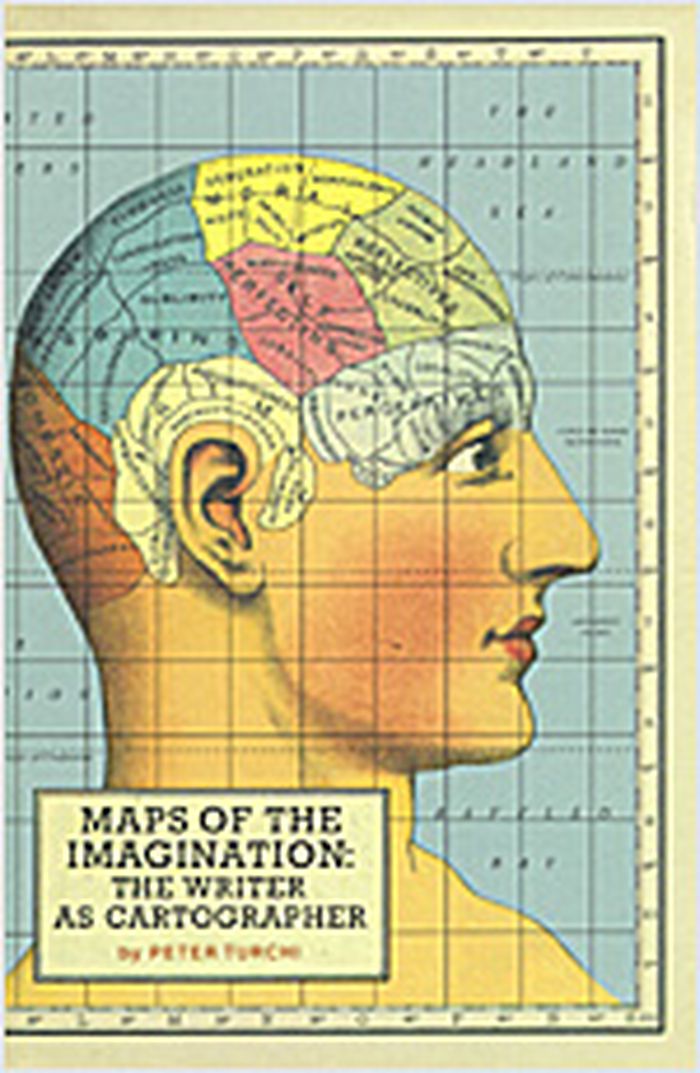
"Maps of the imagination" takes us on a magic carpet ride over terrain both familiar and exotic. Using the map as metaphor, Peter Turchi considers writing as a combination of exploration and presentation. He compares the way a writer leads a reader through the imaginary world of a story, novel, or poem to the way a mapmaker charts the physical world. "To ask for a map," says Turchi, "is to say, 'Tell me a story.' " The author looks at how mapmakers and writers deal with blank space and the blank page; the conventions they use (both the ones readers recognize and those that often go unnoticed) or consciously disregard; the role of geometry in maps and the parallel role of form in writing; how both maps and writing serve to re-create an individual's view of the world; and the artist's delicate balance of intuition with intention. The ancient Greeks, German globe makers, and British cartographers join forces with the Marx Brothers, NASA, and Roadrunner cartoons to shed light on the strategies of writers as diverse as Sappho, Ernest Hemingway, Virginia Woolf, Vladimir Nabokov, Italo Calvino, Don DeLillo, and Heather McHugh. A combination of history, critical cartography, personal essay, and practical guide to writing, "Maps of the imagination" is a book for writers, for readers, and for anyone interested in creativity.
Maps of the imagination : the writer as cartographer
Actions:
Price:
$37.50
(available to order)
Summary:
"Maps of the imagination" takes us on a magic carpet ride over terrain both familiar and exotic. Using the map as metaphor, Peter Turchi considers writing as a combination of exploration and presentation. He compares the way a writer leads a reader through the imaginary world of a story, novel, or poem to the way a mapmaker charts the physical world. "To ask for a map," says Turchi, "is to say, 'Tell me a story.' " The author looks at how mapmakers and writers deal with blank space and the blank page; the conventions they use (both the ones readers recognize and those that often go unnoticed) or consciously disregard; the role of geometry in maps and the parallel role of form in writing; how both maps and writing serve to re-create an individual's view of the world; and the artist's delicate balance of intuition with intention. The ancient Greeks, German globe makers, and British cartographers join forces with the Marx Brothers, NASA, and Roadrunner cartoons to shed light on the strategies of writers as diverse as Sappho, Ernest Hemingway, Virginia Woolf, Vladimir Nabokov, Italo Calvino, Don DeLillo, and Heather McHugh. A combination of history, critical cartography, personal essay, and practical guide to writing, "Maps of the imagination" is a book for writers, for readers, and for anyone interested in creativity.
Form:
books
books
Publication:
October 2004, San Antonio
October 2004, San Antonio
Subject:
Architecture and the imaginary
Architecture and the imaginary
Form:
books
books
Price:
$27.00
(available to order)
Summary:
The diamond vaults of Central Europe are among the most original yet little-known creations of medieval architecture : ceilings so complex that, as their name suggests, they recall the facets of a cut gemstone. First appearing in 1471 at the palace of Albrechtsburg in Meissen, Germany, they were employed for almost a century in locations as far apart as Gdansk on the(...)
$27.00
(available to order)
Summary:
The diamond vaults of Central Europe are among the most original yet little-known creations of medieval architecture : ceilings so complex that, as their name suggests, they recall the facets of a cut gemstone. First appearing in 1471 at the palace of Albrechtsburg in Meissen, Germany, they were employed for almost a century in locations as far apart as Gdansk on the(...)
Title:
Diamond vaults : innovation and geometry in medieval architecture
Actions:
Price:
$27.00
(available to order)
Summary:
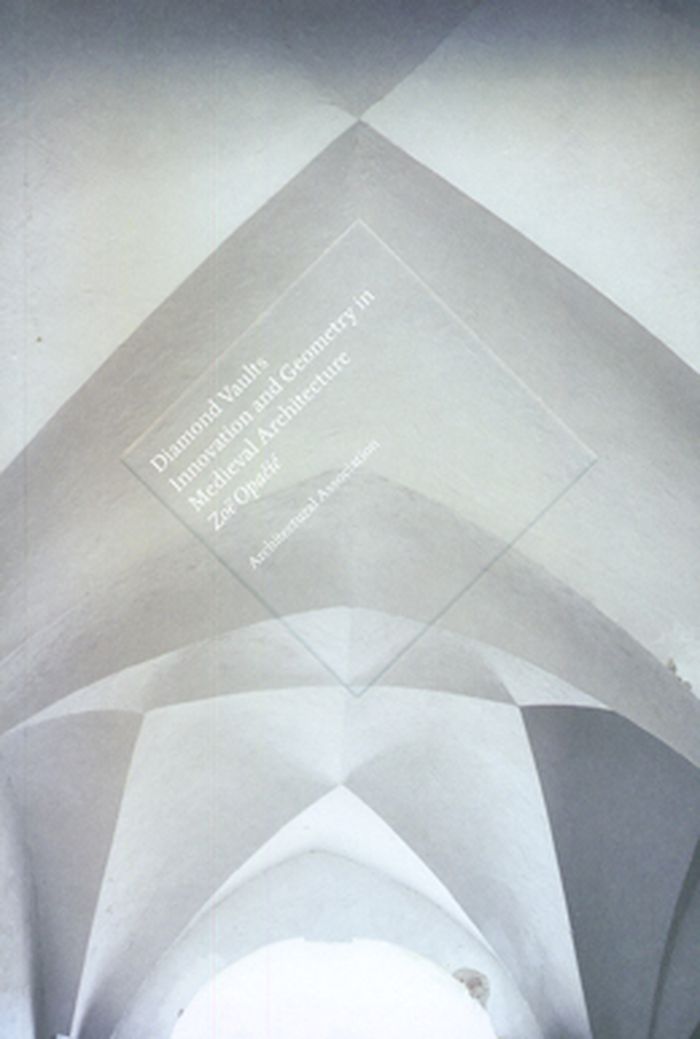
The diamond vaults of Central Europe are among the most original yet little-known creations of medieval architecture : ceilings so complex that, as their name suggests, they recall the facets of a cut gemstone. First appearing in 1471 at the palace of Albrechtsburg in Meissen, Germany, they were employed for almost a century in locations as far apart as Gdansk on the Baltic to Bechyne in southern Bohemia (today’s Czech Republic). From a historical point of view, diamond vaults show the continuing vitality of Gothic architecture in Central Europe, at a time when the rediscovery of the classical past in Renaissance Italy was changing the course of building. Architecturally, they offer some of the most impressive examples of geometrical experimentation and versatility in both secular and sacred spaces. But perhaps their greatest appeal is visual. The stark, concave–convex shapes of diamond vaults, with their lyrical play of the effects of light and shade, strike us today as incredibly modern. "Diamond vaults" explores this singular phenomenon. A text by Zoë Opacic explores the vault’s origins, topography, structure and design, as well as function and context, focusing primarily on the Czech Republic, which boasts some of the best examples, and contrasting them with those in Germany and Gdansk. One of the chief aims is to demonstrate the undoubted aesthetic appeal of this form, which has continued to inspire generations of architects.
Diamond vaults : innovation and geometry in medieval architecture
Actions:
Price:
$27.00
(available to order)
Summary:
The diamond vaults of Central Europe are among the most original yet little-known creations of medieval architecture : ceilings so complex that, as their name suggests, they recall the facets of a cut gemstone. First appearing in 1471 at the palace of Albrechtsburg in Meissen, Germany, they were employed for almost a century in locations as far apart as Gdansk on the Baltic to Bechyne in southern Bohemia (today’s Czech Republic). From a historical point of view, diamond vaults show the continuing vitality of Gothic architecture in Central Europe, at a time when the rediscovery of the classical past in Renaissance Italy was changing the course of building. Architecturally, they offer some of the most impressive examples of geometrical experimentation and versatility in both secular and sacred spaces. But perhaps their greatest appeal is visual. The stark, concave–convex shapes of diamond vaults, with their lyrical play of the effects of light and shade, strike us today as incredibly modern. "Diamond vaults" explores this singular phenomenon. A text by Zoë Opacic explores the vault’s origins, topography, structure and design, as well as function and context, focusing primarily on the Czech Republic, which boasts some of the best examples, and contrasting them with those in Germany and Gdansk. One of the chief aims is to demonstrate the undoubted aesthetic appeal of this form, which has continued to inspire generations of architects.
Form:
books
books
Publication:
January 2006, London
January 2006, London
Subject:
History until 1900, Middle Ages
History until 1900, Middle Ages
Form:
books
books
Price:
$50.00
(available to order)
Summary:
They are places we fear to tread, monuments to the principles of our forebears, awe-inspiring towers of achievement : public institutions that sustain and support our lives are all around us. Scott Fortino investigates these enduring pillars of public life in "Institutional", a striking visual essay that documents the diverse architectural structures that house the(...)
$50.00
(available to order)
Summary:
They are places we fear to tread, monuments to the principles of our forebears, awe-inspiring towers of achievement : public institutions that sustain and support our lives are all around us. Scott Fortino investigates these enduring pillars of public life in "Institutional", a striking visual essay that documents the diverse architectural structures that house the(...)
Subject:
Photography monographs
Photography monographs
Publication:
September 2005, Santa Fe
September 2005, Santa Fe
Title:
Institutional : photographs of jails, schools, and other Chicago buildings
Actions:
Price:
$50.00
(available to order)
Summary:
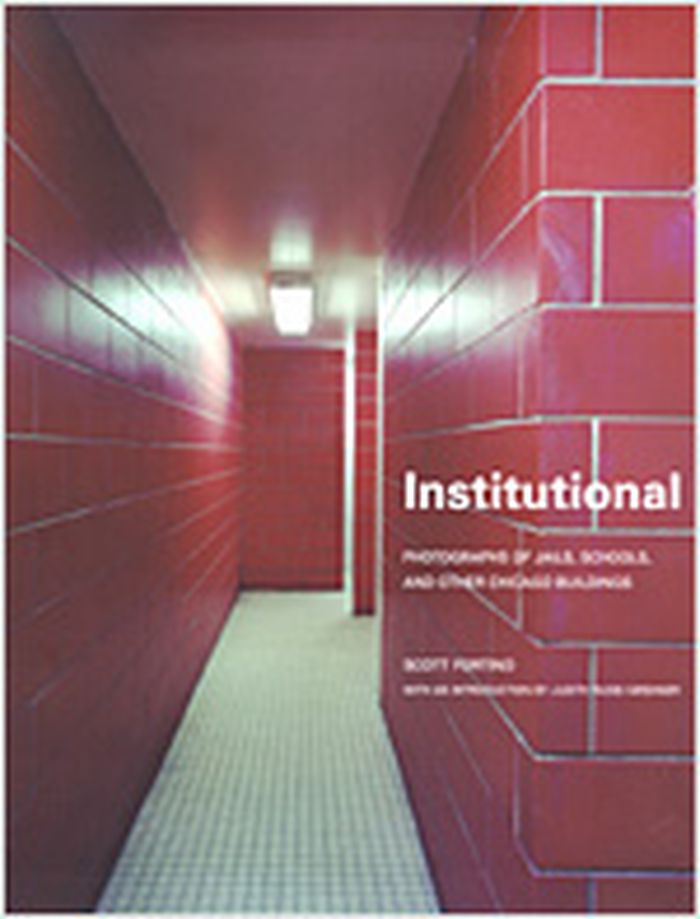
They are places we fear to tread, monuments to the principles of our forebears, awe-inspiring towers of achievement : public institutions that sustain and support our lives are all around us. Scott Fortino investigates these enduring pillars of public life in "Institutional", a striking visual essay that documents the diverse architectural structures that house the foundations of civic life in the city of Chicago. From schools to churches to prisons, Fortino transforms these worn, familiar edifices into compelling symbols of long-lost ideals and communitarian spirit. Fortino coaxes out the subtle warmth and depths of these often overwhelming and pitiless public spaces in his photographs, as his camera reveals the hidden characters of both high-profile works by renowned designers such as Rem Koolhaas, Helmut Jahn, and Mies van der Rohe as well as the stolid structures designed by long-forgotten architects. Light, colour, and composition work together in Fortino's images to produce provocative new perspectives on the interiors of public buildings, revealing how their cultural and social roles as places of worship, education, punishment, or entertainment cast long and complex shadows over our lives. Fortino challenges us in "Institutional" to rethink our view of the public spaces we pass through every day by offering an original and fascinating photographic study of the settings in which the important events of human life unfold.
Institutional : photographs of jails, schools, and other Chicago buildings
Actions:
Price:
$50.00
(available to order)
Summary:
They are places we fear to tread, monuments to the principles of our forebears, awe-inspiring towers of achievement : public institutions that sustain and support our lives are all around us. Scott Fortino investigates these enduring pillars of public life in "Institutional", a striking visual essay that documents the diverse architectural structures that house the foundations of civic life in the city of Chicago. From schools to churches to prisons, Fortino transforms these worn, familiar edifices into compelling symbols of long-lost ideals and communitarian spirit. Fortino coaxes out the subtle warmth and depths of these often overwhelming and pitiless public spaces in his photographs, as his camera reveals the hidden characters of both high-profile works by renowned designers such as Rem Koolhaas, Helmut Jahn, and Mies van der Rohe as well as the stolid structures designed by long-forgotten architects. Light, colour, and composition work together in Fortino's images to produce provocative new perspectives on the interiors of public buildings, revealing how their cultural and social roles as places of worship, education, punishment, or entertainment cast long and complex shadows over our lives. Fortino challenges us in "Institutional" to rethink our view of the public spaces we pass through every day by offering an original and fascinating photographic study of the settings in which the important events of human life unfold.
Form:
books
books
Publication:
September 2005, Santa Fe
September 2005, Santa Fe
Subject:
Photography monographs
Photography monographs
Form:
books
books
Actions:
Price:
$63.00
(available to order)
Summary:
Pioneering architecture in Graz: the radical architecture project known as the Friendly Alien - the new building for the Kunsthaus Graz - was developed by the British star architects Peter Cook and Colin Fournier. Within the scope of Graz 2003 - Kulturhauptstadt Europas (Graz 2003 - Cultural Capital of Europe) the city of Graz provided the possibility for the two(...)
$63.00
(available to order)
Summary:
Pioneering architecture in Graz: the radical architecture project known as the Friendly Alien - the new building for the Kunsthaus Graz - was developed by the British star architects Peter Cook and Colin Fournier. Within the scope of Graz 2003 - Kulturhauptstadt Europas (Graz 2003 - Cultural Capital of Europe) the city of Graz provided the possibility for the two(...)
Title:
A friendly alien : ein Kunsthaus für Graz - Peter Cook, Colin Fournier Architects
Actions:
Price:
$63.00
(available to order)
Summary:
Pioneering architecture in Graz: the radical architecture project known as the Friendly Alien - the new building for the Kunsthaus Graz - was developed by the British star architects Peter Cook and Colin Fournier. Within the scope of Graz 2003 - Kulturhauptstadt Europas (Graz 2003 - Cultural Capital of Europe) the city of Graz provided the possibility for the two London-based architects Peter Cook and Colin Fournier to transform a visionary concept into built reality: the Kunsthaus Graz, a new and unique site for international exhibitions of modern and contemporary art. With this radical architecture project, Graz received a futuristic-looking building which satisfies to a high degree both the psychological and the functional demands of a visitor-oriented international art museum. The unusual biomorphic forms of the Friendly Alien make for a suspenseful dialog with the historic old town, especially with the century-old Graz landmark, the cubic clock-tower high up on castle hill. The documentation at hand presents the development of the Friendly Alien from a Utopian concept to a highly complex functional body. The extensive photographic material includes first-rate computer simulations and sheds light on the urban environment and its history, shows the unique architectural features of the building, and investigates with an "x-ray view" the complex network of static and technical utilities in the "skin", the nerve center of the Friendly Alien.
A friendly alien : ein Kunsthaus für Graz - Peter Cook, Colin Fournier Architects
Actions:
Price:
$63.00
(available to order)
Summary:
Pioneering architecture in Graz: the radical architecture project known as the Friendly Alien - the new building for the Kunsthaus Graz - was developed by the British star architects Peter Cook and Colin Fournier. Within the scope of Graz 2003 - Kulturhauptstadt Europas (Graz 2003 - Cultural Capital of Europe) the city of Graz provided the possibility for the two London-based architects Peter Cook and Colin Fournier to transform a visionary concept into built reality: the Kunsthaus Graz, a new and unique site for international exhibitions of modern and contemporary art. With this radical architecture project, Graz received a futuristic-looking building which satisfies to a high degree both the psychological and the functional demands of a visitor-oriented international art museum. The unusual biomorphic forms of the Friendly Alien make for a suspenseful dialog with the historic old town, especially with the century-old Graz landmark, the cubic clock-tower high up on castle hill. The documentation at hand presents the development of the Friendly Alien from a Utopian concept to a highly complex functional body. The extensive photographic material includes first-rate computer simulations and sheds light on the urban environment and its history, shows the unique architectural features of the building, and investigates with an "x-ray view" the complex network of static and technical utilities in the "skin", the nerve center of the Friendly Alien.
Form:
books
books
Publication:
October 2003, Ostfildern
October 2003, Ostfildern
Subject:
Architecture Monographs
Architecture Monographs
Form:
books
books
Actions:
Price:
$44.95
(available to order)
Summary:
Green design is the major architectural movement of our time. Throughout the world architects are producing sustainable buildings in an attempt to preserve the environment and our globe's natural resources. However, current strategies for forming sustainable solutions are typically too general and fail to take advantage of critical geographical, environmental, and(...)
$44.95
(available to order)
Summary:
Green design is the major architectural movement of our time. Throughout the world architects are producing sustainable buildings in an attempt to preserve the environment and our globe's natural resources. However, current strategies for forming sustainable solutions are typically too general and fail to take advantage of critical geographical, environmental, and(...)
Title:
Towards a new regionalism : environmental architecture in the Pacific northwest
Actions:
Price:
$44.95
(available to order)
Summary:
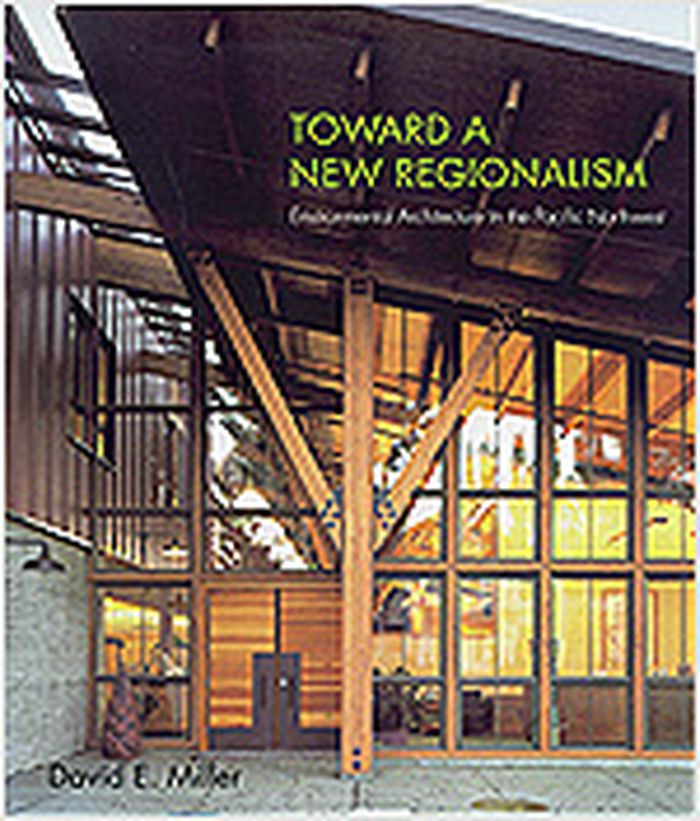
Green design is the major architectural movement of our time. Throughout the world architects are producing sustainable buildings in an attempt to preserve the environment and our globe's natural resources. However, current strategies for forming sustainable solutions are typically too general and fail to take advantage of critical geographical, environmental, and cultural factors particular to a specific place. By focusing on the Pacific northwest, this book provides essential lessons to architects and students on how sustainable architecture can and should be shaped by the unique conditions of a region. Pacific northwest regionalism has consistently supported an architecture aimed at environmental needs and priorities. This book illuminates the history of a "green trail" in the work of key architects of the northwest. It discusses environmental strategies that work in the region, organized according to nature's most basic elements - earth, air, water, and fire - and their underlying principles and forces. The book focuses on technologies, materials, and methods, with a final section that examines thirteen exceptional northwest buildings in detail and in light of their contributions to sustainable architecture. Critical case studies by northwest architects illustrate some of the best environmental design work in North America. Notable architects from Seattle, Portland, and British Columbia are included. These projects feature innovative design in water and site stewardship, intelligent technologies, passive energy strategies, ecologically sound building materials, and environmentally sensitive energy management systems.
Towards a new regionalism : environmental architecture in the Pacific northwest
Actions:
Price:
$44.95
(available to order)
Summary:
Green design is the major architectural movement of our time. Throughout the world architects are producing sustainable buildings in an attempt to preserve the environment and our globe's natural resources. However, current strategies for forming sustainable solutions are typically too general and fail to take advantage of critical geographical, environmental, and cultural factors particular to a specific place. By focusing on the Pacific northwest, this book provides essential lessons to architects and students on how sustainable architecture can and should be shaped by the unique conditions of a region. Pacific northwest regionalism has consistently supported an architecture aimed at environmental needs and priorities. This book illuminates the history of a "green trail" in the work of key architects of the northwest. It discusses environmental strategies that work in the region, organized according to nature's most basic elements - earth, air, water, and fire - and their underlying principles and forces. The book focuses on technologies, materials, and methods, with a final section that examines thirteen exceptional northwest buildings in detail and in light of their contributions to sustainable architecture. Critical case studies by northwest architects illustrate some of the best environmental design work in North America. Notable architects from Seattle, Portland, and British Columbia are included. These projects feature innovative design in water and site stewardship, intelligent technologies, passive energy strategies, ecologically sound building materials, and environmentally sensitive energy management systems.
Form:
books
books
Publication:
July 2005, Seattle, London
July 2005, Seattle, London
Subject:
Green Architecture
Green Architecture
Form:
books
books
Actions:
Price:
$67.95
(available to order)
Summary:
Published by Aperture in 1982 and long unavailable, Stephen Shore’s legendary Uncommon Places has influenced a generation of photographers. Among the first artists to take color beyond advertising and fashion photography, Shore’s large-format color work on the American vernacular landscape stands at the root of what has become a vital photographic tradition. Uncommon(...)
$67.95
(available to order)
Summary:
Published by Aperture in 1982 and long unavailable, Stephen Shore’s legendary Uncommon Places has influenced a generation of photographers. Among the first artists to take color beyond advertising and fashion photography, Shore’s large-format color work on the American vernacular landscape stands at the root of what has become a vital photographic tradition. Uncommon(...)
Subject:
Photography monographs
Photography monographs
Publication:
January 1900, New York
January 1900, New York
Title:
Stephen Shore : uncommon places, the complete works
Actions:
Price:
$67.95
(available to order)
Summary:
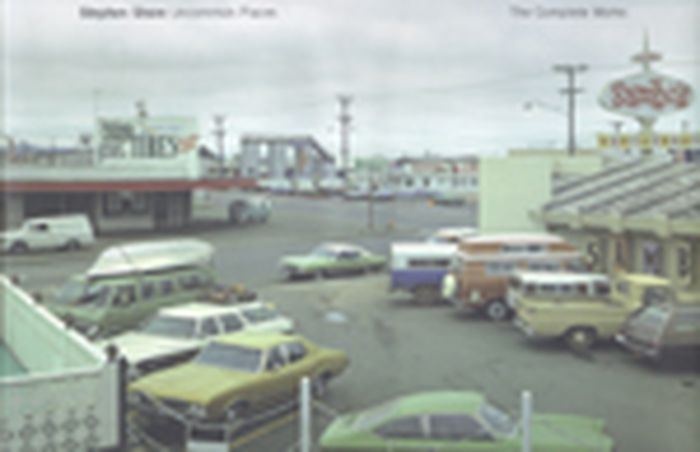
Published by Aperture in 1982 and long unavailable, Stephen Shore’s legendary Uncommon Places has influenced a generation of photographers. Among the first artists to take color beyond advertising and fashion photography, Shore’s large-format color work on the American vernacular landscape stands at the root of what has become a vital photographic tradition. Uncommon Places: The Complete Works presents a definitive collection of the original series, much of it never before published or exhibited. Like Robert Frank and Walker Evans before him, Shore discovered a hitherto unarticulated version of America via highway and camera. Approaching his subjects with cool objectivity, Shore’s images retain precise internal systems of gestures in composition and light through which the objects before his lens assume both an archetypal aura and an ambiguously personal importance. In contrast to Shore’s signature landscapes with which “Un-common Places” is often associated, this expanded survey reveals equally remarkable collections of interiors and portraits. As a new generation of artists expands on the projects of the New Topographic and New Color photographers of the seventies—Thomas Struth (whose first book was titled Unconscious Places), Andreas Gursky, and Catherine Opie among them—Uncommon Places: The Complete Works provides a timely opportunity to reexamine the diverse implications of Shore’s project and offers a fundamental primer for the last thirty years of large-format color photography.
Stephen Shore : uncommon places, the complete works
Actions:
Price:
$67.95
(available to order)
Summary:
Published by Aperture in 1982 and long unavailable, Stephen Shore’s legendary Uncommon Places has influenced a generation of photographers. Among the first artists to take color beyond advertising and fashion photography, Shore’s large-format color work on the American vernacular landscape stands at the root of what has become a vital photographic tradition. Uncommon Places: The Complete Works presents a definitive collection of the original series, much of it never before published or exhibited. Like Robert Frank and Walker Evans before him, Shore discovered a hitherto unarticulated version of America via highway and camera. Approaching his subjects with cool objectivity, Shore’s images retain precise internal systems of gestures in composition and light through which the objects before his lens assume both an archetypal aura and an ambiguously personal importance. In contrast to Shore’s signature landscapes with which “Un-common Places” is often associated, this expanded survey reveals equally remarkable collections of interiors and portraits. As a new generation of artists expands on the projects of the New Topographic and New Color photographers of the seventies—Thomas Struth (whose first book was titled Unconscious Places), Andreas Gursky, and Catherine Opie among them—Uncommon Places: The Complete Works provides a timely opportunity to reexamine the diverse implications of Shore’s project and offers a fundamental primer for the last thirty years of large-format color photography.
Form:
books
books
Publication:
January 1900, New York
January 1900, New York
Subject:
Photography monographs
Photography monographs
Form:
books
books
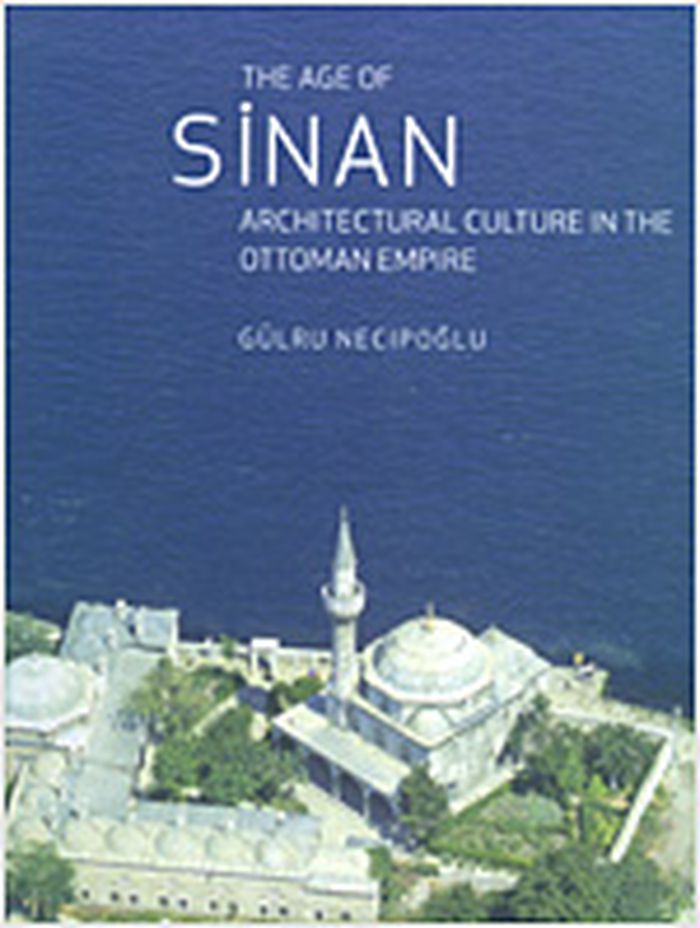
Price:
$124.50
(available to order)
Summary:
During his tenure as Chief Royal Architect (1539-1588) in the "Golden Age" of the Ottoman Empire, Sinan designed hundreds of structures that helped create the renowned urban image of Istanbul, particularly mosques with seemingly weightless, light-filled centralized domes that have been compared with developments in Renaissance Italy. His distinctive architectural idiom(...)
$124.50
(available to order)
Summary:
During his tenure as Chief Royal Architect (1539-1588) in the "Golden Age" of the Ottoman Empire, Sinan designed hundreds of structures that helped create the renowned urban image of Istanbul, particularly mosques with seemingly weightless, light-filled centralized domes that have been compared with developments in Renaissance Italy. His distinctive architectural idiom(...)
Title:
The Age of Sinan : architectural culture in the Ottoman Empire
Actions:
Price:
$124.50
(available to order)
Summary:
During his tenure as Chief Royal Architect (1539-1588) in the "Golden Age" of the Ottoman Empire, Sinan designed hundreds of structures that helped create the renowned urban image of Istanbul, particularly mosques with seemingly weightless, light-filled centralized domes that have been compared with developments in Renaissance Italy. His distinctive architectural idiom left its imprint over a vast empire extending from the Danube to the Tigris, and he became the most celebrated of all Ottoman architects. In this lavishly illustrated, major new assessment of Sinan's oeuvre, Gülru Necipoglu challenges standard views of Sinan as a "Turkish Michelangelo" driven solely by an insatiable urge for artistic experimentation. Her innovative analysis shows that Sinan's rich variety of mosque designs sprang from a process of negotiation between the architect and his elite patrons, both men and women. Defined though they were by social and territorial hierarchies and associated notions of identity, memory, and decorum, Sinan's mosques simultaneously shaped these conceptions. "The Age of Sinan" draws on a wealth of primary sources to reveal the chief architect's monuments as bearers of previously unrecognized dimensions of meaning. A sophisticated study of the cultural and social history of Ottoman architecture, interpreting the works of a seminal figure in the early modern eastern Mediterranean world, it is must-reading for scholars and students of art history and other fields with an interest in the Ottoman Empire.
The Age of Sinan : architectural culture in the Ottoman Empire
Actions:
Price:
$124.50
(available to order)
Summary:
During his tenure as Chief Royal Architect (1539-1588) in the "Golden Age" of the Ottoman Empire, Sinan designed hundreds of structures that helped create the renowned urban image of Istanbul, particularly mosques with seemingly weightless, light-filled centralized domes that have been compared with developments in Renaissance Italy. His distinctive architectural idiom left its imprint over a vast empire extending from the Danube to the Tigris, and he became the most celebrated of all Ottoman architects. In this lavishly illustrated, major new assessment of Sinan's oeuvre, Gülru Necipoglu challenges standard views of Sinan as a "Turkish Michelangelo" driven solely by an insatiable urge for artistic experimentation. Her innovative analysis shows that Sinan's rich variety of mosque designs sprang from a process of negotiation between the architect and his elite patrons, both men and women. Defined though they were by social and territorial hierarchies and associated notions of identity, memory, and decorum, Sinan's mosques simultaneously shaped these conceptions. "The Age of Sinan" draws on a wealth of primary sources to reveal the chief architect's monuments as bearers of previously unrecognized dimensions of meaning. A sophisticated study of the cultural and social history of Ottoman architecture, interpreting the works of a seminal figure in the early modern eastern Mediterranean world, it is must-reading for scholars and students of art history and other fields with an interest in the Ottoman Empire.
Form:
books
books
Publication:
May 2005, Princeton
May 2005, Princeton
Subject:
History until 1900, Asia
History until 1900, Asia


