


543 Results
Form:
books
books
Title:
The force of listening
The force of listening
Actions:
Price:
$21.95
(available to order)
Summary:
"The force of listening" explores the role of listening at the intersection of contemporary art and activism, and asks what transformations listening might facilitate in the world. Written as a constructed dialogue, "The force of listening" draws from conversations with artists, activists and political thinkers which took place during 2013–14, in the aftermath of the wave(...)
$21.95
(available to order)
Summary:
"The force of listening" explores the role of listening at the intersection of contemporary art and activism, and asks what transformations listening might facilitate in the world. Written as a constructed dialogue, "The force of listening" draws from conversations with artists, activists and political thinkers which took place during 2013–14, in the aftermath of the wave(...)
Title:
The force of listening
Actions:
Price:
$21.95
(available to order)
Summary:
"The force of listening" explores the role of listening at the intersection of contemporary art and activism, and asks what transformations listening might facilitate in the world. Written as a constructed dialogue, "The force of listening" draws from conversations with artists, activists and political thinkers which took place during 2013–14, in the aftermath of the wave of protests and occupations against austerity. Artists Ayreen Anastas and Rene Gabri, media theorist Nick Couldry, philosopher Adriana Cavarero and members of Ultra-red and Precarious Workers Brigade as well as feminist consciousness-raising groups meet on the page to tackle questions of listening, attention and interconnection, collectivity, solidarity and resonance, the politics of the voice and the ethics of listening, the challenges of institutional frameworks and their reflections on the Occupy movement.
The force of listening
Actions:
Price:
$21.95
(available to order)
Summary:
"The force of listening" explores the role of listening at the intersection of contemporary art and activism, and asks what transformations listening might facilitate in the world. Written as a constructed dialogue, "The force of listening" draws from conversations with artists, activists and political thinkers which took place during 2013–14, in the aftermath of the wave of protests and occupations against austerity. Artists Ayreen Anastas and Rene Gabri, media theorist Nick Couldry, philosopher Adriana Cavarero and members of Ultra-red and Precarious Workers Brigade as well as feminist consciousness-raising groups meet on the page to tackle questions of listening, attention and interconnection, collectivity, solidarity and resonance, the politics of the voice and the ethics of listening, the challenges of institutional frameworks and their reflections on the Occupy movement.
Form:
books
books
Publication:
May 2017
May 2017
Subject:
Art Theory
Art Theory
Form:
books
books
Actions:
Price:
$38.00
(available to order)
Summary:
Drawing on the United Nations' assertion that "the climate crisis is mainly a water crisis," this thought-provoking book compiles over 100 key terms defined by contemporary thinkers in science, philosophy, politics, activism and architecture. These terms—such as Water Rights, Hydrocatharsis, Decommodification of Water and Liquid Modernity—form a vital lexicon to guide(...)
$38.00
(available to order)
Summary:
Drawing on the United Nations' assertion that "the climate crisis is mainly a water crisis," this thought-provoking book compiles over 100 key terms defined by contemporary thinkers in science, philosophy, politics, activism and architecture. These terms—such as Water Rights, Hydrocatharsis, Decommodification of Water and Liquid Modernity—form a vital lexicon to guide(...)
Subject:
Green Architecture
Green Architecture
Publication:
October 2025
October 2025
Title:
100 words for water: A Projective Ecosocial Vocabulary
Actions:
Price:
$38.00
(available to order)
Summary:
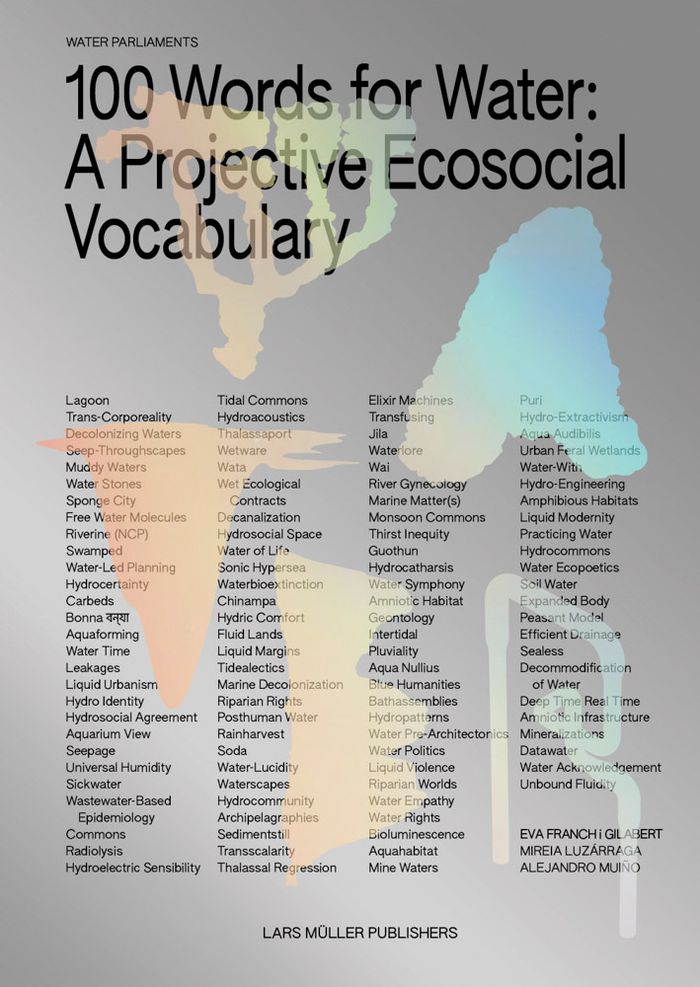
Drawing on the United Nations' assertion that "the climate crisis is mainly a water crisis," this thought-provoking book compiles over 100 key terms defined by contemporary thinkers in science, philosophy, politics, activism and architecture. These terms—such as Water Rights, Hydrocatharsis, Decommodification of Water and Liquid Modernity—form a vital lexicon to guide transformative action and foster a more symbiotic relationship with water. Structured as a collaborative exploration, the book combines scientific insight, philosophical depth and architectural vision to redefine how we engage with water socially, politically and ecologically. Illustrated with cartographic case studies, the volume offers vivid and hopeful scenarios for reshaping human–water interdependence. Through its diverse contributors and an interdisciplinary approach, "100 Words for Water" challenges readers to rethink water management and design as the foundation of a resilient, multispecies future.
100 words for water: A Projective Ecosocial Vocabulary
Actions:
Price:
$38.00
(available to order)
Summary:
Drawing on the United Nations' assertion that "the climate crisis is mainly a water crisis," this thought-provoking book compiles over 100 key terms defined by contemporary thinkers in science, philosophy, politics, activism and architecture. These terms—such as Water Rights, Hydrocatharsis, Decommodification of Water and Liquid Modernity—form a vital lexicon to guide transformative action and foster a more symbiotic relationship with water. Structured as a collaborative exploration, the book combines scientific insight, philosophical depth and architectural vision to redefine how we engage with water socially, politically and ecologically. Illustrated with cartographic case studies, the volume offers vivid and hopeful scenarios for reshaping human–water interdependence. Through its diverse contributors and an interdisciplinary approach, "100 Words for Water" challenges readers to rethink water management and design as the foundation of a resilient, multispecies future.
Form:
books
books
Publication:
October 2025
October 2025
Subject:
Green Architecture
Green Architecture
Form:
books
books

Actions:
Price:
$57.00
(available to order)
Summary:
In an age of email lists and discussion groups, e-zines and weblogs, bringing together users, consumers, workers and activists from around the globe, what kinds of political subjectivity are emerging? What kinds of politics become possible in a time of information overload and media saturation? What structures of power and control operate over a self-organising system(...)
$57.00
(available to order)
Summary:
In an age of email lists and discussion groups, e-zines and weblogs, bringing together users, consumers, workers and activists from around the globe, what kinds of political subjectivity are emerging? What kinds of politics become possible in a time of information overload and media saturation? What structures of power and control operate over a self-organising system(...)
Title:
Network culture: Politics for the information age
Actions:
Price:
$57.00
(available to order)
Summary:
In an age of email lists and discussion groups, e-zines and weblogs, bringing together users, consumers, workers and activists from around the globe, what kinds of political subjectivity are emerging? What kinds of politics become possible in a time of information overload and media saturation? What structures of power and control operate over a self-organising system like the internet? In this highly original new work, Tiziana Terranova investigates the political dimension of the network culture in which we now live, and explores what the new forms of communication and organisation might mean for our understanding of power and politics. Terranova engages with key concepts and debates in cultural theory and cultural politics, using examples from media culture, computing, network dynamics, and internet activism within the anti-capitalist and anti-war movements.
Network culture: Politics for the information age
Actions:
Price:
$57.00
(available to order)
Summary:
In an age of email lists and discussion groups, e-zines and weblogs, bringing together users, consumers, workers and activists from around the globe, what kinds of political subjectivity are emerging? What kinds of politics become possible in a time of information overload and media saturation? What structures of power and control operate over a self-organising system like the internet? In this highly original new work, Tiziana Terranova investigates the political dimension of the network culture in which we now live, and explores what the new forms of communication and organisation might mean for our understanding of power and politics. Terranova engages with key concepts and debates in cultural theory and cultural politics, using examples from media culture, computing, network dynamics, and internet activism within the anti-capitalist and anti-war movements.
Form:
books
books
Publication:
June 2004
June 2004
Subject:
Current Exhibitions
Current Exhibitions
Form:
books
books
Actions:
Price:
$85.00
(available to order)
Summary:
The Black Arts Movement brought together writers, filmmakers, and visual artists who were exploring ways of using art to advance civil rights and Black self-determination. This book examines the vital role of photography in the evolution of the Black Arts Movement, revealing how photographs operated across art, community building, journalism, and political messaging to(...)
$85.00
(available to order)
Summary:
The Black Arts Movement brought together writers, filmmakers, and visual artists who were exploring ways of using art to advance civil rights and Black self-determination. This book examines the vital role of photography in the evolution of the Black Arts Movement, revealing how photographs operated across art, community building, journalism, and political messaging to(...)
Title:
Photography and the Black Arts movement, 1955-1985
Actions:
Price:
$85.00
(available to order)
Summary:
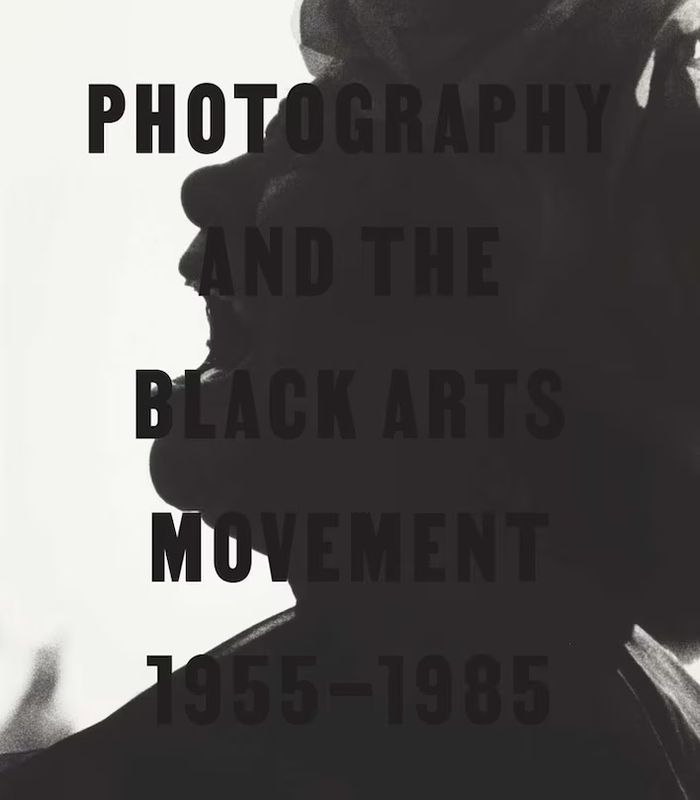
The Black Arts Movement brought together writers, filmmakers, and visual artists who were exploring ways of using art to advance civil rights and Black self-determination. This book examines the vital role of photography in the evolution of the Black Arts Movement, revealing how photographs operated across art, community building, journalism, and political messaging to contribute to the development of a distinctly Black art and culture. The book’s essays by distinguished scholars focus on topics such as women and the movement, community, activism, and Black photojournalism. Taking an expansive approach, the authors consider the complex connections between American artists and the African diaspora and the dynamic interchange of pan-African ideas that propelled the movement. Authoritative and beautifully illustrated, this is the definitive volume on photography and the Black Arts Movement.
Photography and the Black Arts movement, 1955-1985
Actions:
Price:
$85.00
(available to order)
Summary:
The Black Arts Movement brought together writers, filmmakers, and visual artists who were exploring ways of using art to advance civil rights and Black self-determination. This book examines the vital role of photography in the evolution of the Black Arts Movement, revealing how photographs operated across art, community building, journalism, and political messaging to contribute to the development of a distinctly Black art and culture. The book’s essays by distinguished scholars focus on topics such as women and the movement, community, activism, and Black photojournalism. Taking an expansive approach, the authors consider the complex connections between American artists and the African diaspora and the dynamic interchange of pan-African ideas that propelled the movement. Authoritative and beautifully illustrated, this is the definitive volume on photography and the Black Arts Movement.
Form:
books
books
Publication:
September 2025
September 2025
Subject:
Photography Collections
Photography Collections
Form:
books
books
Actions:
Price:
$32.95
(available in store)
Summary:
Collect Raindrops celebrates the important things: the change of seasons, slowing down the world for a moment so we can actually taste it, looking up at the stars to dream. Artist Nikki McClure’s delicate images exude an optimism that revolves around community, sustenance, parenting, and appreciating both the urban and rural landscape through a visual language that is(...)
$32.95
(available in store)
Summary:
Collect Raindrops celebrates the important things: the change of seasons, slowing down the world for a moment so we can actually taste it, looking up at the stars to dream. Artist Nikki McClure’s delicate images exude an optimism that revolves around community, sustenance, parenting, and appreciating both the urban and rural landscape through a visual language that is(...)
Title:
Nikki McClure: collect raindrops, the seasons gathred
Actions:
Price:
$32.95
(available in store)
Summary:
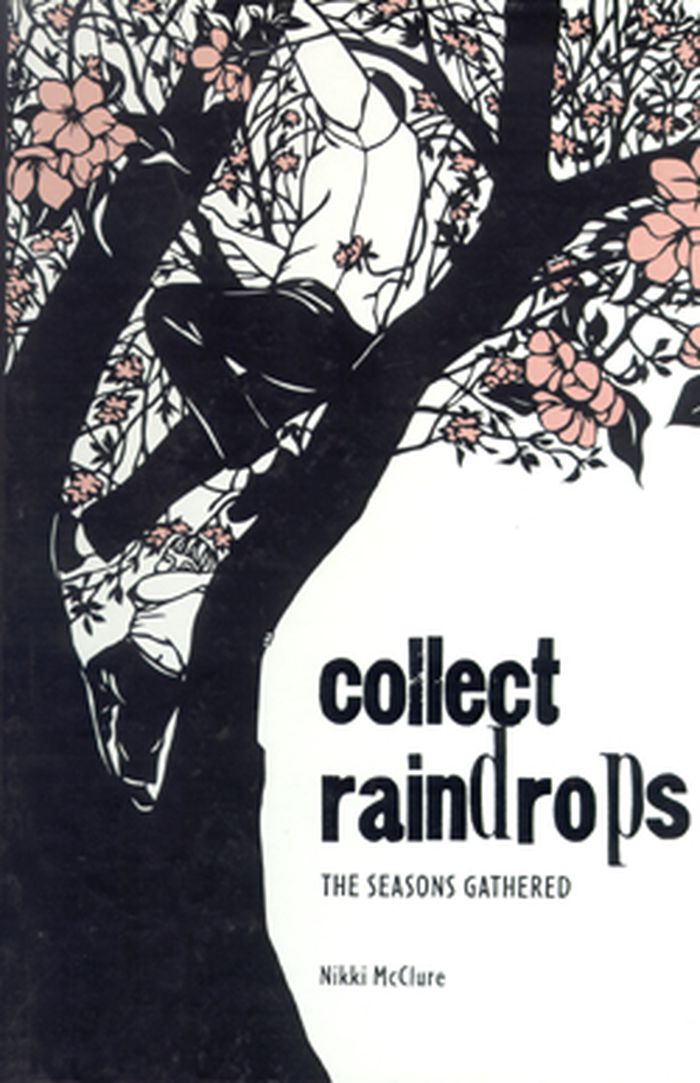
Collect Raindrops celebrates the important things: the change of seasons, slowing down the world for a moment so we can actually taste it, looking up at the stars to dream. Artist Nikki McClure’s delicate images exude an optimism that revolves around community, sustenance, parenting, and appreciating both the urban and rural landscape through a visual language that is uniquely her own. Armed with an X-acto knife, McClure painstakingly cuts out her images from a single sheet of black paper, creating a bold language that translates the complex poetry of motherhood, nature, and activism into a simple and endearing picture. The delicate nature of her work draws the eye, as each element has to be connected to the one next to it in some way, creating a fragile network of shapes and lines.
Nikki McClure: collect raindrops, the seasons gathred
Actions:
Price:
$32.95
(available in store)
Summary:
Collect Raindrops celebrates the important things: the change of seasons, slowing down the world for a moment so we can actually taste it, looking up at the stars to dream. Artist Nikki McClure’s delicate images exude an optimism that revolves around community, sustenance, parenting, and appreciating both the urban and rural landscape through a visual language that is uniquely her own. Armed with an X-acto knife, McClure painstakingly cuts out her images from a single sheet of black paper, creating a bold language that translates the complex poetry of motherhood, nature, and activism into a simple and endearing picture. The delicate nature of her work draws the eye, as each element has to be connected to the one next to it in some way, creating a fragile network of shapes and lines.
Form:
books
books
Publication:
April 2007, New York
April 2007, New York
Subject:
Illustration
Illustration
Form:
books
books

Title:
Ai Weiwei: bare life
Ai Weiwei: bare life
Actions:
Price:
$58.95
(available to order)
Summary:
This volume—a hybrid between a scholarly study and an exhibition catalog—presents the artist Ai Weiwei's work in dialogue with theoretical texts by the Italian philosopher Giorgio Agamben and the German-Jewish philosopher Hannah Arendt alongside interpretive essays that illuminate the artist’s work on human rights, his engagement with historical Chinese artifacts, and his(...)
$58.95
(available to order)
Summary:
This volume—a hybrid between a scholarly study and an exhibition catalog—presents the artist Ai Weiwei's work in dialogue with theoretical texts by the Italian philosopher Giorgio Agamben and the German-Jewish philosopher Hannah Arendt alongside interpretive essays that illuminate the artist’s work on human rights, his engagement with historical Chinese artifacts, and his(...)
Title:
Ai Weiwei: bare life
Actions:
Price:
$58.95
(available to order)
Summary:
This volume—a hybrid between a scholarly study and an exhibition catalog—presents the artist Ai Weiwei's work in dialogue with theoretical texts by the Italian philosopher Giorgio Agamben and the German-Jewish philosopher Hannah Arendt alongside interpretive essays that illuminate the artist’s work on human rights, his engagement with historical Chinese artifacts, and his critical consideration of the effects of globalization. The book includes a new essay on human rights by Ai Weiwei and an interview in which he discusses his artwork and activism. It also features installation photographs of the corresponding exhibition. By exploring Ai Weiwei’s artistic practice in dialogue with philosophies, theories, and concepts that connect human life and political power, this publication offers new insights into one of the most important artists working today.
Ai Weiwei: bare life
Actions:
Price:
$58.95
(available to order)
Summary:
This volume—a hybrid between a scholarly study and an exhibition catalog—presents the artist Ai Weiwei's work in dialogue with theoretical texts by the Italian philosopher Giorgio Agamben and the German-Jewish philosopher Hannah Arendt alongside interpretive essays that illuminate the artist’s work on human rights, his engagement with historical Chinese artifacts, and his critical consideration of the effects of globalization. The book includes a new essay on human rights by Ai Weiwei and an interview in which he discusses his artwork and activism. It also features installation photographs of the corresponding exhibition. By exploring Ai Weiwei’s artistic practice in dialogue with philosophies, theories, and concepts that connect human life and political power, this publication offers new insights into one of the most important artists working today.
Form:
books
books
Publication:
November 2019
November 2019
Subject:
Contemporary Art Monographs
Contemporary Art Monographs
Form:
books
books
Actions:
Price:
$44.00
(available to order)
Summary:
In the 1970s, Manhattan’s west side waterfront was a forgotten zone of abandoned warehouses and piers. Though many saw only blight, the derelict neighborhood was alive with queer people forging new intimacies through cruising. Alongside the piers’ sexual and social worlds, artists produced work attesting to the radical transformations taking place in New York. In(...)
$44.00
(available to order)
Summary:
In the 1970s, Manhattan’s west side waterfront was a forgotten zone of abandoned warehouses and piers. Though many saw only blight, the derelict neighborhood was alive with queer people forging new intimacies through cruising. Alongside the piers’ sexual and social worlds, artists produced work attesting to the radical transformations taking place in New York. In(...)
Title:
Cruising the dead river: David Wojnarowicz and New York's ruined waterfront
Actions:
Price:
$44.00
(available to order)
Summary:
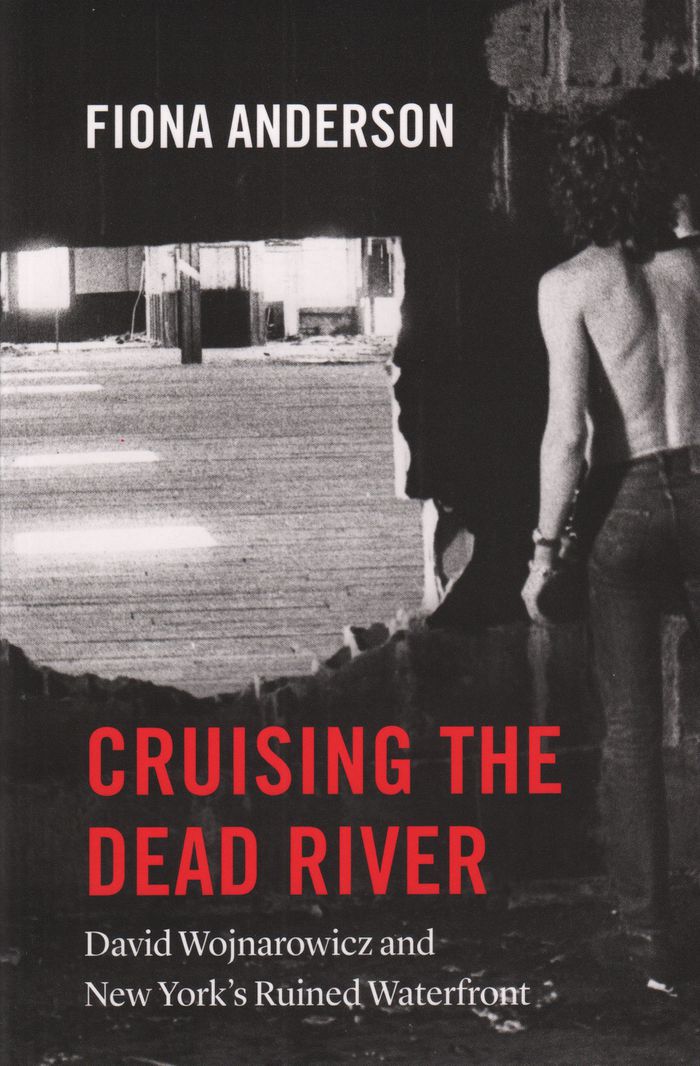
In the 1970s, Manhattan’s west side waterfront was a forgotten zone of abandoned warehouses and piers. Though many saw only blight, the derelict neighborhood was alive with queer people forging new intimacies through cruising. Alongside the piers’ sexual and social worlds, artists produced work attesting to the radical transformations taking place in New York. In 'Cruising the Dead River', Fiona Anderson draws on Wojnarowicz’s work to explore the key role the abandoned landscape played in this explosion of queer culture. Anderson examines how the riverfront’s ruined buildings assumed a powerful erotic role and gave the area a distinct identity. By telling the story of the piers as gentrification swept New York and before the AIDS crisis, Anderson unearths the buried histories of violence, regeneration, and LGBTQ activism that developed in and around the cruising scene.
Cruising the dead river: David Wojnarowicz and New York's ruined waterfront
Actions:
Price:
$44.00
(available to order)
Summary:
In the 1970s, Manhattan’s west side waterfront was a forgotten zone of abandoned warehouses and piers. Though many saw only blight, the derelict neighborhood was alive with queer people forging new intimacies through cruising. Alongside the piers’ sexual and social worlds, artists produced work attesting to the radical transformations taking place in New York. In 'Cruising the Dead River', Fiona Anderson draws on Wojnarowicz’s work to explore the key role the abandoned landscape played in this explosion of queer culture. Anderson examines how the riverfront’s ruined buildings assumed a powerful erotic role and gave the area a distinct identity. By telling the story of the piers as gentrification swept New York and before the AIDS crisis, Anderson unearths the buried histories of violence, regeneration, and LGBTQ activism that developed in and around the cruising scene.
Form:
books
books
Publication:
August 2019
August 2019
Subject:
Art Theory
Art Theory
Form:
books
books
Price:
$69.95
(available to order)
Summary:
This volume considers how contemporary photographers have responded to the US military’s impact on the domestic environment since the 1970s, a dynamic period for environmental activism as well as for photography. This catalogue presents a lively range of voices at the intersection of art, environmentalism, militarism, photography, and politics. Alongside interviews with(...)
$69.95
(available to order)
Summary:
This volume considers how contemporary photographers have responded to the US military’s impact on the domestic environment since the 1970s, a dynamic period for environmental activism as well as for photography. This catalogue presents a lively range of voices at the intersection of art, environmentalism, militarism, photography, and politics. Alongside interviews with(...)
Title:
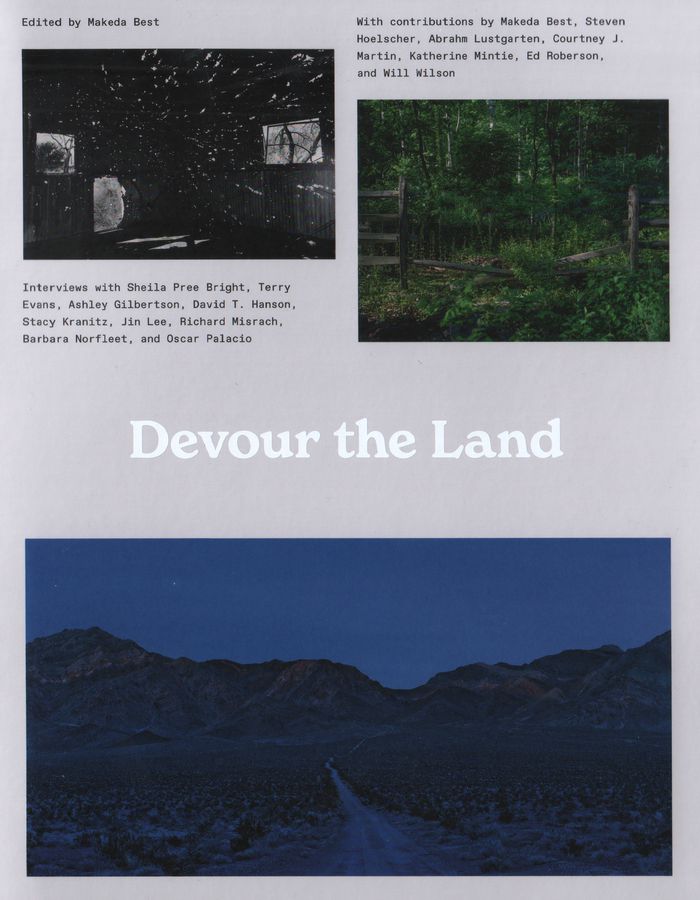
Devour the land: War and american landscape photography since 1970
Actions:
Price:
$69.95
(available to order)
Summary:
This volume considers how contemporary photographers have responded to the US military’s impact on the domestic environment since the 1970s, a dynamic period for environmental activism as well as for photography. This catalogue presents a lively range of voices at the intersection of art, environmentalism, militarism, photography, and politics. Alongside interviews with prominent contemporary artists working in the landscape photography tradition, the images speak to photographers’ varied motivations, personal experiences, and artistic approaches. The result is a surprising picture of the ways violence and warfare surround us. Although most modern combat has taken place abroad, the US domestic landscape bears the footprint of armed conflict—much of the environmental damage we live with today was caused by our own military and the expansive network of industries supporting its work.
Devour the land: War and american landscape photography since 1970
Actions:
Price:
$69.95
(available to order)
Summary:
This volume considers how contemporary photographers have responded to the US military’s impact on the domestic environment since the 1970s, a dynamic period for environmental activism as well as for photography. This catalogue presents a lively range of voices at the intersection of art, environmentalism, militarism, photography, and politics. Alongside interviews with prominent contemporary artists working in the landscape photography tradition, the images speak to photographers’ varied motivations, personal experiences, and artistic approaches. The result is a surprising picture of the ways violence and warfare surround us. Although most modern combat has taken place abroad, the US domestic landscape bears the footprint of armed conflict—much of the environmental damage we live with today was caused by our own military and the expansive network of industries supporting its work.
Form:
books
books
Publication:
January 2022
January 2022
Subject:
Photography by Region
Photography by Region
Form:
books
books
Actions:
Price:
$39.95
(available to order)
Summary:
The anthology comprises two distinct narrative sections, temporal structures, and points of view: the River and the Forest. The river is a kind of timeline, a sentence, a thread (of water) winding its way through the book, exploring indigenous thought and histories, issues of memory, erasure, rights and cultural practice, as well as the notion of ancestors and activism.(...)
$39.95
(available to order)
Summary:
The anthology comprises two distinct narrative sections, temporal structures, and points of view: the River and the Forest. The river is a kind of timeline, a sentence, a thread (of water) winding its way through the book, exploring indigenous thought and histories, issues of memory, erasure, rights and cultural practice, as well as the notion of ancestors and activism.(...)
Subject:
Environment and environmental theory
Environment and environmental theory
Publication:
February 2022
February 2022
Title:
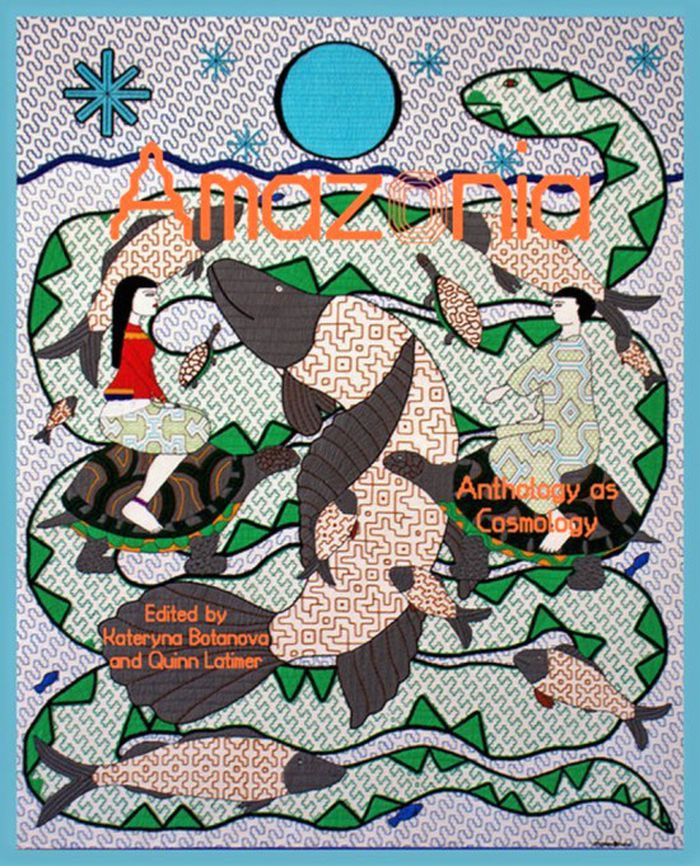
Amazonia: Anthology as cosmology
Actions:
Price:
$39.95
(available to order)
Summary:
The anthology comprises two distinct narrative sections, temporal structures, and points of view: the River and the Forest. The river is a kind of timeline, a sentence, a thread (of water) winding its way through the book, exploring indigenous thought and histories, issues of memory, erasure, rights and cultural practice, as well as the notion of ancestors and activism. The space of the forest, meanwhile, is represented as one of oral testimony and conversation, of voices speaking inside the present, in a kind of circular time in which past and future both impress upon and constitute the current uncertain moment. These voices include recorded conversations with elders, shamans, artists, and thinkers, as well as poetry, oral testimony, and artistic works from Amazonia that use the forest as both ground and cover.
Amazonia: Anthology as cosmology
Actions:
Price:
$39.95
(available to order)
Summary:
The anthology comprises two distinct narrative sections, temporal structures, and points of view: the River and the Forest. The river is a kind of timeline, a sentence, a thread (of water) winding its way through the book, exploring indigenous thought and histories, issues of memory, erasure, rights and cultural practice, as well as the notion of ancestors and activism. The space of the forest, meanwhile, is represented as one of oral testimony and conversation, of voices speaking inside the present, in a kind of circular time in which past and future both impress upon and constitute the current uncertain moment. These voices include recorded conversations with elders, shamans, artists, and thinkers, as well as poetry, oral testimony, and artistic works from Amazonia that use the forest as both ground and cover.
Form:
books
books
Publication:
February 2022
February 2022
Subject:
Environment and environmental theory
Environment and environmental theory
Form:
books
books
Actions:
Price:
$34.99
(available to order)
Summary:
Originally published in 1974, this book is a critical work of Indigenous political activism that has long been out of print. George Manuel, a leader in the North American Indian movement at that time, with coauthor journalist Michael Posluns, presents a rich historical document that traces the struggle for Indigenous survival as a nation, a culture, and a reality. The(...)
$34.99
(available to order)
Summary:
Originally published in 1974, this book is a critical work of Indigenous political activism that has long been out of print. George Manuel, a leader in the North American Indian movement at that time, with coauthor journalist Michael Posluns, presents a rich historical document that traces the struggle for Indigenous survival as a nation, a culture, and a reality. The(...)
Title:
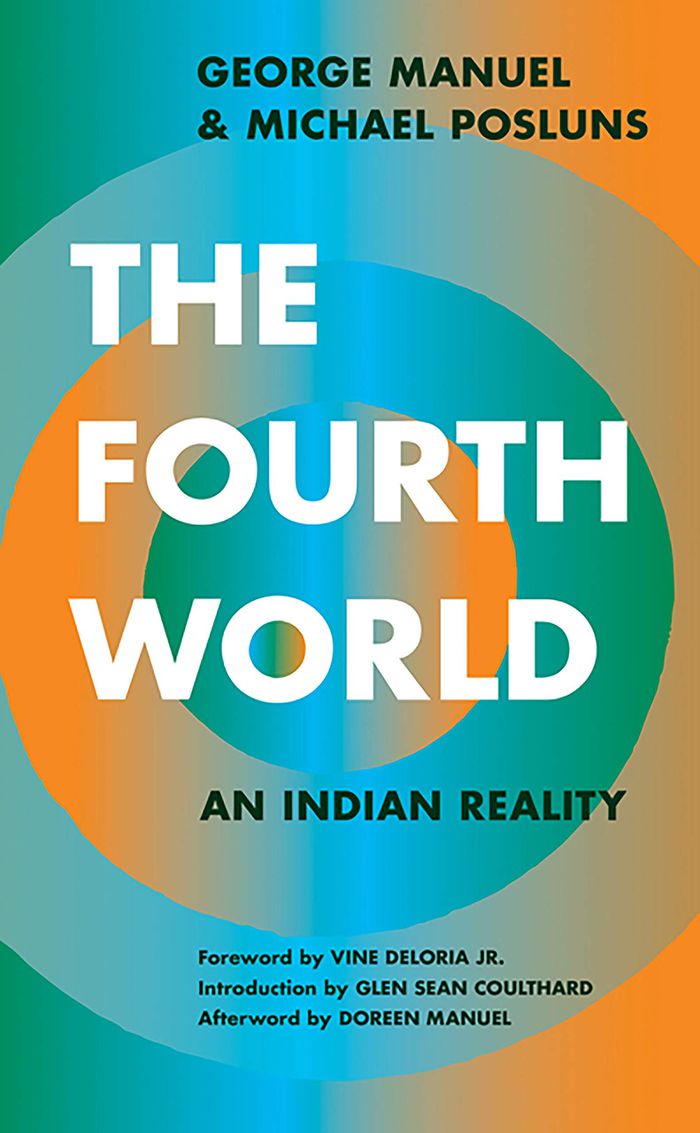
The Fourth World: An Indian reality
Actions:
Price:
$34.99
(available to order)
Summary:
Originally published in 1974, this book is a critical work of Indigenous political activism that has long been out of print. George Manuel, a leader in the North American Indian movement at that time, with coauthor journalist Michael Posluns, presents a rich historical document that traces the struggle for Indigenous survival as a nation, a culture, and a reality. The authors shed light on alternatives for coexistence that would take place in the Fourth World—an alternative to the new world, the old world, and the Third World. Manuel was the first to develop this concept of the “fourth world” to describe the place occupied by Indigenous nations within colonial nation-states. Accompanied by a new introduction and afterword, this book is as poignant and provocative today as it was when first published.
The Fourth World: An Indian reality
Actions:
Price:
$34.99
(available to order)
Summary:
Originally published in 1974, this book is a critical work of Indigenous political activism that has long been out of print. George Manuel, a leader in the North American Indian movement at that time, with coauthor journalist Michael Posluns, presents a rich historical document that traces the struggle for Indigenous survival as a nation, a culture, and a reality. The authors shed light on alternatives for coexistence that would take place in the Fourth World—an alternative to the new world, the old world, and the Third World. Manuel was the first to develop this concept of the “fourth world” to describe the place occupied by Indigenous nations within colonial nation-states. Accompanied by a new introduction and afterword, this book is as poignant and provocative today as it was when first published.
Form:
books
books
Publication:
February 2019
February 2019


