


3189 Results
Level of archival description:
Sub-series
Sub-series
Reference number:
CI001.S1.D3
Description:
The urban and public architecture of Hubert Rohault de Fleury is insightful concerning both the stylistic directions of utilitarian architecture in France and the structure and role of the government architectural services (1) in the Empire and the Restoration. The drawings in the CCA collection depict built and unbuilt projects undertaken in the context of Hubert's positions in the government architectural services as well as private commissions. Hubert's principal official positions related to three branches of the French government: the Préfecture de la police, the Conseil général des hospices and the Conseil des Bâtiments Civils, a "division" of the Ministère de l'interieur. Hubert's work for the Préfecture de la police (which was also responsible for the gendarmerie and the sapeurs-pompiers barracks) is represented in the CCA collection by projects for four gendarmerie barracks (1821-1830) and alterations to the Préfecture de la Police (1833 ?) and nearby prison in Paris (1819)(DR1974:0002:016:001-070 / DR1974:0002:011:001-089 and DR1974:0002: 015:001-070). The drawings in these albums emphasize the planning (or re-arrangement) of the interior spaces. The album for the Préfecture de la police also includes record drawings for prisons in England and France as background material for Hubert's work and/or related to reports for the Conseil des Bâtiments Civils, which had an active role in the design of prisons throughout France during the early years of the nineteenth century (2). Although the CCA collection has no drawings directly related to Hubert's position as the architecte des hospices (3), drawings and prints are included for his earlier ideal hospitals (ca. 1810) (DR1974:0002:008:001-077). These projects continue the late 17th and 18th century tradition of monumental geometrically laid-out ideal hospitals. This album also contains prints and drawings of medical buildings by other architects (probably reference material), and drawings of Hubert's unexecuted proposal for the re-development of the École de médecine (Paris) and the surrounding buildings and urban spaces. Hubert was the architecte de l'École de medicine (4); a position that probably related to his work for the Ministère d'Interieur, which would have been responsible for this building. In general, Hubert's role and responsibilities within the Ministère de l'interieur and the associated Conseil de Bâtiment Civils (especially prior to his appointment to the position of inspecteur gènèral in 1830) are the least clear of his government positions. In addition to the École de medicine album, two other albums contain projects relating to the Ministère de l'Interieur: two proposals for Place Louis XV commissioned by the Ministre de l'interieur, Duc Decazes in 1821 (DR1974:0002:037:001-031), and drawings for the conversion or renovation of several Parisian hôtel particuliers (probably between 1810 and ca. 1820) including those used by the Ministère de l'interieur, Ministère de la Guerre and the Ministère des affaires étrangères (DR1974:0002;011:001-089). On other government commission of significance is represented in the CCA collection. In 1819, Hubert Rohault de Fleury in collaboration with Etienne Hyppolite Godde was commissioned to direct the restoration of the Thermes de Julien located under the Hôtel de Cluny. The CCA collection includes several letters and drawings, and a report related to this commission (DR1974:0002 :037:001-031). Hubert's private urban projects, mostly commissioned by private entrepreneurs or societies, were concerned with the expansion of the infrastructure of Paris and the surrounding communities as well as, to some extent, larger issues of urban development. One album contains projects dating from between 1819 and 1836 related horses - an essential part of 19th century urban life (5): a stud-farm (Haras de Madrid, Bois de Boulogne), an auction house and an infirmary (Clos St. Charles, Clos d'équarrissage, fôret de Bondy) and three slaughterhouses (Plaine de Grenelle, an unnamed project and La Villete (6))(DR1974:0002:014:001-104). These album also includes developmental studies for a new quartier of Paris - Nouveau Quartier Poissonière (the site of today's 10e arrondissement). A second album (ca. 1825) includes designs for a "maison de blanchisseur", an "entrepot de vins" with adjacent "guingette" and designs for structures at Parc de Clichy - a reservoir, a washhouse and a manège (DR1974:0002:009:001-079) (7). The drawings in these albums are particularly informative regarding the materials, structures and mechanical systems utilized. As with most of his government commissions, for these buildings, Hubert adopted a sparse architectural syntax of pared-down classical motifs and regimented plans grounded in the ideas of Durand and commonly used in utilitarian buildings during the 19th century. (1) These are discussed in some detail in Chapter 2 of David Van Zanten, 'Building Paris' (Cambridge: Cambridge University Press, 1994). (2) Van Zanten, 'Building Paris', 51-52. (3) The Cabinet des Estampes at the Musée Carnavalet in Paris has drawings related to Hubert's work for the Conseil général des hospices. (4) Evidence of this position is based on inscriptions on drawings in album, DR1974:0002:008:001-77. (5) Bergdoll, 4. (6) The La Villete slaughterhouse was designed by Charles Rohault de Fleury. (7) The source(s) of these commissions is unknown.
CI001.S1.D3
Description:
The urban and public architecture of Hubert Rohault de Fleury is insightful concerning both the stylistic directions of utilitarian architecture in France and the structure and role of the government architectural services (1) in the Empire and the Restoration. The drawings in the CCA collection depict built and unbuilt projects undertaken in the context of Hubert's positions in the government architectural services as well as private commissions. Hubert's principal official positions related to three branches of the French government: the Préfecture de la police, the Conseil général des hospices and the Conseil des Bâtiments Civils, a "division" of the Ministère de l'interieur. Hubert's work for the Préfecture de la police (which was also responsible for the gendarmerie and the sapeurs-pompiers barracks) is represented in the CCA collection by projects for four gendarmerie barracks (1821-1830) and alterations to the Préfecture de la Police (1833 ?) and nearby prison in Paris (1819)(DR1974:0002:016:001-070 / DR1974:0002:011:001-089 and DR1974:0002: 015:001-070). The drawings in these albums emphasize the planning (or re-arrangement) of the interior spaces. The album for the Préfecture de la police also includes record drawings for prisons in England and France as background material for Hubert's work and/or related to reports for the Conseil des Bâtiments Civils, which had an active role in the design of prisons throughout France during the early years of the nineteenth century (2). Although the CCA collection has no drawings directly related to Hubert's position as the architecte des hospices (3), drawings and prints are included for his earlier ideal hospitals (ca. 1810) (DR1974:0002:008:001-077). These projects continue the late 17th and 18th century tradition of monumental geometrically laid-out ideal hospitals. This album also contains prints and drawings of medical buildings by other architects (probably reference material), and drawings of Hubert's unexecuted proposal for the re-development of the École de médecine (Paris) and the surrounding buildings and urban spaces. Hubert was the architecte de l'École de medicine (4); a position that probably related to his work for the Ministère d'Interieur, which would have been responsible for this building. In general, Hubert's role and responsibilities within the Ministère de l'interieur and the associated Conseil de Bâtiment Civils (especially prior to his appointment to the position of inspecteur gènèral in 1830) are the least clear of his government positions. In addition to the École de medicine album, two other albums contain projects relating to the Ministère de l'Interieur: two proposals for Place Louis XV commissioned by the Ministre de l'interieur, Duc Decazes in 1821 (DR1974:0002:037:001-031), and drawings for the conversion or renovation of several Parisian hôtel particuliers (probably between 1810 and ca. 1820) including those used by the Ministère de l'interieur, Ministère de la Guerre and the Ministère des affaires étrangères (DR1974:0002;011:001-089). On other government commission of significance is represented in the CCA collection. In 1819, Hubert Rohault de Fleury in collaboration with Etienne Hyppolite Godde was commissioned to direct the restoration of the Thermes de Julien located under the Hôtel de Cluny. The CCA collection includes several letters and drawings, and a report related to this commission (DR1974:0002 :037:001-031). Hubert's private urban projects, mostly commissioned by private entrepreneurs or societies, were concerned with the expansion of the infrastructure of Paris and the surrounding communities as well as, to some extent, larger issues of urban development. One album contains projects dating from between 1819 and 1836 related horses - an essential part of 19th century urban life (5): a stud-farm (Haras de Madrid, Bois de Boulogne), an auction house and an infirmary (Clos St. Charles, Clos d'équarrissage, fôret de Bondy) and three slaughterhouses (Plaine de Grenelle, an unnamed project and La Villete (6))(DR1974:0002:014:001-104). These album also includes developmental studies for a new quartier of Paris - Nouveau Quartier Poissonière (the site of today's 10e arrondissement). A second album (ca. 1825) includes designs for a "maison de blanchisseur", an "entrepot de vins" with adjacent "guingette" and designs for structures at Parc de Clichy - a reservoir, a washhouse and a manège (DR1974:0002:009:001-079) (7). The drawings in these albums are particularly informative regarding the materials, structures and mechanical systems utilized. As with most of his government commissions, for these buildings, Hubert adopted a sparse architectural syntax of pared-down classical motifs and regimented plans grounded in the ideas of Durand and commonly used in utilitarian buildings during the 19th century. (1) These are discussed in some detail in Chapter 2 of David Van Zanten, 'Building Paris' (Cambridge: Cambridge University Press, 1994). (2) Van Zanten, 'Building Paris', 51-52. (3) The Cabinet des Estampes at the Musée Carnavalet in Paris has drawings related to Hubert's work for the Conseil général des hospices. (4) Evidence of this position is based on inscriptions on drawings in album, DR1974:0002:008:001-77. (5) Bergdoll, 4. (6) The La Villete slaughterhouse was designed by Charles Rohault de Fleury. (7) The source(s) of these commissions is unknown.
People:
Date:
1754-1875
1754-1875
Title:
Public and Urban architecture
CI001.S1.D3
Description:
The urban and public architecture of Hubert Rohault de Fleury is insightful concerning both the stylistic directions of utilitarian architecture in France and the structure and role of the government architectural services (1) in the Empire and the Restoration. The drawings in the CCA collection depict built and unbuilt projects undertaken in the context of Hubert's positions in the government architectural services as well as private commissions. Hubert's principal official positions related to three branches of the French government: the Préfecture de la police, the Conseil général des hospices and the Conseil des Bâtiments Civils, a "division" of the Ministère de l'interieur. Hubert's work for the Préfecture de la police (which was also responsible for the gendarmerie and the sapeurs-pompiers barracks) is represented in the CCA collection by projects for four gendarmerie barracks (1821-1830) and alterations to the Préfecture de la Police (1833 ?) and nearby prison in Paris (1819)(DR1974:0002:016:001-070 / DR1974:0002:011:001-089 and DR1974:0002: 015:001-070). The drawings in these albums emphasize the planning (or re-arrangement) of the interior spaces. The album for the Préfecture de la police also includes record drawings for prisons in England and France as background material for Hubert's work and/or related to reports for the Conseil des Bâtiments Civils, which had an active role in the design of prisons throughout France during the early years of the nineteenth century (2). Although the CCA collection has no drawings directly related to Hubert's position as the architecte des hospices (3), drawings and prints are included for his earlier ideal hospitals (ca. 1810) (DR1974:0002:008:001-077). These projects continue the late 17th and 18th century tradition of monumental geometrically laid-out ideal hospitals. This album also contains prints and drawings of medical buildings by other architects (probably reference material), and drawings of Hubert's unexecuted proposal for the re-development of the École de médecine (Paris) and the surrounding buildings and urban spaces. Hubert was the architecte de l'École de medicine (4); a position that probably related to his work for the Ministère d'Interieur, which would have been responsible for this building. In general, Hubert's role and responsibilities within the Ministère de l'interieur and the associated Conseil de Bâtiment Civils (especially prior to his appointment to the position of inspecteur gènèral in 1830) are the least clear of his government positions. In addition to the École de medicine album, two other albums contain projects relating to the Ministère de l'Interieur: two proposals for Place Louis XV commissioned by the Ministre de l'interieur, Duc Decazes in 1821 (DR1974:0002:037:001-031), and drawings for the conversion or renovation of several Parisian hôtel particuliers (probably between 1810 and ca. 1820) including those used by the Ministère de l'interieur, Ministère de la Guerre and the Ministère des affaires étrangères (DR1974:0002;011:001-089). On other government commission of significance is represented in the CCA collection. In 1819, Hubert Rohault de Fleury in collaboration with Etienne Hyppolite Godde was commissioned to direct the restoration of the Thermes de Julien located under the Hôtel de Cluny. The CCA collection includes several letters and drawings, and a report related to this commission (DR1974:0002 :037:001-031). Hubert's private urban projects, mostly commissioned by private entrepreneurs or societies, were concerned with the expansion of the infrastructure of Paris and the surrounding communities as well as, to some extent, larger issues of urban development. One album contains projects dating from between 1819 and 1836 related horses - an essential part of 19th century urban life (5): a stud-farm (Haras de Madrid, Bois de Boulogne), an auction house and an infirmary (Clos St. Charles, Clos d'équarrissage, fôret de Bondy) and three slaughterhouses (Plaine de Grenelle, an unnamed project and La Villete (6))(DR1974:0002:014:001-104). These album also includes developmental studies for a new quartier of Paris - Nouveau Quartier Poissonière (the site of today's 10e arrondissement). A second album (ca. 1825) includes designs for a "maison de blanchisseur", an "entrepot de vins" with adjacent "guingette" and designs for structures at Parc de Clichy - a reservoir, a washhouse and a manège (DR1974:0002:009:001-079) (7). The drawings in these albums are particularly informative regarding the materials, structures and mechanical systems utilized. As with most of his government commissions, for these buildings, Hubert adopted a sparse architectural syntax of pared-down classical motifs and regimented plans grounded in the ideas of Durand and commonly used in utilitarian buildings during the 19th century. (1) These are discussed in some detail in Chapter 2 of David Van Zanten, 'Building Paris' (Cambridge: Cambridge University Press, 1994). (2) Van Zanten, 'Building Paris', 51-52. (3) The Cabinet des Estampes at the Musée Carnavalet in Paris has drawings related to Hubert's work for the Conseil général des hospices. (4) Evidence of this position is based on inscriptions on drawings in album, DR1974:0002:008:001-77. (5) Bergdoll, 4. (6) The La Villete slaughterhouse was designed by Charles Rohault de Fleury. (7) The source(s) of these commissions is unknown.
Public and Urban architecture
CI001.S1.D3
Description:
The urban and public architecture of Hubert Rohault de Fleury is insightful concerning both the stylistic directions of utilitarian architecture in France and the structure and role of the government architectural services (1) in the Empire and the Restoration. The drawings in the CCA collection depict built and unbuilt projects undertaken in the context of Hubert's positions in the government architectural services as well as private commissions. Hubert's principal official positions related to three branches of the French government: the Préfecture de la police, the Conseil général des hospices and the Conseil des Bâtiments Civils, a "division" of the Ministère de l'interieur. Hubert's work for the Préfecture de la police (which was also responsible for the gendarmerie and the sapeurs-pompiers barracks) is represented in the CCA collection by projects for four gendarmerie barracks (1821-1830) and alterations to the Préfecture de la Police (1833 ?) and nearby prison in Paris (1819)(DR1974:0002:016:001-070 / DR1974:0002:011:001-089 and DR1974:0002: 015:001-070). The drawings in these albums emphasize the planning (or re-arrangement) of the interior spaces. The album for the Préfecture de la police also includes record drawings for prisons in England and France as background material for Hubert's work and/or related to reports for the Conseil des Bâtiments Civils, which had an active role in the design of prisons throughout France during the early years of the nineteenth century (2). Although the CCA collection has no drawings directly related to Hubert's position as the architecte des hospices (3), drawings and prints are included for his earlier ideal hospitals (ca. 1810) (DR1974:0002:008:001-077). These projects continue the late 17th and 18th century tradition of monumental geometrically laid-out ideal hospitals. This album also contains prints and drawings of medical buildings by other architects (probably reference material), and drawings of Hubert's unexecuted proposal for the re-development of the École de médecine (Paris) and the surrounding buildings and urban spaces. Hubert was the architecte de l'École de medicine (4); a position that probably related to his work for the Ministère d'Interieur, which would have been responsible for this building. In general, Hubert's role and responsibilities within the Ministère de l'interieur and the associated Conseil de Bâtiment Civils (especially prior to his appointment to the position of inspecteur gènèral in 1830) are the least clear of his government positions. In addition to the École de medicine album, two other albums contain projects relating to the Ministère de l'Interieur: two proposals for Place Louis XV commissioned by the Ministre de l'interieur, Duc Decazes in 1821 (DR1974:0002:037:001-031), and drawings for the conversion or renovation of several Parisian hôtel particuliers (probably between 1810 and ca. 1820) including those used by the Ministère de l'interieur, Ministère de la Guerre and the Ministère des affaires étrangères (DR1974:0002;011:001-089). On other government commission of significance is represented in the CCA collection. In 1819, Hubert Rohault de Fleury in collaboration with Etienne Hyppolite Godde was commissioned to direct the restoration of the Thermes de Julien located under the Hôtel de Cluny. The CCA collection includes several letters and drawings, and a report related to this commission (DR1974:0002 :037:001-031). Hubert's private urban projects, mostly commissioned by private entrepreneurs or societies, were concerned with the expansion of the infrastructure of Paris and the surrounding communities as well as, to some extent, larger issues of urban development. One album contains projects dating from between 1819 and 1836 related horses - an essential part of 19th century urban life (5): a stud-farm (Haras de Madrid, Bois de Boulogne), an auction house and an infirmary (Clos St. Charles, Clos d'équarrissage, fôret de Bondy) and three slaughterhouses (Plaine de Grenelle, an unnamed project and La Villete (6))(DR1974:0002:014:001-104). These album also includes developmental studies for a new quartier of Paris - Nouveau Quartier Poissonière (the site of today's 10e arrondissement). A second album (ca. 1825) includes designs for a "maison de blanchisseur", an "entrepot de vins" with adjacent "guingette" and designs for structures at Parc de Clichy - a reservoir, a washhouse and a manège (DR1974:0002:009:001-079) (7). The drawings in these albums are particularly informative regarding the materials, structures and mechanical systems utilized. As with most of his government commissions, for these buildings, Hubert adopted a sparse architectural syntax of pared-down classical motifs and regimented plans grounded in the ideas of Durand and commonly used in utilitarian buildings during the 19th century. (1) These are discussed in some detail in Chapter 2 of David Van Zanten, 'Building Paris' (Cambridge: Cambridge University Press, 1994). (2) Van Zanten, 'Building Paris', 51-52. (3) The Cabinet des Estampes at the Musée Carnavalet in Paris has drawings related to Hubert's work for the Conseil général des hospices. (4) Evidence of this position is based on inscriptions on drawings in album, DR1974:0002:008:001-77. (5) Bergdoll, 4. (6) The La Villete slaughterhouse was designed by Charles Rohault de Fleury. (7) The source(s) of these commissions is unknown.
Level of archival description:
File 3
File 3
Date:
1754-1875
1754-1875
People:
Form:
events
events
Actions:
Description:
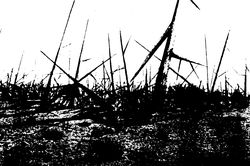
Peter Galison, Joseph Pellegrino University Professor of the History of Science and of Physics at Harvard University, discusses his current project – writing and filming about nuclear waste sites and the future of land. “As they are usually understood, ‘wasteland’ and ‘wilderness’ are opposites; when they merge on the sites of decommissioned weapons lands, when land is at(...)
Peter Galison, Joseph Pellegrino University Professor of the History of Science and of Physics at Harvard University, discusses his current project – writing and filming about nuclear waste sites and the future of land. “As they are usually understood, ‘wasteland’ and ‘wilderness’ are opposites; when they merge on the sites of decommissioned weapons lands, when land is at(...)
Location:
CCA Bookstore
CCA Bookstore
Date:
14 February 2010 , 3pm
14 February 2010 , 3pm
Title:
Peter Galison: Waste-Wilderness
Actions:
Description:
Peter Galison, Joseph Pellegrino University Professor of the History of Science and of Physics at Harvard University, discusses his current project – writing and filming about nuclear waste sites and the future of land. “As they are usually understood, ‘wasteland’ and ‘wilderness’ are opposites; when they merge on the sites of decommissioned weapons lands, when land is at(...)
Peter Galison: Waste-Wilderness
Actions:
Description:
Peter Galison, Joseph Pellegrino University Professor of the History of Science and of Physics at Harvard University, discusses his current project – writing and filming about nuclear waste sites and the future of land. “As they are usually understood, ‘wasteland’ and ‘wilderness’ are opposites; when they merge on the sites of decommissioned weapons lands, when land is at(...)
Form:
events
events
Date:
14 February 2010
3pm
14 February 2010
3pm
Location:
CCA Bookstore
CCA Bookstore
Level of archival description:
Sub-series
Sub-series
Reference number:
CI001.S2.D5
Description:
Charles Rohault de Fleury was architect for the Muséum national d'histoire naturelle from 1833 to 1862. His work for the Muséum is represented in the CCA collection by a diverse group of prints and drawings. In addition to documenting his built and unbuilt projects, the inclusion of prints and drawings of museum and zoo buildings by other architects record, if only partially, the resources available to Charles in designing his buildings. This reference material provides insight into the influences on Charles' work as well as the nature of the design process itself. His built works, with the exception of the 1854 addition to the greenhouses, are illustrated in a book of prints with a brief accompanying text - "Muséum d'histoire naturelle: serres chaudes, galeries de minéralogie, etc. etc." (published 1837) (DR1974:0002:004:001; a second copy is held by the CCA library) (1). While prints are included for the Galerie de minéralogie et de géologie, the monkey house and the reservoirs, the majority of the prints are of the greenhouses (serres chaudes) begun 1833 (2). Known for their technological innovations in iron construction, these greenhouses utilized the first multi-storey load-bearing cast-iron façades for the central pavilions as well as space frame roof structures and prefabricated parts. This structural system is well documented in the prints in the CCA collection. The design was apparently inspired by the English greenhouses - a plate of which are included in the book - that Charles saw on a tour of England. The use of prestressed beams and curved roofs in the lateral wings attest to this influence. Charles' greenhouses, in turn, influenced the design of other greenhouses in Europe especially those at the Jardins Botanique in Liège and Ghent, Belgium (3). Although Joseph Paxton saw the greenhouses in 1833, it is unclear if they had an impact on the design of the Crystal Palace constructed 1850-1851 (4). The innovations of Charles' greenhouses continued to be acknowledged into the 20th century. Giedion in "Space, Time and Architecture", while erroneously attributing them to Rouhault (5)(6), refers to the greenhouses as "the prototype of all large iron-framed conservatories" (7). In addition to the greenhouses for the Muséum, the CCA collection includes three proposals (dated 1841) for a private greenhouse designed by Charles Rohault de Fleury (DR1974:0002:002:008 - DR1974:0002:002:013). The designs utilize the same curved roofs as the wings of the greenhouses at the Muséum combined with classically detailed stonework. An different aspect of Charles' work for the Muséum national d'histoire naturelle is represented in the album of unexecuted proposals -the only design drawings for the Muséum in the collection - for a Galerie de zoologie (DR1974:0002:024:001-079). Building on the typology of his earlier classical Galerie de minéralogie et de géologie (constructed 1833 -1841), the proposals, which date from between 1838 and 1862, illustrate a gradual enrichment of Charles' classical architectural vocabulary (8). They vary in their spatial configurations and façade treatments ranging from austere colonnaded designs with little ornament to more elaborate ones with richly encrusted facades, complex rooflines and more dramatic interior spaces characteristic of the Second Empire. The majority of the proposals consist of preliminary drawings illustrating the essential formal, spatial and ornamental aspects of the building. One proposal, dated January 1846, is substantially more developed than the others; in addition to general plans, sections and elevations, more detailed drawings are included for the layout of spaces, the elaboration of the facades, the configuration of the structure and even the designs for the specimen display cases. It is also worth noting that this album includes several plans outlining Rohault de Fleury's ideas for the overall development of the Muséum national d'histoire naturelle. In 1846, an album of prints of the Museo di fiscia e storia naturelle in Florence (DR1974:0002:005:001-018) was presented to Charles by the Grand Duke of Tuscany in response to his request for tracings of that building. These prints were probably used as reference material for the design of the new Galerie de zoologie described above. The portfolio of record drawings (ca. 1862) of the zoos in Antwerp, Brussels, Marseille and Amsterdam (DR1974:0002:018:001-027) is probably a dummy for a publication on zoological gardens as well as background documentation for the renovation and expansion of the zoo at the Muséum national d'histoire naturelle in Paris. Both drawings of the facilities for the animals and visitors and general plans of the zoological gardens are included. The Paris zoo project was apparently never undertaken. (1) These prints were reused in the "Oeuvre de C. Rohault de Fleury, architecte" (published 1884) (DR1974:0002:029:001-044). (2) Rohault de Fleury's greenhouses were destroyed in the Prussian bombardments of 1870. The greenhouses, which now stand in their place, are similar in layout and appearance to the original design, but their structural system is different. (3) John Hix, 'The Glass House' (Cambridge, Mass.: The MIT Press, 1981), p. 115. (4) Ibid., p. 115. (5) This error has been repeated by other authors including Henry-Russell Hitchcock, 'Architecture: Nineteenth and Twentieth Centuries' (Baltimore, Maryland: Penguin Books, 1968), p. 120. (6) Leonardo Benevolo, 'History of Modern Architecture' Volume 1: The tradition of modern architecture (Cambridge, Mass.: The M.I.T. Press, 1971), p. 22. (7) Sigfried Giedion, 'Space, Time and Architecture; the growth of a new tradition' (Cambridge: Harvard University Press, 1941), p. 181. (8) Barry Bergdoll, "Charles Rohault de Fleury: Part two: Muséum d'Histoire Naturelle and Studies on analogous Constructions in Europe", 'CCA Research Report", n.d., p. 1.
CI001.S2.D5
Description:
Charles Rohault de Fleury was architect for the Muséum national d'histoire naturelle from 1833 to 1862. His work for the Muséum is represented in the CCA collection by a diverse group of prints and drawings. In addition to documenting his built and unbuilt projects, the inclusion of prints and drawings of museum and zoo buildings by other architects record, if only partially, the resources available to Charles in designing his buildings. This reference material provides insight into the influences on Charles' work as well as the nature of the design process itself. His built works, with the exception of the 1854 addition to the greenhouses, are illustrated in a book of prints with a brief accompanying text - "Muséum d'histoire naturelle: serres chaudes, galeries de minéralogie, etc. etc." (published 1837) (DR1974:0002:004:001; a second copy is held by the CCA library) (1). While prints are included for the Galerie de minéralogie et de géologie, the monkey house and the reservoirs, the majority of the prints are of the greenhouses (serres chaudes) begun 1833 (2). Known for their technological innovations in iron construction, these greenhouses utilized the first multi-storey load-bearing cast-iron façades for the central pavilions as well as space frame roof structures and prefabricated parts. This structural system is well documented in the prints in the CCA collection. The design was apparently inspired by the English greenhouses - a plate of which are included in the book - that Charles saw on a tour of England. The use of prestressed beams and curved roofs in the lateral wings attest to this influence. Charles' greenhouses, in turn, influenced the design of other greenhouses in Europe especially those at the Jardins Botanique in Liège and Ghent, Belgium (3). Although Joseph Paxton saw the greenhouses in 1833, it is unclear if they had an impact on the design of the Crystal Palace constructed 1850-1851 (4). The innovations of Charles' greenhouses continued to be acknowledged into the 20th century. Giedion in "Space, Time and Architecture", while erroneously attributing them to Rouhault (5)(6), refers to the greenhouses as "the prototype of all large iron-framed conservatories" (7). In addition to the greenhouses for the Muséum, the CCA collection includes three proposals (dated 1841) for a private greenhouse designed by Charles Rohault de Fleury (DR1974:0002:002:008 - DR1974:0002:002:013). The designs utilize the same curved roofs as the wings of the greenhouses at the Muséum combined with classically detailed stonework. An different aspect of Charles' work for the Muséum national d'histoire naturelle is represented in the album of unexecuted proposals -the only design drawings for the Muséum in the collection - for a Galerie de zoologie (DR1974:0002:024:001-079). Building on the typology of his earlier classical Galerie de minéralogie et de géologie (constructed 1833 -1841), the proposals, which date from between 1838 and 1862, illustrate a gradual enrichment of Charles' classical architectural vocabulary (8). They vary in their spatial configurations and façade treatments ranging from austere colonnaded designs with little ornament to more elaborate ones with richly encrusted facades, complex rooflines and more dramatic interior spaces characteristic of the Second Empire. The majority of the proposals consist of preliminary drawings illustrating the essential formal, spatial and ornamental aspects of the building. One proposal, dated January 1846, is substantially more developed than the others; in addition to general plans, sections and elevations, more detailed drawings are included for the layout of spaces, the elaboration of the facades, the configuration of the structure and even the designs for the specimen display cases. It is also worth noting that this album includes several plans outlining Rohault de Fleury's ideas for the overall development of the Muséum national d'histoire naturelle. In 1846, an album of prints of the Museo di fiscia e storia naturelle in Florence (DR1974:0002:005:001-018) was presented to Charles by the Grand Duke of Tuscany in response to his request for tracings of that building. These prints were probably used as reference material for the design of the new Galerie de zoologie described above. The portfolio of record drawings (ca. 1862) of the zoos in Antwerp, Brussels, Marseille and Amsterdam (DR1974:0002:018:001-027) is probably a dummy for a publication on zoological gardens as well as background documentation for the renovation and expansion of the zoo at the Muséum national d'histoire naturelle in Paris. Both drawings of the facilities for the animals and visitors and general plans of the zoological gardens are included. The Paris zoo project was apparently never undertaken. (1) These prints were reused in the "Oeuvre de C. Rohault de Fleury, architecte" (published 1884) (DR1974:0002:029:001-044). (2) Rohault de Fleury's greenhouses were destroyed in the Prussian bombardments of 1870. The greenhouses, which now stand in their place, are similar in layout and appearance to the original design, but their structural system is different. (3) John Hix, 'The Glass House' (Cambridge, Mass.: The MIT Press, 1981), p. 115. (4) Ibid., p. 115. (5) This error has been repeated by other authors including Henry-Russell Hitchcock, 'Architecture: Nineteenth and Twentieth Centuries' (Baltimore, Maryland: Penguin Books, 1968), p. 120. (6) Leonardo Benevolo, 'History of Modern Architecture' Volume 1: The tradition of modern architecture (Cambridge, Mass.: The M.I.T. Press, 1971), p. 22. (7) Sigfried Giedion, 'Space, Time and Architecture; the growth of a new tradition' (Cambridge: Harvard University Press, 1941), p. 181. (8) Barry Bergdoll, "Charles Rohault de Fleury: Part two: Muséum d'Histoire Naturelle and Studies on analogous Constructions in Europe", 'CCA Research Report", n.d., p. 1.
People:
Date:
[1837-ca. 1862]
[1837-ca. 1862]
Title:
Muséum nationale d'histoire naturelle
CI001.S2.D5
Description:
Charles Rohault de Fleury was architect for the Muséum national d'histoire naturelle from 1833 to 1862. His work for the Muséum is represented in the CCA collection by a diverse group of prints and drawings. In addition to documenting his built and unbuilt projects, the inclusion of prints and drawings of museum and zoo buildings by other architects record, if only partially, the resources available to Charles in designing his buildings. This reference material provides insight into the influences on Charles' work as well as the nature of the design process itself. His built works, with the exception of the 1854 addition to the greenhouses, are illustrated in a book of prints with a brief accompanying text - "Muséum d'histoire naturelle: serres chaudes, galeries de minéralogie, etc. etc." (published 1837) (DR1974:0002:004:001; a second copy is held by the CCA library) (1). While prints are included for the Galerie de minéralogie et de géologie, the monkey house and the reservoirs, the majority of the prints are of the greenhouses (serres chaudes) begun 1833 (2). Known for their technological innovations in iron construction, these greenhouses utilized the first multi-storey load-bearing cast-iron façades for the central pavilions as well as space frame roof structures and prefabricated parts. This structural system is well documented in the prints in the CCA collection. The design was apparently inspired by the English greenhouses - a plate of which are included in the book - that Charles saw on a tour of England. The use of prestressed beams and curved roofs in the lateral wings attest to this influence. Charles' greenhouses, in turn, influenced the design of other greenhouses in Europe especially those at the Jardins Botanique in Liège and Ghent, Belgium (3). Although Joseph Paxton saw the greenhouses in 1833, it is unclear if they had an impact on the design of the Crystal Palace constructed 1850-1851 (4). The innovations of Charles' greenhouses continued to be acknowledged into the 20th century. Giedion in "Space, Time and Architecture", while erroneously attributing them to Rouhault (5)(6), refers to the greenhouses as "the prototype of all large iron-framed conservatories" (7). In addition to the greenhouses for the Muséum, the CCA collection includes three proposals (dated 1841) for a private greenhouse designed by Charles Rohault de Fleury (DR1974:0002:002:008 - DR1974:0002:002:013). The designs utilize the same curved roofs as the wings of the greenhouses at the Muséum combined with classically detailed stonework. An different aspect of Charles' work for the Muséum national d'histoire naturelle is represented in the album of unexecuted proposals -the only design drawings for the Muséum in the collection - for a Galerie de zoologie (DR1974:0002:024:001-079). Building on the typology of his earlier classical Galerie de minéralogie et de géologie (constructed 1833 -1841), the proposals, which date from between 1838 and 1862, illustrate a gradual enrichment of Charles' classical architectural vocabulary (8). They vary in their spatial configurations and façade treatments ranging from austere colonnaded designs with little ornament to more elaborate ones with richly encrusted facades, complex rooflines and more dramatic interior spaces characteristic of the Second Empire. The majority of the proposals consist of preliminary drawings illustrating the essential formal, spatial and ornamental aspects of the building. One proposal, dated January 1846, is substantially more developed than the others; in addition to general plans, sections and elevations, more detailed drawings are included for the layout of spaces, the elaboration of the facades, the configuration of the structure and even the designs for the specimen display cases. It is also worth noting that this album includes several plans outlining Rohault de Fleury's ideas for the overall development of the Muséum national d'histoire naturelle. In 1846, an album of prints of the Museo di fiscia e storia naturelle in Florence (DR1974:0002:005:001-018) was presented to Charles by the Grand Duke of Tuscany in response to his request for tracings of that building. These prints were probably used as reference material for the design of the new Galerie de zoologie described above. The portfolio of record drawings (ca. 1862) of the zoos in Antwerp, Brussels, Marseille and Amsterdam (DR1974:0002:018:001-027) is probably a dummy for a publication on zoological gardens as well as background documentation for the renovation and expansion of the zoo at the Muséum national d'histoire naturelle in Paris. Both drawings of the facilities for the animals and visitors and general plans of the zoological gardens are included. The Paris zoo project was apparently never undertaken. (1) These prints were reused in the "Oeuvre de C. Rohault de Fleury, architecte" (published 1884) (DR1974:0002:029:001-044). (2) Rohault de Fleury's greenhouses were destroyed in the Prussian bombardments of 1870. The greenhouses, which now stand in their place, are similar in layout and appearance to the original design, but their structural system is different. (3) John Hix, 'The Glass House' (Cambridge, Mass.: The MIT Press, 1981), p. 115. (4) Ibid., p. 115. (5) This error has been repeated by other authors including Henry-Russell Hitchcock, 'Architecture: Nineteenth and Twentieth Centuries' (Baltimore, Maryland: Penguin Books, 1968), p. 120. (6) Leonardo Benevolo, 'History of Modern Architecture' Volume 1: The tradition of modern architecture (Cambridge, Mass.: The M.I.T. Press, 1971), p. 22. (7) Sigfried Giedion, 'Space, Time and Architecture; the growth of a new tradition' (Cambridge: Harvard University Press, 1941), p. 181. (8) Barry Bergdoll, "Charles Rohault de Fleury: Part two: Muséum d'Histoire Naturelle and Studies on analogous Constructions in Europe", 'CCA Research Report", n.d., p. 1.
Muséum nationale d'histoire naturelle
CI001.S2.D5
Description:
Charles Rohault de Fleury was architect for the Muséum national d'histoire naturelle from 1833 to 1862. His work for the Muséum is represented in the CCA collection by a diverse group of prints and drawings. In addition to documenting his built and unbuilt projects, the inclusion of prints and drawings of museum and zoo buildings by other architects record, if only partially, the resources available to Charles in designing his buildings. This reference material provides insight into the influences on Charles' work as well as the nature of the design process itself. His built works, with the exception of the 1854 addition to the greenhouses, are illustrated in a book of prints with a brief accompanying text - "Muséum d'histoire naturelle: serres chaudes, galeries de minéralogie, etc. etc." (published 1837) (DR1974:0002:004:001; a second copy is held by the CCA library) (1). While prints are included for the Galerie de minéralogie et de géologie, the monkey house and the reservoirs, the majority of the prints are of the greenhouses (serres chaudes) begun 1833 (2). Known for their technological innovations in iron construction, these greenhouses utilized the first multi-storey load-bearing cast-iron façades for the central pavilions as well as space frame roof structures and prefabricated parts. This structural system is well documented in the prints in the CCA collection. The design was apparently inspired by the English greenhouses - a plate of which are included in the book - that Charles saw on a tour of England. The use of prestressed beams and curved roofs in the lateral wings attest to this influence. Charles' greenhouses, in turn, influenced the design of other greenhouses in Europe especially those at the Jardins Botanique in Liège and Ghent, Belgium (3). Although Joseph Paxton saw the greenhouses in 1833, it is unclear if they had an impact on the design of the Crystal Palace constructed 1850-1851 (4). The innovations of Charles' greenhouses continued to be acknowledged into the 20th century. Giedion in "Space, Time and Architecture", while erroneously attributing them to Rouhault (5)(6), refers to the greenhouses as "the prototype of all large iron-framed conservatories" (7). In addition to the greenhouses for the Muséum, the CCA collection includes three proposals (dated 1841) for a private greenhouse designed by Charles Rohault de Fleury (DR1974:0002:002:008 - DR1974:0002:002:013). The designs utilize the same curved roofs as the wings of the greenhouses at the Muséum combined with classically detailed stonework. An different aspect of Charles' work for the Muséum national d'histoire naturelle is represented in the album of unexecuted proposals -the only design drawings for the Muséum in the collection - for a Galerie de zoologie (DR1974:0002:024:001-079). Building on the typology of his earlier classical Galerie de minéralogie et de géologie (constructed 1833 -1841), the proposals, which date from between 1838 and 1862, illustrate a gradual enrichment of Charles' classical architectural vocabulary (8). They vary in their spatial configurations and façade treatments ranging from austere colonnaded designs with little ornament to more elaborate ones with richly encrusted facades, complex rooflines and more dramatic interior spaces characteristic of the Second Empire. The majority of the proposals consist of preliminary drawings illustrating the essential formal, spatial and ornamental aspects of the building. One proposal, dated January 1846, is substantially more developed than the others; in addition to general plans, sections and elevations, more detailed drawings are included for the layout of spaces, the elaboration of the facades, the configuration of the structure and even the designs for the specimen display cases. It is also worth noting that this album includes several plans outlining Rohault de Fleury's ideas for the overall development of the Muséum national d'histoire naturelle. In 1846, an album of prints of the Museo di fiscia e storia naturelle in Florence (DR1974:0002:005:001-018) was presented to Charles by the Grand Duke of Tuscany in response to his request for tracings of that building. These prints were probably used as reference material for the design of the new Galerie de zoologie described above. The portfolio of record drawings (ca. 1862) of the zoos in Antwerp, Brussels, Marseille and Amsterdam (DR1974:0002:018:001-027) is probably a dummy for a publication on zoological gardens as well as background documentation for the renovation and expansion of the zoo at the Muséum national d'histoire naturelle in Paris. Both drawings of the facilities for the animals and visitors and general plans of the zoological gardens are included. The Paris zoo project was apparently never undertaken. (1) These prints were reused in the "Oeuvre de C. Rohault de Fleury, architecte" (published 1884) (DR1974:0002:029:001-044). (2) Rohault de Fleury's greenhouses were destroyed in the Prussian bombardments of 1870. The greenhouses, which now stand in their place, are similar in layout and appearance to the original design, but their structural system is different. (3) John Hix, 'The Glass House' (Cambridge, Mass.: The MIT Press, 1981), p. 115. (4) Ibid., p. 115. (5) This error has been repeated by other authors including Henry-Russell Hitchcock, 'Architecture: Nineteenth and Twentieth Centuries' (Baltimore, Maryland: Penguin Books, 1968), p. 120. (6) Leonardo Benevolo, 'History of Modern Architecture' Volume 1: The tradition of modern architecture (Cambridge, Mass.: The M.I.T. Press, 1971), p. 22. (7) Sigfried Giedion, 'Space, Time and Architecture; the growth of a new tradition' (Cambridge: Harvard University Press, 1941), p. 181. (8) Barry Bergdoll, "Charles Rohault de Fleury: Part two: Muséum d'Histoire Naturelle and Studies on analogous Constructions in Europe", 'CCA Research Report", n.d., p. 1.
Level of archival description:
File 5
File 5
Date:
[1837-ca. 1862]
[1837-ca. 1862]
People:
Form:
drawings
drawings
Actions:
Reference number:
DR1974:0002:035:001-034
Description:
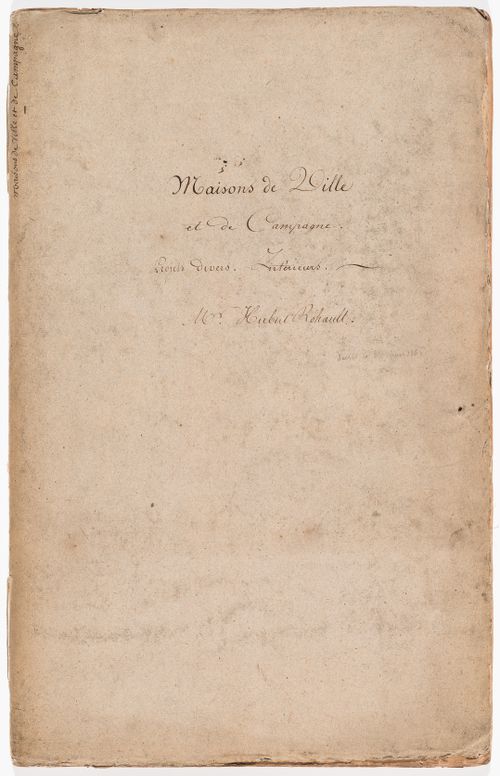
- This album consists primarily of preliminary and design development drawings for diverse projects - mostly domestic - from the early years of Hubert Rohault de Fleury's career. Some of the fifteen more finished drawings in wash and watercolour are probably presentation drawings. Many of the drawings are inscribed with illegible or partially legible notations concerning the project's location, client, date and other particulars. There are seven drawings for a house on rue d'Aguesseau, Paris, probably the Rohault de Fleury family residence (DR1974:0002:035:002 - DR1974:OOO2:035:006 R/V) and several drawings for a house for Rohault de Fleury's uncle on rue Saint-Romain, Paris (DR1974:0002:035:012 V). Several drawings are after plates published in Durand's "Précis des Leçons d'architecture données à l'école Royale Polytechnique (1802-1805)": plans on drawings DR1974:0002:035:011 V, DR1974:0002:035:012 R are adapted from plate 25 and combined with façades designed by Rohault de Fleury, and drawing DR1974:0002:035:013 R is based on an engraving by Charles-Pierre-Joseph Normand (pl. 23) of Hôtel Lathuille in Paris which was designed by Jean-Nicolas-Louis Durand (1788). Perspective sketches and plans are included for the restoration of a château in Rocheux [?] for M. le Trône (DR1974:0002:035:017 R) and for the renovation for the house at Domaine de la Vallée (DR1974:0002:035:020). The drawing for a country villa was executed in 1804, while Rohault de Fleury was in Rome studying at the French Academy (DR1974:0002:035:021 R). The conceptual drawing of a small "orchestre" and the elevations of a gallery and portico gate are inscribed "Jardin du Frascati", and are perhaps travel sketches or projects executed while Rohault de Fleury was in Rome (DR1974:0002:035:032 V, DR1974:002:035:033 R, and DR1974:0002:035:034). Also included in the album are two plans for part of the Passage du saumon in Paris (DR1974:0002:035:014 R), a plan, elevation and section for a rustic pavilion for M. Abrial (DR1974:0002:035:024 V), a plan for a shepherd's house in St. Cueufin [?] (DR1974:0002:035:021 V), a house for M. Quitton in Paris (DR1974:0002:035:026 - DR1974:0002:035:027), a section, elevation and plan for a sheepfold (DR1974:0002:035:033 V) and a perspective for a rustic cabin (DR1974:0002:035:034). The album also contains a number of drawings for Empire-style interior design projects: interior wall elevations, furniture drawings, and plans, elevations and perspectives for a bed alcove.
DR1974:0002:035:001-034
Description:
- This album consists primarily of preliminary and design development drawings for diverse projects - mostly domestic - from the early years of Hubert Rohault de Fleury's career. Some of the fifteen more finished drawings in wash and watercolour are probably presentation drawings. Many of the drawings are inscribed with illegible or partially legible notations concerning the project's location, client, date and other particulars. There are seven drawings for a house on rue d'Aguesseau, Paris, probably the Rohault de Fleury family residence (DR1974:0002:035:002 - DR1974:OOO2:035:006 R/V) and several drawings for a house for Rohault de Fleury's uncle on rue Saint-Romain, Paris (DR1974:0002:035:012 V). Several drawings are after plates published in Durand's "Précis des Leçons d'architecture données à l'école Royale Polytechnique (1802-1805)": plans on drawings DR1974:0002:035:011 V, DR1974:0002:035:012 R are adapted from plate 25 and combined with façades designed by Rohault de Fleury, and drawing DR1974:0002:035:013 R is based on an engraving by Charles-Pierre-Joseph Normand (pl. 23) of Hôtel Lathuille in Paris which was designed by Jean-Nicolas-Louis Durand (1788). Perspective sketches and plans are included for the restoration of a château in Rocheux [?] for M. le Trône (DR1974:0002:035:017 R) and for the renovation for the house at Domaine de la Vallée (DR1974:0002:035:020). The drawing for a country villa was executed in 1804, while Rohault de Fleury was in Rome studying at the French Academy (DR1974:0002:035:021 R). The conceptual drawing of a small "orchestre" and the elevations of a gallery and portico gate are inscribed "Jardin du Frascati", and are perhaps travel sketches or projects executed while Rohault de Fleury was in Rome (DR1974:0002:035:032 V, DR1974:002:035:033 R, and DR1974:0002:035:034). Also included in the album are two plans for part of the Passage du saumon in Paris (DR1974:0002:035:014 R), a plan, elevation and section for a rustic pavilion for M. Abrial (DR1974:0002:035:024 V), a plan for a shepherd's house in St. Cueufin [?] (DR1974:0002:035:021 V), a house for M. Quitton in Paris (DR1974:0002:035:026 - DR1974:0002:035:027), a section, elevation and plan for a sheepfold (DR1974:0002:035:033 V) and a perspective for a rustic cabin (DR1974:0002:035:034). The album also contains a number of drawings for Empire-style interior design projects: interior wall elevations, furniture drawings, and plans, elevations and perspectives for a bed alcove.
People:
Subject:
architecture, landscape architecture, interior design
architecture, landscape architecture, interior design
Date:
early 19th century
early 19th century
Title:
Album of drawings, mostly for French town and country houses, including some drawings for interiors and furniture, and one drawing for the Passage du saumon, Paris
Actions:
DR1974:0002:035:001-034
Description:
- This album consists primarily of preliminary and design development drawings for diverse projects - mostly domestic - from the early years of Hubert Rohault de Fleury's career. Some of the fifteen more finished drawings in wash and watercolour are probably presentation drawings. Many of the drawings are inscribed with illegible or partially legible notations concerning the project's location, client, date and other particulars. There are seven drawings for a house on rue d'Aguesseau, Paris, probably the Rohault de Fleury family residence (DR1974:0002:035:002 - DR1974:OOO2:035:006 R/V) and several drawings for a house for Rohault de Fleury's uncle on rue Saint-Romain, Paris (DR1974:0002:035:012 V). Several drawings are after plates published in Durand's "Précis des Leçons d'architecture données à l'école Royale Polytechnique (1802-1805)": plans on drawings DR1974:0002:035:011 V, DR1974:0002:035:012 R are adapted from plate 25 and combined with façades designed by Rohault de Fleury, and drawing DR1974:0002:035:013 R is based on an engraving by Charles-Pierre-Joseph Normand (pl. 23) of Hôtel Lathuille in Paris which was designed by Jean-Nicolas-Louis Durand (1788). Perspective sketches and plans are included for the restoration of a château in Rocheux [?] for M. le Trône (DR1974:0002:035:017 R) and for the renovation for the house at Domaine de la Vallée (DR1974:0002:035:020). The drawing for a country villa was executed in 1804, while Rohault de Fleury was in Rome studying at the French Academy (DR1974:0002:035:021 R). The conceptual drawing of a small "orchestre" and the elevations of a gallery and portico gate are inscribed "Jardin du Frascati", and are perhaps travel sketches or projects executed while Rohault de Fleury was in Rome (DR1974:0002:035:032 V, DR1974:002:035:033 R, and DR1974:0002:035:034). Also included in the album are two plans for part of the Passage du saumon in Paris (DR1974:0002:035:014 R), a plan, elevation and section for a rustic pavilion for M. Abrial (DR1974:0002:035:024 V), a plan for a shepherd's house in St. Cueufin [?] (DR1974:0002:035:021 V), a house for M. Quitton in Paris (DR1974:0002:035:026 - DR1974:0002:035:027), a section, elevation and plan for a sheepfold (DR1974:0002:035:033 V) and a perspective for a rustic cabin (DR1974:0002:035:034). The album also contains a number of drawings for Empire-style interior design projects: interior wall elevations, furniture drawings, and plans, elevations and perspectives for a bed alcove.
Album of drawings, mostly for French town and country houses, including some drawings for interiors and furniture, and one drawing for the Passage du saumon, Paris
Actions:
DR1974:0002:035:001-034
Description:
- This album consists primarily of preliminary and design development drawings for diverse projects - mostly domestic - from the early years of Hubert Rohault de Fleury's career. Some of the fifteen more finished drawings in wash and watercolour are probably presentation drawings. Many of the drawings are inscribed with illegible or partially legible notations concerning the project's location, client, date and other particulars. There are seven drawings for a house on rue d'Aguesseau, Paris, probably the Rohault de Fleury family residence (DR1974:0002:035:002 - DR1974:OOO2:035:006 R/V) and several drawings for a house for Rohault de Fleury's uncle on rue Saint-Romain, Paris (DR1974:0002:035:012 V). Several drawings are after plates published in Durand's "Précis des Leçons d'architecture données à l'école Royale Polytechnique (1802-1805)": plans on drawings DR1974:0002:035:011 V, DR1974:0002:035:012 R are adapted from plate 25 and combined with façades designed by Rohault de Fleury, and drawing DR1974:0002:035:013 R is based on an engraving by Charles-Pierre-Joseph Normand (pl. 23) of Hôtel Lathuille in Paris which was designed by Jean-Nicolas-Louis Durand (1788). Perspective sketches and plans are included for the restoration of a château in Rocheux [?] for M. le Trône (DR1974:0002:035:017 R) and for the renovation for the house at Domaine de la Vallée (DR1974:0002:035:020). The drawing for a country villa was executed in 1804, while Rohault de Fleury was in Rome studying at the French Academy (DR1974:0002:035:021 R). The conceptual drawing of a small "orchestre" and the elevations of a gallery and portico gate are inscribed "Jardin du Frascati", and are perhaps travel sketches or projects executed while Rohault de Fleury was in Rome (DR1974:0002:035:032 V, DR1974:002:035:033 R, and DR1974:0002:035:034). Also included in the album are two plans for part of the Passage du saumon in Paris (DR1974:0002:035:014 R), a plan, elevation and section for a rustic pavilion for M. Abrial (DR1974:0002:035:024 V), a plan for a shepherd's house in St. Cueufin [?] (DR1974:0002:035:021 V), a house for M. Quitton in Paris (DR1974:0002:035:026 - DR1974:0002:035:027), a section, elevation and plan for a sheepfold (DR1974:0002:035:033 V) and a perspective for a rustic cabin (DR1974:0002:035:034). The album also contains a number of drawings for Empire-style interior design projects: interior wall elevations, furniture drawings, and plans, elevations and perspectives for a bed alcove.
Form:
drawings
drawings
Date:
early 19th century
early 19th century
People:
Subject:
architecture, landscape architecture, interior design
architecture, landscape architecture, interior design
Form:
drawings, textual records, works of art
drawings, textual records, works of art
Actions:
Reference number:
DR1974:0002:011:001-089
Description:
- This album contains mostly design development and presentation drawings for the conversion or renovation of several Parisan hôtel particuliers by Hubert Rohault de Fleury, and for the Rohault de Fleury family house, 12-14 rue d'Aguesseau, Paris. Also included are four prints of British country seats. The drawings - mostly plans - for hôtel particuliers include: alterations to the Hôtel du ministère de la Guerre, perhaps the initial conversion of the Hôtel du Maine into government offices (DR1974:0002:011:003 - DR1974:0002:011:005); alterations to Hôtel de Rothelin-Charolais (Hôtel de Conti) as offices for the Ministère de l'intérieur (DR1974:0002:011:006 - DR1974:0002:011:009); the conversion of Hôtel de Soyécourt into gendarmerie barracks (DR1974:0002:011:017 - DR1974:0002:011:027 and DR1974:0002:011:089); and the alterations to Hôtel de la Colonnade (Grand and Petit Hôtels de Wagram) as offices for the Ministère des affaires étrangères (DR1974:0002:011:028 - DR1974:0002:011:042). Letter DR1974:0002:011:037 R/V apparently concerns the alterations to Hôtel de la Colonnade. The album contains drawings for several other hôtels - Hôtel de Lorge, Petit hôtel de Nivernais, Hôtel de Bouillon, and an hôtel on rue des Quatre-Fils. The purpose of these drawings has not been determined. Drawings for the Rohault de Fleury family house include: 22 graphite design development drawings with dimensions, calculations and notes - mostly plans and elevations; seven finished watercolour presentation drawings - plans, sections and elevations; two interior perspectives; and one drawing for the roof structures (DR1974:0002:011:050 - DR1974:0002:011:083). The coloured sections and the interior perspective drawings show the Empire style interior decoration, including furnishings (DR1974:0002:011:080 - DR1974:0002:011:082 R and DR1974:0002:011:083 R). The four prints are part of a series of views of English country seats by William Henry Toms after Thomas Badeslade and William Winstanley printed during the mid 18th century: Hawarden Castle and the adjacent Broadlane Hall, Wales, seat of Sir John Glynne; Erddig (house), Wales, seat of Simon Yorke; Hather Thorpe (house), Lincolnshire, England, seat of Sir Michael Newton; and Rushton Hall, Northamptonshire, England, seat of Viscount Cullen (DR1974:0002:011:085 - DR1974:0002:011:088). The album also includes: three drawings for a château for M. le marquis de la Sainte-Aulaire, designed by Perrot, the first of which is possibly for proposed additions by Hubert Rohault de Fleury (DR1974:0002:011:013); an elevation for a temporary altar; a cost estimate for a country cottage; six drawings for an unidentified country house; and a site plan of the village [?] and vicinity of Chailly, France for Mr. Pierre Jacques Le Roy.
DR1974:0002:011:001-089
Description:
- This album contains mostly design development and presentation drawings for the conversion or renovation of several Parisan hôtel particuliers by Hubert Rohault de Fleury, and for the Rohault de Fleury family house, 12-14 rue d'Aguesseau, Paris. Also included are four prints of British country seats. The drawings - mostly plans - for hôtel particuliers include: alterations to the Hôtel du ministère de la Guerre, perhaps the initial conversion of the Hôtel du Maine into government offices (DR1974:0002:011:003 - DR1974:0002:011:005); alterations to Hôtel de Rothelin-Charolais (Hôtel de Conti) as offices for the Ministère de l'intérieur (DR1974:0002:011:006 - DR1974:0002:011:009); the conversion of Hôtel de Soyécourt into gendarmerie barracks (DR1974:0002:011:017 - DR1974:0002:011:027 and DR1974:0002:011:089); and the alterations to Hôtel de la Colonnade (Grand and Petit Hôtels de Wagram) as offices for the Ministère des affaires étrangères (DR1974:0002:011:028 - DR1974:0002:011:042). Letter DR1974:0002:011:037 R/V apparently concerns the alterations to Hôtel de la Colonnade. The album contains drawings for several other hôtels - Hôtel de Lorge, Petit hôtel de Nivernais, Hôtel de Bouillon, and an hôtel on rue des Quatre-Fils. The purpose of these drawings has not been determined. Drawings for the Rohault de Fleury family house include: 22 graphite design development drawings with dimensions, calculations and notes - mostly plans and elevations; seven finished watercolour presentation drawings - plans, sections and elevations; two interior perspectives; and one drawing for the roof structures (DR1974:0002:011:050 - DR1974:0002:011:083). The coloured sections and the interior perspective drawings show the Empire style interior decoration, including furnishings (DR1974:0002:011:080 - DR1974:0002:011:082 R and DR1974:0002:011:083 R). The four prints are part of a series of views of English country seats by William Henry Toms after Thomas Badeslade and William Winstanley printed during the mid 18th century: Hawarden Castle and the adjacent Broadlane Hall, Wales, seat of Sir John Glynne; Erddig (house), Wales, seat of Simon Yorke; Hather Thorpe (house), Lincolnshire, England, seat of Sir Michael Newton; and Rushton Hall, Northamptonshire, England, seat of Viscount Cullen (DR1974:0002:011:085 - DR1974:0002:011:088). The album also includes: three drawings for a château for M. le marquis de la Sainte-Aulaire, designed by Perrot, the first of which is possibly for proposed additions by Hubert Rohault de Fleury (DR1974:0002:011:013); an elevation for a temporary altar; a cost estimate for a country cottage; six drawings for an unidentified country house; and a site plan of the village [?] and vicinity of Chailly, France for Mr. Pierre Jacques Le Roy.
People:
Subject:
architecture, landscape architecture, temporary architecture, interior design, military, topographic
architecture, landscape architecture, temporary architecture, interior design, military, topographic
Date:
1755-1849, manuscripts written between 1792-1849, printed between ca. 1740-1849
1755-1849, manuscripts written between 1792-1849, printed between ca. 1740-1849
Title:
Album of drawings for alterations to several Parisian hôtel particuliers and the Rohault de Fleury family house, rue d'Aguesseau, Paris, and of prints of English country seats
Actions:
DR1974:0002:011:001-089
Description:
- This album contains mostly design development and presentation drawings for the conversion or renovation of several Parisan hôtel particuliers by Hubert Rohault de Fleury, and for the Rohault de Fleury family house, 12-14 rue d'Aguesseau, Paris. Also included are four prints of British country seats. The drawings - mostly plans - for hôtel particuliers include: alterations to the Hôtel du ministère de la Guerre, perhaps the initial conversion of the Hôtel du Maine into government offices (DR1974:0002:011:003 - DR1974:0002:011:005); alterations to Hôtel de Rothelin-Charolais (Hôtel de Conti) as offices for the Ministère de l'intérieur (DR1974:0002:011:006 - DR1974:0002:011:009); the conversion of Hôtel de Soyécourt into gendarmerie barracks (DR1974:0002:011:017 - DR1974:0002:011:027 and DR1974:0002:011:089); and the alterations to Hôtel de la Colonnade (Grand and Petit Hôtels de Wagram) as offices for the Ministère des affaires étrangères (DR1974:0002:011:028 - DR1974:0002:011:042). Letter DR1974:0002:011:037 R/V apparently concerns the alterations to Hôtel de la Colonnade. The album contains drawings for several other hôtels - Hôtel de Lorge, Petit hôtel de Nivernais, Hôtel de Bouillon, and an hôtel on rue des Quatre-Fils. The purpose of these drawings has not been determined. Drawings for the Rohault de Fleury family house include: 22 graphite design development drawings with dimensions, calculations and notes - mostly plans and elevations; seven finished watercolour presentation drawings - plans, sections and elevations; two interior perspectives; and one drawing for the roof structures (DR1974:0002:011:050 - DR1974:0002:011:083). The coloured sections and the interior perspective drawings show the Empire style interior decoration, including furnishings (DR1974:0002:011:080 - DR1974:0002:011:082 R and DR1974:0002:011:083 R). The four prints are part of a series of views of English country seats by William Henry Toms after Thomas Badeslade and William Winstanley printed during the mid 18th century: Hawarden Castle and the adjacent Broadlane Hall, Wales, seat of Sir John Glynne; Erddig (house), Wales, seat of Simon Yorke; Hather Thorpe (house), Lincolnshire, England, seat of Sir Michael Newton; and Rushton Hall, Northamptonshire, England, seat of Viscount Cullen (DR1974:0002:011:085 - DR1974:0002:011:088). The album also includes: three drawings for a château for M. le marquis de la Sainte-Aulaire, designed by Perrot, the first of which is possibly for proposed additions by Hubert Rohault de Fleury (DR1974:0002:011:013); an elevation for a temporary altar; a cost estimate for a country cottage; six drawings for an unidentified country house; and a site plan of the village [?] and vicinity of Chailly, France for Mr. Pierre Jacques Le Roy.
Album of drawings for alterations to several Parisian hôtel particuliers and the Rohault de Fleury family house, rue d'Aguesseau, Paris, and of prints of English country seats
Actions:
DR1974:0002:011:001-089
Description:
- This album contains mostly design development and presentation drawings for the conversion or renovation of several Parisan hôtel particuliers by Hubert Rohault de Fleury, and for the Rohault de Fleury family house, 12-14 rue d'Aguesseau, Paris. Also included are four prints of British country seats. The drawings - mostly plans - for hôtel particuliers include: alterations to the Hôtel du ministère de la Guerre, perhaps the initial conversion of the Hôtel du Maine into government offices (DR1974:0002:011:003 - DR1974:0002:011:005); alterations to Hôtel de Rothelin-Charolais (Hôtel de Conti) as offices for the Ministère de l'intérieur (DR1974:0002:011:006 - DR1974:0002:011:009); the conversion of Hôtel de Soyécourt into gendarmerie barracks (DR1974:0002:011:017 - DR1974:0002:011:027 and DR1974:0002:011:089); and the alterations to Hôtel de la Colonnade (Grand and Petit Hôtels de Wagram) as offices for the Ministère des affaires étrangères (DR1974:0002:011:028 - DR1974:0002:011:042). Letter DR1974:0002:011:037 R/V apparently concerns the alterations to Hôtel de la Colonnade. The album contains drawings for several other hôtels - Hôtel de Lorge, Petit hôtel de Nivernais, Hôtel de Bouillon, and an hôtel on rue des Quatre-Fils. The purpose of these drawings has not been determined. Drawings for the Rohault de Fleury family house include: 22 graphite design development drawings with dimensions, calculations and notes - mostly plans and elevations; seven finished watercolour presentation drawings - plans, sections and elevations; two interior perspectives; and one drawing for the roof structures (DR1974:0002:011:050 - DR1974:0002:011:083). The coloured sections and the interior perspective drawings show the Empire style interior decoration, including furnishings (DR1974:0002:011:080 - DR1974:0002:011:082 R and DR1974:0002:011:083 R). The four prints are part of a series of views of English country seats by William Henry Toms after Thomas Badeslade and William Winstanley printed during the mid 18th century: Hawarden Castle and the adjacent Broadlane Hall, Wales, seat of Sir John Glynne; Erddig (house), Wales, seat of Simon Yorke; Hather Thorpe (house), Lincolnshire, England, seat of Sir Michael Newton; and Rushton Hall, Northamptonshire, England, seat of Viscount Cullen (DR1974:0002:011:085 - DR1974:0002:011:088). The album also includes: three drawings for a château for M. le marquis de la Sainte-Aulaire, designed by Perrot, the first of which is possibly for proposed additions by Hubert Rohault de Fleury (DR1974:0002:011:013); an elevation for a temporary altar; a cost estimate for a country cottage; six drawings for an unidentified country house; and a site plan of the village [?] and vicinity of Chailly, France for Mr. Pierre Jacques Le Roy.
Form:
drawings, textual records, works of art
drawings, textual records, works of art
Date:
1755-1849, manuscripts written between 1792-1849, printed between ca. 1740-1849
1755-1849, manuscripts written between 1792-1849, printed between ca. 1740-1849
People:
Subject:
architecture, landscape architecture, temporary architecture, interior design, military, topographic
architecture, landscape architecture, temporary architecture, interior design, military, topographic
Form:
archives
Level of archival description:
Fonds
archives
Level of archival description:
Fonds
Reference number:
AP171
Synopsis:
This fonds documents the professional practice and activities of the Foreign Office Architects between 1989 and 2011, with a primary focus on their architectural projects. The documents in the fonds include drawings and plans, photographic materials, presentation panels, models, textual records, and digital files relating to 192 projects and international exhibitions . Additionally, the fonds includes material relating to publications, office activities, and research.
AP171
Synopsis:
This fonds documents the professional practice and activities of the Foreign Office Architects between 1989 and 2011, with a primary focus on their architectural projects. The documents in the fonds include drawings and plans, photographic materials, presentation panels, models, textual records, and digital files relating to 192 projects and international exhibitions . Additionally, the fonds includes material relating to publications, office activities, and research.
People:
Date:
circa 1983-2011
circa 1983-2011
Title:
Foreign Office Architects fonds
Actions:
AP171
Synopsis:
This fonds documents the professional practice and activities of the Foreign Office Architects between 1989 and 2011, with a primary focus on their architectural projects. The documents in the fonds include drawings and plans, photographic materials, presentation panels, models, textual records, and digital files relating to 192 projects and international exhibitions . Additionally, the fonds includes material relating to publications, office activities, and research.
Foreign Office Architects fonds
Actions:
AP171
Synopsis:
This fonds documents the professional practice and activities of the Foreign Office Architects between 1989 and 2011, with a primary focus on their architectural projects. The documents in the fonds include drawings and plans, photographic materials, presentation panels, models, textual records, and digital files relating to 192 projects and international exhibitions . Additionally, the fonds includes material relating to publications, office activities, and research.
Form:
archives
Level of archival description:
Fonds
archives
Level of archival description:
Fonds
Date:
circa 1983-2011
circa 1983-2011
People:
Form:
archives
Level of archival description:
Fonds
archives
Level of archival description:
Fonds
Reference number:
AP103
Synopsis:
The IFCCA Prize Competition for the Design of Cities fonds primarily documents the activities involved in the organization and realization of the Prize Competition, as well as the most active years of the IFCCA. The fonds is made up of primarily of textual documents dating from 1992 to 2001. The Prize Competition challenged architects from around the world to rethink and redesign a site on the western edge of Manhattan, New York City, New York. Five finalists were chosen by a jury of well known figures in the architecture field, and given four months to complete their proposals. Peter Eisenman, Peter Eisenman Architects, New York City, was declared the winner on 28 June 1999. Two exhibitions of the work of the finalists, in New York City (1999, with an accompanying colloquium) and at the CCA in Montreal (2000-2001) followed the Prize Competition.
AP103
Synopsis:
The IFCCA Prize Competition for the Design of Cities fonds primarily documents the activities involved in the organization and realization of the Prize Competition, as well as the most active years of the IFCCA. The fonds is made up of primarily of textual documents dating from 1992 to 2001. The Prize Competition challenged architects from around the world to rethink and redesign a site on the western edge of Manhattan, New York City, New York. Five finalists were chosen by a jury of well known figures in the architecture field, and given four months to complete their proposals. Peter Eisenman, Peter Eisenman Architects, New York City, was declared the winner on 28 June 1999. Two exhibitions of the work of the finalists, in New York City (1999, with an accompanying colloquium) and at the CCA in Montreal (2000-2001) followed the Prize Competition.
People:
Date:
1992-2001, predominant 1996-2001
1992-2001, predominant 1996-2001
Title:
IFCCA Prize Competition for the Design of Cities fonds
Actions:
AP103
Synopsis:
The IFCCA Prize Competition for the Design of Cities fonds primarily documents the activities involved in the organization and realization of the Prize Competition, as well as the most active years of the IFCCA. The fonds is made up of primarily of textual documents dating from 1992 to 2001. The Prize Competition challenged architects from around the world to rethink and redesign a site on the western edge of Manhattan, New York City, New York. Five finalists were chosen by a jury of well known figures in the architecture field, and given four months to complete their proposals. Peter Eisenman, Peter Eisenman Architects, New York City, was declared the winner on 28 June 1999. Two exhibitions of the work of the finalists, in New York City (1999, with an accompanying colloquium) and at the CCA in Montreal (2000-2001) followed the Prize Competition.
IFCCA Prize Competition for the Design of Cities fonds
Actions:
AP103
Synopsis:
The IFCCA Prize Competition for the Design of Cities fonds primarily documents the activities involved in the organization and realization of the Prize Competition, as well as the most active years of the IFCCA. The fonds is made up of primarily of textual documents dating from 1992 to 2001. The Prize Competition challenged architects from around the world to rethink and redesign a site on the western edge of Manhattan, New York City, New York. Five finalists were chosen by a jury of well known figures in the architecture field, and given four months to complete their proposals. Peter Eisenman, Peter Eisenman Architects, New York City, was declared the winner on 28 June 1999. Two exhibitions of the work of the finalists, in New York City (1999, with an accompanying colloquium) and at the CCA in Montreal (2000-2001) followed the Prize Competition.
Form:
archives
Level of archival description:
Fonds
archives
Level of archival description:
Fonds
Date:
1992-2001, predominant 1996-2001
1992-2001, predominant 1996-2001
People:
Form:
archives
Level of archival description:
Fonds
archives
Level of archival description:
Fonds
Reference number:
AP140
Synopsis:
The James Stirling/Michael Wilford fonds documents the personal activities and professional practice of architects James Stirling and Michael Wilford. It pertains to their work as architectural students, and to the architectural and urban planning projects by the successive firms of Stirling and Gowan; James Stirling; James Stirling and Partner; James Stirling, Michael Wilford, and Associates; Michael Wilford and Partners; Michael Wilford GmbH; and Wilford Schupp Architekten GmbH, as well as by the firms of Michael Wilford Architects and Michael Wilford + MUMA. Significant British and German projects designed by the firms of James Stirling and Partner and successive firms are particularly well represented in the fonds.
AP140
Synopsis:
The James Stirling/Michael Wilford fonds documents the personal activities and professional practice of architects James Stirling and Michael Wilford. It pertains to their work as architectural students, and to the architectural and urban planning projects by the successive firms of Stirling and Gowan; James Stirling; James Stirling and Partner; James Stirling, Michael Wilford, and Associates; Michael Wilford and Partners; Michael Wilford GmbH; and Wilford Schupp Architekten GmbH, as well as by the firms of Michael Wilford Architects and Michael Wilford + MUMA. Significant British and German projects designed by the firms of James Stirling and Partner and successive firms are particularly well represented in the fonds.
People:
Date:
circa 1939-2004
circa 1939-2004
Title:
James Stirling / Michael Wilford fonds
Actions:
AP140
Synopsis:
The James Stirling/Michael Wilford fonds documents the personal activities and professional practice of architects James Stirling and Michael Wilford. It pertains to their work as architectural students, and to the architectural and urban planning projects by the successive firms of Stirling and Gowan; James Stirling; James Stirling and Partner; James Stirling, Michael Wilford, and Associates; Michael Wilford and Partners; Michael Wilford GmbH; and Wilford Schupp Architekten GmbH, as well as by the firms of Michael Wilford Architects and Michael Wilford + MUMA. Significant British and German projects designed by the firms of James Stirling and Partner and successive firms are particularly well represented in the fonds.
James Stirling / Michael Wilford fonds
Actions:
AP140
Synopsis:
The James Stirling/Michael Wilford fonds documents the personal activities and professional practice of architects James Stirling and Michael Wilford. It pertains to their work as architectural students, and to the architectural and urban planning projects by the successive firms of Stirling and Gowan; James Stirling; James Stirling and Partner; James Stirling, Michael Wilford, and Associates; Michael Wilford and Partners; Michael Wilford GmbH; and Wilford Schupp Architekten GmbH, as well as by the firms of Michael Wilford Architects and Michael Wilford + MUMA. Significant British and German projects designed by the firms of James Stirling and Partner and successive firms are particularly well represented in the fonds.
Form:
archives
Level of archival description:
Fonds
archives
Level of archival description:
Fonds
Date:
circa 1939-2004
circa 1939-2004
People:
Form:
books
books
Actions:
Holdings:
Description:
79 p. : chiefly color illustrations ; 23 cm
Description:
79 p. : chiefly color illustrations ; 23 cm
Author:
Subject:
Publication:
Paris : Assouline, ©1999.
Paris : Assouline, ©1999.
Title:
Style Empire / François Baudot.
Actions:
Holdings:
Description:
79 p. : chiefly color illustrations ; 23 cm
Style Empire / François Baudot.
Actions:
Holdings:
Description:
79 p. : chiefly color illustrations ; 23 cm
Form:
books
books
Publication:
Paris : Assouline, ©1999.
Paris : Assouline, ©1999.
Author:
Subject:
Form:
books
books
Actions:
Holdings:
Description:
264 pages : illustrations (some color), color maps, plans (some color) ; 23 cm
Description:
264 pages : illustrations (some color), color maps, plans (some color) ; 23 cm
Author:
Subject:
Publication:
New York : Actar Publishers, [2017], ©2017
New York : Actar Publishers, [2017], ©2017
Title:
Empire, state & building / Kiel Moe.
Actions:
Holdings:
Description:
264 pages : illustrations (some color), color maps, plans (some color) ; 23 cm
Empire, state & building / Kiel Moe.
Actions:
Holdings:
Description:
264 pages : illustrations (some color), color maps, plans (some color) ; 23 cm
Form:
books
books
Publication:
New York : Actar Publishers, [2017], ©2017
New York : Actar Publishers, [2017], ©2017
Author:
Subject:


