


4907 Results
Form:
books
books
Actions:
Price:
$33.50
(available to order)
Summary:
Over fifty years after the Situationist International appeared, its legacy continues to inspire activists, artists and theorists around the world. Such a legend has accrued to this movement that the story of the SI now demands to be told in a contemporary voice capable of putting it into the context of twenty-first-century struggles. McKenzie Wark delves into the(...)
$33.50
(available to order)
Summary:
Over fifty years after the Situationist International appeared, its legacy continues to inspire activists, artists and theorists around the world. Such a legend has accrued to this movement that the story of the SI now demands to be told in a contemporary voice capable of putting it into the context of twenty-first-century struggles. McKenzie Wark delves into the(...)
Title:
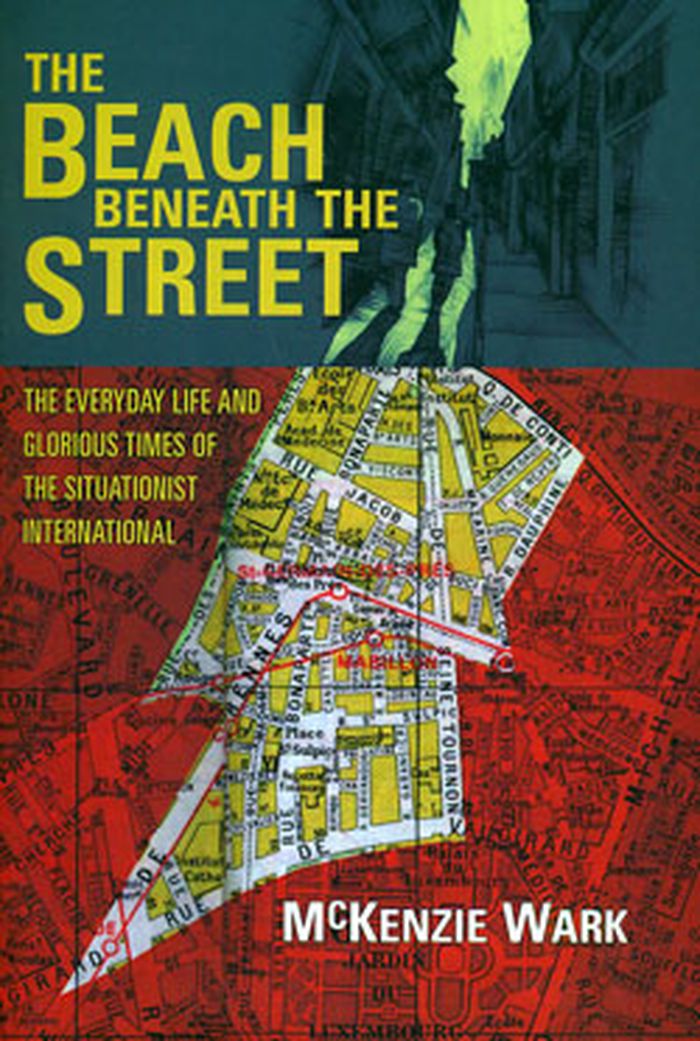
The beach beneath the street : the everyday life and glorious times of the situationist international
Actions:
Price:
$33.50
(available to order)
Summary:
Over fifty years after the Situationist International appeared, its legacy continues to inspire activists, artists and theorists around the world. Such a legend has accrued to this movement that the story of the SI now demands to be told in a contemporary voice capable of putting it into the context of twenty-first-century struggles. McKenzie Wark delves into the Situationists' unacknowledged diversity, revealing a world as rich in practice as it is in theory. Tracing the group's development from the bohemian Paris of the '50s to the explosive days of May '68, Wark's take on the Situationists is biographically and historically rich, presenting the group as an ensemble creation, rather than the brainchild and dominion of its most famous member, Guy Debord. Roaming through Europe and the lives of those who made up the movement —including Constant, Asger Jorn, Michèle Bernstein, Alex Trocchi and Jacqueline De Jong —Wark uncovers an international movement riven with conflicting passions. Accessible to those who have only just discovered the Situationists and filled with new insights, The Beach Beneath the Street rereads the group's history in the light of our contemporary experience of communications, architecture, and everyday life. The Situationists tried to escape the world of twentieth-century spectacle and failed in the attempt. Wark argues that they may still help us to escape the twenty-first century, while we still can ...
The beach beneath the street : the everyday life and glorious times of the situationist international
Actions:
Price:
$33.50
(available to order)
Summary:
Over fifty years after the Situationist International appeared, its legacy continues to inspire activists, artists and theorists around the world. Such a legend has accrued to this movement that the story of the SI now demands to be told in a contemporary voice capable of putting it into the context of twenty-first-century struggles. McKenzie Wark delves into the Situationists' unacknowledged diversity, revealing a world as rich in practice as it is in theory. Tracing the group's development from the bohemian Paris of the '50s to the explosive days of May '68, Wark's take on the Situationists is biographically and historically rich, presenting the group as an ensemble creation, rather than the brainchild and dominion of its most famous member, Guy Debord. Roaming through Europe and the lives of those who made up the movement —including Constant, Asger Jorn, Michèle Bernstein, Alex Trocchi and Jacqueline De Jong —Wark uncovers an international movement riven with conflicting passions. Accessible to those who have only just discovered the Situationists and filled with new insights, The Beach Beneath the Street rereads the group's history in the light of our contemporary experience of communications, architecture, and everyday life. The Situationists tried to escape the world of twentieth-century spectacle and failed in the attempt. Wark argues that they may still help us to escape the twenty-first century, while we still can ...
Form:
books
books
Publication:
June 2011
June 2011
Subject:
Situationism
Situationism
Form:
books
books
Actions:
Price:
$30.00
(available to order)
Summary:
One of the twentieth century's most influential and iconoclastic protagonists, John Cage (1912-1992) may be described not so much as a composer, artist and author, as a thinker who applied his ideas equivalently to sound, visual art and writing. As with his music, the use of chance operations--in particular via the Chinese "Book of Changes," or "I Ching" - was central to(...)
$30.00
(available to order)
Summary:
One of the twentieth century's most influential and iconoclastic protagonists, John Cage (1912-1992) may be described not so much as a composer, artist and author, as a thinker who applied his ideas equivalently to sound, visual art and writing. As with his music, the use of chance operations--in particular via the Chinese "Book of Changes," or "I Ching" - was central to(...)
Title:
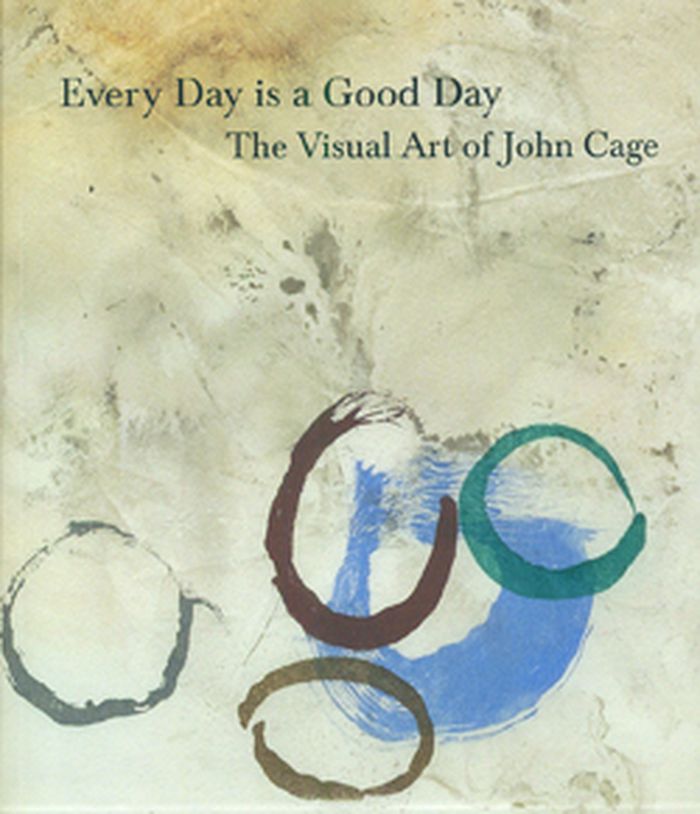
Everyday is a good day : The visual art of John Cage
Actions:
Price:
$30.00
(available to order)
Summary:
One of the twentieth century's most influential and iconoclastic protagonists, John Cage (1912-1992) may be described not so much as a composer, artist and author, as a thinker who applied his ideas equivalently to sound, visual art and writing. As with his music, the use of chance operations--in particular via the Chinese "Book of Changes," or "I Ching" - was central to Cage's approach to visual art, determining technique, the placement of forms and even tonal values. "Every Day is a Good Day" provides the first broad assessment of Cage's art, and is fully illustrated with plates of his drawings, watercolors and prints, including series such as "Where R=Ryoanji" (1983-92). Cage's working methods and philosophies are brought to light in new interviews with key collaborators: printmaker and writer Kathan Brown, founder of Crown Point Press; Laura Kuhn, Director of the John Cage Trust; artist Ray Kass; and Julie Lazar, curator of Cage's composition for a museum, "Rolywholyover: A Circus." Extracts from a 1966 interview between John Cage and critic Irving Sandler are also reproduced. At the heart of the book is a "Companion to John Cage," a selection of quotes by Cage and notes on key themes and influences, all of which make it essential reading on this important figure of the twentieth-century avant garde.
Everyday is a good day : The visual art of John Cage
Actions:
Price:
$30.00
(available to order)
Summary:
One of the twentieth century's most influential and iconoclastic protagonists, John Cage (1912-1992) may be described not so much as a composer, artist and author, as a thinker who applied his ideas equivalently to sound, visual art and writing. As with his music, the use of chance operations--in particular via the Chinese "Book of Changes," or "I Ching" - was central to Cage's approach to visual art, determining technique, the placement of forms and even tonal values. "Every Day is a Good Day" provides the first broad assessment of Cage's art, and is fully illustrated with plates of his drawings, watercolors and prints, including series such as "Where R=Ryoanji" (1983-92). Cage's working methods and philosophies are brought to light in new interviews with key collaborators: printmaker and writer Kathan Brown, founder of Crown Point Press; Laura Kuhn, Director of the John Cage Trust; artist Ray Kass; and Julie Lazar, curator of Cage's composition for a museum, "Rolywholyover: A Circus." Extracts from a 1966 interview between John Cage and critic Irving Sandler are also reproduced. At the heart of the book is a "Companion to John Cage," a selection of quotes by Cage and notes on key themes and influences, all of which make it essential reading on this important figure of the twentieth-century avant garde.
Form:
books
books
Publication:
July 2011
July 2011
Subject:
Contemporary Art Monographs
Contemporary Art Monographs
Form:
books
books
Title:
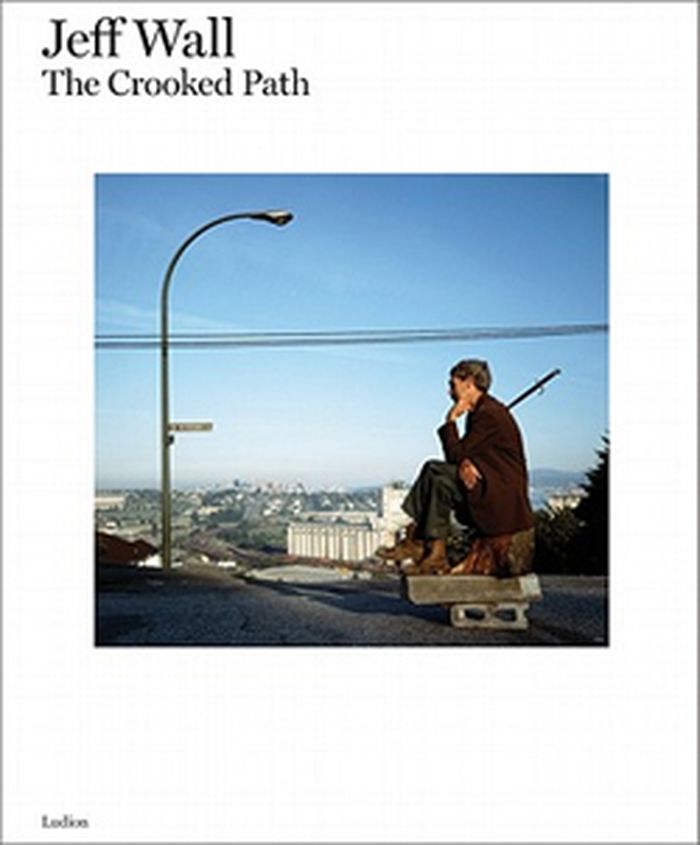
Jeff Wall: the crooked path
Jeff Wall: the crooked path
Actions:
Price:
$55.00
(available to order)
Summary:
The photography of Jeff Wall (born 1946) is consciously and profoundly saturated in the social: in the Vancouver art community from which he first emerged, fully formed, in the late 1970s; in the racial and gender politics of our times, which he analyses with marvelous clarity in his huge photographic light boxes that declare an equal status with painting through their(...)
$55.00
(available to order)
Summary:
The photography of Jeff Wall (born 1946) is consciously and profoundly saturated in the social: in the Vancouver art community from which he first emerged, fully formed, in the late 1970s; in the racial and gender politics of our times, which he analyses with marvelous clarity in his huge photographic light boxes that declare an equal status with painting through their(...)
Title:
Jeff Wall: the crooked path
Actions:
Price:
$55.00
(available to order)
Summary:
The photography of Jeff Wall (born 1946) is consciously and profoundly saturated in the social: in the Vancouver art community from which he first emerged, fully formed, in the late 1970s; in the racial and gender politics of our times, which he analyses with marvelous clarity in his huge photographic light boxes that declare an equal status with painting through their scale and their carefully plotted depth and grandeur; in the art history pantheon that informs his staged compositions, from Hokusai to Velásquez and Manet; and in his influence on at least two generations of photographers, most notably the Düsseldorf school (Andreas Gursky once cited Wall as “a great model for me” ). This publication examines the cultural context for Wall's tremendous achievement in photography. Wall himself has chosen 25 of his own photographs, taken between the late 1970s and the present, and has constellated them among the visionary company his work keeps, alongside reproductions of works by Marcel Duchamp, Diane Arbus, Eugene Atget, Wols, Andreas Gursky, David Claerbout, Thomas Struth, Frank Stella, Robert Smithson, Rodney Graham, Ian Wallace, Lawrence Wiener and R.W. Fassbinder. This book orients Wall's photography across ten themed chapters, each of which is prefaced with an interview with Wall by Hans De Wolf. Also included are testimonies and essays by fellow artists and art historians, such as Luc Tuymans, Lawrence Weiner, Michael Fried and David Campany.
Jeff Wall: the crooked path
Actions:
Price:
$55.00
(available to order)
Summary:
The photography of Jeff Wall (born 1946) is consciously and profoundly saturated in the social: in the Vancouver art community from which he first emerged, fully formed, in the late 1970s; in the racial and gender politics of our times, which he analyses with marvelous clarity in his huge photographic light boxes that declare an equal status with painting through their scale and their carefully plotted depth and grandeur; in the art history pantheon that informs his staged compositions, from Hokusai to Velásquez and Manet; and in his influence on at least two generations of photographers, most notably the Düsseldorf school (Andreas Gursky once cited Wall as “a great model for me” ). This publication examines the cultural context for Wall's tremendous achievement in photography. Wall himself has chosen 25 of his own photographs, taken between the late 1970s and the present, and has constellated them among the visionary company his work keeps, alongside reproductions of works by Marcel Duchamp, Diane Arbus, Eugene Atget, Wols, Andreas Gursky, David Claerbout, Thomas Struth, Frank Stella, Robert Smithson, Rodney Graham, Ian Wallace, Lawrence Wiener and R.W. Fassbinder. This book orients Wall's photography across ten themed chapters, each of which is prefaced with an interview with Wall by Hans De Wolf. Also included are testimonies and essays by fellow artists and art historians, such as Luc Tuymans, Lawrence Weiner, Michael Fried and David Campany.
Form:
books
books
Publication:
September 2011
September 2011
Subject:
Photography monographs
Photography monographs
Form:
books
books
Title:
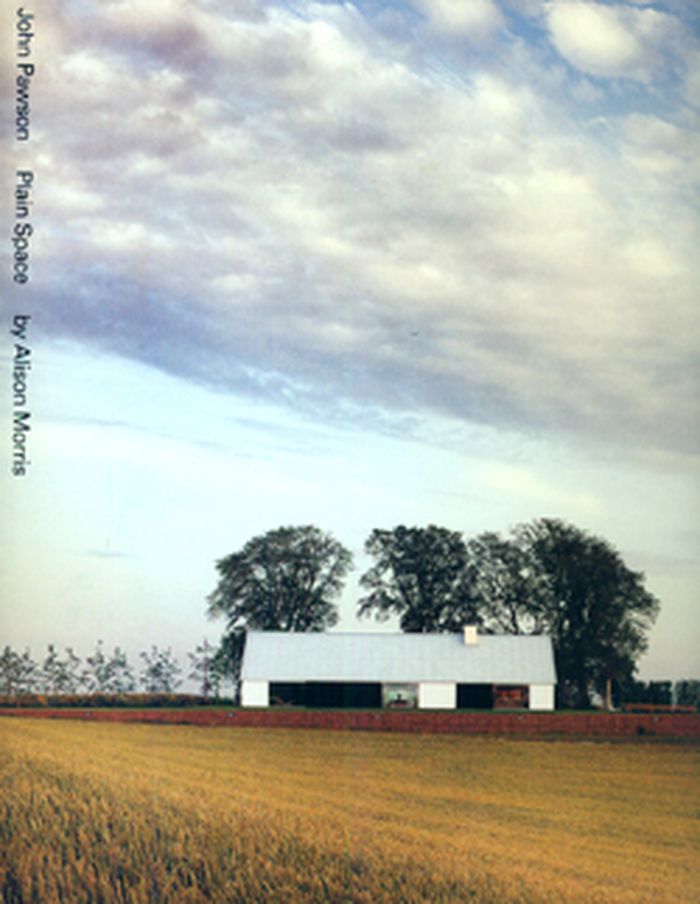
John Pawson: Plain space
John Pawson: Plain space
Actions:
Price:
$79.95
(available to order)
Summary:
John Pawson's work combines an essential simplicity with a keen attention to the details of everyday life and human experience. His pared-down yet luxurious houses and art galleries were his first projects to gain international attention, and his work has since included Calvin Klein's flagship store in New York, airport lounges for Cathay Pacific, and a kitchen for(...)
$79.95
(available to order)
Summary:
John Pawson's work combines an essential simplicity with a keen attention to the details of everyday life and human experience. His pared-down yet luxurious houses and art galleries were his first projects to gain international attention, and his work has since included Calvin Klein's flagship store in New York, airport lounges for Cathay Pacific, and a kitchen for(...)
Subject:
Architecture Monographs
Architecture Monographs
Publication:
September 2010
September 2010
Title:
John Pawson: Plain space
Actions:
Price:
$79.95
(available to order)
Summary:
John Pawson's work combines an essential simplicity with a keen attention to the details of everyday life and human experience. His pared-down yet luxurious houses and art galleries were his first projects to gain international attention, and his work has since included Calvin Klein's flagship store in New York, airport lounges for Cathay Pacific, and a kitchen for Obumex. In the last decade, the scope of his designs has broadened from objects and interiors to include houses, monasteries, pavilions and boats. This change in scale has given his office the opportunity to refine its minimalist aesthetic and further develop its ideas of a fundamental architecture based on the qualities of space, proportion, light and materials. Frequently these projects intervene in existing conditions to create spaces that are simultaneously simple and complex, timeless and contemporary: in the Novy Dvur Monastery in the Czech Republic, elements of the original baroque complex are combined with entirely new architecture to create a mysterious and beautiful sequence of spaces, and in the Baron House in Sweden the vernacular language of the area is refined and abstracted to create a truly modern home. Plain Space presents both this recent body of work and earlier projects from the perspective of someone who has had unique access to the work and archives of the office.
John Pawson: Plain space
Actions:
Price:
$79.95
(available to order)
Summary:
John Pawson's work combines an essential simplicity with a keen attention to the details of everyday life and human experience. His pared-down yet luxurious houses and art galleries were his first projects to gain international attention, and his work has since included Calvin Klein's flagship store in New York, airport lounges for Cathay Pacific, and a kitchen for Obumex. In the last decade, the scope of his designs has broadened from objects and interiors to include houses, monasteries, pavilions and boats. This change in scale has given his office the opportunity to refine its minimalist aesthetic and further develop its ideas of a fundamental architecture based on the qualities of space, proportion, light and materials. Frequently these projects intervene in existing conditions to create spaces that are simultaneously simple and complex, timeless and contemporary: in the Novy Dvur Monastery in the Czech Republic, elements of the original baroque complex are combined with entirely new architecture to create a mysterious and beautiful sequence of spaces, and in the Baron House in Sweden the vernacular language of the area is refined and abstracted to create a truly modern home. Plain Space presents both this recent body of work and earlier projects from the perspective of someone who has had unique access to the work and archives of the office.
Form:
books
books
Publication:
September 2010
September 2010
Subject:
Architecture Monographs
Architecture Monographs
Form:
audio
audio
Title:
Lattina.
Lattina.
Actions:
Description:
1 online resource.
Author:
Subject:
Publication:
[Place of publication not identified] : Lateral Addition, 2015.
[Place of publication not identified] : Lateral Addition, 2015.
Form:
audio
audio
Publication:
[Place of publication not identified] : Lateral Addition, 2015.
[Place of publication not identified] : Lateral Addition, 2015.
Author:
Subject:
Form:
books
books
Actions:
Holdings:
Description:
192 pages : illustrations ; 27 cm
Description:
192 pages : illustrations ; 27 cm
Author:
Subject:
Publication:
New York : Thames & Hudson in association with Cooper-Hewitt, National Design Museum, Smithsonian Institution, 2002.
New York : Thames & Hudson in association with Cooper-Hewitt, National Design Museum, Smithsonian Institution, 2002.
Title:
The invention of chic : Thérèse Bonney and Paris Moderne / Lisa Schlansker Kolosek.
Actions:
Holdings:
Description:
192 pages : illustrations ; 27 cm
The invention of chic : Thérèse Bonney and Paris Moderne / Lisa Schlansker Kolosek.
Actions:
Holdings:
Description:
192 pages : illustrations ; 27 cm
Form:
books
books
Publication:
New York : Thames & Hudson in association with Cooper-Hewitt, National Design Museum, Smithsonian Institution, 2002.
New York : Thames & Hudson in association with Cooper-Hewitt, National Design Museum, Smithsonian Institution, 2002.
Author:
Subject:
Form:
books
books
Actions:
Price:
$58.00
(available in store)
Summary:
From the 1960s onward, Allan Chasanoff (1936–2020) maintained a daily photographic practice, producing tens of thousands of images that pushed the limits of the medium and questioned its reliability as a document of reality. Preferring to experiment away from the art world, Chasanoff rarely exhibited his photographs, his art remaining unknown to all but a select circle of(...)
$58.00
(available in store)
Summary:
From the 1960s onward, Allan Chasanoff (1936–2020) maintained a daily photographic practice, producing tens of thousands of images that pushed the limits of the medium and questioned its reliability as a document of reality. Preferring to experiment away from the art world, Chasanoff rarely exhibited his photographs, his art remaining unknown to all but a select circle of(...)
Title:
Seeing and not believing: The photography of Allan Chasanoff
Actions:
Price:
$58.00
(available in store)
Summary:
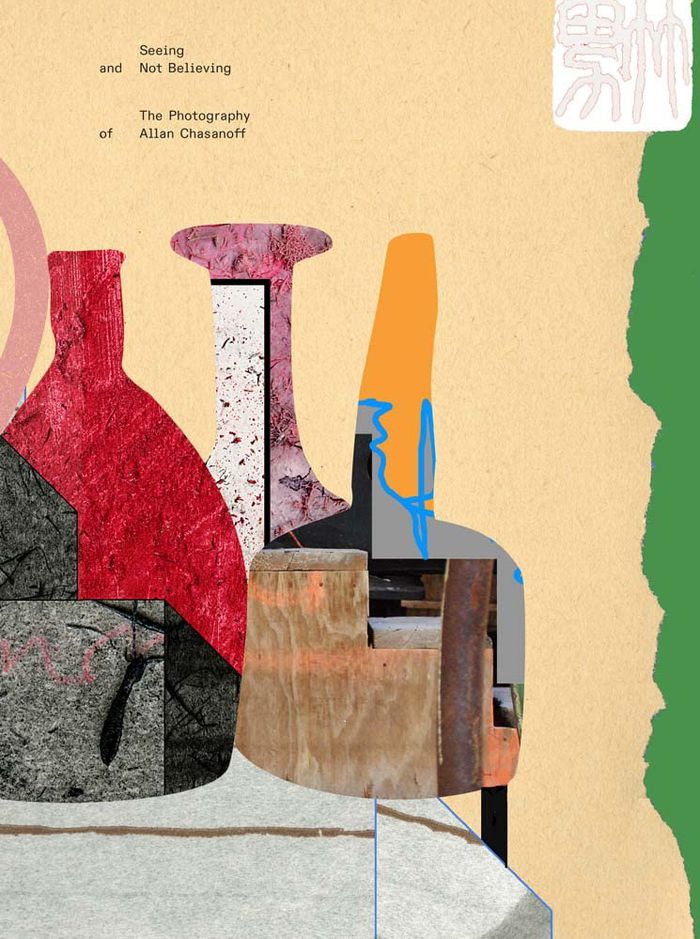
From the 1960s onward, Allan Chasanoff (1936–2020) maintained a daily photographic practice, producing tens of thousands of images that pushed the limits of the medium and questioned its reliability as a document of reality. Preferring to experiment away from the art world, Chasanoff rarely exhibited his photographs, his art remaining unknown to all but a select circle of friends and collaborators. This catalogue is the first to survey his beguiling work. Artist Mónika Sziládi, who worked as an archivist for Chasanoff, contributes an outline of Chasanoff’s life and practice, tracing the development of his art from his early experiments with light, shadow, and color in his lens-shot photographs to his late-career foray into 3D printing, which he viewed as the latest frontier of photography. Influenced by the ideas of Marshall McLuhan and Jacques Derrida, Chasanoff understood photographic images to be full of multivalent symbolism, and his art highlights the fluid nature of the medium. Using analog optical effects, such as blurring and other distortions, and on-screen tools to cut and layer digital images, Chasanoff created a wide range of pictures, some of which reference or appropriate the work of artists like Henri Matisse, Mark Rothko, or Giorgio Morandi. With nearly 200 plates organized into 7 thematic sections, ''Seeing and not believing'' brings Chasanoff’s contribution to postmodern photography to a wider audience and underlines how the artist’s work challenges our assumptions about believing what we see.
Seeing and not believing: The photography of Allan Chasanoff
Actions:
Price:
$58.00
(available in store)
Summary:
From the 1960s onward, Allan Chasanoff (1936–2020) maintained a daily photographic practice, producing tens of thousands of images that pushed the limits of the medium and questioned its reliability as a document of reality. Preferring to experiment away from the art world, Chasanoff rarely exhibited his photographs, his art remaining unknown to all but a select circle of friends and collaborators. This catalogue is the first to survey his beguiling work. Artist Mónika Sziládi, who worked as an archivist for Chasanoff, contributes an outline of Chasanoff’s life and practice, tracing the development of his art from his early experiments with light, shadow, and color in his lens-shot photographs to his late-career foray into 3D printing, which he viewed as the latest frontier of photography. Influenced by the ideas of Marshall McLuhan and Jacques Derrida, Chasanoff understood photographic images to be full of multivalent symbolism, and his art highlights the fluid nature of the medium. Using analog optical effects, such as blurring and other distortions, and on-screen tools to cut and layer digital images, Chasanoff created a wide range of pictures, some of which reference or appropriate the work of artists like Henri Matisse, Mark Rothko, or Giorgio Morandi. With nearly 200 plates organized into 7 thematic sections, ''Seeing and not believing'' brings Chasanoff’s contribution to postmodern photography to a wider audience and underlines how the artist’s work challenges our assumptions about believing what we see.
Form:
books
books
Publication:
September 2023
September 2023
Subject:
Photography monographs
Photography monographs
Form:
books
books
Title:
When America became suburban
When America became suburban
Actions:
Price:
$23.95
(available to order)
Summary:
In the decades after World War II, the United States became the most prosperous nation in the world and a superpower whose dominance was symbolized by the American suburbs. Spurred by the decline of its industrial cities and by mass suburbanization, people imagined a new national identity—one that emphasized consumerism, social mobility, and a suburban lifestyle. The(...)
$23.95
(available to order)
Summary:
In the decades after World War II, the United States became the most prosperous nation in the world and a superpower whose dominance was symbolized by the American suburbs. Spurred by the decline of its industrial cities and by mass suburbanization, people imagined a new national identity—one that emphasized consumerism, social mobility, and a suburban lifestyle. The(...)
Title:
When America became suburban
Actions:
Price:
$23.95
(available to order)
Summary:
In the decades after World War II, the United States became the most prosperous nation in the world and a superpower whose dominance was symbolized by the American suburbs. Spurred by the decline of its industrial cities and by mass suburbanization, people imagined a new national identity—one that emphasized consumerism, social mobility, and a suburban lifestyle. The urbanity of the city was lost. In "When America became suburban", Robert A. Beauregard examines this historic intersection of urban decline, mass suburbanization, domestic prosperity, and U.S. global aspirations as it unfolded from 1945 to the mid-1970s. Suburban expansion and the subsequent emergence of sprawling Sunbelt cities transformed every aspect of American society. Assessing the global implications of America’s suburban way of life as evidence of the superiority of capitalist democracy, Beauregard traces how the suburban ideology enabled America to distinguish itself from both the Communist bloc and Western Europe, thereby deepening its claim of exceptionalism on the world-historical stage. Placing the decline of America’s industrial cities and the rise of vast suburban housing and retail spaces into a cultural, political, and global context, Beauregard illuminates how these phenomena contributed to a changing notion of America’s identity at home and abroad. "When America became suburban" brings to light the profound implications of de-urbanization: from the siphoning of investments from the cities and the effect on the quality of life for those left behind to a profound shift in national identity.
When America became suburban
Actions:
Price:
$23.95
(available to order)
Summary:
In the decades after World War II, the United States became the most prosperous nation in the world and a superpower whose dominance was symbolized by the American suburbs. Spurred by the decline of its industrial cities and by mass suburbanization, people imagined a new national identity—one that emphasized consumerism, social mobility, and a suburban lifestyle. The urbanity of the city was lost. In "When America became suburban", Robert A. Beauregard examines this historic intersection of urban decline, mass suburbanization, domestic prosperity, and U.S. global aspirations as it unfolded from 1945 to the mid-1970s. Suburban expansion and the subsequent emergence of sprawling Sunbelt cities transformed every aspect of American society. Assessing the global implications of America’s suburban way of life as evidence of the superiority of capitalist democracy, Beauregard traces how the suburban ideology enabled America to distinguish itself from both the Communist bloc and Western Europe, thereby deepening its claim of exceptionalism on the world-historical stage. Placing the decline of America’s industrial cities and the rise of vast suburban housing and retail spaces into a cultural, political, and global context, Beauregard illuminates how these phenomena contributed to a changing notion of America’s identity at home and abroad. "When America became suburban" brings to light the profound implications of de-urbanization: from the siphoning of investments from the cities and the effect on the quality of life for those left behind to a profound shift in national identity.
Form:
books
books
Publication:
September 2006, Minneapolis, London
September 2006, Minneapolis, London
Subject:
Suburbs
Suburbs
Form:
books
books
Title:
Charles Rose, architect
Charles Rose, architect
Actions:
Price:
$52.00
(available to order)
Summary:
Charles Rose embraces the vast and varied panorama of the American landscape. Sensitive to his sites, the architect recognizes the poetry of every locale and uses his fascination with place as a central character in his designs. Regionalism, a term at times used to underrate architecture that is seen as too parochial or that eschews universal "truths" (most often those of(...)
$52.00
(available to order)
Summary:
Charles Rose embraces the vast and varied panorama of the American landscape. Sensitive to his sites, the architect recognizes the poetry of every locale and uses his fascination with place as a central character in his designs. Regionalism, a term at times used to underrate architecture that is seen as too parochial or that eschews universal "truths" (most often those of(...)
Title:
Charles Rose, architect
Actions:
Price:
$52.00
(available to order)
Summary:
Charles Rose embraces the vast and varied panorama of the American landscape. Sensitive to his sites, the architect recognizes the poetry of every locale and uses his fascination with place as a central character in his designs. Regionalism, a term at times used to underrate architecture that is seen as too parochial or that eschews universal "truths" (most often those of modernism) in favor of a local style, becomes a practice of the highest order in the hands of Rose, one of America's most accomplished young architects. With both the rigor of geometry and a commitment to ecosensitivity, his work is as attuned to the dense urban fabric of New York City as it is to the rural outback of Wyoming. The profile of his award-winning Camp Paint Rock in Hyattville, Wyoming, follows the contours of a nearby canyon; Roses's adaptive reuse of an industrial structure in New York City's Chelsea neighborhood preserves the existing streetscape while creating a seamless flow between inside and out; and the shape of his United States Port of Entry project in Del Rio, Texas, was determined by the scorching Texan sun and features sustainable landscapes. With surprising use of volumes, materials, and geometries, agile movement of spaces, and an active language of planes and lines, Rose creates dynamic, expressive architecture that reminds us that buildings can be both sensitive to their locale and embrace the timeless principles of geometry, material, light, and shadow.
Charles Rose, architect
Actions:
Price:
$52.00
(available to order)
Summary:
Charles Rose embraces the vast and varied panorama of the American landscape. Sensitive to his sites, the architect recognizes the poetry of every locale and uses his fascination with place as a central character in his designs. Regionalism, a term at times used to underrate architecture that is seen as too parochial or that eschews universal "truths" (most often those of modernism) in favor of a local style, becomes a practice of the highest order in the hands of Rose, one of America's most accomplished young architects. With both the rigor of geometry and a commitment to ecosensitivity, his work is as attuned to the dense urban fabric of New York City as it is to the rural outback of Wyoming. The profile of his award-winning Camp Paint Rock in Hyattville, Wyoming, follows the contours of a nearby canyon; Roses's adaptive reuse of an industrial structure in New York City's Chelsea neighborhood preserves the existing streetscape while creating a seamless flow between inside and out; and the shape of his United States Port of Entry project in Del Rio, Texas, was determined by the scorching Texan sun and features sustainable landscapes. With surprising use of volumes, materials, and geometries, agile movement of spaces, and an active language of planes and lines, Rose creates dynamic, expressive architecture that reminds us that buildings can be both sensitive to their locale and embrace the timeless principles of geometry, material, light, and shadow.
Form:
books
books
Publication:
February 2006, New York
February 2006, New York
Subject:
sale books
sale books
Form:
books
books
Title:
The Paul Virilio reader
The Paul Virilio reader
Actions:
Price:
$31.95
(available to order)
Summary:
If nothing else, the war in Iraq and the 1991 Gulf War have taught us much about media and technology as key players in how war is waged, packaged for public consumption, and exported in real time to the rest of the globe. A critic of the art of technology, Paul Virilio has keenly observed that media images quite often constitute a strategy of war and that accident is(...)
$31.95
(available to order)
Summary:
If nothing else, the war in Iraq and the 1991 Gulf War have taught us much about media and technology as key players in how war is waged, packaged for public consumption, and exported in real time to the rest of the globe. A critic of the art of technology, Paul Virilio has keenly observed that media images quite often constitute a strategy of war and that accident is(...)
Title:
The Paul Virilio reader
Actions:
Price:
$31.95
(available to order)
Summary:
If nothing else, the war in Iraq and the 1991 Gulf War have taught us much about media and technology as key players in how war is waged, packaged for public consumption, and exported in real time to the rest of the globe. A critic of the art of technology, Paul Virilio has keenly observed that media images quite often constitute a strategy of war and that accident is becoming indistinguishable from attack. For more than fifty years Virilio has offered incisive and provocative criticism on technology and its moral, political, and cultural implications. Yet until now, much of his work, originally published in French, remains elusive in full English translation. "The Paul Virilio Reader" collects for the first time English extracts reflecting the entire range of Virilio’s diverse career. The book’s introduction demonstrates that Virilio has produced an important—if controversial—“theory at the speed of light” that uncannily illuminates the impact of new information and communications technologies in a world that collapses time and distance as never before. The inventor of “dromology,” which views speed as a defining concept for contemporary civilization, Virilio is noted for his proclamation that the logic of ever-increasing acceleration lies at the heart of the organization and transformation of the contemporary world. Arranged chronologically, "The Paul Virilio Reader" illustrates the development and interconnectedness of Virilio’s work. Each extract is prefaced by bibliographical and contextual commentary, and the book includes an innovative guide to reading Virilio.
The Paul Virilio reader
Actions:
Price:
$31.95
(available to order)
Summary:
If nothing else, the war in Iraq and the 1991 Gulf War have taught us much about media and technology as key players in how war is waged, packaged for public consumption, and exported in real time to the rest of the globe. A critic of the art of technology, Paul Virilio has keenly observed that media images quite often constitute a strategy of war and that accident is becoming indistinguishable from attack. For more than fifty years Virilio has offered incisive and provocative criticism on technology and its moral, political, and cultural implications. Yet until now, much of his work, originally published in French, remains elusive in full English translation. "The Paul Virilio Reader" collects for the first time English extracts reflecting the entire range of Virilio’s diverse career. The book’s introduction demonstrates that Virilio has produced an important—if controversial—“theory at the speed of light” that uncannily illuminates the impact of new information and communications technologies in a world that collapses time and distance as never before. The inventor of “dromology,” which views speed as a defining concept for contemporary civilization, Virilio is noted for his proclamation that the logic of ever-increasing acceleration lies at the heart of the organization and transformation of the contemporary world. Arranged chronologically, "The Paul Virilio Reader" illustrates the development and interconnectedness of Virilio’s work. Each extract is prefaced by bibliographical and contextual commentary, and the book includes an innovative guide to reading Virilio.
Form:
books
books
Publication:
January 1900, New York
January 1900, New York
Subject:
Architectural Theory
Architectural Theory


