


5813 Results
Form:
books
books
Actions:
Holdings:
Description:
199 p. : illustrations (some color) ; 29 cm
Description:
199 p. : illustrations (some color) ; 29 cm
Author:
Subject:
Publication:
Paris : Centre Pompidou, 2000.
Paris : Centre Pompidou, 2000.
Title:
Les bons génies de la vie domestique / [Raymond Guidot et Marie-Laure Jousset].
Actions:
Holdings:
Description:
199 p. : illustrations (some color) ; 29 cm
Les bons génies de la vie domestique / [Raymond Guidot et Marie-Laure Jousset].
Actions:
Holdings:
Description:
199 p. : illustrations (some color) ; 29 cm
Form:
books
books
Publication:
Paris : Centre Pompidou, 2000.
Paris : Centre Pompidou, 2000.
Author:
Subject:
Form:
books
books
Actions:
Holdings:
Description:
342 pages, 8 unnumbered pages of plates : illustrations (some color) ; 22 cm
Description:
342 pages, 8 unnumbered pages of plates : illustrations (some color) ; 22 cm
Author:
Subject:
Publication:
Chicago, IL : The University of Chicago Press, 2025., ©2025
Chicago, IL : The University of Chicago Press, 2025., ©2025
Title:
A dirty history of photography : chemistry, fog, and empire / Michelle Henning.
Actions:
Holdings:
Description:
342 pages, 8 unnumbered pages of plates : illustrations (some color) ; 22 cm
A dirty history of photography : chemistry, fog, and empire / Michelle Henning.
Actions:
Holdings:
Description:
342 pages, 8 unnumbered pages of plates : illustrations (some color) ; 22 cm
Form:
books
books
Publication:
Chicago, IL : The University of Chicago Press, 2025., ©2025
Chicago, IL : The University of Chicago Press, 2025., ©2025
Author:
Subject:
Form:
books
books
Actions:
Holdings:
Description:
xxiv, 223 pages folded color maps 26 cm
Description:
xxiv, 223 pages folded color maps 26 cm
Author:
Subject:
Publication:
London, G. Philip, 1949.
London, G. Philip, 1949.
Title:
Studies in regional planning; outline surveys and proposals for the development of certain regions of England and Scotland, by G.H.J. Daysh [and others].
Actions:
Holdings:
Description:
xxiv, 223 pages folded color maps 26 cm
Studies in regional planning; outline surveys and proposals for the development of certain regions of England and Scotland, by G.H.J. Daysh [and others].
Actions:
Holdings:
Description:
xxiv, 223 pages folded color maps 26 cm
Form:
books
books
Publication:
London, G. Philip, 1949.
London, G. Philip, 1949.
Author:
Subject:
Form:
books
books
Actions:
Holdings:
Description:
233 pages ; 23 cm.
Description:
233 pages ; 23 cm.
Author:
Subject:
Publication:
Paris : Éditions Desjonquères, [2012]
Paris : Éditions Desjonquères, [2012]
Title:
Économies du rebut : poétique et critique du recyclage au XVIIIe siècle / sous la direction de Florence Magnot-Ogilvy et Martial Poirson.
Actions:
Holdings:
Description:
233 pages ; 23 cm.
Économies du rebut : poétique et critique du recyclage au XVIIIe siècle / sous la direction de Florence Magnot-Ogilvy et Martial Poirson.
Actions:
Holdings:
Description:
233 pages ; 23 cm.
Form:
books
books
Publication:
Paris : Éditions Desjonquères, [2012]
Paris : Éditions Desjonquères, [2012]
Author:
Subject:
Form:
books
books
Actions:
Holdings:
Description:
95 pages : illustrations (some color) ; 31 cm
Description:
95 pages : illustrations (some color) ; 31 cm
Author:
Subject:
Publication:
Harlow, Essex, England : Longman, 1994.
Harlow, Essex, England : Longman, 1994.
Title:
The atrium comes of age / Richard Saxon.
Actions:
Holdings:
Description:
95 pages : illustrations (some color) ; 31 cm
The atrium comes of age / Richard Saxon.
Actions:
Holdings:
Description:
95 pages : illustrations (some color) ; 31 cm
Form:
books
books
Publication:
Harlow, Essex, England : Longman, 1994.
Harlow, Essex, England : Longman, 1994.
Author:
Subject:
Form:
books
books
Title:
Architecture now! 7
Architecture now! 7
Actions:
Price:
$54.95
(available to order)
Summary:
This publication includes a broad variety of projects from around the world, as well as some works of art that have a direct relation to architecture, from the likes of Giacomo Costa or Shinro Ohtake. It also explores how the recent economic downturn has led to fewer large-scale projects, but has also stimulated creative thinking, as architects find new ways to work(...)
$54.95
(available to order)
Summary:
This publication includes a broad variety of projects from around the world, as well as some works of art that have a direct relation to architecture, from the likes of Giacomo Costa or Shinro Ohtake. It also explores how the recent economic downturn has led to fewer large-scale projects, but has also stimulated creative thinking, as architects find new ways to work(...)
Title:
Architecture now! 7
Actions:
Price:
$54.95
(available to order)
Summary:
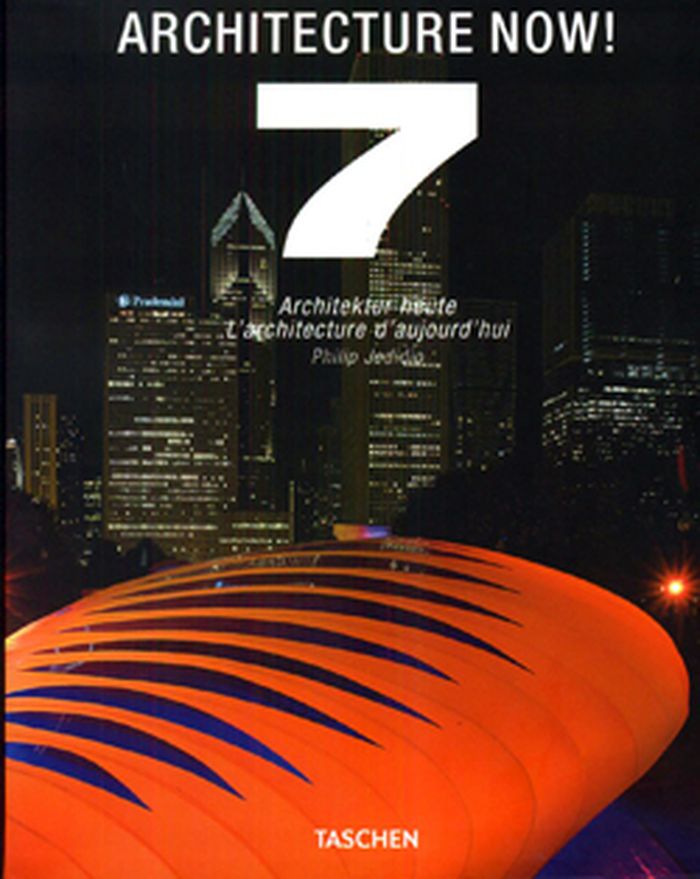
This publication includes a broad variety of projects from around the world, as well as some works of art that have a direct relation to architecture, from the likes of Giacomo Costa or Shinro Ohtake. It also explores how the recent economic downturn has led to fewer large-scale projects, but has also stimulated creative thinking, as architects find new ways to work imaginatively inside budget constraints.
Architecture now! 7
Actions:
Price:
$54.95
(available to order)
Summary:
This publication includes a broad variety of projects from around the world, as well as some works of art that have a direct relation to architecture, from the likes of Giacomo Costa or Shinro Ohtake. It also explores how the recent economic downturn has led to fewer large-scale projects, but has also stimulated creative thinking, as architects find new ways to work imaginatively inside budget constraints.
Form:
books
books
Publication:
July 2010
July 2010
Subject:
History since 1900, Reference Books
History since 1900, Reference Books
Form:
books
books
Actions:
Price:
$29.95
(available to order)
Summary:
In A Country of Cities, author Vishaan Chakrabarti argues that well-designed cities are the key to solving America's great national challenges: environmental degradation, unsustainable consumption, economic stagnation, rising public health costs and decreased social mobility. If we develop them wisely in the future, our cities can be the force leading us into a new era of(...)
$29.95
(available to order)
Summary:
In A Country of Cities, author Vishaan Chakrabarti argues that well-designed cities are the key to solving America's great national challenges: environmental degradation, unsustainable consumption, economic stagnation, rising public health costs and decreased social mobility. If we develop them wisely in the future, our cities can be the force leading us into a new era of(...)
Title:
A country of cities: a manifesto for an urban america
Actions:
Price:
$29.95
(available to order)
Summary:
In A Country of Cities, author Vishaan Chakrabarti argues that well-designed cities are the key to solving America's great national challenges: environmental degradation, unsustainable consumption, economic stagnation, rising public health costs and decreased social mobility. If we develop them wisely in the future, our cities can be the force leading us into a new era of progressive and prosperous stewardship of our nation.
A country of cities: a manifesto for an urban america
Actions:
Price:
$29.95
(available to order)
Summary:
In A Country of Cities, author Vishaan Chakrabarti argues that well-designed cities are the key to solving America's great national challenges: environmental degradation, unsustainable consumption, economic stagnation, rising public health costs and decreased social mobility. If we develop them wisely in the future, our cities can be the force leading us into a new era of progressive and prosperous stewardship of our nation.
Form:
books
books
Publication:
April 2013
April 2013
Subject:
Urban Theory
Urban Theory
Form:
books
books

Title:
The right to be lazy
The right to be lazy
Actions:
Price:
$9.00
(available in store)
Summary:
"In capitalist society work is the cause of all intellectual degeneracy, of all organic deformity." Paul Lafargue's "The right to be lazy" spells out with unrivalled clarity the damage inflicted by the myth that endless work is morally virtuous. Presenting an inspiring vision of social equality and of individual human fulfilment, Lafargue's text remains one of the most(...)
$9.00
(available in store)
Summary:
"In capitalist society work is the cause of all intellectual degeneracy, of all organic deformity." Paul Lafargue's "The right to be lazy" spells out with unrivalled clarity the damage inflicted by the myth that endless work is morally virtuous. Presenting an inspiring vision of social equality and of individual human fulfilment, Lafargue's text remains one of the most(...)
Title:
The right to be lazy
Actions:
Price:
$9.00
(available in store)
Summary:
"In capitalist society work is the cause of all intellectual degeneracy, of all organic deformity." Paul Lafargue's "The right to be lazy" spells out with unrivalled clarity the damage inflicted by the myth that endless work is morally virtuous. Presenting an inspiring vision of social equality and of individual human fulfilment, Lafargue's text remains one of the most powerful denunciations of "economic prejudices" ever written.
The right to be lazy
Actions:
Price:
$9.00
(available in store)
Summary:
"In capitalist society work is the cause of all intellectual degeneracy, of all organic deformity." Paul Lafargue's "The right to be lazy" spells out with unrivalled clarity the damage inflicted by the myth that endless work is morally virtuous. Presenting an inspiring vision of social equality and of individual human fulfilment, Lafargue's text remains one of the most powerful denunciations of "economic prejudices" ever written.
Form:
books
books
Publication:
June 2025
June 2025
Subject:
Social
Social
Form:
books
books
Price:
$37.00
(available to order)
Summary:
This book tells the story of the VENTO project, a cycling route from Venice (VENezia) to Turin (TOrino) running along the River Po. A new cultural paradigm to live differently in open spaces and the ways in which they change. A project of reanimating a landscape that is capable of offering new employment and economic diversification for the sustainable development of the(...)
$37.00
(available to order)
Summary:
This book tells the story of the VENTO project, a cycling route from Venice (VENezia) to Turin (TOrino) running along the River Po. A new cultural paradigm to live differently in open spaces and the ways in which they change. A project of reanimating a landscape that is capable of offering new employment and economic diversification for the sustainable development of the(...)
Subject:
Urban Theory
Urban Theory
Publication:
October 2015
October 2015
Title:
Vento: the gentle revolution cycling its way through the landscape
Actions:
Price:
$37.00
(available to order)
Summary:
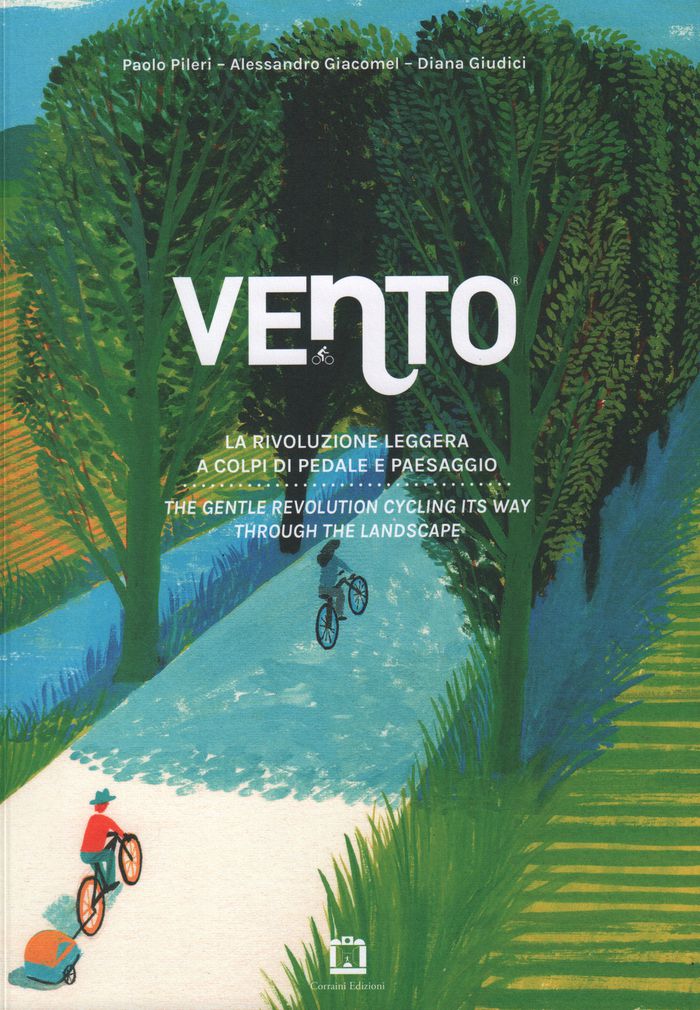
This book tells the story of the VENTO project, a cycling route from Venice (VENezia) to Turin (TOrino) running along the River Po. A new cultural paradigm to live differently in open spaces and the ways in which they change. A project of reanimating a landscape that is capable of offering new employment and economic diversification for the sustainable development of the country’s inland areas.
Vento: the gentle revolution cycling its way through the landscape
Actions:
Price:
$37.00
(available to order)
Summary:
This book tells the story of the VENTO project, a cycling route from Venice (VENezia) to Turin (TOrino) running along the River Po. A new cultural paradigm to live differently in open spaces and the ways in which they change. A project of reanimating a landscape that is capable of offering new employment and economic diversification for the sustainable development of the country’s inland areas.
Form:
books
books
Publication:
October 2015
October 2015
Subject:
Urban Theory
Urban Theory
Form:
books
books
Price:
$15.00
(available to order)
Summary:
The 1980s and 1990s have seen an enormous increase in the power of business over the American mind. Not since the Gilded Age have the robber barons of business accumulated more wealth or won more popular attention. But where the tycoons of yore built railroads or banks, today culture stands at the heart of American enterprise and mass entertainment has become its economic dynamo.
$15.00
(available to order)
Summary:
The 1980s and 1990s have seen an enormous increase in the power of business over the American mind. Not since the Gilded Age have the robber barons of business accumulated more wealth or won more popular attention. But where the tycoons of yore built railroads or banks, today culture stands at the heart of American enterprise and mass entertainment has become its economic dynamo.
Publication:
January 1900, New York, London
January 1900, New York, London
Title:
Commodify your dissent: the business of culture in the new gilded age
Actions:
Price:
$15.00
(available to order)
Summary:
The 1980s and 1990s have seen an enormous increase in the power of business over the American mind. Not since the Gilded Age have the robber barons of business accumulated more wealth or won more popular attention. But where the tycoons of yore built railroads or banks, today culture stands at the heart of American enterprise and mass entertainment has become its economic dynamo.
Commodify your dissent: the business of culture in the new gilded age
Actions:
Price:
$15.00
(available to order)
Summary:
The 1980s and 1990s have seen an enormous increase in the power of business over the American mind. Not since the Gilded Age have the robber barons of business accumulated more wealth or won more popular attention. But where the tycoons of yore built railroads or banks, today culture stands at the heart of American enterprise and mass entertainment has become its economic dynamo.
Form:
books
books
Publication:
January 1900, New York, London
January 1900, New York, London


