


4907 Results
Form:
books
books
Price:
$49.50
(available to order)
Summary:
Beginning with agoraphobia and claustrophobia in the late nineteenth century, followed by shell shock and panic fear after World War I, phobias and anxiety came to be seen as the mental condition of modern life. They became incorporated into the media and arts, in particular the (...)
$49.50
(available to order)
Summary:
Beginning with agoraphobia and claustrophobia in the late nineteenth century, followed by shell shock and panic fear after World War I, phobias and anxiety came to be seen as the mental condition of modern life. They became incorporated into the media and arts, in particular the (...)
Title:
Warped space : art, architecture, and anxiety in modern culture
Actions:
Price:
$49.50
(available to order)
Summary:
Beginning with agoraphobia and claustrophobia in the late nineteenth century, followed by shell shock and panic fear after World War I, phobias and anxiety came to be seen as the mental condition of modern life. They became incorporated into the media and arts, in particular the spatial arts of architecture, urbanism, and film. This "spatial warping" is now being reshaped by digitalization and virtual reality. Anthony Vidler is concerned with two forms of warped space. The first, a psychological space, is the repository of neuroses and phobias. This space is not empty but full of disturbing forms, including those of architecture and the city. The second kind of warping is produced when artists break the boundaries of genre to depict space in new ways. Vidler traces the emergence of a psychological idea of space from Pascal and Freud to the identification of agoraphobia and claustrophobia in the nineteenth century to twentieth-century theories of spatial alienation and estrangement in the writings of Georg Simmel, Siegfried Kracauer, and Walter Benjamin. Focusing on current conditions of displacement and placelessness, he examines ways in which contemporary artists and architects have produced new forms of spatial warping. The discussion ranges from theorists such as Jacques Lacan and Gilles Deleuze to artists such as Vito Acconci, Mike Kelley, Martha Rosler, and Rachel Whiteread. Finally, Vidler looks at the architectural experiments of Frank Gehry, Coop Himmelblau, Daniel Libeskind, Greg Lynn, Morphosis, and Eric Owen Moss in the light of new digital techniques that, while relying on traditional perspective, have radically transformed the composition, production, and experience of architecture.
Warped space : art, architecture, and anxiety in modern culture
Actions:
Price:
$49.50
(available to order)
Summary:
Beginning with agoraphobia and claustrophobia in the late nineteenth century, followed by shell shock and panic fear after World War I, phobias and anxiety came to be seen as the mental condition of modern life. They became incorporated into the media and arts, in particular the spatial arts of architecture, urbanism, and film. This "spatial warping" is now being reshaped by digitalization and virtual reality. Anthony Vidler is concerned with two forms of warped space. The first, a psychological space, is the repository of neuroses and phobias. This space is not empty but full of disturbing forms, including those of architecture and the city. The second kind of warping is produced when artists break the boundaries of genre to depict space in new ways. Vidler traces the emergence of a psychological idea of space from Pascal and Freud to the identification of agoraphobia and claustrophobia in the nineteenth century to twentieth-century theories of spatial alienation and estrangement in the writings of Georg Simmel, Siegfried Kracauer, and Walter Benjamin. Focusing on current conditions of displacement and placelessness, he examines ways in which contemporary artists and architects have produced new forms of spatial warping. The discussion ranges from theorists such as Jacques Lacan and Gilles Deleuze to artists such as Vito Acconci, Mike Kelley, Martha Rosler, and Rachel Whiteread. Finally, Vidler looks at the architectural experiments of Frank Gehry, Coop Himmelblau, Daniel Libeskind, Greg Lynn, Morphosis, and Eric Owen Moss in the light of new digital techniques that, while relying on traditional perspective, have radically transformed the composition, production, and experience of architecture.
Form:
books
books
Publication:
June 2000, Cambridge, Mass.
June 2000, Cambridge, Mass.
Subject:
Architectural Theory
Architectural Theory
Form:
books
books
Title:
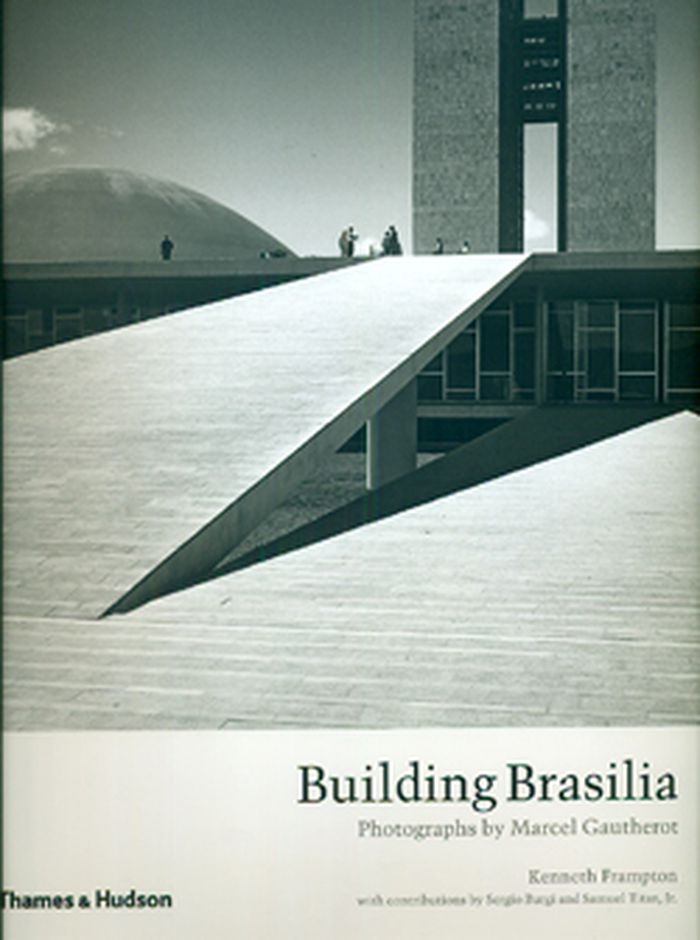
Building Brasilia
Building Brasilia
Actions:
Price:
$82.00
(available to order)
Summary:
‘From nothing; from nothing to construction.’ Thus Marcel Gautherot, the ideal architectural photographer, recalled his epic undertaking in the late 1950s – photographing every step of the construction of the city of Brasilia, from untouched grassland to modern capital. Gautherot had studied architecture and design, and was influenced by Le Corbusier and other(...)
$82.00
(available to order)
Summary:
‘From nothing; from nothing to construction.’ Thus Marcel Gautherot, the ideal architectural photographer, recalled his epic undertaking in the late 1950s – photographing every step of the construction of the city of Brasilia, from untouched grassland to modern capital. Gautherot had studied architecture and design, and was influenced by Le Corbusier and other(...)
Title:
Building Brasilia
Actions:
Price:
$82.00
(available to order)
Summary:
‘From nothing; from nothing to construction.’ Thus Marcel Gautherot, the ideal architectural photographer, recalled his epic undertaking in the late 1950s – photographing every step of the construction of the city of Brasilia, from untouched grassland to modern capital. Gautherot had studied architecture and design, and was influenced by Le Corbusier and other modernist architects as well as the political radicalism of the interwar period. Postwar, however, he devoted his life to travel and photography, taking with him the formal rigour of modernism but also a sympathy for ordinary people that was to help him in his work. After moving to Brazil in 1940, he forged many friendships and partnerships, most notably with Oscar Niemeyer, the chief architect of Brasilia. Indeed, Gautherot recorded most of Niemeyer’s work as his photographer of choice. It was, however, in Brasilia – the high point of the careers of both Niemeyer and chief urban planner Lucio Costa – that the photographer’s art of light and shadow reached its zenith. Gautherot repeatedly visited Brasilia, photographing not only every stage of construction, but also the faces and homes of the workers who worked on the construction sites and satellite cities in the making. The result is a monumental photo essay on this triumph of urban planning and architecture. Here, for the first time, the photographs are collected to form a portfolio of Gautherot’s work in Brasilia, and it pays due tribute to this great Franco-Brazilian artist in the centenary of his birth and on the fiftieth anniversary of Brasilia’s inauguration.
Building Brasilia
Actions:
Price:
$82.00
(available to order)
Summary:
‘From nothing; from nothing to construction.’ Thus Marcel Gautherot, the ideal architectural photographer, recalled his epic undertaking in the late 1950s – photographing every step of the construction of the city of Brasilia, from untouched grassland to modern capital. Gautherot had studied architecture and design, and was influenced by Le Corbusier and other modernist architects as well as the political radicalism of the interwar period. Postwar, however, he devoted his life to travel and photography, taking with him the formal rigour of modernism but also a sympathy for ordinary people that was to help him in his work. After moving to Brazil in 1940, he forged many friendships and partnerships, most notably with Oscar Niemeyer, the chief architect of Brasilia. Indeed, Gautherot recorded most of Niemeyer’s work as his photographer of choice. It was, however, in Brasilia – the high point of the careers of both Niemeyer and chief urban planner Lucio Costa – that the photographer’s art of light and shadow reached its zenith. Gautherot repeatedly visited Brasilia, photographing not only every stage of construction, but also the faces and homes of the workers who worked on the construction sites and satellite cities in the making. The result is a monumental photo essay on this triumph of urban planning and architecture. Here, for the first time, the photographs are collected to form a portfolio of Gautherot’s work in Brasilia, and it pays due tribute to this great Franco-Brazilian artist in the centenary of his birth and on the fiftieth anniversary of Brasilia’s inauguration.
Form:
books
books
Publication:
December 2010
December 2010
Subject:
Photography monographs
Photography monographs
Form:
books
books
Actions:
Price:
$40.00
(available to order)
Summary:
Wim Wenders (born 1945) started taking photographs at the age of 7. By the age of 12 he had equipped himself with his own darkroom, and by 17 he had acquired his first Leica. A few years later he was to emerge as a leading light in the New German Cinema movement of the late 1960s, making his feature-length directorial debut with Summer in the City (1970). Throughout his(...)
$40.00
(available to order)
Summary:
Wim Wenders (born 1945) started taking photographs at the age of 7. By the age of 12 he had equipped himself with his own darkroom, and by 17 he had acquired his first Leica. A few years later he was to emerge as a leading light in the New German Cinema movement of the late 1960s, making his feature-length directorial debut with Summer in the City (1970). Throughout his(...)
Title:
Wim Wenders : places, strange and quiet
Actions:
Price:
$40.00
(available to order)
Summary:
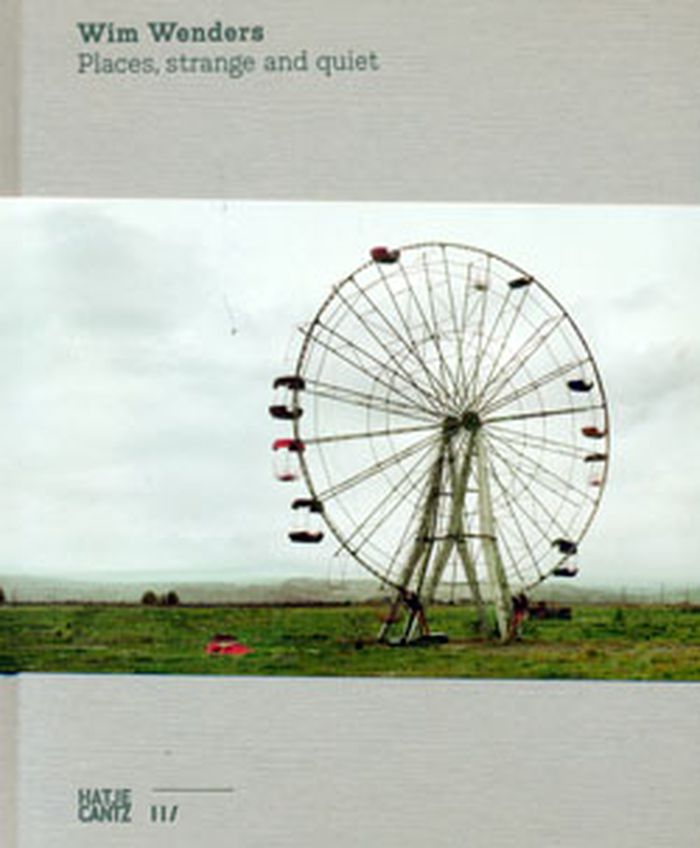
Wim Wenders (born 1945) started taking photographs at the age of 7. By the age of 12 he had equipped himself with his own darkroom, and by 17 he had acquired his first Leica. A few years later he was to emerge as a leading light in the New German Cinema movement of the late 1960s, making his feature-length directorial debut with Summer in the City (1970). Throughout his subsequent global acclaim as a director, Wenders has doggedly maintained his life as a photographer. In fact, the two careers have served each other well, as many of his photographs are created while location-scouting for films. His image repertoire of neglected industrial buildings, vacant lots, cemeteries, dilapidated urban niches and courtyards express a mixture of bemusement, melancholy and dislocation. “When you travel a lot, and when you love to just wander around and get lost, you can end up in the strangest spots,” Wenders says. “It must be some sort of built-in radar that often directs me to places that are strangely quiet, or quietly strange.” These strange and quiet color photographs are accompanied by poetical captions, some of which elucidate what is depicted, others of which lightly supplement with an anecdote (one characteristically deadpan caption accompanies an image of a cowboy clown standing at a rodeo: “It is amazing how many different ideas of 'fun' co-exist in this world” ). This publication gathers photographs from 1983 to 2011 in a full panorama of Wenders' photography to date.
Wim Wenders : places, strange and quiet
Actions:
Price:
$40.00
(available to order)
Summary:
Wim Wenders (born 1945) started taking photographs at the age of 7. By the age of 12 he had equipped himself with his own darkroom, and by 17 he had acquired his first Leica. A few years later he was to emerge as a leading light in the New German Cinema movement of the late 1960s, making his feature-length directorial debut with Summer in the City (1970). Throughout his subsequent global acclaim as a director, Wenders has doggedly maintained his life as a photographer. In fact, the two careers have served each other well, as many of his photographs are created while location-scouting for films. His image repertoire of neglected industrial buildings, vacant lots, cemeteries, dilapidated urban niches and courtyards express a mixture of bemusement, melancholy and dislocation. “When you travel a lot, and when you love to just wander around and get lost, you can end up in the strangest spots,” Wenders says. “It must be some sort of built-in radar that often directs me to places that are strangely quiet, or quietly strange.” These strange and quiet color photographs are accompanied by poetical captions, some of which elucidate what is depicted, others of which lightly supplement with an anecdote (one characteristically deadpan caption accompanies an image of a cowboy clown standing at a rodeo: “It is amazing how many different ideas of 'fun' co-exist in this world” ). This publication gathers photographs from 1983 to 2011 in a full panorama of Wenders' photography to date.
Form:
books
books
Publication:
July 2011
July 2011
Subject:
Photography monographs
Photography monographs
Form:
books
books
Actions:
Price:
$26.95
(available to order)
Summary:
Many years have passed since architect Andrea Ponsi settled in Florence, and still he feels he does not fully comprehend this mysterious city. The way Florence eludes understanding, however, can be an opportunity — to keep seeking, to keep exploring. Ponsi’s Florence is endlessly suggestive. His tour of the city is one of continually shifting light and perspective, of(...)
$26.95
(available to order)
Summary:
Many years have passed since architect Andrea Ponsi settled in Florence, and still he feels he does not fully comprehend this mysterious city. The way Florence eludes understanding, however, can be an opportunity — to keep seeking, to keep exploring. Ponsi’s Florence is endlessly suggestive. His tour of the city is one of continually shifting light and perspective, of(...)
Title:
Florence : a map of perceptions
Actions:
Price:
$26.95
(available to order)
Summary:
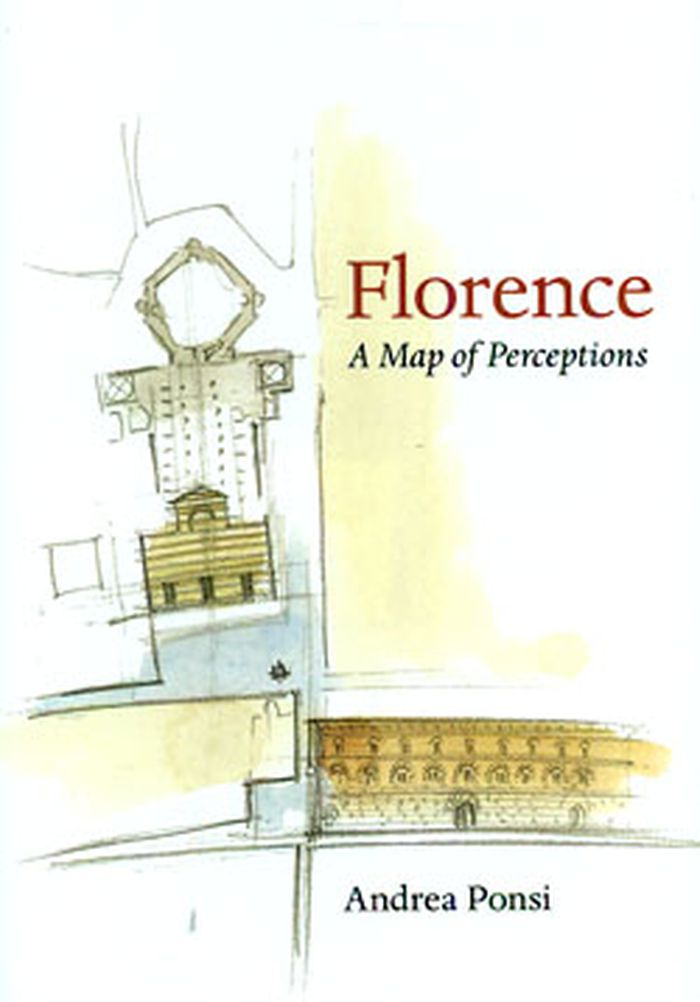
Many years have passed since architect Andrea Ponsi settled in Florence, and still he feels he does not fully comprehend this mysterious city. The way Florence eludes understanding, however, can be an opportunity — to keep seeking, to keep exploring. Ponsi’s Florence is endlessly suggestive. His tour of the city is one of continually shifting light and perspective, of stunning symmetry and an even more compelling asymmetry, of sudden transitions from bustling streets to the most perfect silence. While Ponsi does consider such celebrated sites as the Piazza Santa Croce, the Ponte Vecchio, and the Duomo, the book is a decidedly personal view of Florence. The author notes the city’s recurring geometry — the square courtyards, triangular spires, octagonal plaques and pillars — and marvels at a room almost too big to be called a room. He views the city from various terraces and likens the expanse of rising and falling rooftops to ocean waves. Here is Florence as labyrinth, possessing a medieval density that is relieved only by the sudden views of sky framed by its piazzas. Ponsi shows us a six-street intersection and ponders the abundance of acute angles, both indoors and out, in this city of infinite corners. In Florence, humans and buildings commingle. The author equates haircuts and changes of clothes with fresh coats of paint and re-shingling jobs, and contemplates the way a human hand, feeling its way down a city block, adds to the patina of a stucco wall. Ponsi sees the city itself as a living body, through whose veins its inhabitants course.
Florence : a map of perceptions
Actions:
Price:
$26.95
(available to order)
Summary:
Many years have passed since architect Andrea Ponsi settled in Florence, and still he feels he does not fully comprehend this mysterious city. The way Florence eludes understanding, however, can be an opportunity — to keep seeking, to keep exploring. Ponsi’s Florence is endlessly suggestive. His tour of the city is one of continually shifting light and perspective, of stunning symmetry and an even more compelling asymmetry, of sudden transitions from bustling streets to the most perfect silence. While Ponsi does consider such celebrated sites as the Piazza Santa Croce, the Ponte Vecchio, and the Duomo, the book is a decidedly personal view of Florence. The author notes the city’s recurring geometry — the square courtyards, triangular spires, octagonal plaques and pillars — and marvels at a room almost too big to be called a room. He views the city from various terraces and likens the expanse of rising and falling rooftops to ocean waves. Here is Florence as labyrinth, possessing a medieval density that is relieved only by the sudden views of sky framed by its piazzas. Ponsi shows us a six-street intersection and ponders the abundance of acute angles, both indoors and out, in this city of infinite corners. In Florence, humans and buildings commingle. The author equates haircuts and changes of clothes with fresh coats of paint and re-shingling jobs, and contemplates the way a human hand, feeling its way down a city block, adds to the patina of a stucco wall. Ponsi sees the city itself as a living body, through whose veins its inhabitants course.
Form:
books
books
Publication:
April 2010
April 2010
Subject:
City Guides
City Guides
Form:
books
books
Holdings:
Description:
viii, 117 pages, 92 unnumbered pages of plates : illustrations, maps ; 25 cm.
Description:
viii, 117 pages, 92 unnumbered pages of plates : illustrations, maps ; 25 cm.
Author:
Subject:
Publication:
Leiden ; New York : E.J. Brill, 1995.
Leiden ; New York : E.J. Brill, 1995.
Title:
Theatres in Roman Palestine and Provincia Arabia / by Arthur Segal.
Actions:
Holdings:
Description:
viii, 117 pages, 92 unnumbered pages of plates : illustrations, maps ; 25 cm.
Theatres in Roman Palestine and Provincia Arabia / by Arthur Segal.
Actions:
Holdings:
Description:
viii, 117 pages, 92 unnumbered pages of plates : illustrations, maps ; 25 cm.
Form:
books
books
Publication:
Leiden ; New York : E.J. Brill, 1995.
Leiden ; New York : E.J. Brill, 1995.
Author:
Subject:
Form:
books
books
Actions:
Holdings:
Description:
190 pages : illustrations (chiefly color), portraits ; 28 cm
Description:
190 pages : illustrations (chiefly color), portraits ; 28 cm
Author:
Subject:
Publication:
London : Tate Pub. ; New York : Distributed in the United States and Canada by Harry N. Abrams, 2009.
London : Tate Pub. ; New York : Distributed in the United States and Canada by Harry N. Abrams, 2009.
Title:
Rodchenko & Popova : defining constructivism / edited by Margarita Tupitsyn.
Actions:
Holdings:
Description:
190 pages : illustrations (chiefly color), portraits ; 28 cm
Rodchenko & Popova : defining constructivism / edited by Margarita Tupitsyn.
Actions:
Holdings:
Description:
190 pages : illustrations (chiefly color), portraits ; 28 cm
Form:
books
books
Publication:
London : Tate Pub. ; New York : Distributed in the United States and Canada by Harry N. Abrams, 2009.
London : Tate Pub. ; New York : Distributed in the United States and Canada by Harry N. Abrams, 2009.
Author:
Subject:
Form:
books
books
Holdings:
Description:
xi, 363 pages : illustrations ; 25 cm
Description:
xi, 363 pages : illustrations ; 25 cm
Author:
Subject:
Publication:
New York, NY : Oxford University Press, [2021]
New York, NY : Oxford University Press, [2021]
Title:
Grand transitions : how the modern world was made / Vaclav Smil.
Actions:
Holdings:
Description:
xi, 363 pages : illustrations ; 25 cm
Grand transitions : how the modern world was made / Vaclav Smil.
Actions:
Holdings:
Description:
xi, 363 pages : illustrations ; 25 cm
Form:
books
books
Publication:
New York, NY : Oxford University Press, [2021]
New York, NY : Oxford University Press, [2021]
Author:
Subject:
Form:
artefacts
artefacts
Actions:
Holdings:
Description:
1 set of building blocks (50 pieces) : wood ; various sizes in cardboard box 3 x 36 x 19 cm
Description:
1 set of building blocks (50 pieces) : wood ; various sizes in cardboard box 3 x 36 x 19 cm
Author:
Subject:
Publication:
[approximately 1925] ([Philadelphia, Pa.] : Schoenhut)
[approximately 1925] ([Philadelphia, Pa.] : Schoenhut)
Title:
Schoenhut's little-tot's building blocks.
Actions:
Holdings:
Description:
1 set of building blocks (50 pieces) : wood ; various sizes in cardboard box 3 x 36 x 19 cm
Schoenhut's little-tot's building blocks.
Actions:
Holdings:
Description:
1 set of building blocks (50 pieces) : wood ; various sizes in cardboard box 3 x 36 x 19 cm
Form:
artefacts
artefacts
Publication:
[approximately 1925] ([Philadelphia, Pa.] : Schoenhut)
[approximately 1925] ([Philadelphia, Pa.] : Schoenhut)
Author:
Subject:
Form:
books
books
Actions:
Price:
$30.00
(available to order)
Summary:
What is a designer proposes what design could be: there is no question mark in its title. Potter’s book is unusual in combining elevated ideas with down-to-earth advice. The first edition was published by Studio Vista in 1969. The second edition, published by Hyphen Press in 1980, was a very different work: completely reset and with new chapters that doubled the book in(...)
$30.00
(available to order)
Summary:
What is a designer proposes what design could be: there is no question mark in its title. Potter’s book is unusual in combining elevated ideas with down-to-earth advice. The first edition was published by Studio Vista in 1969. The second edition, published by Hyphen Press in 1980, was a very different work: completely reset and with new chapters that doubled the book in(...)
Title:
What is a designer : things, places, messages
Actions:
Price:
$30.00
(available to order)
Summary:
What is a designer proposes what design could be: there is no question mark in its title. Potter’s book is unusual in combining elevated ideas with down-to-earth advice. The first edition was published by Studio Vista in 1969. The second edition, published by Hyphen Press in 1980, was a very different work: completely reset and with new chapters that doubled the book in extent. A third edition (1989) incorporated revisions and updatings, and included a new introduction in which Norman Potter considered his own position in the light of the tremendous changes of the 1980s: some sharp blows were delivered at ‘designer culture’. Now, after the author’s death in 1995, the book is reissued in what must be a final edition: the outdated references again excised, to leave the enduring core of Potter’s arguments. The three parts of the book are signalled visibly by a change of paper colour. The first part contains a sequence of quite general essays. A number of central ideas are discussed here. Design is essentially a useful and modest art. The designer is at the service of the community. These principles should animate education. Potter casts a critical and sceptical eye over the realities of design education. In the reference section the book stands apart from other literature on design, in its discussions of the processes of getting work done. Finally there is a set of appendixes, prodding the reader into thought and action. The book has no visual illustrations. By this means it achieves a greater generality of reference and — true to its critical principles — avoids giving readers models for imitation. The book includes an afterword by Robin Kinross.
What is a designer : things, places, messages
Actions:
Price:
$30.00
(available to order)
Summary:
What is a designer proposes what design could be: there is no question mark in its title. Potter’s book is unusual in combining elevated ideas with down-to-earth advice. The first edition was published by Studio Vista in 1969. The second edition, published by Hyphen Press in 1980, was a very different work: completely reset and with new chapters that doubled the book in extent. A third edition (1989) incorporated revisions and updatings, and included a new introduction in which Norman Potter considered his own position in the light of the tremendous changes of the 1980s: some sharp blows were delivered at ‘designer culture’. Now, after the author’s death in 1995, the book is reissued in what must be a final edition: the outdated references again excised, to leave the enduring core of Potter’s arguments. The three parts of the book are signalled visibly by a change of paper colour. The first part contains a sequence of quite general essays. A number of central ideas are discussed here. Design is essentially a useful and modest art. The designer is at the service of the community. These principles should animate education. Potter casts a critical and sceptical eye over the realities of design education. In the reference section the book stands apart from other literature on design, in its discussions of the processes of getting work done. Finally there is a set of appendixes, prodding the reader into thought and action. The book has no visual illustrations. By this means it achieves a greater generality of reference and — true to its critical principles — avoids giving readers models for imitation. The book includes an afterword by Robin Kinross.
Form:
books
books
Publication:
April 2002, London
April 2002, London
Subject:
Graphic Design and Typography
Graphic Design and Typography
Form:
books
books
Actions:
Price:
$65.95
(available to order)
Summary:
Studies in Tectonic Culture is nothing less than a rethinking of the entire modern architectural tradition. The notion of tectonics as employed by Frampton -- the focus on architecture as a constructional craft -- constitutes a direct challenge to current mainstream thinking on the artistic limits of postmodernism, and suggests a convincing alternative. Indeed, Frampton(...)
$65.95
(available to order)
Summary:
Studies in Tectonic Culture is nothing less than a rethinking of the entire modern architectural tradition. The notion of tectonics as employed by Frampton -- the focus on architecture as a constructional craft -- constitutes a direct challenge to current mainstream thinking on the artistic limits of postmodernism, and suggests a convincing alternative. Indeed, Frampton(...)
Title:
Studies in tectonic culture: the poetics of construction in nineteenth and twentieth century architecture
Actions:
Price:
$65.95
(available to order)
Summary:
Studies in Tectonic Culture is nothing less than a rethinking of the entire modern architectural tradition. The notion of tectonics as employed by Frampton -- the focus on architecture as a constructional craft -- constitutes a direct challenge to current mainstream thinking on the artistic limits of postmodernism, and suggests a convincing alternative. Indeed, Frampton argues, modern architecture is invariably as much about structure and construction as it is about space and abstract form. Composed of ten essays and an epilogue that trace the history of contemporary form as an evolving poetic of structure and construction, the book's analytical framework rests on Frampton's close readings of key French and German, and English sources from the eighteenth century to the present. He clarifies the various turns that structural engineering and tectonic imagination have taken in the work of such architects as Perret, Wright, Kahn, Scarpa, and Mies, and shows how both constructional form and material character were integral to an evolving architectural expression of their work. Frampton also demonstrates that the way in which these elements are articulated from one work to the next provides a basis upon which to evaluate the works as a whole. This is especially evident in his consideration of the work of Perret, Mies, and Kahn and the continuities in their thought and attitudes that linked them to the past. Frampton considers the conscious cultivation of the tectonic tradition in architecture as an essential element in the future development of architectural form, casting a critical new light on the entire issue of modernity and on the place of much work that has passed as "avant-garde."
Studies in tectonic culture: the poetics of construction in nineteenth and twentieth century architecture
Actions:
Price:
$65.95
(available to order)
Summary:
Studies in Tectonic Culture is nothing less than a rethinking of the entire modern architectural tradition. The notion of tectonics as employed by Frampton -- the focus on architecture as a constructional craft -- constitutes a direct challenge to current mainstream thinking on the artistic limits of postmodernism, and suggests a convincing alternative. Indeed, Frampton argues, modern architecture is invariably as much about structure and construction as it is about space and abstract form. Composed of ten essays and an epilogue that trace the history of contemporary form as an evolving poetic of structure and construction, the book's analytical framework rests on Frampton's close readings of key French and German, and English sources from the eighteenth century to the present. He clarifies the various turns that structural engineering and tectonic imagination have taken in the work of such architects as Perret, Wright, Kahn, Scarpa, and Mies, and shows how both constructional form and material character were integral to an evolving architectural expression of their work. Frampton also demonstrates that the way in which these elements are articulated from one work to the next provides a basis upon which to evaluate the works as a whole. This is especially evident in his consideration of the work of Perret, Mies, and Kahn and the continuities in their thought and attitudes that linked them to the past. Frampton considers the conscious cultivation of the tectonic tradition in architecture as an essential element in the future development of architectural form, casting a critical new light on the entire issue of modernity and on the place of much work that has passed as "avant-garde."
Form:
books
books
Publication:
October 2001, Cambridge, Mass.
October 2001, Cambridge, Mass.
Subject:
Architectural Theory
Architectural Theory


