


510 Results
Form:
books
books
Actions:
Price:
$56.95
(available in store)
Summary:
The book collects five vacation homes in Sweden designed by Stockholm-based architect Mikael Bergquist. Realized over more than two decades, they are all located in the Swedish countryside and rooted in the Nordic tradition of timber construction and the simplicity and economy of Sweden’s historic farm buildings. Bergquist’s great care for detail and choice of materials(...)
$56.95
(available in store)
Summary:
The book collects five vacation homes in Sweden designed by Stockholm-based architect Mikael Bergquist. Realized over more than two decades, they are all located in the Swedish countryside and rooted in the Nordic tradition of timber construction and the simplicity and economy of Sweden’s historic farm buildings. Bergquist’s great care for detail and choice of materials(...)
Title:
Center and periphery: Five houses by Mikael Bergquist
Actions:
Price:
$56.95
(available in store)
Summary:
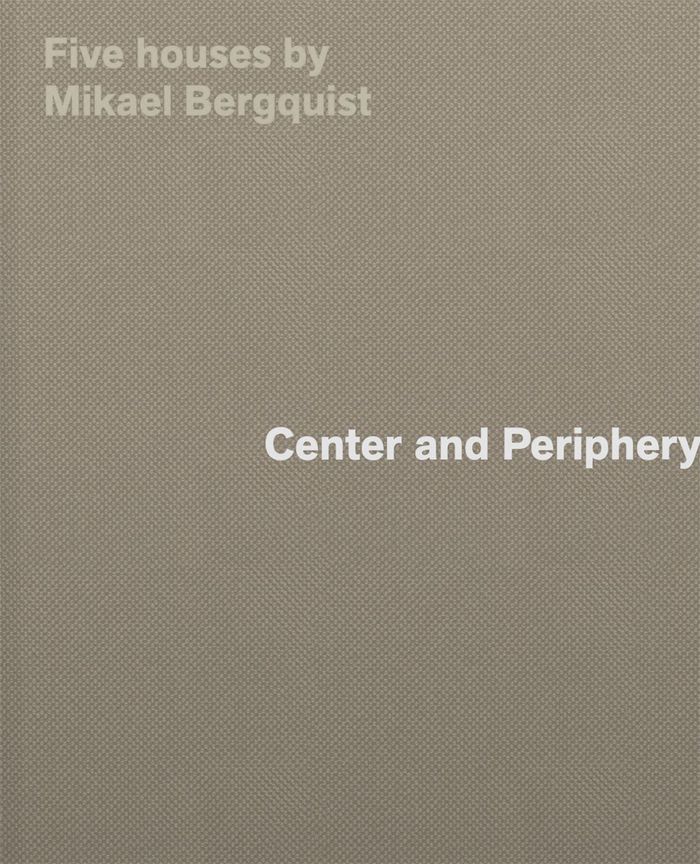
The book collects five vacation homes in Sweden designed by Stockholm-based architect Mikael Bergquist. Realized over more than two decades, they are all located in the Swedish countryside and rooted in the Nordic tradition of timber construction and the simplicity and economy of Sweden’s historic farm buildings. Bergquist’s great care for detail and choice of materials characterize these houses. They are united also by a close relationship to the surrounding nature, the experience of which is enhanced by the concepts of movement and the placement of passages between the outside and inside. The houses are documented with photographs as well as with plans and sections. In his supplementary essay, Bergquist writes about the special position of working as an architect on the periphery of Europe. He draws a picture of Swedish architecture that is marked by what he calls "fruitful misunderstandings" of current movements, and in which poverty of the rural population has been a major factor in the evolution of the design and construction of dwellings.
Center and periphery: Five houses by Mikael Bergquist
Actions:
Price:
$56.95
(available in store)
Summary:
The book collects five vacation homes in Sweden designed by Stockholm-based architect Mikael Bergquist. Realized over more than two decades, they are all located in the Swedish countryside and rooted in the Nordic tradition of timber construction and the simplicity and economy of Sweden’s historic farm buildings. Bergquist’s great care for detail and choice of materials characterize these houses. They are united also by a close relationship to the surrounding nature, the experience of which is enhanced by the concepts of movement and the placement of passages between the outside and inside. The houses are documented with photographs as well as with plans and sections. In his supplementary essay, Bergquist writes about the special position of working as an architect on the periphery of Europe. He draws a picture of Swedish architecture that is marked by what he calls "fruitful misunderstandings" of current movements, and in which poverty of the rural population has been a major factor in the evolution of the design and construction of dwellings.
Form:
books
books
Publication:
May 2025
May 2025
Subject:
Architecture Monographs
Architecture Monographs
Form:
books
books
Actions:
Price:
$55.95
(available to order)
Summary:
Bridges, the least known and understood of China's many wonders, are one of its most striking and resilient feats of architectural prowess. Chinese Bridges brings together a thorough look at these marvels from one of the world's leading experts on Chinese culture and historical geography, Ronald G. Knapp. While many consider bridges to be merely utilitarian, the bridges(...)
$55.95
(available to order)
Summary:
Bridges, the least known and understood of China's many wonders, are one of its most striking and resilient feats of architectural prowess. Chinese Bridges brings together a thorough look at these marvels from one of the world's leading experts on Chinese culture and historical geography, Ronald G. Knapp. While many consider bridges to be merely utilitarian, the bridges(...)
Subject:
History until 1900, Asia
History until 1900, Asia
Publication:
May 2008, Tokyo, Rutland, Singapore
May 2008, Tokyo, Rutland, Singapore
Title:
Chinese bridges: living architecture from China's past
Actions:
Price:
$55.95
(available to order)
Summary:
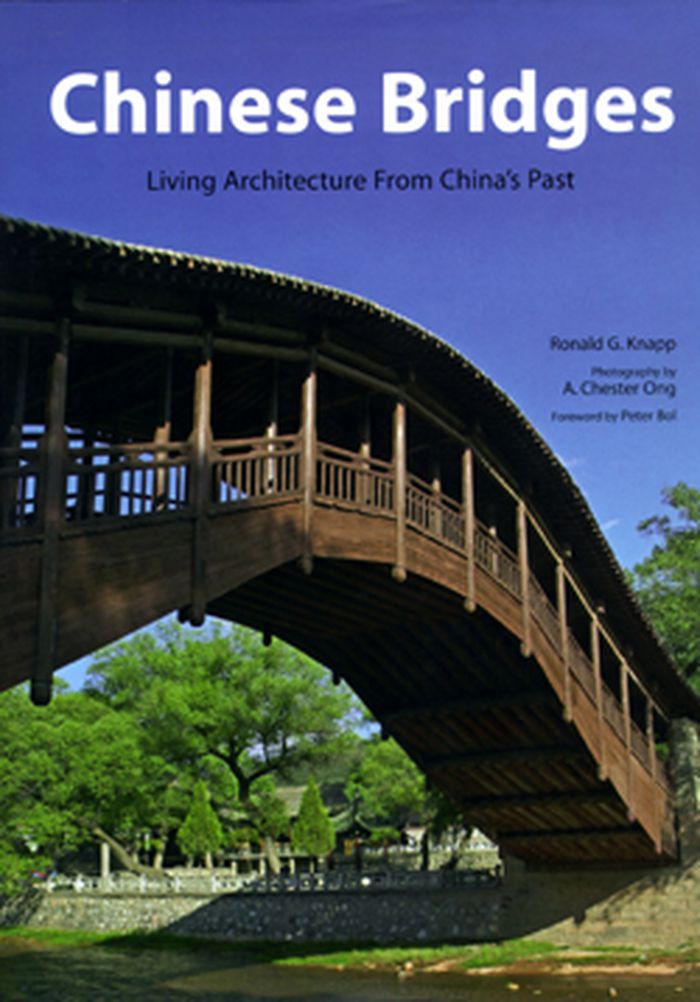
Bridges, the least known and understood of China's many wonders, are one of its most striking and resilient feats of architectural prowess. Chinese Bridges brings together a thorough look at these marvels from one of the world's leading experts on Chinese culture and historical geography, Ronald G. Knapp. While many consider bridges to be merely utilitarian, the bridges of China move beyond that stereotype, as many are undeniably dramatic, even majestic and daring. Chinese Bridges illustrates in detail 20 well-preserved ancient bridges, along with descriptions and essays on the distinctive architectural elements shared by the various designs. For the first time in an English-language book, Chinese Bridges records scores of newly discovered bridges across China's vast landscape, illustrated with over 400 color photographs, as well as woodblock prints, historic images, paintings and line drawings. Ronald G. Knapp has been carrying out research on cultural and historical geography in China's countryside since 1965. Currently SUNY Distinguished Professor Emeritus at the State University of New York, New Paltz, he is the author or contributing editor of more than a dozen books.
Chinese bridges: living architecture from China's past
Actions:
Price:
$55.95
(available to order)
Summary:
Bridges, the least known and understood of China's many wonders, are one of its most striking and resilient feats of architectural prowess. Chinese Bridges brings together a thorough look at these marvels from one of the world's leading experts on Chinese culture and historical geography, Ronald G. Knapp. While many consider bridges to be merely utilitarian, the bridges of China move beyond that stereotype, as many are undeniably dramatic, even majestic and daring. Chinese Bridges illustrates in detail 20 well-preserved ancient bridges, along with descriptions and essays on the distinctive architectural elements shared by the various designs. For the first time in an English-language book, Chinese Bridges records scores of newly discovered bridges across China's vast landscape, illustrated with over 400 color photographs, as well as woodblock prints, historic images, paintings and line drawings. Ronald G. Knapp has been carrying out research on cultural and historical geography in China's countryside since 1965. Currently SUNY Distinguished Professor Emeritus at the State University of New York, New Paltz, he is the author or contributing editor of more than a dozen books.
Form:
books
books
Publication:
May 2008, Tokyo, Rutland, Singapore
May 2008, Tokyo, Rutland, Singapore
Subject:
History until 1900, Asia
History until 1900, Asia
Form:
journals and magazines
journals and magazines
Actions:
Price:
$34.95
(available to order)
Summary:
Architects are workaholics. Many of them work ten hours a day, seven days a week, fifty weeks a year. The little time they have left over is sacred and must be respected as such. In this spirit, 91° is a crossover leisure magazine that specifically caters to architects’ special interests. It is published semiannually. Art: Why people pose nude for Spencer Tunick.(...)
$34.95
(available to order)
Summary:
Architects are workaholics. Many of them work ten hours a day, seven days a week, fifty weeks a year. The little time they have left over is sacred and must be respected as such. In this spirit, 91° is a crossover leisure magazine that specifically caters to architects’ special interests. It is published semiannually. Art: Why people pose nude for Spencer Tunick.(...)
Subject:
Magazines
Magazines
Publication:
March 2008
March 2008
Title:
91 degrees, Issue one, autumn 2007, More than Architecture
Actions:
Price:
$34.95
(available to order)
Summary:
Architects are workaholics. Many of them work ten hours a day, seven days a week, fifty weeks a year. The little time they have left over is sacred and must be respected as such. In this spirit, 91° is a crossover leisure magazine that specifically caters to architects’ special interests. It is published semiannually. Art: Why people pose nude for Spencer Tunick. Fashion: What building skins and clothing have in common. Research: On site at the fiber cement lab in Denmark. Interview: A look inside the studio of the French architect Edouard François. Photography: The world through the viewfinder. Literature: What comes out when writers think about architecture. Sports: Why many architects don bow and arrow in their free time. Travel: Tenerife, far from Ballermann, beach, and sangria. Europe: What causes architects to pack up and travel the world. Cars: What architects like to drive when they go racing through the countryside. At Home With: Hans Kollhoff. Construction Site: On working conditions in Shangri-la – working in Dubai. And more.
91 degrees, Issue one, autumn 2007, More than Architecture
Actions:
Price:
$34.95
(available to order)
Summary:
Architects are workaholics. Many of them work ten hours a day, seven days a week, fifty weeks a year. The little time they have left over is sacred and must be respected as such. In this spirit, 91° is a crossover leisure magazine that specifically caters to architects’ special interests. It is published semiannually. Art: Why people pose nude for Spencer Tunick. Fashion: What building skins and clothing have in common. Research: On site at the fiber cement lab in Denmark. Interview: A look inside the studio of the French architect Edouard François. Photography: The world through the viewfinder. Literature: What comes out when writers think about architecture. Sports: Why many architects don bow and arrow in their free time. Travel: Tenerife, far from Ballermann, beach, and sangria. Europe: What causes architects to pack up and travel the world. Cars: What architects like to drive when they go racing through the countryside. At Home With: Hans Kollhoff. Construction Site: On working conditions in Shangri-la – working in Dubai. And more.
Form:
journals and magazines
journals and magazines
Publication:
March 2008
March 2008
Subject:
Magazines
Magazines
Form:
books
books

Title:
Of walking in ice
Of walking in ice
Actions:
Price:
$28.95
(available to order)
Summary:
In the winter of 1974, filmmaker Werner Herzog made a three week solo journey from Munich to Paris on foot. He believed it was the only way his close friend, film historian Lotte Eisner, would survive a horrible sickness that had overtaken her. During this monumental odyssey through a seemingly endless blizzard, Herzog documented everything he saw and felt with intense(...)
$28.95
(available to order)
Summary:
In the winter of 1974, filmmaker Werner Herzog made a three week solo journey from Munich to Paris on foot. He believed it was the only way his close friend, film historian Lotte Eisner, would survive a horrible sickness that had overtaken her. During this monumental odyssey through a seemingly endless blizzard, Herzog documented everything he saw and felt with intense(...)
Publication:
September 2007, New York
September 2007, New York
Title:
Of walking in ice
Actions:
Price:
$28.95
(available to order)
Summary:
In the winter of 1974, filmmaker Werner Herzog made a three week solo journey from Munich to Paris on foot. He believed it was the only way his close friend, film historian Lotte Eisner, would survive a horrible sickness that had overtaken her. During this monumental odyssey through a seemingly endless blizzard, Herzog documented everything he saw and felt with intense sincerity. This diary is dotted with a pastiche of rants about the extreme cold and utter loneliness, notes on Herzog's films and travels, poetic descriptions of the snowy countryside, and personal philosophizing. What is most remarkable is that the reading of the book is in continuity with the experience of watching his films; it's as if, through this walk, we witness the process in which images are born. Although he received a literary award for it, this introspective masterpiece has lingered out of print since 1979. Beautifully designed and emotionally impressive, Of Walking in Ice is the first in a color-coded series of remarkable yet long-forgotten titles being republished by Free Association.
Of walking in ice
Actions:
Price:
$28.95
(available to order)
Summary:
In the winter of 1974, filmmaker Werner Herzog made a three week solo journey from Munich to Paris on foot. He believed it was the only way his close friend, film historian Lotte Eisner, would survive a horrible sickness that had overtaken her. During this monumental odyssey through a seemingly endless blizzard, Herzog documented everything he saw and felt with intense sincerity. This diary is dotted with a pastiche of rants about the extreme cold and utter loneliness, notes on Herzog's films and travels, poetic descriptions of the snowy countryside, and personal philosophizing. What is most remarkable is that the reading of the book is in continuity with the experience of watching his films; it's as if, through this walk, we witness the process in which images are born. Although he received a literary award for it, this introspective masterpiece has lingered out of print since 1979. Beautifully designed and emotionally impressive, Of Walking in Ice is the first in a color-coded series of remarkable yet long-forgotten titles being republished by Free Association.
Form:
books
books
Publication:
September 2007, New York
September 2007, New York
Form:
books
books
Title:
Mamma Andersson
Mamma Andersson
Actions:
Price:
$72.00
(available to order)
Summary:
The Swedish painter Karin Mamma Andersson works with a highly idiosyncratic imagery, engendered by the mysteries of dreams, fairytales and everyday life. She paints with an indefatigable passion for storytelling, spreading the paint thickly with broad, sweeping gestures, or dryly and sparsely, across the canvas. Glimmering beauty and dark maelstroms of doom are sampled(...)
$72.00
(available to order)
Summary:
The Swedish painter Karin Mamma Andersson works with a highly idiosyncratic imagery, engendered by the mysteries of dreams, fairytales and everyday life. She paints with an indefatigable passion for storytelling, spreading the paint thickly with broad, sweeping gestures, or dryly and sparsely, across the canvas. Glimmering beauty and dark maelstroms of doom are sampled(...)
Subject:
Contemporary Art Monographs
Contemporary Art Monographs
Publication:
May 2007, Göttingen / London
May 2007, Göttingen / London
Title:
Mamma Andersson
Actions:
Price:
$72.00
(available to order)
Summary:
The Swedish painter Karin Mamma Andersson works with a highly idiosyncratic imagery, engendered by the mysteries of dreams, fairytales and everyday life. She paints with an indefatigable passion for storytelling, spreading the paint thickly with broad, sweeping gestures, or dryly and sparsely, across the canvas. Glimmering beauty and dark maelstroms of doom are sampled with elements from myths, films and dreams, the absurd and the realistic, in the same picture. Her early works feature children in vast landscapes, echoing her own childhood in northern Sweden. The figures are set, each separately, in forests, by lakes, in the countryside. This rural setting later gives way to the interiors of the art world – cluttered framers’ workshops, libraries and elegant salons with finely ornamented objects. More recently, these rooms have opened up towards new worlds, where dream and reality seem to be careening. Whatever motifs she paints, the atmosphere appears to be fairly constant: a form of serenity in between finding and forgetting. The titles underline the ambiguity, explaining nothing but running parallel with the paintings.
Mamma Andersson
Actions:
Price:
$72.00
(available to order)
Summary:
The Swedish painter Karin Mamma Andersson works with a highly idiosyncratic imagery, engendered by the mysteries of dreams, fairytales and everyday life. She paints with an indefatigable passion for storytelling, spreading the paint thickly with broad, sweeping gestures, or dryly and sparsely, across the canvas. Glimmering beauty and dark maelstroms of doom are sampled with elements from myths, films and dreams, the absurd and the realistic, in the same picture. Her early works feature children in vast landscapes, echoing her own childhood in northern Sweden. The figures are set, each separately, in forests, by lakes, in the countryside. This rural setting later gives way to the interiors of the art world – cluttered framers’ workshops, libraries and elegant salons with finely ornamented objects. More recently, these rooms have opened up towards new worlds, where dream and reality seem to be careening. Whatever motifs she paints, the atmosphere appears to be fairly constant: a form of serenity in between finding and forgetting. The titles underline the ambiguity, explaining nothing but running parallel with the paintings.
Form:
books
books
Publication:
May 2007, Göttingen / London
May 2007, Göttingen / London
Subject:
Contemporary Art Monographs
Contemporary Art Monographs
Form:
books
books
Actions:
Price:
$38.95
(available to order)
Summary:
No building better embodies the ineffable qualities of rural France than the lavoir, the communal washhouse that, until a few decades ago, was the central gathering place for women in many small villages across the French countryside—as much a part of communal life as the market. These open-air laundry rooms first appeared for the private use of the social elite in(...)
$38.95
(available to order)
Summary:
No building better embodies the ineffable qualities of rural France than the lavoir, the communal washhouse that, until a few decades ago, was the central gathering place for women in many small villages across the French countryside—as much a part of communal life as the market. These open-air laundry rooms first appeared for the private use of the social elite in(...)
Title:
Lavoirs : washhouses of rural France
Actions:
Price:
$38.95
(available to order)
Summary:
No building better embodies the ineffable qualities of rural France than the lavoir, the communal washhouse that, until a few decades ago, was the central gathering place for women in many small villages across the French countryside—as much a part of communal life as the market. These open-air laundry rooms first appeared for the private use of the social elite in the seventeenth century, but flourished as public spaces after the Revolution. Later, they became architectural monuments of regional styles and local materials, often hand-cut stone and hewn timbers, revealing centuries of masonry and woodworking tradition. As running water and modern appliances became standard in French homes after World War II, the lavoirs were abandoned, and with them three hundred years of women's gathering and conversation. In spite of the efforts of preservationists, hundreds of them have faced abandonment, vandalism, and decay. Through duotone photographs, thoughtful sketches, and detailed watercolors, Mireille Roddier safeguards these places. Her text outlines the history, politics, health, water technology, and social background of the buildings and unveils them as an important architectural type worthy of our study, admiration, and protection.
Lavoirs : washhouses of rural France
Actions:
Price:
$38.95
(available to order)
Summary:
No building better embodies the ineffable qualities of rural France than the lavoir, the communal washhouse that, until a few decades ago, was the central gathering place for women in many small villages across the French countryside—as much a part of communal life as the market. These open-air laundry rooms first appeared for the private use of the social elite in the seventeenth century, but flourished as public spaces after the Revolution. Later, they became architectural monuments of regional styles and local materials, often hand-cut stone and hewn timbers, revealing centuries of masonry and woodworking tradition. As running water and modern appliances became standard in French homes after World War II, the lavoirs were abandoned, and with them three hundred years of women's gathering and conversation. In spite of the efforts of preservationists, hundreds of them have faced abandonment, vandalism, and decay. Through duotone photographs, thoughtful sketches, and detailed watercolors, Mireille Roddier safeguards these places. Her text outlines the history, politics, health, water technology, and social background of the buildings and unveils them as an important architectural type worthy of our study, admiration, and protection.
Form:
books
books
Publication:
July 2003, New York
July 2003, New York
Subject:
History until 1900, France
History until 1900, France
Form:
books
books
Title:
Challenging social inequality: The Landless Rural Workers Moverment and agrarian reform in Brazil
Challenging social inequality: The Landless Rural Workers Moverment and agrarian reform in Brazil
Actions:
Price:
$51.95
(available to order)
Summary:
In ''Challenging Social Inequality'', an international and interdisciplinary group of scholars and development workers explores the causes, consequences, and contemporary reactions to Brazil's sharply unequal agrarian structure. They focus on the Landless Rural Workers Movement (MST)—Latin America's largest and most prominent social movement—and its ongoing efforts to(...)
$51.95
(available to order)
Summary:
In ''Challenging Social Inequality'', an international and interdisciplinary group of scholars and development workers explores the causes, consequences, and contemporary reactions to Brazil's sharply unequal agrarian structure. They focus on the Landless Rural Workers Movement (MST)—Latin America's largest and most prominent social movement—and its ongoing efforts to(...)
Title:
Challenging social inequality: The Landless Rural Workers Moverment and agrarian reform in Brazil
Actions:
Price:
$51.95
(available to order)
Summary:
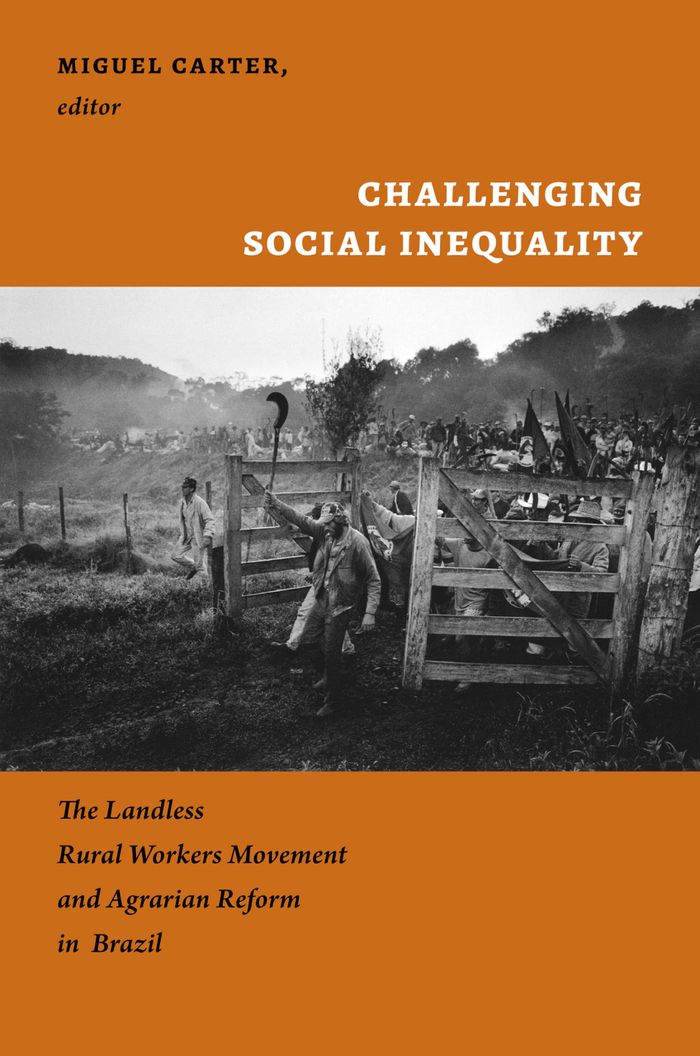
In ''Challenging Social Inequality'', an international and interdisciplinary group of scholars and development workers explores the causes, consequences, and contemporary reactions to Brazil's sharply unequal agrarian structure. They focus on the Landless Rural Workers Movement (MST)—Latin America's largest and most prominent social movement—and its ongoing efforts to confront historic patterns of inequality in the Brazilian countryside. Several essays provide essential historical background for understanding the MST. They examine Brazil's agrarian structure, state policies, and the formation of rural civil-society organizations. Other essays build on a frequently made distinction between the struggle for land and the struggle on the land. The first refers to the mobilization undertaken by landless peasants to demand government land redistribution. The struggle on the land takes place after the establishment of an official agricultural settlement. The main efforts during this phase are geared toward developing productive and meaningful rural communities. The last essays in the collection are wide-ranging analyses of the MST, which delve into the movement's relations with recent governments and its impact on other Brazilian social movements. In the conclusion, Miguel Carter appraises the future of agrarian reform in Brazil.
Challenging social inequality: The Landless Rural Workers Moverment and agrarian reform in Brazil
Actions:
Price:
$51.95
(available to order)
Summary:
In ''Challenging Social Inequality'', an international and interdisciplinary group of scholars and development workers explores the causes, consequences, and contemporary reactions to Brazil's sharply unequal agrarian structure. They focus on the Landless Rural Workers Movement (MST)—Latin America's largest and most prominent social movement—and its ongoing efforts to confront historic patterns of inequality in the Brazilian countryside. Several essays provide essential historical background for understanding the MST. They examine Brazil's agrarian structure, state policies, and the formation of rural civil-society organizations. Other essays build on a frequently made distinction between the struggle for land and the struggle on the land. The first refers to the mobilization undertaken by landless peasants to demand government land redistribution. The struggle on the land takes place after the establishment of an official agricultural settlement. The main efforts during this phase are geared toward developing productive and meaningful rural communities. The last essays in the collection are wide-ranging analyses of the MST, which delve into the movement's relations with recent governments and its impact on other Brazilian social movements. In the conclusion, Miguel Carter appraises the future of agrarian reform in Brazil.
Form:
books
books
Publication:
June 2015
June 2015
Subject:
Current Exhibitions
Current Exhibitions
Form:
books
books
Title:
Brecht Evens : The making of
Brecht Evens : The making of
Actions:
Price:
$29.95
(available to order)
Summary:
The Making Of is the follow-up to international sensation Brecht Evens's Eisner-nominated debut, The Wrong Place. With lush watercolors and his characteristic wit, Evens details the fumbling, amateurish foibles of the participants of a small art festival in the Flemish countryside. Pieterjan is invited to a small town as an honored guest. From the moment he arrives,(...)
$29.95
(available to order)
Summary:
The Making Of is the follow-up to international sensation Brecht Evens's Eisner-nominated debut, The Wrong Place. With lush watercolors and his characteristic wit, Evens details the fumbling, amateurish foibles of the participants of a small art festival in the Flemish countryside. Pieterjan is invited to a small town as an honored guest. From the moment he arrives,(...)
Title:
Brecht Evens : The making of
Actions:
Price:
$29.95
(available to order)
Summary:
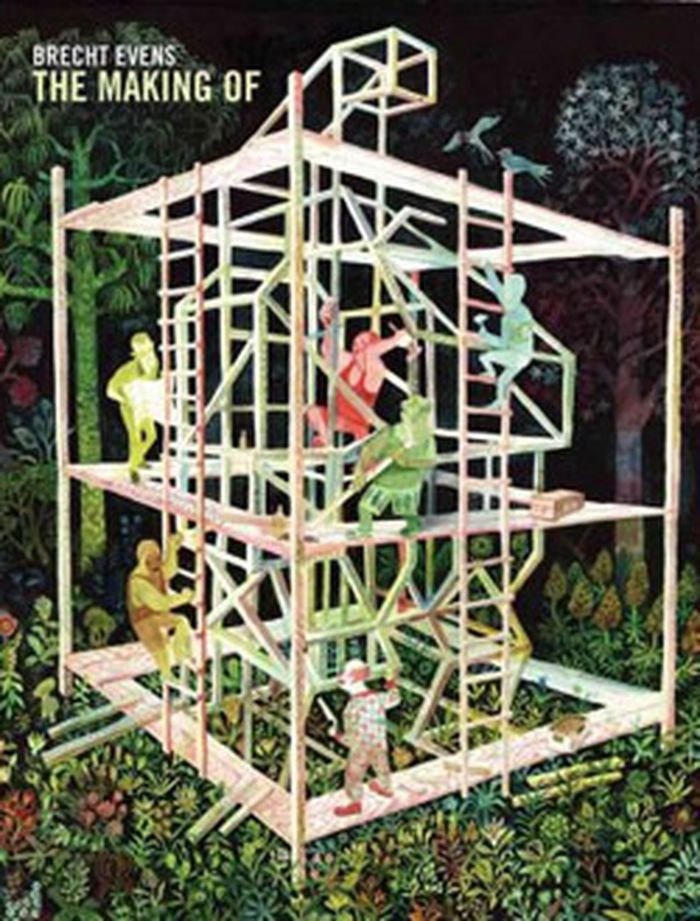
The Making Of is the follow-up to international sensation Brecht Evens's Eisner-nominated debut, The Wrong Place. With lush watercolors and his characteristic wit, Evens details the fumbling, amateurish foibles of the participants of a small art festival in the Flemish countryside. Pieterjan is invited to a small town as an honored guest. From the moment he arrives, things start going wrong, and since no one seems ready to step in, Pieterjan takes over the show. He decides to build a giant garden gnome as a symbol of Flemish identity, but the construction process brings buried tensions to the surface as the other artists become jealous of Pieterjan's authority. In The Making Of, Evens delves deep into the petty tensions, small misunderstandings, and deadpan humor that pervade modern relationships. With a keen eye for the subtleties of body language, Even's The Making Of builds on the iconic visual style showcased in the Eisner award nominated The Wrong Place, which was published around the world. Sweeping watercolors jump off the page, surrealist scenery intermingles with crowds of people, and small suburban plot homes have never looked so lovely.
Brecht Evens : The making of
Actions:
Price:
$29.95
(available to order)
Summary:
The Making Of is the follow-up to international sensation Brecht Evens's Eisner-nominated debut, The Wrong Place. With lush watercolors and his characteristic wit, Evens details the fumbling, amateurish foibles of the participants of a small art festival in the Flemish countryside. Pieterjan is invited to a small town as an honored guest. From the moment he arrives, things start going wrong, and since no one seems ready to step in, Pieterjan takes over the show. He decides to build a giant garden gnome as a symbol of Flemish identity, but the construction process brings buried tensions to the surface as the other artists become jealous of Pieterjan's authority. In The Making Of, Evens delves deep into the petty tensions, small misunderstandings, and deadpan humor that pervade modern relationships. With a keen eye for the subtleties of body language, Even's The Making Of builds on the iconic visual style showcased in the Eisner award nominated The Wrong Place, which was published around the world. Sweeping watercolors jump off the page, surrealist scenery intermingles with crowds of people, and small suburban plot homes have never looked so lovely.
Form:
books
books
Publication:
May 2012
May 2012
Subject:
Illustration
Illustration
Form:
books
books
Actions:
Price:
$34.00
(available to order)
Summary:
How can the different strands of modern architecture in Britain be understood? For many British people, it remains an alien cultural import and minority taste, yet British architecture has never stood higher in world esteem than at the close of the twentieth century. In this book Alan Powers shows how beneath today’s achievements in architecture, past conflicts have not(...)
$34.00
(available to order)
Summary:
How can the different strands of modern architecture in Britain be understood? For many British people, it remains an alien cultural import and minority taste, yet British architecture has never stood higher in world esteem than at the close of the twentieth century. In this book Alan Powers shows how beneath today’s achievements in architecture, past conflicts have not(...)
Title:
Britain : modern architecture in history
Actions:
Price:
$34.00
(available to order)
Summary:
How can the different strands of modern architecture in Britain be understood? For many British people, it remains an alien cultural import and minority taste, yet British architecture has never stood higher in world esteem than at the close of the twentieth century. In this book Alan Powers shows how beneath today’s achievements in architecture, past conflicts have not been resolved, as the country that invented industrial civilization has struggled to control its effect on cities and countryside. He examines developments and changes from 1900 to the present day in a series of thematic chapters, giving equal weight to technical, economic and moral aspects and demonstrating how architecture has responded to specific social needs and political pressures. Rather than giving a conventional account of stylistic tendencies, Powers listens to the arguments and conversations of the time in order to recapture the dominating issues of each decade, and locate the moments of transition in architecture and in the wider culture. Featuring more than 220 images, including both recent and historical photographs, "Britain" is an authoritative yet highly accessible account of twentieth-century British architecture. Giving due regard to the separate identities of England, Scotland and Wales, the book also adds a new and original dimension to the perennial problem of defining ‘Britain’ in the modern world.
Britain : modern architecture in history
Actions:
Price:
$34.00
(available to order)
Summary:
How can the different strands of modern architecture in Britain be understood? For many British people, it remains an alien cultural import and minority taste, yet British architecture has never stood higher in world esteem than at the close of the twentieth century. In this book Alan Powers shows how beneath today’s achievements in architecture, past conflicts have not been resolved, as the country that invented industrial civilization has struggled to control its effect on cities and countryside. He examines developments and changes from 1900 to the present day in a series of thematic chapters, giving equal weight to technical, economic and moral aspects and demonstrating how architecture has responded to specific social needs and political pressures. Rather than giving a conventional account of stylistic tendencies, Powers listens to the arguments and conversations of the time in order to recapture the dominating issues of each decade, and locate the moments of transition in architecture and in the wider culture. Featuring more than 220 images, including both recent and historical photographs, "Britain" is an authoritative yet highly accessible account of twentieth-century British architecture. Giving due regard to the separate identities of England, Scotland and Wales, the book also adds a new and original dimension to the perennial problem of defining ‘Britain’ in the modern world.
Form:
books
books
Publication:
July 2006, London
July 2006, London
Subject:
Architecture since 1900, Europe
Architecture since 1900, Europe
Form:
books
books
Title:
Francesca Woodman's notebook
Francesca Woodman's notebook
Actions:
Price:
$49.95
(available to order)
Summary:
The American photographer Francesca Woodman (1958-1981) spent a brief portion of her childhood in the countryside around Florence, living with her parents in an old farm whose dilapidated interiors were later to influence the backdrops of her mesmerizing self-portraits. In 1977 she returned to Italy, studying in Rome on a year-long RISD honors program. During this tenure,(...)
$49.95
(available to order)
Summary:
The American photographer Francesca Woodman (1958-1981) spent a brief portion of her childhood in the countryside around Florence, living with her parents in an old farm whose dilapidated interiors were later to influence the backdrops of her mesmerizing self-portraits. In 1977 she returned to Italy, studying in Rome on a year-long RISD honors program. During this tenure,(...)
Title:
Francesca Woodman's notebook
Actions:
Price:
$49.95
(available to order)
Summary:
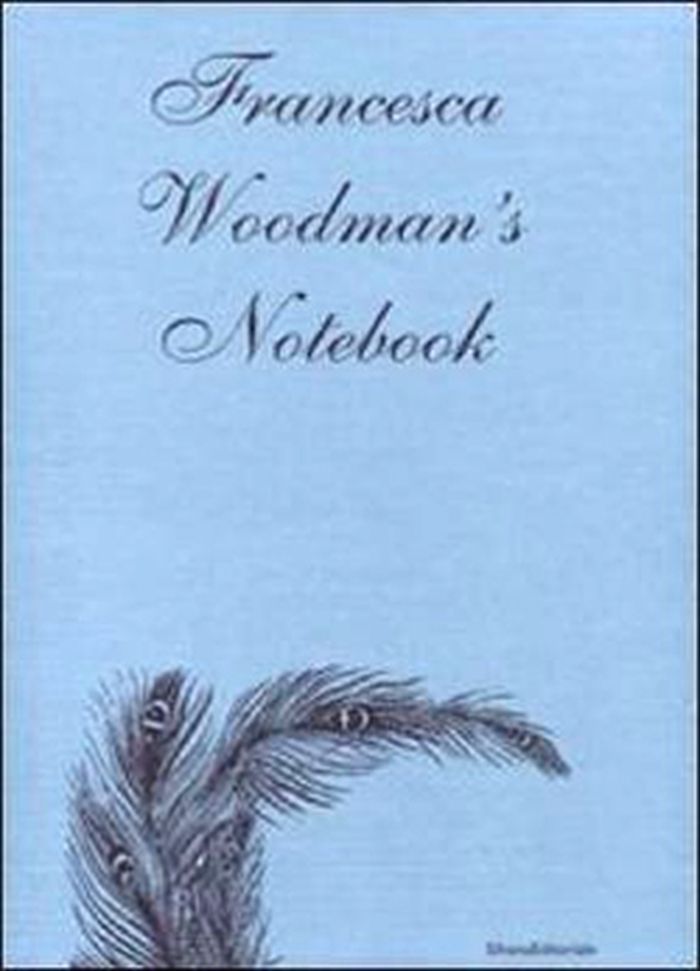
The American photographer Francesca Woodman (1958-1981) spent a brief portion of her childhood in the countryside around Florence, living with her parents in an old farm whose dilapidated interiors were later to influence the backdrops of her mesmerizing self-portraits. In 1977 she returned to Italy, studying in Rome on a year-long RISD honors program. During this tenure, Woodman found five tattered school exercise books, printed in 1906, side-stapled and inscribed in fine cursive penmanship with notes from physics lectures or poems in English and Italian. To these evocative objects, Woodman--already fully formed as the photographer we recognize and admire today--added her characteristic black-and-white photographs, either as small paper prints or as prints made on transparent film that allows the writing beneath to show through, further embellishing them with her own captions or remarks. This facsimile edition of one of these notebooks was selected for publication by Woodman's mother and father as an artist's book of particular beauty and revelatory content that provides unprecedented insight into the emphatically narrative logic of Woodman's photography. Housed in a lightweight printed box, it includes an afterword by George Woodman, Francesca's father, that contextualizes the work within the photographer's artist's book production.
Francesca Woodman's notebook
Actions:
Price:
$49.95
(available to order)
Summary:
The American photographer Francesca Woodman (1958-1981) spent a brief portion of her childhood in the countryside around Florence, living with her parents in an old farm whose dilapidated interiors were later to influence the backdrops of her mesmerizing self-portraits. In 1977 she returned to Italy, studying in Rome on a year-long RISD honors program. During this tenure, Woodman found five tattered school exercise books, printed in 1906, side-stapled and inscribed in fine cursive penmanship with notes from physics lectures or poems in English and Italian. To these evocative objects, Woodman--already fully formed as the photographer we recognize and admire today--added her characteristic black-and-white photographs, either as small paper prints or as prints made on transparent film that allows the writing beneath to show through, further embellishing them with her own captions or remarks. This facsimile edition of one of these notebooks was selected for publication by Woodman's mother and father as an artist's book of particular beauty and revelatory content that provides unprecedented insight into the emphatically narrative logic of Woodman's photography. Housed in a lightweight printed box, it includes an afterword by George Woodman, Francesca's father, that contextualizes the work within the photographer's artist's book production.
Form:
books
books
Publication:
March 2012
March 2012
Subject:
Contemporary Art Monographs
Contemporary Art Monographs


