


537 Results
Form:
books
books
Price:
$33.95
(available in store)
Summary:
In ''Brutalism'', eminent social and critical theorist Achille Mbembe invokes the architectural aesthetic of brutalism to describe our moment, caught up in the pathos of demolition and production on a planetary scale. Just as brutalist architecture creates an affect of overwhelming weight and destruction, Mbembe contends that contemporary capitalism crushes and dominates(...)
$33.95
(available in store)
Summary:
In ''Brutalism'', eminent social and critical theorist Achille Mbembe invokes the architectural aesthetic of brutalism to describe our moment, caught up in the pathos of demolition and production on a planetary scale. Just as brutalist architecture creates an affect of overwhelming weight and destruction, Mbembe contends that contemporary capitalism crushes and dominates(...)
Title:
Brutalism
Actions:
Price:
$33.95
(available in store)
Summary:
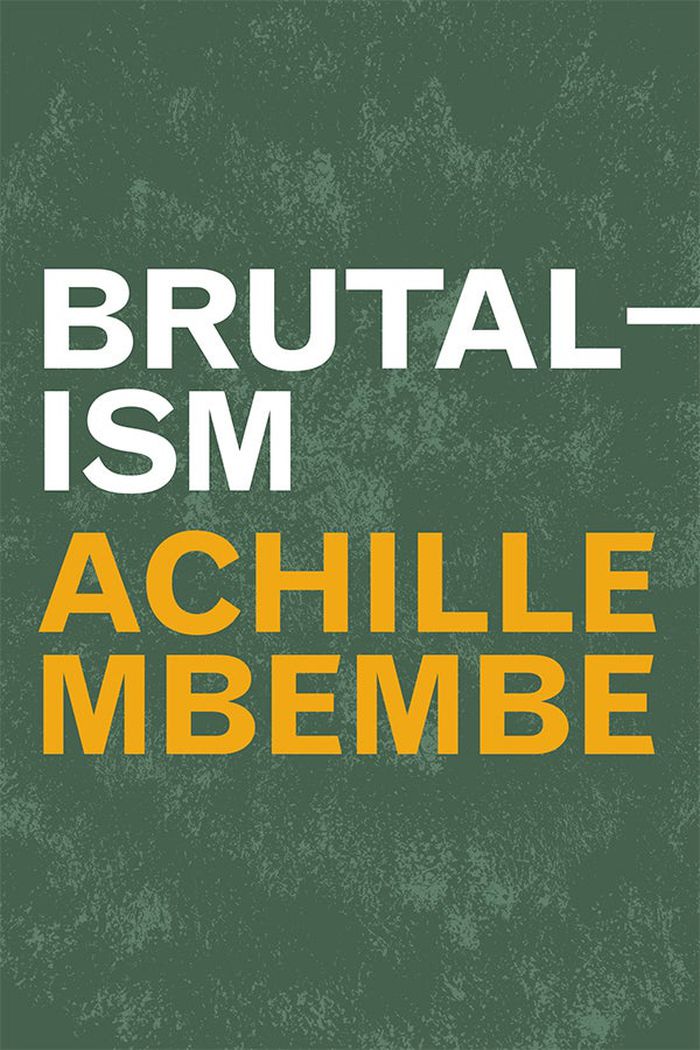
In ''Brutalism'', eminent social and critical theorist Achille Mbembe invokes the architectural aesthetic of brutalism to describe our moment, caught up in the pathos of demolition and production on a planetary scale. Just as brutalist architecture creates an affect of overwhelming weight and destruction, Mbembe contends that contemporary capitalism crushes and dominates all spheres of existence. In our digital, technologically focused era, capitalism has produced a becoming-artificial of humanity and the becoming-human of machines. This blurring of the natural and artificial presents a planetary existential threat in which contemporary society’s goal is to precipitate the mutation of the human species into a condition that is at once plastic and synthetic. Mbembe argues that Afro-diasporic thought presents the only solution for breaking the totalizing logic of contemporary capitalism: repairing that which is broken, developing a new planetary consciousness, and reforming a community of humans in solidarity with all living things.
Brutalism
Actions:
Price:
$33.95
(available in store)
Summary:
In ''Brutalism'', eminent social and critical theorist Achille Mbembe invokes the architectural aesthetic of brutalism to describe our moment, caught up in the pathos of demolition and production on a planetary scale. Just as brutalist architecture creates an affect of overwhelming weight and destruction, Mbembe contends that contemporary capitalism crushes and dominates all spheres of existence. In our digital, technologically focused era, capitalism has produced a becoming-artificial of humanity and the becoming-human of machines. This blurring of the natural and artificial presents a planetary existential threat in which contemporary society’s goal is to precipitate the mutation of the human species into a condition that is at once plastic and synthetic. Mbembe argues that Afro-diasporic thought presents the only solution for breaking the totalizing logic of contemporary capitalism: repairing that which is broken, developing a new planetary consciousness, and reforming a community of humans in solidarity with all living things.
Form:
books
books
Publication:
June 2024
June 2024
Subject:
Social
Social
Form:
books
books
Actions:
Price:
$80.00
(available in store)
Summary:
Between 1948 and 2016, David Goldblatt returned periodically to Fietas, a suburb west of Johannesburg's city centre, to photograph the impact of punitive segregation and ethnic cleansing wrought by apartheid legislation on its residents and landscape. Moved by the life force of the predominantly Indian community's families, shopkeepers, and small business owners,(...)
$80.00
(available in store)
Summary:
Between 1948 and 2016, David Goldblatt returned periodically to Fietas, a suburb west of Johannesburg's city centre, to photograph the impact of punitive segregation and ethnic cleansing wrought by apartheid legislation on its residents and landscape. Moved by the life force of the predominantly Indian community's families, shopkeepers, and small business owners,(...)
Title:
David Goldblatt: Fragments of Fietas
Actions:
Price:
$80.00
(available in store)
Summary:
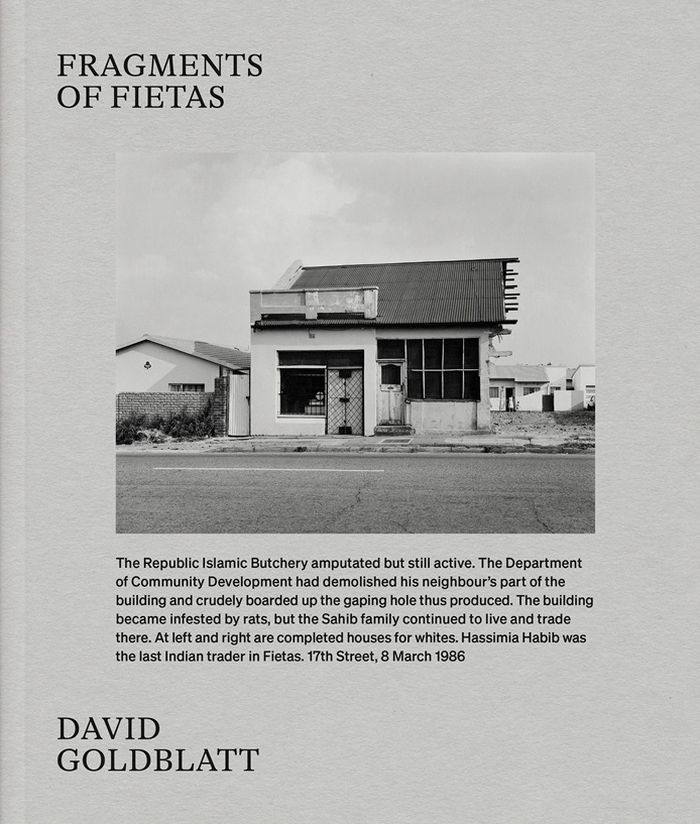
Between 1948 and 2016, David Goldblatt returned periodically to Fietas, a suburb west of Johannesburg's city centre, to photograph the impact of punitive segregation and ethnic cleansing wrought by apartheid legislation on its residents and landscape. Moved by the life force of the predominantly Indian community's families, shopkeepers, and small business owners, Goldblatt said attempted to grasp something of their life and what they had built. The resulting photographs, collected and published here for the first time, form a vivid social document of Fietas before, during, and after its destruction under the Group Areas Act. Earlier images of storefronts and domestic interiors contrast poignantly with those of their demolition from the late 1970s onwards. Dignified portraits of traders in their stores capture their determined efforts to build a life for their families. Interviews with past and present Fietas residents close the book, recalling the testimonials of Goldblatt's subjects in The Transported of Kwandebele and Ex-Offenders at the Scene of Crime.
David Goldblatt: Fragments of Fietas
Actions:
Price:
$80.00
(available in store)
Summary:
Between 1948 and 2016, David Goldblatt returned periodically to Fietas, a suburb west of Johannesburg's city centre, to photograph the impact of punitive segregation and ethnic cleansing wrought by apartheid legislation on its residents and landscape. Moved by the life force of the predominantly Indian community's families, shopkeepers, and small business owners, Goldblatt said attempted to grasp something of their life and what they had built. The resulting photographs, collected and published here for the first time, form a vivid social document of Fietas before, during, and after its destruction under the Group Areas Act. Earlier images of storefronts and domestic interiors contrast poignantly with those of their demolition from the late 1970s onwards. Dignified portraits of traders in their stores capture their determined efforts to build a life for their families. Interviews with past and present Fietas residents close the book, recalling the testimonials of Goldblatt's subjects in The Transported of Kwandebele and Ex-Offenders at the Scene of Crime.
Form:
books
books
Publication:
September 2025
September 2025
Subject:
Photography monographs
Photography monographs
Form:
books
books
Price:
$62.99
(available to order)
Summary:
For six months in 1961, Richard Nickel, John Vinci, and David Norris salvaged the interior and exterior ornamentation of the Garrick Theater, Adler & Sullivan’s magnificent architectural masterpiece in Chicago’s theater district. The building was replaced by a parking garage, and its demolition ignited the historic preservation movement in Chicago. The Garrick(...)
$62.99
(available to order)
Summary:
For six months in 1961, Richard Nickel, John Vinci, and David Norris salvaged the interior and exterior ornamentation of the Garrick Theater, Adler & Sullivan’s magnificent architectural masterpiece in Chicago’s theater district. The building was replaced by a parking garage, and its demolition ignited the historic preservation movement in Chicago. The Garrick(...)
Subject:
Architecture Monographs
Architecture Monographs
Publication:
October 2021
October 2021
Title:
Reconstructing the Garrick: Adler & Sullivan's lost masterpiece
Actions:
Price:
$62.99
(available to order)
Summary:
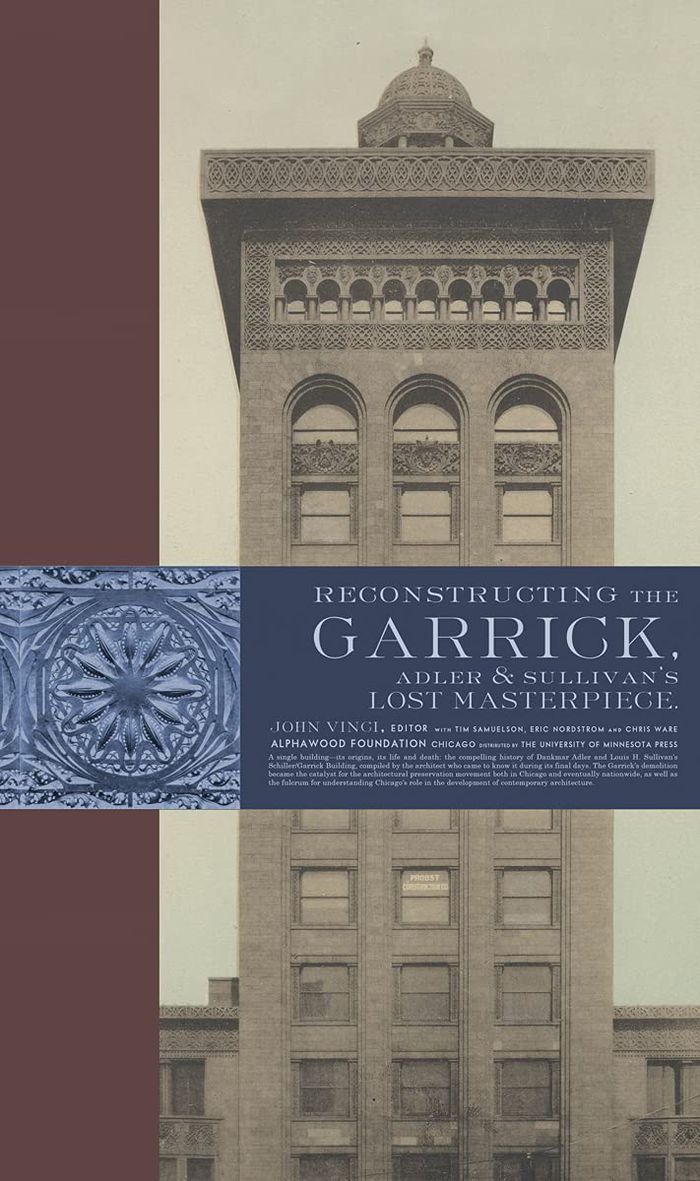
For six months in 1961, Richard Nickel, John Vinci, and David Norris salvaged the interior and exterior ornamentation of the Garrick Theater, Adler & Sullivan’s magnificent architectural masterpiece in Chicago’s theater district. The building was replaced by a parking garage, and its demolition ignited the historic preservation movement in Chicago. The Garrick (originally the Schiller Building) was built in 1892 and featured elaborate embellishments, especially in its theater and exterior, including the ornamentation and colorful decorative stenciling that would become hallmarks of Louis Sullivan’s career. ''Reconstructing the Garrick'' documents the enormous salvaging job undertaken to preserve elements of the building’s design, but also presents the full life story of the Garrick, featuring historic and architectural photographs, essays by prominent architectural and art historians, interviews, drawings, ephemera from throughout its lively history and details of its remarkable ornamentation—a significant resource and compelling tribute to one of Chicago’s finest lost buildings. A seventy-two-page facsimile of Richard Nickel’s salvage workbook is tipped into the binding.
Reconstructing the Garrick: Adler & Sullivan's lost masterpiece
Actions:
Price:
$62.99
(available to order)
Summary:
For six months in 1961, Richard Nickel, John Vinci, and David Norris salvaged the interior and exterior ornamentation of the Garrick Theater, Adler & Sullivan’s magnificent architectural masterpiece in Chicago’s theater district. The building was replaced by a parking garage, and its demolition ignited the historic preservation movement in Chicago. The Garrick (originally the Schiller Building) was built in 1892 and featured elaborate embellishments, especially in its theater and exterior, including the ornamentation and colorful decorative stenciling that would become hallmarks of Louis Sullivan’s career. ''Reconstructing the Garrick'' documents the enormous salvaging job undertaken to preserve elements of the building’s design, but also presents the full life story of the Garrick, featuring historic and architectural photographs, essays by prominent architectural and art historians, interviews, drawings, ephemera from throughout its lively history and details of its remarkable ornamentation—a significant resource and compelling tribute to one of Chicago’s finest lost buildings. A seventy-two-page facsimile of Richard Nickel’s salvage workbook is tipped into the binding.
Form:
books
books
Publication:
October 2021
October 2021
Subject:
Architecture Monographs
Architecture Monographs
Form:
books
books
Title:
The Maze : Donovan Wylie
The Maze : Donovan Wylie
Actions:
Price:
$69.95
(available to order)
Summary:
Between 2002 and 2003 Donovan Wylie spent almost a hundred days photographing inside the Maze prison. Through its history of protests, hunger strikes and escapes, this prison, holding both republican and loyalist prisoners, became synonymous with the Northern Ireland conflict. After the Belfast peace agreement in 1998, inmates were gradually released, but the Maze(...)
$69.95
(available to order)
Summary:
Between 2002 and 2003 Donovan Wylie spent almost a hundred days photographing inside the Maze prison. Through its history of protests, hunger strikes and escapes, this prison, holding both republican and loyalist prisoners, became synonymous with the Northern Ireland conflict. After the Belfast peace agreement in 1998, inmates were gradually released, but the Maze(...)
Title:
The Maze : Donovan Wylie
Actions:
Price:
$69.95
(available to order)
Summary:
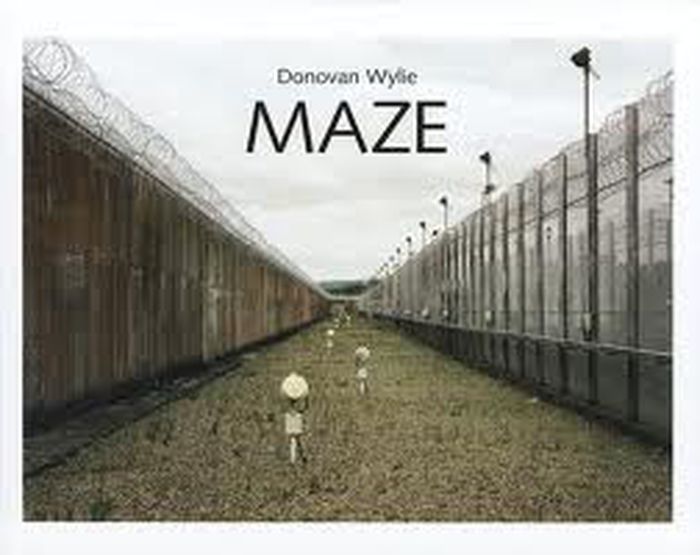
Between 2002 and 2003 Donovan Wylie spent almost a hundred days photographing inside the Maze prison. Through its history of protests, hunger strikes and escapes, this prison, holding both republican and loyalist prisoners, became synonymous with the Northern Ireland conflict. After the Belfast peace agreement in 1998, inmates were gradually released, but the Maze remained open. Wylie was the only photographer granted official and unlimited access to the site when the demolition of the prison began, symbolizing the end of the conflict in 2007. He systematically recorded its demise. The photographs which document this period are divided into four sections, each depicting a “layer” of the prison: the internal walls, the various modes of fencing, the H-blocks and, finally, the perimeter walls, which reveal the external landscape. First published in 2004 to critical acclaim, this new edition of Maze comes in three volumes: Maze 2002/03, Maze 2007/08, and a small volume including the essay The Architecture of Containment.
The Maze : Donovan Wylie
Actions:
Price:
$69.95
(available to order)
Summary:
Between 2002 and 2003 Donovan Wylie spent almost a hundred days photographing inside the Maze prison. Through its history of protests, hunger strikes and escapes, this prison, holding both republican and loyalist prisoners, became synonymous with the Northern Ireland conflict. After the Belfast peace agreement in 1998, inmates were gradually released, but the Maze remained open. Wylie was the only photographer granted official and unlimited access to the site when the demolition of the prison began, symbolizing the end of the conflict in 2007. He systematically recorded its demise. The photographs which document this period are divided into four sections, each depicting a “layer” of the prison: the internal walls, the various modes of fencing, the H-blocks and, finally, the perimeter walls, which reveal the external landscape. First published in 2004 to critical acclaim, this new edition of Maze comes in three volumes: Maze 2002/03, Maze 2007/08, and a small volume including the essay The Architecture of Containment.
Form:
books
books
Publication:
May 2009
May 2009
Subject:
Photography monographs
Photography monographs
Form:
books
books
Actions:
Price:
$48.95
(available to order)
Summary:
Although highly regarded during his short life--and honored by artists and architects today--the American artist Gordon Matta-Clark (1943-78) has been largely ignored within the history of art. Matta-Clark is best remembered for site-specific projects known as(...)
$48.95
(available to order)
Summary:
Although highly regarded during his short life--and honored by artists and architects today--the American artist Gordon Matta-Clark (1943-78) has been largely ignored within the history of art. Matta-Clark is best remembered for site-specific projects known as(...)
Publication:
October 2001
October 2001
Title:
Object to be destroyed : the work of Gordon Matta-Clark
Actions:
Price:
$48.95
(available to order)
Summary:
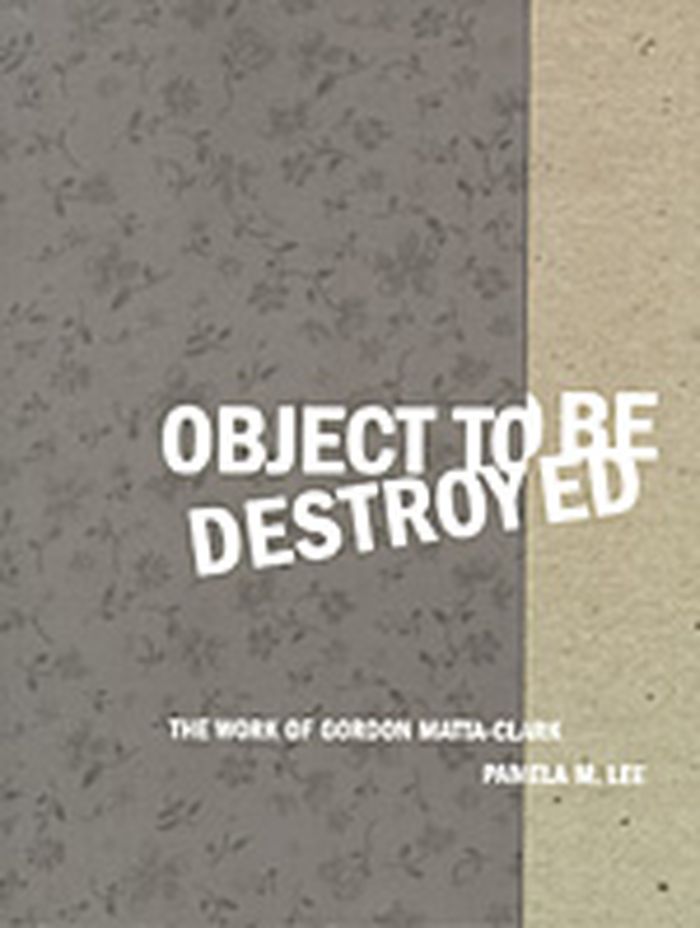
Although highly regarded during his short life--and honored by artists and architects today--the American artist Gordon Matta-Clark (1943-78) has been largely ignored within the history of art. Matta-Clark is best remembered for site-specific projects known as "building cuts." Sculptural transformations of architecture produced through direct cuts into buildings scheduled for demolition, these works now exist only as sculptural fragments, photographs, and film and video documentations. Matta-Clark is also remembered as a catalytic force in the creation of SoHo in the early 1970s. Through loft activities, site projects at the exhibition space 112 Greene Street, and his work at the restaurant Food, he participated in the production of a new social and artistic space. In this first critical account of Matta-Clark's work, Lee considers it in the context of the art of the 1970s--particularly site-specific, conceptual, and minimalist practices--and its confrontation with issues of community, property, the alienation of urban space, the "right to the city," and the ideologies of progress that have defined modern building programs.
Object to be destroyed : the work of Gordon Matta-Clark
Actions:
Price:
$48.95
(available to order)
Summary:
Although highly regarded during his short life--and honored by artists and architects today--the American artist Gordon Matta-Clark (1943-78) has been largely ignored within the history of art. Matta-Clark is best remembered for site-specific projects known as "building cuts." Sculptural transformations of architecture produced through direct cuts into buildings scheduled for demolition, these works now exist only as sculptural fragments, photographs, and film and video documentations. Matta-Clark is also remembered as a catalytic force in the creation of SoHo in the early 1970s. Through loft activities, site projects at the exhibition space 112 Greene Street, and his work at the restaurant Food, he participated in the production of a new social and artistic space. In this first critical account of Matta-Clark's work, Lee considers it in the context of the art of the 1970s--particularly site-specific, conceptual, and minimalist practices--and its confrontation with issues of community, property, the alienation of urban space, the "right to the city," and the ideologies of progress that have defined modern building programs.
Form:
books
books
Publication:
October 2001
October 2001
Form:
books
books
Actions:
Price:
$75.00
(available to order)
Summary:
Although highly regarded during his short life--and honored by artists and architects today--the American artist Gordon Matta-Clark (1943-78) has been largely ignored within the history of art. Matta-Clark is best remembered for site-specific projects known as(...)
$75.00
(available to order)
Summary:
Although highly regarded during his short life--and honored by artists and architects today--the American artist Gordon Matta-Clark (1943-78) has been largely ignored within the history of art. Matta-Clark is best remembered for site-specific projects known as(...)
Subject:
Contemporary Art Monographs
Contemporary Art Monographs
Publication:
December 1999, Cambridge, Mass.
December 1999, Cambridge, Mass.
Title:
Object to be destroyed : the work of Gordon Matta-Clark
Actions:
Price:
$75.00
(available to order)
Summary:
Although highly regarded during his short life--and honored by artists and architects today--the American artist Gordon Matta-Clark (1943-78) has been largely ignored within the history of art. Matta-Clark is best remembered for site-specific projects known as "building cuts." Sculptural transformations of architecture produced through direct cuts into buildings scheduled for demolition, these works now exist only as sculptural fragments, photographs, and film and video documentations. Matta-Clark is also remembered as a catalytic force in the creation of SoHo in the early 1970s. Through loft activities, site projects at the exhibition space 112 Greene Street, and his work at the restaurant Food, he participated in the production of a new social and artistic space. In this first critical account of Matta-Clark's work, Lee considers it in the context of the art of the 1970s--particularly site-specific, conceptual, and minimalist practices--and its confrontation with issues of community, property, the alienation of urban space, the "right to the city," and the ideologies of progress that have defined modern building programs.
Object to be destroyed : the work of Gordon Matta-Clark
Actions:
Price:
$75.00
(available to order)
Summary:
Although highly regarded during his short life--and honored by artists and architects today--the American artist Gordon Matta-Clark (1943-78) has been largely ignored within the history of art. Matta-Clark is best remembered for site-specific projects known as "building cuts." Sculptural transformations of architecture produced through direct cuts into buildings scheduled for demolition, these works now exist only as sculptural fragments, photographs, and film and video documentations. Matta-Clark is also remembered as a catalytic force in the creation of SoHo in the early 1970s. Through loft activities, site projects at the exhibition space 112 Greene Street, and his work at the restaurant Food, he participated in the production of a new social and artistic space. In this first critical account of Matta-Clark's work, Lee considers it in the context of the art of the 1970s--particularly site-specific, conceptual, and minimalist practices--and its confrontation with issues of community, property, the alienation of urban space, the "right to the city," and the ideologies of progress that have defined modern building programs.
Form:
books
books
Publication:
December 1999, Cambridge, Mass.
December 1999, Cambridge, Mass.
Subject:
Contemporary Art Monographs
Contemporary Art Monographs
Form:
books
books
Price:
$32.00
(available to order)
Summary:
''Resisting eviction'' centres tenant organizing in its investigation of gentrification, eviction and the financialization of rental housing. Andrew Crosby argues that racial discrimination, property relations and settler colonialism inform contemporary urban (re)development efforts and impacts affordable housing loss. How can the City of Ottawa aspire to become ''North(...)
$32.00
(available to order)
Summary:
''Resisting eviction'' centres tenant organizing in its investigation of gentrification, eviction and the financialization of rental housing. Andrew Crosby argues that racial discrimination, property relations and settler colonialism inform contemporary urban (re)development efforts and impacts affordable housing loss. How can the City of Ottawa aspire to become ''North(...)
Title:
Resisting eviction: Domicide and the financialization of rental housing
Actions:
Price:
$32.00
(available to order)
Summary:
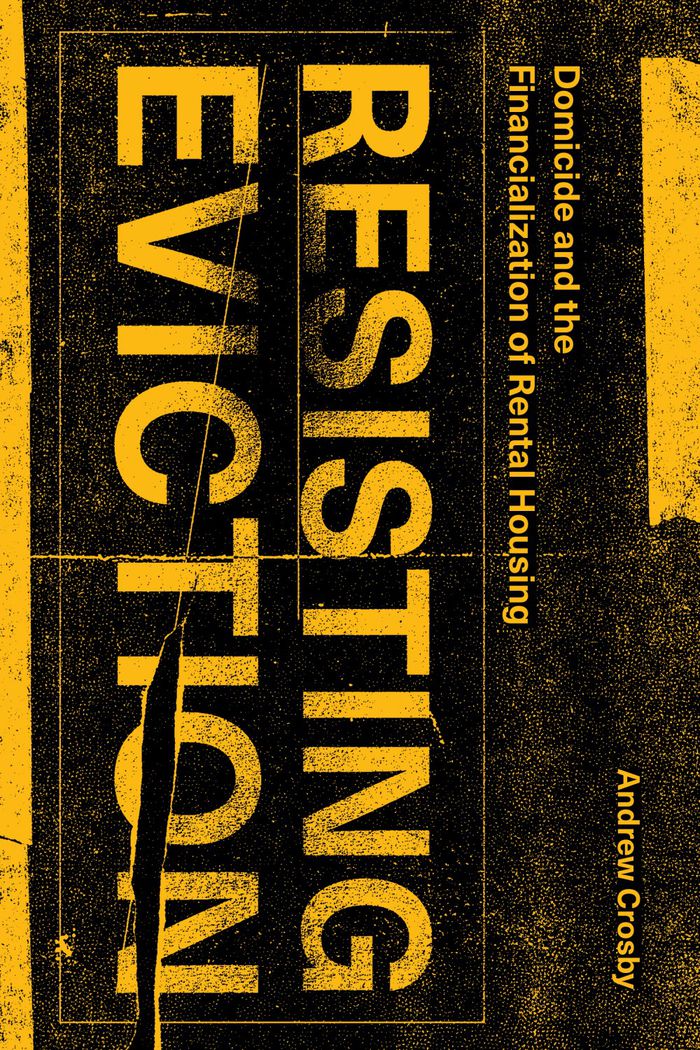
''Resisting eviction'' centres tenant organizing in its investigation of gentrification, eviction and the financialization of rental housing. Andrew Crosby argues that racial discrimination, property relations and settler colonialism inform contemporary urban (re)development efforts and impacts affordable housing loss. How can the City of Ottawa aspire to become ''North America’s most liveable mid-sized city'' while large-scale, demolition-driven evictions displace hundreds of people and destroy a community? Troubling discourses of urban liveability, revitalization and improvement, Crosby examines the deliberate destruction of home—domicide—and tenant resistance in the Heron Gate neighbourhood in Ottawa, on unceded Algonquin land. Heron Gate is a large rental neighbourhood owned by one multi-billion-dollar real estate investment firm. Around 800 people—predominantly lower-income, racialized households—have been demovicted and displaced from the neighbourhood since 2016, leading to the emergence of the Herongate Tenant Coalition to fight the evictions and confront the landlord-developer. This case study is meticulously documented through political activist ethnography, making this book a brilliant example of ethical engagement and methodological integrity.
Resisting eviction: Domicide and the financialization of rental housing
Actions:
Price:
$32.00
(available to order)
Summary:
''Resisting eviction'' centres tenant organizing in its investigation of gentrification, eviction and the financialization of rental housing. Andrew Crosby argues that racial discrimination, property relations and settler colonialism inform contemporary urban (re)development efforts and impacts affordable housing loss. How can the City of Ottawa aspire to become ''North America’s most liveable mid-sized city'' while large-scale, demolition-driven evictions displace hundreds of people and destroy a community? Troubling discourses of urban liveability, revitalization and improvement, Crosby examines the deliberate destruction of home—domicide—and tenant resistance in the Heron Gate neighbourhood in Ottawa, on unceded Algonquin land. Heron Gate is a large rental neighbourhood owned by one multi-billion-dollar real estate investment firm. Around 800 people—predominantly lower-income, racialized households—have been demovicted and displaced from the neighbourhood since 2016, leading to the emergence of the Herongate Tenant Coalition to fight the evictions and confront the landlord-developer. This case study is meticulously documented through political activist ethnography, making this book a brilliant example of ethical engagement and methodological integrity.
Form:
books
books
Publication:
October 2023
October 2023
Subject:
Humans and cities
Humans and cities
Form:
books
books
Price:
$66.95
(available in store)
Summary:
Bringing together real-world examples, "Architecture and energy" offers starting points for how to approach construction today and into the future. The energy requirements of buildings are enormous, resulting in a significant proportion of global carbon dioxide emissions, both in the construction phase and during the building’s use and eventual demolition. In an era of(...)
$66.95
(available in store)
Summary:
Bringing together real-world examples, "Architecture and energy" offers starting points for how to approach construction today and into the future. The energy requirements of buildings are enormous, resulting in a significant proportion of global carbon dioxide emissions, both in the construction phase and during the building’s use and eventual demolition. In an era of(...)
Title:
Architecture and energy: Building in the age of climate change
Actions:
Price:
$66.95
(available in store)
Summary:
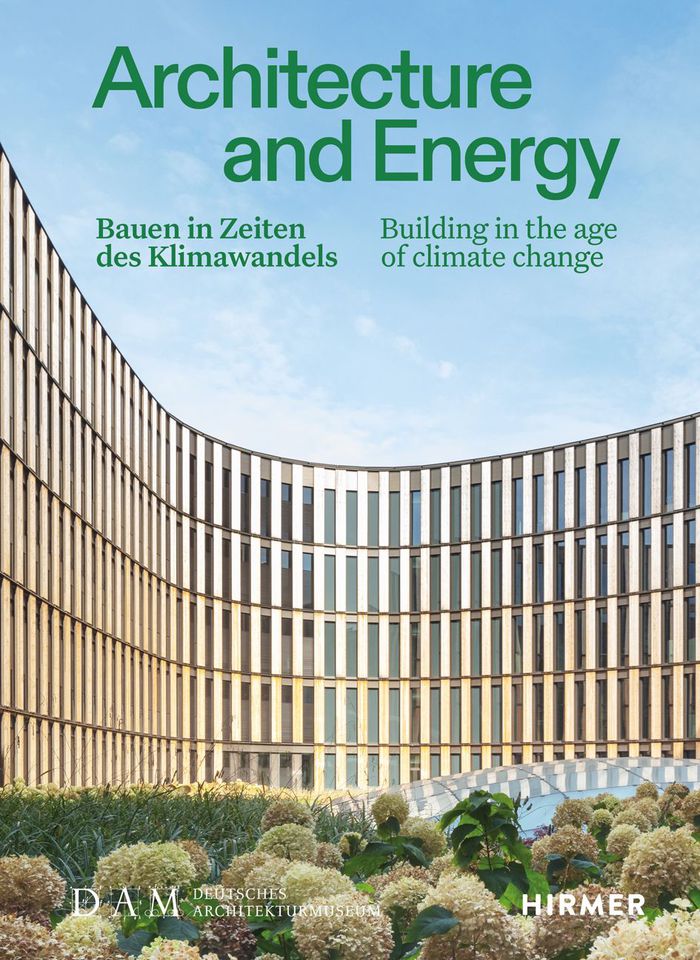
Bringing together real-world examples, "Architecture and energy" offers starting points for how to approach construction today and into the future. The energy requirements of buildings are enormous, resulting in a significant proportion of global carbon dioxide emissions, both in the construction phase and during the building’s use and eventual demolition. In an era of energy transition and extreme weather phenomena, the question of how we build in a time of climate change becomes all the more urgent. A sustainably-built wood and concrete supermarket that includes a roof farm, a kindergarten constructed from locally sourced recycled materials, renovating an office building so that it can remove its air conditioning and ventilation systems: in addition to the choice of materials and innovative operating concepts, the possibilities for reducing emissions and energy requirements lie above all in thinking about the entire life cycle of a building, including refurbishing rather than new construction when possible. This volume presents international best-practice projects characterized by sustainable design and provides forward-looking answers.
Architecture and energy: Building in the age of climate change
Actions:
Price:
$66.95
(available in store)
Summary:
Bringing together real-world examples, "Architecture and energy" offers starting points for how to approach construction today and into the future. The energy requirements of buildings are enormous, resulting in a significant proportion of global carbon dioxide emissions, both in the construction phase and during the building’s use and eventual demolition. In an era of energy transition and extreme weather phenomena, the question of how we build in a time of climate change becomes all the more urgent. A sustainably-built wood and concrete supermarket that includes a roof farm, a kindergarten constructed from locally sourced recycled materials, renovating an office building so that it can remove its air conditioning and ventilation systems: in addition to the choice of materials and innovative operating concepts, the possibilities for reducing emissions and energy requirements lie above all in thinking about the entire life cycle of a building, including refurbishing rather than new construction when possible. This volume presents international best-practice projects characterized by sustainable design and provides forward-looking answers.
Form:
books
books
Publication:
July 2025
July 2025
Subject:
Green Architecture
Green Architecture
Form:
books
books
Actions:
Price:
$65.00
(available in store)
Summary:
"How to build a river," through photographs and incisive, contextualizing essays, ventures behind the construction hoardings of the Port Lands Flood Protection project to reveal the transformation of hundreds of acres of polluted brownfields into a new public park, a new river and a site for future housing. Awarded to photographers Vid Ingelevics and Ryan Walker in 2019,(...)
$65.00
(available in store)
Summary:
"How to build a river," through photographs and incisive, contextualizing essays, ventures behind the construction hoardings of the Port Lands Flood Protection project to reveal the transformation of hundreds of acres of polluted brownfields into a new public park, a new river and a site for future housing. Awarded to photographers Vid Ingelevics and Ryan Walker in 2019,(...)
Title:
How to build a river: Vid Ingelevics and Ryan Walker
Actions:
Price:
$65.00
(available in store)
Summary:
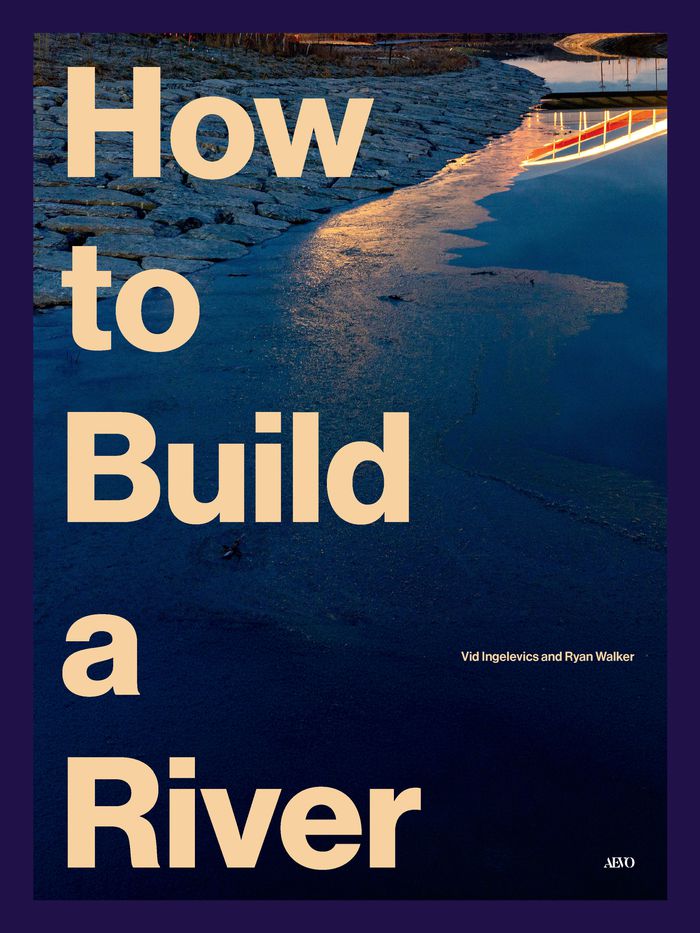
"How to build a river," through photographs and incisive, contextualizing essays, ventures behind the construction hoardings of the Port Lands Flood Protection project to reveal the transformation of hundreds of acres of polluted brownfields into a new public park, a new river and a site for future housing. Awarded to photographers Vid Ingelevics and Ryan Walker in 2019, the commission resulted in an illuminating series of photographs that explore key themes and historical contexts of this legacy-building endeavour. Central to this project was the construction of a new wider, naturalized mouth for the Don River as well as a new public park on this former brownfield site. Additionally, the photographs explore the necessary demolition of many existing industrial buildings, the involvement of First Nations, the excavation of the new river valley and the complex bio-engineering techniques involved, archeological discoveries during the excavation, the re-naturalization of the site and, most recently, the opening of a significant section of Biidaasige Park to the public in July 2025.
How to build a river: Vid Ingelevics and Ryan Walker
Actions:
Price:
$65.00
(available in store)
Summary:
"How to build a river," through photographs and incisive, contextualizing essays, ventures behind the construction hoardings of the Port Lands Flood Protection project to reveal the transformation of hundreds of acres of polluted brownfields into a new public park, a new river and a site for future housing. Awarded to photographers Vid Ingelevics and Ryan Walker in 2019, the commission resulted in an illuminating series of photographs that explore key themes and historical contexts of this legacy-building endeavour. Central to this project was the construction of a new wider, naturalized mouth for the Don River as well as a new public park on this former brownfield site. Additionally, the photographs explore the necessary demolition of many existing industrial buildings, the involvement of First Nations, the excavation of the new river valley and the complex bio-engineering techniques involved, archeological discoveries during the excavation, the re-naturalization of the site and, most recently, the opening of a significant section of Biidaasige Park to the public in July 2025.
Form:
books
books
Publication:
September 2026
September 2026
Subject:
Photography monographs
Photography monographs
Form:
books
books
Actions:
Price:
$39.95
(available to order)
Summary:
Glasgow’s rapid industrial development in the nineteenth and early twentieth centuries left a legacy of unemployment and cramped housing. Nowhere was this more apparent than in the Gorbals, just south of the river Clyde. Over the past 150 years, numerous efforts have been made to clean up the area; the Gorbals has been razed to the ground and rebuilt three times during(...)
$39.95
(available to order)
Summary:
Glasgow’s rapid industrial development in the nineteenth and early twentieth centuries left a legacy of unemployment and cramped housing. Nowhere was this more apparent than in the Gorbals, just south of the river Clyde. Over the past 150 years, numerous efforts have been made to clean up the area; the Gorbals has been razed to the ground and rebuilt three times during(...)
Title:
Arcade: artists and place-making
Actions:
Price:
$39.95
(available to order)
Summary:
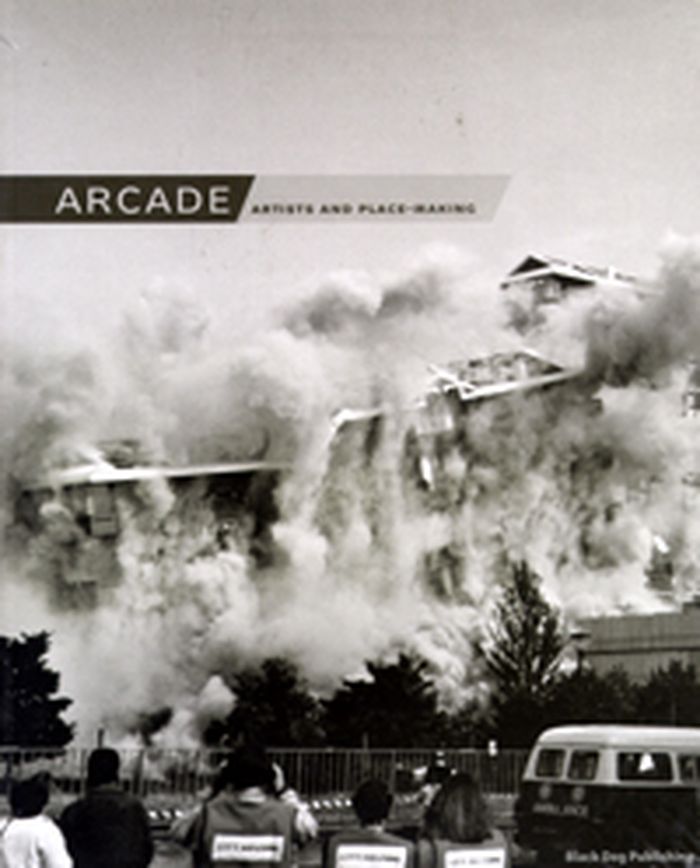
Glasgow’s rapid industrial development in the nineteenth and early twentieth centuries left a legacy of unemployment and cramped housing. Nowhere was this more apparent than in the Gorbals, just south of the river Clyde. Over the past 150 years, numerous efforts have been made to clean up the area; the Gorbals has been razed to the ground and rebuilt three times during this period, with the first two of these new ‘designed communities’ failing spectacularly. The most recent initiative has involved the demolition of the infamous, monolithic 1960s tower blocks, designed by Basil Spence, and their replacement with modern, low-rise flats. Central to the success of this latest regeneration has been a unique artwork project that has created cultural continuity in an area undergoing massive change. More than 20 international artists have been commissioned by The Artworks Programme to work with architects, developers and the community in creating permanent and temporary artworks in the UK’s largest ‘Percent for Art’ scheme. Now at the tail end of this redevelopment, Arcade surveys and assesses these projects, and also raises wider questions about the role and impact artists have in the regeneration of urban spaces.
Arcade: artists and place-making
Actions:
Price:
$39.95
(available to order)
Summary:
Glasgow’s rapid industrial development in the nineteenth and early twentieth centuries left a legacy of unemployment and cramped housing. Nowhere was this more apparent than in the Gorbals, just south of the river Clyde. Over the past 150 years, numerous efforts have been made to clean up the area; the Gorbals has been razed to the ground and rebuilt three times during this period, with the first two of these new ‘designed communities’ failing spectacularly. The most recent initiative has involved the demolition of the infamous, monolithic 1960s tower blocks, designed by Basil Spence, and their replacement with modern, low-rise flats. Central to the success of this latest regeneration has been a unique artwork project that has created cultural continuity in an area undergoing massive change. More than 20 international artists have been commissioned by The Artworks Programme to work with architects, developers and the community in creating permanent and temporary artworks in the UK’s largest ‘Percent for Art’ scheme. Now at the tail end of this redevelopment, Arcade surveys and assesses these projects, and also raises wider questions about the role and impact artists have in the regeneration of urban spaces.
Form:
books
books
Publication:
October 2006, London
October 2006, London
Subject:
Contemporary Art Monographs
Contemporary Art Monographs


