


525 Results
Form:
journals and magazines
journals and magazines
Actions:
Price:
$39.95
(available in store)
Summary:
The relation between formal and informal may be changing due to the introduction of new technologies and the way these are used. Informality can be interpreted as a positive quality hinting at individual freedom, or even be romanticised as a bottom-up, empowering force. But informality as a safety valve for a system unable to adjust to changing conditions smoothly and(...)
$39.95
(available in store)
Summary:
The relation between formal and informal may be changing due to the introduction of new technologies and the way these are used. Informality can be interpreted as a positive quality hinting at individual freedom, or even be romanticised as a bottom-up, empowering force. But informality as a safety valve for a system unable to adjust to changing conditions smoothly and(...)
Title:
Volume 52: the end of informality
Actions:
Price:
$39.95
(available in store)
Summary:
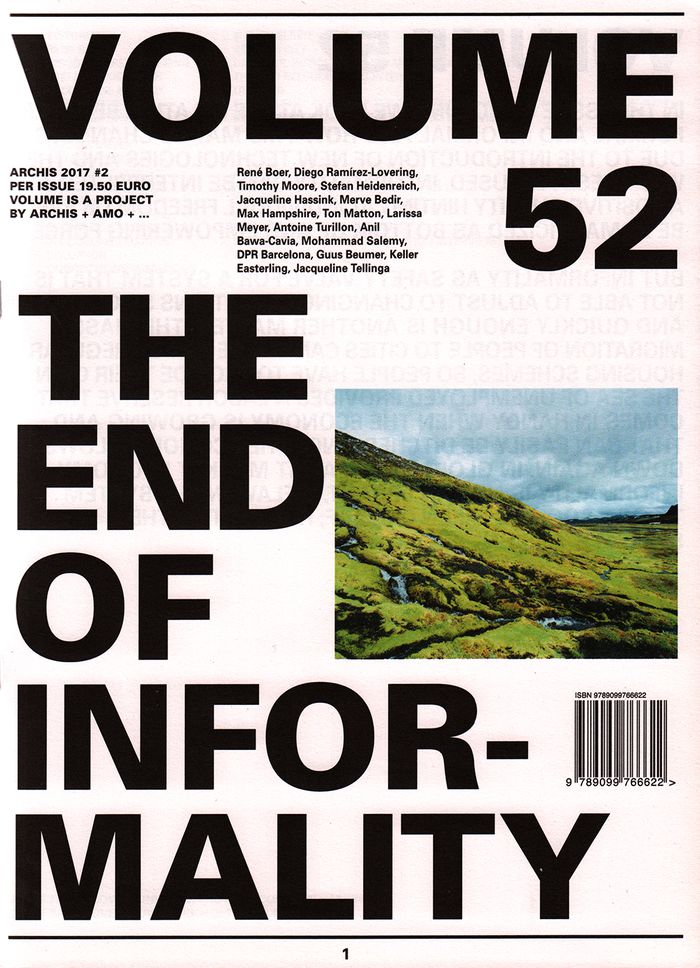
The relation between formal and informal may be changing due to the introduction of new technologies and the way these are used. Informality can be interpreted as a positive quality hinting at individual freedom, or even be romanticised as a bottom-up, empowering force. But informality as a safety valve for a system unable to adjust to changing conditions smoothly and quickly is another matter. Consider the mass migrations of people who must provide their own housing, or the vast numbers of unemployed who provide labour in a growing economy but are easily discarded later. With texts by Guus Beumer, René Boer, Keller Easterling, Jacqueline Hassink, and others.
Volume 52: the end of informality
Actions:
Price:
$39.95
(available in store)
Summary:
The relation between formal and informal may be changing due to the introduction of new technologies and the way these are used. Informality can be interpreted as a positive quality hinting at individual freedom, or even be romanticised as a bottom-up, empowering force. But informality as a safety valve for a system unable to adjust to changing conditions smoothly and quickly is another matter. Consider the mass migrations of people who must provide their own housing, or the vast numbers of unemployed who provide labour in a growing economy but are easily discarded later. With texts by Guus Beumer, René Boer, Keller Easterling, Jacqueline Hassink, and others.
Form:
journals and magazines
journals and magazines
Publication:
May 2018
May 2018
Subject:
Magazines
Magazines
Form:
books
books
Price:
$24.95
(available in store)
Summary:
Out of the introduction: "What you'll see in these pages to come will show you how some have creatively changed the throwaway cycle. Reusing is not only an environmental issue or prone only to physical objects. Ultimately, by not wasting raw materials you are also choosing to not waste somebody's labour and time. Before using anything new, we checked if there was already(...)
$24.95
(available in store)
Summary:
Out of the introduction: "What you'll see in these pages to come will show you how some have creatively changed the throwaway cycle. Reusing is not only an environmental issue or prone only to physical objects. Ultimately, by not wasting raw materials you are also choosing to not waste somebody's labour and time. Before using anything new, we checked if there was already(...)
Subject:
Green Architecture
Green Architecture
Publication:
October 2008, Helsinki
October 2008, Helsinki
Title:
Reusable
Actions:
Price:
$24.95
(available in store)
Summary:
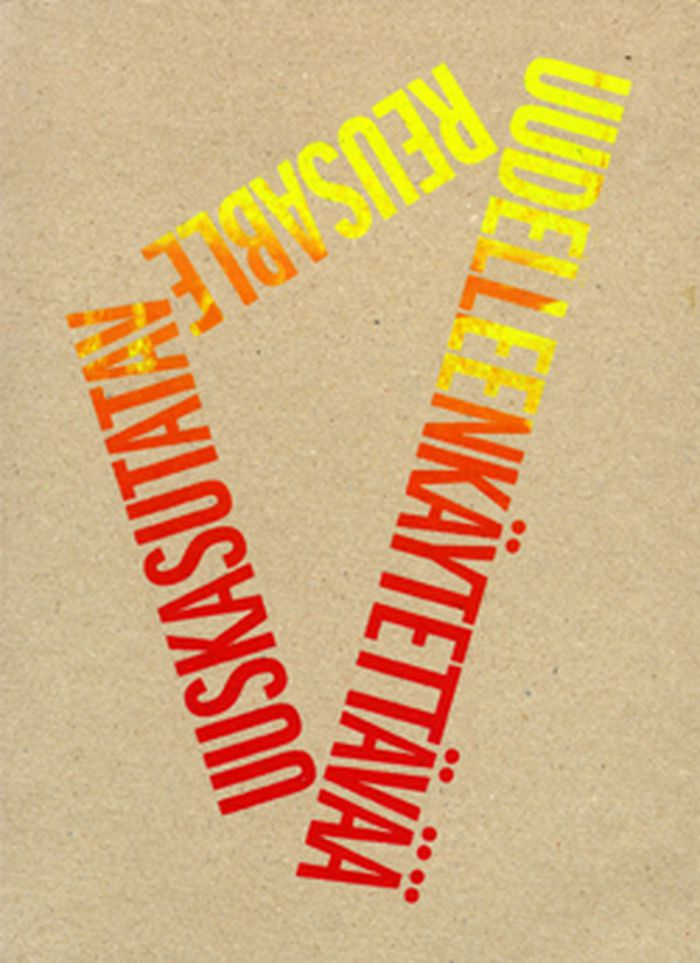
Out of the introduction: "What you'll see in these pages to come will show you how some have creatively changed the throwaway cycle. Reusing is not only an environmental issue or prone only to physical objects. Ultimately, by not wasting raw materials you are also choosing to not waste somebody's labour and time. Before using anything new, we checked if there was already something available, be it a photo or a written text. You will recognize this in some cases, when seeing scanned pages with a little bit of extra "noise" intentionally carried over from their past lives. We are reusing ideas that are good and well worth spreading."
Reusable
Actions:
Price:
$24.95
(available in store)
Summary:
Out of the introduction: "What you'll see in these pages to come will show you how some have creatively changed the throwaway cycle. Reusing is not only an environmental issue or prone only to physical objects. Ultimately, by not wasting raw materials you are also choosing to not waste somebody's labour and time. Before using anything new, we checked if there was already something available, be it a photo or a written text. You will recognize this in some cases, when seeing scanned pages with a little bit of extra "noise" intentionally carried over from their past lives. We are reusing ideas that are good and well worth spreading."
Form:
books
books
Publication:
October 2008, Helsinki
October 2008, Helsinki
Subject:
Green Architecture
Green Architecture
Form:
books
books
Actions:
Price:
$135.00
(available to order)
Summary:
Able to work anywhere we have a tortured relationship with the office today. Desperate to work again in physically shared spaces, we are also now questioning whether offices are needed at all. Offices themselves labour under intolerable forces too: 21st-century building regulations suggest redesigning them every seven-to-ten years, managerial strategies shift every five(...)
$135.00
(available to order)
Summary:
Able to work anywhere we have a tortured relationship with the office today. Desperate to work again in physically shared spaces, we are also now questioning whether offices are needed at all. Offices themselves labour under intolerable forces too: 21st-century building regulations suggest redesigning them every seven-to-ten years, managerial strategies shift every five(...)
Subject:
Commercial interiors, Building types
Commercial interiors, Building types
Publication:
May 2022
May 2022
Title:
Back to the office: 50 revolutionary office buildings
Actions:
Price:
$135.00
(available to order)
Summary:
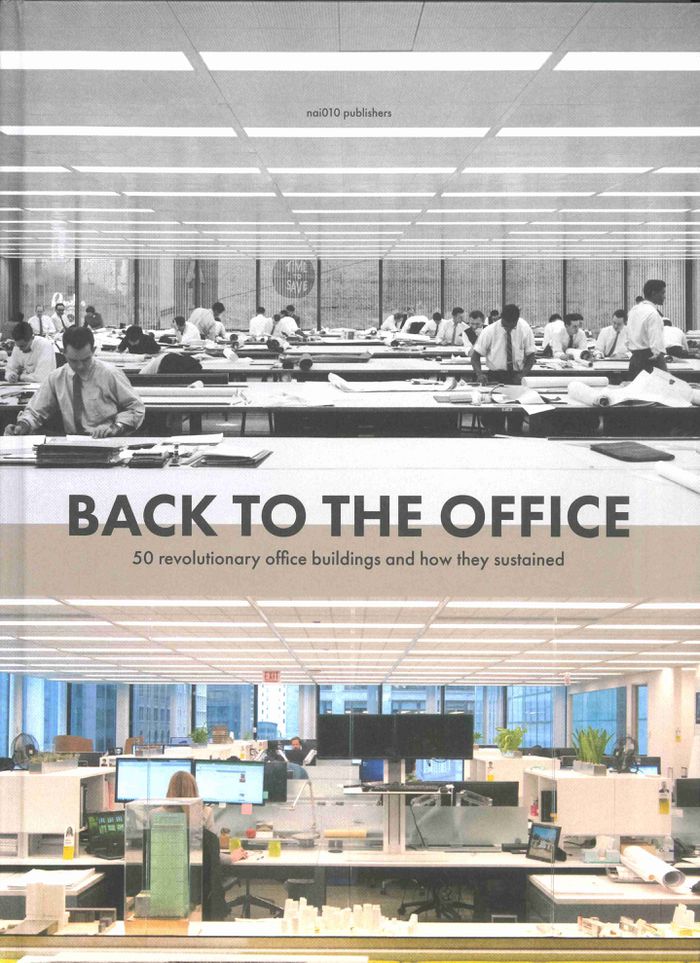
Able to work anywhere we have a tortured relationship with the office today. Desperate to work again in physically shared spaces, we are also now questioning whether offices are needed at all. Offices themselves labour under intolerable forces too: 21st-century building regulations suggest redesigning them every seven-to-ten years, managerial strategies shift every five years, and employees cycle every two. As a result, offices are renewed with alarming frequency. With the future of our workspaces so uncertain, Back to the Office works overtime inside the revolutionary offices of the 20th century, and asks what endured from their architecture, their materials, and the work ideologies they embodied.
Back to the office: 50 revolutionary office buildings
Actions:
Price:
$135.00
(available to order)
Summary:
Able to work anywhere we have a tortured relationship with the office today. Desperate to work again in physically shared spaces, we are also now questioning whether offices are needed at all. Offices themselves labour under intolerable forces too: 21st-century building regulations suggest redesigning them every seven-to-ten years, managerial strategies shift every five years, and employees cycle every two. As a result, offices are renewed with alarming frequency. With the future of our workspaces so uncertain, Back to the Office works overtime inside the revolutionary offices of the 20th century, and asks what endured from their architecture, their materials, and the work ideologies they embodied.
Form:
books
books
Publication:
May 2022
May 2022
Subject:
Commercial interiors, Building types
Commercial interiors, Building types
Form:
journals and magazines
journals and magazines
Title:
Scapegoat 07 : Incarceration
Scapegoat 07 : Incarceration
Actions:
Price:
$25.00
(available to order)
Summary:
As a mytheme, the figure of the scapegoat carries the burden of the city and its sins. Walking in exile, the scapegoat was once freed from the constraints of civilization. Today, with no land left unmapped, and with processes of urbanization central to political economic struggles, Scapegoat is exiled within the reality of global capital. The journal examines the(...)
$25.00
(available to order)
Summary:
As a mytheme, the figure of the scapegoat carries the burden of the city and its sins. Walking in exile, the scapegoat was once freed from the constraints of civilization. Today, with no land left unmapped, and with processes of urbanization central to political economic struggles, Scapegoat is exiled within the reality of global capital. The journal examines the(...)
Title:
Scapegoat 07 : Incarceration
Actions:
Price:
$25.00
(available to order)
Summary:
As a mytheme, the figure of the scapegoat carries the burden of the city and its sins. Walking in exile, the scapegoat was once freed from the constraints of civilization. Today, with no land left unmapped, and with processes of urbanization central to political economic struggles, Scapegoat is exiled within the reality of global capital. The journal examines the relationship between capitalism and the built environment, confronting the coercive and violent organization of space, the exploitation of labour and resources, and the unequal distribution of environmental risks and benefits. Throughout our investigation of design and its promises, we return to the politics of making as a politics to be constructed.
Scapegoat 07 : Incarceration
Actions:
Price:
$25.00
(available to order)
Summary:
As a mytheme, the figure of the scapegoat carries the burden of the city and its sins. Walking in exile, the scapegoat was once freed from the constraints of civilization. Today, with no land left unmapped, and with processes of urbanization central to political economic struggles, Scapegoat is exiled within the reality of global capital. The journal examines the relationship between capitalism and the built environment, confronting the coercive and violent organization of space, the exploitation of labour and resources, and the unequal distribution of environmental risks and benefits. Throughout our investigation of design and its promises, we return to the politics of making as a politics to be constructed.
Form:
journals and magazines
journals and magazines
Publication:
December 2014
December 2014
Subject:
Magazines
Magazines
Form:
books
books

Title:
Agnes Martin: night sea
Agnes Martin: night sea
Actions:
Price:
$27.95
(available to order)
Summary:
Agnes Martin’s Night Sea (1963) is a large canvas of hand-drawn rectangular grids painted in luminous blue and gold. In this illustrated study, Suzanne Hudson presents the painting as the work of an artist, thinker, poet and writer, for whom self-presentation was a necessary part of making works public. With Night Sea, Hudson argues, Martin was moving from visible labour(...)
$27.95
(available to order)
Summary:
Agnes Martin’s Night Sea (1963) is a large canvas of hand-drawn rectangular grids painted in luminous blue and gold. In this illustrated study, Suzanne Hudson presents the painting as the work of an artist, thinker, poet and writer, for whom self-presentation was a necessary part of making works public. With Night Sea, Hudson argues, Martin was moving from visible labour(...)
Title:
Agnes Martin: night sea
Actions:
Price:
$27.95
(available to order)
Summary:
Agnes Martin’s Night Sea (1963) is a large canvas of hand-drawn rectangular grids painted in luminous blue and gold. In this illustrated study, Suzanne Hudson presents the painting as the work of an artist, thinker, poet and writer, for whom self-presentation was a necessary part of making works public. With Night Sea, Hudson argues, Martin was moving from visible labour to lightness unburdened by evidence of process. She created a shimmering realisation of control and loss that stands alone within her suite of classic grid paintings as an exceptional achievement. This title is part of the One Work book series, which focuses on the artworks that have significantly shaped the way we understand art and its history.
Agnes Martin: night sea
Actions:
Price:
$27.95
(available to order)
Summary:
Agnes Martin’s Night Sea (1963) is a large canvas of hand-drawn rectangular grids painted in luminous blue and gold. In this illustrated study, Suzanne Hudson presents the painting as the work of an artist, thinker, poet and writer, for whom self-presentation was a necessary part of making works public. With Night Sea, Hudson argues, Martin was moving from visible labour to lightness unburdened by evidence of process. She created a shimmering realisation of control and loss that stands alone within her suite of classic grid paintings as an exceptional achievement. This title is part of the One Work book series, which focuses on the artworks that have significantly shaped the way we understand art and its history.
Form:
books
books
Publication:
October 2016
October 2016
Subject:
Art Theory
Art Theory
Form:
books
books
Price:
$54.95
(available to order)
Summary:
Long out of print, this seminal collection of essays and photographs are by artist, theorist and filmmaker, Allan Sekula. Originally published by the Nova Scotia College of Art and Design in 1984, in these essays and images Sekula sought to portray the inextricable bond between labour and material culture, drawing deeply on Marxist theory to argue passionately for a(...)
$54.95
(available to order)
Summary:
Long out of print, this seminal collection of essays and photographs are by artist, theorist and filmmaker, Allan Sekula. Originally published by the Nova Scotia College of Art and Design in 1984, in these essays and images Sekula sought to portray the inextricable bond between labour and material culture, drawing deeply on Marxist theory to argue passionately for a(...)
Title:
Photography against the grain: essays and photo works 1973-1983
Actions:
Price:
$54.95
(available to order)
Summary:
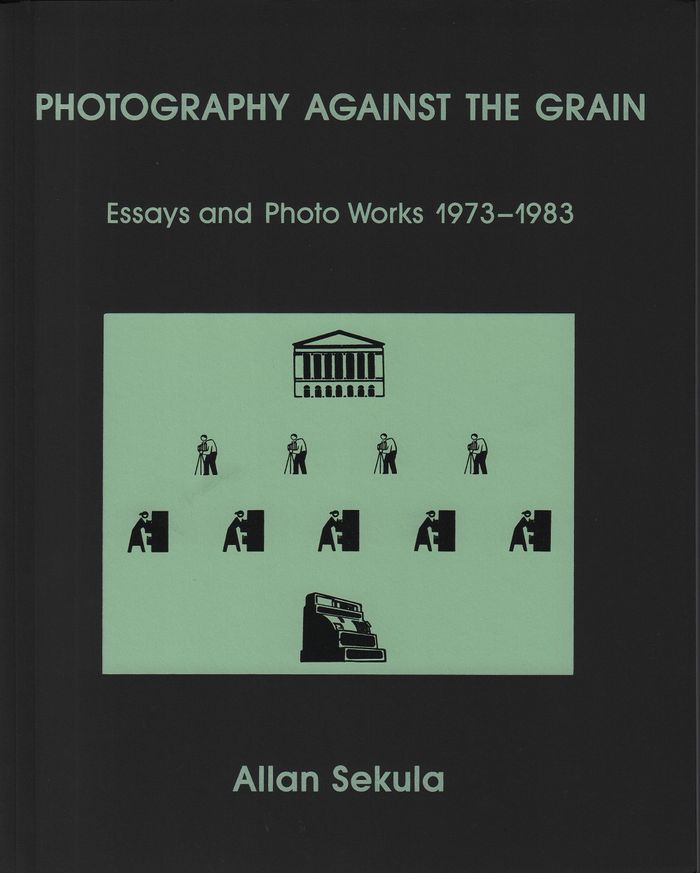
Long out of print, this seminal collection of essays and photographs are by artist, theorist and filmmaker, Allan Sekula. Originally published by the Nova Scotia College of Art and Design in 1984, in these essays and images Sekula sought to portray the inextricable bond between labour and material culture, drawing deeply on Marxist theory to argue passionately for a collective model of progress. Sekula taught at California Institute of Arts (CalArts) from 1985 until his death in 2013, and from that insider's position he critiqued photography and the circumstances of its production and consumption, exposing what the medium failed to represent – women, labourers, minorities and the institutional structures that reinforce cultural biases.
Photography against the grain: essays and photo works 1973-1983
Actions:
Price:
$54.95
(available to order)
Summary:
Long out of print, this seminal collection of essays and photographs are by artist, theorist and filmmaker, Allan Sekula. Originally published by the Nova Scotia College of Art and Design in 1984, in these essays and images Sekula sought to portray the inextricable bond between labour and material culture, drawing deeply on Marxist theory to argue passionately for a collective model of progress. Sekula taught at California Institute of Arts (CalArts) from 1985 until his death in 2013, and from that insider's position he critiqued photography and the circumstances of its production and consumption, exposing what the medium failed to represent – women, labourers, minorities and the institutional structures that reinforce cultural biases.
Form:
books
books
Publication:
October 2016
October 2016
Subject:
Theory of Photography
Theory of Photography
Form:
books
books
Actions:
Price:
$59.95
(available in store)
Summary:
Joints of Eastern Europe represent a long-standing tradition of resourceful craftsmanship, deeply rooted in a region historically associated with manual labour. These joints symbolise the hands that have shaped much of Europe, embodying contextual resilience and an instinctive problem-solving approach that reflects the identity and empiricism of both the joints themselves(...)
$59.95
(available in store)
Summary:
Joints of Eastern Europe represent a long-standing tradition of resourceful craftsmanship, deeply rooted in a region historically associated with manual labour. These joints symbolise the hands that have shaped much of Europe, embodying contextual resilience and an instinctive problem-solving approach that reflects the identity and empiricism of both the joints themselves(...)
Title:
Natasha Krymskaya: Joints of Eastern Europe
Actions:
Price:
$59.95
(available in store)
Summary:
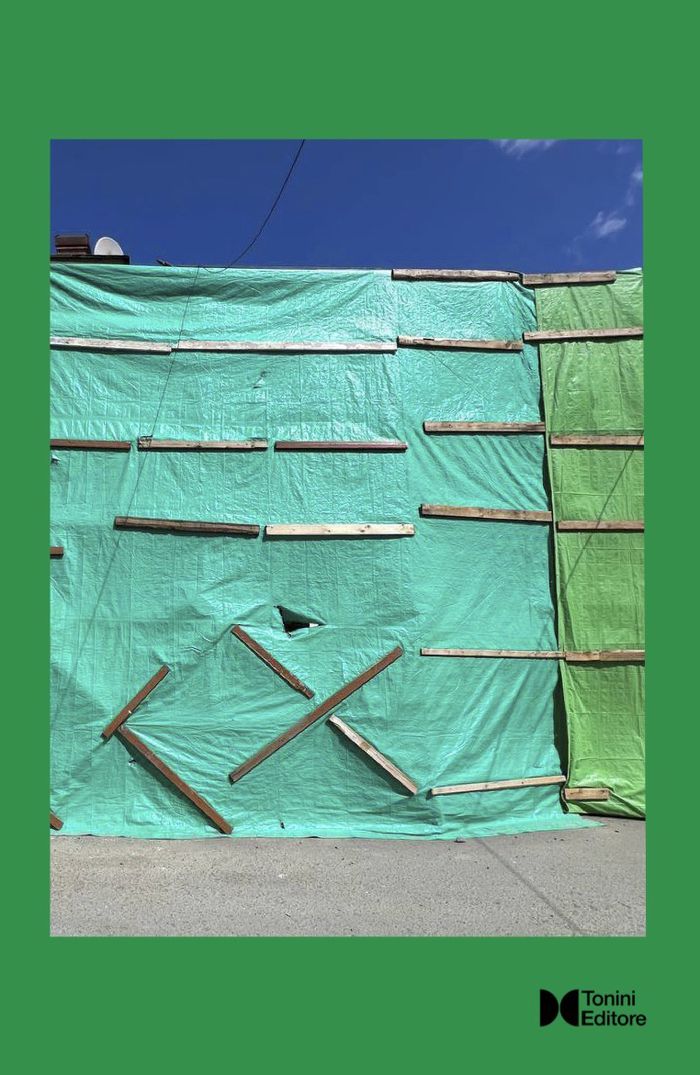
Joints of Eastern Europe represent a long-standing tradition of resourceful craftsmanship, deeply rooted in a region historically associated with manual labour. These joints symbolise the hands that have shaped much of Europe, embodying contextual resilience and an instinctive problem-solving approach that reflects the identity and empiricism of both the joints themselves and the workers who create them. Visually distinct, the joints serve as powerful markers of Eastern European culture, representing inventive solutions born from everyday necessity. This unique form of craftsmanship is characterised by spontaneous, often temporary solutions that, over time, evolve into enduring fixtures. With their rough elegance and structural creativity, these fixtures inspire architects and engineers alike, balancing beauty and functionality.
Natasha Krymskaya: Joints of Eastern Europe
Actions:
Price:
$59.95
(available in store)
Summary:
Joints of Eastern Europe represent a long-standing tradition of resourceful craftsmanship, deeply rooted in a region historically associated with manual labour. These joints symbolise the hands that have shaped much of Europe, embodying contextual resilience and an instinctive problem-solving approach that reflects the identity and empiricism of both the joints themselves and the workers who create them. Visually distinct, the joints serve as powerful markers of Eastern European culture, representing inventive solutions born from everyday necessity. This unique form of craftsmanship is characterised by spontaneous, often temporary solutions that, over time, evolve into enduring fixtures. With their rough elegance and structural creativity, these fixtures inspire architects and engineers alike, balancing beauty and functionality.
Form:
books
books
Publication:
August 2025
August 2025
Subject:
Photography monographs
Photography monographs
Form:
books
books
Price:
$43.95
(available to order)
Summary:
By bringing together the voices of a number of curators, scientists, scholars, designers, and artists, the XXII Triennale di Milano seeks to engage its visitors with questions of climate change, migration, artificial intelligence, politics, gender, labour, economics, social justice, and natural histories. This exhibition catalog highlights objects and concepts at all(...)
$43.95
(available to order)
Summary:
By bringing together the voices of a number of curators, scientists, scholars, designers, and artists, the XXII Triennale di Milano seeks to engage its visitors with questions of climate change, migration, artificial intelligence, politics, gender, labour, economics, social justice, and natural histories. This exhibition catalog highlights objects and concepts at all(...)
Title:
Broken nature: design takes on human survival. XXII Triennale du Milano
Actions:
Price:
$43.95
(available to order)
Summary:
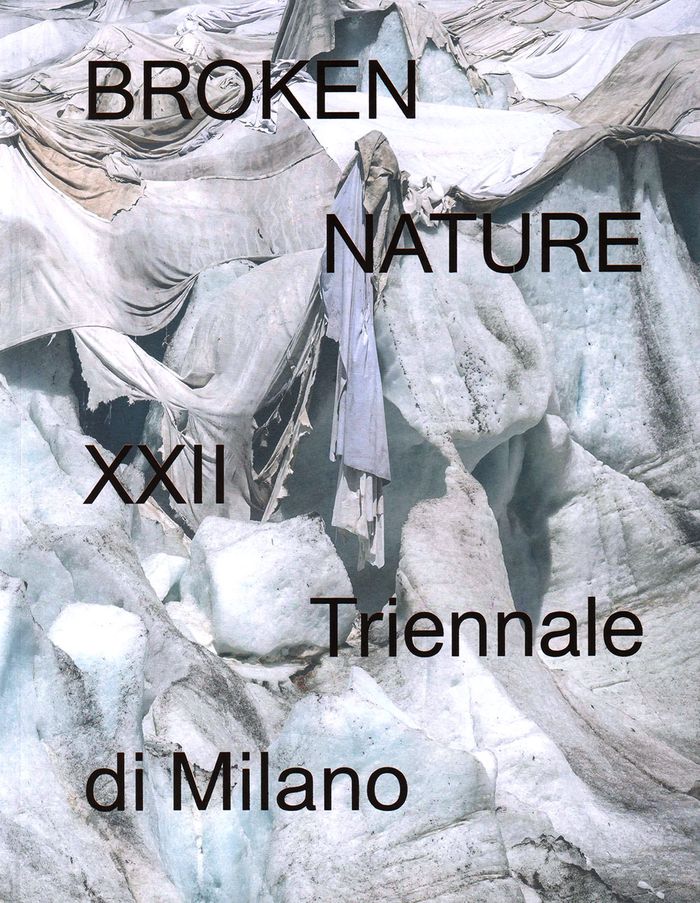
By bringing together the voices of a number of curators, scientists, scholars, designers, and artists, the XXII Triennale di Milano seeks to engage its visitors with questions of climate change, migration, artificial intelligence, politics, gender, labour, economics, social justice, and natural histories. This exhibition catalog highlights objects and concepts at all scales that reconsider humans' relationship with their environment, including research into both natural and social ecosystems. The aim is to trace design's ability to move us into a more constructive sense of indebtedness toward nature. This volume will appeal to the design community as well as a broader readership and scholars who study the sociological, economic, political, and personal ramifications of design as it relates to the environment.
Broken nature: design takes on human survival. XXII Triennale du Milano
Actions:
Price:
$43.95
(available to order)
Summary:
By bringing together the voices of a number of curators, scientists, scholars, designers, and artists, the XXII Triennale di Milano seeks to engage its visitors with questions of climate change, migration, artificial intelligence, politics, gender, labour, economics, social justice, and natural histories. This exhibition catalog highlights objects and concepts at all scales that reconsider humans' relationship with their environment, including research into both natural and social ecosystems. The aim is to trace design's ability to move us into a more constructive sense of indebtedness toward nature. This volume will appeal to the design community as well as a broader readership and scholars who study the sociological, economic, political, and personal ramifications of design as it relates to the environment.
Form:
books
books
Publication:
December 2019
December 2019
Subject:
Environment and environmental theory
Environment and environmental theory
Form:
books
books

Actions:
Price:
$30.00
(available to order)
Summary:
Taking as its starting point Ramkinkar Baij's 1938 "Santhal Family" sculpture, this book combines critical and fictional texts with specially commissioned pages by artists from India, Europe and the U.K. Considered to be the first modernist public sculpture in India, Santhal Family combines an interest in the forms of modernism and temple sculpture with a concern for(...)
$30.00
(available to order)
Summary:
Taking as its starting point Ramkinkar Baij's 1938 "Santhal Family" sculpture, this book combines critical and fictional texts with specially commissioned pages by artists from India, Europe and the U.K. Considered to be the first modernist public sculpture in India, Santhal Family combines an interest in the forms of modernism and temple sculpture with a concern for(...)
Subject:
Contemporary Art Monographs
Contemporary Art Monographs
Publication:
August 2008, Antwerp
August 2008, Antwerp
Title:
Santhal family: positions around an indian sculpture
Actions:
Price:
$30.00
(available to order)
Summary:
Taking as its starting point Ramkinkar Baij's 1938 "Santhal Family" sculpture, this book combines critical and fictional texts with specially commissioned pages by artists from India, Europe and the U.K. Considered to be the first modernist public sculpture in India, Santhal Family combines an interest in the forms of modernism and temple sculpture with a concern for ground level reality. Depicting a family group from the Santhal tribe carrying their possessions with them to a new place of work, it is a portrait of labour that presents the complexity of its subject without heroism or pathos. Published on the occasion of the exhibition of the same name that has been produced by the MuHKA, Antwerp, February to May 2008, and which is currently travelling through India.
Santhal family: positions around an indian sculpture
Actions:
Price:
$30.00
(available to order)
Summary:
Taking as its starting point Ramkinkar Baij's 1938 "Santhal Family" sculpture, this book combines critical and fictional texts with specially commissioned pages by artists from India, Europe and the U.K. Considered to be the first modernist public sculpture in India, Santhal Family combines an interest in the forms of modernism and temple sculpture with a concern for ground level reality. Depicting a family group from the Santhal tribe carrying their possessions with them to a new place of work, it is a portrait of labour that presents the complexity of its subject without heroism or pathos. Published on the occasion of the exhibition of the same name that has been produced by the MuHKA, Antwerp, February to May 2008, and which is currently travelling through India.
Form:
books
books
Publication:
August 2008, Antwerp
August 2008, Antwerp
Subject:
Contemporary Art Monographs
Contemporary Art Monographs
Form:
books
books
Price:
$45.95
(available in store)
Summary:
For decades, David Harvey has been teaching Marx's work, particularly Capital, to great acclaim. He has analysed chapter by chapter - sometimes line-by-line - Marx's three volumes and the Grundrisse. This new book opens up the mental universe of that work for a general reader. In ''The Story of Capital'', Harvey takes a synoptic approach to the conceptual architecture(...)
$45.95
(available in store)
Summary:
For decades, David Harvey has been teaching Marx's work, particularly Capital, to great acclaim. He has analysed chapter by chapter - sometimes line-by-line - Marx's three volumes and the Grundrisse. This new book opens up the mental universe of that work for a general reader. In ''The Story of Capital'', Harvey takes a synoptic approach to the conceptual architecture(...)
Title:
The story of capital: What everyone should know about how capital works
Actions:
Price:
$45.95
(available in store)
Summary:
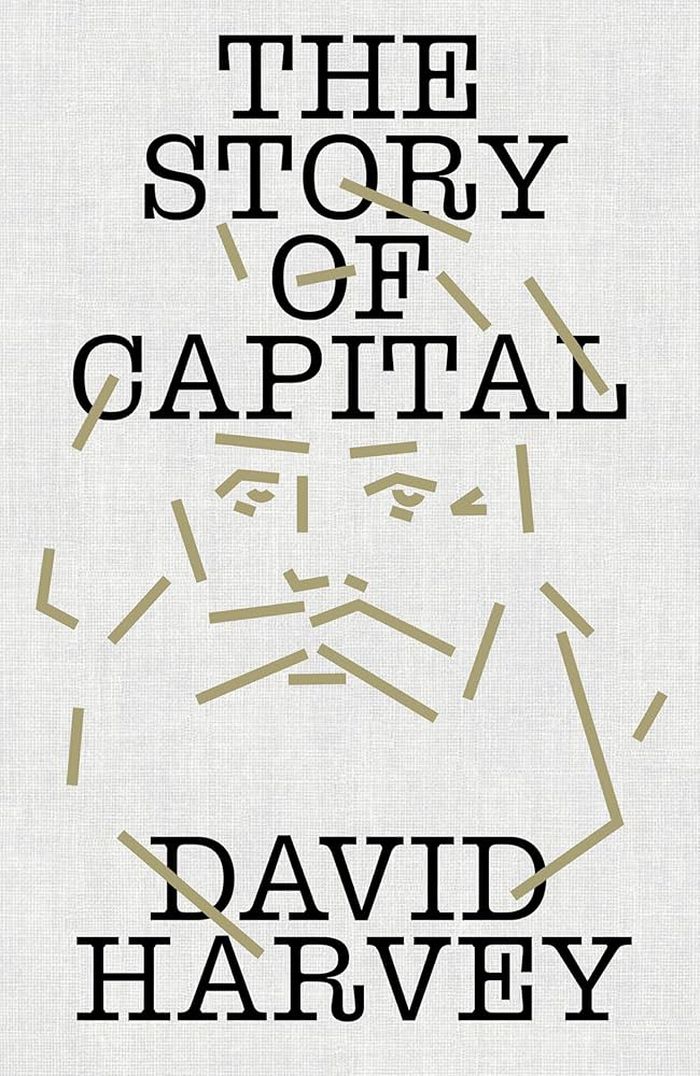
For decades, David Harvey has been teaching Marx's work, particularly Capital, to great acclaim. He has analysed chapter by chapter - sometimes line-by-line - Marx's three volumes and the Grundrisse. This new book opens up the mental universe of that work for a general reader. In ''The Story of Capital'', Harvey takes a synoptic approach to the conceptual architecture as a whole and guides us through the key moments, from labour and technology to the state and geopolitics, via the profit rate, social reproduction, the relationship to nature, fictitious capital and the return of the rentiers. In doing so, Harvey has produced a work which will become a key reference for all those trying to grasp the nature of contemporary capitalism.
The story of capital: What everyone should know about how capital works
Actions:
Price:
$45.95
(available in store)
Summary:
For decades, David Harvey has been teaching Marx's work, particularly Capital, to great acclaim. He has analysed chapter by chapter - sometimes line-by-line - Marx's three volumes and the Grundrisse. This new book opens up the mental universe of that work for a general reader. In ''The Story of Capital'', Harvey takes a synoptic approach to the conceptual architecture as a whole and guides us through the key moments, from labour and technology to the state and geopolitics, via the profit rate, social reproduction, the relationship to nature, fictitious capital and the return of the rentiers. In doing so, Harvey has produced a work which will become a key reference for all those trying to grasp the nature of contemporary capitalism.
Form:
books
books
Publication:
April 2026
April 2026
Subject:
Social
Social


