


6049 Results
Form:
archives
archives
Holdings:
Description:
4 items ; 31 cm. or smaller
Description:
4 items ; 31 cm. or smaller
Author:
Subject:
Title:
Piero en tête = Meditations on Piero : exhibition products, 2001.
Actions:
Holdings:
Description:
4 items ; 31 cm. or smaller
Piero en tête = Meditations on Piero : exhibition products, 2001.
Actions:
Holdings:
Description:
4 items ; 31 cm. or smaller
Form:
archives
archives
Author:
Subject:
Form:
books
books
Holdings:
Description:
1 volume : illustrations ; 28 cm + 2 booklets + 1 audio CD
Description:
1 volume : illustrations ; 28 cm + 2 booklets + 1 audio CD
Author:
Subject:
Publication:
[Paris] : Monum ; Editions du patrimoine, [2006]
[Paris] : Monum ; Editions du patrimoine, [2006]
Title:
Panthéon / Pierre Wachenheim, Hoëlle Corvest, Caroline Jules.
Actions:
Holdings:
Description:
1 volume : illustrations ; 28 cm + 2 booklets + 1 audio CD
Panthéon / Pierre Wachenheim, Hoëlle Corvest, Caroline Jules.
Actions:
Holdings:
Description:
1 volume : illustrations ; 28 cm + 2 booklets + 1 audio CD
Form:
books
books
Publication:
[Paris] : Monum ; Editions du patrimoine, [2006]
[Paris] : Monum ; Editions du patrimoine, [2006]
Author:
Subject:
Form:
artefacts
artefacts
Title:
Eternal Light Peace Memorial
Eternal Light Peace Memorial
Actions:
Holdings:
Description:
1 pair of bookends : painted cast iron ; 14 x 13 x 7 cm
Description:
1 pair of bookends : painted cast iron ; 14 x 13 x 7 cm
Author:
Subject:
Publication:
[1939]
[1939]
Title:
Eternal Light Peace Memorial
Actions:
Holdings:
Description:
1 pair of bookends : painted cast iron ; 14 x 13 x 7 cm
Eternal Light Peace Memorial
Actions:
Holdings:
Description:
1 pair of bookends : painted cast iron ; 14 x 13 x 7 cm
Form:
artefacts
artefacts
Publication:
[1939]
[1939]
Author:
Subject:
Form:
books
books
Holdings:
Description:
xi, 226 pages : illustrations, maps ; 24 cm.
Description:
xi, 226 pages : illustrations, maps ; 24 cm.
Author:
Subject:
Publication:
Durham : Duke University Press, 2026., ©2026
Durham : Duke University Press, 2026., ©2026
Title:
Inventing Nadar : a history of photographic firsts / Emily Doucet.
Actions:
Holdings:
Description:
xi, 226 pages : illustrations, maps ; 24 cm.
Inventing Nadar : a history of photographic firsts / Emily Doucet.
Actions:
Holdings:
Description:
xi, 226 pages : illustrations, maps ; 24 cm.
Form:
books
books
Publication:
Durham : Duke University Press, 2026., ©2026
Durham : Duke University Press, 2026., ©2026
Author:
Subject:
Form:
books
books
Actions:
Holdings:
Description:
127 pages : illustrations, 2 maps ; 19 cm
Description:
127 pages : illustrations, 2 maps ; 19 cm
Author:
Subject:
Publication:
Berlin : Jovis Verlag, [2018]
Berlin : Jovis Verlag, [2018]
Title:
Creative heritage / edited by Jörg Schröder, Maurizio Carta, Sarah Hartmann.
Actions:
Holdings:
Description:
127 pages : illustrations, 2 maps ; 19 cm
Creative heritage / edited by Jörg Schröder, Maurizio Carta, Sarah Hartmann.
Actions:
Holdings:
Description:
127 pages : illustrations, 2 maps ; 19 cm
Form:
books
books
Publication:
Berlin : Jovis Verlag, [2018]
Berlin : Jovis Verlag, [2018]
Author:
Subject:
Form:
books
books
Actions:
Price:
$79.95
(available to order)
Summary:
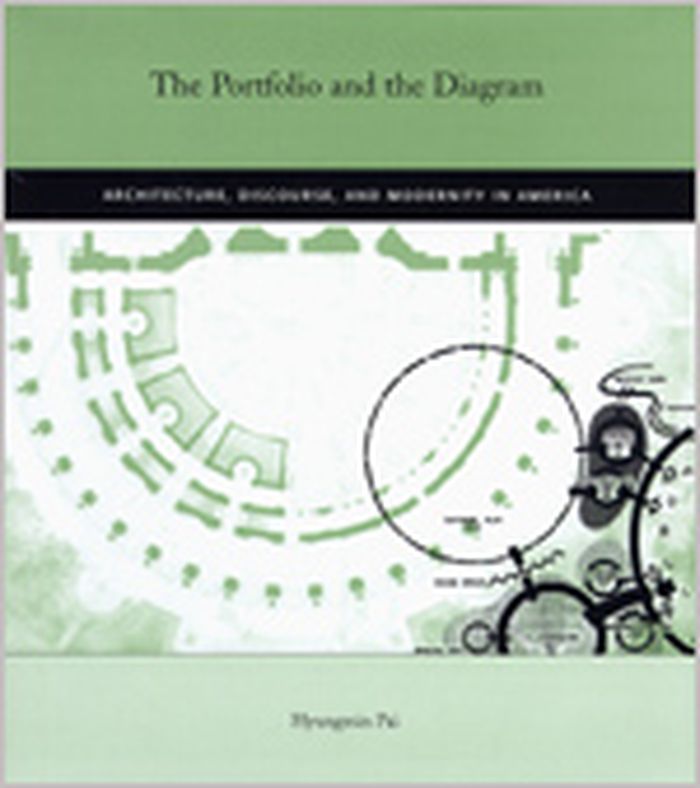
"The Portfolio and the Diagram" is about the changing ways architects see, read, and use the words and images of architectural publications. It begins with an outline of the academic discipline and the mimetic practice of the portfolio, established in America during the late nineteenth century. World War I triggered a historical process that resulted in the demise of the(...)
$79.95
(available to order)
Summary:
"The Portfolio and the Diagram" is about the changing ways architects see, read, and use the words and images of architectural publications. It begins with an outline of the academic discipline and the mimetic practice of the portfolio, established in America during the late nineteenth century. World War I triggered a historical process that resulted in the demise of the(...)
Subject:
Architectural Theory
Architectural Theory
Publication:
April 2002, Cambridge, Massachusetts
April 2002, Cambridge, Massachusetts
Title:
The portfolio and the diagram : architecture, discourse, and modernity in America
Actions:
Price:
$79.95
(available to order)
Summary:
"The Portfolio and the Diagram" is about the changing ways architects see, read, and use the words and images of architectural publications. It begins with an outline of the academic discipline and the mimetic practice of the portfolio, established in America during the late nineteenth century. World War I triggered a historical process that resulted in the demise of the portfolio and the emergence of the discourse of the diagram. The Beaux Arts-trained architects had fashioned their discipline through the meticulous object-centered images of the portfolio. The discourse of the diagram provided a new range of possibility in the architect’s relation to words, images, and buildings. More than the diagram itself, more than the province of narrow-minded functionalists, the discourse of the diagram is a complex formation of texts, concepts, and modes of representation. Concerned less with constructing a new kind of modernism than with understanding the boundaries and structures of modernity, the book is a history of modern architecture as a discursive practice and its striving to become a viable discipline.
The portfolio and the diagram : architecture, discourse, and modernity in America
Actions:
Price:
$79.95
(available to order)
Summary:
"The Portfolio and the Diagram" is about the changing ways architects see, read, and use the words and images of architectural publications. It begins with an outline of the academic discipline and the mimetic practice of the portfolio, established in America during the late nineteenth century. World War I triggered a historical process that resulted in the demise of the portfolio and the emergence of the discourse of the diagram. The Beaux Arts-trained architects had fashioned their discipline through the meticulous object-centered images of the portfolio. The discourse of the diagram provided a new range of possibility in the architect’s relation to words, images, and buildings. More than the diagram itself, more than the province of narrow-minded functionalists, the discourse of the diagram is a complex formation of texts, concepts, and modes of representation. Concerned less with constructing a new kind of modernism than with understanding the boundaries and structures of modernity, the book is a history of modern architecture as a discursive practice and its striving to become a viable discipline.
Form:
books
books
Publication:
April 2002, Cambridge, Massachusetts
April 2002, Cambridge, Massachusetts
Subject:
Architectural Theory
Architectural Theory
Form:
books
books
Price:
$62.00
(available to order)
Summary:
"Architecture, film, and the in-between: spatio-cinematic betwixt" looks at the cinematic representation of architectural in-betweenness, as well as the in-between spaces within the architectural structure of films. As films seek to depict architecture in evolving, original ways, they can also expand betwixt areas, imbuing them with horror or fantasy. Spies can escape(...)
$62.00
(available to order)
Summary:
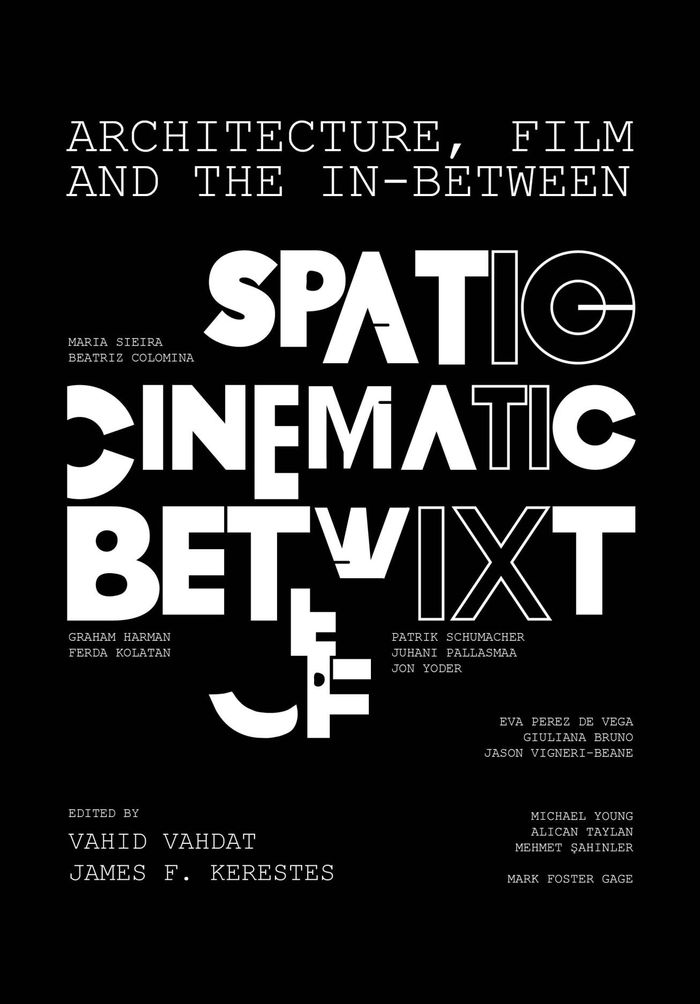
"Architecture, film, and the in-between: spatio-cinematic betwixt" looks at the cinematic representation of architectural in-betweenness, as well as the in-between spaces within the architectural structure of films. As films seek to depict architecture in evolving, original ways, they can also expand betwixt areas, imbuing them with horror or fantasy. Spies can escape(...)
Subject:
Architecture and Film, Set Design
Architecture and Film, Set Design
Publication:
September 2024
September 2024
Title:
Architecture, film, and the in-between: Spatio-cinematic between
Actions:
Price:
$62.00
(available to order)
Summary:
"Architecture, film, and the in-between: spatio-cinematic betwixt" looks at the cinematic representation of architectural in-betweenness, as well as the in-between spaces within the architectural structure of films. As films seek to depict architecture in evolving, original ways, they can also expand betwixt areas, imbuing them with horror or fantasy. Spies can escape inside unconvincingly stable ducts and children can slide through pipes with no discernible function. And just as subway routes and airplanes can stitch together two destinations, loopholes and magic architectural features can connect distinct realms via interstitial spaces. Contributors discuss a range of architects and filmmakers, including John Lautner, David Lynch, Christopher Nolan, Agnès Varda, and Mies van der Rohe, and take diverse approaches to the liminal space between architecture and film, touching on existential experience, post-phenomenological thinking, sociopolitical cinearchitecture, fictive ecologies, and more. Collecting essays by well-respected architects, thinkers, and philosophers—such as Juhani Pallasmaa, Beatriz Colomina, and Graham Harman—the book includes imagery and infographics that map filmic spaces, diagram narratives, and visualize the hidden spatial dimensions of movies.
Architecture, film, and the in-between: Spatio-cinematic between
Actions:
Price:
$62.00
(available to order)
Summary:
"Architecture, film, and the in-between: spatio-cinematic betwixt" looks at the cinematic representation of architectural in-betweenness, as well as the in-between spaces within the architectural structure of films. As films seek to depict architecture in evolving, original ways, they can also expand betwixt areas, imbuing them with horror or fantasy. Spies can escape inside unconvincingly stable ducts and children can slide through pipes with no discernible function. And just as subway routes and airplanes can stitch together two destinations, loopholes and magic architectural features can connect distinct realms via interstitial spaces. Contributors discuss a range of architects and filmmakers, including John Lautner, David Lynch, Christopher Nolan, Agnès Varda, and Mies van der Rohe, and take diverse approaches to the liminal space between architecture and film, touching on existential experience, post-phenomenological thinking, sociopolitical cinearchitecture, fictive ecologies, and more. Collecting essays by well-respected architects, thinkers, and philosophers—such as Juhani Pallasmaa, Beatriz Colomina, and Graham Harman—the book includes imagery and infographics that map filmic spaces, diagram narratives, and visualize the hidden spatial dimensions of movies.
Form:
books
books
Publication:
September 2024
September 2024
Subject:
Architecture and Film, Set Design
Architecture and Film, Set Design
Form:
books
books
Price:
$32.50
(available to order)
Summary:
The modern world is dominated by flat surfaces. We write, print and project on flat paper or flat screens, which we stare at all day. We inhabit spaces constructed from flat materials. We play sport on level fields. Engineered planar surfaces have become so pervasive and fundamental to behaviour and thought that we barely notice their existence. But flat landscapes are(...)
$32.50
(available to order)
Summary:
The modern world is dominated by flat surfaces. We write, print and project on flat paper or flat screens, which we stare at all day. We inhabit spaces constructed from flat materials. We play sport on level fields. Engineered planar surfaces have become so pervasive and fundamental to behaviour and thought that we barely notice their existence. But flat landscapes are(...)
Title:
Flatness
Actions:
Price:
$32.50
(available to order)
Summary:
The modern world is dominated by flat surfaces. We write, print and project on flat paper or flat screens, which we stare at all day. We inhabit spaces constructed from flat materials. We play sport on level fields. Engineered planar surfaces have become so pervasive and fundamental to behaviour and thought that we barely notice their existence. But flat landscapes are also often disparaged, viewed as featureless, empty and monotonous. Metaphorically, to ‘feel flat’ is to be bored, dull, lacking energy or inspiration. So what is it about flatness that makes it so desirable and practical in everyday life, yet so unattractive in landscape and as an idea? How has the construction of flat surfaces contributed to a degradation of visual diversity? "Flatness" attacks these questions by looking first at the ways humans have perceived the natural world around them, from Flat Earth theories to abstract geometric concepts and the Flatness Problem in modern cosmology. It also traces the long historical trajectory of flatness as an engineering ideal, and the representation of the concept in art, music and literature.
Flatness
Actions:
Price:
$32.50
(available to order)
Summary:
The modern world is dominated by flat surfaces. We write, print and project on flat paper or flat screens, which we stare at all day. We inhabit spaces constructed from flat materials. We play sport on level fields. Engineered planar surfaces have become so pervasive and fundamental to behaviour and thought that we barely notice their existence. But flat landscapes are also often disparaged, viewed as featureless, empty and monotonous. Metaphorically, to ‘feel flat’ is to be bored, dull, lacking energy or inspiration. So what is it about flatness that makes it so desirable and practical in everyday life, yet so unattractive in landscape and as an idea? How has the construction of flat surfaces contributed to a degradation of visual diversity? "Flatness" attacks these questions by looking first at the ways humans have perceived the natural world around them, from Flat Earth theories to abstract geometric concepts and the Flatness Problem in modern cosmology. It also traces the long historical trajectory of flatness as an engineering ideal, and the representation of the concept in art, music and literature.
Form:
books
books
Publication:
February 2017
February 2017
Subject:
Critical Theory
Critical Theory
Form:
books
books
Actions:
Price:
$36.00
(available to order)
Summary:
In his book, Barry Allen develops the philosophical implications of a series of interrelated concepts - knowledge, artifact, design, tool, art, and technology - and uses them to explore parallel questions about artistry in technology and technics in art. This may be seen at the heart of "Artifice and design" in Allen's discussion of seven bridges : he focuses at length on(...)
$36.00
(available to order)
Summary:
In his book, Barry Allen develops the philosophical implications of a series of interrelated concepts - knowledge, artifact, design, tool, art, and technology - and uses them to explore parallel questions about artistry in technology and technics in art. This may be seen at the heart of "Artifice and design" in Allen's discussion of seven bridges : he focuses at length on(...)
Title:
Artifice and design : art and technology in human experience
Actions:
Price:
$36.00
(available to order)
Summary:
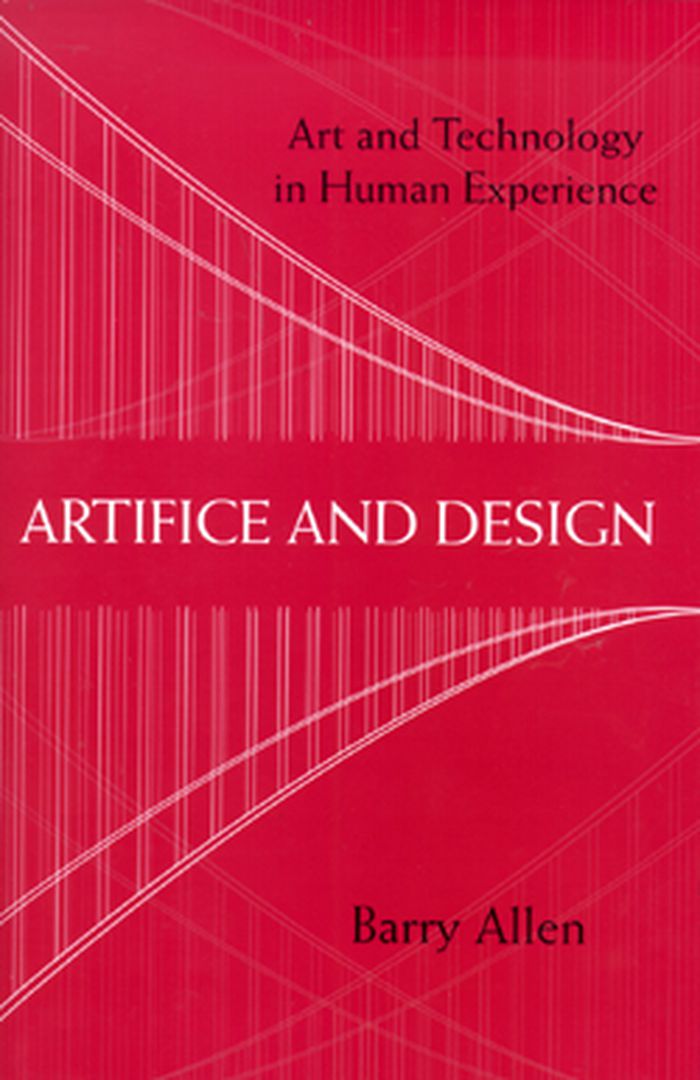
In his book, Barry Allen develops the philosophical implications of a series of interrelated concepts - knowledge, artifact, design, tool, art, and technology - and uses them to explore parallel questions about artistry in technology and technics in art. This may be seen at the heart of "Artifice and design" in Allen's discussion of seven bridges : he focuses at length on two New York bridges — the Hell Gate Bridge and the Bayonne Bridge — and makes use of original sources for insight into the designers' ideas about the aesthetic dimensions of their work. Allen starts from the conviction that art and technology must be treated together, as two aspects of a common, technical human nature. The topics covered in "Artifice and design" are wide-ranging and interdisciplinary, drawing from evolutionary biology, cognitive psychology, and the history and anthropology of art and technology. The book concludes that it is a mistake to think of Art as something subjective, or as an arbitrary social representation, and of Technology as an instrumental form of purposive rationality.
Artifice and design : art and technology in human experience
Actions:
Price:
$36.00
(available to order)
Summary:
In his book, Barry Allen develops the philosophical implications of a series of interrelated concepts - knowledge, artifact, design, tool, art, and technology - and uses them to explore parallel questions about artistry in technology and technics in art. This may be seen at the heart of "Artifice and design" in Allen's discussion of seven bridges : he focuses at length on two New York bridges — the Hell Gate Bridge and the Bayonne Bridge — and makes use of original sources for insight into the designers' ideas about the aesthetic dimensions of their work. Allen starts from the conviction that art and technology must be treated together, as two aspects of a common, technical human nature. The topics covered in "Artifice and design" are wide-ranging and interdisciplinary, drawing from evolutionary biology, cognitive psychology, and the history and anthropology of art and technology. The book concludes that it is a mistake to think of Art as something subjective, or as an arbitrary social representation, and of Technology as an instrumental form of purposive rationality.
Form:
books
books
Publication:
July 2008, Ithaca, London
July 2008, Ithaca, London
Subject:
Design Theory
Design Theory
Form:
books
books
Actions:
Price:
$64.00
(available to order)
Summary:
Between the disciplines of art history and the history of science lies a growing field of inquiry into what science and art share as both image-making and knowledge-producing activities. The contributors of Picturing Science, Producing Art occupy this intermediate zone to analyze both scientific and aesthetic representations, utilizing disciplinary perspectives that range(...)
$64.00
(available to order)
Summary:
Between the disciplines of art history and the history of science lies a growing field of inquiry into what science and art share as both image-making and knowledge-producing activities. The contributors of Picturing Science, Producing Art occupy this intermediate zone to analyze both scientific and aesthetic representations, utilizing disciplinary perspectives that range(...)
Title:
Picturing science producing art
Actions:
Price:
$64.00
(available to order)
Summary:
Between the disciplines of art history and the history of science lies a growing field of inquiry into what science and art share as both image-making and knowledge-producing activities. The contributors of Picturing Science, Producing Art occupy this intermediate zone to analyze both scientific and aesthetic representations, utilizing disciplinary perspectives that range from art history to sociology, history and philosophy of science to gender studies, cultural history to the philosophy of mind. Organized in five sites--Styles, The Body, Seeing Wonders, Objectivity/Subjectivity, and Cultures of Vision--their topics extend from Cinquecento theories of female reproduction to the technologies of cloning, from medieval depictions of the stigmata to electrical metaphors for sex, from astronomical drawings to radioencephalography, from Phoenician griffons carved in ivory to factories cast in concrete. The internationally renowned contributors go beyond both science wars and culture wars by exploring substantive links between systems of visual representation and knowledge in science and art. Contributors include Svetlana Alpers, Jonathan Crary, Arnold Davidson, Carlo Ginzburg, Donna Haraway, Bruno Latour, and Simon Schaffer.
Picturing science producing art
Actions:
Price:
$64.00
(available to order)
Summary:
Between the disciplines of art history and the history of science lies a growing field of inquiry into what science and art share as both image-making and knowledge-producing activities. The contributors of Picturing Science, Producing Art occupy this intermediate zone to analyze both scientific and aesthetic representations, utilizing disciplinary perspectives that range from art history to sociology, history and philosophy of science to gender studies, cultural history to the philosophy of mind. Organized in five sites--Styles, The Body, Seeing Wonders, Objectivity/Subjectivity, and Cultures of Vision--their topics extend from Cinquecento theories of female reproduction to the technologies of cloning, from medieval depictions of the stigmata to electrical metaphors for sex, from astronomical drawings to radioencephalography, from Phoenician griffons carved in ivory to factories cast in concrete. The internationally renowned contributors go beyond both science wars and culture wars by exploring substantive links between systems of visual representation and knowledge in science and art. Contributors include Svetlana Alpers, Jonathan Crary, Arnold Davidson, Carlo Ginzburg, Donna Haraway, Bruno Latour, and Simon Schaffer.
Form:
books
books
Publication:
June 1998
June 1998


