


11313 Results
Form:
books
books

Title:
Promenade en Enfer
Promenade en Enfer
Actions:
Price:
$29.95
(available to order)
Summary:
Longtemps soumises à la censure ecclésiastique, certaines bibliothèques conservaient les ouvrages mis à l’Index dans un huis clos mythique nommé Enfer. La simple lecture d’une œuvre proscrite par l’Église pouvait entraîner la damnation éternelle de l’âme. La levée de l’Index dans les années 1960 a entraîné le démantèlement des sections logeant les livres interdits qui ont(...)
$29.95
(available to order)
Summary:
Longtemps soumises à la censure ecclésiastique, certaines bibliothèques conservaient les ouvrages mis à l’Index dans un huis clos mythique nommé Enfer. La simple lecture d’une œuvre proscrite par l’Église pouvait entraîner la damnation éternelle de l’âme. La levée de l’Index dans les années 1960 a entraîné le démantèlement des sections logeant les livres interdits qui ont(...)
Title:
Promenade en Enfer
Actions:
Price:
$29.95
(available to order)
Summary:
Longtemps soumises à la censure ecclésiastique, certaines bibliothèques conservaient les ouvrages mis à l’Index dans un huis clos mythique nommé Enfer. La simple lecture d’une œuvre proscrite par l’Église pouvait entraîner la damnation éternelle de l’âme. La levée de l’Index dans les années 1960 a entraîné le démantèlement des sections logeant les livres interdits qui ont disparu tout en conservant leurs secrets. L’une des rares collections encore existantes des livres mis à l’Index, regroupant des centaines de volumes, se retrouve cependant dans la bibliothèque historique du Séminaire de Québec, fondé en 1663. Pierrette Lafond lève le voile sur ces ouvrages jugés immoraux, hérétiques ou dangereux, témoins silencieux de la censure pendant trois siècles et qui racontent un volet occulté de l’histoire morale et culturelle du Québec.
Promenade en Enfer
Actions:
Price:
$29.95
(available to order)
Summary:
Longtemps soumises à la censure ecclésiastique, certaines bibliothèques conservaient les ouvrages mis à l’Index dans un huis clos mythique nommé Enfer. La simple lecture d’une œuvre proscrite par l’Église pouvait entraîner la damnation éternelle de l’âme. La levée de l’Index dans les années 1960 a entraîné le démantèlement des sections logeant les livres interdits qui ont disparu tout en conservant leurs secrets. L’une des rares collections encore existantes des livres mis à l’Index, regroupant des centaines de volumes, se retrouve cependant dans la bibliothèque historique du Séminaire de Québec, fondé en 1663. Pierrette Lafond lève le voile sur ces ouvrages jugés immoraux, hérétiques ou dangereux, témoins silencieux de la censure pendant trois siècles et qui racontent un volet occulté de l’histoire morale et culturelle du Québec.
Form:
books
books
Publication:
April 2019
April 2019
Subject:
Archive, library and the digital
Archive, library and the digital
Form:
books
books
Actions:
Price:
$32.95
(available to order)
Summary:
Earth Moves, Bernard Cache's first major work, conceptualizes a series of architectural images as vehicles for two important developments. First, he offers a new understanding of the architectural image itself. Following Gilles Deleuze and Henri Bergson, he develops an account of the image that is nonrepresentational and constructive—images as constituents of a primary,(...)
$32.95
(available to order)
Summary:
Earth Moves, Bernard Cache's first major work, conceptualizes a series of architectural images as vehicles for two important developments. First, he offers a new understanding of the architectural image itself. Following Gilles Deleuze and Henri Bergson, he develops an account of the image that is nonrepresentational and constructive—images as constituents of a primary,(...)
Title:
Earth moves: the furnishing of territories
Actions:
Price:
$32.95
(available to order)
Summary:
Earth Moves, Bernard Cache's first major work, conceptualizes a series of architectural images as vehicles for two important developments. First, he offers a new understanding of the architectural image itself. Following Gilles Deleuze and Henri Bergson, he develops an account of the image that is nonrepresentational and constructive—images as constituents of a primary, image world, of which subjectivity itself is a special kind of image. Second, Cache redefines architecture beyond building proper to include cinematic, pictoral, and other framings. Complementary to this classification, Cache offers what is to date the only Deleuzean architectural development of the "fold," a form and concept that has become important over the last few years. For Cache, as for Deleuze, what is significant about the fold is that it provides a way to rethink the relationship between interior and exterior, between past and present, and between architecture and the urban.
Earth moves: the furnishing of territories
Actions:
Price:
$32.95
(available to order)
Summary:
Earth Moves, Bernard Cache's first major work, conceptualizes a series of architectural images as vehicles for two important developments. First, he offers a new understanding of the architectural image itself. Following Gilles Deleuze and Henri Bergson, he develops an account of the image that is nonrepresentational and constructive—images as constituents of a primary, image world, of which subjectivity itself is a special kind of image. Second, Cache redefines architecture beyond building proper to include cinematic, pictoral, and other framings. Complementary to this classification, Cache offers what is to date the only Deleuzean architectural development of the "fold," a form and concept that has become important over the last few years. For Cache, as for Deleuze, what is significant about the fold is that it provides a way to rethink the relationship between interior and exterior, between past and present, and between architecture and the urban.
Form:
books
books
Publication:
January 1995
January 1995
Subject:
Archive, library and the digital
Archive, library and the digital
Form:
books
books
Title:
Data feminism
Data feminism
Actions:
Price:
$39.95
(available to order)
Summary:
Today, data science is a form of power. It has been used to expose injustice, improve health outcomes, and topple governments. But it has also been used to discriminate, police, and surveil. This potential for good, on the one hand, and harm, on the other, makes it essential to ask: Data science by whom? Data science for whom? Data science with whose interests in mind?(...)
$39.95
(available to order)
Summary:
Today, data science is a form of power. It has been used to expose injustice, improve health outcomes, and topple governments. But it has also been used to discriminate, police, and surveil. This potential for good, on the one hand, and harm, on the other, makes it essential to ask: Data science by whom? Data science for whom? Data science with whose interests in mind?(...)
Subject:
Archive, library and the digital
Archive, library and the digital
Publication:
March 2020
March 2020
Title:
Data feminism
Actions:
Price:
$39.95
(available to order)
Summary:
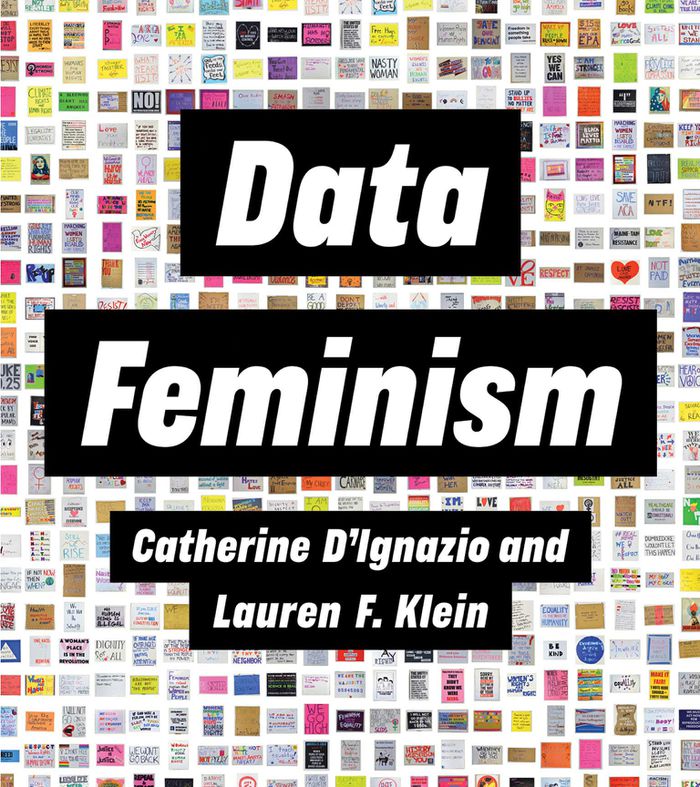
Today, data science is a form of power. It has been used to expose injustice, improve health outcomes, and topple governments. But it has also been used to discriminate, police, and surveil. This potential for good, on the one hand, and harm, on the other, makes it essential to ask: Data science by whom? Data science for whom? Data science with whose interests in mind? The narratives around big data and data science are overwhelmingly white, male, and techno-heroic. In ''Data feminism,'' Catherine D'Ignazio and Lauren Klein present a new way of thinking about data science and data ethics—one that is informed by intersectional feminist thought. Illustrating data feminism in action, D'Ignazio and Klein show how challenges to the male/female binary can help challenge other hierarchical (and empirically wrong) classification systems. They explain how, for example, an understanding of emotion can expand our ideas about effective data visualization, and how the concept of invisible labor can expose the significant human efforts required by our automated systems. And they show why the data never, ever ''speak for themselves.'' ''Data feminism'' offers strategies for data scientists seeking to learn how feminism can help them work toward justice, and for feminists who want to focus their efforts on the growing field of data science. But ''Data feminism'' is about much more than gender. It is about power, about who has it and who doesn't, and about how those differentials of power can be challenged and changed.
Data feminism
Actions:
Price:
$39.95
(available to order)
Summary:
Today, data science is a form of power. It has been used to expose injustice, improve health outcomes, and topple governments. But it has also been used to discriminate, police, and surveil. This potential for good, on the one hand, and harm, on the other, makes it essential to ask: Data science by whom? Data science for whom? Data science with whose interests in mind? The narratives around big data and data science are overwhelmingly white, male, and techno-heroic. In ''Data feminism,'' Catherine D'Ignazio and Lauren Klein present a new way of thinking about data science and data ethics—one that is informed by intersectional feminist thought. Illustrating data feminism in action, D'Ignazio and Klein show how challenges to the male/female binary can help challenge other hierarchical (and empirically wrong) classification systems. They explain how, for example, an understanding of emotion can expand our ideas about effective data visualization, and how the concept of invisible labor can expose the significant human efforts required by our automated systems. And they show why the data never, ever ''speak for themselves.'' ''Data feminism'' offers strategies for data scientists seeking to learn how feminism can help them work toward justice, and for feminists who want to focus their efforts on the growing field of data science. But ''Data feminism'' is about much more than gender. It is about power, about who has it and who doesn't, and about how those differentials of power can be challenged and changed.
Form:
books
books
Publication:
March 2020
March 2020
Subject:
Archive, library and the digital
Archive, library and the digital
Form:
books
books
Title:
The smartness mandate
The smartness mandate
Actions:
Price:
$47.00
(available to order)
Summary:
In this book, the authors suggest that "smartness" is not primarily a technology, but rather an epistemology. Through this lens, they offer a critical exploration of the practices, technologies, and subjects that such an understanding relies upon—above all, artificial intelligence and machine learning. They approach these not simply as techniques for solving problems of(...)
$47.00
(available to order)
Summary:
In this book, the authors suggest that "smartness" is not primarily a technology, but rather an epistemology. Through this lens, they offer a critical exploration of the practices, technologies, and subjects that such an understanding relies upon—above all, artificial intelligence and machine learning. They approach these not simply as techniques for solving problems of(...)
Subject:
Archive, library and the digital
Archive, library and the digital
Publication:
December 2022
December 2022
Title:
The smartness mandate
Actions:
Price:
$47.00
(available to order)
Summary:
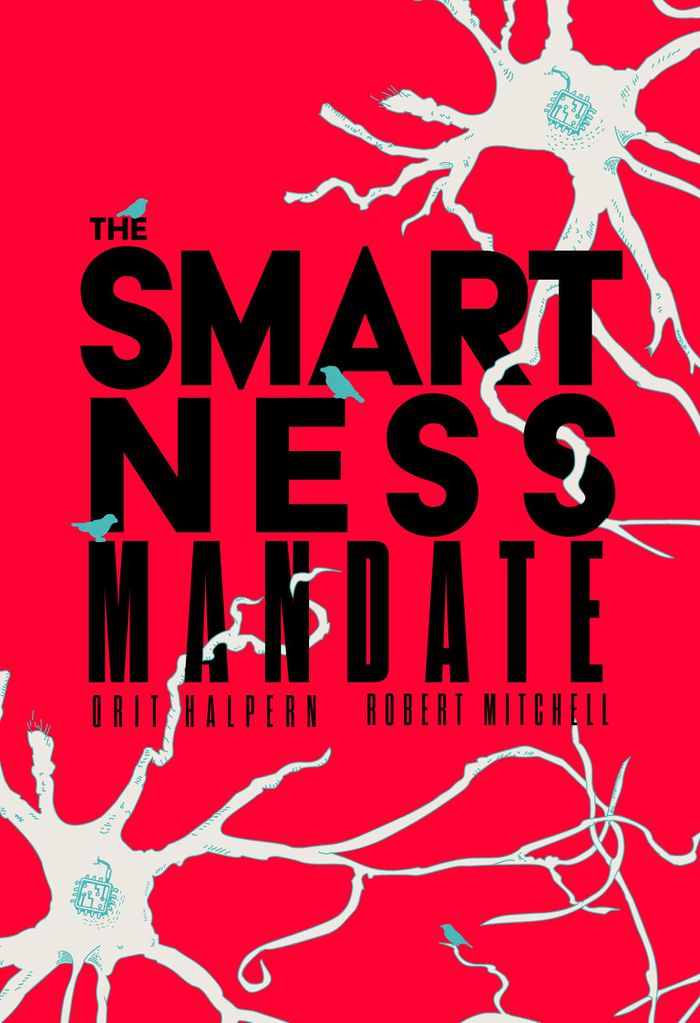
In this book, the authors suggest that "smartness" is not primarily a technology, but rather an epistemology. Through this lens, they offer a critical exploration of the practices, technologies, and subjects that such an understanding relies upon—above all, artificial intelligence and machine learning. They approach these not simply as techniques for solving problems of calculations, but rather as modes of managing life (human and other) in terms of neo-Darwinian evolution, distributed intelligences, and "resilience," all of which have serious implications for society, politics, and the environment.
The smartness mandate
Actions:
Price:
$47.00
(available to order)
Summary:
In this book, the authors suggest that "smartness" is not primarily a technology, but rather an epistemology. Through this lens, they offer a critical exploration of the practices, technologies, and subjects that such an understanding relies upon—above all, artificial intelligence and machine learning. They approach these not simply as techniques for solving problems of calculations, but rather as modes of managing life (human and other) in terms of neo-Darwinian evolution, distributed intelligences, and "resilience," all of which have serious implications for society, politics, and the environment.
Form:
books
books
Publication:
December 2022
December 2022
Subject:
Archive, library and the digital
Archive, library and the digital
Form:
books
books

Actions:
Price:
$47.00
(available to order)
Summary:
The only way to handle data responsibly, says Melanie Feinberg in this incisive work, is to take into account its human character. Though the data she discusses may seem familiar, close scrutiny shows it to be ambiguous, complicated, and uncertain: unruly. Drawing on the tools of information science, she uses everyday events to demonstrate a practical, critical, and(...)
$47.00
(available to order)
Summary:
The only way to handle data responsibly, says Melanie Feinberg in this incisive work, is to take into account its human character. Though the data she discusses may seem familiar, close scrutiny shows it to be ambiguous, complicated, and uncertain: unruly. Drawing on the tools of information science, she uses everyday events to demonstrate a practical, critical, and(...)
Title:
Everyday adventures with unruly data
Actions:
Price:
$47.00
(available to order)
Summary:
The only way to handle data responsibly, says Melanie Feinberg in this incisive work, is to take into account its human character. Though the data she discusses may seem familiar, close scrutiny shows it to be ambiguous, complicated, and uncertain: unruly. Drawing on the tools of information science, she uses everyday events to demonstrate a practical, critical, and generative mode of thinking about data: its creation, management, aggregation, and use. As she reflects on the implications of commonplace events, Feinberg explicates fundamental concepts of data that reveal the many tiny design decisions—which may not even seem like design at all—that shape how data comes to be. Through the themes of serendipity, objectivity, equivalence, interoperability, taxonomy, labels, and locality, she illuminates the surprisingly pervasive role of data in our daily thoughts and lives.
Everyday adventures with unruly data
Actions:
Price:
$47.00
(available to order)
Summary:
The only way to handle data responsibly, says Melanie Feinberg in this incisive work, is to take into account its human character. Though the data she discusses may seem familiar, close scrutiny shows it to be ambiguous, complicated, and uncertain: unruly. Drawing on the tools of information science, she uses everyday events to demonstrate a practical, critical, and generative mode of thinking about data: its creation, management, aggregation, and use. As she reflects on the implications of commonplace events, Feinberg explicates fundamental concepts of data that reveal the many tiny design decisions—which may not even seem like design at all—that shape how data comes to be. Through the themes of serendipity, objectivity, equivalence, interoperability, taxonomy, labels, and locality, she illuminates the surprisingly pervasive role of data in our daily thoughts and lives.
Form:
books
books
Publication:
October 2022
October 2022
Subject:
Archive, library and the digital
Archive, library and the digital
Form:
books
books
Actions:
Price:
$41.99
(available to order)
Summary:
Organized by interpretive categories such as space, infrastructure, and imaginaries, this volume uses historical and contemporary examples of how laboratories are fundamentally connected to changes in the contemporary university. The authors cover topics such as the evolution and delineation of lab-based communities, how labs’ tools and technologies contribute to defining(...)
$41.99
(available to order)
Summary:
Organized by interpretive categories such as space, infrastructure, and imaginaries, this volume uses historical and contemporary examples of how laboratories are fundamentally connected to changes in the contemporary university. The authors cover topics such as the evolution and delineation of lab-based communities, how labs’ tools and technologies contribute to defining(...)
Subject:
Archive, library and the digital
Archive, library and the digital
Publication:
December 2021
December 2021
Title:
The lab book: situated practices in media studies
Actions:
Price:
$41.99
(available to order)
Summary:
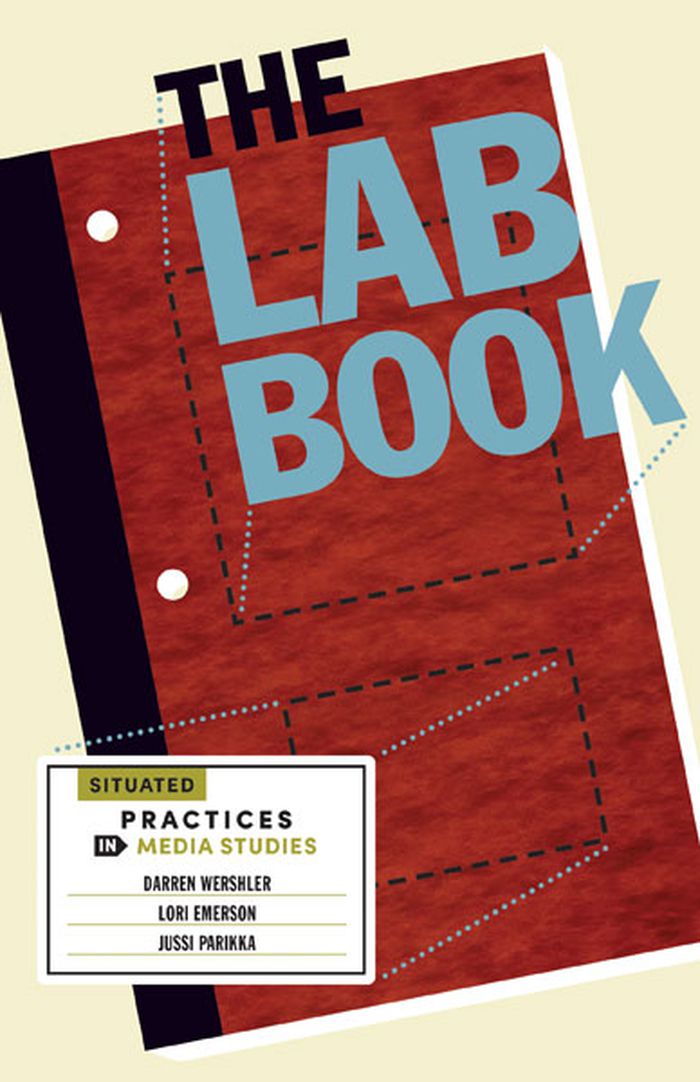
Organized by interpretive categories such as space, infrastructure, and imaginaries, this volume uses historical and contemporary examples of how laboratories are fundamentally connected to changes in the contemporary university. The authors cover topics such as the evolution and delineation of lab-based communities, how labs’ tools and technologies contribute to defining their space, and a glossary of key hybrid lab techniques.
The lab book: situated practices in media studies
Actions:
Price:
$41.99
(available to order)
Summary:
Organized by interpretive categories such as space, infrastructure, and imaginaries, this volume uses historical and contemporary examples of how laboratories are fundamentally connected to changes in the contemporary university. The authors cover topics such as the evolution and delineation of lab-based communities, how labs’ tools and technologies contribute to defining their space, and a glossary of key hybrid lab techniques.
Form:
books
books
Publication:
December 2021
December 2021
Subject:
Archive, library and the digital
Archive, library and the digital
Form:
books
books
Title:
World brain
World brain
Actions:
Price:
$33.95
(available to order)
Summary:
In a series of talks and essays in 1937, H. G. Wells proselytized for what he called a "World Brain," as manifested in a World Encyclopedia--a repository of scientifically established knowledge--that would spread enlightenment around the world and lead to world peace. Wells, known to readers today as the author of "The War of the Worlds" and other science fiction(...)
$33.95
(available to order)
Summary:
In a series of talks and essays in 1937, H. G. Wells proselytized for what he called a "World Brain," as manifested in a World Encyclopedia--a repository of scientifically established knowledge--that would spread enlightenment around the world and lead to world peace. Wells, known to readers today as the author of "The War of the Worlds" and other science fiction(...)
Title:
World brain
Actions:
Price:
$33.95
(available to order)
Summary:
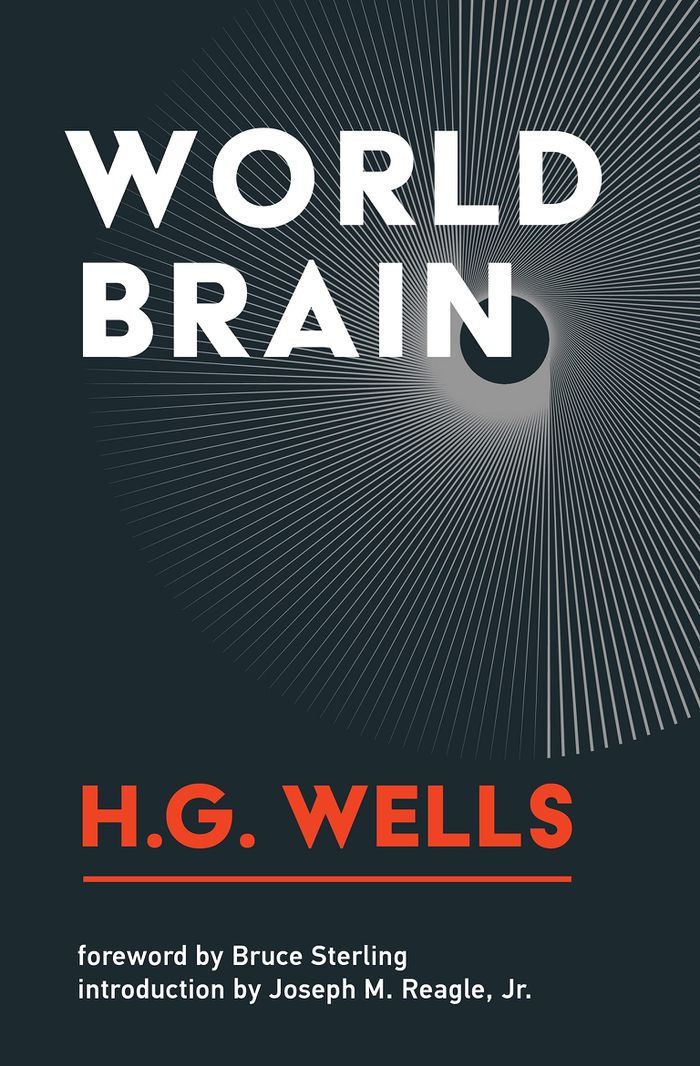
In a series of talks and essays in 1937, H. G. Wells proselytized for what he called a "World Brain," as manifested in a World Encyclopedia--a repository of scientifically established knowledge--that would spread enlightenment around the world and lead to world peace. Wells, known to readers today as the author of "The War of the Worlds" and other science fiction classics, was imagining something like a predigital Wikipedia. The World Encyclopedia would provide a summary of verified reality (in about forty volumes); it would be widely available, free of copyright, and utilize the latest technology. Of course, as Bruce Sterling points out in the foreword to this edition of Wells's work, the World Brain didn't happen; the internet did. And yet, Wells anticipated aspects of the internet, envisioning the World Brain as a technical system of networked knowledge (in Sterling's words, a "hypothetical super-gadget"). Wells's optimism about the power of information might strike readers today as naïvely utopian, but possibly also inspirational.
World brain
Actions:
Price:
$33.95
(available to order)
Summary:
In a series of talks and essays in 1937, H. G. Wells proselytized for what he called a "World Brain," as manifested in a World Encyclopedia--a repository of scientifically established knowledge--that would spread enlightenment around the world and lead to world peace. Wells, known to readers today as the author of "The War of the Worlds" and other science fiction classics, was imagining something like a predigital Wikipedia. The World Encyclopedia would provide a summary of verified reality (in about forty volumes); it would be widely available, free of copyright, and utilize the latest technology. Of course, as Bruce Sterling points out in the foreword to this edition of Wells's work, the World Brain didn't happen; the internet did. And yet, Wells anticipated aspects of the internet, envisioning the World Brain as a technical system of networked knowledge (in Sterling's words, a "hypothetical super-gadget"). Wells's optimism about the power of information might strike readers today as naïvely utopian, but possibly also inspirational.
Form:
books
books
Publication:
August 2021
August 2021
Subject:
Archive, library and the digital
Archive, library and the digital
Form:
books
books
Title:
Module B. 2015/2019
Module B. 2015/2019
Actions:
Price:
$20.00
(available in store)
Summary:
MODULE B. interroge la bibliothèque en tant qu’espace de classement, de présentation et de collection d’un savoir personnel ou collectif. À l’ère du numérique, il s’agit aussi de dégager la signification de la bibliothèque, sa manière d’agencer un espace, sa définition matérielle et les formes de sa virtualisation. Lors de l’inauguration du projet MODULE B. en 2015, le(...)
$20.00
(available in store)
Summary:
MODULE B. interroge la bibliothèque en tant qu’espace de classement, de présentation et de collection d’un savoir personnel ou collectif. À l’ère du numérique, il s’agit aussi de dégager la signification de la bibliothèque, sa manière d’agencer un espace, sa définition matérielle et les formes de sa virtualisation. Lors de l’inauguration du projet MODULE B. en 2015, le(...)
Title:
Module B. 2015/2019
Actions:
Price:
$20.00
(available in store)
Summary:
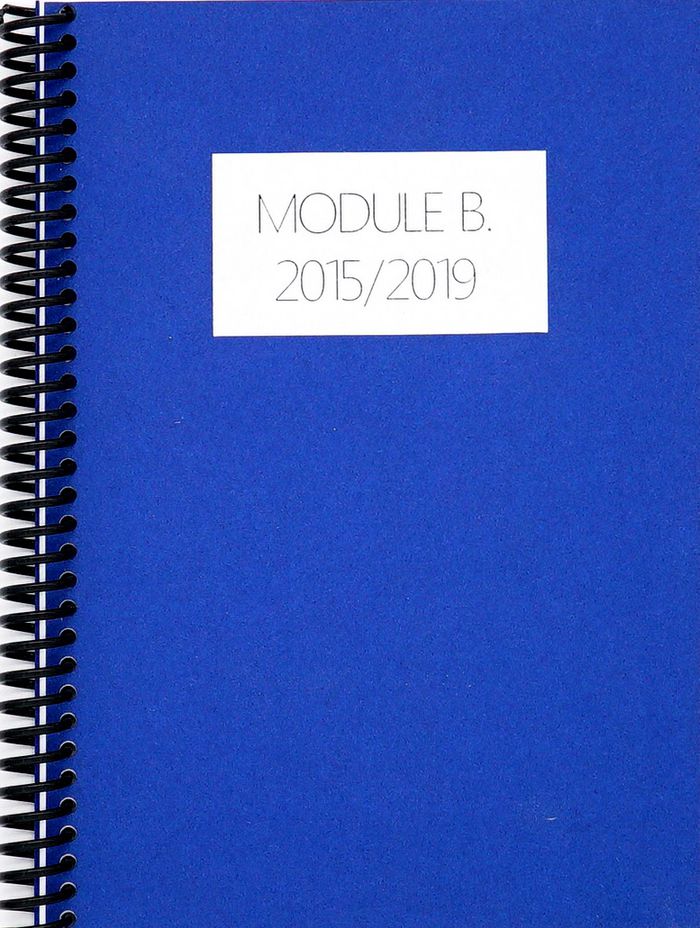
MODULE B. interroge la bibliothèque en tant qu’espace de classement, de présentation et de collection d’un savoir personnel ou collectif. À l’ère du numérique, il s’agit aussi de dégager la signification de la bibliothèque, sa manière d’agencer un espace, sa définition matérielle et les formes de sa virtualisation. Lors de l’inauguration du projet MODULE B. en 2015, le visiteur était amené à remplir l’une des 16 fiches du répertoire créé pour l’occasion, portant chacune un intitulé différent, une interrogation particulière sur la définition d’une bibliothèque, à travers un prisme différent. Suite à l’exposition de Module B. à hon\ books en 2019, antoine lefebvre editions publie la collection des fiches recueillies par le collectif.
Module B. 2015/2019
Actions:
Price:
$20.00
(available in store)
Summary:
MODULE B. interroge la bibliothèque en tant qu’espace de classement, de présentation et de collection d’un savoir personnel ou collectif. À l’ère du numérique, il s’agit aussi de dégager la signification de la bibliothèque, sa manière d’agencer un espace, sa définition matérielle et les formes de sa virtualisation. Lors de l’inauguration du projet MODULE B. en 2015, le visiteur était amené à remplir l’une des 16 fiches du répertoire créé pour l’occasion, portant chacune un intitulé différent, une interrogation particulière sur la définition d’une bibliothèque, à travers un prisme différent. Suite à l’exposition de Module B. à hon\ books en 2019, antoine lefebvre editions publie la collection des fiches recueillies par le collectif.
Form:
books
books
Publication:
October 2022
October 2022
Subject:
Archive, library and the digital
Archive, library and the digital
Form:
books
books
Price:
$45.00
(available in store)
Summary:
Si le numérique est désormais ubiquitaire, quels sont les angles morts de ce regard dont le centre est partout et la circonférence nulle part ? C'est à cette question qu'essaient de répondre les 145 entrées et la vingtaine de contributeur·trices de ce glossaire. On y trouvera des expressions-clés, familières ou inattendues, des réflexions originales et des synthèses(...)
$45.00
(available in store)
Summary:
Si le numérique est désormais ubiquitaire, quels sont les angles morts de ce regard dont le centre est partout et la circonférence nulle part ? C'est à cette question qu'essaient de répondre les 145 entrées et la vingtaine de contributeur·trices de ce glossaire. On y trouvera des expressions-clés, familières ou inattendues, des réflexions originales et des synthèses(...)
Subject:
Archive, library and the digital
Archive, library and the digital
Publication:
January 2023
January 2023
Title:
Angles morts du numérique ubiquitaire: Un glossaire critique et amoureux
Actions:
Price:
$45.00
(available in store)
Summary:
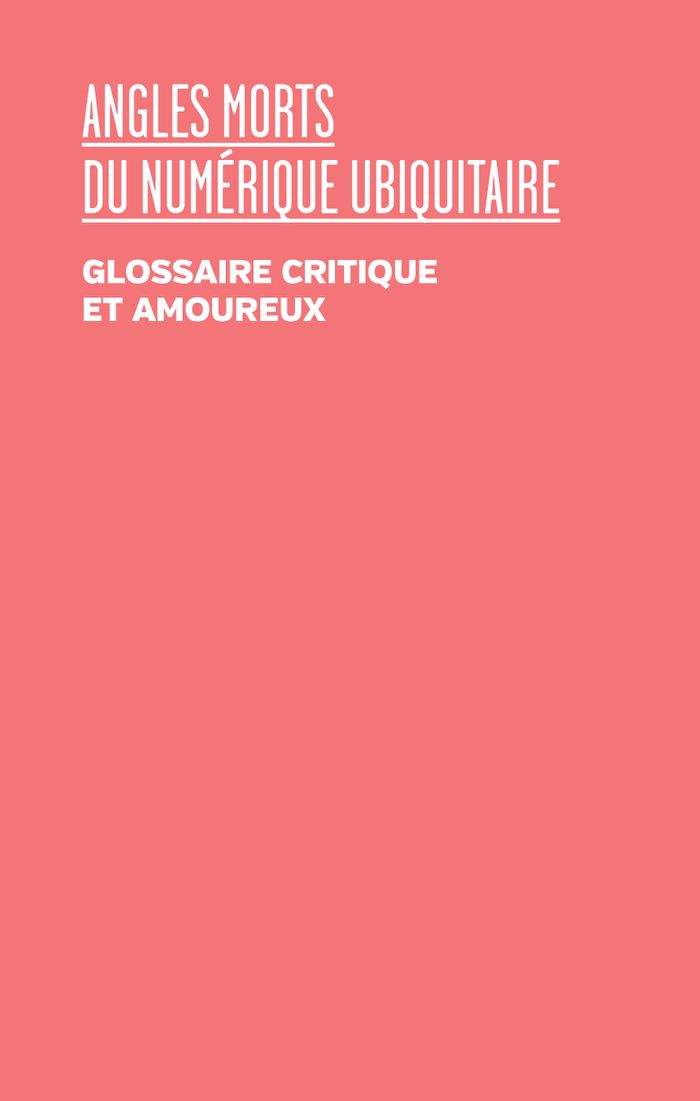
Si le numérique est désormais ubiquitaire, quels sont les angles morts de ce regard dont le centre est partout et la circonférence nulle part ? C'est à cette question qu'essaient de répondre les 145 entrées et la vingtaine de contributeur·trices de ce glossaire. On y trouvera des expressions-clés, familières ou inattendues, des réflexions originales et des synthèses pédagogiques sur les profondes ambivalences dont ces angles morts sont le lieu. Ces zones d'ombre marquent en effet à la fois des limites et des lacunes des meilleurs efforts de programmation, condamnant certaines réalités à rester exclues de ce qui (se) compte dans notre monde numérisé. C'est pour nous permettre de mieux naviguer parmi ces ambivalences que cet ouvrage propose quelques éléments d'un vocabulaire commun du numérique ubiquitaire. Il se veut critique, parce que les formes prises par les exploitations actuelles du numérique sont souvent inquiétantes et demandent à être restructurées. Il se dit amoureux pour renouer avec une veine d'espoirs et d'émerveillements devant les potentiels d'émancipation et d'intelligence collectives dont reste porteuse la computation.
Angles morts du numérique ubiquitaire: Un glossaire critique et amoureux
Actions:
Price:
$45.00
(available in store)
Summary:
Si le numérique est désormais ubiquitaire, quels sont les angles morts de ce regard dont le centre est partout et la circonférence nulle part ? C'est à cette question qu'essaient de répondre les 145 entrées et la vingtaine de contributeur·trices de ce glossaire. On y trouvera des expressions-clés, familières ou inattendues, des réflexions originales et des synthèses pédagogiques sur les profondes ambivalences dont ces angles morts sont le lieu. Ces zones d'ombre marquent en effet à la fois des limites et des lacunes des meilleurs efforts de programmation, condamnant certaines réalités à rester exclues de ce qui (se) compte dans notre monde numérisé. C'est pour nous permettre de mieux naviguer parmi ces ambivalences que cet ouvrage propose quelques éléments d'un vocabulaire commun du numérique ubiquitaire. Il se veut critique, parce que les formes prises par les exploitations actuelles du numérique sont souvent inquiétantes et demandent à être restructurées. Il se dit amoureux pour renouer avec une veine d'espoirs et d'émerveillements devant les potentiels d'émancipation et d'intelligence collectives dont reste porteuse la computation.
Form:
books
books
Publication:
January 2023
January 2023
Subject:
Archive, library and the digital
Archive, library and the digital
Form:
books
books

Title:
Le livre et la bibliothèque: La quête des savoirs et de la culture, mélanges offerts à Marcel Laje
Le livre et la bibliothèque: La quête des savoirs et de la culture, mélanges offerts à Marcel Laje
Actions:
Price:
$45.00
(available in store)
Summary:
Cet ouvrage présente le livre et la bibliothèque comme objet et lieu privilégiés où s’incarne la quête des savoirs et de la culture. Qu’on pense en mode analogique ou numérique, le livre et la bibliothèque ne sont-ils pas les meilleurs moyens de répondre au besoin essentiel que nous avons tous de connaître, de savoir, de nous développer?? Le livre comme support de la(...)
$45.00
(available in store)
Summary:
Cet ouvrage présente le livre et la bibliothèque comme objet et lieu privilégiés où s’incarne la quête des savoirs et de la culture. Qu’on pense en mode analogique ou numérique, le livre et la bibliothèque ne sont-ils pas les meilleurs moyens de répondre au besoin essentiel que nous avons tous de connaître, de savoir, de nous développer?? Le livre comme support de la(...)
Subject:
Archive, library and the digital
Archive, library and the digital
Publication:
February 2023
February 2023
Title:
Le livre et la bibliothèque: La quête des savoirs et de la culture, mélanges offerts à Marcel Laje
Actions:
Price:
$45.00
(available in store)
Summary:
Cet ouvrage présente le livre et la bibliothèque comme objet et lieu privilégiés où s’incarne la quête des savoirs et de la culture. Qu’on pense en mode analogique ou numérique, le livre et la bibliothèque ne sont-ils pas les meilleurs moyens de répondre au besoin essentiel que nous avons tous de connaître, de savoir, de nous développer?? Le livre comme support de la connaissance et la bibliothèque comme milieu de recherche du savoir ont fourni de tout temps une contribution importante à l’apprentissage, à la progression, bref à l’évolution de l’être humain. L’ouvrage que nous proposons aborde ce vaste terrain de réflexion dans une approche nationale et internationale avec un regard historique, actuel et tourné vers l’avenir.
Le livre et la bibliothèque: La quête des savoirs et de la culture, mélanges offerts à Marcel Laje
Actions:
Price:
$45.00
(available in store)
Summary:
Cet ouvrage présente le livre et la bibliothèque comme objet et lieu privilégiés où s’incarne la quête des savoirs et de la culture. Qu’on pense en mode analogique ou numérique, le livre et la bibliothèque ne sont-ils pas les meilleurs moyens de répondre au besoin essentiel que nous avons tous de connaître, de savoir, de nous développer?? Le livre comme support de la connaissance et la bibliothèque comme milieu de recherche du savoir ont fourni de tout temps une contribution importante à l’apprentissage, à la progression, bref à l’évolution de l’être humain. L’ouvrage que nous proposons aborde ce vaste terrain de réflexion dans une approche nationale et internationale avec un regard historique, actuel et tourné vers l’avenir.
Form:
books
books
Publication:
February 2023
February 2023
Subject:
Archive, library and the digital
Archive, library and the digital


