


5813 Results
Form:
books
books
Actions:
Holdings:
Description:
2 volumes : illustrations (some color) ; 29 cm
Description:
2 volumes : illustrations (some color) ; 29 cm
Author:
Subject:
Publication:
Milano : Triennale di Milano ; Electa, ©1988.
Milano : Triennale di Milano ; Electa, ©1988.
Title:
World cities and the future of the metropoles.
Actions:
Holdings:
Description:
2 volumes : illustrations (some color) ; 29 cm
World cities and the future of the metropoles.
Actions:
Holdings:
Description:
2 volumes : illustrations (some color) ; 29 cm
Form:
books
books
Publication:
Milano : Triennale di Milano ; Electa, ©1988.
Milano : Triennale di Milano ; Electa, ©1988.
Author:
Subject:
Form:
journals and magazines
journals and magazines
Title:
The business history review.
The business history review.
Actions:
Author:
Subject:
Publication:
Boston : Harvard Graduate School of Business Administration, 1954-
Boston : Harvard Graduate School of Business Administration, 1954-
Form:
journals and magazines
journals and magazines
Publication:
Boston : Harvard Graduate School of Business Administration, 1954-
Boston : Harvard Graduate School of Business Administration, 1954-
Author:
Subject:
Form:
books
books
Actions:
Description:
1 online resource
Author:
Subject:
Publication:
[S.l.]: Velocity Press, 2025.
[S.l.]: Velocity Press, 2025.
Title:
The Label Machine: Build Your Music Career With The Record Label Model Nick Sadler.
Actions:
Description:
1 online resource
The Label Machine: Build Your Music Career With The Record Label Model Nick Sadler.
Actions:
Description:
1 online resource
Form:
books
books
Publication:
[S.l.]: Velocity Press, 2025.
[S.l.]: Velocity Press, 2025.
Author:
Subject:
Form:
journals and magazines
journals and magazines
Author:
Subject:
Publication:
Genève : Association internationale pour l'étude de l'économie de l'assurance, ©1990-, [publisher not identified] : Palgrave Macmillan
Genève : Association internationale pour l'étude de l'économie de l'assurance, ©1990-, [publisher not identified] : Palgrave Macmillan
Form:
journals and magazines
journals and magazines
Publication:
Genève : Association internationale pour l'étude de l'économie de l'assurance, ©1990-, [publisher not identified] : Palgrave Macmillan
Genève : Association internationale pour l'étude de l'économie de l'assurance, ©1990-, [publisher not identified] : Palgrave Macmillan
Author:
Subject:
Form:
books
books
Actions:
Price:
$32.00
(available to order)
Summary:
Nearly one in six Americans lives in "Megalopolis," an area of the northeastern United States along the I-95 corridor that includes the cities of Washington, Baltimore, Philadelphia, New York, and Boston. Liquid City is the first book to examine the major changes that have taken place in this "Main Street of the Nation" over the last half century. In 1957, geographer(...)
$32.00
(available to order)
Summary:
Nearly one in six Americans lives in "Megalopolis," an area of the northeastern United States along the I-95 corridor that includes the cities of Washington, Baltimore, Philadelphia, New York, and Boston. Liquid City is the first book to examine the major changes that have taken place in this "Main Street of the Nation" over the last half century. In 1957, geographer(...)
Title:
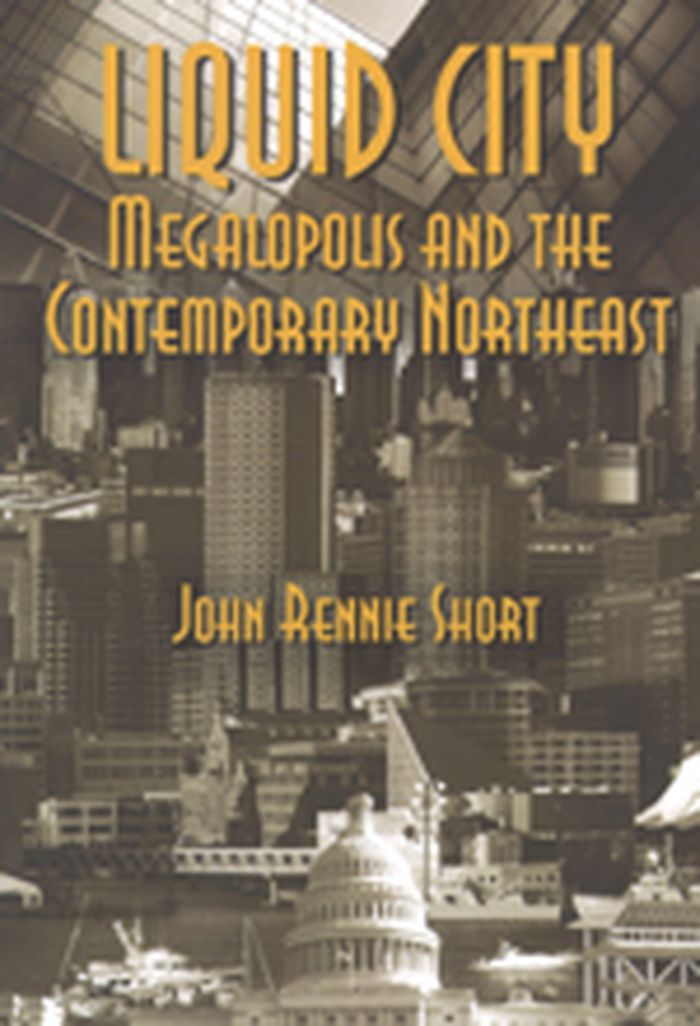
Liquid city : Megalopolos and the contemporary northeast
Actions:
Price:
$32.00
(available to order)
Summary:
Nearly one in six Americans lives in "Megalopolis," an area of the northeastern United States along the I-95 corridor that includes the cities of Washington, Baltimore, Philadelphia, New York, and Boston. Liquid City is the first book to examine the major changes that have taken place in this "Main Street of the Nation" over the last half century. In 1957, geographer Jean Gottman used the term "Megalopolis" to denote the Boston-to-Washington corridor. His seminal book, Megalopolis: The Urbanized Northeastern Seaboard of the United States, described the social, economic, and demographic characteristics of one of the largest city regions in the world. John Rennie Short juxtaposes Gottman's work with his own examination, providing a comprehensive assessment of the region's evolution. Particularly important is Short's use of the 2000 census data and his discussion of Megalopolis as a source of identity for the area's forty-nine million inhabitants. This clear and accessible book focuses on five main aspects of change in the region: population redistribution from cities to suburbs; economic restructuring as exemplified by the suburbanization of employment; the role of immigration; patterns of racial/ethnic segregation; and the processes of globalization that have made Megalopolis one of the world's most influential economies.
Liquid city : Megalopolos and the contemporary northeast
Actions:
Price:
$32.00
(available to order)
Summary:
Nearly one in six Americans lives in "Megalopolis," an area of the northeastern United States along the I-95 corridor that includes the cities of Washington, Baltimore, Philadelphia, New York, and Boston. Liquid City is the first book to examine the major changes that have taken place in this "Main Street of the Nation" over the last half century. In 1957, geographer Jean Gottman used the term "Megalopolis" to denote the Boston-to-Washington corridor. His seminal book, Megalopolis: The Urbanized Northeastern Seaboard of the United States, described the social, economic, and demographic characteristics of one of the largest city regions in the world. John Rennie Short juxtaposes Gottman's work with his own examination, providing a comprehensive assessment of the region's evolution. Particularly important is Short's use of the 2000 census data and his discussion of Megalopolis as a source of identity for the area's forty-nine million inhabitants. This clear and accessible book focuses on five main aspects of change in the region: population redistribution from cities to suburbs; economic restructuring as exemplified by the suburbanization of employment; the role of immigration; patterns of racial/ethnic segregation; and the processes of globalization that have made Megalopolis one of the world's most influential economies.
Form:
books
books
Publication:
July 2007, Washington
July 2007, Washington
Subject:
Urban Theory
Urban Theory
Form:
books
books
Actions:
Price:
$27.50
(available to order)
Summary:
Los Angeles's history is a story of conflicting visions. Most historians, journalists, and filmmakers have focused on L.A. as a bastion of corporate greed, business boosterism, political corruption, cheap labor, exploited immigrants, and unregulated sprawl. "The next Los Angeles" tells a different story: that of the reformers and radicals who have struggled for(...)
$27.50
(available to order)
Summary:
Los Angeles's history is a story of conflicting visions. Most historians, journalists, and filmmakers have focused on L.A. as a bastion of corporate greed, business boosterism, political corruption, cheap labor, exploited immigrants, and unregulated sprawl. "The next Los Angeles" tells a different story: that of the reformers and radicals who have struggled for(...)
Subject:
Urban Theory
Urban Theory
Publication:
August 2006, Berkeley, Los Angeles, London
August 2006, Berkeley, Los Angeles, London
Title:
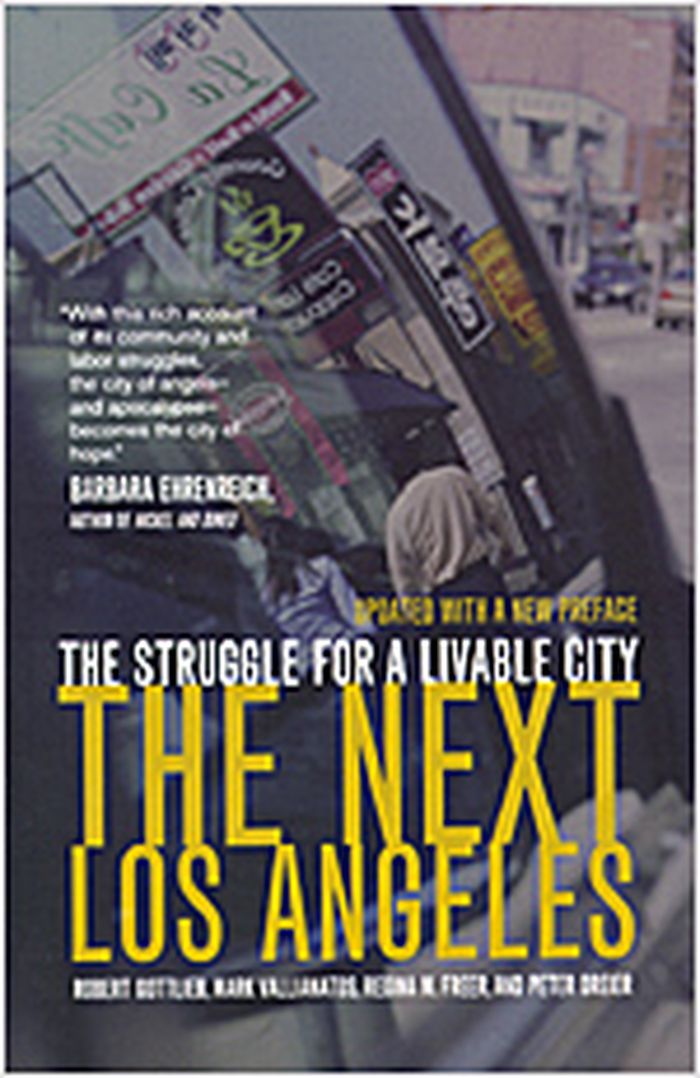
The next Los Angeles : the struggle for a livable city, updated with a new preface
Actions:
Price:
$27.50
(available to order)
Summary:
Los Angeles's history is a story of conflicting visions. Most historians, journalists, and filmmakers have focused on L.A. as a bastion of corporate greed, business boosterism, political corruption, cheap labor, exploited immigrants, and unregulated sprawl. "The next Los Angeles" tells a different story: that of the reformers and radicals who have struggled for alternative visions of social and economic justice. The authors chronicle efforts of progressive social movements that worked throughout the twentieth century to create a more livable, just, and democratic Los Angeles. These movements-what the authors call Progressive L.A.-have produced a new kind of labor movement, community-oriented environmentalism, and multi-ethnic coalition politics. This book shows how reformers have fought to transform a city characterized by huge economic disparities, concrete-encased rivers, and an endless landscape of subdivisions, freeways, and malls into a progressive model for regions around the country. "The next Los Angeles" includes a decade-by-decade historical snapshot of the city's progressive social movements and an in-depth exploration of key trends that are remaking L.A. at the beginning of the twenty-first century. It examines L.A.'s changing political landscape, including grassroots initiatives to construct a new agenda for social transformation.
The next Los Angeles : the struggle for a livable city, updated with a new preface
Actions:
Price:
$27.50
(available to order)
Summary:
Los Angeles's history is a story of conflicting visions. Most historians, journalists, and filmmakers have focused on L.A. as a bastion of corporate greed, business boosterism, political corruption, cheap labor, exploited immigrants, and unregulated sprawl. "The next Los Angeles" tells a different story: that of the reformers and radicals who have struggled for alternative visions of social and economic justice. The authors chronicle efforts of progressive social movements that worked throughout the twentieth century to create a more livable, just, and democratic Los Angeles. These movements-what the authors call Progressive L.A.-have produced a new kind of labor movement, community-oriented environmentalism, and multi-ethnic coalition politics. This book shows how reformers have fought to transform a city characterized by huge economic disparities, concrete-encased rivers, and an endless landscape of subdivisions, freeways, and malls into a progressive model for regions around the country. "The next Los Angeles" includes a decade-by-decade historical snapshot of the city's progressive social movements and an in-depth exploration of key trends that are remaking L.A. at the beginning of the twenty-first century. It examines L.A.'s changing political landscape, including grassroots initiatives to construct a new agenda for social transformation.
Form:
books
books
Publication:
August 2006, Berkeley, Los Angeles, London
August 2006, Berkeley, Los Angeles, London
Subject:
Urban Theory
Urban Theory
Form:
books
books
Actions:
Price:
$99.00
(available in store)
Summary:
In an age of social and environmental crises, we need to critically rethink the role of the built environment and how best to put it to work. ''Measures and Meanings of Spatial Capital'' presents a new theory of spatial capital, arguing that spatial form is essential for building resilience into highly complex urban systems. Lars Marcus argues that the built environment(...)
$99.00
(available in store)
Summary:
In an age of social and environmental crises, we need to critically rethink the role of the built environment and how best to put it to work. ''Measures and Meanings of Spatial Capital'' presents a new theory of spatial capital, arguing that spatial form is essential for building resilience into highly complex urban systems. Lars Marcus argues that the built environment(...)
Title:
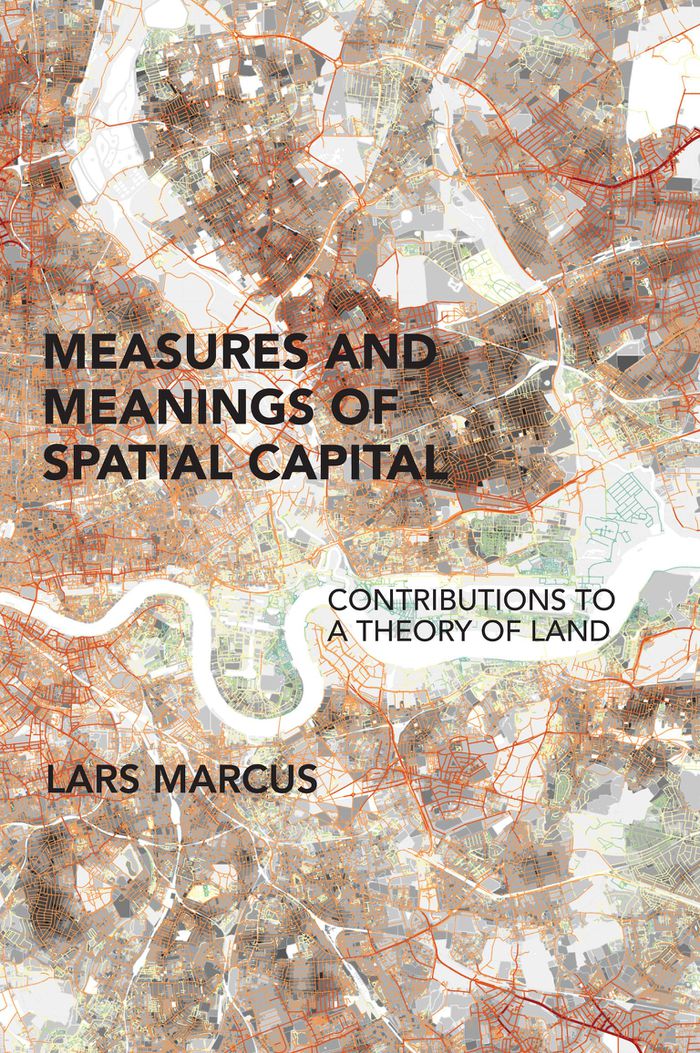
Measures and meanings of spatial capital
Actions:
Price:
$99.00
(available in store)
Summary:
In an age of social and environmental crises, we need to critically rethink the role of the built environment and how best to put it to work. ''Measures and Meanings of Spatial Capital'' presents a new theory of spatial capital, arguing that spatial form is essential for building resilience into highly complex urban systems. Lars Marcus argues that the built environment constitutes a form of capital that enhances other forms of capital in cities (such as social, economic, and ecological capital), if designed with those goals in mind. This represents an important and necessary shift in how we approach urban space in the numerous studies of cities that are conducted in a range of disciplines today, such as urban sociology, urban economics, and urban ecology. In contemporary urban studies, land has oddly lost its position alongside labor and capital as one of the three fundamental production factors in economic theory, but as Marcus shows, misconceptions of land are at the root of social and environmental crises worldwide. By defining the challenges and modeling our use of spatial form to enhance/improve land, and then synthesizing data into a unified theory of spatial capital, Marcus provides a crucial reframing of how we can best plan and design our cities for the global challenges we are facing.
Measures and meanings of spatial capital
Actions:
Price:
$99.00
(available in store)
Summary:
In an age of social and environmental crises, we need to critically rethink the role of the built environment and how best to put it to work. ''Measures and Meanings of Spatial Capital'' presents a new theory of spatial capital, arguing that spatial form is essential for building resilience into highly complex urban systems. Lars Marcus argues that the built environment constitutes a form of capital that enhances other forms of capital in cities (such as social, economic, and ecological capital), if designed with those goals in mind. This represents an important and necessary shift in how we approach urban space in the numerous studies of cities that are conducted in a range of disciplines today, such as urban sociology, urban economics, and urban ecology. In contemporary urban studies, land has oddly lost its position alongside labor and capital as one of the three fundamental production factors in economic theory, but as Marcus shows, misconceptions of land are at the root of social and environmental crises worldwide. By defining the challenges and modeling our use of spatial form to enhance/improve land, and then synthesizing data into a unified theory of spatial capital, Marcus provides a crucial reframing of how we can best plan and design our cities for the global challenges we are facing.
Form:
books
books
Publication:
February 2025
February 2025
Subject:
Urban Theory
Urban Theory
Form:
books
books
Actions:
Price:
$27.00
(available to order)
Summary:
After the economic disaster of the Great Leap Forward that claimed tens of millions of lives from 1958–1962, an aging Mao Zedong launched an ambitious scheme to shore up his reputation and eliminate those he viewed as a threat to his legacy. The Cultural Revolution's goal was to purge the country of bourgeois, capitalistic elements he claimed were threatening genuine(...)
$27.00
(available to order)
Summary:
After the economic disaster of the Great Leap Forward that claimed tens of millions of lives from 1958–1962, an aging Mao Zedong launched an ambitious scheme to shore up his reputation and eliminate those he viewed as a threat to his legacy. The Cultural Revolution's goal was to purge the country of bourgeois, capitalistic elements he claimed were threatening genuine(...)
Title:
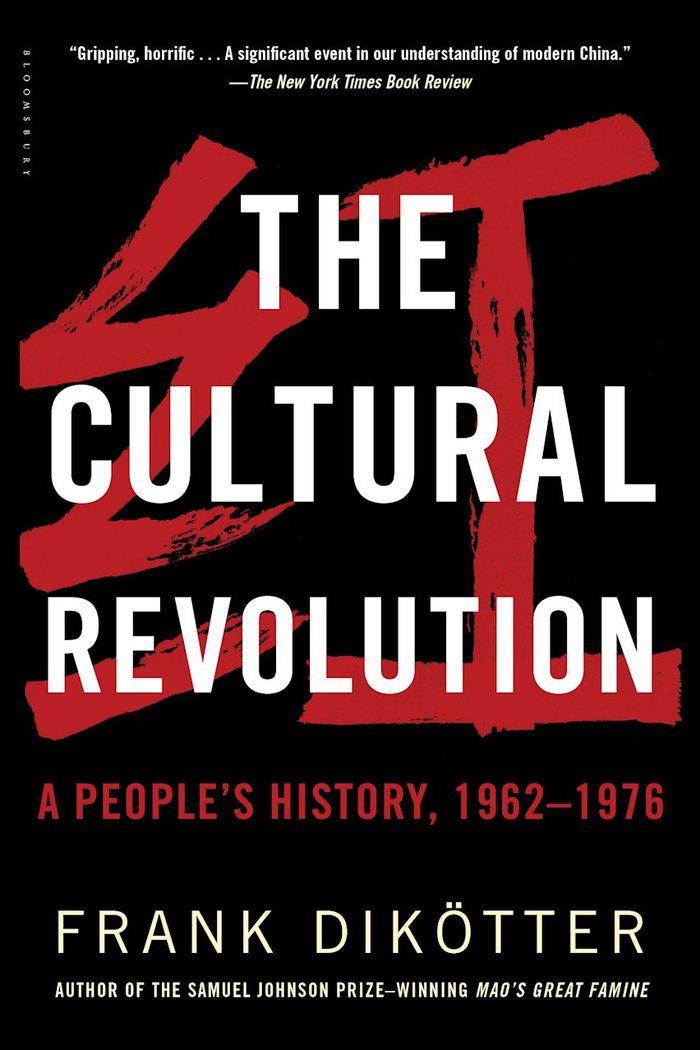
The cultural revolution: A people's history, 1962-1976
Actions:
Price:
$27.00
(available to order)
Summary:
After the economic disaster of the Great Leap Forward that claimed tens of millions of lives from 1958–1962, an aging Mao Zedong launched an ambitious scheme to shore up his reputation and eliminate those he viewed as a threat to his legacy. The Cultural Revolution's goal was to purge the country of bourgeois, capitalistic elements he claimed were threatening genuine communist ideology. Young students formed the Red Guards, vowing to defend the Chairman to the death, but soon rival factions started fighting each other in the streets with semiautomatic weapons in the name of revolutionary purity. As the country descended into chaos, the military intervened, turning China into a garrison state marked by bloody purges that crushed as many as one in fifty people. ''The Cultural Revolution: A People's History, 1962–1976'' draws for the first time on hundreds of previously classified party documents, from secret police reports to unexpurgated versions of leadership speeches. After the army itself fell victim to the Cultural Revolution, ordinary people used the political chaos to resurrect the market and hollow out the party's ideology. By showing how economic reform from below was an unintended consequence of a decade of violent purges and entrenched fear, ''The Cultural Revolution'' casts China's most tumultuous era in a wholly new light.
The cultural revolution: A people's history, 1962-1976
Actions:
Price:
$27.00
(available to order)
Summary:
After the economic disaster of the Great Leap Forward that claimed tens of millions of lives from 1958–1962, an aging Mao Zedong launched an ambitious scheme to shore up his reputation and eliminate those he viewed as a threat to his legacy. The Cultural Revolution's goal was to purge the country of bourgeois, capitalistic elements he claimed were threatening genuine communist ideology. Young students formed the Red Guards, vowing to defend the Chairman to the death, but soon rival factions started fighting each other in the streets with semiautomatic weapons in the name of revolutionary purity. As the country descended into chaos, the military intervened, turning China into a garrison state marked by bloody purges that crushed as many as one in fifty people. ''The Cultural Revolution: A People's History, 1962–1976'' draws for the first time on hundreds of previously classified party documents, from secret police reports to unexpurgated versions of leadership speeches. After the army itself fell victim to the Cultural Revolution, ordinary people used the political chaos to resurrect the market and hollow out the party's ideology. By showing how economic reform from below was an unintended consequence of a decade of violent purges and entrenched fear, ''The Cultural Revolution'' casts China's most tumultuous era in a wholly new light.
Form:
books
books
Publication:
December 2025
December 2025
Subject:
Current Exhibitions
Current Exhibitions
Form:
books
books
Actions:
Price:
$32.00
(available to order)
Summary:
Italian philosopher Antonio Negri has declared that “Every kind of change belongs to a form of community art,” inverting the convention that community art can be an integral component of social change and extending the rubric of art to propose a commons of all those striving to effect change in social, economic, technological and ecological arenas. So how do these(...)
$32.00
(available to order)
Summary:
Italian philosopher Antonio Negri has declared that “Every kind of change belongs to a form of community art,” inverting the convention that community art can be an integral component of social change and extending the rubric of art to propose a commons of all those striving to effect change in social, economic, technological and ecological arenas. So how do these(...)
Title:
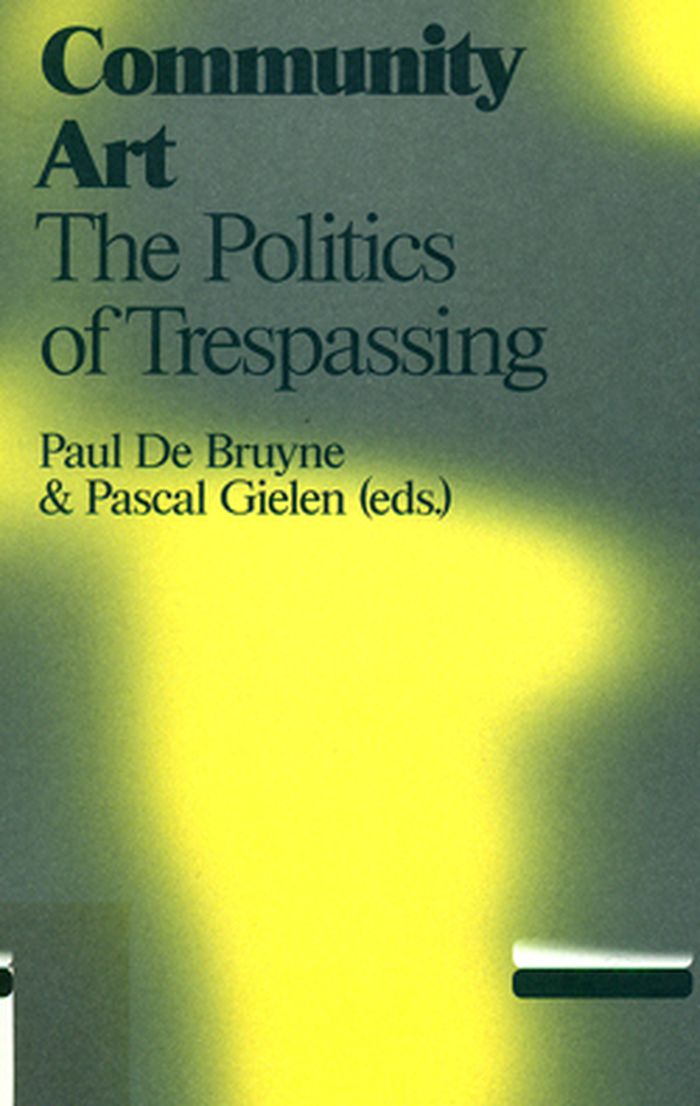
Community art : the politics of trespassing
Actions:
Price:
$32.00
(available to order)
Summary:
Italian philosopher Antonio Negri has declared that “Every kind of change belongs to a form of community art,” inverting the convention that community art can be an integral component of social change and extending the rubric of art to propose a commons of all those striving to effect change in social, economic, technological and ecological arenas. So how do these endeavors influence and act upon one another? In Community Art, artists and theorists explore the practices of artistic and social movements in western and non-western societies.
Community art : the politics of trespassing
Actions:
Price:
$32.00
(available to order)
Summary:
Italian philosopher Antonio Negri has declared that “Every kind of change belongs to a form of community art,” inverting the convention that community art can be an integral component of social change and extending the rubric of art to propose a commons of all those striving to effect change in social, economic, technological and ecological arenas. So how do these endeavors influence and act upon one another? In Community Art, artists and theorists explore the practices of artistic and social movements in western and non-western societies.
Form:
books
books
Publication:
August 2011
August 2011
Subject:
Art Theory
Art Theory
Form:
books
books
Price:
$62.00
(available to order)
Summary:
With a new update introduction, this is a comprehensive guidebook for architects, planners, urban designers, and developers that illustrates how existing suburbs can be redesigned and redeveloped. The authors, both architects and noted experts on the subject, shows how development in existing suburbs can absorb new growth and evolve in relation to changed demographic,(...)
$62.00
(available to order)
Summary:
With a new update introduction, this is a comprehensive guidebook for architects, planners, urban designers, and developers that illustrates how existing suburbs can be redesigned and redeveloped. The authors, both architects and noted experts on the subject, shows how development in existing suburbs can absorb new growth and evolve in relation to changed demographic,(...)
Title:
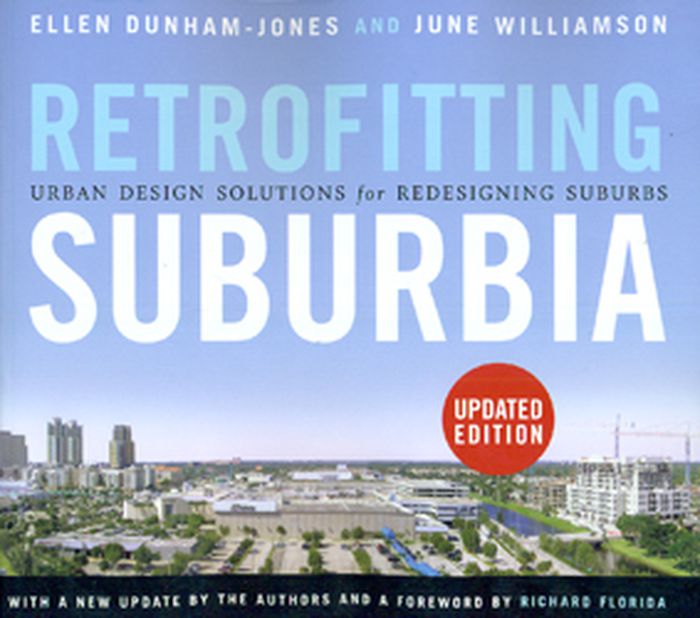
Retrofitting suburbia: urban design solutions for redesigning suburbs
Actions:
Price:
$62.00
(available to order)
Summary:
With a new update introduction, this is a comprehensive guidebook for architects, planners, urban designers, and developers that illustrates how existing suburbs can be redesigned and redeveloped. The authors, both architects and noted experts on the subject, shows how development in existing suburbs can absorb new growth and evolve in relation to changed demographic, technological, and economic conditions. The book documents innovative case studies of prototypical American suburban developments (malls, commercial strips, office parks, cul-de-sac subdivisions) that have been retrofitted to new uses and forms.
Retrofitting suburbia: urban design solutions for redesigning suburbs
Actions:
Price:
$62.00
(available to order)
Summary:
With a new update introduction, this is a comprehensive guidebook for architects, planners, urban designers, and developers that illustrates how existing suburbs can be redesigned and redeveloped. The authors, both architects and noted experts on the subject, shows how development in existing suburbs can absorb new growth and evolve in relation to changed demographic, technological, and economic conditions. The book documents innovative case studies of prototypical American suburban developments (malls, commercial strips, office parks, cul-de-sac subdivisions) that have been retrofitted to new uses and forms.
Form:
books
books
Publication:
April 2012
April 2012
Subject:
Suburbs
Suburbs


