


10583 Results
Form:
books
books
Actions:
Price:
$98.00
(available to order)
Summary:
The second of three books published by the Center for Environmental Structure to provide a "working alternative to our present ideas about architecture, building, and planning," A Pattern Language offers a practical language for building and planning based on natural considerations. The reader is given an overview of some 250 patterns that are the units of this language,(...)
$98.00
(available to order)
Summary:
The second of three books published by the Center for Environmental Structure to provide a "working alternative to our present ideas about architecture, building, and planning," A Pattern Language offers a practical language for building and planning based on natural considerations. The reader is given an overview of some 250 patterns that are the units of this language,(...)
Title:
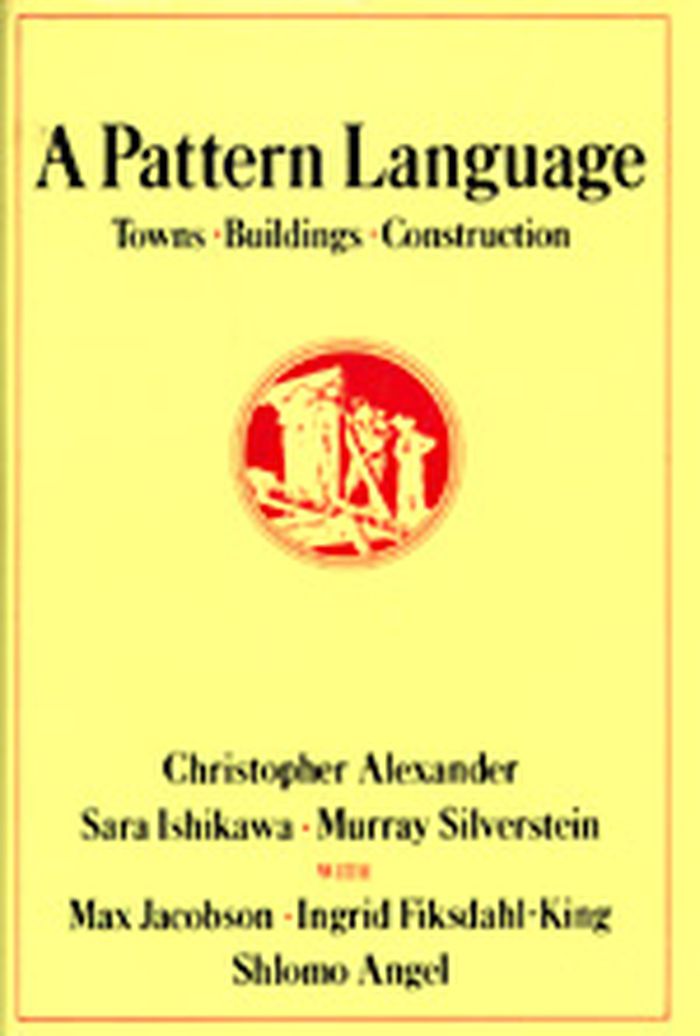
A pattern language : towns buildings construction
Actions:
Price:
$98.00
(available to order)
Summary:
The second of three books published by the Center for Environmental Structure to provide a "working alternative to our present ideas about architecture, building, and planning," A Pattern Language offers a practical language for building and planning based on natural considerations. The reader is given an overview of some 250 patterns that are the units of this language, each consisting of a design problem, discussion, illustration, and solution. By understanding recurrent design problems in our environment, readers can identify extant patterns in their own design projects and use these patterns to create a language of their own. Extraordinarily thorough, coherent, and accessible, this book has become a bible for homebuilders, contractors, and developers who care about creating healthy, high-level design.
A pattern language : towns buildings construction
Actions:
Price:
$98.00
(available to order)
Summary:
The second of three books published by the Center for Environmental Structure to provide a "working alternative to our present ideas about architecture, building, and planning," A Pattern Language offers a practical language for building and planning based on natural considerations. The reader is given an overview of some 250 patterns that are the units of this language, each consisting of a design problem, discussion, illustration, and solution. By understanding recurrent design problems in our environment, readers can identify extant patterns in their own design projects and use these patterns to create a language of their own. Extraordinarily thorough, coherent, and accessible, this book has become a bible for homebuilders, contractors, and developers who care about creating healthy, high-level design.
Form:
books
books
Publication:
August 1977, New York
August 1977, New York
Subject:
Architectural Theory
Architectural Theory
Form:
books
books
Title:
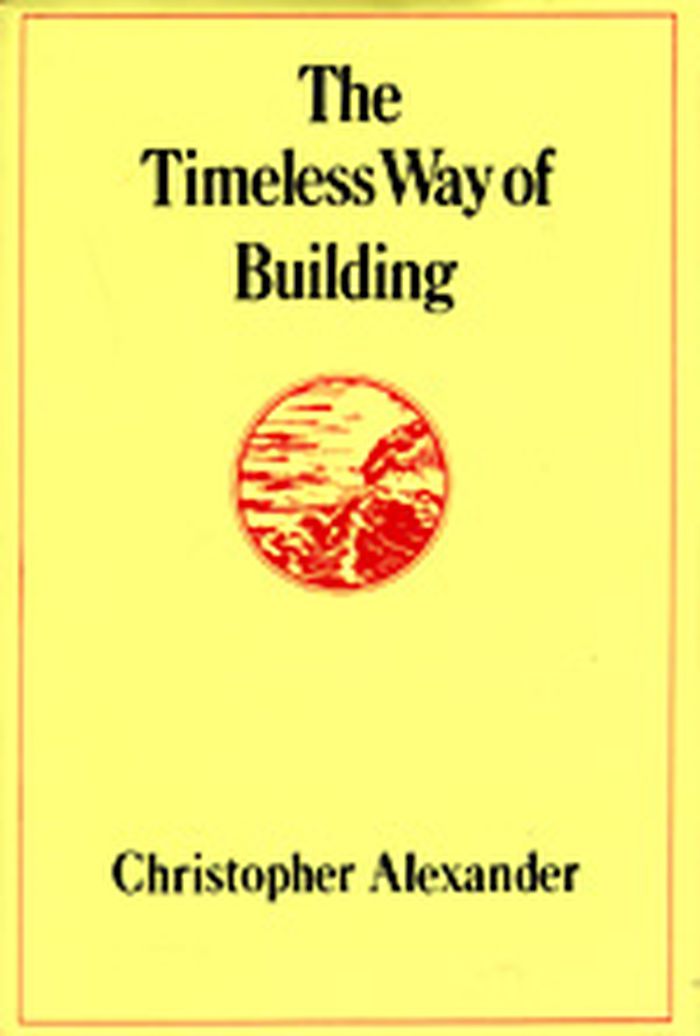
The timeless way of building
The timeless way of building
Actions:
Price:
$98.00
(available in store)
Summary:
This volume provides the opening work in Christopher Alexander's seminal trilogy on architecture (continued in A Pattern Language and The Oregon Experiment). Here he provides a fascinating introduction to the ideas behind the succeeding two books. Alexander explains concepts fundamental to his original approaches to the theory and application of architecture.
$98.00
(available in store)
Summary:
This volume provides the opening work in Christopher Alexander's seminal trilogy on architecture (continued in A Pattern Language and The Oregon Experiment). Here he provides a fascinating introduction to the ideas behind the succeeding two books. Alexander explains concepts fundamental to his original approaches to the theory and application of architecture.
Title:
The timeless way of building
Actions:
Price:
$98.00
(available in store)
Summary:
This volume provides the opening work in Christopher Alexander's seminal trilogy on architecture (continued in A Pattern Language and The Oregon Experiment). Here he provides a fascinating introduction to the ideas behind the succeeding two books. Alexander explains concepts fundamental to his original approaches to the theory and application of architecture.
The timeless way of building
Actions:
Price:
$98.00
(available in store)
Summary:
This volume provides the opening work in Christopher Alexander's seminal trilogy on architecture (continued in A Pattern Language and The Oregon Experiment). Here he provides a fascinating introduction to the ideas behind the succeeding two books. Alexander explains concepts fundamental to his original approaches to the theory and application of architecture.
Form:
books
books
Publication:
January 1979, New York
January 1979, New York
Subject:
Architectural Theory
Architectural Theory
Form:
books
books
Actions:
Price:
$24.95
(available to order)
Summary:
Jonathan Crary's "Techniques of the observer" provides a dramatically new perspective on the visual culture of the nineteenth century, reassessing problems of both visual modernism and social modernity. This analysis of the historical formation of the observer is a compelling account of the prehistory of the "society of the spectacle."
$24.95
(available to order)
Summary:
Jonathan Crary's "Techniques of the observer" provides a dramatically new perspective on the visual culture of the nineteenth century, reassessing problems of both visual modernism and social modernity. This analysis of the historical formation of the observer is a compelling account of the prehistory of the "society of the spectacle."
Title:
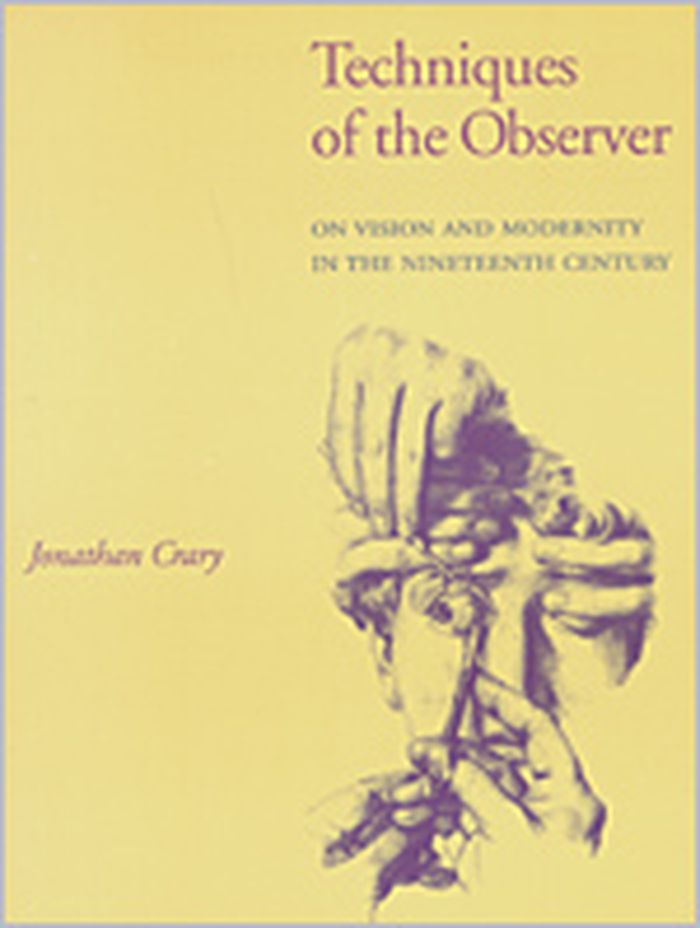
Techniques of the observer : on vision and modernity in the nineteenth century
Actions:
Price:
$24.95
(available to order)
Summary:
Jonathan Crary's "Techniques of the observer" provides a dramatically new perspective on the visual culture of the nineteenth century, reassessing problems of both visual modernism and social modernity. This analysis of the historical formation of the observer is a compelling account of the prehistory of the "society of the spectacle."
Techniques of the observer : on vision and modernity in the nineteenth century
Actions:
Price:
$24.95
(available to order)
Summary:
Jonathan Crary's "Techniques of the observer" provides a dramatically new perspective on the visual culture of the nineteenth century, reassessing problems of both visual modernism and social modernity. This analysis of the historical formation of the observer is a compelling account of the prehistory of the "society of the spectacle."
Form:
books
books
Publication:
April 1992, Cambridge / London
April 1992, Cambridge / London
Subject:
Architectural Theory
Architectural Theory
Form:
books
books
Title:
Constructions
Constructions
Actions:
Price:
$30.95
(available to order)
Summary:
In this series of overlapping essays on architecture and art, John Rajchman attempts to present theory in a new way that takes off from the philosophy of the late Gilles Deleuze. Starting from notions of folding, lightness, ground, abstraction, and future cities, he (...)
$30.95
(available to order)
Summary:
In this series of overlapping essays on architecture and art, John Rajchman attempts to present theory in a new way that takes off from the philosophy of the late Gilles Deleuze. Starting from notions of folding, lightness, ground, abstraction, and future cities, he (...)
Title:
Constructions
Actions:
Price:
$30.95
(available to order)
Summary:
In this series of overlapping essays on architecture and art, John Rajchman attempts to present theory in a new way that takes off from the philosophy of the late Gilles Deleuze. Starting from notions of folding, lightness, ground, abstraction, and future cities, he embarks on a conceptual voyage whose aim is to help "construct" a new space of connections, to "build" a new idiom, perhaps even to suggest a new architecture. Along the way, he addresses questions of the new abstraction, operative form, other geometries, new technologies, global cities, ideas of the virtual and the formless, and possibilities for critical theory after utopia and transgression. With a foreword by Paul Virilio.
Constructions
Actions:
Price:
$30.95
(available to order)
Summary:
In this series of overlapping essays on architecture and art, John Rajchman attempts to present theory in a new way that takes off from the philosophy of the late Gilles Deleuze. Starting from notions of folding, lightness, ground, abstraction, and future cities, he embarks on a conceptual voyage whose aim is to help "construct" a new space of connections, to "build" a new idiom, perhaps even to suggest a new architecture. Along the way, he addresses questions of the new abstraction, operative form, other geometries, new technologies, global cities, ideas of the virtual and the formless, and possibilities for critical theory after utopia and transgression. With a foreword by Paul Virilio.
Form:
books
books
Publication:
November 1997
November 1997
Subject:
Architectural Theory
Architectural Theory
Form:
books
books
Actions:
Price:
$60.95
(available in store)
Summary:
First published in 1960, Theory and Design in the First Machine Age has become required reading in numerous courses on the history of modern architecture and is widely regarded as one of the definitive books on the modern movement. It has influenced a generation of students and critics interested in the formation of attitudes, themes, and forms which were characteristic(...)
$60.95
(available in store)
Summary:
First published in 1960, Theory and Design in the First Machine Age has become required reading in numerous courses on the history of modern architecture and is widely regarded as one of the definitive books on the modern movement. It has influenced a generation of students and critics interested in the formation of attitudes, themes, and forms which were characteristic(...)
Title:
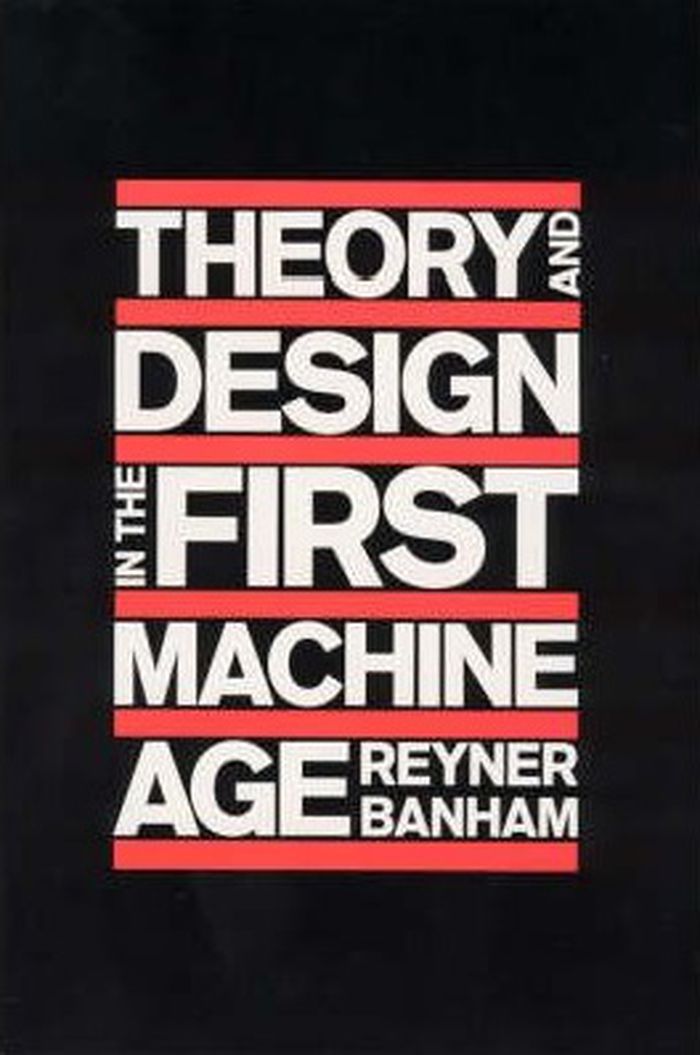
Theory and design in the first machine age
Actions:
Price:
$60.95
(available in store)
Summary:
First published in 1960, Theory and Design in the First Machine Age has become required reading in numerous courses on the history of modern architecture and is widely regarded as one of the definitive books on the modern movement. It has influenced a generation of students and critics interested in the formation of attitudes, themes, and forms which were characteristic of artists and architects working primarily in Europe between 1900 and 1930 under the compulsion of new technological developments in the first machine age.
Theory and design in the first machine age
Actions:
Price:
$60.95
(available in store)
Summary:
First published in 1960, Theory and Design in the First Machine Age has become required reading in numerous courses on the history of modern architecture and is widely regarded as one of the definitive books on the modern movement. It has influenced a generation of students and critics interested in the formation of attitudes, themes, and forms which were characteristic of artists and architects working primarily in Europe between 1900 and 1930 under the compulsion of new technological developments in the first machine age.
Form:
books
books
Publication:
July 1980
July 1980
Subject:
Architectural Theory
Architectural Theory
Form:
books
books
Actions:
Price:
$26.00
(available to order)
Summary:
In this, his last significant work, the French philosopher provides extraordinary meditations on the relation between the imagining consciousness and the world, positing the notion of reverie as its most dynamic point of reference.
$26.00
(available to order)
Summary:
In this, his last significant work, the French philosopher provides extraordinary meditations on the relation between the imagining consciousness and the world, positing the notion of reverie as its most dynamic point of reference.
Title:
The poetics of reverie: childhood, language, and the cosmos
Actions:
Price:
$26.00
(available to order)
Summary:
In this, his last significant work, the French philosopher provides extraordinary meditations on the relation between the imagining consciousness and the world, positing the notion of reverie as its most dynamic point of reference.
The poetics of reverie: childhood, language, and the cosmos
Actions:
Price:
$26.00
(available to order)
Summary:
In this, his last significant work, the French philosopher provides extraordinary meditations on the relation between the imagining consciousness and the world, positing the notion of reverie as its most dynamic point of reference.
Form:
books
books
Publication:
January 1900
January 1900
Subject:
Architectural Theory
Architectural Theory
Form:
books
books
Actions:
Price:
$42.95
(available to order)
Summary:
As teachers of architectural design, Kent Bloomer and Charles Moore have attempted to introduce architecture from the standpoint of how buildings are experienced, how the affect individuals and communities emotionally and provide us with a sense of joy, identity, and place. In giving priority to these issues and in questioning the professional reliance on abstract(...)
$42.95
(available to order)
Summary:
As teachers of architectural design, Kent Bloomer and Charles Moore have attempted to introduce architecture from the standpoint of how buildings are experienced, how the affect individuals and communities emotionally and provide us with a sense of joy, identity, and place. In giving priority to these issues and in questioning the professional reliance on abstract(...)
Subject:
Architectural Theory
Architectural Theory
Publication:
September 1977, New Haven / London
September 1977, New Haven / London
Title:
Body, memory, and architecture
Actions:
Price:
$42.95
(available to order)
Summary:
As teachers of architectural design, Kent Bloomer and Charles Moore have attempted to introduce architecture from the standpoint of how buildings are experienced, how the affect individuals and communities emotionally and provide us with a sense of joy, identity, and place. In giving priority to these issues and in questioning the professional reliance on abstract two-dimensional drawings, they often find themselves in conflict with a general and undebated assumption that architecture is a highly specialized system with a set of prescribed technical goals, rather than a sensual social art historically derived from experiences and memories of the human body. "Body, memory, and architecture" traces the significance of the body from its place as the divine organizing principle in the earliest built forms to its near elimination from architectural thought in this century. The authors draw on contemporary models of spatial perception as well as on body-image theory in arguing for a return of the body to its proper place in the architectural equation. With a contribution by Robert J. Yudell.
Body, memory, and architecture
Actions:
Price:
$42.95
(available to order)
Summary:
As teachers of architectural design, Kent Bloomer and Charles Moore have attempted to introduce architecture from the standpoint of how buildings are experienced, how the affect individuals and communities emotionally and provide us with a sense of joy, identity, and place. In giving priority to these issues and in questioning the professional reliance on abstract two-dimensional drawings, they often find themselves in conflict with a general and undebated assumption that architecture is a highly specialized system with a set of prescribed technical goals, rather than a sensual social art historically derived from experiences and memories of the human body. "Body, memory, and architecture" traces the significance of the body from its place as the divine organizing principle in the earliest built forms to its near elimination from architectural thought in this century. The authors draw on contemporary models of spatial perception as well as on body-image theory in arguing for a return of the body to its proper place in the architectural equation. With a contribution by Robert J. Yudell.
Form:
books
books
Publication:
September 1977, New Haven / London
September 1977, New Haven / London
Subject:
Architectural Theory
Architectural Theory
Form:
books
books
Actions:
Price:
$27.95
(available to order)
Summary:
"Filth" is concerned with what waste reveals about the culture that creates it. From floating barges of urban refuse to dung-encrusted works of art, from toxic landfills to dirty movies, filth has become a major presence and a point of volatile contention in modern life. This book explores the question of what filth has to do with culture: what critical role the lost,(...)
$27.95
(available to order)
Summary:
"Filth" is concerned with what waste reveals about the culture that creates it. From floating barges of urban refuse to dung-encrusted works of art, from toxic landfills to dirty movies, filth has become a major presence and a point of volatile contention in modern life. This book explores the question of what filth has to do with culture: what critical role the lost,(...)
Subject:
Architectural Theory
Architectural Theory
Publication:
January 2005, Minneapolis
January 2005, Minneapolis
Title:
Filth : dirt, disgust, and modern life
Actions:
Price:
$27.95
(available to order)
Summary:
"Filth" is concerned with what waste reveals about the culture that creates it. From floating barges of urban refuse to dung-encrusted works of art, from toxic landfills to dirty movies, filth has become a major presence and a point of volatile contention in modern life. This book explores the question of what filth has to do with culture: what critical role the lost, the rejected, the abject, and the dirty play in social management and identity formation. It suggests the ongoing power of culturally mandated categories of exclusion and repression. Focusing on filth in literary and cultural materials from London, Paris, and their colonial outposts in the nineteenth and early twentieth centuries, the essays in "Filth" - all but one previously unpublished - range over topics as diverse as the building of sewers in nineteenth-century European metropolises, the link between interior design and bourgeois sanitary phobias, the fictional representation of labouring women and foreigners as polluting, and relations among disease, disorder, and sexual-racial disharmony. "Filth" provides the first sustained consideration, both theoretical and historical, of a subject whose power to horrify, fascinate, and repel is as old as civilization itself. Contributors: David S. Barnes, Neil Blackadder, Joseph Bristow, Joseph W. Childers, Eileen Cleere, Natalka Freeland, Pamela K. Gilbert, Christopher Hamlin, William Kupinse, Benjamin Lazier, David L. Pike, David Trotter.
Filth : dirt, disgust, and modern life
Actions:
Price:
$27.95
(available to order)
Summary:
"Filth" is concerned with what waste reveals about the culture that creates it. From floating barges of urban refuse to dung-encrusted works of art, from toxic landfills to dirty movies, filth has become a major presence and a point of volatile contention in modern life. This book explores the question of what filth has to do with culture: what critical role the lost, the rejected, the abject, and the dirty play in social management and identity formation. It suggests the ongoing power of culturally mandated categories of exclusion and repression. Focusing on filth in literary and cultural materials from London, Paris, and their colonial outposts in the nineteenth and early twentieth centuries, the essays in "Filth" - all but one previously unpublished - range over topics as diverse as the building of sewers in nineteenth-century European metropolises, the link between interior design and bourgeois sanitary phobias, the fictional representation of labouring women and foreigners as polluting, and relations among disease, disorder, and sexual-racial disharmony. "Filth" provides the first sustained consideration, both theoretical and historical, of a subject whose power to horrify, fascinate, and repel is as old as civilization itself. Contributors: David S. Barnes, Neil Blackadder, Joseph Bristow, Joseph W. Childers, Eileen Cleere, Natalka Freeland, Pamela K. Gilbert, Christopher Hamlin, William Kupinse, Benjamin Lazier, David L. Pike, David Trotter.
Form:
books
books
Publication:
January 2005, Minneapolis
January 2005, Minneapolis
Subject:
Architectural Theory
Architectural Theory
Form:
books
books
Title:
Histoire de la ville
Histoire de la ville
Actions:
Price:
$69.95
(available to order)
Summary:
Première édition en 1983
$69.95
(available to order)
Summary:
Première édition en 1983
Title:
Histoire de la ville
Actions:
Price:
$69.95
(available to order)
Summary:
Première édition en 1983
Histoire de la ville
Actions:
Price:
$69.95
(available to order)
Summary:
Première édition en 1983
Form:
books
books
Publication:
May 1995, Marseille
May 1995, Marseille
Subject:
Urban Theory
Urban Theory
Form:
books
books
Actions:
Price:
$39.00
(available to order)
Summary:
The present volume offers eloquent testimony that many of the master builders of this century have held passionate convictions regarding the philosophic and social basis of their art. Nearly every important development in the modern architectural movement began with the proclamation of these convictions in the form of a program or manifesto. The most influential of these(...)
$39.00
(available to order)
Summary:
The present volume offers eloquent testimony that many of the master builders of this century have held passionate convictions regarding the philosophic and social basis of their art. Nearly every important development in the modern architectural movement began with the proclamation of these convictions in the form of a program or manifesto. The most influential of these(...)
Subject:
Architectural Theory
Architectural Theory
Publication:
January 1975, Cambridge, Massachusetts
January 1975, Cambridge, Massachusetts
Title:
Programs and manifestos of 20th-century architecture
Actions:
Price:
$39.00
(available to order)
Summary:
The present volume offers eloquent testimony that many of the master builders of this century have held passionate convictions regarding the philosophic and social basis of their art. Nearly every important development in the modern architectural movement began with the proclamation of these convictions in the form of a program or manifesto. The most influential of these are collected here in chronological order from 1903 to 1963. Taken together, they constitute a subjective history of modern architecture; compared with one another, their great diversity of style reveals in many cases the basic differences of attitude and temperament that produced a corresponding divergence in architectural style. The documents, placed in context by the editor, are also international in their range: among them are the seminal and prophetic statements of Henry van de Velde, Adolf Loos, and Bruno Taut from the early years of the century; Frank Lloyd Wright's 1910 annunciation of Organic Architecture; Gropius's original program for the Bauhaus, founded in Weimar in 1919; "Towards a New Architecture, Guiding Principles" by Le Corbusier; the formulation by Naum Gabo and Antoine Pevsner of the basic principles of Constructivism; and articles by R. Buckminster Fuller on universal architecture and the architect as world planner. Other pronouncements, some in flamboyant style, including those of Erich Mendelsohn, Hannes Meyer, Theo van Doesburg, Oskar Schlemmer, Ludwig Mies van der Rohe, El Lissitzky, and Louis I. Kahn. There are also a number of collective or group statements, issued in the name of movements such as CIAM, De Stijl, ABC, the Situationists, and GEAM.Since the dramatic effectiveness of the manifesto form is usually heightened by brevity and conciseness, it has been possible to reproduce most of the documents in their entirety; only a few have been excerpted.
Programs and manifestos of 20th-century architecture
Actions:
Price:
$39.00
(available to order)
Summary:
The present volume offers eloquent testimony that many of the master builders of this century have held passionate convictions regarding the philosophic and social basis of their art. Nearly every important development in the modern architectural movement began with the proclamation of these convictions in the form of a program or manifesto. The most influential of these are collected here in chronological order from 1903 to 1963. Taken together, they constitute a subjective history of modern architecture; compared with one another, their great diversity of style reveals in many cases the basic differences of attitude and temperament that produced a corresponding divergence in architectural style. The documents, placed in context by the editor, are also international in their range: among them are the seminal and prophetic statements of Henry van de Velde, Adolf Loos, and Bruno Taut from the early years of the century; Frank Lloyd Wright's 1910 annunciation of Organic Architecture; Gropius's original program for the Bauhaus, founded in Weimar in 1919; "Towards a New Architecture, Guiding Principles" by Le Corbusier; the formulation by Naum Gabo and Antoine Pevsner of the basic principles of Constructivism; and articles by R. Buckminster Fuller on universal architecture and the architect as world planner. Other pronouncements, some in flamboyant style, including those of Erich Mendelsohn, Hannes Meyer, Theo van Doesburg, Oskar Schlemmer, Ludwig Mies van der Rohe, El Lissitzky, and Louis I. Kahn. There are also a number of collective or group statements, issued in the name of movements such as CIAM, De Stijl, ABC, the Situationists, and GEAM.Since the dramatic effectiveness of the manifesto form is usually heightened by brevity and conciseness, it has been possible to reproduce most of the documents in their entirety; only a few have been excerpted.
Form:
books
books
Publication:
January 1975, Cambridge, Massachusetts
January 1975, Cambridge, Massachusetts
Subject:
Architectural Theory
Architectural Theory


