


58 Results
Form:
books
books
Actions:
Description:
1 online resource (18 pages).
Author:
Subject:
Publication:
München : Hatje Cantz Verlag, 2012.
München : Hatje Cantz Verlag, 2012.
Title:
Secrets of al-Jahiz = Die Geheimnisse des al-Jahiz : 100 Notes - 100 Thoughts, 100 Notizen - 100 Gedanken # 052).
Actions:
Description:
1 online resource (18 pages).
Secrets of al-Jahiz = Die Geheimnisse des al-Jahiz : 100 Notes - 100 Thoughts, 100 Notizen - 100 Gedanken # 052).
Actions:
Description:
1 online resource (18 pages).
Form:
books
books
Publication:
München : Hatje Cantz Verlag, 2012.
München : Hatje Cantz Verlag, 2012.
Author:
Subject:
Form:
audio
audio
Title:
Apophanies.
Apophanies.
Actions:
Description:
1 online resource.
Author:
Subject:
Publication:
[Place of publication not identified] : Lateral Addition, 2022.
[Place of publication not identified] : Lateral Addition, 2022.
Form:
audio
audio
Publication:
[Place of publication not identified] : Lateral Addition, 2022.
[Place of publication not identified] : Lateral Addition, 2022.
Author:
Subject:
Form:
books
books
Actions:
Price:
$39.95
(available to order)
Summary:
More and more of us are choosing to live in the man-made environment of the city. The mismatch between this artificial world and our nature-starved souls can contribute to the stresses of city living in a way that is barely noticed – but is crucially important. What does the science of architectural psychology tell us about how the world of brick and concrete affects how(...)
$39.95
(available to order)
Summary:
More and more of us are choosing to live in the man-made environment of the city. The mismatch between this artificial world and our nature-starved souls can contribute to the stresses of city living in a way that is barely noticed – but is crucially important. What does the science of architectural psychology tell us about how the world of brick and concrete affects how(...)
Title:
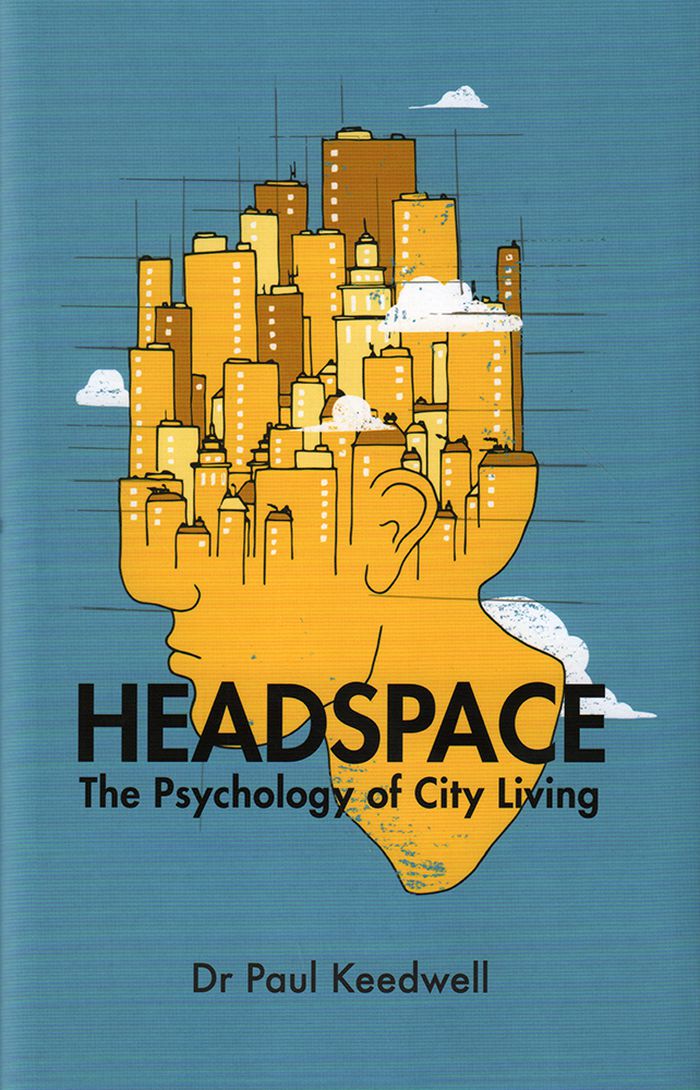
Headspace: the psychology of city living
Actions:
Price:
$39.95
(available to order)
Summary:
More and more of us are choosing to live in the man-made environment of the city. The mismatch between this artificial world and our nature-starved souls can contribute to the stresses of city living in a way that is barely noticed – but is crucially important. What does the science of architectural psychology tell us about how the world of brick and concrete affects how we think, feel and behave? In an increasingly crowded urban world, how does good urban design inspire, restore and bring us together? Conversely, how does bad architecture cause anxiety, alienation and depression?Starting with the home and reaching out to the street, neighbourhood and wider city landscape, Headspace teaches us how to see our cities differently, and how we can best adapt to our rapidly changing urban world.
Headspace: the psychology of city living
Actions:
Price:
$39.95
(available to order)
Summary:
More and more of us are choosing to live in the man-made environment of the city. The mismatch between this artificial world and our nature-starved souls can contribute to the stresses of city living in a way that is barely noticed – but is crucially important. What does the science of architectural psychology tell us about how the world of brick and concrete affects how we think, feel and behave? In an increasingly crowded urban world, how does good urban design inspire, restore and bring us together? Conversely, how does bad architecture cause anxiety, alienation and depression?Starting with the home and reaching out to the street, neighbourhood and wider city landscape, Headspace teaches us how to see our cities differently, and how we can best adapt to our rapidly changing urban world.
Form:
books
books
Publication:
March 2017
March 2017
Subject:
Urban Theory
Urban Theory
Form:
books
books
Actions:
Price:
$36.00
(available in store)
Summary:
How do we break a culture of mistrust while suspicion of fellow humans, governments and capitalist enterprise seems to keep growing? Feelings of powerlessness are often cited as the main cause. We look for remedies in rules, contracts, assurances and audits, as well as in "good governance." But do they really provide trust? In ''Trust: Building on the Cultural Commons'',(...)
$36.00
(available in store)
Summary:
How do we break a culture of mistrust while suspicion of fellow humans, governments and capitalist enterprise seems to keep growing? Feelings of powerlessness are often cited as the main cause. We look for remedies in rules, contracts, assurances and audits, as well as in "good governance." But do they really provide trust? In ''Trust: Building on the Cultural Commons'',(...)
Title:
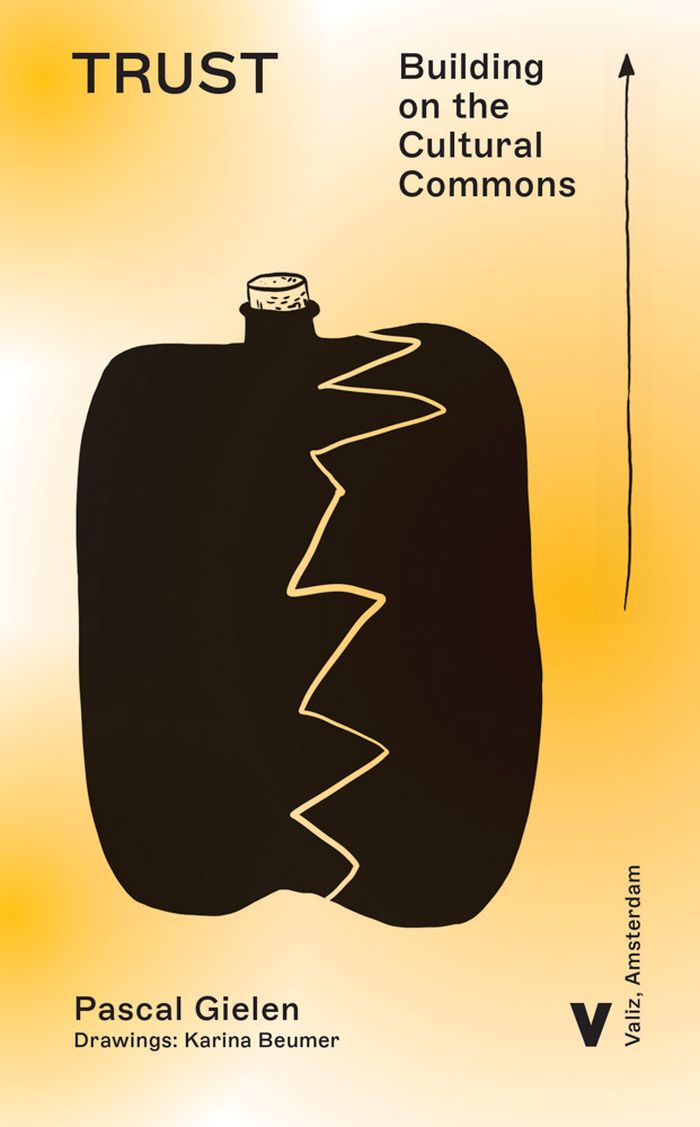
Trust: Building on the cultural commons
Actions:
Price:
$36.00
(available in store)
Summary:
How do we break a culture of mistrust while suspicion of fellow humans, governments and capitalist enterprise seems to keep growing? Feelings of powerlessness are often cited as the main cause. We look for remedies in rules, contracts, assurances and audits, as well as in "good governance." But do they really provide trust? In ''Trust: Building on the Cultural Commons'', featuring drawings by Karina Beumer (born 1988), sociologist of art and cultural politics Pascal Gielen (born 1970) highlights the crucial role played by the cultural commons, shared "common" life and its customs, practices, knowledge and values. Trust is, after all, a matter of culture, of feeling and even of aesthetics. Broad societal trust begins with sharing vulnerabilities, and the commons, according to Gielen, provides space for that—breathing space and experimental space. How could a society and a policy further build on this?
Trust: Building on the cultural commons
Actions:
Price:
$36.00
(available in store)
Summary:
How do we break a culture of mistrust while suspicion of fellow humans, governments and capitalist enterprise seems to keep growing? Feelings of powerlessness are often cited as the main cause. We look for remedies in rules, contracts, assurances and audits, as well as in "good governance." But do they really provide trust? In ''Trust: Building on the Cultural Commons'', featuring drawings by Karina Beumer (born 1988), sociologist of art and cultural politics Pascal Gielen (born 1970) highlights the crucial role played by the cultural commons, shared "common" life and its customs, practices, knowledge and values. Trust is, after all, a matter of culture, of feeling and even of aesthetics. Broad societal trust begins with sharing vulnerabilities, and the commons, according to Gielen, provides space for that—breathing space and experimental space. How could a society and a policy further build on this?
Form:
books
books
Publication:
June 2025
June 2025
Subject:
Social
Social
Form:
audio
audio
Actions:
Description:
1 online resource.
Author:
Subject:
Publication:
[Place of publication not identified] : Lateral Addition, 2019.
[Place of publication not identified] : Lateral Addition, 2019.
Form:
audio
audio
Publication:
[Place of publication not identified] : Lateral Addition, 2019.
[Place of publication not identified] : Lateral Addition, 2019.
Author:
Subject:
Form:
audio
audio
Description:
1 online resource.
Author:
Subject:
Publication:
[Place of publication not identified] : Lateral Addition, 2018.
[Place of publication not identified] : Lateral Addition, 2018.
Title:
June 21, 2018 : Listening for Southwest Key in San Diego.
Actions:
Description:
1 online resource.
June 21, 2018 : Listening for Southwest Key in San Diego.
Actions:
Description:
1 online resource.
Form:
audio
audio
Publication:
[Place of publication not identified] : Lateral Addition, 2018.
[Place of publication not identified] : Lateral Addition, 2018.
Author:
Subject:
Form:
books
books
Actions:
Price:
$66.95
(available in store)
Summary:
This book chronicles the fourth academic year of the studio led by Kersten Geers at the Academy of Architecture USI in Mendrisio. It was produced as a counterpart to Experiments in Thickness, a book which focused on the work of Giancarlo de Carlo in Urbino. As a means of grappling with that elephant in the room—the modern project—and its perceived failure of good(...)
$66.95
(available in store)
Summary:
This book chronicles the fourth academic year of the studio led by Kersten Geers at the Academy of Architecture USI in Mendrisio. It was produced as a counterpart to Experiments in Thickness, a book which focused on the work of Giancarlo de Carlo in Urbino. As a means of grappling with that elephant in the room—the modern project—and its perceived failure of good(...)
Title:
Everything without content 241: A modernist ending
Actions:
Price:
$66.95
(available in store)
Summary:
This book chronicles the fourth academic year of the studio led by Kersten Geers at the Academy of Architecture USI in Mendrisio. It was produced as a counterpart to Experiments in Thickness, a book which focused on the work of Giancarlo de Carlo in Urbino. As a means of grappling with that elephant in the room—the modern project—and its perceived failure of good intentions, all the projects gathered here are an update of sorts. Abstract overarching narratives were updated as premises for projects in Milan, De Carlo’s campus in Urbino was updated to accommodate current student population, and unrealised projects in Milan were revived to create a radically contemporary urbanity. But this was not an exercise in nostalgia and retrieval of the lost cause, as much as seeking an opportunity in a modernist ending.
Everything without content 241: A modernist ending
Actions:
Price:
$66.95
(available in store)
Summary:
This book chronicles the fourth academic year of the studio led by Kersten Geers at the Academy of Architecture USI in Mendrisio. It was produced as a counterpart to Experiments in Thickness, a book which focused on the work of Giancarlo de Carlo in Urbino. As a means of grappling with that elephant in the room—the modern project—and its perceived failure of good intentions, all the projects gathered here are an update of sorts. Abstract overarching narratives were updated as premises for projects in Milan, De Carlo’s campus in Urbino was updated to accommodate current student population, and unrealised projects in Milan were revived to create a radically contemporary urbanity. But this was not an exercise in nostalgia and retrieval of the lost cause, as much as seeking an opportunity in a modernist ending.
Form:
books
books
Publication:
January 2025
January 2025
Subject:
Contemporary Architecture
Contemporary Architecture
Form:
books
books
Title:
032C Magazine 46
032C Magazine 46
Actions:
Price:
$34.95
(available in store)
Summary:
This book chronicles the fourth academic year of the studio led by Kersten Geers at the Academy of Architecture USI in Mendrisio. It was produced as a counterpart to Experiments in Thickness, a book which focused on the work of Giancarlo de Carlo in Urbino. As a means of grappling with that elephant in the room—the modern project—and its perceived failure of good(...)
$34.95
(available in store)
Summary:
This book chronicles the fourth academic year of the studio led by Kersten Geers at the Academy of Architecture USI in Mendrisio. It was produced as a counterpart to Experiments in Thickness, a book which focused on the work of Giancarlo de Carlo in Urbino. As a means of grappling with that elephant in the room—the modern project—and its perceived failure of good(...)
Title:
032C Magazine 46
Actions:
Price:
$34.95
(available in store)
Summary:
This book chronicles the fourth academic year of the studio led by Kersten Geers at the Academy of Architecture USI in Mendrisio. It was produced as a counterpart to Experiments in Thickness, a book which focused on the work of Giancarlo de Carlo in Urbino. As a means of grappling with that elephant in the room—the modern project—and its perceived failure of good intentions, all the projects gathered here are an update of sorts. Abstract overarching narratives were updated as premises for projects in Milan, De Carlo’s campus in Urbino was updated to accommodate current student population, and unrealised projects in Milan were revived to create a radically contemporary urbanity. But this was not an exercise in nostalgia and retrieval of the lost cause, as much as seeking an opportunity in a modernist ending.
032C Magazine 46
Actions:
Price:
$34.95
(available in store)
Summary:
This book chronicles the fourth academic year of the studio led by Kersten Geers at the Academy of Architecture USI in Mendrisio. It was produced as a counterpart to Experiments in Thickness, a book which focused on the work of Giancarlo de Carlo in Urbino. As a means of grappling with that elephant in the room—the modern project—and its perceived failure of good intentions, all the projects gathered here are an update of sorts. Abstract overarching narratives were updated as premises for projects in Milan, De Carlo’s campus in Urbino was updated to accommodate current student population, and unrealised projects in Milan were revived to create a radically contemporary urbanity. But this was not an exercise in nostalgia and retrieval of the lost cause, as much as seeking an opportunity in a modernist ending.
Form:
books
books
Publication:
October 2024
October 2024
Subject:
Magazines
Magazines


