


3779 Results
Form:
articles
articles
Actions:
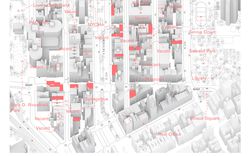
Hilary Sample interviewed by Jack Self on how architects can respond to the changing urban dynamics of retail
Published:
9 January 2023
9 January 2023
Title:
Without even trying, retail is civic and political
Hilary Sample interviewed by Jack Self on how architects can respond to the changing urban dynamics of retail
Actions:
Without even trying, retail is civic and political
Hilary Sample interviewed by Jack Self on how architects can respond to the changing urban dynamics of retail
Actions:
Level of archival description:
Project
Project
Actions:
Reference number:
AP056.S1.1990.PR04
Description:
This project series documents a competition entry for the Canada Life Assurance building in Toronto in 1990. The office identified the project number as 9007. This project consisted of a proposal to renovate the existing Canada Life Assurance headquarters located in the historic Beaux-Arts style building on the corner of Queen and University Streets. This work would also include the construction of a new, 15 storey mixed-use development with approximately 1,000,000 square feet of commercial office space, retail space and a hotel. The design goal was to create an urban campus while extending the corporate headquarters. This proposal was done in joint-venture with Bregman & Hamann and was headed by Marianne McKenna and Bruce Kuwabara. This was not the winning entry for the competition and the project was eventually realized by Shore Tilbe Henshall Irwin. The project is recorded through drawings, a presentation painting and a model dating from 1988-1990. The drawings are mostly originals and consist of sketches, plans, elevations, perspectives and axonometric drawings.
AP056.S1.1990.PR04
Description:
This project series documents a competition entry for the Canada Life Assurance building in Toronto in 1990. The office identified the project number as 9007. This project consisted of a proposal to renovate the existing Canada Life Assurance headquarters located in the historic Beaux-Arts style building on the corner of Queen and University Streets. This work would also include the construction of a new, 15 storey mixed-use development with approximately 1,000,000 square feet of commercial office space, retail space and a hotel. The design goal was to create an urban campus while extending the corporate headquarters. This proposal was done in joint-venture with Bregman & Hamann and was headed by Marianne McKenna and Bruce Kuwabara. This was not the winning entry for the competition and the project was eventually realized by Shore Tilbe Henshall Irwin. The project is recorded through drawings, a presentation painting and a model dating from 1988-1990. The drawings are mostly originals and consist of sketches, plans, elevations, perspectives and axonometric drawings.
People:
Date:
1988-1990
1988-1990
Title:
Canada Life Assurance Building Competition, Toronto (1990)
Actions:
AP056.S1.1990.PR04
Description:
This project series documents a competition entry for the Canada Life Assurance building in Toronto in 1990. The office identified the project number as 9007. This project consisted of a proposal to renovate the existing Canada Life Assurance headquarters located in the historic Beaux-Arts style building on the corner of Queen and University Streets. This work would also include the construction of a new, 15 storey mixed-use development with approximately 1,000,000 square feet of commercial office space, retail space and a hotel. The design goal was to create an urban campus while extending the corporate headquarters. This proposal was done in joint-venture with Bregman & Hamann and was headed by Marianne McKenna and Bruce Kuwabara. This was not the winning entry for the competition and the project was eventually realized by Shore Tilbe Henshall Irwin. The project is recorded through drawings, a presentation painting and a model dating from 1988-1990. The drawings are mostly originals and consist of sketches, plans, elevations, perspectives and axonometric drawings.
Canada Life Assurance Building Competition, Toronto (1990)
Actions:
AP056.S1.1990.PR04
Description:
This project series documents a competition entry for the Canada Life Assurance building in Toronto in 1990. The office identified the project number as 9007. This project consisted of a proposal to renovate the existing Canada Life Assurance headquarters located in the historic Beaux-Arts style building on the corner of Queen and University Streets. This work would also include the construction of a new, 15 storey mixed-use development with approximately 1,000,000 square feet of commercial office space, retail space and a hotel. The design goal was to create an urban campus while extending the corporate headquarters. This proposal was done in joint-venture with Bregman & Hamann and was headed by Marianne McKenna and Bruce Kuwabara. This was not the winning entry for the competition and the project was eventually realized by Shore Tilbe Henshall Irwin. The project is recorded through drawings, a presentation painting and a model dating from 1988-1990. The drawings are mostly originals and consist of sketches, plans, elevations, perspectives and axonometric drawings.
Level of archival description:
Project
Project
Date:
1988-1990
1988-1990
People:
Level of archival description:
Project
Project
Reference number:
AP178.S1.1985.PR02
Description:
This project series documents the Recuperação da Área do Campo di Marte in Giudecca, Italy. While the records were held in the office’s archives this project was assigned the number 34/80. The office assigned the date 1985 to this project. In 1983, the IACP (Istituto Autonomo Case Popolari) initiated an architectural competition to modernize the existing housing and rehabilitate the urban space of Giudecca. The criteria were undefined in order to give the architect flexibility but insisted on respecting Venetian heritage. Álvaro Siza won the competition and selected Aldo Rossi (building completed in 2004), Carlo Aymonino (building completed in 2004), Rafael Moneo (not built) to collaborate on individual buildings. Siza's building was completed in 2016.
AP178.S1.1985.PR02
Description:
This project series documents the Recuperação da Área do Campo di Marte in Giudecca, Italy. While the records were held in the office’s archives this project was assigned the number 34/80. The office assigned the date 1985 to this project. In 1983, the IACP (Istituto Autonomo Case Popolari) initiated an architectural competition to modernize the existing housing and rehabilitate the urban space of Giudecca. The criteria were undefined in order to give the architect flexibility but insisted on respecting Venetian heritage. Álvaro Siza won the competition and selected Aldo Rossi (building completed in 2004), Carlo Aymonino (building completed in 2004), Rafael Moneo (not built) to collaborate on individual buildings. Siza's building was completed in 2016.
People:
Date:
1984-2012
1984-2012
Title:
Recuperação da Área do Campo di Marte [Restoration of Campo di Marte], Giudecca, Venice, Italy (1985)
Actions:
AP178.S1.1985.PR02
Description:
This project series documents the Recuperação da Área do Campo di Marte in Giudecca, Italy. While the records were held in the office’s archives this project was assigned the number 34/80. The office assigned the date 1985 to this project. In 1983, the IACP (Istituto Autonomo Case Popolari) initiated an architectural competition to modernize the existing housing and rehabilitate the urban space of Giudecca. The criteria were undefined in order to give the architect flexibility but insisted on respecting Venetian heritage. Álvaro Siza won the competition and selected Aldo Rossi (building completed in 2004), Carlo Aymonino (building completed in 2004), Rafael Moneo (not built) to collaborate on individual buildings. Siza's building was completed in 2016.
Recuperação da Área do Campo di Marte [Restoration of Campo di Marte], Giudecca, Venice, Italy (1985)
Actions:
AP178.S1.1985.PR02
Description:
This project series documents the Recuperação da Área do Campo di Marte in Giudecca, Italy. While the records were held in the office’s archives this project was assigned the number 34/80. The office assigned the date 1985 to this project. In 1983, the IACP (Istituto Autonomo Case Popolari) initiated an architectural competition to modernize the existing housing and rehabilitate the urban space of Giudecca. The criteria were undefined in order to give the architect flexibility but insisted on respecting Venetian heritage. Álvaro Siza won the competition and selected Aldo Rossi (building completed in 2004), Carlo Aymonino (building completed in 2004), Rafael Moneo (not built) to collaborate on individual buildings. Siza's building was completed in 2016.
Level of archival description:
Project
Project
Date:
1984-2012
1984-2012
People:
Level of archival description:
Project
Project
Reference number:
AP164.S1.2001.D4
Description:
The project series documents the competition entry for the international competition “Jubilee-Gardens” for the reorganization of the Southbank in London, England. Abalos & Herreros worked with an international team and the firm's entry was a finalist in the competition. The firm identified this project as number 139. “The competition programme asked for a new center for London. A center which would be perceived as a global icon. Comparing the statement with analogue enclaves showed that the Southbank was very small for such ambition, especially because of the fact that the project had to let as much metropolitan space open as possible. This forced to investigate how to enlarge the site. The problem was resolved by connecting adjacent areas in three levels. The original conditions and the programme offered a diverse mix of urban and natural elements: history, entertainment, culture, open spaces, the Thames… from where the conquest of the adjacent areas, the sub terrain and the margins of a linked event starts.” (ARCH270975) Documenting the project are conceptual and design development drawings, photographic and reference materials, notes, competition documents, and correspondence.
AP164.S1.2001.D4
Description:
The project series documents the competition entry for the international competition “Jubilee-Gardens” for the reorganization of the Southbank in London, England. Abalos & Herreros worked with an international team and the firm's entry was a finalist in the competition. The firm identified this project as number 139. “The competition programme asked for a new center for London. A center which would be perceived as a global icon. Comparing the statement with analogue enclaves showed that the Southbank was very small for such ambition, especially because of the fact that the project had to let as much metropolitan space open as possible. This forced to investigate how to enlarge the site. The problem was resolved by connecting adjacent areas in three levels. The original conditions and the programme offered a diverse mix of urban and natural elements: history, entertainment, culture, open spaces, the Thames… from where the conquest of the adjacent areas, the sub terrain and the margins of a linked event starts.” (ARCH270975) Documenting the project are conceptual and design development drawings, photographic and reference materials, notes, competition documents, and correspondence.
People:
Date:
1999-2001
1999-2001
Title:
Southbank Londres, London, United Kingdom (2001)
Actions:
AP164.S1.2001.D4
Description:
The project series documents the competition entry for the international competition “Jubilee-Gardens” for the reorganization of the Southbank in London, England. Abalos & Herreros worked with an international team and the firm's entry was a finalist in the competition. The firm identified this project as number 139. “The competition programme asked for a new center for London. A center which would be perceived as a global icon. Comparing the statement with analogue enclaves showed that the Southbank was very small for such ambition, especially because of the fact that the project had to let as much metropolitan space open as possible. This forced to investigate how to enlarge the site. The problem was resolved by connecting adjacent areas in three levels. The original conditions and the programme offered a diverse mix of urban and natural elements: history, entertainment, culture, open spaces, the Thames… from where the conquest of the adjacent areas, the sub terrain and the margins of a linked event starts.” (ARCH270975) Documenting the project are conceptual and design development drawings, photographic and reference materials, notes, competition documents, and correspondence.
Southbank Londres, London, United Kingdom (2001)
Actions:
AP164.S1.2001.D4
Description:
The project series documents the competition entry for the international competition “Jubilee-Gardens” for the reorganization of the Southbank in London, England. Abalos & Herreros worked with an international team and the firm's entry was a finalist in the competition. The firm identified this project as number 139. “The competition programme asked for a new center for London. A center which would be perceived as a global icon. Comparing the statement with analogue enclaves showed that the Southbank was very small for such ambition, especially because of the fact that the project had to let as much metropolitan space open as possible. This forced to investigate how to enlarge the site. The problem was resolved by connecting adjacent areas in three levels. The original conditions and the programme offered a diverse mix of urban and natural elements: history, entertainment, culture, open spaces, the Thames… from where the conquest of the adjacent areas, the sub terrain and the margins of a linked event starts.” (ARCH270975) Documenting the project are conceptual and design development drawings, photographic and reference materials, notes, competition documents, and correspondence.
Level of archival description:
Project
Project
Date:
1999-2001
1999-2001
People:
Form:
archives
Level of archival description:
Fonds
archives
Level of archival description:
Fonds
Title:
Cedric Price fonds
Cedric Price fonds
Reference number:
AP144
Synopsis:
The Cedric Price fonds documents the personal activities and professional practice of architect Cedric Price, and includes his student work and architectural and urban planning projects. The fonds also contains records that document Cedric Price's teaching, publication, and exhibition activities. The archive comprises over 200 projects, from Price's student work in the 1950s at the University of Cambridge and the Architectural Association to projects he undertook as late as 2000. Key projects that are represented include New Aviary (1960-1966), Fun Palace (1961-1974), Potteries Thinkbelt (1963-1967), Inter-Action Centre (1971-1979), Generator (1976-1980), and Magnet (1995-1996).
AP144
Synopsis:
The Cedric Price fonds documents the personal activities and professional practice of architect Cedric Price, and includes his student work and architectural and urban planning projects. The fonds also contains records that document Cedric Price's teaching, publication, and exhibition activities. The archive comprises over 200 projects, from Price's student work in the 1950s at the University of Cambridge and the Architectural Association to projects he undertook as late as 2000. Key projects that are represented include New Aviary (1960-1966), Fun Palace (1961-1974), Potteries Thinkbelt (1963-1967), Inter-Action Centre (1971-1979), Generator (1976-1980), and Magnet (1995-1996).
People:
Date:
1903-2006, predominant 1953-2000
1903-2006, predominant 1953-2000
Title:
Cedric Price fonds
Actions:
AP144
Synopsis:
The Cedric Price fonds documents the personal activities and professional practice of architect Cedric Price, and includes his student work and architectural and urban planning projects. The fonds also contains records that document Cedric Price's teaching, publication, and exhibition activities. The archive comprises over 200 projects, from Price's student work in the 1950s at the University of Cambridge and the Architectural Association to projects he undertook as late as 2000. Key projects that are represented include New Aviary (1960-1966), Fun Palace (1961-1974), Potteries Thinkbelt (1963-1967), Inter-Action Centre (1971-1979), Generator (1976-1980), and Magnet (1995-1996).
Cedric Price fonds
Actions:
AP144
Synopsis:
The Cedric Price fonds documents the personal activities and professional practice of architect Cedric Price, and includes his student work and architectural and urban planning projects. The fonds also contains records that document Cedric Price's teaching, publication, and exhibition activities. The archive comprises over 200 projects, from Price's student work in the 1950s at the University of Cambridge and the Architectural Association to projects he undertook as late as 2000. Key projects that are represented include New Aviary (1960-1966), Fun Palace (1961-1974), Potteries Thinkbelt (1963-1967), Inter-Action Centre (1971-1979), Generator (1976-1980), and Magnet (1995-1996).
Form:
archives
Level of archival description:
Fonds
archives
Level of archival description:
Fonds
Date:
1903-2006, predominant 1953-2000
1903-2006, predominant 1953-2000
People:
Form:
archives
Level of archival description:
Collection
archives
Level of archival description:
Collection
Actions:
Reference number:
CD033
Synopsis:
The Aldo Cibic Microrealities project collection primarily consists of presentation materials, publications and born digital materials, like videos and photographs, by Aldo Cibic produced between 2003 and 2008 for the project “Microrealities”.
CD033
Synopsis:
The Aldo Cibic Microrealities project collection primarily consists of presentation materials, publications and born digital materials, like videos and photographs, by Aldo Cibic produced between 2003 and 2008 for the project “Microrealities”.
People:
Date:
2003-2008
2003-2008
Title:
Aldo Cibic Microrealities project collection
Actions:
CD033
Synopsis:
The Aldo Cibic Microrealities project collection primarily consists of presentation materials, publications and born digital materials, like videos and photographs, by Aldo Cibic produced between 2003 and 2008 for the project “Microrealities”.
Aldo Cibic Microrealities project collection
Actions:
CD033
Synopsis:
The Aldo Cibic Microrealities project collection primarily consists of presentation materials, publications and born digital materials, like videos and photographs, by Aldo Cibic produced between 2003 and 2008 for the project “Microrealities”.
Form:
archives
Level of archival description:
collection
archives
Level of archival description:
collection
Date:
2003-2008
2003-2008
People:
Level of archival description:
Project
Project
Reference number:
AP178.S1.1991.PR05
Description:
This project series documents the Urban plan for the city centre of Montreuil, France, also known as Coeur de ville. The office archivist identified this project as 24/90. The office assigned the date 1991 to this project. During the sixties and the seventies, the construction of a mall and office towers created a rupture in the downtown of Montreuil and caused traffic problems. Siza was chosen to find architectural and urban solutions to these challenges. Luis Mendes started as a collaborator at Siza's office and finished as the architect in charge for this project. Several other architects helped during the 20 years of the Coeur de ville project, including Laurent Beaudoin, Emanuelle Beaudoin, Michel Corajoud and Christian Devillers. The concept of substitution urbanization was introduced, in order to repair the rupture created in the sixties and seventies and to introduce urban continuity in Montreuil. The Coeur de ville project proposal included a new spacial reorganization, the Victor Hugo housing building, a theater, and public spaces. In 2006, the buildings C1 and C2 were built. The master plan purposes were to readapt the area to the singularity of the territory, reintroduce the cultural and commercial functions of the area, and to create connections between the districts. Due to a change of municipal administration in the middle of the project, only part of the plan was realized, including two housing buildings and part of the urban renewal. Siza received the Grand Prix spécial du jury de l'urbanisme in 2005 for his contribution to the Coeur de Ville project This project series includes two subseries. Plano Centre Ville de Montreuil and Edificio de Habitaçäo Montreuil (Hamo). The Plano Centre Ville de Montreuil documents the master plans and general documentations of the project. The Edificio de Habitaçäo Montreuil documents the housing project of Siza in Montreuil.
AP178.S1.1991.PR05
Description:
This project series documents the Urban plan for the city centre of Montreuil, France, also known as Coeur de ville. The office archivist identified this project as 24/90. The office assigned the date 1991 to this project. During the sixties and the seventies, the construction of a mall and office towers created a rupture in the downtown of Montreuil and caused traffic problems. Siza was chosen to find architectural and urban solutions to these challenges. Luis Mendes started as a collaborator at Siza's office and finished as the architect in charge for this project. Several other architects helped during the 20 years of the Coeur de ville project, including Laurent Beaudoin, Emanuelle Beaudoin, Michel Corajoud and Christian Devillers. The concept of substitution urbanization was introduced, in order to repair the rupture created in the sixties and seventies and to introduce urban continuity in Montreuil. The Coeur de ville project proposal included a new spacial reorganization, the Victor Hugo housing building, a theater, and public spaces. In 2006, the buildings C1 and C2 were built. The master plan purposes were to readapt the area to the singularity of the territory, reintroduce the cultural and commercial functions of the area, and to create connections between the districts. Due to a change of municipal administration in the middle of the project, only part of the plan was realized, including two housing buildings and part of the urban renewal. Siza received the Grand Prix spécial du jury de l'urbanisme in 2005 for his contribution to the Coeur de Ville project This project series includes two subseries. Plano Centre Ville de Montreuil and Edificio de Habitaçäo Montreuil (Hamo). The Plano Centre Ville de Montreuil documents the master plans and general documentations of the project. The Edificio de Habitaçäo Montreuil documents the housing project of Siza in Montreuil.
People:
Date:
1991-2003
1991-2003
Title:
Coeur de ville, Montreuil, France, (1991)
Actions:
AP178.S1.1991.PR05
Description:
This project series documents the Urban plan for the city centre of Montreuil, France, also known as Coeur de ville. The office archivist identified this project as 24/90. The office assigned the date 1991 to this project. During the sixties and the seventies, the construction of a mall and office towers created a rupture in the downtown of Montreuil and caused traffic problems. Siza was chosen to find architectural and urban solutions to these challenges. Luis Mendes started as a collaborator at Siza's office and finished as the architect in charge for this project. Several other architects helped during the 20 years of the Coeur de ville project, including Laurent Beaudoin, Emanuelle Beaudoin, Michel Corajoud and Christian Devillers. The concept of substitution urbanization was introduced, in order to repair the rupture created in the sixties and seventies and to introduce urban continuity in Montreuil. The Coeur de ville project proposal included a new spacial reorganization, the Victor Hugo housing building, a theater, and public spaces. In 2006, the buildings C1 and C2 were built. The master plan purposes were to readapt the area to the singularity of the territory, reintroduce the cultural and commercial functions of the area, and to create connections between the districts. Due to a change of municipal administration in the middle of the project, only part of the plan was realized, including two housing buildings and part of the urban renewal. Siza received the Grand Prix spécial du jury de l'urbanisme in 2005 for his contribution to the Coeur de Ville project This project series includes two subseries. Plano Centre Ville de Montreuil and Edificio de Habitaçäo Montreuil (Hamo). The Plano Centre Ville de Montreuil documents the master plans and general documentations of the project. The Edificio de Habitaçäo Montreuil documents the housing project of Siza in Montreuil.
Coeur de ville, Montreuil, France, (1991)
Actions:
AP178.S1.1991.PR05
Description:
This project series documents the Urban plan for the city centre of Montreuil, France, also known as Coeur de ville. The office archivist identified this project as 24/90. The office assigned the date 1991 to this project. During the sixties and the seventies, the construction of a mall and office towers created a rupture in the downtown of Montreuil and caused traffic problems. Siza was chosen to find architectural and urban solutions to these challenges. Luis Mendes started as a collaborator at Siza's office and finished as the architect in charge for this project. Several other architects helped during the 20 years of the Coeur de ville project, including Laurent Beaudoin, Emanuelle Beaudoin, Michel Corajoud and Christian Devillers. The concept of substitution urbanization was introduced, in order to repair the rupture created in the sixties and seventies and to introduce urban continuity in Montreuil. The Coeur de ville project proposal included a new spacial reorganization, the Victor Hugo housing building, a theater, and public spaces. In 2006, the buildings C1 and C2 were built. The master plan purposes were to readapt the area to the singularity of the territory, reintroduce the cultural and commercial functions of the area, and to create connections between the districts. Due to a change of municipal administration in the middle of the project, only part of the plan was realized, including two housing buildings and part of the urban renewal. Siza received the Grand Prix spécial du jury de l'urbanisme in 2005 for his contribution to the Coeur de Ville project This project series includes two subseries. Plano Centre Ville de Montreuil and Edificio de Habitaçäo Montreuil (Hamo). The Plano Centre Ville de Montreuil documents the master plans and general documentations of the project. The Edificio de Habitaçäo Montreuil documents the housing project of Siza in Montreuil.
Level of archival description:
Project
Project
Date:
1991-2003
1991-2003
People:
Level of archival description:
Project
Project
Reference number:
AP178.S1.1984.PR03
Description:
This project series documents the Duas habitações e duas loja in Schilderswijk, The Hague, The Netherlands. While the records were held in the office’s archives this project was assigned the number 31/80. The office assigned the date 1985 to this project. This project was part of the urban renewal program in Schilderswijk for which Siza designed the urban plan for Deelgebied Zone 5 Schilderswijk-West, the Punt en Komma social housing, Plano de Doedijnstraat, and Van der Vennerpark. The project consisted of two houses, two retail/office spaces, and a parking garage situated on Van der Vennestraat. One house was made with red brick, while the other was given a white exterior. The project was realised with project architect Carlos Castenheira in cooperation with Architektengroep Mecanoo. This project was designed in connection with the Van der Vennepark (project series AP178.S1.1985.PR01 in this fonds). The project series contains sketches, studies, plans, elevations and details. Textual documentation includes a letter from Adri Duivesteijn, The Hague alderman responsible for the urban renewal program, letters from Architektengroep Mecanoo (engeneering firm), notes from meetings on construction, and a letter from Castanheira. Documentation regarding the Van der Vennerpark (file AP178.S1.1985.PR01.001 in this fonds) also contains information related to the housing and shopping complex. Also included are photographs of the model, as well as slides of the model, drawings, and the built project. Note that photographs of the built project can also be found among photographic materials for Punt en Komma (file AP178.S1.1984.PR02.SS1.015 in this fonds).
AP178.S1.1984.PR03
Description:
This project series documents the Duas habitações e duas loja in Schilderswijk, The Hague, The Netherlands. While the records were held in the office’s archives this project was assigned the number 31/80. The office assigned the date 1985 to this project. This project was part of the urban renewal program in Schilderswijk for which Siza designed the urban plan for Deelgebied Zone 5 Schilderswijk-West, the Punt en Komma social housing, Plano de Doedijnstraat, and Van der Vennerpark. The project consisted of two houses, two retail/office spaces, and a parking garage situated on Van der Vennestraat. One house was made with red brick, while the other was given a white exterior. The project was realised with project architect Carlos Castenheira in cooperation with Architektengroep Mecanoo. This project was designed in connection with the Van der Vennepark (project series AP178.S1.1985.PR01 in this fonds). The project series contains sketches, studies, plans, elevations and details. Textual documentation includes a letter from Adri Duivesteijn, The Hague alderman responsible for the urban renewal program, letters from Architektengroep Mecanoo (engeneering firm), notes from meetings on construction, and a letter from Castanheira. Documentation regarding the Van der Vennerpark (file AP178.S1.1985.PR01.001 in this fonds) also contains information related to the housing and shopping complex. Also included are photographs of the model, as well as slides of the model, drawings, and the built project. Note that photographs of the built project can also be found among photographic materials for Punt en Komma (file AP178.S1.1984.PR02.SS1.015 in this fonds).
People:
Date:
1985-1988
1985-1988
Title:
Duas habitações e duas lojas [Housing and shopping complex, Schilderswijk], The Hague, The Netherlands (1985-1988)
Actions:
AP178.S1.1984.PR03
Description:
This project series documents the Duas habitações e duas loja in Schilderswijk, The Hague, The Netherlands. While the records were held in the office’s archives this project was assigned the number 31/80. The office assigned the date 1985 to this project. This project was part of the urban renewal program in Schilderswijk for which Siza designed the urban plan for Deelgebied Zone 5 Schilderswijk-West, the Punt en Komma social housing, Plano de Doedijnstraat, and Van der Vennerpark. The project consisted of two houses, two retail/office spaces, and a parking garage situated on Van der Vennestraat. One house was made with red brick, while the other was given a white exterior. The project was realised with project architect Carlos Castenheira in cooperation with Architektengroep Mecanoo. This project was designed in connection with the Van der Vennepark (project series AP178.S1.1985.PR01 in this fonds). The project series contains sketches, studies, plans, elevations and details. Textual documentation includes a letter from Adri Duivesteijn, The Hague alderman responsible for the urban renewal program, letters from Architektengroep Mecanoo (engeneering firm), notes from meetings on construction, and a letter from Castanheira. Documentation regarding the Van der Vennerpark (file AP178.S1.1985.PR01.001 in this fonds) also contains information related to the housing and shopping complex. Also included are photographs of the model, as well as slides of the model, drawings, and the built project. Note that photographs of the built project can also be found among photographic materials for Punt en Komma (file AP178.S1.1984.PR02.SS1.015 in this fonds).
Duas habitações e duas lojas [Housing and shopping complex, Schilderswijk], The Hague, The Netherlands (1985-1988)
Actions:
AP178.S1.1984.PR03
Description:
This project series documents the Duas habitações e duas loja in Schilderswijk, The Hague, The Netherlands. While the records were held in the office’s archives this project was assigned the number 31/80. The office assigned the date 1985 to this project. This project was part of the urban renewal program in Schilderswijk for which Siza designed the urban plan for Deelgebied Zone 5 Schilderswijk-West, the Punt en Komma social housing, Plano de Doedijnstraat, and Van der Vennerpark. The project consisted of two houses, two retail/office spaces, and a parking garage situated on Van der Vennestraat. One house was made with red brick, while the other was given a white exterior. The project was realised with project architect Carlos Castenheira in cooperation with Architektengroep Mecanoo. This project was designed in connection with the Van der Vennepark (project series AP178.S1.1985.PR01 in this fonds). The project series contains sketches, studies, plans, elevations and details. Textual documentation includes a letter from Adri Duivesteijn, The Hague alderman responsible for the urban renewal program, letters from Architektengroep Mecanoo (engeneering firm), notes from meetings on construction, and a letter from Castanheira. Documentation regarding the Van der Vennerpark (file AP178.S1.1985.PR01.001 in this fonds) also contains information related to the housing and shopping complex. Also included are photographs of the model, as well as slides of the model, drawings, and the built project. Note that photographs of the built project can also be found among photographic materials for Punt en Komma (file AP178.S1.1984.PR02.SS1.015 in this fonds).
Level of archival description:
Project
Project
Date:
1985-1988
1985-1988
People:
Level of archival description:
Project
Project
Actions:
Reference number:
AP198.S1.1997.PR02
Description:
Project records document the design process for OCEAN North’s competition entry for the Jyväskylä Music and Arts Centre in 1997. The project was titled Terra Cultura by OCEAN North. The international competition called to create a multi-usage space that would include a venue for the symphonic orchestra, a music school, exhibition spaces, and the possibility to host a variety of small cultural events in the Finnish city of Jyväskylä. The proposed site is in the center of the town, across the street from the Jyväskylä city church and its park, and nearby buildings designed by Alvar Aalto. OCEAN North’s concept presents a topological surface as an extension of the surrounding urban scape with two masses that would host the formal functions of the building (concert hall, music school, exhibition halls). The two volumes, or raised blocks, are divided along a diagonal elevated space, which is the extension of the ground’s topological surface filled and dubbed “Liquid Flow Space” by the design team. In their interview with Greg Lynn, Johan Bettum and Kivi Sotamaa mentioned that the idea for Jyväskylä was that it was a cloud. Digital files, in particular, show the process to achieve the projected design. Drawings provide views of streamed particles and of resulting peels. They also include plans, elevations and axonometric views of the structure. Most files are raster or vector images, likely saved from CAD software. A few files are in CAD formats such as Microstation, 3D Studio and form*Z. Digital files also present sine wave analysis and resulting charts for each component of the program. The analysis and charts present the relationships between various components of the building’s program such as the Art Museum, the Concert Halls, the technical space, and the Common facilities. These files are raster images and spreadsheets. Photographs of the site in Jyväskylä and of models built by OCEAN North were digitized and are included with the digital working files. Physical drawings are chiefly floor plans for the building, but also include sections and sketches. Finally, project files include photographic prints of two built models. One of these models, a small model of the conceptual masses of the building structure, is itself in the archive. Photographs show the model in the context of a city scape model. The second model, not part of the archive at CCA, was built at a bigger scale and was an intricate cardboard and wooden stick structure. Sources: Softspace: from a representation of form to a simulation of space, Edited by Sean Lally and Jessica Young. London, New York: Routledge, 2007. Greg Lynn, ed. Archaeology of the Digital 17: OCEAN North, Jyväskylä Music and Arts Centre, Montréal: Canadian Centre for Architecture, 2017. ePub.
AP198.S1.1997.PR02
Description:
Project records document the design process for OCEAN North’s competition entry for the Jyväskylä Music and Arts Centre in 1997. The project was titled Terra Cultura by OCEAN North. The international competition called to create a multi-usage space that would include a venue for the symphonic orchestra, a music school, exhibition spaces, and the possibility to host a variety of small cultural events in the Finnish city of Jyväskylä. The proposed site is in the center of the town, across the street from the Jyväskylä city church and its park, and nearby buildings designed by Alvar Aalto. OCEAN North’s concept presents a topological surface as an extension of the surrounding urban scape with two masses that would host the formal functions of the building (concert hall, music school, exhibition halls). The two volumes, or raised blocks, are divided along a diagonal elevated space, which is the extension of the ground’s topological surface filled and dubbed “Liquid Flow Space” by the design team. In their interview with Greg Lynn, Johan Bettum and Kivi Sotamaa mentioned that the idea for Jyväskylä was that it was a cloud. Digital files, in particular, show the process to achieve the projected design. Drawings provide views of streamed particles and of resulting peels. They also include plans, elevations and axonometric views of the structure. Most files are raster or vector images, likely saved from CAD software. A few files are in CAD formats such as Microstation, 3D Studio and form*Z. Digital files also present sine wave analysis and resulting charts for each component of the program. The analysis and charts present the relationships between various components of the building’s program such as the Art Museum, the Concert Halls, the technical space, and the Common facilities. These files are raster images and spreadsheets. Photographs of the site in Jyväskylä and of models built by OCEAN North were digitized and are included with the digital working files. Physical drawings are chiefly floor plans for the building, but also include sections and sketches. Finally, project files include photographic prints of two built models. One of these models, a small model of the conceptual masses of the building structure, is itself in the archive. Photographs show the model in the context of a city scape model. The second model, not part of the archive at CCA, was built at a bigger scale and was an intricate cardboard and wooden stick structure. Sources: Softspace: from a representation of form to a simulation of space, Edited by Sean Lally and Jessica Young. London, New York: Routledge, 2007. Greg Lynn, ed. Archaeology of the Digital 17: OCEAN North, Jyväskylä Music and Arts Centre, Montréal: Canadian Centre for Architecture, 2017. ePub.
People:
Date:
1997
1997
Title:
Terra Cultura – Jyväskylä Music and Arts Centre, international competition entry
Actions:
AP198.S1.1997.PR02
Description:
Project records document the design process for OCEAN North’s competition entry for the Jyväskylä Music and Arts Centre in 1997. The project was titled Terra Cultura by OCEAN North. The international competition called to create a multi-usage space that would include a venue for the symphonic orchestra, a music school, exhibition spaces, and the possibility to host a variety of small cultural events in the Finnish city of Jyväskylä. The proposed site is in the center of the town, across the street from the Jyväskylä city church and its park, and nearby buildings designed by Alvar Aalto. OCEAN North’s concept presents a topological surface as an extension of the surrounding urban scape with two masses that would host the formal functions of the building (concert hall, music school, exhibition halls). The two volumes, or raised blocks, are divided along a diagonal elevated space, which is the extension of the ground’s topological surface filled and dubbed “Liquid Flow Space” by the design team. In their interview with Greg Lynn, Johan Bettum and Kivi Sotamaa mentioned that the idea for Jyväskylä was that it was a cloud. Digital files, in particular, show the process to achieve the projected design. Drawings provide views of streamed particles and of resulting peels. They also include plans, elevations and axonometric views of the structure. Most files are raster or vector images, likely saved from CAD software. A few files are in CAD formats such as Microstation, 3D Studio and form*Z. Digital files also present sine wave analysis and resulting charts for each component of the program. The analysis and charts present the relationships between various components of the building’s program such as the Art Museum, the Concert Halls, the technical space, and the Common facilities. These files are raster images and spreadsheets. Photographs of the site in Jyväskylä and of models built by OCEAN North were digitized and are included with the digital working files. Physical drawings are chiefly floor plans for the building, but also include sections and sketches. Finally, project files include photographic prints of two built models. One of these models, a small model of the conceptual masses of the building structure, is itself in the archive. Photographs show the model in the context of a city scape model. The second model, not part of the archive at CCA, was built at a bigger scale and was an intricate cardboard and wooden stick structure. Sources: Softspace: from a representation of form to a simulation of space, Edited by Sean Lally and Jessica Young. London, New York: Routledge, 2007. Greg Lynn, ed. Archaeology of the Digital 17: OCEAN North, Jyväskylä Music and Arts Centre, Montréal: Canadian Centre for Architecture, 2017. ePub.
Terra Cultura – Jyväskylä Music and Arts Centre, international competition entry
Actions:
AP198.S1.1997.PR02
Description:
Project records document the design process for OCEAN North’s competition entry for the Jyväskylä Music and Arts Centre in 1997. The project was titled Terra Cultura by OCEAN North. The international competition called to create a multi-usage space that would include a venue for the symphonic orchestra, a music school, exhibition spaces, and the possibility to host a variety of small cultural events in the Finnish city of Jyväskylä. The proposed site is in the center of the town, across the street from the Jyväskylä city church and its park, and nearby buildings designed by Alvar Aalto. OCEAN North’s concept presents a topological surface as an extension of the surrounding urban scape with two masses that would host the formal functions of the building (concert hall, music school, exhibition halls). The two volumes, or raised blocks, are divided along a diagonal elevated space, which is the extension of the ground’s topological surface filled and dubbed “Liquid Flow Space” by the design team. In their interview with Greg Lynn, Johan Bettum and Kivi Sotamaa mentioned that the idea for Jyväskylä was that it was a cloud. Digital files, in particular, show the process to achieve the projected design. Drawings provide views of streamed particles and of resulting peels. They also include plans, elevations and axonometric views of the structure. Most files are raster or vector images, likely saved from CAD software. A few files are in CAD formats such as Microstation, 3D Studio and form*Z. Digital files also present sine wave analysis and resulting charts for each component of the program. The analysis and charts present the relationships between various components of the building’s program such as the Art Museum, the Concert Halls, the technical space, and the Common facilities. These files are raster images and spreadsheets. Photographs of the site in Jyväskylä and of models built by OCEAN North were digitized and are included with the digital working files. Physical drawings are chiefly floor plans for the building, but also include sections and sketches. Finally, project files include photographic prints of two built models. One of these models, a small model of the conceptual masses of the building structure, is itself in the archive. Photographs show the model in the context of a city scape model. The second model, not part of the archive at CCA, was built at a bigger scale and was an intricate cardboard and wooden stick structure. Sources: Softspace: from a representation of form to a simulation of space, Edited by Sean Lally and Jessica Young. London, New York: Routledge, 2007. Greg Lynn, ed. Archaeology of the Digital 17: OCEAN North, Jyväskylä Music and Arts Centre, Montréal: Canadian Centre for Architecture, 2017. ePub.
Level of archival description:
Project
Project
Date:
1997
1997
People:
Form:
events
events
Title:
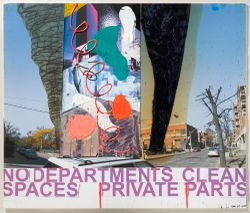
Will Alsop: Street Creatures
Will Alsop: Street Creatures
Actions:
Description:
British architect Will Alsop discusses his projects, working methods, and influences. The lecture is presented in conjunction with the exhibition Will Alsop: OCAD, an Urban Manifesto (2008), which reveals the architect’s design process through preparatory paintings, sketches, and models for the Sharp Centre for Design at the Ontario College of Art Design (OCAD) in(...)
British architect Will Alsop discusses his projects, working methods, and influences. The lecture is presented in conjunction with the exhibition Will Alsop: OCAD, an Urban Manifesto (2008), which reveals the architect’s design process through preparatory paintings, sketches, and models for the Sharp Centre for Design at the Ontario College of Art Design (OCAD) in(...)
Location:
Paul Desmarais Theatre
Paul Desmarais Theatre
Date:
2 October 2008
2 October 2008
Title:
Will Alsop: Street Creatures
Actions:
Description:
British architect Will Alsop discusses his projects, working methods, and influences. The lecture is presented in conjunction with the exhibition Will Alsop: OCAD, an Urban Manifesto (2008), which reveals the architect’s design process through preparatory paintings, sketches, and models for the Sharp Centre for Design at the Ontario College of Art Design (OCAD) in(...)
Will Alsop: Street Creatures
Actions:
Description:
British architect Will Alsop discusses his projects, working methods, and influences. The lecture is presented in conjunction with the exhibition Will Alsop: OCAD, an Urban Manifesto (2008), which reveals the architect’s design process through preparatory paintings, sketches, and models for the Sharp Centre for Design at the Ontario College of Art Design (OCAD) in(...)
Form:
events
events
Date:
2 October 2008
2 October 2008
Location:
Paul Desmarais Theatre
Paul Desmarais Theatre


