


53 Results
Form:
books
books
Actions:
Price:
$39.95
(available to order)
Summary:
As Art Director for Muji since 2002, Japanese graphic designer Kenya Hara (born 1958) and his aesthetic of pared-back, beautifully functional objects has taken the world by (quiet) storm. With “Kenya Hara: Designing Japan”, the designer presents his vision of how his industry can contribute to the future of his country: a future founded on Hara’s unique philosophy of(...)
$39.95
(available to order)
Summary:
As Art Director for Muji since 2002, Japanese graphic designer Kenya Hara (born 1958) and his aesthetic of pared-back, beautifully functional objects has taken the world by (quiet) storm. With “Kenya Hara: Designing Japan”, the designer presents his vision of how his industry can contribute to the future of his country: a future founded on Hara’s unique philosophy of(...)
Title:
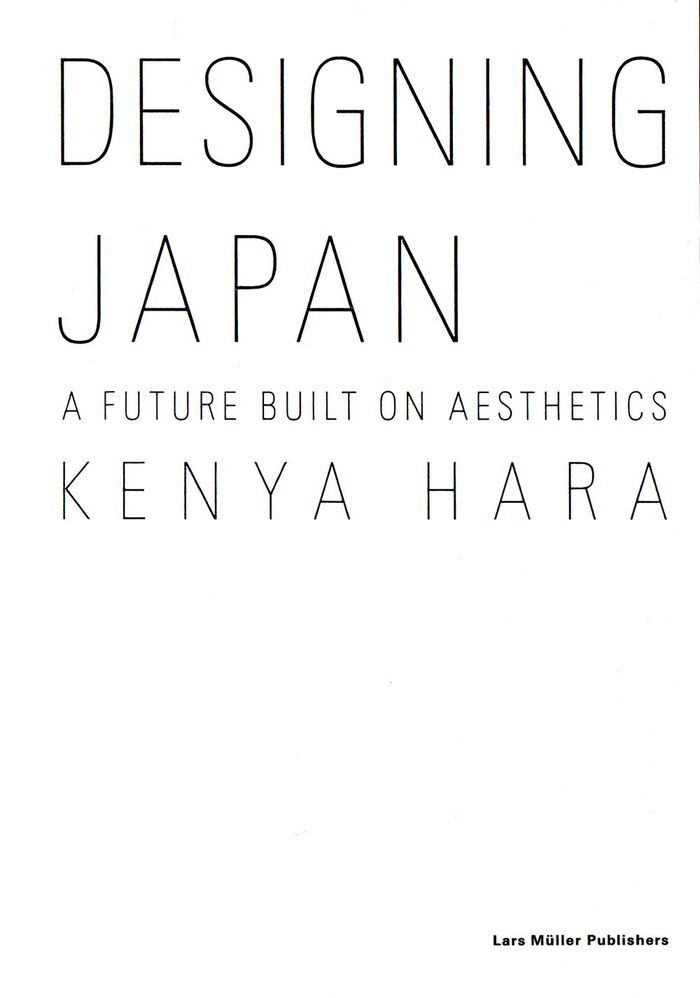
Kenya Hara, designing Japan: a future built on aesthetics
Actions:
Price:
$39.95
(available to order)
Summary:
As Art Director for Muji since 2002, Japanese graphic designer Kenya Hara (born 1958) and his aesthetic of pared-back, beautifully functional objects has taken the world by (quiet) storm. With “Kenya Hara: Designing Japan”, the designer presents his vision of how his industry can contribute to the future of his country: a future founded on Hara’s unique philosophy of beauty as well as crowd-sourced wisdom from around the world. The book spans history, from the beginnings of professional Japanese design in the 16th century to the impact of the 2011 Tohoku earthquake. But Hara's real focus is on the future. A master collaborator, meticulous organizer and globally conscious innovator, Hara draws on more than three decades of work in design and exhibition curating, as well his professional interactions with creators from many fields. “Designing Japan” offers a foundation course on the essence of Japanese aesthetics, while maintaining a practical approach to Japan’s circumstances and future possibilities. Hara reveals the methods by which designers in Japan work with government and industry, and considers how design can propose solutions for this island nation as its population ages, other nations take over manufacturing and technology develops. Illustrations and examples recognize successful problem-solving through design, proving that design is a living, changing industry that remains relevant not in spite of, but as a partner to, advancing technology.
Kenya Hara, designing Japan: a future built on aesthetics
Actions:
Price:
$39.95
(available to order)
Summary:
As Art Director for Muji since 2002, Japanese graphic designer Kenya Hara (born 1958) and his aesthetic of pared-back, beautifully functional objects has taken the world by (quiet) storm. With “Kenya Hara: Designing Japan”, the designer presents his vision of how his industry can contribute to the future of his country: a future founded on Hara’s unique philosophy of beauty as well as crowd-sourced wisdom from around the world. The book spans history, from the beginnings of professional Japanese design in the 16th century to the impact of the 2011 Tohoku earthquake. But Hara's real focus is on the future. A master collaborator, meticulous organizer and globally conscious innovator, Hara draws on more than three decades of work in design and exhibition curating, as well his professional interactions with creators from many fields. “Designing Japan” offers a foundation course on the essence of Japanese aesthetics, while maintaining a practical approach to Japan’s circumstances and future possibilities. Hara reveals the methods by which designers in Japan work with government and industry, and considers how design can propose solutions for this island nation as its population ages, other nations take over manufacturing and technology develops. Illustrations and examples recognize successful problem-solving through design, proving that design is a living, changing industry that remains relevant not in spite of, but as a partner to, advancing technology.
Form:
books
books
Publication:
October 2019
October 2019
Subject:
Graphic Designers, Monographs
Graphic Designers, Monographs
Form:
books
books
Title:
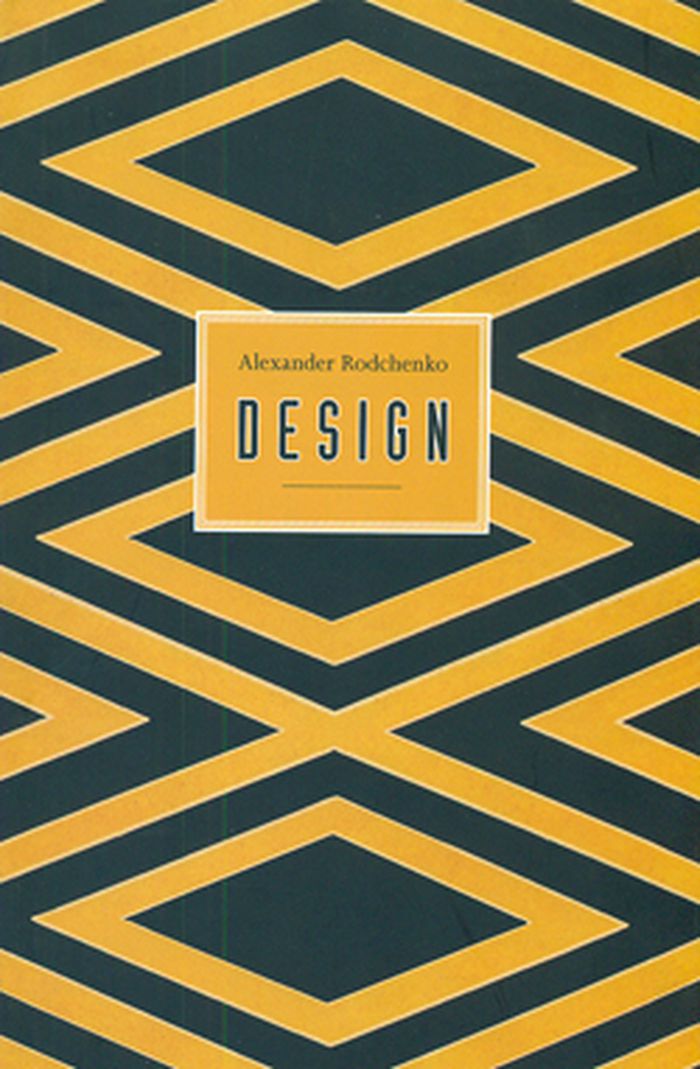
Alexander Rodchenko, design
Alexander Rodchenko, design
Actions:
Price:
$29.95
(available to order)
Summary:
This book gives an introduction to the life and work of this versatile Russian artist Alexander Mikhailovich Rodchenko. He was a central figure in the Russian Constructivist art movement; a radical activist, a pioneer of photomontage, a theorist, and a teacher. He was an active force in the organization of the first museums of modern art that arose in Russia in the first(...)
$29.95
(available to order)
Summary:
This book gives an introduction to the life and work of this versatile Russian artist Alexander Mikhailovich Rodchenko. He was a central figure in the Russian Constructivist art movement; a radical activist, a pioneer of photomontage, a theorist, and a teacher. He was an active force in the organization of the first museums of modern art that arose in Russia in the first(...)
Publication:
November 2009
November 2009
Title:
Alexander Rodchenko, design
Actions:
Price:
$29.95
(available to order)
Summary:
This book gives an introduction to the life and work of this versatile Russian artist Alexander Mikhailovich Rodchenko. He was a central figure in the Russian Constructivist art movement; a radical activist, a pioneer of photomontage, a theorist, and a teacher. He was an active force in the organization of the first museums of modern art that arose in Russia in the first years after the Russian Revolution of 1917. Attending art school in 1914 in Kazan was to be a defining influence: that year Russian Futurists performed in the town, and Rodchenko saw their leading figures in action. It transformed his vision and he was still working with Futurist artists and their ideas twenty-five years later. And it was at art school where Rodchenko first met the artist Varvara Stepanova, with whom he collaborated extensively, and who would become his life-long partner. Central in the re-examination of art and its place in society after the Revolution, and in the search for a new culture without the class implications of the past, Rodchenko's radical approach proposed a new understanding of a constructed, rather than a tastefully composed, culture. This concise, comprehensive and informative work focuses largely on Rodchenko's graphic work in the form of book jackets, posters and advertising. Abbemuseumr is Visiting Professor at The Courtauld Institute of Art in London.
Alexander Rodchenko, design
Actions:
Price:
$29.95
(available to order)
Summary:
This book gives an introduction to the life and work of this versatile Russian artist Alexander Mikhailovich Rodchenko. He was a central figure in the Russian Constructivist art movement; a radical activist, a pioneer of photomontage, a theorist, and a teacher. He was an active force in the organization of the first museums of modern art that arose in Russia in the first years after the Russian Revolution of 1917. Attending art school in 1914 in Kazan was to be a defining influence: that year Russian Futurists performed in the town, and Rodchenko saw their leading figures in action. It transformed his vision and he was still working with Futurist artists and their ideas twenty-five years later. And it was at art school where Rodchenko first met the artist Varvara Stepanova, with whom he collaborated extensively, and who would become his life-long partner. Central in the re-examination of art and its place in society after the Revolution, and in the search for a new culture without the class implications of the past, Rodchenko's radical approach proposed a new understanding of a constructed, rather than a tastefully composed, culture. This concise, comprehensive and informative work focuses largely on Rodchenko's graphic work in the form of book jackets, posters and advertising. Abbemuseumr is Visiting Professor at The Courtauld Institute of Art in London.
Form:
books
books
Publication:
November 2009
November 2009
Form:
books
books
Actions:
Price:
$59.95
(available to order)
Summary:
The book reproduces a series of the collages made by David Wild. Their subject is modern architecture in the first half of the twentieth century: in the Netherlands, in Russia, and in the work of Le Corbusier. The method of the book is to show a collage on a right-hand page; then on the facing page is a (...)
$59.95
(available to order)
Summary:
The book reproduces a series of the collages made by David Wild. Their subject is modern architecture in the first half of the twentieth century: in the Netherlands, in Russia, and in the work of Le Corbusier. The method of the book is to show a collage on a right-hand page; then on the facing page is a (...)
Title:
Fragments of utopia: collage reflections of heroic modernism
Actions:
Price:
$59.95
(available to order)
Summary:
The book reproduces a series of the collages made by David Wild. Their subject is modern architecture in the first half of the twentieth century: in the Netherlands, in Russia, and in the work of Le Corbusier. The method of the book is to show a collage on a right-hand page; then on the facing page is a prose commentary by Wild and supporting smaller images. Introducing the book, David Wild explains that the impulse for this work lies in the aftermath of a fire in his house: his scorched books lent themselves to collage. He goes on to sketch the cultural-political climate in Britain over the last 40 years: the backdrop to his work as an architect and (less directly) to this book. In the opening section on the Netherlands, the leading theme is an architecture of social equity and continuity. Rooted in old cultural traditions, and in the particular ‘football-pitch’ landscape of the country, modern architecture could realise some of its dreams in everyday buildings. Postage stamps play an active part in many of the book’s collages, and especially in this section: the design of stamps flourished in the Netherlands, through the enlightened patronage of the Dutch post office — with several architects designing stamps too. Politics and history come to prominence in the Russian section, as a motivating force in the work of the early 1920s, and then as a heavy burden — with the onset of totalitarian control and repression. At the centre of the discussion here is the architecture of constructivism: formally brilliant, but with a clear social programme. Flight and the exploration of space are recurring topics in this section, as another and particularly Russian dimension of utopian striving The work of Le Corbusier, in Europe, North and South America, Russia and India, is treated in the third section. Le Corbusier is presented as a brilliant artist, a master architect of the greatest skill and the greatest ambition — and without scruple in pursuing commissions. The images and text follow him into the years after the Second World War, culminating in the work in India. Here there is a vision of another kind of politics, of co-operation and non-violence.
Fragments of utopia: collage reflections of heroic modernism
Actions:
Price:
$59.95
(available to order)
Summary:
The book reproduces a series of the collages made by David Wild. Their subject is modern architecture in the first half of the twentieth century: in the Netherlands, in Russia, and in the work of Le Corbusier. The method of the book is to show a collage on a right-hand page; then on the facing page is a prose commentary by Wild and supporting smaller images. Introducing the book, David Wild explains that the impulse for this work lies in the aftermath of a fire in his house: his scorched books lent themselves to collage. He goes on to sketch the cultural-political climate in Britain over the last 40 years: the backdrop to his work as an architect and (less directly) to this book. In the opening section on the Netherlands, the leading theme is an architecture of social equity and continuity. Rooted in old cultural traditions, and in the particular ‘football-pitch’ landscape of the country, modern architecture could realise some of its dreams in everyday buildings. Postage stamps play an active part in many of the book’s collages, and especially in this section: the design of stamps flourished in the Netherlands, through the enlightened patronage of the Dutch post office — with several architects designing stamps too. Politics and history come to prominence in the Russian section, as a motivating force in the work of the early 1920s, and then as a heavy burden — with the onset of totalitarian control and repression. At the centre of the discussion here is the architecture of constructivism: formally brilliant, but with a clear social programme. Flight and the exploration of space are recurring topics in this section, as another and particularly Russian dimension of utopian striving The work of Le Corbusier, in Europe, North and South America, Russia and India, is treated in the third section. Le Corbusier is presented as a brilliant artist, a master architect of the greatest skill and the greatest ambition — and without scruple in pursuing commissions. The images and text follow him into the years after the Second World War, culminating in the work in India. Here there is a vision of another kind of politics, of co-operation and non-violence.
Form:
books
books
Publication:
January 1900, London
January 1900, London
Subject:
Graphic Designers, Monographs
Graphic Designers, Monographs


