


6146 Results
Form:
events
events
Actions:
Description:
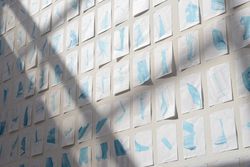
When Gordon Matta-Clark assembled the titles to and documentation of a dozen-odd small, vacant parcels of New York property between 1974 and 1977 (later assembled and exhibited as Reality Properties: Fake Estates in 1992), it was with no well-formed agenda—other than his view that the availability of vacant and underutilized parcels [was] a direct reminder of the fallacy(...)
When Gordon Matta-Clark assembled the titles to and documentation of a dozen-odd small, vacant parcels of New York property between 1974 and 1977 (later assembled and exhibited as Reality Properties: Fake Estates in 1992), it was with no well-formed agenda—other than his view that the availability of vacant and underutilized parcels [was] a direct reminder of the fallacy(...)
Location:
Paul Desmarais Theatre
Paul Desmarais Theatre
Date:
22 September 2016, 6pm
22 September 2016, 6pm
Title:
Nicholas de Monchaux: Local Code
Actions:
Description:
When Gordon Matta-Clark assembled the titles to and documentation of a dozen-odd small, vacant parcels of New York property between 1974 and 1977 (later assembled and exhibited as Reality Properties: Fake Estates in 1992), it was with no well-formed agenda—other than his view that the availability of vacant and underutilized parcels [was] a direct reminder of the fallacy(...)
Nicholas de Monchaux: Local Code
Actions:
Description:
When Gordon Matta-Clark assembled the titles to and documentation of a dozen-odd small, vacant parcels of New York property between 1974 and 1977 (later assembled and exhibited as Reality Properties: Fake Estates in 1992), it was with no well-formed agenda—other than his view that the availability of vacant and underutilized parcels [was] a direct reminder of the fallacy(...)
Form:
events
events
Date:
22 September 2016
6pm
22 September 2016
6pm
Location:
Paul Desmarais Theatre
Paul Desmarais Theatre
Level of archival description:
Project
Project
Actions:
Reference number:
AP194.S1.1995.PR01
Description:
Project records consist of records documenting the three phases of the Synthetic Landscape project (1995-2000) as worked on by Johan Bettum and OCEAN North. The project was initially developed and submitted in 1995 for the Membrane Design International Competition held in Japan by the Taiyo Kogyo Corporation. The entry showcases a children’s playscape in the setting of Oslo’s Tøyen Park, joining both its urban surroundings and its natural landscape into a synthetic space. Afterwards, the project was exhibited at the Architecture Association (AA) in London, where Johan Bettum and Kivi Sotamaa met. This eventually led to Bettum and Sotamaa collaborating on projects, along with their respective OCEAN teams in Oslo and Helsinki. The Synthetic Landscape project continued as a research project, with a second phase in 1996 and a third phase which ran from 1997 through 2000 and integrated design methods (particle streaming, Channelling Systems) from the work made on the Töölö and Jyväskylä projects. In the third phase, a pavilion was also added to the setting. Aside from one drawing, all records for this project are in a digital format. Drawings and models from phase 1 show parts or the whole of a shell-like structure. A color scheme seems to be associated to the different components of the structure. A report on phases 1 and 2 discusses the use of synthetic and composite materials for the structure, explaining the concept for the site. Phase 2 textual records include a working plan, site charts and program. Additional drawings and models show an evolution in the shape of the landscape. Most records are related to the third phase of Synthetic Landscape. They are largely drawings and models showing textures and coloured grafts used in the design process, section and surfaces studies, as well as site plans. Other files of the third phase consist of animated renderings of Channelling Systems studies within the Synthetic Landscape topology, saved as Quicktime MOV files. Additionally, the third phase of Synthetic Landscape has files related to the FEM (finite element method) analysis process utilized in the project’s engineering. This particular section includes raster images showing vectorial drawings and data appearing to be surface studies. These were likely created with the software Mathematica. The bulk of textual documentation on the project’s scope and outcomes may be found in AP194.S1.1995.PR01.001 for phases 1 and 2, and in AP194.S1.1995.PR01.005 for phase 3. The latter file also contains documentation related to a grant application to The Research Council of Norway; a proposal for a conference and exhibition at the AA; and administrative records such as budgets, correspondence, invoices, progress reports, meeting agendas and minutes. For all project phases, records related to the design process consist of CAD models saved in a variety of modelling formats (iges, fmz, dgn, 3dm, dxf) as well as raster or vector images (tiff, jpeg, png, eps, pict, etc.). In some cases, only these raster or vector images of the original CAD drawings are present in the archive.
AP194.S1.1995.PR01
Description:
Project records consist of records documenting the three phases of the Synthetic Landscape project (1995-2000) as worked on by Johan Bettum and OCEAN North. The project was initially developed and submitted in 1995 for the Membrane Design International Competition held in Japan by the Taiyo Kogyo Corporation. The entry showcases a children’s playscape in the setting of Oslo’s Tøyen Park, joining both its urban surroundings and its natural landscape into a synthetic space. Afterwards, the project was exhibited at the Architecture Association (AA) in London, where Johan Bettum and Kivi Sotamaa met. This eventually led to Bettum and Sotamaa collaborating on projects, along with their respective OCEAN teams in Oslo and Helsinki. The Synthetic Landscape project continued as a research project, with a second phase in 1996 and a third phase which ran from 1997 through 2000 and integrated design methods (particle streaming, Channelling Systems) from the work made on the Töölö and Jyväskylä projects. In the third phase, a pavilion was also added to the setting. Aside from one drawing, all records for this project are in a digital format. Drawings and models from phase 1 show parts or the whole of a shell-like structure. A color scheme seems to be associated to the different components of the structure. A report on phases 1 and 2 discusses the use of synthetic and composite materials for the structure, explaining the concept for the site. Phase 2 textual records include a working plan, site charts and program. Additional drawings and models show an evolution in the shape of the landscape. Most records are related to the third phase of Synthetic Landscape. They are largely drawings and models showing textures and coloured grafts used in the design process, section and surfaces studies, as well as site plans. Other files of the third phase consist of animated renderings of Channelling Systems studies within the Synthetic Landscape topology, saved as Quicktime MOV files. Additionally, the third phase of Synthetic Landscape has files related to the FEM (finite element method) analysis process utilized in the project’s engineering. This particular section includes raster images showing vectorial drawings and data appearing to be surface studies. These were likely created with the software Mathematica. The bulk of textual documentation on the project’s scope and outcomes may be found in AP194.S1.1995.PR01.001 for phases 1 and 2, and in AP194.S1.1995.PR01.005 for phase 3. The latter file also contains documentation related to a grant application to The Research Council of Norway; a proposal for a conference and exhibition at the AA; and administrative records such as budgets, correspondence, invoices, progress reports, meeting agendas and minutes. For all project phases, records related to the design process consist of CAD models saved in a variety of modelling formats (iges, fmz, dgn, 3dm, dxf) as well as raster or vector images (tiff, jpeg, png, eps, pict, etc.). In some cases, only these raster or vector images of the original CAD drawings are present in the archive.
People:
Date:
1995-2000
1995-2000
Title:
Synthetic Landscape research project, Oslo, Norway (1995-2000)
Actions:
AP194.S1.1995.PR01
Description:
Project records consist of records documenting the three phases of the Synthetic Landscape project (1995-2000) as worked on by Johan Bettum and OCEAN North. The project was initially developed and submitted in 1995 for the Membrane Design International Competition held in Japan by the Taiyo Kogyo Corporation. The entry showcases a children’s playscape in the setting of Oslo’s Tøyen Park, joining both its urban surroundings and its natural landscape into a synthetic space. Afterwards, the project was exhibited at the Architecture Association (AA) in London, where Johan Bettum and Kivi Sotamaa met. This eventually led to Bettum and Sotamaa collaborating on projects, along with their respective OCEAN teams in Oslo and Helsinki. The Synthetic Landscape project continued as a research project, with a second phase in 1996 and a third phase which ran from 1997 through 2000 and integrated design methods (particle streaming, Channelling Systems) from the work made on the Töölö and Jyväskylä projects. In the third phase, a pavilion was also added to the setting. Aside from one drawing, all records for this project are in a digital format. Drawings and models from phase 1 show parts or the whole of a shell-like structure. A color scheme seems to be associated to the different components of the structure. A report on phases 1 and 2 discusses the use of synthetic and composite materials for the structure, explaining the concept for the site. Phase 2 textual records include a working plan, site charts and program. Additional drawings and models show an evolution in the shape of the landscape. Most records are related to the third phase of Synthetic Landscape. They are largely drawings and models showing textures and coloured grafts used in the design process, section and surfaces studies, as well as site plans. Other files of the third phase consist of animated renderings of Channelling Systems studies within the Synthetic Landscape topology, saved as Quicktime MOV files. Additionally, the third phase of Synthetic Landscape has files related to the FEM (finite element method) analysis process utilized in the project’s engineering. This particular section includes raster images showing vectorial drawings and data appearing to be surface studies. These were likely created with the software Mathematica. The bulk of textual documentation on the project’s scope and outcomes may be found in AP194.S1.1995.PR01.001 for phases 1 and 2, and in AP194.S1.1995.PR01.005 for phase 3. The latter file also contains documentation related to a grant application to The Research Council of Norway; a proposal for a conference and exhibition at the AA; and administrative records such as budgets, correspondence, invoices, progress reports, meeting agendas and minutes. For all project phases, records related to the design process consist of CAD models saved in a variety of modelling formats (iges, fmz, dgn, 3dm, dxf) as well as raster or vector images (tiff, jpeg, png, eps, pict, etc.). In some cases, only these raster or vector images of the original CAD drawings are present in the archive.
Synthetic Landscape research project, Oslo, Norway (1995-2000)
Actions:
AP194.S1.1995.PR01
Description:
Project records consist of records documenting the three phases of the Synthetic Landscape project (1995-2000) as worked on by Johan Bettum and OCEAN North. The project was initially developed and submitted in 1995 for the Membrane Design International Competition held in Japan by the Taiyo Kogyo Corporation. The entry showcases a children’s playscape in the setting of Oslo’s Tøyen Park, joining both its urban surroundings and its natural landscape into a synthetic space. Afterwards, the project was exhibited at the Architecture Association (AA) in London, where Johan Bettum and Kivi Sotamaa met. This eventually led to Bettum and Sotamaa collaborating on projects, along with their respective OCEAN teams in Oslo and Helsinki. The Synthetic Landscape project continued as a research project, with a second phase in 1996 and a third phase which ran from 1997 through 2000 and integrated design methods (particle streaming, Channelling Systems) from the work made on the Töölö and Jyväskylä projects. In the third phase, a pavilion was also added to the setting. Aside from one drawing, all records for this project are in a digital format. Drawings and models from phase 1 show parts or the whole of a shell-like structure. A color scheme seems to be associated to the different components of the structure. A report on phases 1 and 2 discusses the use of synthetic and composite materials for the structure, explaining the concept for the site. Phase 2 textual records include a working plan, site charts and program. Additional drawings and models show an evolution in the shape of the landscape. Most records are related to the third phase of Synthetic Landscape. They are largely drawings and models showing textures and coloured grafts used in the design process, section and surfaces studies, as well as site plans. Other files of the third phase consist of animated renderings of Channelling Systems studies within the Synthetic Landscape topology, saved as Quicktime MOV files. Additionally, the third phase of Synthetic Landscape has files related to the FEM (finite element method) analysis process utilized in the project’s engineering. This particular section includes raster images showing vectorial drawings and data appearing to be surface studies. These were likely created with the software Mathematica. The bulk of textual documentation on the project’s scope and outcomes may be found in AP194.S1.1995.PR01.001 for phases 1 and 2, and in AP194.S1.1995.PR01.005 for phase 3. The latter file also contains documentation related to a grant application to The Research Council of Norway; a proposal for a conference and exhibition at the AA; and administrative records such as budgets, correspondence, invoices, progress reports, meeting agendas and minutes. For all project phases, records related to the design process consist of CAD models saved in a variety of modelling formats (iges, fmz, dgn, 3dm, dxf) as well as raster or vector images (tiff, jpeg, png, eps, pict, etc.). In some cases, only these raster or vector images of the original CAD drawings are present in the archive.
Level of archival description:
Project
Project
Date:
1995-2000
1995-2000
People:
Level of archival description:
Series
Series
Title:
Audiovisual material
Audiovisual material
Actions:
Reference number:
AP165.S5
Description:
The Audiovisual material series, 1990 – 2002, consists of 175 video recordings that document various aspects of Hoberman’s work in transformable design, as well as the operations of his company Hoberman Associates, Inc. This includes broadcast footage featuring Hoberman, media coverage of installations and exhibitions, interviews with Hoberman, promotional material produced by Hoberman Associates Inc., documentary footage of toy and business-related activities, and home videos. Material consists of analog and digital recording techniques on a variety of formats including MiniDV cassettes, Betacam SP cassettes, DVCAM cassettes, U-matic cassettes, Hi-8 cassettes, Betacam cassettes and Digital Betacam cassettes. The majority of the records date from the mid to late 90’s to early 2000’s. Video recordings in this series are about Hoberman and/or were produced by his company, Hoberman Associates, Inc. It includes television programs featuring Hoberman, media coverage relating to specific projects such as the Iris Dome and other expanding geodesic spheres, promotional videos for toy products, documentary footage of international business operations, and media coverage of notable events such as the installation and inauguration of the Hoberman Arch at the 2002 Olympics in Salt Lake City and footage of Bill Clinton with the Hoberman sphere. While there are some completed broadcast productions in the series, the majority of the material is comprised of audio-visual production elements including raw footage, rushes, cuts, rough edits, masters, and compilations.
AP165.S5
Description:
The Audiovisual material series, 1990 – 2002, consists of 175 video recordings that document various aspects of Hoberman’s work in transformable design, as well as the operations of his company Hoberman Associates, Inc. This includes broadcast footage featuring Hoberman, media coverage of installations and exhibitions, interviews with Hoberman, promotional material produced by Hoberman Associates Inc., documentary footage of toy and business-related activities, and home videos. Material consists of analog and digital recording techniques on a variety of formats including MiniDV cassettes, Betacam SP cassettes, DVCAM cassettes, U-matic cassettes, Hi-8 cassettes, Betacam cassettes and Digital Betacam cassettes. The majority of the records date from the mid to late 90’s to early 2000’s. Video recordings in this series are about Hoberman and/or were produced by his company, Hoberman Associates, Inc. It includes television programs featuring Hoberman, media coverage relating to specific projects such as the Iris Dome and other expanding geodesic spheres, promotional videos for toy products, documentary footage of international business operations, and media coverage of notable events such as the installation and inauguration of the Hoberman Arch at the 2002 Olympics in Salt Lake City and footage of Bill Clinton with the Hoberman sphere. While there are some completed broadcast productions in the series, the majority of the material is comprised of audio-visual production elements including raw footage, rushes, cuts, rough edits, masters, and compilations.
People:
Date:
1990-2002
1990-2002
Title:
Audiovisual material
Actions:
AP165.S5
Description:
The Audiovisual material series, 1990 – 2002, consists of 175 video recordings that document various aspects of Hoberman’s work in transformable design, as well as the operations of his company Hoberman Associates, Inc. This includes broadcast footage featuring Hoberman, media coverage of installations and exhibitions, interviews with Hoberman, promotional material produced by Hoberman Associates Inc., documentary footage of toy and business-related activities, and home videos. Material consists of analog and digital recording techniques on a variety of formats including MiniDV cassettes, Betacam SP cassettes, DVCAM cassettes, U-matic cassettes, Hi-8 cassettes, Betacam cassettes and Digital Betacam cassettes. The majority of the records date from the mid to late 90’s to early 2000’s. Video recordings in this series are about Hoberman and/or were produced by his company, Hoberman Associates, Inc. It includes television programs featuring Hoberman, media coverage relating to specific projects such as the Iris Dome and other expanding geodesic spheres, promotional videos for toy products, documentary footage of international business operations, and media coverage of notable events such as the installation and inauguration of the Hoberman Arch at the 2002 Olympics in Salt Lake City and footage of Bill Clinton with the Hoberman sphere. While there are some completed broadcast productions in the series, the majority of the material is comprised of audio-visual production elements including raw footage, rushes, cuts, rough edits, masters, and compilations.
Audiovisual material
Actions:
AP165.S5
Description:
The Audiovisual material series, 1990 – 2002, consists of 175 video recordings that document various aspects of Hoberman’s work in transformable design, as well as the operations of his company Hoberman Associates, Inc. This includes broadcast footage featuring Hoberman, media coverage of installations and exhibitions, interviews with Hoberman, promotional material produced by Hoberman Associates Inc., documentary footage of toy and business-related activities, and home videos. Material consists of analog and digital recording techniques on a variety of formats including MiniDV cassettes, Betacam SP cassettes, DVCAM cassettes, U-matic cassettes, Hi-8 cassettes, Betacam cassettes and Digital Betacam cassettes. The majority of the records date from the mid to late 90’s to early 2000’s. Video recordings in this series are about Hoberman and/or were produced by his company, Hoberman Associates, Inc. It includes television programs featuring Hoberman, media coverage relating to specific projects such as the Iris Dome and other expanding geodesic spheres, promotional videos for toy products, documentary footage of international business operations, and media coverage of notable events such as the installation and inauguration of the Hoberman Arch at the 2002 Olympics in Salt Lake City and footage of Bill Clinton with the Hoberman sphere. While there are some completed broadcast productions in the series, the majority of the material is comprised of audio-visual production elements including raw footage, rushes, cuts, rough edits, masters, and compilations.
Level of archival description:
Series 5
Series 5
Date:
1990-2002
1990-2002
People:
Level of archival description:
Project
Project
Title:
O.C.H. Feasibility Study
O.C.H. Feasibility Study
Reference number:
AP144.S2.D59
Description:
File documents a feasibility study commissioned by J. Lyons Co. Ltd for the conversion of the Oxford Corner House, in London, England, United Kingdom, into a combined information, education and skill centre. The unrealized project was to include a 'self-pace public skill and information hive' with facilities for conferences, teaching, exhibitions, computer use, planetarium, audio-visual library, and public eating areas. The project included a movable floor system and projection screens. Reference material includes plans and details of London Electric Railway subway line, alterations to Oxford Street Corner House by J. Lyons and Co. Ltd., field notes, photographs and photomontages of site. Conceptual diagrammatic plans explore designs for the organization of activities. Charts show variables, including number of people, monitors/screens, and study carrels; circulation patterns; and maximization of viewing capacity. Preliminary presentation boards illustrate project feasibility and include photographs of model and existing conditions. Design development drawings include floor plans, plans exploring the relationships between various activities, analysis of building volumes and networks, comparative plans showing main structural grid, sections, diagrammatic sections for public activity areas, axonometric drawings of roof, perspectives of projection screens and moveable floor system, progress charts, and diagrams and graphs of communication and travel modes, routes, and time into central London from outlying areas. Some material in this file was published in Price, Cedric. 'Cedric Price-Works II' (London: Architectural Press, 1984), 11, 54, 112; Landau, Royston. 'New Directions in British Architecture'. New York: George Braziller, 1968. 108-111; and 'Self-Pace Public Skill and Information Hive.' 'Architectural Design'. (May 1968), 237-239. Material in this file was produced between 1927 and 1967, but predominantly between 1965 and 1966. Group DR1995:0224:001-013 contains reference drawings attributed to London Transport Architect's Department and J. Lyons & Company Limited Architect's Office. Group DR1995:0224:333-341 contains drawings attributed to Richard Sutcliffe Limited, Felix J. Samuely & Partners, and G.E.C. (Process Engineering) Ltd. File contains conceptual drawings, consultant drawings, design development drawings, presentation drawings, presentation panels, reference drawings, photographic material, and textual records.
AP144.S2.D59
Description:
File documents a feasibility study commissioned by J. Lyons Co. Ltd for the conversion of the Oxford Corner House, in London, England, United Kingdom, into a combined information, education and skill centre. The unrealized project was to include a 'self-pace public skill and information hive' with facilities for conferences, teaching, exhibitions, computer use, planetarium, audio-visual library, and public eating areas. The project included a movable floor system and projection screens. Reference material includes plans and details of London Electric Railway subway line, alterations to Oxford Street Corner House by J. Lyons and Co. Ltd., field notes, photographs and photomontages of site. Conceptual diagrammatic plans explore designs for the organization of activities. Charts show variables, including number of people, monitors/screens, and study carrels; circulation patterns; and maximization of viewing capacity. Preliminary presentation boards illustrate project feasibility and include photographs of model and existing conditions. Design development drawings include floor plans, plans exploring the relationships between various activities, analysis of building volumes and networks, comparative plans showing main structural grid, sections, diagrammatic sections for public activity areas, axonometric drawings of roof, perspectives of projection screens and moveable floor system, progress charts, and diagrams and graphs of communication and travel modes, routes, and time into central London from outlying areas. Some material in this file was published in Price, Cedric. 'Cedric Price-Works II' (London: Architectural Press, 1984), 11, 54, 112; Landau, Royston. 'New Directions in British Architecture'. New York: George Braziller, 1968. 108-111; and 'Self-Pace Public Skill and Information Hive.' 'Architectural Design'. (May 1968), 237-239. Material in this file was produced between 1927 and 1967, but predominantly between 1965 and 1966. Group DR1995:0224:001-013 contains reference drawings attributed to London Transport Architect's Department and J. Lyons & Company Limited Architect's Office. Group DR1995:0224:333-341 contains drawings attributed to Richard Sutcliffe Limited, Felix J. Samuely & Partners, and G.E.C. (Process Engineering) Ltd. File contains conceptual drawings, consultant drawings, design development drawings, presentation drawings, presentation panels, reference drawings, photographic material, and textual records.
People:
Date:
1927-1967, predominant 1965-1966
1927-1967, predominant 1965-1966
Title:
O.C.H. Feasibility Study
Actions:
AP144.S2.D59
Description:
File documents a feasibility study commissioned by J. Lyons Co. Ltd for the conversion of the Oxford Corner House, in London, England, United Kingdom, into a combined information, education and skill centre. The unrealized project was to include a 'self-pace public skill and information hive' with facilities for conferences, teaching, exhibitions, computer use, planetarium, audio-visual library, and public eating areas. The project included a movable floor system and projection screens. Reference material includes plans and details of London Electric Railway subway line, alterations to Oxford Street Corner House by J. Lyons and Co. Ltd., field notes, photographs and photomontages of site. Conceptual diagrammatic plans explore designs for the organization of activities. Charts show variables, including number of people, monitors/screens, and study carrels; circulation patterns; and maximization of viewing capacity. Preliminary presentation boards illustrate project feasibility and include photographs of model and existing conditions. Design development drawings include floor plans, plans exploring the relationships between various activities, analysis of building volumes and networks, comparative plans showing main structural grid, sections, diagrammatic sections for public activity areas, axonometric drawings of roof, perspectives of projection screens and moveable floor system, progress charts, and diagrams and graphs of communication and travel modes, routes, and time into central London from outlying areas. Some material in this file was published in Price, Cedric. 'Cedric Price-Works II' (London: Architectural Press, 1984), 11, 54, 112; Landau, Royston. 'New Directions in British Architecture'. New York: George Braziller, 1968. 108-111; and 'Self-Pace Public Skill and Information Hive.' 'Architectural Design'. (May 1968), 237-239. Material in this file was produced between 1927 and 1967, but predominantly between 1965 and 1966. Group DR1995:0224:001-013 contains reference drawings attributed to London Transport Architect's Department and J. Lyons & Company Limited Architect's Office. Group DR1995:0224:333-341 contains drawings attributed to Richard Sutcliffe Limited, Felix J. Samuely & Partners, and G.E.C. (Process Engineering) Ltd. File contains conceptual drawings, consultant drawings, design development drawings, presentation drawings, presentation panels, reference drawings, photographic material, and textual records.
O.C.H. Feasibility Study
Actions:
AP144.S2.D59
Description:
File documents a feasibility study commissioned by J. Lyons Co. Ltd for the conversion of the Oxford Corner House, in London, England, United Kingdom, into a combined information, education and skill centre. The unrealized project was to include a 'self-pace public skill and information hive' with facilities for conferences, teaching, exhibitions, computer use, planetarium, audio-visual library, and public eating areas. The project included a movable floor system and projection screens. Reference material includes plans and details of London Electric Railway subway line, alterations to Oxford Street Corner House by J. Lyons and Co. Ltd., field notes, photographs and photomontages of site. Conceptual diagrammatic plans explore designs for the organization of activities. Charts show variables, including number of people, monitors/screens, and study carrels; circulation patterns; and maximization of viewing capacity. Preliminary presentation boards illustrate project feasibility and include photographs of model and existing conditions. Design development drawings include floor plans, plans exploring the relationships between various activities, analysis of building volumes and networks, comparative plans showing main structural grid, sections, diagrammatic sections for public activity areas, axonometric drawings of roof, perspectives of projection screens and moveable floor system, progress charts, and diagrams and graphs of communication and travel modes, routes, and time into central London from outlying areas. Some material in this file was published in Price, Cedric. 'Cedric Price-Works II' (London: Architectural Press, 1984), 11, 54, 112; Landau, Royston. 'New Directions in British Architecture'. New York: George Braziller, 1968. 108-111; and 'Self-Pace Public Skill and Information Hive.' 'Architectural Design'. (May 1968), 237-239. Material in this file was produced between 1927 and 1967, but predominantly between 1965 and 1966. Group DR1995:0224:001-013 contains reference drawings attributed to London Transport Architect's Department and J. Lyons & Company Limited Architect's Office. Group DR1995:0224:333-341 contains drawings attributed to Richard Sutcliffe Limited, Felix J. Samuely & Partners, and G.E.C. (Process Engineering) Ltd. File contains conceptual drawings, consultant drawings, design development drawings, presentation drawings, presentation panels, reference drawings, photographic material, and textual records.
Level of archival description:
File 59
File 59
Date:
1927-1967, predominant 1965-1966
1927-1967, predominant 1965-1966
People:
Level of archival description:
Sub-series
Sub-series
Title:
Virtools files
Virtools files
Actions:
Reference number:
AP167.S1.SS3
Description:
Sub-series 3, Virtools files, 1995—2013, contains files generated and coordinated by Virtools, a 3D visualization software used to make the Muscle move, respond to users, and play sound. It includes Virtools files, HTML files, audiovisual files (MP3s, WAVs and MPEGs), JPEGs, and applications. There are also a small number of CAD files, including 3DS, Maya, and AutoCad formats. The Virtools proprietary formats include composition files (.cmo), player files (.vmo), object files (.nmo) and scripts files (.nms). Virtools object files and scripts files may be combined and saved as composition files using Virtools Dev, CAD-like software that also coordinates sound and movement. (Virtools Dev is located in file AP167.S1.SS3.002, Virtools software and NSA Muscle composition and player files.) From Virtools Dev, a composition file can be exported to HTML or a player file. The HTML exports no longer work due to a missing JavaScript plugin. Player files and composition files can be played back in the Virtools player; the player also allows the user to interact with player files and behaves much like a video game interface. See file AP167.S1.SS3.008, NSA Muscle interface. Of note, the Virtools player file containing the NSA Muscle interface used at the Architecture non standard exhibition at the Centre George Pompidou is located in this sub-series. See item muscle.bat in file AP167.S1.SS3.008, NSA Muscle interface. There are also a number of other Virtools player files that allow the user to alter and interact with a virtual representation of a structure, which demonstrate ONL’s experimentation with the intersection of architecture and video game design. See file AP 167.S1.SS3.001, Early Virtools experimentation and architecture games.
AP167.S1.SS3
Description:
Sub-series 3, Virtools files, 1995—2013, contains files generated and coordinated by Virtools, a 3D visualization software used to make the Muscle move, respond to users, and play sound. It includes Virtools files, HTML files, audiovisual files (MP3s, WAVs and MPEGs), JPEGs, and applications. There are also a small number of CAD files, including 3DS, Maya, and AutoCad formats. The Virtools proprietary formats include composition files (.cmo), player files (.vmo), object files (.nmo) and scripts files (.nms). Virtools object files and scripts files may be combined and saved as composition files using Virtools Dev, CAD-like software that also coordinates sound and movement. (Virtools Dev is located in file AP167.S1.SS3.002, Virtools software and NSA Muscle composition and player files.) From Virtools Dev, a composition file can be exported to HTML or a player file. The HTML exports no longer work due to a missing JavaScript plugin. Player files and composition files can be played back in the Virtools player; the player also allows the user to interact with player files and behaves much like a video game interface. See file AP167.S1.SS3.008, NSA Muscle interface. Of note, the Virtools player file containing the NSA Muscle interface used at the Architecture non standard exhibition at the Centre George Pompidou is located in this sub-series. See item muscle.bat in file AP167.S1.SS3.008, NSA Muscle interface. There are also a number of other Virtools player files that allow the user to alter and interact with a virtual representation of a structure, which demonstrate ONL’s experimentation with the intersection of architecture and video game design. See file AP 167.S1.SS3.001, Early Virtools experimentation and architecture games.
People:
Date:
1995-2013
1995-2013
Title:
Virtools files
Actions:
AP167.S1.SS3
Description:
Sub-series 3, Virtools files, 1995—2013, contains files generated and coordinated by Virtools, a 3D visualization software used to make the Muscle move, respond to users, and play sound. It includes Virtools files, HTML files, audiovisual files (MP3s, WAVs and MPEGs), JPEGs, and applications. There are also a small number of CAD files, including 3DS, Maya, and AutoCad formats. The Virtools proprietary formats include composition files (.cmo), player files (.vmo), object files (.nmo) and scripts files (.nms). Virtools object files and scripts files may be combined and saved as composition files using Virtools Dev, CAD-like software that also coordinates sound and movement. (Virtools Dev is located in file AP167.S1.SS3.002, Virtools software and NSA Muscle composition and player files.) From Virtools Dev, a composition file can be exported to HTML or a player file. The HTML exports no longer work due to a missing JavaScript plugin. Player files and composition files can be played back in the Virtools player; the player also allows the user to interact with player files and behaves much like a video game interface. See file AP167.S1.SS3.008, NSA Muscle interface. Of note, the Virtools player file containing the NSA Muscle interface used at the Architecture non standard exhibition at the Centre George Pompidou is located in this sub-series. See item muscle.bat in file AP167.S1.SS3.008, NSA Muscle interface. There are also a number of other Virtools player files that allow the user to alter and interact with a virtual representation of a structure, which demonstrate ONL’s experimentation with the intersection of architecture and video game design. See file AP 167.S1.SS3.001, Early Virtools experimentation and architecture games.
Virtools files
Actions:
AP167.S1.SS3
Description:
Sub-series 3, Virtools files, 1995—2013, contains files generated and coordinated by Virtools, a 3D visualization software used to make the Muscle move, respond to users, and play sound. It includes Virtools files, HTML files, audiovisual files (MP3s, WAVs and MPEGs), JPEGs, and applications. There are also a small number of CAD files, including 3DS, Maya, and AutoCad formats. The Virtools proprietary formats include composition files (.cmo), player files (.vmo), object files (.nmo) and scripts files (.nms). Virtools object files and scripts files may be combined and saved as composition files using Virtools Dev, CAD-like software that also coordinates sound and movement. (Virtools Dev is located in file AP167.S1.SS3.002, Virtools software and NSA Muscle composition and player files.) From Virtools Dev, a composition file can be exported to HTML or a player file. The HTML exports no longer work due to a missing JavaScript plugin. Player files and composition files can be played back in the Virtools player; the player also allows the user to interact with player files and behaves much like a video game interface. See file AP167.S1.SS3.008, NSA Muscle interface. Of note, the Virtools player file containing the NSA Muscle interface used at the Architecture non standard exhibition at the Centre George Pompidou is located in this sub-series. See item muscle.bat in file AP167.S1.SS3.008, NSA Muscle interface. There are also a number of other Virtools player files that allow the user to alter and interact with a virtual representation of a structure, which demonstrate ONL’s experimentation with the intersection of architecture and video game design. See file AP 167.S1.SS3.001, Early Virtools experimentation and architecture games.
Level of archival description:
Subseries
Subseries
Date:
1995-2013
1995-2013
People:
Form:
events
events
Title:
Rotor Deconstruction
Rotor Deconstruction
Actions:
Description:
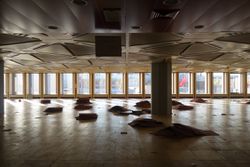
Maarten Gielen presents the work of Rotor, a group of architects, designers and other professionals interested in material flows in industry and construction, particularly in relation to resources, waste, use and reuse. Rotor disseminates creative strategies for salvage and waste reduction through workshops, publications, and exhibitions. Presented in conjunction with(...)
Maarten Gielen presents the work of Rotor, a group of architects, designers and other professionals interested in material flows in industry and construction, particularly in relation to resources, waste, use and reuse. Rotor disseminates creative strategies for salvage and waste reduction through workshops, publications, and exhibitions. Presented in conjunction with(...)
Date:
4 February 2016
4 February 2016
Title:
Rotor Deconstruction
Actions:
Description:
Maarten Gielen presents the work of Rotor, a group of architects, designers and other professionals interested in material flows in industry and construction, particularly in relation to resources, waste, use and reuse. Rotor disseminates creative strategies for salvage and waste reduction through workshops, publications, and exhibitions. Presented in conjunction with(...)
Rotor Deconstruction
Actions:
Description:
Maarten Gielen presents the work of Rotor, a group of architects, designers and other professionals interested in material flows in industry and construction, particularly in relation to resources, waste, use and reuse. Rotor disseminates creative strategies for salvage and waste reduction through workshops, publications, and exhibitions. Presented in conjunction with(...)
Form:
events
events
Date:
4 February 2016
4 February 2016
Form:
exhibitions
exhibitions
Title:
Speed Limits
Speed Limits
Actions:
Description:
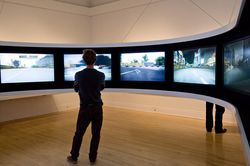
Speed Limits addresses the pivotal role played by speed in modern life: from art to architecture and urbanism to graphics and design to economics to the material culture of the eras of industry and information. It marks the centenary of the foundation of the Italian Futurist movement, whose inaugural manifesto famously proclaimed “that the world’s magnificence has been(...)
Speed Limits addresses the pivotal role played by speed in modern life: from art to architecture and urbanism to graphics and design to economics to the material culture of the eras of industry and information. It marks the centenary of the foundation of the Italian Futurist movement, whose inaugural manifesto famously proclaimed “that the world’s magnificence has been(...)
Location:
Main galleries
Main galleries
Date:
20 May 2009 to 8 November 2009
20 May 2009 to 8 November 2009
Title:
Speed Limits
Actions:
Description:
Speed Limits addresses the pivotal role played by speed in modern life: from art to architecture and urbanism to graphics and design to economics to the material culture of the eras of industry and information. It marks the centenary of the foundation of the Italian Futurist movement, whose inaugural manifesto famously proclaimed “that the world’s magnificence has been(...)
Speed Limits
Actions:
Description:
Speed Limits addresses the pivotal role played by speed in modern life: from art to architecture and urbanism to graphics and design to economics to the material culture of the eras of industry and information. It marks the centenary of the foundation of the Italian Futurist movement, whose inaugural manifesto famously proclaimed “that the world’s magnificence has been(...)
Form:
exhibitions
exhibitions
Date:
20 May 2009 to
8 November 2009
20 May 2009 to
8 November 2009
Location:
Main galleries
Main galleries
Form:
events
events
Title:
Siza Speaks
Siza Speaks
Actions:
Description:
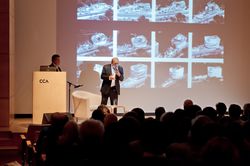
Portuguese architect and Pritzker prize-winner Álvaro Siza presents a rare lecture in North America on the design development of the Iberê Camargo Museum in Porto Alegre, a structure noted for its sculptural volumes and tight integration with a coastal escarpment. He discusses the key role of hand sketches in the design process, from massing studies to fine-tuning(...)
Portuguese architect and Pritzker prize-winner Álvaro Siza presents a rare lecture in North America on the design development of the Iberê Camargo Museum in Porto Alegre, a structure noted for its sculptural volumes and tight integration with a coastal escarpment. He discusses the key role of hand sketches in the design process, from massing studies to fine-tuning(...)
Location:
Paul-Desmarais Theater
Paul-Desmarais Theater
Date:
26 April 2012 , 7pm
26 April 2012 , 7pm
Title:
Siza Speaks
Actions:
Description:
Portuguese architect and Pritzker prize-winner Álvaro Siza presents a rare lecture in North America on the design development of the Iberê Camargo Museum in Porto Alegre, a structure noted for its sculptural volumes and tight integration with a coastal escarpment. He discusses the key role of hand sketches in the design process, from massing studies to fine-tuning(...)
Siza Speaks
Actions:
Description:
Portuguese architect and Pritzker prize-winner Álvaro Siza presents a rare lecture in North America on the design development of the Iberê Camargo Museum in Porto Alegre, a structure noted for its sculptural volumes and tight integration with a coastal escarpment. He discusses the key role of hand sketches in the design process, from massing studies to fine-tuning(...)
Form:
events
events
Date:
26 April 2012
7pm
26 April 2012
7pm
Location:
Paul-Desmarais Theater
Paul-Desmarais Theater
Form:
exhibitions
exhibitions
Actions:
Description:
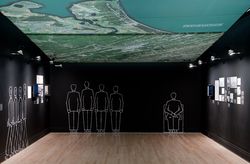
The armies of World War Two represented only the tips of colliding icebergs, the belligerent nations which had mobilized and transformed themselves for a global “war of production” of unprecedented scale. Architecture in Uniform: Designing and Building for the Second World War documents the extensive contribution of architecture to the war between the bombings of Guernica(...)
The armies of World War Two represented only the tips of colliding icebergs, the belligerent nations which had mobilized and transformed themselves for a global “war of production” of unprecedented scale. Architecture in Uniform: Designing and Building for the Second World War documents the extensive contribution of architecture to the war between the bombings of Guernica(...)
Location:
Main galleries
Main galleries
Date:
13 April 2011 to 18 September 2011
13 April 2011 to 18 September 2011
Title:
Architecture in Uniform: Designing and Building for the Second World War
Actions:
Description:
The armies of World War Two represented only the tips of colliding icebergs, the belligerent nations which had mobilized and transformed themselves for a global “war of production” of unprecedented scale. Architecture in Uniform: Designing and Building for the Second World War documents the extensive contribution of architecture to the war between the bombings of Guernica(...)
Architecture in Uniform: Designing and Building for the Second World War
Actions:
Description:
The armies of World War Two represented only the tips of colliding icebergs, the belligerent nations which had mobilized and transformed themselves for a global “war of production” of unprecedented scale. Architecture in Uniform: Designing and Building for the Second World War documents the extensive contribution of architecture to the war between the bombings of Guernica(...)
Form:
exhibitions
exhibitions
Date:
13 April 2011 to
18 September 2011
13 April 2011 to
18 September 2011
Location:
Main galleries
Main galleries
Form:
exhibitions
exhibitions
Actions:
Description:
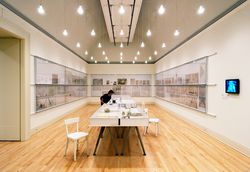
Starting from diverse premises and points of view, Cedric Price, Aldo Rossi, James Stirling, and Gordon Matta-Clark each engaged in a radical rethinking of the status, history, and purpose of architecture. out of the box: price rossi stirling + matta-clark brings the ideas of these four pivotal figures of the 1970s into dialogue through a group of archives that recently(...)
Starting from diverse premises and points of view, Cedric Price, Aldo Rossi, James Stirling, and Gordon Matta-Clark each engaged in a radical rethinking of the status, history, and purpose of architecture. out of the box: price rossi stirling + matta-clark brings the ideas of these four pivotal figures of the 1970s into dialogue through a group of archives that recently(...)
Location:
Main galleries
Main galleries
Date:
23 October 2003 to 6 September 2004
23 October 2003 to 6 September 2004
Title:
out of the box: price rossi stirling + matta-clark
Actions:
Description:
Starting from diverse premises and points of view, Cedric Price, Aldo Rossi, James Stirling, and Gordon Matta-Clark each engaged in a radical rethinking of the status, history, and purpose of architecture. out of the box: price rossi stirling + matta-clark brings the ideas of these four pivotal figures of the 1970s into dialogue through a group of archives that recently(...)
out of the box: price rossi stirling + matta-clark
Actions:
Description:
Starting from diverse premises and points of view, Cedric Price, Aldo Rossi, James Stirling, and Gordon Matta-Clark each engaged in a radical rethinking of the status, history, and purpose of architecture. out of the box: price rossi stirling + matta-clark brings the ideas of these four pivotal figures of the 1970s into dialogue through a group of archives that recently(...)
Form:
exhibitions
exhibitions
Date:
23 October 2003 to
6 September 2004
23 October 2003 to
6 September 2004
Location:
Main galleries
Main galleries


