


6641 Results
Form:
books
books
Actions:
Price:
$25.00
(available to order)
Summary:
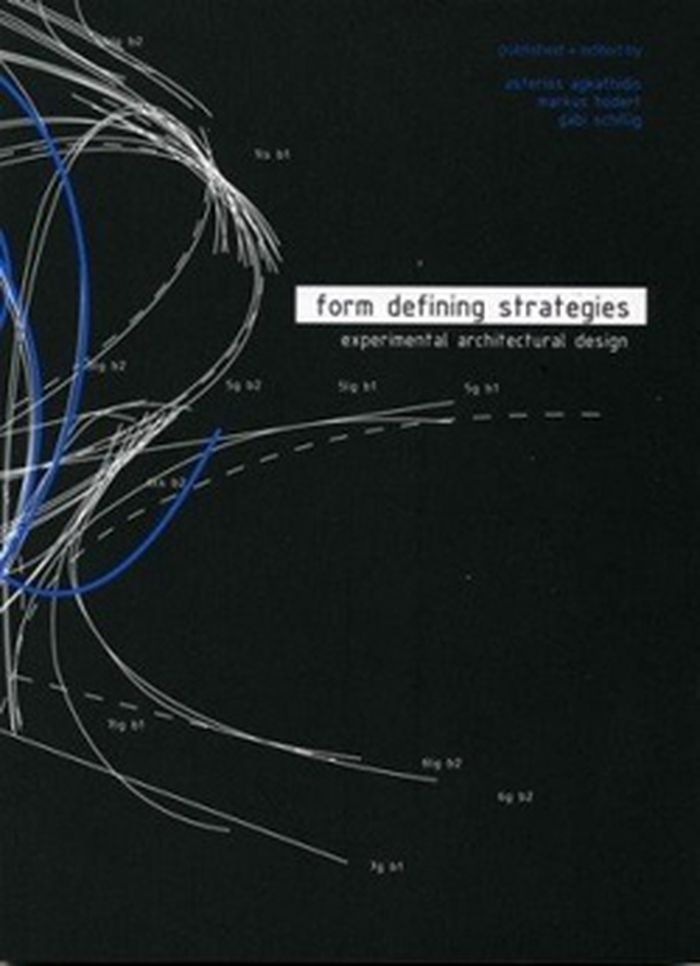
Form Defining Strategies examines experimental design methodologies in architecture and their discussion in academic settings. Theoretical considerations are provided by a wide range of writers and theoreticians alongside numerous examples of conceptual designs. This is the third, revised edition.
$25.00
(available to order)
Summary:
Form Defining Strategies examines experimental design methodologies in architecture and their discussion in academic settings. Theoretical considerations are provided by a wide range of writers and theoreticians alongside numerous examples of conceptual designs. This is the third, revised edition.
Title:
Form defining strategies: experimental architectural design
Actions:
Price:
$25.00
(available to order)
Summary:
Form Defining Strategies examines experimental design methodologies in architecture and their discussion in academic settings. Theoretical considerations are provided by a wide range of writers and theoreticians alongside numerous examples of conceptual designs. This is the third, revised edition.
Form defining strategies: experimental architectural design
Actions:
Price:
$25.00
(available to order)
Summary:
Form Defining Strategies examines experimental design methodologies in architecture and their discussion in academic settings. Theoretical considerations are provided by a wide range of writers and theoreticians alongside numerous examples of conceptual designs. This is the third, revised edition.
Form:
books
books
Publication:
April 2012
April 2012
Subject:
Contemporary Architecture
Contemporary Architecture
Form:
books
books
Actions:
Holdings:
Description:
xxii, 91 pages : illustrations, facsimiles (some color) ; 24 cm.
Description:
xxii, 91 pages : illustrations, facsimiles (some color) ; 24 cm.
Author:
Subject:
Publication:
Montreal : Rare Books and Special Collections Divisions, Blackader-Lauterman Library of Architecture and Art, McGill University Libraries, 2001.
Montreal : Rare Books and Special Collections Divisions, Blackader-Lauterman Library of Architecture and Art, McGill University Libraries, 2001.
Title:
Opere varie : by his own hand : Piranesi's visionary images of ancient and modern Rome and the significance of the McGill copy of the Opere varie / Myra Nan Rosenfeld ; with a summary catalogue of books, etchings and engravings by Giovanni Battista Piranesi, his predecessors, his contemporaries, and his followers.
Actions:
Holdings:
Description:
xxii, 91 pages : illustrations, facsimiles (some color) ; 24 cm.
Opere varie : by his own hand : Piranesi's visionary images of ancient and modern Rome and the significance of the McGill copy of the Opere varie / Myra Nan Rosenfeld ; with a summary catalogue of books, etchings and engravings by Giovanni Battista Piranesi, his predecessors, his contemporaries, and his followers.
Actions:
Holdings:
Description:
xxii, 91 pages : illustrations, facsimiles (some color) ; 24 cm.
Form:
books
books
Publication:
Montreal : Rare Books and Special Collections Divisions, Blackader-Lauterman Library of Architecture and Art, McGill University Libraries, 2001.
Montreal : Rare Books and Special Collections Divisions, Blackader-Lauterman Library of Architecture and Art, McGill University Libraries, 2001.
Author:
Subject:
Form:
books
books
Price:
$54.95
(available in store)
Summary:
The catalogue for an exhibition at MAXXI curated by Pippo Ciorra and Jean-Louis Cohen, this book is an homage to Bruno Zevi, the notable architect, historian, lecturer, critic, politician, and designer. Moreover, it is a reflection on the contemporary Italian architectures that Zevi supported and promoted during his 50-year career through his extensive writing and(...)
$54.95
(available in store)
Summary:
The catalogue for an exhibition at MAXXI curated by Pippo Ciorra and Jean-Louis Cohen, this book is an homage to Bruno Zevi, the notable architect, historian, lecturer, critic, politician, and designer. Moreover, it is a reflection on the contemporary Italian architectures that Zevi supported and promoted during his 50-year career through his extensive writing and(...)
Title:
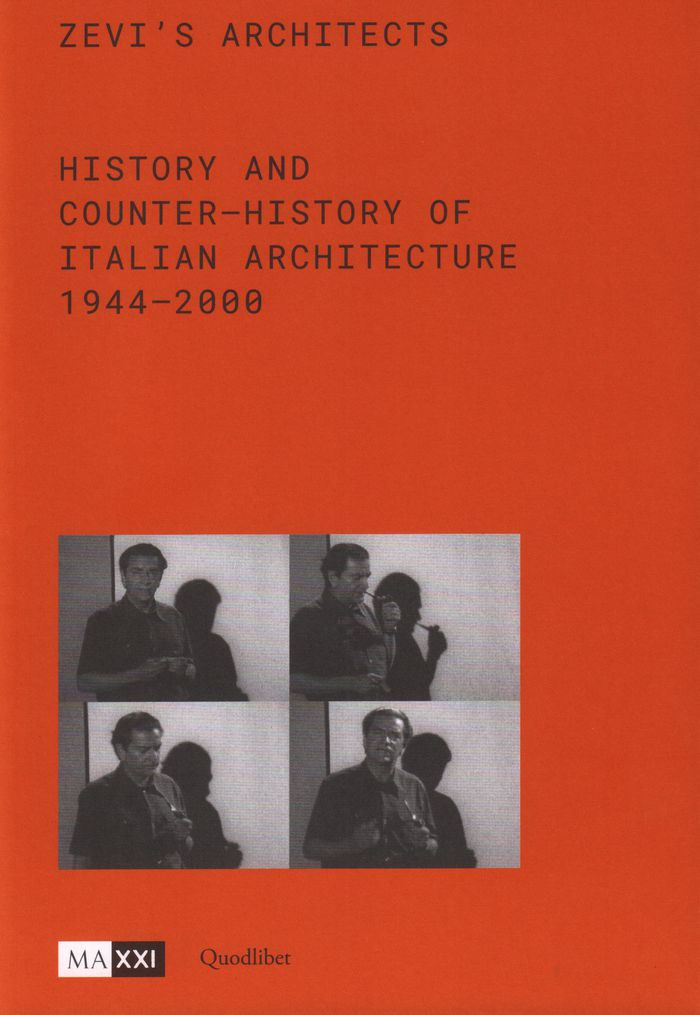
Zevi's architects: history and counter-history of Italian architecture
Actions:
Price:
$54.95
(available in store)
Summary:
The catalogue for an exhibition at MAXXI curated by Pippo Ciorra and Jean-Louis Cohen, this book is an homage to Bruno Zevi, the notable architect, historian, lecturer, critic, politician, and designer. Moreover, it is a reflection on the contemporary Italian architectures that Zevi supported and promoted during his 50-year career through his extensive writing and criticism. Featuring 35 architects, the book’s drawings, models, and other visual materials clarify the key role Zevi played in the post-war architectural debate in Italy, highlighting the importance of the relationship between architecture and politics and his social passion and presence in the nation’s civic history.
Zevi's architects: history and counter-history of Italian architecture
Actions:
Price:
$54.95
(available in store)
Summary:
The catalogue for an exhibition at MAXXI curated by Pippo Ciorra and Jean-Louis Cohen, this book is an homage to Bruno Zevi, the notable architect, historian, lecturer, critic, politician, and designer. Moreover, it is a reflection on the contemporary Italian architectures that Zevi supported and promoted during his 50-year career through his extensive writing and criticism. Featuring 35 architects, the book’s drawings, models, and other visual materials clarify the key role Zevi played in the post-war architectural debate in Italy, highlighting the importance of the relationship between architecture and politics and his social passion and presence in the nation’s civic history.
Form:
books
books
Publication:
May 2018
May 2018
Subject:
Architectural Theory
Architectural Theory
Form:
books
books
Title:
AA book project review 2017
AA book project review 2017
Actions:
Price:
$45.95
(available to order)
Summary:
"Projects review" offers an overview of the AA’s 2016/17 academic year. Accompanying the school’s end-of-year show, the book features hundreds of drawings, models, installations, photographs and other materials documenting the world’s most international and experimental school of architecture.
$45.95
(available to order)
Summary:
"Projects review" offers an overview of the AA’s 2016/17 academic year. Accompanying the school’s end-of-year show, the book features hundreds of drawings, models, installations, photographs and other materials documenting the world’s most international and experimental school of architecture.
Title:
AA book project review 2017
Actions:
Price:
$45.95
(available to order)
Summary:
"Projects review" offers an overview of the AA’s 2016/17 academic year. Accompanying the school’s end-of-year show, the book features hundreds of drawings, models, installations, photographs and other materials documenting the world’s most international and experimental school of architecture.
AA book project review 2017
Actions:
Price:
$45.95
(available to order)
Summary:
"Projects review" offers an overview of the AA’s 2016/17 academic year. Accompanying the school’s end-of-year show, the book features hundreds of drawings, models, installations, photographs and other materials documenting the world’s most international and experimental school of architecture.
Form:
books
books
Publication:
August 2017
August 2017
Subject:
Contemporary Architecture
Contemporary Architecture
Form:
books
books
Actions:
Price:
$54.95
(available to order)
Summary:
Projects Review offers an overview of the AA’s 2015/16 academic year. Accompanying the school’s end-of-year show, the book features hundreds of drawings, models, installations, photographs and other materials documenting the world’s most international and experimental school of architecture.
$54.95
(available to order)
Summary:
Projects Review offers an overview of the AA’s 2015/16 academic year. Accompanying the school’s end-of-year show, the book features hundreds of drawings, models, installations, photographs and other materials documenting the world’s most international and experimental school of architecture.
Title:
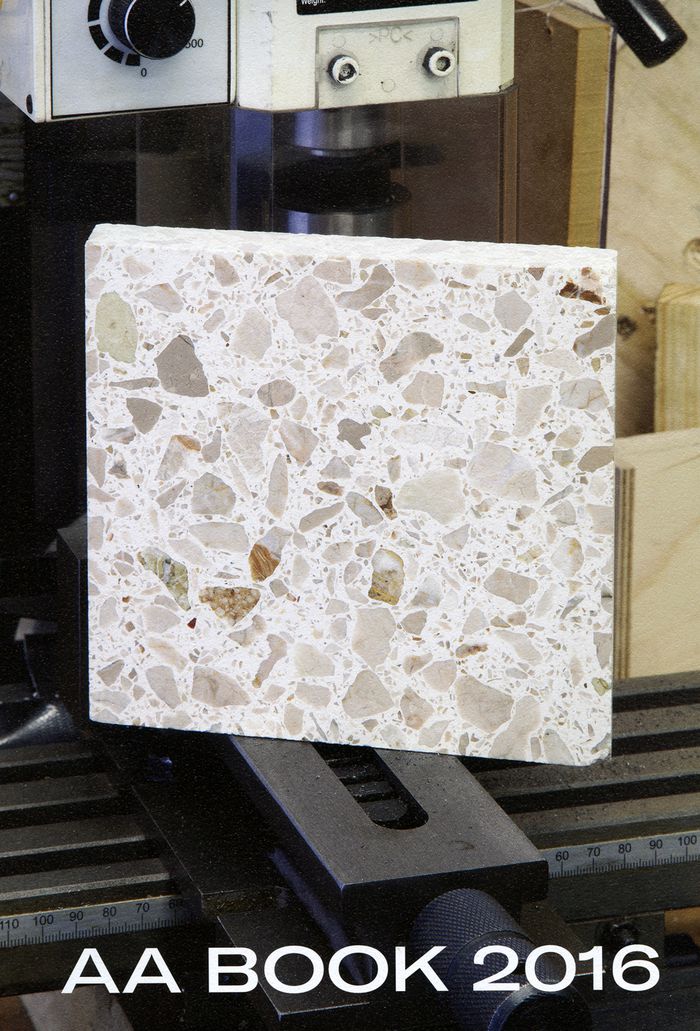
AA book : project review 2016
Actions:
Price:
$54.95
(available to order)
Summary:
Projects Review offers an overview of the AA’s 2015/16 academic year. Accompanying the school’s end-of-year show, the book features hundreds of drawings, models, installations, photographs and other materials documenting the world’s most international and experimental school of architecture.
AA book : project review 2016
Actions:
Price:
$54.95
(available to order)
Summary:
Projects Review offers an overview of the AA’s 2015/16 academic year. Accompanying the school’s end-of-year show, the book features hundreds of drawings, models, installations, photographs and other materials documenting the world’s most international and experimental school of architecture.
Form:
books
books
Publication:
September 2016
September 2016
Subject:
Contemporary Architecture
Contemporary Architecture
Form:
books
books
Actions:
Price:
$45.95
(available to order)
Summary:
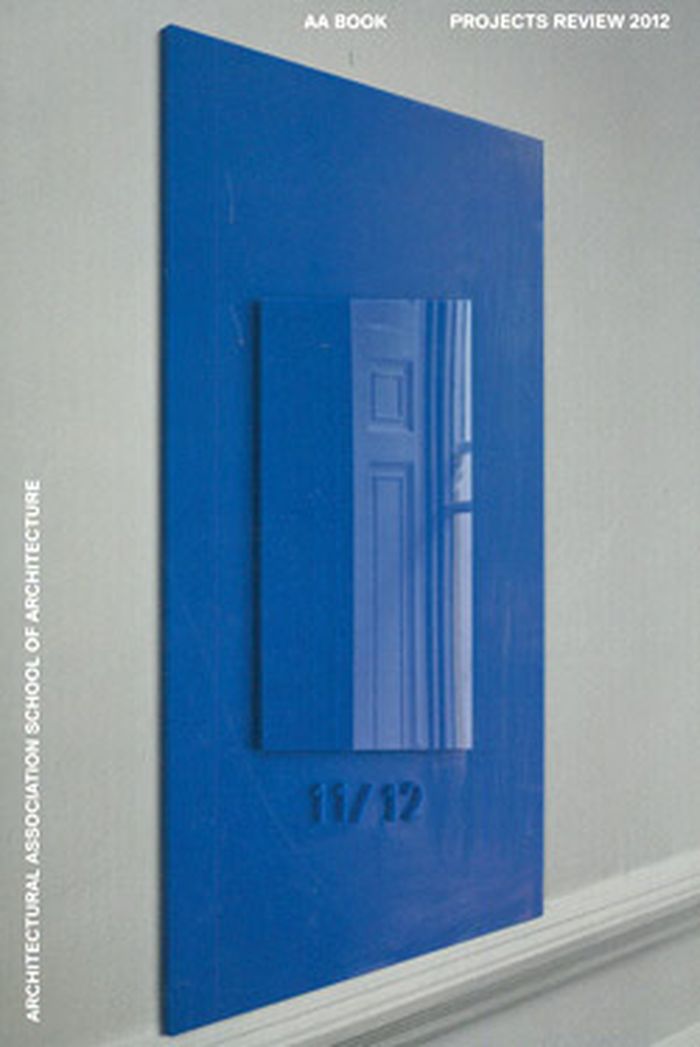
Projects Review offers an overview of the AA’s 2011/12 academic year. Accompanying the school’s end-of-year show, the book features hundreds of drawings, models, installations, photographs and other materials documenting the world’s most international and experimental school of architecture
$45.95
(available to order)
Summary:
Projects Review offers an overview of the AA’s 2011/12 academic year. Accompanying the school’s end-of-year show, the book features hundreds of drawings, models, installations, photographs and other materials documenting the world’s most international and experimental school of architecture
Title:
AA book : projects review 2012
Actions:
Price:
$45.95
(available to order)
Summary:
Projects Review offers an overview of the AA’s 2011/12 academic year. Accompanying the school’s end-of-year show, the book features hundreds of drawings, models, installations, photographs and other materials documenting the world’s most international and experimental school of architecture
AA book : projects review 2012
Actions:
Price:
$45.95
(available to order)
Summary:
Projects Review offers an overview of the AA’s 2011/12 academic year. Accompanying the school’s end-of-year show, the book features hundreds of drawings, models, installations, photographs and other materials documenting the world’s most international and experimental school of architecture
Form:
books
books
Publication:
July 2012
July 2012
Subject:
Contemporary Architecture
Contemporary Architecture
Form:
books
books
Title:
AA book 2013 : projects
AA book 2013 : projects
Actions:
Price:
$54.00
(available to order)
Summary:
Projects Review offers an overview of the AA's 2012/13 academic year. Accompanying the school’s end-of-year show, it features hundreds of drawings, models, installations, photographs and other materials documenting the world’s most international and experimental school of architecture.
$54.00
(available to order)
Summary:
Projects Review offers an overview of the AA's 2012/13 academic year. Accompanying the school’s end-of-year show, it features hundreds of drawings, models, installations, photographs and other materials documenting the world’s most international and experimental school of architecture.
Title:
AA book 2013 : projects
Actions:
Price:
$54.00
(available to order)
Summary:
Projects Review offers an overview of the AA's 2012/13 academic year. Accompanying the school’s end-of-year show, it features hundreds of drawings, models, installations, photographs and other materials documenting the world’s most international and experimental school of architecture.
AA book 2013 : projects
Actions:
Price:
$54.00
(available to order)
Summary:
Projects Review offers an overview of the AA's 2012/13 academic year. Accompanying the school’s end-of-year show, it features hundreds of drawings, models, installations, photographs and other materials documenting the world’s most international and experimental school of architecture.
Form:
books
books
Publication:
July 2013
July 2013
Subject:
Contemporary Architecture
Contemporary Architecture
Form:
books
books
Actions:
Price:
$55.00
(available to order)
Summary:
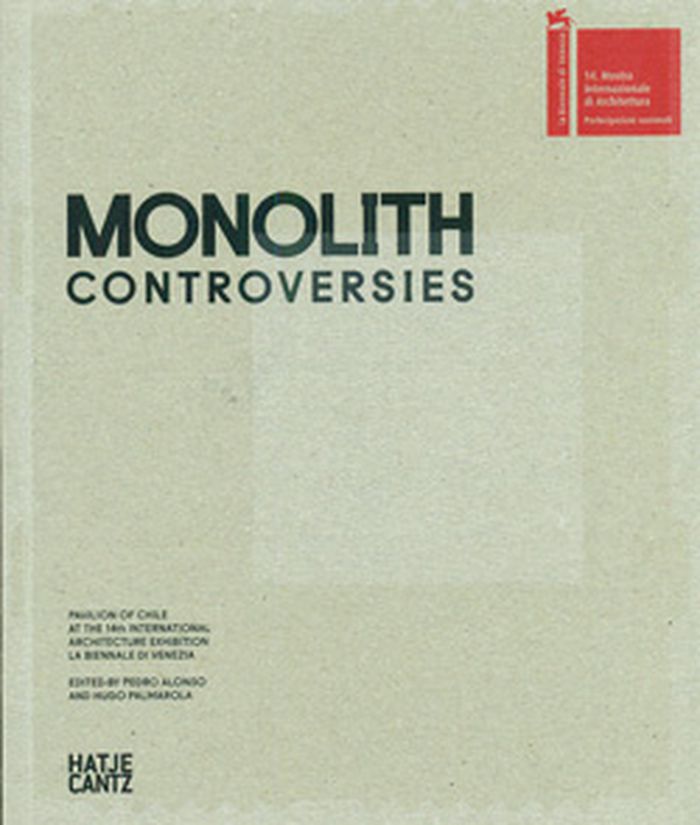
This publication accompanying the Chilean contribution to the Venice Biennale 2014 documents a milestone of modern architecture: an original concrete panel produced for prefab housing, donated to Chile in 1971 by the Soviet Union, and later the subject of much controversy.
$55.00
(available to order)
Summary:
This publication accompanying the Chilean contribution to the Venice Biennale 2014 documents a milestone of modern architecture: an original concrete panel produced for prefab housing, donated to Chile in 1971 by the Soviet Union, and later the subject of much controversy.
Title:
Monolith controversies: Chile National Pavilion, Biennale Architettura 2014
Actions:
Price:
$55.00
(available to order)
Summary:
This publication accompanying the Chilean contribution to the Venice Biennale 2014 documents a milestone of modern architecture: an original concrete panel produced for prefab housing, donated to Chile in 1971 by the Soviet Union, and later the subject of much controversy.
Monolith controversies: Chile National Pavilion, Biennale Architettura 2014
Actions:
Price:
$55.00
(available to order)
Summary:
This publication accompanying the Chilean contribution to the Venice Biennale 2014 documents a milestone of modern architecture: an original concrete panel produced for prefab housing, donated to Chile in 1971 by the Soviet Union, and later the subject of much controversy.
Form:
books
books
Publication:
August 2014
August 2014
Subject:
Contemporary Architecture
Contemporary Architecture
Form:
books
books
Actions:
Price:
$17.95
(available to order)
Summary:
A surprising trend can be discerned in museum building since the end of the 1990s, one that still seems to be going strong today : an unprecedented number of grand-scale projects have been undertaken in recent years, not only by private sponsors, but in many cases made possible instead by public funding. This book not only shows new museums , galleries and exhibition(...)
$17.95
(available to order)
Summary:
A surprising trend can be discerned in museum building since the end of the 1990s, one that still seems to be going strong today : an unprecedented number of grand-scale projects have been undertaken in recent years, not only by private sponsors, but in many cases made possible instead by public funding. This book not only shows new museums , galleries and exhibition(...)
Title:
Art spaces ; architecture & design
Actions:
Price:
$17.95
(available to order)
Summary:
A surprising trend can be discerned in museum building since the end of the 1990s, one that still seems to be going strong today : an unprecedented number of grand-scale projects have been undertaken in recent years, not only by private sponsors, but in many cases made possible instead by public funding. This book not only shows new museums , galleries and exhibition venues for the fine arts, but also features unusual buildings housing special collections, as well as museums exhibting material from other fields of knowledge. One central focus of contemporary architecture can be traced particulary well in the examples illustrated in the book : new surfaces that enable the creation of new forms. Astoundingly, parallel to this development another architectural approach which can be already be called classical is also experiencing a Renaissance - the clearly defined, austere cube cloaked in a free-floating glass shell. No less than three buildings depicted here demonstrate the immense variety that is possible within these rigid parameters. The works shown here are no more than five years old and show, what a broad bandwidth can be discerned within a moment's snapshot. There are visionaries like Asymptote and masters such as Günter Behnisch and Tadao Ando, whose buildings span an arc from classical modernism to the architecture of today.
Art spaces ; architecture & design
Actions:
Price:
$17.95
(available to order)
Summary:
A surprising trend can be discerned in museum building since the end of the 1990s, one that still seems to be going strong today : an unprecedented number of grand-scale projects have been undertaken in recent years, not only by private sponsors, but in many cases made possible instead by public funding. This book not only shows new museums , galleries and exhibition venues for the fine arts, but also features unusual buildings housing special collections, as well as museums exhibting material from other fields of knowledge. One central focus of contemporary architecture can be traced particulary well in the examples illustrated in the book : new surfaces that enable the creation of new forms. Astoundingly, parallel to this development another architectural approach which can be already be called classical is also experiencing a Renaissance - the clearly defined, austere cube cloaked in a free-floating glass shell. No less than three buildings depicted here demonstrate the immense variety that is possible within these rigid parameters. The works shown here are no more than five years old and show, what a broad bandwidth can be discerned within a moment's snapshot. There are visionaries like Asymptote and masters such as Günter Behnisch and Tadao Ando, whose buildings span an arc from classical modernism to the architecture of today.
Form:
books
books
Publication:
May 2006, Köln, New York, London
May 2006, Köln, New York, London
Subject:
sale books
sale books
Form:
books
books
Actions:
Holdings:
Description:
vi, 259 pages : illustrations ; 24 cm
Description:
vi, 259 pages : illustrations ; 24 cm
Author:
Subject:
Publication:
Edinburgh : Edinburgh University Press, [2016], ©2016
Edinburgh : Edinburgh University Press, [2016], ©2016
Title:
Deleuze and the city / edited by Hélène Frichot, Catharina Gabrielsson and Jonathan Metzger.
Actions:
Holdings:
Description:
vi, 259 pages : illustrations ; 24 cm
Deleuze and the city / edited by Hélène Frichot, Catharina Gabrielsson and Jonathan Metzger.
Actions:
Holdings:
Description:
vi, 259 pages : illustrations ; 24 cm
Form:
books
books
Publication:
Edinburgh : Edinburgh University Press, [2016], ©2016
Edinburgh : Edinburgh University Press, [2016], ©2016
Author:
Subject:


