


10583 Results
Form:
books
books

Title:
Présences de l'histoire
Présences de l'histoire
Actions:
Price:
$44.95
(available to order)
Summary:
L'échange de Peter Zumthor avec l'historienne de l'architecture norvégienne Mari Lending explore par touches impressionnistes la façon dont l'histoire, le temps, la mémoire et les temporalités se reflètent dans l'oeuvre de Peter Zumthor : une vue surprenante et révélatrice sur un architecte important de notre époque.
$44.95
(available to order)
Summary:
L'échange de Peter Zumthor avec l'historienne de l'architecture norvégienne Mari Lending explore par touches impressionnistes la façon dont l'histoire, le temps, la mémoire et les temporalités se reflètent dans l'oeuvre de Peter Zumthor : une vue surprenante et révélatrice sur un architecte important de notre époque.
Title:
Présences de l'histoire
Actions:
Price:
$44.95
(available to order)
Summary:
L'échange de Peter Zumthor avec l'historienne de l'architecture norvégienne Mari Lending explore par touches impressionnistes la façon dont l'histoire, le temps, la mémoire et les temporalités se reflètent dans l'oeuvre de Peter Zumthor : une vue surprenante et révélatrice sur un architecte important de notre époque.
Présences de l'histoire
Actions:
Price:
$44.95
(available to order)
Summary:
L'échange de Peter Zumthor avec l'historienne de l'architecture norvégienne Mari Lending explore par touches impressionnistes la façon dont l'histoire, le temps, la mémoire et les temporalités se reflètent dans l'oeuvre de Peter Zumthor : une vue surprenante et révélatrice sur un architecte important de notre époque.
Form:
books
books
Publication:
July 2018
July 2018
Subject:
Architectural Theory
Architectural Theory
Form:
books
books
Actions:
Price:
$44.00
(available to order)
Summary:
Monuments represent power: explicitly and simply, but not universally. In Estonia, the classical notion of a monument is a strange one. Its presence is marginal, its tradition non-existent and its form tormented by an apparent cultural displacement. The statue on a square never claimed the central position so common in Western Europe. This semantic void directs attention(...)
$44.00
(available to order)
Summary:
Monuments represent power: explicitly and simply, but not universally. In Estonia, the classical notion of a monument is a strange one. Its presence is marginal, its tradition non-existent and its form tormented by an apparent cultural displacement. The statue on a square never claimed the central position so common in Western Europe. This semantic void directs attention(...)
Title:
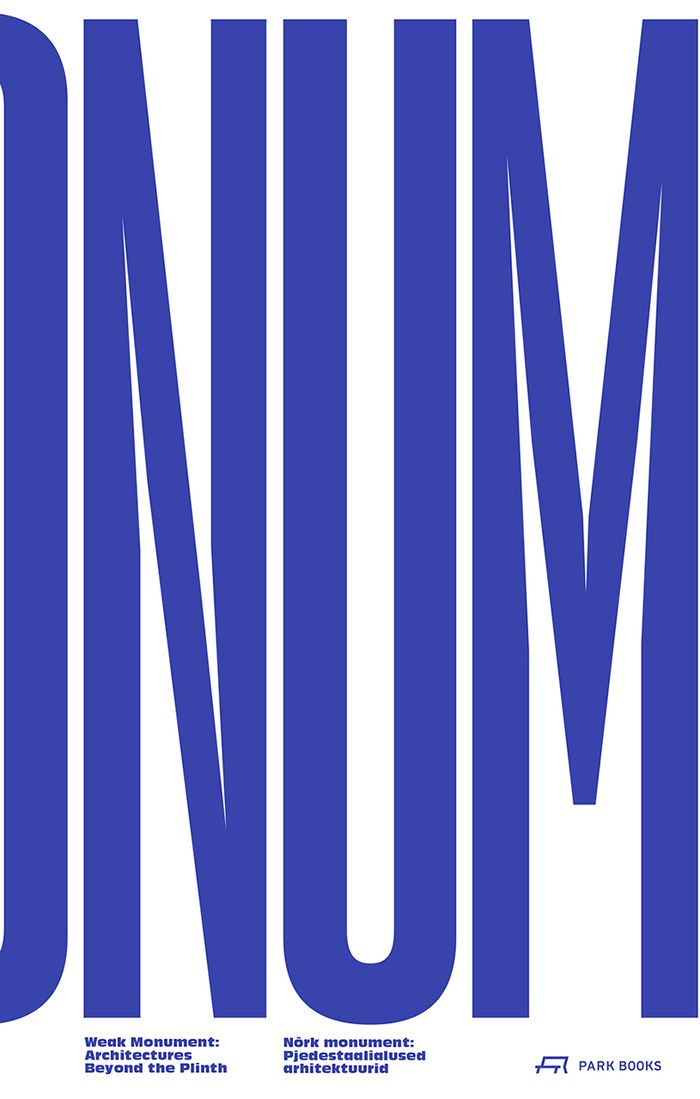
Weak monument: architectures beyond the plinth
Actions:
Price:
$44.00
(available to order)
Summary:
Monuments represent power: explicitly and simply, but not universally. In Estonia, the classical notion of a monument is a strange one. Its presence is marginal, its tradition non-existent and its form tormented by an apparent cultural displacement. The statue on a square never claimed the central position so common in Western Europe. This semantic void directs attention to other, less exceptional pieces of architecture. Sometimes a stairway marks a politically charged location, or a pavement becomes symbolic. Instead of explicit meanings inscribed in marble and bronze, an implicit charge is revealed that might be weaker yet more relevant, for what is only implicit cannot be openly questioned. Weak Monument explores the blurred line between a monument's explicitly political form and the architecture of everyday. It juxtaposes classical monuments with seemingly insignificant architectural objects and public space in a collection of images and drawings, archival as well as newly commissioned ones, alongside essays and brief texts
Weak monument: architectures beyond the plinth
Actions:
Price:
$44.00
(available to order)
Summary:
Monuments represent power: explicitly and simply, but not universally. In Estonia, the classical notion of a monument is a strange one. Its presence is marginal, its tradition non-existent and its form tormented by an apparent cultural displacement. The statue on a square never claimed the central position so common in Western Europe. This semantic void directs attention to other, less exceptional pieces of architecture. Sometimes a stairway marks a politically charged location, or a pavement becomes symbolic. Instead of explicit meanings inscribed in marble and bronze, an implicit charge is revealed that might be weaker yet more relevant, for what is only implicit cannot be openly questioned. Weak Monument explores the blurred line between a monument's explicitly political form and the architecture of everyday. It juxtaposes classical monuments with seemingly insignificant architectural objects and public space in a collection of images and drawings, archival as well as newly commissioned ones, alongside essays and brief texts
Form:
books
books
Publication:
July 2018
July 2018
Subject:
Architectural Theory
Architectural Theory
Form:
books
books

Price:
$60.00
(available in store)
Summary:
Peggy Guggenheim (1898–1979) and Nelly van Doesburg (1899–1975) were vital participants in the De Stijl movement, promoting, exhibiting and buying De Stijl at a time when few had interest in the geometric language of forms being developed by Theo van Doesburg, Piet Mondrian and others in the Netherlands. Guggenheim and van Doesburg’s efforts helped ensure that De Stijl(...)
$60.00
(available in store)
Summary:
Peggy Guggenheim (1898–1979) and Nelly van Doesburg (1899–1975) were vital participants in the De Stijl movement, promoting, exhibiting and buying De Stijl at a time when few had interest in the geometric language of forms being developed by Theo van Doesburg, Piet Mondrian and others in the Netherlands. Guggenheim and van Doesburg’s efforts helped ensure that De Stijl(...)
Title:
Peggy Guggenheim and Nelly van Doesburg: advocates of De Stijl
Actions:
Price:
$60.00
(available in store)
Summary:
Peggy Guggenheim (1898–1979) and Nelly van Doesburg (1899–1975) were vital participants in the De Stijl movement, promoting, exhibiting and buying De Stijl at a time when few had interest in the geometric language of forms being developed by Theo van Doesburg, Piet Mondrian and others in the Netherlands. Guggenheim and van Doesburg’s efforts helped ensure that De Stijl came to be recognized internationally as one of the most important art movements of the 20th century.
Peggy Guggenheim and Nelly van Doesburg: advocates of De Stijl
Actions:
Price:
$60.00
(available in store)
Summary:
Peggy Guggenheim (1898–1979) and Nelly van Doesburg (1899–1975) were vital participants in the De Stijl movement, promoting, exhibiting and buying De Stijl at a time when few had interest in the geometric language of forms being developed by Theo van Doesburg, Piet Mondrian and others in the Netherlands. Guggenheim and van Doesburg’s efforts helped ensure that De Stijl came to be recognized internationally as one of the most important art movements of the 20th century.
Form:
books
books
Publication:
February 2018
February 2018
Subject:
Art Theory
Art Theory
Form:
books
books
Actions:
Price:
$34.50
(available to order)
Summary:
"Being Public" is an anthology of essays investigating, from different perspectives, the notion of "public". "Public" is one of the most issued categories in current debates on culture, yet the notion itself remains largely un-reflected. The meaning of both "art publics" and "public space" have become complex in a time where boundaries between public and private are(...)
$34.50
(available to order)
Summary:
"Being Public" is an anthology of essays investigating, from different perspectives, the notion of "public". "Public" is one of the most issued categories in current debates on culture, yet the notion itself remains largely un-reflected. The meaning of both "art publics" and "public space" have become complex in a time where boundaries between public and private are(...)
Title:
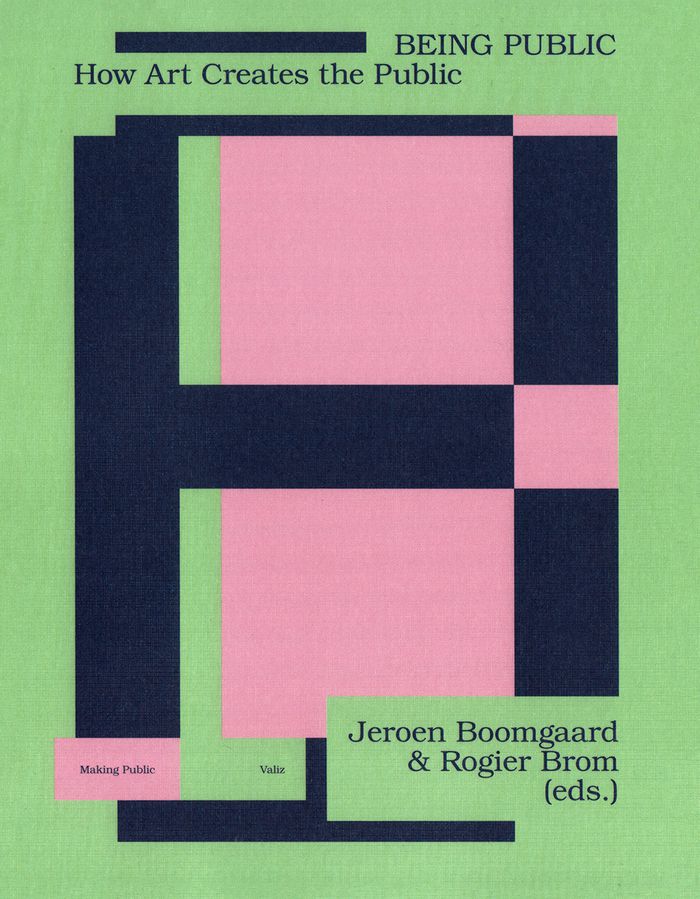
Being public: how art creates the public
Actions:
Price:
$34.50
(available to order)
Summary:
"Being Public" is an anthology of essays investigating, from different perspectives, the notion of "public". "Public" is one of the most issued categories in current debates on culture, yet the notion itself remains largely un-reflected. The meaning of both "art publics" and "public space" have become complex in a time where boundaries between public and private are shifting, and where "the public" actually comprises different groups of changing composition and identity. What does it mean to be public today? And what is the role of art in constituting both "public space" as well as "a public"? Taking these questions as a starting point, the book aims to create a better understanding of the relationships between art and the notion of the public.
Being public: how art creates the public
Actions:
Price:
$34.50
(available to order)
Summary:
"Being Public" is an anthology of essays investigating, from different perspectives, the notion of "public". "Public" is one of the most issued categories in current debates on culture, yet the notion itself remains largely un-reflected. The meaning of both "art publics" and "public space" have become complex in a time where boundaries between public and private are shifting, and where "the public" actually comprises different groups of changing composition and identity. What does it mean to be public today? And what is the role of art in constituting both "public space" as well as "a public"? Taking these questions as a starting point, the book aims to create a better understanding of the relationships between art and the notion of the public.
Form:
books
books
Publication:
August 2017
August 2017
Subject:
Art Theory
Art Theory
Form:
books
books
Actions:
Price:
$14.95
(available to order)
Summary:
Comme toutes les espèces vivantes, toutes les cultures humaines ont eu leur propre monde. La modernité occidentale, à partir du XVIIe siècle, est le seul paradigme qui ait privé le sujet humain de cosmicité, en reléguant « le monde » à l’état d’objet. Au siècle dernier, cela aboutit à ce que l’architecte Rem Koolhaas a nommé junkspace, l'« espace foutoir ». Par-delà la(...)
$14.95
(available to order)
Summary:
Comme toutes les espèces vivantes, toutes les cultures humaines ont eu leur propre monde. La modernité occidentale, à partir du XVIIe siècle, est le seul paradigme qui ait privé le sujet humain de cosmicité, en reléguant « le monde » à l’état d’objet. Au siècle dernier, cela aboutit à ce que l’architecte Rem Koolhaas a nommé junkspace, l'« espace foutoir ». Par-delà la(...)
Title:
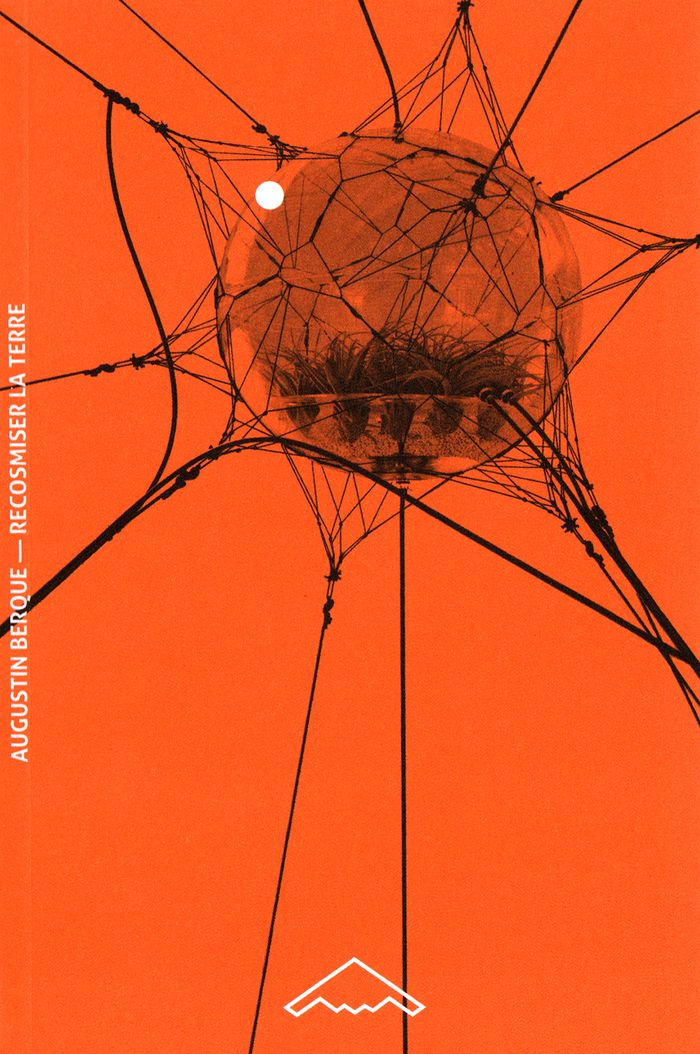
Recosmiser la Terre : quelques leçons péruviennes
Actions:
Price:
$14.95
(available to order)
Summary:
Comme toutes les espèces vivantes, toutes les cultures humaines ont eu leur propre monde. La modernité occidentale, à partir du XVIIe siècle, est le seul paradigme qui ait privé le sujet humain de cosmicité, en reléguant « le monde » à l’état d’objet. Au siècle dernier, cela aboutit à ce que l’architecte Rem Koolhaas a nommé junkspace, l'« espace foutoir ». Par-delà la détérioration de l'environnement, cette acosmie globalisée atteint aujourd'hui au cosmocide. Au Pérou, comme dans tous les pays colonisés ou en développement, ne faut-il pas alors s’inspirer de la cosmicité des communautés autochtones ? Mais peut-on faire face aux réalités contemporaines et à venir ? Et créativement « recosmiser » l'existence humaine sur la Terre ?
Recosmiser la Terre : quelques leçons péruviennes
Actions:
Price:
$14.95
(available to order)
Summary:
Comme toutes les espèces vivantes, toutes les cultures humaines ont eu leur propre monde. La modernité occidentale, à partir du XVIIe siècle, est le seul paradigme qui ait privé le sujet humain de cosmicité, en reléguant « le monde » à l’état d’objet. Au siècle dernier, cela aboutit à ce que l’architecte Rem Koolhaas a nommé junkspace, l'« espace foutoir ». Par-delà la détérioration de l'environnement, cette acosmie globalisée atteint aujourd'hui au cosmocide. Au Pérou, comme dans tous les pays colonisés ou en développement, ne faut-il pas alors s’inspirer de la cosmicité des communautés autochtones ? Mais peut-on faire face aux réalités contemporaines et à venir ? Et créativement « recosmiser » l'existence humaine sur la Terre ?
Form:
books
books
Publication:
February 2018
February 2018
Subject:
Architectural Theory
Architectural Theory
Form:
books
books
Actions:
Price:
$15.95
(available to order)
Summary:
A partir de l'exemple d'une commune de l'est de l'Ile-de-France, l'auteur étudie la façon dont la transformation de la région impacte les habitants et les politiques de la ville. Il s'intéresse notamment à l'explosion du nombre de constructions, à la politique urbaine, à la hausse du prix de l'immobilier ou encore aux retombées économiques réelles de ces mutations.
$15.95
(available to order)
Summary:
A partir de l'exemple d'une commune de l'est de l'Ile-de-France, l'auteur étudie la façon dont la transformation de la région impacte les habitants et les politiques de la ville. Il s'intéresse notamment à l'explosion du nombre de constructions, à la politique urbaine, à la hausse du prix de l'immobilier ou encore aux retombées économiques réelles de ces mutations.
Title:
L'urbanisme 1.0 : enquête sur une commune du Grand Paris
Actions:
Price:
$15.95
(available to order)
Summary:
A partir de l'exemple d'une commune de l'est de l'Ile-de-France, l'auteur étudie la façon dont la transformation de la région impacte les habitants et les politiques de la ville. Il s'intéresse notamment à l'explosion du nombre de constructions, à la politique urbaine, à la hausse du prix de l'immobilier ou encore aux retombées économiques réelles de ces mutations.
L'urbanisme 1.0 : enquête sur une commune du Grand Paris
Actions:
Price:
$15.95
(available to order)
Summary:
A partir de l'exemple d'une commune de l'est de l'Ile-de-France, l'auteur étudie la façon dont la transformation de la région impacte les habitants et les politiques de la ville. Il s'intéresse notamment à l'explosion du nombre de constructions, à la politique urbaine, à la hausse du prix de l'immobilier ou encore aux retombées économiques réelles de ces mutations.
Form:
books
books
Publication:
May 2018
May 2018
Subject:
Urban Theory
Urban Theory
Form:
books
books
Actions:
Price:
$79.00
(available to order)
Summary:
In this engaging new book, design theorist Louise Schouwenberg (born 1954) and designer Hella Jongerius (born 1963) examine the meaning and agency of objects, exploring how things act as mediators between people and the world both in everyday life and in the context of the museum. As technology continues to change these relationships, Schouwenberg and Jongerius(...)
$79.00
(available to order)
Summary:
In this engaging new book, design theorist Louise Schouwenberg (born 1954) and designer Hella Jongerius (born 1963) examine the meaning and agency of objects, exploring how things act as mediators between people and the world both in everyday life and in the context of the museum. As technology continues to change these relationships, Schouwenberg and Jongerius(...)
Title:
Beyond the new on the agency of things
Actions:
Price:
$79.00
(available to order)
Summary:
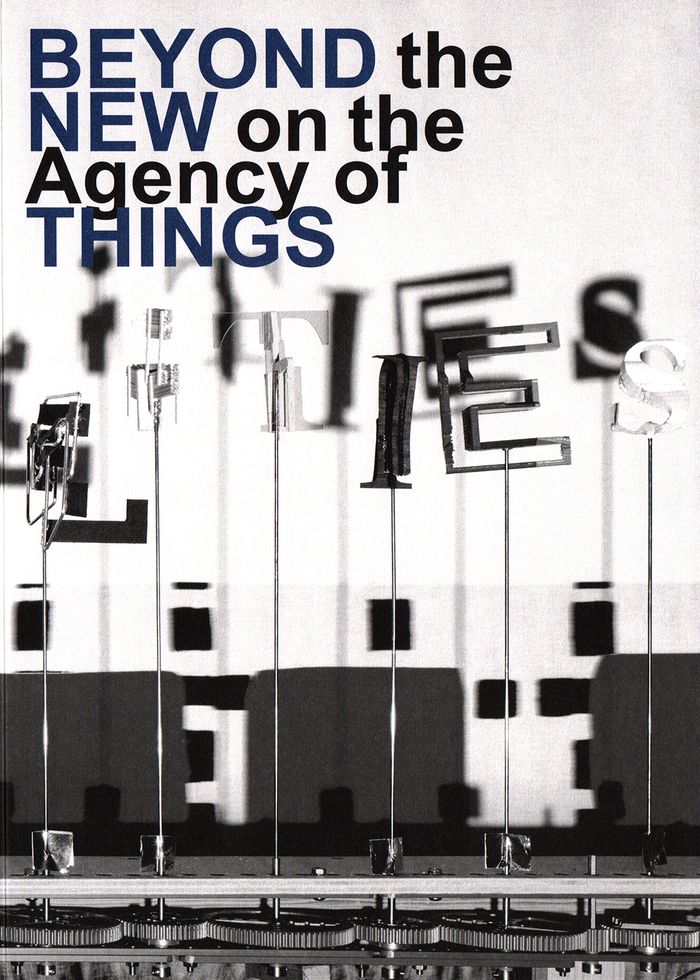
In this engaging new book, design theorist Louise Schouwenberg (born 1954) and designer Hella Jongerius (born 1963) examine the meaning and agency of objects, exploring how things act as mediators between people and the world both in everyday life and in the context of the museum. As technology continues to change these relationships, Schouwenberg and Jongerius thoughtfully consider the agency of our objects. Questioning the market's obsession with novelty in design, the authors try to develop criteria for recognizing true cultural innovation. What distinguishes novelty for the sake of novelty from something truly new? Designed by the legendary Irma Boom, the book itself is a love letter to creative design.
Beyond the new on the agency of things
Actions:
Price:
$79.00
(available to order)
Summary:
In this engaging new book, design theorist Louise Schouwenberg (born 1954) and designer Hella Jongerius (born 1963) examine the meaning and agency of objects, exploring how things act as mediators between people and the world both in everyday life and in the context of the museum. As technology continues to change these relationships, Schouwenberg and Jongerius thoughtfully consider the agency of our objects. Questioning the market's obsession with novelty in design, the authors try to develop criteria for recognizing true cultural innovation. What distinguishes novelty for the sake of novelty from something truly new? Designed by the legendary Irma Boom, the book itself is a love letter to creative design.
Form:
books
books
Publication:
June 2018
June 2018
Subject:
Design Theory
Design Theory
Form:
books
books
Price:
$60.00
(available to order)
Summary:
This publication is the result of a year-long dialogue between British architect David Chipperfield (born 1953) and Swiss architect Simon Kretz (born 1982). The two began working together through the Rolex Mentor and Protégé Arts Initiative, in which Chipperfield mentored the younger architect for a year. This publication focuses on a single aspect of their(...)
$60.00
(available to order)
Summary:
This publication is the result of a year-long dialogue between British architect David Chipperfield (born 1953) and Swiss architect Simon Kretz (born 1982). The two began working together through the Rolex Mentor and Protégé Arts Initiative, in which Chipperfield mentored the younger architect for a year. This publication focuses on a single aspect of their(...)
Subject:
Urban Theory
Urban Theory
Publication:
June 2018
June 2018
Title:
David Chipperfield & Simon Kretz: On planning, A thought experiment
Actions:
Price:
$60.00
(available to order)
Summary:
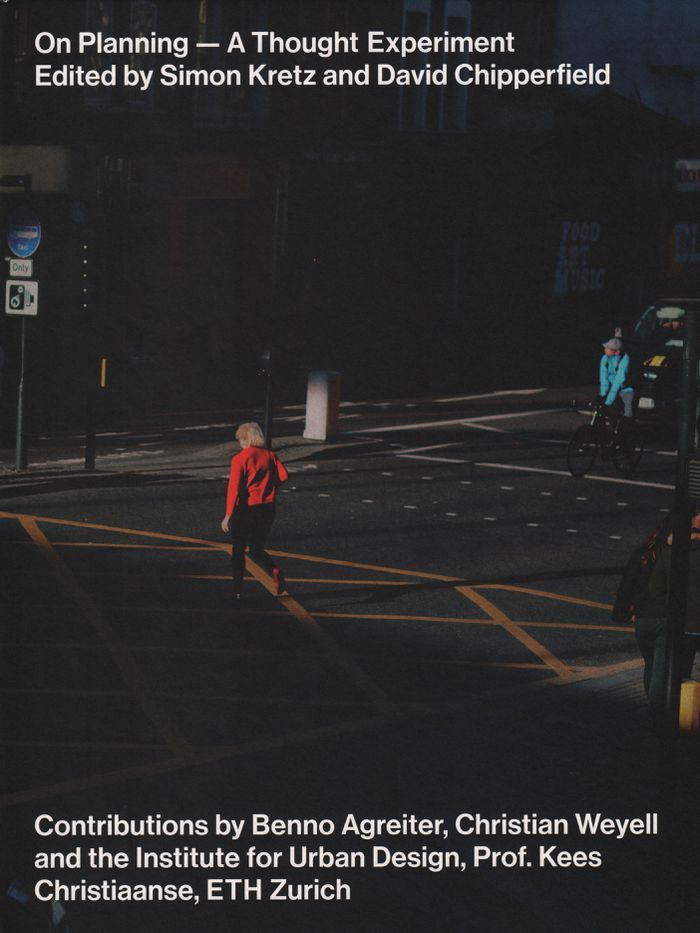
This publication is the result of a year-long dialogue between British architect David Chipperfield (born 1953) and Swiss architect Simon Kretz (born 1982). The two began working together through the Rolex Mentor and Protégé Arts Initiative, in which Chipperfield mentored the younger architect for a year. This publication focuses on a single aspect of their conversations—the problems and possibilities of planning. "On Planning" aims to intervene in the future of urban development, offering a manifesto for a relational, collective and diverse future for our cities. Using the Bishopsgate goods yard site in East London as a case study, Chipperfield and Kretz explore the conditions under which an ideal urban development project could flourish. The conclusions reached through this exercise demonstrate how future large-scale developments elsewhere could have more positive urban impact, both at the scale of the neighborhood and the wider metropolis.
David Chipperfield & Simon Kretz: On planning, A thought experiment
Actions:
Price:
$60.00
(available to order)
Summary:
This publication is the result of a year-long dialogue between British architect David Chipperfield (born 1953) and Swiss architect Simon Kretz (born 1982). The two began working together through the Rolex Mentor and Protégé Arts Initiative, in which Chipperfield mentored the younger architect for a year. This publication focuses on a single aspect of their conversations—the problems and possibilities of planning. "On Planning" aims to intervene in the future of urban development, offering a manifesto for a relational, collective and diverse future for our cities. Using the Bishopsgate goods yard site in East London as a case study, Chipperfield and Kretz explore the conditions under which an ideal urban development project could flourish. The conclusions reached through this exercise demonstrate how future large-scale developments elsewhere could have more positive urban impact, both at the scale of the neighborhood and the wider metropolis.
Form:
books
books
Publication:
June 2018
June 2018
Subject:
Urban Theory
Urban Theory
Form:
books
books
Actions:
Price:
$54.00
(available to order)
Summary:
In 1929, the great Swiss historian and architecture critic Sigfried Giedion (1888–1968)—later the author of the classics "Space, Time and Architecture" (1941) and "Mechanization Takes Command" (1948)—issued Befreites Wohnen (Liberated Dwelling), a small but vocal architecture manifesto and an early expression of modernist housing ideology. From the vision of an(...)
$54.00
(available to order)
Summary:
In 1929, the great Swiss historian and architecture critic Sigfried Giedion (1888–1968)—later the author of the classics "Space, Time and Architecture" (1941) and "Mechanization Takes Command" (1948)—issued Befreites Wohnen (Liberated Dwelling), a small but vocal architecture manifesto and an early expression of modernist housing ideology. From the vision of an(...)
Title:
Sigfried Giedion: Liberated dwelling (Befreites Wohnen)
Actions:
Price:
$54.00
(available to order)
Summary:
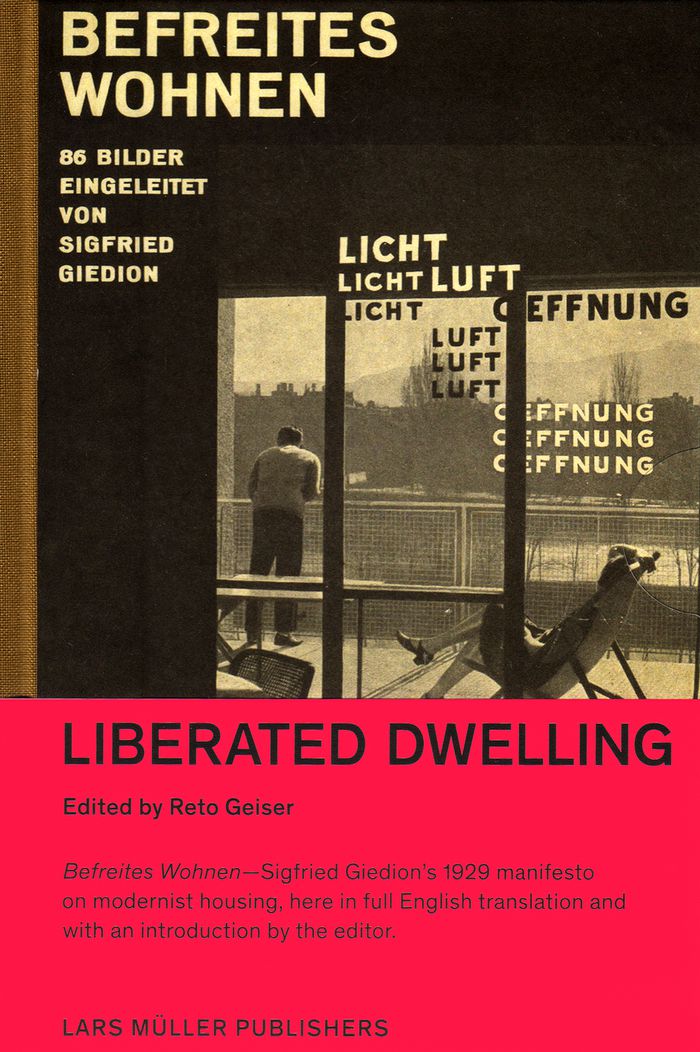
In 1929, the great Swiss historian and architecture critic Sigfried Giedion (1888–1968)—later the author of the classics "Space, Time and Architecture" (1941) and "Mechanization Takes Command" (1948)—issued Befreites Wohnen (Liberated Dwelling), a small but vocal architecture manifesto and an early expression of modernist housing ideology. From the vision of an international architectural modernism (a mission with which Giedion was involved as the first secretary-general of the International Congresses of Modern Architecture, between 1928 and 1959) to debates on the industrialization of construction processes and their impact on public housing, Liberated Dwelling expresses the dreams and anxieties of early 20th-century modernist architecture.
Sigfried Giedion: Liberated dwelling (Befreites Wohnen)
Actions:
Price:
$54.00
(available to order)
Summary:
In 1929, the great Swiss historian and architecture critic Sigfried Giedion (1888–1968)—later the author of the classics "Space, Time and Architecture" (1941) and "Mechanization Takes Command" (1948)—issued Befreites Wohnen (Liberated Dwelling), a small but vocal architecture manifesto and an early expression of modernist housing ideology. From the vision of an international architectural modernism (a mission with which Giedion was involved as the first secretary-general of the International Congresses of Modern Architecture, between 1928 and 1959) to debates on the industrialization of construction processes and their impact on public housing, Liberated Dwelling expresses the dreams and anxieties of early 20th-century modernist architecture.
Form:
books
books
Publication:
February 2019
February 2019
Subject:
Architectural Theory
Architectural Theory
Form:
books
books
Title:
L’hypothèse collaborative
L’hypothèse collaborative
Actions:
Price:
$44.00
(available to order)
Summary:
« L'hypothèse collaborative » est sorti dans le cadre du projet « Lieux infinis » de l'équipe Encore Heureux, commissaire du Pavillon français de la seizième biennale internationale d'architecture de Venise. Ce projet éditorial vise à établir une cartographie problématisée des savoir-faire inventifs, expérimentations heureuses ou malheureuses des “collectifs” français.(...)
$44.00
(available to order)
Summary:
« L'hypothèse collaborative » est sorti dans le cadre du projet « Lieux infinis » de l'équipe Encore Heureux, commissaire du Pavillon français de la seizième biennale internationale d'architecture de Venise. Ce projet éditorial vise à établir une cartographie problématisée des savoir-faire inventifs, expérimentations heureuses ou malheureuses des “collectifs” français.(...)
Title:
L’hypothèse collaborative
Actions:
Price:
$44.00
(available to order)
Summary:
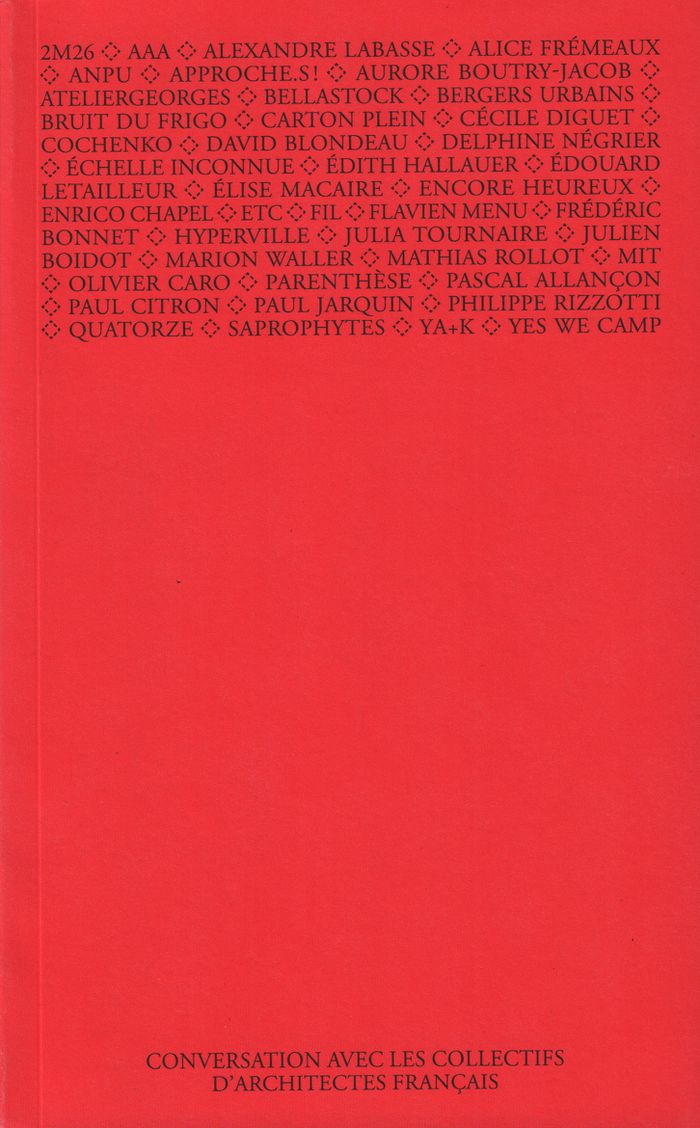
« L'hypothèse collaborative » est sorti dans le cadre du projet « Lieux infinis » de l'équipe Encore Heureux, commissaire du Pavillon français de la seizième biennale internationale d'architecture de Venise. Ce projet éditorial vise à établir une cartographie problématisée des savoir-faire inventifs, expérimentations heureuses ou malheureuses des “collectifs” français. Les nouveaux enjeux écologiques, possibilités technologiques et données économiques posent questions, et poussent architectes, urbanistes et paysagistes à se tourner vers d’autres voies, méthodologies et finalités alternatives. Comment penser le devenir des territoires dans l’optique d’intégrer l’imprévu, le spontané, l’autonomie habitante? Sur quelles bases et énergies s’appuyer pour concevoir des dynamiques urbaines et rurales plus cohérentes et soutenables ? Notre hypothèse est celle de la collaboration. C’est à un travail de cartographie et d’interrogation de ces nouvelles capacités collaboratives que tente de se livrer ce projet : une éloge de la collaboration, mais aussi une tentative d’en cerner les potentialités latentes, limites, dangers et dérives.
L’hypothèse collaborative
Actions:
Price:
$44.00
(available to order)
Summary:
« L'hypothèse collaborative » est sorti dans le cadre du projet « Lieux infinis » de l'équipe Encore Heureux, commissaire du Pavillon français de la seizième biennale internationale d'architecture de Venise. Ce projet éditorial vise à établir une cartographie problématisée des savoir-faire inventifs, expérimentations heureuses ou malheureuses des “collectifs” français. Les nouveaux enjeux écologiques, possibilités technologiques et données économiques posent questions, et poussent architectes, urbanistes et paysagistes à se tourner vers d’autres voies, méthodologies et finalités alternatives. Comment penser le devenir des territoires dans l’optique d’intégrer l’imprévu, le spontané, l’autonomie habitante? Sur quelles bases et énergies s’appuyer pour concevoir des dynamiques urbaines et rurales plus cohérentes et soutenables ? Notre hypothèse est celle de la collaboration. C’est à un travail de cartographie et d’interrogation de ces nouvelles capacités collaboratives que tente de se livrer ce projet : une éloge de la collaboration, mais aussi une tentative d’en cerner les potentialités latentes, limites, dangers et dérives.
Form:
books
books
Publication:
May 2018
May 2018
Subject:
Urban Theory
Urban Theory


