


6146 Results
Form:
exhibitions
exhibitions
Actions:
Description:
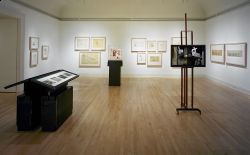
The exhibition addresses a central and timely aspect of the work of Carlo Scarpa: its distinctive approach to contending with the layers of history that mark the fabric of a city and a building. In addressing Scarpa’s ability to weave new work into, and often out of, the disparate fragments of the old, Carlo Scarpa, Architect: Intervening with History begins to unravel(...)
The exhibition addresses a central and timely aspect of the work of Carlo Scarpa: its distinctive approach to contending with the layers of history that mark the fabric of a city and a building. In addressing Scarpa’s ability to weave new work into, and often out of, the disparate fragments of the old, Carlo Scarpa, Architect: Intervening with History begins to unravel(...)
Location:
Main galleries
Main galleries
Date:
26 May 1999 to 31 October 1999
26 May 1999 to 31 October 1999
Title:
Carlo Scarpa, Architect: Intervening with History
Actions:
Description:
The exhibition addresses a central and timely aspect of the work of Carlo Scarpa: its distinctive approach to contending with the layers of history that mark the fabric of a city and a building. In addressing Scarpa’s ability to weave new work into, and often out of, the disparate fragments of the old, Carlo Scarpa, Architect: Intervening with History begins to unravel(...)
Carlo Scarpa, Architect: Intervening with History
Actions:
Description:
The exhibition addresses a central and timely aspect of the work of Carlo Scarpa: its distinctive approach to contending with the layers of history that mark the fabric of a city and a building. In addressing Scarpa’s ability to weave new work into, and often out of, the disparate fragments of the old, Carlo Scarpa, Architect: Intervening with History begins to unravel(...)
Form:
exhibitions
exhibitions
Date:
26 May 1999 to
31 October 1999
26 May 1999 to
31 October 1999
Location:
Main galleries
Main galleries
Form:
exhibitions
exhibitions
Actions:
Description:
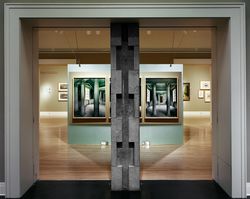
Just as Andrea Palladio’s Villa Rotonda helped to define for future generations the architecture of the Renaissance in Italy, so Chiswick is the locus classicus of the Palladian Revival of the eighteenth century. This exhibition follows a major architect’s thinking as he worked from source to design, from design to representation, in the making of a building which, as the(...)
Just as Andrea Palladio’s Villa Rotonda helped to define for future generations the architecture of the Renaissance in Italy, so Chiswick is the locus classicus of the Palladian Revival of the eighteenth century. This exhibition follows a major architect’s thinking as he worked from source to design, from design to representation, in the making of a building which, as the(...)
Location:
Main galleries
Main galleries
Date:
19 July 1994 to 25 September 1994
19 July 1994 to 25 September 1994
Title:
The Palladian Revival: Lord Burlington, His Villa and Garden at Chiswick
Actions:
Description:
Just as Andrea Palladio’s Villa Rotonda helped to define for future generations the architecture of the Renaissance in Italy, so Chiswick is the locus classicus of the Palladian Revival of the eighteenth century. This exhibition follows a major architect’s thinking as he worked from source to design, from design to representation, in the making of a building which, as the(...)
The Palladian Revival: Lord Burlington, His Villa and Garden at Chiswick
Actions:
Description:
Just as Andrea Palladio’s Villa Rotonda helped to define for future generations the architecture of the Renaissance in Italy, so Chiswick is the locus classicus of the Palladian Revival of the eighteenth century. This exhibition follows a major architect’s thinking as he worked from source to design, from design to representation, in the making of a building which, as the(...)
Form:
exhibitions
exhibitions
Date:
19 July 1994 to
25 September 1994
19 July 1994 to
25 September 1994
Location:
Main galleries
Main galleries
Form:
exhibitions
exhibitions
Description:
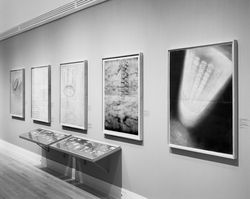
The exhibition explores one of the most adventurous and influential moments in the history of architecture: the explosion of invention and ideas that followed the October Revolution in Russia. The Soviet avant-garde architects were productivist as much as aesthetic in their concerns; they saw architecture and the arts as one, and they were committed to bringing design(...)
The exhibition explores one of the most adventurous and influential moments in the history of architecture: the explosion of invention and ideas that followed the October Revolution in Russia. The Soviet avant-garde architects were productivist as much as aesthetic in their concerns; they saw architecture and the arts as one, and they were committed to bringing design(...)
Location:
Main galleries
Main galleries
Date:
19 June 1991 to 8 September 1991
19 June 1991 to 8 September 1991
Title:
Architectural Drawings of the Russian Avant-Garde, 1917-1935
Actions:
Description:
The exhibition explores one of the most adventurous and influential moments in the history of architecture: the explosion of invention and ideas that followed the October Revolution in Russia. The Soviet avant-garde architects were productivist as much as aesthetic in their concerns; they saw architecture and the arts as one, and they were committed to bringing design(...)
Architectural Drawings of the Russian Avant-Garde, 1917-1935
Actions:
Description:
The exhibition explores one of the most adventurous and influential moments in the history of architecture: the explosion of invention and ideas that followed the October Revolution in Russia. The Soviet avant-garde architects were productivist as much as aesthetic in their concerns; they saw architecture and the arts as one, and they were committed to bringing design(...)
Form:
exhibitions
exhibitions
Date:
19 June 1991 to
8 September 1991
19 June 1991 to
8 September 1991
Location:
Main galleries
Main galleries
Form:
exhibitions
exhibitions
Title:
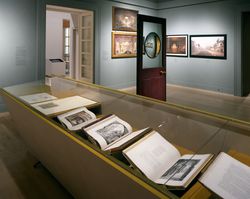
John Soane 1753-1837
John Soane 1753-1837
Actions:
Description:
Described by Henry James as “one of the most curious things in London,” Sir John Soane’s Museum was built as the picturesque and enigmatic home, office, collector’s trove, and personal showplace of one of history’s most innovative architects. This exhibition is a major re-evaluation of Soane’s career, as well as a reconsideration of his importance to the history of modern(...)
Described by Henry James as “one of the most curious things in London,” Sir John Soane’s Museum was built as the picturesque and enigmatic home, office, collector’s trove, and personal showplace of one of history’s most innovative architects. This exhibition is a major re-evaluation of Soane’s career, as well as a reconsideration of his importance to the history of modern(...)
Location:
Main galleries
Main galleries
Date:
16 May 2001 to 3 September 2001
16 May 2001 to 3 September 2001
Title:
John Soane 1753-1837
Actions:
Description:
Described by Henry James as “one of the most curious things in London,” Sir John Soane’s Museum was built as the picturesque and enigmatic home, office, collector’s trove, and personal showplace of one of history’s most innovative architects. This exhibition is a major re-evaluation of Soane’s career, as well as a reconsideration of his importance to the history of modern(...)
John Soane 1753-1837
Actions:
Description:
Described by Henry James as “one of the most curious things in London,” Sir John Soane’s Museum was built as the picturesque and enigmatic home, office, collector’s trove, and personal showplace of one of history’s most innovative architects. This exhibition is a major re-evaluation of Soane’s career, as well as a reconsideration of his importance to the history of modern(...)
Form:
exhibitions
exhibitions
Date:
16 May 2001 to
3 September 2001
16 May 2001 to
3 September 2001
Location:
Main galleries
Main galleries
Level of archival description:
Project
Project
Actions:
Reference number:
AP018.S1.1978.PR05
Description:
This project series documents the Ontario Congress and Trade Centre in Toronto from 1978-1980. The office identified the project number as 7807. This project consisted of the investigation of building a congress and trade centre on Front Street West. The project proposed a 519,500 square foot building with a 200,000 square foot exhibition hall that could be divided for smaller events. The building would also contain a multiuse hall, theatres, meeting rooms, offices, food and beverage facilities, and a 1300 car parking area. The project was proposed to cost around $73 million. The project is also referred to as the Toronto Convention Centre or Ontario Convention Centre. The majority of the textual documentation shows the controversial debate over whether the centre should be built, including numerous press clippings that highlight the issue. It should be noted that Congress Centre and Convention Centre are used interchangeably in the materials. Eventually, this project contract was given to another architectural firm and today is known as the Metropolitan Toronto Convention Centre. The project is recorded through drawings and textual records dating from 1976-1981. The drawings largely show designs for the proposed building and site plans. The textual records include correspondence, meeting minutes, interoffice memos, project proposals, feasibility reports, press clippings on the project and on other convention centres, research documentation on other convention centres, documentation on a proposed hotel to be built on the centre and promotional materials.
AP018.S1.1978.PR05
Description:
This project series documents the Ontario Congress and Trade Centre in Toronto from 1978-1980. The office identified the project number as 7807. This project consisted of the investigation of building a congress and trade centre on Front Street West. The project proposed a 519,500 square foot building with a 200,000 square foot exhibition hall that could be divided for smaller events. The building would also contain a multiuse hall, theatres, meeting rooms, offices, food and beverage facilities, and a 1300 car parking area. The project was proposed to cost around $73 million. The project is also referred to as the Toronto Convention Centre or Ontario Convention Centre. The majority of the textual documentation shows the controversial debate over whether the centre should be built, including numerous press clippings that highlight the issue. It should be noted that Congress Centre and Convention Centre are used interchangeably in the materials. Eventually, this project contract was given to another architectural firm and today is known as the Metropolitan Toronto Convention Centre. The project is recorded through drawings and textual records dating from 1976-1981. The drawings largely show designs for the proposed building and site plans. The textual records include correspondence, meeting minutes, interoffice memos, project proposals, feasibility reports, press clippings on the project and on other convention centres, research documentation on other convention centres, documentation on a proposed hotel to be built on the centre and promotional materials.
People:
Date:
1976-1981
1976-1981
Title:
Ontario Congress and Trade Centre, Toronto (1978-1981)
Actions:
AP018.S1.1978.PR05
Description:
This project series documents the Ontario Congress and Trade Centre in Toronto from 1978-1980. The office identified the project number as 7807. This project consisted of the investigation of building a congress and trade centre on Front Street West. The project proposed a 519,500 square foot building with a 200,000 square foot exhibition hall that could be divided for smaller events. The building would also contain a multiuse hall, theatres, meeting rooms, offices, food and beverage facilities, and a 1300 car parking area. The project was proposed to cost around $73 million. The project is also referred to as the Toronto Convention Centre or Ontario Convention Centre. The majority of the textual documentation shows the controversial debate over whether the centre should be built, including numerous press clippings that highlight the issue. It should be noted that Congress Centre and Convention Centre are used interchangeably in the materials. Eventually, this project contract was given to another architectural firm and today is known as the Metropolitan Toronto Convention Centre. The project is recorded through drawings and textual records dating from 1976-1981. The drawings largely show designs for the proposed building and site plans. The textual records include correspondence, meeting minutes, interoffice memos, project proposals, feasibility reports, press clippings on the project and on other convention centres, research documentation on other convention centres, documentation on a proposed hotel to be built on the centre and promotional materials.
Ontario Congress and Trade Centre, Toronto (1978-1981)
Actions:
AP018.S1.1978.PR05
Description:
This project series documents the Ontario Congress and Trade Centre in Toronto from 1978-1980. The office identified the project number as 7807. This project consisted of the investigation of building a congress and trade centre on Front Street West. The project proposed a 519,500 square foot building with a 200,000 square foot exhibition hall that could be divided for smaller events. The building would also contain a multiuse hall, theatres, meeting rooms, offices, food and beverage facilities, and a 1300 car parking area. The project was proposed to cost around $73 million. The project is also referred to as the Toronto Convention Centre or Ontario Convention Centre. The majority of the textual documentation shows the controversial debate over whether the centre should be built, including numerous press clippings that highlight the issue. It should be noted that Congress Centre and Convention Centre are used interchangeably in the materials. Eventually, this project contract was given to another architectural firm and today is known as the Metropolitan Toronto Convention Centre. The project is recorded through drawings and textual records dating from 1976-1981. The drawings largely show designs for the proposed building and site plans. The textual records include correspondence, meeting minutes, interoffice memos, project proposals, feasibility reports, press clippings on the project and on other convention centres, research documentation on other convention centres, documentation on a proposed hotel to be built on the centre and promotional materials.
Level of archival description:
Project
Project
Date:
1976-1981
1976-1981
People:
Form:
exhibitions
exhibitions
Actions:
Description:
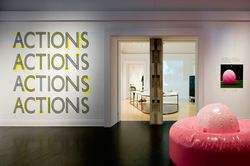
Seemingly common activities such as walking, playing, recycling, and gardening are pushed beyond their usual definition by the international architects, artists, and collectives featured in the exhibition. Their actions push against accepted norms of behaviour in cities, at times even challenging legal limitations. The individuals and groups employ a range of approaches(...)
Seemingly common activities such as walking, playing, recycling, and gardening are pushed beyond their usual definition by the international architects, artists, and collectives featured in the exhibition. Their actions push against accepted norms of behaviour in cities, at times even challenging legal limitations. The individuals and groups employ a range of approaches(...)
Location:
Main galleries
Main galleries
Date:
26 November 2008 to 19 April 2009
26 November 2008 to 19 April 2009
Title:
Actions: What You Can Do With the City
Actions:
Description:
Seemingly common activities such as walking, playing, recycling, and gardening are pushed beyond their usual definition by the international architects, artists, and collectives featured in the exhibition. Their actions push against accepted norms of behaviour in cities, at times even challenging legal limitations. The individuals and groups employ a range of approaches(...)
Actions: What You Can Do With the City
Actions:
Description:
Seemingly common activities such as walking, playing, recycling, and gardening are pushed beyond their usual definition by the international architects, artists, and collectives featured in the exhibition. Their actions push against accepted norms of behaviour in cities, at times even challenging legal limitations. The individuals and groups employ a range of approaches(...)
Form:
exhibitions
exhibitions
Date:
26 November 2008 to
19 April 2009
26 November 2008 to
19 April 2009
Location:
Main galleries
Main galleries
Level of archival description:
Sub-series
Sub-series
Reference number:
AP178.S1.2002.PR05.SS1
Description:
This project subseries documents the Parque de Vidago Complexo Termal e Hotel Palace in Vidago, Portugal. While the records were held in the office’s archives this project was assigned the number 49/00. The office assigned the date 2002 to this project. The project consisted of major renovations to update and modernize the Vidago Palace Hotel, originally opened in 1910, and the addition of a new thermal spa. Architects José Pedro Lopes Vieira and Diogo Rosa Lã were responsible for the interior decoration of the Palace Hotel, while Siza designed the Spa. The full or partial demolition of some parts of the hotel and nearby buildings was necessary to maintain the original character of the resort. In contrast to the historic hotel, the new spa was contemporary and minimalist with marble interiors. It included pools, Turkish baths, treatment and relaxation rooms, a gym, bars and meditation area. This project subseries is documented through drawings, photographic materials, study models and textual records dating from 2002-2012. These materials primarily document the spa but documentation for the surrounding site, Palace Hotel, Fonte Salus (spring), gatehouse and Serralves exhibition space is also included. The drawings are largely reprographic copies of printed CAD drawings and include sketches, studies, plans, details, sections, elevations, demolition drawings and mechanical, electrical and structural drawings. The textual records include correspondence, meeting minutes, studies, building programs, furniture and spa equipment documentation, budgets and contracts. A large amount of documentation on various electrical, structural and mechanical systems is also included. The photographic materials are mostly printed digital photos showing buildings across the site, pre and post construction work and reference images. There are also a number of photos, postcards and brochures showing historical images of the hotel.
AP178.S1.2002.PR05.SS1
Description:
This project subseries documents the Parque de Vidago Complexo Termal e Hotel Palace in Vidago, Portugal. While the records were held in the office’s archives this project was assigned the number 49/00. The office assigned the date 2002 to this project. The project consisted of major renovations to update and modernize the Vidago Palace Hotel, originally opened in 1910, and the addition of a new thermal spa. Architects José Pedro Lopes Vieira and Diogo Rosa Lã were responsible for the interior decoration of the Palace Hotel, while Siza designed the Spa. The full or partial demolition of some parts of the hotel and nearby buildings was necessary to maintain the original character of the resort. In contrast to the historic hotel, the new spa was contemporary and minimalist with marble interiors. It included pools, Turkish baths, treatment and relaxation rooms, a gym, bars and meditation area. This project subseries is documented through drawings, photographic materials, study models and textual records dating from 2002-2012. These materials primarily document the spa but documentation for the surrounding site, Palace Hotel, Fonte Salus (spring), gatehouse and Serralves exhibition space is also included. The drawings are largely reprographic copies of printed CAD drawings and include sketches, studies, plans, details, sections, elevations, demolition drawings and mechanical, electrical and structural drawings. The textual records include correspondence, meeting minutes, studies, building programs, furniture and spa equipment documentation, budgets and contracts. A large amount of documentation on various electrical, structural and mechanical systems is also included. The photographic materials are mostly printed digital photos showing buildings across the site, pre and post construction work and reference images. There are also a number of photos, postcards and brochures showing historical images of the hotel.
People:
Date:
2002-2012
2002-2012
Title:
Parque de Vidago, Complexo Termal e Hotel Palace [Vidago Palace Hotel and Spa], Vidago, Portugal (2002)
Actions:
AP178.S1.2002.PR05.SS1
Description:
This project subseries documents the Parque de Vidago Complexo Termal e Hotel Palace in Vidago, Portugal. While the records were held in the office’s archives this project was assigned the number 49/00. The office assigned the date 2002 to this project. The project consisted of major renovations to update and modernize the Vidago Palace Hotel, originally opened in 1910, and the addition of a new thermal spa. Architects José Pedro Lopes Vieira and Diogo Rosa Lã were responsible for the interior decoration of the Palace Hotel, while Siza designed the Spa. The full or partial demolition of some parts of the hotel and nearby buildings was necessary to maintain the original character of the resort. In contrast to the historic hotel, the new spa was contemporary and minimalist with marble interiors. It included pools, Turkish baths, treatment and relaxation rooms, a gym, bars and meditation area. This project subseries is documented through drawings, photographic materials, study models and textual records dating from 2002-2012. These materials primarily document the spa but documentation for the surrounding site, Palace Hotel, Fonte Salus (spring), gatehouse and Serralves exhibition space is also included. The drawings are largely reprographic copies of printed CAD drawings and include sketches, studies, plans, details, sections, elevations, demolition drawings and mechanical, electrical and structural drawings. The textual records include correspondence, meeting minutes, studies, building programs, furniture and spa equipment documentation, budgets and contracts. A large amount of documentation on various electrical, structural and mechanical systems is also included. The photographic materials are mostly printed digital photos showing buildings across the site, pre and post construction work and reference images. There are also a number of photos, postcards and brochures showing historical images of the hotel.
Parque de Vidago, Complexo Termal e Hotel Palace [Vidago Palace Hotel and Spa], Vidago, Portugal (2002)
Actions:
AP178.S1.2002.PR05.SS1
Description:
This project subseries documents the Parque de Vidago Complexo Termal e Hotel Palace in Vidago, Portugal. While the records were held in the office’s archives this project was assigned the number 49/00. The office assigned the date 2002 to this project. The project consisted of major renovations to update and modernize the Vidago Palace Hotel, originally opened in 1910, and the addition of a new thermal spa. Architects José Pedro Lopes Vieira and Diogo Rosa Lã were responsible for the interior decoration of the Palace Hotel, while Siza designed the Spa. The full or partial demolition of some parts of the hotel and nearby buildings was necessary to maintain the original character of the resort. In contrast to the historic hotel, the new spa was contemporary and minimalist with marble interiors. It included pools, Turkish baths, treatment and relaxation rooms, a gym, bars and meditation area. This project subseries is documented through drawings, photographic materials, study models and textual records dating from 2002-2012. These materials primarily document the spa but documentation for the surrounding site, Palace Hotel, Fonte Salus (spring), gatehouse and Serralves exhibition space is also included. The drawings are largely reprographic copies of printed CAD drawings and include sketches, studies, plans, details, sections, elevations, demolition drawings and mechanical, electrical and structural drawings. The textual records include correspondence, meeting minutes, studies, building programs, furniture and spa equipment documentation, budgets and contracts. A large amount of documentation on various electrical, structural and mechanical systems is also included. The photographic materials are mostly printed digital photos showing buildings across the site, pre and post construction work and reference images. There are also a number of photos, postcards and brochures showing historical images of the hotel.
Level of archival description:
Project
Project
Date:
2002-2012
2002-2012
People:
Form:
events
events
Title:
Scouting Skateboard Sites
Scouting Skateboard Sites
Actions:
Description:
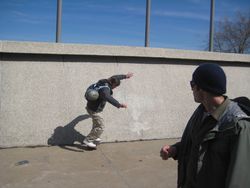
Skateboarder and landscape architect Mathieu Robichaud takes participants on a guided walk, analysing the skateboarding potential of urban spaces. Robichaud, of the firm Bloom Paysage, specialises in the design of skate parks. Inspired by the exhibition Actions: What You Can Do With the City (2008), the CCA hosts a series of workshops devoted to public actions in urban(...)
Skateboarder and landscape architect Mathieu Robichaud takes participants on a guided walk, analysing the skateboarding potential of urban spaces. Robichaud, of the firm Bloom Paysage, specialises in the design of skate parks. Inspired by the exhibition Actions: What You Can Do With the City (2008), the CCA hosts a series of workshops devoted to public actions in urban(...)
Date:
11 April 2009
11 April 2009
Title:
Scouting Skateboard Sites
Actions:
Description:
Skateboarder and landscape architect Mathieu Robichaud takes participants on a guided walk, analysing the skateboarding potential of urban spaces. Robichaud, of the firm Bloom Paysage, specialises in the design of skate parks. Inspired by the exhibition Actions: What You Can Do With the City (2008), the CCA hosts a series of workshops devoted to public actions in urban(...)
Scouting Skateboard Sites
Actions:
Description:
Skateboarder and landscape architect Mathieu Robichaud takes participants on a guided walk, analysing the skateboarding potential of urban spaces. Robichaud, of the firm Bloom Paysage, specialises in the design of skate parks. Inspired by the exhibition Actions: What You Can Do With the City (2008), the CCA hosts a series of workshops devoted to public actions in urban(...)
Form:
events
events
Date:
11 April 2009
11 April 2009
Form:
exhibitions
exhibitions
Actions:
Description:
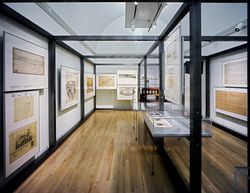
Shaping the Great City explores the role of city-building throughout the Austro-Hungarian Empire, both before and after its dissolution, and expands architectural history by bringing to the fore a rich variety of modernisms. In the years surrounding World War I, these strains of modernism both reflected and shaped the many national and multinational identities of the(...)
Shaping the Great City explores the role of city-building throughout the Austro-Hungarian Empire, both before and after its dissolution, and expands architectural history by bringing to the fore a rich variety of modernisms. In the years surrounding World War I, these strains of modernism both reflected and shaped the many national and multinational identities of the(...)
Location:
Main galleries and hall cases
Main galleries and hall cases
Date:
14 May 2000 to 15 October 2000
14 May 2000 to 15 October 2000
Title:
Shaping the Great City: Modern Architecture in Central Europe, 1890–1937
Actions:
Description:
Shaping the Great City explores the role of city-building throughout the Austro-Hungarian Empire, both before and after its dissolution, and expands architectural history by bringing to the fore a rich variety of modernisms. In the years surrounding World War I, these strains of modernism both reflected and shaped the many national and multinational identities of the(...)
Shaping the Great City: Modern Architecture in Central Europe, 1890–1937
Actions:
Description:
Shaping the Great City explores the role of city-building throughout the Austro-Hungarian Empire, both before and after its dissolution, and expands architectural history by bringing to the fore a rich variety of modernisms. In the years surrounding World War I, these strains of modernism both reflected and shaped the many national and multinational identities of the(...)
Form:
exhibitions
exhibitions
Date:
14 May 2000 to
15 October 2000
14 May 2000 to
15 October 2000
Location:
Main galleries and hall cases
Main galleries and hall cases
Form:
archives
Level of archival description:
Fonds
archives
Level of archival description:
Fonds
Title:
Kenneth Frampton fonds
Kenneth Frampton fonds
Reference number:
AP197
Synopsis:
The Kenneth Frampton fonds, 1958-2016, documents the professional career of Kenneth Frampton – British architect, historian, theorist, and Ware professor of Architecture at the Graduate School of Architecture, Planning and Preservation (GSAPP) at Columbia University. Materials in the fonds consist of approximately 28.37 l.m. of textual records, 3966 photographs and prints, 3168 postcards, 2733 slides, 824 drawings (including reprographic copies), 470 negatives, 151 35 mm negatives, 105 posters, 30 objects, 23 audio cassettes, 18 VHS tapes, 15 transparencies, 3 tape reels, 2 microfilms, and 2 vinyl records.
AP197
Synopsis:
The Kenneth Frampton fonds, 1958-2016, documents the professional career of Kenneth Frampton – British architect, historian, theorist, and Ware professor of Architecture at the Graduate School of Architecture, Planning and Preservation (GSAPP) at Columbia University. Materials in the fonds consist of approximately 28.37 l.m. of textual records, 3966 photographs and prints, 3168 postcards, 2733 slides, 824 drawings (including reprographic copies), 470 negatives, 151 35 mm negatives, 105 posters, 30 objects, 23 audio cassettes, 18 VHS tapes, 15 transparencies, 3 tape reels, 2 microfilms, and 2 vinyl records.
People:
Date:
1958-2016
1958-2016
Title:
Kenneth Frampton fonds
Actions:
AP197
Synopsis:
The Kenneth Frampton fonds, 1958-2016, documents the professional career of Kenneth Frampton – British architect, historian, theorist, and Ware professor of Architecture at the Graduate School of Architecture, Planning and Preservation (GSAPP) at Columbia University. Materials in the fonds consist of approximately 28.37 l.m. of textual records, 3966 photographs and prints, 3168 postcards, 2733 slides, 824 drawings (including reprographic copies), 470 negatives, 151 35 mm negatives, 105 posters, 30 objects, 23 audio cassettes, 18 VHS tapes, 15 transparencies, 3 tape reels, 2 microfilms, and 2 vinyl records.
Kenneth Frampton fonds
Actions:
AP197
Synopsis:
The Kenneth Frampton fonds, 1958-2016, documents the professional career of Kenneth Frampton – British architect, historian, theorist, and Ware professor of Architecture at the Graduate School of Architecture, Planning and Preservation (GSAPP) at Columbia University. Materials in the fonds consist of approximately 28.37 l.m. of textual records, 3966 photographs and prints, 3168 postcards, 2733 slides, 824 drawings (including reprographic copies), 470 negatives, 151 35 mm negatives, 105 posters, 30 objects, 23 audio cassettes, 18 VHS tapes, 15 transparencies, 3 tape reels, 2 microfilms, and 2 vinyl records.
Form:
archives
Level of archival description:
Fonds
archives
Level of archival description:
Fonds
Date:
1958-2016
1958-2016
People:


