


5346 Results
Form:
books
books
Actions:
Price:
$49.95
(available to order)
Summary:
In this first critical history of the National Gallery of Canada, Douglas Ord explores how, in the gallery's development, art has consistently been linked to notions of religious truth, national spirit, and hallowed atmosphere, culminating in Moshe Safdie's design for the institution's current building. Integrating accounts of political intrigue and public controversy(...)
$49.95
(available to order)
Summary:
In this first critical history of the National Gallery of Canada, Douglas Ord explores how, in the gallery's development, art has consistently been linked to notions of religious truth, national spirit, and hallowed atmosphere, culminating in Moshe Safdie's design for the institution's current building. Integrating accounts of political intrigue and public controversy(...)
Title:
The National Gallery of Canada : ideas and architecture
Actions:
Price:
$49.95
(available to order)
Summary:
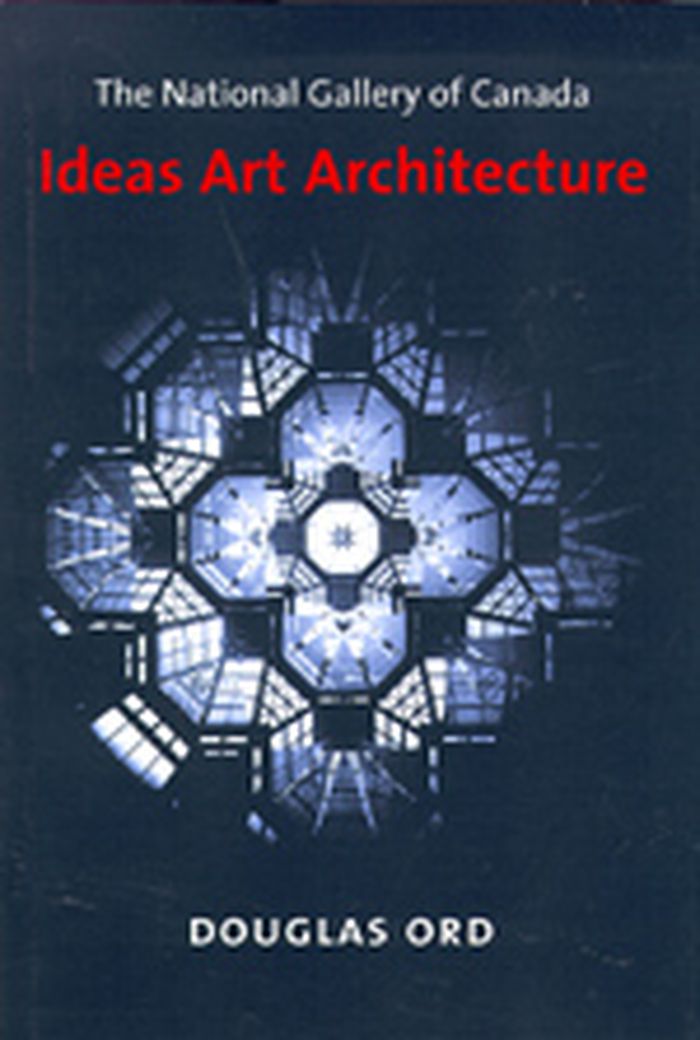
In this first critical history of the National Gallery of Canada, Douglas Ord explores how, in the gallery's development, art has consistently been linked to notions of religious truth, national spirit, and hallowed atmosphere, culminating in Moshe Safdie's design for the institution's current building. Integrating accounts of political intrigue and public controversy with philosophy, art theory, and architectural analysis, Ord provides vivid accounts of successive directors' struggles to obtain a permanent home for the nation's art. Ord looks at the gallery's historical and intellectual context - from 1910 when Eric Brown became the gallery's founding director, through Jean Sutherland Boggs, to Shirley Thomson - shedding light on its acquisitions, government policy towards the arts, and the public's deep-rooted suspicion of avant-garde art. In showing how Canadian art came to be housed in a building whose architectural and ideological sources include Gothic cathedrals, Islamic mosques, Egyptian temples, St Peter's Basilica, and the squared-stone facades of the Holy City of Jerusalem, The National Gallery of Canada insightfully explores the relationship of Canada's art and its National Gallery to the project of the Canadian nation state.
The National Gallery of Canada : ideas and architecture
Actions:
Price:
$49.95
(available to order)
Summary:
In this first critical history of the National Gallery of Canada, Douglas Ord explores how, in the gallery's development, art has consistently been linked to notions of religious truth, national spirit, and hallowed atmosphere, culminating in Moshe Safdie's design for the institution's current building. Integrating accounts of political intrigue and public controversy with philosophy, art theory, and architectural analysis, Ord provides vivid accounts of successive directors' struggles to obtain a permanent home for the nation's art. Ord looks at the gallery's historical and intellectual context - from 1910 when Eric Brown became the gallery's founding director, through Jean Sutherland Boggs, to Shirley Thomson - shedding light on its acquisitions, government policy towards the arts, and the public's deep-rooted suspicion of avant-garde art. In showing how Canadian art came to be housed in a building whose architectural and ideological sources include Gothic cathedrals, Islamic mosques, Egyptian temples, St Peter's Basilica, and the squared-stone facades of the Holy City of Jerusalem, The National Gallery of Canada insightfully explores the relationship of Canada's art and its National Gallery to the project of the Canadian nation state.
Form:
books
books
Publication:
June 2003, Montréal
June 2003, Montréal
Subject:
Architecture in Canada
Architecture in Canada
Form:
books
books
Actions:
Price:
$37.95
(available to order)
Summary:
The passage of time and the reality of an aging survivor population have made it increasingly urgent to document and give expression to testimony, experience, and memory of the Holocaust. At the same time, artists have struggled to find a language to describe and retell a legacy often considered "unimaginable." Contrary to those who insist that the Holocaust defies(...)
$37.95
(available to order)
Summary:
The passage of time and the reality of an aging survivor population have made it increasingly urgent to document and give expression to testimony, experience, and memory of the Holocaust. At the same time, artists have struggled to find a language to describe and retell a legacy often considered "unimaginable." Contrary to those who insist that the Holocaust defies(...)
Subject:
Architectural Theory
Architectural Theory
Publication:
December 2002, Bloomington and Indianapolis
December 2002, Bloomington and Indianapolis
Title:
Image and remembrance : representation and the Holocaust
Actions:
Price:
$37.95
(available to order)
Summary:
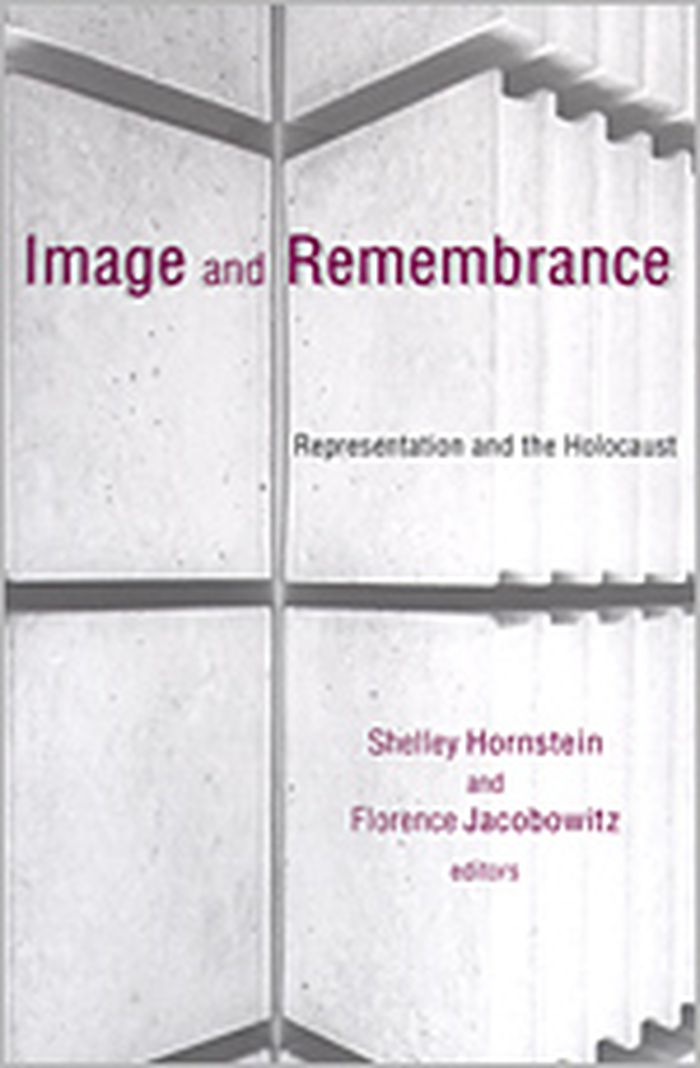
The passage of time and the reality of an aging survivor population have made it increasingly urgent to document and give expression to testimony, experience, and memory of the Holocaust. At the same time, artists have struggled to find a language to describe and retell a legacy often considered "unimaginable." Contrary to those who insist that the Holocaust defies representation, Image and Remembrance demonstrates that artistic representations are central to the practice of remembrance and commemoration. Including essays on representations of the Holocaust in film, architecture, painting, photography, memorials, and monuments, this thought-provoking volume considers ways in which visual artists have given form to the experience of the Holocaust and addresses the role that imagination plays in shaping historical memory. Among works discussed are Daniel Libeskind's Jewish Museum in Berlin, Rachel Whiteread's Holocaust Memorial in Vienna, Morris Louis's series of paintings Charred Journal, photographer Shimon Attie's Writing on the Wall, and Mikael Levin's series Untitled. Image and Remembrance provides a thoughtful site for personal reflection and commemoration as well as a context for reconsidering the processes of art making and the cultural significance of artistic images.
Image and remembrance : representation and the Holocaust
Actions:
Price:
$37.95
(available to order)
Summary:
The passage of time and the reality of an aging survivor population have made it increasingly urgent to document and give expression to testimony, experience, and memory of the Holocaust. At the same time, artists have struggled to find a language to describe and retell a legacy often considered "unimaginable." Contrary to those who insist that the Holocaust defies representation, Image and Remembrance demonstrates that artistic representations are central to the practice of remembrance and commemoration. Including essays on representations of the Holocaust in film, architecture, painting, photography, memorials, and monuments, this thought-provoking volume considers ways in which visual artists have given form to the experience of the Holocaust and addresses the role that imagination plays in shaping historical memory. Among works discussed are Daniel Libeskind's Jewish Museum in Berlin, Rachel Whiteread's Holocaust Memorial in Vienna, Morris Louis's series of paintings Charred Journal, photographer Shimon Attie's Writing on the Wall, and Mikael Levin's series Untitled. Image and Remembrance provides a thoughtful site for personal reflection and commemoration as well as a context for reconsidering the processes of art making and the cultural significance of artistic images.
Form:
books
books
Publication:
December 2002, Bloomington and Indianapolis
December 2002, Bloomington and Indianapolis
Subject:
Architectural Theory
Architectural Theory
Form:
books
books
Actions:
Price:
$43.95
(available to order)
Summary:
Jaipur, in Rajasthan, is renowned for its palaces and museums, its craft traditions and its distinctive pink shops and houses. A planned city within walls, it was built in pre-modern times according to a distinctive Indian theory of architecture known as vastu vidya. As architecture subsequently developed in India, in response to British and latterly post-colonial(...)
$43.95
(available to order)
Summary:
Jaipur, in Rajasthan, is renowned for its palaces and museums, its craft traditions and its distinctive pink shops and houses. A planned city within walls, it was built in pre-modern times according to a distinctive Indian theory of architecture known as vastu vidya. As architecture subsequently developed in India, in response to British and latterly post-colonial(...)
Subject:
Arch Middle East
Arch Middle East
Publication:
September 2002, London
September 2002, London
Title:
Building Jaipur : the making of an Indian city
Actions:
Price:
$43.95
(available to order)
Summary:
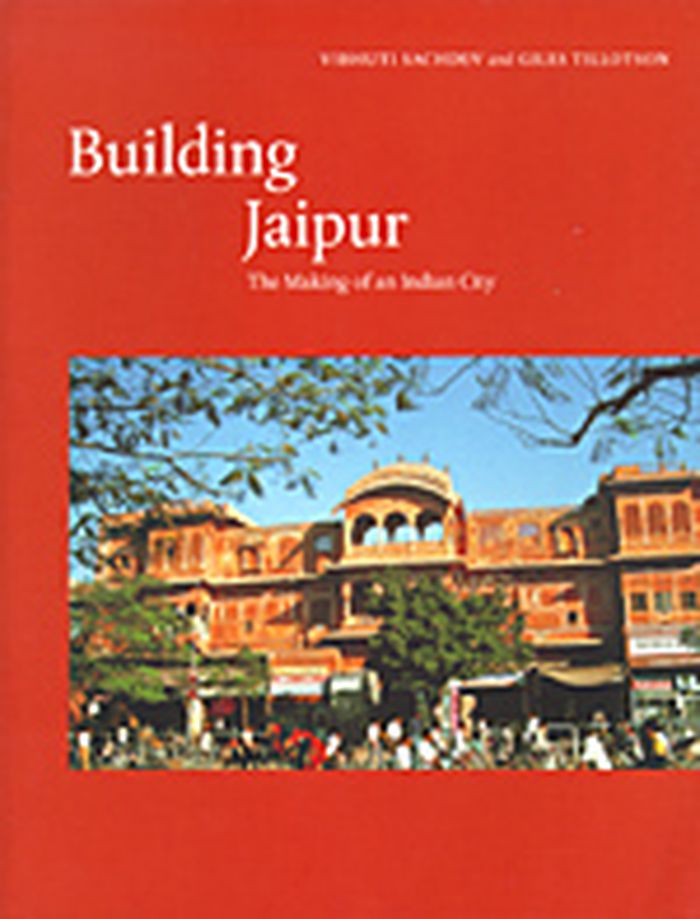
Jaipur, in Rajasthan, is renowned for its palaces and museums, its craft traditions and its distinctive pink shops and houses. A planned city within walls, it was built in pre-modern times according to a distinctive Indian theory of architecture known as vastu vidya. As architecture subsequently developed in India, in response to British and latterly post-colonial policies, this system became increasingly marginalized and fragmented, decreasingly practised and understood. Taking Jaipur as a test case, the authors use this lost tradition to explain historic Indian buildings according to the rationale of their original architects. The authors also examine the place of traditional architectural theory in a modern context – Post-Modern architecture in India has often sought to recapture a spirit of the past, and yet been reluctant to engage with traditional theory. By chronicling the gradual eclipse of Indian architectural theory, the authors explain how this reluctance arose; they also describe the need and the terms for a fresh engagement with it. The result is an architectural biography of a city, and a concise history of Indian architectural theory over the last 300 years.
Building Jaipur : the making of an Indian city
Actions:
Price:
$43.95
(available to order)
Summary:
Jaipur, in Rajasthan, is renowned for its palaces and museums, its craft traditions and its distinctive pink shops and houses. A planned city within walls, it was built in pre-modern times according to a distinctive Indian theory of architecture known as vastu vidya. As architecture subsequently developed in India, in response to British and latterly post-colonial policies, this system became increasingly marginalized and fragmented, decreasingly practised and understood. Taking Jaipur as a test case, the authors use this lost tradition to explain historic Indian buildings according to the rationale of their original architects. The authors also examine the place of traditional architectural theory in a modern context – Post-Modern architecture in India has often sought to recapture a spirit of the past, and yet been reluctant to engage with traditional theory. By chronicling the gradual eclipse of Indian architectural theory, the authors explain how this reluctance arose; they also describe the need and the terms for a fresh engagement with it. The result is an architectural biography of a city, and a concise history of Indian architectural theory over the last 300 years.
Form:
books
books
Publication:
September 2002, London
September 2002, London
Subject:
Arch Middle East
Arch Middle East
Form:
books
books
Actions:
Price:
$35.95
(available to order)
Summary:
This book examines trends in the display of art since the mid-twentieth century, focusing particularly on institutional issues. The contributors present a series of case studies that illuminate the practices of museums, galleries, and exhibitions in Western Europe and the United States and that encourage reflection on the experience of the spectator. The first(...)
$35.95
(available to order)
Summary:
This book examines trends in the display of art since the mid-twentieth century, focusing particularly on institutional issues. The contributors present a series of case studies that illuminate the practices of museums, galleries, and exhibitions in Western Europe and the United States and that encourage reflection on the experience of the spectator. The first(...)
Title:
Contemporary cultures of display
Actions:
Price:
$35.95
(available to order)
Summary:
This book examines trends in the display of art since the mid-twentieth century, focusing particularly on institutional issues. The contributors present a series of case studies that illuminate the practices of museums, galleries, and exhibitions in Western Europe and the United States and that encourage reflection on the experience of the spectator. The first section of the book considers the traditional sanctum of art, the museum, and how approaches to display have changed as modern museums have sought to become accessible to new audiences. In the second section, case studies address issues surrounding temporary exhibitions, their dominance of the display of art today, and the implications of this for artists, spectators, and the institutions that stage such exhibitions. The third section considers the wider social context in which art is displayed today and discusses the widespread reliance on urban regeneration projects, with special reference to modern art museums, and the place of heritage in Britain, specifically the cult of the country house. The book concludes with an exploration of the art world in contemporary Ireland and the role of Irish institutions in the production and reception of art.
Contemporary cultures of display
Actions:
Price:
$35.95
(available to order)
Summary:
This book examines trends in the display of art since the mid-twentieth century, focusing particularly on institutional issues. The contributors present a series of case studies that illuminate the practices of museums, galleries, and exhibitions in Western Europe and the United States and that encourage reflection on the experience of the spectator. The first section of the book considers the traditional sanctum of art, the museum, and how approaches to display have changed as modern museums have sought to become accessible to new audiences. In the second section, case studies address issues surrounding temporary exhibitions, their dominance of the display of art today, and the implications of this for artists, spectators, and the institutions that stage such exhibitions. The third section considers the wider social context in which art is displayed today and discusses the widespread reliance on urban regeneration projects, with special reference to modern art museums, and the place of heritage in Britain, specifically the cult of the country house. The book concludes with an exploration of the art world in contemporary Ireland and the role of Irish institutions in the production and reception of art.
Form:
books
books
Publication:
November 1999, New Haven
November 1999, New Haven
Subject:
Museology
Museology
Form:
books
books
Title:
Beyond surface appeal: literalism, sensibilities, and constituencies in the work of James Carpenter
Beyond surface appeal: literalism, sensibilities, and constituencies in the work of James Carpenter
Actions:
Price:
$26.95
(available to order)
Summary:
Two essays and a set of original diagrams consider the parameters of the “something beyond” in James Carpenter’s projects. Architectural historian Mark Linder offers a long view of Carpenter’s work, placing his early career as an installation artist and experimental filmmaker in the context of contemporary art practices. Linder draws out the continuities between this(...)
$26.95
(available to order)
Summary:
Two essays and a set of original diagrams consider the parameters of the “something beyond” in James Carpenter’s projects. Architectural historian Mark Linder offers a long view of Carpenter’s work, placing his early career as an installation artist and experimental filmmaker in the context of contemporary art practices. Linder draws out the continuities between this(...)
Title:
Beyond surface appeal: literalism, sensibilities, and constituencies in the work of James Carpenter
Actions:
Price:
$26.95
(available to order)
Summary:
Two essays and a set of original diagrams consider the parameters of the “something beyond” in James Carpenter’s projects. Architectural historian Mark Linder offers a long view of Carpenter’s work, placing his early career as an installation artist and experimental filmmaker in the context of contemporary art practices. Linder draws out the continuities between this early work and Carpenter’s current practice as a glass designer, demonstrating a consistent focus on literalism—materiality, spatial perception, and inhabitation—as opposed to phenomenological effect, expression, and representation. Architectural critic Sarah Whiting examines the sensibilities and constituencies that emerge from Carpenter’s practice. Rather than succumbing to the technique of Brechtian estrangement (which has become a default strategy for avant-garde practices in all domains), Carpenter gently eases his viewers into new constituencies. Perceptions and publics are altered, although these alterations are never dictated. Carpenter’s new worlds are not avant-garde but are more like dreams that embed themselves in the back of one’s mind, opening new possibilities without choreographing what those might be. Finally, Lucia Allais’s diagrams offer a visual means of reading Carpenter’s combination of technique and effect—his means of making light material and making material present.
Beyond surface appeal: literalism, sensibilities, and constituencies in the work of James Carpenter
Actions:
Price:
$26.95
(available to order)
Summary:
Two essays and a set of original diagrams consider the parameters of the “something beyond” in James Carpenter’s projects. Architectural historian Mark Linder offers a long view of Carpenter’s work, placing his early career as an installation artist and experimental filmmaker in the context of contemporary art practices. Linder draws out the continuities between this early work and Carpenter’s current practice as a glass designer, demonstrating a consistent focus on literalism—materiality, spatial perception, and inhabitation—as opposed to phenomenological effect, expression, and representation. Architectural critic Sarah Whiting examines the sensibilities and constituencies that emerge from Carpenter’s practice. Rather than succumbing to the technique of Brechtian estrangement (which has become a default strategy for avant-garde practices in all domains), Carpenter gently eases his viewers into new constituencies. Perceptions and publics are altered, although these alterations are never dictated. Carpenter’s new worlds are not avant-garde but are more like dreams that embed themselves in the back of one’s mind, opening new possibilities without choreographing what those might be. Finally, Lucia Allais’s diagrams offer a visual means of reading Carpenter’s combination of technique and effect—his means of making light material and making material present.
Form:
books
books
Publication:
January 2011
January 2011
Subject:
Architecture Monographs
Architecture Monographs
Form:
books
books
Actions:
Price:
$54.00
(available in store)
Summary:
ves Maes explores his doctoral research in the arts with David Campany, jury member of his PhD committee. Focussing on the intersection of architecture and photography, Maes has designed biodegradable refugee camps, photographed the remains of world’s fairs worldwide, and recaptured his homestead memories in photographic installations. His research postulates that(...)
$54.00
(available in store)
Summary:
ves Maes explores his doctoral research in the arts with David Campany, jury member of his PhD committee. Focussing on the intersection of architecture and photography, Maes has designed biodegradable refugee camps, photographed the remains of world’s fairs worldwide, and recaptured his homestead memories in photographic installations. His research postulates that(...)
Title:
Ives Maes & David Campany in Conversation
Actions:
Price:
$54.00
(available in store)
Summary:
ves Maes explores his doctoral research in the arts with David Campany, jury member of his PhD committee. Focussing on the intersection of architecture and photography, Maes has designed biodegradable refugee camps, photographed the remains of world’s fairs worldwide, and recaptured his homestead memories in photographic installations. His research postulates that architecture is inherently part of the photographic medium, initiated by the camera obscura pavilion. He proposes that world’s fairs came into being precisely because of the invention of a medium that could truthfully propagate them, and describes how this, in turn, affected architectural display strategies for photography. Campany has had a long career in curating and writing about photography exhibitions, with a focus on exhibition history, scale and design, temporality, and the role of both still and moving images within the exhibition context. Together, Maes and Campany discuss their own expanded practices and a multitude of historical examples such as the Crystal Palace at London’s Great Exhibition in 1851, Charlotte Perriand’s Agriculture Pavilion for the International Exposition of Art and Technology in Modern Life in 1937, the Pepsi-Cola Pavilion for the Japan World Exposition in 1970, and Simon Starling’s 2008 Plant Room for Kunstraum Dornbirn.
Ives Maes & David Campany in Conversation
Actions:
Price:
$54.00
(available in store)
Summary:
ves Maes explores his doctoral research in the arts with David Campany, jury member of his PhD committee. Focussing on the intersection of architecture and photography, Maes has designed biodegradable refugee camps, photographed the remains of world’s fairs worldwide, and recaptured his homestead memories in photographic installations. His research postulates that architecture is inherently part of the photographic medium, initiated by the camera obscura pavilion. He proposes that world’s fairs came into being precisely because of the invention of a medium that could truthfully propagate them, and describes how this, in turn, affected architectural display strategies for photography. Campany has had a long career in curating and writing about photography exhibitions, with a focus on exhibition history, scale and design, temporality, and the role of both still and moving images within the exhibition context. Together, Maes and Campany discuss their own expanded practices and a multitude of historical examples such as the Crystal Palace at London’s Great Exhibition in 1851, Charlotte Perriand’s Agriculture Pavilion for the International Exposition of Art and Technology in Modern Life in 1937, the Pepsi-Cola Pavilion for the Japan World Exposition in 1970, and Simon Starling’s 2008 Plant Room for Kunstraum Dornbirn.
Form:
books
books
Publication:
March 2025
March 2025
Subject:
Photography monographs
Photography monographs
Form:
books
books
Actions:
Price:
$48.95
(available in store)
Summary:
With steps leading down to the water’s edge, stepwells are inverted buildings that descend several stories below ground. Often, they are as monumental and ornate as a church, and this is intentional. They are a source of water, a gathering space, and a temple all at once. Stepwells create a visual and spatial experience unlike any other, in which the below-ground remains(...)
$48.95
(available in store)
Summary:
With steps leading down to the water’s edge, stepwells are inverted buildings that descend several stories below ground. Often, they are as monumental and ornate as a church, and this is intentional. They are a source of water, a gathering space, and a temple all at once. Stepwells create a visual and spatial experience unlike any other, in which the below-ground remains(...)
Title:
To reach the source: The stepwells of India
Actions:
Price:
$48.95
(available in store)
Summary:
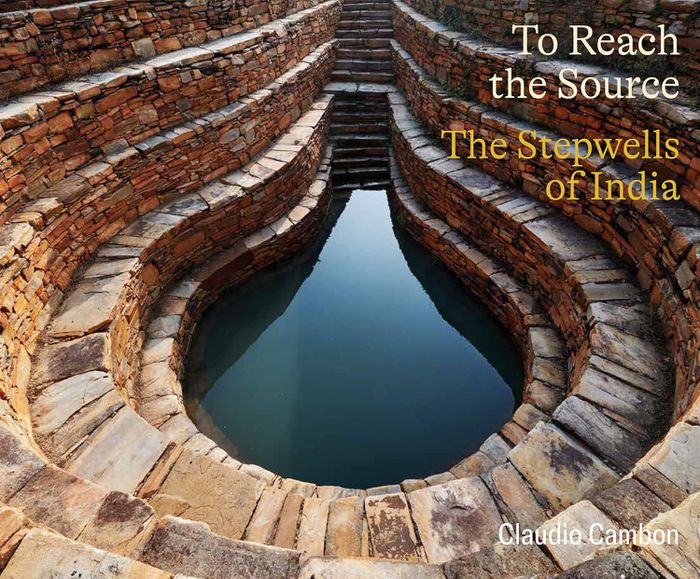
With steps leading down to the water’s edge, stepwells are inverted buildings that descend several stories below ground. Often, they are as monumental and ornate as a church, and this is intentional. They are a source of water, a gathering space, and a temple all at once. Stepwells create a visual and spatial experience unlike any other, in which the below-ground remains connected to the sun and sky above. There are thousands of stepwells across the Indian Subcontinent, many of them 500-1,000 years old, each one different from the other. Most lie abandoned and overlooked, in varying states of preservation or, more often, disrepair, but they remain beautiful and compelling. The 48 photographs in this book were made across India to convey the beauty and diversity of these structures and the striking ambiances they elicit. A brief text accompanies the images to provide history and context, interspersed with several architectural drawings by Tanvi Jain. The images seek to give readers a sense of what it feels like to immerse oneself in such a unique, meditative space, and to be impelled towards the very source of life: water.
To reach the source: The stepwells of India
Actions:
Price:
$48.95
(available in store)
Summary:
With steps leading down to the water’s edge, stepwells are inverted buildings that descend several stories below ground. Often, they are as monumental and ornate as a church, and this is intentional. They are a source of water, a gathering space, and a temple all at once. Stepwells create a visual and spatial experience unlike any other, in which the below-ground remains connected to the sun and sky above. There are thousands of stepwells across the Indian Subcontinent, many of them 500-1,000 years old, each one different from the other. Most lie abandoned and overlooked, in varying states of preservation or, more often, disrepair, but they remain beautiful and compelling. The 48 photographs in this book were made across India to convey the beauty and diversity of these structures and the striking ambiances they elicit. A brief text accompanies the images to provide history and context, interspersed with several architectural drawings by Tanvi Jain. The images seek to give readers a sense of what it feels like to immerse oneself in such a unique, meditative space, and to be impelled towards the very source of life: water.
Form:
books
books
Publication:
January 2025
January 2025
Subject:
Photography monographs
Photography monographs
Form:
books
books

Price:
$134.99
(available in store)
Summary:
The 1960s continue to hold an almost mythical place in Western culture, particularly in Britain, where change was widespread and infiltrated many aspects of life. This included architecture, whose role in a modern democracy and the form it should take were hotly debated. This book discusses the architectural thinking of the time through an examination of the design of(...)
$134.99
(available in store)
Summary:
The 1960s continue to hold an almost mythical place in Western culture, particularly in Britain, where change was widespread and infiltrated many aspects of life. This included architecture, whose role in a modern democracy and the form it should take were hotly debated. This book discusses the architectural thinking of the time through an examination of the design of(...)
Title:
1960s University buildings: The golden age of British modern architecture
Actions:
Price:
$134.99
(available in store)
Summary:
The 1960s continue to hold an almost mythical place in Western culture, particularly in Britain, where change was widespread and infiltrated many aspects of life. This included architecture, whose role in a modern democracy and the form it should take were hotly debated. This book discusses the architectural thinking of the time through an examination of the design of university buildings. While there were notable buildings being built in other spheres, no other field of architecture provided the opportunity to express those ideas as freely, while also reflecting innovative new thinking about education and society. Somehow, the university buildings of the 1960s seemed to represent the cutting edge of modern architecture in the UK. This book provides the first critical analysis and overview of these buildings, designed by some of the leading British architects of the period including Basil Spence, Leslie Martin, Alison and Peter Smithson, Denys Lasdun, Powell and Moya and James Stirling. By placing the buildings in a wider social, cultural and political context, it examines the combination of circumstances and attitudes that produced results that are equally admired and detested and allows us to understand how we might replicate or avoid them in the future.
1960s University buildings: The golden age of British modern architecture
Actions:
Price:
$134.99
(available in store)
Summary:
The 1960s continue to hold an almost mythical place in Western culture, particularly in Britain, where change was widespread and infiltrated many aspects of life. This included architecture, whose role in a modern democracy and the form it should take were hotly debated. This book discusses the architectural thinking of the time through an examination of the design of university buildings. While there were notable buildings being built in other spheres, no other field of architecture provided the opportunity to express those ideas as freely, while also reflecting innovative new thinking about education and society. Somehow, the university buildings of the 1960s seemed to represent the cutting edge of modern architecture in the UK. This book provides the first critical analysis and overview of these buildings, designed by some of the leading British architects of the period including Basil Spence, Leslie Martin, Alison and Peter Smithson, Denys Lasdun, Powell and Moya and James Stirling. By placing the buildings in a wider social, cultural and political context, it examines the combination of circumstances and attitudes that produced results that are equally admired and detested and allows us to understand how we might replicate or avoid them in the future.
Form:
books
books
Publication:
June 2025
June 2025
Subject:
Modernism
Modernism
Form:
books
books
Actions:
Price:
$55.00
(available in store)
Summary:
a+u’s July looks at how, even in a city such as New York, where projects are executed on a grand scale, designing spaces to walk, rest, work, and play centers the human experience. The selected projects from Midtown and Lower Manhattan provide but a small cross section of the varying typologies of differing scales currently enhancing the architecture of New York City.(...)
$55.00
(available in store)
Summary:
a+u’s July looks at how, even in a city such as New York, where projects are executed on a grand scale, designing spaces to walk, rest, work, and play centers the human experience. The selected projects from Midtown and Lower Manhattan provide but a small cross section of the varying typologies of differing scales currently enhancing the architecture of New York City.(...)
Title:
A+U 658 25:07 Manhattan Towers
Actions:
Price:
$55.00
(available in store)
Summary:
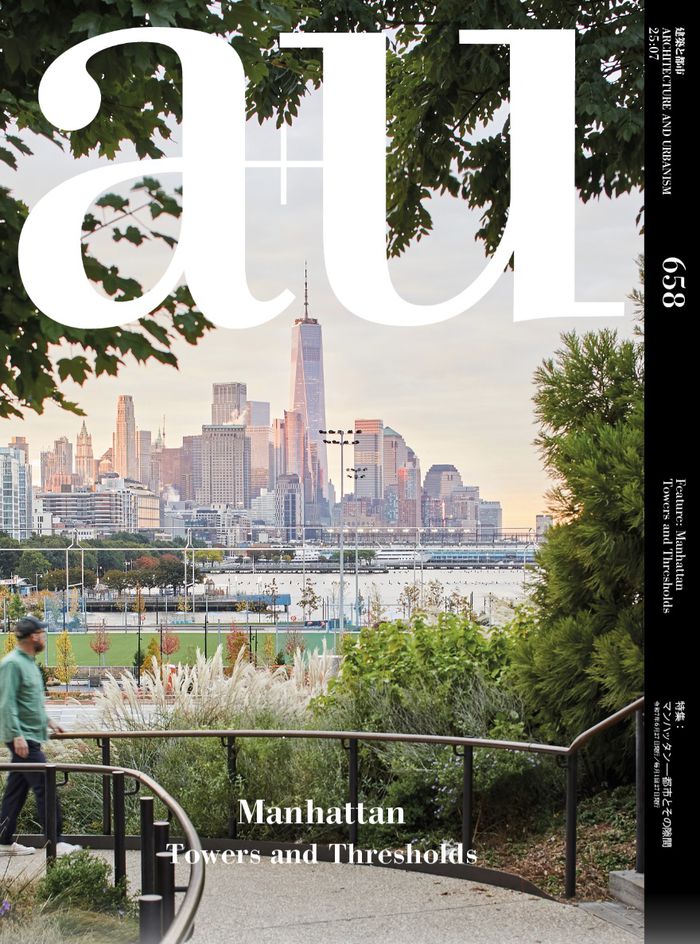
a+u’s July looks at how, even in a city such as New York, where projects are executed on a grand scale, designing spaces to walk, rest, work, and play centers the human experience. The selected projects from Midtown and Lower Manhattan provide but a small cross section of the varying typologies of differing scales currently enhancing the architecture of New York City. Projects such as the Moynihan Train Hall by Skidmore Owings & Merrill (SOM) endeavor to preserve the fabric of the city while addressing the increased need for transportation hubs by the expansion of Pennsylvania station to the adjacent historic James A. Farley Building, while adaptive reuse projects such as Gansevoort Peninsula Park by nArchitects are part of a decadeslong effort to transform the industrial waterfront into much needed green spaces and sports facilities. Kohn Pedersen Fox Associates (KPF) addresses the shortage of residential space with projects that integrate the materiality of the building to its context and incorporate the human scale with the urban one. Amid the massive developments taking place, smaller practices such as Worrell Yeung and WORKac seek to preserve urban character, through surgical intervention in their renovation projects.
A+U 658 25:07 Manhattan Towers
Actions:
Price:
$55.00
(available in store)
Summary:
a+u’s July looks at how, even in a city such as New York, where projects are executed on a grand scale, designing spaces to walk, rest, work, and play centers the human experience. The selected projects from Midtown and Lower Manhattan provide but a small cross section of the varying typologies of differing scales currently enhancing the architecture of New York City. Projects such as the Moynihan Train Hall by Skidmore Owings & Merrill (SOM) endeavor to preserve the fabric of the city while addressing the increased need for transportation hubs by the expansion of Pennsylvania station to the adjacent historic James A. Farley Building, while adaptive reuse projects such as Gansevoort Peninsula Park by nArchitects are part of a decadeslong effort to transform the industrial waterfront into much needed green spaces and sports facilities. Kohn Pedersen Fox Associates (KPF) addresses the shortage of residential space with projects that integrate the materiality of the building to its context and incorporate the human scale with the urban one. Amid the massive developments taking place, smaller practices such as Worrell Yeung and WORKac seek to preserve urban character, through surgical intervention in their renovation projects.
Form:
books
books
Publication:
July 2025
July 2025
Subject:
Magazines
Magazines
Form:
books
books
Actions:
Price:
$21.95
(available to order)
Summary:
In 1990 Jacques Chirac, the future president of France and a passionate fan of non-European art, met Jacques Kerchache, a maverick art collector with the lifelong ambition of displaying African sculpture in the holy temple of French culture, the Louvre. Together they began laying plans, and ten years later African fetishes were on view under the same roof as the Mona(...)
$21.95
(available to order)
Summary:
In 1990 Jacques Chirac, the future president of France and a passionate fan of non-European art, met Jacques Kerchache, a maverick art collector with the lifelong ambition of displaying African sculpture in the holy temple of French culture, the Louvre. Together they began laying plans, and ten years later African fetishes were on view under the same roof as the Mona(...)
Title:
Paris primitive : Jacques Chirac's museum on the quai branly
Actions:
Price:
$21.95
(available to order)
Summary:
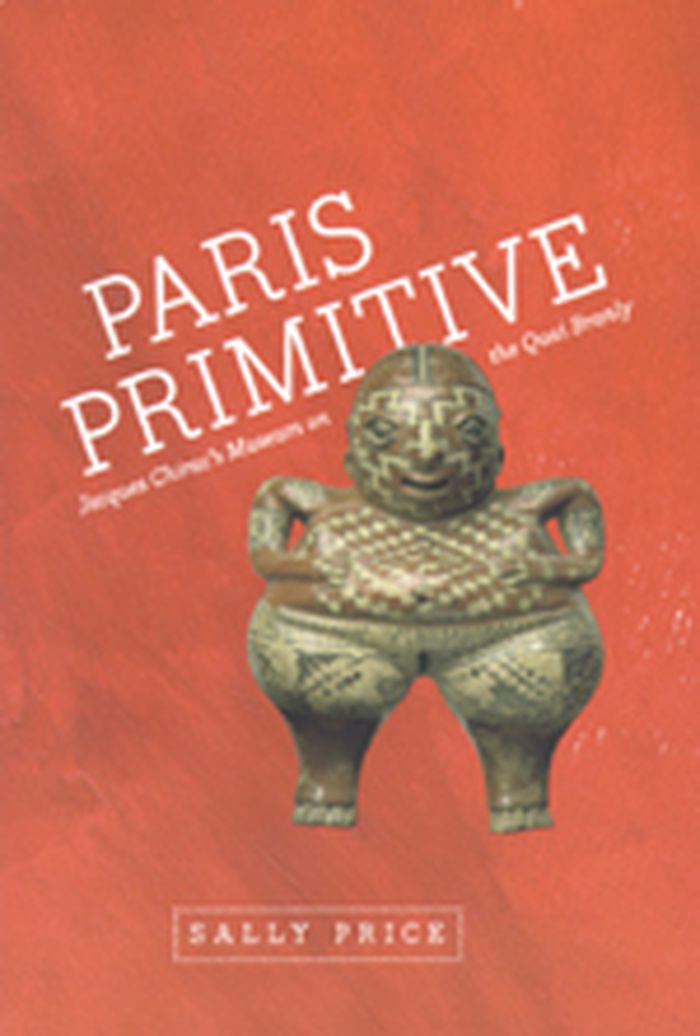
In 1990 Jacques Chirac, the future president of France and a passionate fan of non-European art, met Jacques Kerchache, a maverick art collector with the lifelong ambition of displaying African sculpture in the holy temple of French culture, the Louvre. Together they began laying plans, and ten years later African fetishes were on view under the same roof as the Mona Lisa. Then, in 2006, amidst a maelstrom of controversy and hype, Chirac presided over the opening of a new museum dedicated to primitive art in the shadow of the Eiffel Tower: the Musée du Quai Branly. Paris Primitive recounts the massive reconfiguration of Paris’s museum world that resulted from Chirac’s dream, set against a backdrop of personal and national politics, intellectual life, and the role of culture in French society. Along with exposing the machinations that led to the MQB’s creation, Sally Price addresses the thorny questions it raises about the legacy of colonialism, the balance between aesthetic judgments and ethnographic context, and the role of institutions of art and culture in an increasingly diverse France. Anyone with a stake in the myriad political, cultural, and anthropological issues raised by the MQB will find Price’s account fascinating.
Paris primitive : Jacques Chirac's museum on the quai branly
Actions:
Price:
$21.95
(available to order)
Summary:
In 1990 Jacques Chirac, the future president of France and a passionate fan of non-European art, met Jacques Kerchache, a maverick art collector with the lifelong ambition of displaying African sculpture in the holy temple of French culture, the Louvre. Together they began laying plans, and ten years later African fetishes were on view under the same roof as the Mona Lisa. Then, in 2006, amidst a maelstrom of controversy and hype, Chirac presided over the opening of a new museum dedicated to primitive art in the shadow of the Eiffel Tower: the Musée du Quai Branly. Paris Primitive recounts the massive reconfiguration of Paris’s museum world that resulted from Chirac’s dream, set against a backdrop of personal and national politics, intellectual life, and the role of culture in French society. Along with exposing the machinations that led to the MQB’s creation, Sally Price addresses the thorny questions it raises about the legacy of colonialism, the balance between aesthetic judgments and ethnographic context, and the role of institutions of art and culture in an increasingly diverse France. Anyone with a stake in the myriad political, cultural, and anthropological issues raised by the MQB will find Price’s account fascinating.
Form:
books
books
Publication:
September 2007, Chicago London
September 2007, Chicago London
Subject:
Museology
Museology


