


5209 Results
Form:
books
books
Actions:
Price:
$51.00
(available to order)
Summary:
First published in 1959, 'The Golden City' is a seminal, critical document that developed one of the earliest and most compelling arguments against the then-dominant hegemony of modernism by reawakening interest in the value of our country’s built patrimony, particularly with respect to its notable classical architecture, classical sculpture, and ornament in the built(...)
$51.00
(available to order)
Summary:
First published in 1959, 'The Golden City' is a seminal, critical document that developed one of the earliest and most compelling arguments against the then-dominant hegemony of modernism by reawakening interest in the value of our country’s built patrimony, particularly with respect to its notable classical architecture, classical sculpture, and ornament in the built(...)
Title:
The golden city: an argument for classical architecture
Actions:
Price:
$51.00
(available to order)
Summary:
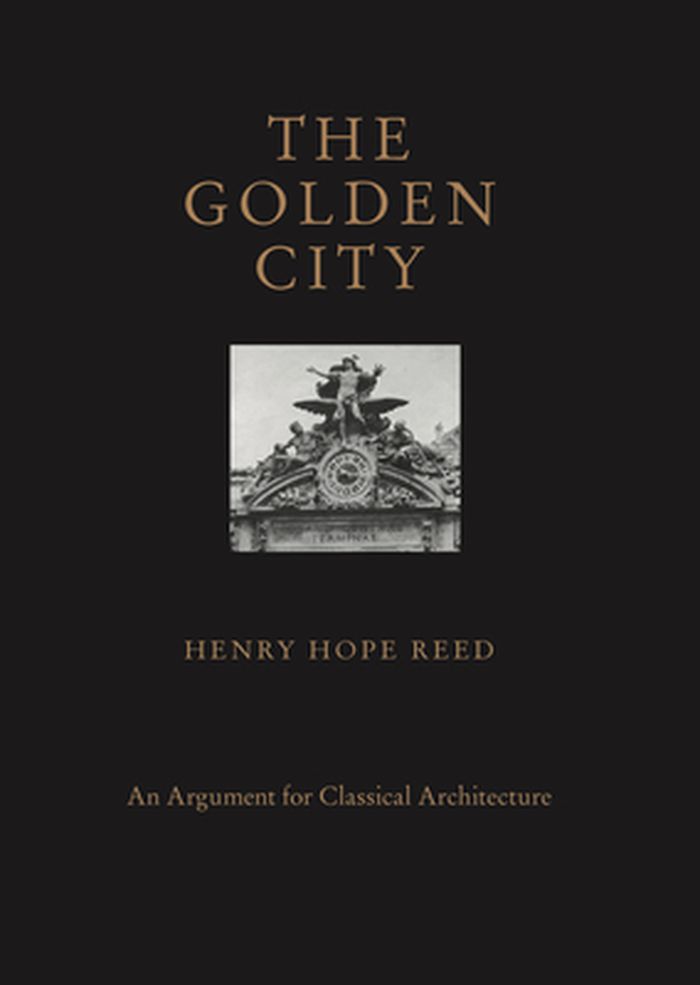
First published in 1959, 'The Golden City' is a seminal, critical document that developed one of the earliest and most compelling arguments against the then-dominant hegemony of modernism by reawakening interest in the value of our country’s built patrimony, particularly with respect to its notable classical architecture, classical sculpture, and ornament in the built environment. The book’s argument remains valuable today. 'The Golden City' can be credited with building the constituency for the preservation movement in the United States in general, and in New York City in particular. That constituency coalesced around Reed’s powerful polemic, eventually contributing to the formulation in 1965 of New York City’s groundbreaking Landmark Law, one of the most important milestones in the preservation movement in the United States.
The golden city: an argument for classical architecture
Actions:
Price:
$51.00
(available to order)
Summary:
First published in 1959, 'The Golden City' is a seminal, critical document that developed one of the earliest and most compelling arguments against the then-dominant hegemony of modernism by reawakening interest in the value of our country’s built patrimony, particularly with respect to its notable classical architecture, classical sculpture, and ornament in the built environment. The book’s argument remains valuable today. 'The Golden City' can be credited with building the constituency for the preservation movement in the United States in general, and in New York City in particular. That constituency coalesced around Reed’s powerful polemic, eventually contributing to the formulation in 1965 of New York City’s groundbreaking Landmark Law, one of the most important milestones in the preservation movement in the United States.
Form:
books
books
Publication:
May 2020
May 2020
Subject:
Urban Theory
Urban Theory
Form:
books
books

Actions:
Price:
$48.95
(available to order)
Summary:
In The Sympathy of Things, Lars Spuybroek argues that we must "undo" the twentieth century - the age in which the eighteenth-century ideal of the Sublime became a technological reality. Spuybroek returns to the insights of the great nineteenth-century art writer John Ruskin, for whom beauty always comprises variation, imperfection and fragility. Spuybroek argues that(...)
$48.95
(available to order)
Summary:
In The Sympathy of Things, Lars Spuybroek argues that we must "undo" the twentieth century - the age in which the eighteenth-century ideal of the Sublime became a technological reality. Spuybroek returns to the insights of the great nineteenth-century art writer John Ruskin, for whom beauty always comprises variation, imperfection and fragility. Spuybroek argues that(...)
Title:
The sympathy of things: Ruskin and the ecology of design
Actions:
Price:
$48.95
(available to order)
Summary:
In The Sympathy of Things, Lars Spuybroek argues that we must "undo" the twentieth century - the age in which the eighteenth-century ideal of the Sublime became a technological reality. Spuybroek returns to the insights of the great nineteenth-century art writer John Ruskin, for whom beauty always comprises variation, imperfection and fragility. Spuybroek argues that these three concepts not only define relations between humans and their designed products but between all things: "sympathy is what things feel when they shape each other." Spuybroek then compares five twinned themes in Ruskin - the Gothic and work, ornament and matter, sympathy and abstraction, the picturesque and time, ecology and design - with later philosophers and theorists such as William James and Bruno Latour.
The sympathy of things: Ruskin and the ecology of design
Actions:
Price:
$48.95
(available to order)
Summary:
In The Sympathy of Things, Lars Spuybroek argues that we must "undo" the twentieth century - the age in which the eighteenth-century ideal of the Sublime became a technological reality. Spuybroek returns to the insights of the great nineteenth-century art writer John Ruskin, for whom beauty always comprises variation, imperfection and fragility. Spuybroek argues that these three concepts not only define relations between humans and their designed products but between all things: "sympathy is what things feel when they shape each other." Spuybroek then compares five twinned themes in Ruskin - the Gothic and work, ornament and matter, sympathy and abstraction, the picturesque and time, ecology and design - with later philosophers and theorists such as William James and Bruno Latour.
Form:
books
books
Publication:
February 2012
February 2012
Subject:
Architectural Theory
Architectural Theory
Form:
books
books
Price:
$29.95
(available to order)
Summary:
A new edition of one of the most widely read books on modern design Nikolaus Pevsner's landmark work was first published in 1936. Pevsner saw Modernism as a synthesis of three main sources: William Morris and his followers; the work of the 19th-century engineers; and Art Nouveau. All these form the essential background to the work of the early Modernists, with their(...)
$29.95
(available to order)
Summary:
A new edition of one of the most widely read books on modern design Nikolaus Pevsner's landmark work was first published in 1936. Pevsner saw Modernism as a synthesis of three main sources: William Morris and his followers; the work of the 19th-century engineers; and Art Nouveau. All these form the essential background to the work of the early Modernists, with their(...)
Title:
Pioneers of modern design: from William Morris to Walter Gropius
Actions:
Price:
$29.95
(available to order)
Summary:
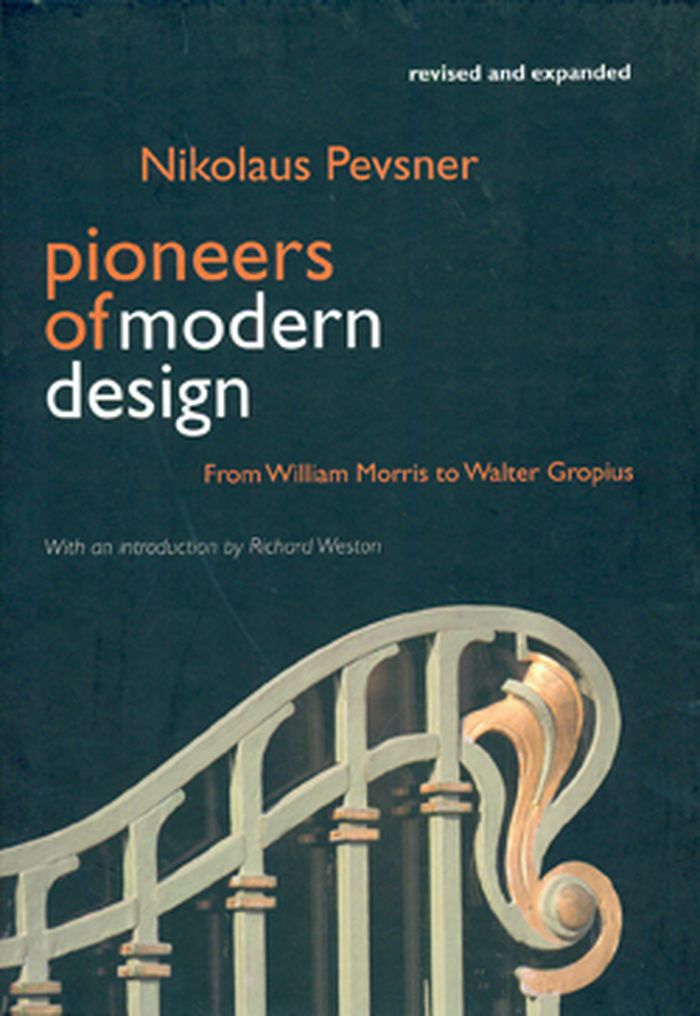
A new edition of one of the most widely read books on modern design Nikolaus Pevsner's landmark work was first published in 1936. Pevsner saw Modernism as a synthesis of three main sources: William Morris and his followers; the work of the 19th-century engineers; and Art Nouveau. All these form the essential background to the work of the early Modernists, with their rejection of ornament, their use of new materials and their commitment to "utility" and the machine age. Pevsner looks at the early masters of the movement, such as Voysey and Rennie Mackintosh in Britain; Sullivan and Lloyd Wright in America; and Loos and Wagner in Vienna, ending in 1914, with Walter Gropius and the Bauhaus movement representing design's most radical break with the past.
Pioneers of modern design: from William Morris to Walter Gropius
Actions:
Price:
$29.95
(available to order)
Summary:
A new edition of one of the most widely read books on modern design Nikolaus Pevsner's landmark work was first published in 1936. Pevsner saw Modernism as a synthesis of three main sources: William Morris and his followers; the work of the 19th-century engineers; and Art Nouveau. All these form the essential background to the work of the early Modernists, with their rejection of ornament, their use of new materials and their commitment to "utility" and the machine age. Pevsner looks at the early masters of the movement, such as Voysey and Rennie Mackintosh in Britain; Sullivan and Lloyd Wright in America; and Loos and Wagner in Vienna, ending in 1914, with Walter Gropius and the Bauhaus movement representing design's most radical break with the past.
Form:
books
books
Publication:
May 2012
May 2012
Subject:
Design Theory
Design Theory
Form:
books
books
Actions:
Price:
$42.00
(available to order)
Summary:
In The Architecture of Error Francesca Hughes argues that behind the architect’s acute fetishization of redundant precision lies a special fear of physical error. What if we were to consider the pivotal cultural and technological transformations of modernism to have been driven not so much by the causes its narratives declare, she asks, as by an unspoken horror of loss of(...)
$42.00
(available to order)
Summary:
In The Architecture of Error Francesca Hughes argues that behind the architect’s acute fetishization of redundant precision lies a special fear of physical error. What if we were to consider the pivotal cultural and technological transformations of modernism to have been driven not so much by the causes its narratives declare, she asks, as by an unspoken horror of loss of(...)
Title:
The architecture of error: matter, measure, and the misadventures of precision
Actions:
Price:
$42.00
(available to order)
Summary:
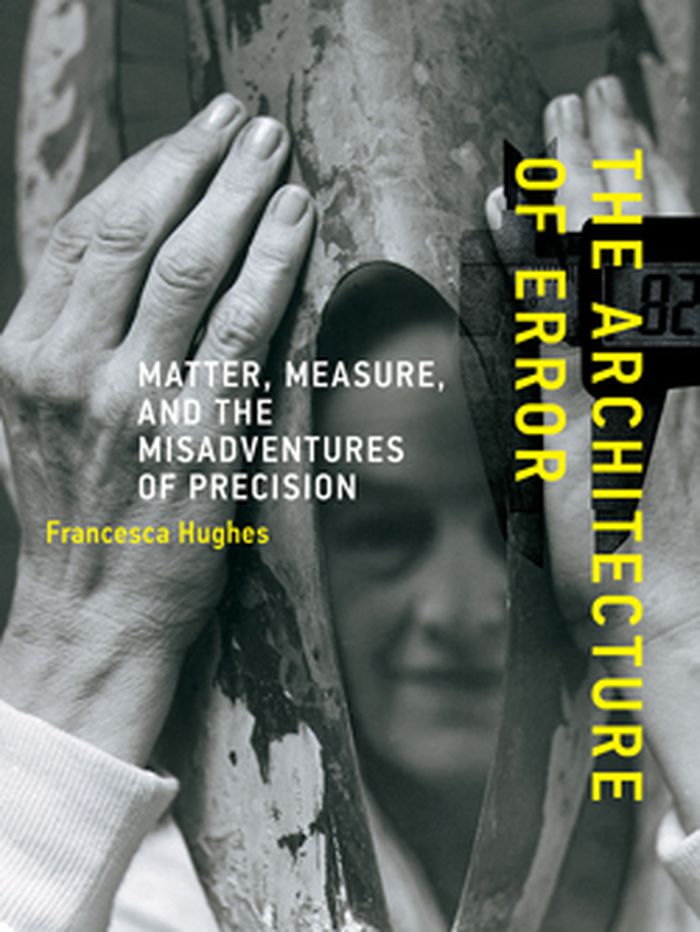
In The Architecture of Error Francesca Hughes argues that behind the architect’s acute fetishization of redundant precision lies a special fear of physical error. What if we were to consider the pivotal cultural and technological transformations of modernism to have been driven not so much by the causes its narratives declare, she asks, as by an unspoken horror of loss of control over error, material life, and everything that matter stands for? Hughes traces the rising intolerance of material vagaries—from the removal of ornament to digitalized fabrication—that produced the blind rejection of organic materials, the proliferation of material testing, and the rhetorical obstacles that blighted cybernetics. Why is it, she asks, that the more we cornered physical error, the more we feared it?
The architecture of error: matter, measure, and the misadventures of precision
Actions:
Price:
$42.00
(available to order)
Summary:
In The Architecture of Error Francesca Hughes argues that behind the architect’s acute fetishization of redundant precision lies a special fear of physical error. What if we were to consider the pivotal cultural and technological transformations of modernism to have been driven not so much by the causes its narratives declare, she asks, as by an unspoken horror of loss of control over error, material life, and everything that matter stands for? Hughes traces the rising intolerance of material vagaries—from the removal of ornament to digitalized fabrication—that produced the blind rejection of organic materials, the proliferation of material testing, and the rhetorical obstacles that blighted cybernetics. Why is it, she asks, that the more we cornered physical error, the more we feared it?
Form:
books
books
Publication:
November 2014
November 2014
Subject:
Architectural Theory
Architectural Theory
Form:
books
books
Title:
B is for Bauhaus
B is for Bauhaus
Actions:
Price:
$40.00
(available to order)
Summary:
This book is not a dictionary, though it tells you all you need know about everything from Authenticity to Zips. It's not an autobiography, though it does offer a revealing and highly personal inside view of contemporary culture. It's an essential tool kit for understanding the world around us. It's about what makes a Warhol a genuine fake; the creation of national(...)
$40.00
(available to order)
Summary:
This book is not a dictionary, though it tells you all you need know about everything from Authenticity to Zips. It's not an autobiography, though it does offer a revealing and highly personal inside view of contemporary culture. It's an essential tool kit for understanding the world around us. It's about what makes a Warhol a genuine fake; the creation of national(...)
Title:
B is for Bauhaus
Actions:
Price:
$40.00
(available to order)
Summary:
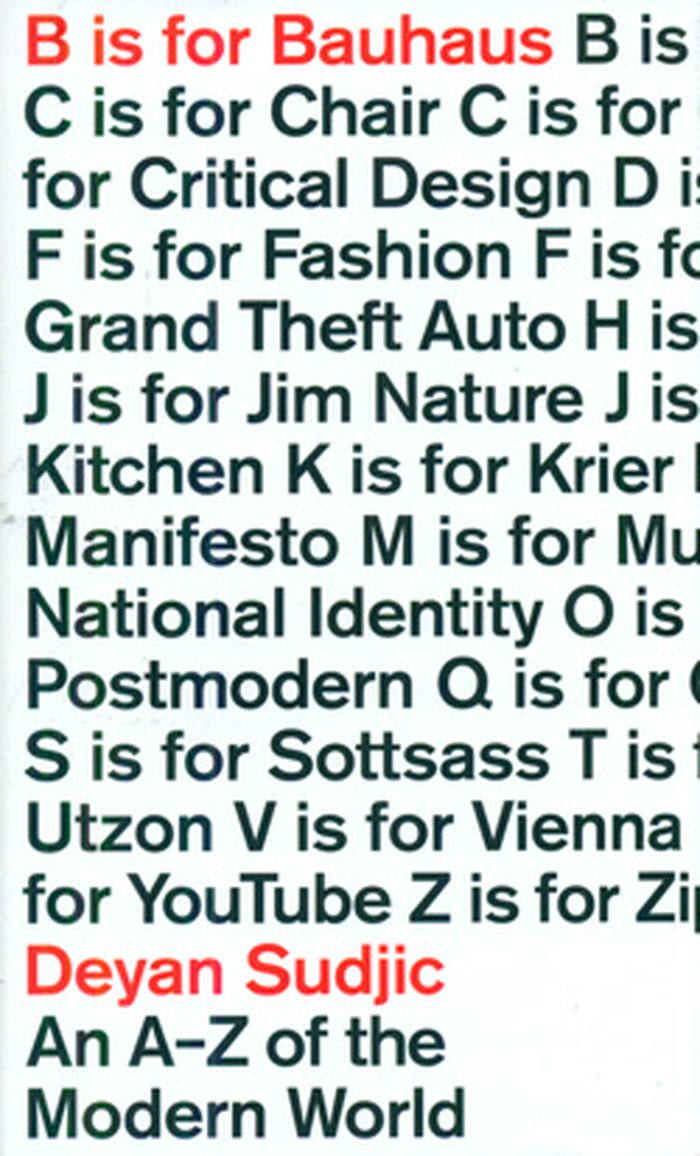
This book is not a dictionary, though it tells you all you need know about everything from Authenticity to Zips. It's not an autobiography, though it does offer a revealing and highly personal inside view of contemporary culture. It's an essential tool kit for understanding the world around us. It's about what makes a Warhol a genuine fake; the creation of national identities; the mania to collect. It's also about the city as seen from the rear view mirror of Grand Theft Auto V; digital ornament and why we value imperfection. It's about drinking a bruisingly dry martini in Adolf Loo's American bar in Vienna, and about Hitchcock's film sets. It's about the modern world of fashion, technology, design and art.
B is for Bauhaus
Actions:
Price:
$40.00
(available to order)
Summary:
This book is not a dictionary, though it tells you all you need know about everything from Authenticity to Zips. It's not an autobiography, though it does offer a revealing and highly personal inside view of contemporary culture. It's an essential tool kit for understanding the world around us. It's about what makes a Warhol a genuine fake; the creation of national identities; the mania to collect. It's also about the city as seen from the rear view mirror of Grand Theft Auto V; digital ornament and why we value imperfection. It's about drinking a bruisingly dry martini in Adolf Loo's American bar in Vienna, and about Hitchcock's film sets. It's about the modern world of fashion, technology, design and art.
Form:
books
books
Publication:
June 2014
June 2014
Form:
books
books
Actions:
Holdings:
Description:
259 pages : illustrations (some color) ; 25 cm.
Description:
259 pages : illustrations (some color) ; 25 cm.
Author:
Subject:
Publication:
Lausanne, Switzerland : EPFL Press ; Abingdon, Oxford : Routledge, [2014]
Lausanne, Switzerland : EPFL Press ; Abingdon, Oxford : Routledge, [2014]
Title:
Louis I. Kahn : exposed concrete and hollow stones, 1949-1959 / Roberto Gargiani ; translated from the Italian by Stephen Piccolo.
Actions:
Holdings:
Description:
259 pages : illustrations (some color) ; 25 cm.
Louis I. Kahn : exposed concrete and hollow stones, 1949-1959 / Roberto Gargiani ; translated from the Italian by Stephen Piccolo.
Actions:
Holdings:
Description:
259 pages : illustrations (some color) ; 25 cm.
Form:
books
books
Publication:
Lausanne, Switzerland : EPFL Press ; Abingdon, Oxford : Routledge, [2014]
Lausanne, Switzerland : EPFL Press ; Abingdon, Oxford : Routledge, [2014]
Author:
Subject:
Form:
books
books
Title:
Cevdet Erek.
Cevdet Erek.
Actions:
Description:
1 online resource
Author:
Subject:
Publication:
[Place of publication not identified] : Secession ; Verlag der Buchhandlung Walther und Franz König, 2025.
[Place of publication not identified] : Secession ; Verlag der Buchhandlung Walther und Franz König, 2025.
Form:
books
books
Publication:
[Place of publication not identified] : Secession ; Verlag der Buchhandlung Walther und Franz König, 2025.
[Place of publication not identified] : Secession ; Verlag der Buchhandlung Walther und Franz König, 2025.
Author:
Subject:
Form:
books
books
Actions:
Holdings:
Description:
xii, 100 pages, 5 unnumbered leaves of plates (1 folded) : illustrations, color map, 2 portraits ; 25 cm
Description:
xii, 100 pages, 5 unnumbered leaves of plates (1 folded) : illustrations, color map, 2 portraits ; 25 cm
Author:
Subject:
Publication:
London : Printed by Spottiswoode, [1886]
London : Printed by Spottiswoode, [1886]
Title:
Jamaica at the Colonial and Indian Exhibition, London, 1886 : ... Executive Commissioner in London: Sir Augustus J. Adderley, K.C.M.G. Royal Commissioner / Honorary Commissioner: C. Washington Eves ...
Actions:
Holdings:
Description:
xii, 100 pages, 5 unnumbered leaves of plates (1 folded) : illustrations, color map, 2 portraits ; 25 cm
Jamaica at the Colonial and Indian Exhibition, London, 1886 : ... Executive Commissioner in London: Sir Augustus J. Adderley, K.C.M.G. Royal Commissioner / Honorary Commissioner: C. Washington Eves ...
Actions:
Holdings:
Description:
xii, 100 pages, 5 unnumbered leaves of plates (1 folded) : illustrations, color map, 2 portraits ; 25 cm
Form:
books
books
Publication:
London : Printed by Spottiswoode, [1886]
London : Printed by Spottiswoode, [1886]
Author:
Subject:
Form:
books
books
Actions:
Price:
$80.00
(available to order)
Summary:
The photographer Christine Erhard’s (b. Crailsheim, 1969; lives and works in Düsseldorf) work delves into the history of the depiction of architecture, and specifically of early-twentieth-century German modernism and constructivist and brutalist structures. Her compositions are inspired by archival research, in which she unearths photographs that typically show(...)
$80.00
(available to order)
Summary:
The photographer Christine Erhard’s (b. Crailsheim, 1969; lives and works in Düsseldorf) work delves into the history of the depiction of architecture, and specifically of early-twentieth-century German modernism and constructivist and brutalist structures. Her compositions are inspired by archival research, in which she unearths photographs that typically show(...)
Title:
Christine Erhard: Building images
Actions:
Price:
$80.00
(available to order)
Summary:
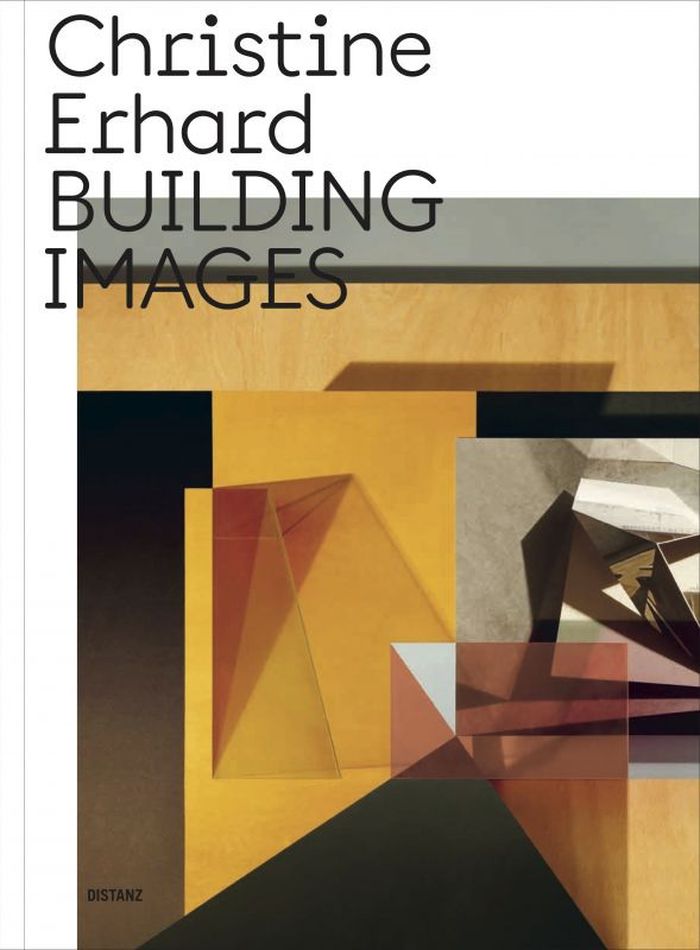
The photographer Christine Erhard’s (b. Crailsheim, 1969; lives and works in Düsseldorf) work delves into the history of the depiction of architecture, and specifically of early-twentieth-century German modernism and constructivist and brutalist structures. Her compositions are inspired by archival research, in which she unearths photographs that typically show architectonic spaces, modernist buildings, or cityscapes. These two-dimensional images often become models for plastic constructions, which are themselves photographed so that different levels of reflection and reality overlap. In exhibitions, Erhard arranges her pictures in installations that transpose them back into three dimensions, for a vivid experience of the dialectical interplay between depiction and physical space. The photographic image emerges in these installations as a body hovering between flat ornament, the illusion of depth, and sculptural presence.
Christine Erhard: Building images
Actions:
Price:
$80.00
(available to order)
Summary:
The photographer Christine Erhard’s (b. Crailsheim, 1969; lives and works in Düsseldorf) work delves into the history of the depiction of architecture, and specifically of early-twentieth-century German modernism and constructivist and brutalist structures. Her compositions are inspired by archival research, in which she unearths photographs that typically show architectonic spaces, modernist buildings, or cityscapes. These two-dimensional images often become models for plastic constructions, which are themselves photographed so that different levels of reflection and reality overlap. In exhibitions, Erhard arranges her pictures in installations that transpose them back into three dimensions, for a vivid experience of the dialectical interplay between depiction and physical space. The photographic image emerges in these installations as a body hovering between flat ornament, the illusion of depth, and sculptural presence.
Form:
books
books
Publication:
August 2022
August 2022
Subject:
Photography monographs
Photography monographs
Form:
books
books
Title:
Surface consciousness
Surface consciousness
Actions:
Price:
$54.99
(available in store)
Summary:
Rather than seeking to define a new movement, this "Surface consciousness" demonstrates that for architecture surface is now far more than a 'crust' or 'decorative strategy', setting up meaningful relationships between contemporary methods of visioning, making and fabricating. Prompted by digital advancements, surface consciousness represents a whole new way of(...)
$54.99
(available in store)
Summary:
Rather than seeking to define a new movement, this "Surface consciousness" demonstrates that for architecture surface is now far more than a 'crust' or 'decorative strategy', setting up meaningful relationships between contemporary methods of visioning, making and fabricating. Prompted by digital advancements, surface consciousness represents a whole new way of(...)
Title:
Surface consciousness
Actions:
Price:
$54.99
(available in store)
Summary:
Rather than seeking to define a new movement, this "Surface consciousness" demonstrates that for architecture surface is now far more than a 'crust' or 'decorative strategy', setting up meaningful relationships between contemporary methods of visioning, making and fabricating. Prompted by digital advancements, surface consciousness represents a whole new way of conceiving tectonic form. Whereas classical and even Modernist architecture polarised ornament and structure, contemporary techniques allow for an integration and blurring of the inside with the outside. In architectural terms this enables an unparalled freedom of expression and form. This is apparent in the diversity of the work featured here by those such as Herzog & de Meuron, Michael Trudgeon, Ashton Raggatt McDougall(ARM) and Lyons, in which a new delight emerges in patterning and texture as well as the sensuous and the ornamental.
Surface consciousness
Actions:
Price:
$54.99
(available in store)
Summary:
Rather than seeking to define a new movement, this "Surface consciousness" demonstrates that for architecture surface is now far more than a 'crust' or 'decorative strategy', setting up meaningful relationships between contemporary methods of visioning, making and fabricating. Prompted by digital advancements, surface consciousness represents a whole new way of conceiving tectonic form. Whereas classical and even Modernist architecture polarised ornament and structure, contemporary techniques allow for an integration and blurring of the inside with the outside. In architectural terms this enables an unparalled freedom of expression and form. This is apparent in the diversity of the work featured here by those such as Herzog & de Meuron, Michael Trudgeon, Ashton Raggatt McDougall(ARM) and Lyons, in which a new delight emerges in patterning and texture as well as the sensuous and the ornamental.
Form:
books
books
Publication:
April 2003, Chichester
April 2003, Chichester
Subject:
Magazines, Back Issues
Magazines, Back Issues


