


5346 Results
Form:
books
books
Price:
$23.95
(available to order)
Summary:
For some people, their lawn is a source of pride, and for others, caring for their lawn is a chore. Yet for an increasing number of people, turf care is a cause of ecological anxiety. In Lawn People, author Paul Robbins, asks, "How did the needs of the grass come to be my own?" In his goal to get a clearer picture of why people and grasses do what they do, Robbins(...)
$23.95
(available to order)
Summary:
For some people, their lawn is a source of pride, and for others, caring for their lawn is a chore. Yet for an increasing number of people, turf care is a cause of ecological anxiety. In Lawn People, author Paul Robbins, asks, "How did the needs of the grass come to be my own?" In his goal to get a clearer picture of why people and grasses do what they do, Robbins(...)
Title:
Lawn People: how grasses, weeds and chemicals make us who we are
Actions:
Price:
$23.95
(available to order)
Summary:
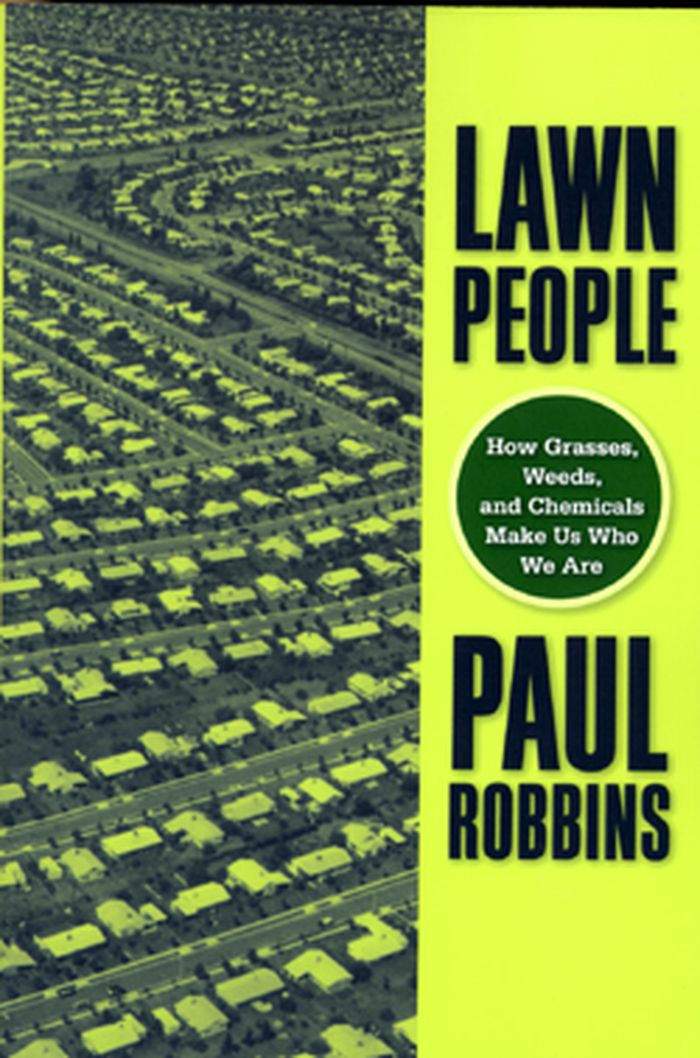
For some people, their lawn is a source of pride, and for others, caring for their lawn is a chore. Yet for an increasing number of people, turf care is a cause of ecological anxiety. In Lawn People, author Paul Robbins, asks, "How did the needs of the grass come to be my own?" In his goal to get a clearer picture of why people and grasses do what they do, Robbins interviews homeowners about their lawns, and uses national surveys, analysis from aerial photographs, and economic data to determine what people really feel about-and how they treat-their lawns. Lawn People places the lawn in its ecological, economic, and social context. Robbins considers the attention we pay our turfgrass-the chemicals we use to grow lawns, the hazards of turf care to our urban ecology, and its potential impact on water quality and household health. He also shows how the ecology of cities creates certain kinds of citizens, deftly contrasting man's control of the lawn with the lawn's control of man. Lawn People provides an intriguing examination of nature's influence on landscape management and on the ecosystem.
Lawn People: how grasses, weeds and chemicals make us who we are
Actions:
Price:
$23.95
(available to order)
Summary:
For some people, their lawn is a source of pride, and for others, caring for their lawn is a chore. Yet for an increasing number of people, turf care is a cause of ecological anxiety. In Lawn People, author Paul Robbins, asks, "How did the needs of the grass come to be my own?" In his goal to get a clearer picture of why people and grasses do what they do, Robbins interviews homeowners about their lawns, and uses national surveys, analysis from aerial photographs, and economic data to determine what people really feel about-and how they treat-their lawns. Lawn People places the lawn in its ecological, economic, and social context. Robbins considers the attention we pay our turfgrass-the chemicals we use to grow lawns, the hazards of turf care to our urban ecology, and its potential impact on water quality and household health. He also shows how the ecology of cities creates certain kinds of citizens, deftly contrasting man's control of the lawn with the lawn's control of man. Lawn People provides an intriguing examination of nature's influence on landscape management and on the ecosystem.
Form:
books
books
Publication:
June 2007, Philadelphie
June 2007, Philadelphie
Subject:
Green Architecture
Green Architecture
Form:
books
books
Actions:
Price:
$54.00
(available to order)
Summary:
This third AD by the guest-editors of the highly successful Emergence and Techniques and Technologies in Morphogenetic Design titles shifts the morpho-ecological design project into the realm of performance. Whereas the dictionary definition of performance - to `carry out an action' or `to fulfill a task' - invokes a tired utilitarian debate, Hensel and Menges inject the(...)
$54.00
(available to order)
Summary:
This third AD by the guest-editors of the highly successful Emergence and Techniques and Technologies in Morphogenetic Design titles shifts the morpho-ecological design project into the realm of performance. Whereas the dictionary definition of performance - to `carry out an action' or `to fulfill a task' - invokes a tired utilitarian debate, Hensel and Menges inject the(...)
Title:
Architectural Design Versatility and Vicissitude
Actions:
Price:
$54.00
(available to order)
Summary:
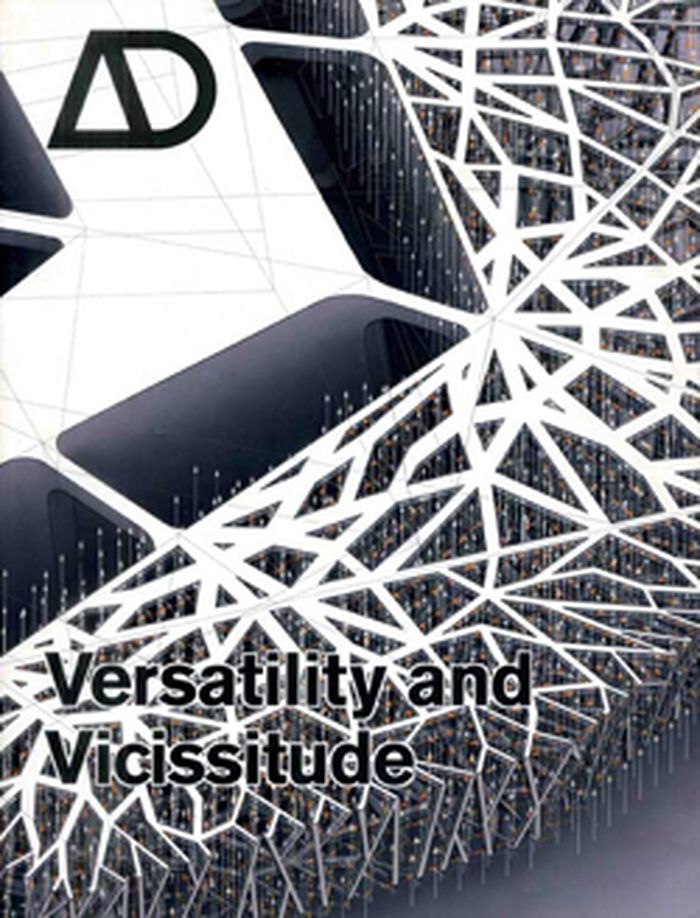
This third AD by the guest-editors of the highly successful Emergence and Techniques and Technologies in Morphogenetic Design titles shifts the morpho-ecological design project into the realm of performance. Whereas the dictionary definition of performance - to `carry out an action' or `to fulfill a task' - invokes a tired utilitarian debate, Hensel and Menges inject the meaning of the word `performance' with an entirely new life. In this context, form is redefined not as the shape of a material object alone, but as the multitude of effects, a milieu of conditions, modulations and microclimates that emanate from an object's exchange with its specific environment; a dynamic relationship that is perceived and interacted with by a subject. A synergetic employment of performance and morpho-ecological techniques combine to create integral design solutions that will render an alternative model for sustainability. This issue presents historical precursors and precedents for this approach, as well as the current state of the art of morpho-ecological design. Key contributors include: Klaus Bollinger and Manfred Grohmann of Bollinger & Grohmann, Aleksandra Jaeschke, OCEAN, Professor Remo Pedreschi, Defne Sunguroglu, Peter Trummer and Michael Weinstock.
Architectural Design Versatility and Vicissitude
Actions:
Price:
$54.00
(available to order)
Summary:
This third AD by the guest-editors of the highly successful Emergence and Techniques and Technologies in Morphogenetic Design titles shifts the morpho-ecological design project into the realm of performance. Whereas the dictionary definition of performance - to `carry out an action' or `to fulfill a task' - invokes a tired utilitarian debate, Hensel and Menges inject the meaning of the word `performance' with an entirely new life. In this context, form is redefined not as the shape of a material object alone, but as the multitude of effects, a milieu of conditions, modulations and microclimates that emanate from an object's exchange with its specific environment; a dynamic relationship that is perceived and interacted with by a subject. A synergetic employment of performance and morpho-ecological techniques combine to create integral design solutions that will render an alternative model for sustainability. This issue presents historical precursors and precedents for this approach, as well as the current state of the art of morpho-ecological design. Key contributors include: Klaus Bollinger and Manfred Grohmann of Bollinger & Grohmann, Aleksandra Jaeschke, OCEAN, Professor Remo Pedreschi, Defne Sunguroglu, Peter Trummer and Michael Weinstock.
Form:
books
books
Publication:
March 2008, London
March 2008, London
Subject:
Green Architecture
Green Architecture
Form:
books
books
Actions:
Price:
$60.00
(available to order)
Summary:
After the Bauhaus's closing in 1933, many of its protagonists moved to the United States, where their acceptance had to be cultivated. The key to understanding the American reception of the Bauhaus is to be found not in the émigré success stories or the famous(...)
$60.00
(available to order)
Summary:
After the Bauhaus's closing in 1933, many of its protagonists moved to the United States, where their acceptance had to be cultivated. The key to understanding the American reception of the Bauhaus is to be found not in the émigré success stories or the famous(...)
Subject:
Architecture since 1900, Europe
Architecture since 1900, Europe
Publication:
June 1999, Cambridge
June 1999, Cambridge
Title:
The Bauhaus and America : first contacts 1919-1936
Actions:
Price:
$60.00
(available to order)
Summary:
After the Bauhaus's closing in 1933, many of its protagonists moved to the United States, where their acceptance had to be cultivated. The key to understanding the American reception of the Bauhaus is to be found not in the émigré success stories or the famous 1938 Bauhaus exhibition at the Museum of Modern Art, but in the course of America's early contact with the Bauhaus. In this book Margret Kentgens-Craig shows that the fame of the Bauhaus in America was the result not only of the inherent qualities of its concepts and products, but also of a unique congruence of cultural supply and demand, of a consistent flow of information, and of fine-tuned marketing. Thus the history of the American reception of the Bauhaus in the 1920s and 1930s foreshadows the patterns of fame-making that became typical of the post-World War II art world. The transfer of artistic, intellectual, and pedagogical concepts from one cultural context to another is a process of transformation and integration. In presenting a case study of this process, the book also provides fresh insights into the German-American cultural history of the period from 1919 to 1936.
The Bauhaus and America : first contacts 1919-1936
Actions:
Price:
$60.00
(available to order)
Summary:
After the Bauhaus's closing in 1933, many of its protagonists moved to the United States, where their acceptance had to be cultivated. The key to understanding the American reception of the Bauhaus is to be found not in the émigré success stories or the famous 1938 Bauhaus exhibition at the Museum of Modern Art, but in the course of America's early contact with the Bauhaus. In this book Margret Kentgens-Craig shows that the fame of the Bauhaus in America was the result not only of the inherent qualities of its concepts and products, but also of a unique congruence of cultural supply and demand, of a consistent flow of information, and of fine-tuned marketing. Thus the history of the American reception of the Bauhaus in the 1920s and 1930s foreshadows the patterns of fame-making that became typical of the post-World War II art world. The transfer of artistic, intellectual, and pedagogical concepts from one cultural context to another is a process of transformation and integration. In presenting a case study of this process, the book also provides fresh insights into the German-American cultural history of the period from 1919 to 1936.
Form:
books
books
Publication:
June 1999, Cambridge
June 1999, Cambridge
Subject:
Architecture since 1900, Europe
Architecture since 1900, Europe
Form:
books
books
Actions:
Price:
$44.00
(available to order)
Summary:
Introducing the second-edition, hardcover version of ''Sam Chermayeff [et al.]: Creatures,'' edited by Moritz Küng! With the first edition sold out in less than a year, this book takes a look back through nearly two decades of experimental projects undertaken by the Berlin-based architect Sam Chermayeff and his collaborators—for the most part pieces of furniture whose(...)
$44.00
(available to order)
Summary:
Introducing the second-edition, hardcover version of ''Sam Chermayeff [et al.]: Creatures,'' edited by Moritz Küng! With the first edition sold out in less than a year, this book takes a look back through nearly two decades of experimental projects undertaken by the Berlin-based architect Sam Chermayeff and his collaborators—for the most part pieces of furniture whose(...)
Title:
Sam Chermayeff (et al.): Creatures. 2nd edition
Actions:
Price:
$44.00
(available to order)
Summary:
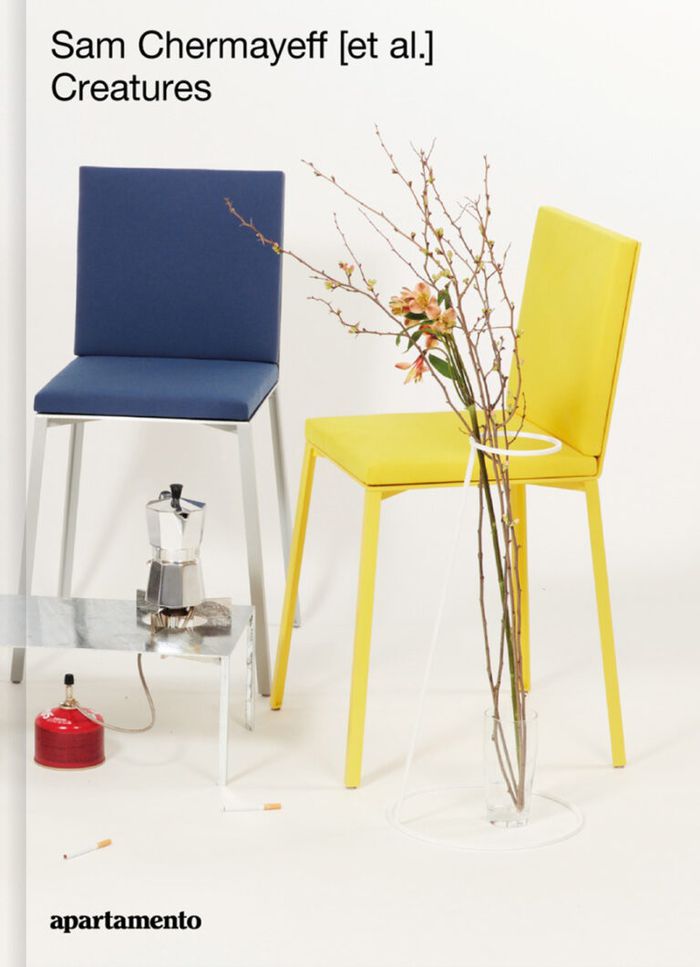
Introducing the second-edition, hardcover version of ''Sam Chermayeff [et al.]: Creatures,'' edited by Moritz Küng! With the first edition sold out in less than a year, this book takes a look back through nearly two decades of experimental projects undertaken by the Berlin-based architect Sam Chermayeff and his collaborators—for the most part pieces of furniture whose use, appearance, or application has been reimagined and readapted. But these ‘creatures’ are not just conceptual; they’re made to be lived with daily and all start with the idea that personal whim is probably the best guide for producing any design that’s to be lived with day in, day out. Photos of these objects go hand in hand with an essay by writer and curator Dieter Roelstraete, who talks us through Chermayeff’s work in the context of ‘thing theory’, a school of thought that focuses on human-object interactions. Readers move back and forth between their own view of Chermayeff’s creatures and Roelstraete’s reflections on the nature of ‘things’, as he also draws on cultural figures like Heidegger, Francis Ponge, Marina Tsvetaeva, and Karl Ove Knausgård, and our relationship to the indomitable presence of objects in our lives.
Sam Chermayeff (et al.): Creatures. 2nd edition
Actions:
Price:
$44.00
(available to order)
Summary:
Introducing the second-edition, hardcover version of ''Sam Chermayeff [et al.]: Creatures,'' edited by Moritz Küng! With the first edition sold out in less than a year, this book takes a look back through nearly two decades of experimental projects undertaken by the Berlin-based architect Sam Chermayeff and his collaborators—for the most part pieces of furniture whose use, appearance, or application has been reimagined and readapted. But these ‘creatures’ are not just conceptual; they’re made to be lived with daily and all start with the idea that personal whim is probably the best guide for producing any design that’s to be lived with day in, day out. Photos of these objects go hand in hand with an essay by writer and curator Dieter Roelstraete, who talks us through Chermayeff’s work in the context of ‘thing theory’, a school of thought that focuses on human-object interactions. Readers move back and forth between their own view of Chermayeff’s creatures and Roelstraete’s reflections on the nature of ‘things’, as he also draws on cultural figures like Heidegger, Francis Ponge, Marina Tsvetaeva, and Karl Ove Knausgård, and our relationship to the indomitable presence of objects in our lives.
Form:
books
books
Publication:
October 2021
October 2021
Subject:
Design Monographs
Design Monographs
Form:
books
books

Actions:
Price:
$25.00
(available in store)
Summary:
Image Bank began compiling artist’s addresses and image requests to prompt correspondence artworks using the postal system in 1970. These requests first appeared in print in General Idea’s & AA Bronson’s FILE Megazine issues 1, 2 and 3, and they were published in their own volume in 1972 by Talonbooks. Nearly fifty years after its initial release, this revised facsimile(...)
$25.00
(available in store)
Summary:
Image Bank began compiling artist’s addresses and image requests to prompt correspondence artworks using the postal system in 1970. These requests first appeared in print in General Idea’s & AA Bronson’s FILE Megazine issues 1, 2 and 3, and they were published in their own volume in 1972 by Talonbooks. Nearly fifty years after its initial release, this revised facsimile(...)
Title:
International image exchange directory
Actions:
Price:
$25.00
(available in store)
Summary:
Image Bank began compiling artist’s addresses and image requests to prompt correspondence artworks using the postal system in 1970. These requests first appeared in print in General Idea’s & AA Bronson’s FILE Megazine issues 1, 2 and 3, and they were published in their own volume in 1972 by Talonbooks. Nearly fifty years after its initial release, this revised facsimile edition includes the original list of image requests from over 200 artists alongside examples of mail art from many compelling contributors as well as new archival images from Western Front and Michael Morris. ''Internation image exchange directory'' comprises an alphabetically ordered list of over 200 artist’s addresses and image requests. Looking at the publication now, the book itself could be seen perhaps as a white pages telephone book for mail art. In between the directory listings, pages of compelling visual imagery from selected contributors adds additional context as to what mail art looked like in its very beginning. The book's directory includes submissions from artists such as Anna Banana, Joseph Beuys, William Burroughs, Robert Cumming, Robert Filliou, General Idea, Gilbert and George, Ray Johnson, Sol Lewitt, Lucy Lippard, Ed Ruscha, Robert Rauschenberg and many more.
International image exchange directory
Actions:
Price:
$25.00
(available in store)
Summary:
Image Bank began compiling artist’s addresses and image requests to prompt correspondence artworks using the postal system in 1970. These requests first appeared in print in General Idea’s & AA Bronson’s FILE Megazine issues 1, 2 and 3, and they were published in their own volume in 1972 by Talonbooks. Nearly fifty years after its initial release, this revised facsimile edition includes the original list of image requests from over 200 artists alongside examples of mail art from many compelling contributors as well as new archival images from Western Front and Michael Morris. ''Internation image exchange directory'' comprises an alphabetically ordered list of over 200 artist’s addresses and image requests. Looking at the publication now, the book itself could be seen perhaps as a white pages telephone book for mail art. In between the directory listings, pages of compelling visual imagery from selected contributors adds additional context as to what mail art looked like in its very beginning. The book's directory includes submissions from artists such as Anna Banana, Joseph Beuys, William Burroughs, Robert Cumming, Robert Filliou, General Idea, Gilbert and George, Ray Johnson, Sol Lewitt, Lucy Lippard, Ed Ruscha, Robert Rauschenberg and many more.
Form:
books
books
Publication:
October 2021
October 2021
Form:
books
books
Title:
The ideal Communist city
The ideal Communist city
Actions:
Price:
$35.00
(available to order)
Summary:
In 1968, lauded American architect Mary Otis Stevens (born 1928) and her partner, fellow architect Thomas McNulty (1919–84), initiated i Press, the influential imprint that focuses on the social context of architecture. Over the next five years, the duo released five books under the thematic umbrella of ''Human environment'' with the publisher George Braziller. The first(...)
$35.00
(available to order)
Summary:
In 1968, lauded American architect Mary Otis Stevens (born 1928) and her partner, fellow architect Thomas McNulty (1919–84), initiated i Press, the influential imprint that focuses on the social context of architecture. Over the next five years, the duo released five books under the thematic umbrella of ''Human environment'' with the publisher George Braziller. The first(...)
Subject:
Humans and cities
Humans and cities
Publication:
November 2022
November 2022
Title:
The ideal Communist city
Actions:
Price:
$35.00
(available to order)
Summary:
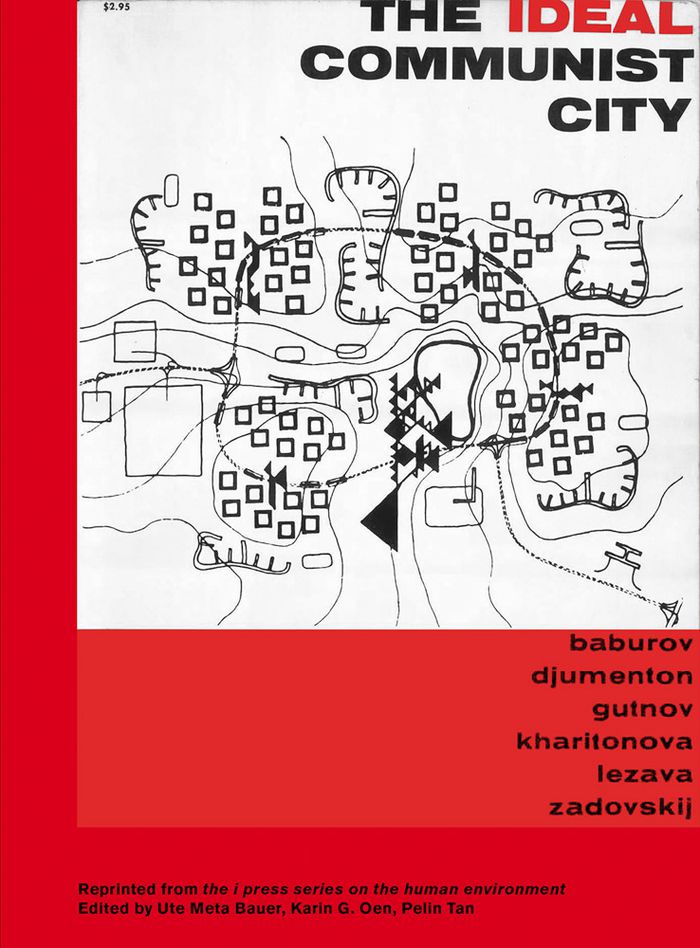
In 1968, lauded American architect Mary Otis Stevens (born 1928) and her partner, fellow architect Thomas McNulty (1919–84), initiated i Press, the influential imprint that focuses on the social context of architecture. Over the next five years, the duo released five books under the thematic umbrella of ''Human environment'' with the publisher George Braziller. The first of this series, ''The ideal Communist city'' (1969) is an English translation of urban concepts advanced by architects and planners from the University of Moscow. The book was first published in a Soviet journal of a communist youth organization in 1960 and was then republished in Italy in 1968. Offering a new way of thinking about mobility, equity and social interaction in neighborhood planning, ''The ideal Communist city'' was a direct response to suburban development and its focus on private spaces for family life: ''the new city is a world belonging to all and each'' where life is ''structured by freely chosen relationships representing the fullest, most well-rounded aspects of each human personality.'' This publication is a facsimile of ''The ideal Communist city'', with additional texts by architectural historians and the editors.
The ideal Communist city
Actions:
Price:
$35.00
(available to order)
Summary:
In 1968, lauded American architect Mary Otis Stevens (born 1928) and her partner, fellow architect Thomas McNulty (1919–84), initiated i Press, the influential imprint that focuses on the social context of architecture. Over the next five years, the duo released five books under the thematic umbrella of ''Human environment'' with the publisher George Braziller. The first of this series, ''The ideal Communist city'' (1969) is an English translation of urban concepts advanced by architects and planners from the University of Moscow. The book was first published in a Soviet journal of a communist youth organization in 1960 and was then republished in Italy in 1968. Offering a new way of thinking about mobility, equity and social interaction in neighborhood planning, ''The ideal Communist city'' was a direct response to suburban development and its focus on private spaces for family life: ''the new city is a world belonging to all and each'' where life is ''structured by freely chosen relationships representing the fullest, most well-rounded aspects of each human personality.'' This publication is a facsimile of ''The ideal Communist city'', with additional texts by architectural historians and the editors.
Form:
books
books
Publication:
November 2022
November 2022
Subject:
Humans and cities
Humans and cities
Form:
books
books
Actions:
Price:
$65.00
(available to order)
Summary:
From Camp to City examines the theme of the refugee camp in the context of urbanism and architecture. Using the examples of the refugee camps in the Algerian desert in which Sahrawis originally from the Western Sahara have been living for 35 years, the book looks at the “urban” aspects of these settlements. In contrast to the standard way of seeing refugee camps as scenes(...)
$65.00
(available to order)
Summary:
From Camp to City examines the theme of the refugee camp in the context of urbanism and architecture. Using the examples of the refugee camps in the Algerian desert in which Sahrawis originally from the Western Sahara have been living for 35 years, the book looks at the “urban” aspects of these settlements. In contrast to the standard way of seeing refugee camps as scenes(...)
Title:
From camp to city : refugee camps of the Western Sahara
Actions:
Price:
$65.00
(available to order)
Summary:
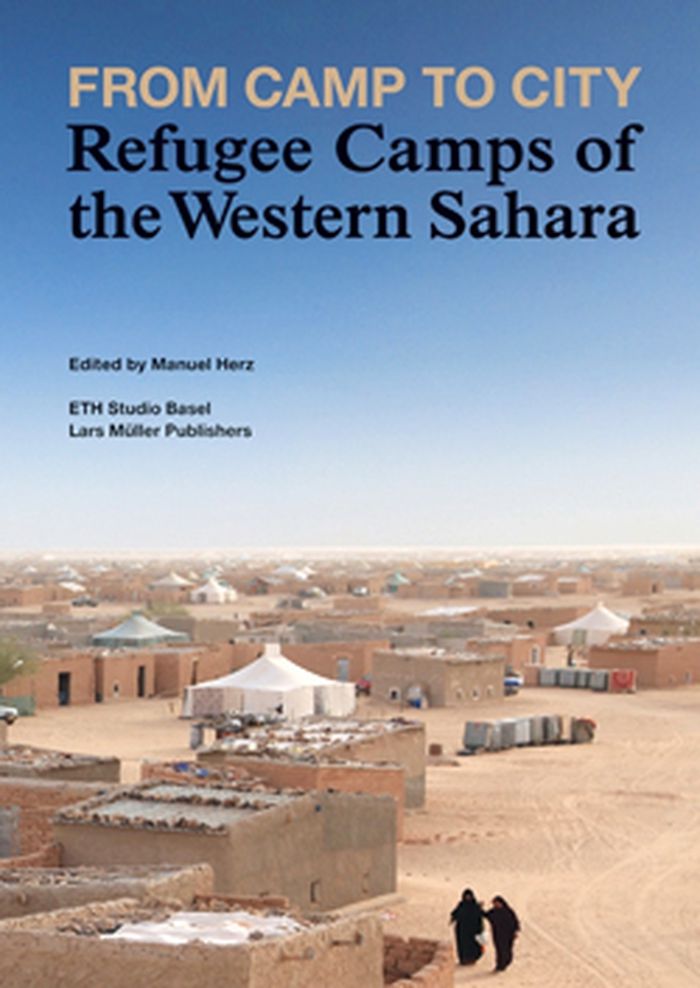
From Camp to City examines the theme of the refugee camp in the context of urbanism and architecture. Using the examples of the refugee camps in the Algerian desert in which Sahrawis originally from the Western Sahara have been living for 35 years, the book looks at the “urban” aspects of these settlements. In contrast to the standard way of seeing refugee camps as scenes of human misery and despair, the examination concentrates on how people live and dwell in refugee camps, on how they work, move around, and enjoy themselves, and looks at the spaces and structures that are created in the process. With numerous images and texts, individual aspects of urban life are presented and analyzed in the different chapters. As an examination of a “borderline case” of urbanity, the publication does not ignore the problematic aspects of this theme, but on the contrary: its potential explosiveness is further underscored by the focus on a “vocabulary of the urban.” It allows an understanding of the camps as a political project. The publication is based on research studies of the ETH Studio Basel, Institute of Contemporary Urbanism at the ETH Zurich.
From camp to city : refugee camps of the Western Sahara
Actions:
Price:
$65.00
(available to order)
Summary:
From Camp to City examines the theme of the refugee camp in the context of urbanism and architecture. Using the examples of the refugee camps in the Algerian desert in which Sahrawis originally from the Western Sahara have been living for 35 years, the book looks at the “urban” aspects of these settlements. In contrast to the standard way of seeing refugee camps as scenes of human misery and despair, the examination concentrates on how people live and dwell in refugee camps, on how they work, move around, and enjoy themselves, and looks at the spaces and structures that are created in the process. With numerous images and texts, individual aspects of urban life are presented and analyzed in the different chapters. As an examination of a “borderline case” of urbanity, the publication does not ignore the problematic aspects of this theme, but on the contrary: its potential explosiveness is further underscored by the focus on a “vocabulary of the urban.” It allows an understanding of the camps as a political project. The publication is based on research studies of the ETH Studio Basel, Institute of Contemporary Urbanism at the ETH Zurich.
Form:
books
books
Publication:
August 2012
August 2012
Form:
books
books
Actions:
Price:
$61.95
(available to order)
Summary:
This publication documents more than 130 alternative spaces, groups, and projects, and the significant contributions these organizations have made to the aesthetic and social fabric of New York City. Alternative art spaces offer sites for experimentation for artists to innovate, perform, and exhibit outside the commercial gallery-and-museum circuit. In New York City, the(...)
$61.95
(available to order)
Summary:
This publication documents more than 130 alternative spaces, groups, and projects, and the significant contributions these organizations have made to the aesthetic and social fabric of New York City. Alternative art spaces offer sites for experimentation for artists to innovate, perform, and exhibit outside the commercial gallery-and-museum circuit. In New York City, the(...)
Publication:
September 2012
September 2012
Title:
Alternative histories: New York art spaces 1960 to 2010
Actions:
Price:
$61.95
(available to order)
Summary:
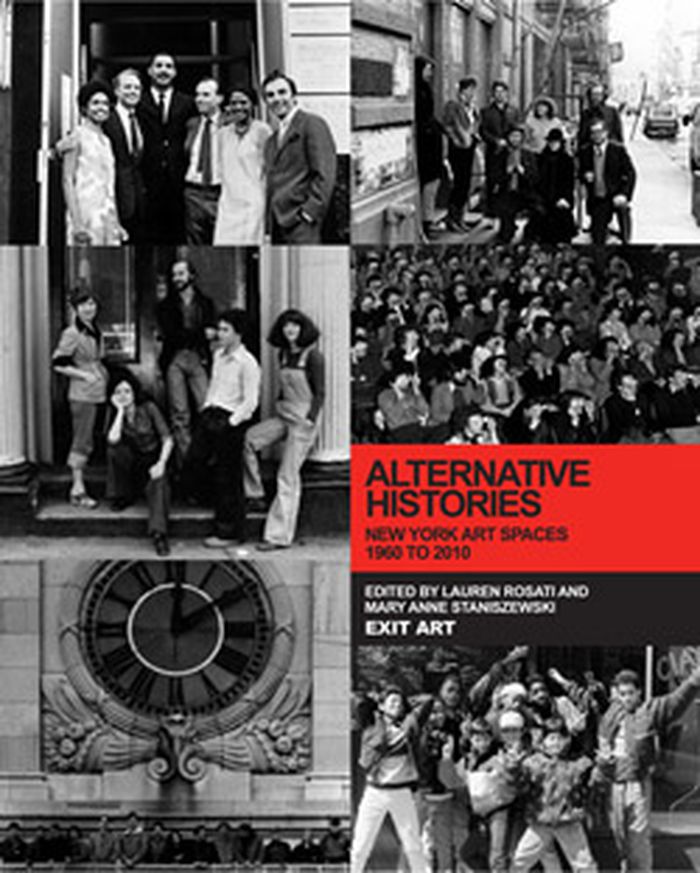
This publication documents more than 130 alternative spaces, groups, and projects, and the significant contributions these organizations have made to the aesthetic and social fabric of New York City. Alternative art spaces offer sites for experimentation for artists to innovate, perform, and exhibit outside the commercial gallery-and-museum circuit. In New York City, the development of alternative spaces was almost synonymous with the rise of the contemporary art scene. Beginning in the 1960s and early 1970s, it was within a network of alternative sites--including 112 Greene Street, The Kitchen, P.S.1, FOOD, and many others--that the work of young artists like Yvonne Rainer, Vito Acconci, Gordon Matta-Clark, Ana Mendieta, David Wojnarowicz, David Hammons, Adrian Piper, Martin Wong, Jimmie Durham, and dozens of other now familiar names first circulated. Through interviews, photographs, essays, and archival material, Alternative Histories tells the story of such famous sites and organizations as Judson Memorial Church, Anthology Film Archives, A.I.R. Gallery, El Museo del Barrio, Franklin Furnace, and Eyebeam, as well as many less well-known sites and organizations. Essays by the exhibition curators and scholars, and excerpts of interviews with alternative space founders and staff, provide cultural and historical context.
Alternative histories: New York art spaces 1960 to 2010
Actions:
Price:
$61.95
(available to order)
Summary:
This publication documents more than 130 alternative spaces, groups, and projects, and the significant contributions these organizations have made to the aesthetic and social fabric of New York City. Alternative art spaces offer sites for experimentation for artists to innovate, perform, and exhibit outside the commercial gallery-and-museum circuit. In New York City, the development of alternative spaces was almost synonymous with the rise of the contemporary art scene. Beginning in the 1960s and early 1970s, it was within a network of alternative sites--including 112 Greene Street, The Kitchen, P.S.1, FOOD, and many others--that the work of young artists like Yvonne Rainer, Vito Acconci, Gordon Matta-Clark, Ana Mendieta, David Wojnarowicz, David Hammons, Adrian Piper, Martin Wong, Jimmie Durham, and dozens of other now familiar names first circulated. Through interviews, photographs, essays, and archival material, Alternative Histories tells the story of such famous sites and organizations as Judson Memorial Church, Anthology Film Archives, A.I.R. Gallery, El Museo del Barrio, Franklin Furnace, and Eyebeam, as well as many less well-known sites and organizations. Essays by the exhibition curators and scholars, and excerpts of interviews with alternative space founders and staff, provide cultural and historical context.
Form:
books
books
Publication:
September 2012
September 2012
Form:
books
books
Actions:
Price:
$33.00
(available in store)
Summary:
Paul Goesch produced one of the most inventive, peculiar, and poignant bodies of work to emerge from Weimar Germany. An artist and architect, he made both fanciful figurative drawings and visionary architectural designs. The latter, from the extensive holdings of the Centre for Canadian Architecture in Montreal, are the focus of this publication, the first in English(...)
$33.00
(available in store)
Summary:
Paul Goesch produced one of the most inventive, peculiar, and poignant bodies of work to emerge from Weimar Germany. An artist and architect, he made both fanciful figurative drawings and visionary architectural designs. The latter, from the extensive holdings of the Centre for Canadian Architecture in Montreal, are the focus of this publication, the first in English(...)
Title:
Portals: the visionary architecture of Paul Goesch
Actions:
Price:
$33.00
(available in store)
Summary:
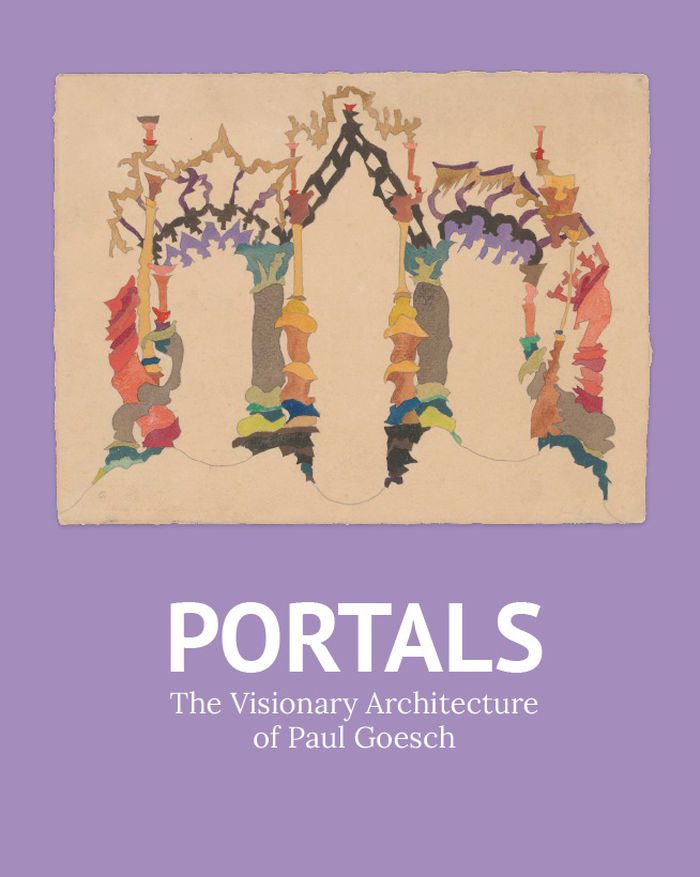
Paul Goesch produced one of the most inventive, peculiar, and poignant bodies of work to emerge from Weimar Germany. An artist and architect, he made both fanciful figurative drawings and visionary architectural designs. The latter, from the extensive holdings of the Centre for Canadian Architecture in Montreal, are the focus of this publication, the first in English dedicated to Goesch. Amid the aftermath of First World War, a generation of young architects sketched their visions for utopia. Goesch stands out among them for his formal range, his kaleidoscopic color sense, and his playful and pluralistic embrace of architectural history, as well as for his long struggles with schizophrenia, a condition for which he was institutionalized and ultimately murdered by the Nazis. This publication highlights the decorative portals and archways that predominate in Goesch’s work. These represent the artist’s metaphysical passages, as a spiritualist steeped in diverse religious and esoteric beliefs, and his altered psychological states. They also suggest Goesch’s liminal status between art and architecture, “sanity” and “madness,” the trained insider and the institutionalized “outsider.” Celebrated in his time and since forgotten, Goesch is presented here in the context of period discussions on art, architecture, and mental health.
Portals: the visionary architecture of Paul Goesch
Actions:
Price:
$33.00
(available in store)
Summary:
Paul Goesch produced one of the most inventive, peculiar, and poignant bodies of work to emerge from Weimar Germany. An artist and architect, he made both fanciful figurative drawings and visionary architectural designs. The latter, from the extensive holdings of the Centre for Canadian Architecture in Montreal, are the focus of this publication, the first in English dedicated to Goesch. Amid the aftermath of First World War, a generation of young architects sketched their visions for utopia. Goesch stands out among them for his formal range, his kaleidoscopic color sense, and his playful and pluralistic embrace of architectural history, as well as for his long struggles with schizophrenia, a condition for which he was institutionalized and ultimately murdered by the Nazis. This publication highlights the decorative portals and archways that predominate in Goesch’s work. These represent the artist’s metaphysical passages, as a spiritualist steeped in diverse religious and esoteric beliefs, and his altered psychological states. They also suggest Goesch’s liminal status between art and architecture, “sanity” and “madness,” the trained insider and the institutionalized “outsider.” Celebrated in his time and since forgotten, Goesch is presented here in the context of period discussions on art, architecture, and mental health.
Form:
books
books
Publication:
April 2023
April 2023
Subject:
Architecture Monographs
Architecture Monographs
Form:
books
books
Actions:
Price:
$52.00
(available to order)
Summary:
Starting with the refurbishment of his own apartment in 1903, twenty of Loos’s most significant buildings are displayed : Villa Karma, the Kärntner Bar, the Goldman & Salatsch Michaelerplatz Building, the Zentralsparkasse Bank, and the Steiner, Scheu, Moller, and Müller houses. Schezen’s vivid color and luminous black-and-white photographs display each building in detail,(...)
$52.00
(available to order)
Summary:
Starting with the refurbishment of his own apartment in 1903, twenty of Loos’s most significant buildings are displayed : Villa Karma, the Kärntner Bar, the Goldman & Salatsch Michaelerplatz Building, the Zentralsparkasse Bank, and the Steiner, Scheu, Moller, and Müller houses. Schezen’s vivid color and luminous black-and-white photographs display each building in detail,(...)
Title:
Adolf Loos : architecture 1903-1932
Actions:
Price:
$52.00
(available to order)
Summary:
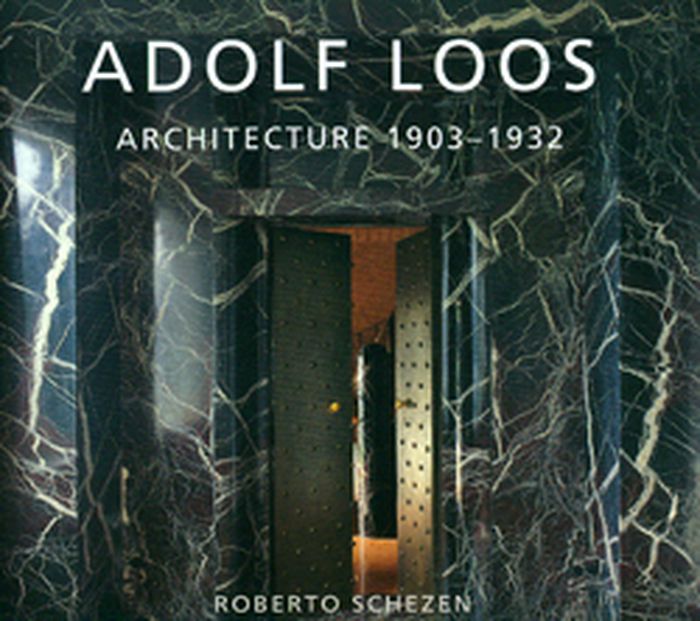
Starting with the refurbishment of his own apartment in 1903, twenty of Loos’s most significant buildings are displayed : Villa Karma, the Kärntner Bar, the Goldman & Salatsch Michaelerplatz Building, the Zentralsparkasse Bank, and the Steiner, Scheu, Moller, and Müller houses. Schezen’s vivid color and luminous black-and-white photographs display each building in detail, showing both the formal characteristics and the rich textures and materials Loos most frequently used. Complementing this visual material is Kenneth Frampton’s perceptive essay, which places Loos within the context of Viennese intellectuals of the time. His circle, which included Arnold Schönberg, Ludwig Wittgenstein, and at the center, Karl Kraus, explored the essential nature of architecture, and the other arts and sciences, through linguistic structures. Frampton identifies the hallmarks that Loos derived from these structures and with which he created his work : the blank, "degree-zero" exterior with its luxurious interior; his commentary on architecture’s position between art and function, plus subtle recollections of both the classic and the vernacular. All these ploys were to subvert typical architectural expectations. Joseph Rosa’s accompanying descriptions comprehensively discuss each building, from the circumstances surrounding the realization of the projects to the use of Loos’s architectural conventions.
Adolf Loos : architecture 1903-1932
Actions:
Price:
$52.00
(available to order)
Summary:
Starting with the refurbishment of his own apartment in 1903, twenty of Loos’s most significant buildings are displayed : Villa Karma, the Kärntner Bar, the Goldman & Salatsch Michaelerplatz Building, the Zentralsparkasse Bank, and the Steiner, Scheu, Moller, and Müller houses. Schezen’s vivid color and luminous black-and-white photographs display each building in detail, showing both the formal characteristics and the rich textures and materials Loos most frequently used. Complementing this visual material is Kenneth Frampton’s perceptive essay, which places Loos within the context of Viennese intellectuals of the time. His circle, which included Arnold Schönberg, Ludwig Wittgenstein, and at the center, Karl Kraus, explored the essential nature of architecture, and the other arts and sciences, through linguistic structures. Frampton identifies the hallmarks that Loos derived from these structures and with which he created his work : the blank, "degree-zero" exterior with its luxurious interior; his commentary on architecture’s position between art and function, plus subtle recollections of both the classic and the vernacular. All these ploys were to subvert typical architectural expectations. Joseph Rosa’s accompanying descriptions comprehensively discuss each building, from the circumstances surrounding the realization of the projects to the use of Loos’s architectural conventions.
Form:
books
books
Publication:
August 2009
August 2009
Subject:
Architecture Monographs
Architecture Monographs


