


5377 Results
Form:
books
books
Actions:
Price:
$68.00
(available in store)
Summary:
Drawing is a form of research, a means to investigate, explore and gain a better understanding of an idea, a condition or a phenomenon. Drawing is a practice of representation, one that inquires, explores materiality, and establishes its own time and dialogue. This book brings together 23 authors who represent 18 critical and reflexive practices of drawing in design. The(...)
$68.00
(available in store)
Summary:
Drawing is a form of research, a means to investigate, explore and gain a better understanding of an idea, a condition or a phenomenon. Drawing is a practice of representation, one that inquires, explores materiality, and establishes its own time and dialogue. This book brings together 23 authors who represent 18 critical and reflexive practices of drawing in design. The(...)
Title:
—in drawing: Inquiry, time, dialogue, materiality
Actions:
Price:
$68.00
(available in store)
Summary:
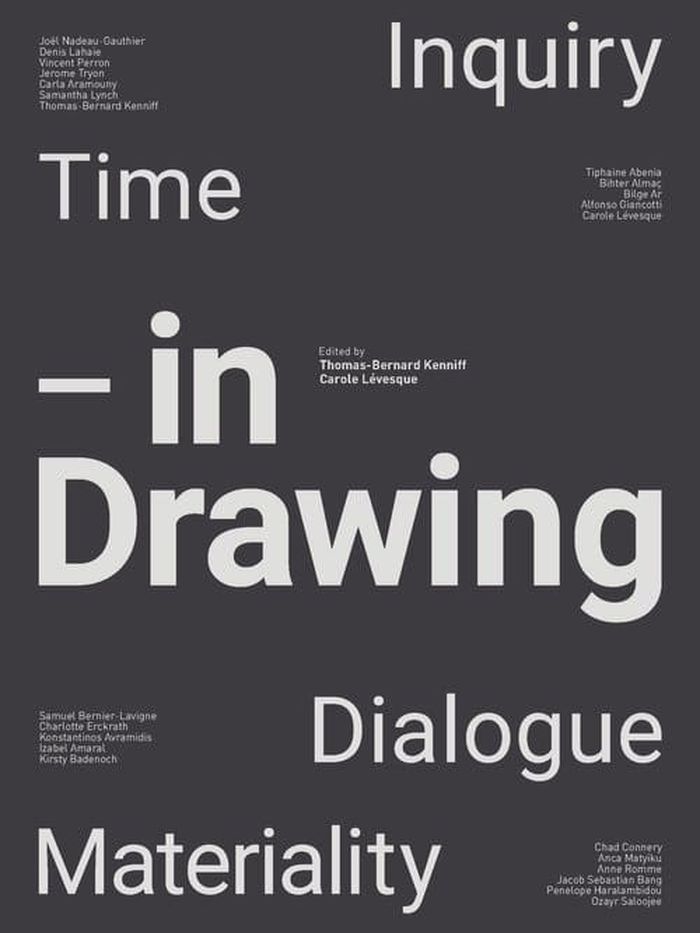
Drawing is a form of research, a means to investigate, explore and gain a better understanding of an idea, a condition or a phenomenon. Drawing is a practice of representation, one that inquires, explores materiality, and establishes its own time and dialogue. This book brings together 23 authors who represent 18 critical and reflexive practices of drawing in design. The assembled texts engage drawing aesthetics (spatial, temporal, and material) and drawing ethics (investigating and making sense together) as well as four overarching themes: inquiry, time, dialogue and materiality —in drawing. Taken as a collective conversation on drawing practice, this book offers a shared reflection on the agency of drawing, on its potential to explore issues raised by our built and cultural environment, and on the ability of drawing to support and contribute to design research. It farmes drawing as a research practice, one that is both deeply rooted in its disciplinary context and openly challenging its limits and conventions. "—in drawing" adds to a continuing conversation on design research methods and the ethics and aesthetics of representation. It seeks to further establish the significance of drawing as a legitimate mode of inquiry across design disciplines and beyond.
—in drawing: Inquiry, time, dialogue, materiality
Actions:
Price:
$68.00
(available in store)
Summary:
Drawing is a form of research, a means to investigate, explore and gain a better understanding of an idea, a condition or a phenomenon. Drawing is a practice of representation, one that inquires, explores materiality, and establishes its own time and dialogue. This book brings together 23 authors who represent 18 critical and reflexive practices of drawing in design. The assembled texts engage drawing aesthetics (spatial, temporal, and material) and drawing ethics (investigating and making sense together) as well as four overarching themes: inquiry, time, dialogue and materiality —in drawing. Taken as a collective conversation on drawing practice, this book offers a shared reflection on the agency of drawing, on its potential to explore issues raised by our built and cultural environment, and on the ability of drawing to support and contribute to design research. It farmes drawing as a research practice, one that is both deeply rooted in its disciplinary context and openly challenging its limits and conventions. "—in drawing" adds to a continuing conversation on design research methods and the ethics and aesthetics of representation. It seeks to further establish the significance of drawing as a legitimate mode of inquiry across design disciplines and beyond.
Form:
books
books
Publication:
January 2025
January 2025
Subject:
Design Theory
Design Theory
Form:
journals and magazines
journals and magazines
Actions:
Price:
$39.95
(available to order)
Summary:
The relationship between architecture and tourism has been the subject of ample research from the urban point of view, resulting in various theories about the "tourist gaze." Themes like identity and city branding are familiar to us all these days, but the relationship between architecture and the touristic landscape has thus far received much less consideration. Now that(...)
$39.95
(available to order)
Summary:
The relationship between architecture and tourism has been the subject of ample research from the urban point of view, resulting in various theories about the "tourist gaze." Themes like identity and city branding are familiar to us all these days, but the relationship between architecture and the touristic landscape has thus far received much less consideration. Now that(...)
Subject:
Magazines
Magazines
Publication:
November 2004, Rotterdam
November 2004, Rotterdam
Title:
Oase 64 : landscape and mass tourism
Actions:
Price:
$39.95
(available to order)
Summary:
The relationship between architecture and tourism has been the subject of ample research from the urban point of view, resulting in various theories about the "tourist gaze." Themes like identity and city branding are familiar to us all these days, but the relationship between architecture and the touristic landscape has thus far received much less consideration. Now that tourism is occupying the natural landscape en masse, it is no longer possible to safeguard the ideal of pure, untouched nature. By its very definition, the touristic landscape is a construct in which cultural and functional aspects have a role. As far back as the 18th century, the experience of a touristic landscape was become a physical one; an irreversible transformation of the landscape has been the result. This edition of "OASE" focuses on architecture's contribution to the structuring of mass tourism in the context of landscape, on how architecture frames the landscape and regiments the flow of tourists. A variety of interventions and strategies are reviewed, from mega-structures and infrastructure in ski resorts and Mediterranean holiday villages to nostalgic settlements in man-made miniature landscapes.
Oase 64 : landscape and mass tourism
Actions:
Price:
$39.95
(available to order)
Summary:
The relationship between architecture and tourism has been the subject of ample research from the urban point of view, resulting in various theories about the "tourist gaze." Themes like identity and city branding are familiar to us all these days, but the relationship between architecture and the touristic landscape has thus far received much less consideration. Now that tourism is occupying the natural landscape en masse, it is no longer possible to safeguard the ideal of pure, untouched nature. By its very definition, the touristic landscape is a construct in which cultural and functional aspects have a role. As far back as the 18th century, the experience of a touristic landscape was become a physical one; an irreversible transformation of the landscape has been the result. This edition of "OASE" focuses on architecture's contribution to the structuring of mass tourism in the context of landscape, on how architecture frames the landscape and regiments the flow of tourists. A variety of interventions and strategies are reviewed, from mega-structures and infrastructure in ski resorts and Mediterranean holiday villages to nostalgic settlements in man-made miniature landscapes.
Form:
journals and magazines
journals and magazines
Publication:
November 2004, Rotterdam
November 2004, Rotterdam
Subject:
Magazines
Magazines
Form:
books
books
Title:
Museum builders II
Museum builders II
Actions:
Price:
$122.99
(available to order)
Summary:
"Museum Builders II" explores 27 contemporary museum commissions, which both demonstrate and generate aspects of identity, be they national, ethnic, regional, civic, or personal. The dialogue of "identity and difference" finds many and varied architectural expressions in the contemporary museum buildings highlighted, which are drawn from across the globe. The projects(...)
$122.99
(available to order)
Summary:
"Museum Builders II" explores 27 contemporary museum commissions, which both demonstrate and generate aspects of identity, be they national, ethnic, regional, civic, or personal. The dialogue of "identity and difference" finds many and varied architectural expressions in the contemporary museum buildings highlighted, which are drawn from across the globe. The projects(...)
Subject:
Commercial interiors, Building types
Commercial interiors, Building types
Publication:
February 2004, Chichester
February 2004, Chichester
Title:
Museum builders II
Actions:
Price:
$122.99
(available to order)
Summary:
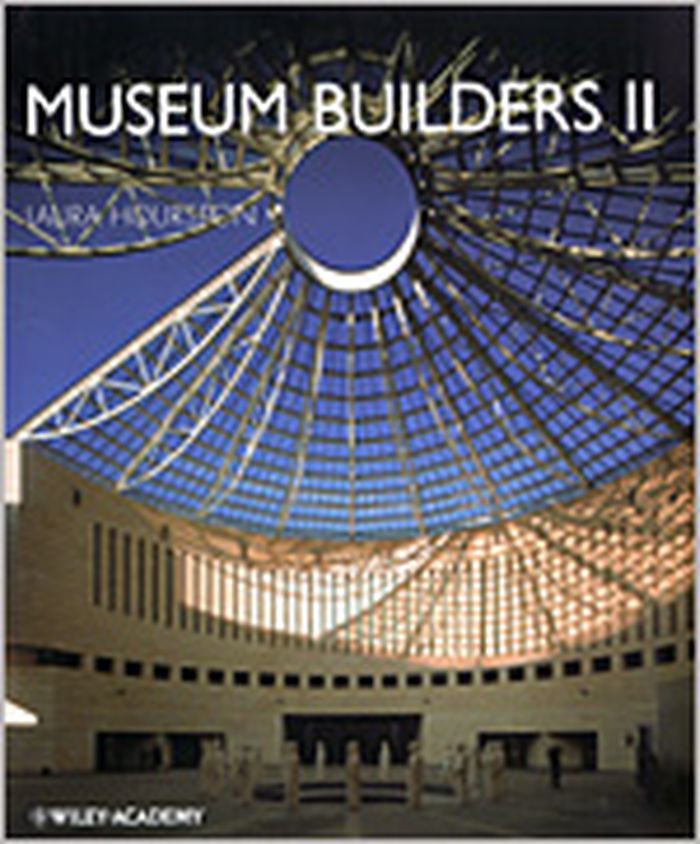
"Museum Builders II" explores 27 contemporary museum commissions, which both demonstrate and generate aspects of identity, be they national, ethnic, regional, civic, or personal. The dialogue of "identity and difference" finds many and varied architectural expressions in the contemporary museum buildings highlighted, which are drawn from across the globe. The projects vary dramatically in scale, context, thematics and intent, but all raise questions of architectural representation. Many museum architects have turned to the natural landscape for inspiration, often for aesthetic or pragmatic reasons, but at times to invest their buildings with a specific identity. Similarly, rich archaeological and architectural caches have been plundered by designers in a quest to give identity to their built form. Several featured museum projects address the meeting of cultures, which were defining moments in history, and these encounters have left a tenacious legacy on the architecture and exhibitions of those museums. Most resonant here is the United States Holocaust Memorial Museum: a deeply poignant physical monument to one of the most horrifying and inhumane encounters in human history, and a most extreme example of the museum’s lasting role in the construction and depiction of identities.
Museum builders II
Actions:
Price:
$122.99
(available to order)
Summary:
"Museum Builders II" explores 27 contemporary museum commissions, which both demonstrate and generate aspects of identity, be they national, ethnic, regional, civic, or personal. The dialogue of "identity and difference" finds many and varied architectural expressions in the contemporary museum buildings highlighted, which are drawn from across the globe. The projects vary dramatically in scale, context, thematics and intent, but all raise questions of architectural representation. Many museum architects have turned to the natural landscape for inspiration, often for aesthetic or pragmatic reasons, but at times to invest their buildings with a specific identity. Similarly, rich archaeological and architectural caches have been plundered by designers in a quest to give identity to their built form. Several featured museum projects address the meeting of cultures, which were defining moments in history, and these encounters have left a tenacious legacy on the architecture and exhibitions of those museums. Most resonant here is the United States Holocaust Memorial Museum: a deeply poignant physical monument to one of the most horrifying and inhumane encounters in human history, and a most extreme example of the museum’s lasting role in the construction and depiction of identities.
Form:
books
books
Publication:
February 2004, Chichester
February 2004, Chichester
Subject:
Commercial interiors, Building types
Commercial interiors, Building types
Form:
books
books
Title:
Smart architecture
Smart architecture
Actions:
Price:
$30.95
(available in store)
Summary:
Consider the notions of time, efficiency and interactivity in the context of architecture and instantly you may find your head clouded with images of technocratic modernism. Think of ecology and environmental issues in relation to buildings and what you get is either a vision of Arcadian green landscapes thinly built-on with small reed-roofed houses, or horrific projects(...)
$30.95
(available in store)
Summary:
Consider the notions of time, efficiency and interactivity in the context of architecture and instantly you may find your head clouded with images of technocratic modernism. Think of ecology and environmental issues in relation to buildings and what you get is either a vision of Arcadian green landscapes thinly built-on with small reed-roofed houses, or horrific projects(...)
Subject:
Architectural Theory
Architectural Theory
Publication:
January 2002, Rotterdam
January 2002, Rotterdam
Title:
Smart architecture
Actions:
Price:
$30.95
(available in store)
Summary:
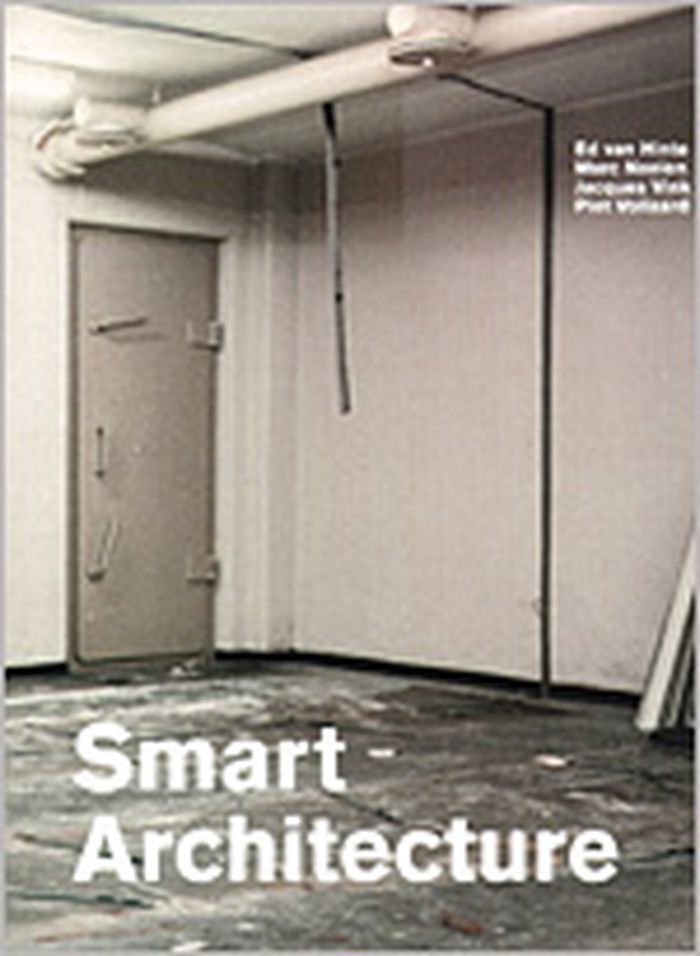
Consider the notions of time, efficiency and interactivity in the context of architecture and instantly you may find your head clouded with images of technocratic modernism. Think of ecology and environmental issues in relation to buildings and what you get is either a vision of Arcadian green landscapes thinly built-on with small reed-roofed houses, or horrific projects with environmentally responsible add-ons. The smart thing to do is to think in terms of interaction, minimum use of materials and energy, and careful planning over longer periods of time, so as to reduce the environmental impact of this major human activity called building. What you then get is smart architecture. "Smart Architecture" is a lavishly illustrated, light-hearted book. The outcome of the research project that SLA Foundation presented on its smartarch website (www.smartarch.nl), it mainly consists of examples involving climate control, supplemented with new ideas on planning, building and construction and the application of intelligent systems, all contributing to sustainability. In the book challenges and opportunities are analysed, guided by numerous inspiring examples. It presents a smart way to fulfil user demands now and in roughly three hundred years' time.
Smart architecture
Actions:
Price:
$30.95
(available in store)
Summary:
Consider the notions of time, efficiency and interactivity in the context of architecture and instantly you may find your head clouded with images of technocratic modernism. Think of ecology and environmental issues in relation to buildings and what you get is either a vision of Arcadian green landscapes thinly built-on with small reed-roofed houses, or horrific projects with environmentally responsible add-ons. The smart thing to do is to think in terms of interaction, minimum use of materials and energy, and careful planning over longer periods of time, so as to reduce the environmental impact of this major human activity called building. What you then get is smart architecture. "Smart Architecture" is a lavishly illustrated, light-hearted book. The outcome of the research project that SLA Foundation presented on its smartarch website (www.smartarch.nl), it mainly consists of examples involving climate control, supplemented with new ideas on planning, building and construction and the application of intelligent systems, all contributing to sustainability. In the book challenges and opportunities are analysed, guided by numerous inspiring examples. It presents a smart way to fulfil user demands now and in roughly three hundred years' time.
Form:
books
books
Publication:
January 2002, Rotterdam
January 2002, Rotterdam
Subject:
Architectural Theory
Architectural Theory
Form:
books
books
Price:
$19.50
(available to order)
Summary:
This book develops an alternative and inclusive approach –based on the hypothesis that the impact of digitalization on architectural culture is similar to the effects of the linguistic turn in philosophy– and steers clear of exclusive dichotomous approaches, without the foundational reconsideration of the discipline or its ontological conservation. The project is open and(...)
$19.50
(available to order)
Summary:
This book develops an alternative and inclusive approach –based on the hypothesis that the impact of digitalization on architectural culture is similar to the effects of the linguistic turn in philosophy– and steers clear of exclusive dichotomous approaches, without the foundational reconsideration of the discipline or its ontological conservation. The project is open and(...)
Title:
Total designer: authorship in the architecture of the postdigital age
Actions:
Price:
$19.50
(available to order)
Summary:
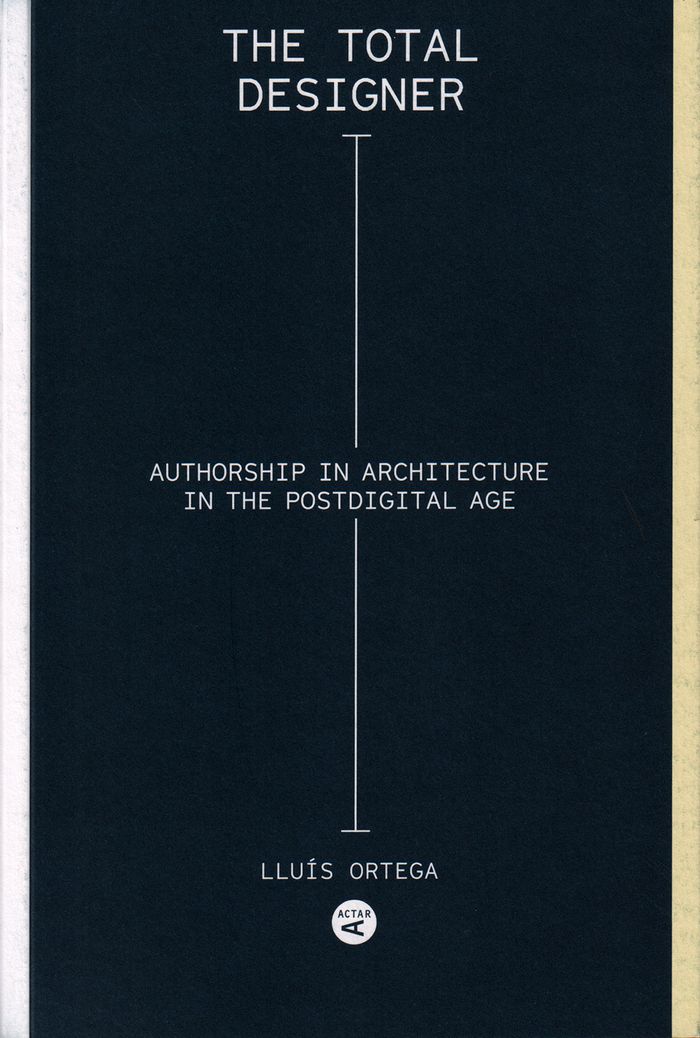
This book develops an alternative and inclusive approach –based on the hypothesis that the impact of digitalization on architectural culture is similar to the effects of the linguistic turn in philosophy– and steers clear of exclusive dichotomous approaches, without the foundational reconsideration of the discipline or its ontological conservation. The project is open and broad, which was a necessary condition for demonstrating the power of the turn brought about by digitalization. Most studies on the digital phenomenon carried out in the context of the discipline are focused on the more technical aspects, with expert discourses based on the standpoint of the optimization of existing processes. This text was inspired by a concern and a certain discomfort with respect to those positions, which are often underwritten by a positivist vision of reality. This concern gave way to the idea for a study rooted in a cultural approach to the phenomenon. Given the general tendency toward creating experts –a phenomenon that, on the other hand, is not exclusive to the field of architecture– and encapsulating knowledge, this text is meant to be based on a transversal vision, which can help non-specialist readers to understand certain complex phenomena.
Total designer: authorship in the architecture of the postdigital age
Actions:
Price:
$19.50
(available to order)
Summary:
This book develops an alternative and inclusive approach –based on the hypothesis that the impact of digitalization on architectural culture is similar to the effects of the linguistic turn in philosophy– and steers clear of exclusive dichotomous approaches, without the foundational reconsideration of the discipline or its ontological conservation. The project is open and broad, which was a necessary condition for demonstrating the power of the turn brought about by digitalization. Most studies on the digital phenomenon carried out in the context of the discipline are focused on the more technical aspects, with expert discourses based on the standpoint of the optimization of existing processes. This text was inspired by a concern and a certain discomfort with respect to those positions, which are often underwritten by a positivist vision of reality. This concern gave way to the idea for a study rooted in a cultural approach to the phenomenon. Given the general tendency toward creating experts –a phenomenon that, on the other hand, is not exclusive to the field of architecture– and encapsulating knowledge, this text is meant to be based on a transversal vision, which can help non-specialist readers to understand certain complex phenomena.
Form:
books
books
Publication:
August 2017
August 2017
Subject:
Digital Architecture
Digital Architecture
Form:
books
books
Title:
On things as ideas
On things as ideas
Actions:
Price:
$32.50
(available to order)
Summary:
This collection of more than thirty texts, which were originally published between 1790 and the present day, explores man’s rich relationship with material things. Devised largely in response to the gradual breakdown of the divide between art and design that began over a century ago, this book sheds light on the ways that the concept of the thing as idea has been(...)
$32.50
(available to order)
Summary:
This collection of more than thirty texts, which were originally published between 1790 and the present day, explores man’s rich relationship with material things. Devised largely in response to the gradual breakdown of the divide between art and design that began over a century ago, this book sheds light on the ways that the concept of the thing as idea has been(...)
Title:
On things as ideas
Actions:
Price:
$32.50
(available to order)
Summary:
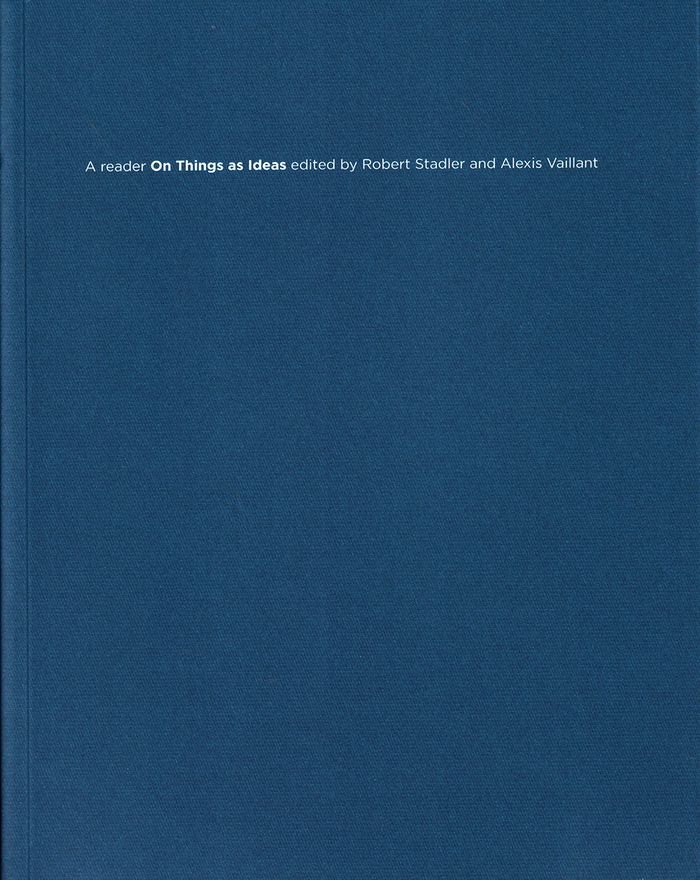
This collection of more than thirty texts, which were originally published between 1790 and the present day, explores man’s rich relationship with material things. Devised largely in response to the gradual breakdown of the divide between art and design that began over a century ago, this book sheds light on the ways that the concept of the thing as idea has been considered over time. Writers from different fields explore how things interact with materials, structures, and production processes while defining and registering the intangible qualities of the material world. Each author considers the different relationships between the context of a thing and its thingness, describing the ways in which things and ideas intersect. Contributions by Carl Andre, Charles Baudelaire, Walter Benjamin, Barbara Bloemink, Jan Boelen, Louise Bourgeois, Sheldon Cheney and Martha Candler Cheney, Alex Coles, Anthony Dunne and Fiona Raby, Hal Foster, Sigmund Freud, Dan Graham, Isabelle Graw, Sebastian Hackenschmidt and Dietmar Rübel, Graham Harman, G. W. F. Hegel, Martin Heidegger, Dave Hickey, Matthew Higgs, Donald Judd, Immanuel Kant, Frederick J. Kiesler, Sven Lütticken, Alessandro Mendini, W. J. T. Mitchell, Jasper Morrison, Bruno Munari, Robert Nickas, Alice Rawsthorn, Jeff Rian, Richard Rinehart, Anthony Vidler.
On things as ideas
Actions:
Price:
$32.50
(available to order)
Summary:
This collection of more than thirty texts, which were originally published between 1790 and the present day, explores man’s rich relationship with material things. Devised largely in response to the gradual breakdown of the divide between art and design that began over a century ago, this book sheds light on the ways that the concept of the thing as idea has been considered over time. Writers from different fields explore how things interact with materials, structures, and production processes while defining and registering the intangible qualities of the material world. Each author considers the different relationships between the context of a thing and its thingness, describing the ways in which things and ideas intersect. Contributions by Carl Andre, Charles Baudelaire, Walter Benjamin, Barbara Bloemink, Jan Boelen, Louise Bourgeois, Sheldon Cheney and Martha Candler Cheney, Alex Coles, Anthony Dunne and Fiona Raby, Hal Foster, Sigmund Freud, Dan Graham, Isabelle Graw, Sebastian Hackenschmidt and Dietmar Rübel, Graham Harman, G. W. F. Hegel, Martin Heidegger, Dave Hickey, Matthew Higgs, Donald Judd, Immanuel Kant, Frederick J. Kiesler, Sven Lütticken, Alessandro Mendini, W. J. T. Mitchell, Jasper Morrison, Bruno Munari, Robert Nickas, Alice Rawsthorn, Jeff Rian, Richard Rinehart, Anthony Vidler.
Form:
books
books
Publication:
February 2017
February 2017
Subject:
Design Theory
Design Theory
Form:
journals and magazines
journals and magazines
Title:
CLOG 15: Guns
CLOG 15: Guns
Actions:
Price:
$32.00
(available to order)
Summary:
For nearly a thousand years, the gun has played a key role in shaping histories, societies, and lives. Incalculable sums of creativity, innovation, and design have been dedicated to this tool which continues to evolve in unexpected ways. While the gun has always been valued for its usefulness in hunting, sport, and war, it has also been appreciated—even fetishized—for its(...)
$32.00
(available to order)
Summary:
For nearly a thousand years, the gun has played a key role in shaping histories, societies, and lives. Incalculable sums of creativity, innovation, and design have been dedicated to this tool which continues to evolve in unexpected ways. While the gun has always been valued for its usefulness in hunting, sport, and war, it has also been appreciated—even fetishized—for its(...)
Title:
CLOG 15: Guns
Actions:
Price:
$32.00
(available to order)
Summary:
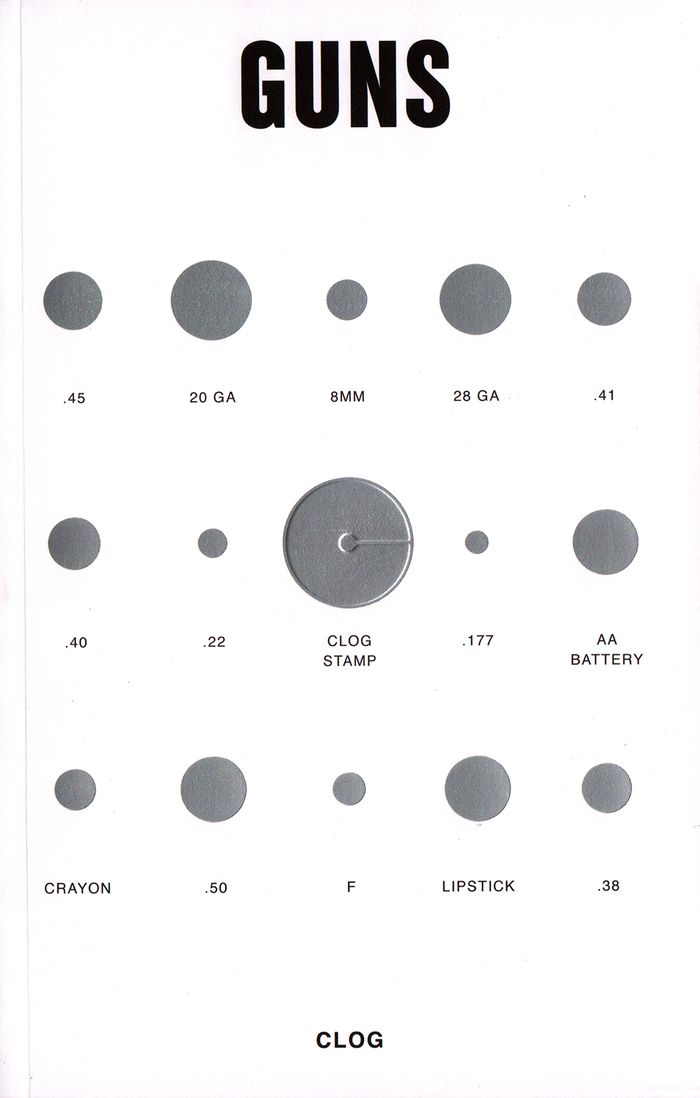
For nearly a thousand years, the gun has played a key role in shaping histories, societies, and lives. Incalculable sums of creativity, innovation, and design have been dedicated to this tool which continues to evolve in unexpected ways. While the gun has always been valued for its usefulness in hunting, sport, and war, it has also been appreciated—even fetishized—for its aesthetic appeal. Nevertheless, the gun is an object whose primary function is to kill. Its destructive and deadly purpose imbues the gun with a unique potency—both symbolic and real. Hence, it can be difficult, if not impossible, to consider the gun as just another tool or designed object. Over time, social, political, and economic forces—particularly in the United States—have created a context that often forces individuals into “pro-gun” and “anti-gun” factions, leaving little room to critically study the gun as an object or consider the complexity of various perspectives. Today, it is estimated that there are approximately 875 million small arms throughout the world. As this number continues to climb and the surrounding debate only grows more polarized, it is time to holistically examine the past, present, and future of the gun
CLOG 15: Guns
Actions:
Price:
$32.00
(available to order)
Summary:
For nearly a thousand years, the gun has played a key role in shaping histories, societies, and lives. Incalculable sums of creativity, innovation, and design have been dedicated to this tool which continues to evolve in unexpected ways. While the gun has always been valued for its usefulness in hunting, sport, and war, it has also been appreciated—even fetishized—for its aesthetic appeal. Nevertheless, the gun is an object whose primary function is to kill. Its destructive and deadly purpose imbues the gun with a unique potency—both symbolic and real. Hence, it can be difficult, if not impossible, to consider the gun as just another tool or designed object. Over time, social, political, and economic forces—particularly in the United States—have created a context that often forces individuals into “pro-gun” and “anti-gun” factions, leaving little room to critically study the gun as an object or consider the complexity of various perspectives. Today, it is estimated that there are approximately 875 million small arms throughout the world. As this number continues to climb and the surrounding debate only grows more polarized, it is time to holistically examine the past, present, and future of the gun
Form:
journals and magazines
journals and magazines
Publication:
November 2017
November 2017
Subject:
Magazines
Magazines
Form:
books
books
Actions:
Price:
$62.95
(available to order)
Summary:
Agnes Martin’s (1912–2004) celebrated grid paintings are widely acknowledged as a touchstone of postwar American art and have influenced many contemporary artists. Martin’s formative years, however, have been largely overlooked. In this revelatory study of Martin’s early artistic production, Christina Bryan Rosenberger demonstrates that the rapidly evolving creative(...)
$62.95
(available to order)
Summary:
Agnes Martin’s (1912–2004) celebrated grid paintings are widely acknowledged as a touchstone of postwar American art and have influenced many contemporary artists. Martin’s formative years, however, have been largely overlooked. In this revelatory study of Martin’s early artistic production, Christina Bryan Rosenberger demonstrates that the rapidly evolving creative(...)
Title:
Drawing the line: the early work of Agnes Martin
Actions:
Price:
$62.95
(available to order)
Summary:
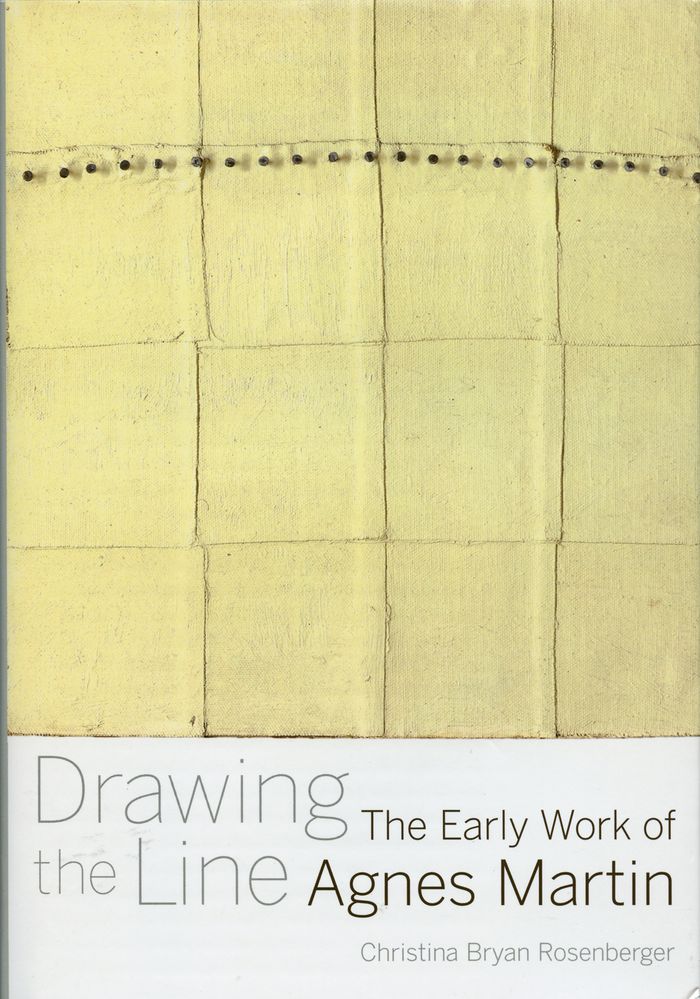
Agnes Martin’s (1912–2004) celebrated grid paintings are widely acknowledged as a touchstone of postwar American art and have influenced many contemporary artists. Martin’s formative years, however, have been largely overlooked. In this revelatory study of Martin’s early artistic production, Christina Bryan Rosenberger demonstrates that the rapidly evolving creative processes and pictorial solutions Martin developed between 1940 and 1967 define all her subsequent art. Beginning with Martin’s initiation into artistic language at the University of New Mexico and concluding with the reception of her grid paintings in New York in the early 1960s, Rosenberger offers vivid descriptions of the networks of art, artists, and information that moved between New Mexico and the creative centers of New York and California in the postwar period. She also documents Martin’s exchanges with artists including Ellsworth Kelly, Barnett Newman, Georgia O’Keeffe, Ad Reinhardt, and Mark Rothko, among others. Rosenberger uses original analysis of Martin’s art, as well as a rich array of archival materials, to situate Martin’s art within the context of a dynamic historical moment. With a lively, innovative approach informed by art history and conservation, this fluidly written book makes a substantial contribution to the history of postwar American art.
Drawing the line: the early work of Agnes Martin
Actions:
Price:
$62.95
(available to order)
Summary:
Agnes Martin’s (1912–2004) celebrated grid paintings are widely acknowledged as a touchstone of postwar American art and have influenced many contemporary artists. Martin’s formative years, however, have been largely overlooked. In this revelatory study of Martin’s early artistic production, Christina Bryan Rosenberger demonstrates that the rapidly evolving creative processes and pictorial solutions Martin developed between 1940 and 1967 define all her subsequent art. Beginning with Martin’s initiation into artistic language at the University of New Mexico and concluding with the reception of her grid paintings in New York in the early 1960s, Rosenberger offers vivid descriptions of the networks of art, artists, and information that moved between New Mexico and the creative centers of New York and California in the postwar period. She also documents Martin’s exchanges with artists including Ellsworth Kelly, Barnett Newman, Georgia O’Keeffe, Ad Reinhardt, and Mark Rothko, among others. Rosenberger uses original analysis of Martin’s art, as well as a rich array of archival materials, to situate Martin’s art within the context of a dynamic historical moment. With a lively, innovative approach informed by art history and conservation, this fluidly written book makes a substantial contribution to the history of postwar American art.
Form:
books
books
Publication:
August 2016
August 2016
Subject:
Contemporary Art Monographs
Contemporary Art Monographs
Form:
books
books
Actions:
Price:
$94.00
(available to order)
Summary:
With nearly five millennia of architectural heritage, China boasts the longest continuous architectural lineage in history. A hundred years after the dawn of the 20th century, the urban landscape of the world's most populous country has now been transformed completely. The pivotal link between the ancient traditions of China's imperial past and the high-rise, glass-clad,(...)
$94.00
(available to order)
Summary:
With nearly five millennia of architectural heritage, China boasts the longest continuous architectural lineage in history. A hundred years after the dawn of the 20th century, the urban landscape of the world's most populous country has now been transformed completely. The pivotal link between the ancient traditions of China's imperial past and the high-rise, glass-clad,(...)
Title:
Modernism in China: architectural visions and revolutions
Actions:
Price:
$94.00
(available to order)
Summary:
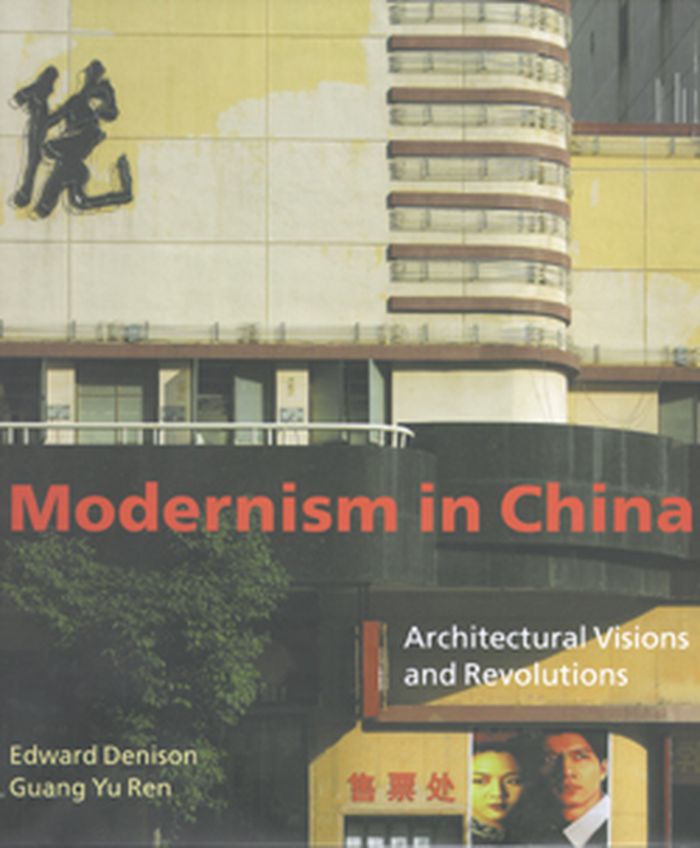
With nearly five millennia of architectural heritage, China boasts the longest continuous architectural lineage in history. A hundred years after the dawn of the 20th century, the urban landscape of the world's most populous country has now been transformed completely. The pivotal link between the ancient traditions of China's imperial past and the high-rise, glass-clad, lust-for-wealth that characterises China's 21st-century architectural aspirations is a period of modernisation that revolutionised its architectural language and urban fabric. Despite the fact that the reach of Modernism was as effective in early 20th-century China as elsewhere in the world, China remains conspicuously absent from written histories of Modernism - as Modernism does from written histories of China. Modernism in China confronts this by investigating China's unique experience of Modernism, its remarkable variety, striking contradictions and recurrent paradoxes. Modernism in China acquired its own unique language forged from geographical, cultural, historical and political circumstances. This extensive study analyses, for the first time, the role of Modernism in the development of China's architectural and urban landscapes throughout the 20th century and, consequently, offers valuable context to the country's recent resurgence.
Modernism in China: architectural visions and revolutions
Actions:
Price:
$94.00
(available to order)
Summary:
With nearly five millennia of architectural heritage, China boasts the longest continuous architectural lineage in history. A hundred years after the dawn of the 20th century, the urban landscape of the world's most populous country has now been transformed completely. The pivotal link between the ancient traditions of China's imperial past and the high-rise, glass-clad, lust-for-wealth that characterises China's 21st-century architectural aspirations is a period of modernisation that revolutionised its architectural language and urban fabric. Despite the fact that the reach of Modernism was as effective in early 20th-century China as elsewhere in the world, China remains conspicuously absent from written histories of Modernism - as Modernism does from written histories of China. Modernism in China confronts this by investigating China's unique experience of Modernism, its remarkable variety, striking contradictions and recurrent paradoxes. Modernism in China acquired its own unique language forged from geographical, cultural, historical and political circumstances. This extensive study analyses, for the first time, the role of Modernism in the development of China's architectural and urban landscapes throughout the 20th century and, consequently, offers valuable context to the country's recent resurgence.
Form:
books
books
Publication:
October 2008, West Sussex
October 2008, West Sussex
Subject:
Modernism
Modernism
Form:
books
books
Actions:
Price:
$54.95
(available to order)
Summary:
Swiss artist, architect, designer, typographer, and theorist Max Bill (1908–94) was one of the most important exponents of concrete and constructive art and a key figure in European applied arts and design history. Educated by such prominent teachers as Paul Klee, Wassily Kandisky, and Walter Gropius at the Bauhaus, at the start of his career in the 1930s. In the 1950s he(...)
$54.95
(available to order)
Summary:
Swiss artist, architect, designer, typographer, and theorist Max Bill (1908–94) was one of the most important exponents of concrete and constructive art and a key figure in European applied arts and design history. Educated by such prominent teachers as Paul Klee, Wassily Kandisky, and Walter Gropius at the Bauhaus, at the start of his career in the 1930s. In the 1950s he(...)
Title:
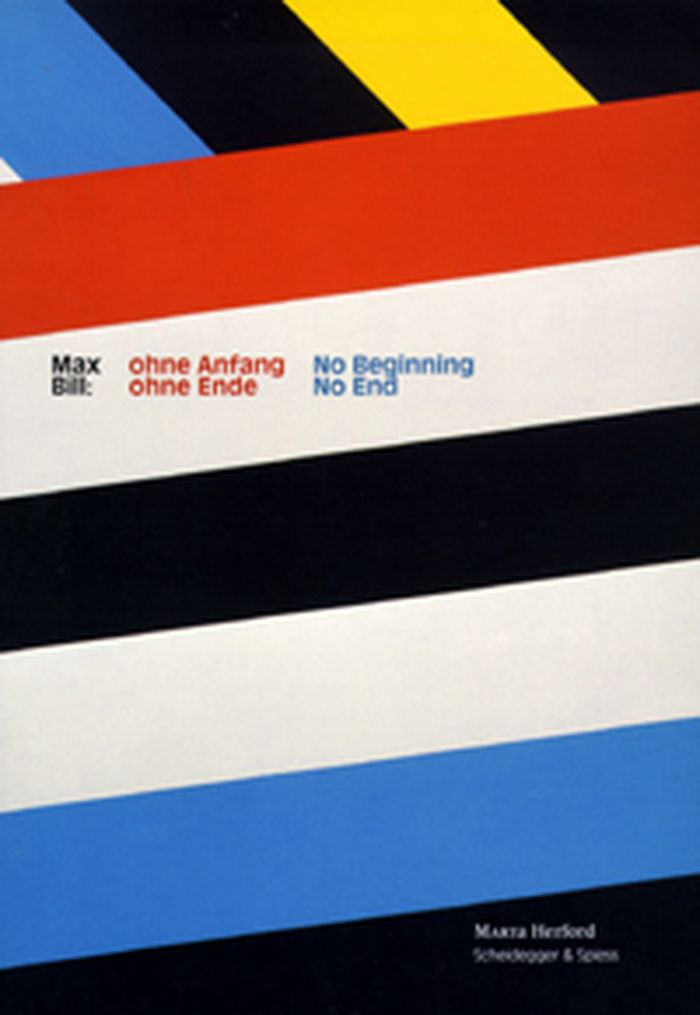
Max Bill: No Beginning No End
Actions:
Price:
$54.95
(available to order)
Summary:
Swiss artist, architect, designer, typographer, and theorist Max Bill (1908–94) was one of the most important exponents of concrete and constructive art and a key figure in European applied arts and design history. Educated by such prominent teachers as Paul Klee, Wassily Kandisky, and Walter Gropius at the Bauhaus, at the start of his career in the 1930s. In the 1950s he teamed up with Inge Scholl and Otl Aicher to found the legendary Ulm College of Design in Ulm, Germany, of which he became the first director. In his work, Max Bill carried on the legacy of the Bauhaus, both as an artist and a teacher, and made a decisive and lasting contribution to twentieth-century cultural life. Max Bill accompanies an exhibition at the Museum MARTa Herford in Herford, Germany, held to mark the centenary of this exceptional artist. The exhibition displays Bill’s wide-ranging work, and it also sets him in the context of his cultural milieu by featuring works by his contemporaries, such as Kurt Schwitters, Wassily Kandinsky, and Donald Judd. Accompanying essays investigate Bill’s influence on other artists and the lasting importance of his oeuvre in the present.
Max Bill: No Beginning No End
Actions:
Price:
$54.95
(available to order)
Summary:
Swiss artist, architect, designer, typographer, and theorist Max Bill (1908–94) was one of the most important exponents of concrete and constructive art and a key figure in European applied arts and design history. Educated by such prominent teachers as Paul Klee, Wassily Kandisky, and Walter Gropius at the Bauhaus, at the start of his career in the 1930s. In the 1950s he teamed up with Inge Scholl and Otl Aicher to found the legendary Ulm College of Design in Ulm, Germany, of which he became the first director. In his work, Max Bill carried on the legacy of the Bauhaus, both as an artist and a teacher, and made a decisive and lasting contribution to twentieth-century cultural life. Max Bill accompanies an exhibition at the Museum MARTa Herford in Herford, Germany, held to mark the centenary of this exceptional artist. The exhibition displays Bill’s wide-ranging work, and it also sets him in the context of his cultural milieu by featuring works by his contemporaries, such as Kurt Schwitters, Wassily Kandinsky, and Donald Judd. Accompanying essays investigate Bill’s influence on other artists and the lasting importance of his oeuvre in the present.
Form:
books
books
Publication:
April 2008, Zürich
April 2008, Zürich
Subject:
Graphic Designers, Monographs
Graphic Designers, Monographs


