


5346 Results
Form:
books
books
Price:
$39.95
(available to order)
Summary:
When the property to the south of Rudolph M. Schindler’s historic house and studio on Kings Road in Los Angeles was sold to the developer of a 3-story, 18-unit condominium complex, a question urgently emerged: How does one build next to the Schindler House? To incite the exchange of ideas on the Schindler House problem, the MAK Center at the Schindler House initiated an(...)
$39.95
(available to order)
Summary:
When the property to the south of Rudolph M. Schindler’s historic house and studio on Kings Road in Los Angeles was sold to the developer of a 3-story, 18-unit condominium complex, a question urgently emerged: How does one build next to the Schindler House? To incite the exchange of ideas on the Schindler House problem, the MAK Center at the Schindler House initiated an(...)
Subject:
Architecture since 1900, Europe
Architecture since 1900, Europe
Publication:
March 2004, Ostfildern-Ruit
March 2004, Ostfildern-Ruit
Title:
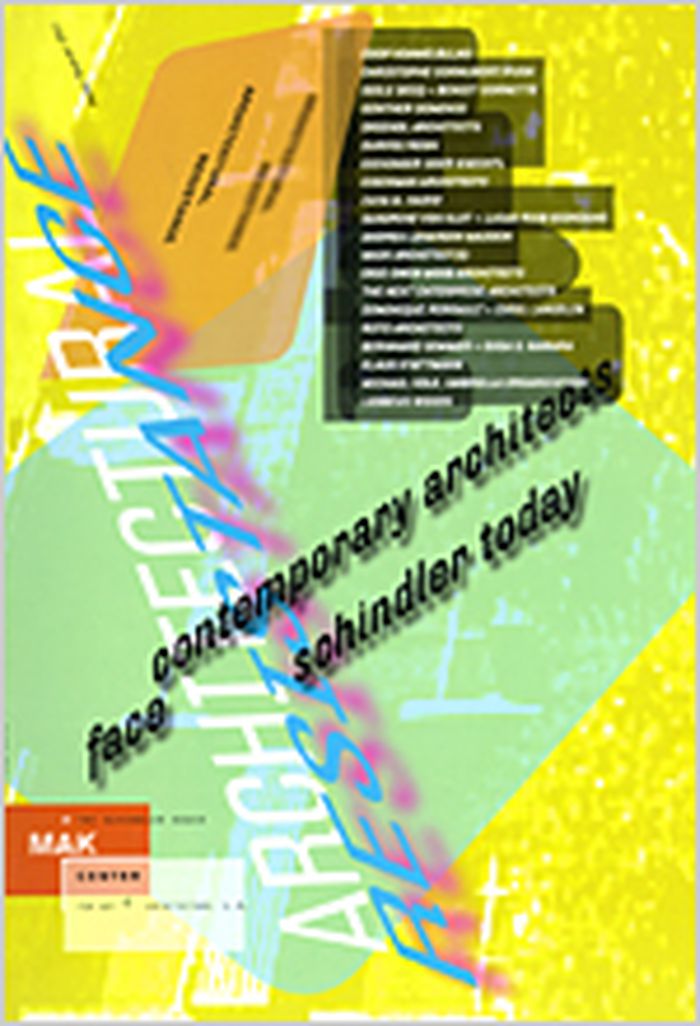
Architectural resistance : contemporary architects face Schindler today
Actions:
Price:
$39.95
(available to order)
Summary:
When the property to the south of Rudolph M. Schindler’s historic house and studio on Kings Road in Los Angeles was sold to the developer of a 3-story, 18-unit condominium complex, a question urgently emerged: How does one build next to the Schindler House? To incite the exchange of ideas on the Schindler House problem, the MAK Center at the Schindler House initiated an architectural invitational in which architects were asked to envision a companion to Schindler’s masterwork. Juried by a distinguished international panel, entries were solicited from a roster of both established and young architects. Proposals were contributed by architect teams COOP HIMMEL(B)LAU, Vienna, Christophe Cornubert, PUSH, Los Angeles, Eichinger oder Knechtl, Vienna, Peter Eisenman, New York, Andrea Lenardin-Madden, Los Angeles, Durfee/Regn, Los Angeles, Günther Domenig, Graz, Eric Owen Moss, Los Angeles, Dominique Perrault, Paris, Odile Decq + Benoît Cornette, Paris, Zaha Hadid, London, Georg Driendl, Vienna, Michael Rotondi, Los Angeles, Klaus Stattmann, Vienna, Sandrine von Klot, Vienna, Lebbeus Woods, New York, Bernhard Sommer, Vienna, Mark Mack, Los Angeles, Umbrella Organization, Los Angeles, and The Next Enterprise, Vienna. "Architectural Resistance: Contemporary Architects Face Schindler Today" presents each of their 20 proposals in the context of a discussion about architecture, urban change, site, and historic preservation.
Architectural resistance : contemporary architects face Schindler today
Actions:
Price:
$39.95
(available to order)
Summary:
When the property to the south of Rudolph M. Schindler’s historic house and studio on Kings Road in Los Angeles was sold to the developer of a 3-story, 18-unit condominium complex, a question urgently emerged: How does one build next to the Schindler House? To incite the exchange of ideas on the Schindler House problem, the MAK Center at the Schindler House initiated an architectural invitational in which architects were asked to envision a companion to Schindler’s masterwork. Juried by a distinguished international panel, entries were solicited from a roster of both established and young architects. Proposals were contributed by architect teams COOP HIMMEL(B)LAU, Vienna, Christophe Cornubert, PUSH, Los Angeles, Eichinger oder Knechtl, Vienna, Peter Eisenman, New York, Andrea Lenardin-Madden, Los Angeles, Durfee/Regn, Los Angeles, Günther Domenig, Graz, Eric Owen Moss, Los Angeles, Dominique Perrault, Paris, Odile Decq + Benoît Cornette, Paris, Zaha Hadid, London, Georg Driendl, Vienna, Michael Rotondi, Los Angeles, Klaus Stattmann, Vienna, Sandrine von Klot, Vienna, Lebbeus Woods, New York, Bernhard Sommer, Vienna, Mark Mack, Los Angeles, Umbrella Organization, Los Angeles, and The Next Enterprise, Vienna. "Architectural Resistance: Contemporary Architects Face Schindler Today" presents each of their 20 proposals in the context of a discussion about architecture, urban change, site, and historic preservation.
Form:
books
books
Publication:
March 2004, Ostfildern-Ruit
March 2004, Ostfildern-Ruit
Subject:
Architecture since 1900, Europe
Architecture since 1900, Europe
Form:
books
books
Actions:
Price:
$55.95
(available to order)
Summary:
"You press the button, we do the rest." Kodak used this slogan in ads for the first box cameras, introduced by George Eastman in 1888. From then on, virtually anyone could take pictures--the snapshot was born!~Without exception, the amateur photos presented in "Snapshots: the eye of the century" capture what are essentially ordinary moments--yet every trace of banality(...)
$55.95
(available to order)
Summary:
"You press the button, we do the rest." Kodak used this slogan in ads for the first box cameras, introduced by George Eastman in 1888. From then on, virtually anyone could take pictures--the snapshot was born!~Without exception, the amateur photos presented in "Snapshots: the eye of the century" capture what are essentially ordinary moments--yet every trace of banality(...)
Title:
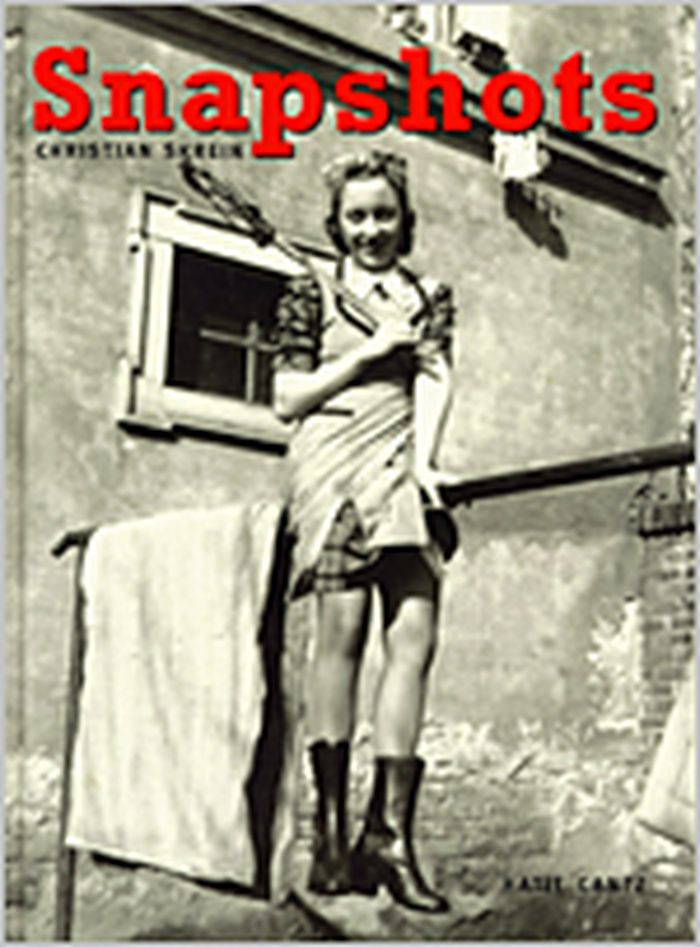
Snapshots : the eye of the century
Actions:
Price:
$55.95
(available to order)
Summary:
"You press the button, we do the rest." Kodak used this slogan in ads for the first box cameras, introduced by George Eastman in 1888. From then on, virtually anyone could take pictures--the snapshot was born!~Without exception, the amateur photos presented in "Snapshots: the eye of the century" capture what are essentially ordinary moments--yet every trace of banality disappears once they are removed from the context of personal biography. Sometimes the moment is right, and art just "happens," in the form of double or multiple exposures, slipped horizons, or curious details that enter the picture frame because the camera moved just as the shutter was released. Christian R. Skrein-Bumballa, an artist and a former professional photographer, has tracked down and collected thousands of these treasures, which can be viewed as part of our visual heritage. His impressive selection of photographs is here arranged thematically, and at its heart we find the essentials of the human condition: joy and pain, visualized in the decisive moment in which history stands still for a fraction of a second. Snapshots features the most aesthetically notable and otherwise curious photographs from the S.A.S. Snapshots Archiv Skrein, a collection of nearly one million snapshots from all over the world.
Snapshots : the eye of the century
Actions:
Price:
$55.95
(available to order)
Summary:
"You press the button, we do the rest." Kodak used this slogan in ads for the first box cameras, introduced by George Eastman in 1888. From then on, virtually anyone could take pictures--the snapshot was born!~Without exception, the amateur photos presented in "Snapshots: the eye of the century" capture what are essentially ordinary moments--yet every trace of banality disappears once they are removed from the context of personal biography. Sometimes the moment is right, and art just "happens," in the form of double or multiple exposures, slipped horizons, or curious details that enter the picture frame because the camera moved just as the shutter was released. Christian R. Skrein-Bumballa, an artist and a former professional photographer, has tracked down and collected thousands of these treasures, which can be viewed as part of our visual heritage. His impressive selection of photographs is here arranged thematically, and at its heart we find the essentials of the human condition: joy and pain, visualized in the decisive moment in which history stands still for a fraction of a second. Snapshots features the most aesthetically notable and otherwise curious photographs from the S.A.S. Snapshots Archiv Skrein, a collection of nearly one million snapshots from all over the world.
Form:
books
books
Publication:
June 2004, Ostfildern
June 2004, Ostfildern
Subject:
Photography Periods and Styles
Photography Periods and Styles
Form:
books
books
Actions:
Price:
$39.95
(available in store)
Summary:
In the mid 1960s Aldo Rossi launched what in retrospect appears a heroic endeavour: a redefinition of architecture founded in the knowledge of the rules and forms that constitute "the European city". Understanding this type of city as a collective artefact, Rossi sought to lead architecture out of the impasse created by a technocratic interpretation of functionalism after(...)
$39.95
(available in store)
Summary:
In the mid 1960s Aldo Rossi launched what in retrospect appears a heroic endeavour: a redefinition of architecture founded in the knowledge of the rules and forms that constitute "the European city". Understanding this type of city as a collective artefact, Rossi sought to lead architecture out of the impasse created by a technocratic interpretation of functionalism after(...)
Title:
OASE 62 : architecture and the project of the city
Actions:
Price:
$39.95
(available in store)
Summary:
In the mid 1960s Aldo Rossi launched what in retrospect appears a heroic endeavour: a redefinition of architecture founded in the knowledge of the rules and forms that constitute "the European city". Understanding this type of city as a collective artefact, Rossi sought to lead architecture out of the impasse created by a technocratic interpretation of functionalism after World War II. Tendenza, with Aldo Rossi and Giorgio Grassi as its main protagonists, proposed the study of existing cities as architectural phenomena, intending to identify enduring formal patterns that could be reworked into elements of a new design. In this issue of "OASE" these ideas and their bearings on architectural practice are traced through the work of Carel Weeber, arguably the most controversial and successful architect to adopt the Italian ideas and transform them in the Dutch context. This issue will examine the relevance of the experience of Tendenza now, against the background of the almost complete erosion of the urban nature of much of suburbanized Europe. Is the reference to "the European city" still tenable? The transformation of these ideas and design solutions in Holland allows us to gauge their effect on the architectural discipline and their contribution to rethinking existing cities.
OASE 62 : architecture and the project of the city
Actions:
Price:
$39.95
(available in store)
Summary:
In the mid 1960s Aldo Rossi launched what in retrospect appears a heroic endeavour: a redefinition of architecture founded in the knowledge of the rules and forms that constitute "the European city". Understanding this type of city as a collective artefact, Rossi sought to lead architecture out of the impasse created by a technocratic interpretation of functionalism after World War II. Tendenza, with Aldo Rossi and Giorgio Grassi as its main protagonists, proposed the study of existing cities as architectural phenomena, intending to identify enduring formal patterns that could be reworked into elements of a new design. In this issue of "OASE" these ideas and their bearings on architectural practice are traced through the work of Carel Weeber, arguably the most controversial and successful architect to adopt the Italian ideas and transform them in the Dutch context. This issue will examine the relevance of the experience of Tendenza now, against the background of the almost complete erosion of the urban nature of much of suburbanized Europe. Is the reference to "the European city" still tenable? The transformation of these ideas and design solutions in Holland allows us to gauge their effect on the architectural discipline and their contribution to rethinking existing cities.
Form:
books
books
Publication:
October 2003, Rotterdam
October 2003, Rotterdam
Subject:
Magazines, Back Issues
Magazines, Back Issues
Form:
books
books
Price:
$84.50
(available to order)
Summary:
In 1856, the English photographer Francis Frith set out on the first of three tours of Egypt and the Holy Lands. Traveling up the Nile and then on to the Sinai, Palestine, Syria, and Lebanon, Frith systematically crafted exquisite pictures of ruins, landscapes, and legendary sites. He then published his views in England and America in a variety of formats, becoming(...)
$84.50
(available to order)
Summary:
In 1856, the English photographer Francis Frith set out on the first of three tours of Egypt and the Holy Lands. Traveling up the Nile and then on to the Sinai, Palestine, Syria, and Lebanon, Frith systematically crafted exquisite pictures of ruins, landscapes, and legendary sites. He then published his views in England and America in a variety of formats, becoming(...)
Publication:
January 2004, Princeton
January 2004, Princeton
Title:
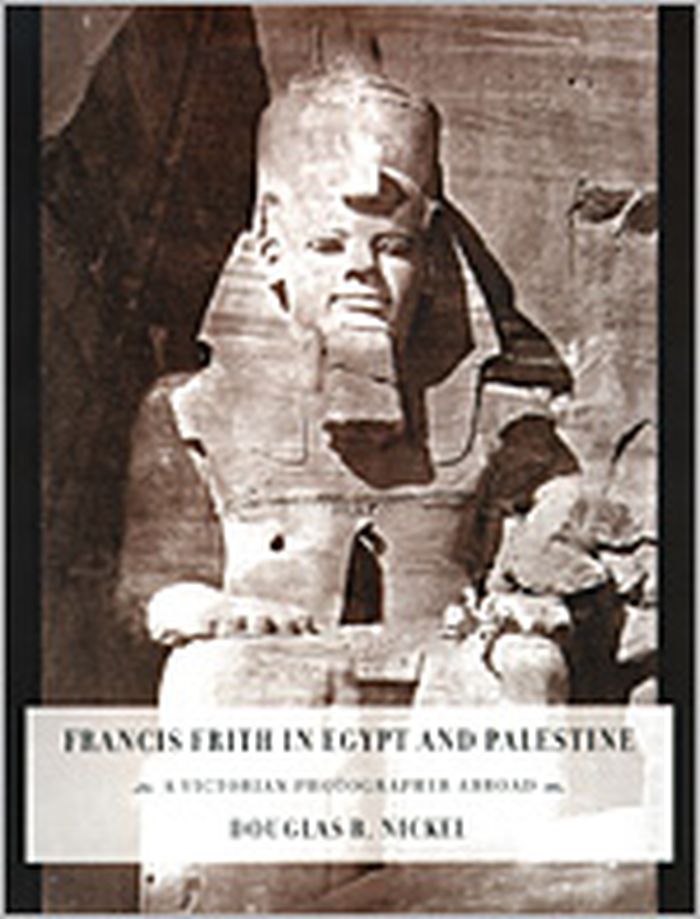
Francis Frith in Egypt and Palestine : a Victorian photographer abroad
Actions:
Price:
$84.50
(available to order)
Summary:
In 1856, the English photographer Francis Frith set out on the first of three tours of Egypt and the Holy Lands. Traveling up the Nile and then on to the Sinai, Palestine, Syria, and Lebanon, Frith systematically crafted exquisite pictures of ruins, landscapes, and legendary sites. He then published his views in England and America in a variety of formats, becoming something of a celebrity in photographic circles. This book, the first to place Frith's Egyptian and Levantine images in cultural context, reveals the distinct meanings these ostensibly "topographic" pictures held for the photographer and his Victorian audience. A Quaker by birth and an entrepreneur by nature, Frith brought to his photographic projects a sense of mission: to revive and confirm the stories of the Bible, while offering the region to armchair travelers as a seamless Oriental milieu of Romantic reverie. Francis Frith in Egypt and Palestine narrates the political, intellectual, and social concerns that make Frith representative of England's encounter with the East in the nineteenth century. Historian of photography Douglas R. Nickel brings a sophisticated interdisciplinary approach to bear on the subject in order to expose the complexity of Frith's image-making, setting the photographs against a Victorian backdrop of religious debate, imperialist thought, Romantic philosophy, and Pre-Raphaelite aesthetics.
Francis Frith in Egypt and Palestine : a Victorian photographer abroad
Actions:
Price:
$84.50
(available to order)
Summary:
In 1856, the English photographer Francis Frith set out on the first of three tours of Egypt and the Holy Lands. Traveling up the Nile and then on to the Sinai, Palestine, Syria, and Lebanon, Frith systematically crafted exquisite pictures of ruins, landscapes, and legendary sites. He then published his views in England and America in a variety of formats, becoming something of a celebrity in photographic circles. This book, the first to place Frith's Egyptian and Levantine images in cultural context, reveals the distinct meanings these ostensibly "topographic" pictures held for the photographer and his Victorian audience. A Quaker by birth and an entrepreneur by nature, Frith brought to his photographic projects a sense of mission: to revive and confirm the stories of the Bible, while offering the region to armchair travelers as a seamless Oriental milieu of Romantic reverie. Francis Frith in Egypt and Palestine narrates the political, intellectual, and social concerns that make Frith representative of England's encounter with the East in the nineteenth century. Historian of photography Douglas R. Nickel brings a sophisticated interdisciplinary approach to bear on the subject in order to expose the complexity of Frith's image-making, setting the photographs against a Victorian backdrop of religious debate, imperialist thought, Romantic philosophy, and Pre-Raphaelite aesthetics.
Form:
books
books
Publication:
January 2004, Princeton
January 2004, Princeton
Form:
books
books
Actions:
Price:
$67.00
(available to order)
Summary:
In 2004, we published Sonic, our bestseller that presented visuals for music. Along with the continuing proliferation and success of MP3s and the iPod over the last three years, engaging cover and packaging design have become even more important reasons for listeners to buy music in its traditional forms. Supersonic results from and investigates these recent(...)
$67.00
(available to order)
Summary:
In 2004, we published Sonic, our bestseller that presented visuals for music. Along with the continuing proliferation and success of MP3s and the iPod over the last three years, engaging cover and packaging design have become even more important reasons for listeners to buy music in its traditional forms. Supersonic results from and investigates these recent(...)
Title:
Supersonic: Visuals for music
Actions:
Price:
$67.00
(available to order)
Summary:
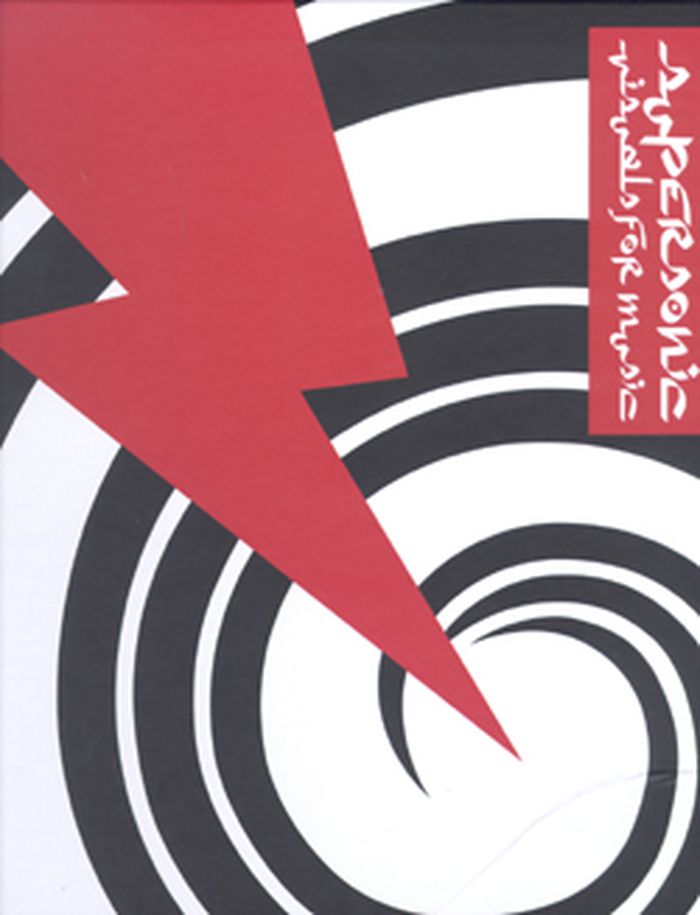
In 2004, we published Sonic, our bestseller that presented visuals for music. Along with the continuing proliferation and success of MP3s and the iPod over the last three years, engaging cover and packaging design have become even more important reasons for listeners to buy music in its traditional forms. Supersonic results from and investigates these recent developments. Supersonic presents over 320 striking pages of today's best-designed music products with a focus on Independent and Alterative Rock as well as Electronica. In addition to abundant visuals, the book contains an informative foreword and features portraits of selected designers and companies, who are creating outstanding work in these musical fields. The diverse examples are structured into chapters with introductory texts that put each new subject into context for the reader. With its stunning images from today's most exciting music, Supersonic is a source of inspiration for all music insiders and the graphic artists creating music packaging and visual identities for bands. Because design for music is a field where experimental work thrives and new trends develop that go on to influence other fields, this book is also a veritable "must-have" for a general audience of creatives as well as concertgoers and gift givers.
Supersonic: Visuals for music
Actions:
Price:
$67.00
(available to order)
Summary:
In 2004, we published Sonic, our bestseller that presented visuals for music. Along with the continuing proliferation and success of MP3s and the iPod over the last three years, engaging cover and packaging design have become even more important reasons for listeners to buy music in its traditional forms. Supersonic results from and investigates these recent developments. Supersonic presents over 320 striking pages of today's best-designed music products with a focus on Independent and Alterative Rock as well as Electronica. In addition to abundant visuals, the book contains an informative foreword and features portraits of selected designers and companies, who are creating outstanding work in these musical fields. The diverse examples are structured into chapters with introductory texts that put each new subject into context for the reader. With its stunning images from today's most exciting music, Supersonic is a source of inspiration for all music insiders and the graphic artists creating music packaging and visual identities for bands. Because design for music is a field where experimental work thrives and new trends develop that go on to influence other fields, this book is also a veritable "must-have" for a general audience of creatives as well as concertgoers and gift givers.
Form:
books
books
Publication:
October 2007, Berlin
October 2007, Berlin
Subject:
Interior Design
Interior Design
Form:
books
books
Actions:
Price:
$83.00
(available to order)
Summary:
The ecological approach to building is the great untold story in the architectural history of the past century. This book is essential reading for architects and students. As an urgent wake-up call on the state of our built environment, it will be of interest to everyone who cares about the future of our planet. In the past, many of the key tenets of the ecological(...)
$83.00
(available to order)
Summary:
The ecological approach to building is the great untold story in the architectural history of the past century. This book is essential reading for architects and students. As an urgent wake-up call on the state of our built environment, it will be of interest to everyone who cares about the future of our planet. In the past, many of the key tenets of the ecological(...)
Title:
Ecological architecture : a critical history
Actions:
Price:
$83.00
(available to order)
Summary:
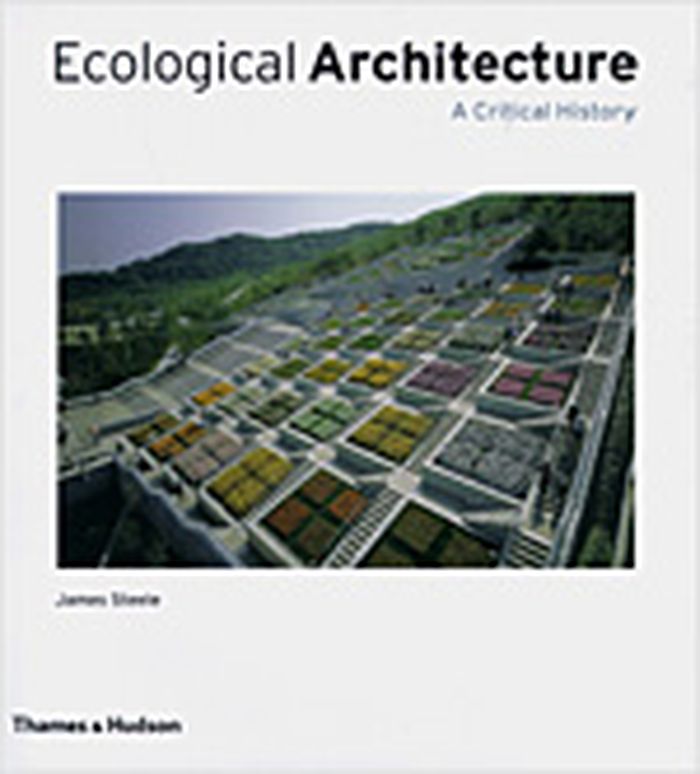
The ecological approach to building is the great untold story in the architectural history of the past century. This book is essential reading for architects and students. As an urgent wake-up call on the state of our built environment, it will be of interest to everyone who cares about the future of our planet. In the past, many of the key tenets of the ecological philosophy - sustainability, energy efficiency, harmonious relationship with the environment - appeared to stand contrast to the sweep of science-led ‘progress’ that characterized the modern movement. Today, however, past visionaries are vindicated and yesterday’s eccentricities are today’s legal requirements: every architect has an obligation to the environment as well as to his or her client. After an introduction to the terminology of ecological architecture - including terms such as ‘green’ and ‘sustainable’, ’Part one’ identifies recurring themes in ecological architecture. ‘Part two’ features twenty-five case studies each focusing on a specific architect, movement or topic. Some of the names are familiar in this context - Rasem Badran, Hassan Fathy - but there are also plenty of surprises - Le Corbusier, Buckminster Fuller, Rudolf Schindler. ‘Part three’ looks to the future as ecological architecture struggles to deal with global urbanization.
Ecological architecture : a critical history
Actions:
Price:
$83.00
(available to order)
Summary:
The ecological approach to building is the great untold story in the architectural history of the past century. This book is essential reading for architects and students. As an urgent wake-up call on the state of our built environment, it will be of interest to everyone who cares about the future of our planet. In the past, many of the key tenets of the ecological philosophy - sustainability, energy efficiency, harmonious relationship with the environment - appeared to stand contrast to the sweep of science-led ‘progress’ that characterized the modern movement. Today, however, past visionaries are vindicated and yesterday’s eccentricities are today’s legal requirements: every architect has an obligation to the environment as well as to his or her client. After an introduction to the terminology of ecological architecture - including terms such as ‘green’ and ‘sustainable’, ’Part one’ identifies recurring themes in ecological architecture. ‘Part two’ features twenty-five case studies each focusing on a specific architect, movement or topic. Some of the names are familiar in this context - Rasem Badran, Hassan Fathy - but there are also plenty of surprises - Le Corbusier, Buckminster Fuller, Rudolf Schindler. ‘Part three’ looks to the future as ecological architecture struggles to deal with global urbanization.
Form:
books
books
Publication:
October 2005, London
October 2005, London
Subject:
Green Architecture
Green Architecture
Form:
books
books
Actions:
Price:
$98.00
(available to order)
Summary:
Robert A. M. Stern is dedicated to the synthesis of tradition and innovation. In more than thirty-five years of practice, he has produced a wide range of building types with a variety of stylistic influences, all inspired by the great legacy of American architecture. His firm, Robert A. M. Stern architects, was first recognized for its distinguished houses, and(...)
$98.00
(available to order)
Summary:
Robert A. M. Stern is dedicated to the synthesis of tradition and innovation. In more than thirty-five years of practice, he has produced a wide range of building types with a variety of stylistic influences, all inspired by the great legacy of American architecture. His firm, Robert A. M. Stern architects, was first recognized for its distinguished houses, and(...)
Title:
Robert A. M. Stern : houses and gardens
Actions:
Price:
$98.00
(available to order)
Summary:
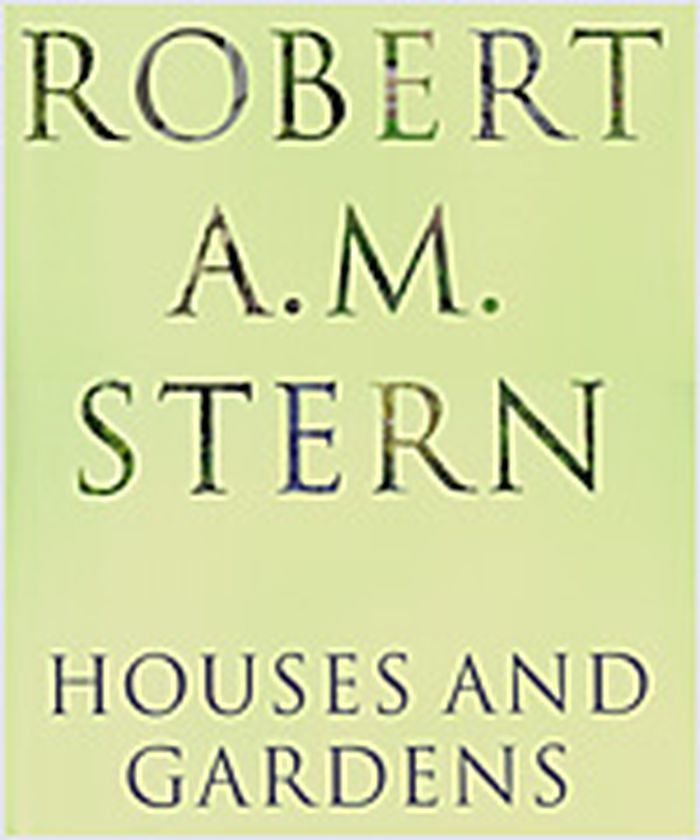
Robert A. M. Stern is dedicated to the synthesis of tradition and innovation. In more than thirty-five years of practice, he has produced a wide range of building types with a variety of stylistic influences, all inspired by the great legacy of American architecture. His firm, Robert A. M. Stern architects, was first recognized for its distinguished houses, and residential design remains the cornerstone of the practice. This illustrated monograph-a companion to "Robert A. M. Stern: houses"- presents twenty-six of the firm's most memorable houses. Located in diverse settings across North America-from a valley in Colorado with views of the Aspen mountains to a bluff overlooking Long Island Sound to an island off the coast of British Columbia-these houses reveal the architect's emphasis on the importance of context and his dedication to exploring the nature of space. Each house invokes the vernacular architectural heritage particular to its region while reflecting its unique natural surroundings. Whether they are Shingle style "cottages" by the sea, colonial Georgian country estates, or elegant Regency designs, Stern's houses are unique both for their timelessness and their ability to evoke a conversation with the past-a dialogue he believes lies at the heart of architecture.
Robert A. M. Stern : houses and gardens
Actions:
Price:
$98.00
(available to order)
Summary:
Robert A. M. Stern is dedicated to the synthesis of tradition and innovation. In more than thirty-five years of practice, he has produced a wide range of building types with a variety of stylistic influences, all inspired by the great legacy of American architecture. His firm, Robert A. M. Stern architects, was first recognized for its distinguished houses, and residential design remains the cornerstone of the practice. This illustrated monograph-a companion to "Robert A. M. Stern: houses"- presents twenty-six of the firm's most memorable houses. Located in diverse settings across North America-from a valley in Colorado with views of the Aspen mountains to a bluff overlooking Long Island Sound to an island off the coast of British Columbia-these houses reveal the architect's emphasis on the importance of context and his dedication to exploring the nature of space. Each house invokes the vernacular architectural heritage particular to its region while reflecting its unique natural surroundings. Whether they are Shingle style "cottages" by the sea, colonial Georgian country estates, or elegant Regency designs, Stern's houses are unique both for their timelessness and their ability to evoke a conversation with the past-a dialogue he believes lies at the heart of architecture.
Form:
books
books
Publication:
December 2005, New York
December 2005, New York
Subject:
Architecture Monographs
Architecture Monographs
Form:
books
books
Title:
Unseen Europe : a survey of EU politics and its impact on spatial development in the Netherlands
Unseen Europe : a survey of EU politics and its impact on spatial development in the Netherlands
Actions:
Price:
$37.95
(available to order)
Summary:
The EU is involved, either directly or indirectly, in the most vital issues of national spatial policy. The indirect - and therefore usually unseen - consequences are often more significant, and will become increasingly so in the future. These are the most important findings in "Unseen Europe : a survey of EU politics and its impact on spatial development in the(...)
$37.95
(available to order)
Summary:
The EU is involved, either directly or indirectly, in the most vital issues of national spatial policy. The indirect - and therefore usually unseen - consequences are often more significant, and will become increasingly so in the future. These are the most important findings in "Unseen Europe : a survey of EU politics and its impact on spatial development in the(...)
Subject:
Architecture since 1900, Europe
Architecture since 1900, Europe
Publication:
January 2004, Rotterdam
January 2004, Rotterdam
Title:
Unseen Europe : a survey of EU politics and its impact on spatial development in the Netherlands
Actions:
Price:
$37.95
(available to order)
Summary:
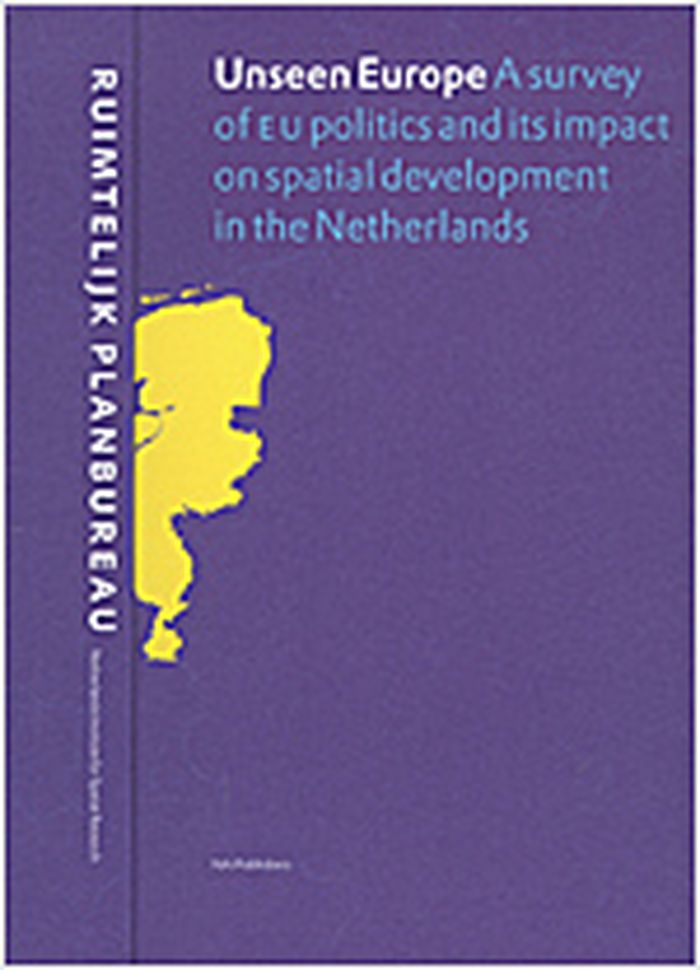
The EU is involved, either directly or indirectly, in the most vital issues of national spatial policy. The indirect - and therefore usually unseen - consequences are often more significant, and will become increasingly so in the future. These are the most important findings in "Unseen Europe : a survey of EU politics and its impact on spatial development in the Netherlands". This study by the Netherlands Institute for Spatial Planning (Ruimtelijk Planbureau) was presented to the Dutch minister of Housing, Spatial Planning and the Environment, Sybilla M. Dekker. This study surveys a selected number of spatially relevant EU policy fields and their potential impacts in the Netherlands. Given this growing importance of European policy, those involved in spatial policy should keep abreast of developments to avoid being caught off-guard by new EU directives or initiatives. Where necessary position should be taken against the too uniform a character of European policy. Otherwise, the Dutch government should more actively anticipate the chances offered by the European context. Without this European perspective it is more and more difficult to conduct spatial policy. Instead of considering the EU as restrictive only, policy should therefore be formulated from a European perspective. In this respect the Netherlands still turns its back on Brussels too much.
Unseen Europe : a survey of EU politics and its impact on spatial development in the Netherlands
Actions:
Price:
$37.95
(available to order)
Summary:
The EU is involved, either directly or indirectly, in the most vital issues of national spatial policy. The indirect - and therefore usually unseen - consequences are often more significant, and will become increasingly so in the future. These are the most important findings in "Unseen Europe : a survey of EU politics and its impact on spatial development in the Netherlands". This study by the Netherlands Institute for Spatial Planning (Ruimtelijk Planbureau) was presented to the Dutch minister of Housing, Spatial Planning and the Environment, Sybilla M. Dekker. This study surveys a selected number of spatially relevant EU policy fields and their potential impacts in the Netherlands. Given this growing importance of European policy, those involved in spatial policy should keep abreast of developments to avoid being caught off-guard by new EU directives or initiatives. Where necessary position should be taken against the too uniform a character of European policy. Otherwise, the Dutch government should more actively anticipate the chances offered by the European context. Without this European perspective it is more and more difficult to conduct spatial policy. Instead of considering the EU as restrictive only, policy should therefore be formulated from a European perspective. In this respect the Netherlands still turns its back on Brussels too much.
Form:
books
books
Publication:
January 2004, Rotterdam
January 2004, Rotterdam
Subject:
Architecture since 1900, Europe
Architecture since 1900, Europe
Form:
books
books
Actions:
Price:
$54.00
(available to order)
Summary:
There is no other period in the history of the Netherlands which excites such emotion, resistance or aversion as the period between 1970 and 1980. There are also varying opinions about architecture in the 1970s. Architecture at that time headed off in pursuit of new definitions and forms. Though a number of architectural movements were driven by a devoted social(...)
$54.00
(available to order)
Summary:
There is no other period in the history of the Netherlands which excites such emotion, resistance or aversion as the period between 1970 and 1980. There are also varying opinions about architecture in the 1970s. Architecture at that time headed off in pursuit of new definitions and forms. Though a number of architectural movements were driven by a devoted social(...)
Subject:
Architecture since 1900, Europe
Architecture since 1900, Europe
Publication:
January 2004, Rotterdam
January 2004, Rotterdam
Title:
The critical seventies : architecture and urban planning in the Netherlands, 1968-1982
Actions:
Price:
$54.00
(available to order)
Summary:
There is no other period in the history of the Netherlands which excites such emotion, resistance or aversion as the period between 1970 and 1980. There are also varying opinions about architecture in the 1970s. Architecture at that time headed off in pursuit of new definitions and forms. Though a number of architectural movements were driven by a devoted social engagement and a profound belief in architecture as a means of moulding society, there was such a varied choice that it did not generate a single and unanimous alternative, resulting instead in polarization and pluriformity. This volume focuses on architecture, urban planning and spatial planning in the period 1968 - 1982. Remarkable and specific projects from this period are discussed and extensively documented on the basis of six themes. An introductory essay considers the context in which the architecture and urban planning changed so radically during this period. So far there has been little research into the architecture and planning of the 1970s in the Netherlands, even though it is a period when changes took on a definitive form. With the imminent demolition and renovation of much of the infrastructure and architecture of the 1970s, this book is a document that bears witness to the importance of this period for architecture in the Netherlands.
The critical seventies : architecture and urban planning in the Netherlands, 1968-1982
Actions:
Price:
$54.00
(available to order)
Summary:
There is no other period in the history of the Netherlands which excites such emotion, resistance or aversion as the period between 1970 and 1980. There are also varying opinions about architecture in the 1970s. Architecture at that time headed off in pursuit of new definitions and forms. Though a number of architectural movements were driven by a devoted social engagement and a profound belief in architecture as a means of moulding society, there was such a varied choice that it did not generate a single and unanimous alternative, resulting instead in polarization and pluriformity. This volume focuses on architecture, urban planning and spatial planning in the period 1968 - 1982. Remarkable and specific projects from this period are discussed and extensively documented on the basis of six themes. An introductory essay considers the context in which the architecture and urban planning changed so radically during this period. So far there has been little research into the architecture and planning of the 1970s in the Netherlands, even though it is a period when changes took on a definitive form. With the imminent demolition and renovation of much of the infrastructure and architecture of the 1970s, this book is a document that bears witness to the importance of this period for architecture in the Netherlands.
Form:
books
books
Publication:
January 2004, Rotterdam
January 2004, Rotterdam
Subject:
Architecture since 1900, Europe
Architecture since 1900, Europe
Form:
books
books
Actions:
Price:
$54.99
(available to order)
Summary:
Today, architecture schools are truly international in their intake, as students are able to select from courses worldwide. For school leavers and undergraduates, the choice is bewildering. Where different institutions provide very different courses and ultimately very different architects, the very act of shopping for a degree is an incredibly important stage in an(...)
$54.99
(available to order)
Summary:
Today, architecture schools are truly international in their intake, as students are able to select from courses worldwide. For school leavers and undergraduates, the choice is bewildering. Where different institutions provide very different courses and ultimately very different architects, the very act of shopping for a degree is an incredibly important stage in an(...)
Subject:
Architecture since 1900, Europe
Architecture since 1900, Europe
Publication:
November 2004, Chichester
November 2004, Chichester
Title:
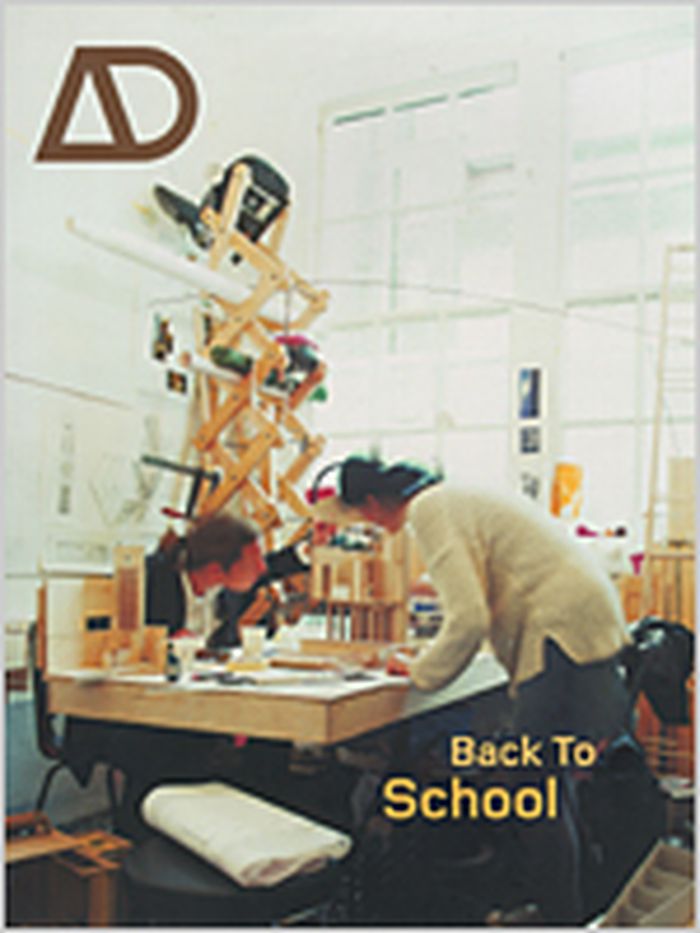
Back to school : architectural education - the information and the argument
Actions:
Price:
$54.99
(available to order)
Summary:
Today, architecture schools are truly international in their intake, as students are able to select from courses worldwide. For school leavers and undergraduates, the choice is bewildering. Where different institutions provide very different courses and ultimately very different architects, the very act of shopping for a degree is an incredibly important stage in an architecture student’s career. This book is set to become a touchstone publication for anyone involved in architectural education, from the academic to the aspiring student. It provides interviews with four of the most influential educators/heads of schools around the world: Peter Cook, Chair, the Bartlett School of Architecture, London, UK; Bernard Tschumi, Dean, School of Architecture at Columbia University, USA; Leon van Schaik, Innovation Professor of Architecture, Royal Melbourne Institute of Technology, Australia; Elia Zenghelis, Berlage, Dusseldorf. This is followed by short self-biographies of eleven further prominent figures including Rem Koolhaas, Anthony Vidler and Paul Virilio. It is the first publication of its kind to comprehensively cover architectural education in its current context as an international market. It will feature the first invaluable listing of architectural schools worldwide: no dedicated listing currently exists in printed form or on the web, giving students a useful reference from which to start the decision making process.
Back to school : architectural education - the information and the argument
Actions:
Price:
$54.99
(available to order)
Summary:
Today, architecture schools are truly international in their intake, as students are able to select from courses worldwide. For school leavers and undergraduates, the choice is bewildering. Where different institutions provide very different courses and ultimately very different architects, the very act of shopping for a degree is an incredibly important stage in an architecture student’s career. This book is set to become a touchstone publication for anyone involved in architectural education, from the academic to the aspiring student. It provides interviews with four of the most influential educators/heads of schools around the world: Peter Cook, Chair, the Bartlett School of Architecture, London, UK; Bernard Tschumi, Dean, School of Architecture at Columbia University, USA; Leon van Schaik, Innovation Professor of Architecture, Royal Melbourne Institute of Technology, Australia; Elia Zenghelis, Berlage, Dusseldorf. This is followed by short self-biographies of eleven further prominent figures including Rem Koolhaas, Anthony Vidler and Paul Virilio. It is the first publication of its kind to comprehensively cover architectural education in its current context as an international market. It will feature the first invaluable listing of architectural schools worldwide: no dedicated listing currently exists in printed form or on the web, giving students a useful reference from which to start the decision making process.
Form:
books
books
Publication:
November 2004, Chichester
November 2004, Chichester
Subject:
Architecture since 1900, Europe
Architecture since 1900, Europe


