


6640 Results
Form:
books
books
Title:
Japan-ness in architecture
Japan-ness in architecture
Actions:
Price:
$35.95
(available to order)
Summary:
Japanese architect Arata Isozaki sees buildings not as dead objects but as events that encompass the social and historical context -- not to be defined forever by their "everlasting materiality" but as texts to be interpreted and reread continually. In "Japan-ness in architecture", he identifies what is essentially Japanese in architecture from the seventh to the(...)
$35.95
(available to order)
Summary:
Japanese architect Arata Isozaki sees buildings not as dead objects but as events that encompass the social and historical context -- not to be defined forever by their "everlasting materiality" but as texts to be interpreted and reread continually. In "Japan-ness in architecture", he identifies what is essentially Japanese in architecture from the seventh to the(...)
Subject:
History until 1900, Asia
History until 1900, Asia
Publication:
January 1900, Cambridge / London
January 1900, Cambridge / London
Title:
Japan-ness in architecture
Actions:
Price:
$35.95
(available to order)
Summary:
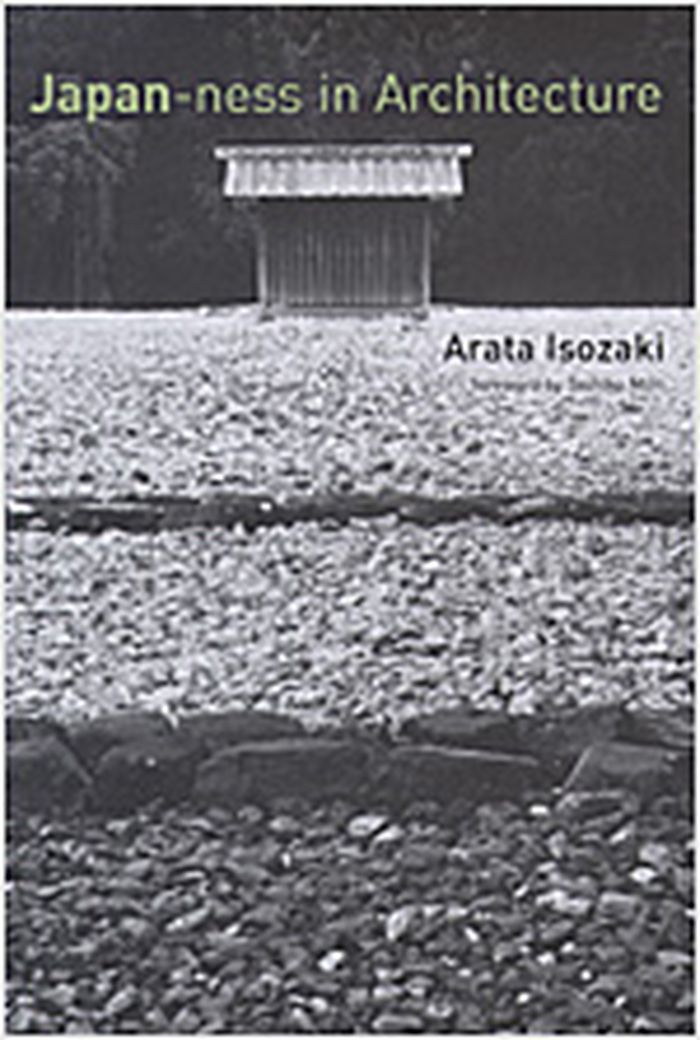
Japanese architect Arata Isozaki sees buildings not as dead objects but as events that encompass the social and historical context -- not to be defined forever by their "everlasting materiality" but as texts to be interpreted and reread continually. In "Japan-ness in architecture", he identifies what is essentially Japanese in architecture from the seventh to the twentieth century. In the opening essay, Isozaki analyzes the struggles of modern Japanese architects, including himself, to create something uniquely Japanese out of modernity. He then circles back in history to find what he calls Japan-ness in the seventh-century Ise shrine, reconstruction of the twelfth-century Todai-ji Temple, and the seventeenth-century Katsura Imperial Villa. He finds the periodic ritual relocation of Ise's precincts a counter to the West's concept of architectural permanence, and the repetition of the ritual an alternative to modernity's anxious quest for origins. He traces the "constructive power" of the Todai-ji Temple to the vision of the director of its reconstruction, the monk Chogen, whose imaginative power he sees as corresponding to the revolutionary turmoil of the times. The Katsura Imperial Villa, with its chimerical spaces, achieved its own Japan-ness as it reinvented the traditional shoin style. And yet, writes Isozaki, what others consider to be the Japanese aesthetic is often the opposite of that essential Japan-ness born in moments of historic self-definition; the purified stylization -- what Isozaki calls "Japanesquization" -- lacks the energy of cultural transformation and reflects an island retrenchment in response to the pressure of other cultures. Combining historical survey, critical analysis, theoretical reflection, and autobiographical account, these essays, written over a period of twenty years, demonstrate Isozaki's standing as one of the world's leading architects and preeminent architectural thinkers. Arata Isosaki is a leading Japanese architect. His works include the Museum of Contemporary Art, Los Angeles, the Olympic Stadium in Barcelona, the Volksbank Center am Postdamer Platz in Berlin, the Team Disney Building in Orlando, and the Tokyo University of Art and Design. Translated by Sabu Kohso. Foreword by Toshiko Mori.
Japan-ness in architecture
Actions:
Price:
$35.95
(available to order)
Summary:
Japanese architect Arata Isozaki sees buildings not as dead objects but as events that encompass the social and historical context -- not to be defined forever by their "everlasting materiality" but as texts to be interpreted and reread continually. In "Japan-ness in architecture", he identifies what is essentially Japanese in architecture from the seventh to the twentieth century. In the opening essay, Isozaki analyzes the struggles of modern Japanese architects, including himself, to create something uniquely Japanese out of modernity. He then circles back in history to find what he calls Japan-ness in the seventh-century Ise shrine, reconstruction of the twelfth-century Todai-ji Temple, and the seventeenth-century Katsura Imperial Villa. He finds the periodic ritual relocation of Ise's precincts a counter to the West's concept of architectural permanence, and the repetition of the ritual an alternative to modernity's anxious quest for origins. He traces the "constructive power" of the Todai-ji Temple to the vision of the director of its reconstruction, the monk Chogen, whose imaginative power he sees as corresponding to the revolutionary turmoil of the times. The Katsura Imperial Villa, with its chimerical spaces, achieved its own Japan-ness as it reinvented the traditional shoin style. And yet, writes Isozaki, what others consider to be the Japanese aesthetic is often the opposite of that essential Japan-ness born in moments of historic self-definition; the purified stylization -- what Isozaki calls "Japanesquization" -- lacks the energy of cultural transformation and reflects an island retrenchment in response to the pressure of other cultures. Combining historical survey, critical analysis, theoretical reflection, and autobiographical account, these essays, written over a period of twenty years, demonstrate Isozaki's standing as one of the world's leading architects and preeminent architectural thinkers. Arata Isosaki is a leading Japanese architect. His works include the Museum of Contemporary Art, Los Angeles, the Olympic Stadium in Barcelona, the Volksbank Center am Postdamer Platz in Berlin, the Team Disney Building in Orlando, and the Tokyo University of Art and Design. Translated by Sabu Kohso. Foreword by Toshiko Mori.
Form:
books
books
Publication:
January 1900, Cambridge / London
January 1900, Cambridge / London
Subject:
History until 1900, Asia
History until 1900, Asia
Form:
books
books
Actions:
Price:
$39.95
(available to order)
Summary:
Filmic Mapping, the second volume in Jovis' new LandScript series, examines forms of land measurement, primarily in documentary and essay films of the past ten years. Contributors from a variety of disciplines weigh in on the state of contemporary landscape architecture and its visual representation.
$39.95
(available to order)
Summary:
Filmic Mapping, the second volume in Jovis' new LandScript series, examines forms of land measurement, primarily in documentary and essay films of the past ten years. Contributors from a variety of disciplines weigh in on the state of contemporary landscape architecture and its visual representation.
Title:
Filmic mapping: documentary film and the visual culture of landscape architecture (landscript, no. 2)
Actions:
Price:
$39.95
(available to order)
Summary:
Filmic Mapping, the second volume in Jovis' new LandScript series, examines forms of land measurement, primarily in documentary and essay films of the past ten years. Contributors from a variety of disciplines weigh in on the state of contemporary landscape architecture and its visual representation.
Filmic mapping: documentary film and the visual culture of landscape architecture (landscript, no. 2)
Actions:
Price:
$39.95
(available to order)
Summary:
Filmic Mapping, the second volume in Jovis' new LandScript series, examines forms of land measurement, primarily in documentary and essay films of the past ten years. Contributors from a variety of disciplines weigh in on the state of contemporary landscape architecture and its visual representation.
Form:
books
books
Publication:
October 2012
October 2012
Subject:
Landscape Theory
Landscape Theory
Form:
books
books
Holdings:
Description:
ix, 276 pages, 8 unnumbered pages of plates : illustrations (some color), maps, plans ; 26 cm
Description:
ix, 276 pages, 8 unnumbered pages of plates : illustrations (some color), maps, plans ; 26 cm
Author:
Subject:
Publication:
Toronto ; Buffalo ; London : University of Toronto Press, [2016], ©2016
Toronto ; Buffalo ; London : University of Toronto Press, [2016], ©2016
Title:
The National Mall : no ordinary public space / Lisa Benton-Short.
Actions:
Holdings:
Description:
ix, 276 pages, 8 unnumbered pages of plates : illustrations (some color), maps, plans ; 26 cm
The National Mall : no ordinary public space / Lisa Benton-Short.
Actions:
Holdings:
Description:
ix, 276 pages, 8 unnumbered pages of plates : illustrations (some color), maps, plans ; 26 cm
Form:
books
books
Publication:
Toronto ; Buffalo ; London : University of Toronto Press, [2016], ©2016
Toronto ; Buffalo ; London : University of Toronto Press, [2016], ©2016
Author:
Subject:
Form:
books
books
Actions:
Price:
$62.50
(available to order)
Summary:
Dalibor Vesely proposes an alternative to the narrow vision of contemporary architecture as a discipline that can be treated as an instrument or commodity. In doing so, he offers nothing less than an account of the ontological and cultural foundations of modern architecture and, consequently, of the nature and cultural role of architecture through history. Vesely's(...)
$62.50
(available to order)
Summary:
Dalibor Vesely proposes an alternative to the narrow vision of contemporary architecture as a discipline that can be treated as an instrument or commodity. In doing so, he offers nothing less than an account of the ontological and cultural foundations of modern architecture and, consequently, of the nature and cultural role of architecture through history. Vesely's(...)
Title:
Architecture in the age of divided representation : the question of creativity in the shadow of production
Actions:
Price:
$62.50
(available to order)
Summary:
Dalibor Vesely proposes an alternative to the narrow vision of contemporary architecture as a discipline that can be treated as an instrument or commodity. In doing so, he offers nothing less than an account of the ontological and cultural foundations of modern architecture and, consequently, of the nature and cultural role of architecture through history. Vesely's argument, structured as a critical dialogue, discovers the first plausible anticipation of modernity in the formation of Renaissance perspective. Understanding this notion of perspective against the background of the medieval philosophy of light, he argues, leads to an understanding of architectural space as formed by typical human situations and by light before it is structured geometrically. The central part of the book addresses the question of divided representation - the tension between the instrumental and the communicative roles of architecture - in the period of the baroque, when architectural thinking was seriously challenged by the emergence of modern science. Vesely argues that to resolve the dilemma of modernity - reconciling the inventions and achievements of modern technology with the human condition and the natural world - we can turn to architecture and its latent capacity to reconcile different levels of reality, its ability to relate abstract ideas and conceptual structures to the concrete situations of everyday life. Vesely sees the restoration of this communicative role of architecture as the key to the restoration of architecture as the topological and corporeal foundation of culture; what the book is to our literacy, he argues, architecture is to culture as a whole. He concludes by proposing a new poetics of architecture that will serve as a framework for the restoration of the humanistic role of architecture in the age of technology.
Architecture in the age of divided representation : the question of creativity in the shadow of production
Actions:
Price:
$62.50
(available to order)
Summary:
Dalibor Vesely proposes an alternative to the narrow vision of contemporary architecture as a discipline that can be treated as an instrument or commodity. In doing so, he offers nothing less than an account of the ontological and cultural foundations of modern architecture and, consequently, of the nature and cultural role of architecture through history. Vesely's argument, structured as a critical dialogue, discovers the first plausible anticipation of modernity in the formation of Renaissance perspective. Understanding this notion of perspective against the background of the medieval philosophy of light, he argues, leads to an understanding of architectural space as formed by typical human situations and by light before it is structured geometrically. The central part of the book addresses the question of divided representation - the tension between the instrumental and the communicative roles of architecture - in the period of the baroque, when architectural thinking was seriously challenged by the emergence of modern science. Vesely argues that to resolve the dilemma of modernity - reconciling the inventions and achievements of modern technology with the human condition and the natural world - we can turn to architecture and its latent capacity to reconcile different levels of reality, its ability to relate abstract ideas and conceptual structures to the concrete situations of everyday life. Vesely sees the restoration of this communicative role of architecture as the key to the restoration of architecture as the topological and corporeal foundation of culture; what the book is to our literacy, he argues, architecture is to culture as a whole. He concludes by proposing a new poetics of architecture that will serve as a framework for the restoration of the humanistic role of architecture in the age of technology.
Form:
books
books
Publication:
June 2004, Cambridge, Mass.
June 2004, Cambridge, Mass.
Subject:
Architectural Theory
Architectural Theory
Form:
books
books
Actions:
Price:
$31.50
(available to order)
Summary:
In this long-awaited work, Dalibor Vesely proposes an alternative to the narrow vision of contemporary architecture as a discipline that can be treated as an instrument or commodity. In doing so, he offers an account of the ontological and cultural foundations of modern architecture and, consequently, of the nature and cultural role of architecture through history.(...)
$31.50
(available to order)
Summary:
In this long-awaited work, Dalibor Vesely proposes an alternative to the narrow vision of contemporary architecture as a discipline that can be treated as an instrument or commodity. In doing so, he offers an account of the ontological and cultural foundations of modern architecture and, consequently, of the nature and cultural role of architecture through history.(...)
Subject:
Architectural Theory
Architectural Theory
Publication:
October 2006, Cambridge (MA), London
October 2006, Cambridge (MA), London
Title:
Architecture in the age of divided representation : the question of creativity in the shadow of production
Actions:
Price:
$31.50
(available to order)
Summary:
In this long-awaited work, Dalibor Vesely proposes an alternative to the narrow vision of contemporary architecture as a discipline that can be treated as an instrument or commodity. In doing so, he offers an account of the ontological and cultural foundations of modern architecture and, consequently, of the nature and cultural role of architecture through history. Vesely's argument, structured as a critical dialogue, discovers the first plausible anticipation of modernity in the formation of Renaissance perspective. Understanding this notion of perspective against the background of the medieval philosophy of light, he argues, leads to an understanding of architectural space as formed by typical human situations and by light before it is structured geometrically. The central part of the book addresses the question of divided representation - the tension between the instrumental and the communicative roles of architecture - in the period of the baroque, when architectural thinking was seriously challenged by the emergence of modern science. Vesely argues that to resolve the dilemma of modernity - reconciling the inventions and achievements of modern technology with the human condition and the natural world - we can turn to architecture and its latent capacity to reconcile different levels of reality, its ability to relate abstract ideas and conceptual structures to the concrete situations of everyday life. Vesely sees the restoration of this communicative role of architecture as the key to the restoration of architecture as the topological and corporeal foundation of culture; what the book is to our literacy, he argues, architecture is to culture as a whole. He concludes by proposing a new poetics of architecture that will serve as a framework for the restoration of the humanistic role of architecture in the age of technology.
Architecture in the age of divided representation : the question of creativity in the shadow of production
Actions:
Price:
$31.50
(available to order)
Summary:
In this long-awaited work, Dalibor Vesely proposes an alternative to the narrow vision of contemporary architecture as a discipline that can be treated as an instrument or commodity. In doing so, he offers an account of the ontological and cultural foundations of modern architecture and, consequently, of the nature and cultural role of architecture through history. Vesely's argument, structured as a critical dialogue, discovers the first plausible anticipation of modernity in the formation of Renaissance perspective. Understanding this notion of perspective against the background of the medieval philosophy of light, he argues, leads to an understanding of architectural space as formed by typical human situations and by light before it is structured geometrically. The central part of the book addresses the question of divided representation - the tension between the instrumental and the communicative roles of architecture - in the period of the baroque, when architectural thinking was seriously challenged by the emergence of modern science. Vesely argues that to resolve the dilemma of modernity - reconciling the inventions and achievements of modern technology with the human condition and the natural world - we can turn to architecture and its latent capacity to reconcile different levels of reality, its ability to relate abstract ideas and conceptual structures to the concrete situations of everyday life. Vesely sees the restoration of this communicative role of architecture as the key to the restoration of architecture as the topological and corporeal foundation of culture; what the book is to our literacy, he argues, architecture is to culture as a whole. He concludes by proposing a new poetics of architecture that will serve as a framework for the restoration of the humanistic role of architecture in the age of technology.
Form:
books
books
Publication:
October 2006, Cambridge (MA), London
October 2006, Cambridge (MA), London
Subject:
Architectural Theory
Architectural Theory
Form:
books
books
Actions:
Price:
$52.95
(available to order)
Summary:
Works include: Storefront for Art and Architecture; Makuhari Housing. Projects include: Hypo-Bank: Offices and Mixed Use Retail; Museum of Contemporary Art, Helsinki; Chapel of St. Ignatius, Seattle University; Cranbrook Institute of Science; I-Project.
$52.95
(available to order)
Summary:
Works include: Storefront for Art and Architecture; Makuhari Housing. Projects include: Hypo-Bank: Offices and Mixed Use Retail; Museum of Contemporary Art, Helsinki; Chapel of St. Ignatius, Seattle University; Cranbrook Institute of Science; I-Project.
Subject:
Architecture Monographs
Architecture Monographs
Publication:
January 1900, Tokyo
January 1900, Tokyo
Title:
GA Document Extra 06 : Steven Holl
Actions:
Price:
$52.95
(available to order)
Summary:
Works include: Storefront for Art and Architecture; Makuhari Housing. Projects include: Hypo-Bank: Offices and Mixed Use Retail; Museum of Contemporary Art, Helsinki; Chapel of St. Ignatius, Seattle University; Cranbrook Institute of Science; I-Project.
GA Document Extra 06 : Steven Holl
Actions:
Price:
$52.95
(available to order)
Summary:
Works include: Storefront for Art and Architecture; Makuhari Housing. Projects include: Hypo-Bank: Offices and Mixed Use Retail; Museum of Contemporary Art, Helsinki; Chapel of St. Ignatius, Seattle University; Cranbrook Institute of Science; I-Project.
Form:
books
books
Publication:
January 1900, Tokyo
January 1900, Tokyo
Subject:
Architecture Monographs
Architecture Monographs
Form:
books
books
Title:
Shanghai: art of the city
Shanghai: art of the city
Actions:
Price:
$58.95
(available to order)
Summary:
For more than a century and a half artists have been both documenting on Shanghai's great changes. Timed to coincide with the Shanghai World Expo in 2010 (and a city-wide Shanghai Celebration in San Francisco, its sister city), Shanghai catalogs the first exhibition to explore one of China's most cosmopolitan cities. A case study in cultural globalization, the book(...)
$58.95
(available to order)
Summary:
For more than a century and a half artists have been both documenting on Shanghai's great changes. Timed to coincide with the Shanghai World Expo in 2010 (and a city-wide Shanghai Celebration in San Francisco, its sister city), Shanghai catalogs the first exhibition to explore one of China's most cosmopolitan cities. A case study in cultural globalization, the book(...)
Title:
Shanghai: art of the city
Actions:
Price:
$58.95
(available to order)
Summary:
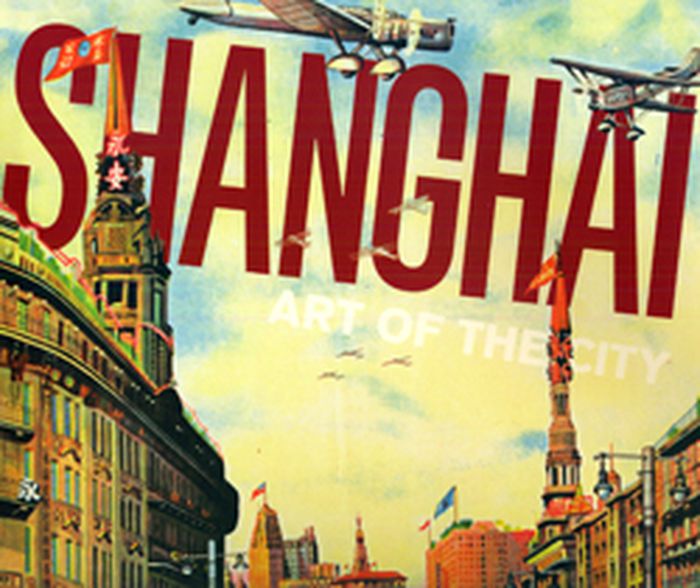
For more than a century and a half artists have been both documenting on Shanghai's great changes. Timed to coincide with the Shanghai World Expo in 2010 (and a city-wide Shanghai Celebration in San Francisco, its sister city), Shanghai catalogs the first exhibition to explore one of China's most cosmopolitan cities. A case study in cultural globalization, the book traces, through its art, factors behind the city's distinctive character. This book features 128 oil paintings, Shanghai deco furniture and rugs, revolutionary posters, works of fashion, movie clips and contemporary installations.
Shanghai: art of the city
Actions:
Price:
$58.95
(available to order)
Summary:
For more than a century and a half artists have been both documenting on Shanghai's great changes. Timed to coincide with the Shanghai World Expo in 2010 (and a city-wide Shanghai Celebration in San Francisco, its sister city), Shanghai catalogs the first exhibition to explore one of China's most cosmopolitan cities. A case study in cultural globalization, the book traces, through its art, factors behind the city's distinctive character. This book features 128 oil paintings, Shanghai deco furniture and rugs, revolutionary posters, works of fashion, movie clips and contemporary installations.
Form:
books
books
Publication:
March 2010
March 2010
Subject:
Contemporary Asian Architecture
Contemporary Asian Architecture
Form:
books
books
Actions:
Price:
$65.00
(available to order)
Summary:
Casa Gilardi was the last built project of Pritzker Prize winner Luis Barragan’s prolific career. In 1976, 10 years after his retirement from the practice of architecture, Barragan accepted the commission of two young publicists passionate about his architecture. This editorial project aims to disseminate the complete story of this masterpiece from its initial sketches(...)
$65.00
(available to order)
Summary:
Casa Gilardi was the last built project of Pritzker Prize winner Luis Barragan’s prolific career. In 1976, 10 years after his retirement from the practice of architecture, Barragan accepted the commission of two young publicists passionate about his architecture. This editorial project aims to disseminate the complete story of this masterpiece from its initial sketches(...)
Title:
Gilardi house: Barragan's last witness
Actions:
Price:
$65.00
(available to order)
Summary:
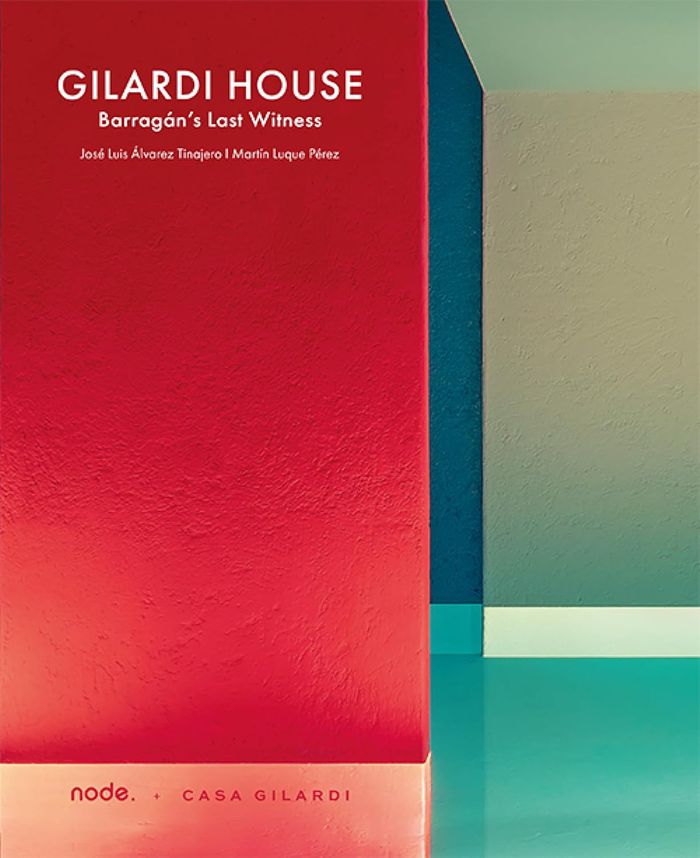
Casa Gilardi was the last built project of Pritzker Prize winner Luis Barragan’s prolific career. In 1976, 10 years after his retirement from the practice of architecture, Barragan accepted the commission of two young publicists passionate about his architecture. This editorial project aims to disseminate the complete story of this masterpiece from its initial sketches to the completion of its construction and provide a critical reading of it today by publishing the existing archive of Barragan’s documents for the house: drawings, sketches, technical details, and correspondences as well as historic and contemporary photographs. This book includes critical reflections by contemporary architects and critics who have visited this private house.
Gilardi house: Barragan's last witness
Actions:
Price:
$65.00
(available to order)
Summary:
Casa Gilardi was the last built project of Pritzker Prize winner Luis Barragan’s prolific career. In 1976, 10 years after his retirement from the practice of architecture, Barragan accepted the commission of two young publicists passionate about his architecture. This editorial project aims to disseminate the complete story of this masterpiece from its initial sketches to the completion of its construction and provide a critical reading of it today by publishing the existing archive of Barragan’s documents for the house: drawings, sketches, technical details, and correspondences as well as historic and contemporary photographs. This book includes critical reflections by contemporary architects and critics who have visited this private house.
Form:
books
books
Publication:
June 2024
June 2024
Subject:
Architecture Monographs
Architecture Monographs
Form:
books
books
Actions:
Price:
$49.99
(available to order)
Summary:
Is the present obsession with the icon and the promotion of image over substance symptomatic of a general trend in contemporary architecture? Arup Associates provides the alternative: unified design. This straightforward, critical reflection on contemporary architecture - a manifesto of sorts, polemical in parts, philosophical; and determined to set an honest agenda - is(...)
$49.99
(available to order)
Summary:
Is the present obsession with the icon and the promotion of image over substance symptomatic of a general trend in contemporary architecture? Arup Associates provides the alternative: unified design. This straightforward, critical reflection on contemporary architecture - a manifesto of sorts, polemical in parts, philosophical; and determined to set an honest agenda - is(...)
Title:
Unified design Arup associates
Actions:
Price:
$49.99
(available to order)
Summary:
Is the present obsession with the icon and the promotion of image over substance symptomatic of a general trend in contemporary architecture? Arup Associates provides the alternative: unified design. This straightforward, critical reflection on contemporary architecture - a manifesto of sorts, polemical in parts, philosophical; and determined to set an honest agenda - is divided into three sections. First, an explanation of unified design. Next, a demonstration of the sustainable agenda that is a the heart of this practice. Finally, a complementary series of essays by respected commentators outside of the practice place the vision of people-focused design in the context of other critical social thought.
Unified design Arup associates
Actions:
Price:
$49.99
(available to order)
Summary:
Is the present obsession with the icon and the promotion of image over substance symptomatic of a general trend in contemporary architecture? Arup Associates provides the alternative: unified design. This straightforward, critical reflection on contemporary architecture - a manifesto of sorts, polemical in parts, philosophical; and determined to set an honest agenda - is divided into three sections. First, an explanation of unified design. Next, a demonstration of the sustainable agenda that is a the heart of this practice. Finally, a complementary series of essays by respected commentators outside of the practice place the vision of people-focused design in the context of other critical social thought.
Form:
books
books
Publication:
May 2008, West Sussex
May 2008, West Sussex
Subject:
Architecture Monographs
Architecture Monographs
Form:
books
books
Price:
$56.95
(available to order)
Summary:
Paulo Providência is an architect who occupies a special place in contemporary Portuguese architecture, and he is recognized by many as one of the leaders of the generation following Eduardo Souto de Moura. His built work—the majority of which is located in Portugal—is based on his sound theoretical background and rooted in philosophical and anthropological research.(...)
$56.95
(available to order)
Summary:
Paulo Providência is an architect who occupies a special place in contemporary Portuguese architecture, and he is recognized by many as one of the leaders of the generation following Eduardo Souto de Moura. His built work—the majority of which is located in Portugal—is based on his sound theoretical background and rooted in philosophical and anthropological research.(...)
Title:
Paulo Providência: Architectonica Percepta. Texts and images 1989-2015
Actions:
Price:
$56.95
(available to order)
Summary:
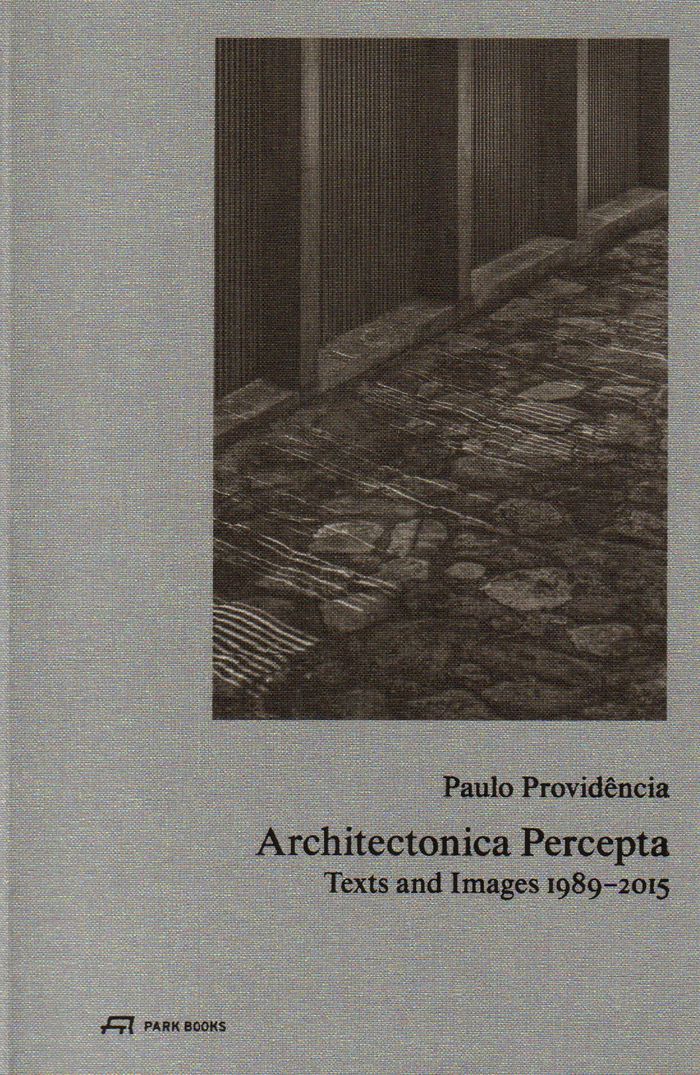
Paulo Providência is an architect who occupies a special place in contemporary Portuguese architecture, and he is recognized by many as one of the leaders of the generation following Eduardo Souto de Moura. His built work—the majority of which is located in Portugal—is based on his sound theoretical background and rooted in philosophical and anthropological research. 'Paulo Providência—Architectonica Percepta'' celebrates Providência’s influence on contemporary Portuguese architecture by looking closely at seven of his key buildings. The buildings are presented in striking duotone photographs taken by Alberto Plácido, and each building in the book is documented with selected plans and details about its design and construction.
Paulo Providência: Architectonica Percepta. Texts and images 1989-2015
Actions:
Price:
$56.95
(available to order)
Summary:
Paulo Providência is an architect who occupies a special place in contemporary Portuguese architecture, and he is recognized by many as one of the leaders of the generation following Eduardo Souto de Moura. His built work—the majority of which is located in Portugal—is based on his sound theoretical background and rooted in philosophical and anthropological research. 'Paulo Providência—Architectonica Percepta'' celebrates Providência’s influence on contemporary Portuguese architecture by looking closely at seven of his key buildings. The buildings are presented in striking duotone photographs taken by Alberto Plácido, and each building in the book is documented with selected plans and details about its design and construction.
Form:
books
books
Publication:
September 2016
September 2016
Subject:
Architecture Monographs
Architecture Monographs


