


5377 Results
Form:
books
books
Price:
$42.95
(available to order)
Summary:
The attention Swiss architecture has received in recent years has mainly focused on a small number of architects whose work has appeared on the covers of the specialized press. Extending throughout the Modern Movement, this is an architecture with its roots in a rich building tradition. In Graubünden, under the attentive gaze of maestro Peter Zumthor, a(...)
$42.95
(available to order)
Summary:
The attention Swiss architecture has received in recent years has mainly focused on a small number of architects whose work has appeared on the covers of the specialized press. Extending throughout the Modern Movement, this is an architecture with its roots in a rich building tradition. In Graubünden, under the attentive gaze of maestro Peter Zumthor, a(...)
Subject:
Green Architecture
Green Architecture
Publication:
June 2000, Barcelona
June 2000, Barcelona
Title:
2G 14 : Building in the mountains, recent architecture in Graubünden
Actions:
Price:
$42.95
(available to order)
Summary:
The attention Swiss architecture has received in recent years has mainly focused on a small number of architects whose work has appeared on the covers of the specialized press. Extending throughout the Modern Movement, this is an architecture with its roots in a rich building tradition. In Graubünden, under the attentive gaze of maestro Peter Zumthor, a group of young architects educated at the ETH in Zurich, many of whom are former assistants in Zumthor's studio, demonstrate the extraordinary quality of the architectonic production of this small German-speaking region of Switzerland. These increasingly well-known names present a wide range of projects ranging from single-family houses to apartment blocks, schools, and public and commercial buildings of different sorts, yet with similarities in the way they handle materials and settings, a body of work that transcends the borders of the region and attracts the attention of the international architecture world. The introduction by Daniel Bosshard, Miguel Kreisler, Myriam Sterling and Txell Vaquer places the building tradition of Graubünden in its historical context. The Nexus section features a 1913 text by Adolf Loos called "Rules for Those Building in the Mountains", plus Bruno Reichlin's "When Moderns Architects Build in the Mountains" and an extract from Christoph Schaub's video "The Vrin Project".
2G 14 : Building in the mountains, recent architecture in Graubünden
Actions:
Price:
$42.95
(available to order)
Summary:
The attention Swiss architecture has received in recent years has mainly focused on a small number of architects whose work has appeared on the covers of the specialized press. Extending throughout the Modern Movement, this is an architecture with its roots in a rich building tradition. In Graubünden, under the attentive gaze of maestro Peter Zumthor, a group of young architects educated at the ETH in Zurich, many of whom are former assistants in Zumthor's studio, demonstrate the extraordinary quality of the architectonic production of this small German-speaking region of Switzerland. These increasingly well-known names present a wide range of projects ranging from single-family houses to apartment blocks, schools, and public and commercial buildings of different sorts, yet with similarities in the way they handle materials and settings, a body of work that transcends the borders of the region and attracts the attention of the international architecture world. The introduction by Daniel Bosshard, Miguel Kreisler, Myriam Sterling and Txell Vaquer places the building tradition of Graubünden in its historical context. The Nexus section features a 1913 text by Adolf Loos called "Rules for Those Building in the Mountains", plus Bruno Reichlin's "When Moderns Architects Build in the Mountains" and an extract from Christoph Schaub's video "The Vrin Project".
Form:
books
books
Publication:
June 2000, Barcelona
June 2000, Barcelona
Subject:
Green Architecture
Green Architecture
Form:
books
books
Actions:
Price:
$29.95
(available to order)
Summary:
There are all kinds of indications that architecture in the nineties has set off in a new direction after the domination of the two last decades by postmodernism as a style or attitude. This trend, which can be seen in the work of architectural firms like OMA, Jean Nouvel, Dominique Perrault, Herzog & De Meuron and Toyo Ito, can be connected with one of the dominant(...)
$29.95
(available to order)
Summary:
There are all kinds of indications that architecture in the nineties has set off in a new direction after the domination of the two last decades by postmodernism as a style or attitude. This trend, which can be seen in the work of architectural firms like OMA, Jean Nouvel, Dominique Perrault, Herzog & De Meuron and Toyo Ito, can be connected with one of the dominant(...)
Title:
Supermodernism : architecture in the age of globalization / enlarged edition
Actions:
Price:
$29.95
(available to order)
Summary:
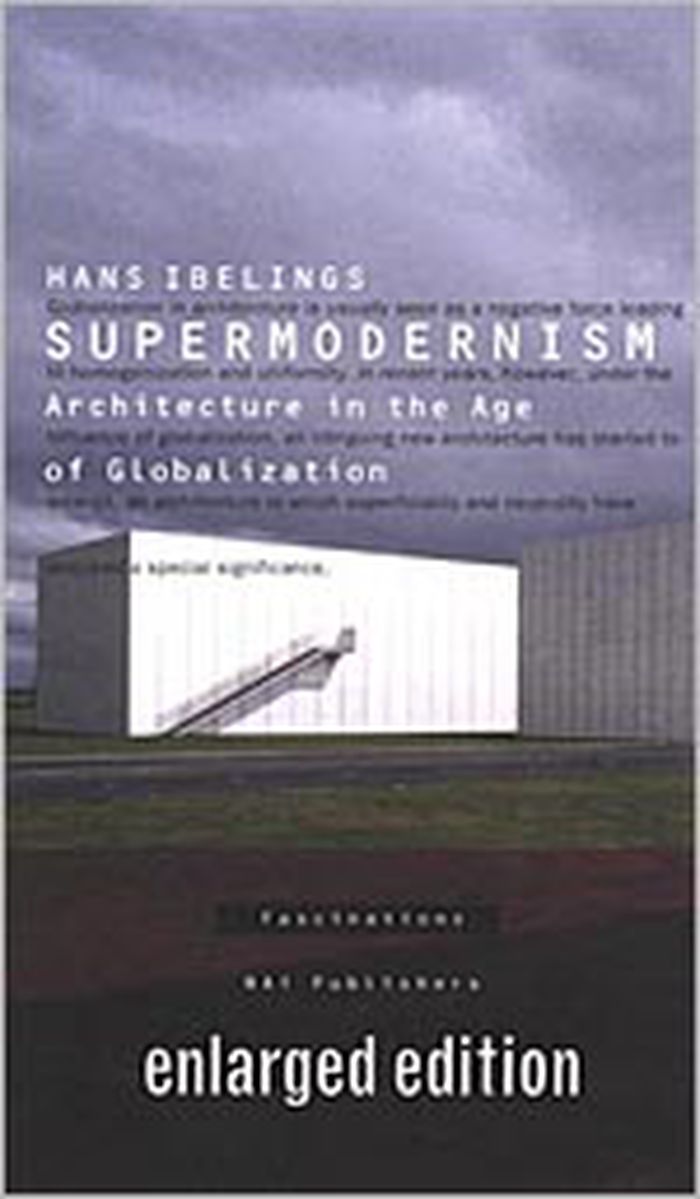
There are all kinds of indications that architecture in the nineties has set off in a new direction after the domination of the two last decades by postmodernism as a style or attitude. This trend, which can be seen in the work of architectural firms like OMA, Jean Nouvel, Dominique Perrault, Herzog & De Meuron and Toyo Ito, can be connected with one of the dominant forces of the present time: the globalization that is taking place in virtually every field. One of the consequences for architecture is the erosion of the postmodern (and deconstructivist) axiom of the uniqueness of the site. The context, let alone contextualism, no longer seems to play an important role in an increasing number of designs and buildings. Semiotic expressiveness - another postmodern theme - is also often lacking in this architecture. The author explores this new trend towards abstract, neutral architecture, which in various respects can be seen as the last word of modern architecture of the postwar International Style. This enlarged edition of "Supermodernism" includes a new final chapter in which Ibelings charts the latest examples of supermodernism, as well as a revised introduction and conclusion in which he responds to the numerous reactions his provocative stance has triggered.
Supermodernism : architecture in the age of globalization / enlarged edition
Actions:
Price:
$29.95
(available to order)
Summary:
There are all kinds of indications that architecture in the nineties has set off in a new direction after the domination of the two last decades by postmodernism as a style or attitude. This trend, which can be seen in the work of architectural firms like OMA, Jean Nouvel, Dominique Perrault, Herzog & De Meuron and Toyo Ito, can be connected with one of the dominant forces of the present time: the globalization that is taking place in virtually every field. One of the consequences for architecture is the erosion of the postmodern (and deconstructivist) axiom of the uniqueness of the site. The context, let alone contextualism, no longer seems to play an important role in an increasing number of designs and buildings. Semiotic expressiveness - another postmodern theme - is also often lacking in this architecture. The author explores this new trend towards abstract, neutral architecture, which in various respects can be seen as the last word of modern architecture of the postwar International Style. This enlarged edition of "Supermodernism" includes a new final chapter in which Ibelings charts the latest examples of supermodernism, as well as a revised introduction and conclusion in which he responds to the numerous reactions his provocative stance has triggered.
Form:
books
books
Publication:
January 1900, Rotterdam
January 1900, Rotterdam
Subject:
Architecture since 1900, Europe
Architecture since 1900, Europe
Form:
books
books

Actions:
Price:
$51.95
(available to order)
Summary:
A dacha is a country house, made of wood, used by Soviet citizens to escape the rigors of the city for a rural idyll. Widespread in the countries of the former USSR, this important cultural and architectural form has been largely ignored academically. In ''Dacha'', Fyodor Savintsev documents this particularly Russian phenomenon. His photographs constitute a unique record(...)
$51.95
(available to order)
Summary:
A dacha is a country house, made of wood, used by Soviet citizens to escape the rigors of the city for a rural idyll. Widespread in the countries of the former USSR, this important cultural and architectural form has been largely ignored academically. In ''Dacha'', Fyodor Savintsev documents this particularly Russian phenomenon. His photographs constitute a unique record(...)
Subject:
Commercial interiors, Building types
Commercial interiors, Building types
Publication:
September 2023
September 2023
Title:
Dacha: the soviet country cottage
Actions:
Price:
$51.95
(available to order)
Summary:
A dacha is a country house, made of wood, used by Soviet citizens to escape the rigors of the city for a rural idyll. Widespread in the countries of the former USSR, this important cultural and architectural form has been largely ignored academically. In ''Dacha'', Fyodor Savintsev documents this particularly Russian phenomenon. His photographs constitute a unique record of a rapidly vanishing fairy-tale wooden world. The word ''dacha'' has been used to describe constructions ranging from grand imperial villas to small sheds. Originally bestowed by the Tsar to reward courtiers, this custom continued following the revolution, with Soviet cooperatives building dachas for their members. Supposedly for the benefit of laborers, in reality they were destined for those favored by the State, including famous writers, architects and artists from Pasternak to Prokofiev. The fall of the Soviet Union accelerated their use, as economic uncertainty forced city dwellers toward self-sufficiency. The dacha tradition has survived revolution, war and the collapse of Communism, becoming an integral part of life in the process. Using contemporary photographs to showcase these uniquely individual buildings for the first time, alongside an introduction explaining their historical and cultural context, Dacha is the only publication of its kind.
Dacha: the soviet country cottage
Actions:
Price:
$51.95
(available to order)
Summary:
A dacha is a country house, made of wood, used by Soviet citizens to escape the rigors of the city for a rural idyll. Widespread in the countries of the former USSR, this important cultural and architectural form has been largely ignored academically. In ''Dacha'', Fyodor Savintsev documents this particularly Russian phenomenon. His photographs constitute a unique record of a rapidly vanishing fairy-tale wooden world. The word ''dacha'' has been used to describe constructions ranging from grand imperial villas to small sheds. Originally bestowed by the Tsar to reward courtiers, this custom continued following the revolution, with Soviet cooperatives building dachas for their members. Supposedly for the benefit of laborers, in reality they were destined for those favored by the State, including famous writers, architects and artists from Pasternak to Prokofiev. The fall of the Soviet Union accelerated their use, as economic uncertainty forced city dwellers toward self-sufficiency. The dacha tradition has survived revolution, war and the collapse of Communism, becoming an integral part of life in the process. Using contemporary photographs to showcase these uniquely individual buildings for the first time, alongside an introduction explaining their historical and cultural context, Dacha is the only publication of its kind.
Form:
books
books
Publication:
September 2023
September 2023
Subject:
Commercial interiors, Building types
Commercial interiors, Building types
Form:
books
books
Actions:
Price:
$85.00
(available to order)
Summary:
Iranian artist Reza Shafahi (b. 1940) began his career in his 70s, having spent the preceding decades largely disconnected from his family, working through an addiction to gambling. Art became a way out when his son, artist Mamali Shafahi, invited him to participate in a daily drawing exercise. For the first time, a generous selection of Reza’s works are collected within(...)
$85.00
(available to order)
Summary:
Iranian artist Reza Shafahi (b. 1940) began his career in his 70s, having spent the preceding decades largely disconnected from his family, working through an addiction to gambling. Art became a way out when his son, artist Mamali Shafahi, invited him to participate in a daily drawing exercise. For the first time, a generous selection of Reza’s works are collected within(...)
Title:
Reza Shafahi, Diary of a gambler
Actions:
Price:
$85.00
(available to order)
Summary:
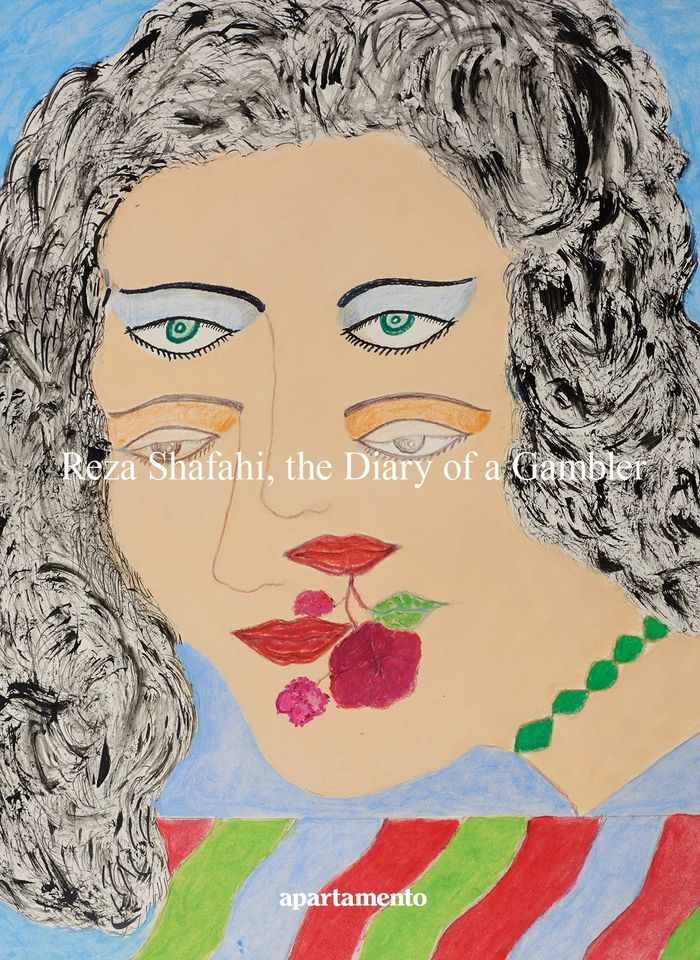
Iranian artist Reza Shafahi (b. 1940) began his career in his 70s, having spent the preceding decades largely disconnected from his family, working through an addiction to gambling. Art became a way out when his son, artist Mamali Shafahi, invited him to participate in a daily drawing exercise. For the first time, a generous selection of Reza’s works are collected within a stand-alone volume, celebrating the full scope of his artistic practice. Edited by Jina Khayyer, ''Reza Shafahi, The Diary of a Gambler'' features a selection of art curated by Mamali and by Tony Cox, owner and founder of Club Rhubarb in New York City, where Reza had his first solo show in 2019. Apartamento magazine first told Reza’s captivating story in issue #29, and ''Reza Shafahi, the Diary of a Gambler'' is punctuated by a first-person reimagining of Khayyer’s original interview. Classic poems by Rumi, Khayyam, Saadi, and the more modern Forough Farrokhzad—clear influences on Reza’s vibrant and sensual creations—are presented here in Farsi and in English translation. Contributions by Mamali, Cox, Michael Bullock, and Martha Kirszenbaum lend further context to Reza’s artistic journey, into a world that, as Kirszenbaum notes, shines with ‘a touch of glow and softness.’
Reza Shafahi, Diary of a gambler
Actions:
Price:
$85.00
(available to order)
Summary:
Iranian artist Reza Shafahi (b. 1940) began his career in his 70s, having spent the preceding decades largely disconnected from his family, working through an addiction to gambling. Art became a way out when his son, artist Mamali Shafahi, invited him to participate in a daily drawing exercise. For the first time, a generous selection of Reza’s works are collected within a stand-alone volume, celebrating the full scope of his artistic practice. Edited by Jina Khayyer, ''Reza Shafahi, The Diary of a Gambler'' features a selection of art curated by Mamali and by Tony Cox, owner and founder of Club Rhubarb in New York City, where Reza had his first solo show in 2019. Apartamento magazine first told Reza’s captivating story in issue #29, and ''Reza Shafahi, the Diary of a Gambler'' is punctuated by a first-person reimagining of Khayyer’s original interview. Classic poems by Rumi, Khayyam, Saadi, and the more modern Forough Farrokhzad—clear influences on Reza’s vibrant and sensual creations—are presented here in Farsi and in English translation. Contributions by Mamali, Cox, Michael Bullock, and Martha Kirszenbaum lend further context to Reza’s artistic journey, into a world that, as Kirszenbaum notes, shines with ‘a touch of glow and softness.’
Form:
books
books
Publication:
May 2023
May 2023
Subject:
Contemporary Art Monographs
Contemporary Art Monographs
Form:
books
books
Actions:
Price:
$35.95
(available to order)
Summary:
Anti-racist design interventions can be difficult. Well-intentioned conversations can fuel tensions, activate racialized trauma, and lead to misunderstandings, especially in spaces not typically focused on diversity, equity, and inclusion. Even when progress is made, white supremacy culture can resurface. We need anti-racist guidelines and approaches that lay bare(...)
$35.95
(available to order)
Summary:
Anti-racist design interventions can be difficult. Well-intentioned conversations can fuel tensions, activate racialized trauma, and lead to misunderstandings, especially in spaces not typically focused on diversity, equity, and inclusion. Even when progress is made, white supremacy culture can resurface. We need anti-racist guidelines and approaches that lay bare(...)
Title:
Racism untaught: Revealing and unlearning racialized design
Actions:
Price:
$35.95
(available to order)
Summary:
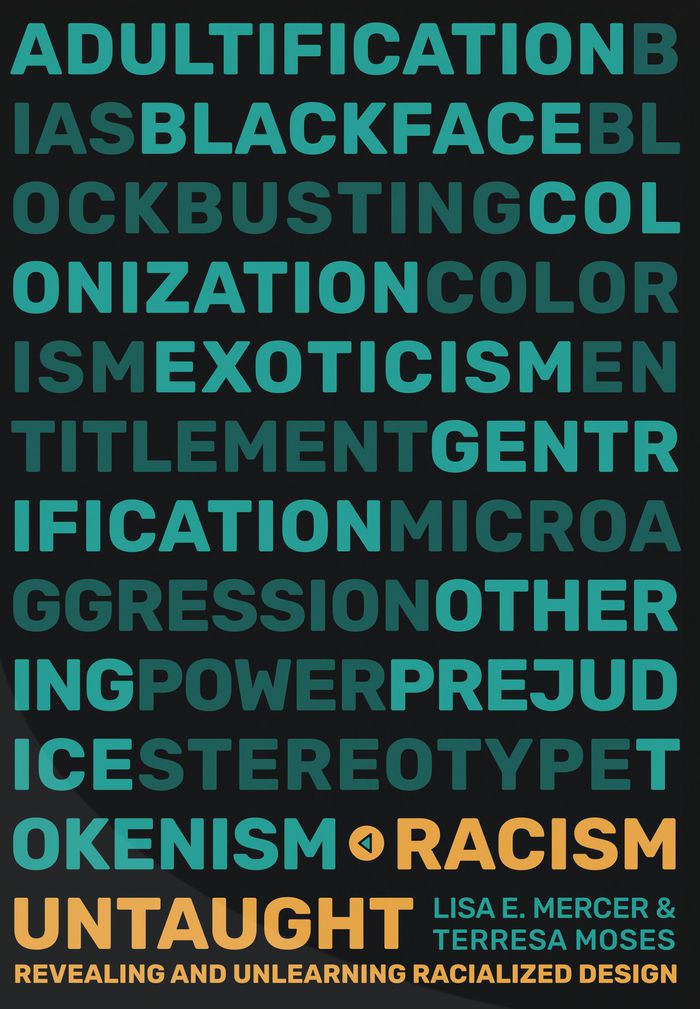
Anti-racist design interventions can be difficult. Well-intentioned conversations can fuel tensions, activate racialized trauma, and lead to misunderstandings, especially in spaces not typically focused on diversity, equity, and inclusion. Even when progress is made, white supremacy culture can resurface. We need anti-racist guidelines and approaches that lay bare racialized systems of oppression and fundamentally disrupt their replication. In Racism Untaught, Lisa E. Mercer and Terresa Moses, two veteran anti-racist educators, deliver this exact approach. Mercer and Moses provide a step-by-step guide to anti-racist interventions in academic, business, and community settings that benefits all participants. Adapted from their successful workshop series and filled with concrete examples and ample case studies, their book teaches participants how to analyze design—and reimagine racialized artifacts, systems, and experiences guided by anti-oppressive principles. They demonstrate how to examine positionality within the context of racism and oppression; help us understand how design can reinforce and perpetuate oppression; and reveal the unique relationship among equity, ethics, and responsibility that constitutes the core value of an anti-racist design discipline. In ''Racism untaught'', Mercer and Moses provide the framework we need to unlearn racialized design practices and move more generatively toward collective liberation.
Racism untaught: Revealing and unlearning racialized design
Actions:
Price:
$35.95
(available to order)
Summary:
Anti-racist design interventions can be difficult. Well-intentioned conversations can fuel tensions, activate racialized trauma, and lead to misunderstandings, especially in spaces not typically focused on diversity, equity, and inclusion. Even when progress is made, white supremacy culture can resurface. We need anti-racist guidelines and approaches that lay bare racialized systems of oppression and fundamentally disrupt their replication. In Racism Untaught, Lisa E. Mercer and Terresa Moses, two veteran anti-racist educators, deliver this exact approach. Mercer and Moses provide a step-by-step guide to anti-racist interventions in academic, business, and community settings that benefits all participants. Adapted from their successful workshop series and filled with concrete examples and ample case studies, their book teaches participants how to analyze design—and reimagine racialized artifacts, systems, and experiences guided by anti-oppressive principles. They demonstrate how to examine positionality within the context of racism and oppression; help us understand how design can reinforce and perpetuate oppression; and reveal the unique relationship among equity, ethics, and responsibility that constitutes the core value of an anti-racist design discipline. In ''Racism untaught'', Mercer and Moses provide the framework we need to unlearn racialized design practices and move more generatively toward collective liberation.
Form:
books
books
Publication:
October 2023
October 2023
Subject:
Design Theory
Design Theory
Form:
books
books
Title:
Mary Ellen Mark: Encounters
Mary Ellen Mark: Encounters
Actions:
Price:
$73.00
(available to order)
Summary:
The images of American photographer Mary Ellen Mark are icons of documentary and humanistic photography. Focusing her camera on the socially disadvantaged and those on the fringes of society, she told the stories of her protagonists without prejudice. In the context of the emerging women’s movement in the USA during the 1960s and 70s, and as a freelance photographer at a(...)
$73.00
(available to order)
Summary:
The images of American photographer Mary Ellen Mark are icons of documentary and humanistic photography. Focusing her camera on the socially disadvantaged and those on the fringes of society, she told the stories of her protagonists without prejudice. In the context of the emerging women’s movement in the USA during the 1960s and 70s, and as a freelance photographer at a(...)
Title:
Mary Ellen Mark: Encounters
Actions:
Price:
$73.00
(available to order)
Summary:
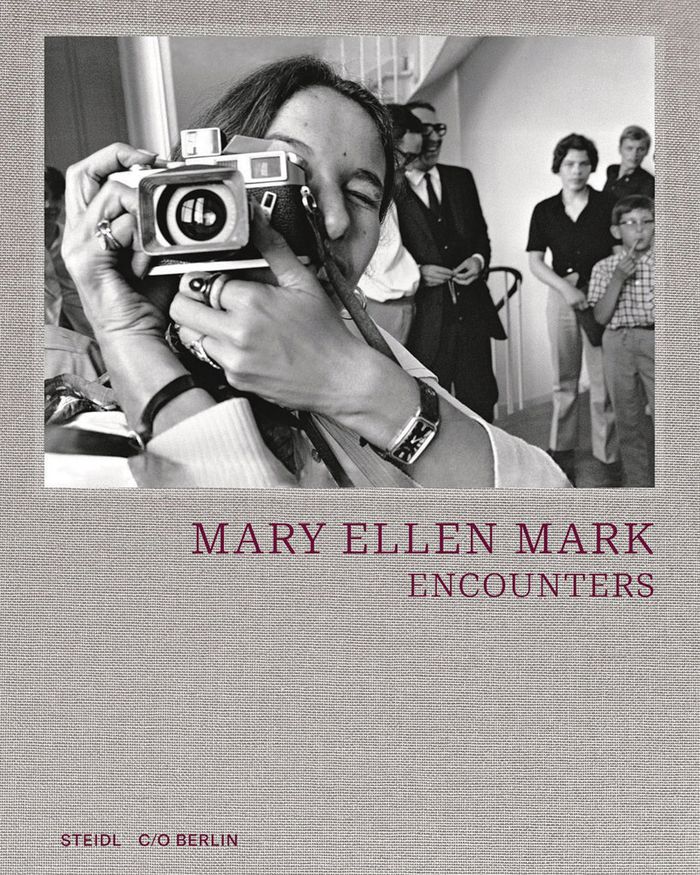
The images of American photographer Mary Ellen Mark are icons of documentary and humanistic photography. Focusing her camera on the socially disadvantaged and those on the fringes of society, she told the stories of her protagonists without prejudice. In the context of the emerging women’s movement in the USA during the 1960s and 70s, and as a freelance photographer at a time when print media was suffering its first major crisis, Mark fought her way to the forefront of female voices in photojournalism. Encounters provides an expansive cross-section of the photographer’s full body of work. The book focuses on five iconic series that contributed significantly to Mark’s reputation: Ward 81 in which she photographed residents at an Oregon psychiatric hospital for women; a reportage on prostitutes on Falkland Road in Mumbai; a tribute to Mother Teresa’s charitable work; Indian Circus, documenting traveling circus families; and the long-term project Streetwise, in which Mark followed the life of Erin Blackwell (Tiny) for more than 30 years. For the first time, this book contextualizes these works within Mark’s œuvre and presents them alongside original magazine spreads and archival material—including contact sheets, letters and notebooks—to reveal the breadth of her accomplishments and singularly compassionate eye.
Mary Ellen Mark: Encounters
Actions:
Price:
$73.00
(available to order)
Summary:
The images of American photographer Mary Ellen Mark are icons of documentary and humanistic photography. Focusing her camera on the socially disadvantaged and those on the fringes of society, she told the stories of her protagonists without prejudice. In the context of the emerging women’s movement in the USA during the 1960s and 70s, and as a freelance photographer at a time when print media was suffering its first major crisis, Mark fought her way to the forefront of female voices in photojournalism. Encounters provides an expansive cross-section of the photographer’s full body of work. The book focuses on five iconic series that contributed significantly to Mark’s reputation: Ward 81 in which she photographed residents at an Oregon psychiatric hospital for women; a reportage on prostitutes on Falkland Road in Mumbai; a tribute to Mother Teresa’s charitable work; Indian Circus, documenting traveling circus families; and the long-term project Streetwise, in which Mark followed the life of Erin Blackwell (Tiny) for more than 30 years. For the first time, this book contextualizes these works within Mark’s œuvre and presents them alongside original magazine spreads and archival material—including contact sheets, letters and notebooks—to reveal the breadth of her accomplishments and singularly compassionate eye.
Form:
books
books
Publication:
December 2023
December 2023
Subject:
Photography monographs
Photography monographs
Form:
books
books
Actions:
Price:
$34.50
(available to order)
Summary:
This volume presents the ''Circle of Doing Research'' : a model to get you started in art and design research. Conceived within the contextual setting of the art school, it is holistic, multidisciplinary and prioritizes practice. It consists of six actions. The basis of the circle is formed by the following: research by making, research of context and participatory(...)
$34.50
(available to order)
Summary:
This volume presents the ''Circle of Doing Research'' : a model to get you started in art and design research. Conceived within the contextual setting of the art school, it is holistic, multidisciplinary and prioritizes practice. It consists of six actions. The basis of the circle is formed by the following: research by making, research of context and participatory(...)
Title:
Hands on research for artists, designers & educators
Actions:
Price:
$34.50
(available to order)
Summary:
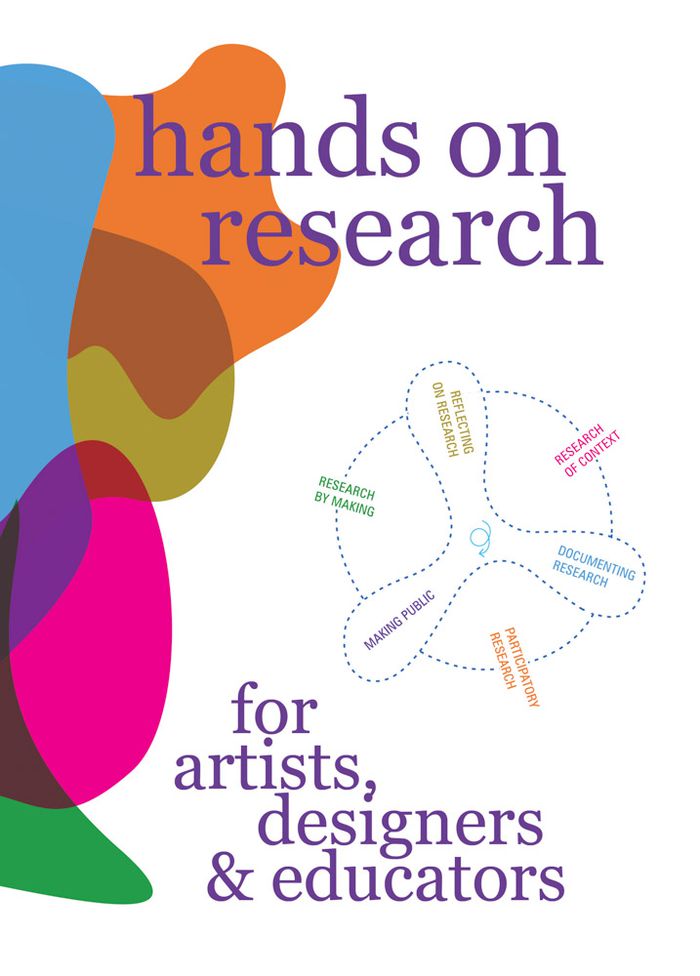
This volume presents the ''Circle of Doing Research'' : a model to get you started in art and design research. Conceived within the contextual setting of the art school, it is holistic, multidisciplinary and prioritizes practice. It consists of six actions. The basis of the circle is formed by the following: research by making, research of context and participatory research, where information, prototypes, encounters and experiences are gathered and produced. The remaining three actions are concerned with documenting research, publicizing research and reflecting on research. The ''Circle of Doing Research'' is an open, accessible and non-linear model. Each action can be an entry point, whether you want to start with material experiments, conversations with others, or in the library. All actions are connected and inform each other which encourages a process of iteration and constant reflection. The ''Circle'' can be enriched with methods, sources and focal points according to specific disciplines and needs. The book contains research trajectories of art and design students throughout, illustrating the rich possibilities to be uncovered in the unfolding of a research project. This illuminating model can be useful to all, from those beginning to learn about research in art and design to more advanced practitioners.
Hands on research for artists, designers & educators
Actions:
Price:
$34.50
(available to order)
Summary:
This volume presents the ''Circle of Doing Research'' : a model to get you started in art and design research. Conceived within the contextual setting of the art school, it is holistic, multidisciplinary and prioritizes practice. It consists of six actions. The basis of the circle is formed by the following: research by making, research of context and participatory research, where information, prototypes, encounters and experiences are gathered and produced. The remaining three actions are concerned with documenting research, publicizing research and reflecting on research. The ''Circle of Doing Research'' is an open, accessible and non-linear model. Each action can be an entry point, whether you want to start with material experiments, conversations with others, or in the library. All actions are connected and inform each other which encourages a process of iteration and constant reflection. The ''Circle'' can be enriched with methods, sources and focal points according to specific disciplines and needs. The book contains research trajectories of art and design students throughout, illustrating the rich possibilities to be uncovered in the unfolding of a research project. This illuminating model can be useful to all, from those beginning to learn about research in art and design to more advanced practitioners.
Form:
books
books
Publication:
December 2024
December 2024
Subject:
Museology
Museology
Form:
books
books
Actions:
Price:
$56.00
(available in store)
Summary:
"Memoryscapes," the second volume in the "Architecture Connecting" series, co-published with the Louisiana Museum of Modern Art, examines the role of human narratives in shaping the spaces of tomorrow. Focusing on the intersections of architecture with anthropology, archaeology and geology, the book presents the work of two studios whose practices engage deeply with the(...)
$56.00
(available in store)
Summary:
"Memoryscapes," the second volume in the "Architecture Connecting" series, co-published with the Louisiana Museum of Modern Art, examines the role of human narratives in shaping the spaces of tomorrow. Focusing on the intersections of architecture with anthropology, archaeology and geology, the book presents the work of two studios whose practices engage deeply with the(...)
Subject:
Architecture ecologies
Architecture ecologies
Publication:
April 2026
April 2026
Title:
Architecture connecting: Xu Tiantian & Tsuyoshi Tane
Actions:
Price:
$56.00
(available in store)
Summary:
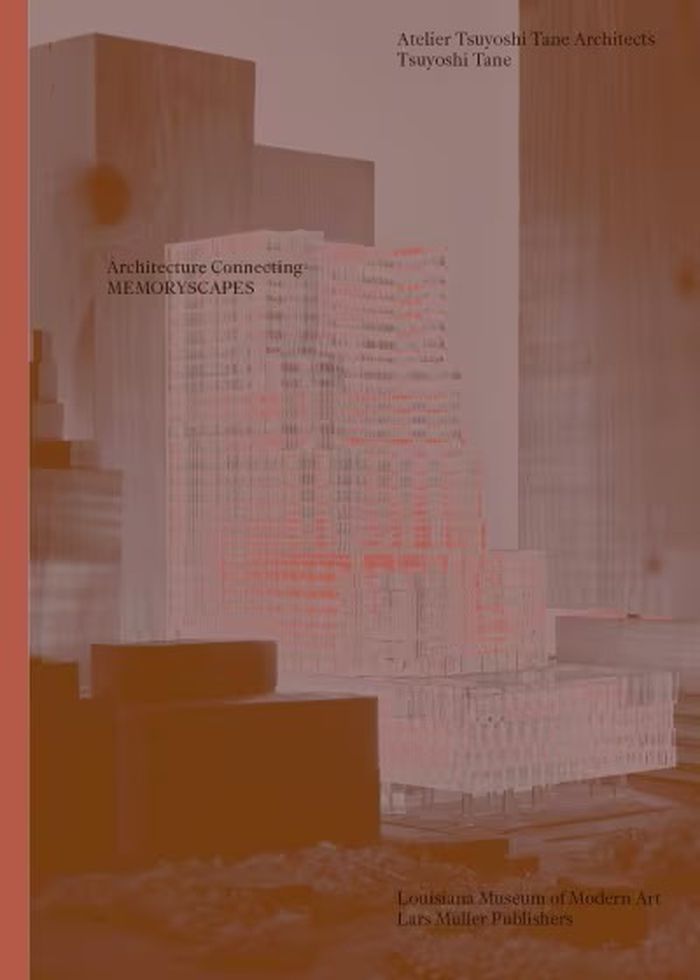
"Memoryscapes," the second volume in the "Architecture Connecting" series, co-published with the Louisiana Museum of Modern Art, examines the role of human narratives in shaping the spaces of tomorrow. Focusing on the intersections of architecture with anthropology, archaeology and geology, the book presents the work of two studios whose practices engage deeply with the past through both broad investigative research and precise architectural responses. Bound back-to-back, the publication comprises two volumes presenting the distinct approaches of DnA Architecture and Design (Beijing) and Atelier Tsuyoshi Tane Architects (ATTA, Tokyo and Paris). DnA’s practice of "architectural acupuncture" focuses on the social and economic regeneration of rural Chinese communities through targeted interventions that revive long-standing cultural practices, while ATTA’s "Archaeology of the Future" draws on the layered memories of places to create future possibilities across architecture, urban planning and exhibition design, in an international context. Led by Xu Tiantian and Tsuyoshi Tane, respectively, the two studios share an approach that connects social traditions, cultural heritage, craftsmanship and production conditions within complex, site-specific frameworks. Through illustrated essays and project dossiers, the publication traces how these practices draw on lived histories and place-based knowledge to generate new architectural narratives, bridging the past and the future in response to contemporary needs.
Architecture connecting: Xu Tiantian & Tsuyoshi Tane
Actions:
Price:
$56.00
(available in store)
Summary:
"Memoryscapes," the second volume in the "Architecture Connecting" series, co-published with the Louisiana Museum of Modern Art, examines the role of human narratives in shaping the spaces of tomorrow. Focusing on the intersections of architecture with anthropology, archaeology and geology, the book presents the work of two studios whose practices engage deeply with the past through both broad investigative research and precise architectural responses. Bound back-to-back, the publication comprises two volumes presenting the distinct approaches of DnA Architecture and Design (Beijing) and Atelier Tsuyoshi Tane Architects (ATTA, Tokyo and Paris). DnA’s practice of "architectural acupuncture" focuses on the social and economic regeneration of rural Chinese communities through targeted interventions that revive long-standing cultural practices, while ATTA’s "Archaeology of the Future" draws on the layered memories of places to create future possibilities across architecture, urban planning and exhibition design, in an international context. Led by Xu Tiantian and Tsuyoshi Tane, respectively, the two studios share an approach that connects social traditions, cultural heritage, craftsmanship and production conditions within complex, site-specific frameworks. Through illustrated essays and project dossiers, the publication traces how these practices draw on lived histories and place-based knowledge to generate new architectural narratives, bridging the past and the future in response to contemporary needs.
Form:
books
books
Publication:
April 2026
April 2026
Subject:
Architecture ecologies
Architecture ecologies
Form:
books
books
Actions:
Price:
$134.95
(available to order)
Summary:
The Austrian architect-artist Hans Hollein was appointed in 1972 to design a new museum for the post-industrial city of Mönchengladbach in West Germany which transformed it into a centre for contemporary art. This book reveals the full story of this innovative masterpiece. Opening in 1982, Museum Abteiberg was instantly lauded by international critics and Hollein was duly(...)
$134.95
(available to order)
Summary:
The Austrian architect-artist Hans Hollein was appointed in 1972 to design a new museum for the post-industrial city of Mönchengladbach in West Germany which transformed it into a centre for contemporary art. This book reveals the full story of this innovative masterpiece. Opening in 1982, Museum Abteiberg was instantly lauded by international critics and Hollein was duly(...)
Title:
Hans Hollein's Masterpiece: Art, architecture and the city
Actions:
Price:
$134.95
(available to order)
Summary:
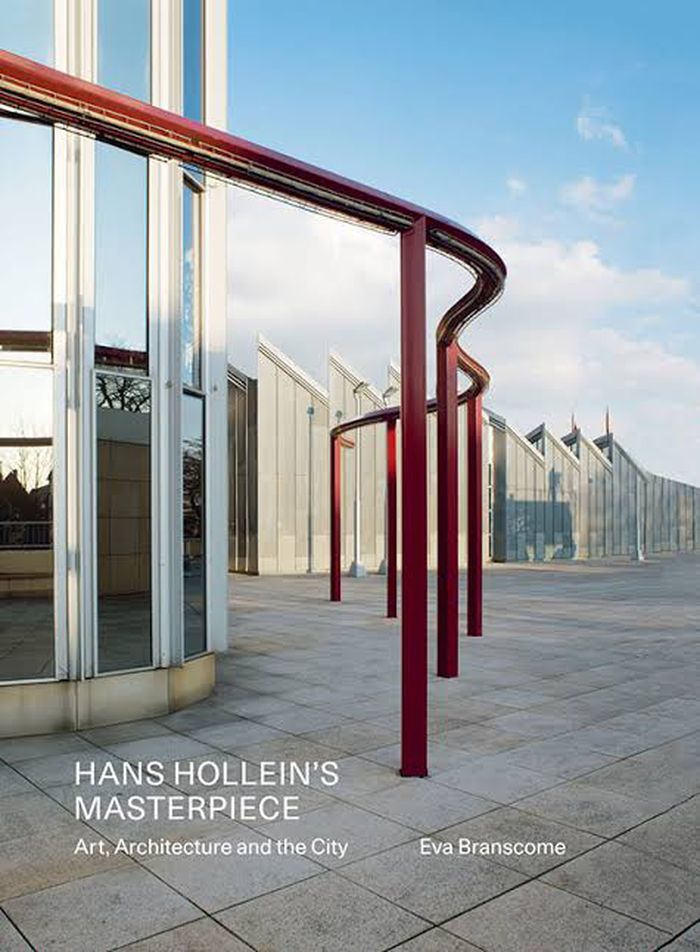
The Austrian architect-artist Hans Hollein was appointed in 1972 to design a new museum for the post-industrial city of Mönchengladbach in West Germany which transformed it into a centre for contemporary art. This book reveals the full story of this innovative masterpiece. Opening in 1982, Museum Abteiberg was instantly lauded by international critics and Hollein was duly awarded the 1985 Pritzker Prize. The book provides a timely and comprehensive reappraisal of the museum from concept, through the design process to its completion. It explains that Hollein was at his core a conceptual artist, perceiving the museum as provocative land art, with an architectural collage as exterior and a labyrinthine, ‘'democratic'’ interior, designed around the collection. It features a triptych of characters - Hollein, director Johannes Cladders and artist Joseph Beuys – whose close collaboration resulted in a museum which transformed thinking about how art, architecture and context – historical, cultural and geographical - should all relate. Radical at the time, many of the ideas that they first realised in this building have now become the norm in museum practice. Broader than a simple building study, this is a story which not only connects art with architecture and with the city, but with finance, corporate power and capital investment.
Hans Hollein's Masterpiece: Art, architecture and the city
Actions:
Price:
$134.95
(available to order)
Summary:
The Austrian architect-artist Hans Hollein was appointed in 1972 to design a new museum for the post-industrial city of Mönchengladbach in West Germany which transformed it into a centre for contemporary art. This book reveals the full story of this innovative masterpiece. Opening in 1982, Museum Abteiberg was instantly lauded by international critics and Hollein was duly awarded the 1985 Pritzker Prize. The book provides a timely and comprehensive reappraisal of the museum from concept, through the design process to its completion. It explains that Hollein was at his core a conceptual artist, perceiving the museum as provocative land art, with an architectural collage as exterior and a labyrinthine, ‘'democratic'’ interior, designed around the collection. It features a triptych of characters - Hollein, director Johannes Cladders and artist Joseph Beuys – whose close collaboration resulted in a museum which transformed thinking about how art, architecture and context – historical, cultural and geographical - should all relate. Radical at the time, many of the ideas that they first realised in this building have now become the norm in museum practice. Broader than a simple building study, this is a story which not only connects art with architecture and with the city, but with finance, corporate power and capital investment.
Form:
books
books
Publication:
November 2025
November 2025
Subject:
Architecture Monographs
Architecture Monographs
Form:
books
books
Actions:
Price:
$16.95
(available in store)
Summary:
In the summer of 2025, nine Western States formally recognized the State of Palestine. This State recognition and the resurrection of the moribund so-called “two-State solution” is combined with a criminalization of calls to liberate Palestine “from the river to the sea.” This issue asks: can liberation ever take the form of a state? Borrowing a phrase Sophia Azeb used(...)
$16.95
(available in store)
Summary:
In the summer of 2025, nine Western States formally recognized the State of Palestine. This State recognition and the resurrection of the moribund so-called “two-State solution” is combined with a criminalization of calls to liberate Palestine “from the river to the sea.” This issue asks: can liberation ever take the form of a state? Borrowing a phrase Sophia Azeb used(...)
Title:
The Funambulist 64: The no-state solution
Actions:
Price:
$16.95
(available in store)
Summary:
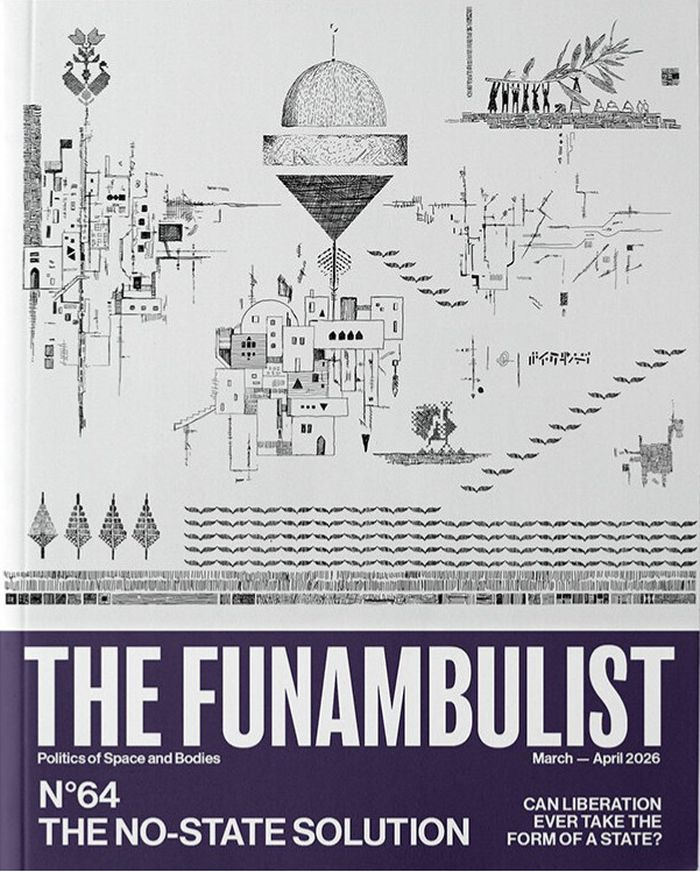
In the summer of 2025, nine Western States formally recognized the State of Palestine. This State recognition and the resurrection of the moribund so-called “two-State solution” is combined with a criminalization of calls to liberate Palestine “from the river to the sea.” This issue asks: can liberation ever take the form of a state? Borrowing a phrase Sophia Azeb used multiple times in the history of The Funambulist (since our first conversation in 2014), The No-State Solution intends to revisit this concept in the context of Palestine in challenging the very idea of “solution” (Sophia Azeb & Rebecca Gross), but also in other liberation struggles such as the Kurdish (Havin Guneser) and Zapatista (Linda Quiquivix) ones. It warns us against state dreams, such as the ones implemented in Sierra Leone and Liberia (what William C. Anderson calls “Black Zionism” in his contribution), and questions the differences between State and community forms of governance, in particular when it comes to healthcare, as made evident in Cuba and Venezuela (Lisbeth Moya González). Finally, it envisions borderless, stateless futures in Aotearoa (Kai-rui Cheng) and Kanaky (Florenda Nirikani). As for the artwork on the cover, it is an original creation by Samir Harb.
The Funambulist 64: The no-state solution
Actions:
Price:
$16.95
(available in store)
Summary:
In the summer of 2025, nine Western States formally recognized the State of Palestine. This State recognition and the resurrection of the moribund so-called “two-State solution” is combined with a criminalization of calls to liberate Palestine “from the river to the sea.” This issue asks: can liberation ever take the form of a state? Borrowing a phrase Sophia Azeb used multiple times in the history of The Funambulist (since our first conversation in 2014), The No-State Solution intends to revisit this concept in the context of Palestine in challenging the very idea of “solution” (Sophia Azeb & Rebecca Gross), but also in other liberation struggles such as the Kurdish (Havin Guneser) and Zapatista (Linda Quiquivix) ones. It warns us against state dreams, such as the ones implemented in Sierra Leone and Liberia (what William C. Anderson calls “Black Zionism” in his contribution), and questions the differences between State and community forms of governance, in particular when it comes to healthcare, as made evident in Cuba and Venezuela (Lisbeth Moya González). Finally, it envisions borderless, stateless futures in Aotearoa (Kai-rui Cheng) and Kanaky (Florenda Nirikani). As for the artwork on the cover, it is an original creation by Samir Harb.
Form:
books
books
Publication:
March 2026
March 2026
Subject:
Magazines
Magazines


