


545 Results
Form:
books
books

Title:
Toilets of the world
Toilets of the world
Actions:
Price:
$22.95
(available to order)
Summary:
Powder room, comfort station, privy, loo, dunny … the infinite variety of names we invent for this universal necessity, the toilet, is matched by an extraordinary variety of designs worldwide, from miniature log cabins in the Canadian wilderness to state-of-the-art cubicles in Japan, and from huts on stilts in the Caribbean to solar-powered sanitary ware in New Zealand.(...)
$22.95
(available to order)
Summary:
Powder room, comfort station, privy, loo, dunny … the infinite variety of names we invent for this universal necessity, the toilet, is matched by an extraordinary variety of designs worldwide, from miniature log cabins in the Canadian wilderness to state-of-the-art cubicles in Japan, and from huts on stilts in the Caribbean to solar-powered sanitary ware in New Zealand.(...)
Subject:
Commercial interiors, Building types
Commercial interiors, Building types
Publication:
October 2006, London, New York
October 2006, London, New York
Title:
Toilets of the world
Actions:
Price:
$22.95
(available to order)
Summary:
Powder room, comfort station, privy, loo, dunny … the infinite variety of names we invent for this universal necessity, the toilet, is matched by an extraordinary variety of designs worldwide, from miniature log cabins in the Canadian wilderness to state-of-the-art cubicles in Japan, and from huts on stilts in the Caribbean to solar-powered sanitary ware in New Zealand. This light-hearted but highly informative photographic journey reveals the idiosyncrasy and inventiveness that characterize the construction of the humble toilet around the globe. Along the way, the reader encounters every possible permutation, from the traditional English ‘thunderbox’ to the Swazi thatched ‘beehive’ hut, and discovers the cultural and historical differences that can make our travels to other countries so enjoyable.
Toilets of the world
Actions:
Price:
$22.95
(available to order)
Summary:
Powder room, comfort station, privy, loo, dunny … the infinite variety of names we invent for this universal necessity, the toilet, is matched by an extraordinary variety of designs worldwide, from miniature log cabins in the Canadian wilderness to state-of-the-art cubicles in Japan, and from huts on stilts in the Caribbean to solar-powered sanitary ware in New Zealand. This light-hearted but highly informative photographic journey reveals the idiosyncrasy and inventiveness that characterize the construction of the humble toilet around the globe. Along the way, the reader encounters every possible permutation, from the traditional English ‘thunderbox’ to the Swazi thatched ‘beehive’ hut, and discovers the cultural and historical differences that can make our travels to other countries so enjoyable.
Form:
books
books
Publication:
October 2006, London, New York
October 2006, London, New York
Subject:
Commercial interiors, Building types
Commercial interiors, Building types
Form:
books
books
Price:
$43.95
(available to order)
Summary:
In the 1970s David Toop became preoccupied with the possibility that music was no longer bounded by formalities of audience: the clapping, the booing, the short attention span, the demand for instant gratification. Considering sound and listening as foundational practices in themselves leads music into a thrilling new territory: stretched time, wilderness, video monitors,(...)
$43.95
(available to order)
Summary:
In the 1970s David Toop became preoccupied with the possibility that music was no longer bounded by formalities of audience: the clapping, the booing, the short attention span, the demand for instant gratification. Considering sound and listening as foundational practices in themselves leads music into a thrilling new territory: stretched time, wilderness, video monitors,(...)
Title:
Inflamed invisible: collected writings on art and sound, 1976-2018
Actions:
Price:
$43.95
(available to order)
Summary:
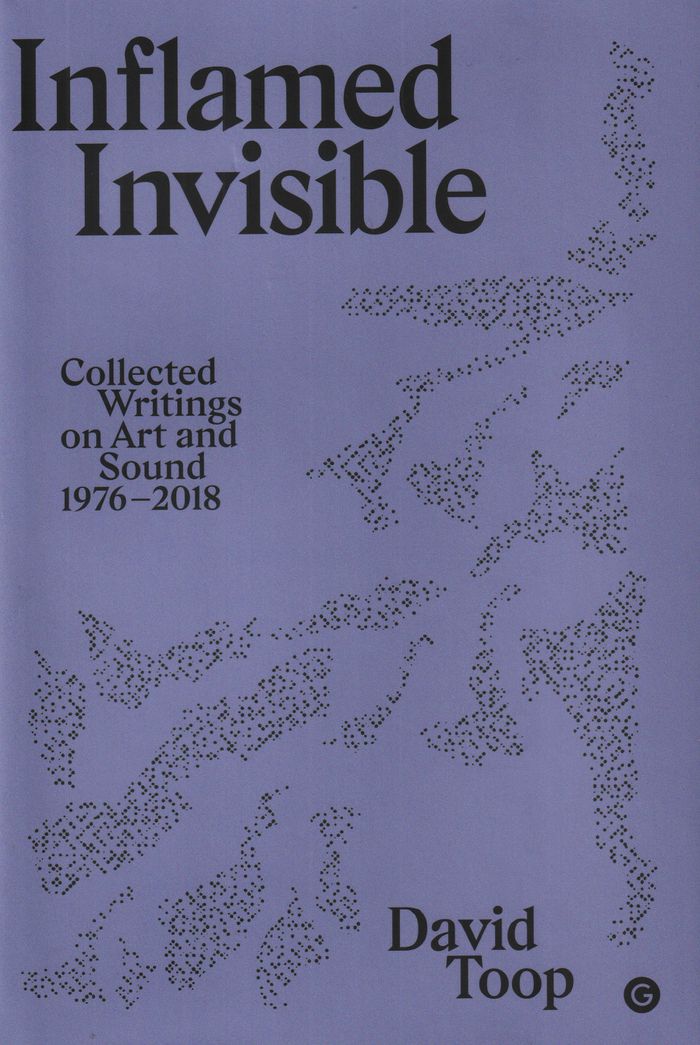
In the 1970s David Toop became preoccupied with the possibility that music was no longer bounded by formalities of audience: the clapping, the booing, the short attention span, the demand for instant gratification. Considering sound and listening as foundational practices in themselves leads music into a thrilling new territory: stretched time, wilderness, video monitors, singing sculptures, weather, meditations, vibration and the interior resonance of objects, interspecies communications, instructional texts, silent actions, and performance art. This publications collects more than four decades of David Toop's essays, reviews, interviews, and experimental texts, drawing us into the company of artists and their concerns, not forgetting the quieter, unsung voices. The volume is an exploration of strata of sound that are the crossing points of sensory, intellectual, and philosophical preoccupations.
Inflamed invisible: collected writings on art and sound, 1976-2018
Actions:
Price:
$43.95
(available to order)
Summary:
In the 1970s David Toop became preoccupied with the possibility that music was no longer bounded by formalities of audience: the clapping, the booing, the short attention span, the demand for instant gratification. Considering sound and listening as foundational practices in themselves leads music into a thrilling new territory: stretched time, wilderness, video monitors, singing sculptures, weather, meditations, vibration and the interior resonance of objects, interspecies communications, instructional texts, silent actions, and performance art. This publications collects more than four decades of David Toop's essays, reviews, interviews, and experimental texts, drawing us into the company of artists and their concerns, not forgetting the quieter, unsung voices. The volume is an exploration of strata of sound that are the crossing points of sensory, intellectual, and philosophical preoccupations.
Form:
books
books
Publication:
November 2019
November 2019
Subject:
Acoustics
Acoustics
Form:
books
books
Actions:
Price:
$35.95
(available to order)
Summary:
''Oceans'' cover more than 70 percent of the Earth’s surface, dividing and connecting humans, who carry saltwater in their blood, sweat, and tears. They also represent a powerful nonhuman force, rising, flooding, heating and raging in unprecedented ways as the climate crisis unfolds. Artists have envisioned the sea as a sublime wilderness, home to mythical creatures and(...)
$35.95
(available to order)
Summary:
''Oceans'' cover more than 70 percent of the Earth’s surface, dividing and connecting humans, who carry saltwater in their blood, sweat, and tears. They also represent a powerful nonhuman force, rising, flooding, heating and raging in unprecedented ways as the climate crisis unfolds. Artists have envisioned the sea as a sublime wilderness, home to mythical creatures and(...)
Title:
Oceans: Documents of contemporary art
Actions:
Price:
$35.95
(available to order)
Summary:
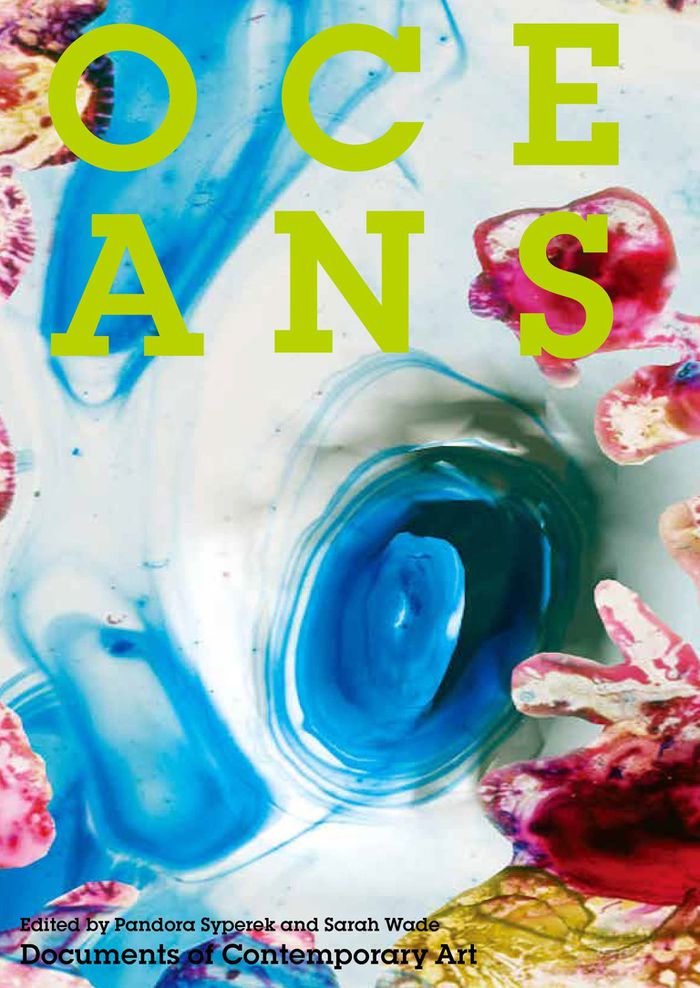
''Oceans'' cover more than 70 percent of the Earth’s surface, dividing and connecting humans, who carry saltwater in their blood, sweat, and tears. They also represent a powerful nonhuman force, rising, flooding, heating and raging in unprecedented ways as the climate crisis unfolds. Artists have envisioned the sea as a sublime wilderness, home to mythical creatures and bizarre species, a source of life and death, a site of new beginnings and tragic endings, both wondrous and disastrous. From migration to melting ice caps, the sea is omnipresent in international news and politics, leaking into popular culture and proliferating in recent art and exhibitions. This anthology gathers artists and writers to address the ocean not only as a theme but as a major agent of artistic and curatorial methods.
Oceans: Documents of contemporary art
Actions:
Price:
$35.95
(available to order)
Summary:
''Oceans'' cover more than 70 percent of the Earth’s surface, dividing and connecting humans, who carry saltwater in their blood, sweat, and tears. They also represent a powerful nonhuman force, rising, flooding, heating and raging in unprecedented ways as the climate crisis unfolds. Artists have envisioned the sea as a sublime wilderness, home to mythical creatures and bizarre species, a source of life and death, a site of new beginnings and tragic endings, both wondrous and disastrous. From migration to melting ice caps, the sea is omnipresent in international news and politics, leaking into popular culture and proliferating in recent art and exhibitions. This anthology gathers artists and writers to address the ocean not only as a theme but as a major agent of artistic and curatorial methods.
Form:
books
books
Publication:
June 2023
June 2023
Subject:
Art Theory
Art Theory
Form:
books
books
Actions:
Price:
$65.00
(available in store)
Summary:
How has Berlin’s urban landscape changed in its remarkable transformation from divided city to creative capital? Despite the monumental heritage and grand development projects, Berlin still conjures up images of urban fragmentation and vacant inner-city land. The book reveals the changing nature and complex politics of this open space. A rephotographing of sites between(...)
$65.00
(available in store)
Summary:
How has Berlin’s urban landscape changed in its remarkable transformation from divided city to creative capital? Despite the monumental heritage and grand development projects, Berlin still conjures up images of urban fragmentation and vacant inner-city land. The book reveals the changing nature and complex politics of this open space. A rephotographing of sites between(...)
Title:
Spaces of uncertainty: Berlin revisited
Actions:
Price:
$65.00
(available in store)
Summary:
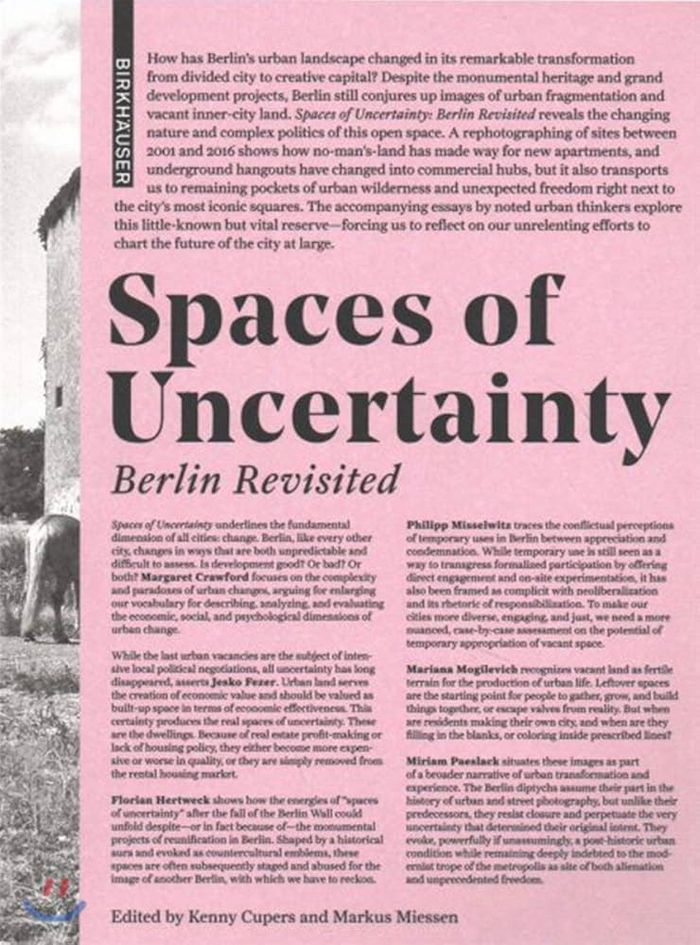
How has Berlin’s urban landscape changed in its remarkable transformation from divided city to creative capital? Despite the monumental heritage and grand development projects, Berlin still conjures up images of urban fragmentation and vacant inner-city land. The book reveals the changing nature and complex politics of this open space. A rephotographing of sites between 2001 and 2016 shows how no man’s land has made way for new apartments and underground hangouts have changed into commercial hubs, but it also transports us to remaining pockets of urban wilderness and unexpected freedom right next to the city’s most iconic squares. The accompanying essays by noted urban thinkers explore this little-known but vital reserve—forcing us to reflect on our unrelenting efforts to chart the future of the city at large.
Spaces of uncertainty: Berlin revisited
Actions:
Price:
$65.00
(available in store)
Summary:
How has Berlin’s urban landscape changed in its remarkable transformation from divided city to creative capital? Despite the monumental heritage and grand development projects, Berlin still conjures up images of urban fragmentation and vacant inner-city land. The book reveals the changing nature and complex politics of this open space. A rephotographing of sites between 2001 and 2016 shows how no man’s land has made way for new apartments and underground hangouts have changed into commercial hubs, but it also transports us to remaining pockets of urban wilderness and unexpected freedom right next to the city’s most iconic squares. The accompanying essays by noted urban thinkers explore this little-known but vital reserve—forcing us to reflect on our unrelenting efforts to chart the future of the city at large.
Form:
books
books
Publication:
March 2018
March 2018
Subject:
Urban Theory
Urban Theory
Form:
books
books
Actions:
Price:
$34.00
(available to order)
Summary:
Frank Lloyd Wright presents a stunning overview of the work of this towering American genius, encompassing the entirety of Wright’s long and extraordinarily prolific career. From his earliest work, such as the Home and Studio in Oak Park, IL, of 1889, to the wonderfully evocative textile block houses of Los Angeles of the mid-1920s, to such seminal masterpieces as(...)
$34.00
(available to order)
Summary:
Frank Lloyd Wright presents a stunning overview of the work of this towering American genius, encompassing the entirety of Wright’s long and extraordinarily prolific career. From his earliest work, such as the Home and Studio in Oak Park, IL, of 1889, to the wonderfully evocative textile block houses of Los Angeles of the mid-1920s, to such seminal masterpieces as(...)
Title:
Frank Lloyd Wright American master
Actions:
Price:
$34.00
(available to order)
Summary:
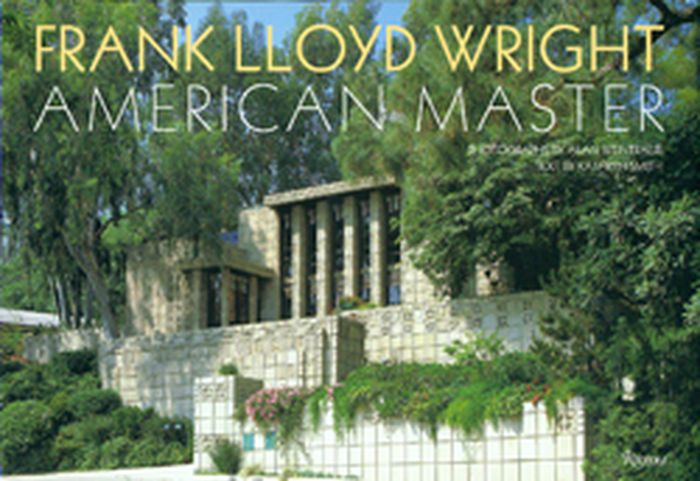
Frank Lloyd Wright presents a stunning overview of the work of this towering American genius, encompassing the entirety of Wright’s long and extraordinarily prolific career. From his earliest work, such as the Home and Studio in Oak Park, IL, of 1889, to the wonderfully evocative textile block houses of Los Angeles of the mid-1920s, to such seminal masterpieces as Fallingwater, of 1935, in the Pennsylvania wilderness, and the Solomon R. Guggenheim Museum, of 1956, in New York, the book offers an extraordinarily abundant trove of architectural riches. Featuring more than a hundred discrete works, from the well known to the obscure, expertly discussed in the text of highly respected Wright scholar Kathryn Smith, Frank Lloyd Wright weaves a gorgeous tapestry that will engage the mind and delight the eye.
Frank Lloyd Wright American master
Actions:
Price:
$34.00
(available to order)
Summary:
Frank Lloyd Wright presents a stunning overview of the work of this towering American genius, encompassing the entirety of Wright’s long and extraordinarily prolific career. From his earliest work, such as the Home and Studio in Oak Park, IL, of 1889, to the wonderfully evocative textile block houses of Los Angeles of the mid-1920s, to such seminal masterpieces as Fallingwater, of 1935, in the Pennsylvania wilderness, and the Solomon R. Guggenheim Museum, of 1956, in New York, the book offers an extraordinarily abundant trove of architectural riches. Featuring more than a hundred discrete works, from the well known to the obscure, expertly discussed in the text of highly respected Wright scholar Kathryn Smith, Frank Lloyd Wright weaves a gorgeous tapestry that will engage the mind and delight the eye.
Form:
books
books
Publication:
April 2009
April 2009
Subject:
Architecture Monographs
Architecture Monographs
Form:
books
books
Title:
Wildman fever!
Wildman fever!
Actions:
Price:
$59.00
(available in store)
Summary:
As the Chinese Cultural Revolution ended in the mid-1970s, room for scientific freedom emerged, and Chinese paleoanthropologists turned their attention to the existence of Bigfoot- and Yeti-like mammals. This trend was fueled by widespread enthusiasm in Western countries for the same phenomena. The topic quickly captured the Chinese popular imagination, with scientists(...)
$59.00
(available in store)
Summary:
As the Chinese Cultural Revolution ended in the mid-1970s, room for scientific freedom emerged, and Chinese paleoanthropologists turned their attention to the existence of Bigfoot- and Yeti-like mammals. This trend was fueled by widespread enthusiasm in Western countries for the same phenomena. The topic quickly captured the Chinese popular imagination, with scientists(...)
Title:
Wildman fever!
Actions:
Price:
$59.00
(available in store)
Summary:
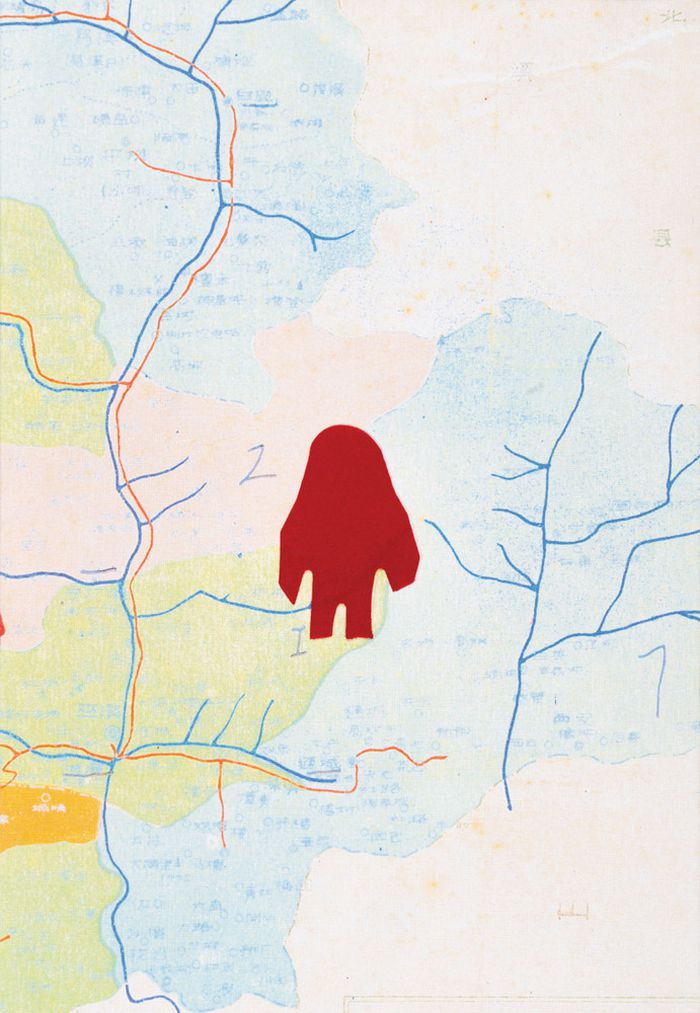
As the Chinese Cultural Revolution ended in the mid-1970s, room for scientific freedom emerged, and Chinese paleoanthropologists turned their attention to the existence of Bigfoot- and Yeti-like mammals. This trend was fueled by widespread enthusiasm in Western countries for the same phenomena. The topic quickly captured the Chinese popular imagination, with scientists descending on mountainous areas of Hubei province to investigate reported sightings of a strange being called the Wildman or "Yeren" in Chinese. Officially sponsored research, followed by stories from amateur enthusiasts, sparked a nationwide phenomenon called Wildman Fever that would last for decades. Wildman Fever tells the story of this search that led a nation into a wilderness of fact and fiction. The images were selected from the collection of Chinese vernacular photography at the Archive of Modern Conflict, London.
Wildman fever!
Actions:
Price:
$59.00
(available in store)
Summary:
As the Chinese Cultural Revolution ended in the mid-1970s, room for scientific freedom emerged, and Chinese paleoanthropologists turned their attention to the existence of Bigfoot- and Yeti-like mammals. This trend was fueled by widespread enthusiasm in Western countries for the same phenomena. The topic quickly captured the Chinese popular imagination, with scientists descending on mountainous areas of Hubei province to investigate reported sightings of a strange being called the Wildman or "Yeren" in Chinese. Officially sponsored research, followed by stories from amateur enthusiasts, sparked a nationwide phenomenon called Wildman Fever that would last for decades. Wildman Fever tells the story of this search that led a nation into a wilderness of fact and fiction. The images were selected from the collection of Chinese vernacular photography at the Archive of Modern Conflict, London.
Form:
books
books
Publication:
October 2025
October 2025
Subject:
Photography Collections
Photography Collections
Form:
books
books
Actions:
Price:
$19.95
(available to order)
Summary:
The contributors to this volume trace cinema in Iceland from the 1979 establishment of the Icelandic Film Fund — before which the country’s film industry barely existed — through today. In a series of scene reviews, they show how rapidly the city has changed over the past thirty years. In thematic spotlight articles, they go on to explore such topics as the relationship(...)
$19.95
(available to order)
Summary:
The contributors to this volume trace cinema in Iceland from the 1979 establishment of the Icelandic Film Fund — before which the country’s film industry barely existed — through today. In a series of scene reviews, they show how rapidly the city has changed over the past thirty years. In thematic spotlight articles, they go on to explore such topics as the relationship(...)
Subject:
Architecture and Film, Set Design
Architecture and Film, Set Design
Publication:
September 2012
September 2012
Title:
World film locations : Reykjavik
Actions:
Price:
$19.95
(available to order)
Summary:
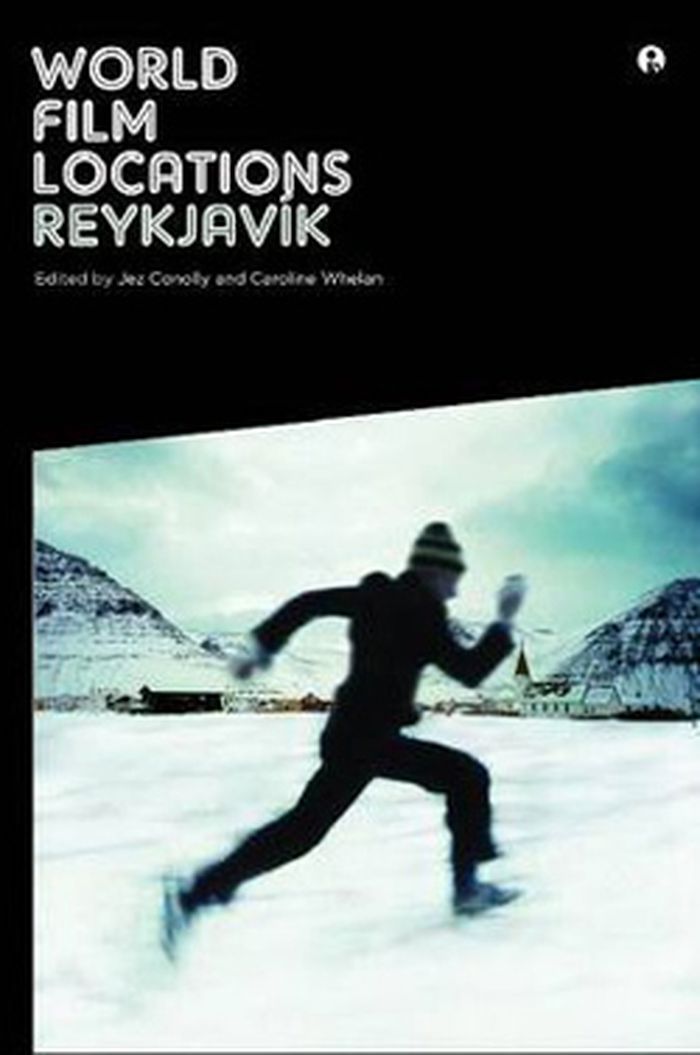
The contributors to this volume trace cinema in Iceland from the 1979 establishment of the Icelandic Film Fund — before which the country’s film industry barely existed — through today. In a series of scene reviews, they show how rapidly the city has changed over the past thirty years. In thematic spotlight articles, they go on to explore such topics as the relationship between Iceland and its capital city; youth culture and night life; the relationship between film and the local music community; cinematic representations of Scandinavian crime; and filmmakers’ response to the 2008 banking crisis. Together, these varied contributions show how films shot in Reykjavík have been shaped both by Iceland’s remoteness from the rest of the world and by Icelandic filmmakers’ sense that the city remains forever on the brink of desolate and harsh wilderness.
World film locations : Reykjavik
Actions:
Price:
$19.95
(available to order)
Summary:
The contributors to this volume trace cinema in Iceland from the 1979 establishment of the Icelandic Film Fund — before which the country’s film industry barely existed — through today. In a series of scene reviews, they show how rapidly the city has changed over the past thirty years. In thematic spotlight articles, they go on to explore such topics as the relationship between Iceland and its capital city; youth culture and night life; the relationship between film and the local music community; cinematic representations of Scandinavian crime; and filmmakers’ response to the 2008 banking crisis. Together, these varied contributions show how films shot in Reykjavík have been shaped both by Iceland’s remoteness from the rest of the world and by Icelandic filmmakers’ sense that the city remains forever on the brink of desolate and harsh wilderness.
Form:
books
books
Publication:
September 2012
September 2012
Subject:
Architecture and Film, Set Design
Architecture and Film, Set Design
Form:
books
books
Title:
Robert Adams: Gone?
Robert Adams: Gone?
Actions:
Price:
$84.00
(available to order)
Summary:
Robert Adams began by photographing suburban landscapes along the edge of the Rocky Mountains. His goal was to record the erasure of the American wilderness, while attempting to affirm what survives of it. For Adams, photography at this juncture in history presents a melancholy vocation: "It seems to me that we are now compelled to recognize that we have no place to go(...)
$84.00
(available to order)
Summary:
Robert Adams began by photographing suburban landscapes along the edge of the Rocky Mountains. His goal was to record the erasure of the American wilderness, while attempting to affirm what survives of it. For Adams, photography at this juncture in history presents a melancholy vocation: "It seems to me that we are now compelled to recognize that we have no place to go(...)
Title:
Robert Adams: Gone?
Actions:
Price:
$84.00
(available to order)
Summary:
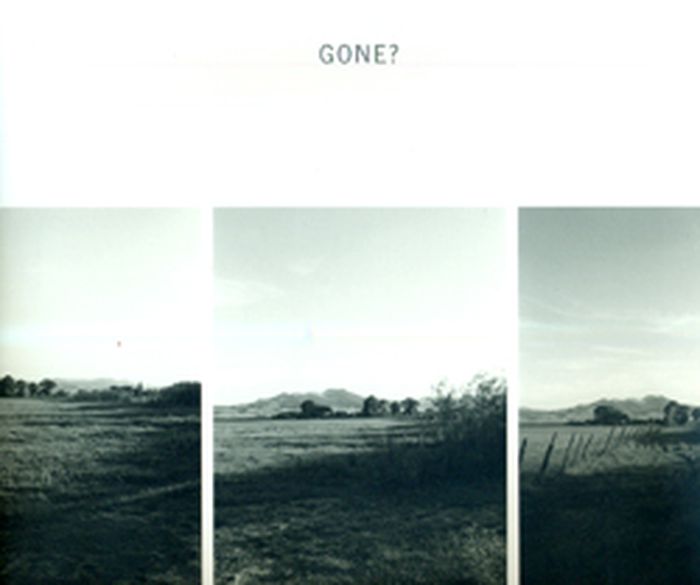
Robert Adams began by photographing suburban landscapes along the edge of the Rocky Mountains. His goal was to record the erasure of the American wilderness, while attempting to affirm what survives of it. For Adams, photography at this juncture in history presents a melancholy vocation: "It seems to me that we are now compelled to recognize that we have no place to go but where we've been," he judges. "We've got to go look at what we've done, which is oftentimes pretty awful, and see if we can't make of this place a civilized home." In Gone?, his most personal work to date, Adams lives out the implications of these words. In the 1980s, he revisited semi-rural areas he had known as a boy-landscapes that were no longer pristine, but which still retained their own particular qualities of light.
Robert Adams: Gone?
Actions:
Price:
$84.00
(available to order)
Summary:
Robert Adams began by photographing suburban landscapes along the edge of the Rocky Mountains. His goal was to record the erasure of the American wilderness, while attempting to affirm what survives of it. For Adams, photography at this juncture in history presents a melancholy vocation: "It seems to me that we are now compelled to recognize that we have no place to go but where we've been," he judges. "We've got to go look at what we've done, which is oftentimes pretty awful, and see if we can't make of this place a civilized home." In Gone?, his most personal work to date, Adams lives out the implications of these words. In the 1980s, he revisited semi-rural areas he had known as a boy-landscapes that were no longer pristine, but which still retained their own particular qualities of light.
Form:
books
books
Publication:
April 2010, London
April 2010, London
Subject:
Photography monographs
Photography monographs
Form:
books
books
Actions:
Price:
$55.00
(available to order)
Summary:
Almost immediately after the invention of photography, Scottish photographers took their clunky cameras on the road to capture the stories of peoples and communities touched by the forces of British imperialism. For the next thirty years, their journeys would take them far from their homes in the Lowlands to the Canadian wilderness and the treaty ports and rivers of(...)
$55.00
(available to order)
Summary:
Almost immediately after the invention of photography, Scottish photographers took their clunky cameras on the road to capture the stories of peoples and communities touched by the forces of British imperialism. For the next thirty years, their journeys would take them far from their homes in the Lowlands to the Canadian wilderness and the treaty ports and rivers of(...)
Title:
The global flows of early Scottish photography
Actions:
Price:
$55.00
(available to order)
Summary:
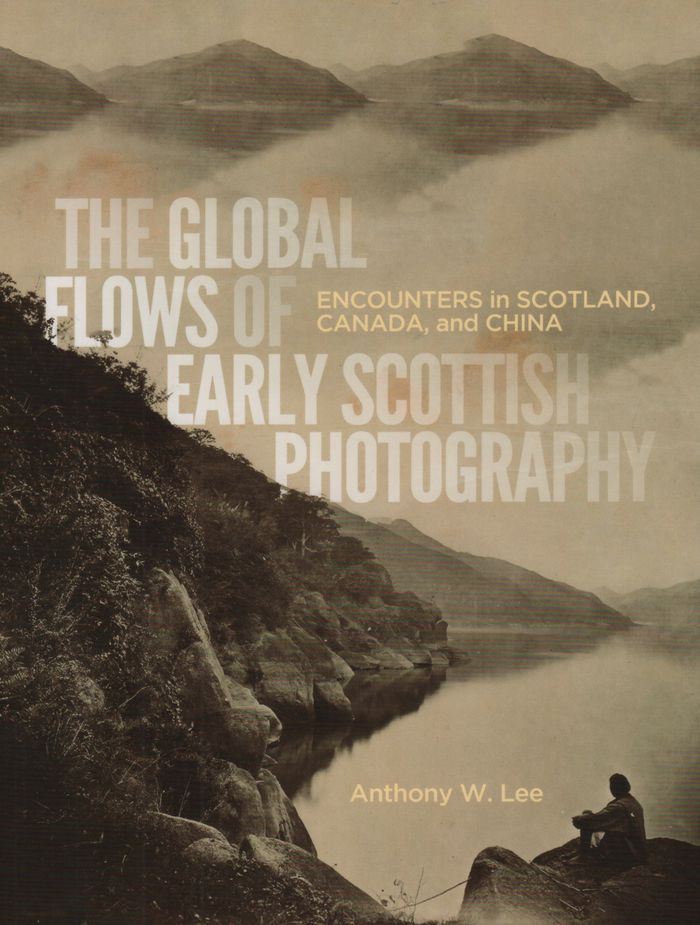
Almost immediately after the invention of photography, Scottish photographers took their clunky cameras on the road to capture the stories of peoples and communities touched by the forces of British imperialism. For the next thirty years, their journeys would take them far from their homes in the Lowlands to the Canadian wilderness and the treaty ports and rivers of China. ''The Global Flows of Early Scottish Photography'' is about the interplay between these photographers' ambitions and the needs and desires of the people they met. Anthony Lee tracks the work of several famous innovators of the art form, including D.O. Hill and Robert Adamson in Edinburgh; the Scottish immigrants William Notman and Alexander Henderson in Montreal; John Thomson in Hong Kong; and Lai Afong. Lee reveals their pictures in the context of migration and the social impact wrought by worldwide trade and competing nationalisms.
The global flows of early Scottish photography
Actions:
Price:
$55.00
(available to order)
Summary:
Almost immediately after the invention of photography, Scottish photographers took their clunky cameras on the road to capture the stories of peoples and communities touched by the forces of British imperialism. For the next thirty years, their journeys would take them far from their homes in the Lowlands to the Canadian wilderness and the treaty ports and rivers of China. ''The Global Flows of Early Scottish Photography'' is about the interplay between these photographers' ambitions and the needs and desires of the people they met. Anthony Lee tracks the work of several famous innovators of the art form, including D.O. Hill and Robert Adamson in Edinburgh; the Scottish immigrants William Notman and Alexander Henderson in Montreal; John Thomson in Hong Kong; and Lai Afong. Lee reveals their pictures in the context of migration and the social impact wrought by worldwide trade and competing nationalisms.
Form:
books
books
Publication:
May 2019
May 2019
Subject:
Photography Collections
Photography Collections
Form:
books
books
Title:
The city in mind
The city in mind
Actions:
Price:
$18.50
(available to order)
Summary:
In the highly acclaimed "The Geography of Nowhere," James Howard Kunstler declared suburbia "a tragic landscape" and fueled a fierce debate over how we will live in twenty-first-century America. Here, Kunstler turns his discerning eye to urban life in America and beyond in dazzling excursions to classical Rome, the Aztec capital of Tenochtitlan, Louis-Napoleon's Paris,(...)
$18.50
(available to order)
Summary:
In the highly acclaimed "The Geography of Nowhere," James Howard Kunstler declared suburbia "a tragic landscape" and fueled a fierce debate over how we will live in twenty-first-century America. Here, Kunstler turns his discerning eye to urban life in America and beyond in dazzling excursions to classical Rome, the Aztec capital of Tenochtitlan, Louis-Napoleon's Paris,(...)
Title:
The city in mind
Actions:
Price:
$18.50
(available to order)
Summary:
In the highly acclaimed "The Geography of Nowhere," James Howard Kunstler declared suburbia "a tragic landscape" and fueled a fierce debate over how we will live in twenty-first-century America. Here, Kunstler turns his discerning eye to urban life in America and beyond in dazzling excursions to classical Rome, the Aztec capital of Tenochtitlan, Louis-Napoleon's Paris, the "gigantic hairball" that is contemporary Atlanta, the ludicrous spectacle of Las Vegas, and more. Seeking to discover what is constant and enduring in cities at their greatest, Kunstler explores how America got lost in suburban wilderness and locates pathways that might lead to civic revival. His authoritative tour is both a concise history of cities and a stunning critique of how they can aid or hinder social and civil progress. By turns dramatic and comic, "The City in Mind" is an exceptional glimpse into the urban condition.
The city in mind
Actions:
Price:
$18.50
(available to order)
Summary:
In the highly acclaimed "The Geography of Nowhere," James Howard Kunstler declared suburbia "a tragic landscape" and fueled a fierce debate over how we will live in twenty-first-century America. Here, Kunstler turns his discerning eye to urban life in America and beyond in dazzling excursions to classical Rome, the Aztec capital of Tenochtitlan, Louis-Napoleon's Paris, the "gigantic hairball" that is contemporary Atlanta, the ludicrous spectacle of Las Vegas, and more. Seeking to discover what is constant and enduring in cities at their greatest, Kunstler explores how America got lost in suburban wilderness and locates pathways that might lead to civic revival. His authoritative tour is both a concise history of cities and a stunning critique of how they can aid or hinder social and civil progress. By turns dramatic and comic, "The City in Mind" is an exceptional glimpse into the urban condition.
Form:
books
books
Publication:
January 2003, New York
January 2003, New York
Subject:
Urban Theory
Urban Theory


