


5377 Results
Form:
books
books
Actions:
Price:
$52.50
(available to order)
Summary:
Conceptual art was one of the most influential art movements of the second half of the twentieth century. In this book Alexander Alberro traces its origins to the mid-1960s, when its principles were first articulated by the artists Dan Graham, Joseph Kosuth, Sol LeWitt, Lawrence Weiner, and others. One of Alberro's central arguments is that the conceptual art movement(...)
$52.50
(available to order)
Summary:
Conceptual art was one of the most influential art movements of the second half of the twentieth century. In this book Alexander Alberro traces its origins to the mid-1960s, when its principles were first articulated by the artists Dan Graham, Joseph Kosuth, Sol LeWitt, Lawrence Weiner, and others. One of Alberro's central arguments is that the conceptual art movement(...)
Subject:
Contemporary Art Monographs
Contemporary Art Monographs
Publication:
January 2003, Cambridge, Mass.
January 2003, Cambridge, Mass.
Title:
Conceptual art and the politics of publicity
Actions:
Price:
$52.50
(available to order)
Summary:
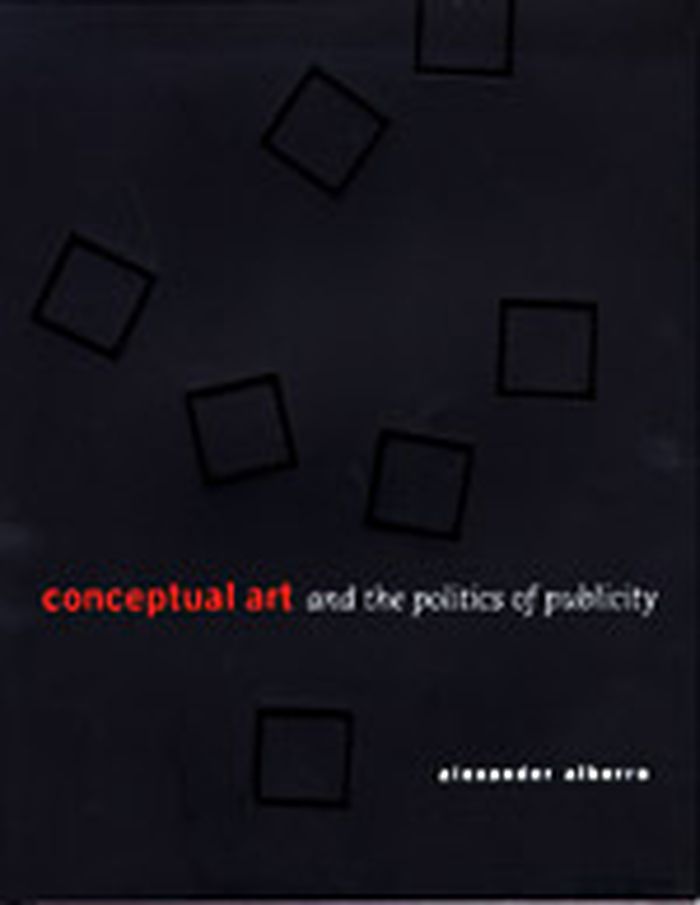
Conceptual art was one of the most influential art movements of the second half of the twentieth century. In this book Alexander Alberro traces its origins to the mid-1960s, when its principles were first articulated by the artists Dan Graham, Joseph Kosuth, Sol LeWitt, Lawrence Weiner, and others. One of Alberro's central arguments is that the conceptual art movement was founded not just by the artists but also by the dealer Seth Siegelaub. Siegelaub promoted the artists, curated groundbreaking shows, organized symposia and publications, and in many ways set the stage for another kind of entrepreneur: the freelance curator. Alberro examines both Siegelaub's role in launching the careers of artists who were making "something from nothing" and his tactful business practices, particularly in marketing and advertising. Alberro draws on close readings of artworks produced by key conceptual artists in the mid- to late 1960s. He places the movement in the social context of the rebellion against existing cultural institutions, as well as the increased commercialization and globalization of the art world. The book ends with a discussion of one of Siegelaub's most material and least ephemeral contributions, the Artist's Reserved Rights Transfer and Sale Agreement, which he wrote between 1969 and 1971. Designed to limit the inordinate control of collectors, galleries, and museums by increasing the artist's rights, the Agreement unwittingly codified the overlap between capitalism and the arts.
Conceptual art and the politics of publicity
Actions:
Price:
$52.50
(available to order)
Summary:
Conceptual art was one of the most influential art movements of the second half of the twentieth century. In this book Alexander Alberro traces its origins to the mid-1960s, when its principles were first articulated by the artists Dan Graham, Joseph Kosuth, Sol LeWitt, Lawrence Weiner, and others. One of Alberro's central arguments is that the conceptual art movement was founded not just by the artists but also by the dealer Seth Siegelaub. Siegelaub promoted the artists, curated groundbreaking shows, organized symposia and publications, and in many ways set the stage for another kind of entrepreneur: the freelance curator. Alberro examines both Siegelaub's role in launching the careers of artists who were making "something from nothing" and his tactful business practices, particularly in marketing and advertising. Alberro draws on close readings of artworks produced by key conceptual artists in the mid- to late 1960s. He places the movement in the social context of the rebellion against existing cultural institutions, as well as the increased commercialization and globalization of the art world. The book ends with a discussion of one of Siegelaub's most material and least ephemeral contributions, the Artist's Reserved Rights Transfer and Sale Agreement, which he wrote between 1969 and 1971. Designed to limit the inordinate control of collectors, galleries, and museums by increasing the artist's rights, the Agreement unwittingly codified the overlap between capitalism and the arts.
Form:
books
books
Publication:
January 2003, Cambridge, Mass.
January 2003, Cambridge, Mass.
Subject:
Contemporary Art Monographs
Contemporary Art Monographs
Form:
books
books
Actions:
Price:
$63.00
(available to order)
Summary:
Emmet Gowin has been taking aerial photographs of the landscape in the United States, Mexico, Czechoslovakia, Asia, and the Middle East for over twenty years. In his most compelling photographs, one witnesses how man’s footprint has visually scarred and continually altered the earth’s surface. This book, published in conjunction with the first major touring exhibition of(...)
$63.00
(available to order)
Summary:
Emmet Gowin has been taking aerial photographs of the landscape in the United States, Mexico, Czechoslovakia, Asia, and the Middle East for over twenty years. In his most compelling photographs, one witnesses how man’s footprint has visually scarred and continually altered the earth’s surface. This book, published in conjunction with the first major touring exhibition of(...)
Title:
Emmet Gowin : changing the earth - aerial photographs
Actions:
Price:
$63.00
(available to order)
Summary:
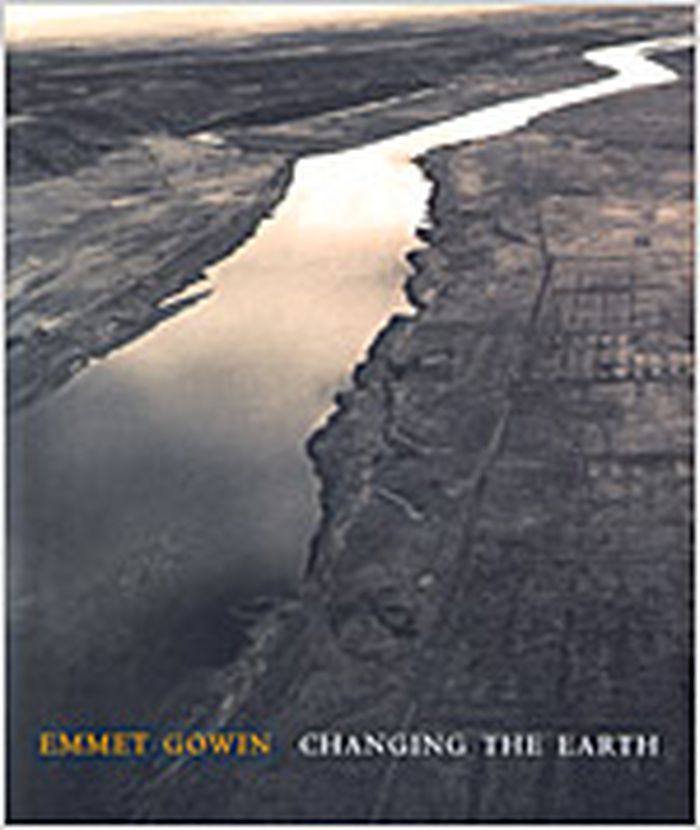
Emmet Gowin has been taking aerial photographs of the landscape in the United States, Mexico, Czechoslovakia, Asia, and the Middle East for over twenty years. In his most compelling photographs, one witnesses how man’s footprint has visually scarred and continually altered the earth’s surface. This book, published in conjunction with the first major touring exhibition of Gowin’s photographs in over ten years, focuses on images created after 1986. That was the year Gowin began to extend his aerial photography explorations in America by recording images of military test sites, missile silos, ammunition storage and disposal facilities, coal mining, pivot irrigation, offroad motor traffic, and more. The book also surveys his more recent works, which focus on other regions of the world, including the battlefields of Kuwait, new golf courses in Japan, and the chemo-petrol industries of the Czech Republic. Gowin’s richly toned black-and-white images have been characterized as "immorally gorgeous," since at a distance even his most disturbing images can appear to be beautiful. In this volume, Jock Reynolds provides an overview of Gowin’s aerial photography and places it in the context of his earlier work and that of such photographers as Carleton Watkins, Alfred Stieglitz, Ansel Adams, and Frederick Sommer. Philip Brookman illuminates Gowin’s recent work in the Czech Republic, while Terry Tempest Williams discusses Gowin’s images from the American West, especially his Nevada Test Site series.
Emmet Gowin : changing the earth - aerial photographs
Actions:
Price:
$63.00
(available to order)
Summary:
Emmet Gowin has been taking aerial photographs of the landscape in the United States, Mexico, Czechoslovakia, Asia, and the Middle East for over twenty years. In his most compelling photographs, one witnesses how man’s footprint has visually scarred and continually altered the earth’s surface. This book, published in conjunction with the first major touring exhibition of Gowin’s photographs in over ten years, focuses on images created after 1986. That was the year Gowin began to extend his aerial photography explorations in America by recording images of military test sites, missile silos, ammunition storage and disposal facilities, coal mining, pivot irrigation, offroad motor traffic, and more. The book also surveys his more recent works, which focus on other regions of the world, including the battlefields of Kuwait, new golf courses in Japan, and the chemo-petrol industries of the Czech Republic. Gowin’s richly toned black-and-white images have been characterized as "immorally gorgeous," since at a distance even his most disturbing images can appear to be beautiful. In this volume, Jock Reynolds provides an overview of Gowin’s aerial photography and places it in the context of his earlier work and that of such photographers as Carleton Watkins, Alfred Stieglitz, Ansel Adams, and Frederick Sommer. Philip Brookman illuminates Gowin’s recent work in the Czech Republic, while Terry Tempest Williams discusses Gowin’s images from the American West, especially his Nevada Test Site series.
Form:
books
books
Publication:
May 2002, New Haven / London
May 2002, New Haven / London
Subject:
Photography monographs
Photography monographs
Form:
books
books
Price:
$27.00
(available to order)
Summary:
The diamond vaults of Central Europe are among the most original yet little-known creations of medieval architecture : ceilings so complex that, as their name suggests, they recall the facets of a cut gemstone. First appearing in 1471 at the palace of Albrechtsburg in Meissen, Germany, they were employed for almost a century in locations as far apart as Gdansk on the(...)
$27.00
(available to order)
Summary:
The diamond vaults of Central Europe are among the most original yet little-known creations of medieval architecture : ceilings so complex that, as their name suggests, they recall the facets of a cut gemstone. First appearing in 1471 at the palace of Albrechtsburg in Meissen, Germany, they were employed for almost a century in locations as far apart as Gdansk on the(...)
Title:
Diamond vaults : innovation and geometry in medieval architecture
Actions:
Price:
$27.00
(available to order)
Summary:
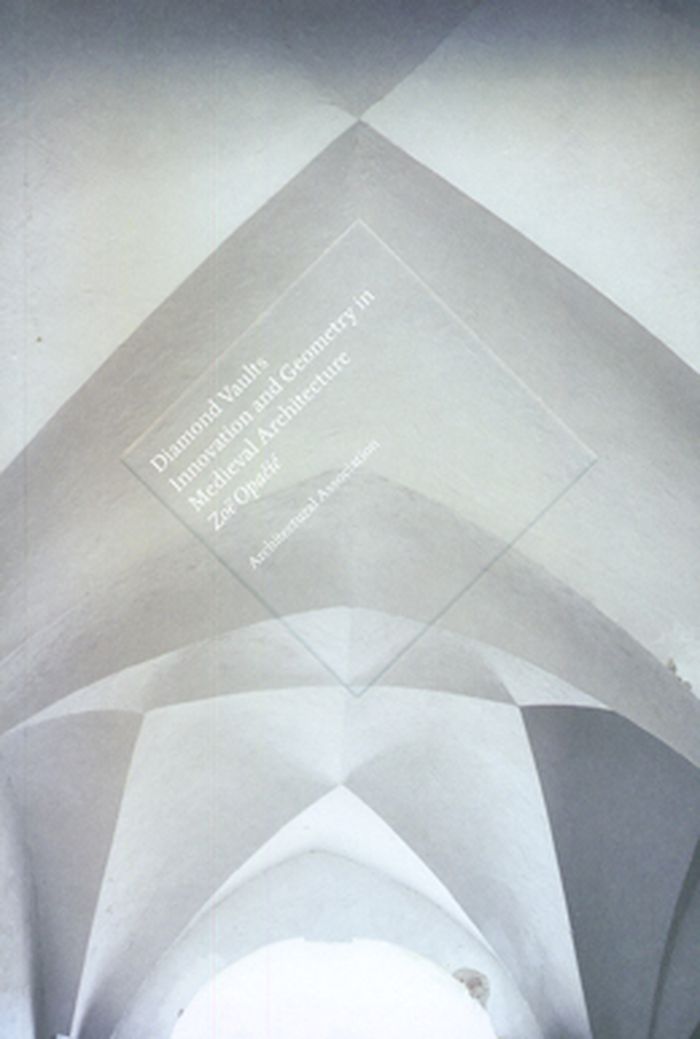
The diamond vaults of Central Europe are among the most original yet little-known creations of medieval architecture : ceilings so complex that, as their name suggests, they recall the facets of a cut gemstone. First appearing in 1471 at the palace of Albrechtsburg in Meissen, Germany, they were employed for almost a century in locations as far apart as Gdansk on the Baltic to Bechyne in southern Bohemia (today’s Czech Republic). From a historical point of view, diamond vaults show the continuing vitality of Gothic architecture in Central Europe, at a time when the rediscovery of the classical past in Renaissance Italy was changing the course of building. Architecturally, they offer some of the most impressive examples of geometrical experimentation and versatility in both secular and sacred spaces. But perhaps their greatest appeal is visual. The stark, concave–convex shapes of diamond vaults, with their lyrical play of the effects of light and shade, strike us today as incredibly modern. "Diamond vaults" explores this singular phenomenon. A text by Zoë Opacic explores the vault’s origins, topography, structure and design, as well as function and context, focusing primarily on the Czech Republic, which boasts some of the best examples, and contrasting them with those in Germany and Gdansk. One of the chief aims is to demonstrate the undoubted aesthetic appeal of this form, which has continued to inspire generations of architects.
Diamond vaults : innovation and geometry in medieval architecture
Actions:
Price:
$27.00
(available to order)
Summary:
The diamond vaults of Central Europe are among the most original yet little-known creations of medieval architecture : ceilings so complex that, as their name suggests, they recall the facets of a cut gemstone. First appearing in 1471 at the palace of Albrechtsburg in Meissen, Germany, they were employed for almost a century in locations as far apart as Gdansk on the Baltic to Bechyne in southern Bohemia (today’s Czech Republic). From a historical point of view, diamond vaults show the continuing vitality of Gothic architecture in Central Europe, at a time when the rediscovery of the classical past in Renaissance Italy was changing the course of building. Architecturally, they offer some of the most impressive examples of geometrical experimentation and versatility in both secular and sacred spaces. But perhaps their greatest appeal is visual. The stark, concave–convex shapes of diamond vaults, with their lyrical play of the effects of light and shade, strike us today as incredibly modern. "Diamond vaults" explores this singular phenomenon. A text by Zoë Opacic explores the vault’s origins, topography, structure and design, as well as function and context, focusing primarily on the Czech Republic, which boasts some of the best examples, and contrasting them with those in Germany and Gdansk. One of the chief aims is to demonstrate the undoubted aesthetic appeal of this form, which has continued to inspire generations of architects.
Form:
books
books
Publication:
January 2006, London
January 2006, London
Subject:
History until 1900, Middle Ages
History until 1900, Middle Ages
Form:
books
books
Title:
New museums
New museums
Actions:
Price:
$89.95
(available to order)
Summary:
The lead article in the October 2004 issue of Architectural Record, devoted to contemporary museums, noted that “museums continue to proliferate across the international landscape, leading to the conclusion that, post-Bilbao, every municipality seems to want a smash.” Certainly, following the opening of Frank Gehry’s Guggenheim Museum Bilbao, museums gained a newfound(...)
$89.95
(available to order)
Summary:
The lead article in the October 2004 issue of Architectural Record, devoted to contemporary museums, noted that “museums continue to proliferate across the international landscape, leading to the conclusion that, post-Bilbao, every municipality seems to want a smash.” Certainly, following the opening of Frank Gehry’s Guggenheim Museum Bilbao, museums gained a newfound(...)
Subject:
Commercial interiors, Building types
Commercial interiors, Building types
Publication:
May 2005, London
May 2005, London
Title:
New museums
Actions:
Price:
$89.95
(available to order)
Summary:
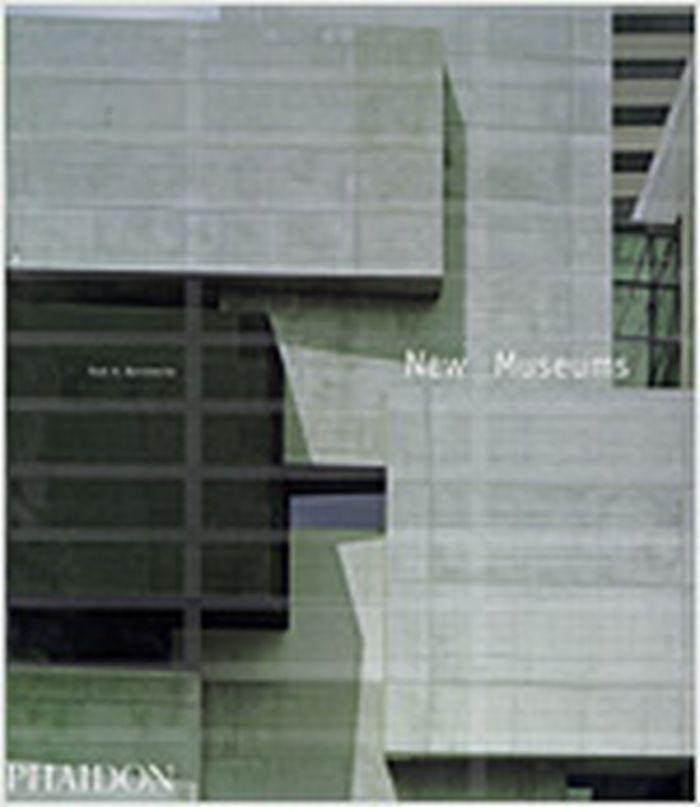
The lead article in the October 2004 issue of Architectural Record, devoted to contemporary museums, noted that “museums continue to proliferate across the international landscape, leading to the conclusion that, post-Bilbao, every municipality seems to want a smash.” Certainly, following the opening of Frank Gehry’s Guggenheim Museum Bilbao, museums gained a newfound cache among architects and clients. The mission and purpose of the museum is rapidly evolving: museums today are frequently more than repositories for historical art: they can be research centers, memorials, contemporary galleries, or site-specific artworks in themselves. New Museums documents the best of new museum design and features 27 projects in 13 countries in Europe, the United States, Israel, and Japan. The architects represented are among the most renowned practitioners in the world today; in addition to those mentioned above, they include van Berkel + Bos, Santiago Calatrava, Zaha Hadid, Kengo Kuma, and Alvaro Siza, as well as lesser-known, talented designers such as Zvi Hecker in Israel and Diener & Diener in Switzerland. An illustrated general introduction discusses well-known historical precedents as well as current themes relevant to museum design: the museum as a neutral container, its role in placing art in context, the museum as an addition to an existing building, and as a distinct work of art. Each project is documented with color photographs, plans, drawings, and a project description.
New museums
Actions:
Price:
$89.95
(available to order)
Summary:
The lead article in the October 2004 issue of Architectural Record, devoted to contemporary museums, noted that “museums continue to proliferate across the international landscape, leading to the conclusion that, post-Bilbao, every municipality seems to want a smash.” Certainly, following the opening of Frank Gehry’s Guggenheim Museum Bilbao, museums gained a newfound cache among architects and clients. The mission and purpose of the museum is rapidly evolving: museums today are frequently more than repositories for historical art: they can be research centers, memorials, contemporary galleries, or site-specific artworks in themselves. New Museums documents the best of new museum design and features 27 projects in 13 countries in Europe, the United States, Israel, and Japan. The architects represented are among the most renowned practitioners in the world today; in addition to those mentioned above, they include van Berkel + Bos, Santiago Calatrava, Zaha Hadid, Kengo Kuma, and Alvaro Siza, as well as lesser-known, talented designers such as Zvi Hecker in Israel and Diener & Diener in Switzerland. An illustrated general introduction discusses well-known historical precedents as well as current themes relevant to museum design: the museum as a neutral container, its role in placing art in context, the museum as an addition to an existing building, and as a distinct work of art. Each project is documented with color photographs, plans, drawings, and a project description.
Form:
books
books
Publication:
May 2005, London
May 2005, London
Subject:
Commercial interiors, Building types
Commercial interiors, Building types
Form:
books
books
Actions:
Price:
$60.00
(available to order)
Summary:
In 1892 seventeen Haida artists were commissioned to carve a model of HlGaagilda Llnagaay (the village of Skidegate on Haida Gwaii, British Columbia) for the 1893 World’s Fair in Chicago. The Skidegate model, featuring twenty-nine large houses and forty-two poles, is the only known model village in North America carved by nineteenth-century Indigenous residents of the(...)
$60.00
(available to order)
Summary:
In 1892 seventeen Haida artists were commissioned to carve a model of HlGaagilda Llnagaay (the village of Skidegate on Haida Gwaii, British Columbia) for the 1893 World’s Fair in Chicago. The Skidegate model, featuring twenty-nine large houses and forty-two poles, is the only known model village in North America carved by nineteenth-century Indigenous residents of the(...)
Title:
Skidegate House Models: From Haida Gwaii to the Chicago World's Fair and Beyond
Actions:
Price:
$60.00
(available to order)
Summary:
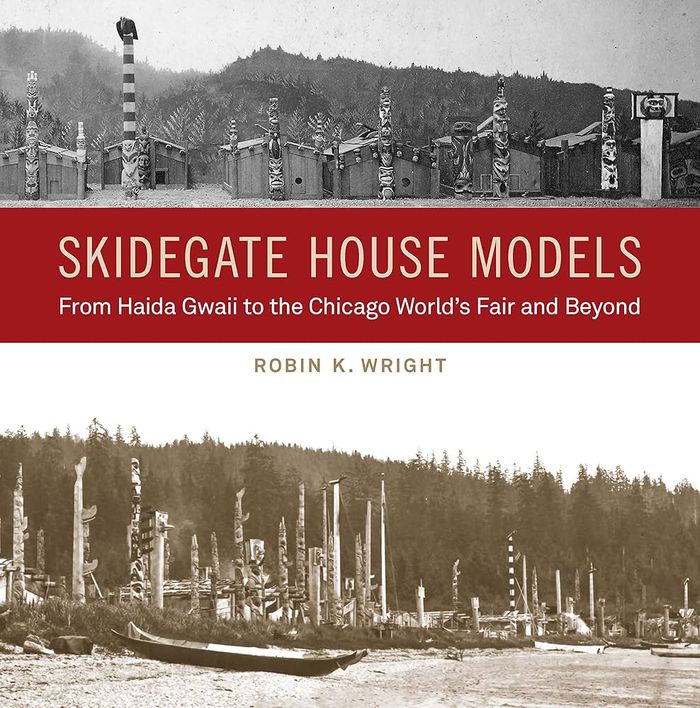
In 1892 seventeen Haida artists were commissioned to carve a model of HlGaagilda Llnagaay (the village of Skidegate on Haida Gwaii, British Columbia) for the 1893 World’s Fair in Chicago. The Skidegate model, featuring twenty-nine large houses and forty-two poles, is the only known model village in North America carved by nineteenth-century Indigenous residents of the village it portrayed. Based on over twenty years of collaborative research with the Skidegate Haida community, the book features vital cultural context. Robin K. Wright explores how Haida people represented their culture to the outside world at a time when they were suffering from devastating population loss due to introduced diseases and from ongoing attempts by the settler government to suppress their culture by making the potlatch illegal. While promoters of the Chicago World’s Fair used the village to celebrate the perceived “progress” of the dominant society, for Skidegate residents it provided a means to preserve their history and culture. After the exposition, many models were dispersed to the Field Museum of Natural History and other collections, but fourteen of the model houses have not yet been located. The book provides extensive archival information and photographs that contextualize the model village and might help locate the missing houses. Wright’s community-engaged research offers valuable insights into Northwest Coast art history.
Skidegate House Models: From Haida Gwaii to the Chicago World's Fair and Beyond
Actions:
Price:
$60.00
(available to order)
Summary:
In 1892 seventeen Haida artists were commissioned to carve a model of HlGaagilda Llnagaay (the village of Skidegate on Haida Gwaii, British Columbia) for the 1893 World’s Fair in Chicago. The Skidegate model, featuring twenty-nine large houses and forty-two poles, is the only known model village in North America carved by nineteenth-century Indigenous residents of the village it portrayed. Based on over twenty years of collaborative research with the Skidegate Haida community, the book features vital cultural context. Robin K. Wright explores how Haida people represented their culture to the outside world at a time when they were suffering from devastating population loss due to introduced diseases and from ongoing attempts by the settler government to suppress their culture by making the potlatch illegal. While promoters of the Chicago World’s Fair used the village to celebrate the perceived “progress” of the dominant society, for Skidegate residents it provided a means to preserve their history and culture. After the exposition, many models were dispersed to the Field Museum of Natural History and other collections, but fourteen of the model houses have not yet been located. The book provides extensive archival information and photographs that contextualize the model village and might help locate the missing houses. Wright’s community-engaged research offers valuable insights into Northwest Coast art history.
Form:
books
books
Publication:
April 2024
April 2024
Subject:
Indigenous architecture
Indigenous architecture
Form:
books
books
Actions:
Price:
$69.95
(available to order)
Summary:
An artist, curator, critic, and teacher, Ian Carr-Harris has been a central figure in Toronto’s art scene since the 1970s. By collecting his impressive output of essays, critical experiments, and reviews into a single volume, Tracings documents the growth of conceptual art and postmodernism in Canadian art, as well as the expansion of mediums and spaces, while providing(...)
$69.95
(available to order)
Summary:
An artist, curator, critic, and teacher, Ian Carr-Harris has been a central figure in Toronto’s art scene since the 1970s. By collecting his impressive output of essays, critical experiments, and reviews into a single volume, Tracings documents the growth of conceptual art and postmodernism in Canadian art, as well as the expansion of mediums and spaces, while providing(...)
Title:
Tracings: Writing art, 1975-2020
Actions:
Price:
$69.95
(available to order)
Summary:
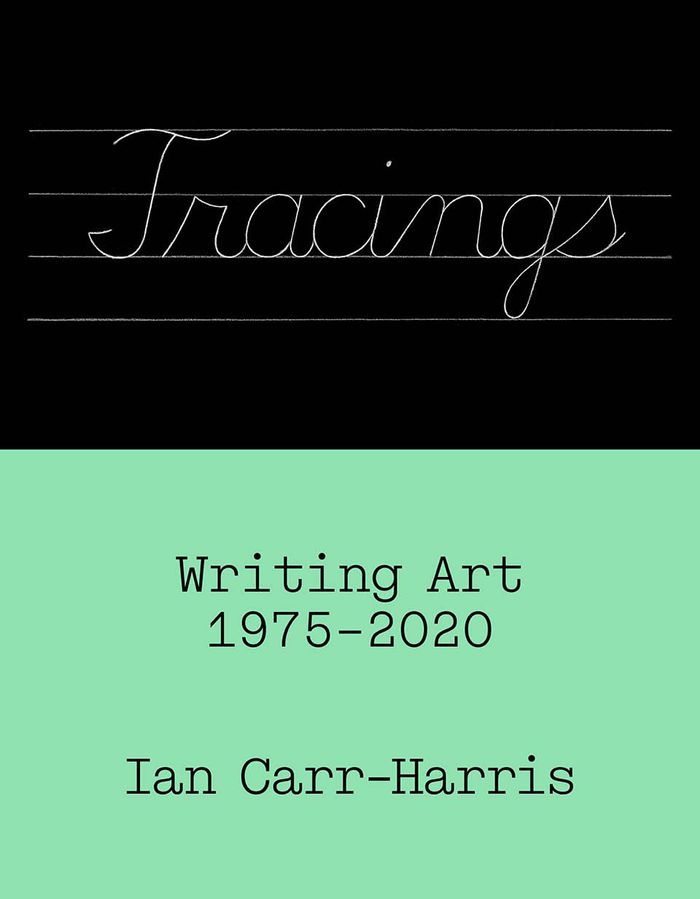
An artist, curator, critic, and teacher, Ian Carr-Harris has been a central figure in Toronto’s art scene since the 1970s. By collecting his impressive output of essays, critical experiments, and reviews into a single volume, Tracings documents the growth of conceptual art and postmodernism in Canadian art, as well as the expansion of mediums and spaces, while providing insights into methods of representation and the role of criticism in contemporary art. In clear and intelligent prose, Carr-Harris offers detailed studies of individual artists and exhibitions as well as theoretically informed reflections on broader cultural concerns. Whether writing about the complexities involved in the construction and transmission of knowledge, meaning, and historical narrative; discussing the material matters of government cultural funding, patronage, and artist-run centres; or describing his own process and artworks, these pieces reveal a literary love of language and a nuanced and investigative mind at work. Throughout his writing, he considers themes of identity, cultural nationalism, postcolonialism, institutionalism, the act of viewing, and relations of power. An introduction by Dan Adler situates Carr-Harris’s work within the context of his contemporaries, collaborators, and cultural environment, pointing out the mutually reinforcing qualities and relationships between his art and his writing. Covering decades of critical thought and engagement, "Tracings" confirms why Ian Carr-Harris has indelibly written himself into Canadian art.
Tracings: Writing art, 1975-2020
Actions:
Price:
$69.95
(available to order)
Summary:
An artist, curator, critic, and teacher, Ian Carr-Harris has been a central figure in Toronto’s art scene since the 1970s. By collecting his impressive output of essays, critical experiments, and reviews into a single volume, Tracings documents the growth of conceptual art and postmodernism in Canadian art, as well as the expansion of mediums and spaces, while providing insights into methods of representation and the role of criticism in contemporary art. In clear and intelligent prose, Carr-Harris offers detailed studies of individual artists and exhibitions as well as theoretically informed reflections on broader cultural concerns. Whether writing about the complexities involved in the construction and transmission of knowledge, meaning, and historical narrative; discussing the material matters of government cultural funding, patronage, and artist-run centres; or describing his own process and artworks, these pieces reveal a literary love of language and a nuanced and investigative mind at work. Throughout his writing, he considers themes of identity, cultural nationalism, postcolonialism, institutionalism, the act of viewing, and relations of power. An introduction by Dan Adler situates Carr-Harris’s work within the context of his contemporaries, collaborators, and cultural environment, pointing out the mutually reinforcing qualities and relationships between his art and his writing. Covering decades of critical thought and engagement, "Tracings" confirms why Ian Carr-Harris has indelibly written himself into Canadian art.
Form:
books
books
Publication:
November 2024
November 2024
Subject:
Art Theory
Art Theory
Form:
books
books
Title:
Hannah Höch album
Hannah Höch album
Actions:
Price:
$91.00
(available to order)
Summary:
As one of the protagonists of the Berlin Dada movement, Hannah Höch railed against tradition and conservatism in 1920s Germany. Höch and such cohorts as George Grosz and Raoul Hausmann raised anarchic revolution through cutting photomontage, nonsensical performance, and biting visual satire. A singular and important work in the artist's oeuvre is the so-called(...)
$91.00
(available to order)
Summary:
As one of the protagonists of the Berlin Dada movement, Hannah Höch railed against tradition and conservatism in 1920s Germany. Höch and such cohorts as George Grosz and Raoul Hausmann raised anarchic revolution through cutting photomontage, nonsensical performance, and biting visual satire. A singular and important work in the artist's oeuvre is the so-called(...)
Title:
Hannah Höch album
Actions:
Price:
$91.00
(available to order)
Summary:
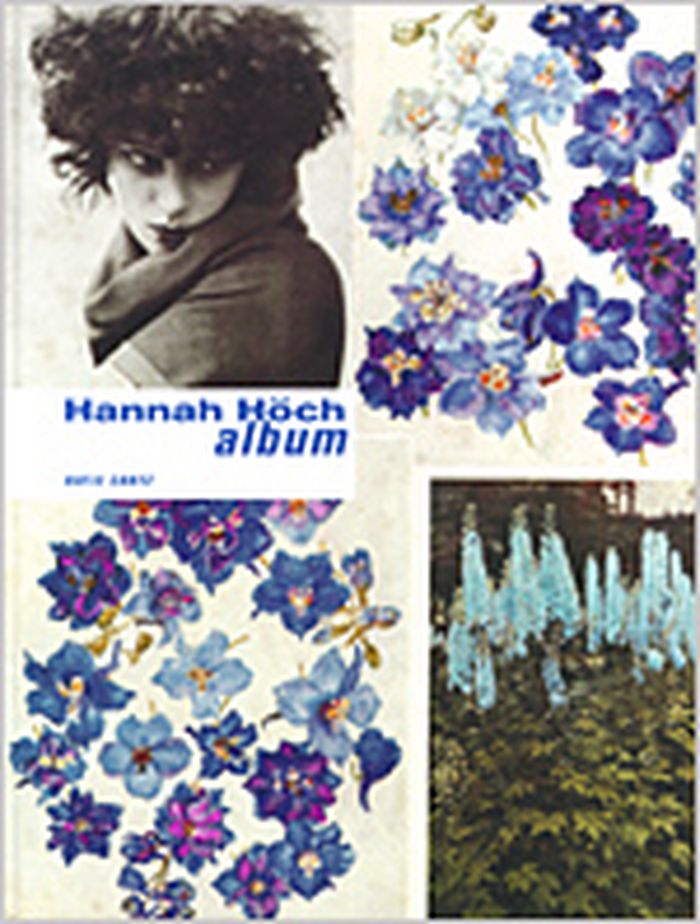
As one of the protagonists of the Berlin Dada movement, Hannah Höch railed against tradition and conservatism in 1920s Germany. Höch and such cohorts as George Grosz and Raoul Hausmann raised anarchic revolution through cutting photomontage, nonsensical performance, and biting visual satire. A singular and important work in the artist's oeuvre is the so-called "Sammelalbum," which she produced and pasted together from found imagery for her own pleasure and use, circa 1933. In it, she arranged a choice selection of newspaper and magazine photographs cut from popular German magazines of the time, such as the Berliner Illustrirte and Der Dame. A diverse, allusive group of images they are, representing everything from her favorite film stars to oddly captured animals and toy dolls, nudes, landscapes, scenic travel vistas, and synchronized dancers. By combining the collected pictures in continuous and sometimes contradictory sequences and double-page spreads, Höch created startling and often jarring photo collages. Never before published, Album can be considered to represent a heretofore unknown aspect of Höch's work, since its style of collage differs strongly from her well-known photomontages. This publication presents the entire Album in an exquisite facsimile reproduction, maintaining the filmic quality of its order and layout. In an accompanying essay, Gunda Luyken considers the content and history of the Album, locating it in the wider context of Höch’s oeuvre.
Hannah Höch album
Actions:
Price:
$91.00
(available to order)
Summary:
As one of the protagonists of the Berlin Dada movement, Hannah Höch railed against tradition and conservatism in 1920s Germany. Höch and such cohorts as George Grosz and Raoul Hausmann raised anarchic revolution through cutting photomontage, nonsensical performance, and biting visual satire. A singular and important work in the artist's oeuvre is the so-called "Sammelalbum," which she produced and pasted together from found imagery for her own pleasure and use, circa 1933. In it, she arranged a choice selection of newspaper and magazine photographs cut from popular German magazines of the time, such as the Berliner Illustrirte and Der Dame. A diverse, allusive group of images they are, representing everything from her favorite film stars to oddly captured animals and toy dolls, nudes, landscapes, scenic travel vistas, and synchronized dancers. By combining the collected pictures in continuous and sometimes contradictory sequences and double-page spreads, Höch created startling and often jarring photo collages. Never before published, Album can be considered to represent a heretofore unknown aspect of Höch's work, since its style of collage differs strongly from her well-known photomontages. This publication presents the entire Album in an exquisite facsimile reproduction, maintaining the filmic quality of its order and layout. In an accompanying essay, Gunda Luyken considers the content and history of the Album, locating it in the wider context of Höch’s oeuvre.
Form:
books
books
Publication:
February 2004, Ostfildern
February 2004, Ostfildern
Subject:
Photography monographs
Photography monographs
Form:
books
books
Actions:
Price:
$97.90
(available in store)
Summary:
The sketch is a window into the architects mind. As creative designers, architects are interested in how other architects, particularly successful ones, think through the use of drawings to approach their work. Historically designers have sought inspiration for their own work through an insight into the minds and workings of people they often regard as geniuses. This(...)
$97.90
(available in store)
Summary:
The sketch is a window into the architects mind. As creative designers, architects are interested in how other architects, particularly successful ones, think through the use of drawings to approach their work. Historically designers have sought inspiration for their own work through an insight into the minds and workings of people they often regard as geniuses. This(...)
Title:
Architects' drawings: a selection of sketches by world famous archittects through history
Actions:
Price:
$97.90
(available in store)
Summary:
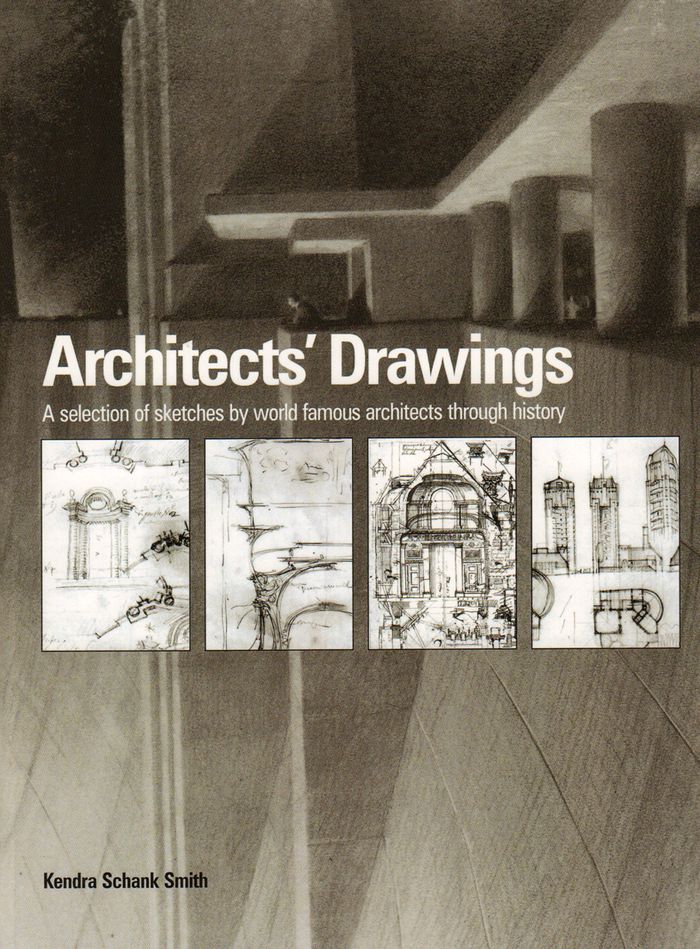
The sketch is a window into the architects mind. As creative designers, architects are interested in how other architects, particularly successful ones, think through the use of drawings to approach their work. Historically designers have sought inspiration for their own work through an insight into the minds and workings of people they often regard as geniuses. This collection of sketches aims to provide this insight. Here for the first time, a wide range of world famous architects' sketches from the Renaissance to the present day can be seen in a single volume. The sketches have been selected to represent the concepts or philosophies of the key movements in architecture in order to develop an overall picture of the role of the sketch in the development of architecture. The book illustrates the work of designers as diverse as Andrea Palladio, Erich Mendelsohn, Sir Edwin Lutyens, Gianlorenzo Bernini, Le Corbusier, Michelangelo, Alvar Aalto, Sir John Soane, Francesco Borromini, Walter Gropius, and contemporary architects Tadao Ando, Zaha Hadid and Frank Gehry to name but a few. Each chronologically placed sketch is accompanied by text providing details about the architect’s life, a look at the sketch in context, and the connection to specific buildings where appropriate. Style, media and meaning are also discussed, developing an explanation of the architect’s thinking and intentions.
Architects' drawings: a selection of sketches by world famous archittects through history
Actions:
Price:
$97.90
(available in store)
Summary:
The sketch is a window into the architects mind. As creative designers, architects are interested in how other architects, particularly successful ones, think through the use of drawings to approach their work. Historically designers have sought inspiration for their own work through an insight into the minds and workings of people they often regard as geniuses. This collection of sketches aims to provide this insight. Here for the first time, a wide range of world famous architects' sketches from the Renaissance to the present day can be seen in a single volume. The sketches have been selected to represent the concepts or philosophies of the key movements in architecture in order to develop an overall picture of the role of the sketch in the development of architecture. The book illustrates the work of designers as diverse as Andrea Palladio, Erich Mendelsohn, Sir Edwin Lutyens, Gianlorenzo Bernini, Le Corbusier, Michelangelo, Alvar Aalto, Sir John Soane, Francesco Borromini, Walter Gropius, and contemporary architects Tadao Ando, Zaha Hadid and Frank Gehry to name but a few. Each chronologically placed sketch is accompanied by text providing details about the architect’s life, a look at the sketch in context, and the connection to specific buildings where appropriate. Style, media and meaning are also discussed, developing an explanation of the architect’s thinking and intentions.
Form:
books
books
Publication:
February 2016
February 2016
Subject:
Architectural Drawing
Architectural Drawing
Form:
books
books
Actions:
Price:
$44.95
(available to order)
Summary:
Modelling Time: The Permanent Collection 1925–2014 chronicles the exhibition Model as Ruin at the House of Artists in Oslo, November 1 – December 15, 2013. Together with master students from the Oslo School of Architecture and Design, Mari Hvattum and Mari Lending brought a unique, modernist model collection out of the archives, re-exhibiting it at the venue that once(...)
$44.95
(available to order)
Summary:
Modelling Time: The Permanent Collection 1925–2014 chronicles the exhibition Model as Ruin at the House of Artists in Oslo, November 1 – December 15, 2013. Together with master students from the Oslo School of Architecture and Design, Mari Hvattum and Mari Lending brought a unique, modernist model collection out of the archives, re-exhibiting it at the venue that once(...)
Title:
Modelling time: the permanent collection 1925-2014
Actions:
Price:
$44.95
(available to order)
Summary:
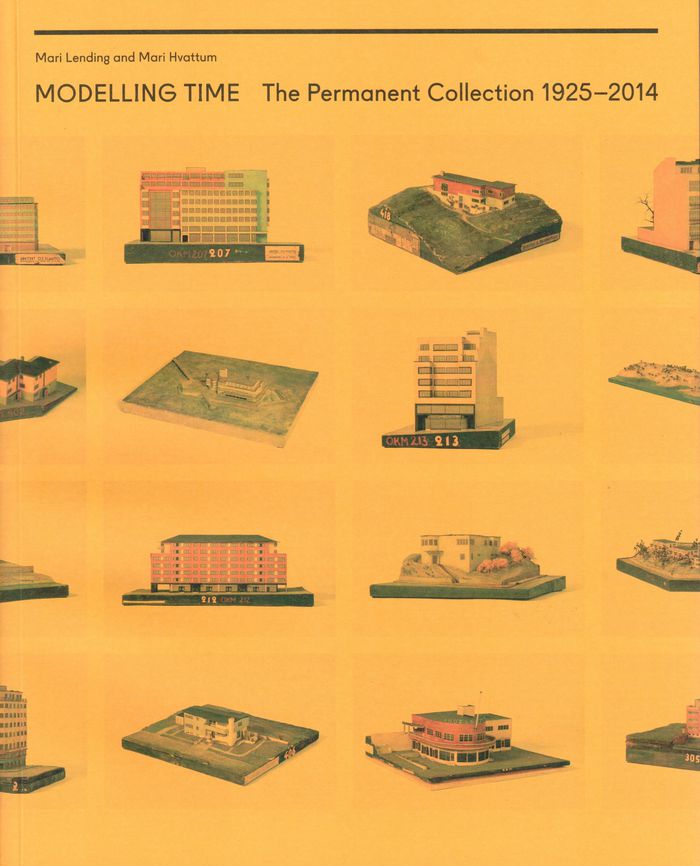
Modelling Time: The Permanent Collection 1925–2014 chronicles the exhibition Model as Ruin at the House of Artists in Oslo, November 1 – December 15, 2013. Together with master students from the Oslo School of Architecture and Design, Mari Hvattum and Mari Lending brought a unique, modernist model collection out of the archives, re-exhibiting it at the venue that once hosted its biggest ever display in 1931. The collection testifies to a different modernism; not white and austere but colourful, diverse, and full of detail. Modelling Time gives an in-depth portrayal of the so-called ‘Permanent Collection’ of Norwegian scale models, photographs and drawings, tracing its international trajectory of exhibitions from Brussels in 1927 to its last appearance at the World’s Fair in New York in 1939. The book documents the collection’s heydays as part of a vivid international modernist culture, as well as its archival diaspora as it falls into oblivion after WWII. In an extensive, archive-based essay editors Lending and Hvattum give the full context of the collection, while Juliane Derry and Jorge Otero-Pailos look into the models’ materiality and issues of decay. Model scholars and architecture curators Barry Bergdoll, Carson Chan, Pippo Ciorra, Oliver Elser, Juliet Koss, Andres Lepik, Adam Lowe, Wallis Miller, Jorge Otero-Pailos, Léa-Catherine Szacka, and Victor Plathe Tschudi presents a variety of perspectives inspired by the Oslo collection.
Modelling time: the permanent collection 1925-2014
Actions:
Price:
$44.95
(available to order)
Summary:
Modelling Time: The Permanent Collection 1925–2014 chronicles the exhibition Model as Ruin at the House of Artists in Oslo, November 1 – December 15, 2013. Together with master students from the Oslo School of Architecture and Design, Mari Hvattum and Mari Lending brought a unique, modernist model collection out of the archives, re-exhibiting it at the venue that once hosted its biggest ever display in 1931. The collection testifies to a different modernism; not white and austere but colourful, diverse, and full of detail. Modelling Time gives an in-depth portrayal of the so-called ‘Permanent Collection’ of Norwegian scale models, photographs and drawings, tracing its international trajectory of exhibitions from Brussels in 1927 to its last appearance at the World’s Fair in New York in 1939. The book documents the collection’s heydays as part of a vivid international modernist culture, as well as its archival diaspora as it falls into oblivion after WWII. In an extensive, archive-based essay editors Lending and Hvattum give the full context of the collection, while Juliane Derry and Jorge Otero-Pailos look into the models’ materiality and issues of decay. Model scholars and architecture curators Barry Bergdoll, Carson Chan, Pippo Ciorra, Oliver Elser, Juliet Koss, Andres Lepik, Adam Lowe, Wallis Miller, Jorge Otero-Pailos, Léa-Catherine Szacka, and Victor Plathe Tschudi presents a variety of perspectives inspired by the Oslo collection.
Form:
books
books
Publication:
October 2016
October 2016
Subject:
Models
Models
Form:
books
books
Actions:
Price:
$37.50
(available to order)
Summary:
As our everyday social and cultural experiences are increasingly mediated by electronic products--from "intelligent" toasters to iPods--it is the design of these products that shapes our experience of the "electrosphere" in which we live. Designers of electronic products, writes Anthony Dunne in "Hertzian tales", must begin to think more broadly about the aesthetic role(...)
$37.50
(available to order)
Summary:
As our everyday social and cultural experiences are increasingly mediated by electronic products--from "intelligent" toasters to iPods--it is the design of these products that shapes our experience of the "electrosphere" in which we live. Designers of electronic products, writes Anthony Dunne in "Hertzian tales", must begin to think more broadly about the aesthetic role(...)
Title:
Hertzian tales : electronic products, aesthetic experience, and critical design
Actions:
Price:
$37.50
(available to order)
Summary:
As our everyday social and cultural experiences are increasingly mediated by electronic products--from "intelligent" toasters to iPods--it is the design of these products that shapes our experience of the "electrosphere" in which we live. Designers of electronic products, writes Anthony Dunne in "Hertzian tales", must begin to think more broadly about the aesthetic role of electronic products in everyday life. Industrial design has the potential to enrich our daily lives--to improve the quality of our relationship to the artificial environment of technology, and even, argues Dunne, to be subverted for socially beneficial ends. The cultural speculations and conceptual design proposals in "Hertzian tales" are not utopian visions or blueprints; instead, they embody a critique of present-day practices, "mixing criticism with optimism." Six essays explore design approaches for developing the aesthetic potential of electronic products outside a commercial context--considering such topics as the post-optimal object and the aesthetics of user-unfriendliness--and five proposals offer commentary in the form of objects, videos, and images. Very little has changed in the world of design since "Hertzian tales" was first published by the Royal College of Art in 1999, writes Dunne in his preface to this MIT Press edition : "Design is not engaging with the social, cultural, and ethical implications of the technologies it makes so sexy and consumable." His project and proposals challenge it to do so.
Hertzian tales : electronic products, aesthetic experience, and critical design
Actions:
Price:
$37.50
(available to order)
Summary:
As our everyday social and cultural experiences are increasingly mediated by electronic products--from "intelligent" toasters to iPods--it is the design of these products that shapes our experience of the "electrosphere" in which we live. Designers of electronic products, writes Anthony Dunne in "Hertzian tales", must begin to think more broadly about the aesthetic role of electronic products in everyday life. Industrial design has the potential to enrich our daily lives--to improve the quality of our relationship to the artificial environment of technology, and even, argues Dunne, to be subverted for socially beneficial ends. The cultural speculations and conceptual design proposals in "Hertzian tales" are not utopian visions or blueprints; instead, they embody a critique of present-day practices, "mixing criticism with optimism." Six essays explore design approaches for developing the aesthetic potential of electronic products outside a commercial context--considering such topics as the post-optimal object and the aesthetics of user-unfriendliness--and five proposals offer commentary in the form of objects, videos, and images. Very little has changed in the world of design since "Hertzian tales" was first published by the Royal College of Art in 1999, writes Dunne in his preface to this MIT Press edition : "Design is not engaging with the social, cultural, and ethical implications of the technologies it makes so sexy and consumable." His project and proposals challenge it to do so.
Form:
books
books
Publication:
March 2006, Cambridge, Mass.
March 2006, Cambridge, Mass.
Subject:
Design Theory
Design Theory


