


6146 Results
Form:
exhibitions
exhibitions
Actions:
Description:
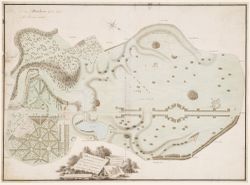
British gardens and garden buildings have held particular importance in British artistic and cultural life over the last four centuries, as well as influenced the development of the architectural and landscape ideas of the European and North American continents. An English Arcadia 1600–1990 documents the history of these gardens and buildings. The exhibition consists of(...)
British gardens and garden buildings have held particular importance in British artistic and cultural life over the last four centuries, as well as influenced the development of the architectural and landscape ideas of the European and North American continents. An English Arcadia 1600–1990 documents the history of these gardens and buildings. The exhibition consists of(...)
Location:
Main galleries
Main galleries
Date:
12 February 1992 to 19 April 1992
12 February 1992 to 19 April 1992
Title:
An English Arcadia, 1600-1990: Designs for Gardens and Garden Buildings in the Care of the National Trust with Selected Objects from the CCA Collections
Actions:
Description:
British gardens and garden buildings have held particular importance in British artistic and cultural life over the last four centuries, as well as influenced the development of the architectural and landscape ideas of the European and North American continents. An English Arcadia 1600–1990 documents the history of these gardens and buildings. The exhibition consists of(...)
An English Arcadia, 1600-1990: Designs for Gardens and Garden Buildings in the Care of the National Trust with Selected Objects from the CCA Collections
Actions:
Description:
British gardens and garden buildings have held particular importance in British artistic and cultural life over the last four centuries, as well as influenced the development of the architectural and landscape ideas of the European and North American continents. An English Arcadia 1600–1990 documents the history of these gardens and buildings. The exhibition consists of(...)
Form:
exhibitions
exhibitions
Date:
12 February 1992 to
19 April 1992
12 February 1992 to
19 April 1992
Location:
Main galleries
Main galleries
Form:
archives
Level of archival description:
Fonds
archives
Level of archival description:
Fonds
Actions:
Reference number:
AP051
Synopsis:
The Groupe de recherche sur Montréal fonds, 1975-1997, documents the Groupe de recherche sur Montréal’s (GRM) extensive research on the development of pre and post-industrial Montreal’s built environment. In addition to this extensive collection of research materials, the fonds also includes administrative files relating to the GRM’s everyday administration and management. Materials found in this fonds consist of approximately 40 l.m. of textual documentation, approximately 2000 maps and 1 model.
AP051
Synopsis:
The Groupe de recherche sur Montréal fonds, 1975-1997, documents the Groupe de recherche sur Montréal’s (GRM) extensive research on the development of pre and post-industrial Montreal’s built environment. In addition to this extensive collection of research materials, the fonds also includes administrative files relating to the GRM’s everyday administration and management. Materials found in this fonds consist of approximately 40 l.m. of textual documentation, approximately 2000 maps and 1 model.
People:
Date:
1975-1997
1975-1997
Title:
Groupe de recherche sur Montréal fonds
Actions:
AP051
Synopsis:
The Groupe de recherche sur Montréal fonds, 1975-1997, documents the Groupe de recherche sur Montréal’s (GRM) extensive research on the development of pre and post-industrial Montreal’s built environment. In addition to this extensive collection of research materials, the fonds also includes administrative files relating to the GRM’s everyday administration and management. Materials found in this fonds consist of approximately 40 l.m. of textual documentation, approximately 2000 maps and 1 model.
Groupe de recherche sur Montréal fonds
Actions:
AP051
Synopsis:
The Groupe de recherche sur Montréal fonds, 1975-1997, documents the Groupe de recherche sur Montréal’s (GRM) extensive research on the development of pre and post-industrial Montreal’s built environment. In addition to this extensive collection of research materials, the fonds also includes administrative files relating to the GRM’s everyday administration and management. Materials found in this fonds consist of approximately 40 l.m. of textual documentation, approximately 2000 maps and 1 model.
Form:
archives
Level of archival description:
Fonds
archives
Level of archival description:
Fonds
Date:
1975-1997
1975-1997
People:
Form:
exhibitions
exhibitions
Title:
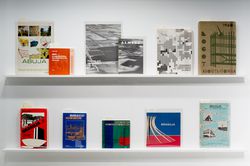
Old Books New Cities
Old Books New Cities
Actions:
Description:
The pressing need to reconstruct cities after the Second World War and the sudden post-war rise in population led the public sector to assume an ever-increasing role in the design and construction of the urban environment. In different political contexts, large urban developments or the construction of entirely new towns were directed by municipal or state powers and(...)
The pressing need to reconstruct cities after the Second World War and the sudden post-war rise in population led the public sector to assume an ever-increasing role in the design and construction of the urban environment. In different political contexts, large urban developments or the construction of entirely new towns were directed by municipal or state powers and(...)
Location:
Hall cases
Hall cases
Date:
12 December 2013 to 15 June 2014
12 December 2013 to 15 June 2014
Title:
Old Books New Cities
Actions:
Description:
The pressing need to reconstruct cities after the Second World War and the sudden post-war rise in population led the public sector to assume an ever-increasing role in the design and construction of the urban environment. In different political contexts, large urban developments or the construction of entirely new towns were directed by municipal or state powers and(...)
Old Books New Cities
Actions:
Description:
The pressing need to reconstruct cities after the Second World War and the sudden post-war rise in population led the public sector to assume an ever-increasing role in the design and construction of the urban environment. In different political contexts, large urban developments or the construction of entirely new towns were directed by municipal or state powers and(...)
Form:
exhibitions
exhibitions
Date:
12 December 2013 to
15 June 2014
12 December 2013 to
15 June 2014
Location:
Hall cases
Hall cases
Form:
exhibitions
exhibitions

Actions:
Description:
During the Second World War, exhibitions and publications played a critical role in the war effort. They were organized internationally as moments of reflection and propaganda, productions of a disciplinary approach to architecture and urban design. This display springs from Jean-Louis Cohen’s research for Architecture in Uniform: Designing and Building for the Second(...)
During the Second World War, exhibitions and publications played a critical role in the war effort. They were organized internationally as moments of reflection and propaganda, productions of a disciplinary approach to architecture and urban design. This display springs from Jean-Louis Cohen’s research for Architecture in Uniform: Designing and Building for the Second(...)
Location:
Hall cases
Hall cases
Date:
13 April 2011 to 18 September 2011
13 April 2011 to 18 September 2011
Title:
A Paper War: Pictures and words, 1939-1945
Actions:
Description:
During the Second World War, exhibitions and publications played a critical role in the war effort. They were organized internationally as moments of reflection and propaganda, productions of a disciplinary approach to architecture and urban design. This display springs from Jean-Louis Cohen’s research for Architecture in Uniform: Designing and Building for the Second(...)
A Paper War: Pictures and words, 1939-1945
Actions:
Description:
During the Second World War, exhibitions and publications played a critical role in the war effort. They were organized internationally as moments of reflection and propaganda, productions of a disciplinary approach to architecture and urban design. This display springs from Jean-Louis Cohen’s research for Architecture in Uniform: Designing and Building for the Second(...)
Form:
exhibitions
exhibitions
Date:
13 April 2011 to
18 September 2011
13 April 2011 to
18 September 2011
Location:
Hall cases
Hall cases
Form:
exhibitions
exhibitions

Title:
Architecture as Evidence
Architecture as Evidence
Actions:
Description:
Architecture as Evidence presents a set of materials gathered during a forensic analysis of the architecture of Auschwitz. It assembles plaster casts of blueprints, letters, contractor bills, and photographs, as well as two reconstructed monuments (a gas column and a gas-tight hatch), which together provide tangible evidence that Auschwitz was designed by its architects(...)
Architecture as Evidence presents a set of materials gathered during a forensic analysis of the architecture of Auschwitz. It assembles plaster casts of blueprints, letters, contractor bills, and photographs, as well as two reconstructed monuments (a gas column and a gas-tight hatch), which together provide tangible evidence that Auschwitz was designed by its architects(...)
Location:
Octagonal gallery
Octagonal gallery
Date:
16 June 2016 to 11 September 2016
16 June 2016 to 11 September 2016
Title:
Architecture as Evidence
Actions:
Description:
Architecture as Evidence presents a set of materials gathered during a forensic analysis of the architecture of Auschwitz. It assembles plaster casts of blueprints, letters, contractor bills, and photographs, as well as two reconstructed monuments (a gas column and a gas-tight hatch), which together provide tangible evidence that Auschwitz was designed by its architects(...)
Architecture as Evidence
Actions:
Description:
Architecture as Evidence presents a set of materials gathered during a forensic analysis of the architecture of Auschwitz. It assembles plaster casts of blueprints, letters, contractor bills, and photographs, as well as two reconstructed monuments (a gas column and a gas-tight hatch), which together provide tangible evidence that Auschwitz was designed by its architects(...)
Form:
exhibitions
exhibitions
Date:
16 June 2016 to
11 September 2016
16 June 2016 to
11 September 2016
Location:
Octagonal gallery
Octagonal gallery
Level of archival description:
Series
Series
Title:
Hans and Wassili Luckhardt
Hans and Wassili Luckhardt
Actions:
Reference number:
AP162.S6
Description:
Series documents the contribution of architects Hans Luckhardt and Wasilli Luckhardt to the correspondence circle of Die gläserne Kette, with each writing under the pseudonyms Angkor and Zachen respectively. Born in Berlin in 1880, Hans Luckhardt studied architecture at the Technische Hochschule at Karlsruhe, Germany. In 1919, he joined the Novembergruppe, an exhibiting group of painters, sculptors, architects and musicians, and the Arbeitsrat für Kunst, lead by Bruno Taut. These two groups merged in November 1919. The same year, Luckhardt exhibitied his work at the Ausstellung für unbekannte Architekten and contributed to the organization of the Neues Bauen exhibition the next year. In 1921, Hans Luckhardt began his working collaboration with his brother Wassili. Born in Berlin in 1989, Wassili Luckhardt studied archictecture at the Technische Hochschule at Berlin-Charlottenburg and at the Technische Hochschule in Dresden. He undertook his military service from 1914 to 1918. Like his brother Hans, Wasilli joined the Novembergruppeand the Arbeitsrat für Kunst in 1919 and exhibited his work at the Ausstellung für unbekannte Architekten. During their collaboration, the Luckhardt brothers worked on designs for private commisions and competition schemes including some for Berlin and Hanover (1951-1952). Hans Luckhardt died in 1954 in Bad Wiessee. Wassili Luckhardt continued his work as an architect on various architectural projects. He died in 1972 in Berlin. (Source: Ian Boyd Whyte, Bruno Taut and the Architecture of Activism. Cambridge: Cambridge University Press, 1982) The series comprises part of the correspondence of Hans and Wasilli Luckhardt to the Die gläserne Kette circle, along with related drawings and photographs. The series also includes a photograph of a architectural model for a project by the Luckhart brothers.
AP162.S6
Description:
Series documents the contribution of architects Hans Luckhardt and Wasilli Luckhardt to the correspondence circle of Die gläserne Kette, with each writing under the pseudonyms Angkor and Zachen respectively. Born in Berlin in 1880, Hans Luckhardt studied architecture at the Technische Hochschule at Karlsruhe, Germany. In 1919, he joined the Novembergruppe, an exhibiting group of painters, sculptors, architects and musicians, and the Arbeitsrat für Kunst, lead by Bruno Taut. These two groups merged in November 1919. The same year, Luckhardt exhibitied his work at the Ausstellung für unbekannte Architekten and contributed to the organization of the Neues Bauen exhibition the next year. In 1921, Hans Luckhardt began his working collaboration with his brother Wassili. Born in Berlin in 1989, Wassili Luckhardt studied archictecture at the Technische Hochschule at Berlin-Charlottenburg and at the Technische Hochschule in Dresden. He undertook his military service from 1914 to 1918. Like his brother Hans, Wasilli joined the Novembergruppeand the Arbeitsrat für Kunst in 1919 and exhibited his work at the Ausstellung für unbekannte Architekten. During their collaboration, the Luckhardt brothers worked on designs for private commisions and competition schemes including some for Berlin and Hanover (1951-1952). Hans Luckhardt died in 1954 in Bad Wiessee. Wassili Luckhardt continued his work as an architect on various architectural projects. He died in 1972 in Berlin. (Source: Ian Boyd Whyte, Bruno Taut and the Architecture of Activism. Cambridge: Cambridge University Press, 1982) The series comprises part of the correspondence of Hans and Wasilli Luckhardt to the Die gläserne Kette circle, along with related drawings and photographs. The series also includes a photograph of a architectural model for a project by the Luckhart brothers.
People:
Date:
1919-1920
1919-1920
Title:
Hans and Wassili Luckhardt
Actions:
AP162.S6
Description:
Series documents the contribution of architects Hans Luckhardt and Wasilli Luckhardt to the correspondence circle of Die gläserne Kette, with each writing under the pseudonyms Angkor and Zachen respectively. Born in Berlin in 1880, Hans Luckhardt studied architecture at the Technische Hochschule at Karlsruhe, Germany. In 1919, he joined the Novembergruppe, an exhibiting group of painters, sculptors, architects and musicians, and the Arbeitsrat für Kunst, lead by Bruno Taut. These two groups merged in November 1919. The same year, Luckhardt exhibitied his work at the Ausstellung für unbekannte Architekten and contributed to the organization of the Neues Bauen exhibition the next year. In 1921, Hans Luckhardt began his working collaboration with his brother Wassili. Born in Berlin in 1989, Wassili Luckhardt studied archictecture at the Technische Hochschule at Berlin-Charlottenburg and at the Technische Hochschule in Dresden. He undertook his military service from 1914 to 1918. Like his brother Hans, Wasilli joined the Novembergruppeand the Arbeitsrat für Kunst in 1919 and exhibited his work at the Ausstellung für unbekannte Architekten. During their collaboration, the Luckhardt brothers worked on designs for private commisions and competition schemes including some for Berlin and Hanover (1951-1952). Hans Luckhardt died in 1954 in Bad Wiessee. Wassili Luckhardt continued his work as an architect on various architectural projects. He died in 1972 in Berlin. (Source: Ian Boyd Whyte, Bruno Taut and the Architecture of Activism. Cambridge: Cambridge University Press, 1982) The series comprises part of the correspondence of Hans and Wasilli Luckhardt to the Die gläserne Kette circle, along with related drawings and photographs. The series also includes a photograph of a architectural model for a project by the Luckhart brothers.
Hans and Wassili Luckhardt
Actions:
AP162.S6
Description:
Series documents the contribution of architects Hans Luckhardt and Wasilli Luckhardt to the correspondence circle of Die gläserne Kette, with each writing under the pseudonyms Angkor and Zachen respectively. Born in Berlin in 1880, Hans Luckhardt studied architecture at the Technische Hochschule at Karlsruhe, Germany. In 1919, he joined the Novembergruppe, an exhibiting group of painters, sculptors, architects and musicians, and the Arbeitsrat für Kunst, lead by Bruno Taut. These two groups merged in November 1919. The same year, Luckhardt exhibitied his work at the Ausstellung für unbekannte Architekten and contributed to the organization of the Neues Bauen exhibition the next year. In 1921, Hans Luckhardt began his working collaboration with his brother Wassili. Born in Berlin in 1989, Wassili Luckhardt studied archictecture at the Technische Hochschule at Berlin-Charlottenburg and at the Technische Hochschule in Dresden. He undertook his military service from 1914 to 1918. Like his brother Hans, Wasilli joined the Novembergruppeand the Arbeitsrat für Kunst in 1919 and exhibited his work at the Ausstellung für unbekannte Architekten. During their collaboration, the Luckhardt brothers worked on designs for private commisions and competition schemes including some for Berlin and Hanover (1951-1952). Hans Luckhardt died in 1954 in Bad Wiessee. Wassili Luckhardt continued his work as an architect on various architectural projects. He died in 1972 in Berlin. (Source: Ian Boyd Whyte, Bruno Taut and the Architecture of Activism. Cambridge: Cambridge University Press, 1982) The series comprises part of the correspondence of Hans and Wasilli Luckhardt to the Die gläserne Kette circle, along with related drawings and photographs. The series also includes a photograph of a architectural model for a project by the Luckhart brothers.
Level of archival description:
series
series
Date:
1919-1920
1919-1920
People:
Level of archival description:
Project
Project
Reference number:
AP178.S1.1984.PR02
Description:
The project series documents the Punt en Komma social housing project in The Hague, The Netherlands, with some materials related to the Urban plan for Deelgebied Zone 5, Schilderswijk-West. While the records were held in the office’s archives the urban plan for Deelgebied Zone 5 was assigned the number 30/80 and Punt en Komma was assigned the number 30/80 A/B (Punt (A) and Komma (B)). The office assigned the date 1984 for this project. In the mid to late1970s The Hague underwent an urban renewal program and in 1980 Adri Duivesteijn became the alderman responsible for this program. Dissatisfied with the results, in the early to mid-1980s Duivesteijn began a campaign to look at urban renewal as a cultural approach, and was interested in the participatory process that Siza incorporated for the Serviço Ambulatório de Apoio Local (SAAL) in Portugal and the Berlin projects submitted to the International Architectural Exhibition Berlin competition (International Bauaustellung, IBA, circa 1979-1987). After taking a trip to Portugal, Duivesteijn invited Siza to speak with residents of Schilderswijk. The urban plan for Schilderswijk was the first part of a redevelopment plan for the 19th century district and included two four story blocks of 106 apartments, named Punt en Komma. Schilderswijk is in the centre of The Hague and is nearby the Haag Spoor train station. The residents are made up of multi-ethnic communities and included immigrants from Turkey, Morocco, Tunisia, and Portugal. Similarly to the Berlin projects, Siza was faced with cultural tensions between the residents of the area. The urban plan was to take into account the preservation of the neighborhood's identity while accounting for the changes brought on by multi-ethnic communities. As with the SAAL and Berlin projects there was an element of participation from the residents and included the collaboration of a residents association. In the “Plan of Zone 5 of Schilderswijk Centrum…”, found in this project series [AP178.S1.1984.PR02.024.1, AP178.S1.1984.PR02.024.2], it is outlined that meetings were periodically held with technicians appointed by the Department of Urban Planning and Housing of The Hague, the Housing Cooperative, and each of the designers. Siza’s design for Punt en Komma incorporated elements prevalent in Dutch architecture such as the Haagse Portiek. However, he also included components in his design which accounted for the needs of residents living there at the time. One feature which gained much attention was the incorporation of sliding doors in the apartments. Siza included these doors in his design in consideration of the cultural practices of Muslim families. Documenting this project series are drawings, photographic materials, and textual documentation. Among the drawings are plans, elevations, sections, and details, as well as axonometric drawings, such as the proposed design for Deelgebied zone 5 (including Punt en Komma) and drawings of the Haagse Porteik. Photographic materials document both Duivesteijn’s trip to Portugal and Siza’s first trip to The Hague and include photographs, negatives, and slides of the built project, as well as slides of drawings. Note that the photographic materials include photographs related to the housing and shopping complex in Schilderswijk. Textual documentation includes brochures regarding rent increases, a copy of “Stadsvernieuwing als Kulturele Aktiviteit” by Duivesteijn, and information booklets for the residents. Also included are minutes of meeting and correspondence from the Woningbouwvereniging’s-Gravenhage. Among the correspondence are letters regarding construction costs, including a letter from Siza to the local architectural firm Architectengemeenschap Van den Broek en Bakema explaining that he does not wish to modify the detail he specified for the lintels of the Punt building. There is also correspondence from project architect Carlos Castenheira and Duivesteijn and a summary of the meeting between Siza and the Committee of the Corporation for Social Housing (17 April, 1985)[AP178.S1.1984.PR02.025.1] It is important to note that Siza also participated in other projects for this urban renewal program: the housing and shopping complex in Schilderswijk [AP178.S1.1984.PR03], the Van der Vennepark [AP178.S1.1985.PR01], and the residential settlement in Schilderswijk (Plano de Doedijnstraat [AP178.S1.1989.PR03]). All three of these projects are arranged in separate project series.
AP178.S1.1984.PR02
Description:
The project series documents the Punt en Komma social housing project in The Hague, The Netherlands, with some materials related to the Urban plan for Deelgebied Zone 5, Schilderswijk-West. While the records were held in the office’s archives the urban plan for Deelgebied Zone 5 was assigned the number 30/80 and Punt en Komma was assigned the number 30/80 A/B (Punt (A) and Komma (B)). The office assigned the date 1984 for this project. In the mid to late1970s The Hague underwent an urban renewal program and in 1980 Adri Duivesteijn became the alderman responsible for this program. Dissatisfied with the results, in the early to mid-1980s Duivesteijn began a campaign to look at urban renewal as a cultural approach, and was interested in the participatory process that Siza incorporated for the Serviço Ambulatório de Apoio Local (SAAL) in Portugal and the Berlin projects submitted to the International Architectural Exhibition Berlin competition (International Bauaustellung, IBA, circa 1979-1987). After taking a trip to Portugal, Duivesteijn invited Siza to speak with residents of Schilderswijk. The urban plan for Schilderswijk was the first part of a redevelopment plan for the 19th century district and included two four story blocks of 106 apartments, named Punt en Komma. Schilderswijk is in the centre of The Hague and is nearby the Haag Spoor train station. The residents are made up of multi-ethnic communities and included immigrants from Turkey, Morocco, Tunisia, and Portugal. Similarly to the Berlin projects, Siza was faced with cultural tensions between the residents of the area. The urban plan was to take into account the preservation of the neighborhood's identity while accounting for the changes brought on by multi-ethnic communities. As with the SAAL and Berlin projects there was an element of participation from the residents and included the collaboration of a residents association. In the “Plan of Zone 5 of Schilderswijk Centrum…”, found in this project series [AP178.S1.1984.PR02.024.1, AP178.S1.1984.PR02.024.2], it is outlined that meetings were periodically held with technicians appointed by the Department of Urban Planning and Housing of The Hague, the Housing Cooperative, and each of the designers. Siza’s design for Punt en Komma incorporated elements prevalent in Dutch architecture such as the Haagse Portiek. However, he also included components in his design which accounted for the needs of residents living there at the time. One feature which gained much attention was the incorporation of sliding doors in the apartments. Siza included these doors in his design in consideration of the cultural practices of Muslim families. Documenting this project series are drawings, photographic materials, and textual documentation. Among the drawings are plans, elevations, sections, and details, as well as axonometric drawings, such as the proposed design for Deelgebied zone 5 (including Punt en Komma) and drawings of the Haagse Porteik. Photographic materials document both Duivesteijn’s trip to Portugal and Siza’s first trip to The Hague and include photographs, negatives, and slides of the built project, as well as slides of drawings. Note that the photographic materials include photographs related to the housing and shopping complex in Schilderswijk. Textual documentation includes brochures regarding rent increases, a copy of “Stadsvernieuwing als Kulturele Aktiviteit” by Duivesteijn, and information booklets for the residents. Also included are minutes of meeting and correspondence from the Woningbouwvereniging’s-Gravenhage. Among the correspondence are letters regarding construction costs, including a letter from Siza to the local architectural firm Architectengemeenschap Van den Broek en Bakema explaining that he does not wish to modify the detail he specified for the lintels of the Punt building. There is also correspondence from project architect Carlos Castenheira and Duivesteijn and a summary of the meeting between Siza and the Committee of the Corporation for Social Housing (17 April, 1985)[AP178.S1.1984.PR02.025.1] It is important to note that Siza also participated in other projects for this urban renewal program: the housing and shopping complex in Schilderswijk [AP178.S1.1984.PR03], the Van der Vennepark [AP178.S1.1985.PR01], and the residential settlement in Schilderswijk (Plano de Doedijnstraat [AP178.S1.1989.PR03]). All three of these projects are arranged in separate project series.
People:
Date:
circa 1981 - 1990
circa 1981 - 1990
Title:
106 habitações, Punt en Komma [Punt en Komma social housing], Schilderswijk-West, The Hague, The Netherlands, (1981-1990)
Actions:
AP178.S1.1984.PR02
Description:
The project series documents the Punt en Komma social housing project in The Hague, The Netherlands, with some materials related to the Urban plan for Deelgebied Zone 5, Schilderswijk-West. While the records were held in the office’s archives the urban plan for Deelgebied Zone 5 was assigned the number 30/80 and Punt en Komma was assigned the number 30/80 A/B (Punt (A) and Komma (B)). The office assigned the date 1984 for this project. In the mid to late1970s The Hague underwent an urban renewal program and in 1980 Adri Duivesteijn became the alderman responsible for this program. Dissatisfied with the results, in the early to mid-1980s Duivesteijn began a campaign to look at urban renewal as a cultural approach, and was interested in the participatory process that Siza incorporated for the Serviço Ambulatório de Apoio Local (SAAL) in Portugal and the Berlin projects submitted to the International Architectural Exhibition Berlin competition (International Bauaustellung, IBA, circa 1979-1987). After taking a trip to Portugal, Duivesteijn invited Siza to speak with residents of Schilderswijk. The urban plan for Schilderswijk was the first part of a redevelopment plan for the 19th century district and included two four story blocks of 106 apartments, named Punt en Komma. Schilderswijk is in the centre of The Hague and is nearby the Haag Spoor train station. The residents are made up of multi-ethnic communities and included immigrants from Turkey, Morocco, Tunisia, and Portugal. Similarly to the Berlin projects, Siza was faced with cultural tensions between the residents of the area. The urban plan was to take into account the preservation of the neighborhood's identity while accounting for the changes brought on by multi-ethnic communities. As with the SAAL and Berlin projects there was an element of participation from the residents and included the collaboration of a residents association. In the “Plan of Zone 5 of Schilderswijk Centrum…”, found in this project series [AP178.S1.1984.PR02.024.1, AP178.S1.1984.PR02.024.2], it is outlined that meetings were periodically held with technicians appointed by the Department of Urban Planning and Housing of The Hague, the Housing Cooperative, and each of the designers. Siza’s design for Punt en Komma incorporated elements prevalent in Dutch architecture such as the Haagse Portiek. However, he also included components in his design which accounted for the needs of residents living there at the time. One feature which gained much attention was the incorporation of sliding doors in the apartments. Siza included these doors in his design in consideration of the cultural practices of Muslim families. Documenting this project series are drawings, photographic materials, and textual documentation. Among the drawings are plans, elevations, sections, and details, as well as axonometric drawings, such as the proposed design for Deelgebied zone 5 (including Punt en Komma) and drawings of the Haagse Porteik. Photographic materials document both Duivesteijn’s trip to Portugal and Siza’s first trip to The Hague and include photographs, negatives, and slides of the built project, as well as slides of drawings. Note that the photographic materials include photographs related to the housing and shopping complex in Schilderswijk. Textual documentation includes brochures regarding rent increases, a copy of “Stadsvernieuwing als Kulturele Aktiviteit” by Duivesteijn, and information booklets for the residents. Also included are minutes of meeting and correspondence from the Woningbouwvereniging’s-Gravenhage. Among the correspondence are letters regarding construction costs, including a letter from Siza to the local architectural firm Architectengemeenschap Van den Broek en Bakema explaining that he does not wish to modify the detail he specified for the lintels of the Punt building. There is also correspondence from project architect Carlos Castenheira and Duivesteijn and a summary of the meeting between Siza and the Committee of the Corporation for Social Housing (17 April, 1985)[AP178.S1.1984.PR02.025.1] It is important to note that Siza also participated in other projects for this urban renewal program: the housing and shopping complex in Schilderswijk [AP178.S1.1984.PR03], the Van der Vennepark [AP178.S1.1985.PR01], and the residential settlement in Schilderswijk (Plano de Doedijnstraat [AP178.S1.1989.PR03]). All three of these projects are arranged in separate project series.
106 habitações, Punt en Komma [Punt en Komma social housing], Schilderswijk-West, The Hague, The Netherlands, (1981-1990)
Actions:
AP178.S1.1984.PR02
Description:
The project series documents the Punt en Komma social housing project in The Hague, The Netherlands, with some materials related to the Urban plan for Deelgebied Zone 5, Schilderswijk-West. While the records were held in the office’s archives the urban plan for Deelgebied Zone 5 was assigned the number 30/80 and Punt en Komma was assigned the number 30/80 A/B (Punt (A) and Komma (B)). The office assigned the date 1984 for this project. In the mid to late1970s The Hague underwent an urban renewal program and in 1980 Adri Duivesteijn became the alderman responsible for this program. Dissatisfied with the results, in the early to mid-1980s Duivesteijn began a campaign to look at urban renewal as a cultural approach, and was interested in the participatory process that Siza incorporated for the Serviço Ambulatório de Apoio Local (SAAL) in Portugal and the Berlin projects submitted to the International Architectural Exhibition Berlin competition (International Bauaustellung, IBA, circa 1979-1987). After taking a trip to Portugal, Duivesteijn invited Siza to speak with residents of Schilderswijk. The urban plan for Schilderswijk was the first part of a redevelopment plan for the 19th century district and included two four story blocks of 106 apartments, named Punt en Komma. Schilderswijk is in the centre of The Hague and is nearby the Haag Spoor train station. The residents are made up of multi-ethnic communities and included immigrants from Turkey, Morocco, Tunisia, and Portugal. Similarly to the Berlin projects, Siza was faced with cultural tensions between the residents of the area. The urban plan was to take into account the preservation of the neighborhood's identity while accounting for the changes brought on by multi-ethnic communities. As with the SAAL and Berlin projects there was an element of participation from the residents and included the collaboration of a residents association. In the “Plan of Zone 5 of Schilderswijk Centrum…”, found in this project series [AP178.S1.1984.PR02.024.1, AP178.S1.1984.PR02.024.2], it is outlined that meetings were periodically held with technicians appointed by the Department of Urban Planning and Housing of The Hague, the Housing Cooperative, and each of the designers. Siza’s design for Punt en Komma incorporated elements prevalent in Dutch architecture such as the Haagse Portiek. However, he also included components in his design which accounted for the needs of residents living there at the time. One feature which gained much attention was the incorporation of sliding doors in the apartments. Siza included these doors in his design in consideration of the cultural practices of Muslim families. Documenting this project series are drawings, photographic materials, and textual documentation. Among the drawings are plans, elevations, sections, and details, as well as axonometric drawings, such as the proposed design for Deelgebied zone 5 (including Punt en Komma) and drawings of the Haagse Porteik. Photographic materials document both Duivesteijn’s trip to Portugal and Siza’s first trip to The Hague and include photographs, negatives, and slides of the built project, as well as slides of drawings. Note that the photographic materials include photographs related to the housing and shopping complex in Schilderswijk. Textual documentation includes brochures regarding rent increases, a copy of “Stadsvernieuwing als Kulturele Aktiviteit” by Duivesteijn, and information booklets for the residents. Also included are minutes of meeting and correspondence from the Woningbouwvereniging’s-Gravenhage. Among the correspondence are letters regarding construction costs, including a letter from Siza to the local architectural firm Architectengemeenschap Van den Broek en Bakema explaining that he does not wish to modify the detail he specified for the lintels of the Punt building. There is also correspondence from project architect Carlos Castenheira and Duivesteijn and a summary of the meeting between Siza and the Committee of the Corporation for Social Housing (17 April, 1985)[AP178.S1.1984.PR02.025.1] It is important to note that Siza also participated in other projects for this urban renewal program: the housing and shopping complex in Schilderswijk [AP178.S1.1984.PR03], the Van der Vennepark [AP178.S1.1985.PR01], and the residential settlement in Schilderswijk (Plano de Doedijnstraat [AP178.S1.1989.PR03]). All three of these projects are arranged in separate project series.
Level of archival description:
Project
Project
Date:
circa 1981 - 1990
circa 1981 - 1990
People:
Form:
exhibitions
exhibitions
Description:
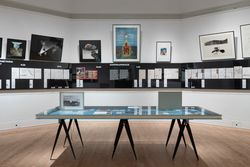
Alongside a growth in decentralized, experimental, and underground cinema at the end of the 1960s and in the early 1970s, many groups operating from inside the field of architecture such as Superstudio, Studio 9999, and Ant Farm explored the short film as a medium to expand architectural discourse, embed their projects with bold reflections and projections of society, and(...)
Alongside a growth in decentralized, experimental, and underground cinema at the end of the 1960s and in the early 1970s, many groups operating from inside the field of architecture such as Superstudio, Studio 9999, and Ant Farm explored the short film as a medium to expand architectural discourse, embed their projects with bold reflections and projections of society, and(...)
Location:
Octagonal gallery
Octagonal gallery
Date:
21 September 2018 to 19 May 2019
21 September 2018 to 19 May 2019
Title:
Scripts for a new world
Actions:
Description:
Alongside a growth in decentralized, experimental, and underground cinema at the end of the 1960s and in the early 1970s, many groups operating from inside the field of architecture such as Superstudio, Studio 9999, and Ant Farm explored the short film as a medium to expand architectural discourse, embed their projects with bold reflections and projections of society, and(...)
Scripts for a new world
Actions:
Description:
Alongside a growth in decentralized, experimental, and underground cinema at the end of the 1960s and in the early 1970s, many groups operating from inside the field of architecture such as Superstudio, Studio 9999, and Ant Farm explored the short film as a medium to expand architectural discourse, embed their projects with bold reflections and projections of society, and(...)
Form:
exhibitions
exhibitions
Date:
21 September 2018 to
19 May 2019
21 September 2018 to
19 May 2019
Location:
Octagonal gallery
Octagonal gallery
Form:
events
events
Title:
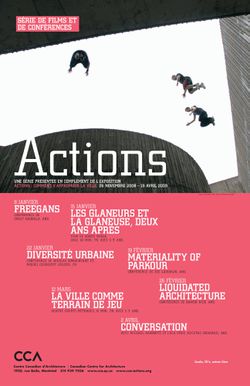
Liquidated Architecture
Liquidated Architecture
Actions:
Description:
American urban planner and designer Damon Rich examines the links among politics, architecture, and history. His research analyses the evolution of the real estate market – foreclosures, mortgages, construction and zoning. He is also a collaborator of the Center for Urban Pedagogy (CUP), an organization based in Brooklyn that studies movements within cities and their(...)
American urban planner and designer Damon Rich examines the links among politics, architecture, and history. His research analyses the evolution of the real estate market – foreclosures, mortgages, construction and zoning. He is also a collaborator of the Center for Urban Pedagogy (CUP), an organization based in Brooklyn that studies movements within cities and their(...)
Location:
Paul Desmarais Theatre
Paul Desmarais Theatre
Date:
26 February 2009
26 February 2009
Title:
Liquidated Architecture
Actions:
Description:
American urban planner and designer Damon Rich examines the links among politics, architecture, and history. His research analyses the evolution of the real estate market – foreclosures, mortgages, construction and zoning. He is also a collaborator of the Center for Urban Pedagogy (CUP), an organization based in Brooklyn that studies movements within cities and their(...)
Liquidated Architecture
Actions:
Description:
American urban planner and designer Damon Rich examines the links among politics, architecture, and history. His research analyses the evolution of the real estate market – foreclosures, mortgages, construction and zoning. He is also a collaborator of the Center for Urban Pedagogy (CUP), an organization based in Brooklyn that studies movements within cities and their(...)
Form:
events
events
Date:
26 February 2009
26 February 2009
Location:
Paul Desmarais Theatre
Paul Desmarais Theatre
Form:
exhibitions
exhibitions

Actions:
Description:
At the beginning of powered flight, most airplanes required only a stretch of grassy plain 1,500 feet long for take-off and landing, and a converted barn served as both terminal and hangar. Only with the advent of a profitable commercial aviation industry in the late 1920s, some twenty-five years after Wilbur and Orville Wright’s historic flight, did the modern airport(...)
At the beginning of powered flight, most airplanes required only a stretch of grassy plain 1,500 feet long for take-off and landing, and a converted barn served as both terminal and hangar. Only with the advent of a profitable commercial aviation industry in the late 1920s, some twenty-five years after Wilbur and Orville Wright’s historic flight, did the modern airport(...)
Location:
Hall cases
Hall cases
Date:
12 June 1990 to 16 September 1990
12 June 1990 to 16 September 1990
Title:
Airport Origins: Three Projects by Lloyd Wright
Actions:
Description:
At the beginning of powered flight, most airplanes required only a stretch of grassy plain 1,500 feet long for take-off and landing, and a converted barn served as both terminal and hangar. Only with the advent of a profitable commercial aviation industry in the late 1920s, some twenty-five years after Wilbur and Orville Wright’s historic flight, did the modern airport(...)
Airport Origins: Three Projects by Lloyd Wright
Actions:
Description:
At the beginning of powered flight, most airplanes required only a stretch of grassy plain 1,500 feet long for take-off and landing, and a converted barn served as both terminal and hangar. Only with the advent of a profitable commercial aviation industry in the late 1920s, some twenty-five years after Wilbur and Orville Wright’s historic flight, did the modern airport(...)
Form:
exhibitions
exhibitions
Date:
12 June 1990 to
16 September 1990
12 June 1990 to
16 September 1990
Location:
Hall cases
Hall cases


