


5376 Results
Form:
books
books
Actions:
Price:
$72.00
(available to order)
Summary:
Best known as the firm chosen to work on the World Trade Center Memorial, the landscape architecture projects of Peter Walker and Partners vary both in scale and program: urban design and planning, corporate headquarters and university campuses, parks, plazas, museums, and gardens. Exploring the relationships of art, culture, and context, Walker and the members of the(...)
$72.00
(available to order)
Summary:
Best known as the firm chosen to work on the World Trade Center Memorial, the landscape architecture projects of Peter Walker and Partners vary both in scale and program: urban design and planning, corporate headquarters and university campuses, parks, plazas, museums, and gardens. Exploring the relationships of art, culture, and context, Walker and the members of the(...)
Subject:
Gardens
Gardens
Publication:
March 2005, San Rafael, California
March 2005, San Rafael, California
Title:
Peter Walker and Partners : defining the craft
Actions:
Price:
$72.00
(available to order)
Summary:
Best known as the firm chosen to work on the World Trade Center Memorial, the landscape architecture projects of Peter Walker and Partners vary both in scale and program: urban design and planning, corporate headquarters and university campuses, parks, plazas, museums, and gardens. Exploring the relationships of art, culture, and context, Walker and the members of the firm re-form the landscape, challenging traditional concepts of design. Through drawing, model-making, computer graphics, and full-size mock-ups, the office moves from defining the program to experimenting with materials and forming the space. The design process, therefore, faithfully reflects the constant exchange occurring with clients, architects, and consultants. A knowledge of history and tradition and an understanding of contemporary needs and patterns of living allow the firm to produce landscapes that are both timeless and unique. This extensive monograph opens with a short essay about the organization and history of the office, the importance of apprenticeship in landscape architectural education, and the particular way that PWP artfully practices the craft of landscape architecture. It features nearly 300 images (with 3 gatefolds) of the firm’s work since 1997, including 16 built landscape projects in the United States, Europe, and Asia. Seven projects in progress include the American Embassy in Beijing, several university campuses, and the World Trade Center Memorial. The 10 site-planning and urban design projects include Millennium Parklands in Sydney, Australia, and the Novartis Headquarters in Basel, Switzerland. Each section begins with a brief introduction by Walker, and the book concludes with four competition entries, including one for 1600 Pennsylvania Avenue.
Peter Walker and Partners : defining the craft
Actions:
Price:
$72.00
(available to order)
Summary:
Best known as the firm chosen to work on the World Trade Center Memorial, the landscape architecture projects of Peter Walker and Partners vary both in scale and program: urban design and planning, corporate headquarters and university campuses, parks, plazas, museums, and gardens. Exploring the relationships of art, culture, and context, Walker and the members of the firm re-form the landscape, challenging traditional concepts of design. Through drawing, model-making, computer graphics, and full-size mock-ups, the office moves from defining the program to experimenting with materials and forming the space. The design process, therefore, faithfully reflects the constant exchange occurring with clients, architects, and consultants. A knowledge of history and tradition and an understanding of contemporary needs and patterns of living allow the firm to produce landscapes that are both timeless and unique. This extensive monograph opens with a short essay about the organization and history of the office, the importance of apprenticeship in landscape architectural education, and the particular way that PWP artfully practices the craft of landscape architecture. It features nearly 300 images (with 3 gatefolds) of the firm’s work since 1997, including 16 built landscape projects in the United States, Europe, and Asia. Seven projects in progress include the American Embassy in Beijing, several university campuses, and the World Trade Center Memorial. The 10 site-planning and urban design projects include Millennium Parklands in Sydney, Australia, and the Novartis Headquarters in Basel, Switzerland. Each section begins with a brief introduction by Walker, and the book concludes with four competition entries, including one for 1600 Pennsylvania Avenue.
Form:
books
books
Publication:
March 2005, San Rafael, California
March 2005, San Rafael, California
Subject:
Gardens
Gardens
Form:
books
books
Actions:
Price:
$39.00
(available to order)
Summary:
Sylvia Lavin's “Form Follows Libido” argues that by the 1950s, some architects felt an urge to steer the cool abstraction of high modernism away from a neutral formalism toward the production of more erotic, affective environments. Lavin turns to the architecture of Richard Neutra (1892-1970) to explore the genesis of these new mood-inducing environments. In a series of(...)
$39.00
(available to order)
Summary:
Sylvia Lavin's “Form Follows Libido” argues that by the 1950s, some architects felt an urge to steer the cool abstraction of high modernism away from a neutral formalism toward the production of more erotic, affective environments. Lavin turns to the architecture of Richard Neutra (1892-1970) to explore the genesis of these new mood-inducing environments. In a series of(...)
Title:
Form follows libido : architecture and Richard Neutra in a psychoanalytic culture
Actions:
Price:
$39.00
(available to order)
Summary:
Sylvia Lavin's “Form Follows Libido” argues that by the 1950s, some architects felt an urge to steer the cool abstraction of high modernism away from a neutral formalism toward the production of more erotic, affective environments. Lavin turns to the architecture of Richard Neutra (1892-1970) to explore the genesis of these new mood-inducing environments. In a series of engaging essays weaving through the designs and writings of this Vienna-born, California-based architect, Lavin discovers in Neutra a sustained and poignant psychoanalytic reflection set in the context of a burgeoning psychoanalytic culture in America. Lavin shows that Neutra's redirection of modernism constituted not a lyrical regression to sentimentality but a deliberate advance of architectural theory and technique to engage the unconscious mind, fuelled by the ideas of psychoanalysis that were being rapidly disseminated at the time. In Neutra's responses to a vivid range of issues, from psychoanalysis proper to the popular psychology of tele-evangelical prayer, Lavin uncovers a radical reconstitution of the architectural discipline. Arguing persuasively that the received historical views of both psychoanalysis and architecture have led to a suppression of their compelling coincidences and unorthodoxies, Lavin sets out to unleash mid-century architecture's hidden libido. Neither Neutra nor psychoanalysis emerges unscathed from her investigation of how architecture came to be saturated by the intrigues of affect, often against its will. If Reyner Banham sought to put architecture "on the couch," then Lavin, through Neutra, leaps beyond Banham's ameliorative aim to lure contemporary architecture into the lush and dangerous liaisons of environmental design.
Form follows libido : architecture and Richard Neutra in a psychoanalytic culture
Actions:
Price:
$39.00
(available to order)
Summary:
Sylvia Lavin's “Form Follows Libido” argues that by the 1950s, some architects felt an urge to steer the cool abstraction of high modernism away from a neutral formalism toward the production of more erotic, affective environments. Lavin turns to the architecture of Richard Neutra (1892-1970) to explore the genesis of these new mood-inducing environments. In a series of engaging essays weaving through the designs and writings of this Vienna-born, California-based architect, Lavin discovers in Neutra a sustained and poignant psychoanalytic reflection set in the context of a burgeoning psychoanalytic culture in America. Lavin shows that Neutra's redirection of modernism constituted not a lyrical regression to sentimentality but a deliberate advance of architectural theory and technique to engage the unconscious mind, fuelled by the ideas of psychoanalysis that were being rapidly disseminated at the time. In Neutra's responses to a vivid range of issues, from psychoanalysis proper to the popular psychology of tele-evangelical prayer, Lavin uncovers a radical reconstitution of the architectural discipline. Arguing persuasively that the received historical views of both psychoanalysis and architecture have led to a suppression of their compelling coincidences and unorthodoxies, Lavin sets out to unleash mid-century architecture's hidden libido. Neither Neutra nor psychoanalysis emerges unscathed from her investigation of how architecture came to be saturated by the intrigues of affect, often against its will. If Reyner Banham sought to put architecture "on the couch," then Lavin, through Neutra, leaps beyond Banham's ameliorative aim to lure contemporary architecture into the lush and dangerous liaisons of environmental design.
Form:
books
books
Publication:
January 2005, Cambridge, Mass.
January 2005, Cambridge, Mass.
Subject:
Architecture Monographs
Architecture Monographs
Form:
books
books
Actions:
Price:
$39.95
(available to order)
Summary:
This book examines the development of Vancouver’s unique approach to zoning, planning, and urban design from its inception in the early 1970's to its maturity in the management of urban change at the beginning of the twenty-first century. By the late 1990's, Vancouver had established a reputation in North America for its planning achievement, especially for its creation(...)
$39.95
(available to order)
Summary:
This book examines the development of Vancouver’s unique approach to zoning, planning, and urban design from its inception in the early 1970's to its maturity in the management of urban change at the beginning of the twenty-first century. By the late 1990's, Vancouver had established a reputation in North America for its planning achievement, especially for its creation(...)
Title:
The Vancouver achievement : urban planning and design
Actions:
Price:
$39.95
(available to order)
Summary:
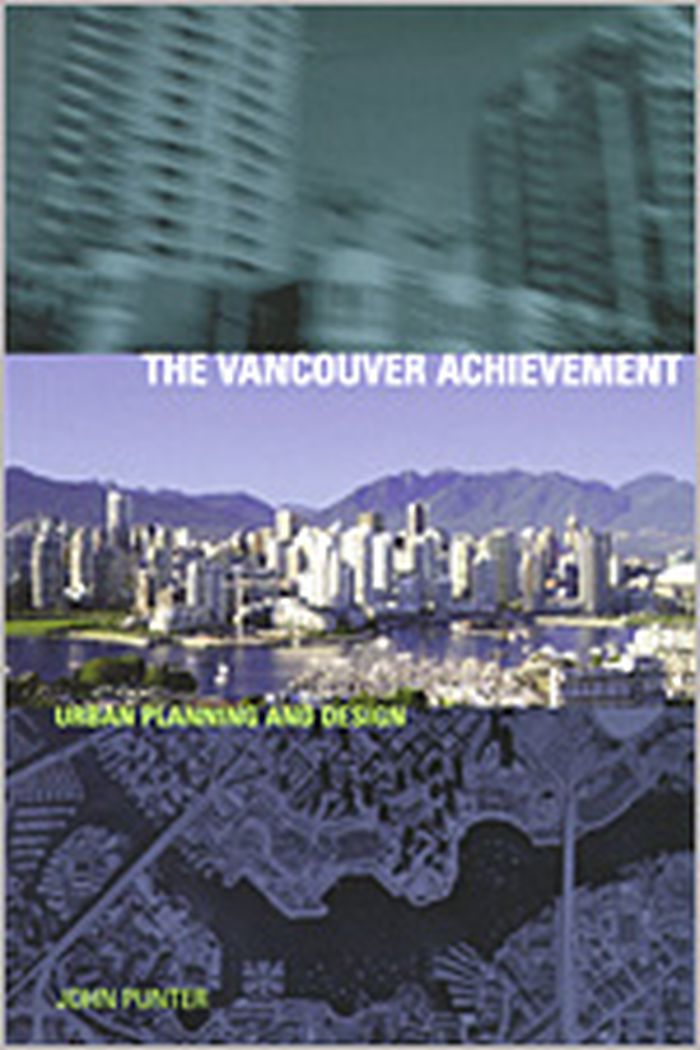
This book examines the development of Vancouver’s unique approach to zoning, planning, and urban design from its inception in the early 1970's to its maturity in the management of urban change at the beginning of the twenty-first century. By the late 1990's, Vancouver had established a reputation in North America for its planning achievement, especially for its creation of a participative, responsive, and design-led approach to urban regeneration and redevelopment. This system has other important features: an innovative approach to megaproject planning, a system of cost and amenity levies on major schemes, a participative CityPlan process to underpin active neighbourhood planning, and a sophisticated panoply of design guidelines. These systems, processes, and their achievements place Vancouver at the forefront of international planning practice. "The Vancouver Achievement" explains the evolution and evaluates the outcomes of Vancouver’s unique system of discretionary zoning. The introductory chapters set the context for the study: they cover the invention and refinement of this system in the reform movement, its development of policies, guidelines, and control processes, and its translation into official development plans and neighbourhood design in the 1970's. Subsequent chapters focus upon the downtown, waterfront megaprojects, single-family neighbourhoods, the city-wide strategic planning programme (CityPlan), pressures for reform of control processes, and current downtown and inner city developments, especially issues of affordable housing, social exclusion, and multiple deprivation. The concluding chapter summarizes "The Vancouver Achievement," explains the keys to its success, and evaluates its design success against internationally accepted criteria.
The Vancouver achievement : urban planning and design
Actions:
Price:
$39.95
(available to order)
Summary:
This book examines the development of Vancouver’s unique approach to zoning, planning, and urban design from its inception in the early 1970's to its maturity in the management of urban change at the beginning of the twenty-first century. By the late 1990's, Vancouver had established a reputation in North America for its planning achievement, especially for its creation of a participative, responsive, and design-led approach to urban regeneration and redevelopment. This system has other important features: an innovative approach to megaproject planning, a system of cost and amenity levies on major schemes, a participative CityPlan process to underpin active neighbourhood planning, and a sophisticated panoply of design guidelines. These systems, processes, and their achievements place Vancouver at the forefront of international planning practice. "The Vancouver Achievement" explains the evolution and evaluates the outcomes of Vancouver’s unique system of discretionary zoning. The introductory chapters set the context for the study: they cover the invention and refinement of this system in the reform movement, its development of policies, guidelines, and control processes, and its translation into official development plans and neighbourhood design in the 1970's. Subsequent chapters focus upon the downtown, waterfront megaprojects, single-family neighbourhoods, the city-wide strategic planning programme (CityPlan), pressures for reform of control processes, and current downtown and inner city developments, especially issues of affordable housing, social exclusion, and multiple deprivation. The concluding chapter summarizes "The Vancouver Achievement," explains the keys to its success, and evaluates its design success against internationally accepted criteria.
Form:
books
books
Publication:
April 2004, Vancouver
April 2004, Vancouver
Subject:
Architecture in Canada
Architecture in Canada
Form:
books
books
Actions:
Price:
$39.95
(available in store)
Summary:
For E. C. Relph, the landscape of late twentieth-century cities must be envisioned as a total environment—not just streets and buildings but billboards and parking meters as well. "The modern urban landscape" traces the developments since 1880 in architecture, technology, planning, and society that have formed the visual context of daily life. Each of these shaping(...)
$39.95
(available in store)
Summary:
For E. C. Relph, the landscape of late twentieth-century cities must be envisioned as a total environment—not just streets and buildings but billboards and parking meters as well. "The modern urban landscape" traces the developments since 1880 in architecture, technology, planning, and society that have formed the visual context of daily life. Each of these shaping(...)
Title:
The modern urban landscape: 1880 to the present
Actions:
Price:
$39.95
(available in store)
Summary:
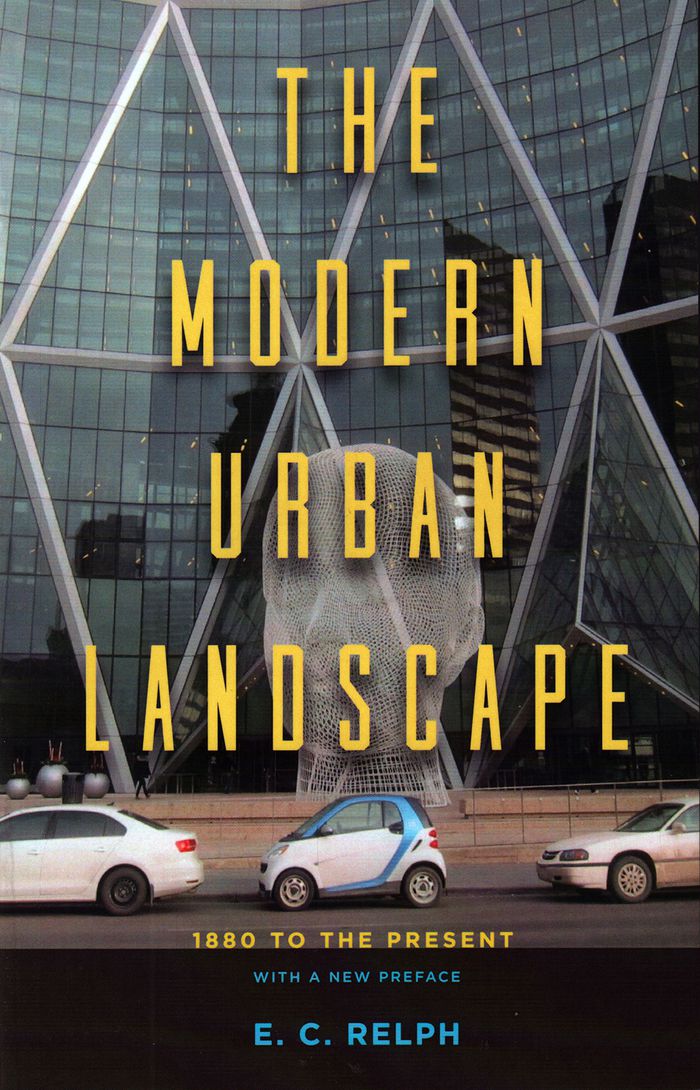
For E. C. Relph, the landscape of late twentieth-century cities must be envisioned as a total environment—not just streets and buildings but billboards and parking meters as well. "The modern urban landscape" traces the developments since 1880 in architecture, technology, planning, and society that have formed the visual context of daily life. Each of these shaping influences is often viewed in isolation, but Relph surveys the ways in which they have operated independently to create what we see when we walk down a street, shop in a mall, or stare through a windshield on an expressway. Two sets of ideas and fashions, Relph argues, have had an especially important impact on urban landscapes in the twentieth century. An "internationalism" made possible by new building technologies and design ideologies has replaced regional style and custom as the dominant feature of city appearance, while a firm belief in the merits of self-consciousness has imposed logical analysis and technical manipulation on such commonplace objects as curbstones and park benches. "As a result," writes Relph, "the modern urban landscape is both rationalized and artificial, which is another way of saying that it is intensely human." This edition features a new preface in which the author identifies the major visible changes in urban landscapes over the past thirty years, including destination architecture, coffee shops, condominium towers, revitalized downtown streets, and the creation of edge cities. He also considers the less visible yet pervasive impacts associated with the emergence of electronic technologies and sustainable development.
The modern urban landscape: 1880 to the present
Actions:
Price:
$39.95
(available in store)
Summary:
For E. C. Relph, the landscape of late twentieth-century cities must be envisioned as a total environment—not just streets and buildings but billboards and parking meters as well. "The modern urban landscape" traces the developments since 1880 in architecture, technology, planning, and society that have formed the visual context of daily life. Each of these shaping influences is often viewed in isolation, but Relph surveys the ways in which they have operated independently to create what we see when we walk down a street, shop in a mall, or stare through a windshield on an expressway. Two sets of ideas and fashions, Relph argues, have had an especially important impact on urban landscapes in the twentieth century. An "internationalism" made possible by new building technologies and design ideologies has replaced regional style and custom as the dominant feature of city appearance, while a firm belief in the merits of self-consciousness has imposed logical analysis and technical manipulation on such commonplace objects as curbstones and park benches. "As a result," writes Relph, "the modern urban landscape is both rationalized and artificial, which is another way of saying that it is intensely human." This edition features a new preface in which the author identifies the major visible changes in urban landscapes over the past thirty years, including destination architecture, coffee shops, condominium towers, revitalized downtown streets, and the creation of edge cities. He also considers the less visible yet pervasive impacts associated with the emergence of electronic technologies and sustainable development.
Form:
books
books
Publication:
July 2016
July 2016
Subject:
Urban Theory
Urban Theory
Form:
books
books
Title:
Bad modernisms
Bad modernisms
Actions:
Price:
$31.50
(available to order)
Summary:
At the dawn of the twenty-first century, poets and architects, designers and critics, teachers and artists are rediscovering the virtues of the previous century's most vibrant cultural constellation. Yet this widespread embrace raises questions about modernism's relation to its own success. Modernism's “badness” — its emphasis on outrageous behavior, its elevation of(...)
$31.50
(available to order)
Summary:
At the dawn of the twenty-first century, poets and architects, designers and critics, teachers and artists are rediscovering the virtues of the previous century's most vibrant cultural constellation. Yet this widespread embrace raises questions about modernism's relation to its own success. Modernism's “badness” — its emphasis on outrageous behavior, its elevation of(...)
Title:
Bad modernisms
Actions:
Price:
$31.50
(available to order)
Summary:
At the dawn of the twenty-first century, poets and architects, designers and critics, teachers and artists are rediscovering the virtues of the previous century's most vibrant cultural constellation. Yet this widespread embrace raises questions about modernism's relation to its own success. Modernism's “badness” — its emphasis on outrageous behavior, its elevation of negativity, its refusal to be condoned —seems essential to its power. But once modernism is accepted as “good” or valuable (as a great deal of modernist art now is), its status as a subversive aesthetic intervention seems undermined. The contributors to "Bad modernisms" tease out the contradictions in modernism's commitment to badness "Bad modernisms" thus builds on and extends the “new modernist studies,” recent work marked by the application of diverse methods and attention to texts and artists not usually labeled as modernist. In this collection, these developments are exemplified by essays ranging from a reading of dandyism in 1920s Harlem as a performance of a “bad” black modernist imaginary to a consideration of Filipino American modernism in the context of anticolonialism. The contributors reconsider familiar figures—such as Virginia Woolf, D. H. Lawrence, Josef von Sternberg, Ludwig Wittgenstein, W. H. Auden, and Wyndham Lewis—and bring to light the work of lesser-known artists, including the writer Carlos Bulosan and the experimental filmmaker Len Lye. Examining cultural artifacts ranging from novels to manifestos, from philosophical treatises to movie musicals, and from anthropological essays to advertising campaigns, these essays signal the capaciousness and energy galvanizing the new modernist studies.
Bad modernisms
Actions:
Price:
$31.50
(available to order)
Summary:
At the dawn of the twenty-first century, poets and architects, designers and critics, teachers and artists are rediscovering the virtues of the previous century's most vibrant cultural constellation. Yet this widespread embrace raises questions about modernism's relation to its own success. Modernism's “badness” — its emphasis on outrageous behavior, its elevation of negativity, its refusal to be condoned —seems essential to its power. But once modernism is accepted as “good” or valuable (as a great deal of modernist art now is), its status as a subversive aesthetic intervention seems undermined. The contributors to "Bad modernisms" tease out the contradictions in modernism's commitment to badness "Bad modernisms" thus builds on and extends the “new modernist studies,” recent work marked by the application of diverse methods and attention to texts and artists not usually labeled as modernist. In this collection, these developments are exemplified by essays ranging from a reading of dandyism in 1920s Harlem as a performance of a “bad” black modernist imaginary to a consideration of Filipino American modernism in the context of anticolonialism. The contributors reconsider familiar figures—such as Virginia Woolf, D. H. Lawrence, Josef von Sternberg, Ludwig Wittgenstein, W. H. Auden, and Wyndham Lewis—and bring to light the work of lesser-known artists, including the writer Carlos Bulosan and the experimental filmmaker Len Lye. Examining cultural artifacts ranging from novels to manifestos, from philosophical treatises to movie musicals, and from anthropological essays to advertising campaigns, these essays signal the capaciousness and energy galvanizing the new modernist studies.
Form:
books
books
Publication:
March 2006
March 2006
Subject:
Architectural Theory
Architectural Theory
Form:
books
books
Title:
Ant Farm 1968-1978
Ant Farm 1968-1978
Actions:
Price:
$7.99
(available to order)
Summary:
This richly illustrated book, created to accompany the traveling exhibition of the same name, provides a fascinating critical overview of Ant Farm, the radical architecture collective that brought us Cadillac Ranch, Media Burn, and The Eternal Frame. Established by several young renegade architects in 1968, Ant Farm was a collaborative art and design group eager to bring(...)
$7.99
(available to order)
Summary:
This richly illustrated book, created to accompany the traveling exhibition of the same name, provides a fascinating critical overview of Ant Farm, the radical architecture collective that brought us Cadillac Ranch, Media Burn, and The Eternal Frame. Established by several young renegade architects in 1968, Ant Farm was a collaborative art and design group eager to bring(...)
Subject:
sale books
sale books
Publication:
February 2004, Berkeley
February 2004, Berkeley
Title:
Ant Farm 1968-1978
Actions:
Price:
$7.99
(available to order)
Summary:
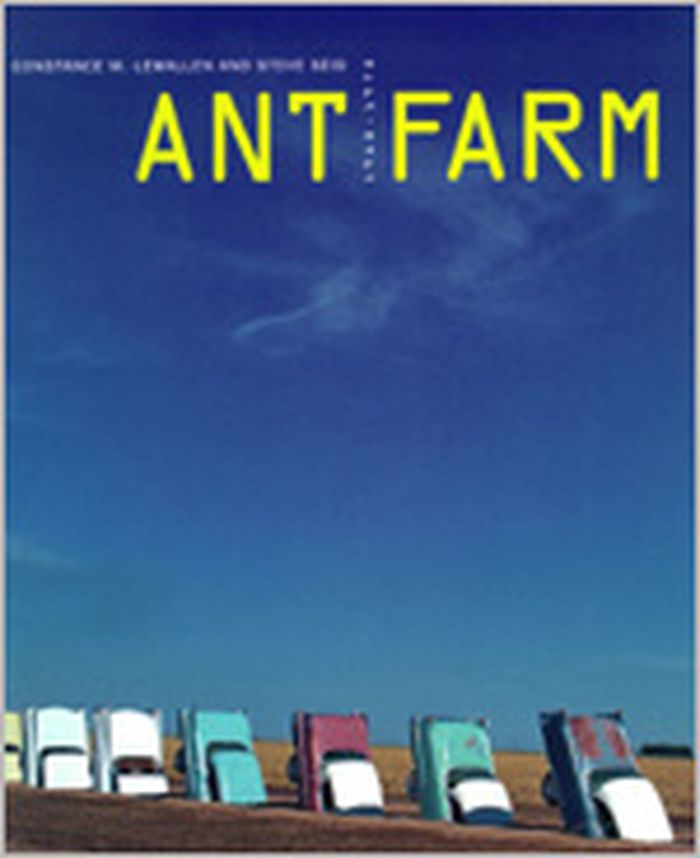
This richly illustrated book, created to accompany the traveling exhibition of the same name, provides a fascinating critical overview of Ant Farm, the radical architecture collective that brought us Cadillac Ranch, Media Burn, and The Eternal Frame. Established by several young renegade architects in 1968, Ant Farm was a collaborative art and design group eager to bring to its practice a revolutionary spirit more consistent with the times. Its vision encompassed creations for a nomadic lifestyle, including inflatable structures and radical environments that culminated in projects such as the organically appointed House of the Century and the unrealized aquatic edifice The Dolphin Embassy. Ant Farm 1968-1978 explores the sweeping career of this inspired and inspiring visionary collective as its architectural projects broadened to embrace a range of undertakings that challenged the visual architecture of image, icon, and power. Constance Lewallen provides an in-depth, anecdotally rich interview with founding members Chip Lord, Doug Michels, and Curtis Schreier. An essay by Michael Sorkin gives the multivalent cultural context for Ant Farm's radical architecture. Steve Seid takes a comprehensive look at Ant Farm's influential videotapes. Caroline Maniaque's "Searching for Energy" details the group's inflatable structures in relationship to contemporaneous architects working in a similar vein. The catalog also includes a substantial excerpt from Chip Lord's 1976 meditation on car culture, with a new epilogue; a graphically playful timeline recounting Ant Farm's essential art projects; and a rich montage of images and ephemera capturing the humor, originality, and prescience of this feisty enterprise.
Ant Farm 1968-1978
Actions:
Price:
$7.99
(available to order)
Summary:
This richly illustrated book, created to accompany the traveling exhibition of the same name, provides a fascinating critical overview of Ant Farm, the radical architecture collective that brought us Cadillac Ranch, Media Burn, and The Eternal Frame. Established by several young renegade architects in 1968, Ant Farm was a collaborative art and design group eager to bring to its practice a revolutionary spirit more consistent with the times. Its vision encompassed creations for a nomadic lifestyle, including inflatable structures and radical environments that culminated in projects such as the organically appointed House of the Century and the unrealized aquatic edifice The Dolphin Embassy. Ant Farm 1968-1978 explores the sweeping career of this inspired and inspiring visionary collective as its architectural projects broadened to embrace a range of undertakings that challenged the visual architecture of image, icon, and power. Constance Lewallen provides an in-depth, anecdotally rich interview with founding members Chip Lord, Doug Michels, and Curtis Schreier. An essay by Michael Sorkin gives the multivalent cultural context for Ant Farm's radical architecture. Steve Seid takes a comprehensive look at Ant Farm's influential videotapes. Caroline Maniaque's "Searching for Energy" details the group's inflatable structures in relationship to contemporaneous architects working in a similar vein. The catalog also includes a substantial excerpt from Chip Lord's 1976 meditation on car culture, with a new epilogue; a graphically playful timeline recounting Ant Farm's essential art projects; and a rich montage of images and ephemera capturing the humor, originality, and prescience of this feisty enterprise.
Form:
books
books
Publication:
February 2004, Berkeley
February 2004, Berkeley
Subject:
sale books
sale books
Form:
books
books
Actions:
Price:
$72.00
(available to order)
Summary:
In Illusive we identified the main trends in contemporary illustration and introduced many young illustrators. Since then, the demand for illustration has continued to grow - and with it the range of application and the forms of expression in this medium. This positive development is confirmed by the exciting work of international illustrators that we have seen since(...)
$72.00
(available to order)
Summary:
In Illusive we identified the main trends in contemporary illustration and introduced many young illustrators. Since then, the demand for illustration has continued to grow - and with it the range of application and the forms of expression in this medium. This positive development is confirmed by the exciting work of international illustrators that we have seen since(...)
Subject:
Graphic Design and Typography
Graphic Design and Typography
Publication:
January 2008, Berlin
January 2008, Berlin
Title:
Illustive 2: Contemporary illustration and its concept
Actions:
Price:
$72.00
(available to order)
Summary:
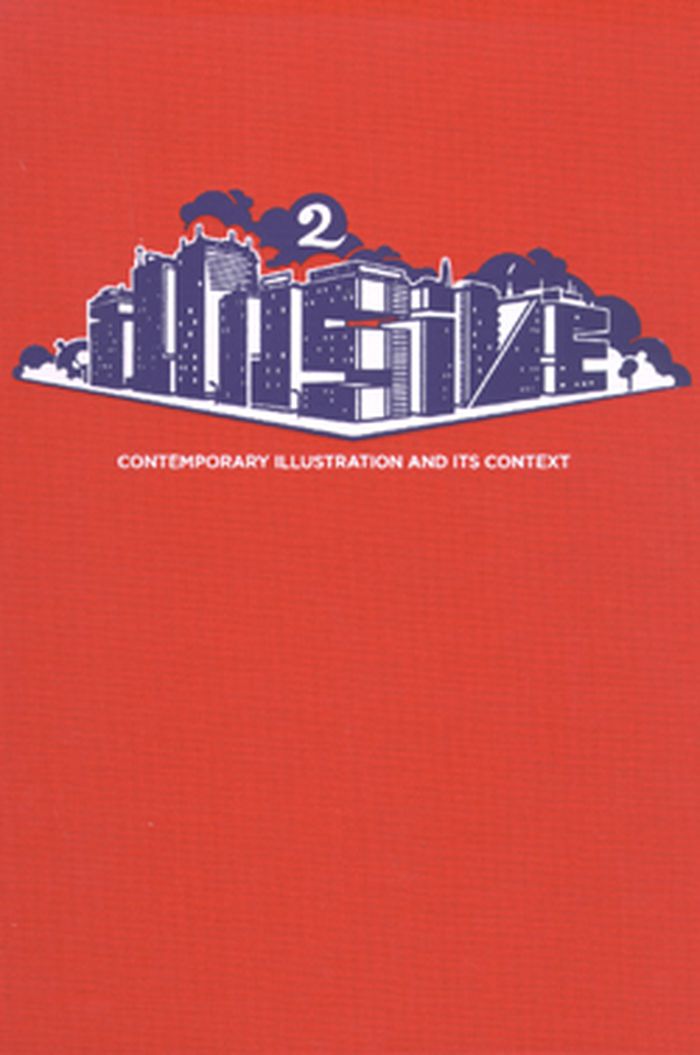
In Illusive we identified the main trends in contemporary illustration and introduced many young illustrators. Since then, the demand for illustration has continued to grow - and with it the range of application and the forms of expression in this medium. This positive development is confirmed by the exciting work of international illustrators that we have seen since publishing Illusive; it was thus a logical step to present the best of these new works in Illusive 2. Illusive 2 is a survey of current illustration from around the world; unlike other titles on this subject, all of the work was selected for inclusion based solely on its artistic merit. The book reveals a trend toward Neo-Realism that is demonstrated by the willingness of today's magazines to use illustration in almost the same way as photography. In general, the illustrations featured in Illusive 2 have become more differentiated and complex - the spontaneous-looking scribbles of years past have given way to elaborate, multi-layered collages. The variety of styles and new design approaches is impressive. Illusive 2 includes a broad range of illustrations including personal artistic work, fashion illustration and commercial projects, revealing a diversity that shows how this design discipline functions independently of fickle fashion trends. At the same time, the book outlines current developments and the many design approaches that coexist today. Because it is hard to keep an overview amid such a wealth of material, texts and interviews with leading design agencies provide context and give surprising insights into techniques, methods and motivations.
Illustive 2: Contemporary illustration and its concept
Actions:
Price:
$72.00
(available to order)
Summary:
In Illusive we identified the main trends in contemporary illustration and introduced many young illustrators. Since then, the demand for illustration has continued to grow - and with it the range of application and the forms of expression in this medium. This positive development is confirmed by the exciting work of international illustrators that we have seen since publishing Illusive; it was thus a logical step to present the best of these new works in Illusive 2. Illusive 2 is a survey of current illustration from around the world; unlike other titles on this subject, all of the work was selected for inclusion based solely on its artistic merit. The book reveals a trend toward Neo-Realism that is demonstrated by the willingness of today's magazines to use illustration in almost the same way as photography. In general, the illustrations featured in Illusive 2 have become more differentiated and complex - the spontaneous-looking scribbles of years past have given way to elaborate, multi-layered collages. The variety of styles and new design approaches is impressive. Illusive 2 includes a broad range of illustrations including personal artistic work, fashion illustration and commercial projects, revealing a diversity that shows how this design discipline functions independently of fickle fashion trends. At the same time, the book outlines current developments and the many design approaches that coexist today. Because it is hard to keep an overview amid such a wealth of material, texts and interviews with leading design agencies provide context and give surprising insights into techniques, methods and motivations.
Form:
books
books
Publication:
January 2008, Berlin
January 2008, Berlin
Subject:
Graphic Design and Typography
Graphic Design and Typography
Form:
books
books
Title:
999 design classics
999 design classics
Actions:
Price:
$225.00
(available to order)
Summary:
A design classic is an industrially manufactured object with timeless aesthetic value. It serves as a standard of its kind and, despite the year in which it was designed, is still up to date. The collection presented in these three volumes has been put together by a group of experts following the above criteria. The objects are presented chronologically, beginning with(...)
$225.00
(available to order)
Summary:
A design classic is an industrially manufactured object with timeless aesthetic value. It serves as a standard of its kind and, despite the year in which it was designed, is still up to date. The collection presented in these three volumes has been put together by a group of experts following the above criteria. The objects are presented chronologically, beginning with(...)
Title:
999 design classics
Actions:
Price:
$225.00
(available to order)
Summary:
A design classic is an industrially manufactured object with timeless aesthetic value. It serves as a standard of its kind and, despite the year in which it was designed, is still up to date. The collection presented in these three volumes has been put together by a group of experts following the above criteria. The objects are presented chronologically, beginning with an elegant pair of Chinese bonsai scissors from the early 1600s, still in production today, and ending with Jasper Morrison`s recent brunch set, which is destined to become a classic. The book includes not only classic objects created by internationally renowned designers, such as Breuer, Le Corbusier, Dreyfuss, Eames, Yanagi and Castiglioni, to name but a few, but also anonymously designed pieces, such as the clothes peg, the deck chair, the corkscrew and the chopstick, which, in spite of lacking a specific designer, have achieved such perfection in design and functionality that they have eliminated the possibility of improvement. Each product is presented on two, four or six pages and accompanied by a text. The texts provide a historical context, with information about the development of the design, and an explanation as to why that particular design is important. The texts also uncover curious anecdotes about the design, and the process involved in creating it. In many cases the products are described with details that have not been published before, informing the reader about materials and process, in addition to providing insights into each designer's oeuvre.
999 design classics
Actions:
Price:
$225.00
(available to order)
Summary:
A design classic is an industrially manufactured object with timeless aesthetic value. It serves as a standard of its kind and, despite the year in which it was designed, is still up to date. The collection presented in these three volumes has been put together by a group of experts following the above criteria. The objects are presented chronologically, beginning with an elegant pair of Chinese bonsai scissors from the early 1600s, still in production today, and ending with Jasper Morrison`s recent brunch set, which is destined to become a classic. The book includes not only classic objects created by internationally renowned designers, such as Breuer, Le Corbusier, Dreyfuss, Eames, Yanagi and Castiglioni, to name but a few, but also anonymously designed pieces, such as the clothes peg, the deck chair, the corkscrew and the chopstick, which, in spite of lacking a specific designer, have achieved such perfection in design and functionality that they have eliminated the possibility of improvement. Each product is presented on two, four or six pages and accompanied by a text. The texts provide a historical context, with information about the development of the design, and an explanation as to why that particular design is important. The texts also uncover curious anecdotes about the design, and the process involved in creating it. In many cases the products are described with details that have not been published before, informing the reader about materials and process, in addition to providing insights into each designer's oeuvre.
Form:
books
books
Publication:
February 2006, London, New York
February 2006, London, New York
Subject:
Interior Design
Interior Design
Form:
books
books
Title:
The minimalist garden
The minimalist garden
Actions:
Price:
$65.00
(available to order)
Summary:
Over the course of the 20th century many of the best garden designers have looked to the past for inspiration; with the approach of the millennium, however, a fresh approach to garden design - minimalism - has moved to the forefront. The philosophy of minimalism, rooted simultaneously in classicism and modernism, has had a strong influence on architecture and interior(...)
$65.00
(available to order)
Summary:
Over the course of the 20th century many of the best garden designers have looked to the past for inspiration; with the approach of the millennium, however, a fresh approach to garden design - minimalism - has moved to the forefront. The philosophy of minimalism, rooted simultaneously in classicism and modernism, has had a strong influence on architecture and interior(...)
Title:
The minimalist garden
Actions:
Price:
$65.00
(available to order)
Summary:
Over the course of the 20th century many of the best garden designers have looked to the past for inspiration; with the approach of the millennium, however, a fresh approach to garden design - minimalism - has moved to the forefront. The philosophy of minimalism, rooted simultaneously in classicism and modernism, has had a strong influence on architecture and interior and graphic design, as well as landscape. Minimalist gardens, with their emphasis on clean lines, pure form, and a strong sense of place, are closely related to contemporary architecture and lifestyles. New trends in more relaxed and ecologically aware planting have contributed greatly to the development of such green spaces, and the creative use of trees and hedges to define and control space is often an important design element. In this volume, award-winning garden designer Christopher Bradley-Hole has drawn together a great variety of minimalist gardens from around the world - large and small, urban and rural. The projects are grouped into thematic chapters, including the landscape garden, pools and water gardens, courtyard gardens, and terrace and roof gardens. Among the designers are Vladimir Sitta, John Pawson, Luis Barragán, Seth Stein, Jacques Wirtz, Martha Schwartz, Shodo Suzuki, and Isamu Noguchi. Large color photographs and detailed images show the gardens in context; the text discusses the inspiration behind each garden, the relationship of space and proportions, and the frequent use of unusual materials and imaginative planning. Directories of materials and plants for the perfect minimalist garden are included as well.
The minimalist garden
Actions:
Price:
$65.00
(available to order)
Summary:
Over the course of the 20th century many of the best garden designers have looked to the past for inspiration; with the approach of the millennium, however, a fresh approach to garden design - minimalism - has moved to the forefront. The philosophy of minimalism, rooted simultaneously in classicism and modernism, has had a strong influence on architecture and interior and graphic design, as well as landscape. Minimalist gardens, with their emphasis on clean lines, pure form, and a strong sense of place, are closely related to contemporary architecture and lifestyles. New trends in more relaxed and ecologically aware planting have contributed greatly to the development of such green spaces, and the creative use of trees and hedges to define and control space is often an important design element. In this volume, award-winning garden designer Christopher Bradley-Hole has drawn together a great variety of minimalist gardens from around the world - large and small, urban and rural. The projects are grouped into thematic chapters, including the landscape garden, pools and water gardens, courtyard gardens, and terrace and roof gardens. Among the designers are Vladimir Sitta, John Pawson, Luis Barragán, Seth Stein, Jacques Wirtz, Martha Schwartz, Shodo Suzuki, and Isamu Noguchi. Large color photographs and detailed images show the gardens in context; the text discusses the inspiration behind each garden, the relationship of space and proportions, and the frequent use of unusual materials and imaginative planning. Directories of materials and plants for the perfect minimalist garden are included as well.
Form:
books
books
Publication:
October 1999, New York
October 1999, New York
Subject:
Gardens
Gardens
Form:
books
books
Price:
$40.00
(available in store)
Summary:
Virtuous situations from the industrial past and some ideas for the ‘climatic metropolis’ to come (cases of Brussels and Paris) compiles examples and projections that question the shape given to the city and territory at a moment of paradigm shift. The rapid evolution of climate change is leading to a clear state of emergency that is going to redefine the values and(...)
$40.00
(available in store)
Summary:
Virtuous situations from the industrial past and some ideas for the ‘climatic metropolis’ to come (cases of Brussels and Paris) compiles examples and projections that question the shape given to the city and territory at a moment of paradigm shift. The rapid evolution of climate change is leading to a clear state of emergency that is going to redefine the values and(...)
Title:
CENTRAL office for architecture and urbanism & Maxime Delvaux
Actions:
Price:
$40.00
(available in store)
Summary:
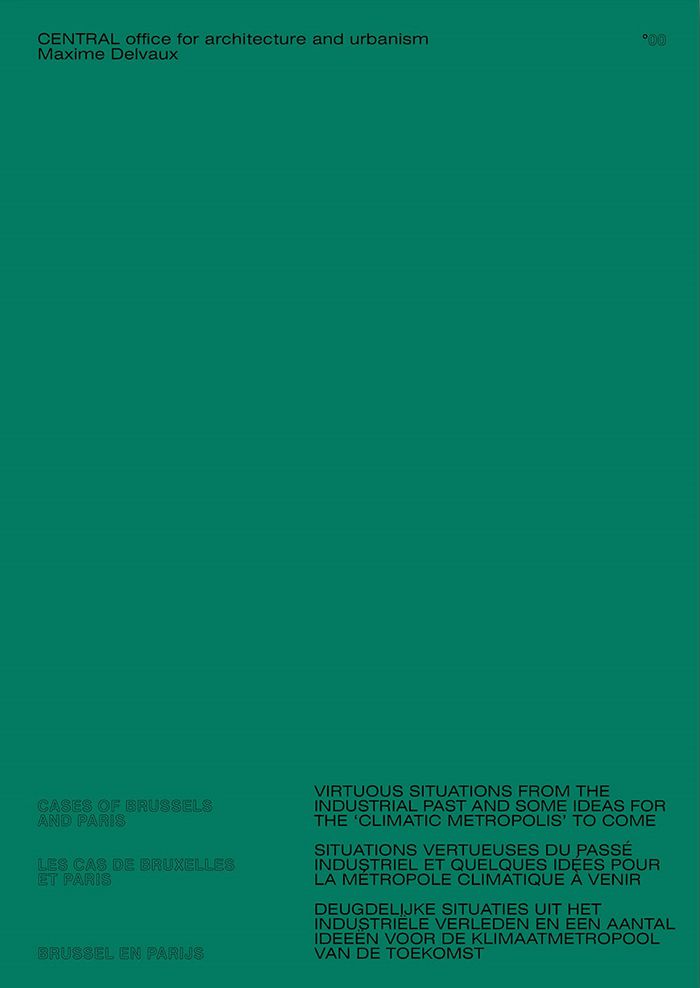
Virtuous situations from the industrial past and some ideas for the ‘climatic metropolis’ to come (cases of Brussels and Paris) compiles examples and projections that question the shape given to the city and territory at a moment of paradigm shift. The rapid evolution of climate change is leading to a clear state of emergency that is going to redefine the values and forms of our society and its territories. Several signs of a gradual paradigm shift have appeared and citizen voices are being raised against a social model that is at odds with the environment. Looking towards the past, a fascinated reading of a city’s ability to transform itself radically when necessary, is proposed. The change, generated by the race towards industrialization and social emancipation, forced metropolises such as Brussels and Paris to develop new urban functions and logics. This evolution took shape in territories that were not yet highly urbanized, but also within the city itself, in negotiation with the existing context. A series of 23 situations from the industrial age draws a panorama of virtuous examples, illustrating an assumed cohabitation between the urban fabric and the infrastructural, productive and energy needs at a precise moment of radical change in Paris and Brussels. The development of the ‘climatic metropolis’ must imperatively be based on design values and principles capable of generating a common vision. In this perspective, we propose some ideas for reflection formalized by projects tied to the built stories from the past, outlining potential situations of a new state to come for the European city.
CENTRAL office for architecture and urbanism & Maxime Delvaux
Actions:
Price:
$40.00
(available in store)
Summary:
Virtuous situations from the industrial past and some ideas for the ‘climatic metropolis’ to come (cases of Brussels and Paris) compiles examples and projections that question the shape given to the city and territory at a moment of paradigm shift. The rapid evolution of climate change is leading to a clear state of emergency that is going to redefine the values and forms of our society and its territories. Several signs of a gradual paradigm shift have appeared and citizen voices are being raised against a social model that is at odds with the environment. Looking towards the past, a fascinated reading of a city’s ability to transform itself radically when necessary, is proposed. The change, generated by the race towards industrialization and social emancipation, forced metropolises such as Brussels and Paris to develop new urban functions and logics. This evolution took shape in territories that were not yet highly urbanized, but also within the city itself, in negotiation with the existing context. A series of 23 situations from the industrial age draws a panorama of virtuous examples, illustrating an assumed cohabitation between the urban fabric and the infrastructural, productive and energy needs at a precise moment of radical change in Paris and Brussels. The development of the ‘climatic metropolis’ must imperatively be based on design values and principles capable of generating a common vision. In this perspective, we propose some ideas for reflection formalized by projects tied to the built stories from the past, outlining potential situations of a new state to come for the European city.
Form:
books
books
Publication:
July 2019
July 2019
Subject:
Architecture Monographs
Architecture Monographs


