


5346 Results
Form:
books
books
Title:
The gray cloth
The gray cloth
Actions:
Price:
$24.95
(available to order)
Summary:
The German expressionist, architectural visionary, author, inventor, and artist Paul Scheerbart (1863-1915) wrote several fictional utopian narratives related to glass architecture. In "The Gray Cloth", the first of his novels to be translated into English, Scheerbart uses subtle irony and the structural simplicity of a fairy tale to present the theories of coloured glass(...)
$24.95
(available to order)
Summary:
The German expressionist, architectural visionary, author, inventor, and artist Paul Scheerbart (1863-1915) wrote several fictional utopian narratives related to glass architecture. In "The Gray Cloth", the first of his novels to be translated into English, Scheerbart uses subtle irony and the structural simplicity of a fairy tale to present the theories of coloured glass(...)
Title:
The gray cloth
Actions:
Price:
$24.95
(available to order)
Summary:
The German expressionist, architectural visionary, author, inventor, and artist Paul Scheerbart (1863-1915) wrote several fictional utopian narratives related to glass architecture. In "The Gray Cloth", the first of his novels to be translated into English, Scheerbart uses subtle irony and the structural simplicity of a fairy tale to present the theories of coloured glass outlined in his well-known treatise "Glass Architecture". The novel is set forward in time to the mid-twentieth century. The protagonist, a Swiss architect named Edgar Krug, circumnavigates the globe by airship with his wife, constructing wildly varied, colored-glass buildings. His projects include a high-rise and exhibition/concert hall in Chicago, a retirement complex for air pilots on the Fiji Islands, the structure for an elevated train across a zoological park in northern India, and a suspended residential villa on the Kuria Muria Islands off the coast of Oman in the Arabian Sea. Fearing that his architecture is challenged by the colourfulness of women’s clothing, Krug insists that his wife wear all gray clothing with the addition of ten percent white. This odd demand brings him notoriety and sensationalizes his international building campaign. For the reader, it underlines the confluence of architecture with fashion, gender, and global media. In his introduction John Stuart surveys Scheerbart’s career and role in German avant-garde circles, as well as his architectural and social ideas. He shows how Scheerbart strove to integrate his spiritual and romantic leanings with the modern world, often relying on glass architecture to do so. In addition to discussing the novel’s reception and its rediscovery by contemporary architects and critics, Stuart shows fiction to be a resource for the study of architecture and places "The Gray Cloth" in the context of German Expressionism.
The gray cloth
Actions:
Price:
$24.95
(available to order)
Summary:
The German expressionist, architectural visionary, author, inventor, and artist Paul Scheerbart (1863-1915) wrote several fictional utopian narratives related to glass architecture. In "The Gray Cloth", the first of his novels to be translated into English, Scheerbart uses subtle irony and the structural simplicity of a fairy tale to present the theories of coloured glass outlined in his well-known treatise "Glass Architecture". The novel is set forward in time to the mid-twentieth century. The protagonist, a Swiss architect named Edgar Krug, circumnavigates the globe by airship with his wife, constructing wildly varied, colored-glass buildings. His projects include a high-rise and exhibition/concert hall in Chicago, a retirement complex for air pilots on the Fiji Islands, the structure for an elevated train across a zoological park in northern India, and a suspended residential villa on the Kuria Muria Islands off the coast of Oman in the Arabian Sea. Fearing that his architecture is challenged by the colourfulness of women’s clothing, Krug insists that his wife wear all gray clothing with the addition of ten percent white. This odd demand brings him notoriety and sensationalizes his international building campaign. For the reader, it underlines the confluence of architecture with fashion, gender, and global media. In his introduction John Stuart surveys Scheerbart’s career and role in German avant-garde circles, as well as his architectural and social ideas. He shows how Scheerbart strove to integrate his spiritual and romantic leanings with the modern world, often relying on glass architecture to do so. In addition to discussing the novel’s reception and its rediscovery by contemporary architects and critics, Stuart shows fiction to be a resource for the study of architecture and places "The Gray Cloth" in the context of German Expressionism.
Form:
books
books
Publication:
October 2003, Cambridge / London
October 2003, Cambridge / London
Subject:
Architectural Theory
Architectural Theory
Form:
books
books
Title:
The gray cloth
The gray cloth
Actions:
Price:
$44.95
(available to order)
Summary:
The German expressionist, architectural visionary, author, inventor, and artist Paul Scheerbart (1863-1915) wrote several fictional utopian narratives related to glass architecture. In "The Gray Cloth", the first of his novels to be translated into English, Scheerbart uses subtle irony and the structural simplicity of a fairy tale to present the theories of coloured glass(...)
$44.95
(available to order)
Summary:
The German expressionist, architectural visionary, author, inventor, and artist Paul Scheerbart (1863-1915) wrote several fictional utopian narratives related to glass architecture. In "The Gray Cloth", the first of his novels to be translated into English, Scheerbart uses subtle irony and the structural simplicity of a fairy tale to present the theories of coloured glass(...)
Title:
The gray cloth
Actions:
Price:
$44.95
(available to order)
Summary:
The German expressionist, architectural visionary, author, inventor, and artist Paul Scheerbart (1863-1915) wrote several fictional utopian narratives related to glass architecture. In "The Gray Cloth", the first of his novels to be translated into English, Scheerbart uses subtle irony and the structural simplicity of a fairy tale to present the theories of coloured glass outlined in his well-known treatise "Glass Architecture". The novel is set forward in time to the mid-twentieth century. The protagonist, a Swiss architect named Edgar Krug, circumnavigates the globe by airship with his wife, constructing wildly varied, colored-glass buildings. His projects include a high-rise and exhibition/concert hall in Chicago, a retirement complex for air pilots on the Fiji Islands, the structure for an elevated train across a zoological park in northern India, and a suspended residential villa on the Kuria Muria Islands off the coast of Oman in the Arabian Sea. Fearing that his architecture is challenged by the colourfulness of women’s clothing, Krug insists that his wife wear all gray clothing with the addition of ten percent white. This odd demand brings him notoriety and sensationalizes his international building campaign. For the reader, it underlines the confluence of architecture with fashion, gender, and global media. In his introduction John Stuart surveys Scheerbart’s career and role in German avant-garde circles, as well as his architectural and social ideas. He shows how Scheerbart strove to integrate his spiritual and romantic leanings with the modern world, often relying on glass architecture to do so. In addition to discussing the novel’s reception and its rediscovery by contemporary architects and critics, Stuart shows fiction to be a resource for the study of architecture and places "The Gray Cloth" in the context of German Expressionism.
The gray cloth
Actions:
Price:
$44.95
(available to order)
Summary:
The German expressionist, architectural visionary, author, inventor, and artist Paul Scheerbart (1863-1915) wrote several fictional utopian narratives related to glass architecture. In "The Gray Cloth", the first of his novels to be translated into English, Scheerbart uses subtle irony and the structural simplicity of a fairy tale to present the theories of coloured glass outlined in his well-known treatise "Glass Architecture". The novel is set forward in time to the mid-twentieth century. The protagonist, a Swiss architect named Edgar Krug, circumnavigates the globe by airship with his wife, constructing wildly varied, colored-glass buildings. His projects include a high-rise and exhibition/concert hall in Chicago, a retirement complex for air pilots on the Fiji Islands, the structure for an elevated train across a zoological park in northern India, and a suspended residential villa on the Kuria Muria Islands off the coast of Oman in the Arabian Sea. Fearing that his architecture is challenged by the colourfulness of women’s clothing, Krug insists that his wife wear all gray clothing with the addition of ten percent white. This odd demand brings him notoriety and sensationalizes his international building campaign. For the reader, it underlines the confluence of architecture with fashion, gender, and global media. In his introduction John Stuart surveys Scheerbart’s career and role in German avant-garde circles, as well as his architectural and social ideas. He shows how Scheerbart strove to integrate his spiritual and romantic leanings with the modern world, often relying on glass architecture to do so. In addition to discussing the novel’s reception and its rediscovery by contemporary architects and critics, Stuart shows fiction to be a resource for the study of architecture and places "The Gray Cloth" in the context of German Expressionism.
Form:
books
books
Publication:
October 2001, Cambridge, Mass.
October 2001, Cambridge, Mass.
Subject:
Architectural Theory
Architectural Theory
Form:
books
books
Actions:
Price:
$21.50
(available to order)
Summary:
Digital Ground is an architect's response to the design challenge posed by pervasive computing. One century into the electronic age, people have become accustomed to interacting indirectly, mediated through networks. But now as digital technology becomes invisibly embedded in everyday things, even more activities become mediated, and networks extend rather than replace(...)
$21.50
(available to order)
Summary:
Digital Ground is an architect's response to the design challenge posed by pervasive computing. One century into the electronic age, people have become accustomed to interacting indirectly, mediated through networks. But now as digital technology becomes invisibly embedded in everyday things, even more activities become mediated, and networks extend rather than replace(...)
Title:
Digital ground : architecture, pervasive computing, and environmental knowing
Actions:
Price:
$21.50
(available to order)
Summary:
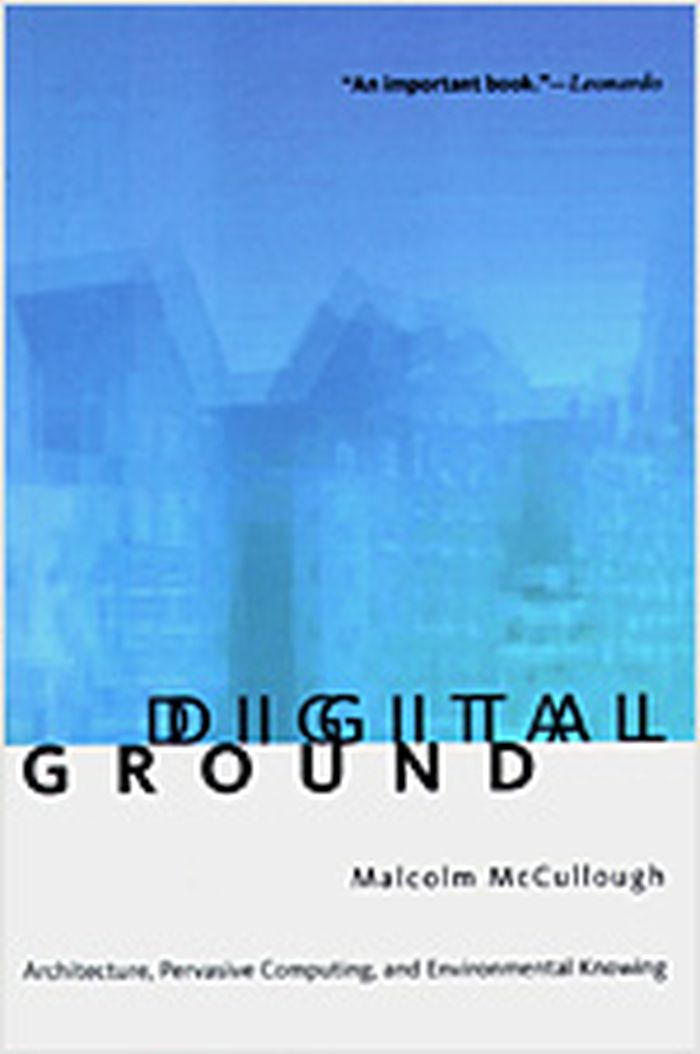
Digital Ground is an architect's response to the design challenge posed by pervasive computing. One century into the electronic age, people have become accustomed to interacting indirectly, mediated through networks. But now as digital technology becomes invisibly embedded in everyday things, even more activities become mediated, and networks extend rather than replace architecture. The young field of interaction design reflects not only how people deal with machine interfaces but also how people deal with each other in situations where interactivity has become ambient. It shifts previously utilitarian digital design concerns to a cultural level, adding notions of premise, appropriateness, and appreciation. Malcolm McCullough offers an account of the intersections of architecture and interaction design, arguing that the ubiquitous technology does not obviate the human need for place. His concept of "digital ground" expresses an alternative to anytime-anyplace sameness in computing; he shows that context not only shapes usability but ideally becomes the subject matter of interaction design and that "environmental knowing" is a process that technology may serve and not erode. Drawing on arguments from architecture, psychology, software engineering, and geography, writing for practicing interaction designers, pervasive computing researchers, architects, and the general reader on digital culture, McCullough gives us a theory of place for interaction design. Part I, "Expectations," explores our technological predispositions -- many of which ("situated interactions") arise from our embodiment in architectural settings. Part II, "Technologies," discusses hardware, software, and applications, including embedded technology ("bashing the desktop"), and building technology genres around life situations. Part III, "Practices," argues for design as a liberal art, seeing interactivity as a cultural -- not only technological -- challenge and a practical notion of place as essential. Part IV, "Epilogue," acknowledges the epochal changes occurring today, and argues for the role of "digital ground" in the necessary adaptation.
Digital ground : architecture, pervasive computing, and environmental knowing
Actions:
Price:
$21.50
(available to order)
Summary:
Digital Ground is an architect's response to the design challenge posed by pervasive computing. One century into the electronic age, people have become accustomed to interacting indirectly, mediated through networks. But now as digital technology becomes invisibly embedded in everyday things, even more activities become mediated, and networks extend rather than replace architecture. The young field of interaction design reflects not only how people deal with machine interfaces but also how people deal with each other in situations where interactivity has become ambient. It shifts previously utilitarian digital design concerns to a cultural level, adding notions of premise, appropriateness, and appreciation. Malcolm McCullough offers an account of the intersections of architecture and interaction design, arguing that the ubiquitous technology does not obviate the human need for place. His concept of "digital ground" expresses an alternative to anytime-anyplace sameness in computing; he shows that context not only shapes usability but ideally becomes the subject matter of interaction design and that "environmental knowing" is a process that technology may serve and not erode. Drawing on arguments from architecture, psychology, software engineering, and geography, writing for practicing interaction designers, pervasive computing researchers, architects, and the general reader on digital culture, McCullough gives us a theory of place for interaction design. Part I, "Expectations," explores our technological predispositions -- many of which ("situated interactions") arise from our embodiment in architectural settings. Part II, "Technologies," discusses hardware, software, and applications, including embedded technology ("bashing the desktop"), and building technology genres around life situations. Part III, "Practices," argues for design as a liberal art, seeing interactivity as a cultural -- not only technological -- challenge and a practical notion of place as essential. Part IV, "Epilogue," acknowledges the epochal changes occurring today, and argues for the role of "digital ground" in the necessary adaptation.
Form:
books
books
Publication:
October 2005, Cambridge
October 2005, Cambridge
Subject:
Architectural Theory
Architectural Theory
Form:
journals and magazines
journals and magazines
Actions:
Price:
$16.95
(available in store)
Summary:
With this issue, the funambulist offers a critique of their own framework of knowledge production. The concept of “Global South” has been turned into a handy word to lazily designate two-thirds of the world’s earthly area and 90% of its population, thus flattening the millions of specificities that characterize this grouping. It also often embodies an entity that only(...)
$16.95
(available in store)
Summary:
With this issue, the funambulist offers a critique of their own framework of knowledge production. The concept of “Global South” has been turned into a handy word to lazily designate two-thirds of the world’s earthly area and 90% of its population, thus flattening the millions of specificities that characterize this grouping. It also often embodies an entity that only(...)
Title:
The Funambulist 66: Beyond the global South
Actions:
Price:
$16.95
(available in store)
Summary:
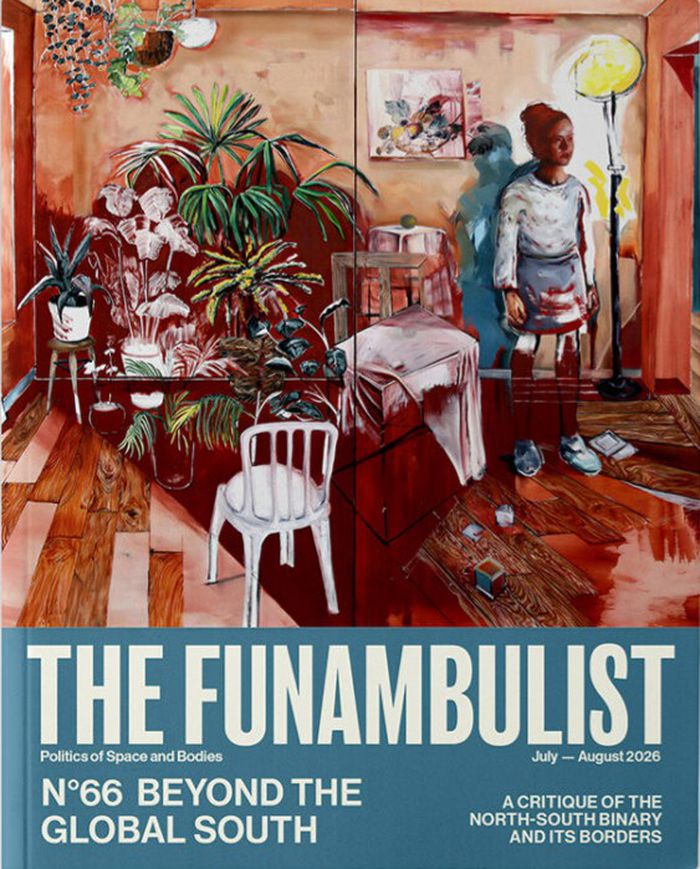
With this issue, the funambulist offers a critique of their own framework of knowledge production. The concept of “Global South” has been turned into a handy word to lazily designate two-thirds of the world’s earthly area and 90% of its population, thus flattening the millions of specificities that characterize this grouping. It also often embodies an entity that only exists dependent on its alter ego, the Global North. As such, it denies any form of agency to the peoples designated as “the South” independently from their relationship to the “North,” as we examine in the case of the war in the eastern Congo (Josaphat Musamba). The South/North binary also designates borders as lines (rather than as regimes operating on both sides of these lines) and essentializes the difference between sides. Can Blackness and Indigeneity in Abya Yala be read without a fundamental split at the settler colonial line that separates North and Central-South Americas (Ashley Ngozi Agbasoga)? Can 20th century Korea’s history show us that the line that currently separates the north (usually presented as part of the Global South) and the south (usually presented as part of the Global North) particularly illustrates the North/South framework’s lack of complexity (Lina Eunji Chang and Andrei-Sergei Kim)? What kind of colonial violence the Non-Aligned Movement invisibilizes in West Papua (Quito Swan), in Kashmir (Choakkeladd) or Western Sahara (Buhari Lehbib) and, in contrast, what kind of solidarities it allowed from Yugoslavia (Dubravka Sekulic and Sanja Horvatincic)? And, crucially, how can we honor the complexity of politics by being able to hold two contradictory truths together as Micol Meghnagi reminds us in the context of Gaddafi’s Libya and Pan-Arabism.
The Funambulist 66: Beyond the global South
Actions:
Price:
$16.95
(available in store)
Summary:
With this issue, the funambulist offers a critique of their own framework of knowledge production. The concept of “Global South” has been turned into a handy word to lazily designate two-thirds of the world’s earthly area and 90% of its population, thus flattening the millions of specificities that characterize this grouping. It also often embodies an entity that only exists dependent on its alter ego, the Global North. As such, it denies any form of agency to the peoples designated as “the South” independently from their relationship to the “North,” as we examine in the case of the war in the eastern Congo (Josaphat Musamba). The South/North binary also designates borders as lines (rather than as regimes operating on both sides of these lines) and essentializes the difference between sides. Can Blackness and Indigeneity in Abya Yala be read without a fundamental split at the settler colonial line that separates North and Central-South Americas (Ashley Ngozi Agbasoga)? Can 20th century Korea’s history show us that the line that currently separates the north (usually presented as part of the Global South) and the south (usually presented as part of the Global North) particularly illustrates the North/South framework’s lack of complexity (Lina Eunji Chang and Andrei-Sergei Kim)? What kind of colonial violence the Non-Aligned Movement invisibilizes in West Papua (Quito Swan), in Kashmir (Choakkeladd) or Western Sahara (Buhari Lehbib) and, in contrast, what kind of solidarities it allowed from Yugoslavia (Dubravka Sekulic and Sanja Horvatincic)? And, crucially, how can we honor the complexity of politics by being able to hold two contradictory truths together as Micol Meghnagi reminds us in the context of Gaddafi’s Libya and Pan-Arabism.
Form:
journals and magazines
journals and magazines
Publication:
July 2026
July 2026
Subject:
Magazines
Magazines
Form:
books
books
Price:
$67.95
(available to order)
Summary:
The dream of the twentieth century was the construction of mass utopia. As the century closes, this dream is being left behind; the belief that industrial modernization can bring about the good society by overcoming material scarcity for all has been challenged by the disintegration(...)
$67.95
(available to order)
Summary:
The dream of the twentieth century was the construction of mass utopia. As the century closes, this dream is being left behind; the belief that industrial modernization can bring about the good society by overcoming material scarcity for all has been challenged by the disintegration(...)
Title:
Dreamworld and catastrophe : the passing of mass utopia in East and West
Actions:
Price:
$67.95
(available to order)
Summary:
The dream of the twentieth century was the construction of mass utopia. As the century closes, this dream is being left behind; the belief that industrial modernization can bring about the good society by overcoming material scarcity for all has been challenged by the disintegration of European socialism, capitalist restructuring, and ecological constraints. The larger social vision has given way to private dreams of material happiness and to political cynicism. Developing the notion of dreamworld as both a poetic description of a collective mental state and an analytical concept, Susan Buck-Morss attempts to come to terms with mass dreamworlds at the moment of their passing. She shows how dreamworlds became dangerous when their energy was used by the structures of power as an instrument of force against the masses. Stressing the similarities between the East and West and using the end of the Cold War as her point of departure, she examines both extremes of mass utopia, dreamworld and catastrophe. The book is in four parts. "Dreamworlds of Democracy" asks whether collective sovereignty can ever be democratic. "Dreamworlds of History" calls for a rethinking of revolution by political and artistic avant-gardes. "Dreamworlds of Mass Culture" explores the affinities between mass culture's socialist and capitalist forms. An "Afterward" places the book in the historical context of the author's collaboration with a group of Moscow philosophers and artists over the past two tumultuous decades. The book is an experiment in visual culture, using images as philosophy, presenting, literally, a way of seeing the past. Its pictorial narratives rescue historical data that with the end of the Cold War are threatened with oblivion and challenge common conceptions of what this century was all about.
Dreamworld and catastrophe : the passing of mass utopia in East and West
Actions:
Price:
$67.95
(available to order)
Summary:
The dream of the twentieth century was the construction of mass utopia. As the century closes, this dream is being left behind; the belief that industrial modernization can bring about the good society by overcoming material scarcity for all has been challenged by the disintegration of European socialism, capitalist restructuring, and ecological constraints. The larger social vision has given way to private dreams of material happiness and to political cynicism. Developing the notion of dreamworld as both a poetic description of a collective mental state and an analytical concept, Susan Buck-Morss attempts to come to terms with mass dreamworlds at the moment of their passing. She shows how dreamworlds became dangerous when their energy was used by the structures of power as an instrument of force against the masses. Stressing the similarities between the East and West and using the end of the Cold War as her point of departure, she examines both extremes of mass utopia, dreamworld and catastrophe. The book is in four parts. "Dreamworlds of Democracy" asks whether collective sovereignty can ever be democratic. "Dreamworlds of History" calls for a rethinking of revolution by political and artistic avant-gardes. "Dreamworlds of Mass Culture" explores the affinities between mass culture's socialist and capitalist forms. An "Afterward" places the book in the historical context of the author's collaboration with a group of Moscow philosophers and artists over the past two tumultuous decades. The book is an experiment in visual culture, using images as philosophy, presenting, literally, a way of seeing the past. Its pictorial narratives rescue historical data that with the end of the Cold War are threatened with oblivion and challenge common conceptions of what this century was all about.
Form:
books
books
Publication:
January 1900, Cambridge
January 1900, Cambridge
Subject:
Architectural Theory
Architectural Theory
Form:
books
books
Actions:
Price:
$26.00
(available to order)
Summary:
Throughout his tenure as a registry clerk with the Immigration Division of Ellis Island, Augustus F. Sherman systematically photographed more than 200 families, groups, and individuals while they were being held by customs for special investigations. This volume collects and provides an essential revaluation of Sherman’s striking portraits, which predate August Sander’s(...)
$26.00
(available to order)
Summary:
Throughout his tenure as a registry clerk with the Immigration Division of Ellis Island, Augustus F. Sherman systematically photographed more than 200 families, groups, and individuals while they were being held by customs for special investigations. This volume collects and provides an essential revaluation of Sherman’s striking portraits, which predate August Sander’s(...)
Title:
Augustus F. Sherman: Ellis Island portraits 1905-1920
Actions:
Price:
$26.00
(available to order)
Summary:
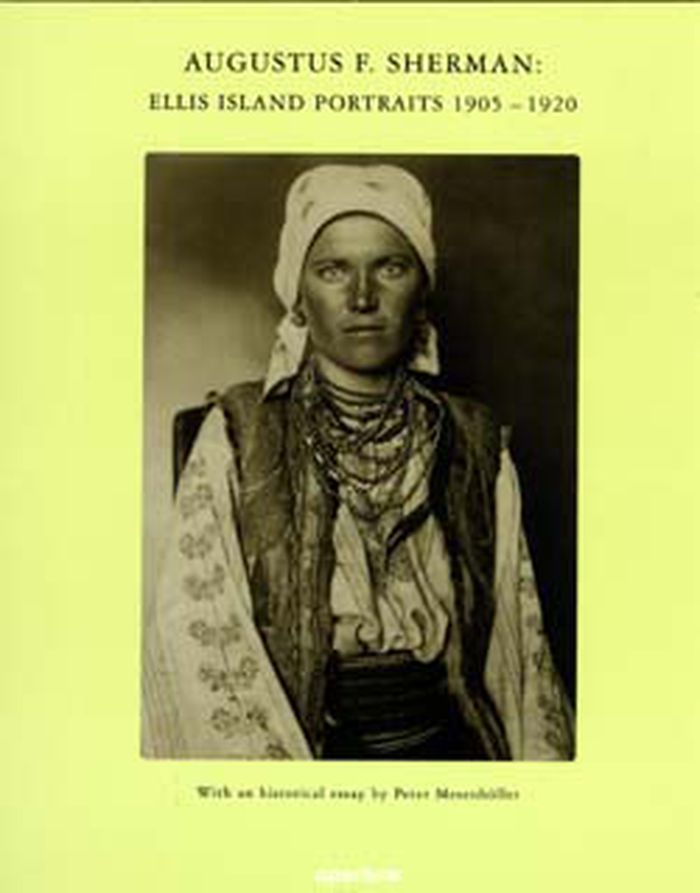
Throughout his tenure as a registry clerk with the Immigration Division of Ellis Island, Augustus F. Sherman systematically photographed more than 200 families, groups, and individuals while they were being held by customs for special investigations. This volume collects and provides an essential revaluation of Sherman’s striking portraits, which predate August Sander’s cataloging efforts by several years. A historical document of unprecedented worth, Augustus F. Sherman: Ellis Island Portraits includes almost one-hundred portraits taken from 1904 through 1920. The subjects are frequently dressed in elaborate national costumes or folk dress, emphasizing the variety and richness of the cultural heritage that came together to form the United States. Romanian shepherds, German stowaways, Russian vegetarians, Greek priests, and Ghanaian women in elaborately patterned dresses, are treated with equal gravitas. The resulting body of work presents a unique and powerful picture of the stream of immigrants who came through Ellis Island. In its time, the material contributed to the larger project of ethnographic categorization and typology typical of the early twentieth century, much as Edward S. Curtis’s portraits romanticized the “last Indians” or John Thomson’s “Street Life in London” identified and codified social class in the late 1800s. Though originally taken for his own personal study, Sherman’s work appeared in the public eye as illustrations for publications with titles such as “Alien or American,” and hung on the walls of the custom offices as cautionary or exemplary models of the new American species. In this book, Peter Mesenhöller, Research Associate with the Rautenstrauch-Joest-Museum of Anthropology in Cologne, Germany provides new critical context and analysis of this rich collection, but also addresses the individual images as powerful, engaging photographs created by a master portraitist.
Augustus F. Sherman: Ellis Island portraits 1905-1920
Actions:
Price:
$26.00
(available to order)
Summary:
Throughout his tenure as a registry clerk with the Immigration Division of Ellis Island, Augustus F. Sherman systematically photographed more than 200 families, groups, and individuals while they were being held by customs for special investigations. This volume collects and provides an essential revaluation of Sherman’s striking portraits, which predate August Sander’s cataloging efforts by several years. A historical document of unprecedented worth, Augustus F. Sherman: Ellis Island Portraits includes almost one-hundred portraits taken from 1904 through 1920. The subjects are frequently dressed in elaborate national costumes or folk dress, emphasizing the variety and richness of the cultural heritage that came together to form the United States. Romanian shepherds, German stowaways, Russian vegetarians, Greek priests, and Ghanaian women in elaborately patterned dresses, are treated with equal gravitas. The resulting body of work presents a unique and powerful picture of the stream of immigrants who came through Ellis Island. In its time, the material contributed to the larger project of ethnographic categorization and typology typical of the early twentieth century, much as Edward S. Curtis’s portraits romanticized the “last Indians” or John Thomson’s “Street Life in London” identified and codified social class in the late 1800s. Though originally taken for his own personal study, Sherman’s work appeared in the public eye as illustrations for publications with titles such as “Alien or American,” and hung on the walls of the custom offices as cautionary or exemplary models of the new American species. In this book, Peter Mesenhöller, Research Associate with the Rautenstrauch-Joest-Museum of Anthropology in Cologne, Germany provides new critical context and analysis of this rich collection, but also addresses the individual images as powerful, engaging photographs created by a master portraitist.
Form:
books
books
Publication:
June 2008, New York
June 2008, New York
Subject:
Photography monographs
Photography monographs
Form:
books
books
Title:
The education of the architect : historiography, urbanism, and the growth of architectural knowledge
The education of the architect : historiography, urbanism, and the growth of architectural knowledge
Actions:
Price:
$61.95
(available to order)
Summary:
The authors of these eighteen essays have all been deeply influenced by the philosophy of architecture developed by Stanford Anderson, through his writings and through the teaching programme of the Department of History, Theory, and Criticism of (...)
$61.95
(available to order)
Summary:
The authors of these eighteen essays have all been deeply influenced by the philosophy of architecture developed by Stanford Anderson, through his writings and through the teaching programme of the Department of History, Theory, and Criticism of (...)
Title:
The education of the architect : historiography, urbanism, and the growth of architectural knowledge
Actions:
Price:
$61.95
(available to order)
Summary:
The authors of these eighteen essays have all been deeply influenced by the philosophy of architecture developed by Stanford Anderson, through his writings and through the teaching programme of the Department of History, Theory, and Criticism of Architecture, which he and Henry Millon founded at MIT over twenty years ago. This "school" of architectural thought views architecture as a world of inquiry and as a discipline anchored in the epistemological bases of contemporary philosophy, especially the philosophy of science. Clear thematic concerns bind the essays together. The essays of the first section, "American Debates," share a deep preoccupation with modernism, its national ideologies, and regional responses in the American context. The contributors to the second section, "European Responses," examine European responses to these American debates. In the third section, "Historiographic Constructs," contributors comment on the writing, interpretation, and uses of architectural history. Contributors to the fourth section, "Urbanisms," grapple with the knotty interdependence of politics and the built environment. In the last section, "Teaching Architecture," four distinguished educators consider the most difficult aspect of the discipline, its pedagogical mandate. Whether historians or architects (and several have trained in both areas), the essayists all share the belief that contemporary concerns about architecture affect the way history is constructed. Because they view architecture as a body of knowledge evolving over time, they have resisted the wholesale espousal or rejection of modernism that has often polarized the examination and practice of architecture in the second half of this century. Contributors: Lawrence Anderson, Hilary Ballon, Micha Bandini, Sibel Bozdogan, Maristella Casciato, Charles Correa, Gail Fenske, Diane Ghirardo, John Habraken, Mark Jarzombek, Royston Landau, Ákos Moravánszky, Carlo Olmo, Nasser Rabbat, Mitchell Schwarzer, Joseph Siry, Nancy Stieber, Danilo Udovicki-Selb.
The education of the architect : historiography, urbanism, and the growth of architectural knowledge
Actions:
Price:
$61.95
(available to order)
Summary:
The authors of these eighteen essays have all been deeply influenced by the philosophy of architecture developed by Stanford Anderson, through his writings and through the teaching programme of the Department of History, Theory, and Criticism of Architecture, which he and Henry Millon founded at MIT over twenty years ago. This "school" of architectural thought views architecture as a world of inquiry and as a discipline anchored in the epistemological bases of contemporary philosophy, especially the philosophy of science. Clear thematic concerns bind the essays together. The essays of the first section, "American Debates," share a deep preoccupation with modernism, its national ideologies, and regional responses in the American context. The contributors to the second section, "European Responses," examine European responses to these American debates. In the third section, "Historiographic Constructs," contributors comment on the writing, interpretation, and uses of architectural history. Contributors to the fourth section, "Urbanisms," grapple with the knotty interdependence of politics and the built environment. In the last section, "Teaching Architecture," four distinguished educators consider the most difficult aspect of the discipline, its pedagogical mandate. Whether historians or architects (and several have trained in both areas), the essayists all share the belief that contemporary concerns about architecture affect the way history is constructed. Because they view architecture as a body of knowledge evolving over time, they have resisted the wholesale espousal or rejection of modernism that has often polarized the examination and practice of architecture in the second half of this century. Contributors: Lawrence Anderson, Hilary Ballon, Micha Bandini, Sibel Bozdogan, Maristella Casciato, Charles Correa, Gail Fenske, Diane Ghirardo, John Habraken, Mark Jarzombek, Royston Landau, Ákos Moravánszky, Carlo Olmo, Nasser Rabbat, Mitchell Schwarzer, Joseph Siry, Nancy Stieber, Danilo Udovicki-Selb.
Form:
books
books
Publication:
June 1997, Cambridge, Mass.
June 1997, Cambridge, Mass.
Subject:
Architectural Theory
Architectural Theory
Form:
books
books
Actions:
Price:
$39.00
(available to order)
Summary:
The present volume offers eloquent testimony that many of the master builders of this century have held passionate convictions regarding the philosophic and social basis of their art. Nearly every important development in the modern architectural movement began with the proclamation of these convictions in the form of a program or manifesto. The most influential of these(...)
$39.00
(available to order)
Summary:
The present volume offers eloquent testimony that many of the master builders of this century have held passionate convictions regarding the philosophic and social basis of their art. Nearly every important development in the modern architectural movement began with the proclamation of these convictions in the form of a program or manifesto. The most influential of these(...)
Subject:
Architectural Theory
Architectural Theory
Publication:
January 1975, Cambridge, Massachusetts
January 1975, Cambridge, Massachusetts
Title:
Programs and manifestos of 20th-century architecture
Actions:
Price:
$39.00
(available to order)
Summary:
The present volume offers eloquent testimony that many of the master builders of this century have held passionate convictions regarding the philosophic and social basis of their art. Nearly every important development in the modern architectural movement began with the proclamation of these convictions in the form of a program or manifesto. The most influential of these are collected here in chronological order from 1903 to 1963. Taken together, they constitute a subjective history of modern architecture; compared with one another, their great diversity of style reveals in many cases the basic differences of attitude and temperament that produced a corresponding divergence in architectural style. The documents, placed in context by the editor, are also international in their range: among them are the seminal and prophetic statements of Henry van de Velde, Adolf Loos, and Bruno Taut from the early years of the century; Frank Lloyd Wright's 1910 annunciation of Organic Architecture; Gropius's original program for the Bauhaus, founded in Weimar in 1919; "Towards a New Architecture, Guiding Principles" by Le Corbusier; the formulation by Naum Gabo and Antoine Pevsner of the basic principles of Constructivism; and articles by R. Buckminster Fuller on universal architecture and the architect as world planner. Other pronouncements, some in flamboyant style, including those of Erich Mendelsohn, Hannes Meyer, Theo van Doesburg, Oskar Schlemmer, Ludwig Mies van der Rohe, El Lissitzky, and Louis I. Kahn. There are also a number of collective or group statements, issued in the name of movements such as CIAM, De Stijl, ABC, the Situationists, and GEAM.Since the dramatic effectiveness of the manifesto form is usually heightened by brevity and conciseness, it has been possible to reproduce most of the documents in their entirety; only a few have been excerpted.
Programs and manifestos of 20th-century architecture
Actions:
Price:
$39.00
(available to order)
Summary:
The present volume offers eloquent testimony that many of the master builders of this century have held passionate convictions regarding the philosophic and social basis of their art. Nearly every important development in the modern architectural movement began with the proclamation of these convictions in the form of a program or manifesto. The most influential of these are collected here in chronological order from 1903 to 1963. Taken together, they constitute a subjective history of modern architecture; compared with one another, their great diversity of style reveals in many cases the basic differences of attitude and temperament that produced a corresponding divergence in architectural style. The documents, placed in context by the editor, are also international in their range: among them are the seminal and prophetic statements of Henry van de Velde, Adolf Loos, and Bruno Taut from the early years of the century; Frank Lloyd Wright's 1910 annunciation of Organic Architecture; Gropius's original program for the Bauhaus, founded in Weimar in 1919; "Towards a New Architecture, Guiding Principles" by Le Corbusier; the formulation by Naum Gabo and Antoine Pevsner of the basic principles of Constructivism; and articles by R. Buckminster Fuller on universal architecture and the architect as world planner. Other pronouncements, some in flamboyant style, including those of Erich Mendelsohn, Hannes Meyer, Theo van Doesburg, Oskar Schlemmer, Ludwig Mies van der Rohe, El Lissitzky, and Louis I. Kahn. There are also a number of collective or group statements, issued in the name of movements such as CIAM, De Stijl, ABC, the Situationists, and GEAM.Since the dramatic effectiveness of the manifesto form is usually heightened by brevity and conciseness, it has been possible to reproduce most of the documents in their entirety; only a few have been excerpted.
Form:
books
books
Publication:
January 1975, Cambridge, Massachusetts
January 1975, Cambridge, Massachusetts
Subject:
Architectural Theory
Architectural Theory
Form:
books
books
Price:
$46.95
(available to order)
Summary:
Working in rural China is unlike other countryside: it is full of contradiction, neither rural nor urban, both traditional and modern, abandoned in some areas and yet others are becoming cities overnight. It is in fact a laboratory for new ways of living. And it has become our laboratory for new ways of making architecture. Whereas contemporary architecture since the(...)
$46.95
(available to order)
Summary:
Working in rural China is unlike other countryside: it is full of contradiction, neither rural nor urban, both traditional and modern, abandoned in some areas and yet others are becoming cities overnight. It is in fact a laboratory for new ways of living. And it has become our laboratory for new ways of making architecture. Whereas contemporary architecture since the(...)
Title:
Uncertainty : Experiments in making from the Chinese countryside
Actions:
Price:
$46.95
(available to order)
Summary:
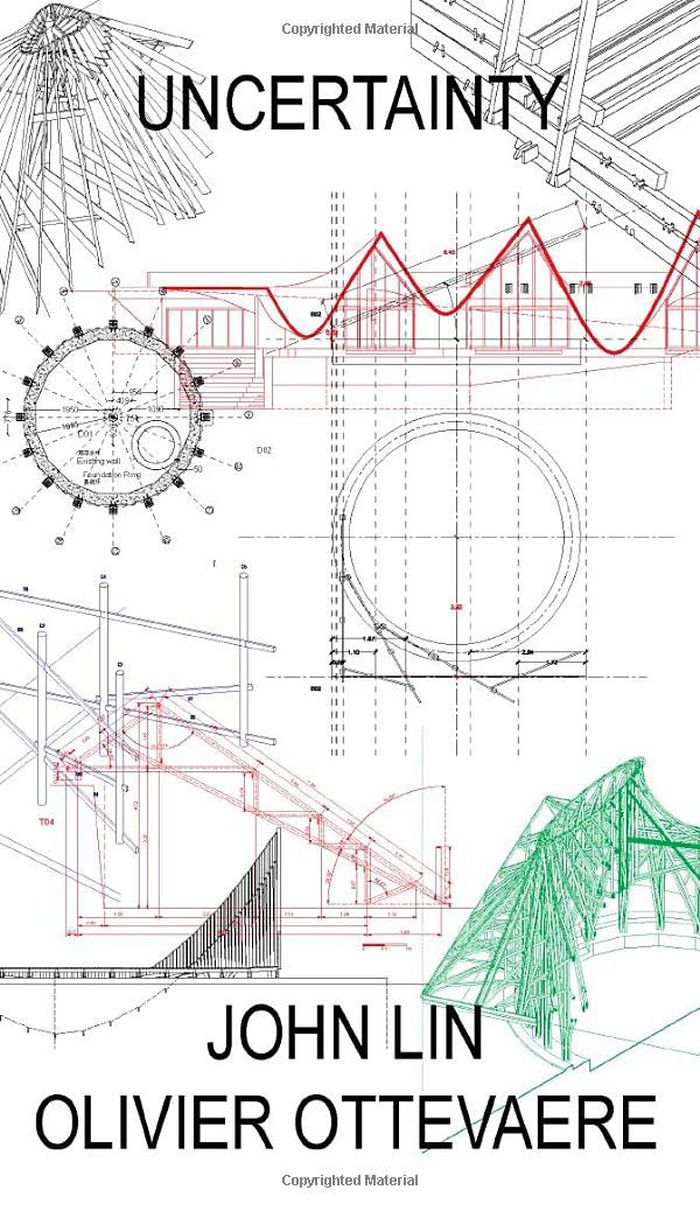
Working in rural China is unlike other countryside: it is full of contradiction, neither rural nor urban, both traditional and modern, abandoned in some areas and yet others are becoming cities overnight. It is in fact a laboratory for new ways of living. And it has become our laboratory for new ways of making architecture. Whereas contemporary architecture since the advent of modernism has developed increasingly controlled, prototypical, and standardized mechanisms for building, our experiments embrace the opposite: a lack of control, taking place within the flux of political, social and economic uncertainties. The experiments presented here are examples taken from a series of design and build projects conducted from the Department of Architecture at the University of Hong Kong over the past 10 years. They are remarkable in their diffuse explorations and situations. Some were urgent post-earthquake reconstructions, often adapting to extreme topographies or taking place in the midst of major urbanizing transformations, whereas other experiments occurred in forgotten villages with left-behind craftspeople and their disappearing building cultures. These forays and what can be best described as adventures in building, left us with varied and novel (sometimes failed) experiments with structure and program. But they are presented here for the trait they have in common: an exploration of the limits of material, geometry, construction methods, and even historical context. As often occurs for architects working in a foreign landscape, the differences in language and culture have proven to be a source of constant miscommunication and surprising discovery. The lack of a common spoken language- these remote areas speak their own dialects- has placed an emphasis on drawing as another means of communication. Through drawing we have explored a means of design and a means of building. Therefore, this is also a book about ways of drawing that represent ways of control and, inversely perhaps, what not to control.
Uncertainty : Experiments in making from the Chinese countryside
Actions:
Price:
$46.95
(available to order)
Summary:
Working in rural China is unlike other countryside: it is full of contradiction, neither rural nor urban, both traditional and modern, abandoned in some areas and yet others are becoming cities overnight. It is in fact a laboratory for new ways of living. And it has become our laboratory for new ways of making architecture. Whereas contemporary architecture since the advent of modernism has developed increasingly controlled, prototypical, and standardized mechanisms for building, our experiments embrace the opposite: a lack of control, taking place within the flux of political, social and economic uncertainties. The experiments presented here are examples taken from a series of design and build projects conducted from the Department of Architecture at the University of Hong Kong over the past 10 years. They are remarkable in their diffuse explorations and situations. Some were urgent post-earthquake reconstructions, often adapting to extreme topographies or taking place in the midst of major urbanizing transformations, whereas other experiments occurred in forgotten villages with left-behind craftspeople and their disappearing building cultures. These forays and what can be best described as adventures in building, left us with varied and novel (sometimes failed) experiments with structure and program. But they are presented here for the trait they have in common: an exploration of the limits of material, geometry, construction methods, and even historical context. As often occurs for architects working in a foreign landscape, the differences in language and culture have proven to be a source of constant miscommunication and surprising discovery. The lack of a common spoken language- these remote areas speak their own dialects- has placed an emphasis on drawing as another means of communication. Through drawing we have explored a means of design and a means of building. Therefore, this is also a book about ways of drawing that represent ways of control and, inversely perhaps, what not to control.
Form:
books
books
Publication:
June 2022
June 2022
Subject:
Contemporary Architecture
Contemporary Architecture
Form:
books
books
Actions:
Holdings:
Description:
xi, 259 pages : color illustrations ; 21 x 26 cm
Description:
xi, 259 pages : color illustrations ; 21 x 26 cm
Author:
Subject:
Publication:
Minneapolis : University of Minnesota Press, [2013], ©2013
Minneapolis : University of Minnesota Press, [2013], ©2013
Title:
New architecture on Indigenous lands / Joy Monice Malnar and Frank Vodvarka.
Actions:
Holdings:
Description:
xi, 259 pages : color illustrations ; 21 x 26 cm
New architecture on Indigenous lands / Joy Monice Malnar and Frank Vodvarka.
Actions:
Holdings:
Description:
xi, 259 pages : color illustrations ; 21 x 26 cm
Form:
books
books
Publication:
Minneapolis : University of Minnesota Press, [2013], ©2013
Minneapolis : University of Minnesota Press, [2013], ©2013
Author:
Subject:


