


6619 Results
Form:
books
books
Title:
Tom Dixon : interior worlds
Tom Dixon : interior worlds
Actions:
Price:
$98.00
(available to order)
Summary:
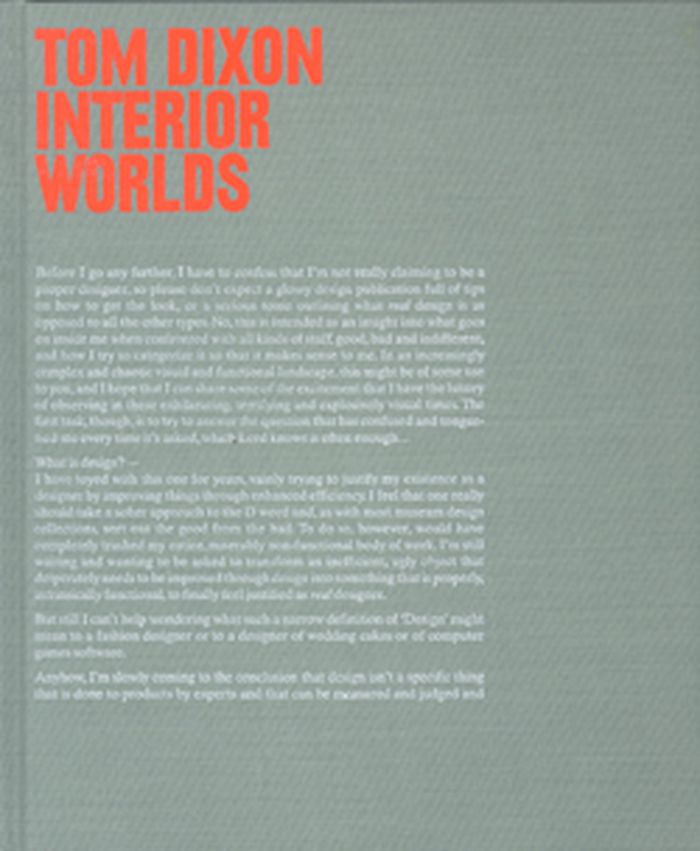
This book collects images of objects and other sources that have inspired Tom Dixon's work, juxtaposed with his designs, offering a window into his interior world. The book also delves into such currently design topics as materials and processes, and it surveys design history as well as looking into the future of product design.
$98.00
(available to order)
Summary:
This book collects images of objects and other sources that have inspired Tom Dixon's work, juxtaposed with his designs, offering a window into his interior world. The book also delves into such currently design topics as materials and processes, and it surveys design history as well as looking into the future of product design.
Title:
Tom Dixon : interior worlds
Actions:
Price:
$98.00
(available to order)
Summary:
This book collects images of objects and other sources that have inspired Tom Dixon's work, juxtaposed with his designs, offering a window into his interior world. The book also delves into such currently design topics as materials and processes, and it surveys design history as well as looking into the future of product design.
Tom Dixon : interior worlds
Actions:
Price:
$98.00
(available to order)
Summary:
This book collects images of objects and other sources that have inspired Tom Dixon's work, juxtaposed with his designs, offering a window into his interior world. The book also delves into such currently design topics as materials and processes, and it surveys design history as well as looking into the future of product design.
Form:
books
books
Publication:
April 2009, New York
April 2009, New York
Subject:
Design Monographs
Design Monographs
Form:
books
books
Price:
$77.95
(available to order)
Summary:
This text brings together newly commissioned articles in order to provide a detailed overview of recent trends affecting Canadian cities, and future policy implications these trends will have on Canadian cities. The second edition is a significant revision from the first, with numerous new articles, new contributors, and a much more closely linked editorial structure.
$77.95
(available to order)
Summary:
This text brings together newly commissioned articles in order to provide a detailed overview of recent trends affecting Canadian cities, and future policy implications these trends will have on Canadian cities. The second edition is a significant revision from the first, with numerous new articles, new contributors, and a much more closely linked editorial structure.
Title:
Canadian cities in transition: New directions in the twenty-first century
Actions:
Price:
$77.95
(available to order)
Summary:
This text brings together newly commissioned articles in order to provide a detailed overview of recent trends affecting Canadian cities, and future policy implications these trends will have on Canadian cities. The second edition is a significant revision from the first, with numerous new articles, new contributors, and a much more closely linked editorial structure.
Canadian cities in transition: New directions in the twenty-first century
Actions:
Price:
$77.95
(available to order)
Summary:
This text brings together newly commissioned articles in order to provide a detailed overview of recent trends affecting Canadian cities, and future policy implications these trends will have on Canadian cities. The second edition is a significant revision from the first, with numerous new articles, new contributors, and a much more closely linked editorial structure.
Form:
books
books
Publication:
May 2000
May 2000
Subject:
Architecture in Canada
Architecture in Canada
Form:
books
books
Actions:
Price:
$39.50
(available to order)
Summary:
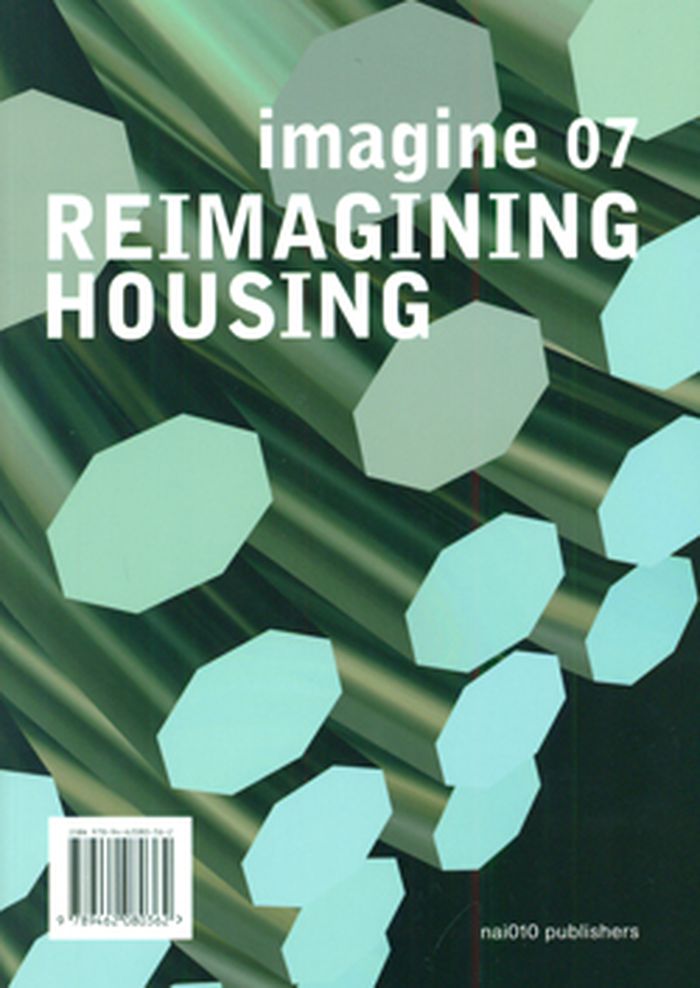
Architects generally prefer to design new buildings. But today's reality is that most buildings we will use in the future have already been built. We will be required to reimagine them, whether refurbishing them or giving them an entirely new purpose. This is the theme explored in Reimagining Housing: the potentials of refurbishing existing buildings.
$39.50
(available to order)
Summary:
Architects generally prefer to design new buildings. But today's reality is that most buildings we will use in the future have already been built. We will be required to reimagine them, whether refurbishing them or giving them an entirely new purpose. This is the theme explored in Reimagining Housing: the potentials of refurbishing existing buildings.
Title:
Imagine 07: reimagining housing
Actions:
Price:
$39.50
(available to order)
Summary:
Architects generally prefer to design new buildings. But today's reality is that most buildings we will use in the future have already been built. We will be required to reimagine them, whether refurbishing them or giving them an entirely new purpose. This is the theme explored in Reimagining Housing: the potentials of refurbishing existing buildings.
Imagine 07: reimagining housing
Actions:
Price:
$39.50
(available to order)
Summary:
Architects generally prefer to design new buildings. But today's reality is that most buildings we will use in the future have already been built. We will be required to reimagine them, whether refurbishing them or giving them an entirely new purpose. This is the theme explored in Reimagining Housing: the potentials of refurbishing existing buildings.
Form:
books
books
Publication:
March 2013
March 2013
Subject:
Collective Housing
Collective Housing
Form:
journals and magazines
journals and magazines
Actions:
Price:
$29.95
(available to order)
Summary:
Asking what specific methods, materials, or understandings—tools, ratios, formulas, properties, principles, guidelines, definitions, rules, practices, techniques, reference points, histories, and more—not presently considered essential to architecture could, or should, define its future, this new volume of 306090 serves as both a gauge of contemporary concerns and a(...)
$29.95
(available to order)
Summary:
Asking what specific methods, materials, or understandings—tools, ratios, formulas, properties, principles, guidelines, definitions, rules, practices, techniques, reference points, histories, and more—not presently considered essential to architecture could, or should, define its future, this new volume of 306090 serves as both a gauge of contemporary concerns and a(...)
Title:
(Non-) essential knowledge for (new) architecture
Actions:
Price:
$29.95
(available to order)
Summary:
Asking what specific methods, materials, or understandings—tools, ratios, formulas, properties, principles, guidelines, definitions, rules, practices, techniques, reference points, histories, and more—not presently considered essential to architecture could, or should, define its future, this new volume of 306090 serves as both a gauge of contemporary concerns and a manual for emergent theory and practice.
(Non-) essential knowledge for (new) architecture
Actions:
Price:
$29.95
(available to order)
Summary:
Asking what specific methods, materials, or understandings—tools, ratios, formulas, properties, principles, guidelines, definitions, rules, practices, techniques, reference points, histories, and more—not presently considered essential to architecture could, or should, define its future, this new volume of 306090 serves as both a gauge of contemporary concerns and a manual for emergent theory and practice.
Form:
journals and magazines
journals and magazines
Publication:
September 2013
September 2013
Subject:
Magazines
Magazines
Form:
books
books
Title:
Shaping things
Shaping things
Actions:
Price:
$27.50
(available to order)
Summary:
Sterling offers a brilliant, often hilarious history of shaped things. We have moved from an age of artefacts, made by hand, through complex machines, to the current era of "gizmos." New forms of design and manufacture are appearing that lack historical precedent, he writes; but the production methods, using archaic forms of energy and materials that are finite and toxic,(...)
$27.50
(available to order)
Summary:
Sterling offers a brilliant, often hilarious history of shaped things. We have moved from an age of artefacts, made by hand, through complex machines, to the current era of "gizmos." New forms of design and manufacture are appearing that lack historical precedent, he writes; but the production methods, using archaic forms of energy and materials that are finite and toxic,(...)
Title:
Shaping things
Actions:
Price:
$27.50
(available to order)
Summary:
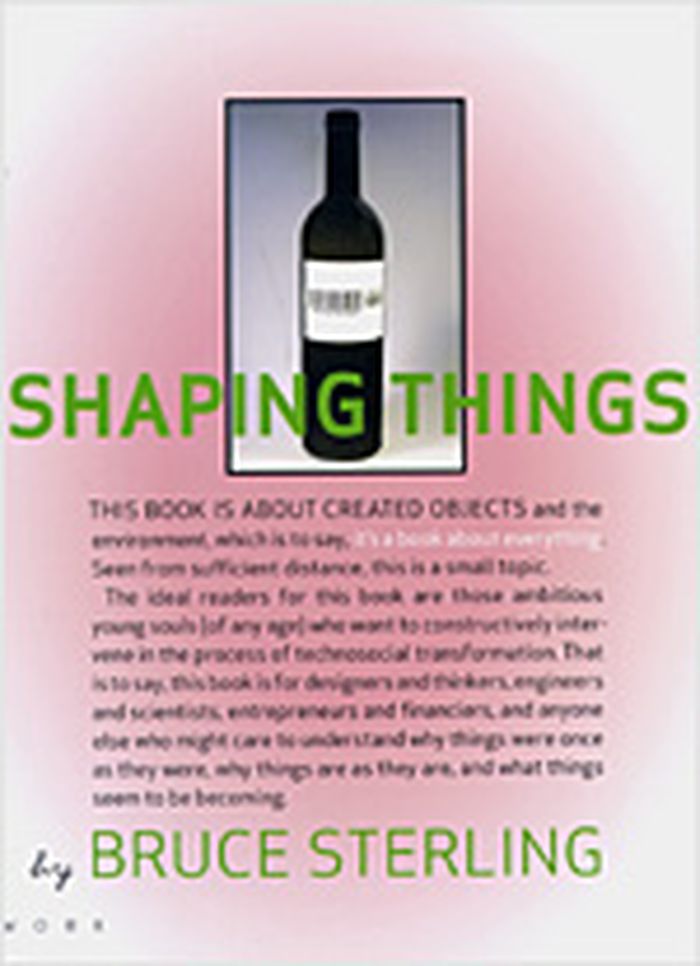
Sterling offers a brilliant, often hilarious history of shaped things. We have moved from an age of artefacts, made by hand, through complex machines, to the current era of "gizmos." New forms of design and manufacture are appearing that lack historical precedent, he writes; but the production methods, using archaic forms of energy and materials that are finite and toxic, are not sustainable. The future will see a new kind of object - we have the primitive forms of them now in our pockets and briefcases: user-alterable, baroquely multi-featured, and programmable - that will be sustainable, enhanceable, and uniquely identifiable. Sterling coins the term "spime" for them, these future manufactured objects with informational support so extensive and rich that they are regarded as material instantiations of an immaterial system. Spimes are designed on screens, fabricated by digital means, and precisely tracked through space and time. They are made of substances that can be folded back into the production stream of future spimes, challenging all of us to become involved in their production. Spimes are coming, says Sterling. We will need these objects in order to live; we won't be able to surrender their advantages without awful consequences. The vision of ‘Shaping Things’ is given material form by the intricate design of Lorraine Wild. ‘Shaping Things’ is for designers and thinkers, engineers and scientists, entrepreneurs and financiers - and anyone who wants to understand and be part of the process of techno-social transformation.
Shaping things
Actions:
Price:
$27.50
(available to order)
Summary:
Sterling offers a brilliant, often hilarious history of shaped things. We have moved from an age of artefacts, made by hand, through complex machines, to the current era of "gizmos." New forms of design and manufacture are appearing that lack historical precedent, he writes; but the production methods, using archaic forms of energy and materials that are finite and toxic, are not sustainable. The future will see a new kind of object - we have the primitive forms of them now in our pockets and briefcases: user-alterable, baroquely multi-featured, and programmable - that will be sustainable, enhanceable, and uniquely identifiable. Sterling coins the term "spime" for them, these future manufactured objects with informational support so extensive and rich that they are regarded as material instantiations of an immaterial system. Spimes are designed on screens, fabricated by digital means, and precisely tracked through space and time. They are made of substances that can be folded back into the production stream of future spimes, challenging all of us to become involved in their production. Spimes are coming, says Sterling. We will need these objects in order to live; we won't be able to surrender their advantages without awful consequences. The vision of ‘Shaping Things’ is given material form by the intricate design of Lorraine Wild. ‘Shaping Things’ is for designers and thinkers, engineers and scientists, entrepreneurs and financiers - and anyone who wants to understand and be part of the process of techno-social transformation.
Form:
books
books
Publication:
September 2005, Cambridge, Massachusetts
September 2005, Cambridge, Massachusetts
Subject:
Design Theory
Design Theory
Form:
books
books
Actions:
Price:
$45.00
(available to order)
Summary:
This book proposes two goals: to analyze the innovations that the twenty-first century is introducing to the world of design, to the passage from the strong and concentrated modernity of the twentieth century to the weak and diffuse current one, and to investigate whether there is, in this passage, the possibility of imagining a future for non-figurative architecture. An(...)
$45.00
(available to order)
Summary:
This book proposes two goals: to analyze the innovations that the twenty-first century is introducing to the world of design, to the passage from the strong and concentrated modernity of the twentieth century to the weak and diffuse current one, and to investigate whether there is, in this passage, the possibility of imagining a future for non-figurative architecture. An(...)
Title:
Weak and diffuse modernity : the world of projects at the beginning of the 21st century
Actions:
Price:
$45.00
(available to order)
Summary:
This book proposes two goals: to analyze the innovations that the twenty-first century is introducing to the world of design, to the passage from the strong and concentrated modernity of the twentieth century to the weak and diffuse current one, and to investigate whether there is, in this passage, the possibility of imagining a future for non-figurative architecture. An architecture that becomes an urban semiosphere, surpassing its constructing limits and becoming a producer of immaterial qualities that change over time. […] Today’s urban condition is made up of services, information technologies networks, product systems, environmental componential practice, microclimates, commercial information, and above all perceptive structures that produce systems of sensorial and intelligent tunnels that are contained within architecture, but cannot be represented by architecture’s figurative codes. […] It’s not the first time that architecture attempts to go ‘beyond architecture’, but in the twenty-first century this utopia seems to be for the most part realized within the contemporary city.” This is a long essay comprising a decade of reflections and designs, in an attempt to reconcile conceptual reflections on architecture and the contemporary city, with a constant inclination towards a vision for the future. With this text, Andrea Branzi gives us a courageous act of faith and optimism towards an architecture that is still capable of listening to the city’s heart, while at the same time giving never-before-seen answers for the future of living together.
Weak and diffuse modernity : the world of projects at the beginning of the 21st century
Actions:
Price:
$45.00
(available to order)
Summary:
This book proposes two goals: to analyze the innovations that the twenty-first century is introducing to the world of design, to the passage from the strong and concentrated modernity of the twentieth century to the weak and diffuse current one, and to investigate whether there is, in this passage, the possibility of imagining a future for non-figurative architecture. An architecture that becomes an urban semiosphere, surpassing its constructing limits and becoming a producer of immaterial qualities that change over time. […] Today’s urban condition is made up of services, information technologies networks, product systems, environmental componential practice, microclimates, commercial information, and above all perceptive structures that produce systems of sensorial and intelligent tunnels that are contained within architecture, but cannot be represented by architecture’s figurative codes. […] It’s not the first time that architecture attempts to go ‘beyond architecture’, but in the twenty-first century this utopia seems to be for the most part realized within the contemporary city.” This is a long essay comprising a decade of reflections and designs, in an attempt to reconcile conceptual reflections on architecture and the contemporary city, with a constant inclination towards a vision for the future. With this text, Andrea Branzi gives us a courageous act of faith and optimism towards an architecture that is still capable of listening to the city’s heart, while at the same time giving never-before-seen answers for the future of living together.
Form:
books
books
Publication:
September 2006, Milan
September 2006, Milan
Subject:
Architecture since 1900, Europe
Architecture since 1900, Europe
Form:
books
books
Actions:
Price:
$69.95
(available to order)
Summary:
The product of an innovative research project realized in cooperation between three Swiss universities—École Polytechnique Fédérale de Lausanne’s School of Architecture, the College of Architecture and Technology in Fribourg, and the University of Fribourg—the smart living lab is a research and development center for the built environment of the future. This high-tech(...)
$69.95
(available to order)
Summary:
The product of an innovative research project realized in cooperation between three Swiss universities—École Polytechnique Fédérale de Lausanne’s School of Architecture, the College of Architecture and Technology in Fribourg, and the University of Fribourg—the smart living lab is a research and development center for the built environment of the future. This high-tech(...)
Publication:
July 2019
July 2019
Title:
Exploring: research driven building design
Actions:
Price:
$69.95
(available to order)
Summary:
The product of an innovative research project realized in cooperation between three Swiss universities—École Polytechnique Fédérale de Lausanne’s School of Architecture, the College of Architecture and Technology in Fribourg, and the University of Fribourg—the smart living lab is a research and development center for the built environment of the future. This high-tech structure also serves as an emblem of the cooperative’s aim to translate academic research into actual buildings. The follow-up to ''Thinking,'' ''Exploring'' presents the next phase of research at the smart living lab, which focuses on the various problems that must be solved to satisfy future buildings’ sustainability goals. Given that the building sector is one of the world’s biggest contributors to CO2 emissions and energy consumption, the researchers are seeking strategies to improve energy and carbon performance at the smart living lab, anticipating tight requirements thirty years from now.
Exploring: research driven building design
Actions:
Price:
$69.95
(available to order)
Summary:
The product of an innovative research project realized in cooperation between three Swiss universities—École Polytechnique Fédérale de Lausanne’s School of Architecture, the College of Architecture and Technology in Fribourg, and the University of Fribourg—the smart living lab is a research and development center for the built environment of the future. This high-tech structure also serves as an emblem of the cooperative’s aim to translate academic research into actual buildings. The follow-up to ''Thinking,'' ''Exploring'' presents the next phase of research at the smart living lab, which focuses on the various problems that must be solved to satisfy future buildings’ sustainability goals. Given that the building sector is one of the world’s biggest contributors to CO2 emissions and energy consumption, the researchers are seeking strategies to improve energy and carbon performance at the smart living lab, anticipating tight requirements thirty years from now.
Form:
books
books
Publication:
July 2019
July 2019
Form:
journals and magazines
journals and magazines
Title:
OASE 114: Optimism or bust?
OASE 114: Optimism or bust?
Actions:
Price:
$58.00
(available to order)
Summary:
Despite climate catastrophes, increasing inequality and growing geopolitical instability, architecture remains stubbornly optimistic about the future. More than this: it usually sees itself as the discipline best capable of showing society a way out of disaster. Optimism seems to be a genuine "strategy" that strongly shapes architectural and urban design practice. We can(...)
$58.00
(available to order)
Summary:
Despite climate catastrophes, increasing inequality and growing geopolitical instability, architecture remains stubbornly optimistic about the future. More than this: it usually sees itself as the discipline best capable of showing society a way out of disaster. Optimism seems to be a genuine "strategy" that strongly shapes architectural and urban design practice. We can(...)
Title:
OASE 114: Optimism or bust?
Actions:
Price:
$58.00
(available to order)
Summary:
Despite climate catastrophes, increasing inequality and growing geopolitical instability, architecture remains stubbornly optimistic about the future. More than this: it usually sees itself as the discipline best capable of showing society a way out of disaster. Optimism seems to be a genuine "strategy" that strongly shapes architectural and urban design practice. We can hardly imagine a different – and hopefully better – built future if we are not optimistic about it and believe in it ourselves. This issue of OASE focuses on the specific position of optimism in architecture and urban design. Where in the design and construction process is it hiding? In what circumstances does it rear its head? What causes it to be sidelined? How do design practices change under the yoke of optimism? How do boldly optimistic choices manifest in projects? And how persistent is this ever-good-natured optimism in the face of a fickle reality?
OASE 114: Optimism or bust?
Actions:
Price:
$58.00
(available to order)
Summary:
Despite climate catastrophes, increasing inequality and growing geopolitical instability, architecture remains stubbornly optimistic about the future. More than this: it usually sees itself as the discipline best capable of showing society a way out of disaster. Optimism seems to be a genuine "strategy" that strongly shapes architectural and urban design practice. We can hardly imagine a different – and hopefully better – built future if we are not optimistic about it and believe in it ourselves. This issue of OASE focuses on the specific position of optimism in architecture and urban design. Where in the design and construction process is it hiding? In what circumstances does it rear its head? What causes it to be sidelined? How do design practices change under the yoke of optimism? How do boldly optimistic choices manifest in projects? And how persistent is this ever-good-natured optimism in the face of a fickle reality?
Form:
journals and magazines
journals and magazines
Publication:
September 2023
September 2023
Subject:
Magazines
Magazines
Form:
books
books
Title:
The industrious city
The industrious city
Actions:
Price:
$56.00
(available to order)
Summary:
Cities have always been places where commerce and production, working and living, are physically and functionally integrated. Only with the rise of industry have zoning regulations been introduced to separate these functions. But what role do these regulations play when industry is digitized, increasingly emission-free and shifting away from mass production What will the(...)
$56.00
(available to order)
Summary:
Cities have always been places where commerce and production, working and living, are physically and functionally integrated. Only with the rise of industry have zoning regulations been introduced to separate these functions. But what role do these regulations play when industry is digitized, increasingly emission-free and shifting away from mass production What will the(...)
Title:
The industrious city
Actions:
Price:
$56.00
(available to order)
Summary:
Cities have always been places where commerce and production, working and living, are physically and functionally integrated. Only with the rise of industry have zoning regulations been introduced to separate these functions. But what role do these regulations play when industry is digitized, increasingly emission-free and shifting away from mass production What will the ideal mix of working and living be in the future In a world characterized by digital disruption, migration and demographic shifts, how do we build cities based on social equity and resilience. Based on interdisciplinary urban design research undertaken at Harvard University’s Graduate School of Design, the Zurich-based architecture studio Hosoya Schaefer presents ''The industrious city: urban industry in the digital age''. Investigating how production can be reintroduced into the urban fabric, this book explores how production, services, leisure and living might come together in a future integrated city.
The industrious city
Actions:
Price:
$56.00
(available to order)
Summary:
Cities have always been places where commerce and production, working and living, are physically and functionally integrated. Only with the rise of industry have zoning regulations been introduced to separate these functions. But what role do these regulations play when industry is digitized, increasingly emission-free and shifting away from mass production What will the ideal mix of working and living be in the future In a world characterized by digital disruption, migration and demographic shifts, how do we build cities based on social equity and resilience. Based on interdisciplinary urban design research undertaken at Harvard University’s Graduate School of Design, the Zurich-based architecture studio Hosoya Schaefer presents ''The industrious city: urban industry in the digital age''. Investigating how production can be reintroduced into the urban fabric, this book explores how production, services, leisure and living might come together in a future integrated city.
Form:
books
books
Publication:
April 2021
April 2021
Subject:
Urban Theory
Urban Theory
Form:
books
books
Actions:
Price:
$57.00
(available to order)
Summary:
In this publication, Victoria Newhouse addresses the aesthetics and acoustics in concert halls and opera houses of the past, present, and future. Site and Sound explores the daunting, perennial question: Does the music serve the space, or the other way around? Newhouse starts with a survey of venues from ancient Greek and Roman times and progresses to(...)
$57.00
(available to order)
Summary:
In this publication, Victoria Newhouse addresses the aesthetics and acoustics in concert halls and opera houses of the past, present, and future. Site and Sound explores the daunting, perennial question: Does the music serve the space, or the other way around? Newhouse starts with a survey of venues from ancient Greek and Roman times and progresses to(...)
Publication:
April 2012
April 2012
Title:
Site and sound: the architecture and accoustics of new opera houses and concert halls
Actions:
Price:
$57.00
(available to order)
Summary:
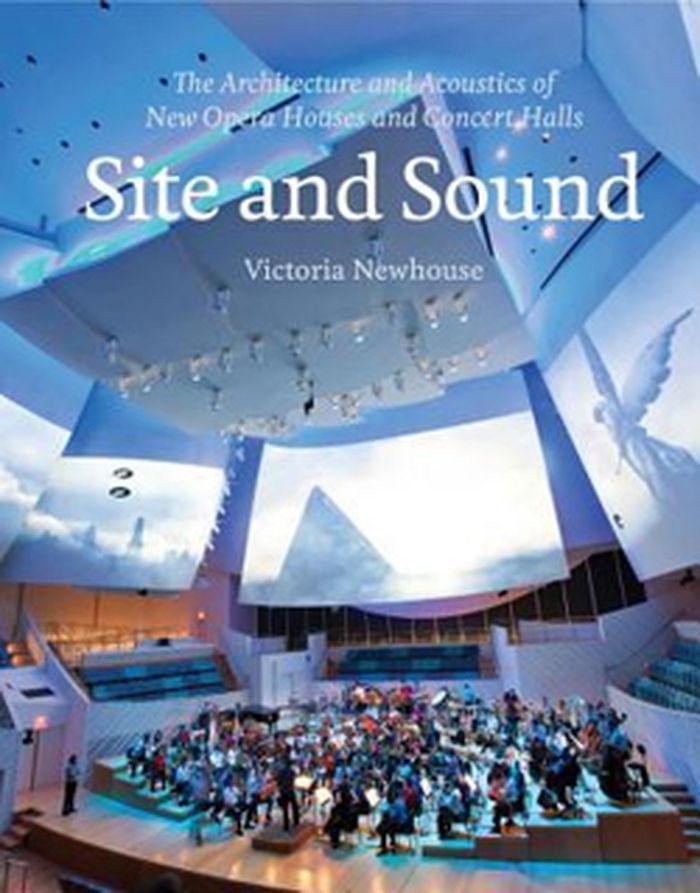
In this publication, Victoria Newhouse addresses the aesthetics and acoustics in concert halls and opera houses of the past, present, and future. Site and Sound explores the daunting, perennial question: Does the music serve the space, or the other way around? Newhouse starts with a survey of venues from ancient Greek and Roman times and progresses to contemporary works around the world. She singles out Lincoln Center in particular for its long history and its transitions and remodelings over the years. Two major chapters cover the present: one focuses on recent work in the West, including the National Opera House of Norway in Oslo by Snohetta (2008), the Casa da Musica in Porto, Portugal, by Rem Koolhaas (2005), and many more; the second examines the boom in concert halls in China. A final chapter looks at projects that are currently planned and the future of an architecture for music.
Site and sound: the architecture and accoustics of new opera houses and concert halls
Actions:
Price:
$57.00
(available to order)
Summary:
In this publication, Victoria Newhouse addresses the aesthetics and acoustics in concert halls and opera houses of the past, present, and future. Site and Sound explores the daunting, perennial question: Does the music serve the space, or the other way around? Newhouse starts with a survey of venues from ancient Greek and Roman times and progresses to contemporary works around the world. She singles out Lincoln Center in particular for its long history and its transitions and remodelings over the years. Two major chapters cover the present: one focuses on recent work in the West, including the National Opera House of Norway in Oslo by Snohetta (2008), the Casa da Musica in Porto, Portugal, by Rem Koolhaas (2005), and many more; the second examines the boom in concert halls in China. A final chapter looks at projects that are currently planned and the future of an architecture for music.
Form:
books
books
Publication:
April 2012
April 2012


