


545 Results
Form:
books
books
Actions:
Price:
$37.95
(available to order)
Summary:
People are key elements of wild places. At the same time, human entanglements with wild ecologies involve extractivism, the growth of resource-based economies, and imperial-colonial expansion, activities that are wreaking havoc on our planet. Through an ethnographic exploration of Canada’s ten UNESCO Natural World Heritage sites, ''Inhabited'' reflects on the meanings(...)
$37.95
(available to order)
Summary:
People are key elements of wild places. At the same time, human entanglements with wild ecologies involve extractivism, the growth of resource-based economies, and imperial-colonial expansion, activities that are wreaking havoc on our planet. Through an ethnographic exploration of Canada’s ten UNESCO Natural World Heritage sites, ''Inhabited'' reflects on the meanings(...)
Subject:
Environment and environmental theory
Environment and environmental theory
Publication:
November 2021
November 2021
Title:
Inhabited: Wildness and the vitality of the land
Actions:
Price:
$37.95
(available to order)
Summary:
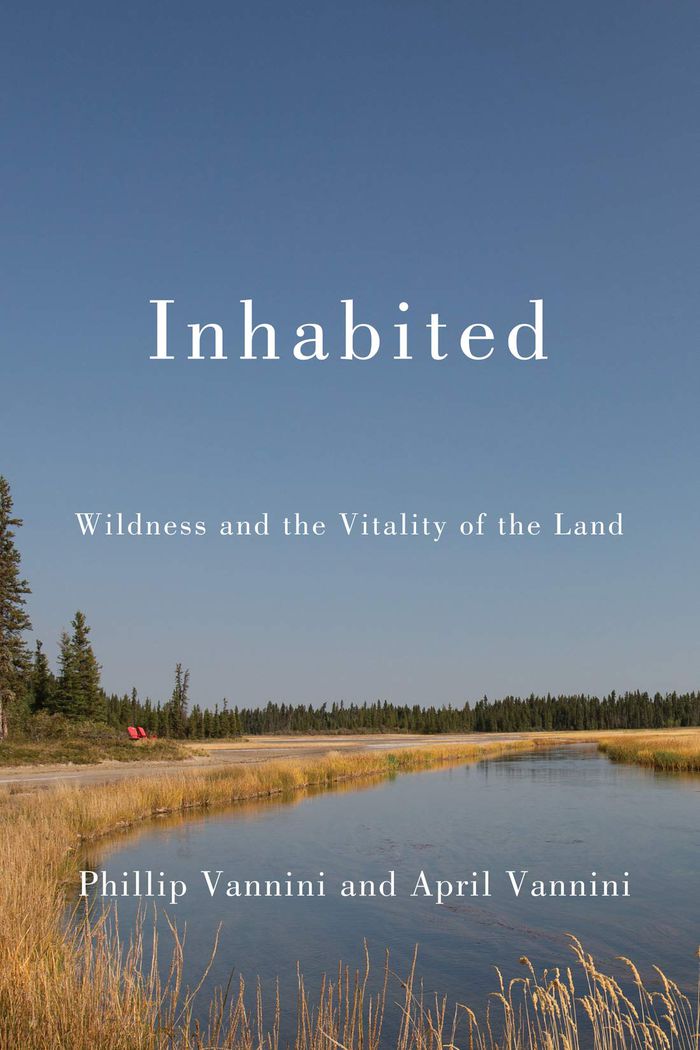
People are key elements of wild places. At the same time, human entanglements with wild ecologies involve extractivism, the growth of resource-based economies, and imperial-colonial expansion, activities that are wreaking havoc on our planet. Through an ethnographic exploration of Canada’s ten UNESCO Natural World Heritage sites, ''Inhabited'' reflects on the meanings of wildness, wilderness, and natural heritage. As we are introduced to local inhabitants and their perspectives, Phillip Vannini and April Vannini ask us to reflect on the colonial and dualist assumptions behind the received meaning of wild, challenging us to reimagine wildness as relational and rooted in vitality. Over the three years they spent in and around these sites, they learned from Indigenous and non-Indigenous peoples about their entanglements with each other and with non-human animals, rocks, plants, trees, sky, water, and spirits. The stories, actions, and experiences they encountered challenge conventional narratives of wild places as uninhabited by people and disconnected from culture and society. While it might be tempting to dismiss the idea of wildness as outdated in the Anthropocene era, ''Inhabited'' suggests that rethinking wildness offers a better – if messier – way forward. Part geography and anthropology, part environmental and cultural studies, and part politics and ecology, ''Inhabited'' balances a genuine love of nature’s vitality with a culturally responsible understanding of its interconnectedness with more-than-human ways of life.
Inhabited: Wildness and the vitality of the land
Actions:
Price:
$37.95
(available to order)
Summary:
People are key elements of wild places. At the same time, human entanglements with wild ecologies involve extractivism, the growth of resource-based economies, and imperial-colonial expansion, activities that are wreaking havoc on our planet. Through an ethnographic exploration of Canada’s ten UNESCO Natural World Heritage sites, ''Inhabited'' reflects on the meanings of wildness, wilderness, and natural heritage. As we are introduced to local inhabitants and their perspectives, Phillip Vannini and April Vannini ask us to reflect on the colonial and dualist assumptions behind the received meaning of wild, challenging us to reimagine wildness as relational and rooted in vitality. Over the three years they spent in and around these sites, they learned from Indigenous and non-Indigenous peoples about their entanglements with each other and with non-human animals, rocks, plants, trees, sky, water, and spirits. The stories, actions, and experiences they encountered challenge conventional narratives of wild places as uninhabited by people and disconnected from culture and society. While it might be tempting to dismiss the idea of wildness as outdated in the Anthropocene era, ''Inhabited'' suggests that rethinking wildness offers a better – if messier – way forward. Part geography and anthropology, part environmental and cultural studies, and part politics and ecology, ''Inhabited'' balances a genuine love of nature’s vitality with a culturally responsible understanding of its interconnectedness with more-than-human ways of life.
Form:
books
books
Publication:
November 2021
November 2021
Subject:
Environment and environmental theory
Environment and environmental theory
Form:
books
books
Title:
AD : Cities of dispersal
AD : Cities of dispersal
Actions:
Price:
$44.00
(available in store)
Summary:
Questioning the traditional boundaries between cities, suburbs, countryside and wilderness, this issue of AD explores emergent types of public space in low-density environments. It describes this new form of urbanism: decentralised, in a constant process of expansion and contraction, not homogenous or necessarily low-rise, nor guided by one mode of development, typology(...)
$44.00
(available in store)
Summary:
Questioning the traditional boundaries between cities, suburbs, countryside and wilderness, this issue of AD explores emergent types of public space in low-density environments. It describes this new form of urbanism: decentralised, in a constant process of expansion and contraction, not homogenous or necessarily low-rise, nor guided by one mode of development, typology(...)
Title:
AD : Cities of dispersal
Actions:
Price:
$44.00
(available in store)
Summary:
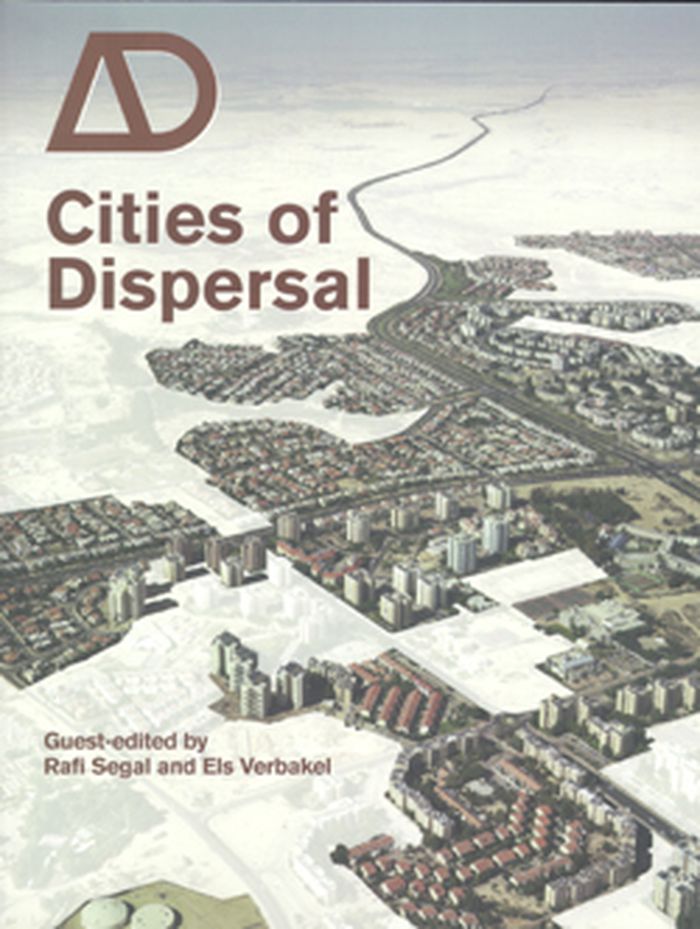
Questioning the traditional boundaries between cities, suburbs, countryside and wilderness, this issue of AD explores emergent types of public space in low-density environments. It describes this new form of urbanism: decentralised, in a constant process of expansion and contraction, not homogenous or necessarily low-rise, nor guided by one mode of development, typology or pattern. While functionally and programmatically dispersed, settlements operate as a form of urbanism; the place of collective spaces within them has yet to be defined and articulated. The physical transformation of the built environment on the one hand, and the change in our notion of the public on the other - due to globalisation, privatisation and segregation - call for renewed interpretations of the nature and character of public space. The concept of public space needs to be examined: replaced, re-created or adapted to fit these conditions. What is the place of the public in this form of urbanism, and how can architecture address the notion of common, collective spaces? What is the current sociopolitical role o such spaces? How does the form and use of these spaces reflect the conception of the public as a political (or non-political) body? And can architecture regain an active role in formulating the notion of the collective? These and other issues are addressed through essays, research projects and built work by distinguished writers such as Bruce Robbins, Albert Pope and Alex Wall, and Practitioners including Zvi Hecker, Vito Acconci, MUTOPIA, Manuel de Sola-Morales, Martha Rosler and Manuel Vicente in a search for new collective architectures within the dispersed city.
AD : Cities of dispersal
Actions:
Price:
$44.00
(available in store)
Summary:
Questioning the traditional boundaries between cities, suburbs, countryside and wilderness, this issue of AD explores emergent types of public space in low-density environments. It describes this new form of urbanism: decentralised, in a constant process of expansion and contraction, not homogenous or necessarily low-rise, nor guided by one mode of development, typology or pattern. While functionally and programmatically dispersed, settlements operate as a form of urbanism; the place of collective spaces within them has yet to be defined and articulated. The physical transformation of the built environment on the one hand, and the change in our notion of the public on the other - due to globalisation, privatisation and segregation - call for renewed interpretations of the nature and character of public space. The concept of public space needs to be examined: replaced, re-created or adapted to fit these conditions. What is the place of the public in this form of urbanism, and how can architecture address the notion of common, collective spaces? What is the current sociopolitical role o such spaces? How does the form and use of these spaces reflect the conception of the public as a political (or non-political) body? And can architecture regain an active role in formulating the notion of the collective? These and other issues are addressed through essays, research projects and built work by distinguished writers such as Bruce Robbins, Albert Pope and Alex Wall, and Practitioners including Zvi Hecker, Vito Acconci, MUTOPIA, Manuel de Sola-Morales, Martha Rosler and Manuel Vicente in a search for new collective architectures within the dispersed city.
Form:
books
books
Publication:
May 2008, West Sussex
May 2008, West Sussex
Subject:
Urban Theory
Urban Theory
Form:
books
books
Actions:
Price:
$47.95
(available to order)
Summary:
Since its invention, photography has been used to document and interpret the landscape. Survey photographers in the 1860s were the first environmental advocates, arguing for the U.S. national park system. During the first half of the 20th century photographers Ansel Adams and Eliot Porter were central figures in influencing American attitudes toward wilderness and(...)
$47.95
(available to order)
Summary:
Since its invention, photography has been used to document and interpret the landscape. Survey photographers in the 1860s were the first environmental advocates, arguing for the U.S. national park system. During the first half of the 20th century photographers Ansel Adams and Eliot Porter were central figures in influencing American attitudes toward wilderness and(...)
Subject:
Photography by Region
Photography by Region
Publication:
April 2011
April 2011
Title:
Earth now: american photographers and the environment
Actions:
Price:
$47.95
(available to order)
Summary:
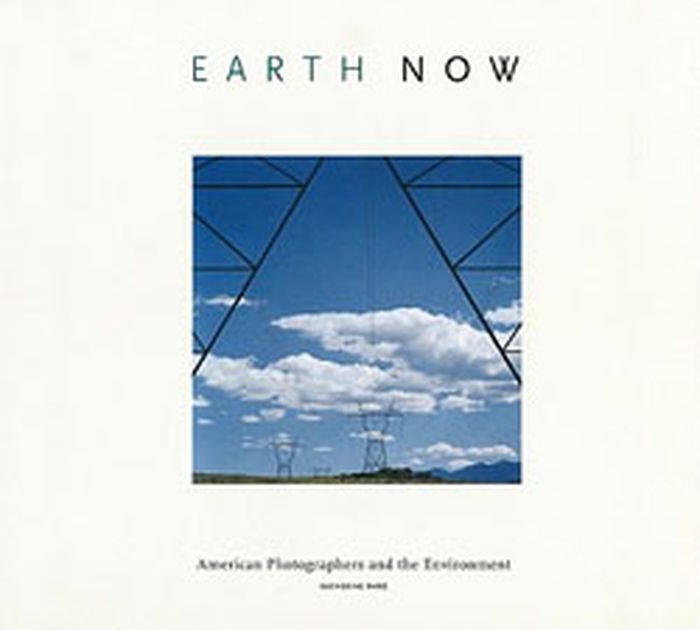
Since its invention, photography has been used to document and interpret the landscape. Survey photographers in the 1860s were the first environmental advocates, arguing for the U.S. national park system. During the first half of the 20th century photographers Ansel Adams and Eliot Porter were central figures in influencing American attitudes toward wilderness and conservation. This book traces the development of environmental photography beginning with Adams, Porter and others, and the next generation of landscape photographers - Robert Adams, Richard Misrach, Robert Glenn Ketchum, Patrick Nagatani, Mark Klett, whose works confronted the issues of landscape and the environment in less idealised terms. Shifting from the historical framework, the book presents new work by twenty-three photographers working in the U.S., the next wave of artists using the camera to engage the environmental issues of the day. Ranging from documentary to conceptual, the photographs touch on topics such as land and water use, the human place in the landscape, mounting consumer waste, industrial pollution, roof gardens and the green roof initiative, local food production, energy consumption, and the effects of industry on humans and animals. Katherine Ware's text offers insightful commentary on photography and the ways that environmental issues have been framed and advanced through the medium of photography. This is a powerful commentary on global environmental issues as seen through the lens of the newest wave of environmental photographers. This book is published to coincide with an exhibition to open at the New Mexico Museum of Art, Santa Fe, New Mexico, in April 2011.
Earth now: american photographers and the environment
Actions:
Price:
$47.95
(available to order)
Summary:
Since its invention, photography has been used to document and interpret the landscape. Survey photographers in the 1860s were the first environmental advocates, arguing for the U.S. national park system. During the first half of the 20th century photographers Ansel Adams and Eliot Porter were central figures in influencing American attitudes toward wilderness and conservation. This book traces the development of environmental photography beginning with Adams, Porter and others, and the next generation of landscape photographers - Robert Adams, Richard Misrach, Robert Glenn Ketchum, Patrick Nagatani, Mark Klett, whose works confronted the issues of landscape and the environment in less idealised terms. Shifting from the historical framework, the book presents new work by twenty-three photographers working in the U.S., the next wave of artists using the camera to engage the environmental issues of the day. Ranging from documentary to conceptual, the photographs touch on topics such as land and water use, the human place in the landscape, mounting consumer waste, industrial pollution, roof gardens and the green roof initiative, local food production, energy consumption, and the effects of industry on humans and animals. Katherine Ware's text offers insightful commentary on photography and the ways that environmental issues have been framed and advanced through the medium of photography. This is a powerful commentary on global environmental issues as seen through the lens of the newest wave of environmental photographers. This book is published to coincide with an exhibition to open at the New Mexico Museum of Art, Santa Fe, New Mexico, in April 2011.
Form:
books
books
Publication:
April 2011
April 2011
Subject:
Photography by Region
Photography by Region
Form:
books
books
Title:
Lyle Gomes : imagining Eden
Lyle Gomes : imagining Eden
Actions:
Price:
$10.00
(available to order)
Summary:
What did Eden look like? In "Imagining Eden", the photographer Lyle Gomes observes landscapes that represent the idea of locus amoenus—the pleasant place. The tradition of locus amoenus goes back to the idyllic descriptions of fictional locations, often called Arcadia, in the writings of Sappho, Apollonius, and Virgil, in the imagined period of the Golden Age. We also(...)
$10.00
(available to order)
Summary:
What did Eden look like? In "Imagining Eden", the photographer Lyle Gomes observes landscapes that represent the idea of locus amoenus—the pleasant place. The tradition of locus amoenus goes back to the idyllic descriptions of fictional locations, often called Arcadia, in the writings of Sappho, Apollonius, and Virgil, in the imagined period of the Golden Age. We also(...)
Subject:
sale books
sale books
Publication:
November 2005, Charlottesville, London
November 2005, Charlottesville, London
Title:
Lyle Gomes : imagining Eden
Actions:
Price:
$10.00
(available to order)
Summary:
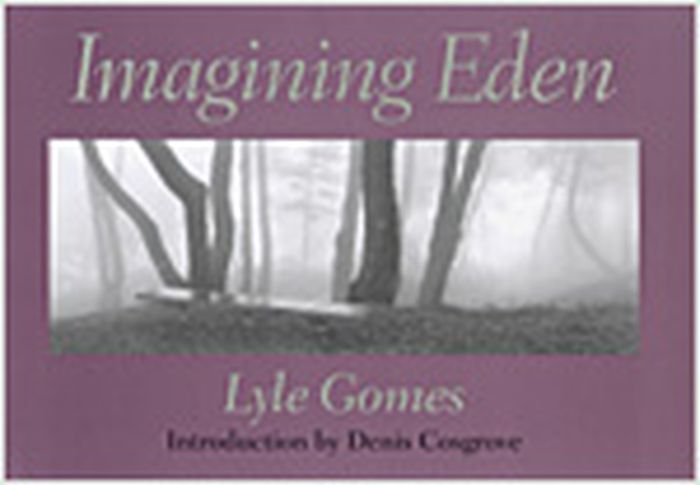
What did Eden look like? In "Imagining Eden", the photographer Lyle Gomes observes landscapes that represent the idea of locus amoenus—the pleasant place. The tradition of locus amoenus goes back to the idyllic descriptions of fictional locations, often called Arcadia, in the writings of Sappho, Apollonius, and Virgil, in the imagined period of the Golden Age. We also recognize this concept in Eden, of course, where it suggests a loss that still haunts our imaginations. It is an idea distinctly different from that of wilderness, for we feel protected in these places—even provided for, though there is no sign of toil. The chance that this Eden might somehow be regained gives the concept its consolatory power. For fifteen years, Gomes has traveled across America and Europe to find examples of this enduring ideal of place in parks, English gardens, even golf courses. Gomes’s search took him to Mount Auburn cemetery, Central Park, Monticello, the San Francisco Presidio, villa gardens near Italy’s Lake Como, Melbourne Hall in Derbyshire, and private gardens such as Biltmore and Dumbarton Oaks. "Imagining Eden" includes an introductory essay in which the landscape historian Denis Cosgrove explores how the concept of the locus amoenus relates to Gomes’s work, and the photographs are accompanied by an evocative selection of quotes by the various settings designers and by inspired observers. The book concludes with an extensive interview in which Gomes discusses how he balances craft and inspiration, the role of research in preparing a shoot, his preference for black-and-white over color (“I was completely, and immediately, enamored with the silver image”), and a sense of discovery as a chief motivation in all his work.
Lyle Gomes : imagining Eden
Actions:
Price:
$10.00
(available to order)
Summary:
What did Eden look like? In "Imagining Eden", the photographer Lyle Gomes observes landscapes that represent the idea of locus amoenus—the pleasant place. The tradition of locus amoenus goes back to the idyllic descriptions of fictional locations, often called Arcadia, in the writings of Sappho, Apollonius, and Virgil, in the imagined period of the Golden Age. We also recognize this concept in Eden, of course, where it suggests a loss that still haunts our imaginations. It is an idea distinctly different from that of wilderness, for we feel protected in these places—even provided for, though there is no sign of toil. The chance that this Eden might somehow be regained gives the concept its consolatory power. For fifteen years, Gomes has traveled across America and Europe to find examples of this enduring ideal of place in parks, English gardens, even golf courses. Gomes’s search took him to Mount Auburn cemetery, Central Park, Monticello, the San Francisco Presidio, villa gardens near Italy’s Lake Como, Melbourne Hall in Derbyshire, and private gardens such as Biltmore and Dumbarton Oaks. "Imagining Eden" includes an introductory essay in which the landscape historian Denis Cosgrove explores how the concept of the locus amoenus relates to Gomes’s work, and the photographs are accompanied by an evocative selection of quotes by the various settings designers and by inspired observers. The book concludes with an extensive interview in which Gomes discusses how he balances craft and inspiration, the role of research in preparing a shoot, his preference for black-and-white over color (“I was completely, and immediately, enamored with the silver image”), and a sense of discovery as a chief motivation in all his work.
Form:
books
books
Publication:
November 2005, Charlottesville, London
November 2005, Charlottesville, London
Subject:
sale books
sale books
Form:
books
books
Actions:
Price:
$39.95
(available to order)
Summary:
In "The Geography of Nowhere", James Howard Kunstler declared suburbia "a tragic landscape of cartoon architecture, junked cities, and ravaged countryside" and put himself at the heart of a fierce debate over how we will live in twenty-first century America. Now, Kunstler turns his eye on urban life both in America and across the world. From classical Rome to the(...)
$39.95
(available to order)
Summary:
In "The Geography of Nowhere", James Howard Kunstler declared suburbia "a tragic landscape of cartoon architecture, junked cities, and ravaged countryside" and put himself at the heart of a fierce debate over how we will live in twenty-first century America. Now, Kunstler turns his eye on urban life both in America and across the world. From classical Rome to the(...)
Title:
The city in mind : notes on the urban condition
Actions:
Price:
$39.95
(available to order)
Summary:
In "The Geography of Nowhere", James Howard Kunstler declared suburbia "a tragic landscape of cartoon architecture, junked cities, and ravaged countryside" and put himself at the heart of a fierce debate over how we will live in twenty-first century America. Now, Kunstler turns his eye on urban life both in America and across the world. From classical Rome to the "gigantic hairball" of contemporary Atlanta, he offers a far-reaching discourse on the history and current state of urban life. "The City in Mind" tells the story of urban design and how the architectural makeup of a city directly influences its culture as well as its success. From the ingenious architectural design of Louis-Napoleon's renovation of Paris to the bloody collision of cultures that occurred when Cortés conquered the Aztec capital Tenochtitlan, from the grandiose architectural schemes of Hitler and Albert Speer to the meanings behind the ludicrous spectacle of Las Vegas, Kunstler opens up a new dialogue on the development and effects of urban construction. In his investigations, he discovers American communities in the Sunbelt and Southwest alienated from each other and themselves, Northeastern cities caught between their initial civic construction and our current car-obsessed society, and a disparate Europe with its mix of pre-industrial creativity, and war-marked reminders of the twentieth century. Expanding on ideas first discussed in Jane Jacobs' seminal work, "The Death and Life of Great American Cities", Kunstler looks to Europe to discover what is constant and enduring in cities at their greatest, and at the same time, how a city's design can be directly linked to its decline. In these excursions he finds the reasons that America got lost in its suburban wilderness and locates the pathways in culture that might lead to a civic revival here. Kunstler's examination of these cities is at once a concise history of their urban lives and a detailed criticism of how those histories have either aided or hindered the social and civil progress of the cities' occupants. By turns dramatic and comic, and always authoritative, "The City in Mind", is an exceptional glimpse into the urban condition.
The city in mind : notes on the urban condition
Actions:
Price:
$39.95
(available to order)
Summary:
In "The Geography of Nowhere", James Howard Kunstler declared suburbia "a tragic landscape of cartoon architecture, junked cities, and ravaged countryside" and put himself at the heart of a fierce debate over how we will live in twenty-first century America. Now, Kunstler turns his eye on urban life both in America and across the world. From classical Rome to the "gigantic hairball" of contemporary Atlanta, he offers a far-reaching discourse on the history and current state of urban life. "The City in Mind" tells the story of urban design and how the architectural makeup of a city directly influences its culture as well as its success. From the ingenious architectural design of Louis-Napoleon's renovation of Paris to the bloody collision of cultures that occurred when Cortés conquered the Aztec capital Tenochtitlan, from the grandiose architectural schemes of Hitler and Albert Speer to the meanings behind the ludicrous spectacle of Las Vegas, Kunstler opens up a new dialogue on the development and effects of urban construction. In his investigations, he discovers American communities in the Sunbelt and Southwest alienated from each other and themselves, Northeastern cities caught between their initial civic construction and our current car-obsessed society, and a disparate Europe with its mix of pre-industrial creativity, and war-marked reminders of the twentieth century. Expanding on ideas first discussed in Jane Jacobs' seminal work, "The Death and Life of Great American Cities", Kunstler looks to Europe to discover what is constant and enduring in cities at their greatest, and at the same time, how a city's design can be directly linked to its decline. In these excursions he finds the reasons that America got lost in its suburban wilderness and locates the pathways in culture that might lead to a civic revival here. Kunstler's examination of these cities is at once a concise history of their urban lives and a detailed criticism of how those histories have either aided or hindered the social and civil progress of the cities' occupants. By turns dramatic and comic, and always authoritative, "The City in Mind", is an exceptional glimpse into the urban condition.
Form:
books
books
Publication:
January 2002, New York
January 2002, New York
Subject:
Urban Theory
Urban Theory


