


6236 Results
Form:
books
books

Title:
Forming cityscapes: plants
Forming cityscapes: plants
Actions:
Price:
$21.95
(available to order)
Summary:
In this project, graphic designers Jamie Yeo and Gideon Kong obsessively observe and photograph minor urban occurrences in Singapore which possibly challenge popular ideas about the city being “clean and green” or inauthentic. The images reveal creative forms of appropriation (or resistance) that indirectly critique top-down design implementations or suggest other(...)
$21.95
(available to order)
Summary:
In this project, graphic designers Jamie Yeo and Gideon Kong obsessively observe and photograph minor urban occurrences in Singapore which possibly challenge popular ideas about the city being “clean and green” or inauthentic. The images reveal creative forms of appropriation (or resistance) that indirectly critique top-down design implementations or suggest other(...)
Title:
Forming cityscapes: plants
Actions:
Price:
$21.95
(available to order)
Summary:
In this project, graphic designers Jamie Yeo and Gideon Kong obsessively observe and photograph minor urban occurrences in Singapore which possibly challenge popular ideas about the city being “clean and green” or inauthentic. The images reveal creative forms of appropriation (or resistance) that indirectly critique top-down design implementations or suggest other micro-possibilities of use. In this instalment, plants are the focus. Whether growing wild or carefully tended, vegetation in the city is often taken for granted. Here we see them serve dual functions as drying racks, shoe hangers, trash receptacles, and seasonal holiday decorations.
Forming cityscapes: plants
Actions:
Price:
$21.95
(available to order)
Summary:
In this project, graphic designers Jamie Yeo and Gideon Kong obsessively observe and photograph minor urban occurrences in Singapore which possibly challenge popular ideas about the city being “clean and green” or inauthentic. The images reveal creative forms of appropriation (or resistance) that indirectly critique top-down design implementations or suggest other micro-possibilities of use. In this instalment, plants are the focus. Whether growing wild or carefully tended, vegetation in the city is often taken for granted. Here we see them serve dual functions as drying racks, shoe hangers, trash receptacles, and seasonal holiday decorations.
Form:
books
books
Publication:
August 2021
August 2021
Subject:
Urban Landscapes
Urban Landscapes
Form:
books
books
Actions:
Holdings:
Description:
373 pages : illustrations ; 33 cm
Description:
373 pages : illustrations ; 33 cm
Author:
Subject:
Publication:
London ; New York : Phaidon Press, 2013.
London ; New York : Phaidon Press, 2013.
Title:
Art & place : site-specific art of the Americas.
Actions:
Holdings:
Description:
373 pages : illustrations ; 33 cm
Art & place : site-specific art of the Americas.
Actions:
Holdings:
Description:
373 pages : illustrations ; 33 cm
Form:
books
books
Publication:
London ; New York : Phaidon Press, 2013.
London ; New York : Phaidon Press, 2013.
Author:
Subject:
Form:
books
books
Title:
The petropolis of tomorrow
The petropolis of tomorrow
Actions:
Price:
$39.95
(available to order)
Summary:
In recent years, Brazil has discovered vast quantities of petroleum deep within its territorial waters, inciting the construction of a series of cities along its coast and in the ocean. We could term these developments as Petropolises, or cities formed from resource extraction. The Petropolis of Tomorrow is a design and research project, originally undertaken at Rice(...)
$39.95
(available to order)
Summary:
In recent years, Brazil has discovered vast quantities of petroleum deep within its territorial waters, inciting the construction of a series of cities along its coast and in the ocean. We could term these developments as Petropolises, or cities formed from resource extraction. The Petropolis of Tomorrow is a design and research project, originally undertaken at Rice(...)
Title:
The petropolis of tomorrow
Actions:
Price:
$39.95
(available to order)
Summary:
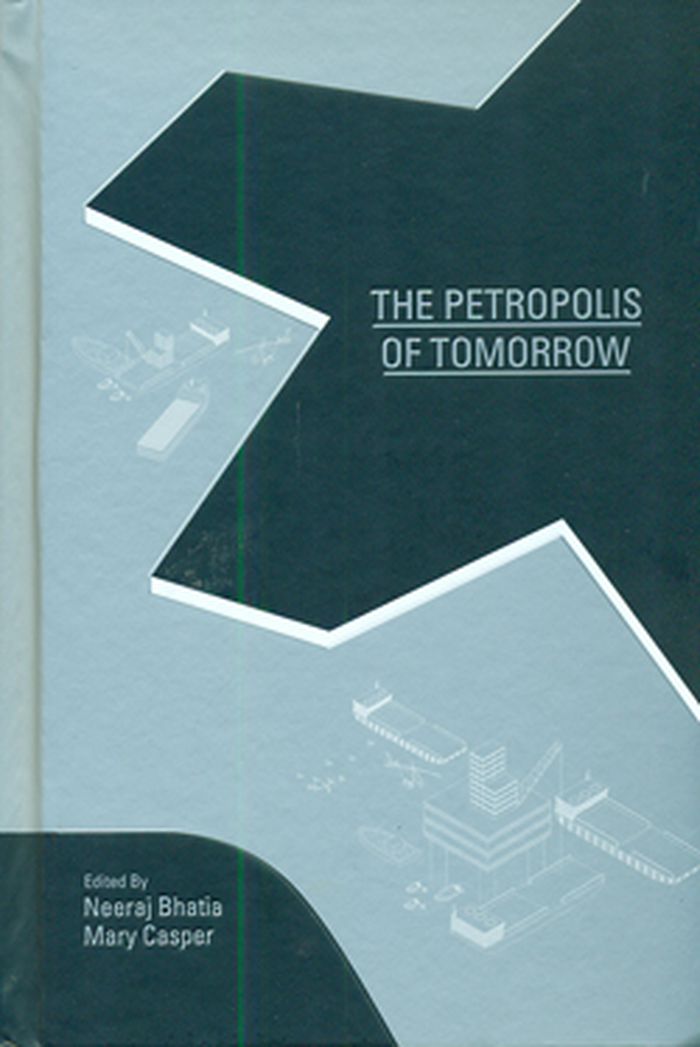
In recent years, Brazil has discovered vast quantities of petroleum deep within its territorial waters, inciting the construction of a series of cities along its coast and in the ocean. We could term these developments as Petropolises, or cities formed from resource extraction. The Petropolis of Tomorrow is a design and research project, originally undertaken at Rice University that examines the relationship between resource extraction and urban development in order to extract new templates for sustainable urbanism. Organized into three sections: Archipelago Urbanism, Harvesting Urbanism, and Logistical Urbanism, which consist of theoretical, technical, and photo articles as well as design proposals, The Petropolis of Tomorrow elucidates not only a vision for water-based urbanism of the floating frontier city, it also speculates on new methodologies for integrating infrastructure, landscape, urbanism and architecture within the larger spheres of economics, politics, and culture that implicate these disciplines.
The petropolis of tomorrow
Actions:
Price:
$39.95
(available to order)
Summary:
In recent years, Brazil has discovered vast quantities of petroleum deep within its territorial waters, inciting the construction of a series of cities along its coast and in the ocean. We could term these developments as Petropolises, or cities formed from resource extraction. The Petropolis of Tomorrow is a design and research project, originally undertaken at Rice University that examines the relationship between resource extraction and urban development in order to extract new templates for sustainable urbanism. Organized into three sections: Archipelago Urbanism, Harvesting Urbanism, and Logistical Urbanism, which consist of theoretical, technical, and photo articles as well as design proposals, The Petropolis of Tomorrow elucidates not only a vision for water-based urbanism of the floating frontier city, it also speculates on new methodologies for integrating infrastructure, landscape, urbanism and architecture within the larger spheres of economics, politics, and culture that implicate these disciplines.
Form:
books
books
Publication:
August 2013
August 2013
Subject:
Urban Theory
Urban Theory
Form:
books
books
Actions:
Price:
$43.00
(available to order)
Summary:
Featuring a representative and graphically striking sample of the incredible range of letters, names, words and proverbs to be found on Amsterdam buildings, Typography and Architecture: Amsterdam in Letters is a compilation of more than 200 photographs taken by Dutch photographer Maarten Helle. By particularly focusing on typography that was specifically designed or(...)
$43.00
(available to order)
Summary:
Featuring a representative and graphically striking sample of the incredible range of letters, names, words and proverbs to be found on Amsterdam buildings, Typography and Architecture: Amsterdam in Letters is a compilation of more than 200 photographs taken by Dutch photographer Maarten Helle. By particularly focusing on typography that was specifically designed or(...)
Title:
Amsterdam in letters :typography and architecture
Actions:
Price:
$43.00
(available to order)
Summary:
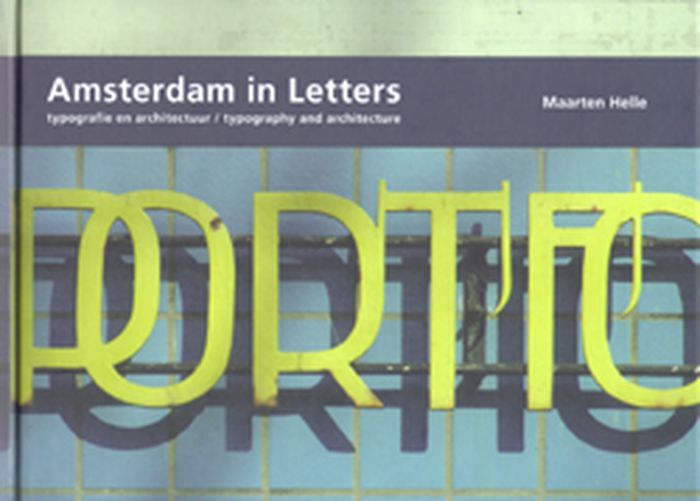
Featuring a representative and graphically striking sample of the incredible range of letters, names, words and proverbs to be found on Amsterdam buildings, Typography and Architecture: Amsterdam in Letters is a compilation of more than 200 photographs taken by Dutch photographer Maarten Helle. By particularly focusing on typography that was specifically designed or commissioned by the architect of a building, Helle isolates an often forgotten aspect of architecture and of our urban landscape, as these elements are often visually subsumed by the louder yet more ephemeral typographic elements found on billboards, posters and graffiti. Helle's letters endure as architectural traces--often remaining when a building is repurposed--that represent an alternative history of the city. Born in Amsterdam in 1959, Maarten Helle began taking photographs of architecture, typography and Amsterdam in 1993.
Amsterdam in letters :typography and architecture
Actions:
Price:
$43.00
(available to order)
Summary:
Featuring a representative and graphically striking sample of the incredible range of letters, names, words and proverbs to be found on Amsterdam buildings, Typography and Architecture: Amsterdam in Letters is a compilation of more than 200 photographs taken by Dutch photographer Maarten Helle. By particularly focusing on typography that was specifically designed or commissioned by the architect of a building, Helle isolates an often forgotten aspect of architecture and of our urban landscape, as these elements are often visually subsumed by the louder yet more ephemeral typographic elements found on billboards, posters and graffiti. Helle's letters endure as architectural traces--often remaining when a building is repurposed--that represent an alternative history of the city. Born in Amsterdam in 1959, Maarten Helle began taking photographs of architecture, typography and Amsterdam in 1993.
Form:
books
books
Publication:
April 2009, Amsterdam
April 2009, Amsterdam
Subject:
Graphic Design and Typography
Graphic Design and Typography
Form:
books
books
Actions:
Price:
$79.50
(available to order)
Summary:
The cultural economy forms a leading trajectory of urban development, and has emerged as a key facet of globalizing cities. Cultural industries include new media, digital arts, music and film, and the design industries and professions, as well as allied consumption and spectacle in the city. The cultural economy now represents the third-largest sector in metropolitan(...)
$79.50
(available to order)
Summary:
The cultural economy forms a leading trajectory of urban development, and has emerged as a key facet of globalizing cities. Cultural industries include new media, digital arts, music and film, and the design industries and professions, as well as allied consumption and spectacle in the city. The cultural economy now represents the third-largest sector in metropolitan(...)
Title:
Cities and the cultural economy
Actions:
Price:
$79.50
(available to order)
Summary:
The cultural economy forms a leading trajectory of urban development, and has emerged as a key facet of globalizing cities. Cultural industries include new media, digital arts, music and film, and the design industries and professions, as well as allied consumption and spectacle in the city. The cultural economy now represents the third-largest sector in metropolitan cities of the West (for example London, Berlin, New York, San Francisco, and Melbourne), but is also influential in the development of East Asian cities (Tokyo, Shanghai, Hong Kong and Singapore), as well as the mega-cities of the Global South (e.g. Mumbai, Capetown, and São Paulo).
Cities and the cultural economy
Actions:
Price:
$79.50
(available to order)
Summary:
The cultural economy forms a leading trajectory of urban development, and has emerged as a key facet of globalizing cities. Cultural industries include new media, digital arts, music and film, and the design industries and professions, as well as allied consumption and spectacle in the city. The cultural economy now represents the third-largest sector in metropolitan cities of the West (for example London, Berlin, New York, San Francisco, and Melbourne), but is also influential in the development of East Asian cities (Tokyo, Shanghai, Hong Kong and Singapore), as well as the mega-cities of the Global South (e.g. Mumbai, Capetown, and São Paulo).
Form:
books
books
Publication:
July 2015
July 2015
Subject:
Urban Theory
Urban Theory
Form:
books
books
Actions:
Holdings:
Description:
238 pages : color illustrations, map, plans, photographs ; 31 x 25 cm.
Description:
238 pages : color illustrations, map, plans, photographs ; 31 x 25 cm.
Author:
Subject:
Publication:
Humlebæk, Denmark : Louisiana Museum of Modern Art ; Zürich, Switzerland : Lars Müller Publishers, [2019], [New York, New York] : Distributed in North America by Artbook / D.A.P., Denmark : Narayana Press, 2019., ©2019
Humlebæk, Denmark : Louisiana Museum of Modern Art ; Zürich, Switzerland : Lars Müller Publishers, [2019], [New York, New York] : Distributed in North America by Artbook / D.A.P., Denmark : Narayana Press, 2019., ©2019
Title:
Tatiana Bilbao Estudio : a conversation between Jacques Herzog and Tatiana Bilbao / text by Nicolai Ouroussoff, Hilary Sample, Rubén Gallo ; [edited by Mette Marie Kallehauge and Lærke Rydal Jørgensen].
Actions:
Holdings:
Description:
238 pages : color illustrations, map, plans, photographs ; 31 x 25 cm.
Tatiana Bilbao Estudio : a conversation between Jacques Herzog and Tatiana Bilbao / text by Nicolai Ouroussoff, Hilary Sample, Rubén Gallo ; [edited by Mette Marie Kallehauge and Lærke Rydal Jørgensen].
Actions:
Holdings:
Description:
238 pages : color illustrations, map, plans, photographs ; 31 x 25 cm.
Form:
books
books
Publication:
Humlebæk, Denmark : Louisiana Museum of Modern Art ; Zürich, Switzerland : Lars Müller Publishers, [2019], [New York, New York] : Distributed in North America by Artbook / D.A.P., Denmark : Narayana Press, 2019., ©2019
Humlebæk, Denmark : Louisiana Museum of Modern Art ; Zürich, Switzerland : Lars Müller Publishers, [2019], [New York, New York] : Distributed in North America by Artbook / D.A.P., Denmark : Narayana Press, 2019., ©2019
Author:
Subject:
Form:
books
books
Actions:
Holdings:
Description:
viii, 265 pages : illustrations, map ; 24 cm.
Description:
viii, 265 pages : illustrations, map ; 24 cm.
Author:
Subject:
Publication:
Stanford, California : Stanford University Press, [2026]
Stanford, California : Stanford University Press, [2026]
Title:
Lahore after modernism : architecture and its histories in Pakistan / Chris Moffat.
Actions:
Holdings:
Description:
viii, 265 pages : illustrations, map ; 24 cm.
Lahore after modernism : architecture and its histories in Pakistan / Chris Moffat.
Actions:
Holdings:
Description:
viii, 265 pages : illustrations, map ; 24 cm.
Form:
books
books
Publication:
Stanford, California : Stanford University Press, [2026]
Stanford, California : Stanford University Press, [2026]
Author:
Subject:
Form:
books
books
Title:
Altogether American : Robert Mills, architect and engineer, 1781-1855 / Rhodri Windsor Liscombe.
Altogether American : Robert Mills, architect and engineer, 1781-1855 / Rhodri Windsor Liscombe.
Actions:
Holdings:
Description:
viii, 372 pages : illustrations, maps ; 26 cm
Description:
viii, 372 pages : illustrations, maps ; 26 cm
Author:
Subject:
Publication:
New York : Oxford University Press, 1994.
New York : Oxford University Press, 1994.
Title:
Altogether American : Robert Mills, architect and engineer, 1781-1855 / Rhodri Windsor Liscombe.
Actions:
Holdings:
Description:
viii, 372 pages : illustrations, maps ; 26 cm
Altogether American : Robert Mills, architect and engineer, 1781-1855 / Rhodri Windsor Liscombe.
Actions:
Holdings:
Description:
viii, 372 pages : illustrations, maps ; 26 cm
Form:
books
books
Publication:
New York : Oxford University Press, 1994.
New York : Oxford University Press, 1994.
Author:
Subject:
Form:
books
books
Actions:
Price:
$64.95
(available to order)
Summary:
Ecological Urbanism: The Nature of the City asks the questions that are important inside and outside the built environment professions: what are climate change, urbanisation and ecology doing to the theory and practice of urban design? How does Ecological Urbanism figure in this change? What is Ecological Urbanism? In answer, this book is neither definitive – impossible(...)
$64.95
(available to order)
Summary:
Ecological Urbanism: The Nature of the City asks the questions that are important inside and outside the built environment professions: what are climate change, urbanisation and ecology doing to the theory and practice of urban design? How does Ecological Urbanism figure in this change? What is Ecological Urbanism? In answer, this book is neither definitive – impossible(...)
Title:
Ecological urbanism: the nature of the city
Actions:
Price:
$64.95
(available to order)
Summary:
Ecological Urbanism: The Nature of the City asks the questions that are important inside and outside the built environment professions: what are climate change, urbanisation and ecology doing to the theory and practice of urban design? How does Ecological Urbanism figure in this change? What is Ecological Urbanism? In answer, this book is neither definitive – impossible when a subject is still in motion – nor encyclopaedic – equally impossible when so much has been written on almost every aspect of these essays. Instead, it seeks to rebalance the ecological narrative and its embryonic modes of practice with the narratives of urbanism and its older, deeply embedded modes of practice. It examines the implications for cities and the designers of cities now we are required to again address their metabolic as well as social and formal dimensions, and it explores the extent to which environmental engineering and natural systems design can and should become drivers for the remaking of cities in the 21st century. Above all, it argues that sooner rather than later, urbanism needs to become environmentally literate, and environmental design needs to become culturally literate.
Ecological urbanism: the nature of the city
Actions:
Price:
$64.95
(available to order)
Summary:
Ecological Urbanism: The Nature of the City asks the questions that are important inside and outside the built environment professions: what are climate change, urbanisation and ecology doing to the theory and practice of urban design? How does Ecological Urbanism figure in this change? What is Ecological Urbanism? In answer, this book is neither definitive – impossible when a subject is still in motion – nor encyclopaedic – equally impossible when so much has been written on almost every aspect of these essays. Instead, it seeks to rebalance the ecological narrative and its embryonic modes of practice with the narratives of urbanism and its older, deeply embedded modes of practice. It examines the implications for cities and the designers of cities now we are required to again address their metabolic as well as social and formal dimensions, and it explores the extent to which environmental engineering and natural systems design can and should become drivers for the remaking of cities in the 21st century. Above all, it argues that sooner rather than later, urbanism needs to become environmentally literate, and environmental design needs to become culturally literate.
Form:
books
books
Publication:
November 2014
November 2014
Subject:
Urban Landscapes
Urban Landscapes
Form:
books
books
Title:
Making cities work
Making cities work
Actions:
Price:
$82.99
(available to order)
Summary:
Cities are the human race at its very best and very worst, bringing together wealth and poverty, culture and crime. For the majority of us, and our children, they will define our lives. The challenge is to make them better places to live; to design and operate them successfully, while balencing society's often conflicting demanfds. 'Making cities work' is about(...)
$82.99
(available to order)
Summary:
Cities are the human race at its very best and very worst, bringing together wealth and poverty, culture and crime. For the majority of us, and our children, they will define our lives. The challenge is to make them better places to live; to design and operate them successfully, while balencing society's often conflicting demanfds. 'Making cities work' is about(...)
Title:
Making cities work
Actions:
Price:
$82.99
(available to order)
Summary:
Cities are the human race at its very best and very worst, bringing together wealth and poverty, culture and crime. For the majority of us, and our children, they will define our lives. The challenge is to make them better places to live; to design and operate them successfully, while balencing society's often conflicting demanfds. 'Making cities work' is about enabling communities to be more successul. It showcases not just theories but ideas in action worldwide - initiatives that enhance the quality of urban life. The book features projects from all over the world, based around three key themes : -arriving in the city -enjoying the city -getting around the city
Making cities work
Actions:
Price:
$82.99
(available to order)
Summary:
Cities are the human race at its very best and very worst, bringing together wealth and poverty, culture and crime. For the majority of us, and our children, they will define our lives. The challenge is to make them better places to live; to design and operate them successfully, while balencing society's often conflicting demanfds. 'Making cities work' is about enabling communities to be more successul. It showcases not just theories but ideas in action worldwide - initiatives that enhance the quality of urban life. The book features projects from all over the world, based around three key themes : -arriving in the city -enjoying the city -getting around the city
Form:
books
books
Publication:
January 2004, Chichester
January 2004, Chichester
Subject:
Urban Theory
Urban Theory


