


6622 Results
Form:
books
books
Actions:
Price:
$27.95
(available to order)
Summary:
The city that never sleeps also never stops changing. And while New Yorkers are renowned for their trendsetting, this thought-provoking book argues that New York City itself has become a follower rather than a leader. Once-distinctive streets and neighborhoods have become awash in generic stores, apartment boxes, and garish signs and billboards. Legendary neighborhoods(...)
$27.95
(available to order)
Summary:
The city that never sleeps also never stops changing. And while New Yorkers are renowned for their trendsetting, this thought-provoking book argues that New York City itself has become a follower rather than a leader. Once-distinctive streets and neighborhoods have become awash in generic stores, apartment boxes, and garish signs and billboards. Legendary neighborhoods(...)
Title:
The suburbanization of New York : is the world's greatest city becoming just another town?
Actions:
Price:
$27.95
(available to order)
Summary:
The city that never sleeps also never stops changing. And while New Yorkers are renowned for their trendsetting, this thought-provoking book argues that New York City itself has become a follower rather than a leader. Once-distinctive streets and neighborhoods have become awash in generic stores, apartment boxes, and garish signs and billboards. Legendary neighborhoods (Little Italy, Hell's Kitchen, Harlem, the Lower East Side) have been smoothed over with cute monikers, remade for real-estate investment and for sale to the highest bidder. What does the future hold for the legendary metropolis, gateway to immigrants and strivers, magnet for builders and dealers, muse for artists and dreamers? Will the current political, economic, and social influences dull its once-famous creative edge and culture of opposition? What will become of the special allure of New York? "The suburbanization of New York" presents fourteen timely, provocative articles that explore the radical transformation unfolding in New York City and raise serious questions about the future of any metropolis struggling to maintain its unique identity.
The suburbanization of New York : is the world's greatest city becoming just another town?
Actions:
Price:
$27.95
(available to order)
Summary:
The city that never sleeps also never stops changing. And while New Yorkers are renowned for their trendsetting, this thought-provoking book argues that New York City itself has become a follower rather than a leader. Once-distinctive streets and neighborhoods have become awash in generic stores, apartment boxes, and garish signs and billboards. Legendary neighborhoods (Little Italy, Hell's Kitchen, Harlem, the Lower East Side) have been smoothed over with cute monikers, remade for real-estate investment and for sale to the highest bidder. What does the future hold for the legendary metropolis, gateway to immigrants and strivers, magnet for builders and dealers, muse for artists and dreamers? Will the current political, economic, and social influences dull its once-famous creative edge and culture of opposition? What will become of the special allure of New York? "The suburbanization of New York" presents fourteen timely, provocative articles that explore the radical transformation unfolding in New York City and raise serious questions about the future of any metropolis struggling to maintain its unique identity.
Form:
books
books
Publication:
March 2007, New York
March 2007, New York
Subject:
Suburbs
Suburbs
Form:
books
books
Title:
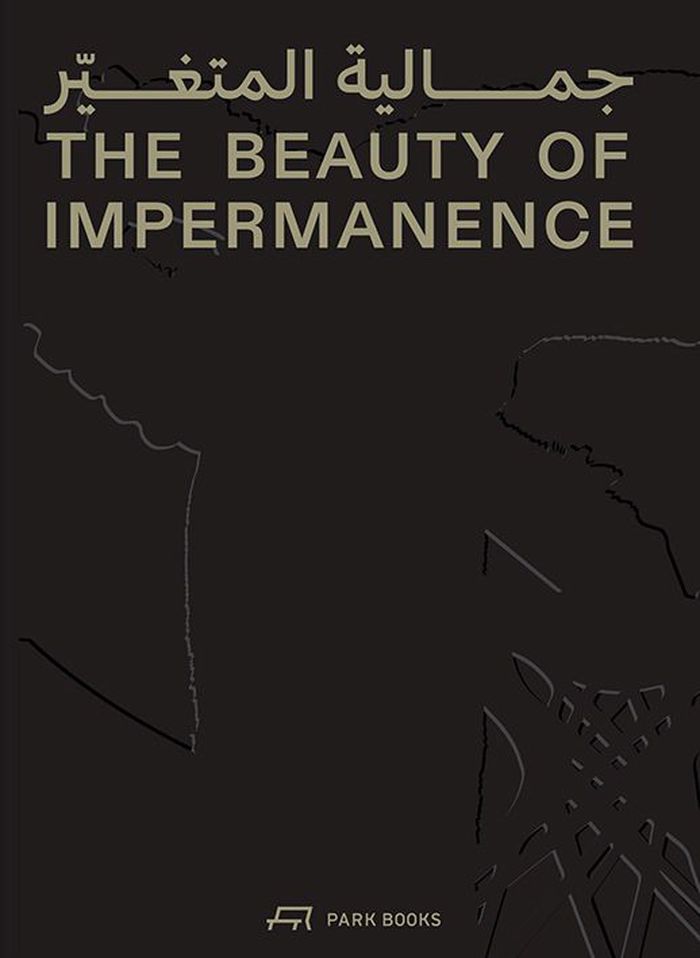
The beauty of impermanence: An architecture of adaptability from the Sharjah Architecture Triennial
The beauty of impermanence: An architecture of adaptability from the Sharjah Architecture Triennial
Actions:
Price:
$85.00
(available in store)
Summary:
''The Beauty of Impermanence'' is a scholarly documentation of the 2023 Sharjah Architecture Triennial. It explores architectural responses to sustainability, resource scarcity, and adaptability, highlighting the contrasting resource management strategies of the global North and South over the last four hundred years. The North exploited resources through a belief in(...)
$85.00
(available in store)
Summary:
''The Beauty of Impermanence'' is a scholarly documentation of the 2023 Sharjah Architecture Triennial. It explores architectural responses to sustainability, resource scarcity, and adaptability, highlighting the contrasting resource management strategies of the global North and South over the last four hundred years. The North exploited resources through a belief in(...)
Title:
The beauty of impermanence: An architecture of adaptability from the Sharjah Architecture Triennial
Actions:
Price:
$85.00
(available in store)
Summary:
''The Beauty of Impermanence'' is a scholarly documentation of the 2023 Sharjah Architecture Triennial. It explores architectural responses to sustainability, resource scarcity, and adaptability, highlighting the contrasting resource management strategies of the global North and South over the last four hundred years. The North exploited resources through a belief in endless abundance and technological advances, underpinned by religious and mythological justifications for colonialism and slavery. The South, characterized by resource scarcity, has innovated within these constraints, developing adaptable, sustainable solutions that may offer a blueprint for future global resource management. The book advocates for a shift away from a consumption-driven approach to one that is ecologically and ethically responsible, urging a collective resolve to create systemic change for a sustainable future. It is structured around the thematic strands of “Renewed Contextual,” “Extraction Politics,” and “Intangible Bodies” and features essays by noted scholars and practitioners. Detailed project spreads from Triennial participants, showcasing innovative practices that integrate environmentally friendly methods and materials, round off this volume that serves as a vital resource for those engaged in the fields of architecture, sustainability, and urban planning.
The beauty of impermanence: An architecture of adaptability from the Sharjah Architecture Triennial
Actions:
Price:
$85.00
(available in store)
Summary:
''The Beauty of Impermanence'' is a scholarly documentation of the 2023 Sharjah Architecture Triennial. It explores architectural responses to sustainability, resource scarcity, and adaptability, highlighting the contrasting resource management strategies of the global North and South over the last four hundred years. The North exploited resources through a belief in endless abundance and technological advances, underpinned by religious and mythological justifications for colonialism and slavery. The South, characterized by resource scarcity, has innovated within these constraints, developing adaptable, sustainable solutions that may offer a blueprint for future global resource management. The book advocates for a shift away from a consumption-driven approach to one that is ecologically and ethically responsible, urging a collective resolve to create systemic change for a sustainable future. It is structured around the thematic strands of “Renewed Contextual,” “Extraction Politics,” and “Intangible Bodies” and features essays by noted scholars and practitioners. Detailed project spreads from Triennial participants, showcasing innovative practices that integrate environmentally friendly methods and materials, round off this volume that serves as a vital resource for those engaged in the fields of architecture, sustainability, and urban planning.
Form:
books
books
Publication:
July 2025
July 2025
Subject:
Biennial
Biennial
Form:
books
books

Actions:
Price:
$15.75
(available to order)
Summary:
Linear history is a myth. In the past, it was useful. But today, it has become more and more unsustainable as its mythical dimension had to face the hard truths of science. With the evolution of physics, in particular quantum physics, we don’t have any choice left: we have to reconsider the nature of history just as we had to reconsider the very nature of reality. Rather(...)
$15.75
(available to order)
Summary:
Linear history is a myth. In the past, it was useful. But today, it has become more and more unsustainable as its mythical dimension had to face the hard truths of science. With the evolution of physics, in particular quantum physics, we don’t have any choice left: we have to reconsider the nature of history just as we had to reconsider the very nature of reality. Rather(...)
Title:
For a quantum theory of history
Actions:
Price:
$15.75
(available to order)
Summary:
Linear history is a myth. In the past, it was useful. But today, it has become more and more unsustainable as its mythical dimension had to face the hard truths of science. With the evolution of physics, in particular quantum physics, we don’t have any choice left: we have to reconsider the nature of history just as we had to reconsider the very nature of reality. Rather than a univocal logic, looking at time as if it was some sort of a river flowing from the past to the future, quantum theory introduces us to a world made of multiple states and configurations all at once. The present, the future and the past are suddenly changing status, reversing their course or reinventing the precession of one upon the others. But if history has lost its linearity, what does it change for the creatures of history – for us? What does it change for our historical societies? What does it change for politics? The answer is simple: everything. It is high time that we take notice.
For a quantum theory of history
Actions:
Price:
$15.75
(available to order)
Summary:
Linear history is a myth. In the past, it was useful. But today, it has become more and more unsustainable as its mythical dimension had to face the hard truths of science. With the evolution of physics, in particular quantum physics, we don’t have any choice left: we have to reconsider the nature of history just as we had to reconsider the very nature of reality. Rather than a univocal logic, looking at time as if it was some sort of a river flowing from the past to the future, quantum theory introduces us to a world made of multiple states and configurations all at once. The present, the future and the past are suddenly changing status, reversing their course or reinventing the precession of one upon the others. But if history has lost its linearity, what does it change for the creatures of history – for us? What does it change for our historical societies? What does it change for politics? The answer is simple: everything. It is high time that we take notice.
Form:
books
books
Publication:
October 2025
October 2025
Subject:
Critical Theory
Critical Theory
Form:
books
books
Title:
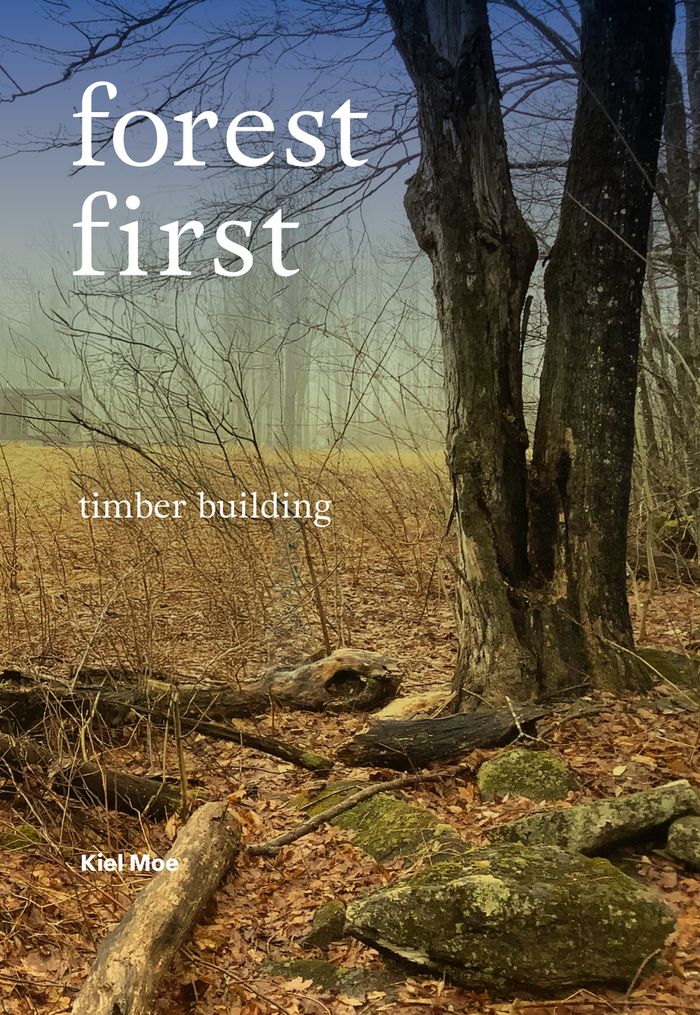
Forest first
Forest first
Actions:
Price:
$55.95
(available in store)
Summary:
How might we design and build in a non-extractive manner? To address that question this book considers a recursive relationship between forests and timber building. It puts the forest first and offers a detailed immersion into forest history, forest stand dynamics, forest ecology, forest-building carbon dynamics, and possible future forest trajectories as the pretext for(...)
$55.95
(available in store)
Summary:
How might we design and build in a non-extractive manner? To address that question this book considers a recursive relationship between forests and timber building. It puts the forest first and offers a detailed immersion into forest history, forest stand dynamics, forest ecology, forest-building carbon dynamics, and possible future forest trajectories as the pretext for(...)
Title:
Forest first
Actions:
Price:
$55.95
(available in store)
Summary:
How might we design and build in a non-extractive manner? To address that question this book considers a recursive relationship between forests and timber building. It puts the forest first and offers a detailed immersion into forest history, forest stand dynamics, forest ecology, forest-building carbon dynamics, and possible future forest trajectories as the pretext for thinking about timber technics. The specificity of regional forests suggests much about the prospect of non-extractive building design: building that tends and mends its terrestrial basis rather than takes, makes, and breaks it. Building activity can augment and improve forest conditions as an instance of regenerative design and as a path towards reconciliation, but only if conceived and practiced in ways distinct from normative design and construction practices. The future should no longer be a colony of present design practices that treat building as an art and science of extraction. By putting the forest first its conception of timber building technics, this book develops a more regenerative approach to the terrestrial relations of forest-building.
Forest first
Actions:
Price:
$55.95
(available in store)
Summary:
How might we design and build in a non-extractive manner? To address that question this book considers a recursive relationship between forests and timber building. It puts the forest first and offers a detailed immersion into forest history, forest stand dynamics, forest ecology, forest-building carbon dynamics, and possible future forest trajectories as the pretext for thinking about timber technics. The specificity of regional forests suggests much about the prospect of non-extractive building design: building that tends and mends its terrestrial basis rather than takes, makes, and breaks it. Building activity can augment and improve forest conditions as an instance of regenerative design and as a path towards reconciliation, but only if conceived and practiced in ways distinct from normative design and construction practices. The future should no longer be a colony of present design practices that treat building as an art and science of extraction. By putting the forest first its conception of timber building technics, this book develops a more regenerative approach to the terrestrial relations of forest-building.
Form:
books
books
Publication:
December 2025
December 2025
Subject:
Environment and environmental theory
Environment and environmental theory
Form:
books
books
Title:
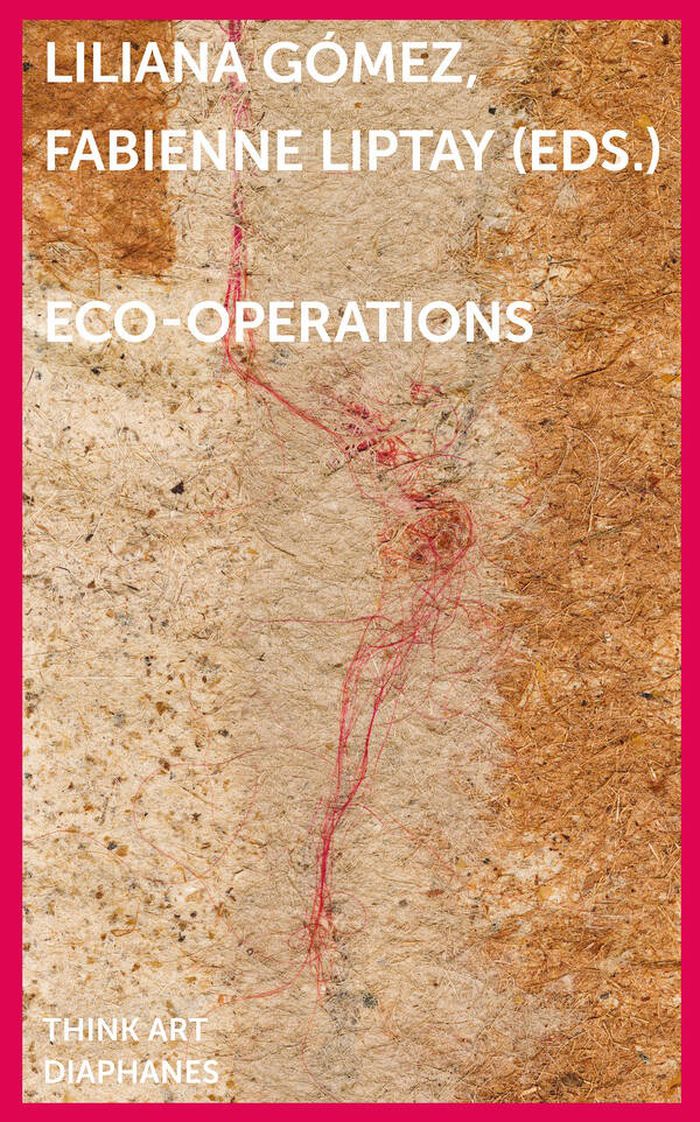
Eco-operations
Eco-operations
Actions:
Price:
$88.00
(available to order)
Summary:
The climate change crisis has become part of aesthetic discourse and critical research in culture and the arts. Future-oriented, ecologically conceived possibilities for action are being explored by artists, curators, and scholars alike. eco-operations addresses these emerging aesthetic ecologies and new technologies of cooperation that both challenge and shape a(...)
$88.00
(available to order)
Summary:
The climate change crisis has become part of aesthetic discourse and critical research in culture and the arts. Future-oriented, ecologically conceived possibilities for action are being explored by artists, curators, and scholars alike. eco-operations addresses these emerging aesthetic ecologies and new technologies of cooperation that both challenge and shape a(...)
Title:
Eco-operations
Actions:
Price:
$88.00
(available to order)
Summary:
The climate change crisis has become part of aesthetic discourse and critical research in culture and the arts. Future-oriented, ecologically conceived possibilities for action are being explored by artists, curators, and scholars alike. eco-operations addresses these emerging aesthetic ecologies and new technologies of cooperation that both challenge and shape a sustainable future, foregrounding interruptions, ruptures, disconnections, dissonances, exclusions, and allochronism. Moving beyond the concepts of “flow” and “network” as a single, coherent (ecological or technological) system, "eco-operations" instead emphasizes the frictions within asynchronously running systems. The infrastructures and formats of artistic production and exhibition play a central role here, as they themselves constitute ecosystems that invite and regulate processes of sharing and exchange. Artists and activists are embedded in these ecosystems, in which they simultaneously intervene when searching for alternative ways of creating collaborative practice. Bringing together scholars, artists, writers, and curators, and working across a range of disciplines, "eco-operations" explores this field of tension between global and local ecologies and aims to speculate on where dissonances imply both creative potential and political challenges.
Eco-operations
Actions:
Price:
$88.00
(available to order)
Summary:
The climate change crisis has become part of aesthetic discourse and critical research in culture and the arts. Future-oriented, ecologically conceived possibilities for action are being explored by artists, curators, and scholars alike. eco-operations addresses these emerging aesthetic ecologies and new technologies of cooperation that both challenge and shape a sustainable future, foregrounding interruptions, ruptures, disconnections, dissonances, exclusions, and allochronism. Moving beyond the concepts of “flow” and “network” as a single, coherent (ecological or technological) system, "eco-operations" instead emphasizes the frictions within asynchronously running systems. The infrastructures and formats of artistic production and exhibition play a central role here, as they themselves constitute ecosystems that invite and regulate processes of sharing and exchange. Artists and activists are embedded in these ecosystems, in which they simultaneously intervene when searching for alternative ways of creating collaborative practice. Bringing together scholars, artists, writers, and curators, and working across a range of disciplines, "eco-operations" explores this field of tension between global and local ecologies and aims to speculate on where dissonances imply both creative potential and political challenges.
Form:
books
books
Publication:
March 2025
March 2025
Subject:
Architecture ecologies
Architecture ecologies
Form:
journals and magazines
journals and magazines
Price:
$29.95
(available to order)
Summary:
ANCB The Aedes Metropolitan Laboratory was launched in 2009 as a physical and intellectual space focused on the inseparable interplay between urban form and social life. Now in its eighth year, ANCB decided to broaden its experimental journey as an independent public platform with an annual magazine entitled The Metropolitan Laboratory that further explores our deliberate(...)
$29.95
(available to order)
Summary:
ANCB The Aedes Metropolitan Laboratory was launched in 2009 as a physical and intellectual space focused on the inseparable interplay between urban form and social life. Now in its eighth year, ANCB decided to broaden its experimental journey as an independent public platform with an annual magazine entitled The Metropolitan Laboratory that further explores our deliberate(...)
Title:
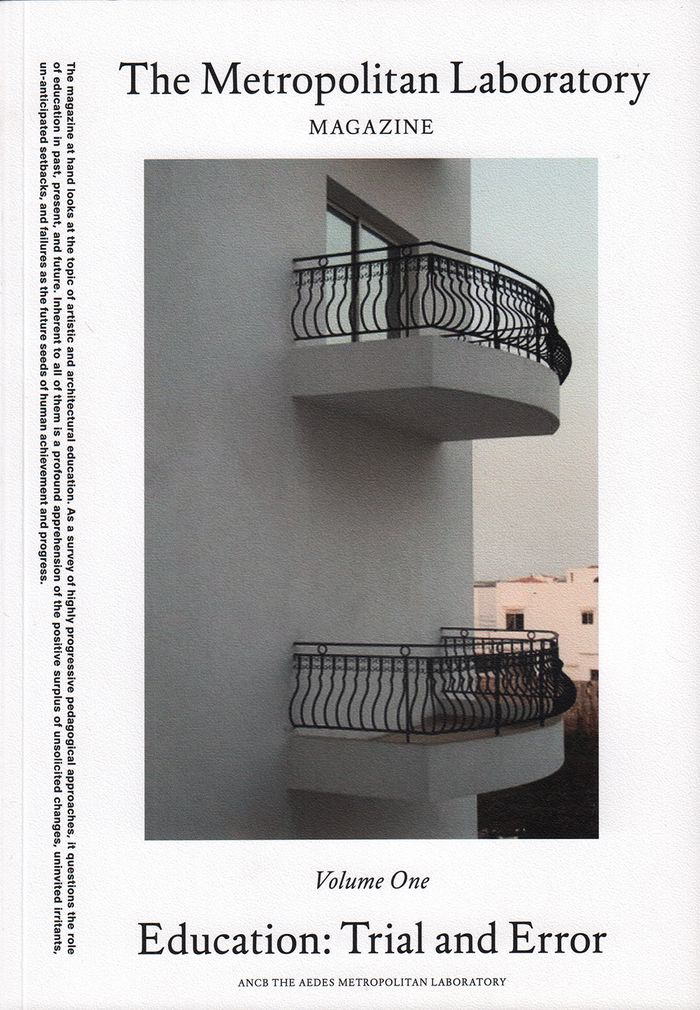
The Metropolitan Laboratory Magazine, Vol. 1. Education: trial and error
Actions:
Price:
$29.95
(available to order)
Summary:
ANCB The Aedes Metropolitan Laboratory was launched in 2009 as a physical and intellectual space focused on the inseparable interplay between urban form and social life. Now in its eighth year, ANCB decided to broaden its experimental journey as an independent public platform with an annual magazine entitled The Metropolitan Laboratory that further explores our deliberate goal of providing an alternative urban discourse. Entitled “Education: Trial and Error”, this first issue looks at the topic of artistic and architectural education. As a survey of highly progressive pedagogical approaches, it questions the role of education in past, present, and future. The broad spectrum of articles and essays ranges from Black Mountain College, Joseph Beuys, Paul Thek, Cedric Price, and Oswald Ungers all the way to Beatriz Colomina, Olafur Eliasson, Ai Wei Wei, Thom Mayne, Odile Decq, Peter Cook, and Joan Ockmann, to mention but a few. Inherent to all of these contributions is a profound apprehension of the positive surplus of unsolicited changes, uninvited irritants, unanticipated setbacks, and failures as the future seeds of human achievement and progress.
The Metropolitan Laboratory Magazine, Vol. 1. Education: trial and error
Actions:
Price:
$29.95
(available to order)
Summary:
ANCB The Aedes Metropolitan Laboratory was launched in 2009 as a physical and intellectual space focused on the inseparable interplay between urban form and social life. Now in its eighth year, ANCB decided to broaden its experimental journey as an independent public platform with an annual magazine entitled The Metropolitan Laboratory that further explores our deliberate goal of providing an alternative urban discourse. Entitled “Education: Trial and Error”, this first issue looks at the topic of artistic and architectural education. As a survey of highly progressive pedagogical approaches, it questions the role of education in past, present, and future. The broad spectrum of articles and essays ranges from Black Mountain College, Joseph Beuys, Paul Thek, Cedric Price, and Oswald Ungers all the way to Beatriz Colomina, Olafur Eliasson, Ai Wei Wei, Thom Mayne, Odile Decq, Peter Cook, and Joan Ockmann, to mention but a few. Inherent to all of these contributions is a profound apprehension of the positive surplus of unsolicited changes, uninvited irritants, unanticipated setbacks, and failures as the future seeds of human achievement and progress.
Form:
journals and magazines
journals and magazines
Publication:
July 2016
July 2016
Subject:
Magazines
Magazines
Form:
books
books
Title:
Why the museum matters
Why the museum matters
Actions:
Price:
$37.95
(available to order)
Summary:
Art museums have played a vital role in our culture, drawing on Enlightenment ideals in shaping ideas, advancing learning, fostering community, and providing spaces of beauty and permanence. In this thoughtful and often personal volume, Daniel H. Weiss contemplates the idea of the universal art museum alongside broad considerations about the role of art in society and(...)
$37.95
(available to order)
Summary:
Art museums have played a vital role in our culture, drawing on Enlightenment ideals in shaping ideas, advancing learning, fostering community, and providing spaces of beauty and permanence. In this thoughtful and often personal volume, Daniel H. Weiss contemplates the idea of the universal art museum alongside broad considerations about the role of art in society and(...)
Title:
Why the museum matters
Actions:
Price:
$37.95
(available to order)
Summary:
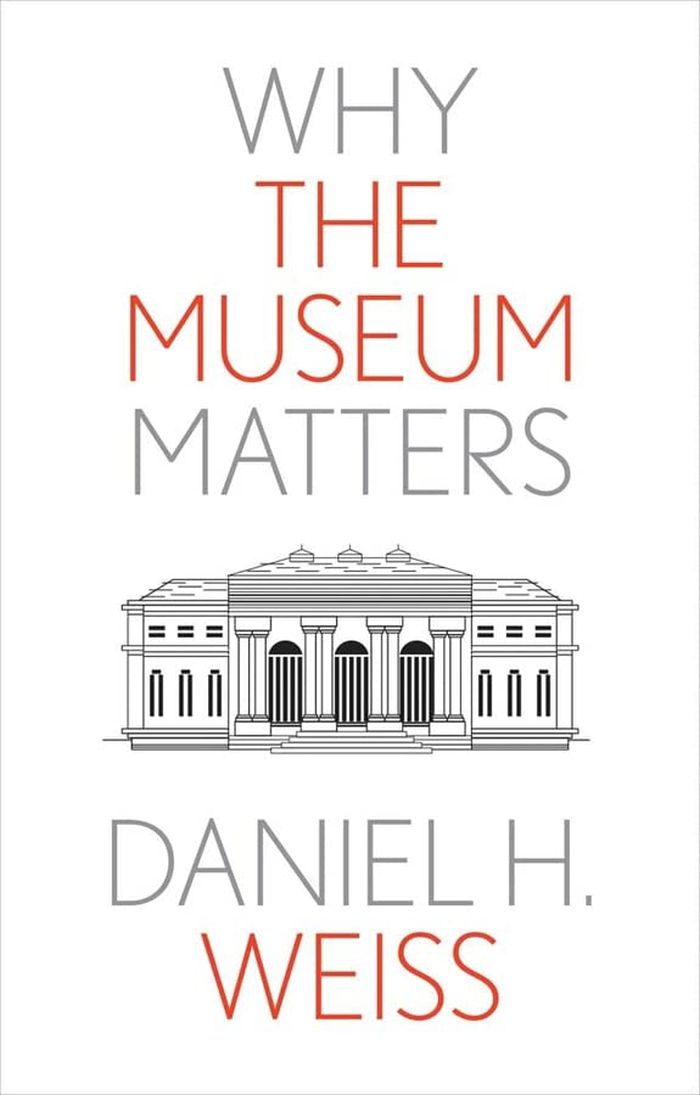
Art museums have played a vital role in our culture, drawing on Enlightenment ideals in shaping ideas, advancing learning, fostering community, and providing spaces of beauty and permanence. In this thoughtful and often personal volume, Daniel H. Weiss contemplates the idea of the universal art museum alongside broad considerations about the role of art in society and what defines a cultural experience. The future of art museums is far from secure, and Weiss reflects on many of the difficulties these institutions face, from their financial health to their collecting practices to the audiences they engage to ensuring freedom of expression on the part of artists and curators. In grappling with these challenges, Weiss sees a solution in shared governance. His tone is one of optimism as he looks to a future where the museum will serve a greater public while continuing to be a steward of culture and a place of discovery, discourse, inspiration, and pleasure. This poignant questioning and affirmation of the museum explores our enduring values while embracing the need for change in a rapidly evolving world.
Why the museum matters
Actions:
Price:
$37.95
(available to order)
Summary:
Art museums have played a vital role in our culture, drawing on Enlightenment ideals in shaping ideas, advancing learning, fostering community, and providing spaces of beauty and permanence. In this thoughtful and often personal volume, Daniel H. Weiss contemplates the idea of the universal art museum alongside broad considerations about the role of art in society and what defines a cultural experience. The future of art museums is far from secure, and Weiss reflects on many of the difficulties these institutions face, from their financial health to their collecting practices to the audiences they engage to ensuring freedom of expression on the part of artists and curators. In grappling with these challenges, Weiss sees a solution in shared governance. His tone is one of optimism as he looks to a future where the museum will serve a greater public while continuing to be a steward of culture and a place of discovery, discourse, inspiration, and pleasure. This poignant questioning and affirmation of the museum explores our enduring values while embracing the need for change in a rapidly evolving world.
Form:
books
books
Publication:
November 2022
November 2022
Subject:
Museology
Museology
Form:
books
books
Actions:
Price:
$24.95
(available to order)
Summary:
As the world becomes more interconnected through travel and electronic communication, many believe that physical places will become less important. But as Mario Polèse argues in The Wealth and Poverty of Regions, geography will matter more than ever before in a world where distance is allegedly dead. This provocative book surveys the globe, from London and Cape(...)
$24.95
(available to order)
Summary:
As the world becomes more interconnected through travel and electronic communication, many believe that physical places will become less important. But as Mario Polèse argues in The Wealth and Poverty of Regions, geography will matter more than ever before in a world where distance is allegedly dead. This provocative book surveys the globe, from London and Cape(...)
Title:
The wealth & poverty of regions: why cities matter
Actions:
Price:
$24.95
(available to order)
Summary:
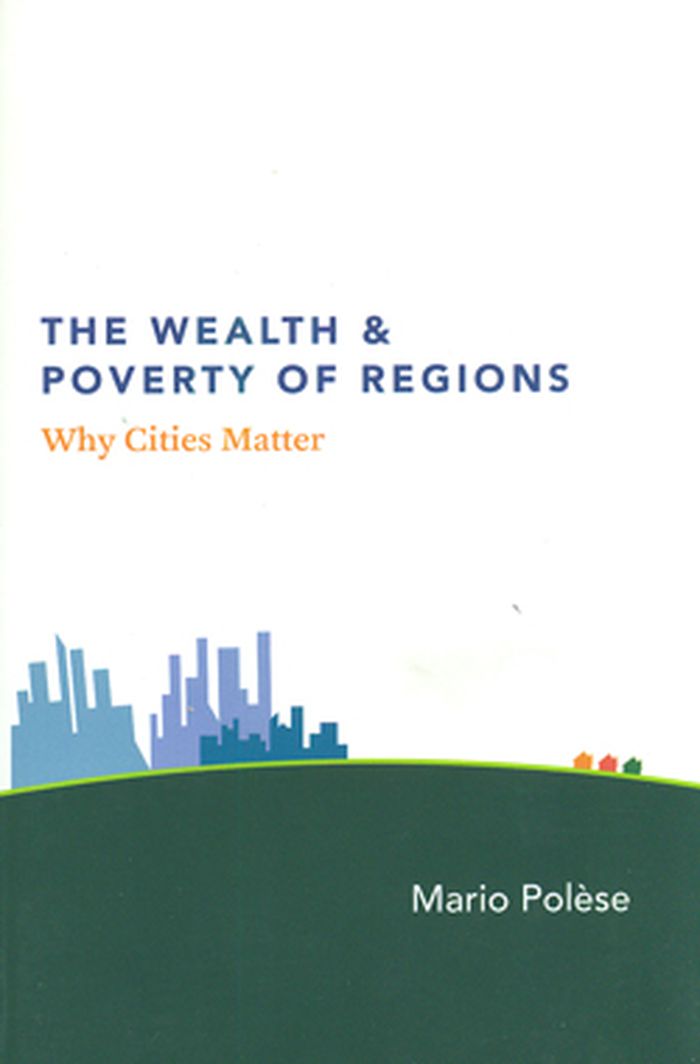
As the world becomes more interconnected through travel and electronic communication, many believe that physical places will become less important. But as Mario Polèse argues in The Wealth and Poverty of Regions, geography will matter more than ever before in a world where distance is allegedly dead. This provocative book surveys the globe, from London and Cape Town to New York and Beijing, contending that regions rise—or fall—due to their location, not only within nations but also on the world map. Polèse reveals how concentrations of industries and populations in specific locales often result in minor advantages that accumulate over time, resulting in reduced prices, improved transportation networks, increased diversity, and not least of all, “buzz”—the excitement and vitality that attracts ambitious people. The Wealth and Poverty of Regions maps out how a heady mix of size, infrastructure, proximity, and cost will determine which urban centers become the thriving metropolises of the future, and which become the deserted cities of the past. Engagingly written, the book provides insight to the past, present, and future of regions.
The wealth & poverty of regions: why cities matter
Actions:
Price:
$24.95
(available to order)
Summary:
As the world becomes more interconnected through travel and electronic communication, many believe that physical places will become less important. But as Mario Polèse argues in The Wealth and Poverty of Regions, geography will matter more than ever before in a world where distance is allegedly dead. This provocative book surveys the globe, from London and Cape Town to New York and Beijing, contending that regions rise—or fall—due to their location, not only within nations but also on the world map. Polèse reveals how concentrations of industries and populations in specific locales often result in minor advantages that accumulate over time, resulting in reduced prices, improved transportation networks, increased diversity, and not least of all, “buzz”—the excitement and vitality that attracts ambitious people. The Wealth and Poverty of Regions maps out how a heady mix of size, infrastructure, proximity, and cost will determine which urban centers become the thriving metropolises of the future, and which become the deserted cities of the past. Engagingly written, the book provides insight to the past, present, and future of regions.
Form:
books
books
Publication:
August 2011
August 2011
Subject:
Urban Theory
Urban Theory
Form:
books
books
Actions:
Price:
$58.50
(available to order)
Summary:
From its title to its formal arrangement of language, Brad Feuerhelm's Dein Kampf suggests a commentary on our cyclical anxieties about ideology. Anxiety is implicit in his photographs and Berlin is their natural backdrop, being a city in which several ideologies collided in the twentieth century. The city exemplifies the quagmire of possibilities in which the tensions of(...)
$58.50
(available to order)
Summary:
From its title to its formal arrangement of language, Brad Feuerhelm's Dein Kampf suggests a commentary on our cyclical anxieties about ideology. Anxiety is implicit in his photographs and Berlin is their natural backdrop, being a city in which several ideologies collided in the twentieth century. The city exemplifies the quagmire of possibilities in which the tensions of(...)
Title:
Käthe Kollwitz: prints, process, politics
Actions:
Price:
$58.50
(available to order)
Summary:
From its title to its formal arrangement of language, Brad Feuerhelm's Dein Kampf suggests a commentary on our cyclical anxieties about ideology. Anxiety is implicit in his photographs and Berlin is their natural backdrop, being a city in which several ideologies collided in the twentieth century. The city exemplifies the quagmire of possibilities in which the tensions of historical narrative and contemporary political and ideological doubt are played out in visual motifs throughout the landscape. Fragments of the past and symbols of capitalist modernity underpin the work-banks, insurance companies and people as effigies of citizens appear as a cloaking miasma, the spectre of past, present and no future. The schema of the glitch and the appropriation methods in Feuerhelm's work are subtle enquiries into the contemporary conditions of fear and confusion. Loose associations about changing futures under technology, religion, immigration and the future of the photographic image also loom large. Dein Kampf is Feuerhelm's proposition about how we activate image and ideology in the book form. Includes text by Ulrich Baer.
Käthe Kollwitz: prints, process, politics
Actions:
Price:
$58.50
(available to order)
Summary:
From its title to its formal arrangement of language, Brad Feuerhelm's Dein Kampf suggests a commentary on our cyclical anxieties about ideology. Anxiety is implicit in his photographs and Berlin is their natural backdrop, being a city in which several ideologies collided in the twentieth century. The city exemplifies the quagmire of possibilities in which the tensions of historical narrative and contemporary political and ideological doubt are played out in visual motifs throughout the landscape. Fragments of the past and symbols of capitalist modernity underpin the work-banks, insurance companies and people as effigies of citizens appear as a cloaking miasma, the spectre of past, present and no future. The schema of the glitch and the appropriation methods in Feuerhelm's work are subtle enquiries into the contemporary conditions of fear and confusion. Loose associations about changing futures under technology, religion, immigration and the future of the photographic image also loom large. Dein Kampf is Feuerhelm's proposition about how we activate image and ideology in the book form. Includes text by Ulrich Baer.
Form:
books
books
Publication:
January 2020
January 2020
Subject:
Contemporary Art Monographs
Contemporary Art Monographs
Form:
books
books

Price:
$12.00
(available to order)
Summary:
'We' takes place in a distant future, where humans are forced to submit their wills to the requirements of the state, under the rule of the all-powerful Benefactor, and dreams are regarded as a sign of mental illness. In a city of straight lines, protected by green walls and a glass dome, a spaceship is being built in order to spearhead the conquest of new planets. Its(...)
$12.00
(available to order)
Summary:
'We' takes place in a distant future, where humans are forced to submit their wills to the requirements of the state, under the rule of the all-powerful Benefactor, and dreams are regarded as a sign of mental illness. In a city of straight lines, protected by green walls and a glass dome, a spaceship is being built in order to spearhead the conquest of new planets. Its(...)
Title:
We
Actions:
Price:
$12.00
(available to order)
Summary:
'We' takes place in a distant future, where humans are forced to submit their wills to the requirements of the state, under the rule of the all-powerful Benefactor, and dreams are regarded as a sign of mental illness. In a city of straight lines, protected by green walls and a glass dome, a spaceship is being built in order to spearhead the conquest of new planets. Its chief engineer, a man called D-503, keeps a journal of his life and activities: to his mathematical mind everything seems to make sense and proceed as it should, until a chance encounter with a woman threatens to shatter the very foundations of the world he lives in. Written in a highly charged, direct and concise style, Zamyatin's 1921 seminal novel is not only an indictment of the Soviet Russia of his time and a precursor of the works of Orwell and the dystopian genre, but also a prefiguration of much of twentieth-century history and a harbinger of the ominous future that may still lay ahead of us.
We
Actions:
Price:
$12.00
(available to order)
Summary:
'We' takes place in a distant future, where humans are forced to submit their wills to the requirements of the state, under the rule of the all-powerful Benefactor, and dreams are regarded as a sign of mental illness. In a city of straight lines, protected by green walls and a glass dome, a spaceship is being built in order to spearhead the conquest of new planets. Its chief engineer, a man called D-503, keeps a journal of his life and activities: to his mathematical mind everything seems to make sense and proceed as it should, until a chance encounter with a woman threatens to shatter the very foundations of the world he lives in. Written in a highly charged, direct and concise style, Zamyatin's 1921 seminal novel is not only an indictment of the Soviet Russia of his time and a precursor of the works of Orwell and the dystopian genre, but also a prefiguration of much of twentieth-century history and a harbinger of the ominous future that may still lay ahead of us.
Form:
books
books
Publication:
May 2019
May 2019
Subject:
Current Exhibitions
Current Exhibitions


