


6640 Results
Form:
books
books

Title:
Prefab houses
Prefab houses
Actions:
Price:
$38.95
(available to order)
Summary:
This publication presents a selection of contemporary prefabricated houses.
$38.95
(available to order)
Summary:
This publication presents a selection of contemporary prefabricated houses.
Subject:
Residential Architecture
Residential Architecture
Publication:
August 2014
August 2014
Title:
Prefab houses
Actions:
Price:
$38.95
(available to order)
Summary:
This publication presents a selection of contemporary prefabricated houses.
Prefab houses
Actions:
Price:
$38.95
(available to order)
Summary:
This publication presents a selection of contemporary prefabricated houses.
Form:
books
books
Publication:
August 2014
August 2014
Subject:
Residential Architecture
Residential Architecture
Form:
books
books
Title:
GA Architect 5 Zaha Hadid
GA Architect 5 Zaha Hadid
Actions:
Price:
$80.00
(available to order)
Summary:
Long-awaited GA Architect 05 Zaha Hadid has been republished. In 1983, Zaha Hadid made a brilliant debut by winning first prize at the competition of “The Peak” in Hong Kong. This project was never realized and she was called the “Queen of the Unbuilt” at that time. However, her distinctive drawings were full of energy which indicated her future success. This issue(...)
$80.00
(available to order)
Summary:
Long-awaited GA Architect 05 Zaha Hadid has been republished. In 1983, Zaha Hadid made a brilliant debut by winning first prize at the competition of “The Peak” in Hong Kong. This project was never realized and she was called the “Queen of the Unbuilt” at that time. However, her distinctive drawings were full of energy which indicated her future success. This issue(...)
Title:
GA Architect 5 Zaha Hadid
Actions:
Price:
$80.00
(available to order)
Summary:
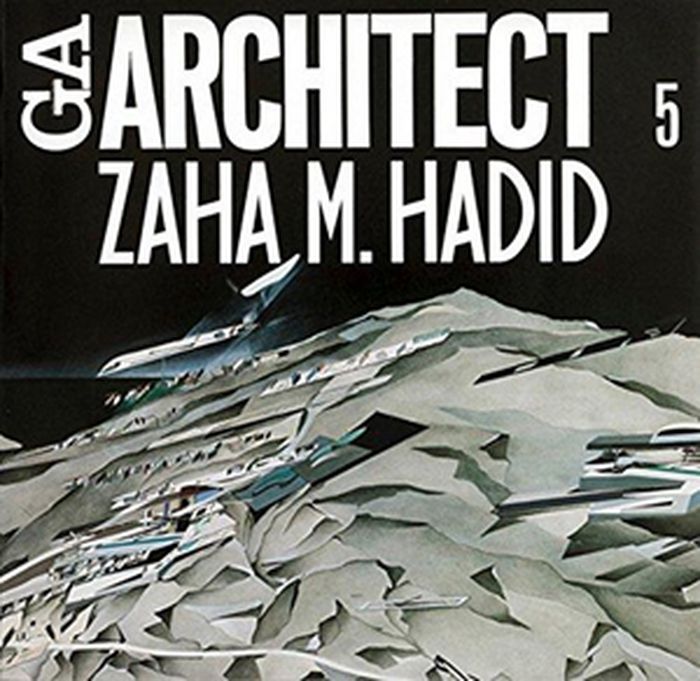
Long-awaited GA Architect 05 Zaha Hadid has been republished. In 1983, Zaha Hadid made a brilliant debut by winning first prize at the competition of “The Peak” in Hong Kong. This project was never realized and she was called the “Queen of the Unbuilt” at that time. However, her distinctive drawings were full of energy which indicated her future success. This issue includes 9 projects of her early days. Her drawings are reproduced with high definition and displayed in beautiful layout. The preface is written by Arata Isozaki, who discovered her talent at the competition of "The Peak". This book is a must to know the first stage of the master of contemporary architecture.
GA Architect 5 Zaha Hadid
Actions:
Price:
$80.00
(available to order)
Summary:
Long-awaited GA Architect 05 Zaha Hadid has been republished. In 1983, Zaha Hadid made a brilliant debut by winning first prize at the competition of “The Peak” in Hong Kong. This project was never realized and she was called the “Queen of the Unbuilt” at that time. However, her distinctive drawings were full of energy which indicated her future success. This issue includes 9 projects of her early days. Her drawings are reproduced with high definition and displayed in beautiful layout. The preface is written by Arata Isozaki, who discovered her talent at the competition of "The Peak". This book is a must to know the first stage of the master of contemporary architecture.
Form:
books
books
Publication:
October 2014
October 2014
Subject:
Architecture Monographs
Architecture Monographs
Form:
books
books
Title:
Houses in Finland
Houses in Finland
Actions:
Price:
$79.95
(available to order)
Summary:
More than 30 uniquely designed single family residences from the beginning of the millennium onwards are presented here, featuring the best of Finnish detached-house architecture. Each structure is presented through detailed photographs and drawings, accompanied by commentary from the architect who designed it. A wide range of homes are included, reflecting the diversity(...)
$79.95
(available to order)
Summary:
More than 30 uniquely designed single family residences from the beginning of the millennium onwards are presented here, featuring the best of Finnish detached-house architecture. Each structure is presented through detailed photographs and drawings, accompanied by commentary from the architect who designed it. A wide range of homes are included, reflecting the diversity(...)
Title:
Houses in Finland
Actions:
Price:
$79.95
(available to order)
Summary:
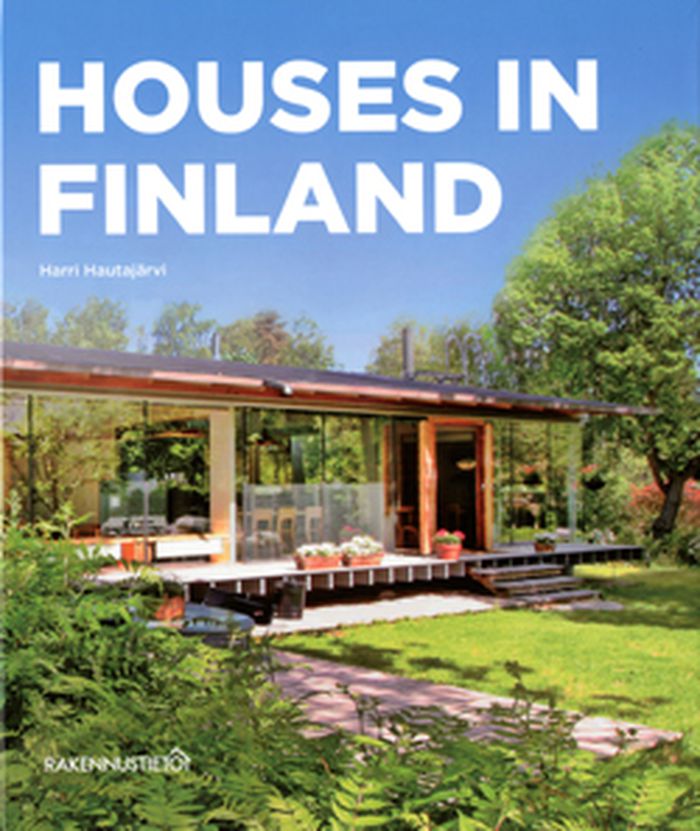
More than 30 uniquely designed single family residences from the beginning of the millennium onwards are presented here, featuring the best of Finnish detached-house architecture. Each structure is presented through detailed photographs and drawings, accompanied by commentary from the architect who designed it. A wide range of homes are included, reflecting the diversity of contemporary Finnish society, different levels of income, and the inhabitants’ preferences before construction. Capturing imaginative and unique solutions, applications relating to tradition, and versatile spaces, these abodes are showcased for their connections to their gardens and surrounding nature, functional floor plans, and natural light. An accompanying article describes the long history of the art, changes in lifestyles, and sustainable construction solutions.
Houses in Finland
Actions:
Price:
$79.95
(available to order)
Summary:
More than 30 uniquely designed single family residences from the beginning of the millennium onwards are presented here, featuring the best of Finnish detached-house architecture. Each structure is presented through detailed photographs and drawings, accompanied by commentary from the architect who designed it. A wide range of homes are included, reflecting the diversity of contemporary Finnish society, different levels of income, and the inhabitants’ preferences before construction. Capturing imaginative and unique solutions, applications relating to tradition, and versatile spaces, these abodes are showcased for their connections to their gardens and surrounding nature, functional floor plans, and natural light. An accompanying article describes the long history of the art, changes in lifestyles, and sustainable construction solutions.
Form:
books
books
Publication:
December 2011
December 2011
Subject:
Residential Architecture
Residential Architecture
Form:
books
books
Title:
Latin American houses
Latin American houses
Actions:
Price:
$35.00
(available to order)
Summary:
Since the early twentieth century, Latin America has been home to some of the most compelling architecture--from the large-scale and otherworldly civic structures of the Brazilian Oscar Niemeyer to the more intimate work of Mexico's Luis Barragan. In Latin American Houses, historian Mercedes Daguerre shows that this tradition of architectural innovation lives on in the(...)
$35.00
(available to order)
Summary:
Since the early twentieth century, Latin America has been home to some of the most compelling architecture--from the large-scale and otherworldly civic structures of the Brazilian Oscar Niemeyer to the more intimate work of Mexico's Luis Barragan. In Latin American Houses, historian Mercedes Daguerre shows that this tradition of architectural innovation lives on in the(...)
Title:
Latin American houses
Actions:
Price:
$35.00
(available to order)
Summary:
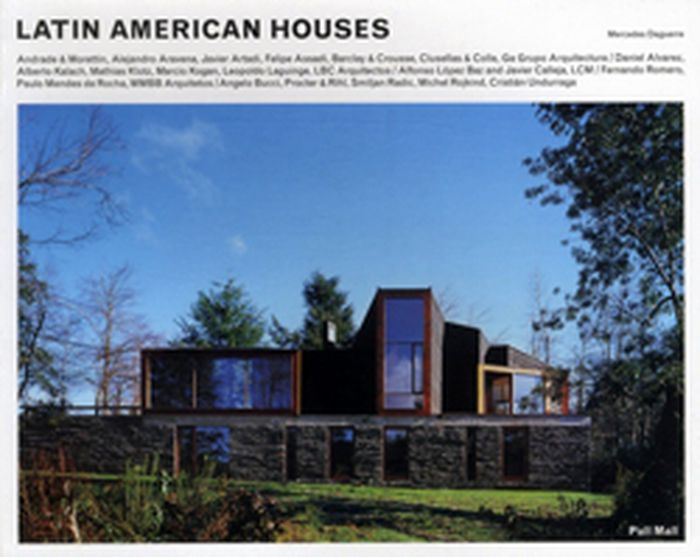
Since the early twentieth century, Latin America has been home to some of the most compelling architecture--from the large-scale and otherworldly civic structures of the Brazilian Oscar Niemeyer to the more intimate work of Mexico's Luis Barragan. In Latin American Houses, historian Mercedes Daguerre shows that this tradition of architectural innovation lives on in the work of such contemporary architects as 2006 Pritzker Prize-winner Paulo Mendes da Rocha (Brazil), Mathias Klotz (Chile), Angelo Bucci (Argentina), and LBC Arquitectos (Mexico), among others. Focusing on one-family houses that have been built over the past decade, this title explores the elegance and innovation with which today's Latin American architects evolve their modernist heritage.
Latin American houses
Actions:
Price:
$35.00
(available to order)
Summary:
Since the early twentieth century, Latin America has been home to some of the most compelling architecture--from the large-scale and otherworldly civic structures of the Brazilian Oscar Niemeyer to the more intimate work of Mexico's Luis Barragan. In Latin American Houses, historian Mercedes Daguerre shows that this tradition of architectural innovation lives on in the work of such contemporary architects as 2006 Pritzker Prize-winner Paulo Mendes da Rocha (Brazil), Mathias Klotz (Chile), Angelo Bucci (Argentina), and LBC Arquitectos (Mexico), among others. Focusing on one-family houses that have been built over the past decade, this title explores the elegance and innovation with which today's Latin American architects evolve their modernist heritage.
Form:
books
books
Publication:
March 2012
March 2012
Subject:
Residential Architecture
Residential Architecture
Form:
books
books
Actions:
Price:
$61.00
(available to order)
Summary:
Christ & Gantenbein Review is a new series of books edited by Swiss architects Emanuel Christ and Christoph Gantenbein, in which they explore issues and topics arising from their architectural work. Pictures From Italy, the series' initial volume, also represents Christ & Gantenbein's first architectural project after they had setup their studio in Basel. The pictures(...)
$61.00
(available to order)
Summary:
Christ & Gantenbein Review is a new series of books edited by Swiss architects Emanuel Christ and Christoph Gantenbein, in which they explore issues and topics arising from their architectural work. Pictures From Italy, the series' initial volume, also represents Christ & Gantenbein's first architectural project after they had setup their studio in Basel. The pictures(...)
Subject:
Architecture Monographs
Architecture Monographs
Publication:
September 2012
September 2012
Title:
Review N. 1 : Pictures from Italy
Actions:
Price:
$61.00
(available to order)
Summary:
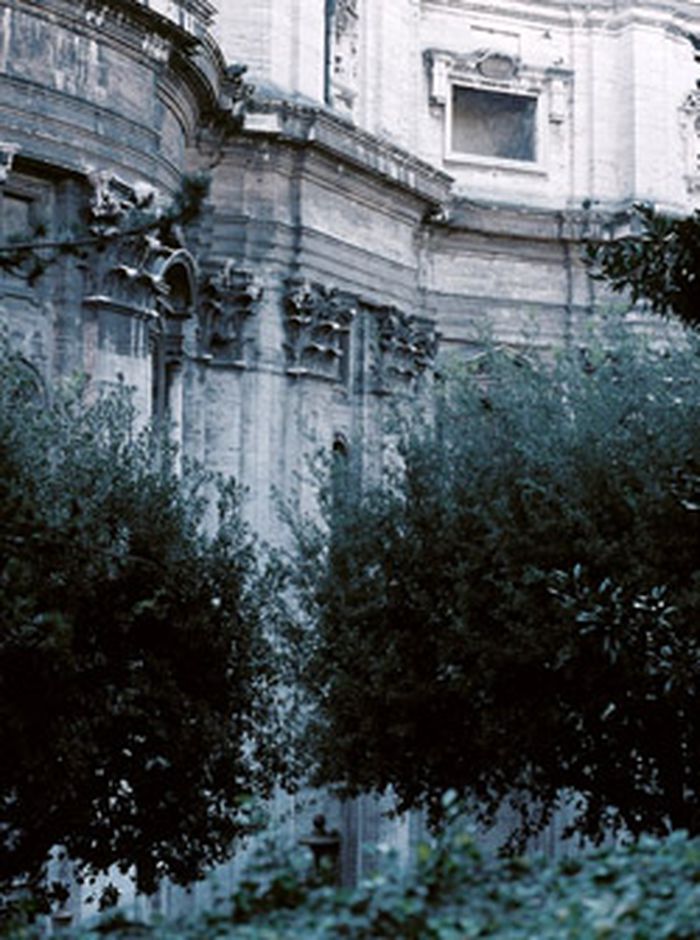
Christ & Gantenbein Review is a new series of books edited by Swiss architects Emanuel Christ and Christoph Gantenbein, in which they explore issues and topics arising from their architectural work. Pictures From Italy, the series' initial volume, also represents Christ & Gantenbein's first architectural project after they had setup their studio in Basel. The pictures were shot during a six week journey throughout Italy in 1999. The journey itself and the images seen and taken proved to be of fundamental influence to Christ & Gantenbein's entire work since. Intending to look at historical architecture, in a quasi-unhistorical way, with the contemporary view of the 21st century, they chose Italy in search for absolute timelessness.
Review N. 1 : Pictures from Italy
Actions:
Price:
$61.00
(available to order)
Summary:
Christ & Gantenbein Review is a new series of books edited by Swiss architects Emanuel Christ and Christoph Gantenbein, in which they explore issues and topics arising from their architectural work. Pictures From Italy, the series' initial volume, also represents Christ & Gantenbein's first architectural project after they had setup their studio in Basel. The pictures were shot during a six week journey throughout Italy in 1999. The journey itself and the images seen and taken proved to be of fundamental influence to Christ & Gantenbein's entire work since. Intending to look at historical architecture, in a quasi-unhistorical way, with the contemporary view of the 21st century, they chose Italy in search for absolute timelessness.
Form:
books
books
Publication:
September 2012
September 2012
Subject:
Architecture Monographs
Architecture Monographs
Form:
books
books
Title:
Frank Lloyd Wright
Frank Lloyd Wright
Actions:
Price:
$21.50
(available to order)
Summary:
The life and architecture of Frank Lloyd Wright (1867-1959) have been much-studied, yet there is a consistent division between analyses of his architecture, which exclude any discussion of his daily life, and books that tell the often sensational tale of his life, with barely a passing reference to the buildings themselves. The result is that, despite the large number of(...)
$21.50
(available to order)
Summary:
The life and architecture of Frank Lloyd Wright (1867-1959) have been much-studied, yet there is a consistent division between analyses of his architecture, which exclude any discussion of his daily life, and books that tell the often sensational tale of his life, with barely a passing reference to the buildings themselves. The result is that, despite the large number of(...)
Title:
Frank Lloyd Wright
Actions:
Price:
$21.50
(available to order)
Summary:
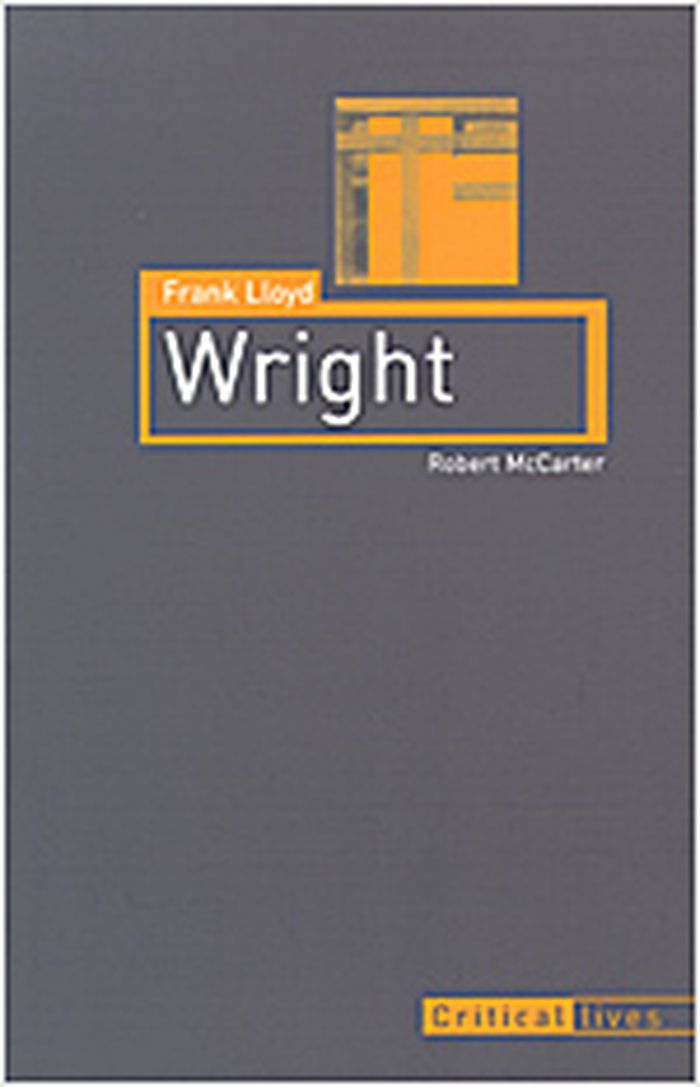
The life and architecture of Frank Lloyd Wright (1867-1959) have been much-studied, yet there is a consistent division between analyses of his architecture, which exclude any discussion of his daily life, and books that tell the often sensational tale of his life, with barely a passing reference to the buildings themselves. The result is that, despite the large number of volumes on Wright, the most essential part of his life – his life as an architect, working, as he said, ‘in the cause of architecture’ – remains virtually unexplored. "Frank Lloyd Wright" offers an account of Wright’s life as an architect, the ideas, beliefs and relationships that shaped his life and work, and the manner in which these affected, and are reflected in, his architecture. During a tumultuous life and extensive career which includes such hugely defining buildings as the Guggenheim Museum, Fallingwater, Taliesin, Unity Temple, and the prolific Prairie Houses, Wright endeavoured to shape the emerging and evolving American democracy, its mode of dwelling, and its relation to the traditional conception of the city. Fusing ancient construction geometries with contemporary ideals of Transcendental philosophy, Wright sought to develop an appropriate architecture for the new world of the twentieth century. In doing so, he served as the primary inspiration for the emergence of Modern architecture around the world. Robert McCarter examines how Wright’s architecture crystallized key conceptions of both private dwelling and public citizenship for American society, and relates how, through his work and writings, Wright developed relationships with key leaders of the arts, industry and society. He analyses how and why Wright maintained that architecture was the ‘background or framework’ for daily life, never the literal ‘object’ of our attention, as well as Wright’s belief that architects have the most significant ethical responsibilities to improve the larger society and culture to which they belong. In exploring Wright’s life, times and culture, Robert McCarter shows how Wright was an architect of astonishing ability, whose works continue to shape the world around us, fifty years after his death.
Frank Lloyd Wright
Actions:
Price:
$21.50
(available to order)
Summary:
The life and architecture of Frank Lloyd Wright (1867-1959) have been much-studied, yet there is a consistent division between analyses of his architecture, which exclude any discussion of his daily life, and books that tell the often sensational tale of his life, with barely a passing reference to the buildings themselves. The result is that, despite the large number of volumes on Wright, the most essential part of his life – his life as an architect, working, as he said, ‘in the cause of architecture’ – remains virtually unexplored. "Frank Lloyd Wright" offers an account of Wright’s life as an architect, the ideas, beliefs and relationships that shaped his life and work, and the manner in which these affected, and are reflected in, his architecture. During a tumultuous life and extensive career which includes such hugely defining buildings as the Guggenheim Museum, Fallingwater, Taliesin, Unity Temple, and the prolific Prairie Houses, Wright endeavoured to shape the emerging and evolving American democracy, its mode of dwelling, and its relation to the traditional conception of the city. Fusing ancient construction geometries with contemporary ideals of Transcendental philosophy, Wright sought to develop an appropriate architecture for the new world of the twentieth century. In doing so, he served as the primary inspiration for the emergence of Modern architecture around the world. Robert McCarter examines how Wright’s architecture crystallized key conceptions of both private dwelling and public citizenship for American society, and relates how, through his work and writings, Wright developed relationships with key leaders of the arts, industry and society. He analyses how and why Wright maintained that architecture was the ‘background or framework’ for daily life, never the literal ‘object’ of our attention, as well as Wright’s belief that architects have the most significant ethical responsibilities to improve the larger society and culture to which they belong. In exploring Wright’s life, times and culture, Robert McCarter shows how Wright was an architect of astonishing ability, whose works continue to shape the world around us, fifty years after his death.
Form:
books
books
Publication:
March 2006, London
March 2006, London
Subject:
Architecture Monographs
Architecture Monographs
Form:
books
books
Title:
New international house
New international house
Actions:
Price:
$83.00
(available to order)
Summary:
This amply illustrated volume details examples of contemporary residential design.
$83.00
(available to order)
Summary:
This amply illustrated volume details examples of contemporary residential design.
Subject:
Residential Architecture
Residential Architecture
Publication:
September 1997, New York
September 1997, New York
Title:
New international house
Actions:
Price:
$83.00
(available to order)
Summary:
This amply illustrated volume details examples of contemporary residential design.
New international house
Actions:
Price:
$83.00
(available to order)
Summary:
This amply illustrated volume details examples of contemporary residential design.
Form:
books
books
Publication:
September 1997, New York
September 1997, New York
Subject:
Residential Architecture
Residential Architecture
Form:
books
books
Price:
$131.95
(available to order)
Summary:
As sculptor, draughtsman, photographer, and environmental artist, Mary Miss straddles the fields of architecture, landscape architecture, and installation art. Her work moves from the urban bustle of New York, to the vast plains of the American Midwest, to the remote forests of Finland, and has been acclaimed worldwide for its poetry and power. Designed in association(...)
$131.95
(available to order)
Summary:
As sculptor, draughtsman, photographer, and environmental artist, Mary Miss straddles the fields of architecture, landscape architecture, and installation art. Her work moves from the urban bustle of New York, to the vast plains of the American Midwest, to the remote forests of Finland, and has been acclaimed worldwide for its poetry and power. Designed in association(...)
Title:
Mary Miss
Actions:
Price:
$131.95
(available to order)
Summary:
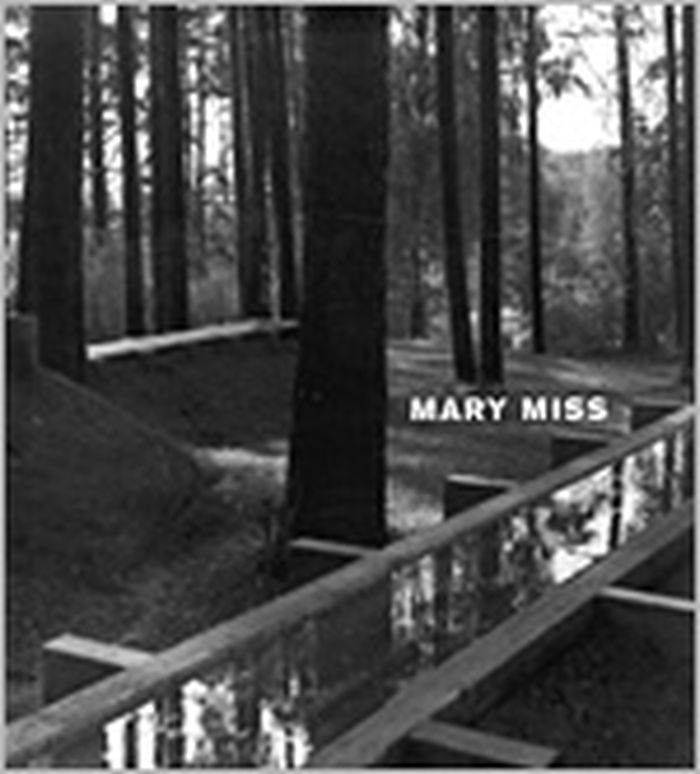
As sculptor, draughtsman, photographer, and environmental artist, Mary Miss straddles the fields of architecture, landscape architecture, and installation art. Her work moves from the urban bustle of New York, to the vast plains of the American Midwest, to the remote forests of Finland, and has been acclaimed worldwide for its poetry and power. Designed in association with the artist, this exquisitely produced monograph, a comprehensive overview of Miss's work, features thirty-five color images and over 150 duotone photographs of her projects accompanied by copious drawings by the artist. Architectural historian Daniel Abramson, who has been granted unparalleled access to the artist and her archives, addresses each of her projects in detail. An introduction by the well-known art critic Eleanor Heartney situates Miss in the context of contemporary movements in art. Architecture critic Joseph Giovannini places her work within contemporary design practice. Together, the text and images of Mary Miss provide a remarkable look at the work of this groundbreaking public artist.
Mary Miss
Actions:
Price:
$131.95
(available to order)
Summary:
As sculptor, draughtsman, photographer, and environmental artist, Mary Miss straddles the fields of architecture, landscape architecture, and installation art. Her work moves from the urban bustle of New York, to the vast plains of the American Midwest, to the remote forests of Finland, and has been acclaimed worldwide for its poetry and power. Designed in association with the artist, this exquisitely produced monograph, a comprehensive overview of Miss's work, features thirty-five color images and over 150 duotone photographs of her projects accompanied by copious drawings by the artist. Architectural historian Daniel Abramson, who has been granted unparalleled access to the artist and her archives, addresses each of her projects in detail. An introduction by the well-known art critic Eleanor Heartney situates Miss in the context of contemporary movements in art. Architecture critic Joseph Giovannini places her work within contemporary design practice. Together, the text and images of Mary Miss provide a remarkable look at the work of this groundbreaking public artist.
Form:
books
books
Publication:
January 2004, New York
January 2004, New York
Subject:
Contemporary Art Monographs
Contemporary Art Monographs
Form:
books
books
Actions:
Price:
$79.95
(available to order)
Summary:
Until now, the book market has primarily dealt with the popular topic of living by the sea with publications that illustrate the location’s aesthetic appeal. This book goes further to focus on the design, constructional, and technical possibilities that permit one to react to the special conditions of locations by the sea. In an introductory section, the author sets(...)
$79.95
(available to order)
Summary:
Until now, the book market has primarily dealt with the popular topic of living by the sea with publications that illustrate the location’s aesthetic appeal. This book goes further to focus on the design, constructional, and technical possibilities that permit one to react to the special conditions of locations by the sea. In an introductory section, the author sets(...)
Subject:
Residential Architecture
Residential Architecture
Publication:
July 2008, Basel, Boston, Berlin
July 2008, Basel, Boston, Berlin
Title:
Living by the sea: 25 international examples
Actions:
Price:
$79.95
(available to order)
Summary:
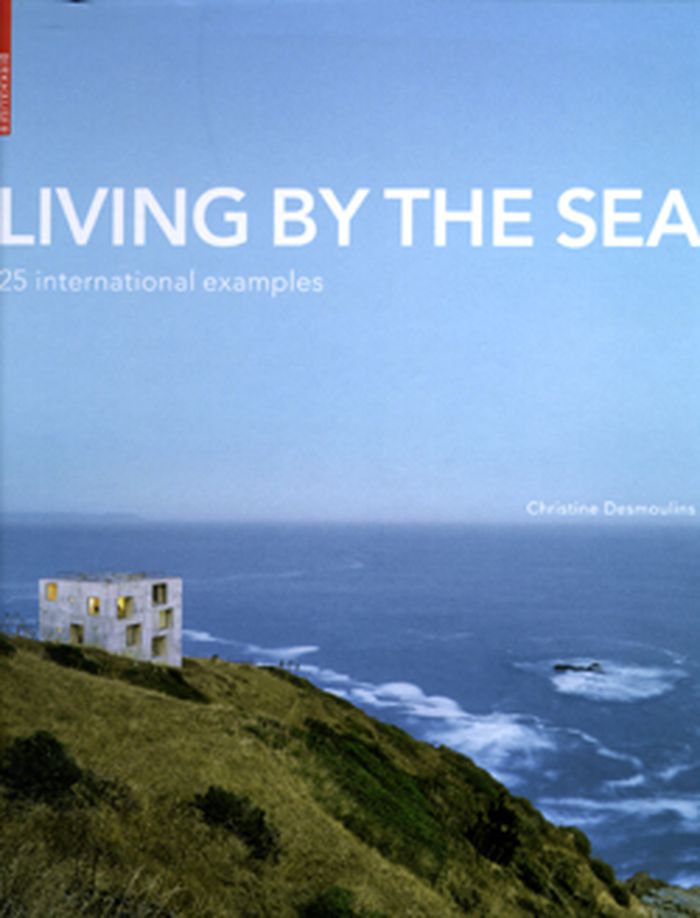
Until now, the book market has primarily dealt with the popular topic of living by the sea with publications that illustrate the location’s aesthetic appeal. This book goes further to focus on the design, constructional, and technical possibilities that permit one to react to the special conditions of locations by the sea. In an introductory section, the author sets forth the principal aspects that fundamentally affect architectural design for this construction task: the geography and geology of the site, climatic conditions, and durability of materials, but also such aesthetic factors as light, landscape, and position, all of which play a special role in approaches to living by the sea. In keeping with this, the following project section, with twenty-five international examples, is organized according to the type of relationship the houses have with the sea: right by the sea, above the sea, or in the sea. The volume uses texts, detailed project information, drawings, and striking photographs to present exemplary design approaches taken by contemporary architects, including Tadao Ando, David Chipperfield, and Steven Holl. Christine Desmoulins is a journalist and architecture critic. She regulary publishes articles in noted architecture journals, including d'Architectures, Construction Moderne, and Abitare, and is the author of numerous books on architecture.
Living by the sea: 25 international examples
Actions:
Price:
$79.95
(available to order)
Summary:
Until now, the book market has primarily dealt with the popular topic of living by the sea with publications that illustrate the location’s aesthetic appeal. This book goes further to focus on the design, constructional, and technical possibilities that permit one to react to the special conditions of locations by the sea. In an introductory section, the author sets forth the principal aspects that fundamentally affect architectural design for this construction task: the geography and geology of the site, climatic conditions, and durability of materials, but also such aesthetic factors as light, landscape, and position, all of which play a special role in approaches to living by the sea. In keeping with this, the following project section, with twenty-five international examples, is organized according to the type of relationship the houses have with the sea: right by the sea, above the sea, or in the sea. The volume uses texts, detailed project information, drawings, and striking photographs to present exemplary design approaches taken by contemporary architects, including Tadao Ando, David Chipperfield, and Steven Holl. Christine Desmoulins is a journalist and architecture critic. She regulary publishes articles in noted architecture journals, including d'Architectures, Construction Moderne, and Abitare, and is the author of numerous books on architecture.
Form:
books
books
Publication:
July 2008, Basel, Boston, Berlin
July 2008, Basel, Boston, Berlin
Subject:
Residential Architecture
Residential Architecture
Form:
books
books

Price:
$74.00
(available to order)
Summary:
An explosion of little architectural magazines in the 1960s and 1970s instigated a radical transformation in architectural culture, as the magazines acted as a site of innovation and debate. Clip, Stamp, Fold takes stock of seventy little magazines from this period that were published in over a dozen cities. Coined in the early twentieth century to designate progressive(...)
$74.00
(available to order)
Summary:
An explosion of little architectural magazines in the 1960s and 1970s instigated a radical transformation in architectural culture, as the magazines acted as a site of innovation and debate. Clip, Stamp, Fold takes stock of seventy little magazines from this period that were published in over a dozen cities. Coined in the early twentieth century to designate progressive(...)
Title:
Clip stamp fold: The radical architecture of little magazines
Actions:
Price:
$74.00
(available to order)
Summary:
An explosion of little architectural magazines in the 1960s and 1970s instigated a radical transformation in architectural culture, as the magazines acted as a site of innovation and debate. Clip, Stamp, Fold takes stock of seventy little magazines from this period that were published in over a dozen cities. Coined in the early twentieth century to designate progressive literary journals, the term little magazine was remobilized during the 1960s to grapple with the contemporary proliferation of independent architectural periodicals. In addition to short-lived radical magazines, this book includes pamphlets and building instruction manuals along with professional magazines that experienced moments of littleness, influenced by the graphics and intellectual concerns of their self-published contemporaries.
Clip stamp fold: The radical architecture of little magazines
Actions:
Price:
$74.00
(available to order)
Summary:
An explosion of little architectural magazines in the 1960s and 1970s instigated a radical transformation in architectural culture, as the magazines acted as a site of innovation and debate. Clip, Stamp, Fold takes stock of seventy little magazines from this period that were published in over a dozen cities. Coined in the early twentieth century to designate progressive literary journals, the term little magazine was remobilized during the 1960s to grapple with the contemporary proliferation of independent architectural periodicals. In addition to short-lived radical magazines, this book includes pamphlets and building instruction manuals along with professional magazines that experienced moments of littleness, influenced by the graphics and intellectual concerns of their self-published contemporaries.
Form:
books
books
Publication:
April 2010
April 2010
Subject:
Book Design
Book Design


