


568 Results
Form:
books
books
Actions:
Price:
$97.90
(available in store)
Summary:
The sketch is a window into the architects mind. As creative designers, architects are interested in how other architects, particularly successful ones, think through the use of drawings to approach their work. Historically designers have sought inspiration for their own work through an insight into the minds and workings of people they often regard as geniuses. This(...)
$97.90
(available in store)
Summary:
The sketch is a window into the architects mind. As creative designers, architects are interested in how other architects, particularly successful ones, think through the use of drawings to approach their work. Historically designers have sought inspiration for their own work through an insight into the minds and workings of people they often regard as geniuses. This(...)
Title:
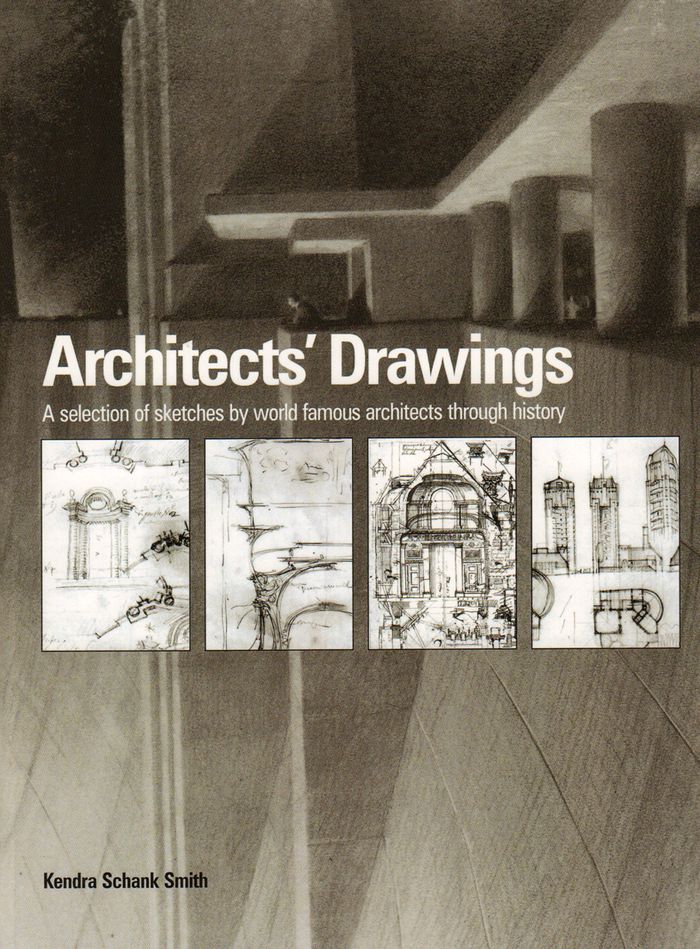
Architects' drawings: a selection of sketches by world famous archittects through history
Actions:
Price:
$97.90
(available in store)
Summary:
The sketch is a window into the architects mind. As creative designers, architects are interested in how other architects, particularly successful ones, think through the use of drawings to approach their work. Historically designers have sought inspiration for their own work through an insight into the minds and workings of people they often regard as geniuses. This collection of sketches aims to provide this insight. Here for the first time, a wide range of world famous architects' sketches from the Renaissance to the present day can be seen in a single volume. The sketches have been selected to represent the concepts or philosophies of the key movements in architecture in order to develop an overall picture of the role of the sketch in the development of architecture. The book illustrates the work of designers as diverse as Andrea Palladio, Erich Mendelsohn, Sir Edwin Lutyens, Gianlorenzo Bernini, Le Corbusier, Michelangelo, Alvar Aalto, Sir John Soane, Francesco Borromini, Walter Gropius, and contemporary architects Tadao Ando, Zaha Hadid and Frank Gehry to name but a few. Each chronologically placed sketch is accompanied by text providing details about the architect’s life, a look at the sketch in context, and the connection to specific buildings where appropriate. Style, media and meaning are also discussed, developing an explanation of the architect’s thinking and intentions.
Architects' drawings: a selection of sketches by world famous archittects through history
Actions:
Price:
$97.90
(available in store)
Summary:
The sketch is a window into the architects mind. As creative designers, architects are interested in how other architects, particularly successful ones, think through the use of drawings to approach their work. Historically designers have sought inspiration for their own work through an insight into the minds and workings of people they often regard as geniuses. This collection of sketches aims to provide this insight. Here for the first time, a wide range of world famous architects' sketches from the Renaissance to the present day can be seen in a single volume. The sketches have been selected to represent the concepts or philosophies of the key movements in architecture in order to develop an overall picture of the role of the sketch in the development of architecture. The book illustrates the work of designers as diverse as Andrea Palladio, Erich Mendelsohn, Sir Edwin Lutyens, Gianlorenzo Bernini, Le Corbusier, Michelangelo, Alvar Aalto, Sir John Soane, Francesco Borromini, Walter Gropius, and contemporary architects Tadao Ando, Zaha Hadid and Frank Gehry to name but a few. Each chronologically placed sketch is accompanied by text providing details about the architect’s life, a look at the sketch in context, and the connection to specific buildings where appropriate. Style, media and meaning are also discussed, developing an explanation of the architect’s thinking and intentions.
Form:
books
books
Publication:
February 2016
February 2016
Subject:
Architectural Drawing
Architectural Drawing
Form:
books
books
Actions:
Price:
$51.00
(available to order)
Summary:
Between 1998 and 2005, the Structural Engineers Association of New York, along with the Museum of Modern Art's Department of Architecture and Design and the School of Architecture at both Princeton University and MIT, co-sponsored a lecture series in honor of the renowned Spanish and Mexican structural engineer Felix Candela, who led the early exploration of concrete(...)
$51.00
(available to order)
Summary:
Between 1998 and 2005, the Structural Engineers Association of New York, along with the Museum of Modern Art's Department of Architecture and Design and the School of Architecture at both Princeton University and MIT, co-sponsored a lecture series in honor of the renowned Spanish and Mexican structural engineer Felix Candela, who led the early exploration of concrete(...)
Title:
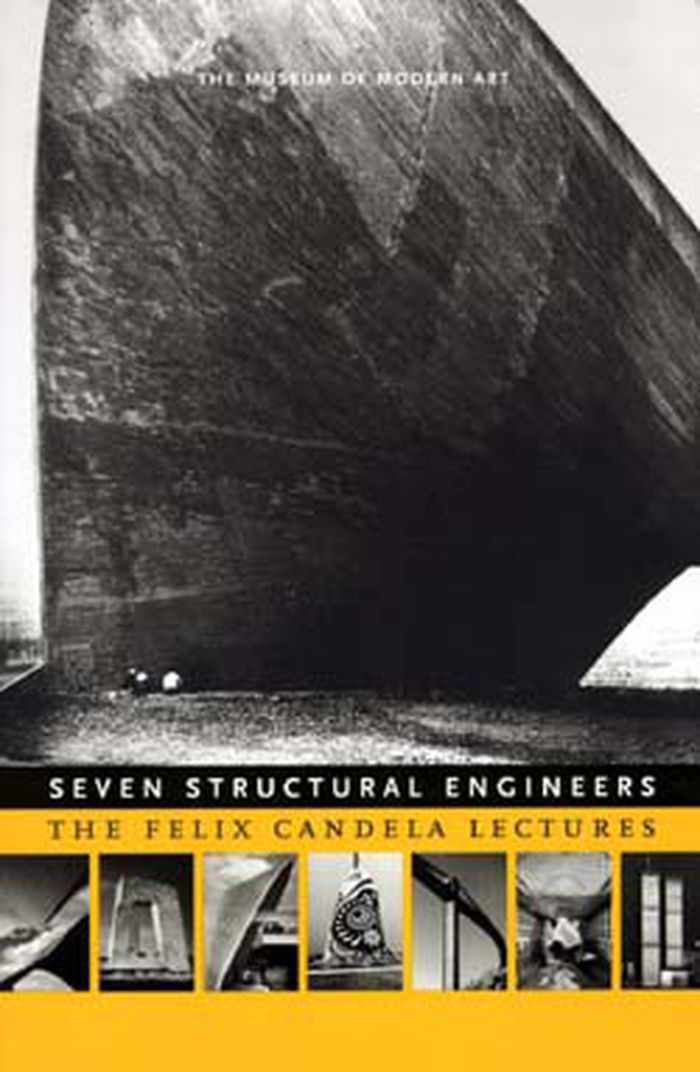
Seven structural engineers: the Felix Candela lectures
Actions:
Price:
$51.00
(available to order)
Summary:
Between 1998 and 2005, the Structural Engineers Association of New York, along with the Museum of Modern Art's Department of Architecture and Design and the School of Architecture at both Princeton University and MIT, co-sponsored a lecture series in honor of the renowned Spanish and Mexican structural engineer Felix Candela, who led the early exploration of concrete shell structures. These lectures are now available in the format of this book: discussed is the work of the Uruguayan engineer Eladio Dieste, who pioneered the use of thin, light-filled shell structures in masonry. Cecil Balmond recounts his collaboration with architects Rem Koolhaas and Daniel Libeskind. The Swiss bridge designer Christian Menn discusses his iconic long-span prestressed concrete bridges, including the new Charles River Bridge in Boston. Leslie E. Robertson, who is especially known for his work on the structural design of the World Trade Center complex with Minoru Yamasaki, discusses this design along with many other projects. Mamoru Kawaguchi recounts his own work in fabric structures and his collaboration with architects Kenzo Tange and Arata Isozaki. Joerg Schlaich talks about his creative collaboration with Frank Gehry. Heinz Isler's contribution is in the aerea of freeform concrete shell constructions. David Billington and Maria Garlock recount the work of master builders Anton Tedesko, Pier Luigi Nervi, Felix Candela, and Heinz Isler.
Seven structural engineers: the Felix Candela lectures
Actions:
Price:
$51.00
(available to order)
Summary:
Between 1998 and 2005, the Structural Engineers Association of New York, along with the Museum of Modern Art's Department of Architecture and Design and the School of Architecture at both Princeton University and MIT, co-sponsored a lecture series in honor of the renowned Spanish and Mexican structural engineer Felix Candela, who led the early exploration of concrete shell structures. These lectures are now available in the format of this book: discussed is the work of the Uruguayan engineer Eladio Dieste, who pioneered the use of thin, light-filled shell structures in masonry. Cecil Balmond recounts his collaboration with architects Rem Koolhaas and Daniel Libeskind. The Swiss bridge designer Christian Menn discusses his iconic long-span prestressed concrete bridges, including the new Charles River Bridge in Boston. Leslie E. Robertson, who is especially known for his work on the structural design of the World Trade Center complex with Minoru Yamasaki, discusses this design along with many other projects. Mamoru Kawaguchi recounts his own work in fabric structures and his collaboration with architects Kenzo Tange and Arata Isozaki. Joerg Schlaich talks about his creative collaboration with Frank Gehry. Heinz Isler's contribution is in the aerea of freeform concrete shell constructions. David Billington and Maria Garlock recount the work of master builders Anton Tedesko, Pier Luigi Nervi, Felix Candela, and Heinz Isler.
Form:
books
books
Publication:
May 2006, New York
May 2006, New York
Subject:
Engineering Structures
Engineering Structures
Form:
books
books
Title:
Archéologie du numérique
Archéologie du numérique
Actions:
Price:
$42.00
(available in store)
Summary:
L’archéologie du numérique creuse en profondeur un aspect des plus essentiels : la genèse et la mise en oeuvre, à la fin des années 1980, d’outils numériques servant à la conceptualisation, la visualisation et la fabrication dans le domaine du design. Quels ont été les défis soulevés par ces technologies novatrices et les nouveaux champs de recherche qu’elles ont ouverts(...)
$42.00
(available in store)
Summary:
L’archéologie du numérique creuse en profondeur un aspect des plus essentiels : la genèse et la mise en oeuvre, à la fin des années 1980, d’outils numériques servant à la conceptualisation, la visualisation et la fabrication dans le domaine du design. Quels ont été les défis soulevés par ces technologies novatrices et les nouveaux champs de recherche qu’elles ont ouverts(...)
Title:
Archéologie du numérique
Actions:
Price:
$42.00
(available in store)
Summary:
L’archéologie du numérique creuse en profondeur un aspect des plus essentiels : la genèse et la mise en oeuvre, à la fin des années 1980, d’outils numériques servant à la conceptualisation, la visualisation et la fabrication dans le domaine du design. Quels ont été les défis soulevés par ces technologies novatrices et les nouveaux champs de recherche qu’elles ont ouverts aux concepteurs ? Comment s’est faite la transition entre pratiques analogiques et outils numériques, et comment le dialogue entre eux a-t-il été exploité ? Ces questions sont au coeur de la présente publication et de l’exposition qu’elle accompagne, qui se déploient autour de quatre projets choisis comme étant des moments charnières des premières étapes du développement de l’architecture numérique : la résidence Lewis (1989–1995), de Frank Gehry, le Biozentrum de Francfort (1987), de Peter Eisenman, la conception de la toiture du complexe sportif municipal d’Odawara et celle du gymnase Galaxy de Toyama (1990 –1992), de Shoei Yoh, ainsi que la sphère déployable (1991) et le dôme Iris (1994) de Chuck Hoberman. Chacun des projets a imprimé une orientation certaine à la recherche architecturale en permettant d’expérimenter les possibilités qu’offraient les nouveaux outils numériques. Le dialogue entre informatique, architecture et génie est au coeur de ces expériences, qui peuvent être considérées comme les précurseurs de méthodes encore opérationnelles aujourd’hui.
Archéologie du numérique
Actions:
Price:
$42.00
(available in store)
Summary:
L’archéologie du numérique creuse en profondeur un aspect des plus essentiels : la genèse et la mise en oeuvre, à la fin des années 1980, d’outils numériques servant à la conceptualisation, la visualisation et la fabrication dans le domaine du design. Quels ont été les défis soulevés par ces technologies novatrices et les nouveaux champs de recherche qu’elles ont ouverts aux concepteurs ? Comment s’est faite la transition entre pratiques analogiques et outils numériques, et comment le dialogue entre eux a-t-il été exploité ? Ces questions sont au coeur de la présente publication et de l’exposition qu’elle accompagne, qui se déploient autour de quatre projets choisis comme étant des moments charnières des premières étapes du développement de l’architecture numérique : la résidence Lewis (1989–1995), de Frank Gehry, le Biozentrum de Francfort (1987), de Peter Eisenman, la conception de la toiture du complexe sportif municipal d’Odawara et celle du gymnase Galaxy de Toyama (1990 –1992), de Shoei Yoh, ainsi que la sphère déployable (1991) et le dôme Iris (1994) de Chuck Hoberman. Chacun des projets a imprimé une orientation certaine à la recherche architecturale en permettant d’expérimenter les possibilités qu’offraient les nouveaux outils numériques. Le dialogue entre informatique, architecture et génie est au coeur de ces expériences, qui peuvent être considérées comme les précurseurs de méthodes encore opérationnelles aujourd’hui.
Form:
books
books
Publication:
May 2013
May 2013
Subject:
CCA Publications
CCA Publications
Form:
books
books
Actions:
Price:
$47.95
(available to order)
Summary:
"Design Culture Now" is the first survey of American design to cut across the disciplines of architecture, product design, and graphic design. This comprehensive work, organized by the Smithsonian's National Design Museum, catalogues the best in (...)
$47.95
(available to order)
Summary:
"Design Culture Now" is the first survey of American design to cut across the disciplines of architecture, product design, and graphic design. This comprehensive work, organized by the Smithsonian's National Design Museum, catalogues the best in (...)
Subject:
Interior Design
Interior Design
Publication:
March 2000, New York
March 2000, New York
Title:
National design triennial : design culture now
Actions:
Price:
$47.95
(available to order)
Summary:
"Design Culture Now" is the first survey of American design to cut across the disciplines of architecture, product design, and graphic design. This comprehensive work, organized by the Smithsonian's National Design Museum, catalogues the best in architecture, interiors, environments, landscapes, products, furniture, fashion, objects, typefaces, posters, publications, film graphics, and interactive media produced over the last three years. Organized around a series of themes -- Branded, Fluid, Local, Minimal, Narrative, Physical, Reclaimed, and Unbelievable -- "Design Culture Now" presents current projects by up-and-coming designers who are forging new ideas at the margins of the profession as well as established masters whose work continues to evolve. Some of the over 80 individuals and firms whose work is repre-sented include Kyle Cooper, who created the titles for the films "Seven", "The Mummy", and "Mission: Impossible"; graphic designers Bruce Mau and Stefan Sagmeister; Jonathan Ive, designer of the iMac; style guru Martha Stewart; Arlen and Cory Ness, customizers of Harley-Davidson motorcycles; Julie Taymor, director and designer of the Broadway musical "The Lion King"; architects Neil Denari and Frank Gehry; Dante Ferretti, art director of the films Kundun and Casino; fashion designers Kate Spade and Geoffrey Beene; and John Kricfalusi, creator of the cartoon "Ren & Stimpy". Authoritative essays by Donald Albrecht, Ellen Lupton, and Steven Skov Holt describe the state of design at the beginning of the new millennium. Vibrantly designed, this exhaustive survey includes hundreds of full-colour images.
National design triennial : design culture now
Actions:
Price:
$47.95
(available to order)
Summary:
"Design Culture Now" is the first survey of American design to cut across the disciplines of architecture, product design, and graphic design. This comprehensive work, organized by the Smithsonian's National Design Museum, catalogues the best in architecture, interiors, environments, landscapes, products, furniture, fashion, objects, typefaces, posters, publications, film graphics, and interactive media produced over the last three years. Organized around a series of themes -- Branded, Fluid, Local, Minimal, Narrative, Physical, Reclaimed, and Unbelievable -- "Design Culture Now" presents current projects by up-and-coming designers who are forging new ideas at the margins of the profession as well as established masters whose work continues to evolve. Some of the over 80 individuals and firms whose work is repre-sented include Kyle Cooper, who created the titles for the films "Seven", "The Mummy", and "Mission: Impossible"; graphic designers Bruce Mau and Stefan Sagmeister; Jonathan Ive, designer of the iMac; style guru Martha Stewart; Arlen and Cory Ness, customizers of Harley-Davidson motorcycles; Julie Taymor, director and designer of the Broadway musical "The Lion King"; architects Neil Denari and Frank Gehry; Dante Ferretti, art director of the films Kundun and Casino; fashion designers Kate Spade and Geoffrey Beene; and John Kricfalusi, creator of the cartoon "Ren & Stimpy". Authoritative essays by Donald Albrecht, Ellen Lupton, and Steven Skov Holt describe the state of design at the beginning of the new millennium. Vibrantly designed, this exhaustive survey includes hundreds of full-colour images.
Form:
books
books
Publication:
March 2000, New York
March 2000, New York
Subject:
Interior Design
Interior Design
Form:
books
books
Title:
The house book
The house book
Actions:
Price:
$29.95
(available to order)
Summary:
A visual feast of 500 iconic houses and traditional dwellings from all over the world. "The house book" presents a view of architects and designers responsible for some of the most diverse international houses through the ages. From Hadrian’s Villa to Palladio’s Villa Rotunda and Le Corbusier’s Villa Savoye through to the contemporary houses of Richard Rogers and Frank(...)
$29.95
(available to order)
Summary:
A visual feast of 500 iconic houses and traditional dwellings from all over the world. "The house book" presents a view of architects and designers responsible for some of the most diverse international houses through the ages. From Hadrian’s Villa to Palladio’s Villa Rotunda and Le Corbusier’s Villa Savoye through to the contemporary houses of Richard Rogers and Frank(...)
Subject:
sale books
sale books
Publication:
October 2000, New York
October 2000, New York
Title:
The house book
Actions:
Price:
$29.95
(available to order)
Summary:
A visual feast of 500 iconic houses and traditional dwellings from all over the world. "The house book" presents a view of architects and designers responsible for some of the most diverse international houses through the ages. From Hadrian’s Villa to Palladio’s Villa Rotunda and Le Corbusier’s Villa Savoye through to the contemporary houses of Richard Rogers and Frank Gehry, it features the widest range of both architect-designed and traditional dwellings. "The house book" presents 500 architects in A-Z order, offering an easily accessible and informative sourcebook for experts as well as readers coming to an architectural survey for the first time. Some of the houses are acknowledged for their role in architectural history, others will be iconic for the individual features or structure, but all are seminal forms of dwelling. The selection ranges from the palaces of kings to the individual huts of the Hutu, but the book illustrates that the essential qualities of the house or dwelling remain greatly unchanged over the centuries. Each architect or designer is represented by a full page reproduction mostly in colour of their most significant house and accompanying text that describes the image and its designer. Each page includes cross-references to other architects working in a similar style, movement or time period. The book also includes an easy-to-use glossary of architectural terms and movements and a directory of houses open to the public.
The house book
Actions:
Price:
$29.95
(available to order)
Summary:
A visual feast of 500 iconic houses and traditional dwellings from all over the world. "The house book" presents a view of architects and designers responsible for some of the most diverse international houses through the ages. From Hadrian’s Villa to Palladio’s Villa Rotunda and Le Corbusier’s Villa Savoye through to the contemporary houses of Richard Rogers and Frank Gehry, it features the widest range of both architect-designed and traditional dwellings. "The house book" presents 500 architects in A-Z order, offering an easily accessible and informative sourcebook for experts as well as readers coming to an architectural survey for the first time. Some of the houses are acknowledged for their role in architectural history, others will be iconic for the individual features or structure, but all are seminal forms of dwelling. The selection ranges from the palaces of kings to the individual huts of the Hutu, but the book illustrates that the essential qualities of the house or dwelling remain greatly unchanged over the centuries. Each architect or designer is represented by a full page reproduction mostly in colour of their most significant house and accompanying text that describes the image and its designer. Each page includes cross-references to other architects working in a similar style, movement or time period. The book also includes an easy-to-use glossary of architectural terms and movements and a directory of houses open to the public.
Form:
books
books
Publication:
October 2000, New York
October 2000, New York
Subject:
sale books
sale books
Form:
books
books
Actions:
Price:
$39.95
(available to order)
Summary:
Few twentieth-century writers on architecture and design have enjoyed the renown of Reyner Banham. Born and trained in England and a U.S. resident starting in 1976, Banham wrote incisively about American and European buildings and culture. Now readers can enjoy a chronological cross-section of essays, polemics, and reviews drawn from more than three decades of Banham's(...)
$39.95
(available to order)
Summary:
Few twentieth-century writers on architecture and design have enjoyed the renown of Reyner Banham. Born and trained in England and a U.S. resident starting in 1976, Banham wrote incisively about American and European buildings and culture. Now readers can enjoy a chronological cross-section of essays, polemics, and reviews drawn from more than three decades of Banham's(...)
Title:
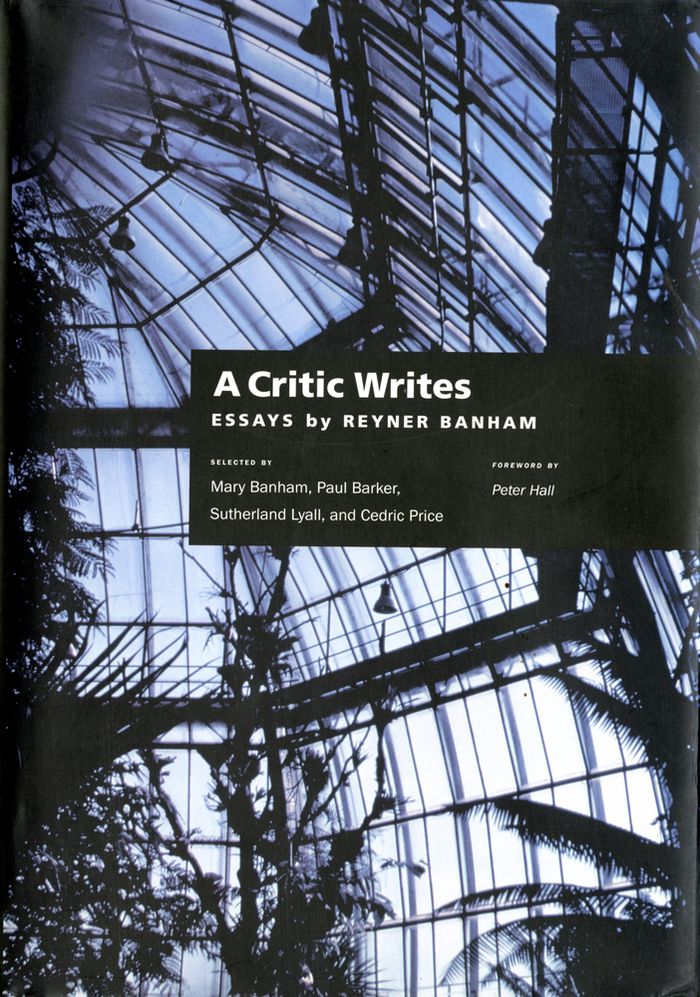
A critic writes : essays by Reyner Banham
Actions:
Price:
$39.95
(available to order)
Summary:
Few twentieth-century writers on architecture and design have enjoyed the renown of Reyner Banham. Born and trained in England and a U.S. resident starting in 1976, Banham wrote incisively about American and European buildings and culture. Now readers can enjoy a chronological cross-section of essays, polemics, and reviews drawn from more than three decades of Banham's writings. The volume, which includes discussions of Italian Futurism, Adolf Loos, Paul Scheerbart, and the Bauhaus as well as explorations of contemporary architecture by Frank Gehry, James Stirling, and Norman Foster, conveys the full range of Banham's belief in industrial and technological development as the motor of architectural evolution. Banham's interests and passions ranged from architecture and the culture of pop art to urban and industrial design. In brilliant analyses of automobile styling, mobile homes, science fiction films, and the American predilection for gadgets, he anticipated many of the preoccupations of contemporary cultural studies. Los Angeles, the city that Banham commemorated in a book and a film, receives extensive attention in essays on the Santa Monica Pier, the Getty Museum, Forest Lawn cemetery, and the ubiquitous freeway system. Eminently readable, provocative, and entertaining, this book is certain to consolidate Banham's reputation among architects and students of contemporary culture. For those acquainted with his writing, it offers welcome surprises as well as familiar delights. For those encountering Banham for the first time, it comprises the perfect introduction.
A critic writes : essays by Reyner Banham
Actions:
Price:
$39.95
(available to order)
Summary:
Few twentieth-century writers on architecture and design have enjoyed the renown of Reyner Banham. Born and trained in England and a U.S. resident starting in 1976, Banham wrote incisively about American and European buildings and culture. Now readers can enjoy a chronological cross-section of essays, polemics, and reviews drawn from more than three decades of Banham's writings. The volume, which includes discussions of Italian Futurism, Adolf Loos, Paul Scheerbart, and the Bauhaus as well as explorations of contemporary architecture by Frank Gehry, James Stirling, and Norman Foster, conveys the full range of Banham's belief in industrial and technological development as the motor of architectural evolution. Banham's interests and passions ranged from architecture and the culture of pop art to urban and industrial design. In brilliant analyses of automobile styling, mobile homes, science fiction films, and the American predilection for gadgets, he anticipated many of the preoccupations of contemporary cultural studies. Los Angeles, the city that Banham commemorated in a book and a film, receives extensive attention in essays on the Santa Monica Pier, the Getty Museum, Forest Lawn cemetery, and the ubiquitous freeway system. Eminently readable, provocative, and entertaining, this book is certain to consolidate Banham's reputation among architects and students of contemporary culture. For those acquainted with his writing, it offers welcome surprises as well as familiar delights. For those encountering Banham for the first time, it comprises the perfect introduction.
Form:
books
books
Publication:
April 1999, Berkeley
April 1999, Berkeley
Subject:
Architectural Theory
Architectural Theory
Form:
books
books
Price:
$39.95
(available to order)
Summary:
Beginning with agoraphobia and claustrophobia in the late nineteenth century, followed by shell shock and panic fear after World War I, phobias and anxiety came to be seen as the mental condition of modern life. They became incorporated into the media and arts, in particular the (...)
$39.95
(available to order)
Summary:
Beginning with agoraphobia and claustrophobia in the late nineteenth century, followed by shell shock and panic fear after World War I, phobias and anxiety came to be seen as the mental condition of modern life. They became incorporated into the media and arts, in particular the (...)
Title:
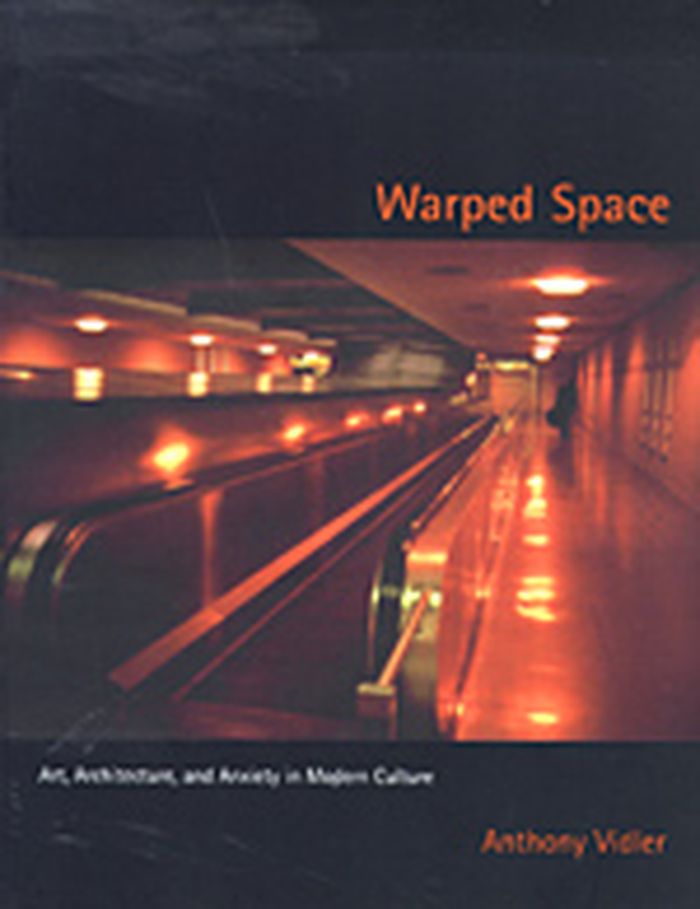
Warped space : art, architecture, and anxiety in modern culture
Actions:
Price:
$39.95
(available to order)
Summary:
Beginning with agoraphobia and claustrophobia in the late nineteenth century, followed by shell shock and panic fear after World War I, phobias and anxiety came to be seen as the mental condition of modern life. They became incorporated into the media and arts, in particular the spatial arts of architecture, urbanism, and film. This "spatial warping" is now being reshaped by digitalization and virtual reality. Anthony Vidler is concerned with two forms of warped space. The first, a psychological space, is the repository of neuroses and phobias. This space is not empty but full of disturbing forms, including those of architecture and the city. The second kind of warping is produced when artists break the boundaries of genre to depict space in new ways. Vidler traces the emergence of a psychological idea of space from Pascal and Freud to the identification of agoraphobia and claustrophobia in the nineteenth century to twentieth-century theories of spatial alienation and estrangement in the writings of Georg Simmel, Siegfried Kracauer, and Walter Benjamin. Focusing on current conditions of displacement and placelessness, he examines ways in which contemporary artists and architects have produced new forms of spatial warping. The discussion ranges from theorists such as Jacques Lacan and Gilles Deleuze to artists such as Vito Acconci, Mike Kelley, Martha Rosler, and Rachel Whiteread. Finally, Vidler looks at the architectural experiments of Frank Gehry, Coop Himmelblau, Daniel Libeskind, Greg Lynn, Morphosis, and Eric Owen Moss in the light of new digital techniques that, while relying on traditional perspective, have radically transformed the composition, production, and experience of architecture.
Warped space : art, architecture, and anxiety in modern culture
Actions:
Price:
$39.95
(available to order)
Summary:
Beginning with agoraphobia and claustrophobia in the late nineteenth century, followed by shell shock and panic fear after World War I, phobias and anxiety came to be seen as the mental condition of modern life. They became incorporated into the media and arts, in particular the spatial arts of architecture, urbanism, and film. This "spatial warping" is now being reshaped by digitalization and virtual reality. Anthony Vidler is concerned with two forms of warped space. The first, a psychological space, is the repository of neuroses and phobias. This space is not empty but full of disturbing forms, including those of architecture and the city. The second kind of warping is produced when artists break the boundaries of genre to depict space in new ways. Vidler traces the emergence of a psychological idea of space from Pascal and Freud to the identification of agoraphobia and claustrophobia in the nineteenth century to twentieth-century theories of spatial alienation and estrangement in the writings of Georg Simmel, Siegfried Kracauer, and Walter Benjamin. Focusing on current conditions of displacement and placelessness, he examines ways in which contemporary artists and architects have produced new forms of spatial warping. The discussion ranges from theorists such as Jacques Lacan and Gilles Deleuze to artists such as Vito Acconci, Mike Kelley, Martha Rosler, and Rachel Whiteread. Finally, Vidler looks at the architectural experiments of Frank Gehry, Coop Himmelblau, Daniel Libeskind, Greg Lynn, Morphosis, and Eric Owen Moss in the light of new digital techniques that, while relying on traditional perspective, have radically transformed the composition, production, and experience of architecture.
Form:
books
books
Publication:
April 2002, Cambridge, Mass.
April 2002, Cambridge, Mass.
Subject:
Architectural Theory
Architectural Theory
Form:
books
books
Actions:
Price:
$46.95
(available to order)
Summary:
The internationally acclaimed architect Rafael Moneo is known to be a courageous architect. His major works include the Houston Museum of Fine Art, Davis Art Museum at Wellesley College, the Stockholm Museum of Modern Art and Architecture, and the Potzdammer Platz Hotel in Berlin. Now Moneo will be known as a daring critic as well. In this book he looks at eight of his(...)
$46.95
(available to order)
Summary:
The internationally acclaimed architect Rafael Moneo is known to be a courageous architect. His major works include the Houston Museum of Fine Art, Davis Art Museum at Wellesley College, the Stockholm Museum of Modern Art and Architecture, and the Potzdammer Platz Hotel in Berlin. Now Moneo will be known as a daring critic as well. In this book he looks at eight of his(...)
Title:
Theoretical anxiety and design strategies in the work of eight contemporary architects
Actions:
Price:
$46.95
(available to order)
Summary:
The internationally acclaimed architect Rafael Moneo is known to be a courageous architect. His major works include the Houston Museum of Fine Art, Davis Art Museum at Wellesley College, the Stockholm Museum of Modern Art and Architecture, and the Potzdammer Platz Hotel in Berlin. Now Moneo will be known as a daring critic as well. In this book he looks at eight of his contemporaries -- all architects of international stature -- and discusses the theoretical positions, technical innovations, and design contributions of each. Moneo's discussion of these eight architects -- James Stirling, Robert Venturi, Aldo Rossi, Peter Eisenman, Alvaro Siza, Frank Gehry, Rem Koolhaas, and the partnership of Jacques Herzog and Pierre De Meuron -- has the colloquial, engaging tone of a series of lectures on modern architecture by a master architect; the reader hears not the dispassionate theorizing of an academic, but Moneo's own deeply held convictions as he considers the work of his contemporaries. Discussing each of the eight architects in turn, Moneo first gives an introductory profile, emphasizing intentions, theoretical concerns, and construction procedures. He then turns to the work, offering detailed critical analyses of the works he considers to be crucial for an informed understanding of this architect's work. The many images he uses to illustrate his points resemble the rapid-fire flash of slides in a lecture, but Moneo's perspective is unique among lecturers. These profiles are not what Moneo calls the "tacit treatises" that can be found on the shelves of a university library, but lively encounters of architectural equals. More than 500 illustrations accompany the text.
Theoretical anxiety and design strategies in the work of eight contemporary architects
Actions:
Price:
$46.95
(available to order)
Summary:
The internationally acclaimed architect Rafael Moneo is known to be a courageous architect. His major works include the Houston Museum of Fine Art, Davis Art Museum at Wellesley College, the Stockholm Museum of Modern Art and Architecture, and the Potzdammer Platz Hotel in Berlin. Now Moneo will be known as a daring critic as well. In this book he looks at eight of his contemporaries -- all architects of international stature -- and discusses the theoretical positions, technical innovations, and design contributions of each. Moneo's discussion of these eight architects -- James Stirling, Robert Venturi, Aldo Rossi, Peter Eisenman, Alvaro Siza, Frank Gehry, Rem Koolhaas, and the partnership of Jacques Herzog and Pierre De Meuron -- has the colloquial, engaging tone of a series of lectures on modern architecture by a master architect; the reader hears not the dispassionate theorizing of an academic, but Moneo's own deeply held convictions as he considers the work of his contemporaries. Discussing each of the eight architects in turn, Moneo first gives an introductory profile, emphasizing intentions, theoretical concerns, and construction procedures. He then turns to the work, offering detailed critical analyses of the works he considers to be crucial for an informed understanding of this architect's work. The many images he uses to illustrate his points resemble the rapid-fire flash of slides in a lecture, but Moneo's perspective is unique among lecturers. These profiles are not what Moneo calls the "tacit treatises" that can be found on the shelves of a university library, but lively encounters of architectural equals. More than 500 illustrations accompany the text.
Form:
books
books
Publication:
May 2004, Cambridge, Mass.
May 2004, Cambridge, Mass.
Subject:
Architectural Theory
Architectural Theory
Form:
books
books
Actions:
Price:
$42.00
(available to order)
Summary:
In recent years building with stone has gained new significance, not only because of its impressive appearance, but also in the debate that has arisen in architecture between the monumental and the transparent. Principally used in façades, but also for interior design, natural stone - and even man-made stone such as concrete and bricks - is now being appreciated for its(...)
$42.00
(available to order)
Summary:
In recent years building with stone has gained new significance, not only because of its impressive appearance, but also in the debate that has arisen in architecture between the monumental and the transparent. Principally used in façades, but also for interior design, natural stone - and even man-made stone such as concrete and bricks - is now being appreciated for its(...)
Title:
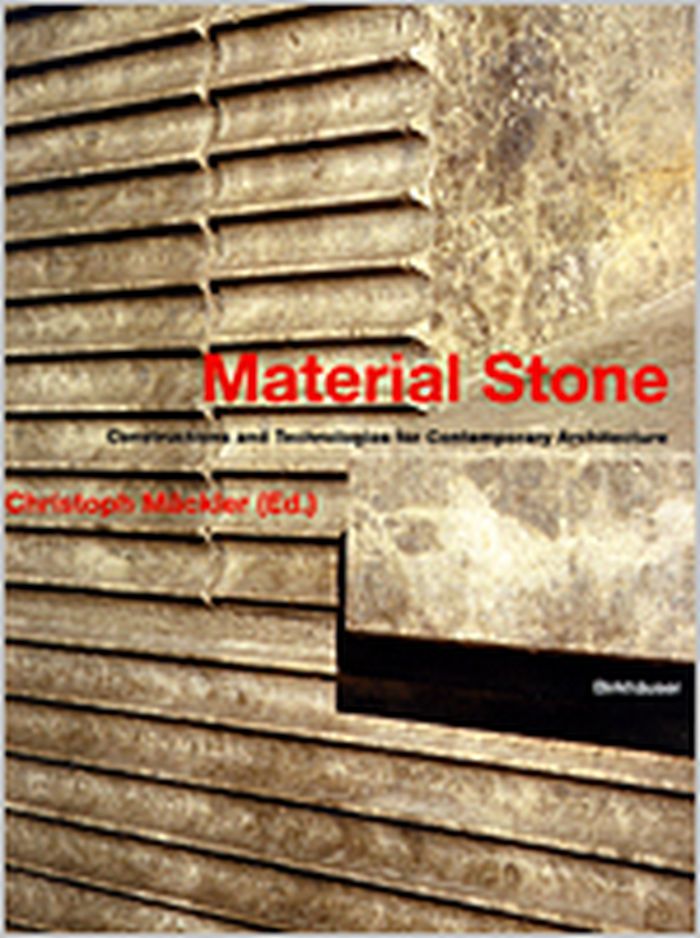
Material stone : Construction and technologies for contemporary architecture
Actions:
Price:
$42.00
(available to order)
Summary:
In recent years building with stone has gained new significance, not only because of its impressive appearance, but also in the debate that has arisen in architecture between the monumental and the transparent. Principally used in façades, but also for interior design, natural stone - and even man-made stone such as concrete and bricks - is now being appreciated for its high-quality performance. For international architects such as Michael Graves, Frank O. Gehry, Mario Botta or Richard Meier, this diverse material plays a major role. This publication examines the use of stone in contemporary architecture, drawing also on the work and experience of such great predecesors as Semper or Hoger. In thematic chapters, it presents the state of the art uses together with information on the extraction and treatment of stone. The emphasis of the book is laid on the many different kinds of natural stone, which come from a wide range of countries. Further chapters elucidate innovative applications of concrete and bricks, also illustrated by international examples. Contributions from Vittorio Magnago Lampugnani, Fritz Neumeyer and Stanislaus von Moos investigate stone as the enduring material of the town, consider its architectural expressiveness throughout history, and explore its significance as a surface material . A comprehensive appendix contains illustrations of some 70 kinds of natural stone, all of which are concisely documented, ensuring that this volume can be used as a reference for anybody interested in natural stone as a building material. Christoph Mäckler has been exploring stone as a building material both in architectural practice and in research for many years.
Material stone : Construction and technologies for contemporary architecture
Actions:
Price:
$42.00
(available to order)
Summary:
In recent years building with stone has gained new significance, not only because of its impressive appearance, but also in the debate that has arisen in architecture between the monumental and the transparent. Principally used in façades, but also for interior design, natural stone - and even man-made stone such as concrete and bricks - is now being appreciated for its high-quality performance. For international architects such as Michael Graves, Frank O. Gehry, Mario Botta or Richard Meier, this diverse material plays a major role. This publication examines the use of stone in contemporary architecture, drawing also on the work and experience of such great predecesors as Semper or Hoger. In thematic chapters, it presents the state of the art uses together with information on the extraction and treatment of stone. The emphasis of the book is laid on the many different kinds of natural stone, which come from a wide range of countries. Further chapters elucidate innovative applications of concrete and bricks, also illustrated by international examples. Contributions from Vittorio Magnago Lampugnani, Fritz Neumeyer and Stanislaus von Moos investigate stone as the enduring material of the town, consider its architectural expressiveness throughout history, and explore its significance as a surface material . A comprehensive appendix contains illustrations of some 70 kinds of natural stone, all of which are concisely documented, ensuring that this volume can be used as a reference for anybody interested in natural stone as a building material. Christoph Mäckler has been exploring stone as a building material both in architectural practice and in research for many years.
Form:
books
books
Publication:
December 2003, Basel
December 2003, Basel
Subject:
Materials and Lighting
Materials and Lighting
Form:
books
books
Title:
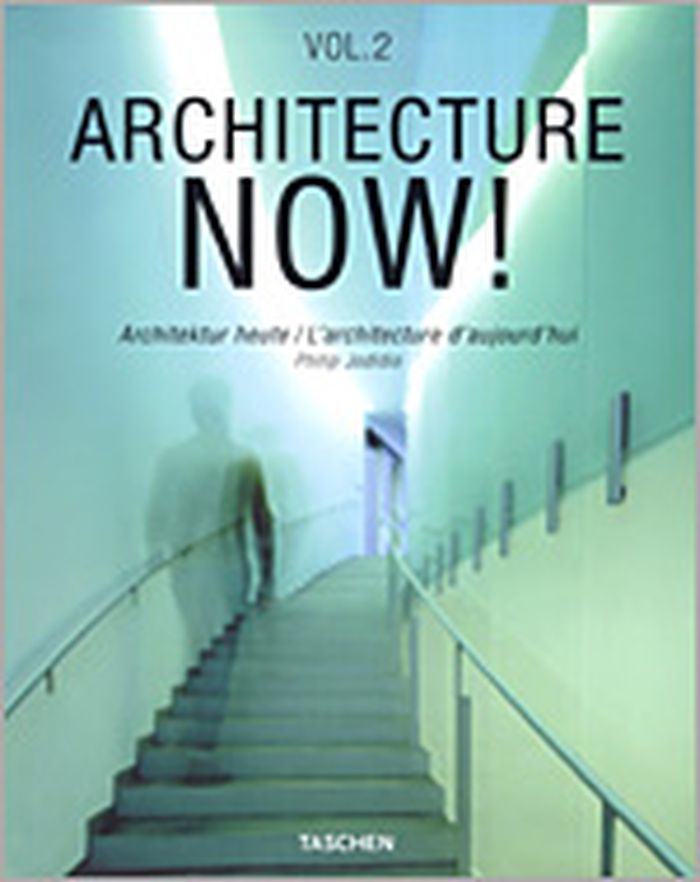
Architecture now! vol 2
Architecture now! vol 2
Actions:
Price:
$54.95
(available to order)
Summary:
The fine line between art and architecture is rapidly becoming harder to perceive. With the aid of sophisticated computer programs, today's most innovative architects are working on designs so conceptual they could not be realized in the physical world. Nevertheless, these sorts of forward-thinking projects are an important influence on the architectural climate. At(...)
$54.95
(available to order)
Summary:
The fine line between art and architecture is rapidly becoming harder to perceive. With the aid of sophisticated computer programs, today's most innovative architects are working on designs so conceptual they could not be realized in the physical world. Nevertheless, these sorts of forward-thinking projects are an important influence on the architectural climate. At(...)
Title:
Architecture now! vol 2
Actions:
Price:
$54.95
(available to order)
Summary:
The fine line between art and architecture is rapidly becoming harder to perceive. With the aid of sophisticated computer programs, today's most innovative architects are working on designs so conceptual they could not be realized in the physical world. Nevertheless, these sorts of forward-thinking projects are an important influence on the architectural climate. At the dawn of the 21st century, architecture is entering a paradigm shift; no longer can it be completely distinguished from art. Be they built from bytes or bricks, the projects in this book represent the imagination of the planet's most talented and creative architects. For all the latest and most important architectural projects and trends, look no further than this volume, the follow-up to our popular and groundbreaking book Architecture Now! Including: Allmann Sattler, Wappner, Tadao Ando, Shigeru Ban, Behnisch, Behnisch & Partner, Bolles & Wilson, Simeon Bruner/Cott & Associates, Santiago Calatrava, Alberto Campo Baeza, Coop Himmelb(l)au, Neil Denari, Diller & Scofidio, Winka Dubbeldam, Jean-Marie Duthilleul, Frank O. Gehry, Sean Godsell, Nicholas Grimshaw, Heikkinen-Komonen, John Hejduk, Steven Holl, Hans Hollein, Toyo Ito, Jakob + MacFarlane, Michael Jantzen, Jones, Partners, Rick Joy, Rei Kawakubo, Waro Kishi, Kohn Shnier Architects, Rem Koolhaas, Kengo Kuma, Lacaton & Vassal, Greg Lynn, Richard Meier, Samuel Mockbee + Rural Studio, Morphosis, Jean Nouvel, Marcos Novak, NOX, Manolo Nunez-Yanofsky, Oosterhuis.nl, Pei Partnership, Pugh + Scarpa, Michele Saee, Harry Seidler, Snøhetta Architects, Julie Snow, Jyrki Tasa, Bernard Tschumi, James Turrell, UN Studio, Ben van Berkel, Various Architects, Hendrik Vermoortel, Makoto Sei Watanabe, Wesley Wei, Williams + Tsien, Jean-Michel Wilmotte
Architecture now! vol 2
Actions:
Price:
$54.95
(available to order)
Summary:
The fine line between art and architecture is rapidly becoming harder to perceive. With the aid of sophisticated computer programs, today's most innovative architects are working on designs so conceptual they could not be realized in the physical world. Nevertheless, these sorts of forward-thinking projects are an important influence on the architectural climate. At the dawn of the 21st century, architecture is entering a paradigm shift; no longer can it be completely distinguished from art. Be they built from bytes or bricks, the projects in this book represent the imagination of the planet's most talented and creative architects. For all the latest and most important architectural projects and trends, look no further than this volume, the follow-up to our popular and groundbreaking book Architecture Now! Including: Allmann Sattler, Wappner, Tadao Ando, Shigeru Ban, Behnisch, Behnisch & Partner, Bolles & Wilson, Simeon Bruner/Cott & Associates, Santiago Calatrava, Alberto Campo Baeza, Coop Himmelb(l)au, Neil Denari, Diller & Scofidio, Winka Dubbeldam, Jean-Marie Duthilleul, Frank O. Gehry, Sean Godsell, Nicholas Grimshaw, Heikkinen-Komonen, John Hejduk, Steven Holl, Hans Hollein, Toyo Ito, Jakob + MacFarlane, Michael Jantzen, Jones, Partners, Rick Joy, Rei Kawakubo, Waro Kishi, Kohn Shnier Architects, Rem Koolhaas, Kengo Kuma, Lacaton & Vassal, Greg Lynn, Richard Meier, Samuel Mockbee + Rural Studio, Morphosis, Jean Nouvel, Marcos Novak, NOX, Manolo Nunez-Yanofsky, Oosterhuis.nl, Pei Partnership, Pugh + Scarpa, Michele Saee, Harry Seidler, Snøhetta Architects, Julie Snow, Jyrki Tasa, Bernard Tschumi, James Turrell, UN Studio, Ben van Berkel, Various Architects, Hendrik Vermoortel, Makoto Sei Watanabe, Wesley Wei, Williams + Tsien, Jean-Michel Wilmotte
Form:
books
books
Publication:
November 2002, Cologne
November 2002, Cologne
Subject:
Architecture since 1900, Europe
Architecture since 1900, Europe


