


586 Results
Form:
books
books
Actions:
Price:
$70.00
(available to order)
Summary:
This intimate portrait of eight houses by the Maine architect Carol A. Wilson illustrates how "local" is an idea as close to architecture as it is to food. Focusing on climate, seasons, views, local materials, the ecological history of building sites, and collaborations with local artisans, Wilson crafts exquisitely designed and built houses that celebrate the beauty of(...)
$70.00
(available to order)
Summary:
This intimate portrait of eight houses by the Maine architect Carol A. Wilson illustrates how "local" is an idea as close to architecture as it is to food. Focusing on climate, seasons, views, local materials, the ecological history of building sites, and collaborations with local artisans, Wilson crafts exquisitely designed and built houses that celebrate the beauty of(...)
Title:
Northern exposure: works of Carol A. Wilson Architect
Actions:
Price:
$70.00
(available to order)
Summary:
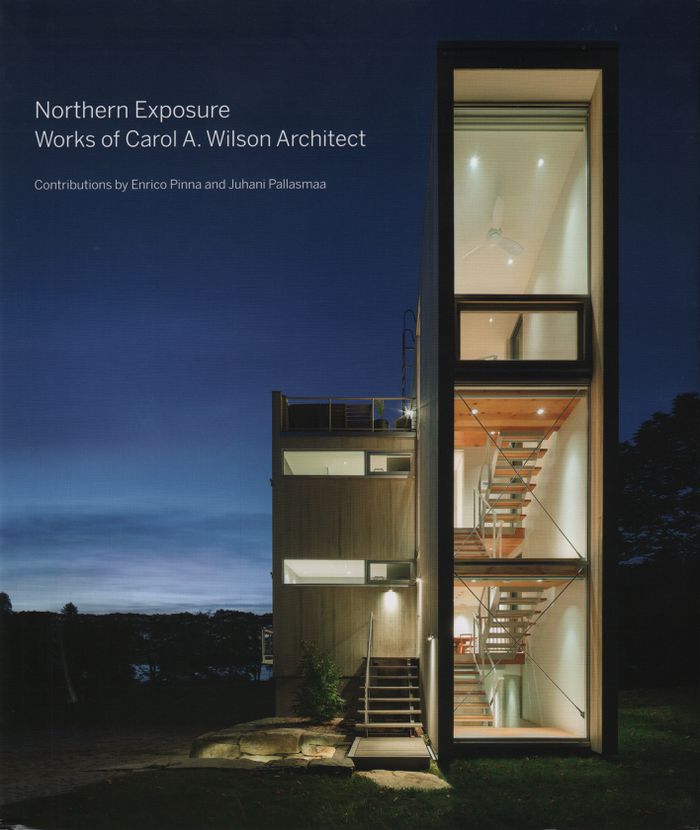
This intimate portrait of eight houses by the Maine architect Carol A. Wilson illustrates how "local" is an idea as close to architecture as it is to food. Focusing on climate, seasons, views, local materials, the ecological history of building sites, and collaborations with local artisans, Wilson crafts exquisitely designed and built houses that celebrate the beauty of New England and the power of architecture to combine modern forms with a traditional built landscape. Following introductory texts by Enrico Pinna and Juhani Pallasmaa, and a conversation between Wilson and John Leroux, each project opens with a foldout of plans---transitioning from hand-drawn to computer-aided---and information about the house, before culminating in a selection of exterior, interior, and detail photographs. The book closes with an interview in twenty questions that elaborates on Wilson's working principles and the history of her studio for the past thirty years.
Northern exposure: works of Carol A. Wilson Architect
Actions:
Price:
$70.00
(available to order)
Summary:
This intimate portrait of eight houses by the Maine architect Carol A. Wilson illustrates how "local" is an idea as close to architecture as it is to food. Focusing on climate, seasons, views, local materials, the ecological history of building sites, and collaborations with local artisans, Wilson crafts exquisitely designed and built houses that celebrate the beauty of New England and the power of architecture to combine modern forms with a traditional built landscape. Following introductory texts by Enrico Pinna and Juhani Pallasmaa, and a conversation between Wilson and John Leroux, each project opens with a foldout of plans---transitioning from hand-drawn to computer-aided---and information about the house, before culminating in a selection of exterior, interior, and detail photographs. The book closes with an interview in twenty questions that elaborates on Wilson's working principles and the history of her studio for the past thirty years.
Form:
books
books
Publication:
October 2017
October 2017
Subject:
Architecture Monographs
Architecture Monographs
Form:
books
books
Actions:
Price:
$31.95
(available to order)
Summary:
Given an ideal situation to work with, the Zurich architects Marcel Meili and Markus Peter designed and built a new training and meeting center for Swiss Re in Rüschlikon. Backed by an ambitious client and a substantial budget, they developed an expansive park complex overlooking Lake Zurich and the Bodmer mansion, a protected historical monument, into a setting in which(...)
$31.95
(available to order)
Summary:
Given an ideal situation to work with, the Zurich architects Marcel Meili and Markus Peter designed and built a new training and meeting center for Swiss Re in Rüschlikon. Backed by an ambitious client and a substantial budget, they developed an expansive park complex overlooking Lake Zurich and the Bodmer mansion, a protected historical monument, into a setting in which(...)
Subject:
small format
small format
Publication:
February 2002, Ostfildern
February 2002, Ostfildern
Title:
Swiss Re Rüschilkon : centre for global dialogue
Actions:
Price:
$31.95
(available to order)
Summary:
Given an ideal situation to work with, the Zurich architects Marcel Meili and Markus Peter designed and built a new training and meeting center for Swiss Re in Rüschlikon. Backed by an ambitious client and a substantial budget, they developed an expansive park complex overlooking Lake Zurich and the Bodmer mansion, a protected historical monument, into a setting in which architecture and art, landscape and interior space, old and new combine to form a complex whole. The result is not a manifesto of a particular style but the equally perfect and subtle interpretation of a real place and the programmatic vision it inspires. The Art Commission of Swiss Re chose a "strategy of systematic artistic interventions in existing space". The design of all furniture and interiors was entrusted to the hands of renowned artists and architects. Adolf Krischanitz and Hermann Czech designed the furniture and the "Red Bar" in the Gardener's Lodge. Gilbert Bretterbauer supervised the design and selection of textiles. Artist Günther Förg handled the color design for all of the interiors in the old mansion. The old grounds had been preserved almost entirely in their original condition. The existing stands of trees served as a framework for the detailed design of the park complex by landscape architects Kienast Vogt and Partner. With photographs by Margherita Spiluttini
Swiss Re Rüschilkon : centre for global dialogue
Actions:
Price:
$31.95
(available to order)
Summary:
Given an ideal situation to work with, the Zurich architects Marcel Meili and Markus Peter designed and built a new training and meeting center for Swiss Re in Rüschlikon. Backed by an ambitious client and a substantial budget, they developed an expansive park complex overlooking Lake Zurich and the Bodmer mansion, a protected historical monument, into a setting in which architecture and art, landscape and interior space, old and new combine to form a complex whole. The result is not a manifesto of a particular style but the equally perfect and subtle interpretation of a real place and the programmatic vision it inspires. The Art Commission of Swiss Re chose a "strategy of systematic artistic interventions in existing space". The design of all furniture and interiors was entrusted to the hands of renowned artists and architects. Adolf Krischanitz and Hermann Czech designed the furniture and the "Red Bar" in the Gardener's Lodge. Gilbert Bretterbauer supervised the design and selection of textiles. Artist Günther Förg handled the color design for all of the interiors in the old mansion. The old grounds had been preserved almost entirely in their original condition. The existing stands of trees served as a framework for the detailed design of the park complex by landscape architects Kienast Vogt and Partner. With photographs by Margherita Spiluttini
Form:
books
books
Publication:
February 2002, Ostfildern
February 2002, Ostfildern
Subject:
small format
small format
Form:
books
books

Price:
$25.00
(available to order)
Summary:
"Voices of the land: Indigenous design and planning from the prairies" produced by the Indigenous Design and Planning Students’ Association (IDPSA), of the Faculty of Architecture at the University of Manitoba. IDPSA was founded in Fall 2019, as a platform to host honest conversations around inclusion and representation. In an effort to broaden the lens of Indigenous(...)
$25.00
(available to order)
Summary:
"Voices of the land: Indigenous design and planning from the prairies" produced by the Indigenous Design and Planning Students’ Association (IDPSA), of the Faculty of Architecture at the University of Manitoba. IDPSA was founded in Fall 2019, as a platform to host honest conversations around inclusion and representation. In an effort to broaden the lens of Indigenous(...)
Subject:
Indigenous architecture
Indigenous architecture
Publication:
July 2021
July 2021
Title:
Voices of the land : Indigenous design and planning from the prairies
Actions:
Price:
$25.00
(available to order)
Summary:
"Voices of the land: Indigenous design and planning from the prairies" produced by the Indigenous Design and Planning Students’ Association (IDPSA), of the Faculty of Architecture at the University of Manitoba. IDPSA was founded in Fall 2019, as a platform to host honest conversations around inclusion and representation. In an effort to broaden the lens of Indigenous design and planning, IDPSA actively seeks to incorporate Indigenous values within the design community through advocating for culturally informed initiatives, programs, and curriculum. This book features 16 Indigenous students, representing a range of nations across Turtle Island, and spanning all four departments (Architecture, Landscape Architecture, Interior Design, and City Planning) from the Faculty of Architecture. In it, you will read profiles of their members, faculty, and alumni, along with their artistic visions and designs. The intention with this publication is to ensure that these important conversations on inclusion and representation in design education continue throughout Turtle Island.
Voices of the land : Indigenous design and planning from the prairies
Actions:
Price:
$25.00
(available to order)
Summary:
"Voices of the land: Indigenous design and planning from the prairies" produced by the Indigenous Design and Planning Students’ Association (IDPSA), of the Faculty of Architecture at the University of Manitoba. IDPSA was founded in Fall 2019, as a platform to host honest conversations around inclusion and representation. In an effort to broaden the lens of Indigenous design and planning, IDPSA actively seeks to incorporate Indigenous values within the design community through advocating for culturally informed initiatives, programs, and curriculum. This book features 16 Indigenous students, representing a range of nations across Turtle Island, and spanning all four departments (Architecture, Landscape Architecture, Interior Design, and City Planning) from the Faculty of Architecture. In it, you will read profiles of their members, faculty, and alumni, along with their artistic visions and designs. The intention with this publication is to ensure that these important conversations on inclusion and representation in design education continue throughout Turtle Island.
Form:
books
books
Publication:
July 2021
July 2021
Subject:
Indigenous architecture
Indigenous architecture
Form:
books
books
Title:
The drive-in, the supermarket, and the transformation of commercial space in Los Angeles, 1914-1941
The drive-in, the supermarket, and the transformation of commercial space in Los Angeles, 1914-1941
Actions:
Price:
$82.50
(available to order)
Summary:
Here Longstreth explores the early development of two kinds of retail space that have become ubiquitous in the United States in the second half of the twentieth century. One, external, is devoted to the circulation and parking of automobiles on retail premises. Longstreth analyzes(...)
$82.50
(available to order)
Summary:
Here Longstreth explores the early development of two kinds of retail space that have become ubiquitous in the United States in the second half of the twentieth century. One, external, is devoted to the circulation and parking of automobiles on retail premises. Longstreth analyzes(...)
Title:
The drive-in, the supermarket, and the transformation of commercial space in Los Angeles, 1914-1941
Actions:
Price:
$82.50
(available to order)
Summary:
Here Longstreth explores the early development of two kinds of retail space that have become ubiquitous in the United States in the second half of the twentieth century. One, external, is devoted to the circulation and parking of automobiles on retail premises. Longstreth analyzes the origins of this development in the 1910s and 1920s, with the super service station and then the drive-in market. The other type of space, internal, was introduced soon thereafter with the single-story supermarket. The most innovative aspect of the supermarket was how its interior was designed for high-volume turnover of a large selection of goods with a minimum of staff assistance. Longstreth focuses on Los Angeles, the principal center for the development of both kinds of space, during the period from the mid-1910s to the early 1940s. This richly illustrated study integrates architectural, cultural, economic, and urban factors to describe the evolution of retailing and how it has affected the urban landscape.
The drive-in, the supermarket, and the transformation of commercial space in Los Angeles, 1914-1941
Actions:
Price:
$82.50
(available to order)
Summary:
Here Longstreth explores the early development of two kinds of retail space that have become ubiquitous in the United States in the second half of the twentieth century. One, external, is devoted to the circulation and parking of automobiles on retail premises. Longstreth analyzes the origins of this development in the 1910s and 1920s, with the super service station and then the drive-in market. The other type of space, internal, was introduced soon thereafter with the single-story supermarket. The most innovative aspect of the supermarket was how its interior was designed for high-volume turnover of a large selection of goods with a minimum of staff assistance. Longstreth focuses on Los Angeles, the principal center for the development of both kinds of space, during the period from the mid-1910s to the early 1940s. This richly illustrated study integrates architectural, cultural, economic, and urban factors to describe the evolution of retailing and how it has affected the urban landscape.
Form:
books
books
Publication:
May 1999, Cambridge, Mass.
May 1999, Cambridge, Mass.
Subject:
Urban Theory
Urban Theory
Form:
books
books
Actions:
Price:
$105.00
(available to order)
Summary:
Chicago is quintessential apartment dweller’s city. Landmark apartment houses designed by renowned architects and decorators, past and present - Howard Van Doren Shaw, Benjamin Marshall, David Adler, Mies van der Rohe, SOM, Tigerman McCurry, Vinci Hamp, and Lucien Lagrange - have afforded dramatic views and fabled luxury to apartment residents. "Chicago Apartments: A(...)
$105.00
(available to order)
Summary:
Chicago is quintessential apartment dweller’s city. Landmark apartment houses designed by renowned architects and decorators, past and present - Howard Van Doren Shaw, Benjamin Marshall, David Adler, Mies van der Rohe, SOM, Tigerman McCurry, Vinci Hamp, and Lucien Lagrange - have afforded dramatic views and fabled luxury to apartment residents. "Chicago Apartments: A(...)
Subject:
Architecture since 1900, Europe
Architecture since 1900, Europe
Publication:
January 1900, New York
January 1900, New York
Title:
Chicago apartments : a century of lakefront luxury
Actions:
Price:
$105.00
(available to order)
Summary:
Chicago is quintessential apartment dweller’s city. Landmark apartment houses designed by renowned architects and decorators, past and present - Howard Van Doren Shaw, Benjamin Marshall, David Adler, Mies van der Rohe, SOM, Tigerman McCurry, Vinci Hamp, and Lucien Lagrange - have afforded dramatic views and fabled luxury to apartment residents. "Chicago Apartments: A Century of Lakefront Luxury" presents a unique history of the nearly 100 elevator structures whose amenities, unusual interior spaces, architectural features, and distinctive innovations define the history of Chicago apartment design. Chicago historian Neil Harris traces essential themes in the development of the city and its apartment culture, profiling each apartment building with new research, floor plans, and never published archival duotone photographs of famed buildings dating from 1883 to 2004, including 500 North Lake Shore Drive, 209 East Lake Shore Drive, 1301 North Astor, Marina Towers, and the Hancock. The preface by Sara Paretsky, whose celebrated detective V. I. Warshawki is an astute observer of Chicago’s built landscape and its inhabitants, offers a literary voice to this first-time study of the architectural and cultural history of these buildings.
Chicago apartments : a century of lakefront luxury
Actions:
Price:
$105.00
(available to order)
Summary:
Chicago is quintessential apartment dweller’s city. Landmark apartment houses designed by renowned architects and decorators, past and present - Howard Van Doren Shaw, Benjamin Marshall, David Adler, Mies van der Rohe, SOM, Tigerman McCurry, Vinci Hamp, and Lucien Lagrange - have afforded dramatic views and fabled luxury to apartment residents. "Chicago Apartments: A Century of Lakefront Luxury" presents a unique history of the nearly 100 elevator structures whose amenities, unusual interior spaces, architectural features, and distinctive innovations define the history of Chicago apartment design. Chicago historian Neil Harris traces essential themes in the development of the city and its apartment culture, profiling each apartment building with new research, floor plans, and never published archival duotone photographs of famed buildings dating from 1883 to 2004, including 500 North Lake Shore Drive, 209 East Lake Shore Drive, 1301 North Astor, Marina Towers, and the Hancock. The preface by Sara Paretsky, whose celebrated detective V. I. Warshawki is an astute observer of Chicago’s built landscape and its inhabitants, offers a literary voice to this first-time study of the architectural and cultural history of these buildings.
Form:
books
books
Publication:
January 1900, New York
January 1900, New York
Subject:
Architecture since 1900, Europe
Architecture since 1900, Europe
Form:
books
books

Title:
Alessandro Mendini
Alessandro Mendini
Actions:
Price:
$59.95
(available to order)
Summary:
Alessandro Mendini (Milan, 1931) is one of the few protagonists of the international scene of architecture, art and design who designed in every possible size. Walter Gropius’s renowned statement identifies the architect’s field “from spoon to city”: during his career Mendini faced projects “from the infinitesimal to the infinite”. The book dedicated to Alessandro(...)
$59.95
(available to order)
Summary:
Alessandro Mendini (Milan, 1931) is one of the few protagonists of the international scene of architecture, art and design who designed in every possible size. Walter Gropius’s renowned statement identifies the architect’s field “from spoon to city”: during his career Mendini faced projects “from the infinitesimal to the infinite”. The book dedicated to Alessandro(...)
Title:
Alessandro Mendini
Actions:
Price:
$59.95
(available to order)
Summary:
Alessandro Mendini (Milan, 1931) is one of the few protagonists of the international scene of architecture, art and design who designed in every possible size. Walter Gropius’s renowned statement identifies the architect’s field “from spoon to city”: during his career Mendini faced projects “from the infinitesimal to the infinite”. The book dedicated to Alessandro Mendini published by Corraini is a non-stop stream of images and occasions among the renowned Milanese architect’s works and philosophy. Designing horizons, rooms, bodies and thoughts are the four moments of a personal and evocative course through Mendini’s works: from urban landscape to interior furnishing, to body accessories, to his activity as architecture and design theorist, Mendini is a protagonist of a personal and aesthetic approach to the project. His design is famous for its emotional and individual character, as well as for the greater importance given to psychological and sensory influences rather than rational contents. In fact, his projects have often been associated with definitions such as “visual poetry”, “fairy and baroque design”, and “labyrinth expansion of spaces and sensations”.
Alessandro Mendini
Actions:
Price:
$59.95
(available to order)
Summary:
Alessandro Mendini (Milan, 1931) is one of the few protagonists of the international scene of architecture, art and design who designed in every possible size. Walter Gropius’s renowned statement identifies the architect’s field “from spoon to city”: during his career Mendini faced projects “from the infinitesimal to the infinite”. The book dedicated to Alessandro Mendini published by Corraini is a non-stop stream of images and occasions among the renowned Milanese architect’s works and philosophy. Designing horizons, rooms, bodies and thoughts are the four moments of a personal and evocative course through Mendini’s works: from urban landscape to interior furnishing, to body accessories, to his activity as architecture and design theorist, Mendini is a protagonist of a personal and aesthetic approach to the project. His design is famous for its emotional and individual character, as well as for the greater importance given to psychological and sensory influences rather than rational contents. In fact, his projects have often been associated with definitions such as “visual poetry”, “fairy and baroque design”, and “labyrinth expansion of spaces and sensations”.
Form:
books
books
Publication:
April 2009
April 2009
Subject:
Architecture Monographs
Architecture Monographs
Form:
journals and magazines
journals and magazines
Actions:
Price:
$50.00
(available to order)
Summary:
Despite the exaggerated news of the untimely 'death of the detail' by Greg Lynn, the architectural detail is now more lifelike and active than ever before. In this era of digital design and production technologies, new materials, parametrics, building information modeling (BIM), augmented realities and the nano-bio-information-computation consilience, the detail is now an(...)
$50.00
(available to order)
Summary:
Despite the exaggerated news of the untimely 'death of the detail' by Greg Lynn, the architectural detail is now more lifelike and active than ever before. In this era of digital design and production technologies, new materials, parametrics, building information modeling (BIM), augmented realities and the nano-bio-information-computation consilience, the detail is now an(...)
Title:
AD 230, July/August 2014: future details of architecture
Actions:
Price:
$50.00
(available to order)
Summary:
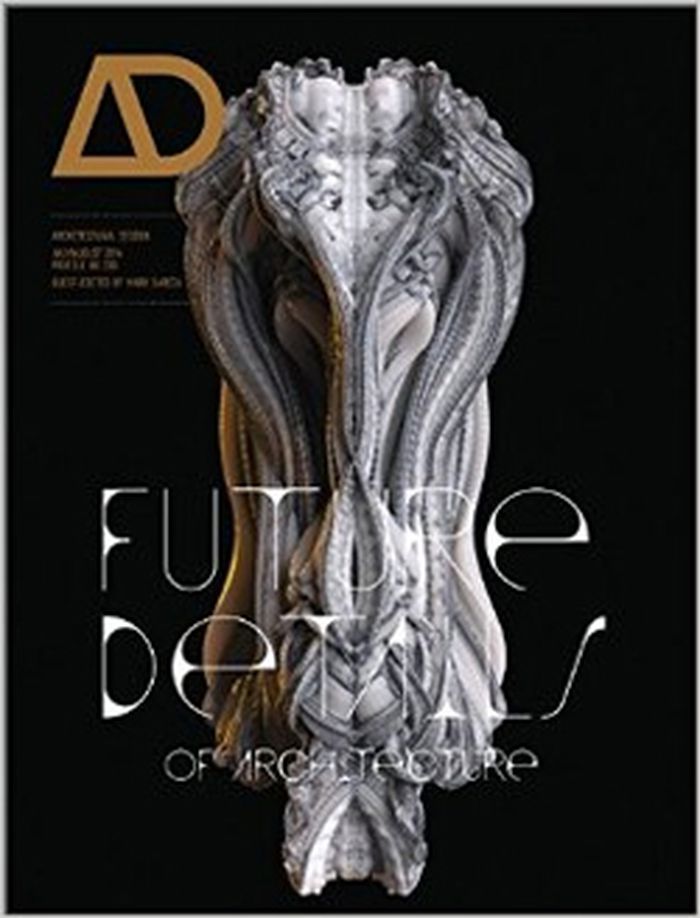
Despite the exaggerated news of the untimely 'death of the detail' by Greg Lynn, the architectural detail is now more lifelike and active than ever before. In this era of digital design and production technologies, new materials, parametrics, building information modeling (BIM), augmented realities and the nano-bio-information-computation consilience, the detail is now an increasingly vital force in architecture. Though such digitally designed and produced details are diminishing in size to the molecular and nano levels, they are increasingly becoming more complex, multi-functional, high performance and self-replicating. Far from being a non-essential and final finish, this new type of highly evolved high-tech detail is rapidly becoming the indispensable and critical core, the (sometimes iconic) DNA of an innovative new species of built environmental form that is spawning in scale and prominence, across product, interior, urban and landscape design. This issue of AD re-examines the history, theories and design of the world’s most significant spatial details, and explores their innovative potentials and possibilities for the future of architecture.
AD 230, July/August 2014: future details of architecture
Actions:
Price:
$50.00
(available to order)
Summary:
Despite the exaggerated news of the untimely 'death of the detail' by Greg Lynn, the architectural detail is now more lifelike and active than ever before. In this era of digital design and production technologies, new materials, parametrics, building information modeling (BIM), augmented realities and the nano-bio-information-computation consilience, the detail is now an increasingly vital force in architecture. Though such digitally designed and produced details are diminishing in size to the molecular and nano levels, they are increasingly becoming more complex, multi-functional, high performance and self-replicating. Far from being a non-essential and final finish, this new type of highly evolved high-tech detail is rapidly becoming the indispensable and critical core, the (sometimes iconic) DNA of an innovative new species of built environmental form that is spawning in scale and prominence, across product, interior, urban and landscape design. This issue of AD re-examines the history, theories and design of the world’s most significant spatial details, and explores their innovative potentials and possibilities for the future of architecture.
Form:
journals and magazines
journals and magazines
Publication:
December 2014
December 2014
Subject:
Magazines
Magazines
Form:
books
books
Actions:
Price:
$80.95
(available to order)
Summary:
A book covering all aspects of campus building and landscape planning from the updating and revitalization of the existing architectural heritage to innovative new buildings that meet today's and tomorrow's academic needs.
$80.95
(available to order)
Summary:
A book covering all aspects of campus building and landscape planning from the updating and revitalization of the existing architectural heritage to innovative new buildings that meet today's and tomorrow's academic needs.
Subject:
Commercial interiors, Building types
Commercial interiors, Building types
Publication:
April 1996, New York
April 1996, New York
Title:
Campus architecture : building in the groves of academe
Actions:
Price:
$80.95
(available to order)
Summary:
A book covering all aspects of campus building and landscape planning from the updating and revitalization of the existing architectural heritage to innovative new buildings that meet today's and tomorrow's academic needs.
Campus architecture : building in the groves of academe
Actions:
Price:
$80.95
(available to order)
Summary:
A book covering all aspects of campus building and landscape planning from the updating and revitalization of the existing architectural heritage to innovative new buildings that meet today's and tomorrow's academic needs.
Form:
books
books
Publication:
April 1996, New York
April 1996, New York
Subject:
Commercial interiors, Building types
Commercial interiors, Building types
Form:
books
books
Title:
The minimalist garden
The minimalist garden
Actions:
Price:
$65.00
(available to order)
Summary:
Over the course of the 20th century many of the best garden designers have looked to the past for inspiration; with the approach of the millennium, however, a fresh approach to garden design - minimalism - has moved to the forefront. The philosophy of minimalism, rooted simultaneously in classicism and modernism, has had a strong influence on architecture and interior(...)
$65.00
(available to order)
Summary:
Over the course of the 20th century many of the best garden designers have looked to the past for inspiration; with the approach of the millennium, however, a fresh approach to garden design - minimalism - has moved to the forefront. The philosophy of minimalism, rooted simultaneously in classicism and modernism, has had a strong influence on architecture and interior(...)
Title:
The minimalist garden
Actions:
Price:
$65.00
(available to order)
Summary:
Over the course of the 20th century many of the best garden designers have looked to the past for inspiration; with the approach of the millennium, however, a fresh approach to garden design - minimalism - has moved to the forefront. The philosophy of minimalism, rooted simultaneously in classicism and modernism, has had a strong influence on architecture and interior and graphic design, as well as landscape. Minimalist gardens, with their emphasis on clean lines, pure form, and a strong sense of place, are closely related to contemporary architecture and lifestyles. New trends in more relaxed and ecologically aware planting have contributed greatly to the development of such green spaces, and the creative use of trees and hedges to define and control space is often an important design element. In this volume, award-winning garden designer Christopher Bradley-Hole has drawn together a great variety of minimalist gardens from around the world - large and small, urban and rural. The projects are grouped into thematic chapters, including the landscape garden, pools and water gardens, courtyard gardens, and terrace and roof gardens. Among the designers are Vladimir Sitta, John Pawson, Luis Barragán, Seth Stein, Jacques Wirtz, Martha Schwartz, Shodo Suzuki, and Isamu Noguchi. Large color photographs and detailed images show the gardens in context; the text discusses the inspiration behind each garden, the relationship of space and proportions, and the frequent use of unusual materials and imaginative planning. Directories of materials and plants for the perfect minimalist garden are included as well.
The minimalist garden
Actions:
Price:
$65.00
(available to order)
Summary:
Over the course of the 20th century many of the best garden designers have looked to the past for inspiration; with the approach of the millennium, however, a fresh approach to garden design - minimalism - has moved to the forefront. The philosophy of minimalism, rooted simultaneously in classicism and modernism, has had a strong influence on architecture and interior and graphic design, as well as landscape. Minimalist gardens, with their emphasis on clean lines, pure form, and a strong sense of place, are closely related to contemporary architecture and lifestyles. New trends in more relaxed and ecologically aware planting have contributed greatly to the development of such green spaces, and the creative use of trees and hedges to define and control space is often an important design element. In this volume, award-winning garden designer Christopher Bradley-Hole has drawn together a great variety of minimalist gardens from around the world - large and small, urban and rural. The projects are grouped into thematic chapters, including the landscape garden, pools and water gardens, courtyard gardens, and terrace and roof gardens. Among the designers are Vladimir Sitta, John Pawson, Luis Barragán, Seth Stein, Jacques Wirtz, Martha Schwartz, Shodo Suzuki, and Isamu Noguchi. Large color photographs and detailed images show the gardens in context; the text discusses the inspiration behind each garden, the relationship of space and proportions, and the frequent use of unusual materials and imaginative planning. Directories of materials and plants for the perfect minimalist garden are included as well.
Form:
books
books
Publication:
October 1999, New York
October 1999, New York
Subject:
Gardens
Gardens
Form:
books
books
Title:
Big box reuse
Big box reuse
Actions:
Price:
$34.95
(available in store)
Summary:
77 full page color photographs. Since 1962, big-box stores of 20,000 to 28,000 square feet have dotted the American landscape, their bare-boned appearance, according to artist Christensen, promising bare-boned bargains. But after the box is vacated, sometimes after only a few years, a community is left with a decision about what to do with the structure. Christensen(...)
$34.95
(available in store)
Summary:
77 full page color photographs. Since 1962, big-box stores of 20,000 to 28,000 square feet have dotted the American landscape, their bare-boned appearance, according to artist Christensen, promising bare-boned bargains. But after the box is vacated, sometimes after only a few years, a community is left with a decision about what to do with the structure. Christensen(...)
Subject:
Commercial interiors, Building types
Commercial interiors, Building types
Publication:
November 2008, Cambridge
November 2008, Cambridge
Title:
Big box reuse
Actions:
Price:
$34.95
(available in store)
Summary:
77 full page color photographs. Since 1962, big-box stores of 20,000 to 28,000 square feet have dotted the American landscape, their bare-boned appearance, according to artist Christensen, promising bare-boned bargains. But after the box is vacated, sometimes after only a few years, a community is left with a decision about what to do with the structure. Christensen focuses on empty Wal-Mart and Kmart stores to discuss 10 imaginative and successful projects converting boxes into a library, a Head Start center and a senior resource center, among others. But she also questions whether we should want a future landscape of renovated big box stores: We are what we build, she says.
Big box reuse
Actions:
Price:
$34.95
(available in store)
Summary:
77 full page color photographs. Since 1962, big-box stores of 20,000 to 28,000 square feet have dotted the American landscape, their bare-boned appearance, according to artist Christensen, promising bare-boned bargains. But after the box is vacated, sometimes after only a few years, a community is left with a decision about what to do with the structure. Christensen focuses on empty Wal-Mart and Kmart stores to discuss 10 imaginative and successful projects converting boxes into a library, a Head Start center and a senior resource center, among others. But she also questions whether we should want a future landscape of renovated big box stores: We are what we build, she says.
Form:
books
books
Publication:
November 2008, Cambridge
November 2008, Cambridge
Subject:
Commercial interiors, Building types
Commercial interiors, Building types


