


5813 Results
Form:
books
books
Actions:
Price:
$58.95
(available to order)
Summary:
"Recycled theory" is a multidisciplinary dictionary made of entries in form of texts, drawings and quotes, which explore the concept of “recycling” in design cultures and in the theories that nurture them. Usually we recycle things, objects, spaces but more often we return on principles and approaches to rearrange them, put them back into circulation, and override them.(...)
$58.95
(available to order)
Summary:
"Recycled theory" is a multidisciplinary dictionary made of entries in form of texts, drawings and quotes, which explore the concept of “recycling” in design cultures and in the theories that nurture them. Usually we recycle things, objects, spaces but more often we return on principles and approaches to rearrange them, put them back into circulation, and override them.(...)
Title:
Recycled theory: illustrated dictionary
Actions:
Price:
$58.95
(available to order)
Summary:
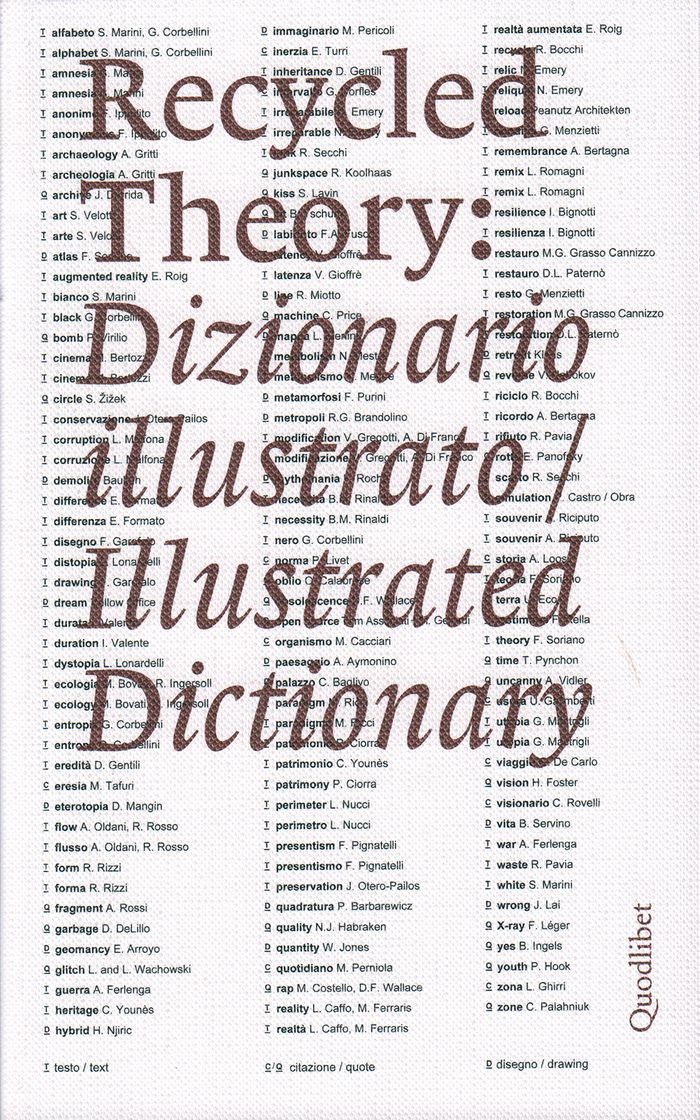
"Recycled theory" is a multidisciplinary dictionary made of entries in form of texts, drawings and quotes, which explore the concept of “recycling” in design cultures and in the theories that nurture them. Usually we recycle things, objects, spaces but more often we return on principles and approaches to rearrange them, put them back into circulation, and override them. The practice of recycling is therefore placed in an area of negotiation between memory and amnesia, it brings out the unexpected self-regeneration potential of what exists, our ability to preserve and reinvent it, even through its partial breakdown. The words here collected (from “amnesia” to “zone”) identify materials, procedures, ambiguities, deviations, and potential nexus of recycling, recording terms that tell the different processes of production and sense of city and landscape after recent socio-economic upheavals and the widening of preservation as the prevalent scenario for the project. Recycled Theory comes out of the collaboration of eleven Italian universities engaged in the research “Re-cycle Italy: New Life Cycles for Architecture and Infrastructure of City and Landscape.”
Recycled theory: illustrated dictionary
Actions:
Price:
$58.95
(available to order)
Summary:
"Recycled theory" is a multidisciplinary dictionary made of entries in form of texts, drawings and quotes, which explore the concept of “recycling” in design cultures and in the theories that nurture them. Usually we recycle things, objects, spaces but more often we return on principles and approaches to rearrange them, put them back into circulation, and override them. The practice of recycling is therefore placed in an area of negotiation between memory and amnesia, it brings out the unexpected self-regeneration potential of what exists, our ability to preserve and reinvent it, even through its partial breakdown. The words here collected (from “amnesia” to “zone”) identify materials, procedures, ambiguities, deviations, and potential nexus of recycling, recording terms that tell the different processes of production and sense of city and landscape after recent socio-economic upheavals and the widening of preservation as the prevalent scenario for the project. Recycled Theory comes out of the collaboration of eleven Italian universities engaged in the research “Re-cycle Italy: New Life Cycles for Architecture and Infrastructure of City and Landscape.”
Form:
books
books
Publication:
November 2016
November 2016
Subject:
Green Architecture
Green Architecture
Form:
books
books
Actions:
Price:
$33.00
(available to order)
Summary:
Urbanization is a system of power and knowledge, and today’s city functions through the expansive material infrastructures of the urban order. In The Urban Apparatus, Reinhold Martin analyzes urbanization and the contemporary city in aesthetic, socioeconomic, and mediapolitical terms. He argues that understanding the city as infrastructure reveals urbanization to be a way(...)
$33.00
(available to order)
Summary:
Urbanization is a system of power and knowledge, and today’s city functions through the expansive material infrastructures of the urban order. In The Urban Apparatus, Reinhold Martin analyzes urbanization and the contemporary city in aesthetic, socioeconomic, and mediapolitical terms. He argues that understanding the city as infrastructure reveals urbanization to be a way(...)
Title:
The urban apparatus: mediapolitics and the city
Actions:
Price:
$33.00
(available to order)
Summary:
Urbanization is a system of power and knowledge, and today’s city functions through the expansive material infrastructures of the urban order. In The Urban Apparatus, Reinhold Martin analyzes urbanization and the contemporary city in aesthetic, socioeconomic, and mediapolitical terms. He argues that understanding the city as infrastructure reveals urbanization to be a way of imparting functional, aesthetic, and cognitive order to a contradictory, doubly bound neoliberal regime. Blending critical philosophy, political theory, and media theory, The Urban Apparatus explores how the aesthetics of cities and their political economies overlap. In a series of ten essays, with a detailed theoretical introduction, Martin explores questions related to urban life, drawn from a wide range of global topics—from the fiscal crisis in Detroit to speculative development in Mumbai to the landscape of Mars, from discussions of race and the environment to housing and economic inequality. Each essay proposes a particular “mediator” (or a material complex) that is shaped by imaginative practices, each answering the question “What is a city, today?”
The urban apparatus: mediapolitics and the city
Actions:
Price:
$33.00
(available to order)
Summary:
Urbanization is a system of power and knowledge, and today’s city functions through the expansive material infrastructures of the urban order. In The Urban Apparatus, Reinhold Martin analyzes urbanization and the contemporary city in aesthetic, socioeconomic, and mediapolitical terms. He argues that understanding the city as infrastructure reveals urbanization to be a way of imparting functional, aesthetic, and cognitive order to a contradictory, doubly bound neoliberal regime. Blending critical philosophy, political theory, and media theory, The Urban Apparatus explores how the aesthetics of cities and their political economies overlap. In a series of ten essays, with a detailed theoretical introduction, Martin explores questions related to urban life, drawn from a wide range of global topics—from the fiscal crisis in Detroit to speculative development in Mumbai to the landscape of Mars, from discussions of race and the environment to housing and economic inequality. Each essay proposes a particular “mediator” (or a material complex) that is shaped by imaginative practices, each answering the question “What is a city, today?”
Form:
books
books
Publication:
October 2016
October 2016
Subject:
Urban Theory
Urban Theory
Form:
books
books
Actions:
Price:
$31.50
(available to order)
Summary:
Frank Lloyd Wright’s Larkin building has become an icon of modern architecture. And the fact that it was demolished only forty-six years after its 1904 completion makes Jack Quinan’s study of the building — which housed a Buffalo, New York, soap company — all the more valuable. Quinan’s history draws on engineering documents, personal accounts of the building, and(...)
$31.50
(available to order)
Summary:
Frank Lloyd Wright’s Larkin building has become an icon of modern architecture. And the fact that it was demolished only forty-six years after its 1904 completion makes Jack Quinan’s study of the building — which housed a Buffalo, New York, soap company — all the more valuable. Quinan’s history draws on engineering documents, personal accounts of the building, and(...)
Title:
Frank Lloyd Wright's Larkin building : myth and fact
Actions:
Price:
$31.50
(available to order)
Summary:
Frank Lloyd Wright’s Larkin building has become an icon of modern architecture. And the fact that it was demolished only forty-six years after its 1904 completion makes Jack Quinan’s study of the building — which housed a Buffalo, New York, soap company — all the more valuable. Quinan’s history draws on engineering documents, personal accounts of the building, and other papers he acquired from the family of Darwin D. Martin, a Larkin executive who proposed commissioning Wright to design the company’s offices. With access to these rare sources, Quinan reveals how a young Wright landed the commission and traces the evolution of his cutting-edge plans. Quinan then takes Wright studies to a new level, examining the Larkin building as a structure at the center of economic and personal relationships. Illustrated with more than one hundred photographs, floor plans, maps, and diagrams, Frank Lloyd Wright’s Larkin Building provides a concise but complete record of how the building was conceived, built, evaluated, and finally demolished in what has been called a tragic loss for American architecture.
Frank Lloyd Wright's Larkin building : myth and fact
Actions:
Price:
$31.50
(available to order)
Summary:
Frank Lloyd Wright’s Larkin building has become an icon of modern architecture. And the fact that it was demolished only forty-six years after its 1904 completion makes Jack Quinan’s study of the building — which housed a Buffalo, New York, soap company — all the more valuable. Quinan’s history draws on engineering documents, personal accounts of the building, and other papers he acquired from the family of Darwin D. Martin, a Larkin executive who proposed commissioning Wright to design the company’s offices. With access to these rare sources, Quinan reveals how a young Wright landed the commission and traces the evolution of his cutting-edge plans. Quinan then takes Wright studies to a new level, examining the Larkin building as a structure at the center of economic and personal relationships. Illustrated with more than one hundred photographs, floor plans, maps, and diagrams, Frank Lloyd Wright’s Larkin Building provides a concise but complete record of how the building was conceived, built, evaluated, and finally demolished in what has been called a tragic loss for American architecture.
Form:
books
books
Publication:
May 2006, Chicago, London
May 2006, Chicago, London
Subject:
Architecture Monographs
Architecture Monographs
Form:
books
books
Actions:
Price:
$63.95
(available to order)
Summary:
Conceived as an experiment that would apply the new "science" of city planning to a suburban setting, Forest Hills Gardens was created by the Russell Sage Foundation to provide housing for middle-class commuters as an alternative to cramped flats in New York City. Although it has long been recognized as one of the most influential planned communities in the United(...)
$63.95
(available to order)
Summary:
Conceived as an experiment that would apply the new "science" of city planning to a suburban setting, Forest Hills Gardens was created by the Russell Sage Foundation to provide housing for middle-class commuters as an alternative to cramped flats in New York City. Although it has long been recognized as one of the most influential planned communities in the United(...)
Title:
A modern Arcadia : Frederick Law Olmsted Jr. & the plan for Forest Hill Gardens
Actions:
Price:
$63.95
(available to order)
Summary:
Conceived as an experiment that would apply the new "science" of city planning to a suburban setting, Forest Hills Gardens was created by the Russell Sage Foundation to provide housing for middle-class commuters as an alternative to cramped flats in New York City. Although it has long been recognized as one of the most influential planned communities in the United States, this is the first time Forest Hills Gardens has been the subject of a book. Susan L. Klaus's fully illustrated history chronicles the creation of the 142-acre development from its inception in 1909 through its first two decades, offering critical insights into American planning history, landscape architecture, and the social and economic forces that shaped housing in the Progressive Era. Klaus focuses particularly on the creative genius of Frederick Law Olmsted Jr., who served as planner and landscape architect for the project. Drawing on his father's visionary ideas but developing his own perspective, the younger Olmsted redefined planning for the modern era and became one of the founders of the profession of city planning in the United States.
A modern Arcadia : Frederick Law Olmsted Jr. & the plan for Forest Hill Gardens
Actions:
Price:
$63.95
(available to order)
Summary:
Conceived as an experiment that would apply the new "science" of city planning to a suburban setting, Forest Hills Gardens was created by the Russell Sage Foundation to provide housing for middle-class commuters as an alternative to cramped flats in New York City. Although it has long been recognized as one of the most influential planned communities in the United States, this is the first time Forest Hills Gardens has been the subject of a book. Susan L. Klaus's fully illustrated history chronicles the creation of the 142-acre development from its inception in 1909 through its first two decades, offering critical insights into American planning history, landscape architecture, and the social and economic forces that shaped housing in the Progressive Era. Klaus focuses particularly on the creative genius of Frederick Law Olmsted Jr., who served as planner and landscape architect for the project. Drawing on his father's visionary ideas but developing his own perspective, the younger Olmsted redefined planning for the modern era and became one of the founders of the profession of city planning in the United States.
Form:
books
books
Publication:
January 1900, Amherst / Boston
January 1900, Amherst / Boston
Subject:
Gardens
Gardens
Form:
books
books
Actions:
Price:
$44.95
(available in store)
Summary:
The architect and theorist Walter Curt Behrendt (1884-1945) worked on public housing and urban development as a designer and administrator for the German government after World War I. From 1925 to 1926 he edited the journal "Die Form" for the German Werkbund (...)
$44.95
(available in store)
Summary:
The architect and theorist Walter Curt Behrendt (1884-1945) worked on public housing and urban development as a designer and administrator for the German government after World War I. From 1925 to 1926 he edited the journal "Die Form" for the German Werkbund (...)
Title:
The victory of the new building style
Actions:
Price:
$44.95
(available in store)
Summary:
The architect and theorist Walter Curt Behrendt (1884-1945) worked on public housing and urban development as a designer and administrator for the German government after World War I. From 1925 to 1926 he edited the journal "Die Form" for the German Werkbund and led an articulate and well-orchestrated campaign in support of the Modern Movement. A friend and colleague of Lewis Mumford, he immigrated in 1934 to the United States, where he taught courses on city planning and housing at Dartmouth College and the University of Buffalo. "The Victory of the New Building Style" (1927)—his principal theoretical work in German and the precursor to Modern Building, which he wrote in English—presents a revisionist conception of style that places equal emphasis on form and function. Behrendt calls for architects to return to basic geometries and to articulate explicitly the new social and economic realities. Now available in English for the first time, this incisive treatise boldly advocates international modernism to the general public. Introduction by Detlef Mertins and translation by Harry Francis Mallgrave
The victory of the new building style
Actions:
Price:
$44.95
(available in store)
Summary:
The architect and theorist Walter Curt Behrendt (1884-1945) worked on public housing and urban development as a designer and administrator for the German government after World War I. From 1925 to 1926 he edited the journal "Die Form" for the German Werkbund and led an articulate and well-orchestrated campaign in support of the Modern Movement. A friend and colleague of Lewis Mumford, he immigrated in 1934 to the United States, where he taught courses on city planning and housing at Dartmouth College and the University of Buffalo. "The Victory of the New Building Style" (1927)—his principal theoretical work in German and the precursor to Modern Building, which he wrote in English—presents a revisionist conception of style that places equal emphasis on form and function. Behrendt calls for architects to return to basic geometries and to articulate explicitly the new social and economic realities. Now available in English for the first time, this incisive treatise boldly advocates international modernism to the general public. Introduction by Detlef Mertins and translation by Harry Francis Mallgrave
Form:
books
books
Publication:
January 2000, Los Angeles
January 2000, Los Angeles
Subject:
Architectural Theory
Architectural Theory
Form:
books
books
Title:
Rievaulx Abbey
Rievaulx Abbey
Actions:
Price:
$135.00
(available to order)
Summary:
Set in a beautiful tree-sided valley in England’s North York moors, the ruins of 800-year-old Rievaulx Abbey evoke a medieval world of Cistercian monks living and working, worshipping and seeking spiritual growth. This book provides an unprecedented account of Rievaulx, its 400 years as a monastery and its next 400 years, forsaken and deteriorating. Peter Fergusson(...)
$135.00
(available to order)
Summary:
Set in a beautiful tree-sided valley in England’s North York moors, the ruins of 800-year-old Rievaulx Abbey evoke a medieval world of Cistercian monks living and working, worshipping and seeking spiritual growth. This book provides an unprecedented account of Rievaulx, its 400 years as a monastery and its next 400 years, forsaken and deteriorating. Peter Fergusson(...)
Subject:
History until 1900
History until 1900
Publication:
January 1900, New Haven/London
January 1900, New Haven/London
Title:
Rievaulx Abbey
Actions:
Price:
$135.00
(available to order)
Summary:
Set in a beautiful tree-sided valley in England’s North York moors, the ruins of 800-year-old Rievaulx Abbey evoke a medieval world of Cistercian monks living and working, worshipping and seeking spiritual growth. This book provides an unprecedented account of Rievaulx, its 400 years as a monastery and its next 400 years, forsaken and deteriorating. Peter Fergusson and Stuart Harrison present the first comprehensive archaeological and architectural analysis of Rievaulx and the other buildings within its 92-acre walled precinct. They include extensive reconstruction drawings that bring to life the abbey and its infirmary, service buildings, water meadows, mills, and workshops. The authors describe Rievaulx’s remarkable architectural development from its early decades as home to a community of 650 men to its desertion after Henry VIII's Suppression. Fergusson and Harrison consider the buildings' context, architectural significance, iconography, and social and economic influences. Then, tracing the suppression of the monastery and changing perceptions of the ruin from the sixteenth through the twentieth centuries, the authors complete their portrait of the spectacular abbey and its meanings across time.
Rievaulx Abbey
Actions:
Price:
$135.00
(available to order)
Summary:
Set in a beautiful tree-sided valley in England’s North York moors, the ruins of 800-year-old Rievaulx Abbey evoke a medieval world of Cistercian monks living and working, worshipping and seeking spiritual growth. This book provides an unprecedented account of Rievaulx, its 400 years as a monastery and its next 400 years, forsaken and deteriorating. Peter Fergusson and Stuart Harrison present the first comprehensive archaeological and architectural analysis of Rievaulx and the other buildings within its 92-acre walled precinct. They include extensive reconstruction drawings that bring to life the abbey and its infirmary, service buildings, water meadows, mills, and workshops. The authors describe Rievaulx’s remarkable architectural development from its early decades as home to a community of 650 men to its desertion after Henry VIII's Suppression. Fergusson and Harrison consider the buildings' context, architectural significance, iconography, and social and economic influences. Then, tracing the suppression of the monastery and changing perceptions of the ruin from the sixteenth through the twentieth centuries, the authors complete their portrait of the spectacular abbey and its meanings across time.
Form:
books
books
Publication:
January 1900, New Haven/London
January 1900, New Haven/London
Subject:
History until 1900
History until 1900
Form:
books
books
Title:
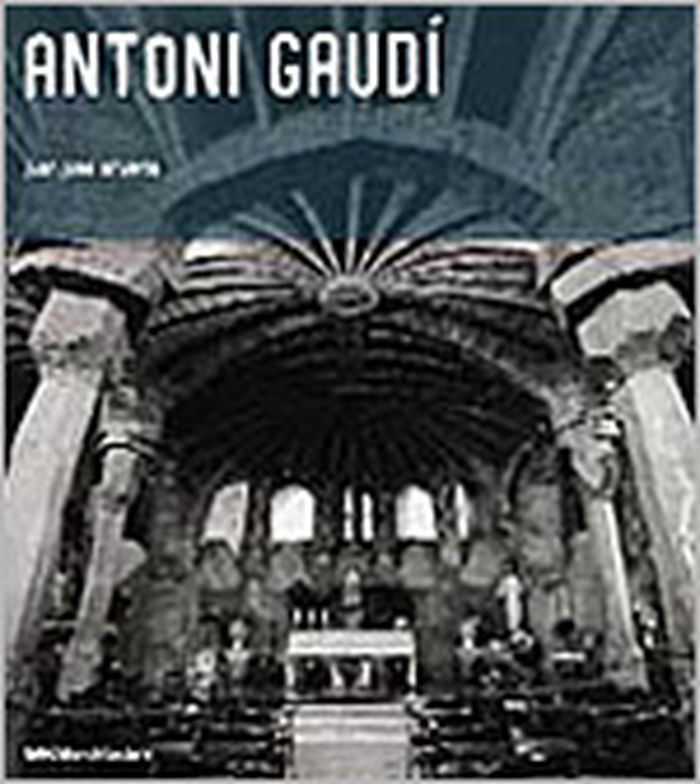
Antoni Gaudí, 1852 - 1926
Antoni Gaudí, 1852 - 1926
Actions:
Price:
$115.00
(available in store)
Summary:
Antoni Gaudí (1852–1928) was a builder by instinct and by practice, fanciful and baroque in his sensibility, in love with the bright colours and plastic forms of the Mediterranean tradition. Despite his considerable contributions, Gaudí was an isolated figure in the architecture of the modern era. Critics were slow to recognize the prophetic value of his work, owing to(...)
$115.00
(available in store)
Summary:
Antoni Gaudí (1852–1928) was a builder by instinct and by practice, fanciful and baroque in his sensibility, in love with the bright colours and plastic forms of the Mediterranean tradition. Despite his considerable contributions, Gaudí was an isolated figure in the architecture of the modern era. Critics were slow to recognize the prophetic value of his work, owing to(...)
Title:
Antoni Gaudí, 1852 - 1926
Actions:
Price:
$115.00
(available in store)
Summary:
Antoni Gaudí (1852–1928) was a builder by instinct and by practice, fanciful and baroque in his sensibility, in love with the bright colours and plastic forms of the Mediterranean tradition. Despite his considerable contributions, Gaudí was an isolated figure in the architecture of the modern era. Critics were slow to recognize the prophetic value of his work, owing to the difficulty in reconciling it with the development of the Modern Movement. Gaudí invented a new form of modernism that combined elements of art nouveau, Catalan nationalism, Gothic Revival and his own relentlessly original imagination. His eclectic experience was made possible by special historical circumstances such as the economic prosperity of Barcelona and the existence of highly skilled craftsmen in Catalonia. This volume covers Gaudí’s work in systematic fashion, from the Güell Palace to the park of the same name, and finally to his unfinished masterpiece, the church of the Sagrada Familia. Author Juan José Lahuerta devotes an attentive critical re-examination of the architect’s work through a thorough analysis of his designs and writings.
Antoni Gaudí, 1852 - 1926
Actions:
Price:
$115.00
(available in store)
Summary:
Antoni Gaudí (1852–1928) was a builder by instinct and by practice, fanciful and baroque in his sensibility, in love with the bright colours and plastic forms of the Mediterranean tradition. Despite his considerable contributions, Gaudí was an isolated figure in the architecture of the modern era. Critics were slow to recognize the prophetic value of his work, owing to the difficulty in reconciling it with the development of the Modern Movement. Gaudí invented a new form of modernism that combined elements of art nouveau, Catalan nationalism, Gothic Revival and his own relentlessly original imagination. His eclectic experience was made possible by special historical circumstances such as the economic prosperity of Barcelona and the existence of highly skilled craftsmen in Catalonia. This volume covers Gaudí’s work in systematic fashion, from the Güell Palace to the park of the same name, and finally to his unfinished masterpiece, the church of the Sagrada Familia. Author Juan José Lahuerta devotes an attentive critical re-examination of the architect’s work through a thorough analysis of his designs and writings.
Form:
books
books
Publication:
October 2003, Milan
October 2003, Milan
Subject:
Architecture Monographs
Architecture Monographs
Form:
books
books
Actions:
Price:
$56.00
(available to order)
Summary:
"Built by Hand" is the most extensive documentation ever published of vernacular buildings throughout the world. With examples from nearly every continent, the book documents the diverse methods people have used to create shelter from locally available natural materials, and shows the impressive handmade finished products through this truly stunning compilation of(...)
$56.00
(available to order)
Summary:
"Built by Hand" is the most extensive documentation ever published of vernacular buildings throughout the world. With examples from nearly every continent, the book documents the diverse methods people have used to create shelter from locally available natural materials, and shows the impressive handmade finished products through this truly stunning compilation of(...)
Subject:
Green Architecture
Green Architecture
Publication:
June 2003, Salt Lake City
June 2003, Salt Lake City
Title:
Built by hand : vernacular buildings around the world
Actions:
Price:
$56.00
(available to order)
Summary:
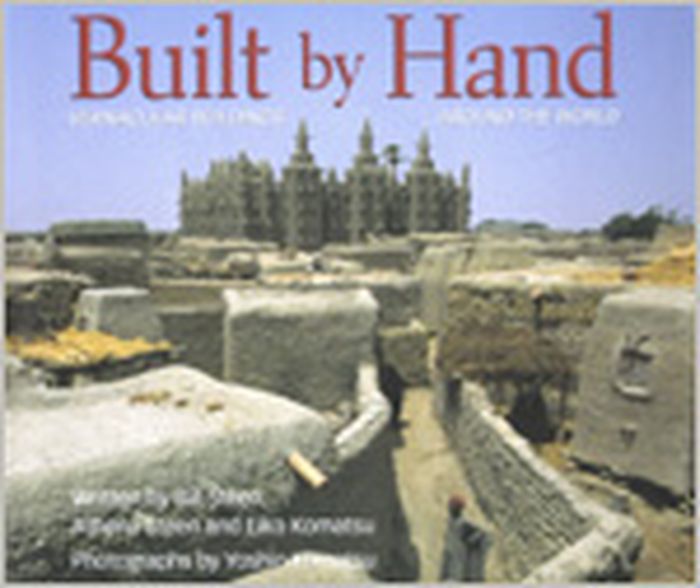
"Built by Hand" is the most extensive documentation ever published of vernacular buildings throughout the world. With examples from nearly every continent, the book documents the diverse methods people have used to create shelter from locally available natural materials, and shows the impressive handmade finished products through this truly stunning compilation of photographs. Unlike modern buildings that rely on industrially produced materials and highly specialized electric tools and techniques, the shelters featured here represent a rapidly disappearing genre of handcrafted and beautifully composed structures. They are the work of people who, as builders and homesteaders, have integrated artistic beauty and practical form into their shelter needs. "Built by Hand" offers insights into the world of vernacular building, along with potential solutions to many of the problems that plague modern architecture. It is a must-have collection that preserves and documents the rich cultural past of each structure and its community, and offers inspiration for those looking to build in a way that is motivated by something larger than speed, efficiency, and economic profit.
Built by hand : vernacular buildings around the world
Actions:
Price:
$56.00
(available to order)
Summary:
"Built by Hand" is the most extensive documentation ever published of vernacular buildings throughout the world. With examples from nearly every continent, the book documents the diverse methods people have used to create shelter from locally available natural materials, and shows the impressive handmade finished products through this truly stunning compilation of photographs. Unlike modern buildings that rely on industrially produced materials and highly specialized electric tools and techniques, the shelters featured here represent a rapidly disappearing genre of handcrafted and beautifully composed structures. They are the work of people who, as builders and homesteaders, have integrated artistic beauty and practical form into their shelter needs. "Built by Hand" offers insights into the world of vernacular building, along with potential solutions to many of the problems that plague modern architecture. It is a must-have collection that preserves and documents the rich cultural past of each structure and its community, and offers inspiration for those looking to build in a way that is motivated by something larger than speed, efficiency, and economic profit.
Form:
books
books
Publication:
June 2003, Salt Lake City
June 2003, Salt Lake City
Subject:
Green Architecture
Green Architecture
Form:
books
books
Actions:
Price:
$46.00
(available to order)
Summary:
Auschwitz. Hiroshima. Cambodia’s killing fields. The World Trade Center. The mass graves of Rwanda. These places of violent death have become part of the recreational landscape of tourism, an industry that is otherwise dedicated to pleasure and escape. In dark places like concentration camps, prisons, battlegrounds, and the sites of natural disasters, how are memory and(...)
$46.00
(available to order)
Summary:
Auschwitz. Hiroshima. Cambodia’s killing fields. The World Trade Center. The mass graves of Rwanda. These places of violent death have become part of the recreational landscape of tourism, an industry that is otherwise dedicated to pleasure and escape. In dark places like concentration camps, prisons, battlegrounds, and the sites of natural disasters, how are memory and(...)
Title:
Death tourism: disaster sites as recreational landscape
Actions:
Price:
$46.00
(available to order)
Summary:
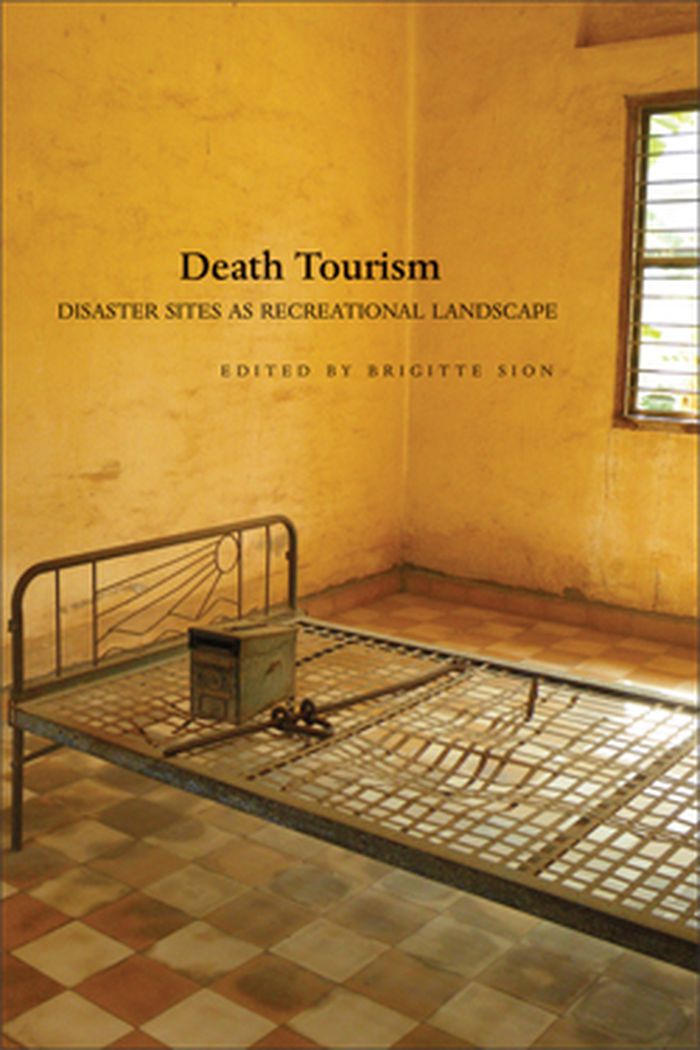
Auschwitz. Hiroshima. Cambodia’s killing fields. The World Trade Center. The mass graves of Rwanda. These places of violent death have become part of the recreational landscape of tourism, an industry that is otherwise dedicated to pleasure and escape. In dark places like concentration camps, prisons, battlegrounds, and the sites of natural disasters, how are memory and trauma mediated by thanotourism, or tourism of death? In Death Tourism, Brigitte Sion brings together essays by some of the most trenchant voices in the field to look at the tensions created by the juxtaposition of human remains and food stands, political agendas and educational programs, economic development and architectural ambition. How does a state redefine its national identity after catastrophic trauma? And what is the role of this kind of tourism in defining their new identity? A timely volume on an irresistible subject, this inquiry exposes the intersection of leisure with the inhumane, giving insight into how people respectfully share a public space that is both free and sacred, compelling and tragic.
Death tourism: disaster sites as recreational landscape
Actions:
Price:
$46.00
(available to order)
Summary:
Auschwitz. Hiroshima. Cambodia’s killing fields. The World Trade Center. The mass graves of Rwanda. These places of violent death have become part of the recreational landscape of tourism, an industry that is otherwise dedicated to pleasure and escape. In dark places like concentration camps, prisons, battlegrounds, and the sites of natural disasters, how are memory and trauma mediated by thanotourism, or tourism of death? In Death Tourism, Brigitte Sion brings together essays by some of the most trenchant voices in the field to look at the tensions created by the juxtaposition of human remains and food stands, political agendas and educational programs, economic development and architectural ambition. How does a state redefine its national identity after catastrophic trauma? And what is the role of this kind of tourism in defining their new identity? A timely volume on an irresistible subject, this inquiry exposes the intersection of leisure with the inhumane, giving insight into how people respectfully share a public space that is both free and sacred, compelling and tragic.
Form:
books
books
Publication:
November 2015
November 2015
Subject:
Transportation, Tourism, Migration
Transportation, Tourism, Migration
Form:
books
books
Actions:
Price:
$37.00
(available to order)
Summary:
How did Los Angeles start the 20th century as a dusty frontier town and end up a century later as one of the globe's supercities - with unparalleled cultural, economic, and technological reach? Peter Lunenfeld constructs an urban portrait, layer by layer, from serendipitous affinities, historical anomalies, and uncanny correspondences. One of the book's innovations is(...)
$37.00
(available to order)
Summary:
How did Los Angeles start the 20th century as a dusty frontier town and end up a century later as one of the globe's supercities - with unparalleled cultural, economic, and technological reach? Peter Lunenfeld constructs an urban portrait, layer by layer, from serendipitous affinities, historical anomalies, and uncanny correspondences. One of the book's innovations is(...)
Title:
CIty at the edge of forever: Los Angeles reimagined
Actions:
Price:
$37.00
(available to order)
Summary:
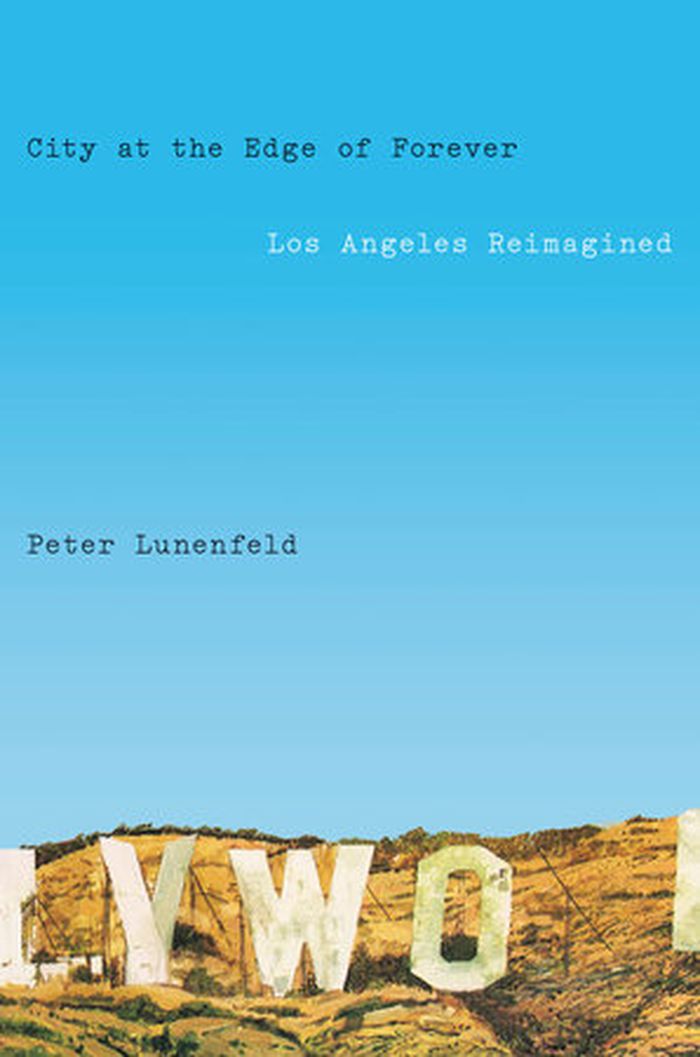
How did Los Angeles start the 20th century as a dusty frontier town and end up a century later as one of the globe's supercities - with unparalleled cultural, economic, and technological reach? Peter Lunenfeld constructs an urban portrait, layer by layer, from serendipitous affinities, historical anomalies, and uncanny correspondences. One of the book's innovations is to brand Los Angeles as the alchemical city. Earth became real estate when the Yankees took control in the nineteenth century. Fire fueled the city's early explosive growth as the Southland's oil fields supplied the inexhaustible demands of drivers and their cars. Air defined the area from WWII to the end of the Cold War, with aeronautics and aerospace dominating the region's industries. Water is now the key element, and Southern California's ports are the largest in the western hemisphere. What alchemists identify as the ethereal fifth element, or quintessence, this book positions as the glamour of Hollywood, a spell that sustains the city but also needs to be broken in order to understand Los Angeles now.
CIty at the edge of forever: Los Angeles reimagined
Actions:
Price:
$37.00
(available to order)
Summary:
How did Los Angeles start the 20th century as a dusty frontier town and end up a century later as one of the globe's supercities - with unparalleled cultural, economic, and technological reach? Peter Lunenfeld constructs an urban portrait, layer by layer, from serendipitous affinities, historical anomalies, and uncanny correspondences. One of the book's innovations is to brand Los Angeles as the alchemical city. Earth became real estate when the Yankees took control in the nineteenth century. Fire fueled the city's early explosive growth as the Southland's oil fields supplied the inexhaustible demands of drivers and their cars. Air defined the area from WWII to the end of the Cold War, with aeronautics and aerospace dominating the region's industries. Water is now the key element, and Southern California's ports are the largest in the western hemisphere. What alchemists identify as the ethereal fifth element, or quintessence, this book positions as the glamour of Hollywood, a spell that sustains the city but also needs to be broken in order to understand Los Angeles now.
Form:
books
books
Publication:
July 2020
July 2020
Subject:
Urban Theory
Urban Theory


