


5700 Results
Form:
books
books
Actions:
Price:
$15.95
(available to order)
Summary:
Many of the projects described in the "Handbook" have combined innovative architectural training with cross-cultural immersion, social activism, and environmental science, using design skills (and where appropriate) hands-on construction projects to confront poverty and urgent social problems. Often involving community members and students, these case studies promote(...)
$15.95
(available to order)
Summary:
Many of the projects described in the "Handbook" have combined innovative architectural training with cross-cultural immersion, social activism, and environmental science, using design skills (and where appropriate) hands-on construction projects to confront poverty and urgent social problems. Often involving community members and students, these case studies promote(...)
Subject:
Architecture since 1900, Europe
Architecture since 1900, Europe
Publication:
July 2005, Los Angeles
July 2005, Los Angeles
Title:
Cityworks Los Angeles : handbook
Actions:
Price:
$15.95
(available to order)
Summary:
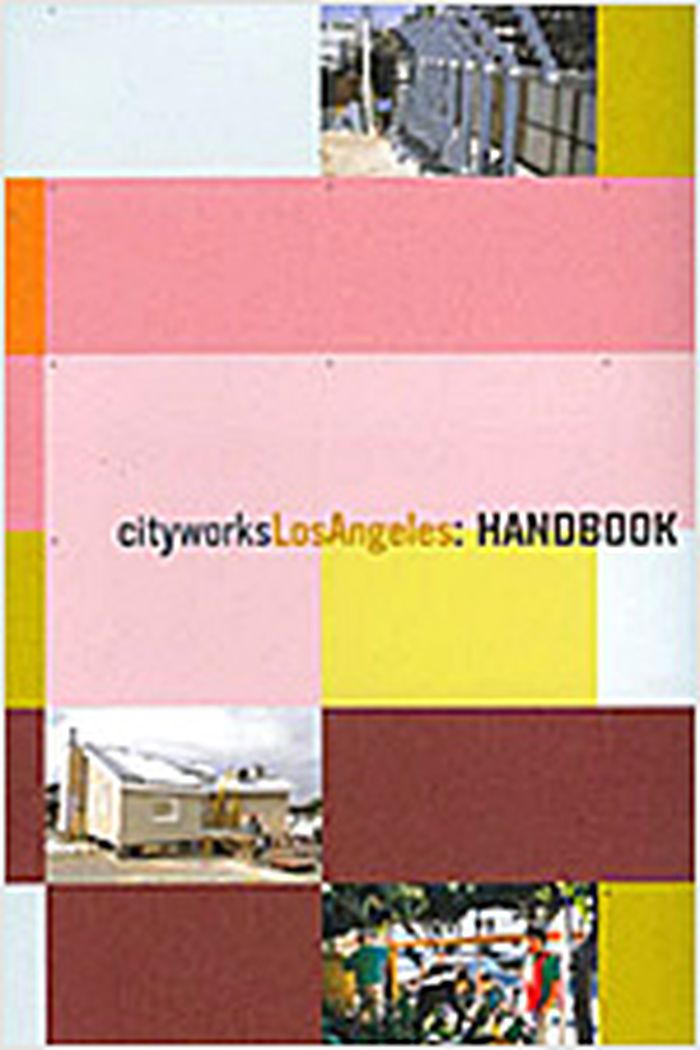
Many of the projects described in the "Handbook" have combined innovative architectural training with cross-cultural immersion, social activism, and environmental science, using design skills (and where appropriate) hands-on construction projects to confront poverty and urgent social problems. Often involving community members and students, these case studies promote maximum use of recycled or inexpensive, locally available materials, as well as lighting and energy systems that reduce utility costs and promote resource conservation. Not all the projects are specific to the City of Los Angeles, but they are examples of the types of projects CITYWORKSLA hopes to develop. Our aim is that the case studies assembled within the "Handbook" will serve as models for making architectural education relevant to urgent social problems, helping communities mobilize indigenous resources and social capital to develop long-term sustainable practices that protect, rather than erode, cultural identity, dignity, and stability. Edited by Elizabeth Martin with articles by : Peter Aesbacher, Chantal Aquin, Monique Birault, John Cary, Jeanine Centuori, Joaquin Herranz, Jr., Maria-Rosario Jackson, Florence Kabwasa-Green, Bruce Lindsey, Vic Liptak, Elizabeth Martin, Ken McCown, William McDonough, Russell Rock, Leslie Thomas, John Quale.
Cityworks Los Angeles : handbook
Actions:
Price:
$15.95
(available to order)
Summary:
Many of the projects described in the "Handbook" have combined innovative architectural training with cross-cultural immersion, social activism, and environmental science, using design skills (and where appropriate) hands-on construction projects to confront poverty and urgent social problems. Often involving community members and students, these case studies promote maximum use of recycled or inexpensive, locally available materials, as well as lighting and energy systems that reduce utility costs and promote resource conservation. Not all the projects are specific to the City of Los Angeles, but they are examples of the types of projects CITYWORKSLA hopes to develop. Our aim is that the case studies assembled within the "Handbook" will serve as models for making architectural education relevant to urgent social problems, helping communities mobilize indigenous resources and social capital to develop long-term sustainable practices that protect, rather than erode, cultural identity, dignity, and stability. Edited by Elizabeth Martin with articles by : Peter Aesbacher, Chantal Aquin, Monique Birault, John Cary, Jeanine Centuori, Joaquin Herranz, Jr., Maria-Rosario Jackson, Florence Kabwasa-Green, Bruce Lindsey, Vic Liptak, Elizabeth Martin, Ken McCown, William McDonough, Russell Rock, Leslie Thomas, John Quale.
Form:
books
books
Publication:
July 2005, Los Angeles
July 2005, Los Angeles
Subject:
Architecture since 1900, Europe
Architecture since 1900, Europe
Form:
books
books
Title:
Don't build, rebuild
Don't build, rebuild
Actions:
Price:
$43.95
(available to order)
Summary:
As climate change has escalated into a crisis, the reuse of existing structures is the only way to even begin to preserve our wood, sand, silicon, and iron, let alone stop belching carbon monoxide into the air. Our housing crisis means that we need usable buildings now more than ever, but architect and critic Aaron Betsky shows that new construction—often seeking to(...)
$43.95
(available to order)
Summary:
As climate change has escalated into a crisis, the reuse of existing structures is the only way to even begin to preserve our wood, sand, silicon, and iron, let alone stop belching carbon monoxide into the air. Our housing crisis means that we need usable buildings now more than ever, but architect and critic Aaron Betsky shows that new construction—often seeking to(...)
Title:
Don't build, rebuild
Actions:
Price:
$43.95
(available to order)
Summary:
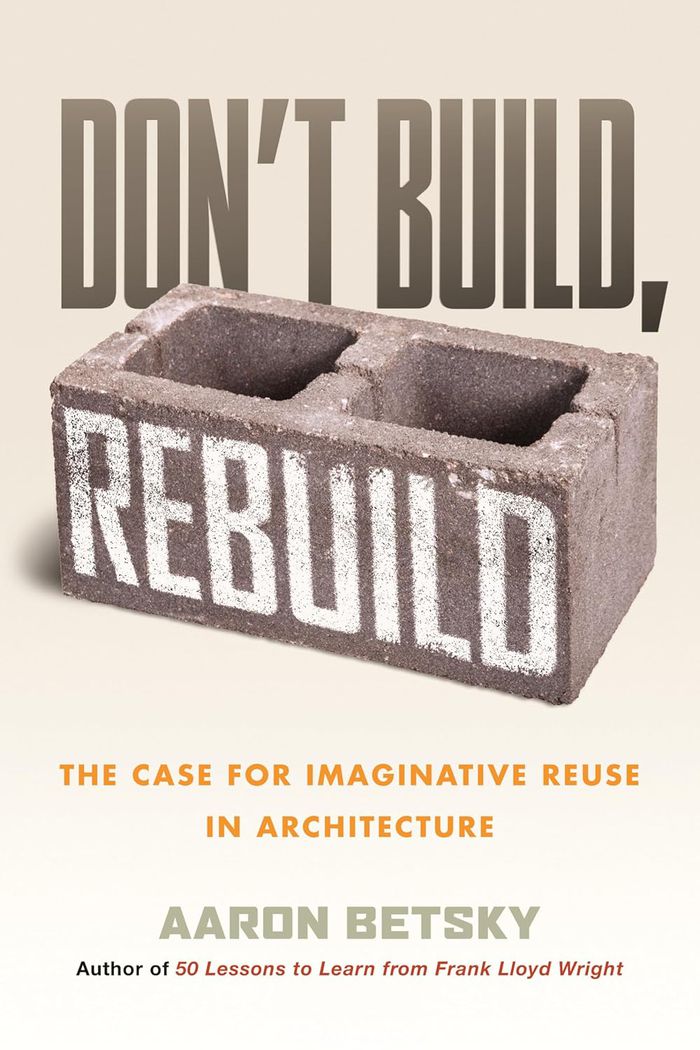
As climate change has escalated into a crisis, the reuse of existing structures is the only way to even begin to preserve our wood, sand, silicon, and iron, let alone stop belching carbon monoxide into the air. Our housing crisis means that we need usable buildings now more than ever, but architect and critic Aaron Betsky shows that new construction—often seeking to maximize profits rather than resources, often soulless in its feel—is not the answer. Whenever possible, it is better to repair, recycle, renovate, and reuse—not only from an environmental perspective, but culturally and artistically as well. Architectural reuse is as old as civilization itself. In the streets of Europe, you can find fragments from the Roman Empire. More recently, marginalized communities from New York to Detroit—queer people looking for places to gather or cruise, punks looking to make loud music, artists and displaced people looking for space to work and live—have taken over industrial spaces created then abandoned by capitalism, forging a unique style in the process. Their methods—from urban mining to dumpster diving—now inform architects transforming old structures today.
Don't build, rebuild
Actions:
Price:
$43.95
(available to order)
Summary:
As climate change has escalated into a crisis, the reuse of existing structures is the only way to even begin to preserve our wood, sand, silicon, and iron, let alone stop belching carbon monoxide into the air. Our housing crisis means that we need usable buildings now more than ever, but architect and critic Aaron Betsky shows that new construction—often seeking to maximize profits rather than resources, often soulless in its feel—is not the answer. Whenever possible, it is better to repair, recycle, renovate, and reuse—not only from an environmental perspective, but culturally and artistically as well. Architectural reuse is as old as civilization itself. In the streets of Europe, you can find fragments from the Roman Empire. More recently, marginalized communities from New York to Detroit—queer people looking for places to gather or cruise, punks looking to make loud music, artists and displaced people looking for space to work and live—have taken over industrial spaces created then abandoned by capitalism, forging a unique style in the process. Their methods—from urban mining to dumpster diving—now inform architects transforming old structures today.
Form:
books
books
Publication:
November 2024
November 2024
Subject:
Architectural Theory
Architectural Theory
Form:
books
books

Title:
Trans hirstory in 99 objects
Trans hirstory in 99 objects
Actions:
Price:
$59.95
(available to order)
Summary:
Spanning over four centuries, this volume brings together a wide-ranging selection of artworks and artifacts that highlight the under-recognized histories of trans and gender-nonconforming communities. Through the contributions of artists, writers, poets, activists, and scholars, this title reflects on historical erasure and imagines trans futures. An expansive array of(...)
$59.95
(available to order)
Summary:
Spanning over four centuries, this volume brings together a wide-ranging selection of artworks and artifacts that highlight the under-recognized histories of trans and gender-nonconforming communities. Through the contributions of artists, writers, poets, activists, and scholars, this title reflects on historical erasure and imagines trans futures. An expansive array of(...)
Title:
Trans hirstory in 99 objects
Actions:
Price:
$59.95
(available to order)
Summary:
Spanning over four centuries, this volume brings together a wide-ranging selection of artworks and artifacts that highlight the under-recognized histories of trans and gender-nonconforming communities. Through the contributions of artists, writers, poets, activists, and scholars, this title reflects on historical erasure and imagines trans futures. An expansive array of objects chart not a patriarchal history but a gender-neutral, trans-centric hirstory. The first publication of its kind, this survey celebrates trans forebearers, highlights struggles and triumphs, and reflects on the legacies of trans creative expression. Contributions by Kate Bornstein, Ria Brodell, Vaginal Davis, Leah DeVun, Mo B. Dick, Zackary Drucker, David Getsy, Martine Gutierrez, Andrea Jenkins, Jade Guarano Kuriki-Olivo (Puppies Puppies), Thomas (T.) Jean Lax, Abram J. Lewis, Miguel A. López, Amos Mac, Cyle Metzger, Deborah A. Miranda, Morgan M Page, SA Smythe, C. Riley Snorton, Dean Spade, Sandy Stone, Jeannine Tang, Michelle Tea, McKenzie Wark, and many others probe new horizons where institutional critique and trans culture meet. This book is copublished by the Museum of Trans Hirstory & Art (MOTHA), a conceptual art project of artist Chris E. Vargas that is forever "under construction" by design to allow continual transformation.
Trans hirstory in 99 objects
Actions:
Price:
$59.95
(available to order)
Summary:
Spanning over four centuries, this volume brings together a wide-ranging selection of artworks and artifacts that highlight the under-recognized histories of trans and gender-nonconforming communities. Through the contributions of artists, writers, poets, activists, and scholars, this title reflects on historical erasure and imagines trans futures. An expansive array of objects chart not a patriarchal history but a gender-neutral, trans-centric hirstory. The first publication of its kind, this survey celebrates trans forebearers, highlights struggles and triumphs, and reflects on the legacies of trans creative expression. Contributions by Kate Bornstein, Ria Brodell, Vaginal Davis, Leah DeVun, Mo B. Dick, Zackary Drucker, David Getsy, Martine Gutierrez, Andrea Jenkins, Jade Guarano Kuriki-Olivo (Puppies Puppies), Thomas (T.) Jean Lax, Abram J. Lewis, Miguel A. López, Amos Mac, Cyle Metzger, Deborah A. Miranda, Morgan M Page, SA Smythe, C. Riley Snorton, Dean Spade, Sandy Stone, Jeannine Tang, Michelle Tea, McKenzie Wark, and many others probe new horizons where institutional critique and trans culture meet. This book is copublished by the Museum of Trans Hirstory & Art (MOTHA), a conceptual art project of artist Chris E. Vargas that is forever "under construction" by design to allow continual transformation.
Form:
books
books
Publication:
June 2024
June 2024
Subject:
Art Theory
Art Theory
Form:
books
books
Price:
$87.95
(available to order)
Summary:
How exactly do small towns become suburbs? How do country roads turn into commercial strips? And what can planners do to prevent these changes in the future? Using the state of Vermont as the rural ideal, the authors compare contemporary vs. traditional development to demonstrate how today's primary way of developing land - suburban sprawl - is forever changing the look(...)
$87.95
(available to order)
Summary:
How exactly do small towns become suburbs? How do country roads turn into commercial strips? And what can planners do to prevent these changes in the future? Using the state of Vermont as the rural ideal, the authors compare contemporary vs. traditional development to demonstrate how today's primary way of developing land - suburban sprawl - is forever changing the look(...)
Subject:
Suburbs
Suburbs
Publication:
February 2002, Chicago
February 2002, Chicago
Title:
Above and beyond : visualizing change in small towns and rural areas
Actions:
Price:
$87.95
(available to order)
Summary:
How exactly do small towns become suburbs? How do country roads turn into commercial strips? And what can planners do to prevent these changes in the future? Using the state of Vermont as the rural ideal, the authors compare contemporary vs. traditional development to demonstrate how today's primary way of developing land - suburban sprawl - is forever changing the look of rural American. Using a host of aerial photographs - many altered through computer simulation to illustrate how landscapes are transformed over time - "Above and beyond" argues for a return to traditional development patterns that produce more compact cities and towns. Highlighting widespread trends in contemporary land development - from fragmentation (our tendency to spread out) to separation (our tendencey to allocate separate areas of town for living, working, shopping and playing) - the authors offer case examples of coummunities that have succeeded in curbing those trends. They show how these communities have invigorated their town centers; lured home buyers back to town; integrated working, shopping and recreation areas; nurtured a sense of identity and community; rewritten land-use regulations to allow for more compact developing; and overcome the "cars rule" mentality of suburban development.
Above and beyond : visualizing change in small towns and rural areas
Actions:
Price:
$87.95
(available to order)
Summary:
How exactly do small towns become suburbs? How do country roads turn into commercial strips? And what can planners do to prevent these changes in the future? Using the state of Vermont as the rural ideal, the authors compare contemporary vs. traditional development to demonstrate how today's primary way of developing land - suburban sprawl - is forever changing the look of rural American. Using a host of aerial photographs - many altered through computer simulation to illustrate how landscapes are transformed over time - "Above and beyond" argues for a return to traditional development patterns that produce more compact cities and towns. Highlighting widespread trends in contemporary land development - from fragmentation (our tendency to spread out) to separation (our tendencey to allocate separate areas of town for living, working, shopping and playing) - the authors offer case examples of coummunities that have succeeded in curbing those trends. They show how these communities have invigorated their town centers; lured home buyers back to town; integrated working, shopping and recreation areas; nurtured a sense of identity and community; rewritten land-use regulations to allow for more compact developing; and overcome the "cars rule" mentality of suburban development.
Form:
books
books
Publication:
February 2002, Chicago
February 2002, Chicago
Subject:
Suburbs
Suburbs
Form:
books
books
Actions:
Price:
$38.00
(available to order)
Summary:
With essays by Hans-Ulrich Obrist, Lebbeus Woods, Philipp Oswalt, Stefano Boeri, Michael Sorkins, Gutierrez + Portefaix, Jerry Herron, Sean Snyder, Marjetica Potrc, and others. Foreword by Stephen Vogel. Introduction by Peter Lang. Under the confluence of nomadic economics, technologies, and industries - commonly known as "suburban sprawl" - the city of Detroit,(...)
$38.00
(available to order)
Summary:
With essays by Hans-Ulrich Obrist, Lebbeus Woods, Philipp Oswalt, Stefano Boeri, Michael Sorkins, Gutierrez + Portefaix, Jerry Herron, Sean Snyder, Marjetica Potrc, and others. Foreword by Stephen Vogel. Introduction by Peter Lang. Under the confluence of nomadic economics, technologies, and industries - commonly known as "suburban sprawl" - the city of Detroit,(...)
Title:
Urban ecology : Detroit and beyond
Actions:
Price:
$38.00
(available to order)
Summary:
With essays by Hans-Ulrich Obrist, Lebbeus Woods, Philipp Oswalt, Stefano Boeri, Michael Sorkins, Gutierrez + Portefaix, Jerry Herron, Sean Snyder, Marjetica Potrc, and others. Foreword by Stephen Vogel. Introduction by Peter Lang. Under the confluence of nomadic economics, technologies, and industries - commonly known as "suburban sprawl" - the city of Detroit, segregated and isolated, constitutes one of the great monuments to decay by a modernist city. It is perhaps the clearest and earliest example of the effects of a globalized economy and labor market. "Urban ecology" contains a collection of projects generated by the International Center for Urban Ecology (iCUE), a nomadic laboratory for future cities. Since its founding in 1998 by Kyong Park, iCUE has accomplished five significant projects through international workshops like "Architecture of resistance," installations, videos, and urban designs. The laboratory investigation promotes discourse on the decomposition and possible reconstitution of a "moving city" - a more useful term through which to identify a city like Detroit. iCUE's projects have taken anti-architectural and non-urban perspectives, using multi-disciplinary processes and integrated collaboration with local communities and activists. "Urban ecology" brings together essays on Detroit and many other cities in crisis around the world.
Urban ecology : Detroit and beyond
Actions:
Price:
$38.00
(available to order)
Summary:
With essays by Hans-Ulrich Obrist, Lebbeus Woods, Philipp Oswalt, Stefano Boeri, Michael Sorkins, Gutierrez + Portefaix, Jerry Herron, Sean Snyder, Marjetica Potrc, and others. Foreword by Stephen Vogel. Introduction by Peter Lang. Under the confluence of nomadic economics, technologies, and industries - commonly known as "suburban sprawl" - the city of Detroit, segregated and isolated, constitutes one of the great monuments to decay by a modernist city. It is perhaps the clearest and earliest example of the effects of a globalized economy and labor market. "Urban ecology" contains a collection of projects generated by the International Center for Urban Ecology (iCUE), a nomadic laboratory for future cities. Since its founding in 1998 by Kyong Park, iCUE has accomplished five significant projects through international workshops like "Architecture of resistance," installations, videos, and urban designs. The laboratory investigation promotes discourse on the decomposition and possible reconstitution of a "moving city" - a more useful term through which to identify a city like Detroit. iCUE's projects have taken anti-architectural and non-urban perspectives, using multi-disciplinary processes and integrated collaboration with local communities and activists. "Urban ecology" brings together essays on Detroit and many other cities in crisis around the world.
Form:
books
books
Publication:
September 2004, Hong Kong
September 2004, Hong Kong
Subject:
Urban Theory
Urban Theory
Form:
books
books

Title:
Movements & moments
Movements & moments
Actions:
Price:
$34.95
(available to order)
Summary:
In 1930s Bolivia, self-described Anarchist Cholas form a libertarian trade union. In the Northern Highlands of Vietnam, the songs of one girl’s youth lead her to a life of activism. In the Philippines, female elders from Kalinga blaze a trail when pushed into impromptu protest. Equally striking accounts from Brazil, Chile, Ecuador, India, Nepal, Peru and Thailand weave a(...)
$34.95
(available to order)
Summary:
In 1930s Bolivia, self-described Anarchist Cholas form a libertarian trade union. In the Northern Highlands of Vietnam, the songs of one girl’s youth lead her to a life of activism. In the Philippines, female elders from Kalinga blaze a trail when pushed into impromptu protest. Equally striking accounts from Brazil, Chile, Ecuador, India, Nepal, Peru and Thailand weave a(...)
Title:
Movements & moments
Actions:
Price:
$34.95
(available to order)
Summary:
In 1930s Bolivia, self-described Anarchist Cholas form a libertarian trade union. In the Northern Highlands of Vietnam, the songs of one girl’s youth lead her to a life of activism. In the Philippines, female elders from Kalinga blaze a trail when pushed into impromptu protest. Equally striking accounts from Brazil, Chile, Ecuador, India, Nepal, Peru and Thailand weave a tapestry of trauma and triumph, shedding light on not-too-distant histories otherwise overlooked. Indigenous Peoples all over the world have always had to stand their ground in the face of colonialism. While the details may differ, what these stories have in common is their commitment to resistance in a world that puts profit before respect, and western notions of progress before their own. Movements and Moments is an introductory glimpse into how Indegenous Peoples tell these stories in their own words. From Southeast Asia to South America, vibrant communities must grapple with colonial realities to assert ownership over their lands and traditions. This project was undertaken in cooperation with the Goethe-Institut Indonesien in Jakarta. These stories were selected from an open call across 42 countries to spotlight feminist movements and advocacies in the Global South.
Movements & moments
Actions:
Price:
$34.95
(available to order)
Summary:
In 1930s Bolivia, self-described Anarchist Cholas form a libertarian trade union. In the Northern Highlands of Vietnam, the songs of one girl’s youth lead her to a life of activism. In the Philippines, female elders from Kalinga blaze a trail when pushed into impromptu protest. Equally striking accounts from Brazil, Chile, Ecuador, India, Nepal, Peru and Thailand weave a tapestry of trauma and triumph, shedding light on not-too-distant histories otherwise overlooked. Indigenous Peoples all over the world have always had to stand their ground in the face of colonialism. While the details may differ, what these stories have in common is their commitment to resistance in a world that puts profit before respect, and western notions of progress before their own. Movements and Moments is an introductory glimpse into how Indegenous Peoples tell these stories in their own words. From Southeast Asia to South America, vibrant communities must grapple with colonial realities to assert ownership over their lands and traditions. This project was undertaken in cooperation with the Goethe-Institut Indonesien in Jakarta. These stories were selected from an open call across 42 countries to spotlight feminist movements and advocacies in the Global South.
Form:
books
books
Publication:
November 2022
November 2022
Subject:
Illustration
Illustration
Form:
books
books
Actions:
Price:
$36.95
(available to order)
Summary:
The world is marked by deepening conflicts—between democracies and autocracies, woke and populist identity politics, rich and poor, continued environmental exploitation and harsh complications like climate change. In "The monadic age," Ingo Niermann argues that, stirred by rapid developments in automation and AI, these manifold crises are about to culminate in a new(...)
$36.95
(available to order)
Summary:
The world is marked by deepening conflicts—between democracies and autocracies, woke and populist identity politics, rich and poor, continued environmental exploitation and harsh complications like climate change. In "The monadic age," Ingo Niermann argues that, stirred by rapid developments in automation and AI, these manifold crises are about to culminate in a new(...)
Title:
The monadic age: Notes on the coming social order
Actions:
Price:
$36.95
(available to order)
Summary:
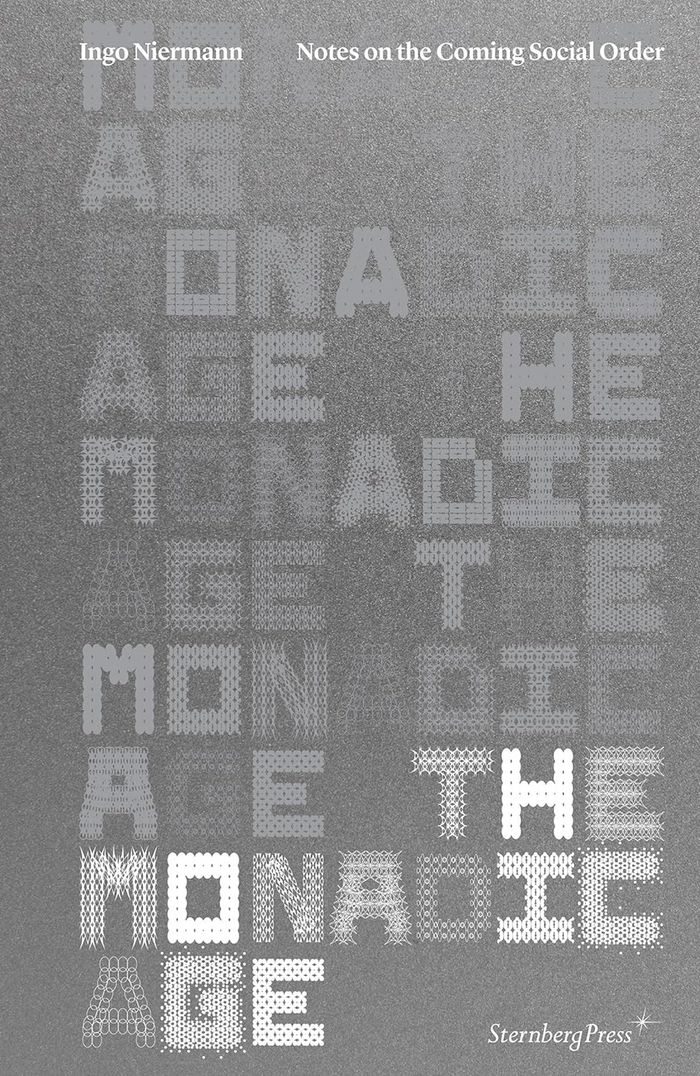
The world is marked by deepening conflicts—between democracies and autocracies, woke and populist identity politics, rich and poor, continued environmental exploitation and harsh complications like climate change. In "The monadic age," Ingo Niermann argues that, stirred by rapid developments in automation and AI, these manifold crises are about to culminate in a new paradigm of self-sufficiency—monadism—that overturns the liberal era and forces a reinvention of all social parameters. Today, two major post-liberal dispositions are unfolding. On the one side, people envision a harmonious community of all human and nonhuman beings (multi-species kinship, a rainbow of identities). On the other side, people isolate themselves within their own identities and belongings (filter bubbles, safe spaces, gated communities, charter cities, prepping). Monadism recognizes that these two seemingly contradictory dispositions stem from a similar understanding of the world: one is more optimistic, the other more pessimistic, but ultimately they’re interdependent. Before seeking harmony, we humans, a highly dominant species, must first of all restrain ourselves from coercive interactions with our environment. And to protect ourselves sufficiently from our environment, we must minimize its abuse.
The monadic age: Notes on the coming social order
Actions:
Price:
$36.95
(available to order)
Summary:
The world is marked by deepening conflicts—between democracies and autocracies, woke and populist identity politics, rich and poor, continued environmental exploitation and harsh complications like climate change. In "The monadic age," Ingo Niermann argues that, stirred by rapid developments in automation and AI, these manifold crises are about to culminate in a new paradigm of self-sufficiency—monadism—that overturns the liberal era and forces a reinvention of all social parameters. Today, two major post-liberal dispositions are unfolding. On the one side, people envision a harmonious community of all human and nonhuman beings (multi-species kinship, a rainbow of identities). On the other side, people isolate themselves within their own identities and belongings (filter bubbles, safe spaces, gated communities, charter cities, prepping). Monadism recognizes that these two seemingly contradictory dispositions stem from a similar understanding of the world: one is more optimistic, the other more pessimistic, but ultimately they’re interdependent. Before seeking harmony, we humans, a highly dominant species, must first of all restrain ourselves from coercive interactions with our environment. And to protect ourselves sufficiently from our environment, we must minimize its abuse.
Form:
books
books
Publication:
April 2024
April 2024
Subject:
Critical Theory
Critical Theory
Form:
books
books
Actions:
Price:
$57.75
(available to order)
Summary:
Providing hard data for trends that many perceive only vaguely and some deny altogether, "Designing for diversity" reveals a profession rife with gender and racial discrimination and examines the aspects of architectural practice that hinder or support the full participation of women and persons of color. Drawing on interviews and surveys of hundreds of architects,(...)
$57.75
(available to order)
Summary:
Providing hard data for trends that many perceive only vaguely and some deny altogether, "Designing for diversity" reveals a profession rife with gender and racial discrimination and examines the aspects of architectural practice that hinder or support the full participation of women and persons of color. Drawing on interviews and surveys of hundreds of architects,(...)
Subject:
Architectural Theory
Architectural Theory
Publication:
April 2002, Urbana and Chicago
April 2002, Urbana and Chicago
Title:
Designing for diversity : gender, race. and ethnicity in the architectural profession
Actions:
Price:
$57.75
(available to order)
Summary:
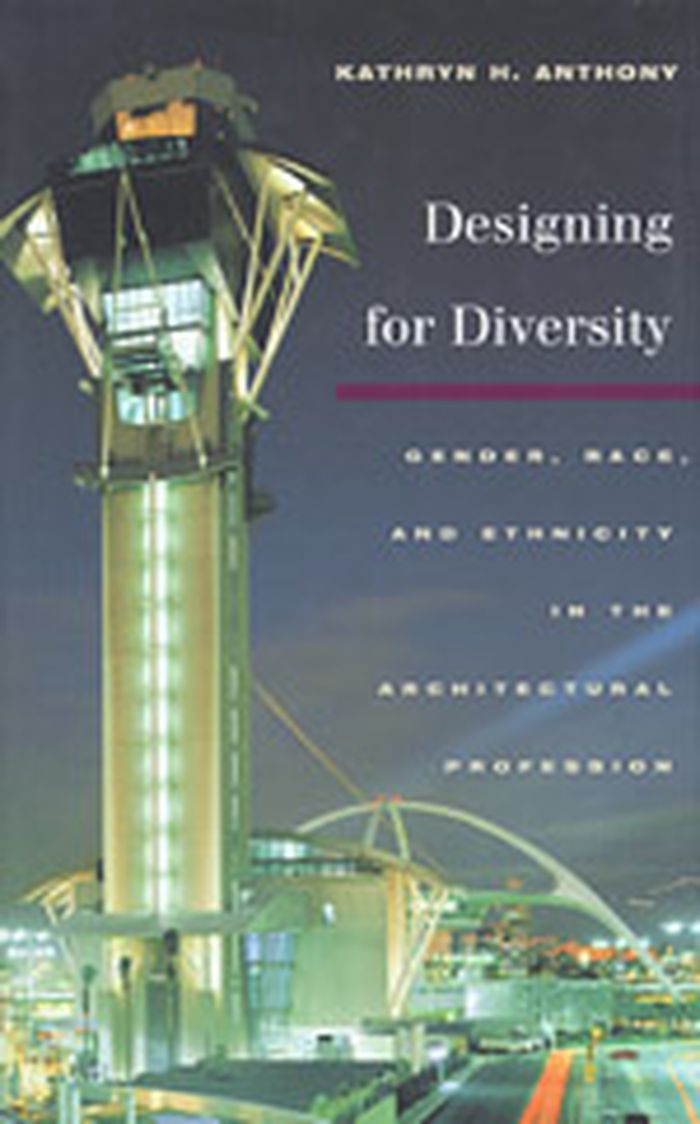
Providing hard data for trends that many perceive only vaguely and some deny altogether, "Designing for diversity" reveals a profession rife with gender and racial discrimination and examines the aspects of architectural practice that hinder or support the full participation of women and persons of color. Drawing on interviews and surveys of hundreds of architects, Kathryn H. Anthony outlines some of the forms of discrimination that recur in architecture, such as being confined to certain kinds of positions, typically interior design for women, government work for African Americans, and computer-aided design for Asian-American architects. Anthony discusses the profession's attitude toward flexible schedules and part-time contracts and identifies strategies that have helped underrepresented individuals advance in the profession. Given the traditional mismatch between diverse consumers and predominantly white male producers of the built environment, plus the shifting population balance toward communities of color, Anthony contends that the architectural profession staves off true diversity at its own peril. Through her book, practicing architects, managers of firms, and educators will learn how to create conditions more welcoming to a diversity of users as well as designers of the built environment.
Designing for diversity : gender, race. and ethnicity in the architectural profession
Actions:
Price:
$57.75
(available to order)
Summary:
Providing hard data for trends that many perceive only vaguely and some deny altogether, "Designing for diversity" reveals a profession rife with gender and racial discrimination and examines the aspects of architectural practice that hinder or support the full participation of women and persons of color. Drawing on interviews and surveys of hundreds of architects, Kathryn H. Anthony outlines some of the forms of discrimination that recur in architecture, such as being confined to certain kinds of positions, typically interior design for women, government work for African Americans, and computer-aided design for Asian-American architects. Anthony discusses the profession's attitude toward flexible schedules and part-time contracts and identifies strategies that have helped underrepresented individuals advance in the profession. Given the traditional mismatch between diverse consumers and predominantly white male producers of the built environment, plus the shifting population balance toward communities of color, Anthony contends that the architectural profession staves off true diversity at its own peril. Through her book, practicing architects, managers of firms, and educators will learn how to create conditions more welcoming to a diversity of users as well as designers of the built environment.
Form:
books
books
Publication:
April 2002, Urbana and Chicago
April 2002, Urbana and Chicago
Subject:
Architectural Theory
Architectural Theory
Form:
books
books

Title:
Theory of water
Theory of water
Actions:
Price:
$22.00
(available to order)
Summary:
For many years, Leanne Betasamosake Simpson has found refuge in skiing—in all kinds of weather across different forms of terrain, often following the trail beside a beloved creek near her home. Recently, as she skimmed along this path and meditated on our world's uncertainty—including environmental devastation, the rise of authoritarianism, and the effects of ongoing(...)
$22.00
(available to order)
Summary:
For many years, Leanne Betasamosake Simpson has found refuge in skiing—in all kinds of weather across different forms of terrain, often following the trail beside a beloved creek near her home. Recently, as she skimmed along this path and meditated on our world's uncertainty—including environmental devastation, the rise of authoritarianism, and the effects of ongoing(...)
Title:
Theory of water
Actions:
Price:
$22.00
(available to order)
Summary:
For many years, Leanne Betasamosake Simpson has found refuge in skiing—in all kinds of weather across different forms of terrain, often following the trail beside a beloved creek near her home. Recently, as she skimmed along this path and meditated on our world's uncertainty—including environmental devastation, the rise of authoritarianism, and the effects of ongoing social injustice—her mind turned to the ice beside her, and the snow beneath her feet. And she asked herself: What might it mean to truly listen to water? To know not only the land on which we live, but the water that surrounds and inhabits us? To coexist with and alongside water? So begins this renowned writer's quest to discover, understand, and trace the historical and cultural interactions of Indigenous peoples with water in all its forms. On her journey, she reflects on the teachings, traditions, stories, and creative work of others in her community—particularly those of her longtime friend Doug Williams, an Elder whose presence suffuses these pages; reads deeply the words of thinkers from other communities whose writing expands her own; and begins to shape a "Theory of Water" that reimagines relationships among all beings and life-forces.
Theory of water
Actions:
Price:
$22.00
(available to order)
Summary:
For many years, Leanne Betasamosake Simpson has found refuge in skiing—in all kinds of weather across different forms of terrain, often following the trail beside a beloved creek near her home. Recently, as she skimmed along this path and meditated on our world's uncertainty—including environmental devastation, the rise of authoritarianism, and the effects of ongoing social injustice—her mind turned to the ice beside her, and the snow beneath her feet. And she asked herself: What might it mean to truly listen to water? To know not only the land on which we live, but the water that surrounds and inhabits us? To coexist with and alongside water? So begins this renowned writer's quest to discover, understand, and trace the historical and cultural interactions of Indigenous peoples with water in all its forms. On her journey, she reflects on the teachings, traditions, stories, and creative work of others in her community—particularly those of her longtime friend Doug Williams, an Elder whose presence suffuses these pages; reads deeply the words of thinkers from other communities whose writing expands her own; and begins to shape a "Theory of Water" that reimagines relationships among all beings and life-forces.
Form:
books
books
Publication:
March 2026
March 2026
Subject:
indigenous
indigenous
Form:
books
books
Title:
Challenging social inequality: The Landless Rural Workers Moverment and agrarian reform in Brazil
Challenging social inequality: The Landless Rural Workers Moverment and agrarian reform in Brazil
Actions:
Price:
$51.95
(available to order)
Summary:
In ''Challenging Social Inequality'', an international and interdisciplinary group of scholars and development workers explores the causes, consequences, and contemporary reactions to Brazil's sharply unequal agrarian structure. They focus on the Landless Rural Workers Movement (MST)—Latin America's largest and most prominent social movement—and its ongoing efforts to(...)
$51.95
(available to order)
Summary:
In ''Challenging Social Inequality'', an international and interdisciplinary group of scholars and development workers explores the causes, consequences, and contemporary reactions to Brazil's sharply unequal agrarian structure. They focus on the Landless Rural Workers Movement (MST)—Latin America's largest and most prominent social movement—and its ongoing efforts to(...)
Title:
Challenging social inequality: The Landless Rural Workers Moverment and agrarian reform in Brazil
Actions:
Price:
$51.95
(available to order)
Summary:
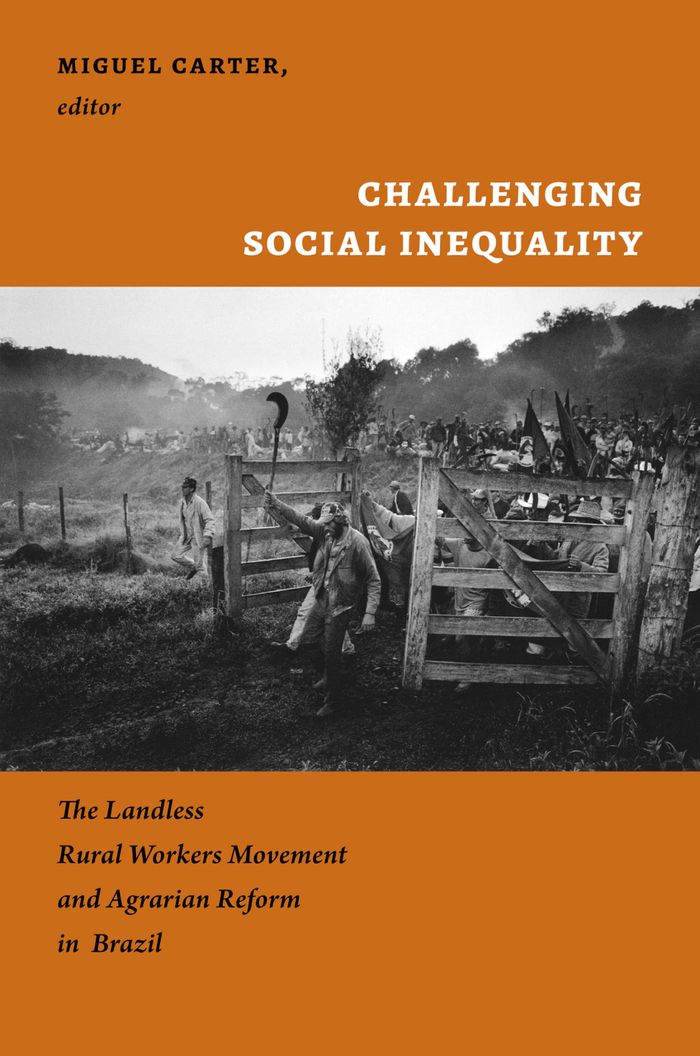
In ''Challenging Social Inequality'', an international and interdisciplinary group of scholars and development workers explores the causes, consequences, and contemporary reactions to Brazil's sharply unequal agrarian structure. They focus on the Landless Rural Workers Movement (MST)—Latin America's largest and most prominent social movement—and its ongoing efforts to confront historic patterns of inequality in the Brazilian countryside. Several essays provide essential historical background for understanding the MST. They examine Brazil's agrarian structure, state policies, and the formation of rural civil-society organizations. Other essays build on a frequently made distinction between the struggle for land and the struggle on the land. The first refers to the mobilization undertaken by landless peasants to demand government land redistribution. The struggle on the land takes place after the establishment of an official agricultural settlement. The main efforts during this phase are geared toward developing productive and meaningful rural communities. The last essays in the collection are wide-ranging analyses of the MST, which delve into the movement's relations with recent governments and its impact on other Brazilian social movements. In the conclusion, Miguel Carter appraises the future of agrarian reform in Brazil.
Challenging social inequality: The Landless Rural Workers Moverment and agrarian reform in Brazil
Actions:
Price:
$51.95
(available to order)
Summary:
In ''Challenging Social Inequality'', an international and interdisciplinary group of scholars and development workers explores the causes, consequences, and contemporary reactions to Brazil's sharply unequal agrarian structure. They focus on the Landless Rural Workers Movement (MST)—Latin America's largest and most prominent social movement—and its ongoing efforts to confront historic patterns of inequality in the Brazilian countryside. Several essays provide essential historical background for understanding the MST. They examine Brazil's agrarian structure, state policies, and the formation of rural civil-society organizations. Other essays build on a frequently made distinction between the struggle for land and the struggle on the land. The first refers to the mobilization undertaken by landless peasants to demand government land redistribution. The struggle on the land takes place after the establishment of an official agricultural settlement. The main efforts during this phase are geared toward developing productive and meaningful rural communities. The last essays in the collection are wide-ranging analyses of the MST, which delve into the movement's relations with recent governments and its impact on other Brazilian social movements. In the conclusion, Miguel Carter appraises the future of agrarian reform in Brazil.
Form:
books
books
Publication:
June 2015
June 2015
Subject:
Current Exhibitions
Current Exhibitions


