


5700 Results
Form:
journals and magazines
journals and magazines
Actions:
Price:
$21.48
(available to order)
Summary:
“A terrible mechanism [is] on the march, its gears multiplying.” So begins the 48th issue of Harvard Design Magazine, guest edited by Mark Lee, chair of the department of architecture at the Harvard Graduate School of Design, and Florencia Rodriguez, editorial director of -Ness Magazine. The issue takes as its theme the slippery and ambiguous figure of “America,” seen(...)
$21.48
(available to order)
Summary:
“A terrible mechanism [is] on the march, its gears multiplying.” So begins the 48th issue of Harvard Design Magazine, guest edited by Mark Lee, chair of the department of architecture at the Harvard Graduate School of Design, and Florencia Rodriguez, editorial director of -Ness Magazine. The issue takes as its theme the slippery and ambiguous figure of “America,” seen(...)
Title:
Harvard Design Magazine 48 : America
Actions:
Price:
$21.48
(available to order)
Summary:
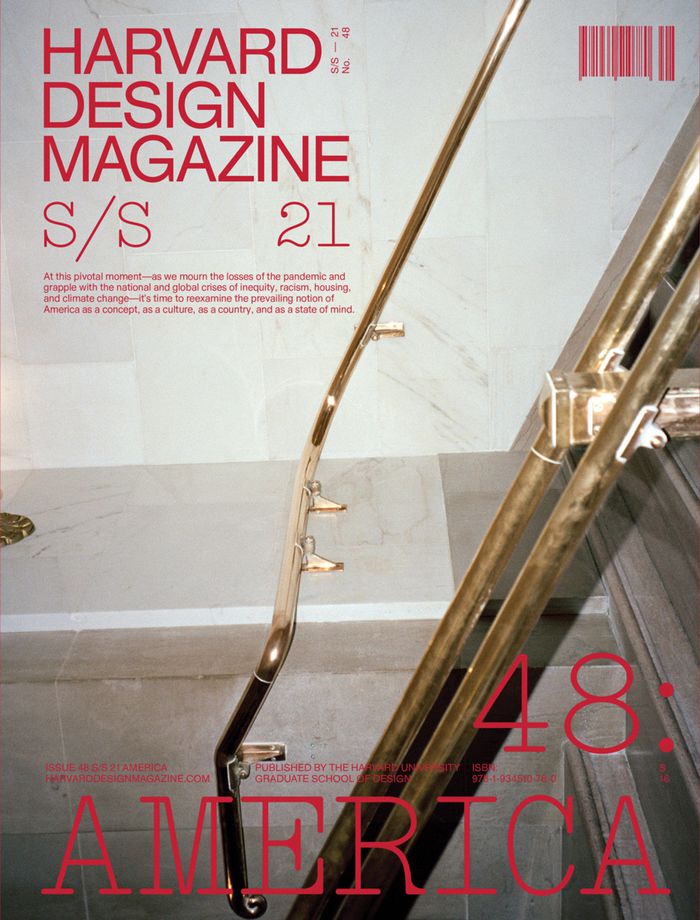
“A terrible mechanism [is] on the march, its gears multiplying.” So begins the 48th issue of Harvard Design Magazine, guest edited by Mark Lee, chair of the department of architecture at the Harvard Graduate School of Design, and Florencia Rodriguez, editorial director of -Ness Magazine. The issue takes as its theme the slippery and ambiguous figure of “America,” seen through the lens of the built and unbuilt environment. Americanization—once the “terrible mechanism” bent on pressing capitalist values on emerging economies everywhere—is now in retreat, eclipsed by the more urgent domestic concerns of pandemic and climate change, racial injustice and domestic radicalization. The very notion of what constitutes America is ripe for redefinition. The America Issue of Harvard Design Magazine, featuring a new design and art direction by Alexis Mark, invites historians, architects, landscape architects, urban designers, theorists, curators, artists, and planners to reflect on the country’s past and present, and to imagine sustainable futures. Projects, taxonomies, dialogues, essays, and spatial interpretations explore possible Americas. They allow us to delve into issues relevant to small cities, towns, and rural areas—as well as major urban centers—and to study barriers and opportunities facing communities across the country.
Harvard Design Magazine 48 : America
Actions:
Price:
$21.48
(available to order)
Summary:
“A terrible mechanism [is] on the march, its gears multiplying.” So begins the 48th issue of Harvard Design Magazine, guest edited by Mark Lee, chair of the department of architecture at the Harvard Graduate School of Design, and Florencia Rodriguez, editorial director of -Ness Magazine. The issue takes as its theme the slippery and ambiguous figure of “America,” seen through the lens of the built and unbuilt environment. Americanization—once the “terrible mechanism” bent on pressing capitalist values on emerging economies everywhere—is now in retreat, eclipsed by the more urgent domestic concerns of pandemic and climate change, racial injustice and domestic radicalization. The very notion of what constitutes America is ripe for redefinition. The America Issue of Harvard Design Magazine, featuring a new design and art direction by Alexis Mark, invites historians, architects, landscape architects, urban designers, theorists, curators, artists, and planners to reflect on the country’s past and present, and to imagine sustainable futures. Projects, taxonomies, dialogues, essays, and spatial interpretations explore possible Americas. They allow us to delve into issues relevant to small cities, towns, and rural areas—as well as major urban centers—and to study barriers and opportunities facing communities across the country.
Form:
journals and magazines
journals and magazines
Publication:
April 2021
April 2021
Subject:
Magazines
Magazines
Form:
books
books
Price:
$32.95
(available to order)
Summary:
The practice of comparison is implicit in every act of imagining, representing, and studying urban experience. "Urban enigmas" contributes to recent interdisciplinary interest in cities by introducing comparison as a key methodology for urban cultural analysis. Contributors, part of the collaborative research project "The Culture of Cities : Montreal, Toronto, Dublin,(...)
$32.95
(available to order)
Summary:
The practice of comparison is implicit in every act of imagining, representing, and studying urban experience. "Urban enigmas" contributes to recent interdisciplinary interest in cities by introducing comparison as a key methodology for urban cultural analysis. Contributors, part of the collaborative research project "The Culture of Cities : Montreal, Toronto, Dublin,(...)
Subject:
Architecture in Canada
Architecture in Canada
Publication:
March 2007, Montréal, Kingston, London, Ithaca
March 2007, Montréal, Kingston, London, Ithaca
Title:
Urban enigmas : Montréal, Toronto, and the problem of comparing cities
Actions:
Price:
$32.95
(available to order)
Summary:
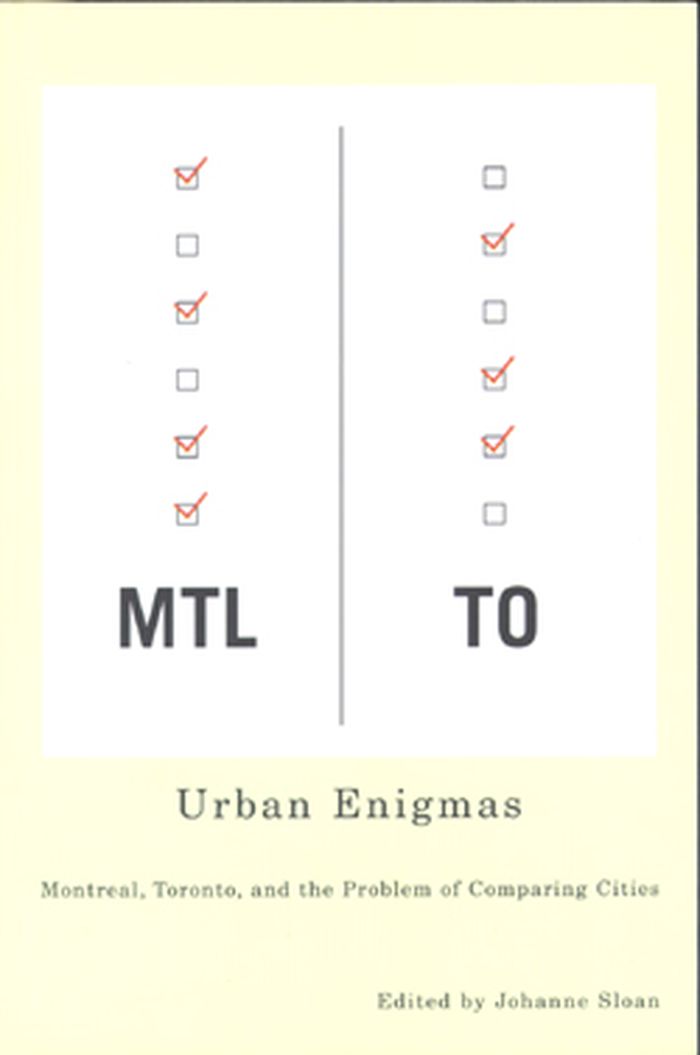
The practice of comparison is implicit in every act of imagining, representing, and studying urban experience. "Urban enigmas" contributes to recent interdisciplinary interest in cities by introducing comparison as a key methodology for urban cultural analysis. Contributors, part of the collaborative research project "The Culture of Cities : Montreal, Toronto, Dublin, and Berlin", address theoretical and methodological aspects of comparison, while case-studies examine the mutually constituted identities of Montreal and Toronto through examples of travel writing, public art, film festivals, theatrical performances, diasporic communities, ethnic festivals, and urban media. Comparison is shown to be not only something performed by experts but a deeply embedded, everyday social practice that contributes to the mutable identities of cities. "Urban enigmas" demonstrates that the accumulation of urban actions, encounters, experiences, and relationships create distinctive patterns that make it possible to recognize the particularity of cities. Contributors include Alan Blum (York), Kieran Bonner (St. Jerome's), Jenny Burman (McGill), Jean-François Côté (Université du Québec à Montréal), Michael Darroch (York), Nicholas DeMaria Harney (Western Australia), Kevin Dowler (York & Toronto), Dipti Gupta (Dawson College), Janine Marchessault (York), Jean-François Morissette (Université du Québec à Montréal), and Greg Nielsen (Concordia).
Urban enigmas : Montréal, Toronto, and the problem of comparing cities
Actions:
Price:
$32.95
(available to order)
Summary:
The practice of comparison is implicit in every act of imagining, representing, and studying urban experience. "Urban enigmas" contributes to recent interdisciplinary interest in cities by introducing comparison as a key methodology for urban cultural analysis. Contributors, part of the collaborative research project "The Culture of Cities : Montreal, Toronto, Dublin, and Berlin", address theoretical and methodological aspects of comparison, while case-studies examine the mutually constituted identities of Montreal and Toronto through examples of travel writing, public art, film festivals, theatrical performances, diasporic communities, ethnic festivals, and urban media. Comparison is shown to be not only something performed by experts but a deeply embedded, everyday social practice that contributes to the mutable identities of cities. "Urban enigmas" demonstrates that the accumulation of urban actions, encounters, experiences, and relationships create distinctive patterns that make it possible to recognize the particularity of cities. Contributors include Alan Blum (York), Kieran Bonner (St. Jerome's), Jenny Burman (McGill), Jean-François Côté (Université du Québec à Montréal), Michael Darroch (York), Nicholas DeMaria Harney (Western Australia), Kevin Dowler (York & Toronto), Dipti Gupta (Dawson College), Janine Marchessault (York), Jean-François Morissette (Université du Québec à Montréal), and Greg Nielsen (Concordia).
Form:
books
books
Publication:
March 2007, Montréal, Kingston, London, Ithaca
March 2007, Montréal, Kingston, London, Ithaca
Subject:
Architecture in Canada
Architecture in Canada
Form:
journals and magazines
journals and magazines
Actions:
Price:
$47.95
(available to order)
Summary:
Even more than authorship, ownership is challenged by the rise of digital and computational methods of design and production. These challenges are simultaneously legal, ethical and economic. How are new methods of fabrication and manufacture going to irreversibly change not only ways of working, but also designers’ ethics and their stance on ownership? In his 2013(...)
$47.95
(available to order)
Summary:
Even more than authorship, ownership is challenged by the rise of digital and computational methods of design and production. These challenges are simultaneously legal, ethical and economic. How are new methods of fabrication and manufacture going to irreversibly change not only ways of working, but also designers’ ethics and their stance on ownership? In his 2013(...)
Title:
AD Digital property : open-source architecture
Actions:
Price:
$47.95
(available to order)
Summary:
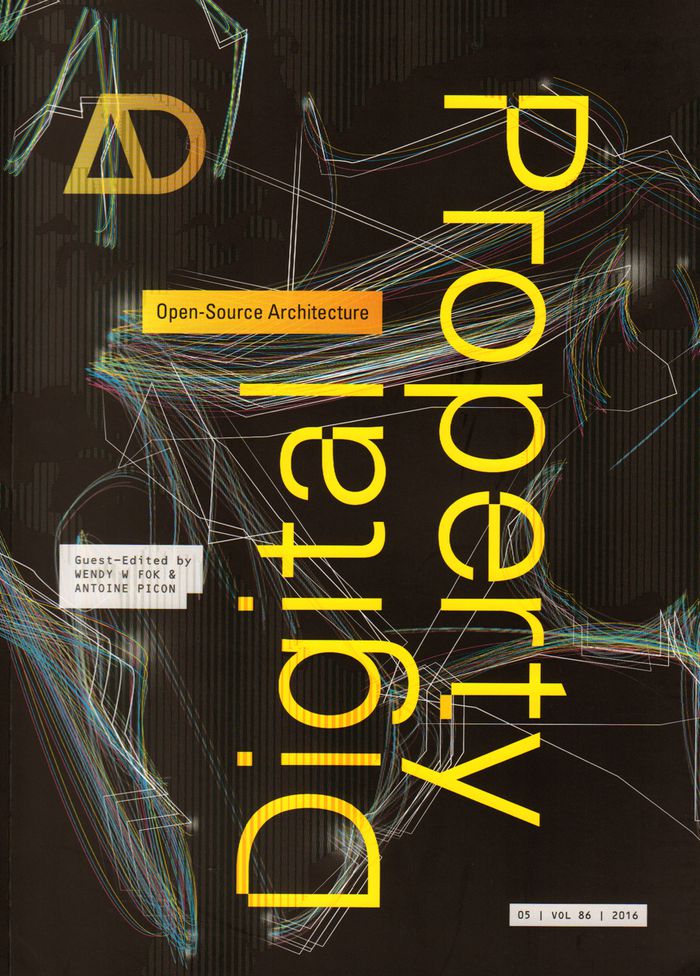
Even more than authorship, ownership is challenged by the rise of digital and computational methods of design and production. These challenges are simultaneously legal, ethical and economic. How are new methods of fabrication and manufacture going to irreversibly change not only ways of working, but also designers’ ethics and their stance on ownership? In his 2013 second-term State of the Union address, President Obama stated that 3D printing ‘has the potential to revolutionize the way we make almost everything’. Nowhere will the impact of 3D printing be felt greater than in the architectural and design communities. When anyone can print out an object or structure from a digital file, will designers still exert the same creative rights or will they need to develop new practice and payment models? As architecture becomes more collaborative with open-source processes, will the emphasis on signature as the basis of ownership remain relevant? How will wider teams working globally be accredited and compensated? This issue of AD explores this subject; it features the work of designers who are developing wholly new approaches to practice by exploring means of commercialising process-based products rather than objects.
AD Digital property : open-source architecture
Actions:
Price:
$47.95
(available to order)
Summary:
Even more than authorship, ownership is challenged by the rise of digital and computational methods of design and production. These challenges are simultaneously legal, ethical and economic. How are new methods of fabrication and manufacture going to irreversibly change not only ways of working, but also designers’ ethics and their stance on ownership? In his 2013 second-term State of the Union address, President Obama stated that 3D printing ‘has the potential to revolutionize the way we make almost everything’. Nowhere will the impact of 3D printing be felt greater than in the architectural and design communities. When anyone can print out an object or structure from a digital file, will designers still exert the same creative rights or will they need to develop new practice and payment models? As architecture becomes more collaborative with open-source processes, will the emphasis on signature as the basis of ownership remain relevant? How will wider teams working globally be accredited and compensated? This issue of AD explores this subject; it features the work of designers who are developing wholly new approaches to practice by exploring means of commercialising process-based products rather than objects.
Form:
journals and magazines
journals and magazines
Publication:
September 2016
September 2016
Subject:
Magazines
Magazines
Form:
books
books
Actions:
Price:
$49.95
(available in store)
Summary:
Intense attention has been paid to Detroit as a site of urban crisis. This crisis, however, has not only yielded the massive devaluation of real estate that has so often been noted; it has also yielded an explosive production of seemingly valueless urban property that has facilitated the imagination and practice of alternative urbanisms. The first sustained study of(...)
$49.95
(available in store)
Summary:
Intense attention has been paid to Detroit as a site of urban crisis. This crisis, however, has not only yielded the massive devaluation of real estate that has so often been noted; it has also yielded an explosive production of seemingly valueless urban property that has facilitated the imagination and practice of alternative urbanisms. The first sustained study of(...)
Title:
The unreal estate guide to Detroit
Actions:
Price:
$49.95
(available in store)
Summary:
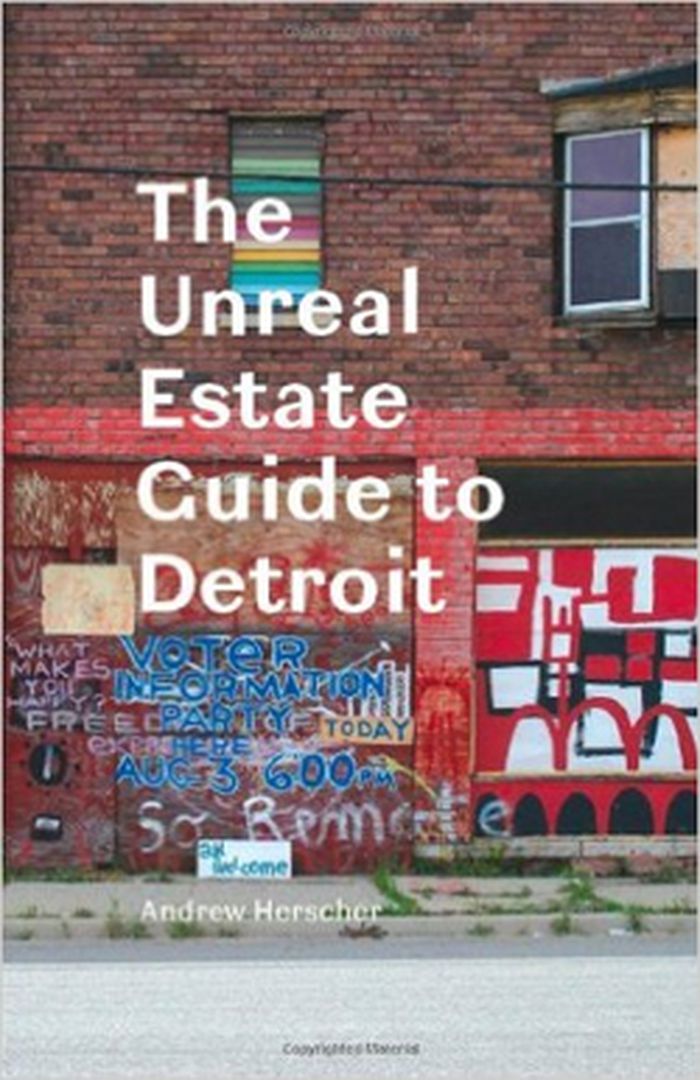
Intense attention has been paid to Detroit as a site of urban crisis. This crisis, however, has not only yielded the massive devaluation of real estate that has so often been noted; it has also yielded an explosive production of seemingly valueless urban property that has facilitated the imagination and practice of alternative urbanisms. The first sustained study of Detroit’s alternative urban cultures, The Unreal Estate Guide to Detroit initiates a new focus on Detroit as a site not only of urban crisis but also of urban possibility. The guide documents art and curatorial practices, community and guerilla gardens, urban farming and forestry, cultural platforms, living archives, evangelical missions, temporary public spaces, intentional communities, furtive monuments, outsider architecture, and other work made possible by the ready availability of urban space in Detroit. The guide poses these spaces as “unreal estate”: urban territory that has slipped through the free- market economy and entered other regimes of value, other contexts of meaning, and other systems of use. The appropriation of this territory in Detroit, the Guide suggests, offers new perspectives on what a city is and can be, especially in a time of urban crisis.
The unreal estate guide to Detroit
Actions:
Price:
$49.95
(available in store)
Summary:
Intense attention has been paid to Detroit as a site of urban crisis. This crisis, however, has not only yielded the massive devaluation of real estate that has so often been noted; it has also yielded an explosive production of seemingly valueless urban property that has facilitated the imagination and practice of alternative urbanisms. The first sustained study of Detroit’s alternative urban cultures, The Unreal Estate Guide to Detroit initiates a new focus on Detroit as a site not only of urban crisis but also of urban possibility. The guide documents art and curatorial practices, community and guerilla gardens, urban farming and forestry, cultural platforms, living archives, evangelical missions, temporary public spaces, intentional communities, furtive monuments, outsider architecture, and other work made possible by the ready availability of urban space in Detroit. The guide poses these spaces as “unreal estate”: urban territory that has slipped through the free- market economy and entered other regimes of value, other contexts of meaning, and other systems of use. The appropriation of this territory in Detroit, the Guide suggests, offers new perspectives on what a city is and can be, especially in a time of urban crisis.
Form:
books
books
Publication:
December 2012
December 2012
Subject:
Urban Theory
Urban Theory
Form:
books
books

Actions:
Price:
$60.00
(available to order)
Summary:
Samuel Mockbee believed in architecture as a tool for social and environmental change. He also understood the limitations of traditional architectural teaching in providing the students with hands-on experience and a moral sense of service to the community. And so he founded the Rural Studio, 200 miles west of the Auburn University campus, in the heart of Alabama's(...)
$60.00
(available to order)
Summary:
Samuel Mockbee believed in architecture as a tool for social and environmental change. He also understood the limitations of traditional architectural teaching in providing the students with hands-on experience and a moral sense of service to the community. And so he founded the Rural Studio, 200 miles west of the Auburn University campus, in the heart of Alabama's(...)
Title:
The making of the porch house
Actions:
Price:
$60.00
(available to order)
Summary:
Samuel Mockbee believed in architecture as a tool for social and environmental change. He also understood the limitations of traditional architectural teaching in providing the students with hands-on experience and a moral sense of service to the community. And so he founded the Rural Studio, 200 miles west of the Auburn University campus, in the heart of Alabama's poorest county, Hale. Until Mockbee's death in 2001, the studio had sown the land with thirty homes and community buildings. Under its successor, Andrew Freear, an architect hailing from England and a product of London's Architectural Association, the studio has continued to thrive. Over the last fifteen years, it has earned the respect of the communities it works with. Work is now pouring in, and its ambitions have grown with its reputation: larger projects are being undertaken, budgets have increased and students are now able to take on greater responsibility. In 2006, the Rural Studio was selected by the American Institute of Architects to represent the country at the famed Sao Paulo Art Biennial. Each and everyone of the forty projects exhibited was designed and built by students.
The making of the porch house
Actions:
Price:
$60.00
(available to order)
Summary:
Samuel Mockbee believed in architecture as a tool for social and environmental change. He also understood the limitations of traditional architectural teaching in providing the students with hands-on experience and a moral sense of service to the community. And so he founded the Rural Studio, 200 miles west of the Auburn University campus, in the heart of Alabama's poorest county, Hale. Until Mockbee's death in 2001, the studio had sown the land with thirty homes and community buildings. Under its successor, Andrew Freear, an architect hailing from England and a product of London's Architectural Association, the studio has continued to thrive. Over the last fifteen years, it has earned the respect of the communities it works with. Work is now pouring in, and its ambitions have grown with its reputation: larger projects are being undertaken, budgets have increased and students are now able to take on greater responsibility. In 2006, the Rural Studio was selected by the American Institute of Architects to represent the country at the famed Sao Paulo Art Biennial. Each and everyone of the forty projects exhibited was designed and built by students.
Form:
books
books
Publication:
March 2008, Montréal
March 2008, Montréal
Subject:
Architecture Monographs
Architecture Monographs
Form:
books
books
Actions:
Price:
$39.95
(available to order)
Summary:
Glasgow’s rapid industrial development in the nineteenth and early twentieth centuries left a legacy of unemployment and cramped housing. Nowhere was this more apparent than in the Gorbals, just south of the river Clyde. Over the past 150 years, numerous efforts have been made to clean up the area; the Gorbals has been razed to the ground and rebuilt three times during(...)
$39.95
(available to order)
Summary:
Glasgow’s rapid industrial development in the nineteenth and early twentieth centuries left a legacy of unemployment and cramped housing. Nowhere was this more apparent than in the Gorbals, just south of the river Clyde. Over the past 150 years, numerous efforts have been made to clean up the area; the Gorbals has been razed to the ground and rebuilt three times during(...)
Title:
Arcade: artists and place-making
Actions:
Price:
$39.95
(available to order)
Summary:
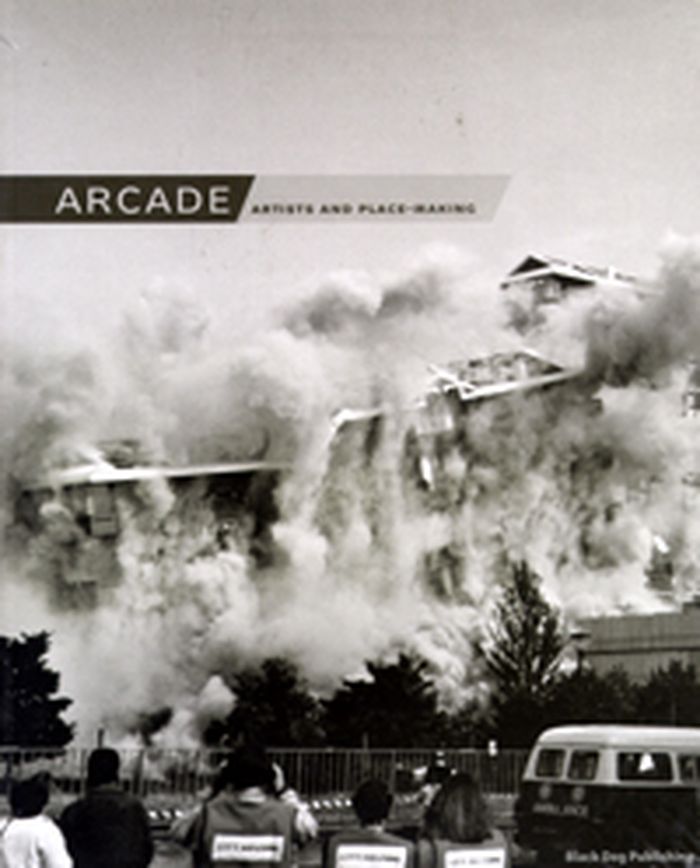
Glasgow’s rapid industrial development in the nineteenth and early twentieth centuries left a legacy of unemployment and cramped housing. Nowhere was this more apparent than in the Gorbals, just south of the river Clyde. Over the past 150 years, numerous efforts have been made to clean up the area; the Gorbals has been razed to the ground and rebuilt three times during this period, with the first two of these new ‘designed communities’ failing spectacularly. The most recent initiative has involved the demolition of the infamous, monolithic 1960s tower blocks, designed by Basil Spence, and their replacement with modern, low-rise flats. Central to the success of this latest regeneration has been a unique artwork project that has created cultural continuity in an area undergoing massive change. More than 20 international artists have been commissioned by The Artworks Programme to work with architects, developers and the community in creating permanent and temporary artworks in the UK’s largest ‘Percent for Art’ scheme. Now at the tail end of this redevelopment, Arcade surveys and assesses these projects, and also raises wider questions about the role and impact artists have in the regeneration of urban spaces.
Arcade: artists and place-making
Actions:
Price:
$39.95
(available to order)
Summary:
Glasgow’s rapid industrial development in the nineteenth and early twentieth centuries left a legacy of unemployment and cramped housing. Nowhere was this more apparent than in the Gorbals, just south of the river Clyde. Over the past 150 years, numerous efforts have been made to clean up the area; the Gorbals has been razed to the ground and rebuilt three times during this period, with the first two of these new ‘designed communities’ failing spectacularly. The most recent initiative has involved the demolition of the infamous, monolithic 1960s tower blocks, designed by Basil Spence, and their replacement with modern, low-rise flats. Central to the success of this latest regeneration has been a unique artwork project that has created cultural continuity in an area undergoing massive change. More than 20 international artists have been commissioned by The Artworks Programme to work with architects, developers and the community in creating permanent and temporary artworks in the UK’s largest ‘Percent for Art’ scheme. Now at the tail end of this redevelopment, Arcade surveys and assesses these projects, and also raises wider questions about the role and impact artists have in the regeneration of urban spaces.
Form:
books
books
Publication:
October 2006, London
October 2006, London
Subject:
Contemporary Art Monographs
Contemporary Art Monographs
Form:
books
books
Actions:
Price:
$80.00
(available to order)
Summary:
Reaching an apogee of 6,000 members in the years just before the Civil War, the Shaker movement was the most extensive, enduring, and successful utopian society ever established in America. Leaving Manchester, England, in 1776 to avoid persecution, the Shakers crossed the Atlantic and during the next 50 years established 19 villages from Maine to Kentucky. The Shakers(...)
$80.00
(available to order)
Summary:
Reaching an apogee of 6,000 members in the years just before the Civil War, the Shaker movement was the most extensive, enduring, and successful utopian society ever established in America. Leaving Manchester, England, in 1776 to avoid persecution, the Shakers crossed the Atlantic and during the next 50 years established 19 villages from Maine to Kentucky. The Shakers(...)
Subject:
Design, Periods and Styles
Design, Periods and Styles
Publication:
April 2008, New York, Vermont, New Haven, London
April 2008, New York, Vermont, New Haven, London
Title:
Shaker Design out of this world
Actions:
Price:
$80.00
(available to order)
Summary:
Reaching an apogee of 6,000 members in the years just before the Civil War, the Shaker movement was the most extensive, enduring, and successful utopian society ever established in America. Leaving Manchester, England, in 1776 to avoid persecution, the Shakers crossed the Atlantic and during the next 50 years established 19 villages from Maine to Kentucky. The Shakers were guided by the principles of utility, honesty, and order in both their work and worship, and this belief system influenced the physical expression of the goods they produced for use at home and for sale outside their communities. This lovely book presents a wide array of extraordinarily fine examples of Shaker furniture, household objects, textiles, religious drawings, and items made to sell to the “world’s people” (non-Shakers). The book’s expert contributors discuss Shaker design in relation to the furniture they constructed, the products they sold, their gift drawings and spirituality, and their rejection of American Fancy design. The book also considers the powerful inspiration Shaker design has provided for diverse modern and contemporary designers, including George Nakashima, Roy McMakin, Thomas Moser, and Scandinavian furniture makers.
Shaker Design out of this world
Actions:
Price:
$80.00
(available to order)
Summary:
Reaching an apogee of 6,000 members in the years just before the Civil War, the Shaker movement was the most extensive, enduring, and successful utopian society ever established in America. Leaving Manchester, England, in 1776 to avoid persecution, the Shakers crossed the Atlantic and during the next 50 years established 19 villages from Maine to Kentucky. The Shakers were guided by the principles of utility, honesty, and order in both their work and worship, and this belief system influenced the physical expression of the goods they produced for use at home and for sale outside their communities. This lovely book presents a wide array of extraordinarily fine examples of Shaker furniture, household objects, textiles, religious drawings, and items made to sell to the “world’s people” (non-Shakers). The book’s expert contributors discuss Shaker design in relation to the furniture they constructed, the products they sold, their gift drawings and spirituality, and their rejection of American Fancy design. The book also considers the powerful inspiration Shaker design has provided for diverse modern and contemporary designers, including George Nakashima, Roy McMakin, Thomas Moser, and Scandinavian furniture makers.
Form:
books
books
Publication:
April 2008, New York, Vermont, New Haven, London
April 2008, New York, Vermont, New Haven, London
Subject:
Design, Periods and Styles
Design, Periods and Styles
Form:
books
books
Actions:
Price:
$20.00
(available to order)
Summary:
Nature and communities in the global south is being overwhelmed at a shocking rate. In many places this is due to ventures such as large-scale open-pit mining, oil extraction in tropical areas, and the spread of monocultures. These and other such forms of natural resource appropriation are usually known as extractivisms. This introductory book on the one hand adopts an(...)
$20.00
(available to order)
Summary:
Nature and communities in the global south is being overwhelmed at a shocking rate. In many places this is due to ventures such as large-scale open-pit mining, oil extraction in tropical areas, and the spread of monocultures. These and other such forms of natural resource appropriation are usually known as extractivisms. This introductory book on the one hand adopts an(...)
Title:
Extractivisms: politics, economy and ecology
Actions:
Price:
$20.00
(available to order)
Summary:
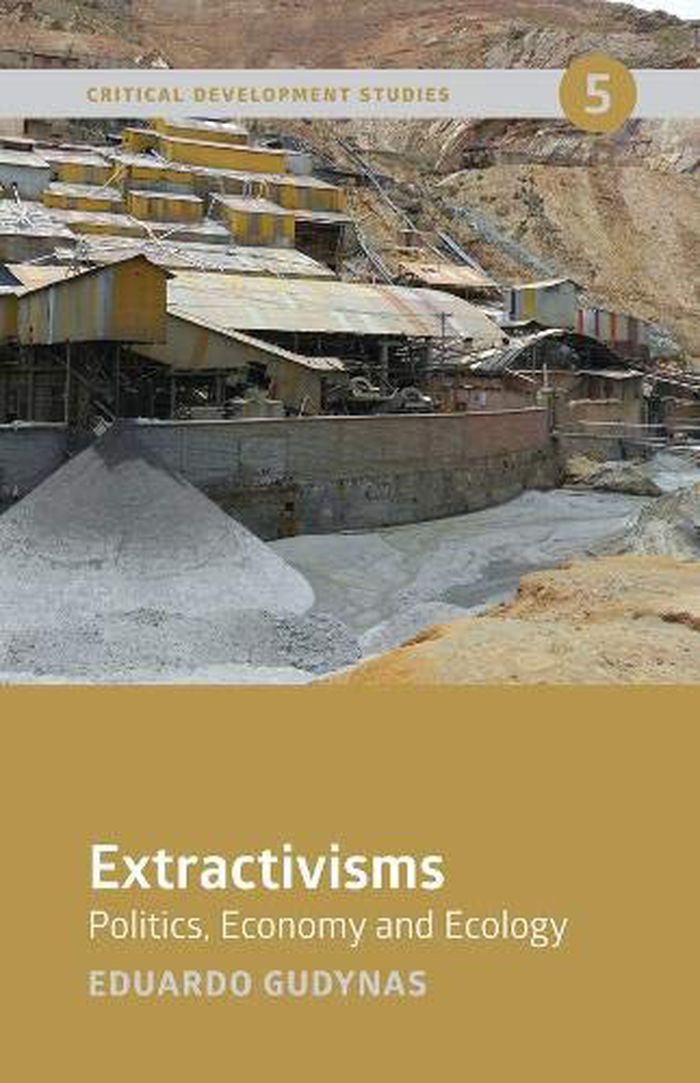
Nature and communities in the global south is being overwhelmed at a shocking rate. In many places this is due to ventures such as large-scale open-pit mining, oil extraction in tropical areas, and the spread of monocultures. These and other such forms of natural resource appropriation are usually known as extractivisms. This introductory book on the one hand adopts an interdisciplinary and critical perspective, incorporating contributions from economics, politics, ecology, and more. On the other hand it is an exercise in the politics among humans and with the environment. Eduardo Gudnyas explores negative local impacts such as ecological and health degradation or violence, along with spillover effects that redefines democracy and justice. Significantly, presented for the first time in English is a comprehensive overview of the theoretical innovations currently being discussed in the South, such as the distinction between appropriation and production modes and a redefinition of surplus to include social and economic features or new understandings on conflict dynamics. Furthermore, Gudynas discusses the Latin American peculiarities of extractivisms produced both by conservative and new-left governments, making clear that it has very deep roots in culture and ideologies, and offers solutions for the future.
Extractivisms: politics, economy and ecology
Actions:
Price:
$20.00
(available to order)
Summary:
Nature and communities in the global south is being overwhelmed at a shocking rate. In many places this is due to ventures such as large-scale open-pit mining, oil extraction in tropical areas, and the spread of monocultures. These and other such forms of natural resource appropriation are usually known as extractivisms. This introductory book on the one hand adopts an interdisciplinary and critical perspective, incorporating contributions from economics, politics, ecology, and more. On the other hand it is an exercise in the politics among humans and with the environment. Eduardo Gudnyas explores negative local impacts such as ecological and health degradation or violence, along with spillover effects that redefines democracy and justice. Significantly, presented for the first time in English is a comprehensive overview of the theoretical innovations currently being discussed in the South, such as the distinction between appropriation and production modes and a redefinition of surplus to include social and economic features or new understandings on conflict dynamics. Furthermore, Gudynas discusses the Latin American peculiarities of extractivisms produced both by conservative and new-left governments, making clear that it has very deep roots in culture and ideologies, and offers solutions for the future.
Form:
books
books
Publication:
September 2021
September 2021
Subject:
Environment and environmental theory
Environment and environmental theory
Form:
books
books
Actions:
Price:
$55.95
(available to order)
Summary:
The first book to look extensively at conceptualism in Canada, published to accompany a touring exhibition. The most transformative art movement of the late 20th century, conceptual art became a global phenomenon long before it was popularized by a new generation of artists and institutions in the early 21st century. Its various manifestations in Canada, however, have(...)
$55.95
(available to order)
Summary:
The first book to look extensively at conceptualism in Canada, published to accompany a touring exhibition. The most transformative art movement of the late 20th century, conceptual art became a global phenomenon long before it was popularized by a new generation of artists and institutions in the early 21st century. Its various manifestations in Canada, however, have(...)
Publication:
January 2012
January 2012
Title:
Traffic : conceptual art in Canada, 1965-1980
Actions:
Price:
$55.95
(available to order)
Summary:
The first book to look extensively at conceptualism in Canada, published to accompany a touring exhibition. The most transformative art movement of the late 20th century, conceptual art became a global phenomenon long before it was popularized by a new generation of artists and institutions in the early 21st century. Its various manifestations in Canada, however, have remained a limited concern, a whispered art history circulated among artists and writers primarily in alternative publications and artist-run centres. Traffic: Conceptual Art in Canada 1965-1980 is the first publication and exhibition to track the complex, rigorous and diverse manifestations of conceptual art in the country. Presenting work by more than 90 artists, Traffic examines the particular local and geographic needs and interests enacted by individual artists, collectives and art communities from across the country. The book includes essays by six curators, a conversation with an international group of scholars, an annotated chronology and many reproductions of conceptual artworks produced in Canada. Co-published by the Vancouver Art Gallery, Art Gallery of Alberta, Justina M. Barnicke Gallery (Hart House, University of Toronto), Leonard & Bina Ellen Gallery (Concordia University) and Halifax, INK
Traffic : conceptual art in Canada, 1965-1980
Actions:
Price:
$55.95
(available to order)
Summary:
The first book to look extensively at conceptualism in Canada, published to accompany a touring exhibition. The most transformative art movement of the late 20th century, conceptual art became a global phenomenon long before it was popularized by a new generation of artists and institutions in the early 21st century. Its various manifestations in Canada, however, have remained a limited concern, a whispered art history circulated among artists and writers primarily in alternative publications and artist-run centres. Traffic: Conceptual Art in Canada 1965-1980 is the first publication and exhibition to track the complex, rigorous and diverse manifestations of conceptual art in the country. Presenting work by more than 90 artists, Traffic examines the particular local and geographic needs and interests enacted by individual artists, collectives and art communities from across the country. The book includes essays by six curators, a conversation with an international group of scholars, an annotated chronology and many reproductions of conceptual artworks produced in Canada. Co-published by the Vancouver Art Gallery, Art Gallery of Alberta, Justina M. Barnicke Gallery (Hart House, University of Toronto), Leonard & Bina Ellen Gallery (Concordia University) and Halifax, INK
Form:
books
books
Publication:
January 2012
January 2012
Form:
books
books
Price:
$29.95
(available to order)
Summary:
In the late 1990s, three monuments -- Crab Park "Boulder," "Marker of Change," and Standing "with Courage, Strength and Pride" -- were built in Vancouver's Downtown Eastside. Located within a few city blocks of one another, the monuments were grassroots initiatives that challenged the norms of civic art by claiming a place in public space for society's more(...)
$29.95
(available to order)
Summary:
In the late 1990s, three monuments -- Crab Park "Boulder," "Marker of Change," and Standing "with Courage, Strength and Pride" -- were built in Vancouver's Downtown Eastside. Located within a few city blocks of one another, the monuments were grassroots initiatives that challenged the norms of civic art by claiming a place in public space for society's more(...)
Title:
Speaking for a long time : public space & social memory in Vancouver
Actions:
Price:
$29.95
(available to order)
Summary:
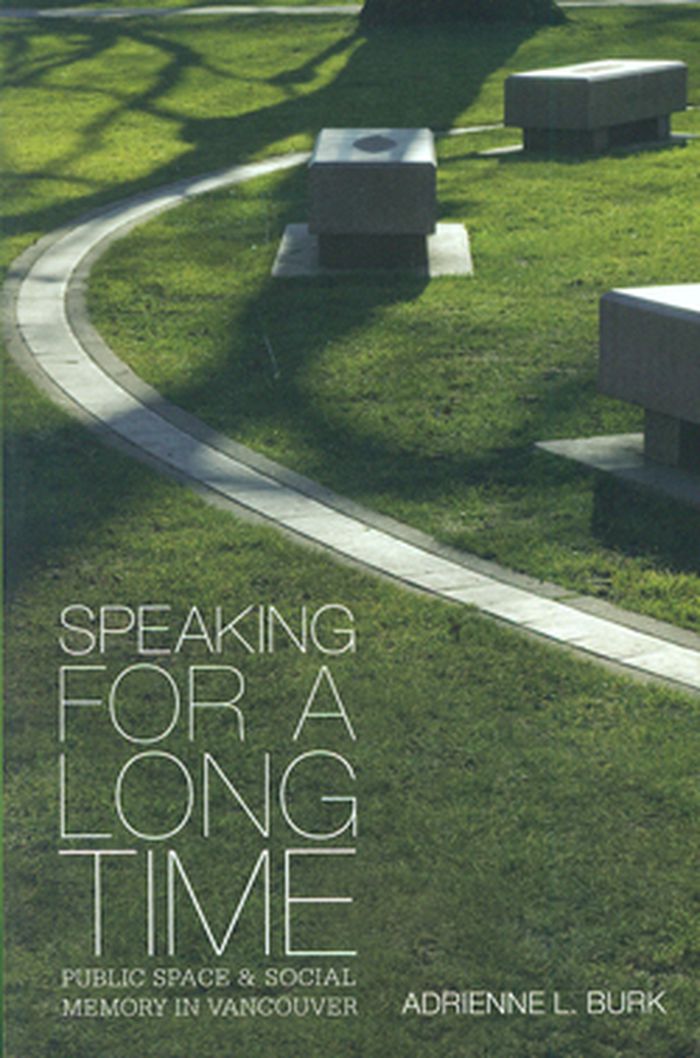
In the late 1990s, three monuments -- Crab Park "Boulder," "Marker of Change," and Standing "with Courage, Strength and Pride" -- were built in Vancouver's Downtown Eastside. Located within a few city blocks of one another, the monuments were grassroots initiatives that challenged the norms of civic art by claiming a place in public space for society's more vulnerable groups, and each figured in debates about many kinds of violence. "Speaking for a Long Time" offers unique insights into the creation of memorials and the multiple, often contested meanings that can be attached to them in local communities. Part 1, "Act," explores the monuments' origin stories and highlights the distinctive perspectives of their founders. Part 2, "Frame," places these narratives in the context of modern debates and theories on public space and social memory. Part 3, "Forge," returns to the Downtown Eastside to show how the resilience and agency of grassroots activists can give the socially marginalized a visible presence in our urban landscapes. This vivid account of the creation of memory-scapes in a marginalized community asks us to reconsider what constitutes public art that will "speak for a long time."
Speaking for a long time : public space & social memory in Vancouver
Actions:
Price:
$29.95
(available to order)
Summary:
In the late 1990s, three monuments -- Crab Park "Boulder," "Marker of Change," and Standing "with Courage, Strength and Pride" -- were built in Vancouver's Downtown Eastside. Located within a few city blocks of one another, the monuments were grassroots initiatives that challenged the norms of civic art by claiming a place in public space for society's more vulnerable groups, and each figured in debates about many kinds of violence. "Speaking for a Long Time" offers unique insights into the creation of memorials and the multiple, often contested meanings that can be attached to them in local communities. Part 1, "Act," explores the monuments' origin stories and highlights the distinctive perspectives of their founders. Part 2, "Frame," places these narratives in the context of modern debates and theories on public space and social memory. Part 3, "Forge," returns to the Downtown Eastside to show how the resilience and agency of grassroots activists can give the socially marginalized a visible presence in our urban landscapes. This vivid account of the creation of memory-scapes in a marginalized community asks us to reconsider what constitutes public art that will "speak for a long time."
Form:
books
books
Publication:
April 2011
April 2011
Subject:
Architecture in Canada
Architecture in Canada


