


5778 Results
Form:
books
books
Actions:
Price:
$75.00
(available to order)
Summary:
The classical architectural and planning schemes conceived by Canada’s Anglo-settler elite in the early twentieth century embodied a prescriptive vision of power and grandeur for the country and its people on a scale almost unimaginable today. This provocative collection of essays examines the classical design precepts that shaped much of Canada’s built environment –(...)
$75.00
(available to order)
Summary:
The classical architectural and planning schemes conceived by Canada’s Anglo-settler elite in the early twentieth century embodied a prescriptive vision of power and grandeur for the country and its people on a scale almost unimaginable today. This provocative collection of essays examines the classical design precepts that shaped much of Canada’s built environment –(...)
Title:
Classicism in Canada: Ambition, utopia, hubris
Actions:
Price:
$75.00
(available to order)
Summary:
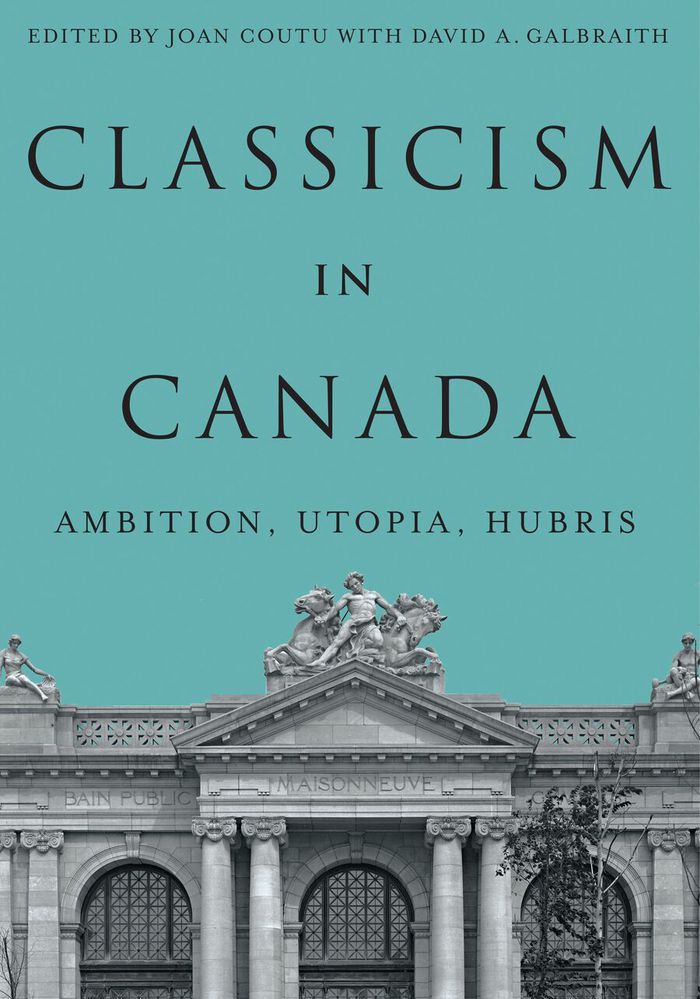
The classical architectural and planning schemes conceived by Canada’s Anglo-settler elite in the early twentieth century embodied a prescriptive vision of power and grandeur for the country and its people on a scale almost unimaginable today. This provocative collection of essays examines the classical design precepts that shaped much of Canada’s built environment – leaving an imprint for how we continue to experience place today. "Classicism in Canada" brings together essays by planning, architectural, art, political, and social historians. Drawing on primary sources and the physical sites themselves, the contributors probe the meaning of a style that melded the École des Beaux-Arts with the sensibilities of the City Beautiful movement and that was rooted in assumptions about order and historical continuity. The transformation of built space and land was motivated by pragmatism, aesthetics, and an ideological infrastructure that reverberated with utopian zeal as much as it was driven by racial discrimination and Indigenous erasure.
Classicism in Canada: Ambition, utopia, hubris
Actions:
Price:
$75.00
(available to order)
Summary:
The classical architectural and planning schemes conceived by Canada’s Anglo-settler elite in the early twentieth century embodied a prescriptive vision of power and grandeur for the country and its people on a scale almost unimaginable today. This provocative collection of essays examines the classical design precepts that shaped much of Canada’s built environment – leaving an imprint for how we continue to experience place today. "Classicism in Canada" brings together essays by planning, architectural, art, political, and social historians. Drawing on primary sources and the physical sites themselves, the contributors probe the meaning of a style that melded the École des Beaux-Arts with the sensibilities of the City Beautiful movement and that was rooted in assumptions about order and historical continuity. The transformation of built space and land was motivated by pragmatism, aesthetics, and an ideological infrastructure that reverberated with utopian zeal as much as it was driven by racial discrimination and Indigenous erasure.
Form:
books
books
Publication:
August 2026
August 2026
Subject:
Architecture in Canada
Architecture in Canada
Form:
books
books
Price:
$74.95
(available to order)
Summary:
While this book is primarily devoted to the historical reconstruction of the formal and horticultural characteristics of "theatrical" shrubberies and flower beds, it also aims to animate the world of the eighteenth-century pleasure ground. Mark Laird shows how the unwritten lore of planting design was(...)
$74.95
(available to order)
Summary:
While this book is primarily devoted to the historical reconstruction of the formal and horticultural characteristics of "theatrical" shrubberies and flower beds, it also aims to animate the world of the eighteenth-century pleasure ground. Mark Laird shows how the unwritten lore of planting design was(...)
Title:
The flowering of the landscape garden : English pleasure grounds 1720-1800
Actions:
Price:
$74.95
(available to order)
Summary:
While this book is primarily devoted to the historical reconstruction of the formal and horticultural characteristics of "theatrical" shrubberies and flower beds, it also aims to animate the world of the eighteenth-century pleasure ground. Mark Laird shows how the unwritten lore of planting design was passed down by generation after generation of gardeners and discusses the interaction of landscape designer, client, nurseryman, land agent, and gardener in modifying and transforming the geometric layouts of previous generations. He traces the development of planting design theory and practice from Batty Langley to Capability Brown and William Chambers, and demonstrates how an English mania for flowering shrubs and conifers from eastern North America helped create the distinctive planting forms of the Georgian pleasure ground. Laird offers readers a wealth of visual and literary materials - from contemporary paintings, engravings, poetry, essays, and letters to more prosaic household accounts and nursery bills - to revolutionize our understanding of the English landscape garden as a powerful cultural expression.
The flowering of the landscape garden : English pleasure grounds 1720-1800
Actions:
Price:
$74.95
(available to order)
Summary:
While this book is primarily devoted to the historical reconstruction of the formal and horticultural characteristics of "theatrical" shrubberies and flower beds, it also aims to animate the world of the eighteenth-century pleasure ground. Mark Laird shows how the unwritten lore of planting design was passed down by generation after generation of gardeners and discusses the interaction of landscape designer, client, nurseryman, land agent, and gardener in modifying and transforming the geometric layouts of previous generations. He traces the development of planting design theory and practice from Batty Langley to Capability Brown and William Chambers, and demonstrates how an English mania for flowering shrubs and conifers from eastern North America helped create the distinctive planting forms of the Georgian pleasure ground. Laird offers readers a wealth of visual and literary materials - from contemporary paintings, engravings, poetry, essays, and letters to more prosaic household accounts and nursery bills - to revolutionize our understanding of the English landscape garden as a powerful cultural expression.
Form:
books
books
Publication:
January 1900, Philadelphia
January 1900, Philadelphia
Subject:
Gardens
Gardens
Form:
books
books
Actions:
Price:
$27.95
(available to order)
Summary:
There is an almost elemental appeal in the rural fishing villages of Nova Scotia, Maine, and Newfoundland. Their intimate connection to nature, to the land, water, and (often harsh) weather; their reliance on ingenuity, on-hand materials, and craftsmanship; and their values of thrift and endurance serve as inspiration and as touchstones for those of us caught up in the(...)
$27.95
(available to order)
Summary:
There is an almost elemental appeal in the rural fishing villages of Nova Scotia, Maine, and Newfoundland. Their intimate connection to nature, to the land, water, and (often harsh) weather; their reliance on ingenuity, on-hand materials, and craftsmanship; and their values of thrift and endurance serve as inspiration and as touchstones for those of us caught up in the(...)
Title:
Tilting : house launching, slide hauling, potato trenching, and other tales from a Newfoundland fishing village
Actions:
Price:
$27.95
(available to order)
Summary:
There is an almost elemental appeal in the rural fishing villages of Nova Scotia, Maine, and Newfoundland. Their intimate connection to nature, to the land, water, and (often harsh) weather; their reliance on ingenuity, on-hand materials, and craftsmanship; and their values of thrift and endurance serve as inspiration and as touchstones for those of us caught up in the hubbub of modern life. "Tilting" is a celebration of all these virtues and an eclectic documentation of the buildings, landscape, and lifestyle of this remote community on a small island far off the Canadian coast. Through photographs, firsthand historical anecdotes, and delicate pencil drawings, author Robert Mellin presents a personal account of Tilting's houses, outbuildings, furniture, tools, fences, and docks, and, in the process, the way of life of Tilting. Mellin describes how houses are built for mobility and then "launched," or moved; how houses are detailed and constructed; how cabbage houses are built out of overturned boats; and the difference between picket, paling, and riddle fences.
Tilting : house launching, slide hauling, potato trenching, and other tales from a Newfoundland fishing village
Actions:
Price:
$27.95
(available to order)
Summary:
There is an almost elemental appeal in the rural fishing villages of Nova Scotia, Maine, and Newfoundland. Their intimate connection to nature, to the land, water, and (often harsh) weather; their reliance on ingenuity, on-hand materials, and craftsmanship; and their values of thrift and endurance serve as inspiration and as touchstones for those of us caught up in the hubbub of modern life. "Tilting" is a celebration of all these virtues and an eclectic documentation of the buildings, landscape, and lifestyle of this remote community on a small island far off the Canadian coast. Through photographs, firsthand historical anecdotes, and delicate pencil drawings, author Robert Mellin presents a personal account of Tilting's houses, outbuildings, furniture, tools, fences, and docks, and, in the process, the way of life of Tilting. Mellin describes how houses are built for mobility and then "launched," or moved; how houses are detailed and constructed; how cabbage houses are built out of overturned boats; and the difference between picket, paling, and riddle fences.
Form:
books
books
Publication:
March 2003, New York
March 2003, New York
Subject:
Architecture in Canada
Architecture in Canada
Form:
books
books
Actions:
Price:
$56.50
(available to order)
Summary:
Chow offers an alternate vision to the conventional suburban housing that characterizes much of our domestic landscape. Her integrated, original approach to design sees the residential setting as a fabric of interrelated spaces that supports cultural diversity and change, promotes sharing in a setting, and sustains a more intense use of land. With its concise, informative(...)
$56.50
(available to order)
Summary:
Chow offers an alternate vision to the conventional suburban housing that characterizes much of our domestic landscape. Her integrated, original approach to design sees the residential setting as a fabric of interrelated spaces that supports cultural diversity and change, promotes sharing in a setting, and sustains a more intense use of land. With its concise, informative(...)
Title:
Suburban space : the fabric of dwelling
Actions:
Price:
$56.50
(available to order)
Summary:
Chow offers an alternate vision to the conventional suburban housing that characterizes much of our domestic landscape. Her integrated, original approach to design sees the residential setting as a fabric of interrelated spaces that supports cultural diversity and change, promotes sharing in a setting, and sustains a more intense use of land. With its concise, informative text and illustrations--including photographs and Chow's drawings--"Suburban space" challenges architects, landscape architects, developers, and planners to reconceptualize suburban housing. Chow has made comparative studies of neighborhoods in Boston, Charleston, San Francisco, Levittown, Radburn, and housing by Rudolf Schindler and Irving Gill, as well as other residential settings. Her argument for a fabric of dwelling is founded not on generalizations about how people live but on documented observations of the particular ways in which people organize their daily lives. This book demonstrates how one of the most disparaged yet common types of housing in the United States can become more environmentally and culturally viable.
Suburban space : the fabric of dwelling
Actions:
Price:
$56.50
(available to order)
Summary:
Chow offers an alternate vision to the conventional suburban housing that characterizes much of our domestic landscape. Her integrated, original approach to design sees the residential setting as a fabric of interrelated spaces that supports cultural diversity and change, promotes sharing in a setting, and sustains a more intense use of land. With its concise, informative text and illustrations--including photographs and Chow's drawings--"Suburban space" challenges architects, landscape architects, developers, and planners to reconceptualize suburban housing. Chow has made comparative studies of neighborhoods in Boston, Charleston, San Francisco, Levittown, Radburn, and housing by Rudolf Schindler and Irving Gill, as well as other residential settings. Her argument for a fabric of dwelling is founded not on generalizations about how people live but on documented observations of the particular ways in which people organize their daily lives. This book demonstrates how one of the most disparaged yet common types of housing in the United States can become more environmentally and culturally viable.
Form:
books
books
Publication:
October 2002, Berkeley and Los Angeles
October 2002, Berkeley and Los Angeles
Subject:
Urban Theory
Urban Theory
Form:
books
books
Title:
Amber Husain: Meat love
Amber Husain: Meat love
Actions:
Price:
$25.00
(available to order)
Summary:
In an era of climate catastrophe and corporate agribusiness, meat has been decisively made over. Urbanites across the West are called upon to look at the animals we eat, and by looking, learn to treat them with love. We are asked to tenderise our carnal desire for flesh and dignify our relationship with the land. Yet can our appetite for meat be redeemed by this new way(...)
$25.00
(available to order)
Summary:
In an era of climate catastrophe and corporate agribusiness, meat has been decisively made over. Urbanites across the West are called upon to look at the animals we eat, and by looking, learn to treat them with love. We are asked to tenderise our carnal desire for flesh and dignify our relationship with the land. Yet can our appetite for meat be redeemed by this new way(...)
Title:
Amber Husain: Meat love
Actions:
Price:
$25.00
(available to order)
Summary:
In an era of climate catastrophe and corporate agribusiness, meat has been decisively made over. Urbanites across the West are called upon to look at the animals we eat, and by looking, learn to treat them with love. We are asked to tenderise our carnal desire for flesh and dignify our relationship with the land. Yet can our appetite for meat be redeemed by this new way of seeing? Can an ‘ethical’ approach to the farming, sale, and consumption of meat really save both the planet and our souls? In ''Meat love'', Amber Husain deconstructs the beauty, tragedy, and mystery with which our images of meat are embellished, drawing on a range of visual sources from contemporary art and film to Instagram and advertising. Probing the nature of ‘love’ in contemporary human-animal relations, this illustrated essay casts a materialist’s critical eye on the visual culture of meat as it gentrifies and mutates, informing, for better or for worse, our political imaginations.
Amber Husain: Meat love
Actions:
Price:
$25.00
(available to order)
Summary:
In an era of climate catastrophe and corporate agribusiness, meat has been decisively made over. Urbanites across the West are called upon to look at the animals we eat, and by looking, learn to treat them with love. We are asked to tenderise our carnal desire for flesh and dignify our relationship with the land. Yet can our appetite for meat be redeemed by this new way of seeing? Can an ‘ethical’ approach to the farming, sale, and consumption of meat really save both the planet and our souls? In ''Meat love'', Amber Husain deconstructs the beauty, tragedy, and mystery with which our images of meat are embellished, drawing on a range of visual sources from contemporary art and film to Instagram and advertising. Probing the nature of ‘love’ in contemporary human-animal relations, this illustrated essay casts a materialist’s critical eye on the visual culture of meat as it gentrifies and mutates, informing, for better or for worse, our political imaginations.
Form:
books
books
Publication:
July 2023
July 2023
Subject:
Theory of Photography
Theory of Photography
Form:
books
books
Actions:
Price:
$71.95
(available to order)
Summary:
The built environment is a critical factor in the climate equation. Approximately 40 percent of global emissions derive from the construction, operation, and demolition of human settlements. The 21st century must be the century of re-entanglement, where quintessential functions (housing, work, culture, recreation, etc.) are reintegrated within urban spaces; where(...)
$71.95
(available to order)
Summary:
The built environment is a critical factor in the climate equation. Approximately 40 percent of global emissions derive from the construction, operation, and demolition of human settlements. The 21st century must be the century of re-entanglement, where quintessential functions (housing, work, culture, recreation, etc.) are reintegrated within urban spaces; where(...)
Subject:
Green Architecture
Green Architecture
Publication:
September 2023
September 2023
Title:
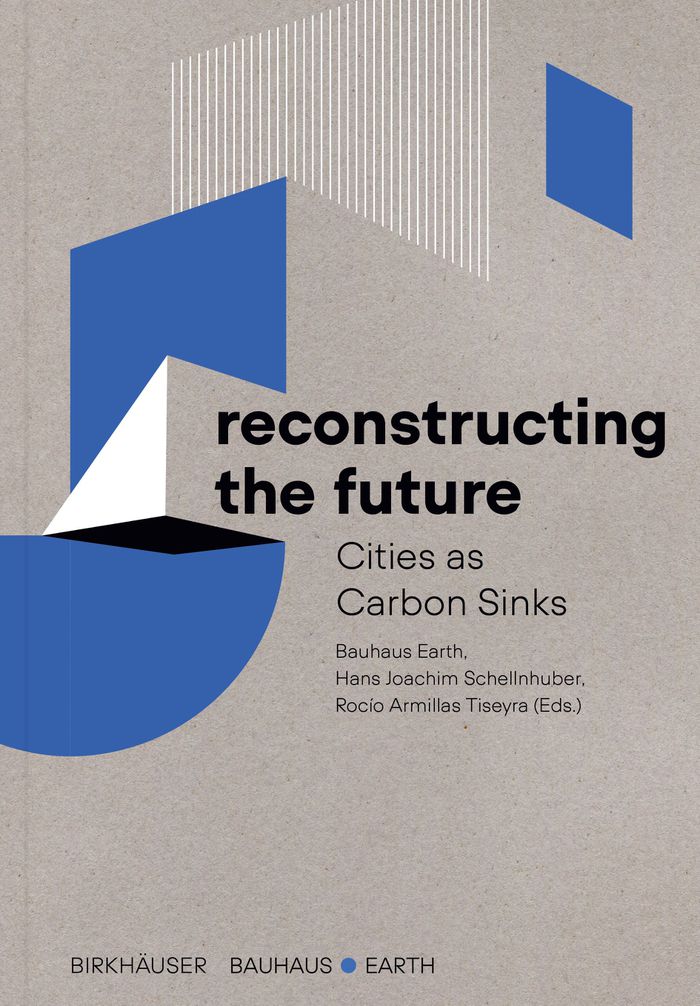
Reconstructing the future: Cities as carbon sinks
Actions:
Price:
$71.95
(available to order)
Summary:
The built environment is a critical factor in the climate equation. Approximately 40 percent of global emissions derive from the construction, operation, and demolition of human settlements. The 21st century must be the century of re-entanglement, where quintessential functions (housing, work, culture, recreation, etc.) are reintegrated within urban spaces; where socioeconomic and ecological systems form a mutually supportive network of networks; and where past, present, and future are perceived as interwoven waves in the river of time. Fortunately, opportunities exist to transform the built environment from a carbon source to a carbon sink through, e.g. timber construction high-rise buildings, circular bioeconomy methods, AI-assisted design, smart recycling technology, multifunctional land use, integrated regional resource management, and community-based urban development, to name just a few. This volume compiles the papers presented by world-renowned scientists, architects, spatial planners, activists, and policy makers at the Reconstructing the Future for People and Planet conference, held at the Vatican in June 2022.
Reconstructing the future: Cities as carbon sinks
Actions:
Price:
$71.95
(available to order)
Summary:
The built environment is a critical factor in the climate equation. Approximately 40 percent of global emissions derive from the construction, operation, and demolition of human settlements. The 21st century must be the century of re-entanglement, where quintessential functions (housing, work, culture, recreation, etc.) are reintegrated within urban spaces; where socioeconomic and ecological systems form a mutually supportive network of networks; and where past, present, and future are perceived as interwoven waves in the river of time. Fortunately, opportunities exist to transform the built environment from a carbon source to a carbon sink through, e.g. timber construction high-rise buildings, circular bioeconomy methods, AI-assisted design, smart recycling technology, multifunctional land use, integrated regional resource management, and community-based urban development, to name just a few. This volume compiles the papers presented by world-renowned scientists, architects, spatial planners, activists, and policy makers at the Reconstructing the Future for People and Planet conference, held at the Vatican in June 2022.
Form:
books
books
Publication:
September 2023
September 2023
Subject:
Green Architecture
Green Architecture
Form:
books
books
Actions:
Price:
$69.95
(available in store)
Summary:
How can we design the architecture of metabolism? How can architecture redefine resources, produce nutrients and contribute to regenerate land and protect communities at risk? "Building Metabolism" aims to reveal how architecture constructs, distributes, and leverages power via material recycling, interspecies alliances, biopolitics and excremental processes. This book,(...)
$69.95
(available in store)
Summary:
How can we design the architecture of metabolism? How can architecture redefine resources, produce nutrients and contribute to regenerate land and protect communities at risk? "Building Metabolism" aims to reveal how architecture constructs, distributes, and leverages power via material recycling, interspecies alliances, biopolitics and excremental processes. This book,(...)
Title:
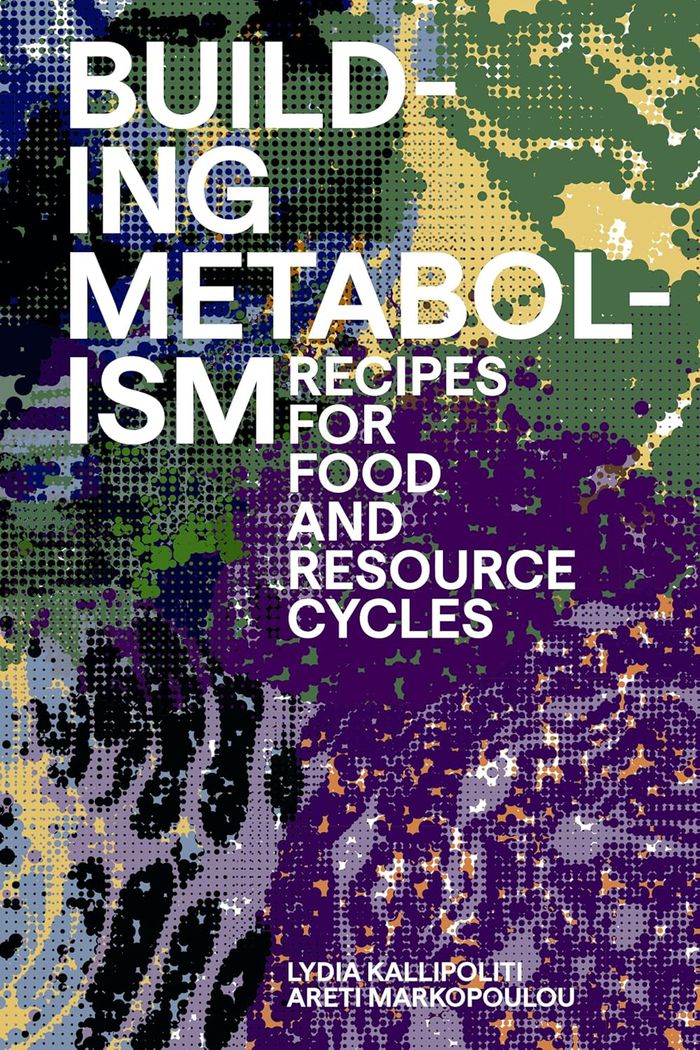
Building metabolism: Recipes for food and resource cycles
Actions:
Price:
$69.95
(available in store)
Summary:
How can we design the architecture of metabolism? How can architecture redefine resources, produce nutrients and contribute to regenerate land and protect communities at risk? "Building Metabolism" aims to reveal how architecture constructs, distributes, and leverages power via material recycling, interspecies alliances, biopolitics and excremental processes. This book, stemming from the expanded work produced for the 2022 Tallinn Architecture Biennale—themed EDIBLE and curated by the authors—reimagines the "home" on both domestic and planetary scales as a digestive system, processing human output in its various forms and converting it into actionable resources. This portrayal of the "home" urges readers to look at resources in a visceral way; via the raw ecologies of our bodies and the understanding that the social problems related to climate justice are not simply statistical, abstract, and disembodied. Instead, they are intertwined with our own production and living processes, and they are landed on bodies: on the food we eat, the water we drink, and the air we breathe.
Building metabolism: Recipes for food and resource cycles
Actions:
Price:
$69.95
(available in store)
Summary:
How can we design the architecture of metabolism? How can architecture redefine resources, produce nutrients and contribute to regenerate land and protect communities at risk? "Building Metabolism" aims to reveal how architecture constructs, distributes, and leverages power via material recycling, interspecies alliances, biopolitics and excremental processes. This book, stemming from the expanded work produced for the 2022 Tallinn Architecture Biennale—themed EDIBLE and curated by the authors—reimagines the "home" on both domestic and planetary scales as a digestive system, processing human output in its various forms and converting it into actionable resources. This portrayal of the "home" urges readers to look at resources in a visceral way; via the raw ecologies of our bodies and the understanding that the social problems related to climate justice are not simply statistical, abstract, and disembodied. Instead, they are intertwined with our own production and living processes, and they are landed on bodies: on the food we eat, the water we drink, and the air we breathe.
Form:
books
books
Publication:
January 2026
January 2026
Subject:
Green Architecture
Green Architecture
Form:
journals and magazines
journals and magazines
Actions:
Price:
$16.95
(available in store)
Summary:
For this 63rd issue, The Funambulist teamed-up with Tunisian anthropologist and visual artist Myriam Amri and invites you to "Follow the money." In it, the issue enters the crevices of a capitalist system and trace it back to its central nodes: property, land, capital, and class. It reads how money is central to colonial and imperial projects, but also how sovereignty and(...)
$16.95
(available in store)
Summary:
For this 63rd issue, The Funambulist teamed-up with Tunisian anthropologist and visual artist Myriam Amri and invites you to "Follow the money." In it, the issue enters the crevices of a capitalist system and trace it back to its central nodes: property, land, capital, and class. It reads how money is central to colonial and imperial projects, but also how sovereignty and(...)
Title:
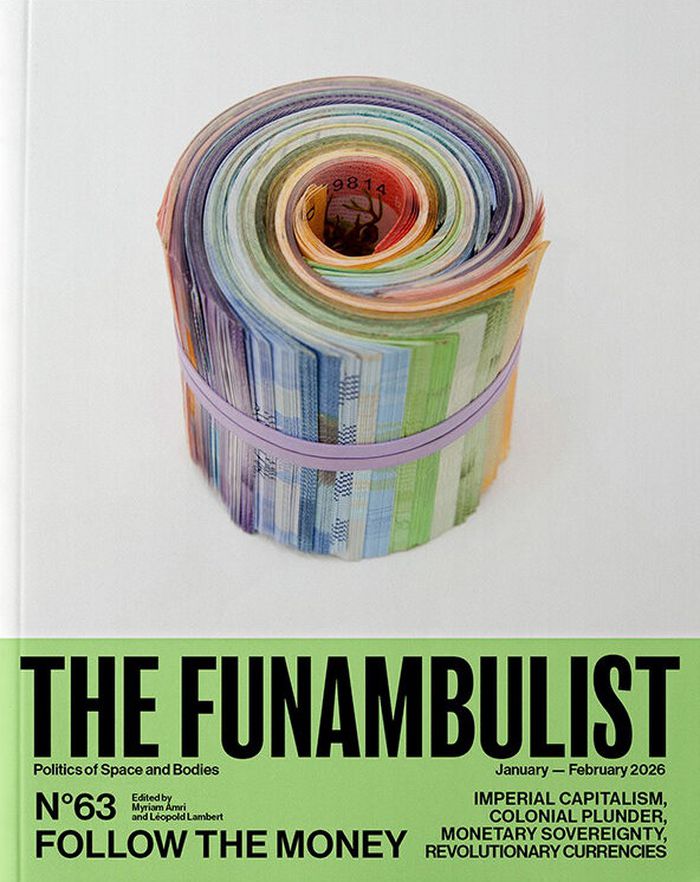
The Funambulist n.63 : follow the money
Actions:
Price:
$16.95
(available in store)
Summary:
For this 63rd issue, The Funambulist teamed-up with Tunisian anthropologist and visual artist Myriam Amri and invites you to "Follow the money." In it, the issue enters the crevices of a capitalist system and trace it back to its central nodes: property, land, capital, and class. It reads how money is central to colonial and imperial projects, but also how sovereignty and the liberation of our monetary imaginary can be tools of emancipation. From the CFA franc (Ndongo Samba Sylla, Moses März) to the US dollar (Lily H. Chumley) or the Palestinian Pound (Hicham Safieddine), The Funambulist navigates monetary politics around the world, and more specifically in Sudan (Nisrin Elamin & Laleh Khalili), Puerto Rico (Roque Salas Rivera) or Brazil (Cho). The issue also contains a board game entitled "You’ve Got Yourselves a Revolution, Now What?" imagined by the issue editors Myriam Amri and Léopold Lambert and designed by Aude Abou Nasr. As for the cover, it features an artwork by Adriana Martínez Barón.
The Funambulist n.63 : follow the money
Actions:
Price:
$16.95
(available in store)
Summary:
For this 63rd issue, The Funambulist teamed-up with Tunisian anthropologist and visual artist Myriam Amri and invites you to "Follow the money." In it, the issue enters the crevices of a capitalist system and trace it back to its central nodes: property, land, capital, and class. It reads how money is central to colonial and imperial projects, but also how sovereignty and the liberation of our monetary imaginary can be tools of emancipation. From the CFA franc (Ndongo Samba Sylla, Moses März) to the US dollar (Lily H. Chumley) or the Palestinian Pound (Hicham Safieddine), The Funambulist navigates monetary politics around the world, and more specifically in Sudan (Nisrin Elamin & Laleh Khalili), Puerto Rico (Roque Salas Rivera) or Brazil (Cho). The issue also contains a board game entitled "You’ve Got Yourselves a Revolution, Now What?" imagined by the issue editors Myriam Amri and Léopold Lambert and designed by Aude Abou Nasr. As for the cover, it features an artwork by Adriana Martínez Barón.
Form:
journals and magazines
journals and magazines
Publication:
January 2026
January 2026
Subject:
Magazines
Magazines
Form:
books
books
Actions:
Price:
$60.00
(available to order)
Summary:
Should today’s paintings or installations be idyllic, suggesting a perfect world? What does it mean when they do this? An idyll, which must always be read as a contrast to actual circumstances, is more than just a deceptive image. Does it perhaps have a regulating or even normative character? This publication presents a selection of works on the theme, divided into(...)
$60.00
(available to order)
Summary:
Should today’s paintings or installations be idyllic, suggesting a perfect world? What does it mean when they do this? An idyll, which must always be read as a contrast to actual circumstances, is more than just a deceptive image. Does it perhaps have a regulating or even normative character? This publication presents a selection of works on the theme, divided into(...)
Title:
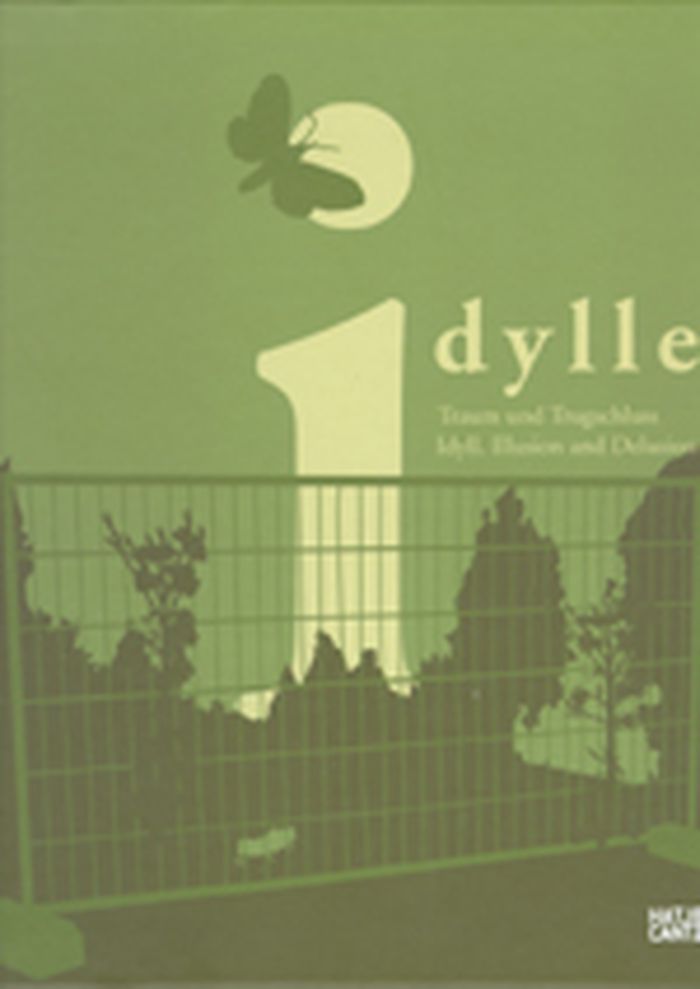
Idyll : illusion and delusion
Actions:
Price:
$60.00
(available to order)
Summary:
Should today’s paintings or installations be idyllic, suggesting a perfect world? What does it mean when they do this? An idyll, which must always be read as a contrast to actual circumstances, is more than just a deceptive image. Does it perhaps have a regulating or even normative character? This publication presents a selection of works on the theme, divided into four sections focusing on the landscape, urban, private, and utopian variants of the idyll, which explore the issues surrounding its timeliness and present radicalization. There is always something more hidden in the individual works than a fleeting glance might first allow us to suppose. Artists featured (selection): Franz Ackermann, Alexander Braun, David Claerbout, Mark Dion, Rowena Dring, Valéry Favre, Lothar Götz, Beate Gütschow, Tom Hunter, Danni Jakob, Stefan Kürten, Peter Land, Jonathan Monk, Sarah Morris, Olaf Nicolai, Jorge Pardo, Daniel Roth, Glen Rubsamen, Yehudit Sasportas, Stefan Sehler, Qui Shi-hua, Diana Thater, Gert & Uwe Tobias, Franceso Vezzoli, Pae White
Idyll : illusion and delusion
Actions:
Price:
$60.00
(available to order)
Summary:
Should today’s paintings or installations be idyllic, suggesting a perfect world? What does it mean when they do this? An idyll, which must always be read as a contrast to actual circumstances, is more than just a deceptive image. Does it perhaps have a regulating or even normative character? This publication presents a selection of works on the theme, divided into four sections focusing on the landscape, urban, private, and utopian variants of the idyll, which explore the issues surrounding its timeliness and present radicalization. There is always something more hidden in the individual works than a fleeting glance might first allow us to suppose. Artists featured (selection): Franz Ackermann, Alexander Braun, David Claerbout, Mark Dion, Rowena Dring, Valéry Favre, Lothar Götz, Beate Gütschow, Tom Hunter, Danni Jakob, Stefan Kürten, Peter Land, Jonathan Monk, Sarah Morris, Olaf Nicolai, Jorge Pardo, Daniel Roth, Glen Rubsamen, Yehudit Sasportas, Stefan Sehler, Qui Shi-hua, Diana Thater, Gert & Uwe Tobias, Franceso Vezzoli, Pae White
Form:
books
books
Publication:
July 2007, Ostfildern
July 2007, Ostfildern
Subject:
Contemporary Art Monographs
Contemporary Art Monographs
Form:
books
books
Actions:
Price:
$23.95
(available to order)
Summary:
Our cities are changing. Around the world, more and more money is being invested in buildings and land. Real estate is now a $217 trillion dollar industry, worth thirty-six times the value of all the gold ever mined. It forms sixty percent of global assets, and one of the most powerful people in the world—the president of the United States—made his name as a landlord and(...)
$23.95
(available to order)
Summary:
Our cities are changing. Around the world, more and more money is being invested in buildings and land. Real estate is now a $217 trillion dollar industry, worth thirty-six times the value of all the gold ever mined. It forms sixty percent of global assets, and one of the most powerful people in the world—the president of the United States—made his name as a landlord and(...)
Title:
Capital city: gentrification and the real estate state
Actions:
Price:
$23.95
(available to order)
Summary:
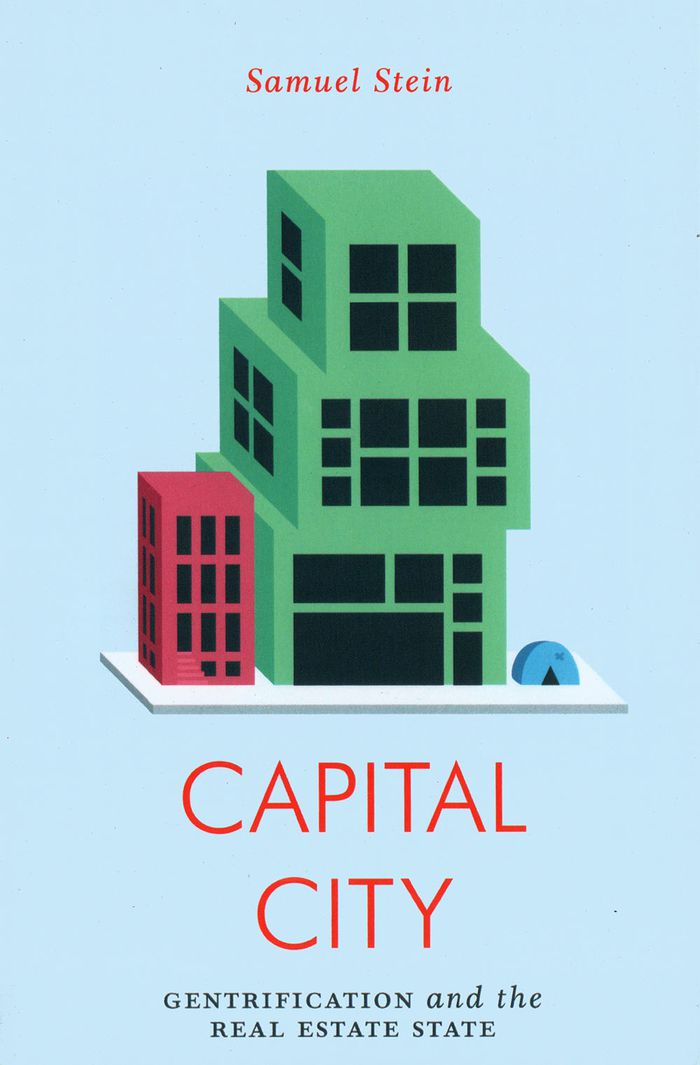
Our cities are changing. Around the world, more and more money is being invested in buildings and land. Real estate is now a $217 trillion dollar industry, worth thirty-six times the value of all the gold ever mined. It forms sixty percent of global assets, and one of the most powerful people in the world—the president of the United States—made his name as a landlord and developer. Samuel Stein shows that this explosive transformation of urban life and politics has been driven not only by the tastes of wealthy newcomers, but by the state-driven process of urban planning. Planning agencies provide a unique window into the ways the state uses and is used by capital, and the means by which urban renovations are translated into rising real estate values and rising rents. “Capital City” explains the role of planners in the real estate state, as well as the remarkable power of planning to reclaim urban life.
Capital city: gentrification and the real estate state
Actions:
Price:
$23.95
(available to order)
Summary:
Our cities are changing. Around the world, more and more money is being invested in buildings and land. Real estate is now a $217 trillion dollar industry, worth thirty-six times the value of all the gold ever mined. It forms sixty percent of global assets, and one of the most powerful people in the world—the president of the United States—made his name as a landlord and developer. Samuel Stein shows that this explosive transformation of urban life and politics has been driven not only by the tastes of wealthy newcomers, but by the state-driven process of urban planning. Planning agencies provide a unique window into the ways the state uses and is used by capital, and the means by which urban renovations are translated into rising real estate values and rising rents. “Capital City” explains the role of planners in the real estate state, as well as the remarkable power of planning to reclaim urban life.
Form:
books
books
Publication:
March 2019
March 2019
Subject:
Urban Theory
Urban Theory


