


12621 Results
Form:
drawings
drawings
Actions:
Reference number:
ARCH277824
Description:
Contains 4 volumes entitled: - University of Puerto Rico, Molecular Scoemces Complex, San Juan, Puerto Rico: design development submission 11-17-04: vol 1:architectural & structural drawings (2 copies); - University of Puerto Rico, Molecular Scoemces Complex, San Juan, Puerto Rico: design development submission 11-17-04: vol. 2: mechanical, electrical, & plumbing drawings (2 copies).
ARCH277824
Description:
Contains 4 volumes entitled: - University of Puerto Rico, Molecular Scoemces Complex, San Juan, Puerto Rico: design development submission 11-17-04: vol 1:architectural & structural drawings (2 copies); - University of Puerto Rico, Molecular Scoemces Complex, San Juan, Puerto Rico: design development submission 11-17-04: vol. 2: mechanical, electrical, & plumbing drawings (2 copies).
People:
Date:
17 November 2004
17 November 2004
Title:
Design development drawings, Laboratorios de ciencias moleculares para la Universidad de Puerto Rico, San Juan, Puerto Rico
Actions:
ARCH277824
Description:
Contains 4 volumes entitled: - University of Puerto Rico, Molecular Scoemces Complex, San Juan, Puerto Rico: design development submission 11-17-04: vol 1:architectural & structural drawings (2 copies); - University of Puerto Rico, Molecular Scoemces Complex, San Juan, Puerto Rico: design development submission 11-17-04: vol. 2: mechanical, electrical, & plumbing drawings (2 copies).
Design development drawings, Laboratorios de ciencias moleculares para la Universidad de Puerto Rico, San Juan, Puerto Rico
Actions:
ARCH277824
Description:
Contains 4 volumes entitled: - University of Puerto Rico, Molecular Scoemces Complex, San Juan, Puerto Rico: design development submission 11-17-04: vol 1:architectural & structural drawings (2 copies); - University of Puerto Rico, Molecular Scoemces Complex, San Juan, Puerto Rico: design development submission 11-17-04: vol. 2: mechanical, electrical, & plumbing drawings (2 copies).
Form:
drawings
drawings
Date:
17 November 2004
17 November 2004
People:
Level of archival description:
Project
Project
Reference number:
AP207.S1.2009.PR01
Description:
The project series documents the installation "Brano di Città" presented at the Galleria Enrico Fornello, in Prato, in 2009. The installation consists of covering the walls and the floor of an entire gallery space with branches and dry leaves. "The material is predominant here, and “becomes” architecture. It is a piece of city, or a ghost of it, where nature turns into architecture, or a work of architecture structures itself, describes itself with natural materials." [1] The project series contains drawings and photographs of the installation. Source: [1] Gianni Pettena website, https://www.giannipettena.it/italiano/opere-1/inst-city-architecture-2009/ (last accessed 22 January 2020).
AP207.S1.2009.PR01
Description:
The project series documents the installation "Brano di Città" presented at the Galleria Enrico Fornello, in Prato, in 2009. The installation consists of covering the walls and the floor of an entire gallery space with branches and dry leaves. "The material is predominant here, and “becomes” architecture. It is a piece of city, or a ghost of it, where nature turns into architecture, or a work of architecture structures itself, describes itself with natural materials." [1] The project series contains drawings and photographs of the installation. Source: [1] Gianni Pettena website, https://www.giannipettena.it/italiano/opere-1/inst-city-architecture-2009/ (last accessed 22 January 2020).
People:
Date:
2009-2015
2009-2015
Title:
Brano di Città [City Architecture] (2009)
Actions:
AP207.S1.2009.PR01
Description:
The project series documents the installation "Brano di Città" presented at the Galleria Enrico Fornello, in Prato, in 2009. The installation consists of covering the walls and the floor of an entire gallery space with branches and dry leaves. "The material is predominant here, and “becomes” architecture. It is a piece of city, or a ghost of it, where nature turns into architecture, or a work of architecture structures itself, describes itself with natural materials." [1] The project series contains drawings and photographs of the installation. Source: [1] Gianni Pettena website, https://www.giannipettena.it/italiano/opere-1/inst-city-architecture-2009/ (last accessed 22 January 2020).
Brano di Città [City Architecture] (2009)
Actions:
AP207.S1.2009.PR01
Description:
The project series documents the installation "Brano di Città" presented at the Galleria Enrico Fornello, in Prato, in 2009. The installation consists of covering the walls and the floor of an entire gallery space with branches and dry leaves. "The material is predominant here, and “becomes” architecture. It is a piece of city, or a ghost of it, where nature turns into architecture, or a work of architecture structures itself, describes itself with natural materials." [1] The project series contains drawings and photographs of the installation. Source: [1] Gianni Pettena website, https://www.giannipettena.it/italiano/opere-1/inst-city-architecture-2009/ (last accessed 22 January 2020).
Level of archival description:
Project
Project
Date:
2009-2015
2009-2015
People:
Level of archival description:
Project
Project
Reference number:
AP148.S1.1970.PR02
Description:
The project series documents Poli's work on the Interplanetary Architecture project, which was also made into a film by Superstudio directed by Alessandro Poli (the film is not included in the fonds). The project reflects Poli's deep fascination with the moon landing in 1969. Poli uses this major media event as a catalyst for thinking about a new approach to architecture and tools for design, including the idea that film and the movie camera should become part of the toolset. The project also seems to be in some way a response to Epoch magazine's challenge for a "Primo concorso di architettura nello spazio" (the first architectural competition in space), and includes much imagery and textual references to a new road or architectural links between the earth and other planets, including an earth moon highway. In his storyboard, Poli also makes reference to his earlier Piper project, and some imagery features wheels and an amusement park. The Interplanetary Architecture project was exhibited by Superstudio in Rome in 1972 and featured in "Casabella" magazine in April 1972 (no. 364). The project was also featured in the 2010 CCA exhibition "Other Space Odysseys". In the accompanying CCA publication, Poli describes this project as "a voyage off earthbound routes in quest of architecture unfettered by the urban nightmare, by induced needs or by planning as the only tool for regulating and solving the world's problems" (Poli quoted in Borasi and Zardini, 2010, 110). Poli's work on this project is deeply tied to the Zeno project, which was also featured in this exhibition and is included in this fonds (see AP148.S1.1972.PR01). For the Zeno project, Poli envisioned a dialogue between astronaut Buzz Aldrin and an Italian peasant, Zeno of Riparbella. Poli felt that these two shared a similarity in that both their homes were isolated capsules, one that provided a lens from which to see the rest of the world and understand their place in it. The material in the series includes numerous photomontages and collages of astronauts in space, as well as drawings of plantery shapes and structures. There are also texts, some of which include calculations of distances and diameters of planets, as well as notebooks and sketchbooks, many of which Poli included in a folder he entitled "Storyboard." The series also includes an unsent letter from Poli to Adolfo Natalini which describes how, after the moon landing, everything - the planet, the moon, the stars - is architecture, and that this will necessitate the need for new design tools, such as the movie camera. Some works are signed Alessandro Poli-Superstudio. Source cited: Giovanna Borasi and Mirko Zardini, eds., Other Space Odysseys, Montreal and Baden: Canadian Centre for Architecture/Lars Müller Publishers, 2010.
AP148.S1.1970.PR02
Description:
The project series documents Poli's work on the Interplanetary Architecture project, which was also made into a film by Superstudio directed by Alessandro Poli (the film is not included in the fonds). The project reflects Poli's deep fascination with the moon landing in 1969. Poli uses this major media event as a catalyst for thinking about a new approach to architecture and tools for design, including the idea that film and the movie camera should become part of the toolset. The project also seems to be in some way a response to Epoch magazine's challenge for a "Primo concorso di architettura nello spazio" (the first architectural competition in space), and includes much imagery and textual references to a new road or architectural links between the earth and other planets, including an earth moon highway. In his storyboard, Poli also makes reference to his earlier Piper project, and some imagery features wheels and an amusement park. The Interplanetary Architecture project was exhibited by Superstudio in Rome in 1972 and featured in "Casabella" magazine in April 1972 (no. 364). The project was also featured in the 2010 CCA exhibition "Other Space Odysseys". In the accompanying CCA publication, Poli describes this project as "a voyage off earthbound routes in quest of architecture unfettered by the urban nightmare, by induced needs or by planning as the only tool for regulating and solving the world's problems" (Poli quoted in Borasi and Zardini, 2010, 110). Poli's work on this project is deeply tied to the Zeno project, which was also featured in this exhibition and is included in this fonds (see AP148.S1.1972.PR01). For the Zeno project, Poli envisioned a dialogue between astronaut Buzz Aldrin and an Italian peasant, Zeno of Riparbella. Poli felt that these two shared a similarity in that both their homes were isolated capsules, one that provided a lens from which to see the rest of the world and understand their place in it. The material in the series includes numerous photomontages and collages of astronauts in space, as well as drawings of plantery shapes and structures. There are also texts, some of which include calculations of distances and diameters of planets, as well as notebooks and sketchbooks, many of which Poli included in a folder he entitled "Storyboard." The series also includes an unsent letter from Poli to Adolfo Natalini which describes how, after the moon landing, everything - the planet, the moon, the stars - is architecture, and that this will necessitate the need for new design tools, such as the movie camera. Some works are signed Alessandro Poli-Superstudio. Source cited: Giovanna Borasi and Mirko Zardini, eds., Other Space Odysseys, Montreal and Baden: Canadian Centre for Architecture/Lars Müller Publishers, 2010.
People:
Date:
1969-1971
1969-1971
Title:
Architettura Interplanetaria [Interplanetary Architecture] (1970-1971)
Actions:
AP148.S1.1970.PR02
Description:
The project series documents Poli's work on the Interplanetary Architecture project, which was also made into a film by Superstudio directed by Alessandro Poli (the film is not included in the fonds). The project reflects Poli's deep fascination with the moon landing in 1969. Poli uses this major media event as a catalyst for thinking about a new approach to architecture and tools for design, including the idea that film and the movie camera should become part of the toolset. The project also seems to be in some way a response to Epoch magazine's challenge for a "Primo concorso di architettura nello spazio" (the first architectural competition in space), and includes much imagery and textual references to a new road or architectural links between the earth and other planets, including an earth moon highway. In his storyboard, Poli also makes reference to his earlier Piper project, and some imagery features wheels and an amusement park. The Interplanetary Architecture project was exhibited by Superstudio in Rome in 1972 and featured in "Casabella" magazine in April 1972 (no. 364). The project was also featured in the 2010 CCA exhibition "Other Space Odysseys". In the accompanying CCA publication, Poli describes this project as "a voyage off earthbound routes in quest of architecture unfettered by the urban nightmare, by induced needs or by planning as the only tool for regulating and solving the world's problems" (Poli quoted in Borasi and Zardini, 2010, 110). Poli's work on this project is deeply tied to the Zeno project, which was also featured in this exhibition and is included in this fonds (see AP148.S1.1972.PR01). For the Zeno project, Poli envisioned a dialogue between astronaut Buzz Aldrin and an Italian peasant, Zeno of Riparbella. Poli felt that these two shared a similarity in that both their homes were isolated capsules, one that provided a lens from which to see the rest of the world and understand their place in it. The material in the series includes numerous photomontages and collages of astronauts in space, as well as drawings of plantery shapes and structures. There are also texts, some of which include calculations of distances and diameters of planets, as well as notebooks and sketchbooks, many of which Poli included in a folder he entitled "Storyboard." The series also includes an unsent letter from Poli to Adolfo Natalini which describes how, after the moon landing, everything - the planet, the moon, the stars - is architecture, and that this will necessitate the need for new design tools, such as the movie camera. Some works are signed Alessandro Poli-Superstudio. Source cited: Giovanna Borasi and Mirko Zardini, eds., Other Space Odysseys, Montreal and Baden: Canadian Centre for Architecture/Lars Müller Publishers, 2010.
Architettura Interplanetaria [Interplanetary Architecture] (1970-1971)
Actions:
AP148.S1.1970.PR02
Description:
The project series documents Poli's work on the Interplanetary Architecture project, which was also made into a film by Superstudio directed by Alessandro Poli (the film is not included in the fonds). The project reflects Poli's deep fascination with the moon landing in 1969. Poli uses this major media event as a catalyst for thinking about a new approach to architecture and tools for design, including the idea that film and the movie camera should become part of the toolset. The project also seems to be in some way a response to Epoch magazine's challenge for a "Primo concorso di architettura nello spazio" (the first architectural competition in space), and includes much imagery and textual references to a new road or architectural links between the earth and other planets, including an earth moon highway. In his storyboard, Poli also makes reference to his earlier Piper project, and some imagery features wheels and an amusement park. The Interplanetary Architecture project was exhibited by Superstudio in Rome in 1972 and featured in "Casabella" magazine in April 1972 (no. 364). The project was also featured in the 2010 CCA exhibition "Other Space Odysseys". In the accompanying CCA publication, Poli describes this project as "a voyage off earthbound routes in quest of architecture unfettered by the urban nightmare, by induced needs or by planning as the only tool for regulating and solving the world's problems" (Poli quoted in Borasi and Zardini, 2010, 110). Poli's work on this project is deeply tied to the Zeno project, which was also featured in this exhibition and is included in this fonds (see AP148.S1.1972.PR01). For the Zeno project, Poli envisioned a dialogue between astronaut Buzz Aldrin and an Italian peasant, Zeno of Riparbella. Poli felt that these two shared a similarity in that both their homes were isolated capsules, one that provided a lens from which to see the rest of the world and understand their place in it. The material in the series includes numerous photomontages and collages of astronauts in space, as well as drawings of plantery shapes and structures. There are also texts, some of which include calculations of distances and diameters of planets, as well as notebooks and sketchbooks, many of which Poli included in a folder he entitled "Storyboard." The series also includes an unsent letter from Poli to Adolfo Natalini which describes how, after the moon landing, everything - the planet, the moon, the stars - is architecture, and that this will necessitate the need for new design tools, such as the movie camera. Some works are signed Alessandro Poli-Superstudio. Source cited: Giovanna Borasi and Mirko Zardini, eds., Other Space Odysseys, Montreal and Baden: Canadian Centre for Architecture/Lars Müller Publishers, 2010.
Level of archival description:
Project
Project
Date:
1969-1971
1969-1971
People:
Form:
drawings
Quantity:
7 drawing(s)
drawings
Quantity:
7 drawing(s)
Actions:
Reference number:
DR2007:0018:007
Description:
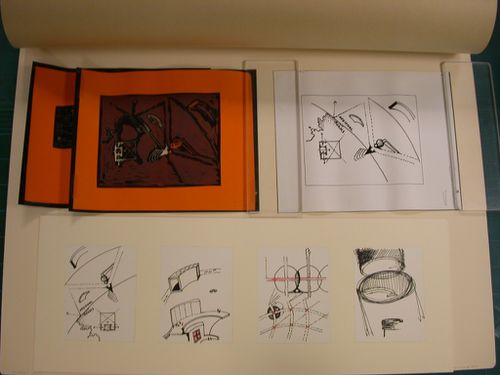
Exploratory drawings related the early studies for "electronic systems."
DR2007:0018:007
Description:
Exploratory drawings related the early studies for "electronic systems."
People:
Title:
"The Positive and Negative Influences of Electronic Systems on Architecture"
Actions:
DR2007:0018:007
Description:
Exploratory drawings related the early studies for "electronic systems."
"The Positive and Negative Influences of Electronic Systems on Architecture"
Actions:
DR2007:0018:007
Description:
Exploratory drawings related the early studies for "electronic systems."
Form:
drawings
Quantity:
7 drawing(s)
drawings
Quantity:
7 drawing(s)
People:
Form:
drawings
drawings
Reference number:
AP148.S1.1970.PR02.001.6
Description:
Appear to be storyboard drawings, with each square advancing a narrative about the planet earth.
AP148.S1.1970.PR02.001.6
Description:
Appear to be storyboard drawings, with each square advancing a narrative about the planet earth.
People:
Date:
ca. 1970-1971
ca. 1970-1971
Title:
Sketches, Interplanetary Architecture (Folder 6 of 7)
Actions:
AP148.S1.1970.PR02.001.6
Description:
Appear to be storyboard drawings, with each square advancing a narrative about the planet earth.
Sketches, Interplanetary Architecture (Folder 6 of 7)
Actions:
AP148.S1.1970.PR02.001.6
Description:
Appear to be storyboard drawings, with each square advancing a narrative about the planet earth.
Form:
drawings
drawings
Date:
ca. 1970-1971
ca. 1970-1971
People:
Form:
drawings, born digital, photographs
drawings, born digital, photographs
Title:
CAD drawings, 3D models and renderings, images and other documents, Witte Arts Center, Green Bay
CAD drawings, 3D models and renderings, images and other documents, Witte Arts Center, Green Bay
Actions:
Reference number:
AP179.S2.002
Description:
File contains material submitted to the Progressive Architecture Awards, 2003 for Witte Arts Building. Most common file formats: Tagged Image File Format, JPEG File Interchange Format, Adobe Photoshop, OLE2 Compound Document Format, Windows Metafile Image
AP179.S2.002
Description:
File contains material submitted to the Progressive Architecture Awards, 2003 for Witte Arts Building. Most common file formats: Tagged Image File Format, JPEG File Interchange Format, Adobe Photoshop, OLE2 Compound Document Format, Windows Metafile Image
People:
Date:
1996 - 2001
1996 - 2001
Title:
CAD drawings, 3D models and renderings, images and other documents, Witte Arts Center, Green Bay
Actions:
AP179.S2.002
Description:
File contains material submitted to the Progressive Architecture Awards, 2003 for Witte Arts Building. Most common file formats: Tagged Image File Format, JPEG File Interchange Format, Adobe Photoshop, OLE2 Compound Document Format, Windows Metafile Image
CAD drawings, 3D models and renderings, images and other documents, Witte Arts Center, Green Bay
Actions:
AP179.S2.002
Description:
File contains material submitted to the Progressive Architecture Awards, 2003 for Witte Arts Building. Most common file formats: Tagged Image File Format, JPEG File Interchange Format, Adobe Photoshop, OLE2 Compound Document Format, Windows Metafile Image
Form:
drawings, born digital, photographs
drawings, born digital, photographs
Date:
1996 - 2001
1996 - 2001
People:
Form:
drawings
drawings
Reference number:
AP148.S1.1974.PR01.001
Description:
26 pages of drawings, sketches, graphic materials, and notes on the project, many of which are duplicated on the presentation panels.
AP148.S1.1974.PR01.001
Description:
26 pages of drawings, sketches, graphic materials, and notes on the project, many of which are duplicated on the presentation panels.
People:
Date:
ca. 1974, 1977
ca. 1974, 1977
Title:
Sketches, graphic materials, and notes, Paper architecture
Actions:
AP148.S1.1974.PR01.001
Description:
26 pages of drawings, sketches, graphic materials, and notes on the project, many of which are duplicated on the presentation panels.
Sketches, graphic materials, and notes, Paper architecture
Actions:
AP148.S1.1974.PR01.001
Description:
26 pages of drawings, sketches, graphic materials, and notes on the project, many of which are duplicated on the presentation panels.
Form:
drawings
drawings
Date:
ca. 1974, 1977
ca. 1974, 1977
People:
Form:
drawings
Quantity:
3 portfolio(s)
drawings
Quantity:
3 portfolio(s)
Actions:
Reference number:
DR1974:0002:031:001-055
Description:
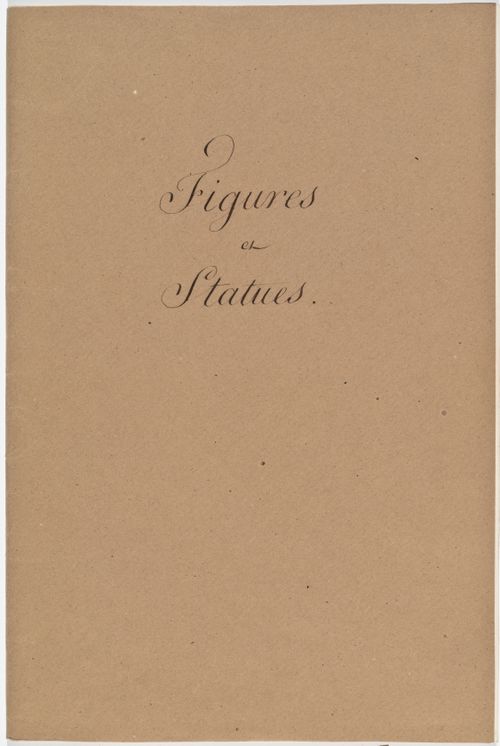
- The three portfolios of this group are entitled: Figures et Statues (DR1974:0002:031:001 - DR1974:0002:031:024), Architecture Antique Mélanges (DR1974:0002:031:025 - DR1974:0002:031:043), and Architecture Moderne Mélanges (DR1974:0002:031:044 - DR1974:0002:031:055). -- Portfolio Figures et Statues comprises primarily drawings of classical figures and architectural sculpture from both antique and 19th century sources. Few of the sources of these drawings are clearly identified, with the exception of Genie de la Liberté from the Colonne de Juillet (DR1974:0002:031:016:003). There are a number of drawings of sculpture from the 16th century tomb monument of Maximillian I in Innsbruck (DR1974:0002:031:017 - DR1974:0002:031:023:001-003). -- Portfolio Architecture Antique Mélanges comprises mostly architectural drawings from buildings or monuments in Pisa, Rome, Tivoli, Naples, Florence, Viterbo, and Nice. Also included are a reconstruction of Pliny the Younger's Villa Laurentine (DR1974:0002:031:043), an orthographic drawing of the L'arc des orfèvres (DR1974:0002:031:032:001-002), and an interior perspective of an imaginary church, perhaps inspired by Pugin (DR1974:0002:031:027). -- Portfolio Architecture Moderne Mélanges comprises drawings which represent the classical tradition of 19th century French and English architecture (Bergdoll, p. 2). The French subjects include the Palais de justice, Amiens (DR1974:0002:031:044:002), the Louvois fountain by Visconti, (DR1974:0002:031:049:002), the Arc du Carrousel (DR1974:0002:031:053:001), and the Vendome column (DR1974:0002:031:053:002). English architecture is represented by Charles Robert Cockerell's Hanover Chapel, Regent Street, London (DR1974:0002:031:054:001), and late Georgian\early Regency houses (DR1974:0002:031:045:001-002 and DR1974:0002:031:046:001-002). The drawings related to Amiens Cathedral (DR1974:0002:031:044:001-002) and the Cloaca Maxima (DR1974:0002:031:052:002) are notable exceptions to the contemporary contents of the folder.
DR1974:0002:031:001-055
Description:
- The three portfolios of this group are entitled: Figures et Statues (DR1974:0002:031:001 - DR1974:0002:031:024), Architecture Antique Mélanges (DR1974:0002:031:025 - DR1974:0002:031:043), and Architecture Moderne Mélanges (DR1974:0002:031:044 - DR1974:0002:031:055). -- Portfolio Figures et Statues comprises primarily drawings of classical figures and architectural sculpture from both antique and 19th century sources. Few of the sources of these drawings are clearly identified, with the exception of Genie de la Liberté from the Colonne de Juillet (DR1974:0002:031:016:003). There are a number of drawings of sculpture from the 16th century tomb monument of Maximillian I in Innsbruck (DR1974:0002:031:017 - DR1974:0002:031:023:001-003). -- Portfolio Architecture Antique Mélanges comprises mostly architectural drawings from buildings or monuments in Pisa, Rome, Tivoli, Naples, Florence, Viterbo, and Nice. Also included are a reconstruction of Pliny the Younger's Villa Laurentine (DR1974:0002:031:043), an orthographic drawing of the L'arc des orfèvres (DR1974:0002:031:032:001-002), and an interior perspective of an imaginary church, perhaps inspired by Pugin (DR1974:0002:031:027). -- Portfolio Architecture Moderne Mélanges comprises drawings which represent the classical tradition of 19th century French and English architecture (Bergdoll, p. 2). The French subjects include the Palais de justice, Amiens (DR1974:0002:031:044:002), the Louvois fountain by Visconti, (DR1974:0002:031:049:002), the Arc du Carrousel (DR1974:0002:031:053:001), and the Vendome column (DR1974:0002:031:053:002). English architecture is represented by Charles Robert Cockerell's Hanover Chapel, Regent Street, London (DR1974:0002:031:054:001), and late Georgian\early Regency houses (DR1974:0002:031:045:001-002 and DR1974:0002:031:046:001-002). The drawings related to Amiens Cathedral (DR1974:0002:031:044:001-002) and the Cloaca Maxima (DR1974:0002:031:052:002) are notable exceptions to the contemporary contents of the folder.
People:
Subject:
architecture, interior design, painting, sculpture
architecture, interior design, painting, sculpture
Date:
between 1800 and 1868
between 1800 and 1868
Title:
Three portfolios of drawings of classical figures, statues from the sepulchral monument of Maximilian I, Innsbruck, and ancient and modern buildings
Actions:
DR1974:0002:031:001-055
Description:
- The three portfolios of this group are entitled: Figures et Statues (DR1974:0002:031:001 - DR1974:0002:031:024), Architecture Antique Mélanges (DR1974:0002:031:025 - DR1974:0002:031:043), and Architecture Moderne Mélanges (DR1974:0002:031:044 - DR1974:0002:031:055). -- Portfolio Figures et Statues comprises primarily drawings of classical figures and architectural sculpture from both antique and 19th century sources. Few of the sources of these drawings are clearly identified, with the exception of Genie de la Liberté from the Colonne de Juillet (DR1974:0002:031:016:003). There are a number of drawings of sculpture from the 16th century tomb monument of Maximillian I in Innsbruck (DR1974:0002:031:017 - DR1974:0002:031:023:001-003). -- Portfolio Architecture Antique Mélanges comprises mostly architectural drawings from buildings or monuments in Pisa, Rome, Tivoli, Naples, Florence, Viterbo, and Nice. Also included are a reconstruction of Pliny the Younger's Villa Laurentine (DR1974:0002:031:043), an orthographic drawing of the L'arc des orfèvres (DR1974:0002:031:032:001-002), and an interior perspective of an imaginary church, perhaps inspired by Pugin (DR1974:0002:031:027). -- Portfolio Architecture Moderne Mélanges comprises drawings which represent the classical tradition of 19th century French and English architecture (Bergdoll, p. 2). The French subjects include the Palais de justice, Amiens (DR1974:0002:031:044:002), the Louvois fountain by Visconti, (DR1974:0002:031:049:002), the Arc du Carrousel (DR1974:0002:031:053:001), and the Vendome column (DR1974:0002:031:053:002). English architecture is represented by Charles Robert Cockerell's Hanover Chapel, Regent Street, London (DR1974:0002:031:054:001), and late Georgian\early Regency houses (DR1974:0002:031:045:001-002 and DR1974:0002:031:046:001-002). The drawings related to Amiens Cathedral (DR1974:0002:031:044:001-002) and the Cloaca Maxima (DR1974:0002:031:052:002) are notable exceptions to the contemporary contents of the folder.
Three portfolios of drawings of classical figures, statues from the sepulchral monument of Maximilian I, Innsbruck, and ancient and modern buildings
Actions:
DR1974:0002:031:001-055
Description:
- The three portfolios of this group are entitled: Figures et Statues (DR1974:0002:031:001 - DR1974:0002:031:024), Architecture Antique Mélanges (DR1974:0002:031:025 - DR1974:0002:031:043), and Architecture Moderne Mélanges (DR1974:0002:031:044 - DR1974:0002:031:055). -- Portfolio Figures et Statues comprises primarily drawings of classical figures and architectural sculpture from both antique and 19th century sources. Few of the sources of these drawings are clearly identified, with the exception of Genie de la Liberté from the Colonne de Juillet (DR1974:0002:031:016:003). There are a number of drawings of sculpture from the 16th century tomb monument of Maximillian I in Innsbruck (DR1974:0002:031:017 - DR1974:0002:031:023:001-003). -- Portfolio Architecture Antique Mélanges comprises mostly architectural drawings from buildings or monuments in Pisa, Rome, Tivoli, Naples, Florence, Viterbo, and Nice. Also included are a reconstruction of Pliny the Younger's Villa Laurentine (DR1974:0002:031:043), an orthographic drawing of the L'arc des orfèvres (DR1974:0002:031:032:001-002), and an interior perspective of an imaginary church, perhaps inspired by Pugin (DR1974:0002:031:027). -- Portfolio Architecture Moderne Mélanges comprises drawings which represent the classical tradition of 19th century French and English architecture (Bergdoll, p. 2). The French subjects include the Palais de justice, Amiens (DR1974:0002:031:044:002), the Louvois fountain by Visconti, (DR1974:0002:031:049:002), the Arc du Carrousel (DR1974:0002:031:053:001), and the Vendome column (DR1974:0002:031:053:002). English architecture is represented by Charles Robert Cockerell's Hanover Chapel, Regent Street, London (DR1974:0002:031:054:001), and late Georgian\early Regency houses (DR1974:0002:031:045:001-002 and DR1974:0002:031:046:001-002). The drawings related to Amiens Cathedral (DR1974:0002:031:044:001-002) and the Cloaca Maxima (DR1974:0002:031:052:002) are notable exceptions to the contemporary contents of the folder.
Form:
drawings
Quantity:
3 portfolio(s)
drawings
Quantity:
3 portfolio(s)
Date:
between 1800 and 1868
between 1800 and 1868
People:
Subject:
architecture, interior design, painting, sculpture
architecture, interior design, painting, sculpture
Form:
archives
Level of archival description:
Fonds
archives
Level of archival description:
Fonds
Reference number:
AP177
Synopsis:
The RUR Architecture Kansai-kan of the National Diet Library project records, circa 1996, document the New York based firm’s competition entry for the Kansai Science City branch of Japan’s National Diet Library. Records show integration of landscape in the building’s design, exploration of the relationship between structure and surface, and a multimedia approach to building design. Records include 169 digital files, mostly CAD models and images; 42 drawings and printed renderings; and 5 models and casts.
AP177
Synopsis:
The RUR Architecture Kansai-kan of the National Diet Library project records, circa 1996, document the New York based firm’s competition entry for the Kansai Science City branch of Japan’s National Diet Library. Records show integration of landscape in the building’s design, exploration of the relationship between structure and surface, and a multimedia approach to building design. Records include 169 digital files, mostly CAD models and images; 42 drawings and printed renderings; and 5 models and casts.
People:
Date:
1996-2015
1996-2015
Title:
RUR Architecture Kansai-kan of the National Diet Library project records
Actions:
AP177
Synopsis:
The RUR Architecture Kansai-kan of the National Diet Library project records, circa 1996, document the New York based firm’s competition entry for the Kansai Science City branch of Japan’s National Diet Library. Records show integration of landscape in the building’s design, exploration of the relationship between structure and surface, and a multimedia approach to building design. Records include 169 digital files, mostly CAD models and images; 42 drawings and printed renderings; and 5 models and casts.
RUR Architecture Kansai-kan of the National Diet Library project records
Actions:
AP177
Synopsis:
The RUR Architecture Kansai-kan of the National Diet Library project records, circa 1996, document the New York based firm’s competition entry for the Kansai Science City branch of Japan’s National Diet Library. Records show integration of landscape in the building’s design, exploration of the relationship between structure and surface, and a multimedia approach to building design. Records include 169 digital files, mostly CAD models and images; 42 drawings and printed renderings; and 5 models and casts.
Form:
archives
Level of archival description:
Fonds
archives
Level of archival description:
Fonds
Date:
1996-2015
1996-2015
People:
Level of archival description:
Project
Project
Actions:
Reference number:
AP140.S2.SS1.D101
Description:
File documents an executed project for additions to the Faculty of Architecture, University of Newcastle, in Newcastle, New South Wales, Australia. Material in this file was produced between 1989 and 1992. File contains textual records, including photographs of the building site and a small number of design development drawings. File also contains presentation and working drawings.
AP140.S2.SS1.D101
Description:
File documents an executed project for additions to the Faculty of Architecture, University of Newcastle, in Newcastle, New South Wales, Australia. Material in this file was produced between 1989 and 1992. File contains textual records, including photographs of the building site and a small number of design development drawings. File also contains presentation and working drawings.
People:
Date:
1989-1992
1989-1992
Title:
Faculty of Architecture Additions, University of Newcastle, Newcastle, Australia
Actions:
AP140.S2.SS1.D101
Description:
File documents an executed project for additions to the Faculty of Architecture, University of Newcastle, in Newcastle, New South Wales, Australia. Material in this file was produced between 1989 and 1992. File contains textual records, including photographs of the building site and a small number of design development drawings. File also contains presentation and working drawings.
Faculty of Architecture Additions, University of Newcastle, Newcastle, Australia
Actions:
AP140.S2.SS1.D101
Description:
File documents an executed project for additions to the Faculty of Architecture, University of Newcastle, in Newcastle, New South Wales, Australia. Material in this file was produced between 1989 and 1992. File contains textual records, including photographs of the building site and a small number of design development drawings. File also contains presentation and working drawings.
Level of archival description:
File 101
File 101
Date:
1989-1992
1989-1992
People:


