


5813 Results
Form:
books
books
Actions:
Subject:
Publication:
Aksioma Institute for Contemporary Art 2021
Aksioma Institute for Contemporary Art 2021
Form:
books
books
Publication:
Aksioma Institute for Contemporary Art 2021
Aksioma Institute for Contemporary Art 2021
Subject:
Holdings:
Description:
1 archived website.
Description:
1 archived website.
Author:
Subject:
Title:
James Stirling Memorial Lectures on the City archived website.
Actions:
Holdings:
Description:
1 archived website.
James Stirling Memorial Lectures on the City archived website.
Actions:
Holdings:
Description:
1 archived website.
Author:
Subject:
Form:
books
books
Actions:
Holdings:
Description:
254 pages : illustrations, charts ; 16 cm
Description:
254 pages : illustrations, charts ; 16 cm
Author:
Subject:
Publication:
Zurich, Switzerland : Lars Müller Publishers, [2017], ©2017
Zurich, Switzerland : Lars Müller Publishers, [2017], ©2017
Title:
Our world to change! / edited by Ruedi and Vera Baur, Civic City and Attac ; translation, Helen Ferguson.
Actions:
Holdings:
Description:
254 pages : illustrations, charts ; 16 cm
Our world to change! / edited by Ruedi and Vera Baur, Civic City and Attac ; translation, Helen Ferguson.
Actions:
Holdings:
Description:
254 pages : illustrations, charts ; 16 cm
Form:
books
books
Publication:
Zurich, Switzerland : Lars Müller Publishers, [2017], ©2017
Zurich, Switzerland : Lars Müller Publishers, [2017], ©2017
Author:
Subject:
Form:
journals and magazines
journals and magazines
Actions:
Description:
1 online resource
Author:
Subject:
Publication:
Ithaca, N.Y. : Graduate School of Business and Public Administration, Cornell University, 1956-, Dec. 1984- ; New York : Samuel Curtis Johnson Graduate School of Management, Cornell University, New York : Graduate School of Management, Cornell University, [United Kingdom] : SAGE Publications
Ithaca, N.Y. : Graduate School of Business and Public Administration, Cornell University, 1956-, Dec. 1984- ; New York : Samuel Curtis Johnson Graduate School of Management, Cornell University, New York : Graduate School of Management, Cornell University, [United Kingdom] : SAGE Publications
Form:
journals and magazines
journals and magazines
Publication:
Ithaca, N.Y. : Graduate School of Business and Public Administration, Cornell University, 1956-, Dec. 1984- ; New York : Samuel Curtis Johnson Graduate School of Management, Cornell University, New York : Graduate School of Management, Cornell University, [United Kingdom] : SAGE Publications
Ithaca, N.Y. : Graduate School of Business and Public Administration, Cornell University, 1956-, Dec. 1984- ; New York : Samuel Curtis Johnson Graduate School of Management, Cornell University, New York : Graduate School of Management, Cornell University, [United Kingdom] : SAGE Publications
Author:
Subject:
Form:
books
books
Price:
$39.95
(available to order)
Summary:
How human behavior brought our world to the brink, and how human behavior can save us. The world is a mess. Our dire predicament, from collapsing social structures to the climate crisis, has been millennia in the making and can be traced back to the erroneous belief that the earth's resources are infinite. The key to change, says Don Norman, is human behavior, covered(...)
$39.95
(available to order)
Summary:
How human behavior brought our world to the brink, and how human behavior can save us. The world is a mess. Our dire predicament, from collapsing social structures to the climate crisis, has been millennia in the making and can be traced back to the erroneous belief that the earth's resources are infinite. The key to change, says Don Norman, is human behavior, covered(...)
Title:
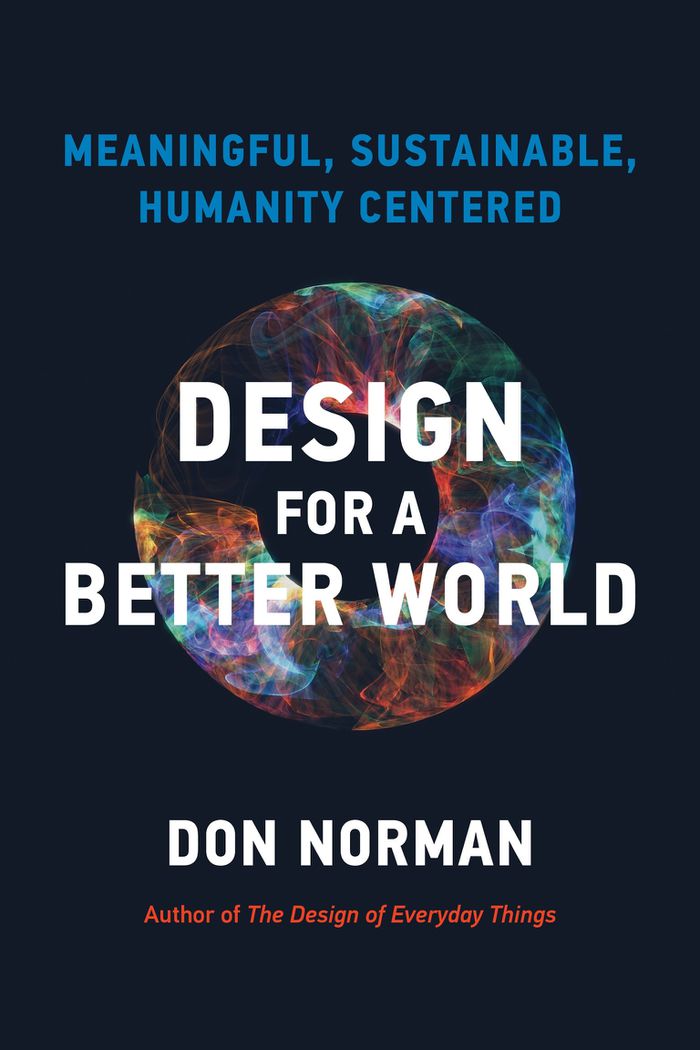
Design for a better world: meaningful, sustainable, humanity centered
Actions:
Price:
$39.95
(available to order)
Summary:
How human behavior brought our world to the brink, and how human behavior can save us. The world is a mess. Our dire predicament, from collapsing social structures to the climate crisis, has been millennia in the making and can be traced back to the erroneous belief that the earth's resources are infinite. The key to change, says Don Norman, is human behavior, covered in the book's three major themes: meaning, sustainability, and humanity-centeredness. Emphasize quality of life, not monetary rewards; restructure how we live to better protect the environment; and focus on all of humanity. ''Design for a better world'' presents an eye-opening diagnosis of where we've gone wrong and a clear prescription for making things better. Norman proposes a new way of thinking, one that recognizes our place in a complex global system where even simple behaviors affect the entire world. He identifies the economic metrics that contribute to the harmful effects of commerce and manufacturing and proposes a recalibration of what we consider important in life. His experience as both a scientist and business executive gives him the perspective to show how to make these changes while maintaining a thriving economy. Let the change begin with this book before it's too late.
Design for a better world: meaningful, sustainable, humanity centered
Actions:
Price:
$39.95
(available to order)
Summary:
How human behavior brought our world to the brink, and how human behavior can save us. The world is a mess. Our dire predicament, from collapsing social structures to the climate crisis, has been millennia in the making and can be traced back to the erroneous belief that the earth's resources are infinite. The key to change, says Don Norman, is human behavior, covered in the book's three major themes: meaning, sustainability, and humanity-centeredness. Emphasize quality of life, not monetary rewards; restructure how we live to better protect the environment; and focus on all of humanity. ''Design for a better world'' presents an eye-opening diagnosis of where we've gone wrong and a clear prescription for making things better. Norman proposes a new way of thinking, one that recognizes our place in a complex global system where even simple behaviors affect the entire world. He identifies the economic metrics that contribute to the harmful effects of commerce and manufacturing and proposes a recalibration of what we consider important in life. His experience as both a scientist and business executive gives him the perspective to show how to make these changes while maintaining a thriving economy. Let the change begin with this book before it's too late.
Form:
books
books
Publication:
March 2023
March 2023
Subject:
Design Theory
Design Theory
Form:
books
books
Title:
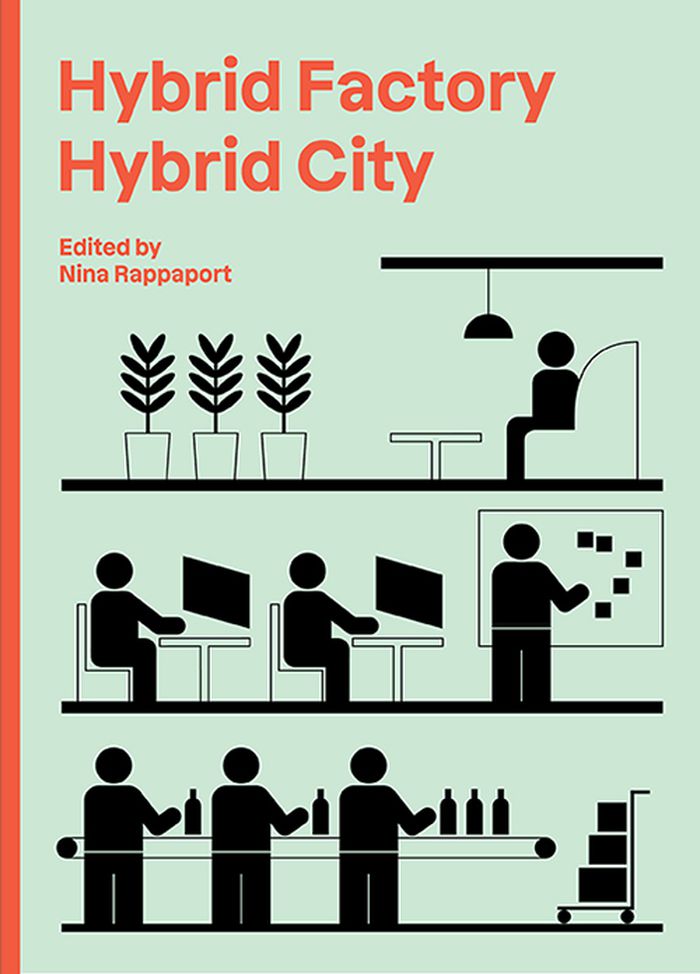
Hybrid factory, hybrid city
Hybrid factory, hybrid city
Actions:
Price:
$54.95
(available to order)
Summary:
Now that urban industry is often clean, green, small, and quiet it can be integrated at the city and building scale with other uses. Although little explored as of yet, we don’t yet know what this new hybrid will look like and how can it support new entrepreneurs, equitable jobs, and vital urban forms? How can hybrid models change with new technologies, sustainable(...)
$54.95
(available to order)
Summary:
Now that urban industry is often clean, green, small, and quiet it can be integrated at the city and building scale with other uses. Although little explored as of yet, we don’t yet know what this new hybrid will look like and how can it support new entrepreneurs, equitable jobs, and vital urban forms? How can hybrid models change with new technologies, sustainable(...)
Title:
Hybrid factory, hybrid city
Actions:
Price:
$54.95
(available to order)
Summary:
Now that urban industry is often clean, green, small, and quiet it can be integrated at the city and building scale with other uses. Although little explored as of yet, we don’t yet know what this new hybrid will look like and how can it support new entrepreneurs, equitable jobs, and vital urban forms? How can hybrid models change with new technologies, sustainable manufacturing, and advanced production systems to create new open city? Can we break the planning and land-use patterns of segregated zoning by class and function and encourage mixed-use zoning that transforms new building and zoning codes and this the mix in the city? These questions and more are addressed in Hybrid Factory / Hybrid City, through a collection of essays by participants in the eponymous symposium organized by Nina Rappaport at the Future Urban Legacy Lab of the Politecnico di Torino. Divided into two sections, the essays describes projects and research by architects and urbanists regarding the aura of industry and its smells, its place in relationship to the body, building structures, logistics centers, reused factory buildings, and their current and future potential for mixed-use. Social and economic equity can be integrated through light manufacturing jobs, community uses, and affordable housing.
Hybrid factory, hybrid city
Actions:
Price:
$54.95
(available to order)
Summary:
Now that urban industry is often clean, green, small, and quiet it can be integrated at the city and building scale with other uses. Although little explored as of yet, we don’t yet know what this new hybrid will look like and how can it support new entrepreneurs, equitable jobs, and vital urban forms? How can hybrid models change with new technologies, sustainable manufacturing, and advanced production systems to create new open city? Can we break the planning and land-use patterns of segregated zoning by class and function and encourage mixed-use zoning that transforms new building and zoning codes and this the mix in the city? These questions and more are addressed in Hybrid Factory / Hybrid City, through a collection of essays by participants in the eponymous symposium organized by Nina Rappaport at the Future Urban Legacy Lab of the Politecnico di Torino. Divided into two sections, the essays describes projects and research by architects and urbanists regarding the aura of industry and its smells, its place in relationship to the body, building structures, logistics centers, reused factory buildings, and their current and future potential for mixed-use. Social and economic equity can be integrated through light manufacturing jobs, community uses, and affordable housing.
Form:
books
books
Publication:
March 2023
March 2023
Subject:
Urban Theory
Urban Theory
Form:
books
books

Actions:
Price:
$22.95
(available to order)
Summary:
Some central questions in the natural and social sciences can’t be answered by controlled laboratory experiments, often considered to be the hallmark of the scientific method. This impossibility holds for any science concerned with the past. In addition, many manipulative experiments, while possible, would be considered immoral or illegal. One has to devise other methods(...)
$22.95
(available to order)
Summary:
Some central questions in the natural and social sciences can’t be answered by controlled laboratory experiments, often considered to be the hallmark of the scientific method. This impossibility holds for any science concerned with the past. In addition, many manipulative experiments, while possible, would be considered immoral or illegal. One has to devise other methods(...)
Title:
Natural experiments of history
Actions:
Price:
$22.95
(available to order)
Summary:
Some central questions in the natural and social sciences can’t be answered by controlled laboratory experiments, often considered to be the hallmark of the scientific method. This impossibility holds for any science concerned with the past. In addition, many manipulative experiments, while possible, would be considered immoral or illegal. One has to devise other methods of observing, describing, and explaining the world. In the historical disciplines, a fruitful approach has been to use natural experiments or the comparative method. This book consists of eight comparative studies drawn from history, archeology, economics, economic history, geography, and political science. The studies cover a spectrum of approaches, ranging from a non-quantitative narrative style in the early chapters to quantitative statistical analyses in the later chapters. The studies range from a simple two-way comparison of Haiti and the Dominican Republic, which share the island of Hispaniola, to comparisons of 81 Pacific islands and 233 areas of India. The societies discussed are contemporary ones, literate societies of recent centuries, and non-literate past societies. Geographically, they include the United States, Mexico, Brazil, western Europe, tropical Africa, India, Siberia, Australia, New Zealand, and other Pacific islands. In an Afterword, the editors discuss how to cope with methodological problems common to these and other natural experiments of history.
Natural experiments of history
Actions:
Price:
$22.95
(available to order)
Summary:
Some central questions in the natural and social sciences can’t be answered by controlled laboratory experiments, often considered to be the hallmark of the scientific method. This impossibility holds for any science concerned with the past. In addition, many manipulative experiments, while possible, would be considered immoral or illegal. One has to devise other methods of observing, describing, and explaining the world. In the historical disciplines, a fruitful approach has been to use natural experiments or the comparative method. This book consists of eight comparative studies drawn from history, archeology, economics, economic history, geography, and political science. The studies cover a spectrum of approaches, ranging from a non-quantitative narrative style in the early chapters to quantitative statistical analyses in the later chapters. The studies range from a simple two-way comparison of Haiti and the Dominican Republic, which share the island of Hispaniola, to comparisons of 81 Pacific islands and 233 areas of India. The societies discussed are contemporary ones, literate societies of recent centuries, and non-literate past societies. Geographically, they include the United States, Mexico, Brazil, western Europe, tropical Africa, India, Siberia, Australia, New Zealand, and other Pacific islands. In an Afterword, the editors discuss how to cope with methodological problems common to these and other natural experiments of history.
Form:
books
books
Publication:
April 2011
April 2011
Subject:
Urban Theory
Urban Theory
Form:
books
books

Actions:
Price:
$48.95
(available to order)
Summary:
In recent years, the boundaries between art and design have become more and more blurred. It is not the object itself, but rather its economic functionality that determines where design stops and art begins - and this functionality is reassessed at every link in the chain of the object s dissemination. In fact, it is often customs officials who subjectively decide what(...)
$48.95
(available to order)
Summary:
In recent years, the boundaries between art and design have become more and more blurred. It is not the object itself, but rather its economic functionality that determines where design stops and art begins - and this functionality is reassessed at every link in the chain of the object s dissemination. In fact, it is often customs officials who subjectively decide what(...)
Title:
Taxing art: when objects travel
Actions:
Price:
$48.95
(available to order)
Summary:
In recent years, the boundaries between art and design have become more and more blurred. It is not the object itself, but rather its economic functionality that determines where design stops and art begins - and this functionality is reassessed at every link in the chain of the object s dissemination. In fact, it is often customs officials who subjectively decide what constitutes art and design based on their personal views and erratic local tax laws. Taxing Art is an insightful case study by Beta Tank that illustrates the influence of tax laws on art and creativity. The Berlin-based studio created a series of blended work, which was partly handmade and partly machine-made, and sent it around the world. Naturally, this resulted in differing customs duties. The book is a buoyantly ironic, clever documentation and analysis of the effect of traditional, bureaucratic procedures on innovative work. Beta Tank hopes this publication will fuel a dialog about how true innovation and creativity, that which crosses boundaries and moves into the unknown, can be actively pursued and matched within existing categories and assumptions about business practices and results. The book puts a spotlight on the effect that tax laws have on art and design.
Taxing art: when objects travel
Actions:
Price:
$48.95
(available to order)
Summary:
In recent years, the boundaries between art and design have become more and more blurred. It is not the object itself, but rather its economic functionality that determines where design stops and art begins - and this functionality is reassessed at every link in the chain of the object s dissemination. In fact, it is often customs officials who subjectively decide what constitutes art and design based on their personal views and erratic local tax laws. Taxing Art is an insightful case study by Beta Tank that illustrates the influence of tax laws on art and creativity. The Berlin-based studio created a series of blended work, which was partly handmade and partly machine-made, and sent it around the world. Naturally, this resulted in differing customs duties. The book is a buoyantly ironic, clever documentation and analysis of the effect of traditional, bureaucratic procedures on innovative work. Beta Tank hopes this publication will fuel a dialog about how true innovation and creativity, that which crosses boundaries and moves into the unknown, can be actively pursued and matched within existing categories and assumptions about business practices and results. The book puts a spotlight on the effect that tax laws have on art and design.
Form:
books
books
Publication:
April 2011
April 2011
Subject:
Contemporary Art Monographs
Contemporary Art Monographs
Form:
books
books
Price:
$85.00
(available to order)
Summary:
The city in the twenty-first century faces major challenges, including social and economic stratification, wasteful consumption of resources, transportation congestion, and environmental degradation. More than half of the world’s population lives in cities and major metropolitan areas, and in the next two decades the number of city dwellers is estimated to reach five(...)
$85.00
(available to order)
Summary:
The city in the twenty-first century faces major challenges, including social and economic stratification, wasteful consumption of resources, transportation congestion, and environmental degradation. More than half of the world’s population lives in cities and major metropolitan areas, and in the next two decades the number of city dwellers is estimated to reach five(...)
Title:
Sustainable urbanism and beyond: rethinking cities for the future
Actions:
Price:
$85.00
(available to order)
Summary:
The city in the twenty-first century faces major challenges, including social and economic stratification, wasteful consumption of resources, transportation congestion, and environmental degradation. More than half of the world’s population lives in cities and major metropolitan areas, and in the next two decades the number of city dwellers is estimated to reach five billion. This puts enormous pressures on transportation systems, housing stock, and infrastructure such as energy, waste, and water, which directly influences the emissions of greenhouse gases. As the long emergency awaits us, urgent questions remain: How will our cities survive? How can we combat and reconcile urban growth with sustainable use of resources for future generations to thrive? Where and how urbanism comes into the picture and what “sustainable” urban forms can do in light of these events are some of the issues Sustainable Urbanism and Beyond explores. With more than sixty essays, including contributions by Andrés Duany, Saskia Sassen, Peter Newman, Douglas Farr, Henry Cisneros, Peter Hall, Sharon Zukin, Peter Eisenman, and others, this book is a unique perspective on architecture, urban planning, environmental and urban design, exploring ways for raising quality of life and the standard of living in a new modern era by creating better and more viable places to live.
Sustainable urbanism and beyond: rethinking cities for the future
Actions:
Price:
$85.00
(available to order)
Summary:
The city in the twenty-first century faces major challenges, including social and economic stratification, wasteful consumption of resources, transportation congestion, and environmental degradation. More than half of the world’s population lives in cities and major metropolitan areas, and in the next two decades the number of city dwellers is estimated to reach five billion. This puts enormous pressures on transportation systems, housing stock, and infrastructure such as energy, waste, and water, which directly influences the emissions of greenhouse gases. As the long emergency awaits us, urgent questions remain: How will our cities survive? How can we combat and reconcile urban growth with sustainable use of resources for future generations to thrive? Where and how urbanism comes into the picture and what “sustainable” urban forms can do in light of these events are some of the issues Sustainable Urbanism and Beyond explores. With more than sixty essays, including contributions by Andrés Duany, Saskia Sassen, Peter Newman, Douglas Farr, Henry Cisneros, Peter Hall, Sharon Zukin, Peter Eisenman, and others, this book is a unique perspective on architecture, urban planning, environmental and urban design, exploring ways for raising quality of life and the standard of living in a new modern era by creating better and more viable places to live.
Form:
books
books
Publication:
April 2012
April 2012
Subject:
Urban Theory
Urban Theory
Form:
books
books

Actions:
Price:
$63.50
(available to order)
Summary:
From its invention in Europe at the end of the nineteenth century, the automobile crisscrossed the world, completely took over the cities, and became a feature of daily life. Considered basic to the American lifestyle, the car reflected individualism, pragmatism, comfort, and above all modernity. In Latin America, it served as a symbol of distinction, similar to jewelry(...)
$63.50
(available to order)
Summary:
From its invention in Europe at the end of the nineteenth century, the automobile crisscrossed the world, completely took over the cities, and became a feature of daily life. Considered basic to the American lifestyle, the car reflected individualism, pragmatism, comfort, and above all modernity. In Latin America, it served as a symbol of distinction, similar to jewelry(...)
Title:
The cultural life of the automobile: roads to modernity
Actions:
Price:
$63.50
(available to order)
Summary:
From its invention in Europe at the end of the nineteenth century, the automobile crisscrossed the world, completely took over the cities, and became a feature of daily life. Considered basic to the American lifestyle, the car reflected individualism, pragmatism, comfort, and above all modernity. In Latin America, it served as a symbol of distinction, similar to jewelry or fine clothing. In The Cultural Life of the Automobile, Guillermo Giucci focuses on the automobile as an instrument of social change through its "kinetic modernity" and as an embodiment of the tremendous social impact of technology on cultural life. Material culture--how certain objects generate a wide array of cultural responses--has been the focus of much scholarly discussion in recent years. The automobile wrought major changes and inspired images in language, literature, and popular culture. Focusing primarily on Latin America but also covering the United States, Europe, Asia, and Africa, Giucci examines how the automobile was variously adapted by different cultures and how its use shaped and changed social and economic relationships within them. At the same time, he shows how the "automobilization" of society became an essential support for the development of modern individualism, and the automobile its clearest material manifestation.
The cultural life of the automobile: roads to modernity
Actions:
Price:
$63.50
(available to order)
Summary:
From its invention in Europe at the end of the nineteenth century, the automobile crisscrossed the world, completely took over the cities, and became a feature of daily life. Considered basic to the American lifestyle, the car reflected individualism, pragmatism, comfort, and above all modernity. In Latin America, it served as a symbol of distinction, similar to jewelry or fine clothing. In The Cultural Life of the Automobile, Guillermo Giucci focuses on the automobile as an instrument of social change through its "kinetic modernity" and as an embodiment of the tremendous social impact of technology on cultural life. Material culture--how certain objects generate a wide array of cultural responses--has been the focus of much scholarly discussion in recent years. The automobile wrought major changes and inspired images in language, literature, and popular culture. Focusing primarily on Latin America but also covering the United States, Europe, Asia, and Africa, Giucci examines how the automobile was variously adapted by different cultures and how its use shaped and changed social and economic relationships within them. At the same time, he shows how the "automobilization" of society became an essential support for the development of modern individualism, and the automobile its clearest material manifestation.
Form:
books
books
Publication:
August 2012
August 2012
Subject:
Transportation, Tourism, Migration
Transportation, Tourism, Migration


