


5813 Results
Form:
books
books
Actions:
Price:
$40.00
(available to order)
Summary:
Discard studies is an emerging field that looks at waste and wasting broadly construed. Rather than focusing on waste and trash as the primary objects of study, discard studies looks at wider systems of waste and wasting to explore how some materials, practices, regions, and people are valued or devalued, becoming dominant or disposable. In this book, Max Liboiron and(...)
$40.00
(available to order)
Summary:
Discard studies is an emerging field that looks at waste and wasting broadly construed. Rather than focusing on waste and trash as the primary objects of study, discard studies looks at wider systems of waste and wasting to explore how some materials, practices, regions, and people are valued or devalued, becoming dominant or disposable. In this book, Max Liboiron and(...)
Subject:
Environment and environmental theory
Environment and environmental theory
Publication:
May 2022
May 2022
Title:
Discard studies: Wasting, systems, and power
Actions:
Price:
$40.00
(available to order)
Summary:
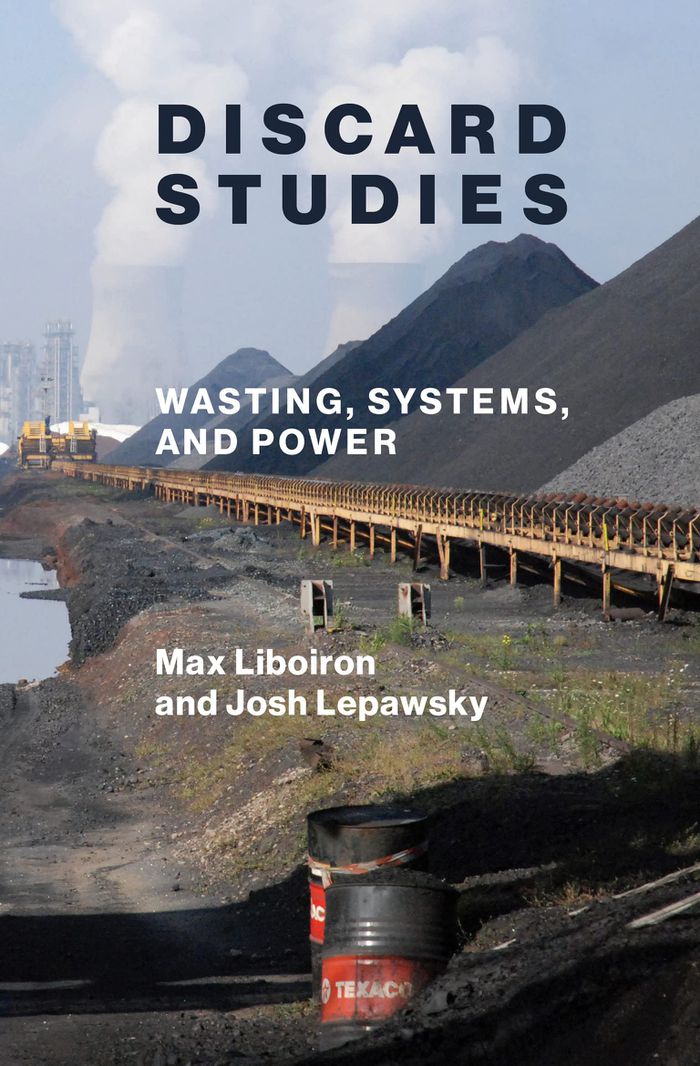
Discard studies is an emerging field that looks at waste and wasting broadly construed. Rather than focusing on waste and trash as the primary objects of study, discard studies looks at wider systems of waste and wasting to explore how some materials, practices, regions, and people are valued or devalued, becoming dominant or disposable. In this book, Max Liboiron and Josh Lepawsky argue that social, political, and economic systems maintain power by discarding certain people, places, and things. They show how the theories and methods of discard studies can be applied in a variety of cases, many of which do not involve waste, trash, or pollution. Liboiron and Lepawsky consider the partiality of knowledge and offer a theory of scale, exploring the myth that most waste is municipal solid waste produced by consumers; discuss peripheries, centers, and power, using content moderation as an example of how dominant systems find ways to discard; and use theories of difference to show that universalism, stereotypes, and inclusion all have politics of discard and even purification—as exemplified in ''inclusive'' efforts to broaden the Black Lives Matter movement. Finally, they develop a theory of change by considering ''wasting well,'' outlining techniques, methods, and propositions for a justice-oriented discard studies that keeps power in view.
Discard studies: Wasting, systems, and power
Actions:
Price:
$40.00
(available to order)
Summary:
Discard studies is an emerging field that looks at waste and wasting broadly construed. Rather than focusing on waste and trash as the primary objects of study, discard studies looks at wider systems of waste and wasting to explore how some materials, practices, regions, and people are valued or devalued, becoming dominant or disposable. In this book, Max Liboiron and Josh Lepawsky argue that social, political, and economic systems maintain power by discarding certain people, places, and things. They show how the theories and methods of discard studies can be applied in a variety of cases, many of which do not involve waste, trash, or pollution. Liboiron and Lepawsky consider the partiality of knowledge and offer a theory of scale, exploring the myth that most waste is municipal solid waste produced by consumers; discuss peripheries, centers, and power, using content moderation as an example of how dominant systems find ways to discard; and use theories of difference to show that universalism, stereotypes, and inclusion all have politics of discard and even purification—as exemplified in ''inclusive'' efforts to broaden the Black Lives Matter movement. Finally, they develop a theory of change by considering ''wasting well,'' outlining techniques, methods, and propositions for a justice-oriented discard studies that keeps power in view.
Form:
books
books
Publication:
May 2022
May 2022
Subject:
Environment and environmental theory
Environment and environmental theory
Form:
books
books
Price:
$28.95
(available to order)
Summary:
American ruins have become increasingly prominent, whether in discussions of “urban blight” and home foreclosures, in commemorations of 9/11, or in postapocalyptic movies. In this book, Nick Yablon argues that the association between American cities and ruins dates back to a much earlier period in the nation’s history. Recovering numerous scenes of urban desolation—from(...)
$28.95
(available to order)
Summary:
American ruins have become increasingly prominent, whether in discussions of “urban blight” and home foreclosures, in commemorations of 9/11, or in postapocalyptic movies. In this book, Nick Yablon argues that the association between American cities and ruins dates back to a much earlier period in the nation’s history. Recovering numerous scenes of urban desolation—from(...)
Title:
Untimely ruins : an archaeology of American urban modernity, 1819-1919
Actions:
Price:
$28.95
(available to order)
Summary:
American ruins have become increasingly prominent, whether in discussions of “urban blight” and home foreclosures, in commemorations of 9/11, or in postapocalyptic movies. In this book, Nick Yablon argues that the association between American cities and ruins dates back to a much earlier period in the nation’s history. Recovering numerous scenes of urban desolation—from failed banks, abandoned towns, and dilapidated tenements to the crumbling skyscrapers and bridges envisioned in science fiction and cartoons—this publication challenges the myth that ruins were absent or insignificant objects in nineteenth-century America. The first book to document an American cult of the ruin, it traces its deviations as well as derivations from European conventions. Unlike classical and Gothic ruins, which decayed gracefully over centuries and inspired philosophical meditations about the fate of civilizations, America’s ruins were often “untimely,” appearing unpredictably and disappearing before they could accrue an aura of age. As modern ruins of steel and iron, they stimulated critical reflections about contemporary cities, and the unfamiliar kinds of experience they enabled. Unearthing evocative sources everywhere from the archives of amateur photographers to the contents of time-capsules, this title exposes crucial debates about the economic, technological, and cultural transformations known as urban modernity.
Untimely ruins : an archaeology of American urban modernity, 1819-1919
Actions:
Price:
$28.95
(available to order)
Summary:
American ruins have become increasingly prominent, whether in discussions of “urban blight” and home foreclosures, in commemorations of 9/11, or in postapocalyptic movies. In this book, Nick Yablon argues that the association between American cities and ruins dates back to a much earlier period in the nation’s history. Recovering numerous scenes of urban desolation—from failed banks, abandoned towns, and dilapidated tenements to the crumbling skyscrapers and bridges envisioned in science fiction and cartoons—this publication challenges the myth that ruins were absent or insignificant objects in nineteenth-century America. The first book to document an American cult of the ruin, it traces its deviations as well as derivations from European conventions. Unlike classical and Gothic ruins, which decayed gracefully over centuries and inspired philosophical meditations about the fate of civilizations, America’s ruins were often “untimely,” appearing unpredictably and disappearing before they could accrue an aura of age. As modern ruins of steel and iron, they stimulated critical reflections about contemporary cities, and the unfamiliar kinds of experience they enabled. Unearthing evocative sources everywhere from the archives of amateur photographers to the contents of time-capsules, this title exposes crucial debates about the economic, technological, and cultural transformations known as urban modernity.
Form:
books
books
Publication:
February 2010, Chicago
February 2010, Chicago
Subject:
Urban Theory
Urban Theory
Form:
books
books
Actions:
Price:
$63.95
(available to order)
Summary:
In Soviet Salvage, Catherine Walworth explores how artists on the margins of the Constructivist movement of the 1920s rejected “elitist” media and imagined a new world, knitting together avant-garde art, imperial castoffs, and everyday life. Applying anthropological models borrowed from Claude Lévi-Strauss, Walworth shows that his mythmaker typologies—the “engineer”(...)
$63.95
(available to order)
Summary:
In Soviet Salvage, Catherine Walworth explores how artists on the margins of the Constructivist movement of the 1920s rejected “elitist” media and imagined a new world, knitting together avant-garde art, imperial castoffs, and everyday life. Applying anthropological models borrowed from Claude Lévi-Strauss, Walworth shows that his mythmaker typologies—the “engineer”(...)
Title:
Soviet salvage: Imperial debris, revolutionary reuse, and Russian Constructivism
Actions:
Price:
$63.95
(available to order)
Summary:
In Soviet Salvage, Catherine Walworth explores how artists on the margins of the Constructivist movement of the 1920s rejected “elitist” media and imagined a new world, knitting together avant-garde art, imperial castoffs, and everyday life. Applying anthropological models borrowed from Claude Lévi-Strauss, Walworth shows that his mythmaker typologies—the “engineer” and “bricoleur”—illustrate, respectively, the canonical Constructivists and artists on the movement’s margins who deployed a wide range of clever make-do tactics. Walworth explores the relationships of Nadezhda Lamanova, Esfir Shub, and others with Constructivists such as Aleksei Gan, Varvara Stepanova, and Aleksandr Rodchenko. Together, the work of these artists reflected the chaotic and often contradictory zeitgeist of the decade from 1918 to 1929 and redefined the concept of mass production. Reappropriated fragments of a former enemy era provided a wide range of play and possibility for these artists, and the resulting propaganda porcelain, film, fashion, and architecture tell a broader story of the unique political and economic pressures felt by their makers. An engaging multidisciplinary study of objects and their makers during the Soviet Union’s early years, this volume highlights a group of artists who hover like free radicals at the border of existing art-historical discussions of Constructivism and deepens our knowledge of Soviet art and material culture.
Soviet salvage: Imperial debris, revolutionary reuse, and Russian Constructivism
Actions:
Price:
$63.95
(available to order)
Summary:
In Soviet Salvage, Catherine Walworth explores how artists on the margins of the Constructivist movement of the 1920s rejected “elitist” media and imagined a new world, knitting together avant-garde art, imperial castoffs, and everyday life. Applying anthropological models borrowed from Claude Lévi-Strauss, Walworth shows that his mythmaker typologies—the “engineer” and “bricoleur”—illustrate, respectively, the canonical Constructivists and artists on the movement’s margins who deployed a wide range of clever make-do tactics. Walworth explores the relationships of Nadezhda Lamanova, Esfir Shub, and others with Constructivists such as Aleksei Gan, Varvara Stepanova, and Aleksandr Rodchenko. Together, the work of these artists reflected the chaotic and often contradictory zeitgeist of the decade from 1918 to 1929 and redefined the concept of mass production. Reappropriated fragments of a former enemy era provided a wide range of play and possibility for these artists, and the resulting propaganda porcelain, film, fashion, and architecture tell a broader story of the unique political and economic pressures felt by their makers. An engaging multidisciplinary study of objects and their makers during the Soviet Union’s early years, this volume highlights a group of artists who hover like free radicals at the border of existing art-historical discussions of Constructivism and deepens our knowledge of Soviet art and material culture.
Form:
books
books
Publication:
September 2018
September 2018
Form:
books
books
Title:
Visionary cities
Visionary cities
Actions:
Price:
$25.00
(available to order)
Summary:
Recognizing that our civic responsibilities towards our environments have drastically increased, Visionary Cities ambitiously sets the agenda for the city of the future. Amid crippling bureaucracies and economic crises, present-day thinking on city design remains woefully inadequate, and this first publication in NAi's Future Cities Series announces 12 civic issues that(...)
$25.00
(available to order)
Summary:
Recognizing that our civic responsibilities towards our environments have drastically increased, Visionary Cities ambitiously sets the agenda for the city of the future. Amid crippling bureaucracies and economic crises, present-day thinking on city design remains woefully inadequate, and this first publication in NAi's Future Cities Series announces 12 civic issues that(...)
Title:
Visionary cities
Actions:
Price:
$25.00
(available to order)
Summary:
Recognizing that our civic responsibilities towards our environments have drastically increased, Visionary Cities ambitiously sets the agenda for the city of the future. Amid crippling bureaucracies and economic crises, present-day thinking on city design remains woefully inadequate, and this first publication in NAi's Future Cities Series announces 12 civic issues that are in need of transformation through the researches of The Why Factory, a global urban-studies thinktank operated in part by the Delft University of Technology. These issues include: “The Solitary (Our Dreams are Undermining the City)”; “The Iconic (Our Idols Have Been Compromised)”; “The Fun (We Are Having Too Much Fun)”; “The Cautious (Being Careful Is Killing Us)”; “The Poor (Slums Are Growing Bigger Than The Cities They Are Part Of”; and “The Future (Our Future Is Being Imagined Without Us).” A howl against civic impotence and the apathy of citizens in the face of incompetence and decay, Visionary Cities makes a manifesto of these and other topics to loudly demand large-scale change on a collective rather than individual level. In an afterword, Winy Maas, of the innovative Dutch architecture firm MVRDV, argues that architecture possesses a visionary dimension waiting to be applied to the cities of the future.
Visionary cities
Actions:
Price:
$25.00
(available to order)
Summary:
Recognizing that our civic responsibilities towards our environments have drastically increased, Visionary Cities ambitiously sets the agenda for the city of the future. Amid crippling bureaucracies and economic crises, present-day thinking on city design remains woefully inadequate, and this first publication in NAi's Future Cities Series announces 12 civic issues that are in need of transformation through the researches of The Why Factory, a global urban-studies thinktank operated in part by the Delft University of Technology. These issues include: “The Solitary (Our Dreams are Undermining the City)”; “The Iconic (Our Idols Have Been Compromised)”; “The Fun (We Are Having Too Much Fun)”; “The Cautious (Being Careful Is Killing Us)”; “The Poor (Slums Are Growing Bigger Than The Cities They Are Part Of”; and “The Future (Our Future Is Being Imagined Without Us).” A howl against civic impotence and the apathy of citizens in the face of incompetence and decay, Visionary Cities makes a manifesto of these and other topics to loudly demand large-scale change on a collective rather than individual level. In an afterword, Winy Maas, of the innovative Dutch architecture firm MVRDV, argues that architecture possesses a visionary dimension waiting to be applied to the cities of the future.
Form:
books
books
Publication:
March 2010
March 2010
Subject:
Urban Theory
Urban Theory
Form:
books
books
Price:
$49.95
(available in store)
Summary:
Spectacular, scientific, and educational cultural practices were used to establish and define public identities in the British colonies of nineteenth-century Canada. In Visibly Canadian, Karen Stanworth argues that visual representations were the era's primary mode of expressing identity, and shows how the citizenry of Quebec and Ontario was - or was not - represented in(...)
$49.95
(available in store)
Summary:
Spectacular, scientific, and educational cultural practices were used to establish and define public identities in the British colonies of nineteenth-century Canada. In Visibly Canadian, Karen Stanworth argues that visual representations were the era's primary mode of expressing identity, and shows how the citizenry of Quebec and Ontario was - or was not - represented in(...)
Title:
Visibly Canadian: imaging collective identities in the Canadas, 1820-1910
Actions:
Price:
$49.95
(available in store)
Summary:
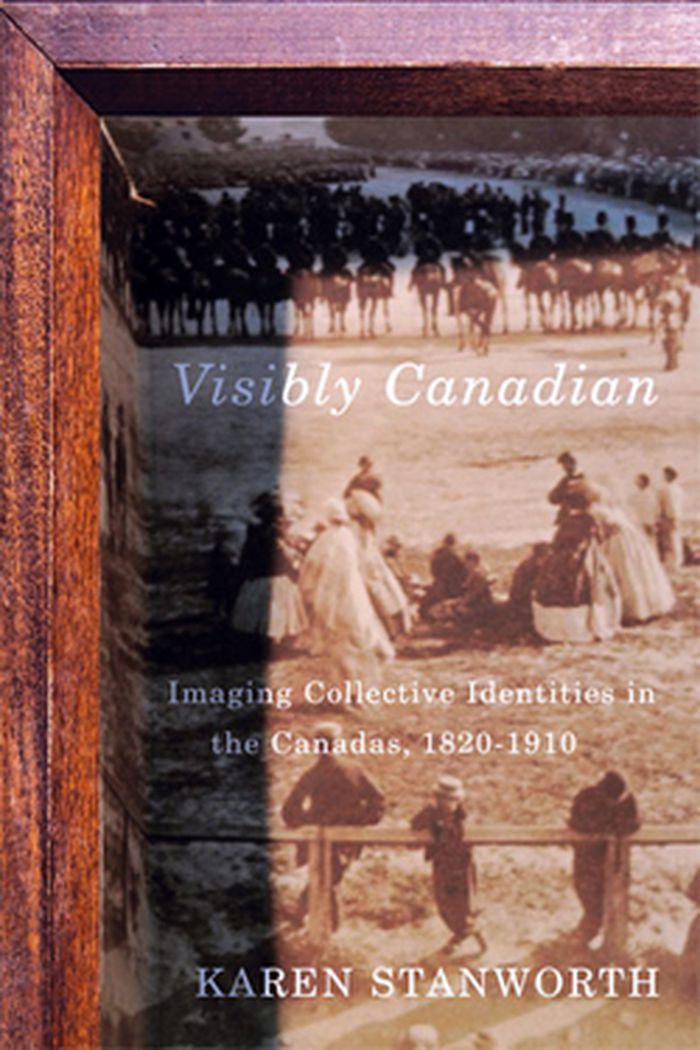
Spectacular, scientific, and educational cultural practices were used to establish and define public identities in the British colonies of nineteenth-century Canada. In Visibly Canadian, Karen Stanworth argues that visual representations were the era's primary mode of expressing identity, and shows how the citizenry of Quebec and Ontario was - or was not - represented in the visual culture of the time.Through nine case studies, each representing key moments of identity formation and contestation, Stanworth investigates how a broad range of cultural phenomena, from fine arts to institutional histories to public spectacles, were used to order, resist, and articulate identities within specific social and economic contexts. The negotiation and planning underpinning civic culture are evident in rare moments of compromise such as the surprising proposal from the Saint-Jean-Baptiste Society to merge their annual parade with the celebration of Queen Victoria's Diamond Jubilee in 1897. Equally astounding is the scale of nineteenth-century public spectacles; reenactments of Victorian scenes of war often attracted crowds of upwards of 10,000 people. Illustrated with over fifty images, many unseen for over a century, Visibly Canadian establishes the significance of artwork and public spectacles in cutting across language, religion, and class to tell stories of nationhood, belonging, and difference.
Visibly Canadian: imaging collective identities in the Canadas, 1820-1910
Actions:
Price:
$49.95
(available in store)
Summary:
Spectacular, scientific, and educational cultural practices were used to establish and define public identities in the British colonies of nineteenth-century Canada. In Visibly Canadian, Karen Stanworth argues that visual representations were the era's primary mode of expressing identity, and shows how the citizenry of Quebec and Ontario was - or was not - represented in the visual culture of the time.Through nine case studies, each representing key moments of identity formation and contestation, Stanworth investigates how a broad range of cultural phenomena, from fine arts to institutional histories to public spectacles, were used to order, resist, and articulate identities within specific social and economic contexts. The negotiation and planning underpinning civic culture are evident in rare moments of compromise such as the surprising proposal from the Saint-Jean-Baptiste Society to merge their annual parade with the celebration of Queen Victoria's Diamond Jubilee in 1897. Equally astounding is the scale of nineteenth-century public spectacles; reenactments of Victorian scenes of war often attracted crowds of upwards of 10,000 people. Illustrated with over fifty images, many unseen for over a century, Visibly Canadian establishes the significance of artwork and public spectacles in cutting across language, religion, and class to tell stories of nationhood, belonging, and difference.
Form:
books
books
Publication:
November 2014
November 2014
Subject:
Architecture in Canada
Architecture in Canada
Form:
books
books

Actions:
Price:
$51.95
(available to order)
Summary:
A dacha is a country house, made of wood, used by Soviet citizens to escape the rigors of the city for a rural idyll. Widespread in the countries of the former USSR, this important cultural and architectural form has been largely ignored academically. In ''Dacha'', Fyodor Savintsev documents this particularly Russian phenomenon. His photographs constitute a unique record(...)
$51.95
(available to order)
Summary:
A dacha is a country house, made of wood, used by Soviet citizens to escape the rigors of the city for a rural idyll. Widespread in the countries of the former USSR, this important cultural and architectural form has been largely ignored academically. In ''Dacha'', Fyodor Savintsev documents this particularly Russian phenomenon. His photographs constitute a unique record(...)
Subject:
Commercial interiors, Building types
Commercial interiors, Building types
Publication:
September 2023
September 2023
Title:
Dacha: the soviet country cottage
Actions:
Price:
$51.95
(available to order)
Summary:
A dacha is a country house, made of wood, used by Soviet citizens to escape the rigors of the city for a rural idyll. Widespread in the countries of the former USSR, this important cultural and architectural form has been largely ignored academically. In ''Dacha'', Fyodor Savintsev documents this particularly Russian phenomenon. His photographs constitute a unique record of a rapidly vanishing fairy-tale wooden world. The word ''dacha'' has been used to describe constructions ranging from grand imperial villas to small sheds. Originally bestowed by the Tsar to reward courtiers, this custom continued following the revolution, with Soviet cooperatives building dachas for their members. Supposedly for the benefit of laborers, in reality they were destined for those favored by the State, including famous writers, architects and artists from Pasternak to Prokofiev. The fall of the Soviet Union accelerated their use, as economic uncertainty forced city dwellers toward self-sufficiency. The dacha tradition has survived revolution, war and the collapse of Communism, becoming an integral part of life in the process. Using contemporary photographs to showcase these uniquely individual buildings for the first time, alongside an introduction explaining their historical and cultural context, Dacha is the only publication of its kind.
Dacha: the soviet country cottage
Actions:
Price:
$51.95
(available to order)
Summary:
A dacha is a country house, made of wood, used by Soviet citizens to escape the rigors of the city for a rural idyll. Widespread in the countries of the former USSR, this important cultural and architectural form has been largely ignored academically. In ''Dacha'', Fyodor Savintsev documents this particularly Russian phenomenon. His photographs constitute a unique record of a rapidly vanishing fairy-tale wooden world. The word ''dacha'' has been used to describe constructions ranging from grand imperial villas to small sheds. Originally bestowed by the Tsar to reward courtiers, this custom continued following the revolution, with Soviet cooperatives building dachas for their members. Supposedly for the benefit of laborers, in reality they were destined for those favored by the State, including famous writers, architects and artists from Pasternak to Prokofiev. The fall of the Soviet Union accelerated their use, as economic uncertainty forced city dwellers toward self-sufficiency. The dacha tradition has survived revolution, war and the collapse of Communism, becoming an integral part of life in the process. Using contemporary photographs to showcase these uniquely individual buildings for the first time, alongside an introduction explaining their historical and cultural context, Dacha is the only publication of its kind.
Form:
books
books
Publication:
September 2023
September 2023
Subject:
Commercial interiors, Building types
Commercial interiors, Building types
Form:
books
books
Actions:
Price:
$28.95
(available to order)
Summary:
In this volume of the Critical Spatial Practice series, Dennis Pohl locates the origin of Europe's dependency on carbon and nuclear power in the postwar architectural designs and energy policies of the European Community. Since the 1950s, architects have proposed territorial, regional, and urban development plans that served the European political project. They(...)
$28.95
(available to order)
Summary:
In this volume of the Critical Spatial Practice series, Dennis Pohl locates the origin of Europe's dependency on carbon and nuclear power in the postwar architectural designs and energy policies of the European Community. Since the 1950s, architects have proposed territorial, regional, and urban development plans that served the European political project. They(...)
Title:
Building carbon europe: Coal, steel and nuclear power. Critical spatial practice
Actions:
Price:
$28.95
(available to order)
Summary:
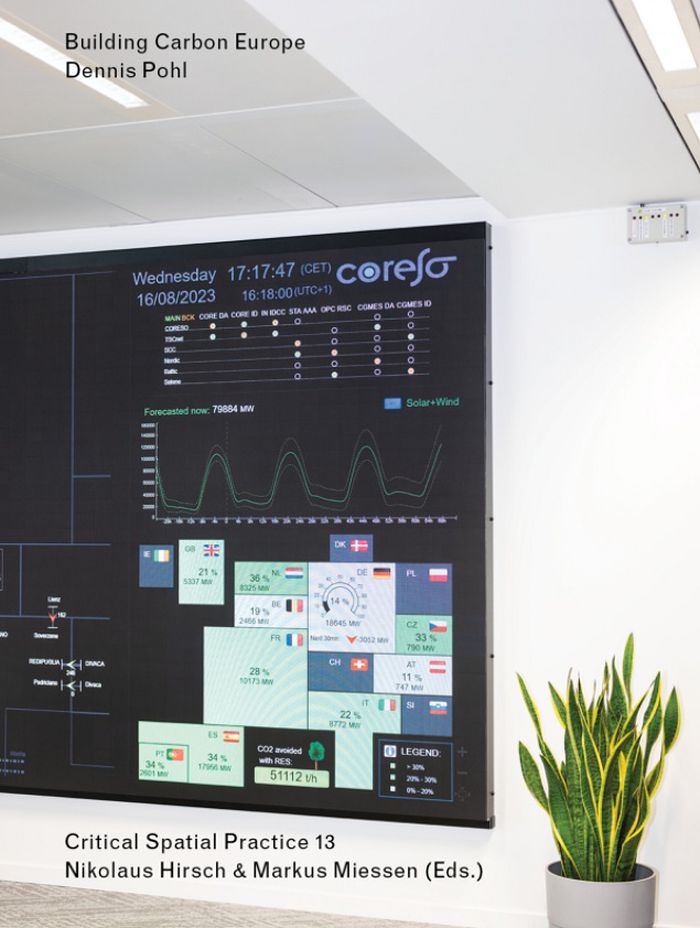
In this volume of the Critical Spatial Practice series, Dennis Pohl locates the origin of Europe's dependency on carbon and nuclear power in the postwar architectural designs and energy policies of the European Community. Since the 1950s, architects have proposed territorial, regional, and urban development plans that served the European political project. They collaborated with the European Coal and Steel Community in an effort to render the steel building industry as efficient as the car industry; they incorporated the ideas of infinite nuclear energy, as promoted by the European Atomic Energy Community, into their designs. This book demonstrates how architecture served the political economy of postwar Europe as a means of turning coal, steel, and radioactivity into tools of European governance. Architectural design enabled EU institutions to support social policies and worker housing within the coal and steel industry as well as to promote a new pan-European lifestyle based on nuclear energy. In other words, architecture powered Europe's larger infrastructural, economic, and cultural network. Pohl's work not only sheds light on how architecture has contributed to the carbonization of Europe, it also highlights the environmental issue, which challenges both architectural criticism and historiography in the era of the Anthropocene.
Building carbon europe: Coal, steel and nuclear power. Critical spatial practice
Actions:
Price:
$28.95
(available to order)
Summary:
In this volume of the Critical Spatial Practice series, Dennis Pohl locates the origin of Europe's dependency on carbon and nuclear power in the postwar architectural designs and energy policies of the European Community. Since the 1950s, architects have proposed territorial, regional, and urban development plans that served the European political project. They collaborated with the European Coal and Steel Community in an effort to render the steel building industry as efficient as the car industry; they incorporated the ideas of infinite nuclear energy, as promoted by the European Atomic Energy Community, into their designs. This book demonstrates how architecture served the political economy of postwar Europe as a means of turning coal, steel, and radioactivity into tools of European governance. Architectural design enabled EU institutions to support social policies and worker housing within the coal and steel industry as well as to promote a new pan-European lifestyle based on nuclear energy. In other words, architecture powered Europe's larger infrastructural, economic, and cultural network. Pohl's work not only sheds light on how architecture has contributed to the carbonization of Europe, it also highlights the environmental issue, which challenges both architectural criticism and historiography in the era of the Anthropocene.
Form:
books
books
Publication:
April 2024
April 2024
Subject:
Architectural Theory
Architectural Theory
Form:
books
books
Title:
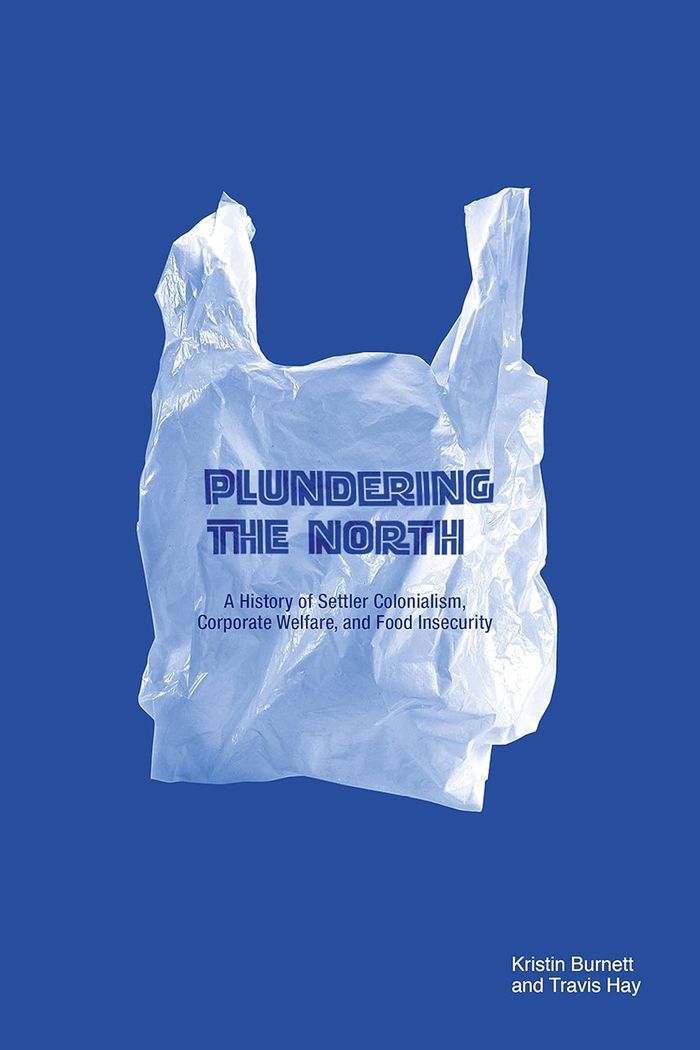
Plundering the North: A history of settler colonialism, corporate welfare, and food insecurity
Plundering the North: A history of settler colonialism, corporate welfare, and food insecurity
Actions:
Price:
$27.95
(available to order)
Summary:
Food insecurity in the North is one of Canada’s most shameful public health and human rights crises. In ''Plundering the North,'' Kristin Burnett and Travis Hay examine the disturbing mechanics behind the origins of this crisis: state and corporate intervention in northern Indigenous foodways. Despite claims to the contrary by governments, the Hudson’s Bay Company (HBC),(...)
$27.95
(available to order)
Summary:
Food insecurity in the North is one of Canada’s most shameful public health and human rights crises. In ''Plundering the North,'' Kristin Burnett and Travis Hay examine the disturbing mechanics behind the origins of this crisis: state and corporate intervention in northern Indigenous foodways. Despite claims to the contrary by governments, the Hudson’s Bay Company (HBC),(...)
Title:
Plundering the North: A history of settler colonialism, corporate welfare, and food insecurity
Actions:
Price:
$27.95
(available to order)
Summary:
Food insecurity in the North is one of Canada’s most shameful public health and human rights crises. In ''Plundering the North,'' Kristin Burnett and Travis Hay examine the disturbing mechanics behind the origins of this crisis: state and corporate intervention in northern Indigenous foodways. Despite claims to the contrary by governments, the Hudson’s Bay Company (HBC), and the contemporary North West Company (NWC), the exorbitant cost of food in the North is neither a naturally occurring phenomenon nor the result of free-market forces. Rather, inflated food prices are the direct result of government policies and corporate monopolies. Using food as a lens to track the institutional presence of the Canadian state in the North, Burnett and Hay chart the social, economic, and political changes that have taken place in northern Ontario since the 1950s. They explore the roles of state food policy and the HBC and NWC in setting up, perpetuating, and profiting from food insecurity while undermining Indigenous food sovereignties and self-determination. ''Plundering the North'' provides fresh insight into Canada’s settler colonial project by re-evaluating northern food policy and laying bare the governmental and corporate processes behind the chronic food insecurity experienced by northern Indigenous communities.
Plundering the North: A history of settler colonialism, corporate welfare, and food insecurity
Actions:
Price:
$27.95
(available to order)
Summary:
Food insecurity in the North is one of Canada’s most shameful public health and human rights crises. In ''Plundering the North,'' Kristin Burnett and Travis Hay examine the disturbing mechanics behind the origins of this crisis: state and corporate intervention in northern Indigenous foodways. Despite claims to the contrary by governments, the Hudson’s Bay Company (HBC), and the contemporary North West Company (NWC), the exorbitant cost of food in the North is neither a naturally occurring phenomenon nor the result of free-market forces. Rather, inflated food prices are the direct result of government policies and corporate monopolies. Using food as a lens to track the institutional presence of the Canadian state in the North, Burnett and Hay chart the social, economic, and political changes that have taken place in northern Ontario since the 1950s. They explore the roles of state food policy and the HBC and NWC in setting up, perpetuating, and profiting from food insecurity while undermining Indigenous food sovereignties and self-determination. ''Plundering the North'' provides fresh insight into Canada’s settler colonial project by re-evaluating northern food policy and laying bare the governmental and corporate processes behind the chronic food insecurity experienced by northern Indigenous communities.
Form:
books
books
Publication:
October 2023
October 2023
Subject:
Social
Social
Form:
books
books
Actions:
Price:
$34.00
(available to order)
Summary:
How can the different strands of modern architecture in Britain be understood? For many British people, it remains an alien cultural import and minority taste, yet British architecture has never stood higher in world esteem than at the close of the twentieth century. In this book Alan Powers shows how beneath today’s achievements in architecture, past conflicts have not(...)
$34.00
(available to order)
Summary:
How can the different strands of modern architecture in Britain be understood? For many British people, it remains an alien cultural import and minority taste, yet British architecture has never stood higher in world esteem than at the close of the twentieth century. In this book Alan Powers shows how beneath today’s achievements in architecture, past conflicts have not(...)
Title:
Britain : modern architecture in history
Actions:
Price:
$34.00
(available to order)
Summary:
How can the different strands of modern architecture in Britain be understood? For many British people, it remains an alien cultural import and minority taste, yet British architecture has never stood higher in world esteem than at the close of the twentieth century. In this book Alan Powers shows how beneath today’s achievements in architecture, past conflicts have not been resolved, as the country that invented industrial civilization has struggled to control its effect on cities and countryside. He examines developments and changes from 1900 to the present day in a series of thematic chapters, giving equal weight to technical, economic and moral aspects and demonstrating how architecture has responded to specific social needs and political pressures. Rather than giving a conventional account of stylistic tendencies, Powers listens to the arguments and conversations of the time in order to recapture the dominating issues of each decade, and locate the moments of transition in architecture and in the wider culture. Featuring more than 220 images, including both recent and historical photographs, "Britain" is an authoritative yet highly accessible account of twentieth-century British architecture. Giving due regard to the separate identities of England, Scotland and Wales, the book also adds a new and original dimension to the perennial problem of defining ‘Britain’ in the modern world.
Britain : modern architecture in history
Actions:
Price:
$34.00
(available to order)
Summary:
How can the different strands of modern architecture in Britain be understood? For many British people, it remains an alien cultural import and minority taste, yet British architecture has never stood higher in world esteem than at the close of the twentieth century. In this book Alan Powers shows how beneath today’s achievements in architecture, past conflicts have not been resolved, as the country that invented industrial civilization has struggled to control its effect on cities and countryside. He examines developments and changes from 1900 to the present day in a series of thematic chapters, giving equal weight to technical, economic and moral aspects and demonstrating how architecture has responded to specific social needs and political pressures. Rather than giving a conventional account of stylistic tendencies, Powers listens to the arguments and conversations of the time in order to recapture the dominating issues of each decade, and locate the moments of transition in architecture and in the wider culture. Featuring more than 220 images, including both recent and historical photographs, "Britain" is an authoritative yet highly accessible account of twentieth-century British architecture. Giving due regard to the separate identities of England, Scotland and Wales, the book also adds a new and original dimension to the perennial problem of defining ‘Britain’ in the modern world.
Form:
books
books
Publication:
July 2006, London
July 2006, London
Subject:
Architecture since 1900, Europe
Architecture since 1900, Europe
Form:
books
books
Actions:
Price:
$56.00
(available in store)
Summary:
"Memoryscapes," the second volume in the "Architecture Connecting" series, co-published with the Louisiana Museum of Modern Art, examines the role of human narratives in shaping the spaces of tomorrow. Focusing on the intersections of architecture with anthropology, archaeology and geology, the book presents the work of two studios whose practices engage deeply with the(...)
$56.00
(available in store)
Summary:
"Memoryscapes," the second volume in the "Architecture Connecting" series, co-published with the Louisiana Museum of Modern Art, examines the role of human narratives in shaping the spaces of tomorrow. Focusing on the intersections of architecture with anthropology, archaeology and geology, the book presents the work of two studios whose practices engage deeply with the(...)
Subject:
Architecture ecologies
Architecture ecologies
Publication:
April 2026
April 2026
Title:
Architecture connecting: Xu Tiantian & Tsuyoshi Tane
Actions:
Price:
$56.00
(available in store)
Summary:
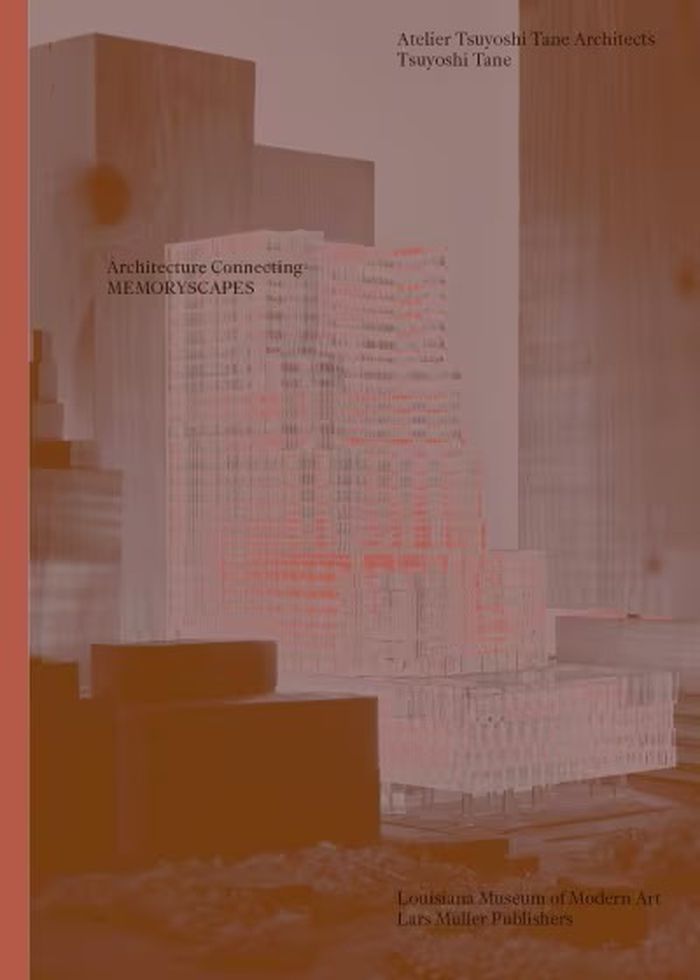
"Memoryscapes," the second volume in the "Architecture Connecting" series, co-published with the Louisiana Museum of Modern Art, examines the role of human narratives in shaping the spaces of tomorrow. Focusing on the intersections of architecture with anthropology, archaeology and geology, the book presents the work of two studios whose practices engage deeply with the past through both broad investigative research and precise architectural responses. Bound back-to-back, the publication comprises two volumes presenting the distinct approaches of DnA Architecture and Design (Beijing) and Atelier Tsuyoshi Tane Architects (ATTA, Tokyo and Paris). DnA’s practice of "architectural acupuncture" focuses on the social and economic regeneration of rural Chinese communities through targeted interventions that revive long-standing cultural practices, while ATTA’s "Archaeology of the Future" draws on the layered memories of places to create future possibilities across architecture, urban planning and exhibition design, in an international context. Led by Xu Tiantian and Tsuyoshi Tane, respectively, the two studios share an approach that connects social traditions, cultural heritage, craftsmanship and production conditions within complex, site-specific frameworks. Through illustrated essays and project dossiers, the publication traces how these practices draw on lived histories and place-based knowledge to generate new architectural narratives, bridging the past and the future in response to contemporary needs.
Architecture connecting: Xu Tiantian & Tsuyoshi Tane
Actions:
Price:
$56.00
(available in store)
Summary:
"Memoryscapes," the second volume in the "Architecture Connecting" series, co-published with the Louisiana Museum of Modern Art, examines the role of human narratives in shaping the spaces of tomorrow. Focusing on the intersections of architecture with anthropology, archaeology and geology, the book presents the work of two studios whose practices engage deeply with the past through both broad investigative research and precise architectural responses. Bound back-to-back, the publication comprises two volumes presenting the distinct approaches of DnA Architecture and Design (Beijing) and Atelier Tsuyoshi Tane Architects (ATTA, Tokyo and Paris). DnA’s practice of "architectural acupuncture" focuses on the social and economic regeneration of rural Chinese communities through targeted interventions that revive long-standing cultural practices, while ATTA’s "Archaeology of the Future" draws on the layered memories of places to create future possibilities across architecture, urban planning and exhibition design, in an international context. Led by Xu Tiantian and Tsuyoshi Tane, respectively, the two studios share an approach that connects social traditions, cultural heritage, craftsmanship and production conditions within complex, site-specific frameworks. Through illustrated essays and project dossiers, the publication traces how these practices draw on lived histories and place-based knowledge to generate new architectural narratives, bridging the past and the future in response to contemporary needs.
Form:
books
books
Publication:
April 2026
April 2026
Subject:
Architecture ecologies
Architecture ecologies


